Archive for January, 2013

Clam fritters, conch fritters, lobster fritters…I suppose you could fritter anything. But the first time I had them with mussels, I knew that I would never fritter my life away with any other!

It was a fall afternoon in Newport, Rhode Island, at the Newport Yachting Center’s annual Oyster Festival. We’re gorging on freshly shucked oysters and clams, boiled shrimp, and…what have we here? I had never heard of a mussel fritter before, but Wendy, the lovely lady behind the counter, convinced me that her secret recipe would knock my socks off. I took one bite, then another, then another…There was no turning back.

They couldn’t be easier to make, but it is crucial to have the right fritter batter. And that starts with a product called Drum Rock fritter mix. If you live in New England, you can find it in just about any seafood department at Whole Foods. If you live further away, you can check out their website (http://www.drumrockproducts.com/index.php) or try your luck with a local brand of fritter mix.

fritter ingredients


If you’re using fresh mussels, be sure to clean them well and remove the beards. Steam them in a pot over a small amount of water. As they open, they will release their flavorful juices and you want to save every drop of that broth for the fritters. Here in New England, frozen mussel meats are available in some seafood stores. All you need to do is thaw them, steam them saving the broth, and you’re ready to go.


Mussel Fritters

1 lb Drum Rock fritter mix

2 cups cooked mussel meats

1/2 cup mussel broth (saved from steaming mussels)

1/4 to 1/2 cup good quality beer, such as Sam Adams Boston Lager

Peanut oil for frying

Be sure to let the batter rest. If you're waiting for guests to arrive, just cover the batter bowl with a moist towel and it will keep for several hours at room temperature.

Be sure to let the batter rest. If you’re waiting for guests to arrive, just cover the batter bowl with a moist towel and it will keep for several hours at room temperature.


Steam mussel meats until just cooked. Remove mussel meats, and reserve 1/2 cup of the broth. Pulse mussel meats in a food processor, but leave chunky…or chop by hand.

Put Drum Rock fritter mix in a large bowl. Add mussel meats, mussel broth, and beer. Stir gently until just mixed. Let it sit for 10 to 15 minutes and do not stir again.

Using a thermometer, heat oil to 350 degrees, and using a small spoon or scoop, drop fritters in hot oil, turning gently, cooking 3 to 4 minutes until golden.

Drain on absorbent paper, and season with salt and pepper immediately. Serve right away!

IMG_3043


The perfect dipping sauce for these mussel fritters is made from two ingredients: mayonnaise and Ponzu sauce, which is a citrus-based soy sauce. Combine both ingredients in a bowl. How much you use of each is a matter of personal preference. I usually use a ratio of 4 parts mayo to 1 part Ponzu.


SPROUTING: A WINTER GARDENING FIX

Posted: January 22, 2013 in garden
Tags:
As a rabid gardener, I definitely go through withdrawals in the winter. Pouring over gardening catalogs and ordering my seeds for spring planting only helps temporarily. Sprouting gives me my fix.
We’ve all seen the sprouts in the refrigerated section of the produce department at the supermarket…but it seems that the package is usually too big to be consumed before the expiration date. Whatever…I still wind up buying it, piling the sprouts on top of my salad and anything else I can think of, and then quickly getting to the point where I’m so sick of them that I don’t to even look at another sprout for a long time. Then they rot in the fridge and become compost.
Sprouters have been around for a long time, and they vary in size and shape. The ones that I like most consist of four plastic circular trays that nest one on top of the other, with a little valve at the bottom of each tray that allows water in the top tray to trickle down into each of the lower trays before reaching the bottom water catching tray.
Sprouting seeds yourself may seem like a bit of a pain in the beginning, but once you get into the routine, it’s fun and easy to do–get your kid involved–and the wide variety of sprouting seeds available is mind-boggling. Alfalfa, buckwheat, broccoli, mustard, radish, and the classic Chinese sprout: mung bean,  just a few that I’ve sprouted over the years. And the great thing about sprouting your own seeds (besides the incredible freshness) is that you never wind up having too many. You can time the sprouting so that you constantly have a supply of sprouts without waste. It’s a great way to get your gardening fix in the wintertime when it’s too cold to be gardening outside.
Day 1
Day 2
Day 3
Many gardening websites now offer seeds specifically for sprouting. Here are a few…
Johnny’s Selected Seeds: www.johnnyseeds.com
Pinetree Garden Seeds: www.superseeds.com
Wood Prairie Farm: www.woodprairie.com
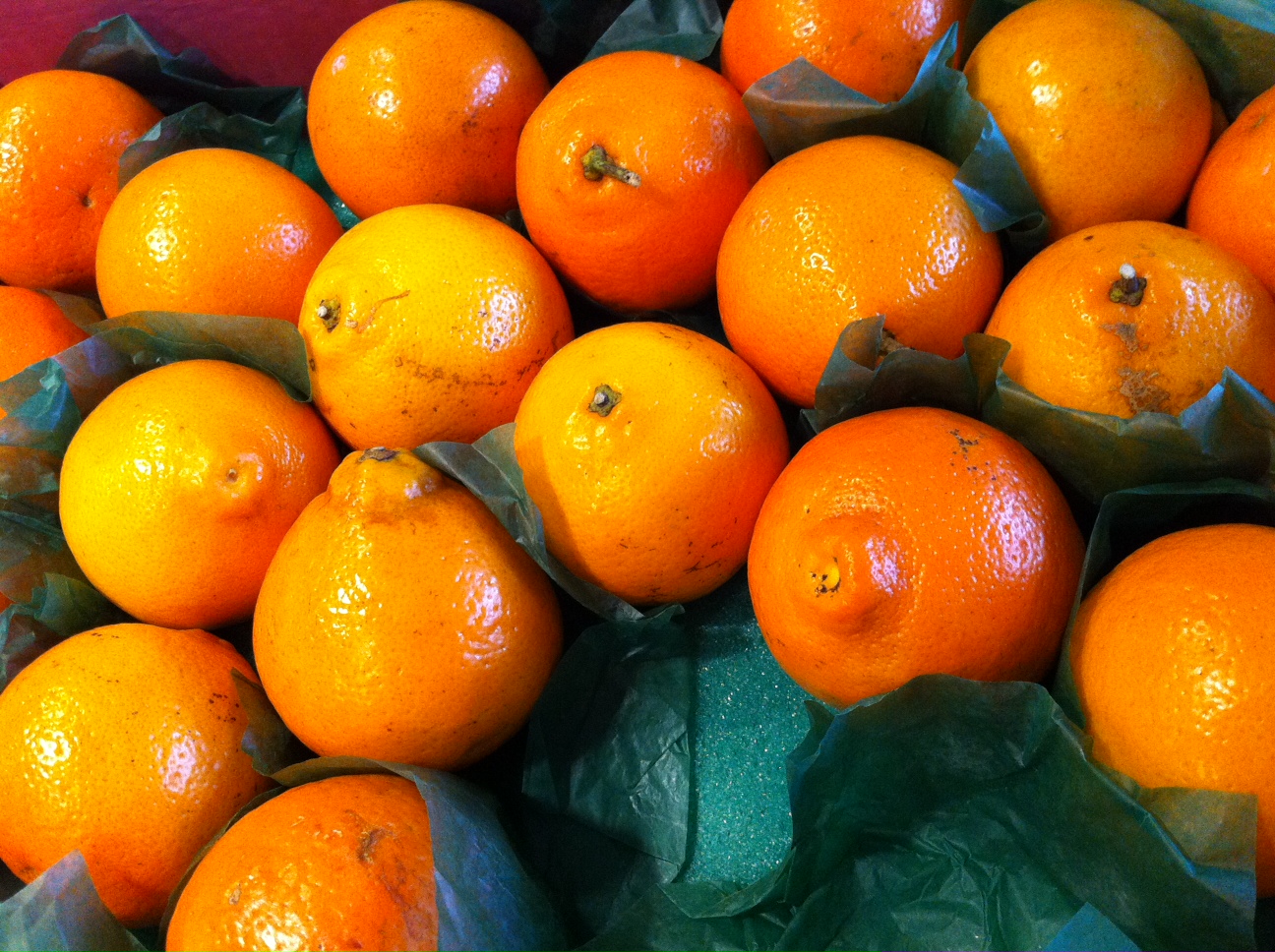
My wife’s Aunt Kay in Florida sends us a really cool gift every year. It’s a box of Cushman’s HoneyBells from Florida. They look like fiery red bell-shaped oranges, and they are the sweetest and juiciest oranges you will ever have! But the cool thing about them is that they’re not really oranges at all.
honey bells
HoneyBells are a unique natural hybrid of Dancy Tangerine and Duncan Grapefruit. The plants are grafted to a sour orange root stock, and when the tree reaches maturity, it looks just like a grapefruit tree…but with oranges growing on it.
HoneyBells are available for a very short time every winter…and that time is NOW. So if you’re at all interested, check out http://www.honeybell.com/. Cushman’s was bought out by the fruit giant Harry & David some years ago, but the excellent quality of the product and their fine service has not changed.
I usually make my Algarita, my twist on a margarita, with pineapple juice. But when I get those HoneyBells in the mail, my recipe takes on a new twist:
algarita 1
HONEYBELL ALGARITAS
2 oz Patron silver tequila
1/2 oz Cointreau orange liqueur
4 oz fresh squeezed HoneyBell juice
1/2 oz fresh squeezed lime juice
Fill a tall glass with ice and add all the ingredients. Stir vigorously. Pour into a large margarita glass. Garnish with lime wedge. Salt optional.
algarita 2
Of course, you can use any great juice orange to make this drink…but the fact is that HoneyBells are really not that much more expensive. But the clock is ticking…get ‘em soon or you’ll need to wait a year!
Any other time of the year, substitute pineapple juice, orange juice or a combination of both for the Honey Bells.

CANTONESE CHICKEN

Posted: January 11, 2013 in chicken, Food, Recipes, Uncategorized
Tags: , ,
Peking duck is one of my favorite treats, but there aren’t many Chinese restaurants in my area that prepare it really well. So when I can’t get to Chinatown in Boston or New York, I’m happy to settle with this recipe that I’ve adapted from one of my favorite cookbooks: “The Chinese Cookbook,” by former NY Times food editor and critic Craig Claiborne and Virginia Lee.
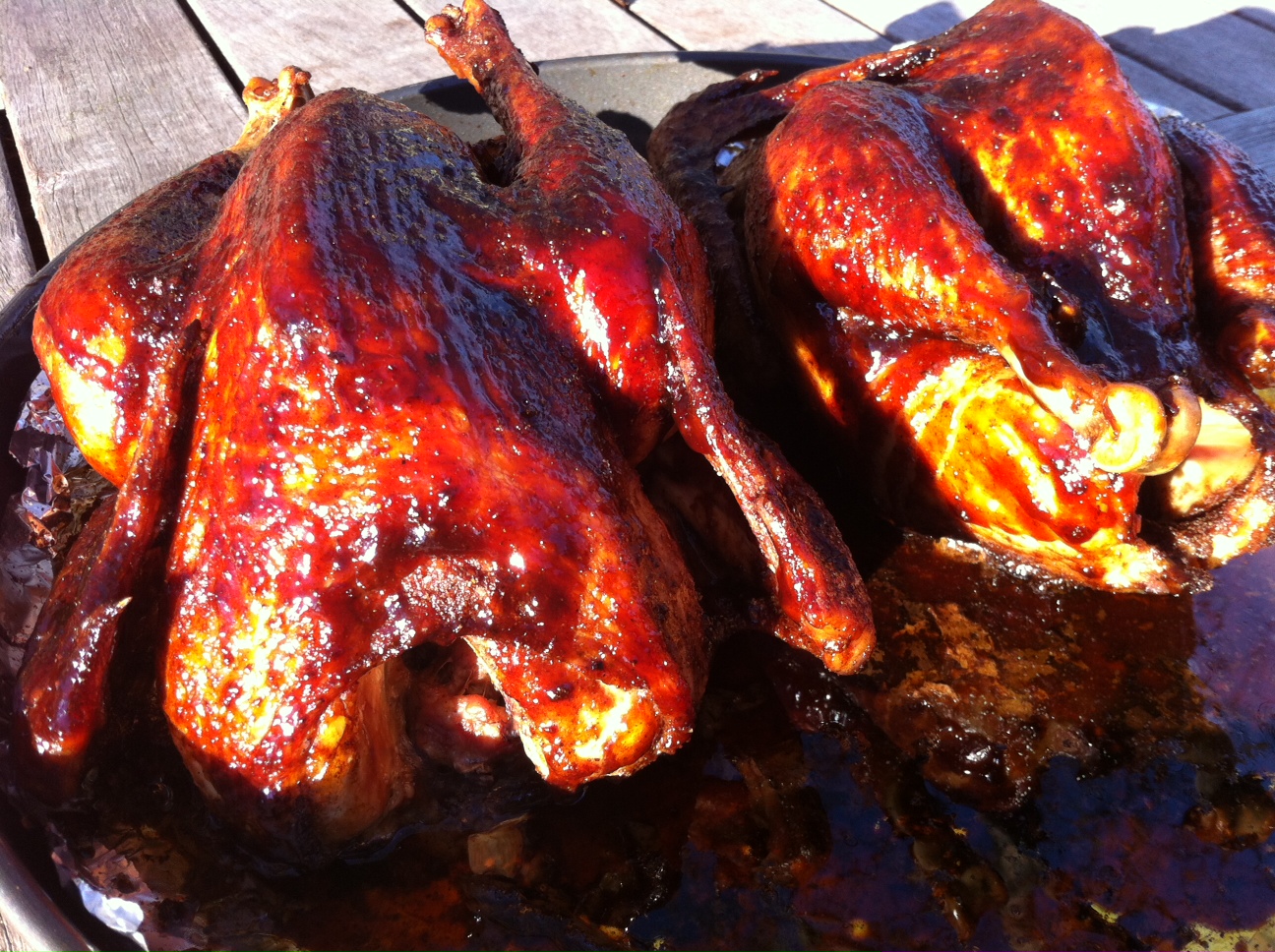
It isn’t Peking duck, but it sure is good! I prefer using a whole pasture-raised organic chicken from my good friends at Fire Fly Farms in Stonington, CT (www.fireflyfarmsllc.com)…but use what works best for you. This time around, I used two Barred Rock chickens, about 3 lbs each, instead of one larger bird.
 chix1
CANTONESE CHICKEN
Ingredients:
1 whole chicken, about 6 lbs.
1 Tablespoon Peanut oil
1 Tablespoon Soy sauce
6 Tablespoons Hoi Sin sauce
2 teaspoons Sesame Oil
4 teaspoons Chinese Five Spice powder
2 teaspoons Garlic Powder
2 teaspoons Salt
1/2 teaspoon Black Pepper
Remove all giblets from chicken. Rinse and pat dry.
Rub the soy sauce all over the chicken. Then rub the peanut oil all over the chicken.
Combine Chinese Five Spice, garlic powder, salt and pepper in a bowl. Season entire chicken, including inside the cavity, with this mixture.
Pre-heat oven to 350 degrees. Place chicken in a pan lined with aluminum foil (cleanup will be easier) and bake.
Meanwhile, combine hoi sin sauce and sesame oil in a small bowl. When chicken is about 15 minutes away from being done, reduce oven temp to 300, and brush chicken with hoi sin/sesame oil mixture. Cook another 15 minutes until chicken has a nice dark glaze…do not burn!
chix2
Let rest about 15 minutes before carving.

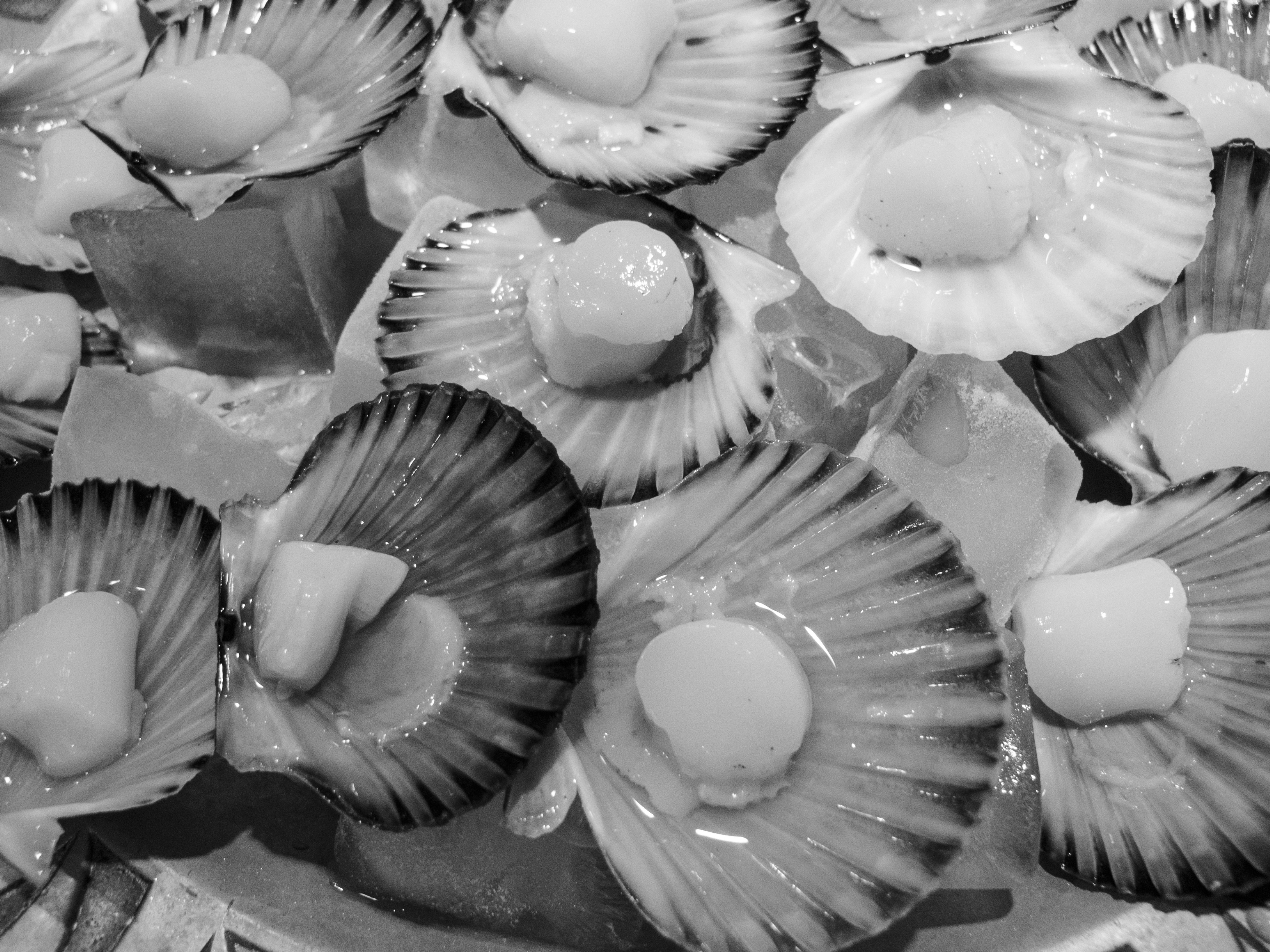
Can’t get a fresher scallop than that!

Here in Rhode Island, we have access to amazing seafood year-round. My friend Gary, is a lobster man. My neighbor farms oysters. And for anything else, the winter farmers’ market at the Hope Artiste Village in Pawtucket, RI (www.farmfresh.org/food/farmersmarkets_details.php?market=29) is a great place to pick up veggies, bread, pasture-raised meats from local farmers, and freshly caught seafood.
I was on a mission to find fresh mussels the other day, and in the process, stumbled upon fresh bay scallops piled high on ice at the Matunuck Oyster Bar booth. (www.rhodyoysters.com) Unlike like the larger sea scallops or bomster scallops, bay scallops are small and sweet, about the size of a mini-marshmallow.
IMG_3031
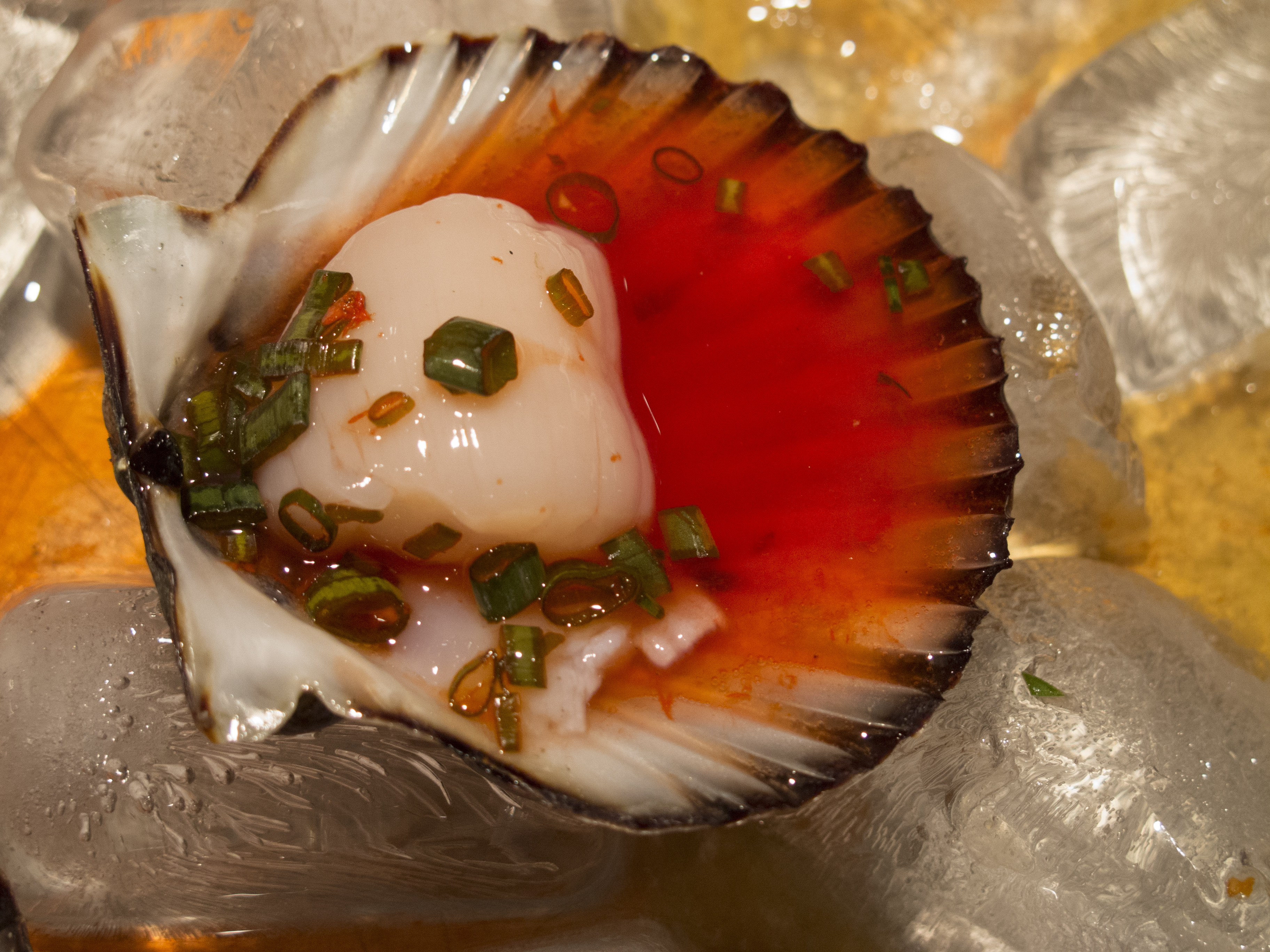
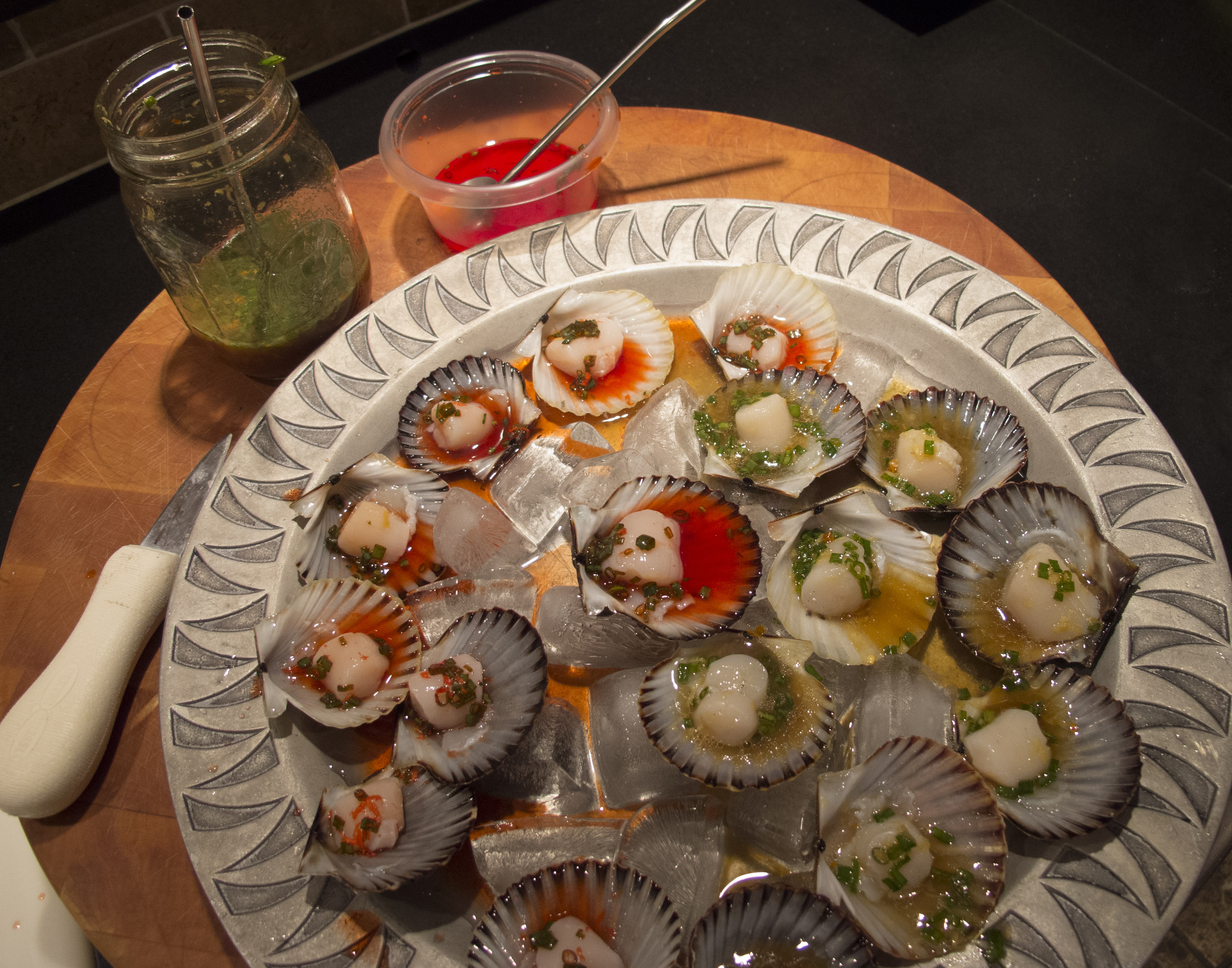
As far as I’m concerned, there is no better way to eat a fresh scallop than right out of the shell with just a little marinade on top, popping these beauties into my mouth literally as they’re still pulsing on the shell.
Scallops are a bit trickier to open and clean than clams or oysters (at least for me) but all it took was a little practice while sipping a Chopin martini and I got the hang of it in no time.
There are two marinades that I use when serving up raw scallops. The acidity in these marinades will cook the scallop a little, like in ceviche.
“MILLS TAVERN” MARINADE
The first place my wife and I ever had a raw scallop was at Mills Tavern, a highly rated restaurant in Providence, RI. Freshly shucked scallops (in large flat shells) were served on ice with a tangy red marinade. We never got the recipe from the restaurant, but this is our version of that marinade.
3 tablespoons rice wine vinegar
2 tablespoons Grenadine
1/2 teaspoon fresh finely grated ginger
2 teaspoons finely chopped scallions
Combine all the ingredients and chill before using.
IMG_3037
This marinade also works really well with raw seafood…
ALZ CEVICHE MARINADE
1/4 cup freshly squeezed orange juice
1 1/2 tablespoons freshly squeezed lemon juice
1 1/2 tablespoons freshly squeezed lime juice
2 tablespoons soy sauce
1 tablespoon + 1 teaspoon peanut oil
1/2 teaspoon honey
1 1/2 teaspoons fresh finely grated ginger
2 tablespoons finely chopped scallion
2 small dried chili peppers, finely chopped

Combine all the ingredients and chill before using.

IMG_3033

Amazing photos by my wife. Check out her website! http://www.kellymilukas.com

And would eat this if it twitches?? http://youtu.be/b4eCXZUQkNY

I know that winter has only started. But I’m cold, dammit, and I’m thinking about the Caribbean!

One of the tastiest rum drinks you can make, and one that certainly brings you back to the Caribbean—or at least makes you feel like you’ve been there—is the legendary Painkiller. It was invented on the tiny island of Jost Van Dyke in the British Virgin Islands, at the famous Soggy Dollar Bar. Located on White Bay, a stretch of the whitest most beautiful sand in the Caribbean, surrounded by beautiful turquoise waters, there is no dock. You have to anchor your boat offshore and swim…hence the name: the Soggy Dollar.

SOGGY1

Daphne Henderson was the owner of the Soggy Dollar years ago, and she is credited for inventing the Painkiller, which used Pusser’s rum, a British rum that is readily available here in the United States. Charles Tobias, a businessman that received permission from the British Royal Navy to commercialize Pusser’s rum in 1980, tasted the Painkiller and realized the potential of this amazing drink. He took some Painkillers home to the island of Tortola, where he experimented in recreating that drink, coming up with what he thought was something that was as good as—if not better than—the original. He called it the Pusser’s Painkiller.

Tobias never found out what Daphne Henderson’s original recipe was, but when he brought his own Pusser’s Painkillers back to the Soggy Dollar, and had a tasting battle between the two recipes, his recipe apparently won 10 out of 10 times. With 4 Pusser’s bars and restaurants in the Caribbean and 2 more in the states, Tobias quickly made the Pusser’s Painkiller the signature drink of these now-famous establishments…and perhaps the most popular drink among the sailing community in the US, Caribbean and West Indies.

The drink itself is simple…

PUSSER’S PAINKILLER

4 parts pineapple juice

1 part cream of coconut

1 part orange juice

Combine these 3 ingredients, with lots of fresh grated nutmeg in a glass with ice. How much Pusser’s rum you use depends on how hammered you want to get! A Pusser’s #2 uses 2 parts rum…a Pusser’s #3 uses 3 parts rum…and a Pusser’s #4 uses 4 parts rum!

I’ve had several Pusser’s #4’s back in the day when there was a Pusser’s bar on the island of St John in the USVI many years ago. I’ve also sampled them in the BVI at the 2 Pusser’s locations on Tortola.  But I still prefer going back to Jost Van Dyke and knocking back a few at the place where the Painkiller was born, the greatest beach bar on planet Earth: The Soggy Dollar Bar.

I don’t know when I’ll get a chance to go back. But my bathing suit is already packed.

SOGGY2

Thanks to my buddy, Dr Chezwick, for the photos. No children were harmed during this catamaran trip.