With gluten-sensitive people in my family, I have always been on the hunt for the best gluten-free pizza crust recipe. I’ve tried everything from ready-made crusts with cauliflower, to a variety of gluten-free flour recipes. But I finally found a gluten-free pizza crust that tastes–and smells– like real pizza should!
In some ways, I guess I shouldn’t be surprised that the gluten-free flour comes from an Italian company based in Naples that has been making regular 00 pizza flour since 1924. The company is Caputo, and they are the standard when it comes to pizza flour.
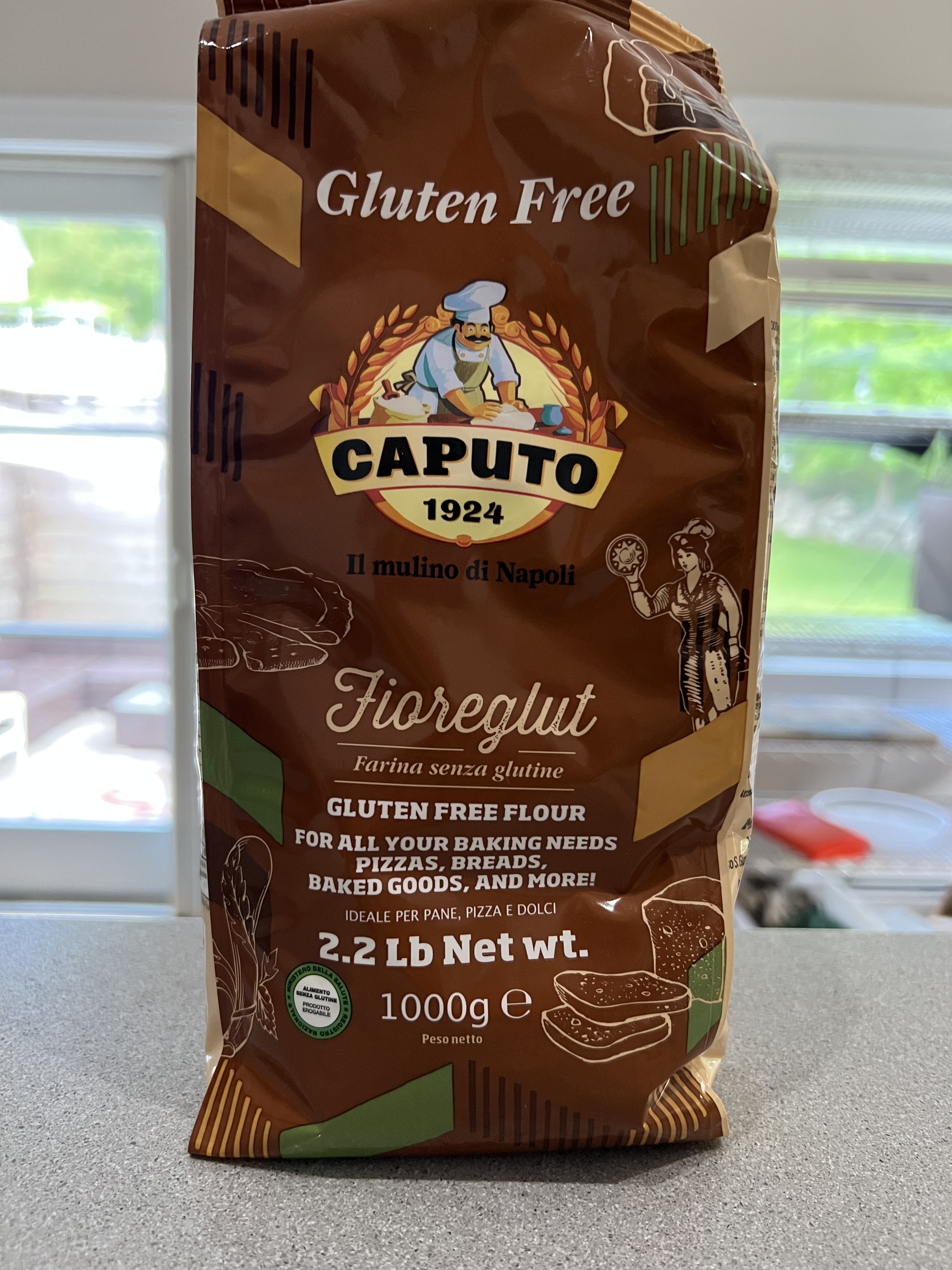
What sets the Caputo gluten-free flour apart from all the others that I’ve used in the past is that the main ingredient is gluten-free wheat starch, a slightly controversial ingredient. Only a trace of gluten remains after the removal process, so it’s considered gluten-free, and those with gluten sensitivities, even those with Celiac, can use it. Those with a wheat allergy (not the same as a gluten allergy) should still stay away (or check with their doctor) because wheat starch is, after all, a wheat product.
But what a difference the wheat starch makes in flavor and texture!
As it turns out, the makers of my Ooni pizza oven also recommend this flour for making gluten-free pizzas.
There are several versions of this recipe, so I took what makes sense to me from all of them, and created my own.
Accurate measurements are important, so I use a kitchen scale to weigh out everything. I got a really inexpensive one on Amazon, and it has become an essential tool in my kitchen. It’s totally worth the investment.

540g Caputo Fioreglut Gluten Free Flour
430g warm water, about 110 degrees
17g salt
10g instant dry yeast
15g olive oil
Place the flour in the bowl of a stand mixer. Add the salt and mix it into the flour.
Pour the water into a Pyrex measuring cup and place it in the microwave for 60 seconds on high. How much longer it will need after that will depend on your microwave oven, so measure the temperature carefully. You want the water to be no more than 110 degrees, or you’ll kill the yeast.
Pour the yeast into the warm water and stir. Add a pinch of sugar (optional) to feed the yeast. It should foam up in 5 to 10 minutes.
Connect the dough hook to the mixing bowl and set it on slower speed.
When the yeast has foamed up, add the olive oil to it, and then pour everything into the mixing bowl.
Increase the speed of the mixer and let it run for 5 to 10 minutes, making sure it grabs all the flour that might be clinging to the sides of the bowl.
When the dough has combined, stop the mixer and remove the dough hook. Cover the bowl in plastic wrap and let the dough rest in a warm area for 1 to 2 hours.

When the dough has roughly doubled in size, divide it into 2 equal portions, rolling them into balls. It may collapse on you, but that’s normal. Dust your hands with flour to keep it from sticking.
Place the 2 dough balls into a well-floured airtight tray (individual bowls covered with plastic wrap work well, too) and let them rise again for at least an hour. You can let it go up to 5 hours, if needed.
Pre-heat your oven (whether it’s in your kitchen or outdoors) to its highest temperature. If using the kitchen oven, invest in a pizza stone. It goes into a cold oven and needs time to heat up.
Grab your pizza peel and flour it liberally. Take a ball of dough out of the container and place it on the peel. Rather than stretching it and tossing it like regular pizza dough, you need to be gentle with gluten-free dough, so simply press down on it with your fingertips, stretching it out as you go. Form a higher edge for the crust, if you like. If you push down too hard, or stretch too much, it will tear, so be careful.
When the dough is stretched to a 1/4” thickness, pick up the pizza peel and give it a gentle shake to make sure the dough isn’t sticking to the peel. (If it is, carefully lift up one side of the dough and toss some flour under it. Do the same on the other side, then test-shake the dough again.)
Put the toppings on the dough only when you know it’s not sticking to the peel!
The standard pizza margarita is great, but one of my favorites was this one…
2 tablespoons unsalted butter
2 tablespoons gluten-free flour
1/2 cup heavy cream
4 oz mozzarella, grated
4 oz prosciutto
Fresh baby arugula
Parmigiano Reggiano, shaved slices
The bottom layer of the toppings is a béchamel sauce. In a saucepan, melt the butter. Add the flour and whisk until it’s combined. Keep whisking, and add the heavy cream. When it thickens, take it off the heat and set it aside. If it’s too thick, just add a little water to it and whisk again.
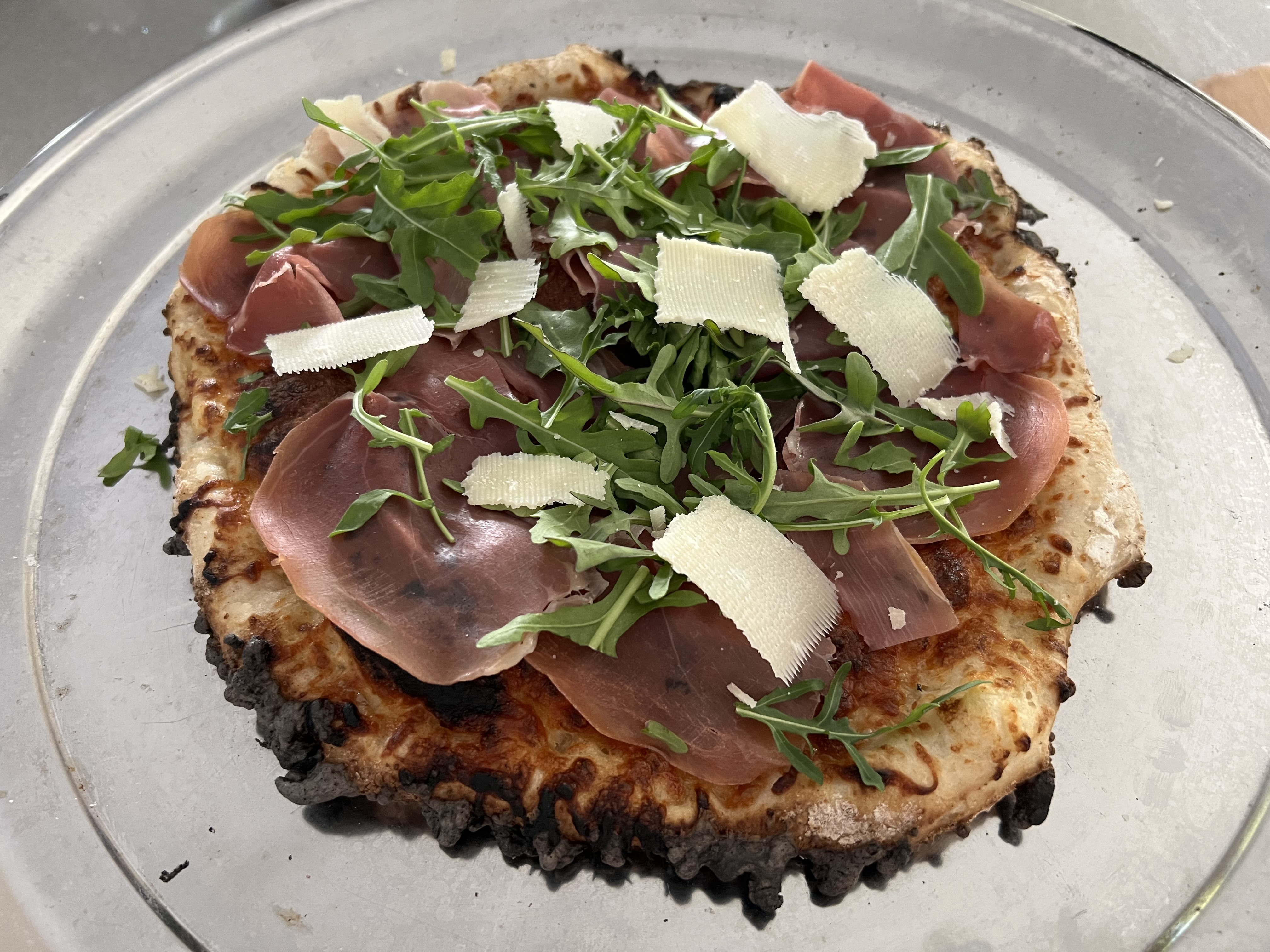
To build the pizza, stretch out the dough on the peel, making sure it doesn’t stick to it. Spread the bechamel sauce over the dough, stopping at the edges, just like you would tomato sauce. Sprinkle the mozzarella cheese on top. Slide the pizza into the oven and bake it until golden brown. (In the case of gluten-free dough, it’s better to bake it a bit more than a bit less.)
As soon as you pull the pizza out of the oven, scatter the prosciutto over the top of the hot pie, then sprinkle the arugula on top of that. Finally, top with the slices of shaved Parmigiano Reggiano.
 Live the Live ™
Totally worth the time & effort of a post!
<
div>I haven’t stopped talking bout th
LikeLike