One of the highlights of my recent trip to Scotland was to visit the Oban Whisky distillery. Oban is a lovely seaside town, about a 2-hour’s drive from Glasgow on a sunny day.
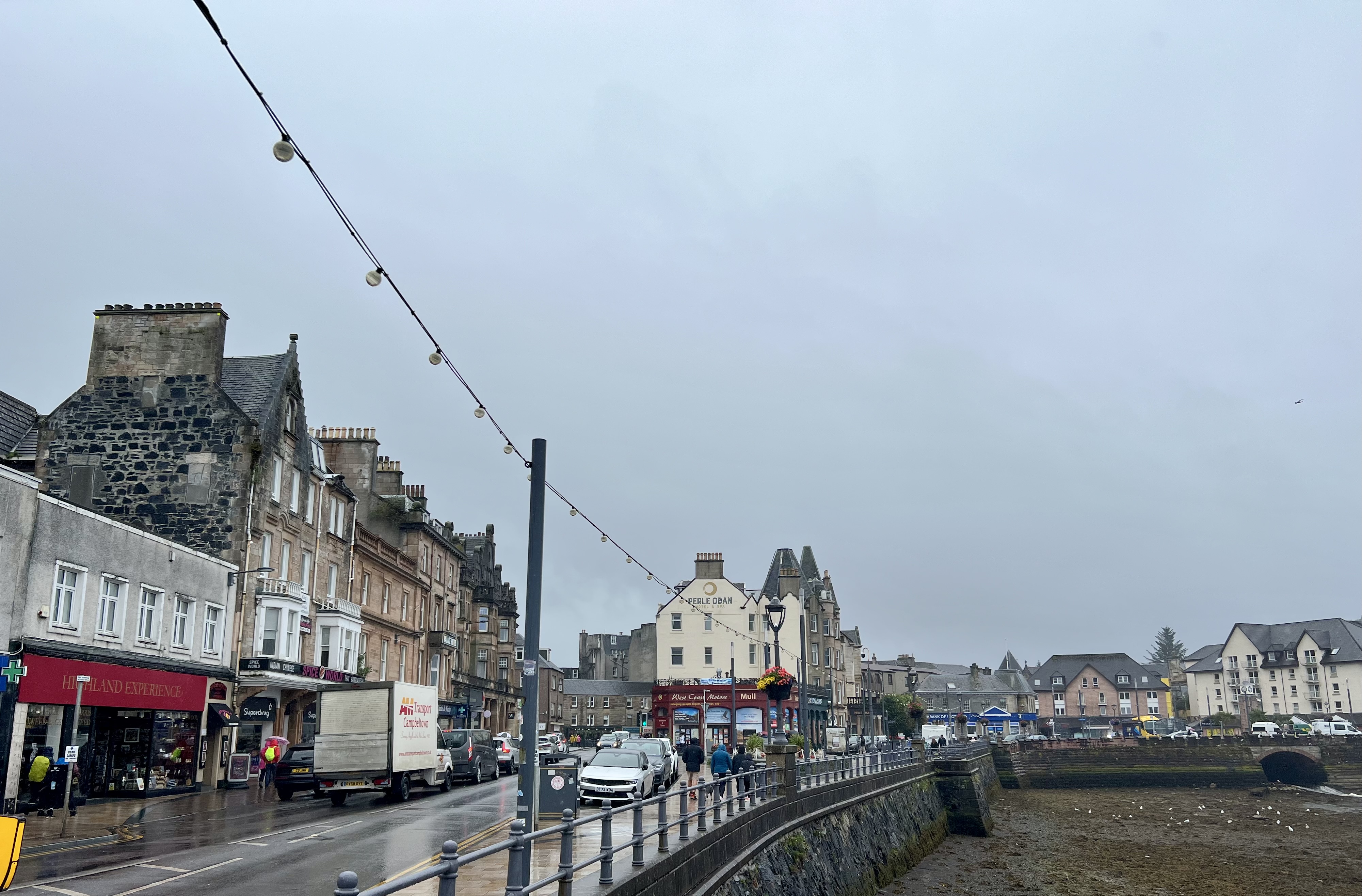
Oban
Unfortunately, for me, it was pouring buckets of rain, so my drive took a little over three hours. Nonetheless, the tour was worth it.
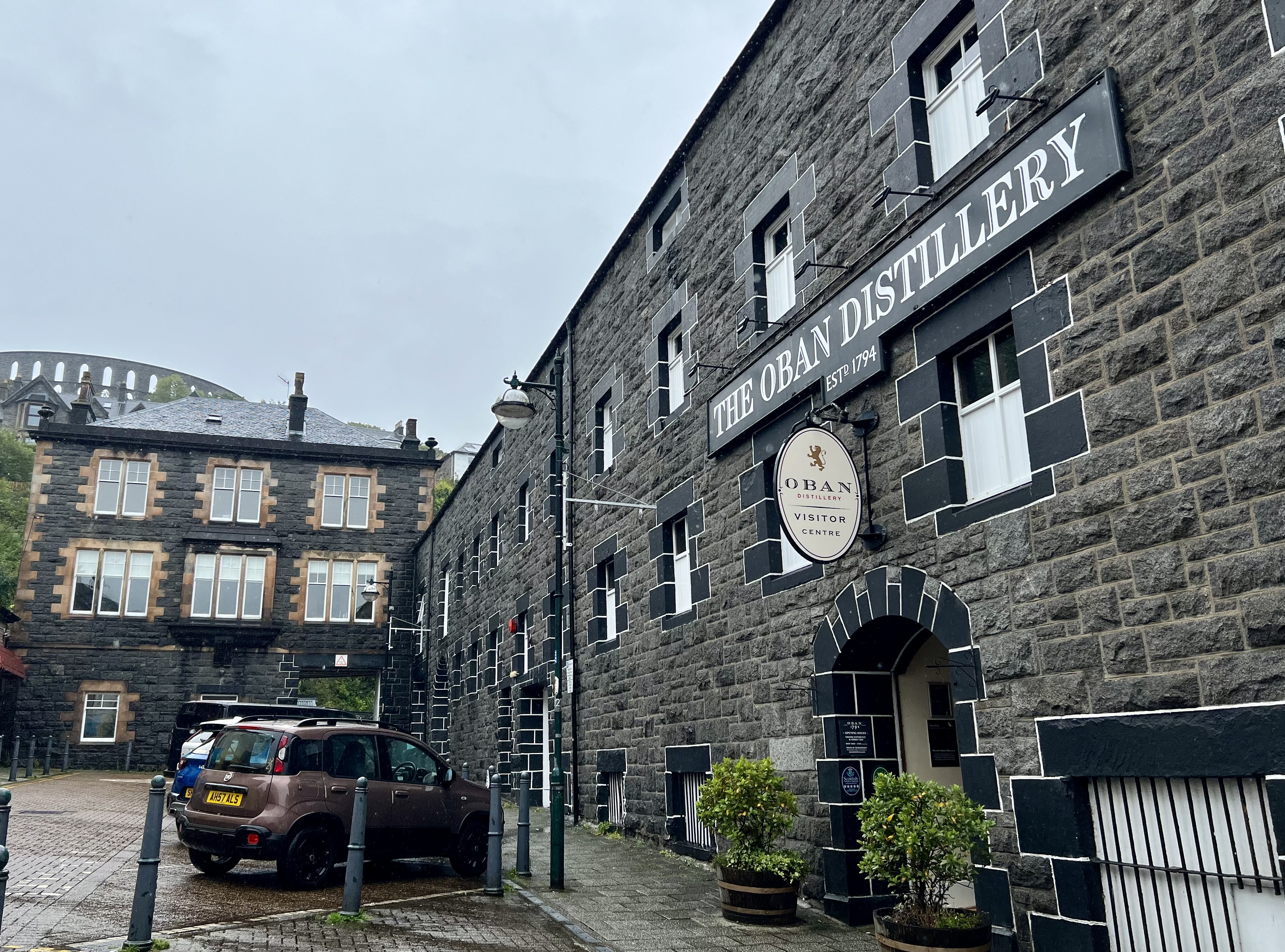
Oban Whisky is owned by the giant alcoholic beverage company, Diageo, but they claim that the company really leaves them alone to do their magic. And so they do, seven days a week, 365 days a year, cranking out as much whiskey as this little old distillery possibly can.

The bar at the Oban distillery. A nice place to sit and sip while you wait for the tour to start.
There has been no expansion since they started in 1794, other than moving the bottling process over to another location. (The distillery predates the town, which was established in 1811.)

The tour begins with a taste!
One of the smallest distilleries in Scotland, only seven employees make Oban Whisky, which is a mind-blowing thought! All of the whisky comes from only two copper stills. The relatively small wooden holding tanks are all they have to make all of their whisky, including their very popular Oban 14, which is available in most of the United States.
All of the whisky made at Oban is single malt. That means it’s made at a single distillery using only water, yeast and malted barley.

The process begins with the barley.
Our tour guide told us that the taxes in Scotland are ridiculously high on booze, about 75%! So it’s a better deal for them to sell their whisky overseas to make a larger profit, and Americans love their whisky!

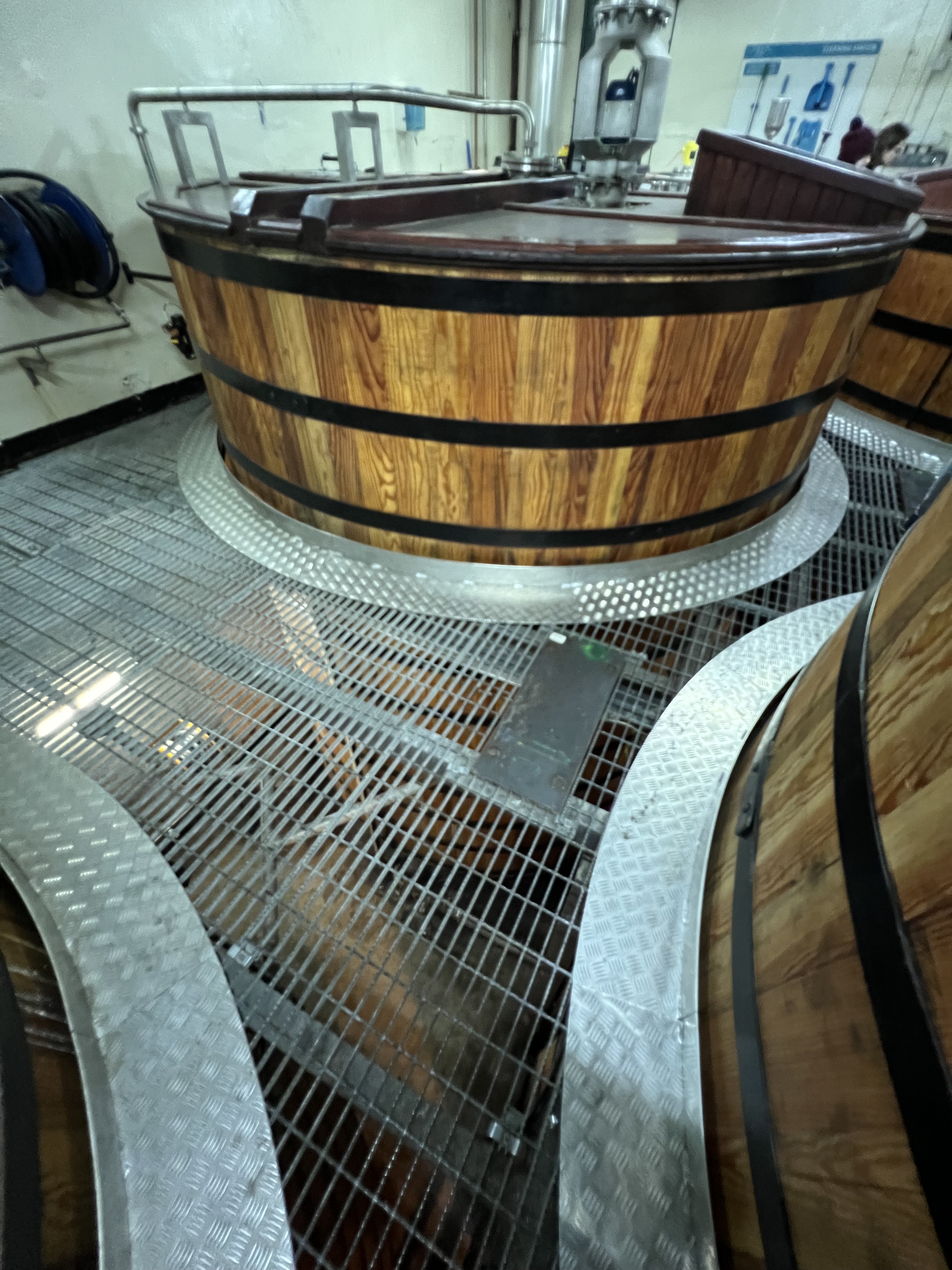
Custom-made wooden holding tanks.
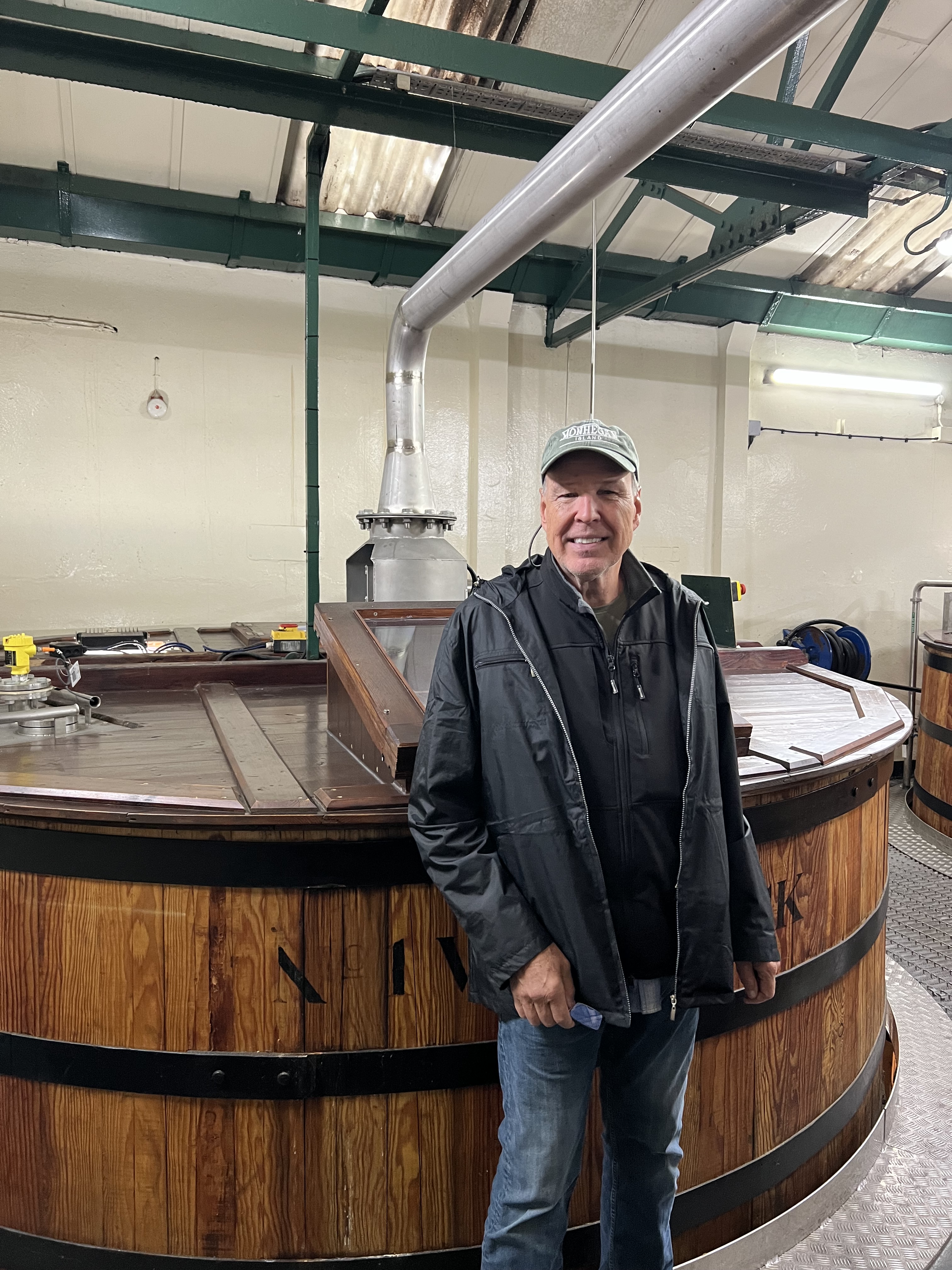
Oban uses peat more for flavoring than it does for heating, and so their whiskys are far less smoky than other Scottish brands. (They use biodiesel to heat their mash.) And they’re big on recycling: the spent barley goes to feed local cattle.

Two precious stills. They make all the whisky at Oban.
Most whisky distillers in Scotland have a relationship with American bourbon distilleries, because they reuse American bourbon barrels to start the aging process on their whisky. It’s pretty much the standard process throughout all of Scotland.

The good stuff…before it gets barreled.
That’s why being owned by a company like Diageo, which owns Bulliet bourbon, can give Oban a never-ending supply of bourbon casks. (Bourbon must always be aged in a brand new oak cask, so once the barrel is used, the Americans no longer have any use for it. The Scottish take it and reuse that barrel several times before passing it on to somebody else.) The Scots will also use rum casks, sherry casks from Spain, whatever it takes to add flavors and nuances to their whiskey over the many years of aging.
. 
In Ireland, it’s not called Irish whisky unless it ages for at least three years in a barrel in Ireland. To outdo them, Scottish law says the whisky must age 3 years and one day in a barrel in Scotland to be called whisky!
Either way, the end results at Oban distillery were enjoyed by all. Slàinte!
By the way, if you’re wondering why I spelled the word “whisky” without the “e,” you need to read my blog that explains it all. Check it out here:
THE DIFFERENCE BETWEEN WHISKEY AND WHISKY
 Live the Live ™