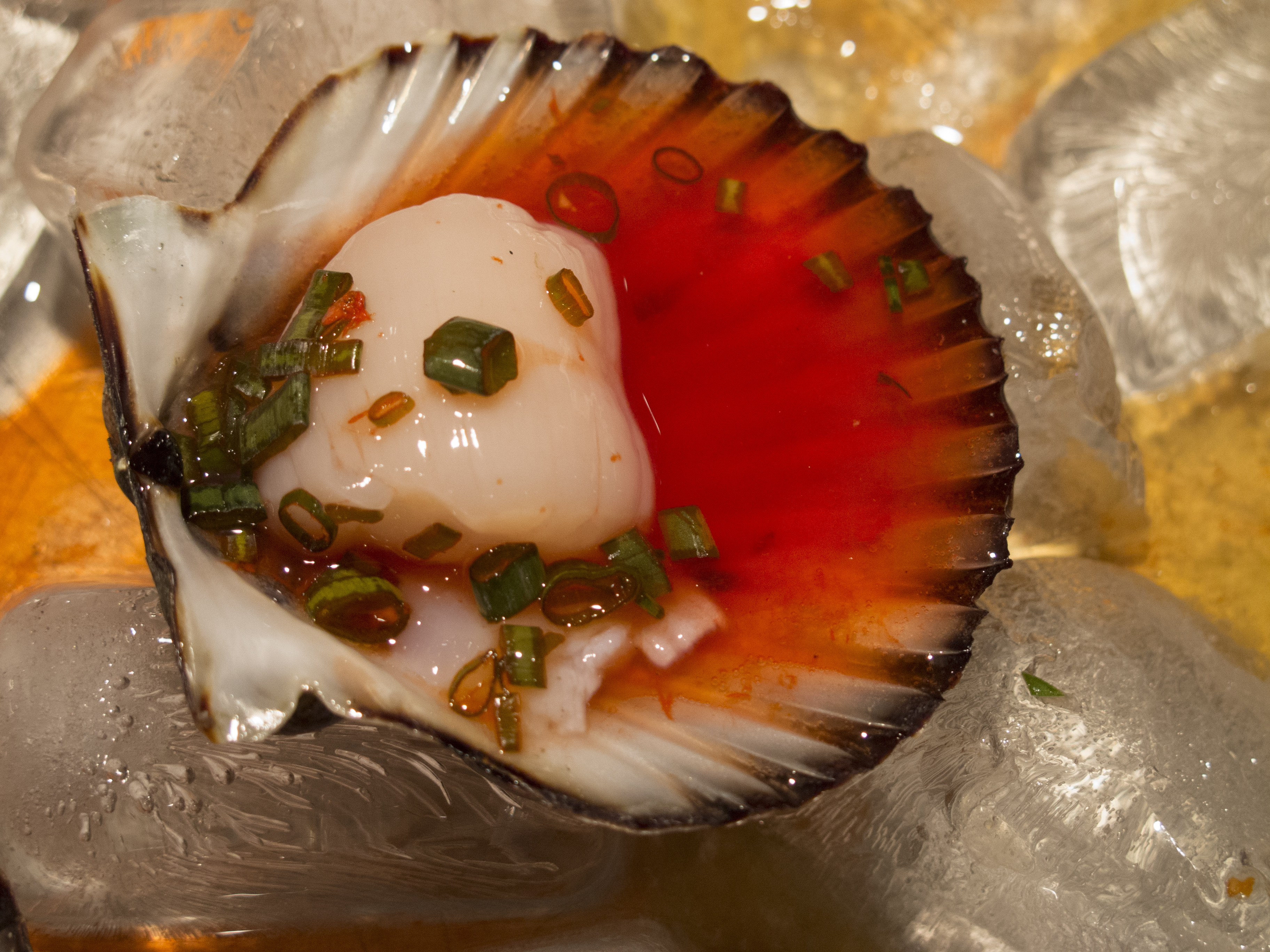
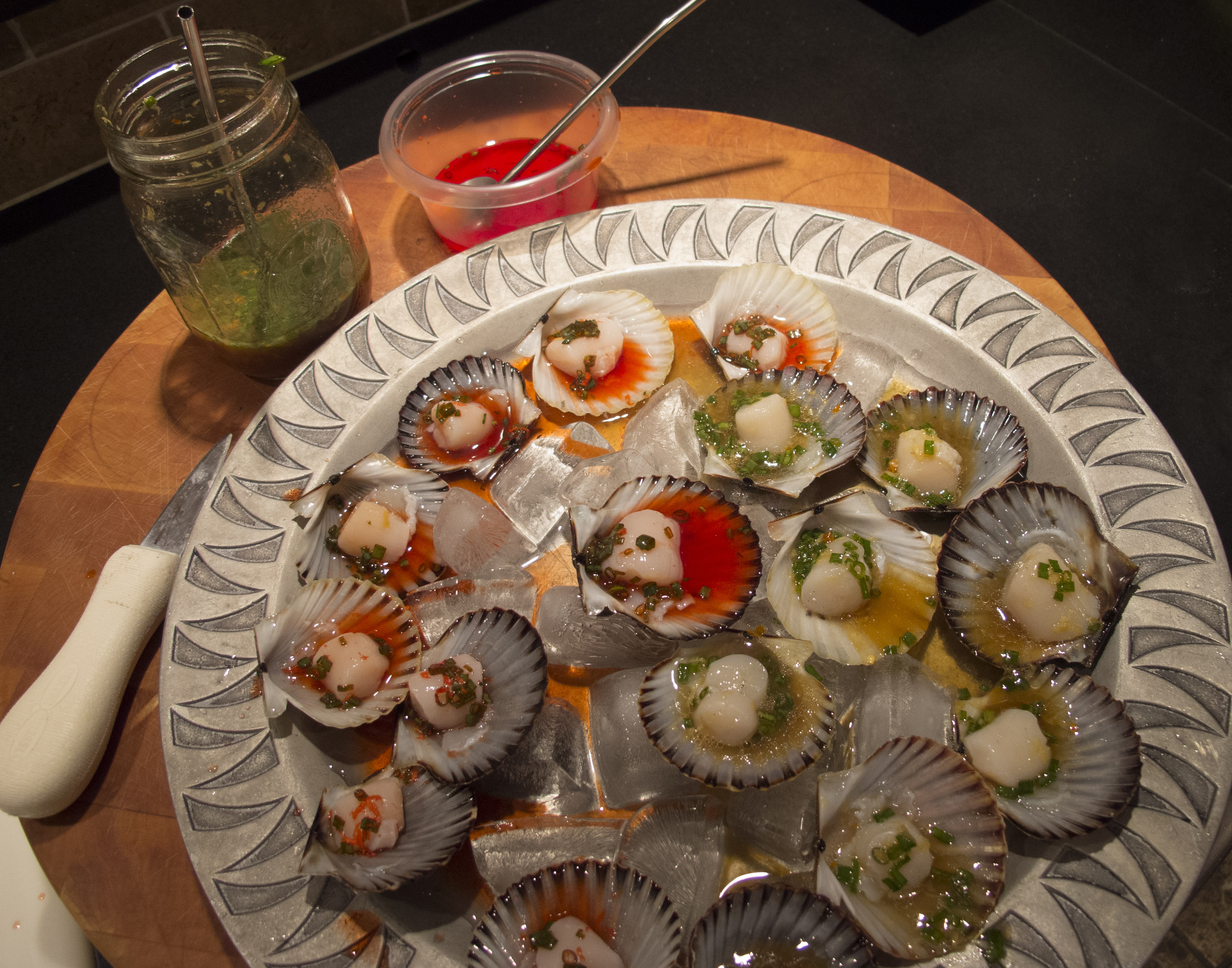
I prefer to use sushi grade tuna for this dish, which is easily found in small frozen “bricks” at Whole Foods or similar stores.

I prefer to use sushi grade tuna for this dish, which is easily found in small frozen “bricks” at Whole Foods or similar stores.

Horseradish just doesn’t get the credit it deserves. A world without horseradish would mean boring Bloody Mary’s, cocktail sauces with no kick, and steaks and roast beef sandwiches just crying out for sauces and mayos with personality.
Horseradish is a perennial plant from the Brassicaceae family, which also includes mustard, wasabi, broccoli, and cabbage. It’s mainly grown for its white tapered root, which, when not disturbed, has little aroma. But when you cut or grate it, enzymes from the damaged plant cells release oils that give horseradish that wonderful pungent smell and flavor. It loses this pungency just as quickly, unless you store it in vinegar, which is why bottled or “prepared” horseradish is always found in a vinegar solution.
In the garden, horseradish can become invasive, meaning it will want to take over if you let it, but in my garden, it doesn’t get to do that because I regularly harvest a couple of roots for my kitchen.
Horseradish in the garden
Growing up in a Lithuanian family, there were very few spices ever used in cooking. Most of the food was pretty bland. Mom would salt food, but even black pepper was pretty rare. Peppers of any kind were never used–they never grew in Lithuania–so horseradish became the universal ingredient when a kick was needed. My grandfather loved it. I can still remember my grandfather crying his eyes out as he grated a freshly picked horseradish root from his garden. It was absolutely a labor of love. He would keep his grated horseradish in vinegar in the fridge, and then when dinner came around, it would quickly find its way to the table next to just about any meat my grandmother was cooking.
These days, with food processors in just about any kitchen, there’s no excuse not to use fresh horseradish. Your nasal passages and eyeballs are safe from being blown out.
Some of the basic applications for horseradish are still the best. The following recipes use prepared horseradish you easily find in the supermarket, but use fresh if you have it.
A freshly harvested horseradish root
For a simple horseradish mayo:
1/4 cup mayonnaise
2 Tablespoons prepared horseradish
Combine both ingredients in a bowl, cover with plastic, and refirgerate. Goes great on a roast beef sandwich.
For a fancier horseradish sauce that goes great on grilled salmon:
3/4 cup sour cream
1/4 cup mayonnaise
2 Tablespoons prepared horseradish
2 Tablespoons chopped fresh basil
1 Tablespoon fresh lemon juice
Combine all ingredients in a bowl, cover with plastic, and place in fridge for a few hours for the flavors to blend.
Alz cocktail sauce
2 cups ketchup
4 Tablespoons prepared horseradish
1 Tablespoon fresh lemon juice
1 teaspoon Worcestershire sauce
½ teaspoon Tabasco
5 grinds of fresh black pepper
¼ teaspoon salt
1 teaspoon vodka
Combine all ingredients. Store in a tight plastic container in the freezer. Thanks to the vodka, my cocktail sauce never freezes solid, so just scoop out what you need and let it thaw.
I love beets, but this variety I grow in my garden every year is special. They’re mild, they don’t bleed, the greens are delicious, and…look at ’em: they’re gorgeous! The variety is called Chiogga, and I highly recommend it in anyone’s veggie garden.
To roast, I simply wash the beets and cut them into smaller pieces. I place them on a sheet of aluminum foil, sprinkle with salt, pepper and a little EVOO, fold the foil over the beets to make a packet, and roast at 350 for about an hour or until they are fork-tender.


I love cocktails that are full of herbaceousness. (Got that right without spell check!)
So whenever my wife and are dining in a higher-end restaurant, where we see that mixology matters to them as much as the food, we take advantage of their knowledgeable bartenders and have them create something special for us to try.
Coppa is my second favorite restaurant in Boston–Toro being at the top of the list–and both are part of the Ken Oringer empire, with head chef Jamie Bissonette at the helm. Both also take pride in their cocktails, and this one from Coppa, named “Hey Neon,” is a personal favorite that I regularly re-create at home for myself.
The Coppa finished drink:
HEY NEON, BOTH WAYS
1.5 oz Aalborg aquavit
.75 oz Punt e Mes
.5 oz Cynar
.5 oz green Chartreuse
Finely minced, dehydrated kalamata olives
Combine the liquid ingredients in a cocktail shaker with some ice. Stir briskly and pour (straining the ice) into a rocks glass rimmed with the minced kalamata olives.
My version of the cocktail:
I tried mincing and dehydrating the kalamata olives, like they do at Coppa. But the oils in the olives kept them from drying out enough–maybe I was just too impatient for a drink! And I couldn’t get the minced olives to stick to the rim of my glass.
My solution was pretty simple: pour the drink into a martini glass and serve with a skewer of kalamatas. Works for me!
On the South Island of New Zealand, on the Pacific (eastern) coast near the beach town of Kaikoura, there is a shack that has been serving up crayfish for years…and it’s earned a cult following among foodies that, like me, have traveled thousands of miles just to have a taste of this seafood delicacy.
The place is called Nins Bin, and it’s simply a little shack that sits on the rugged, windy coastline of the Pacific. You walk in, and a plastic container holds already-cooked crayfish, caught that day. The prices for each are marked right on the shell. You pick one, they cut it in half, and serve it with your choice of two sauces: one a sort of thousand island thing, and the other a garlic aioli. We took one of each, walked over to the only picnic table nearby, and quickly finished off this little treat, hungry seagulls buzzing all around us, waiting for any morsel we might accidentally drop. (Not a chance!)

The flesh of the crayfish was sweet…but not really sweet like Maine lobster can be. And although it was a beautiful white in color, its texture was almost meat-like, like chicken. But really good. We devoured the tail, sucked whatever meat we could out of the legs, and that was it…crayfish gone. Experience had. It totally lived up to the foodie hype I had read about.
We hung out around Nins Bin a little longer, taking in the atmosphere before we got back in the rental car and headed down the road to the town of Kaikoura, our next stop on our 3-week, 2000 mile journey through New Zealand.