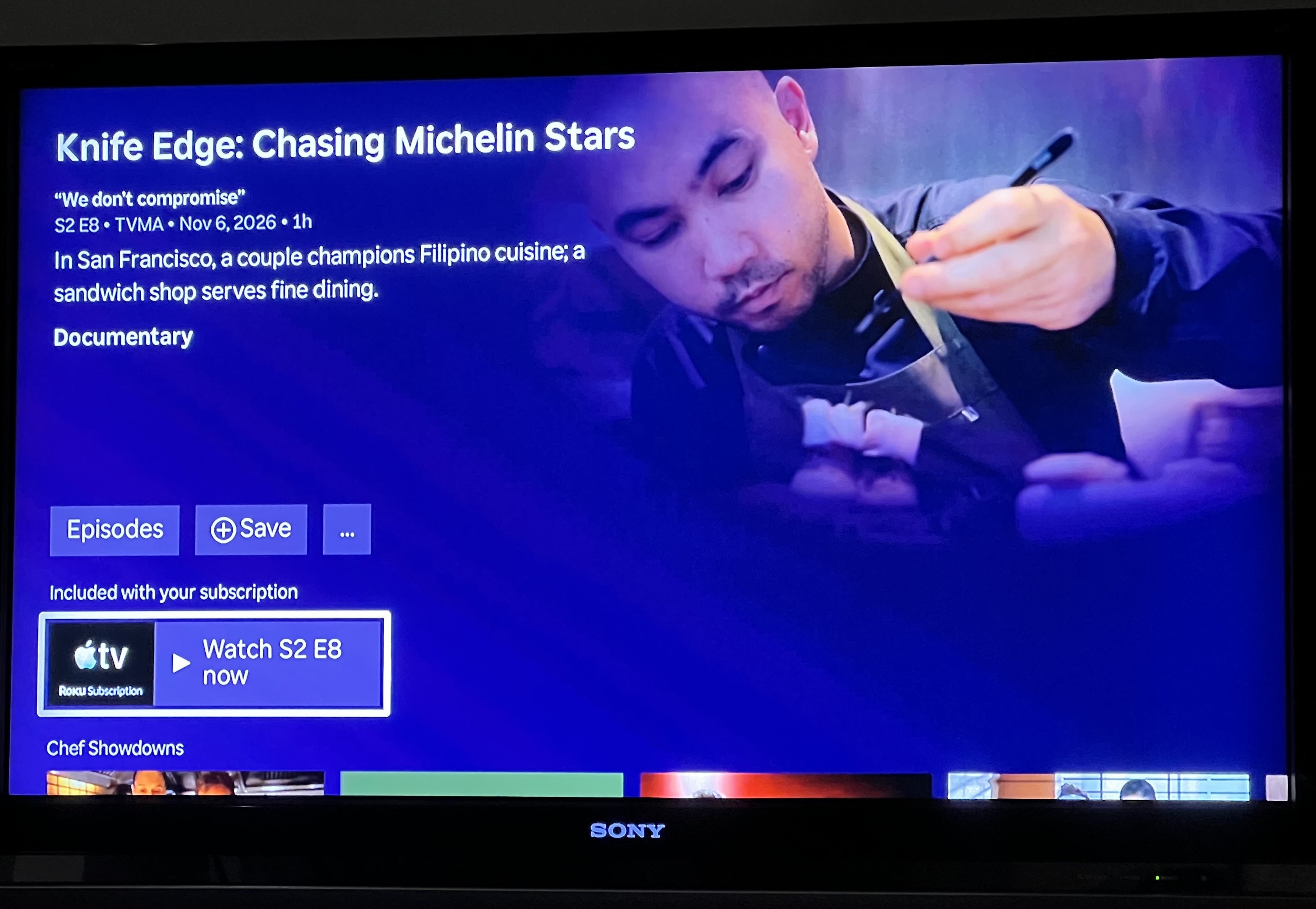
I just finished watching season 2 of “Knife Edge: Chasing Michelin Stars,” on Apple TV, a thoroughly enjoyable journey around the globe to see how chefs risk everything to earn their first, second, or in some cases, even third Michelin star. The amount of dedication and determination is astounding!
But I can’t help thinking, as many in the restaurant business do, how tarnished Michelin’s reputation has become because of their alliance with Sysco, the food distribution company.
If you don’t know the story, the Michelin Guide partnered with Sysco back in November of 2024, at the inaugural Texas Michelin ceremony, naming Sysco an official wholesale food distribution partner and presenter of the Michelin Guide Young Chef award. The collaboration expanded across several US ceremonies, and sparked debate over fine dining independence and sustainability after Michelin very quietly phased out its Green Star program in 2026. (It was established in 2020 and recognized restaurants using sustainable practices.)
There were complaints from restaurants that a “pay to play” practice was being established, with some restaurants actually receiving their Michelin plaques from Sysco reps. Michelin, of course, maintains that their inspectors make independent decisions and commercial partners, like Sysco, do not influence ratings.
If you’ve ever wondered why menus at smaller restaurants across the country seem to be the same–Why does everyone have a wagyu burger? Shishito peppers? Chocolate lava cake?–the answer is Sysco. They’re basically the “cheap food supplier” for many food establishments across the country. If you see a Sysco truck pulled up at your favorite eating establishment, you can expect a certain lower level of quality–so say many of my friends in the restaurant business. And if they say: “Oh, we just buy our cleaning supplies from them…” well, who am I to say they’re lying?


Al, as a one time purveyor of high end meats, SYSCO, in my opinion, is the death knell for at one time great restaurants. Like McDonalds, SYSCO provides consistent mediocrity… but the portions are all the same size (a problem we faced suppling cuts from one animal. Every cut differs and the chef must balance the portions. That is a disappearing skill.)
Early use of sous vide was fought in France, primarily Paris. The great kitchens would package their meals and allow any bistro to have Michelin star presentaions with only the skill of immersing a plastic bag in hot water. No real kitchen, or chef’s are required. But the people did get excellent food.
Pursuing each Michelin star is brutal. I have read of great chefs giving it up. They became chefs to create wonderful meals, not to be some dancing bear for Michelin.
Just as a farm to table restaurant with a SYSCO truck out front is lost, I fear Le Guide Michelin is lost.
Van
LikeLike