Posts Tagged ‘gin’

A GUY WALKS INTO A BAR…

Posted: September 1, 2025 in Uncategorized
Tags: , , , ,

I recently rediscovered a story I wrote a couple of years ago, after my trip to New Zealand. I had hopes of getting it published somewhere, with no luck. So, what the heck…I’ll reprint it here, adding a few photos to help with the story.

A Guy Walks Into a (New Zealand) Bar…

I recently returned from a two-week trip to New Zealand, touring the northern half of the South Island, clocking over a thousand miles by car and train.

My journey started and ended in Nelson, the oldest city on the South Island. It was a great home base to explore the famous Abel Tasman National Park, ending each day with dinner and drinks.

One of my favorite stops was the Urban Eatery and Oyster Bar in Nelson, where fresh, creative seafood filled the menu. I walked in and noticed there were no seats at the bar, my spot of choice when I’m traveling solo. I had made a reservation, but I saw a bar stool in the corner and pulled it up to the bar, much to the surprise of the bartender and manager. 
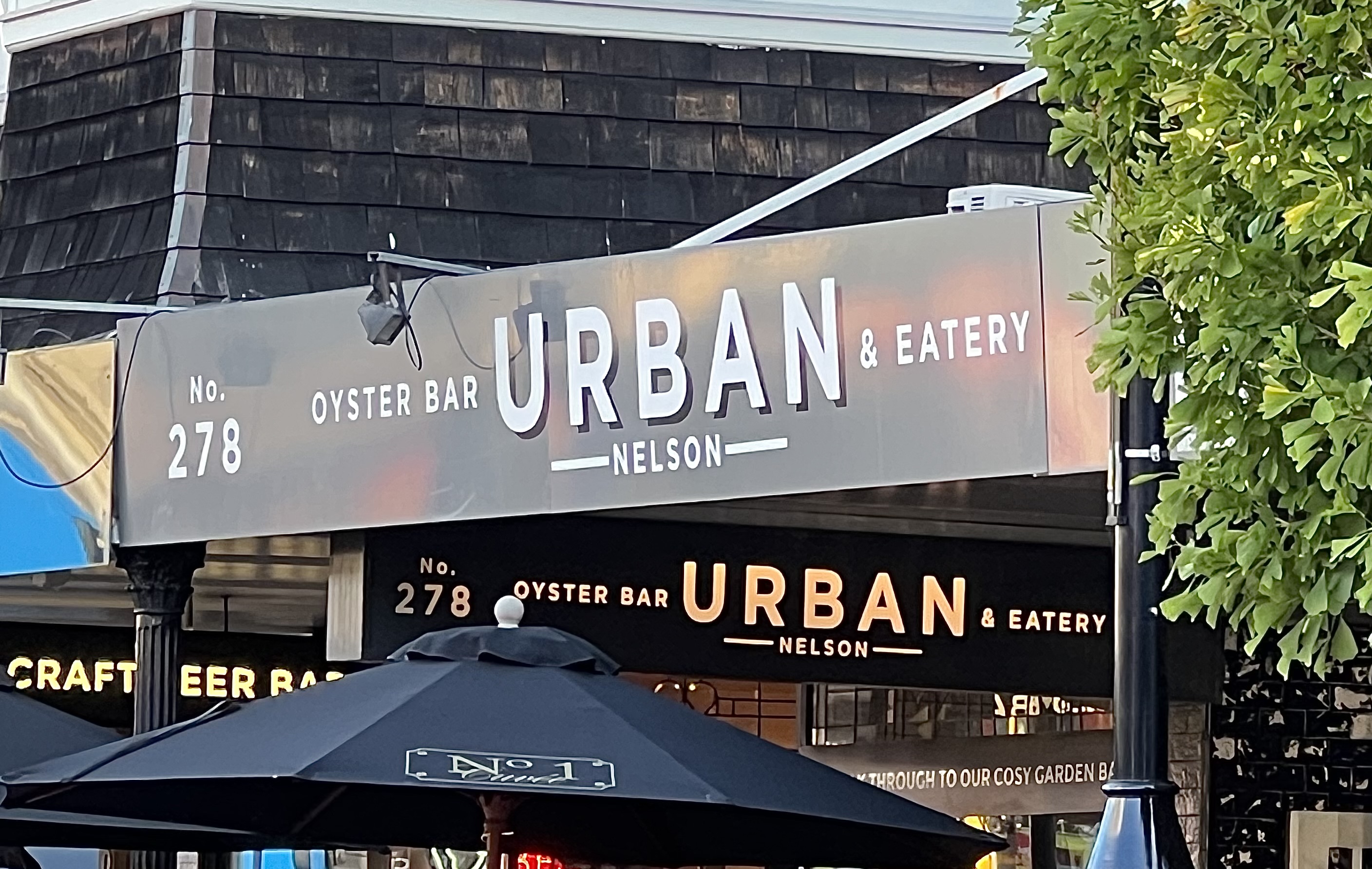
The manager explained that no one usually sits at the bar in New Zealand, opting for small tables, but it being obvious that I was an American, if I chose to do so, I was more than welcome to. I did get some interesting glances as I pulled my barstool up.

Bar view.

The bartender, a lovely young woman who perhaps wasn’t used to having someone to talk to in her workspace, asked me what I wanted to drink. I was craving for a vodka martini, very dry, expecting what I got at most American restaurants: 3 to 4 ounces of vodka, chilled, in a martini glass with olives. But instead, she hesitated.

She explained: “Here in New Zealand, if you order a ‘double,’ you get 30 mls.” (I quickly Googled it to find it was only 1 ounce.) “But, legally, I can pour an extra 30 mls into a shot glass that you can then pour into your glass yourself.”

Doing quick ounces-to-mls math in my head, I explained that a martini in the States can be almost 4 ounces, or 120 mls, and I could see her eyes widen in disbelief. “That’s irresponsible!” she gasped.

I laughed as I told her that two of those monstrous drinks were commonly referred to as a “businessman’s lunch” in the States, and she shook her head as she poured my first ounce in a rocks glass and then poured my side shot. (There were no martini glasses in sight.)

I poured my extra ounce into my glass and it still looked really low. “I’m guessing not too many people order martinis,” I said. “What do you usually fill the rest of the glass with?”

“Tonic, olive brine if it’s dirty, something like that.”

Ordering beer in New Zealand was simpler. It was served mostly in pints. Wine glasses, however, had a clearly marked line on each glass, a regulation set nationally. No “nice pours” the bartender would sometimes give you at the end of the bottle.

Clos Henri Vineyard, Marlborough

They allowed me to order as many drinks as I wanted, as long as I wasn’t inebriated, but it felt a little embarrassing to have to order so many drinks.

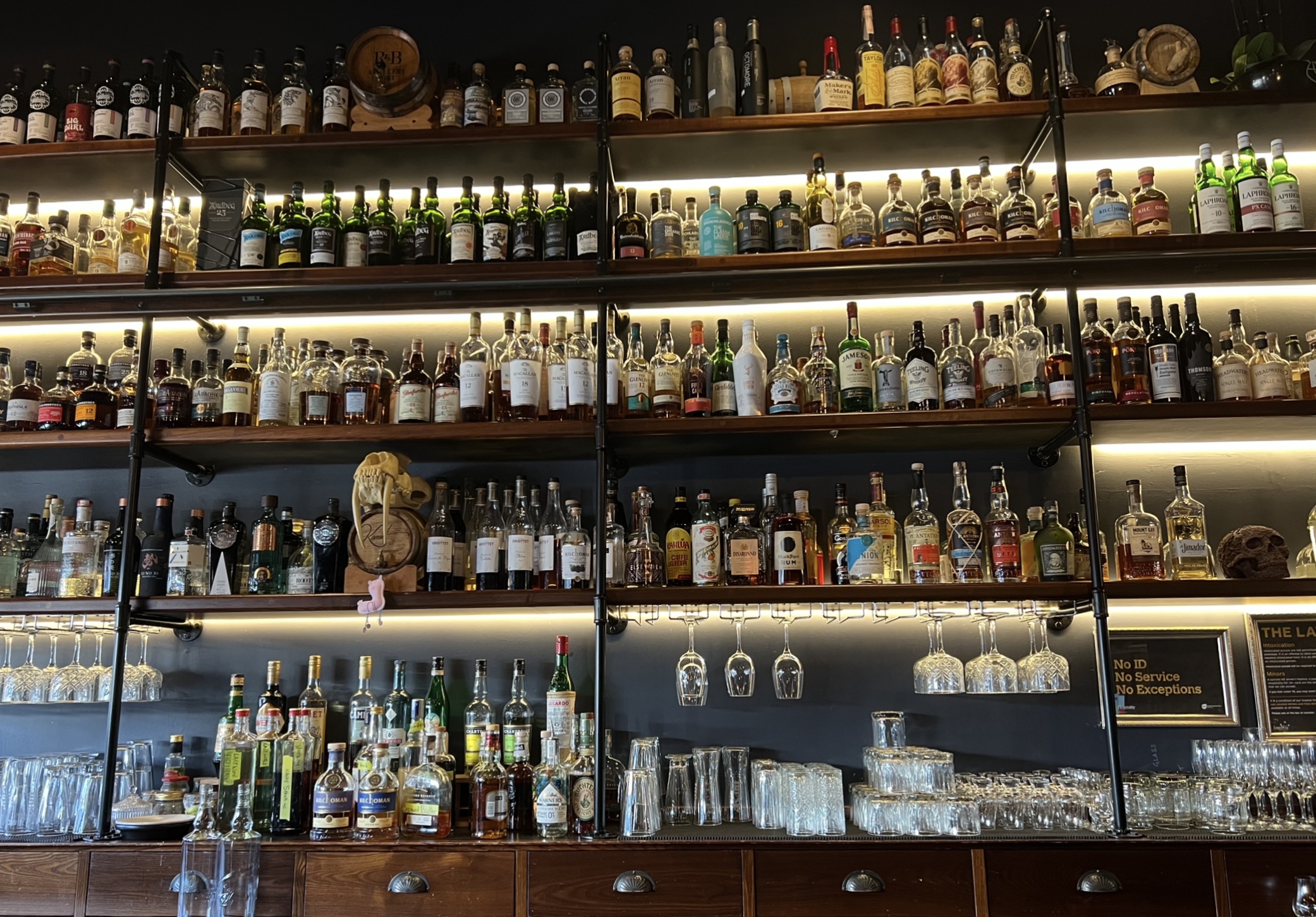
Down the street in Nelson, I visited Kismet, a very well-stocked cocktail bar, though their choice of vodka was small due to its limited popularity. The drink of choice is gin, and there are a good number of distilleries in New Zealand, many in Marlborough wine country, that produce delicious floral, herbaceous gins. My own experience with gin was limited to a whatever-and-tonic, but here…gin was something special.

Kismet in Nelson. Great bar!

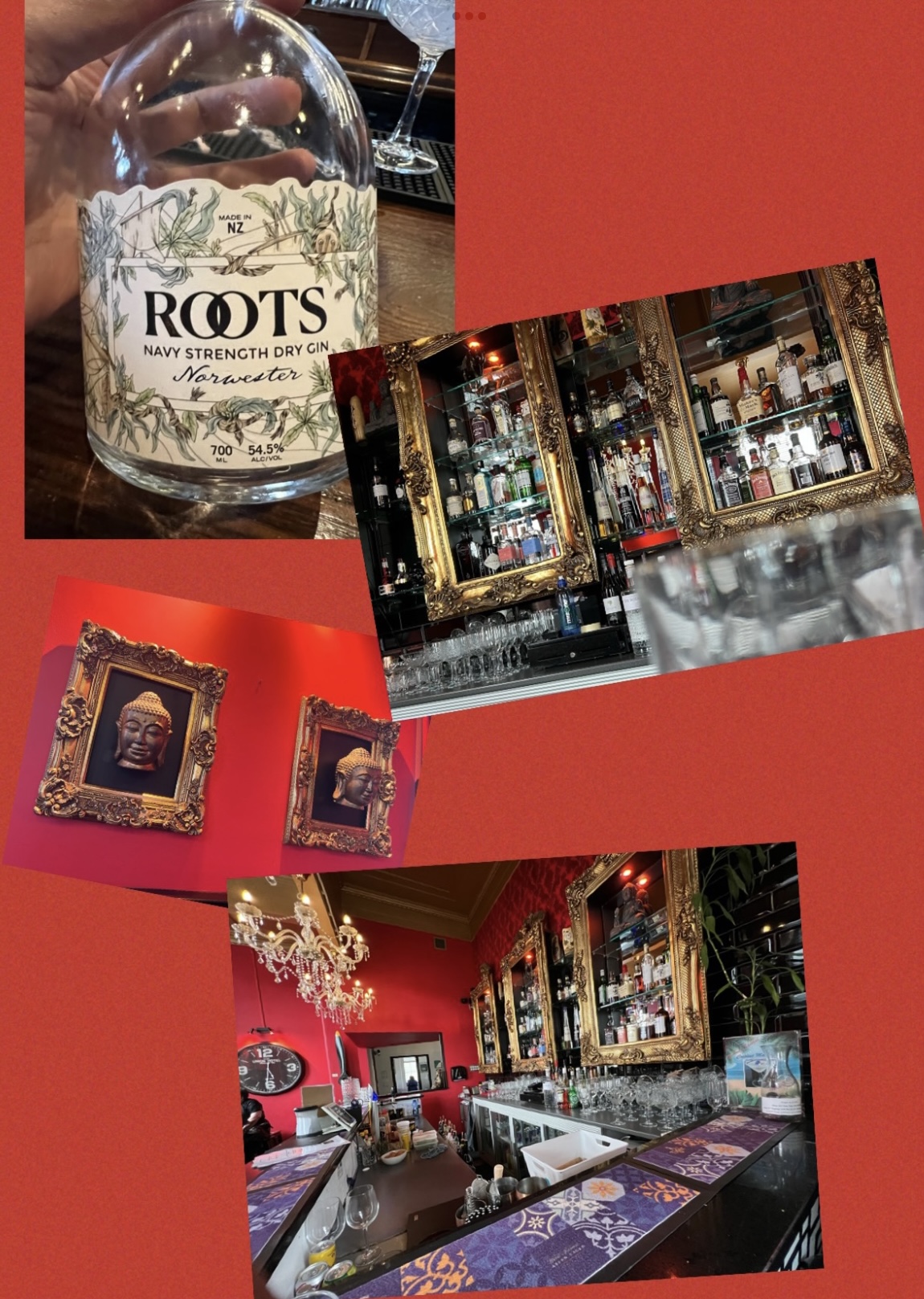
I tried a couple of brands: Victor, with powerful floral notes that reminded me of Hendrick’s on steroids, and Roots, another Marlborough product. The Roots bottle was labeled “Navy strength,” registering at 54.5%, and I soon realized that if I ordered a “double-double,” as I came to call it, I’d get more alcohol in my drink with gin. I was sold.

(“Navy strength” refers to a time when gin was stored on Navy ships in wooden barrels next to the gun powder, and if there was an accidental gin spill, it had to have enough alcohol in it to still allow the gin-soaked gunpowder to ignite. Hence: “Navy strength.”)

Roots double-double with just a splash of New Zealand’s own craft-made East Imperial tonic, and I was a happy man. 

Wherever I went in New Zealand after that, my use of the phrase “double-double,” with a little smile, made the bartender understand I was here for the alcohol, and not for the filler. I couldn’t be more obviously American if I wore a red-white-and-blue bandana on my head.

A double-double of vodka (they all seem to serve only Finlandia, despite a couple of New Zealand brands I’ve had in the States) with olives at Bamboo Tiger in Blenheim. A double-double of bourbon in my Manhattan at Amazonita in Christchurch. A double-double of Mt. Gay with a splash of Coke at Oxley’s Bar & Kitchen in Picton. I got the hang of this!

Oxley’s Bar & Kitchen

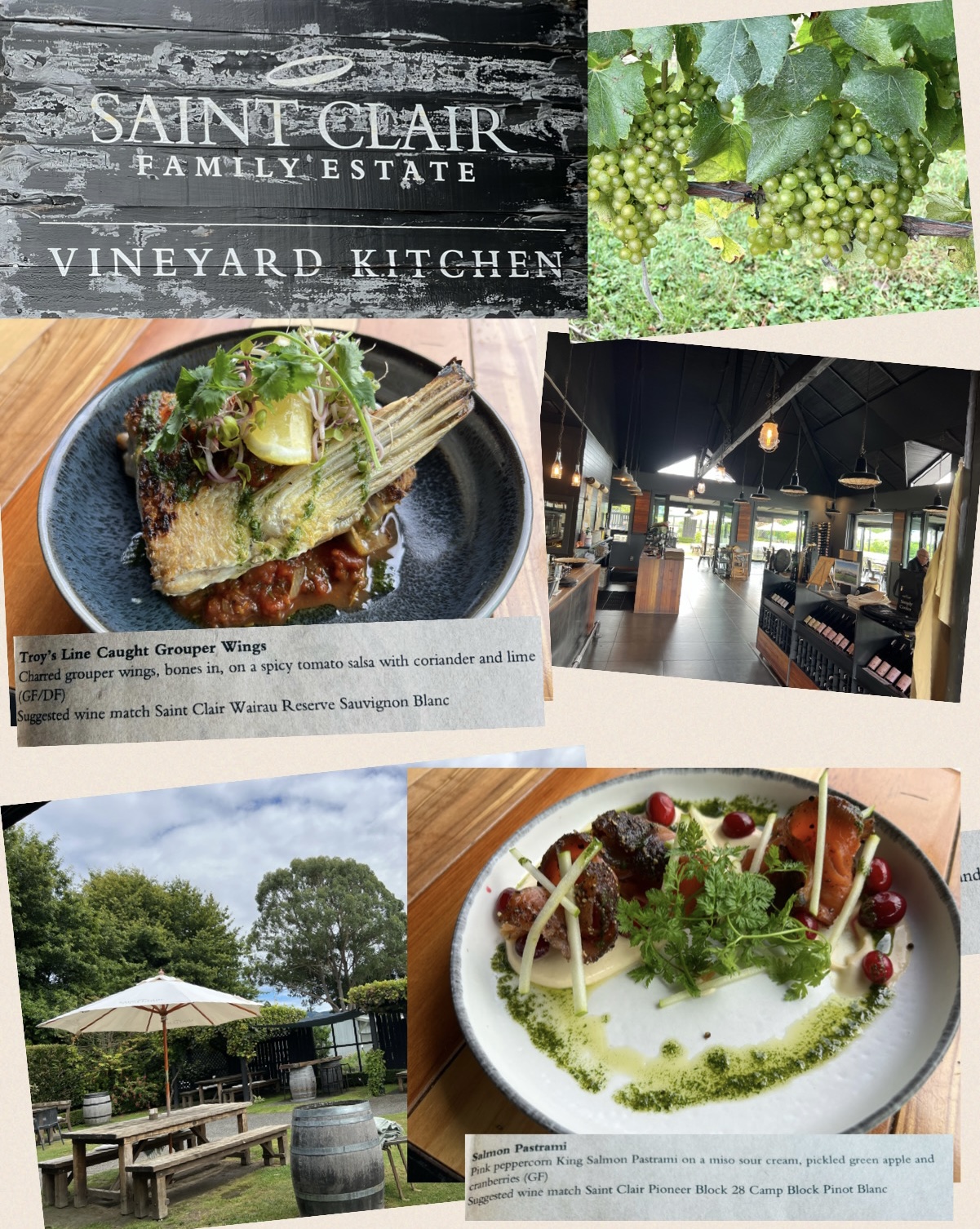
Many wineries in New Zealand have wonderful restaurants, and sadly my attempt at humor by ordering a double-double of wine didn’t go over too well. But, I was able to enjoy more than one filled-to-the-line glass of Chardonnay at Black Estate Winery in Canterbury or Sauvignon Blanc at Saint Clair Family Estate Vineyard Kitchen in Marlborough.

Black Estate, outside of Christchurch
Saint Clair Family Estate Vineyard Kitchen, Blenheim
Gin tasting in Marlborough

Back on my homeward bound 17 1/2-hour non-stop from Auckland to JFK, I asked for a double-double of vodka on the rocks, and got it, along with a look from the flight attendant like I was some kind of lush. I wonder if her attitude would change when we crossed into US airspace…
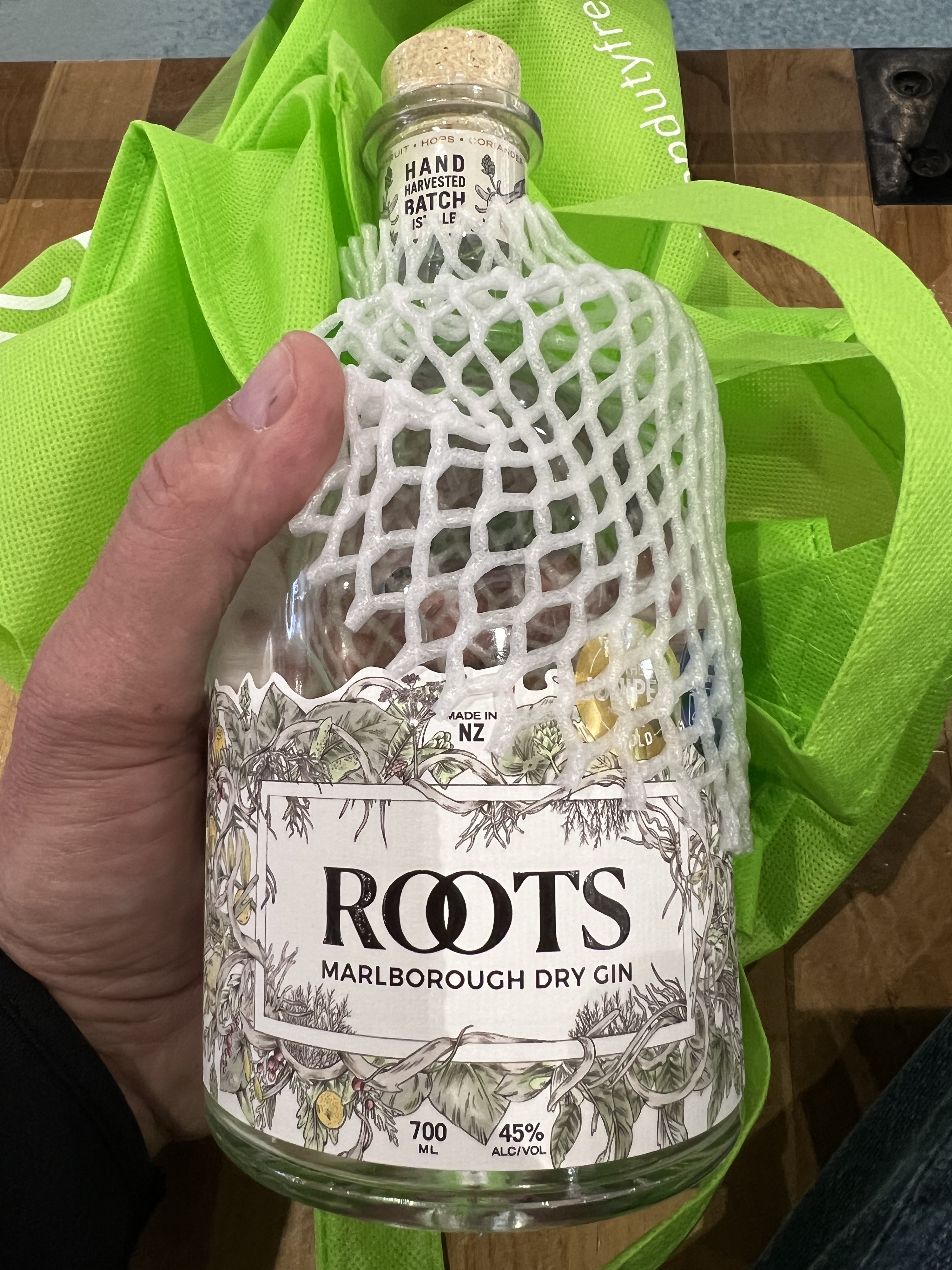
I was allowed 1 bottle to take home, duty-free.

Starting in the mid 1700’s, sailors in the British Navy were given a daily ration of rum. They called it a “tot,” and the practice of daily “tot” distribution lasted for almost 200 years, until July 31, 1970. When it ended, not only were there many sad British sailors, but there was also a vast amount of leftover rum. Much of it was sold off at high prices because the taste was excellent and the methods of its distillation were no longer used.

It made sense. In the old days, when liquids were stored in wooden barrels aboard ship, water, beer, and wine would go bad very quickly. Only something with a much higher alcohol content wouldn’t spoil. Rum was the answer. And getting the sailors drunk every day kept them from deserting…it was good for morale!

But while the sailors drank rum, Royal Navy officers drank gin. The use of exotic spices in gin was made possible by imports from Africa and Asia. Gin’s prevalence around the world is largely due to the fact that sailors set foot in many new cities on new continents.

And though the British Navy stopped the practice of issuing alcohol to its sailors in 1970, the Royal New Zealand Navy abolished the practice as late as 1990!

Until a recent trip to New Zealand, I was not a huge fan of gin. Don’t get me wrong: I liked it. A gin and tonic was a nice refreshing drink on a hot summer’s day. And my fascination with the Vesper martini, a combination of gin and vodka, made me appreciate gin even more.

But it wasn’t until I went to New Zealand, and tasted their magnificent gins, in combination with delicious tonics only available in that country, did I really start to appreciate the subtle differences between them.

The first thing that caught my eye when I was served a sample of Roots gin, distilled in Marlborough, was the label: “Navy strength dry gin.” I asked what that meant. Well, for one thing, it had more alcohol. And the reason for that was surprising. Since gin, like rum, was stored in wooden barrels on ships, very often next to barrels of gunpowder, the gin had to contain enough alcohol so that if it spilled onto the gunpowder, the gunpowder would still ignite! Not enough alcohol in the gin would waterlog the gunpowder and make it useless. So tests were actually done by pouring gin on gunpowder to see what the minimum percentage of alcohol was required to keep the gunpowder burning. The answer was about 57%. Anything below that and the gunpowder would not burn. They coined the term “Navy strength.”

(Although the bottle of Roots gin above weighs in at 54.5%, it’s properly called “Navy strength.” In 1866, to keep sailors from getting completely hammered, the British Royal Navy reduced the alcohol content of the rum they were distributing to 54.5%. Hence, a new “Navy strength.”)

I was allowed to take only 1 bottle home from New Zealand, but, as you can see, it was not Navy strength. Still delicious!

The other advantage to a Navy strength gin is taste. If you’re not diluting it with water, not only are you getting more alcohol, but you’re also getting more of the herbaceous flavor you want in a gin.

Up until my trip to New Zealand, my experience with gin was limited to the usual list of suspects: Tanqueray, Bombay Sapphire, and Hendrick’s. I also more recently discovered Ford’s, a very nice London dry gin I sometimes use in my Vesper martinis.

But in New Zealand, many of the gins were floral and herb-forward, and I found that I like that. I like that a lot. For example, Victor, another Marlborough gin, was like “Hendrick’s on steroids.” I said that to my bartender at the Urban Eatery and Oyster Bar in Nelson, NZ, and she agreed. Delicious.

Although gins may vary in alcohol content, rules about serving liquor in New Zealand are very strict, certainly by US standards. For example, a “double” in New Zealand is 30ml. That’s 1 ounce! And that’s a standard pour for a cocktail. You can, I found out, ask for a “double-double.” And in that case, they would serve you a 1-ounce shot on the side with your drink, and you would have to pour it in yourself.

When I told the bartenders in New Zealand that we have 4-ounce martinis at any decent steakhouse in the US, and they realized that was 120 mls, their jaws pretty much dropped and hit the bar. One bartender gasped: “That’s irresponsible!” I told her that two of those drinks is widely considered the “businessman’s lunch” here in the states. She just shook her head.

Much to choose from at Kismet, my favorite bar in Nelson, NZ.

The phrase “proof” also has a very different meaning.

In the states, it’s pretty simple: it’s double the percentage of alcohol. So a bottle that’s 40% alcohol is 80 proof.

But the phrase “proof” comes from there British Royal Navy’s “proof” test. They would take the gin, pour it onto gunpowder, and if it ignited, that would prove there is sufficient alcohol in the gin. They would say that the gin was “gunpowder proof,” and it would be allowed onboard the ship.

So in the UK, a spirit with 57.15% is 100 degrees proof. A spirit with 40% alcohol is 70 degrees proof.

For me, it’s easier to simply remember to check the percentage of alcohol, and go from there.

One of the reasons I fell in love with New Zealand gin was because it was often served with East Imperial tonic, a New Zealand product that was not available in the United States for some time. But when I returned from my trip, I googled it and found that it was now being distributed in the US! When the amount of alcohol you’re allowed in your glass is limited (by our standards, anyway), what fills the rest of it up becomes incredibly important. East Imperial was the best line of tonics I’ve ever tried. (I’m saying was now, because, sadly, the company went under last year, and I managed to purchase a couple of 12-packs of the last of the available inventory. Once it’s gone, it’s back to Fever Tree.)

It stands to reason that a great cocktail is the sum total of its parts: great gin, great tonic, great ice.

I was enjoying a few Roots and tonics at the Bamboo Tiger, a bar inside the D’Urville Hotel in Blenheim, NZ, when we felt earthquake tremors. (My first!) It only lasted a few seconds, and when the chandeliers stopped moving, everyone pretty much went right back to business!

I spent about 10 days last summer in Scotland and Ireland, and though they’re known for their whiskey, it was their gins that really impressed me. But I’ll save that for another blog.

THE LUCKY GROUPER

Posted: March 2, 2024 in Uncategorized
Tags: , , , ,

I’m on a Caribbean vacation, so I decided to get inspired.

I was craving a Boulevardier the other day, a favorite cocktail which is a twist on the classic Negroni. A Negroni features gin, Campari, and sweet vermouth. The Boulevardier substitutes whiskey or bourbon for the gin.

I thought that rum would work just as well as whiskey, so I googled “Rum Negroni.” Many listings called it just that: a Rum Negroni, but then I read a story about a bartender in New York City by the name of Joaquin Simo. In 2009, Simo worked at Pouring Ribbons, a well known cocktail bar, and he used Jamaican rum instead of gin in his Negroni. He called it a Kingston Negroni.

Well, I wanted to give the drink a cooler name than that, and besides, my recipe was ever so slightly different. It was time for me to come up with my own cocktail.


The standard Negroni is equal parts gin, Campari, and sweet vermouth…1:1:1. I like to make mine with a 2:1:1 ratio, doubling the amount of gin or whiskey—or in this case—rum. So, maybe, then, my drink isn’t a Negroni at all by definition, and it deserves a new name.

Since I’m using rum in my drink, my rum of choice being Mount Gay Eclipse from Barbados, I thought a Carribbean-based name would be appropriate.

And since the drink is red, my daughter suggested I look up a red fish native to the Caribbean and, lo and behold, the name “lucky grouper” popped up. Its real name is Red Hind, something I suppose you could get if you drank too many of these, but its nickname was “lucky grouper.”

There was also a red fan fish that went by the name of “Gorgonian flabellum,” but I think most people would have trouble pronouncing that even before they started drinking!

So The Lucky Grouper it is! And here’s how I make it. My sweet vermouth of choice is the legendary Antica Formula.


2 oz Mount Gay Eclipse rum
1 oz Campari
1 oz Carpano Antica Formula 

Combine these over ice in a mixing glass and stir well. Strain into a rocks glass with a large cube. Garnish with an Amarena Fabbri cherry!