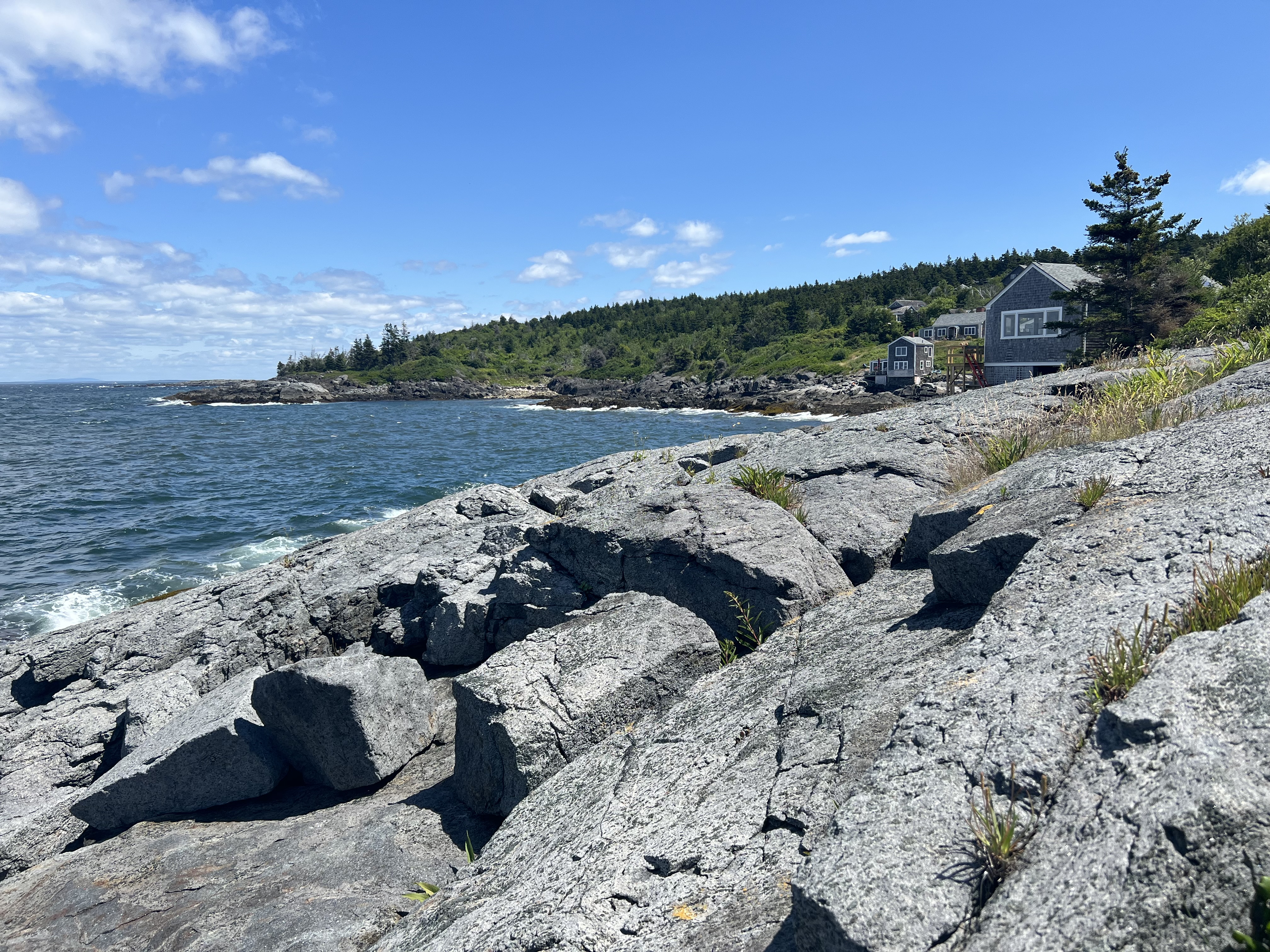
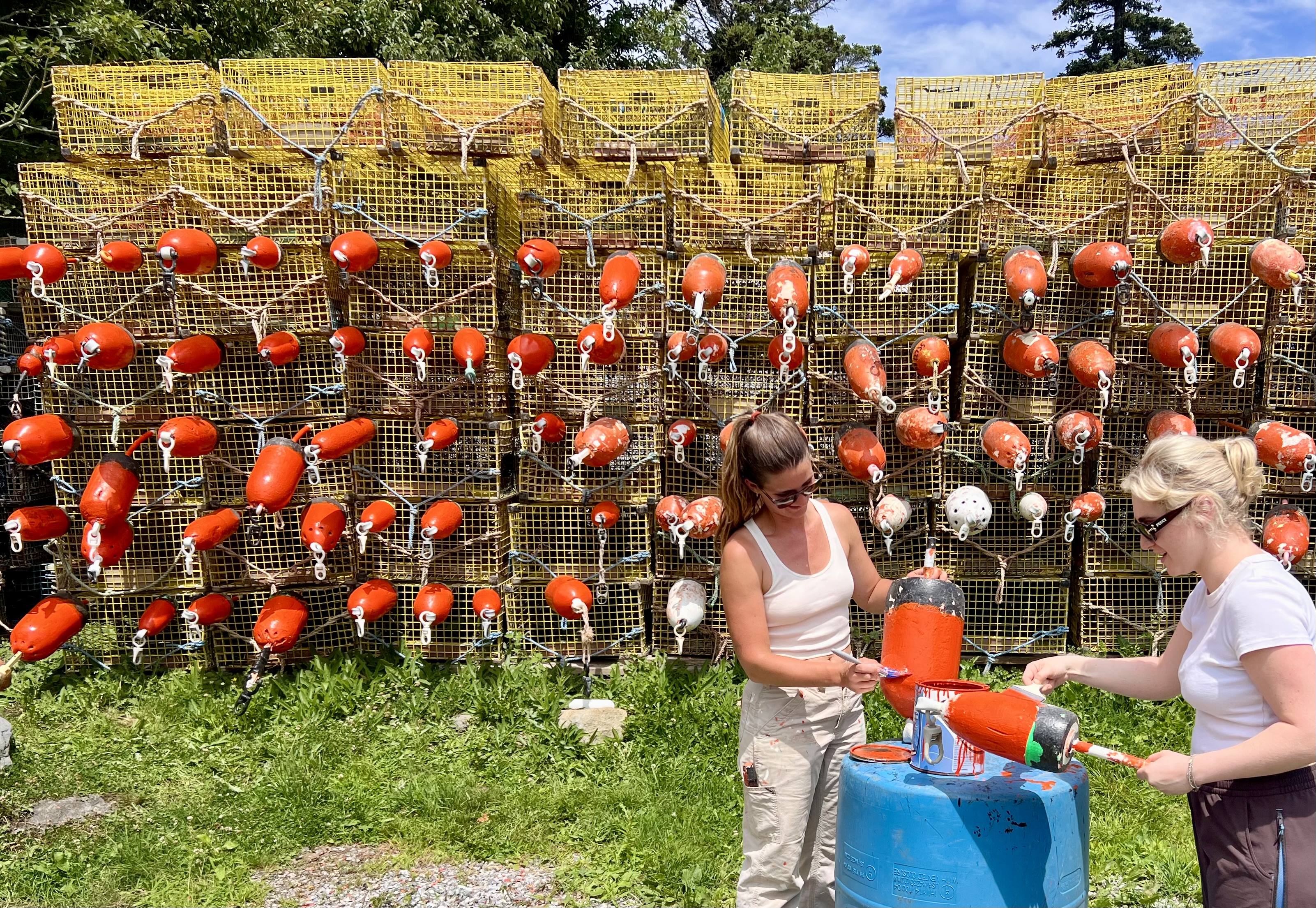
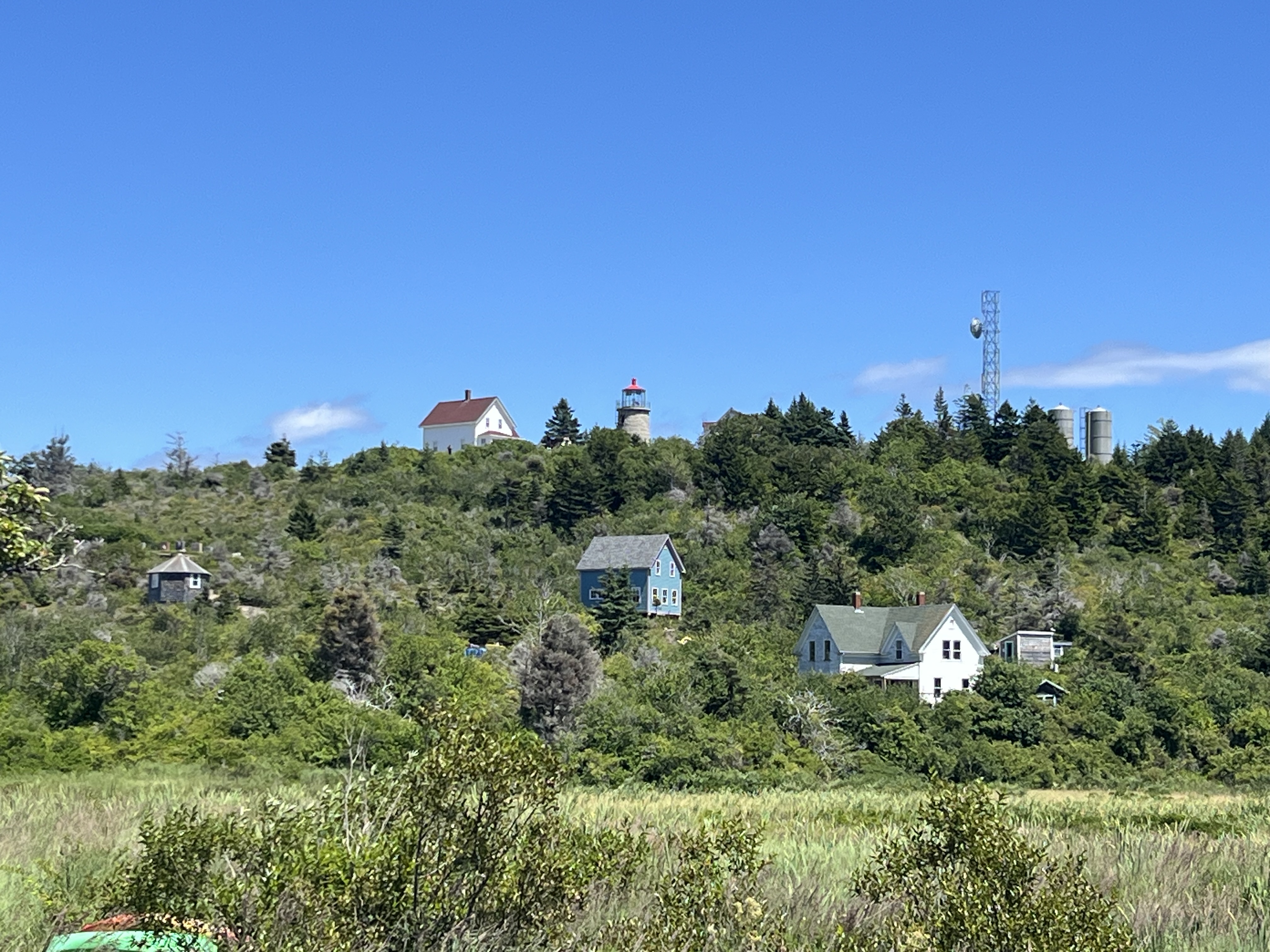
About 10 miles off the coast of Maine lies Monhegan Island, a small artists’ colony with about 70 year-round residents. For the most part, you walk the island. There are a few pick-up trucks that will carry your luggage to your hotel or rental. And there are golf carts for the older folks. But it’s an art and nature lover’s island.
Day trips from either Port Clyde or New Harbor, Maine, are the way most people go. But overnights are even better. Over the years, I’ve had the opportunity to stay on this island for a week or more, and its rugged beauty is quintessential Maine.
It had been quite a few years since my last visit, but my daughter and I went this past July, to see her mom, who teaches art classes on the island in the summertime. Sure, there are a few more golf carts than before, and it seems that there are more people that have discovered this well-kept secret, but it’s still a very special place to visit.
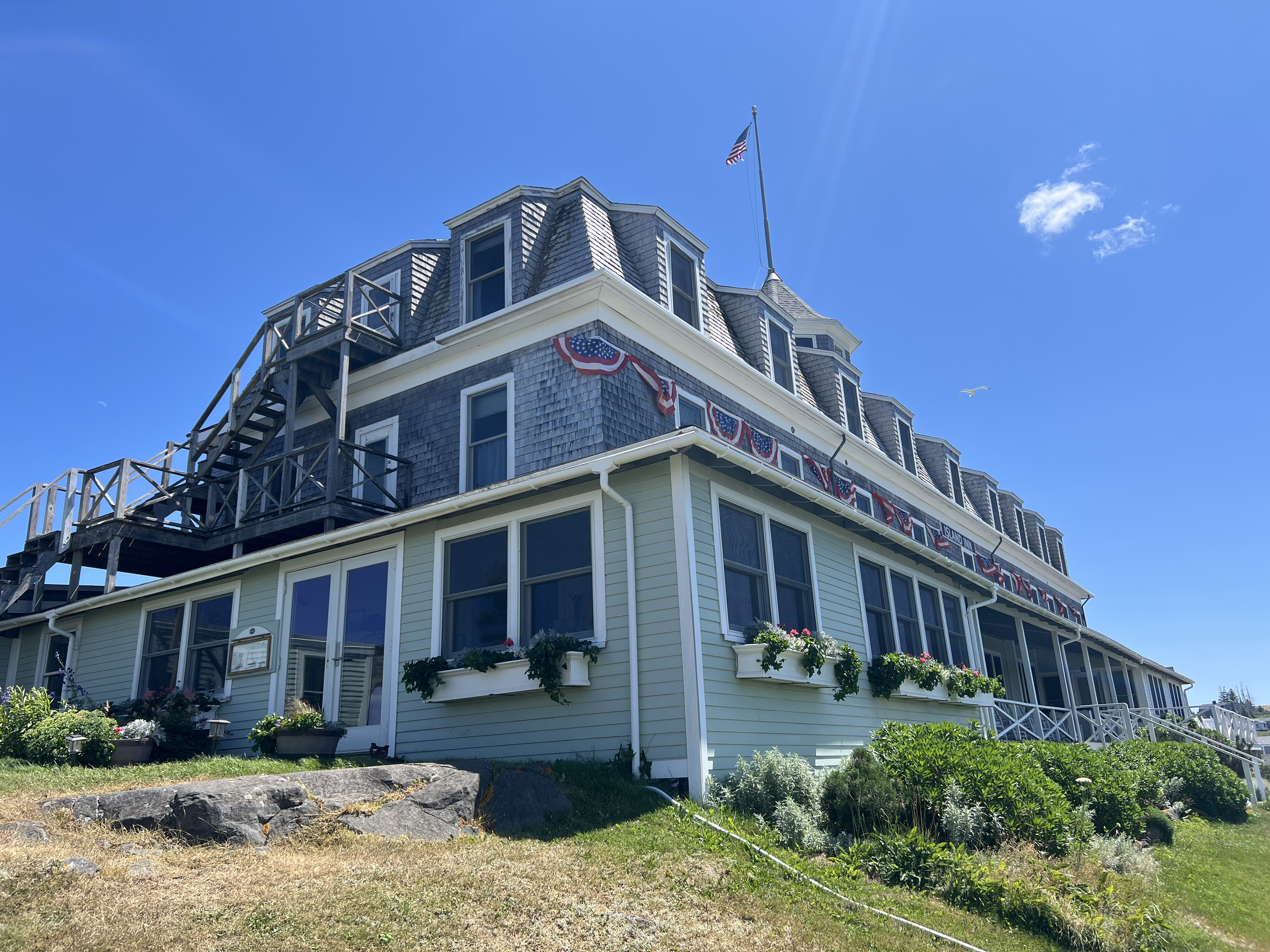
The Island Inn, where I stayed.
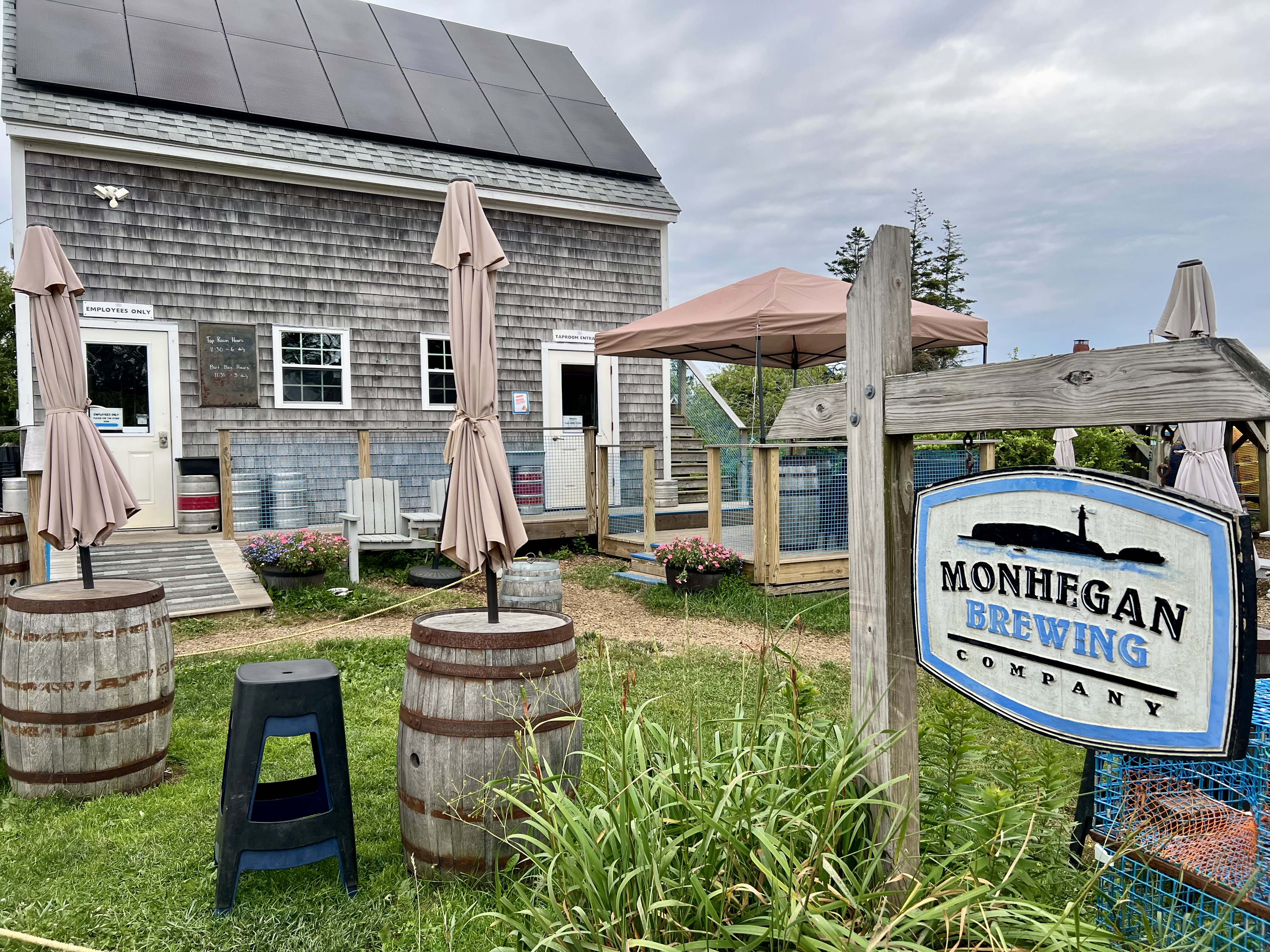
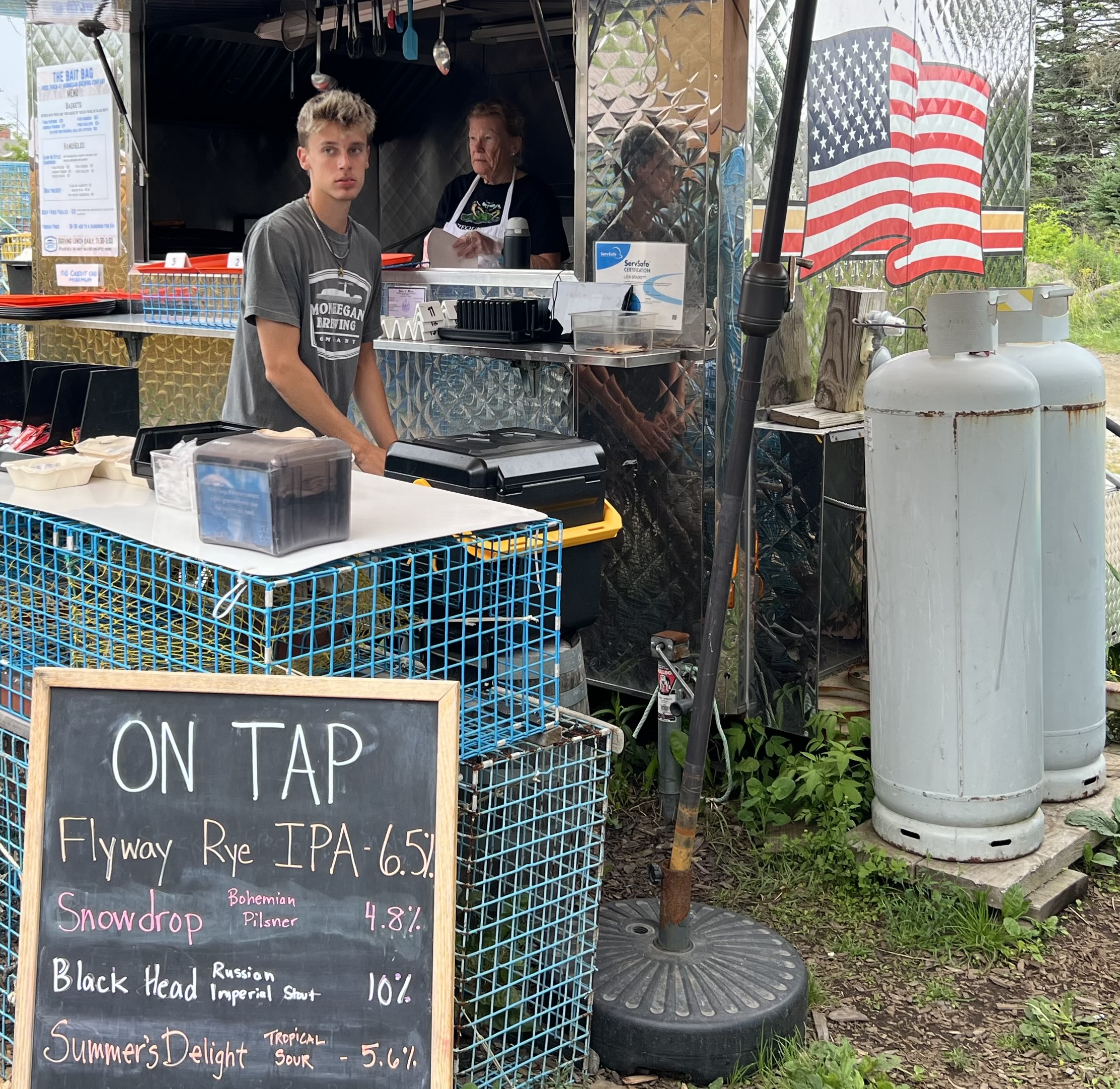
Finding great food on Monhegan Island is not a problem, especially if you like lobster! A couple of the hotels serve dinner (BYOB…there’s no booze served on the island, though beer and wine are available in the grocery store and there is a brewery.)
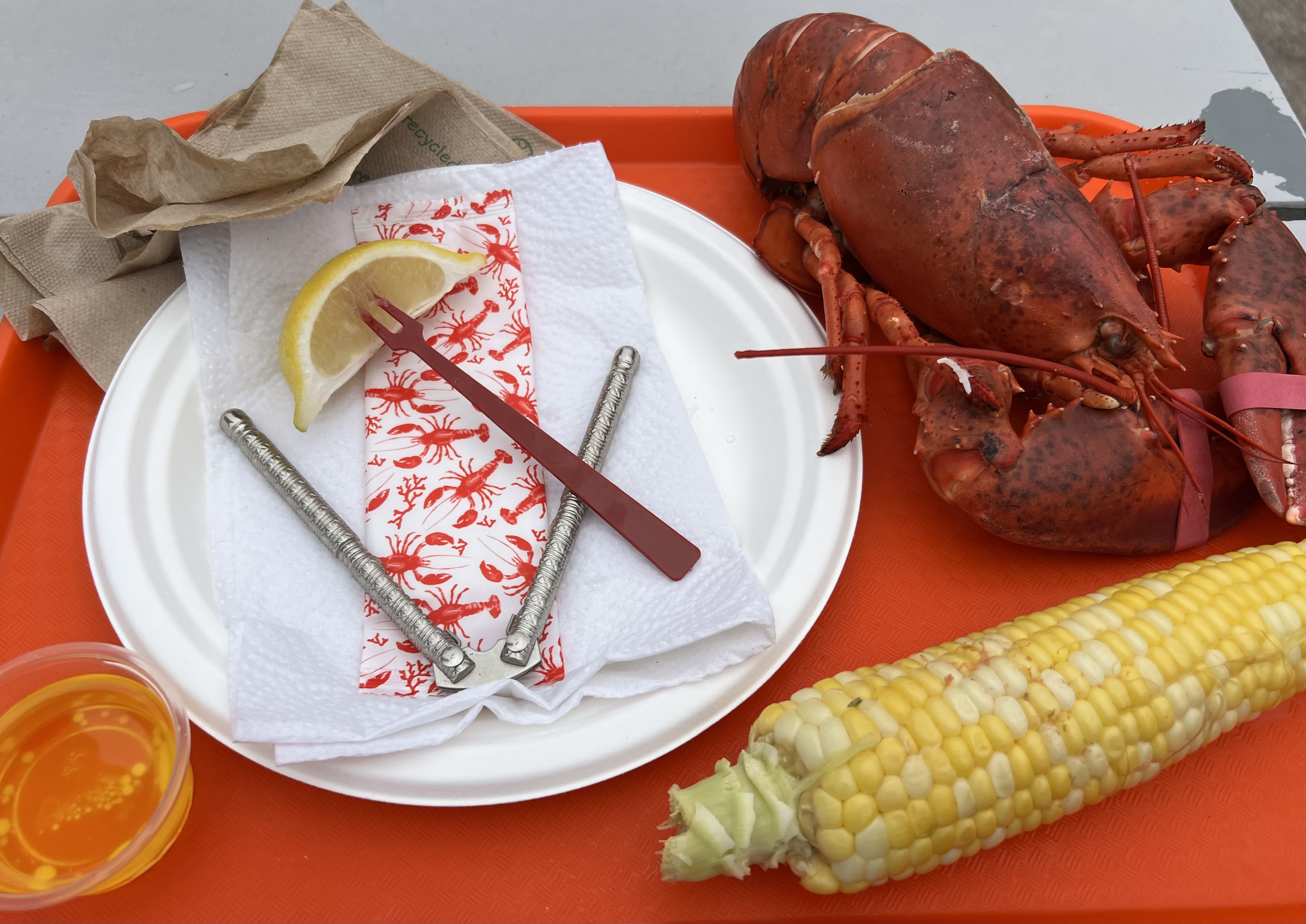
Lobster at the Fish House.
If you like hiking, there are plenty of dirt roads and trails in the woods to walk, and the views on this island are really quite spectacular, especially if you get to spend the night.
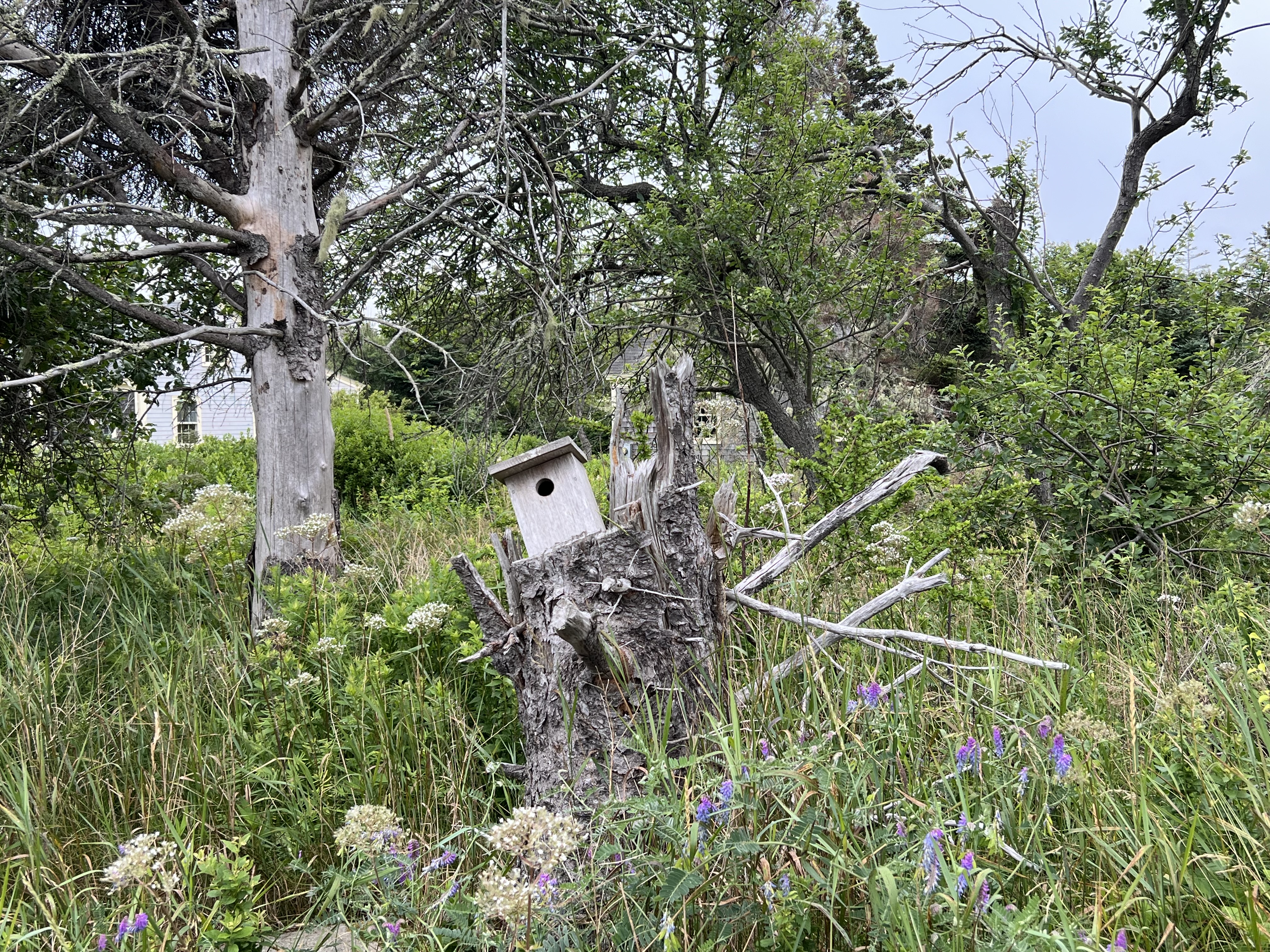
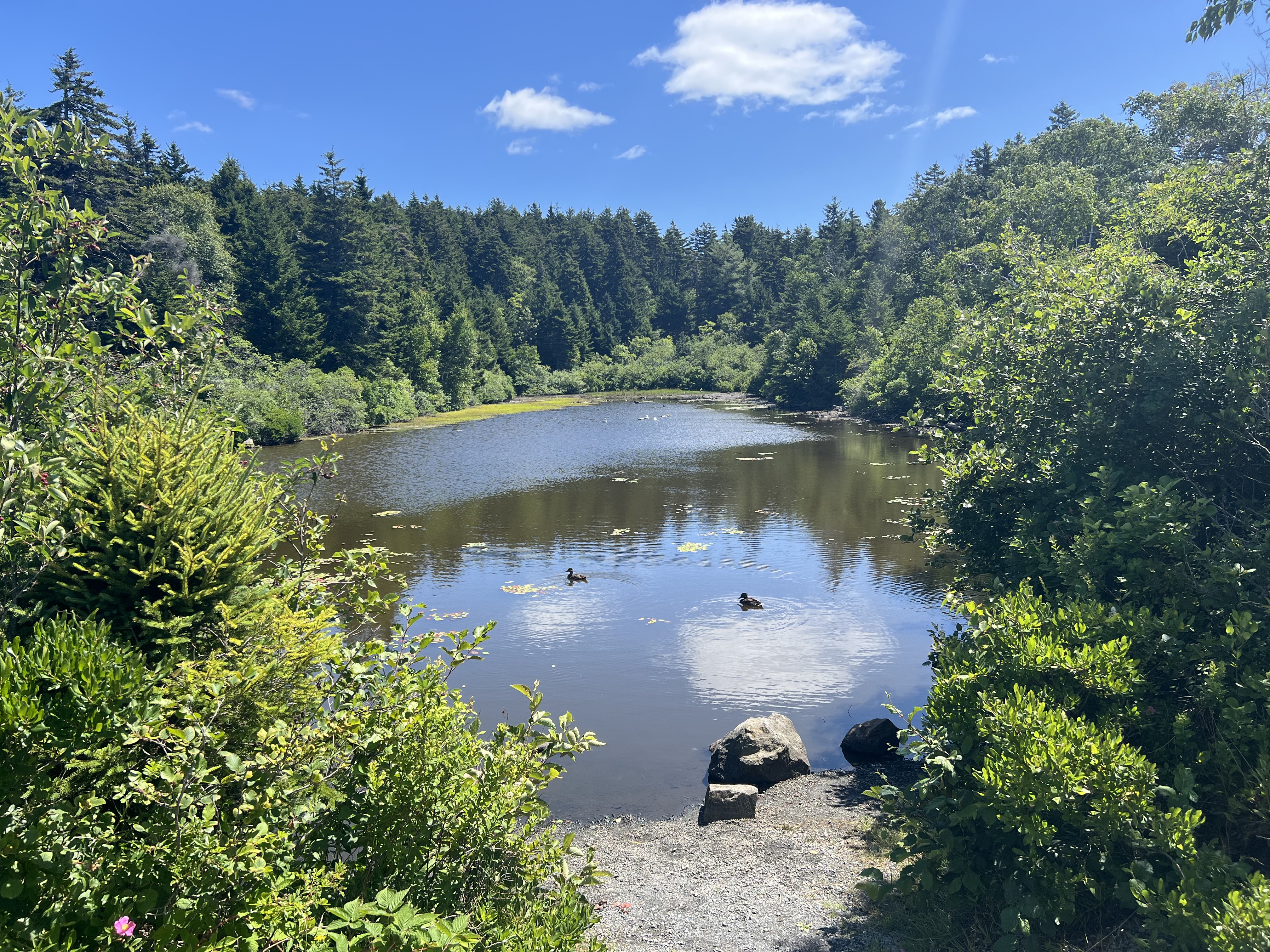
Ice Pond. In the old days, when the water was frozen, they’d cut ice out of this pond and use it for food storage.No deer on the island, but you will run into pheasants!
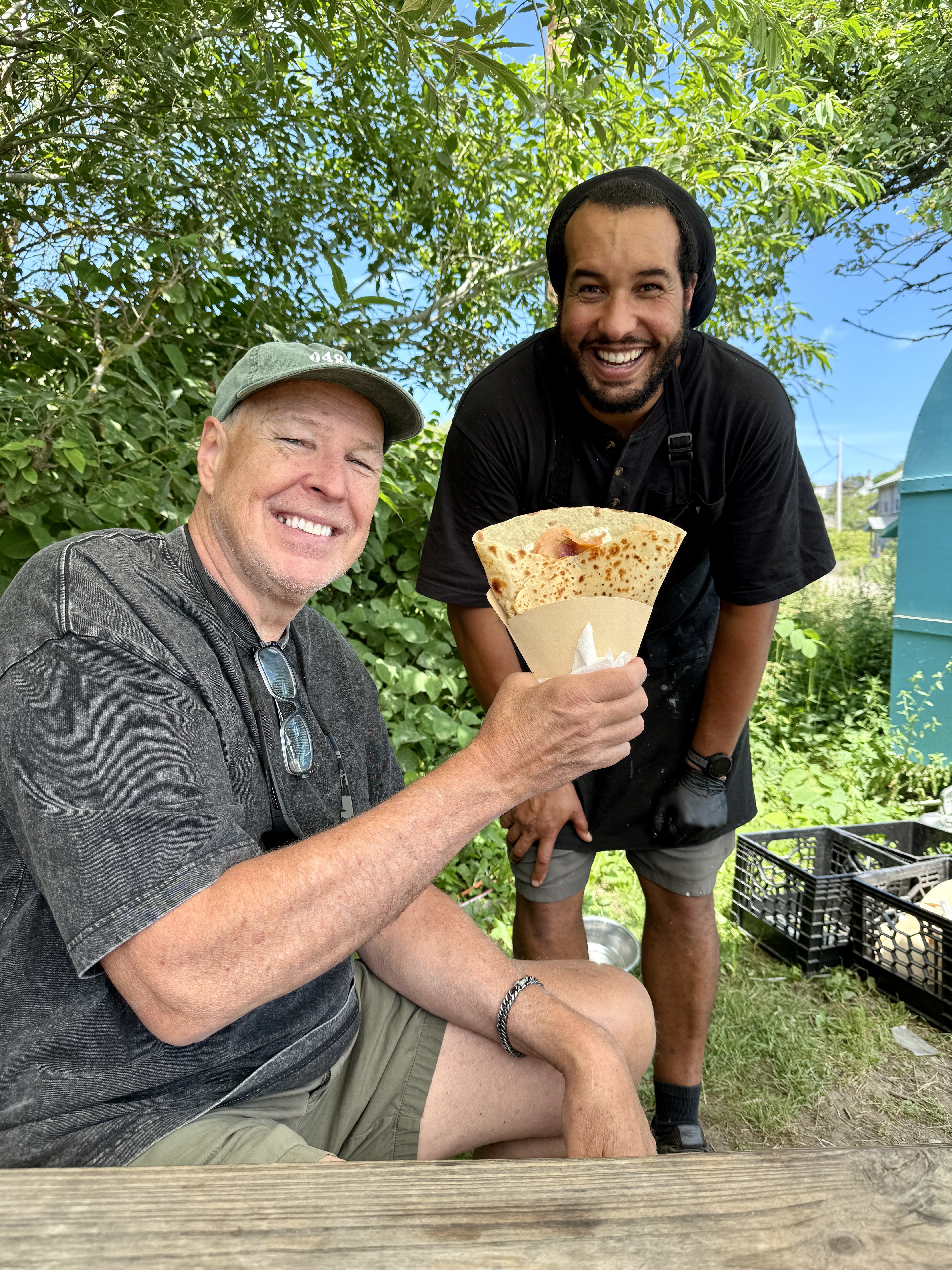
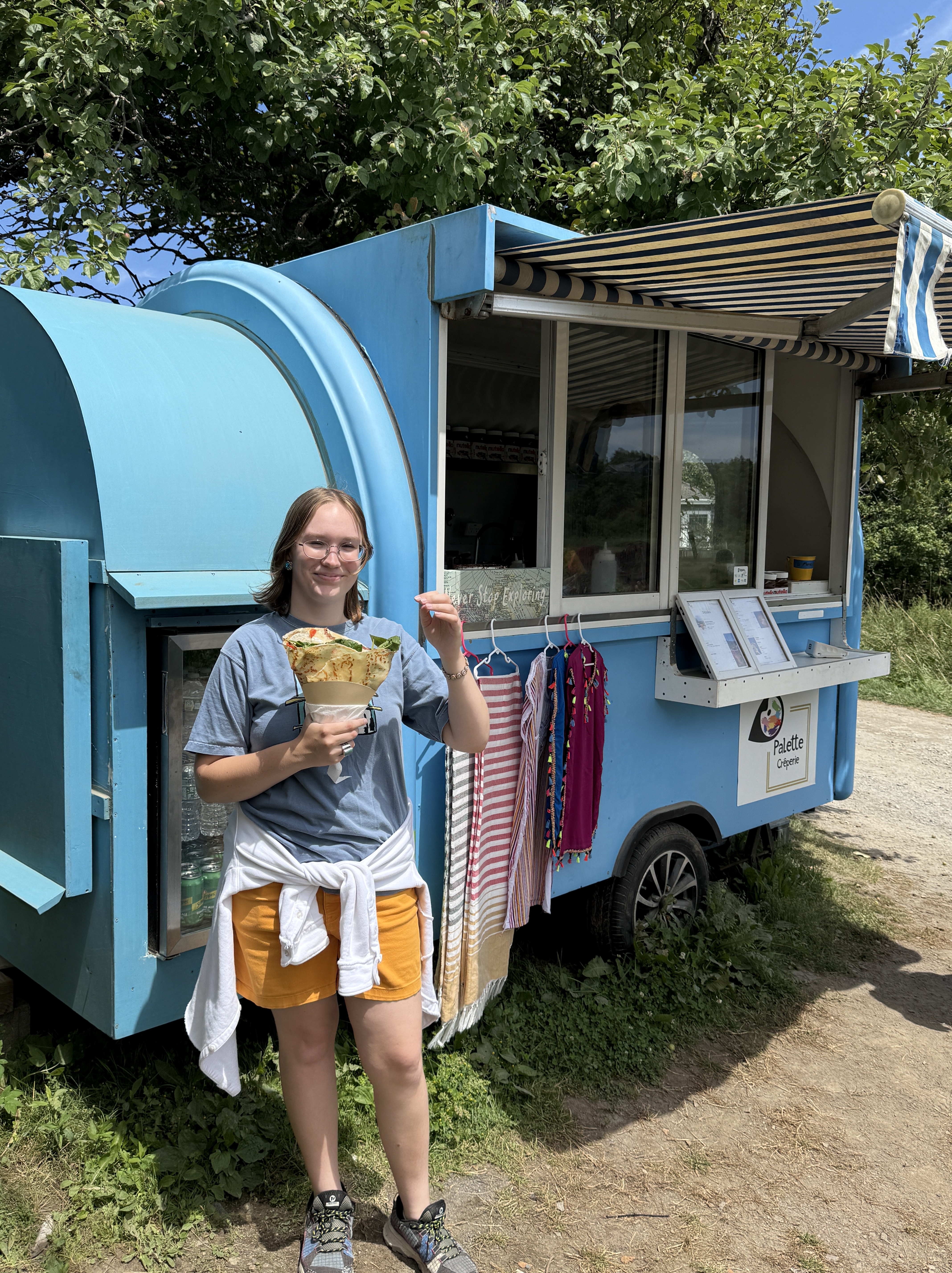
There’s also a crepe stand, something new since my last visit, and you can choose sweet or savory. I chose one with smoked salmon!
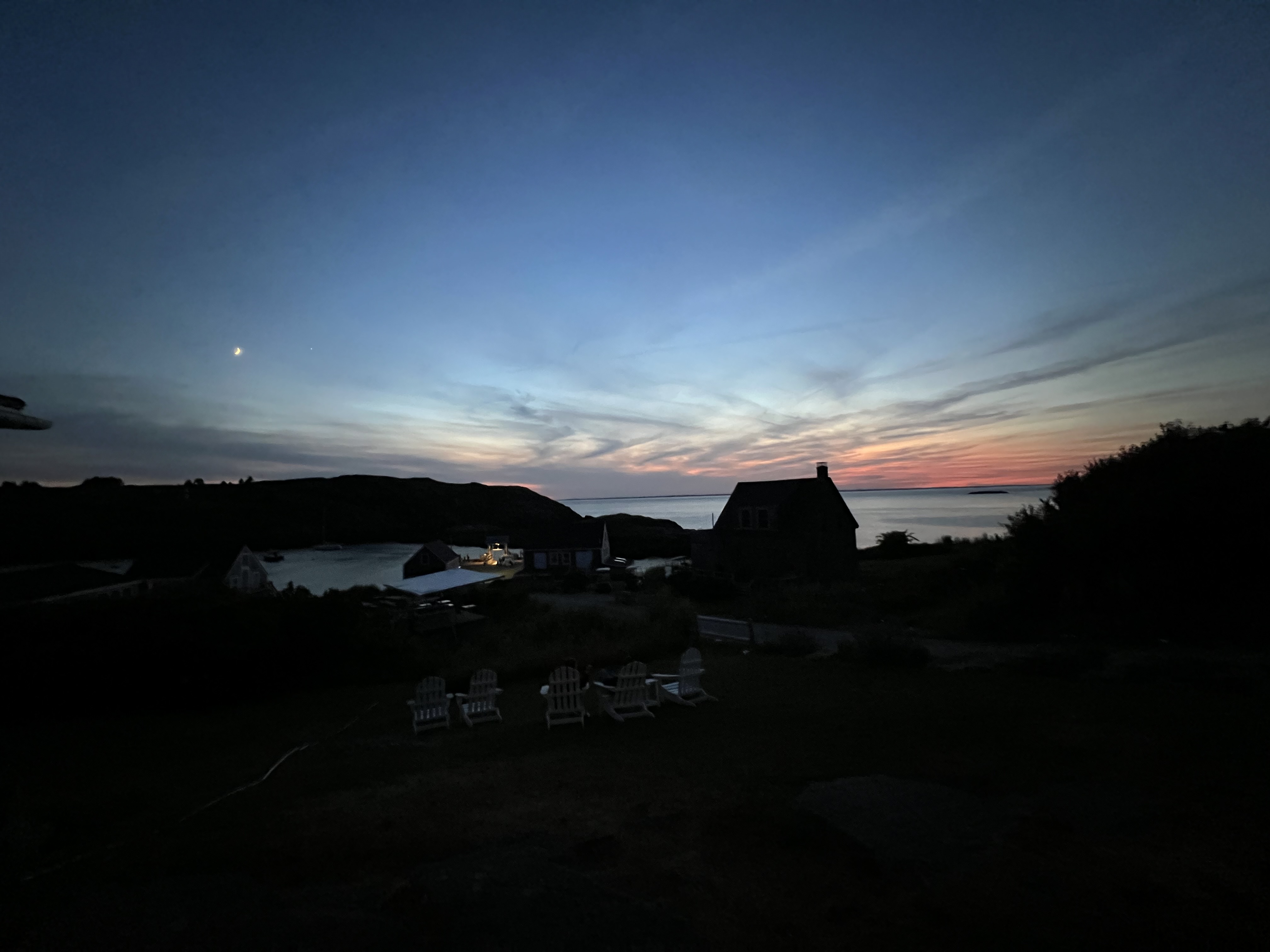
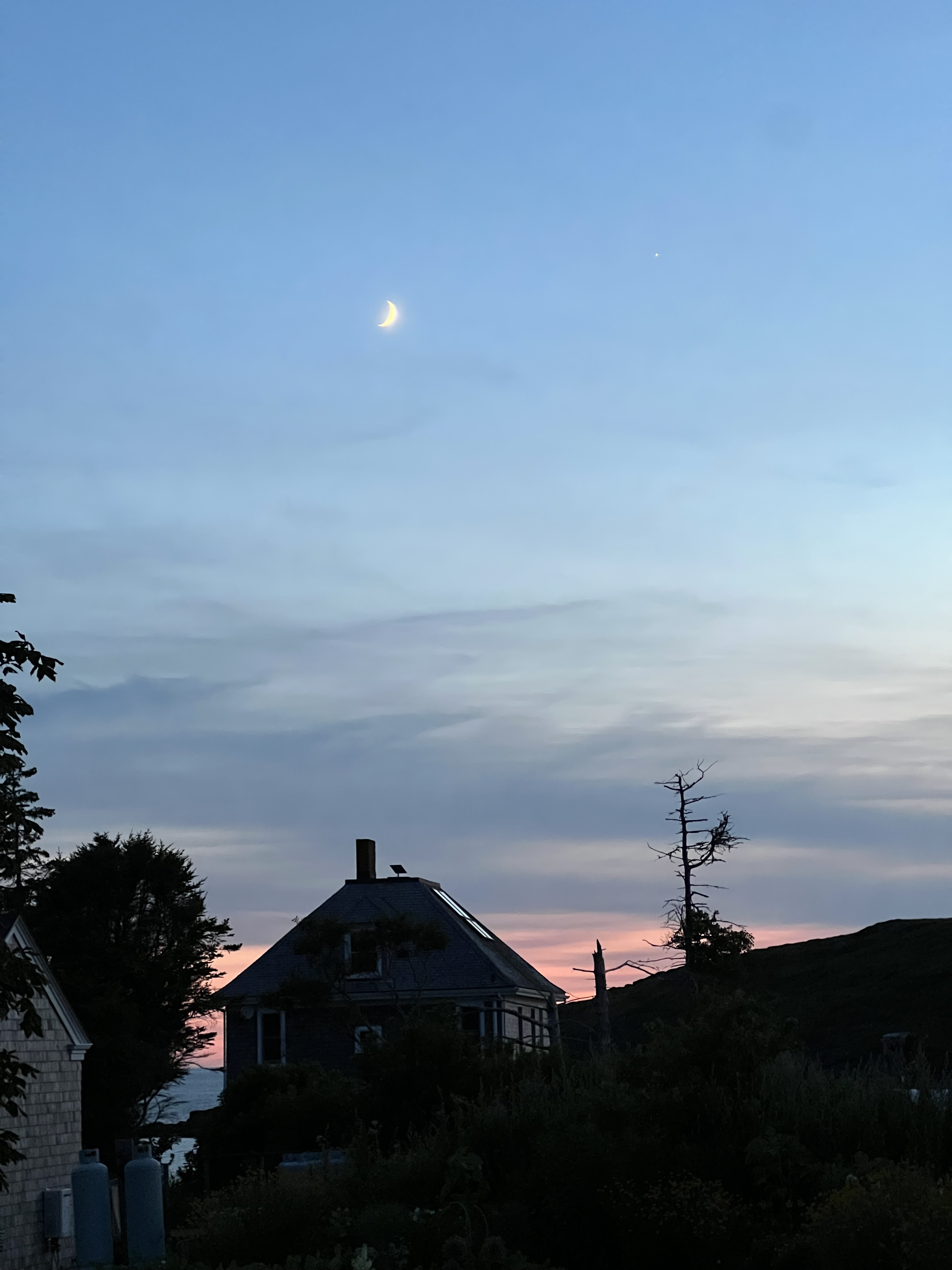
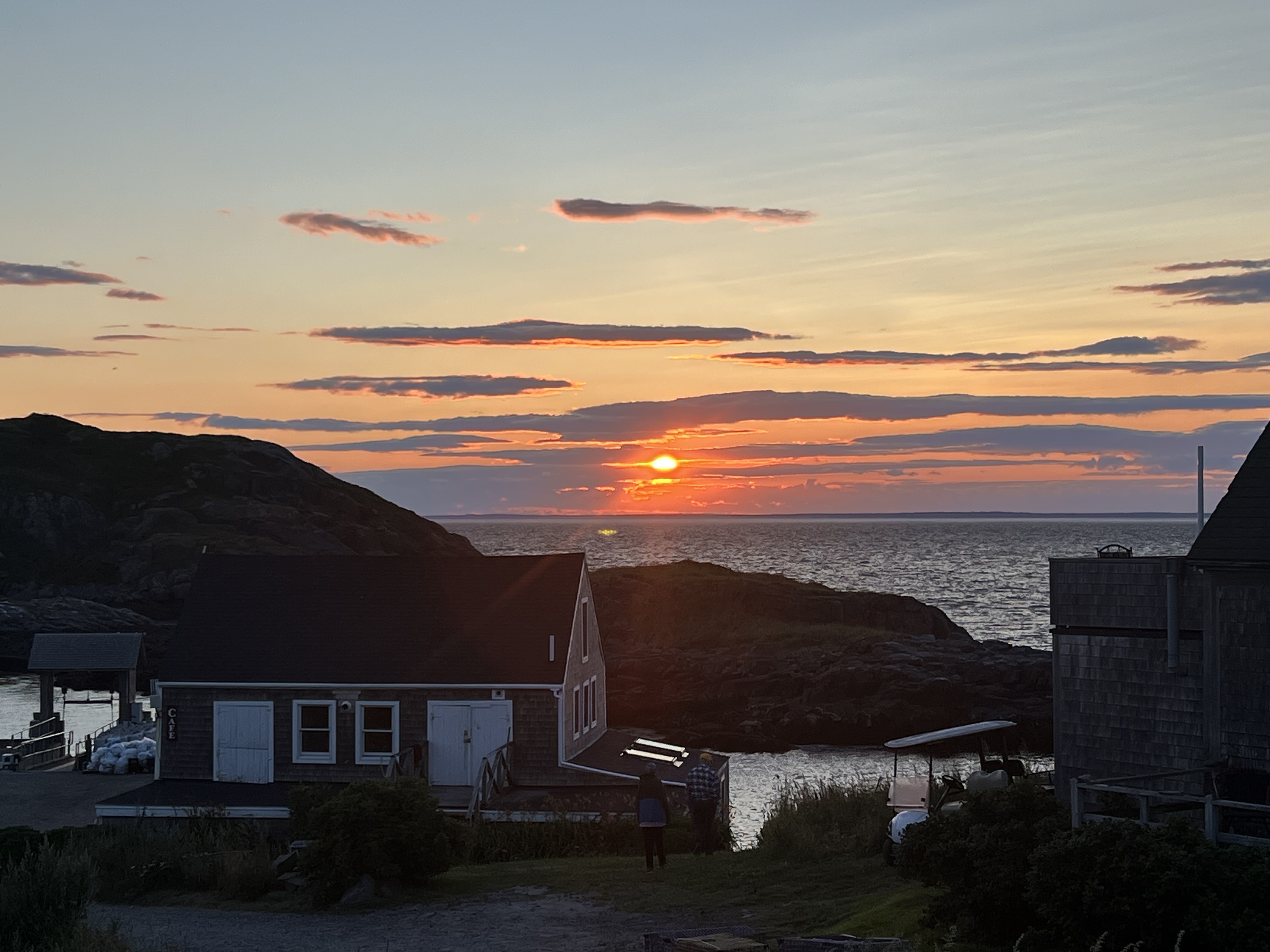
Hangin’ with the chef, who spends his winters in Morocco and summers here on the island!Sunsets from the rocking chairs on the deck of the Island Inn, are spectacular!
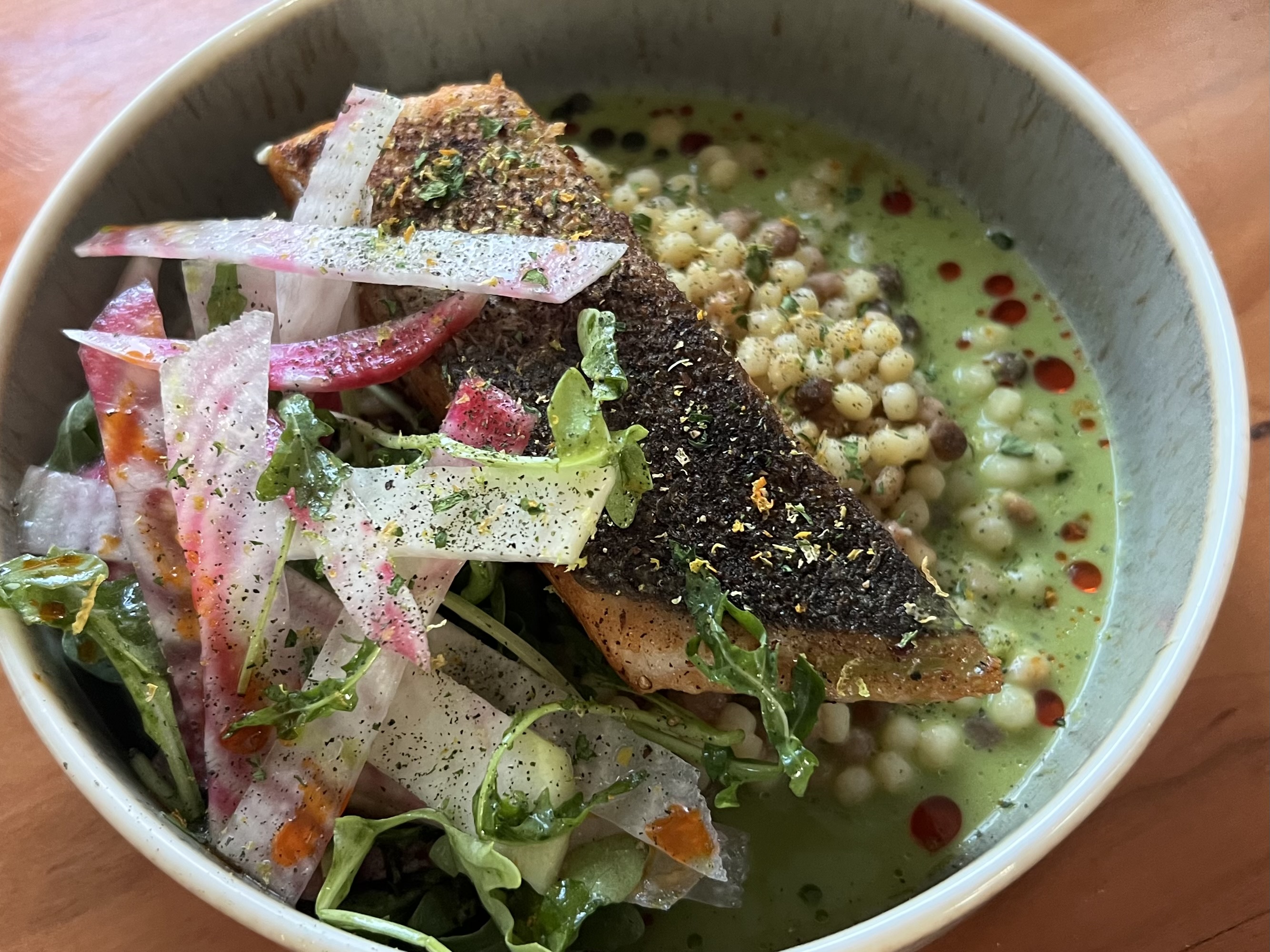
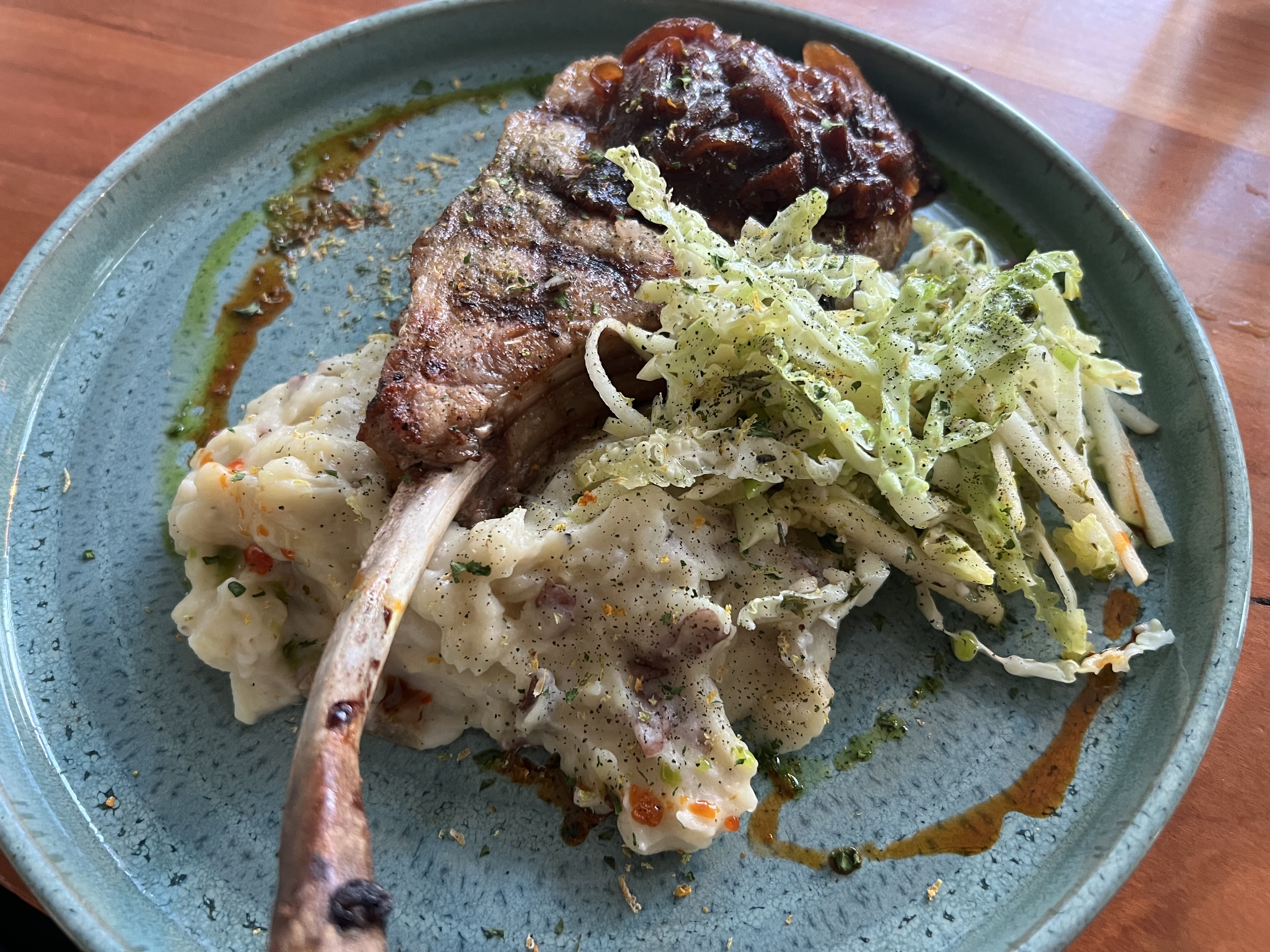
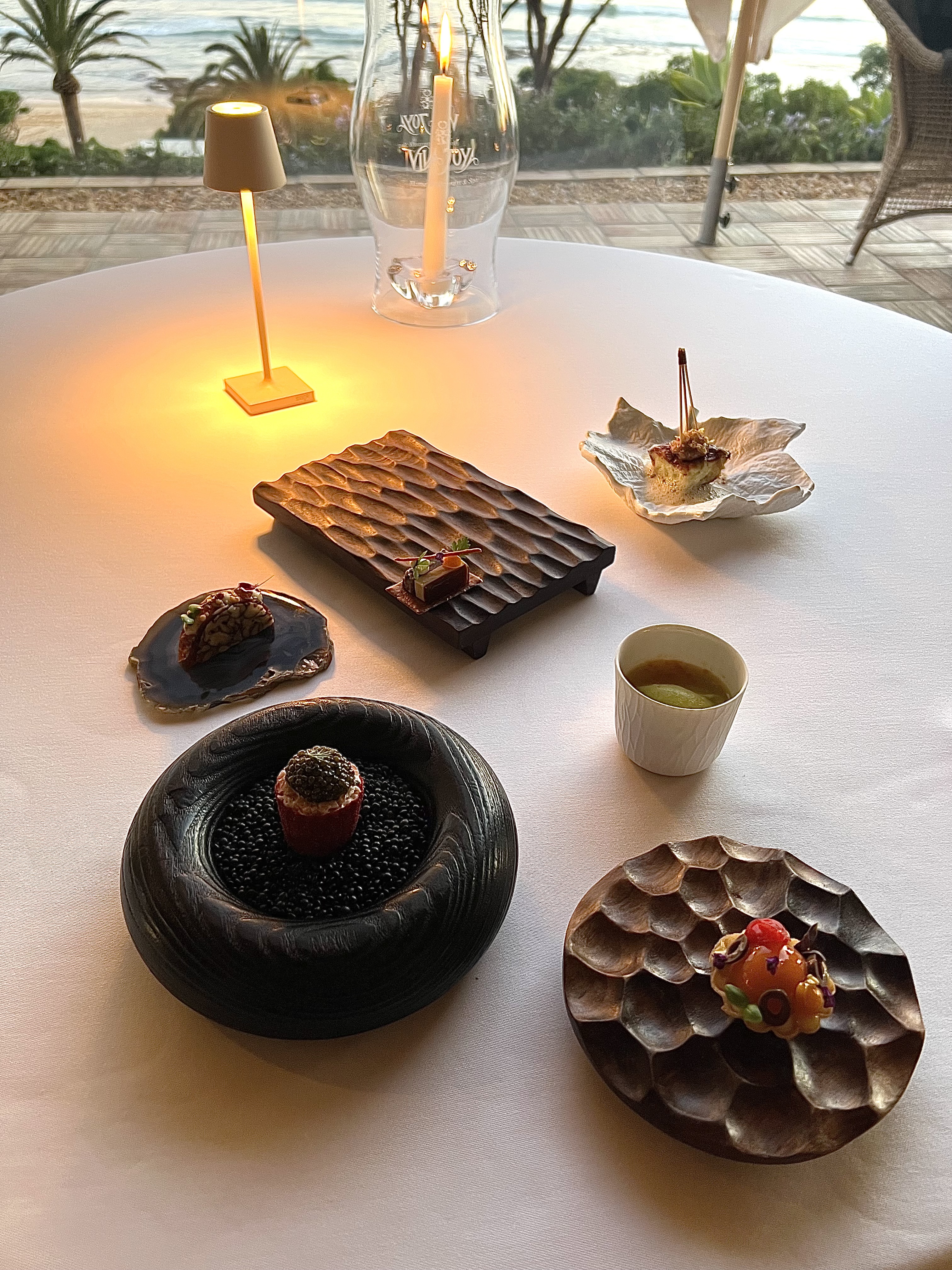
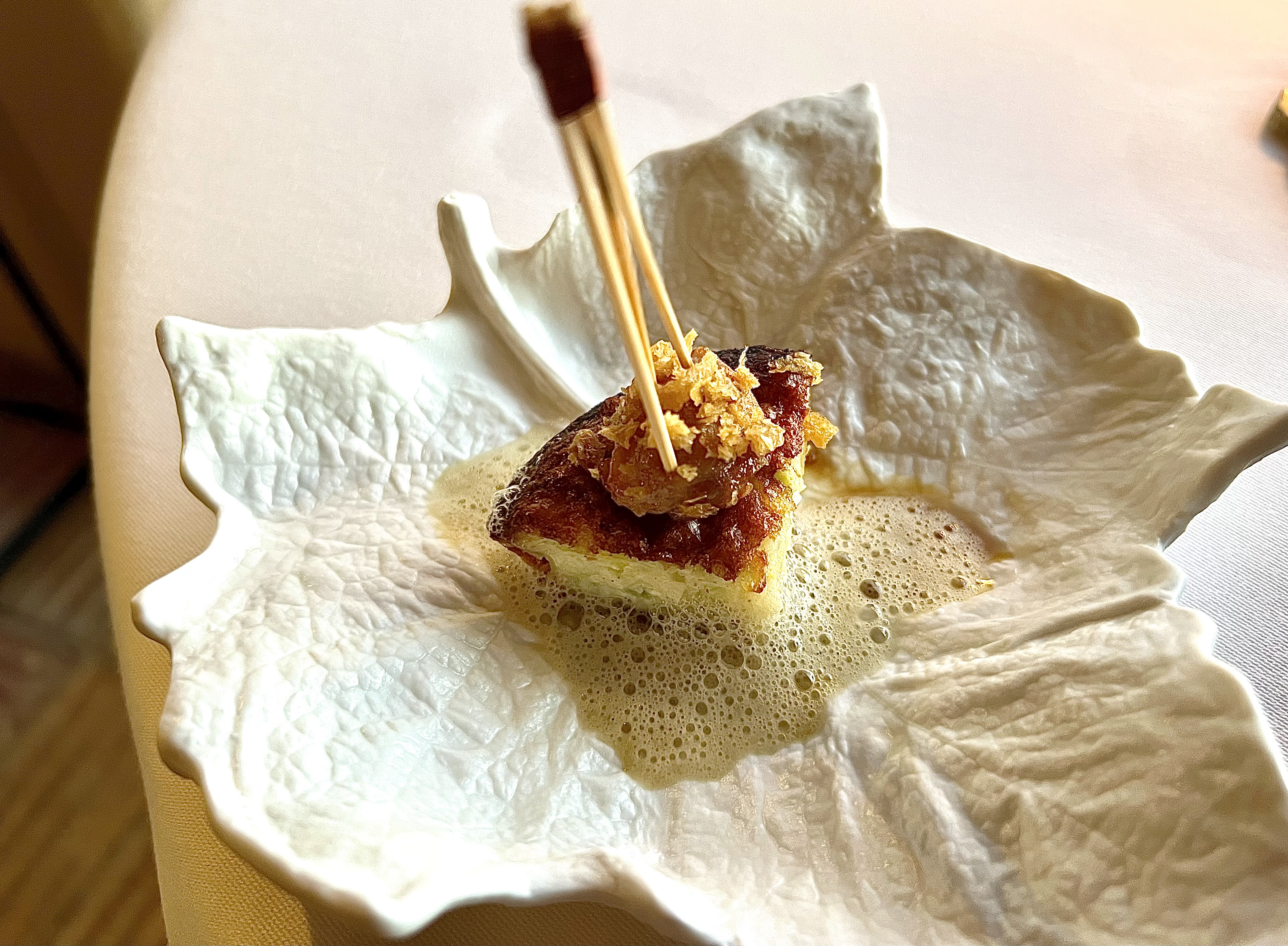
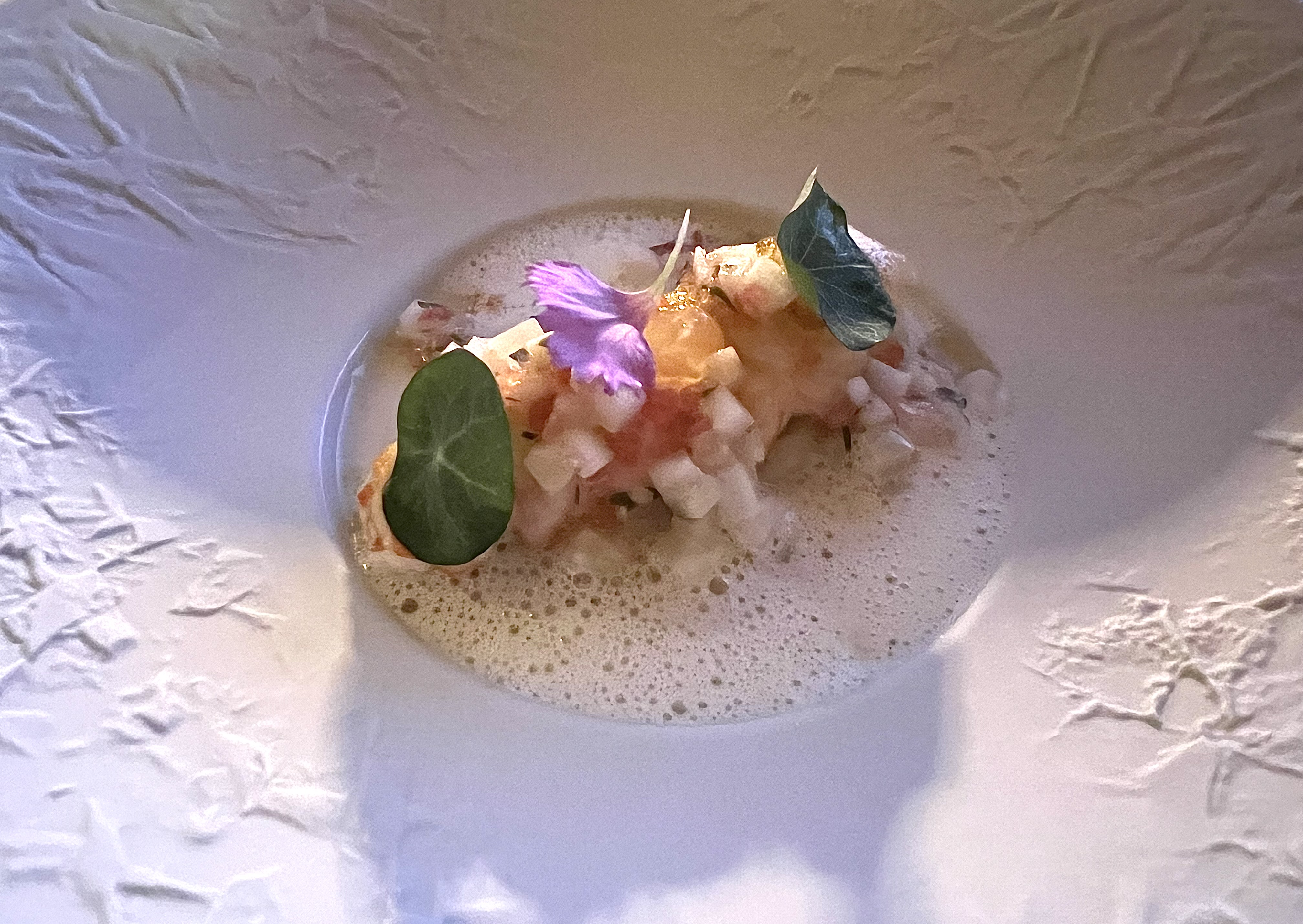
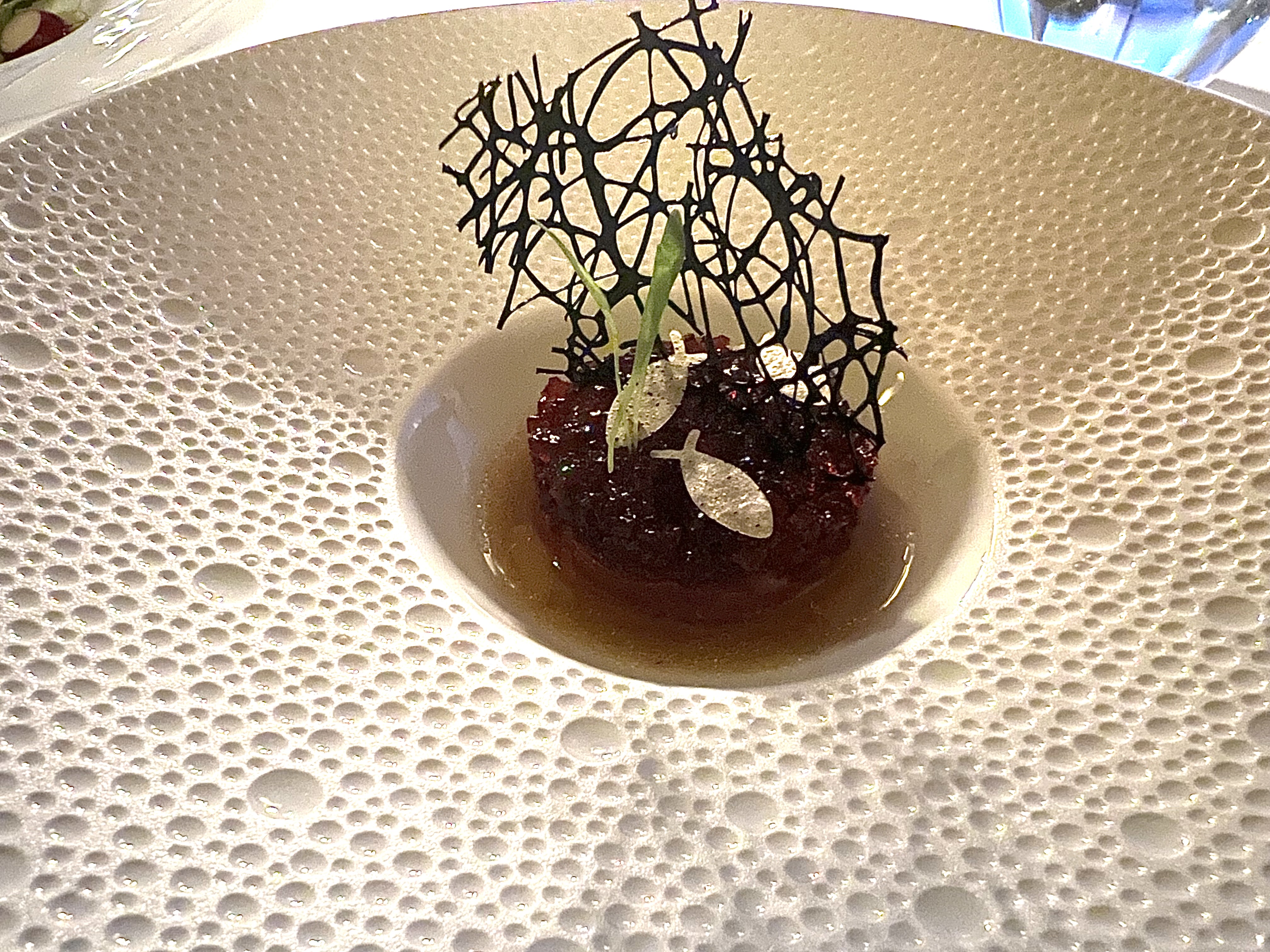
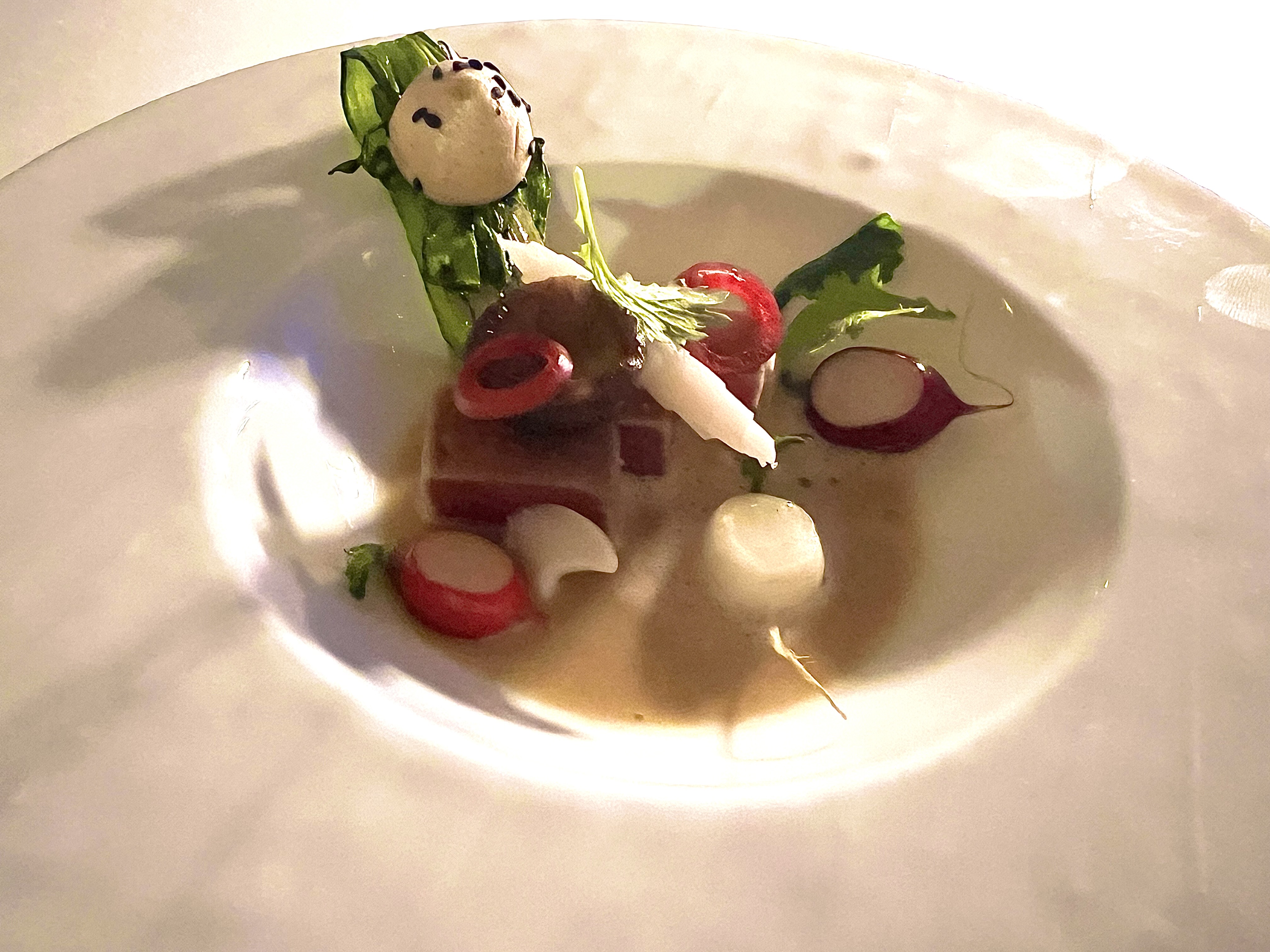
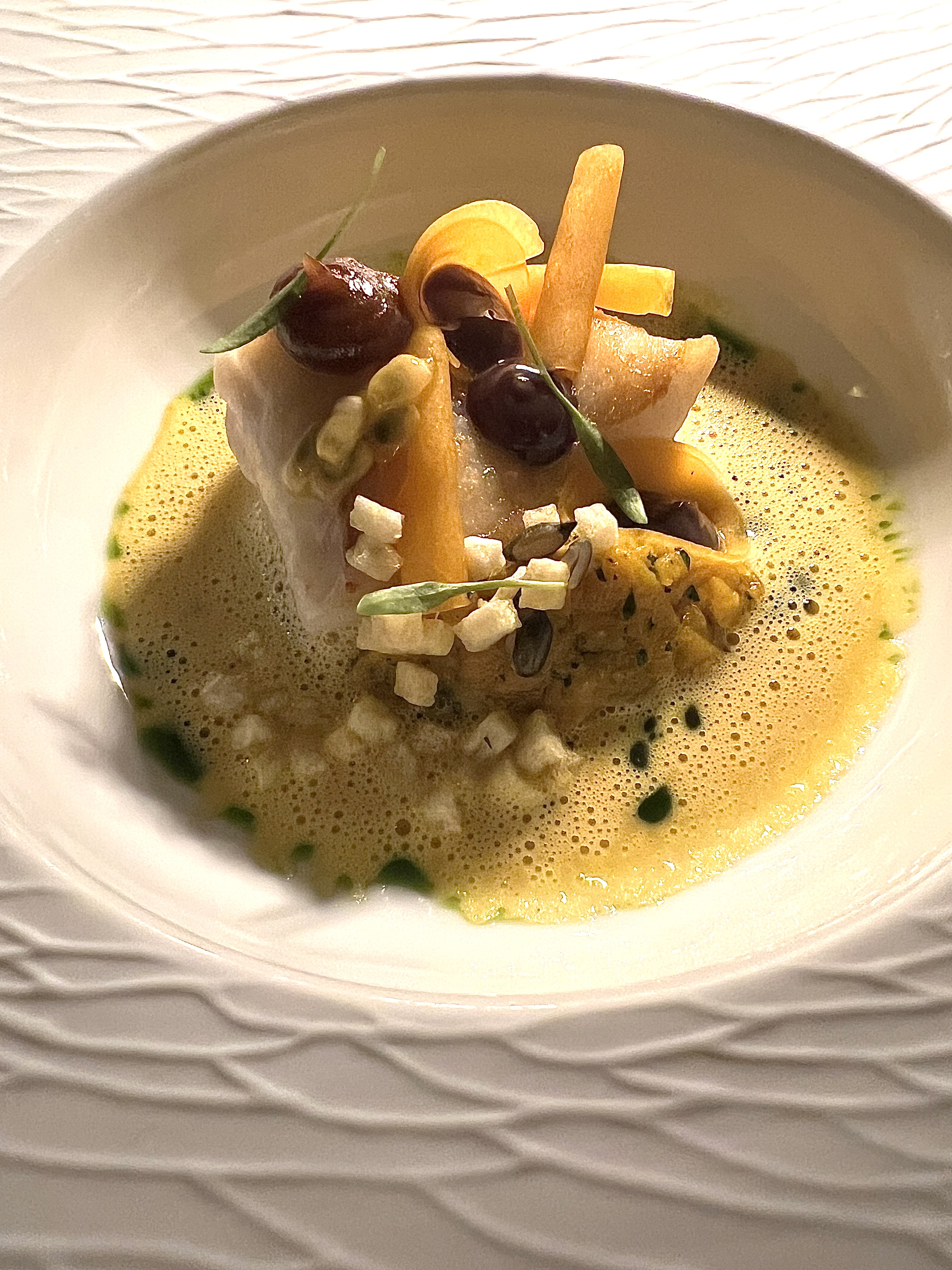
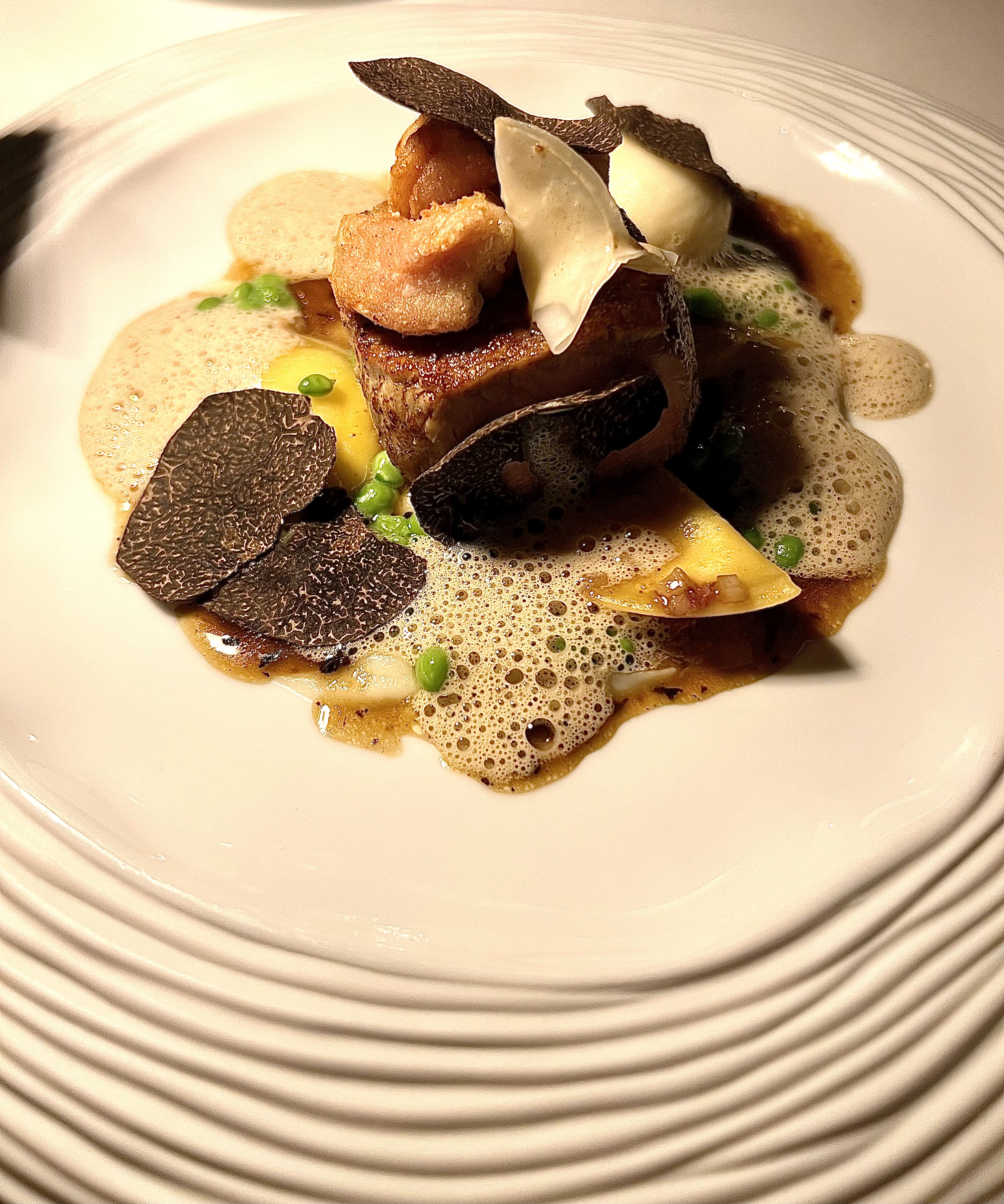
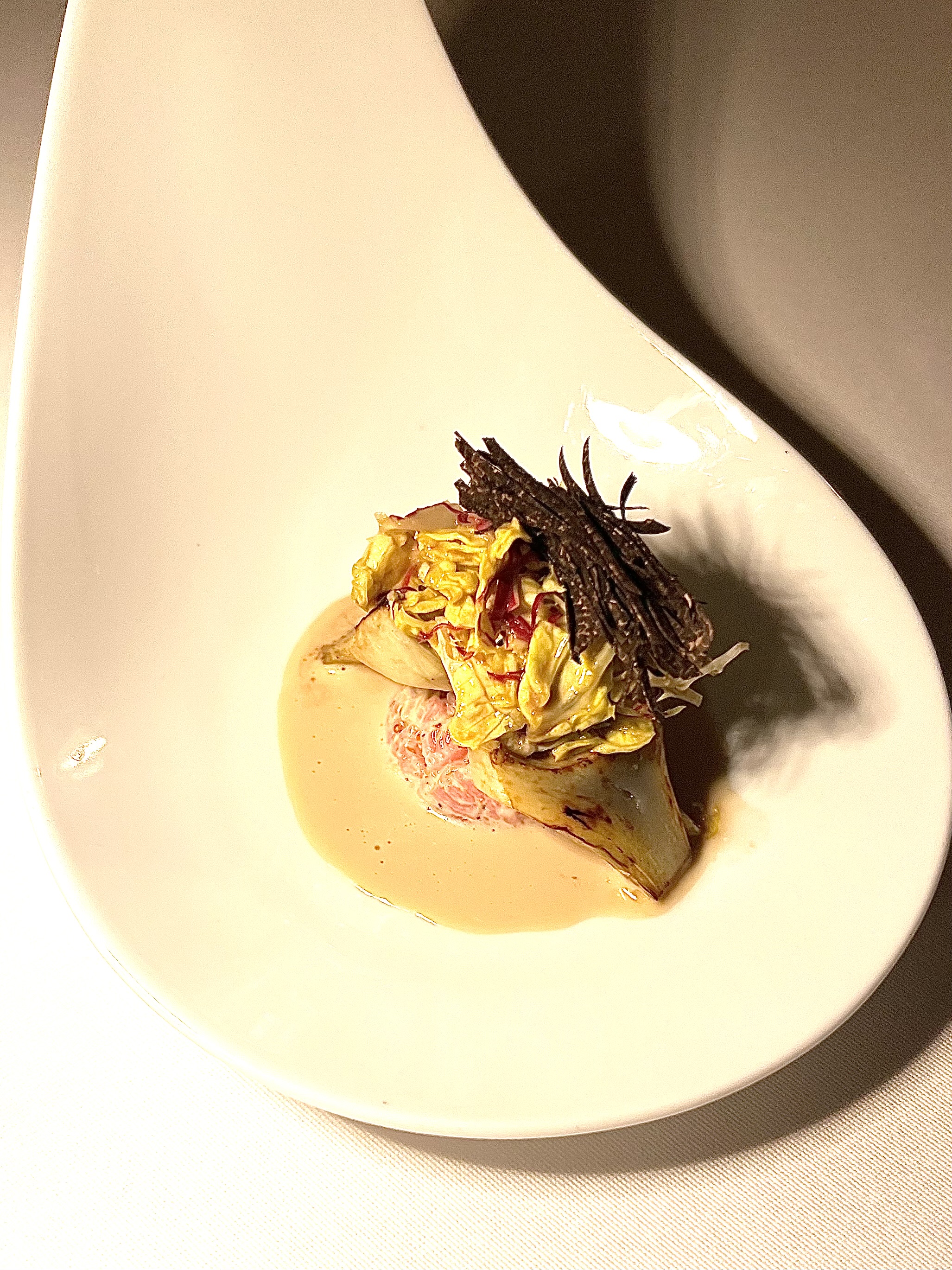
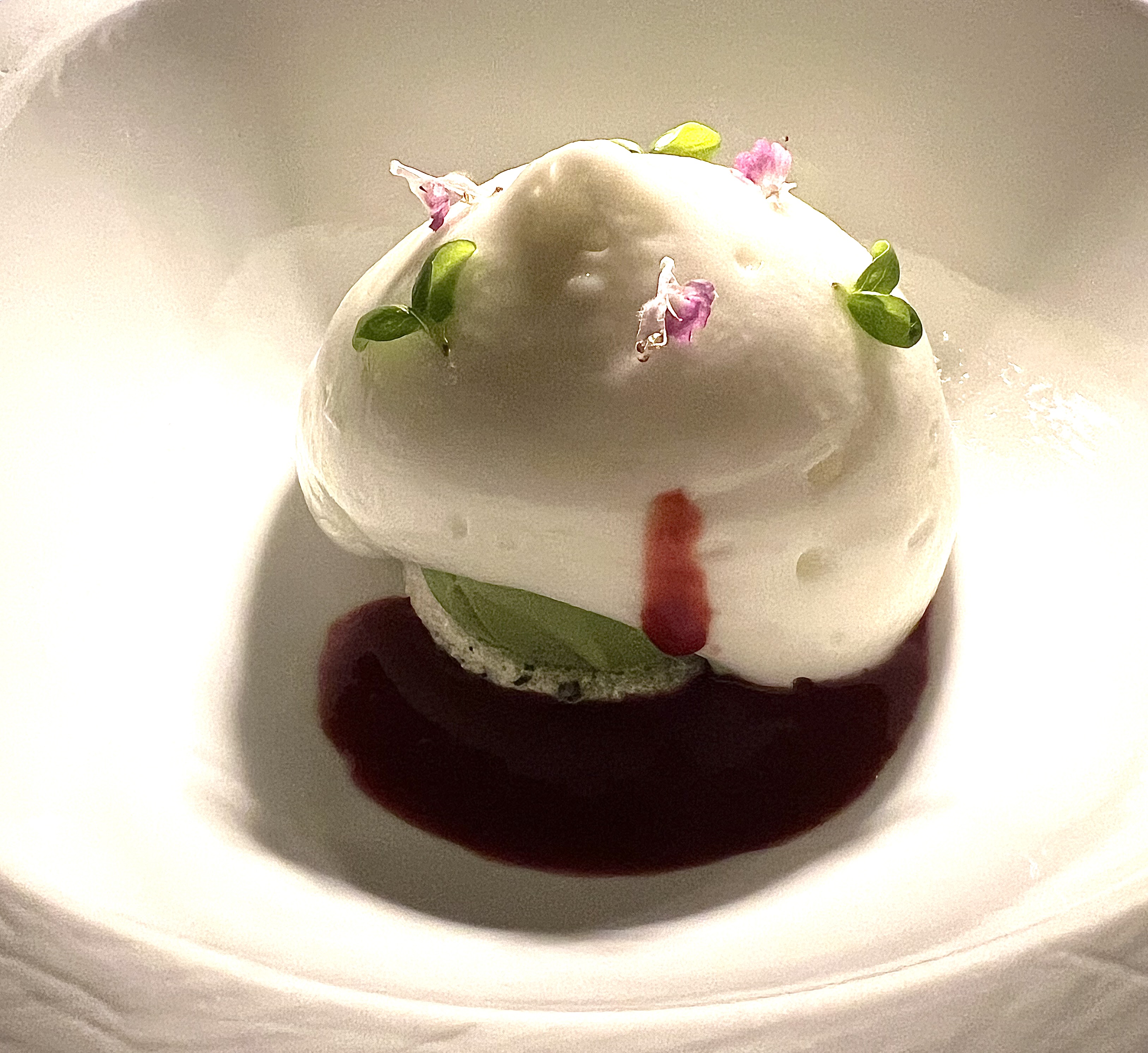
For fancier fare, The Monhegan House reigns supreme for wonderful, thoughtful dishes. Here are a few…
My daughter and I stayed on Monhegan for just a few nights, but it was a wonderful, relaxing trip. If you’re planning a coastal Maine vacation next summer, be sure to include a full day (an overnight is better) on Monhegan Island! But do what I did, and bring your own martinis!
For me, the only way to eat tuna is raw, and not just sushi or sashimi. I’m not a fan of what most restaurants do: serving tuna seared on the outside and rare on the inside. You can tell the quality of the tuna just isn’t there. It usually needs to be drowned in soy sauce to have any taste at all.
So getting my tuna fix often means I’ve got to prepare something at home.
If you’re paranoid about parasites, tuna is probably the safest fish to eat raw. I buy my tuna wild-caught and frozen from reputable sources. Occasionally, I’m lucky enough to buy it fresh from the fisherman, but that is a rare treat.
Technically, fish needs to be frozen at a temperature of -4°F (-20°C) or below for 7 days, for parasites to be killed. In the United States, this is required by law of all fish served at sushi restaurants, with tuna being the only exception.
Most marinades or ceviches use lemon or lime. I enjoy the freshness of grapefruit, and it really works here. This recipe was literally created by opening my fridge and pantry, and grabbing whatever looked good.
1 lb. excellent quality raw tuna
juice of 1 grapefruit
1 teaspoon grapefruit zest
2 teaspoons low-salt soy sauce
1/2 teaspoon wasabi powder
1/2 teaspoon hot pepper sauce (I use Frank’s Red Hot)
1/2 teaspoon black pepper
1/2 teaspoon sesame oil
1/4 teaspoon sea salt (I use Fleur de Sel)
1 tablespoon chopped scallions, green part only
sesame seeds (optional)
cubed avocado or plain guacamole
If I’m starting with frozen tuna, I allow it to thaw just enough so I can cut it into small cubes easily. I place the cut tuna on paper towels to soak up excess moisture, and keep it in the fridge.
In a bowl, I combine all the other ingredients, except the sesame seeds and avocado. I add the tuna to the bowl, and mix everything carefully, putting it back in the fridge to marinate for an hour.
When I’m ready to serve, I place the tuna on a plate. (If it’s very runny, I use a slotted spoon.) I top it with a sprinkling of sesame seeds and serve with fresh cubed avocado, or even plain guacamole.
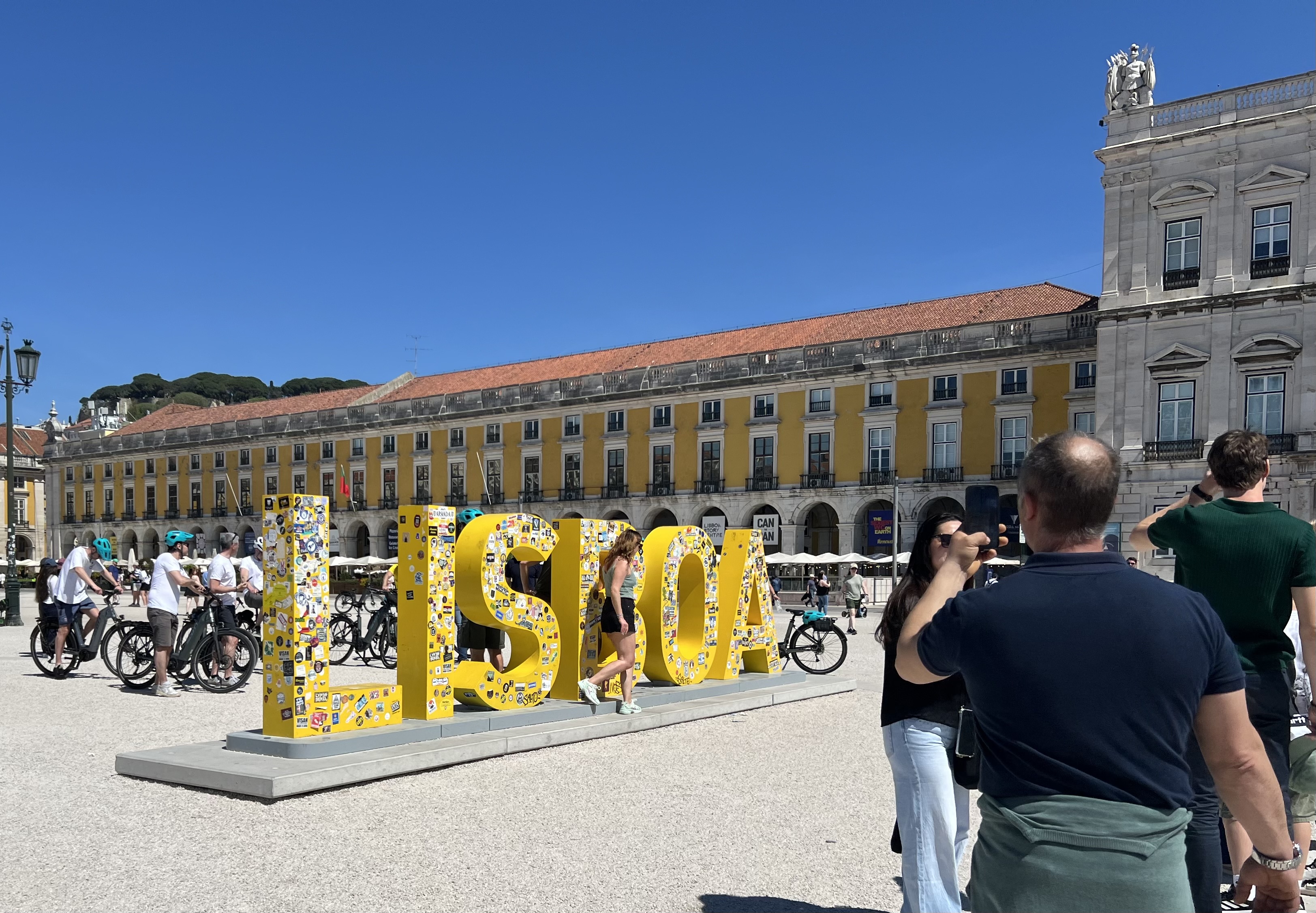
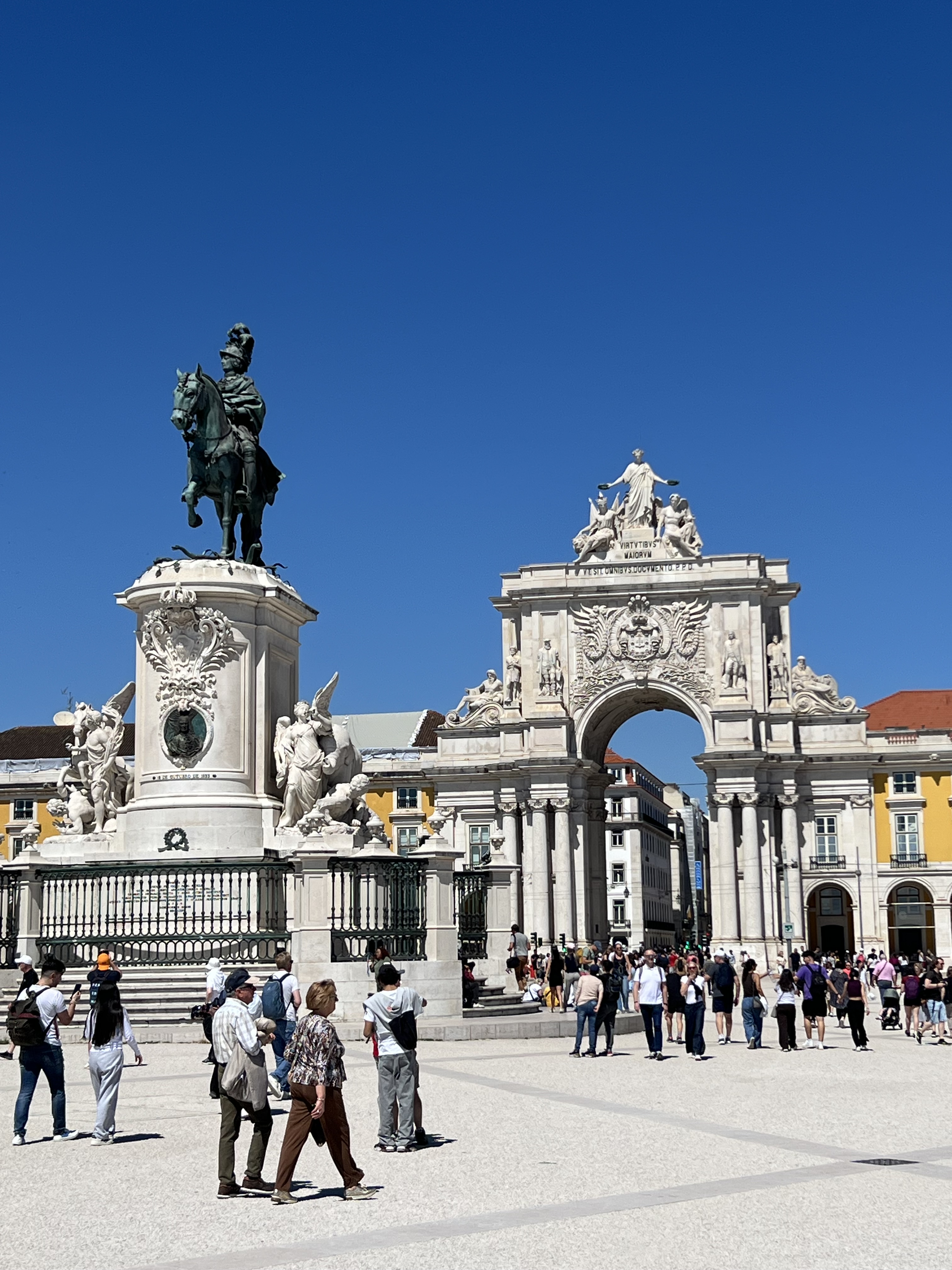
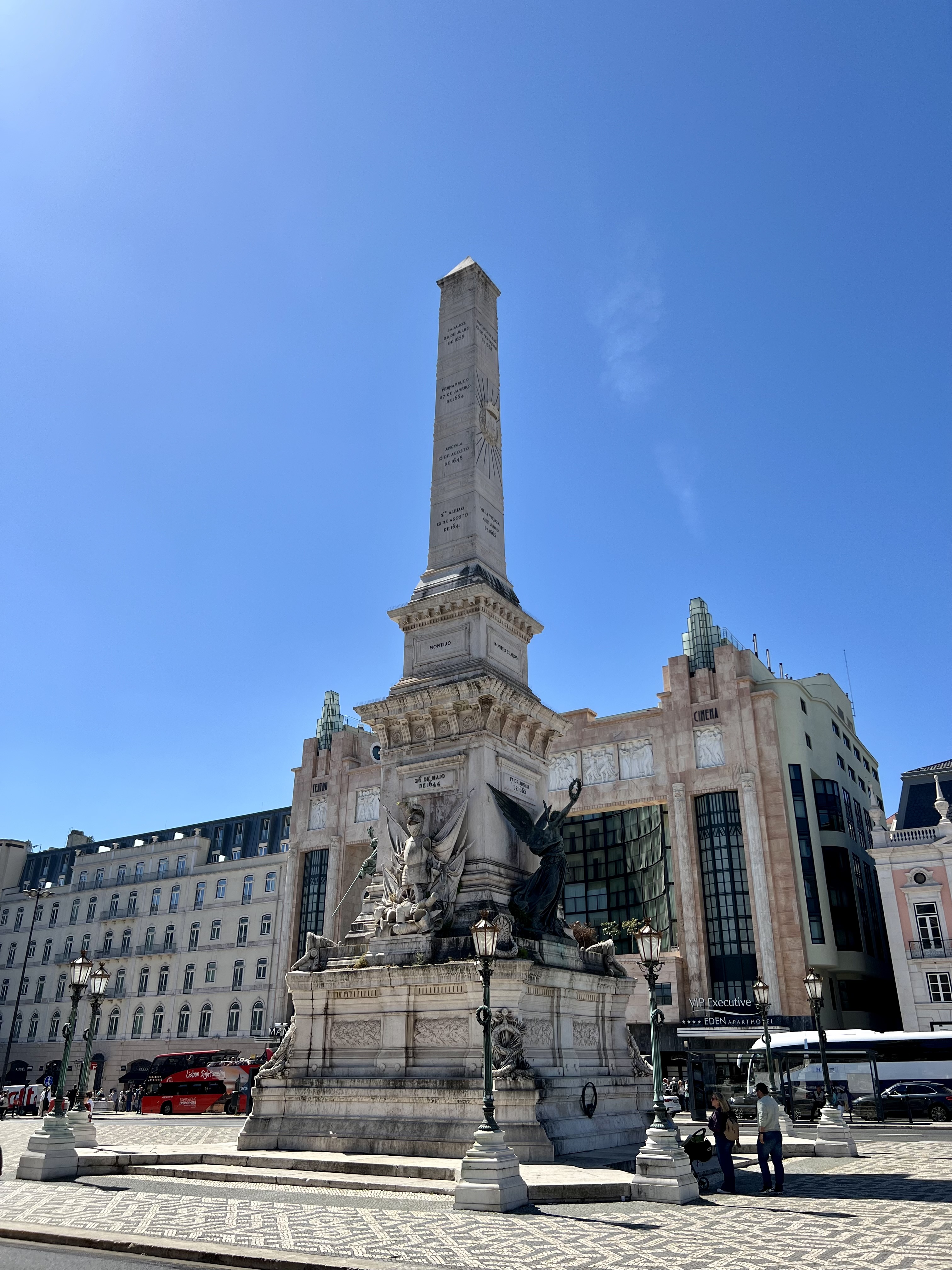
I spent my last full day in Portugal just walking up and down the streets of Lisbon. It was Easter weekend, and the streets were full of people enjoying a beautiful, sunny day. I was told that schools in Portugal and Spain take two-week vacations around Easter, and many people from Portugal go to Spain while folks from Spain visit Portugal, since it’s only a few hours by car. And I found that to be very true, since I could understand overheard conversations a lot better that weekend! (My Spanish is much better than my Portuguese!)
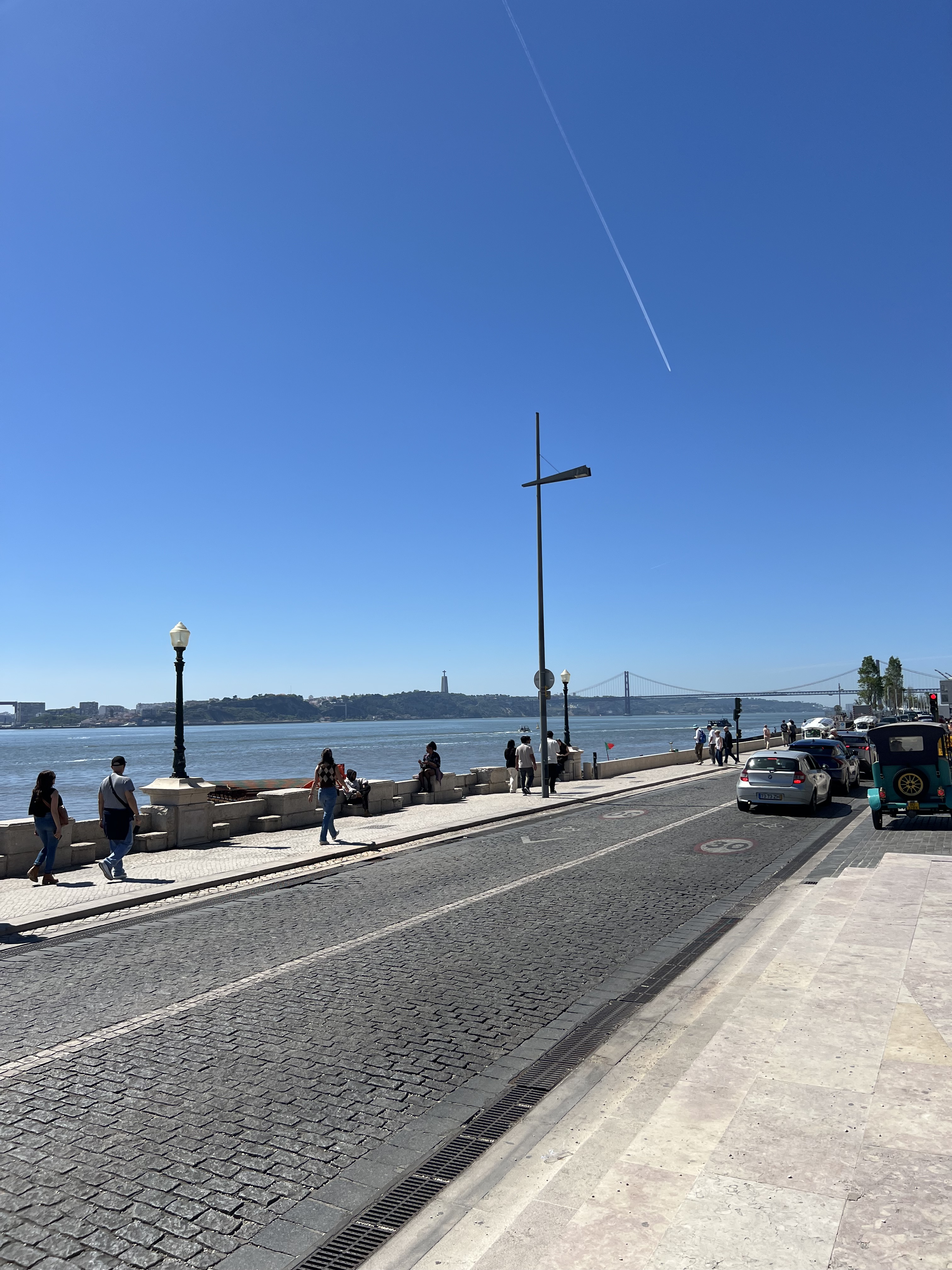
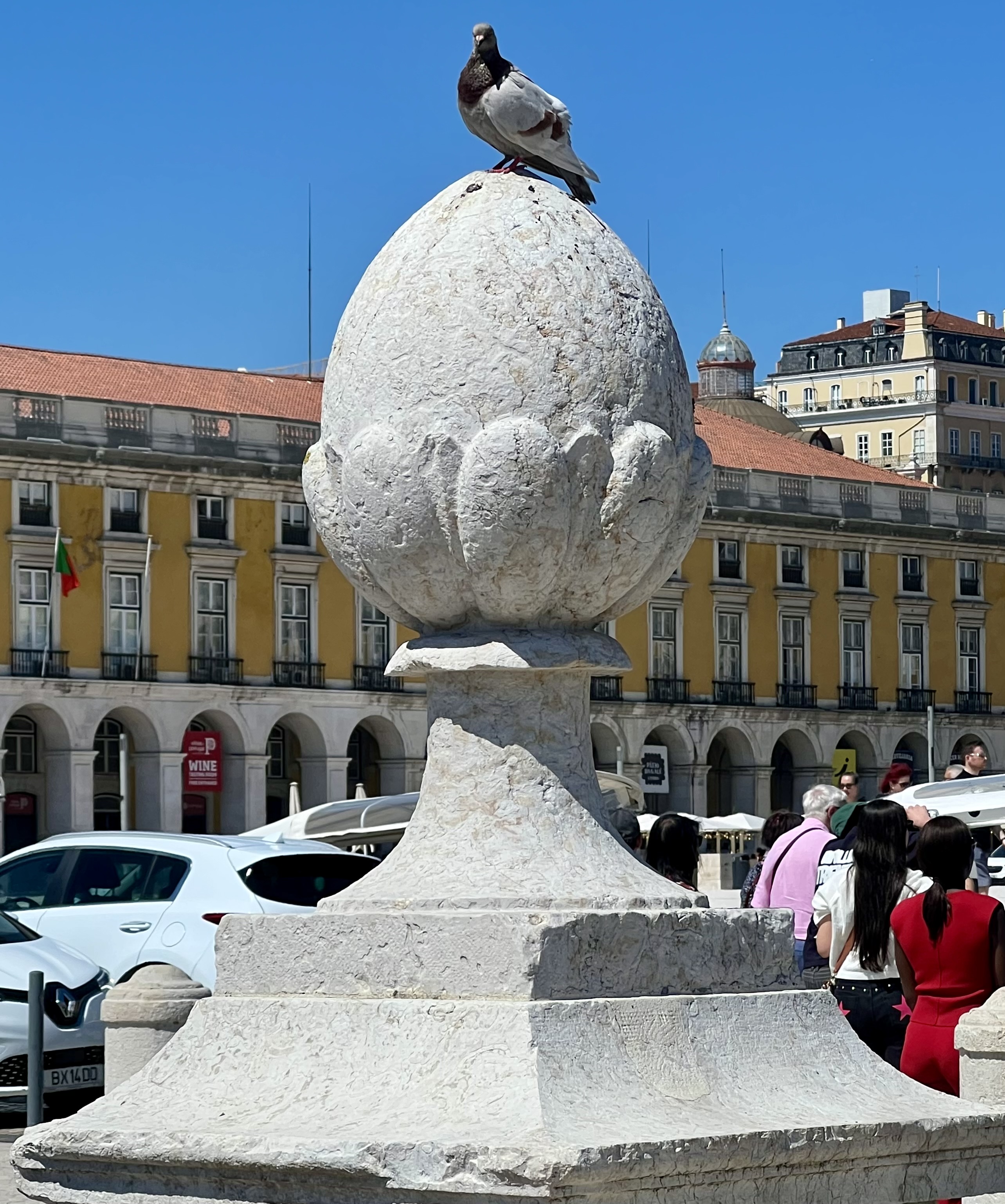
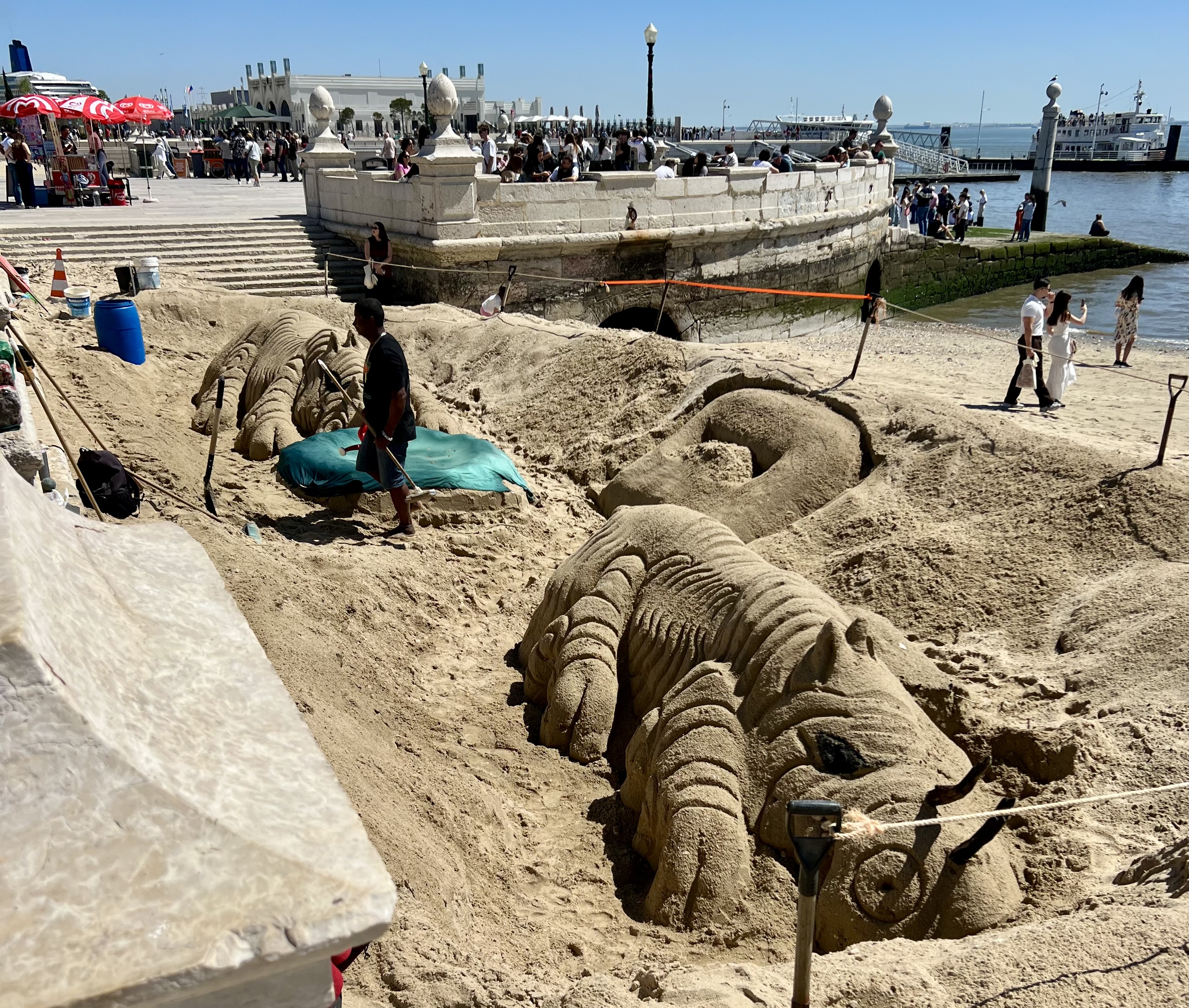
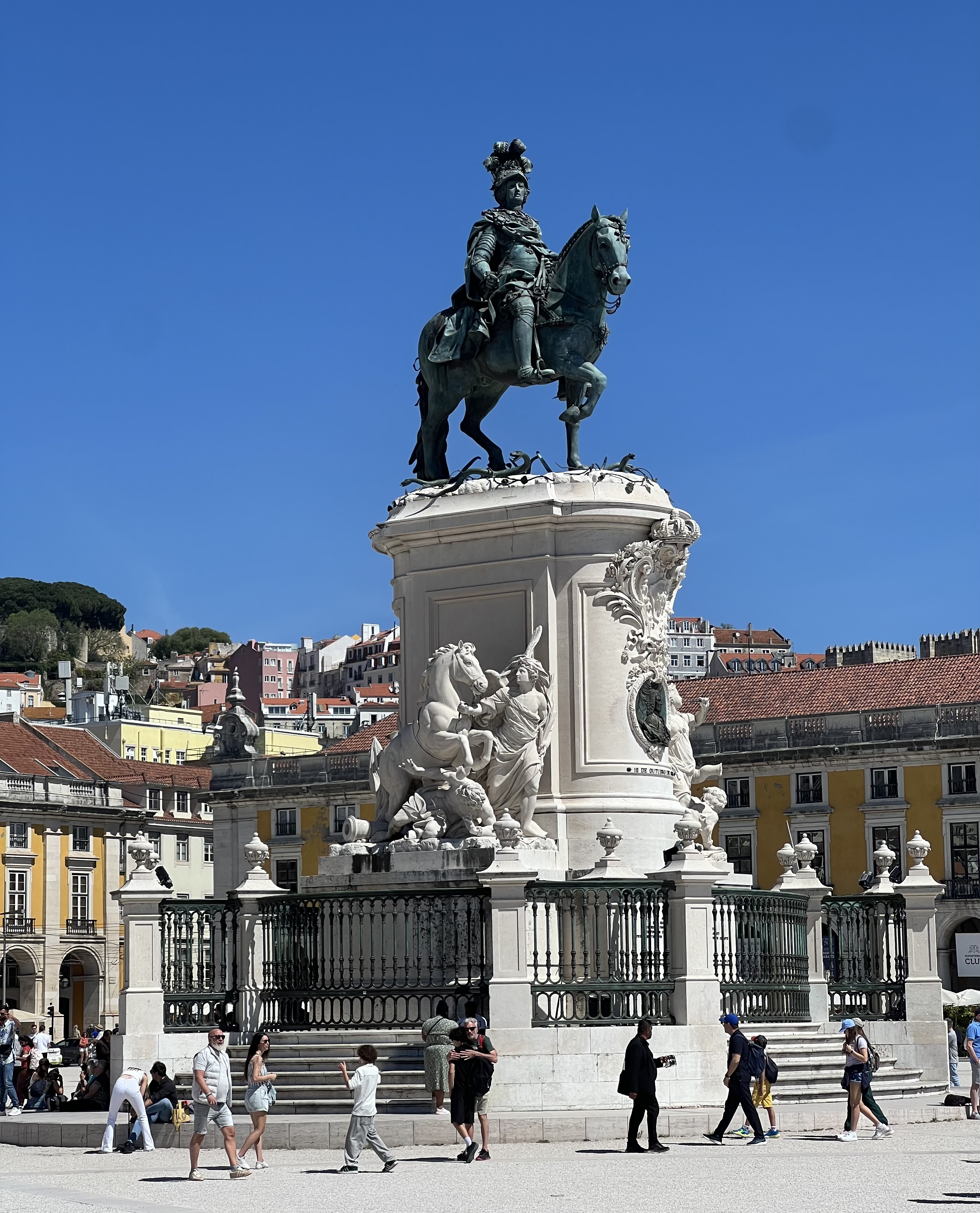
The waterfront in Lisbon was full of travelers!
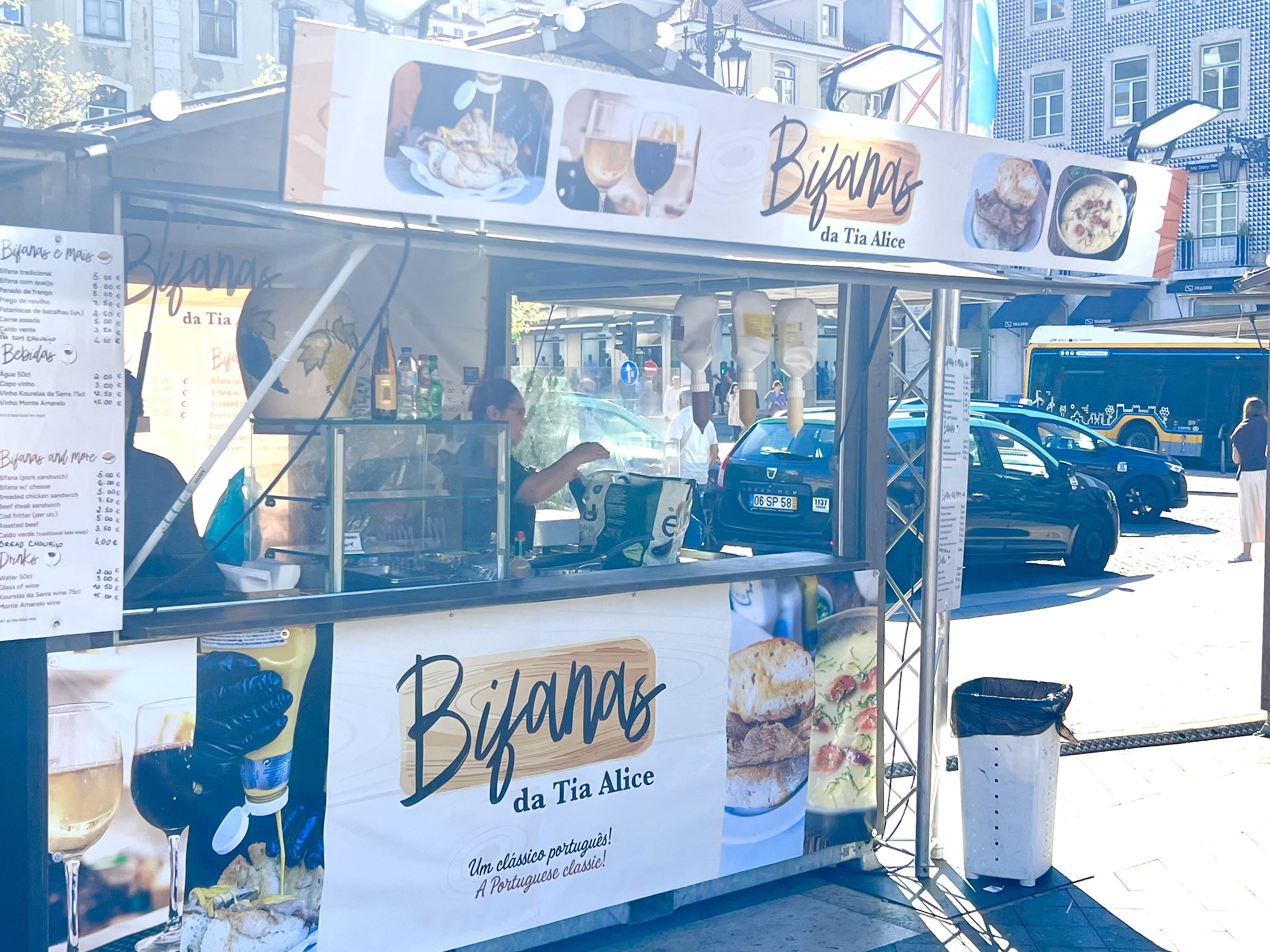
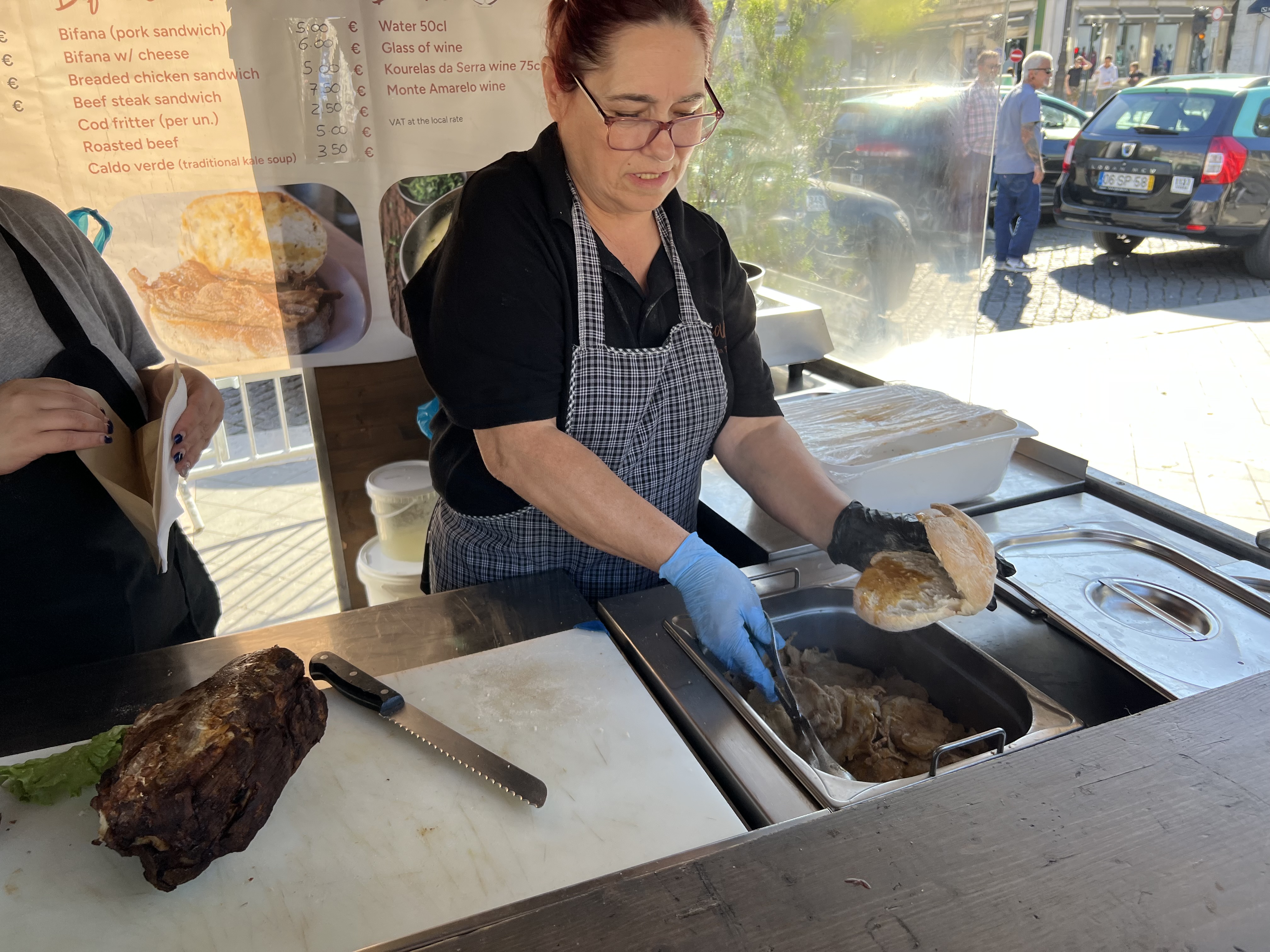
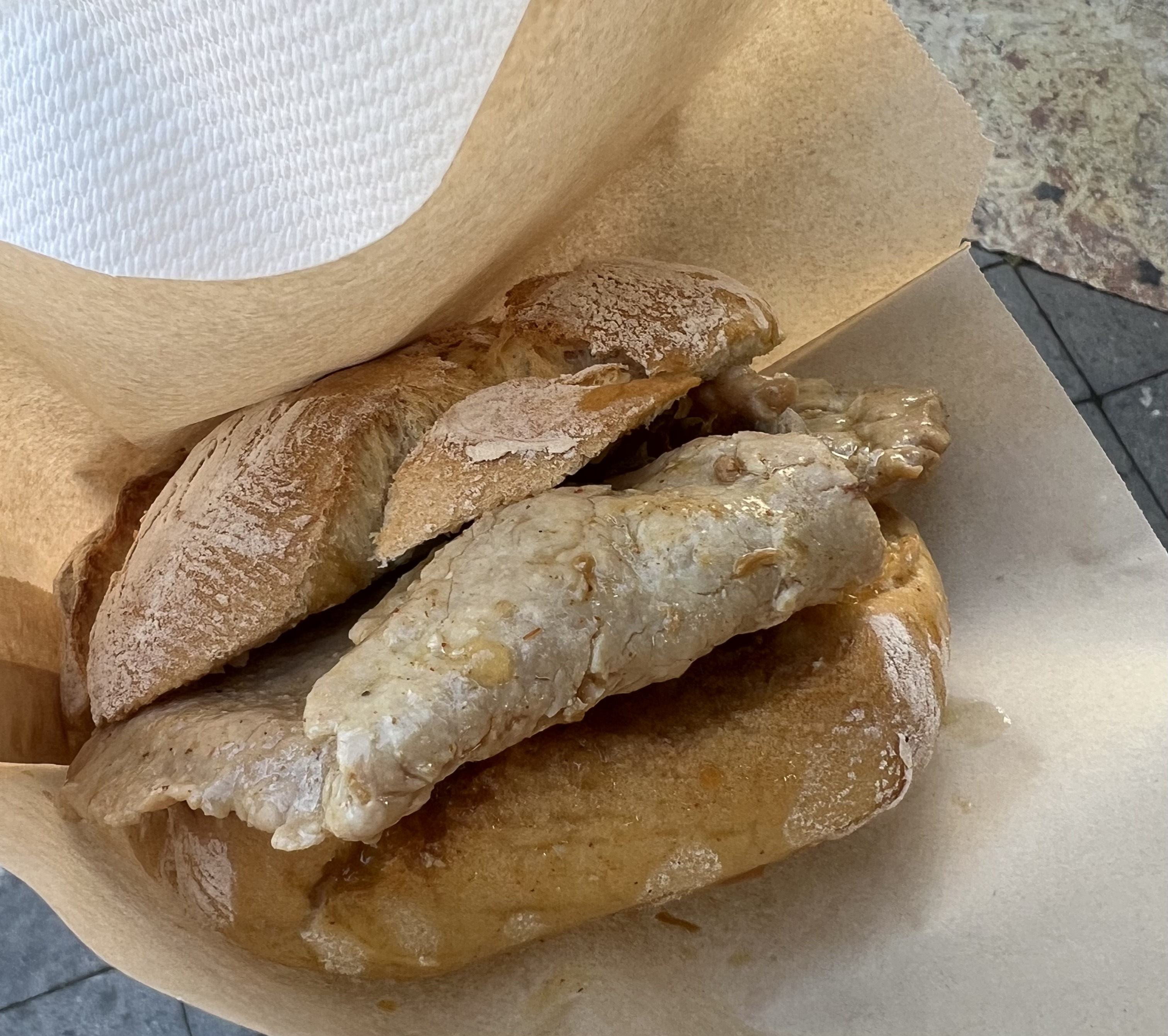
A small Easter marketplace opened up over the weekend, and it was my opportunity to try the famous pork sandwich called bifana. I had actually tracked down a bifana shop in town, but they were closed for the holiday. So finding this stand was a bit of luck. And it was delicious!
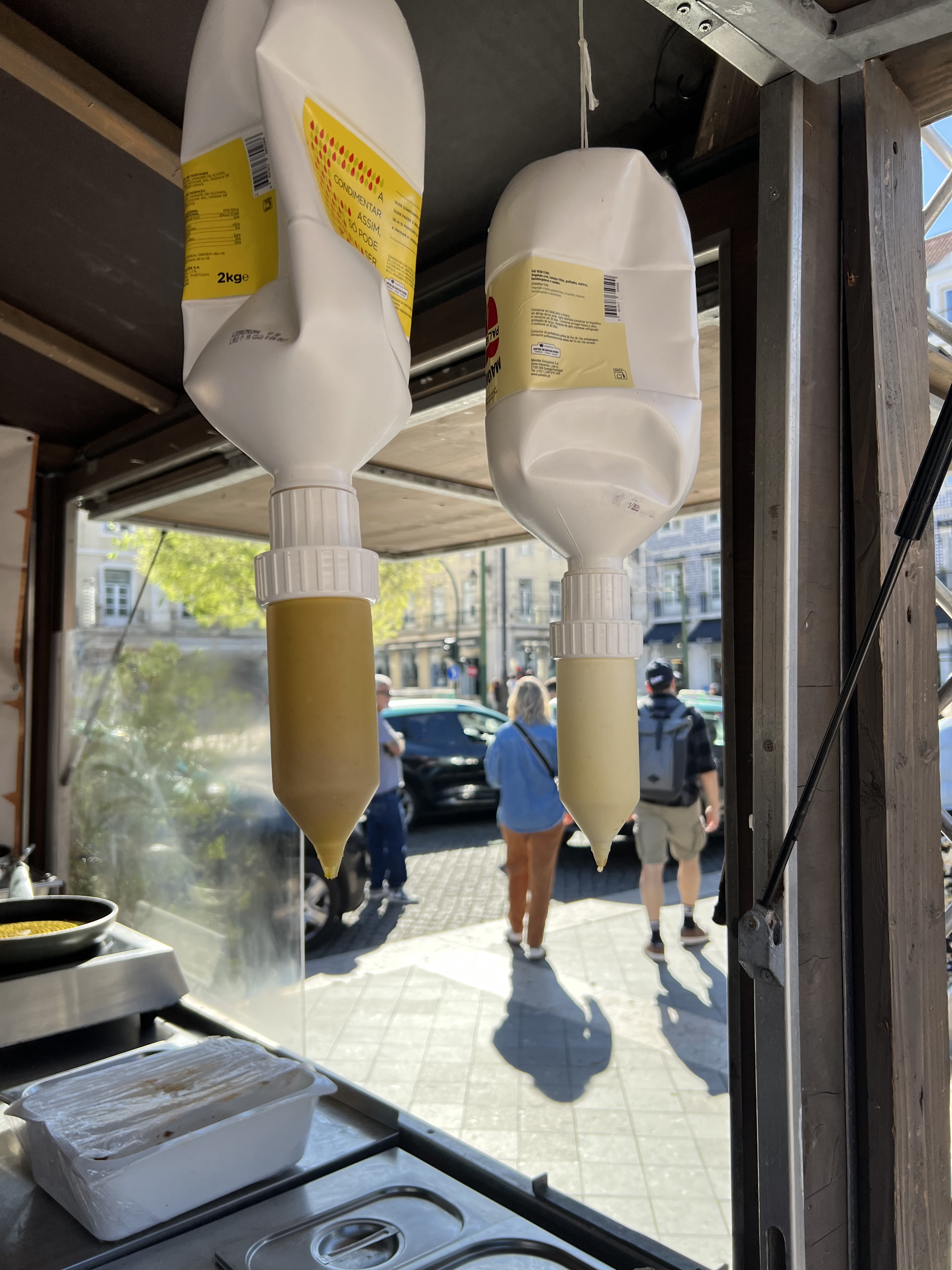
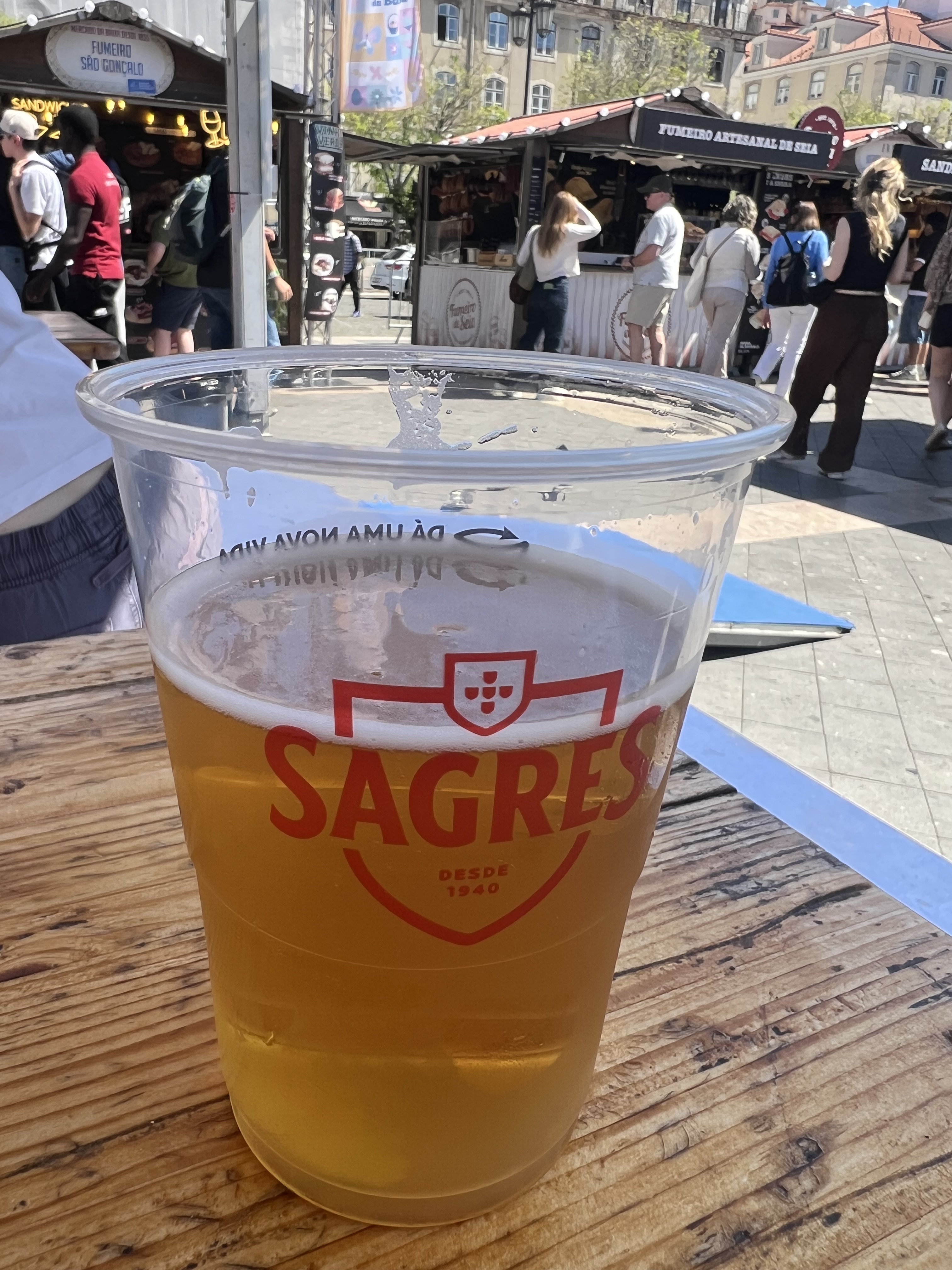
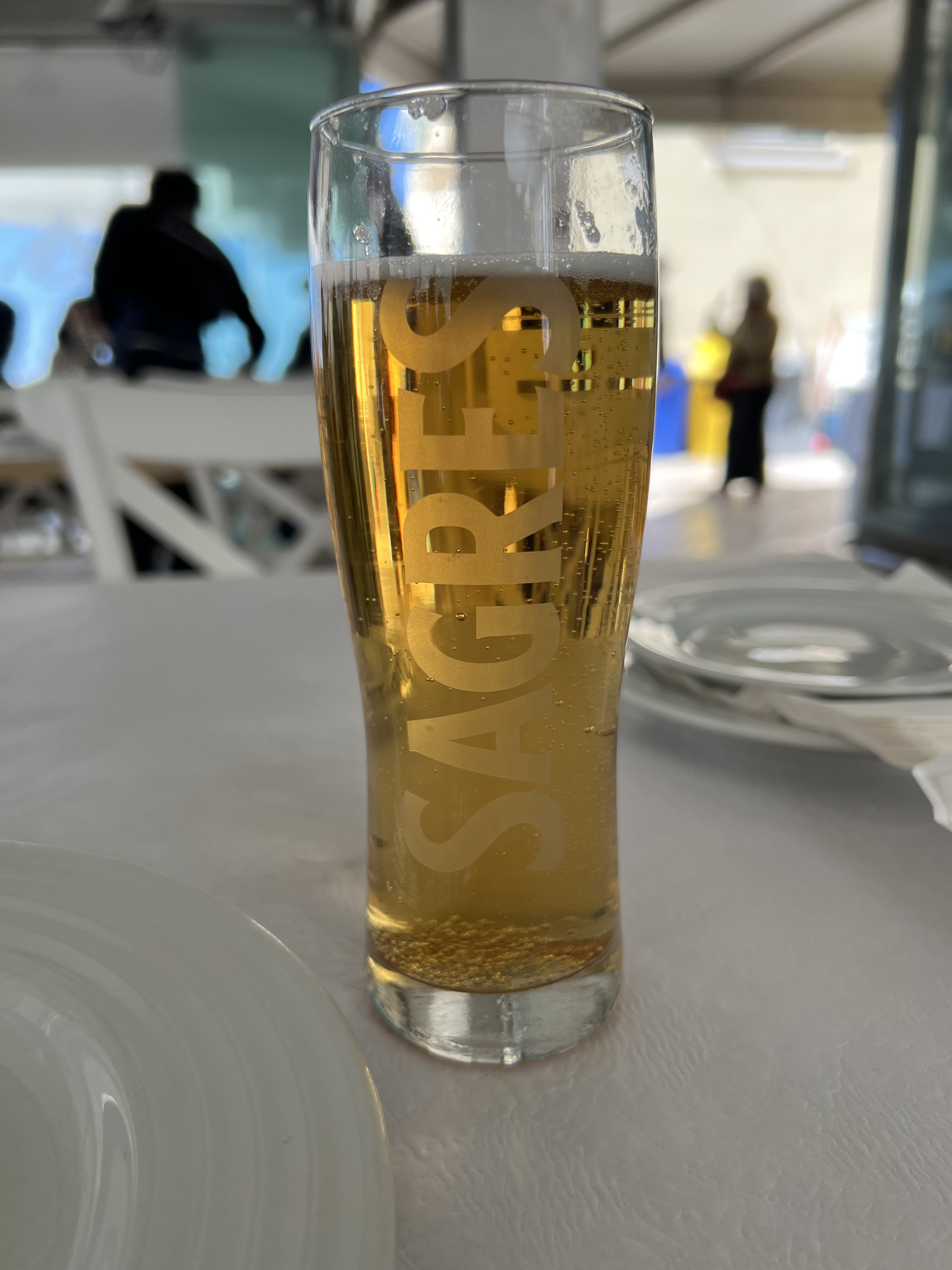
The ladies workjing here were very sweet and happy to share their food with hungry customers like me!An interesting way to serve condiments!A beer is always a good choice on a hot day!
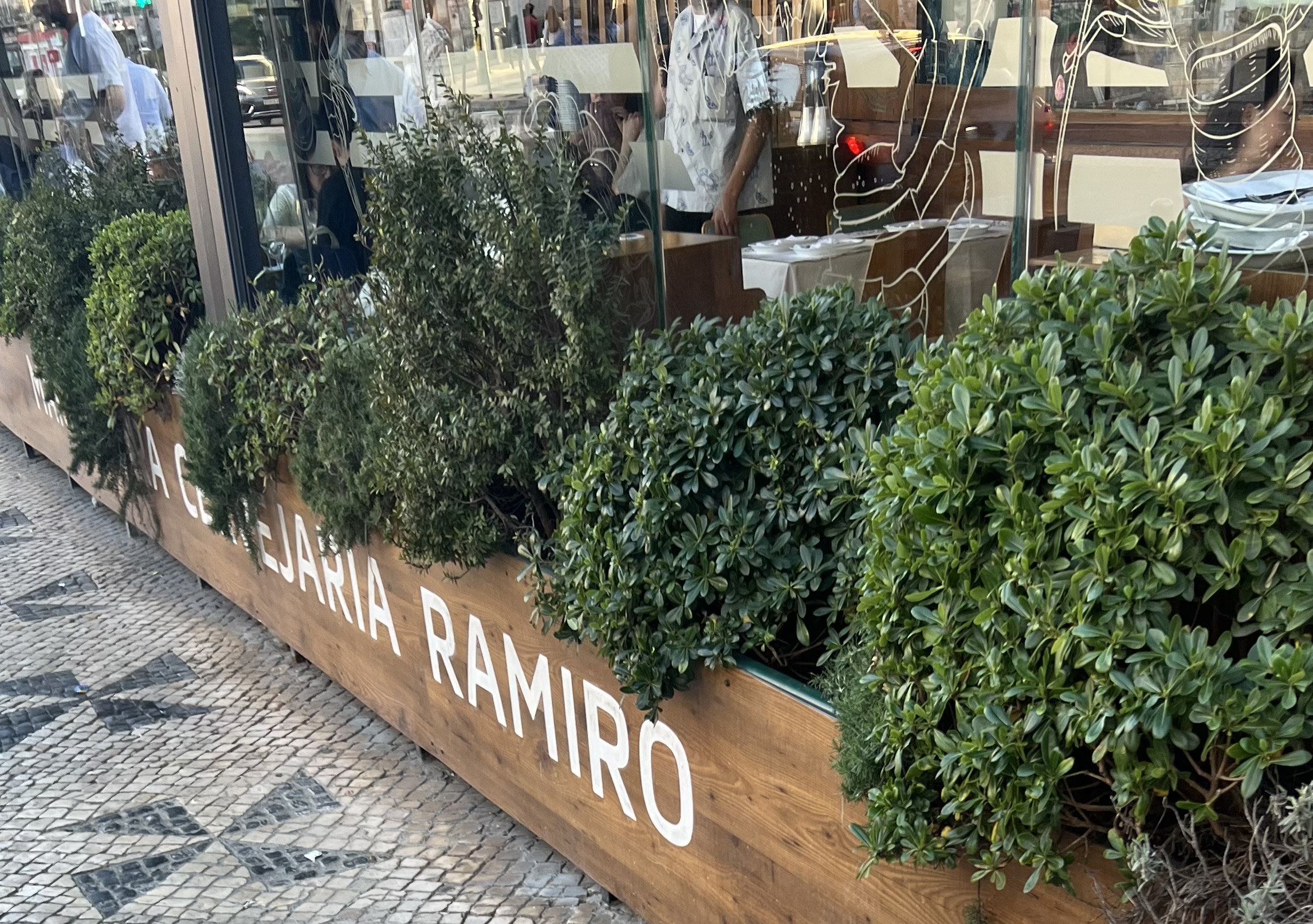
My last meal in Portugal had to be special. And so, I chose a restaurant that was visited by Anthony Bourdain many years ago on “No Reservations.” The only time he went to Portugal, from what I understand.
Cervejaria Ramiro has been around for many years, but Bourdain brought it worldwide fame, and if you don’t get yourself a reservation, you don’t get in!
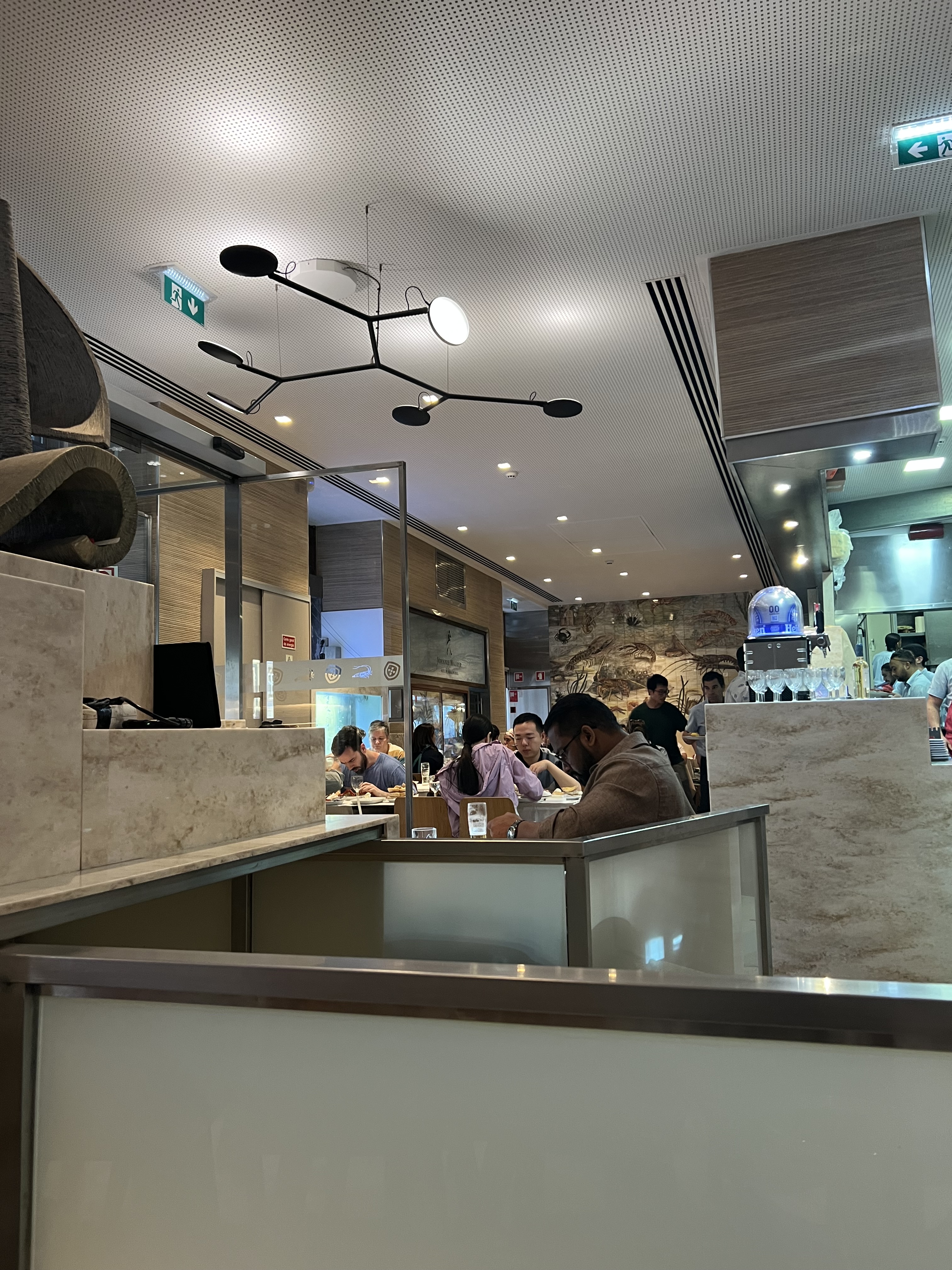
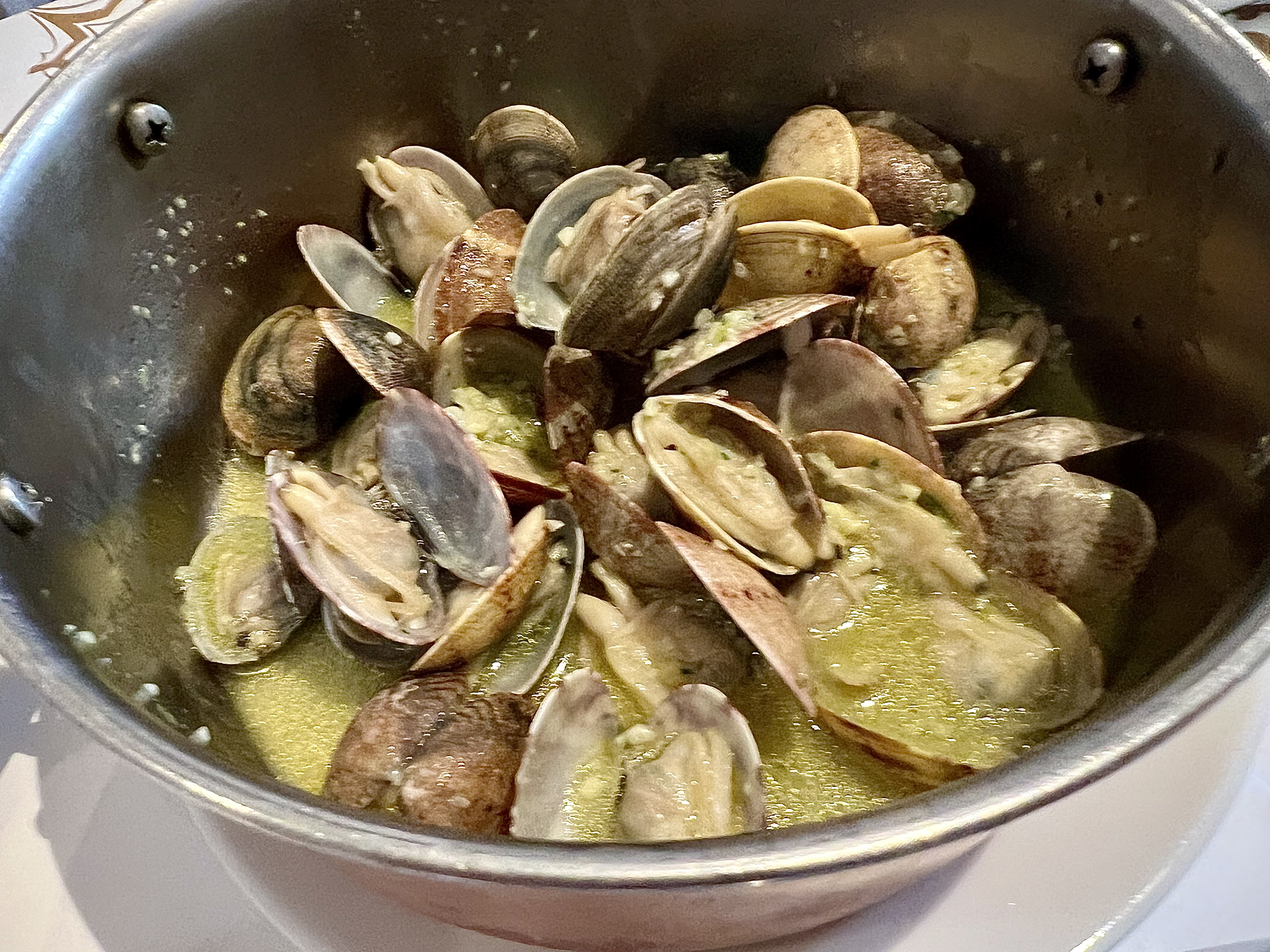
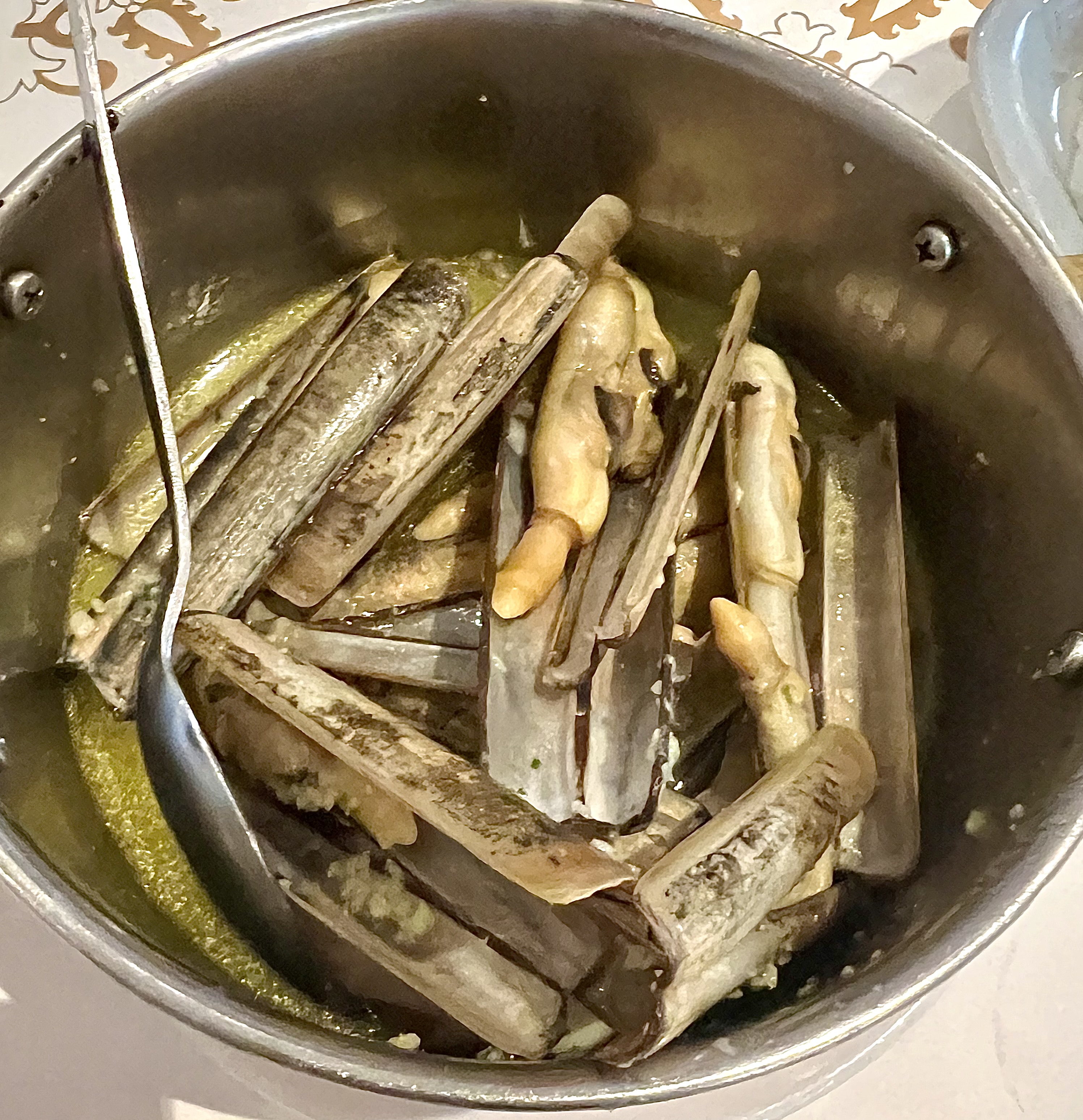
Amazing seafood served at a frenetic pace. Fast, but you never feel rushed. And the servers are real characters. It’s just an awesome, fun time eating fantastic seafood!
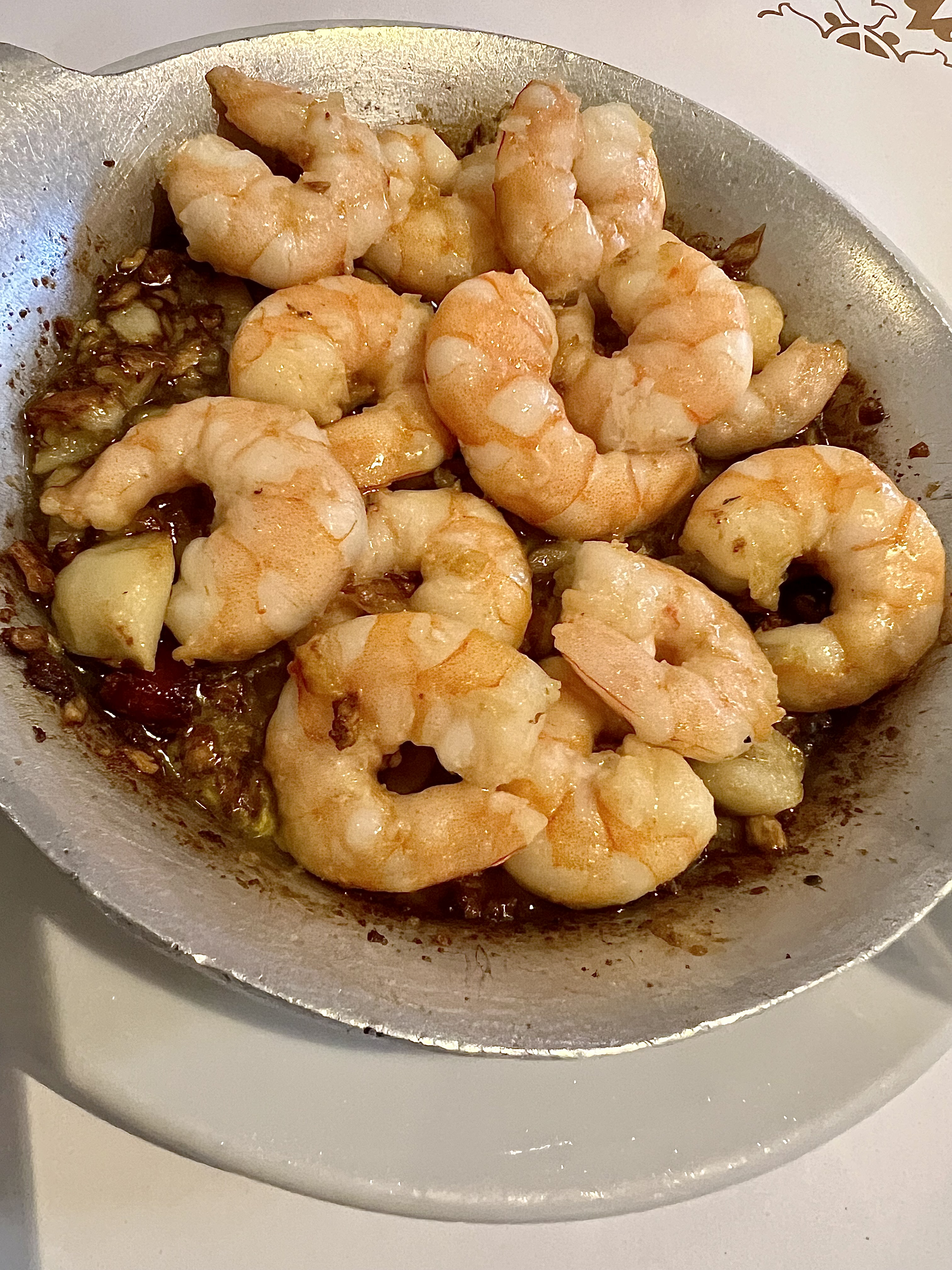
The garlic was heavy here!
I met Anthony Bourdain once. I was lucky enough to introduce him onstage at the Providence Performing Arts Center, back when he did his speaking tours. We had a good 30 minutes to hang out together backstage, and what did we talk about? Nickelodeon! Both his daughter and mine were the same age, and we were dads that sat and watched “Spongebob” and “Dora” with our kids. It was a wonderful “dad” conversation I’ll never forget–as far from foodie talk as it could be.
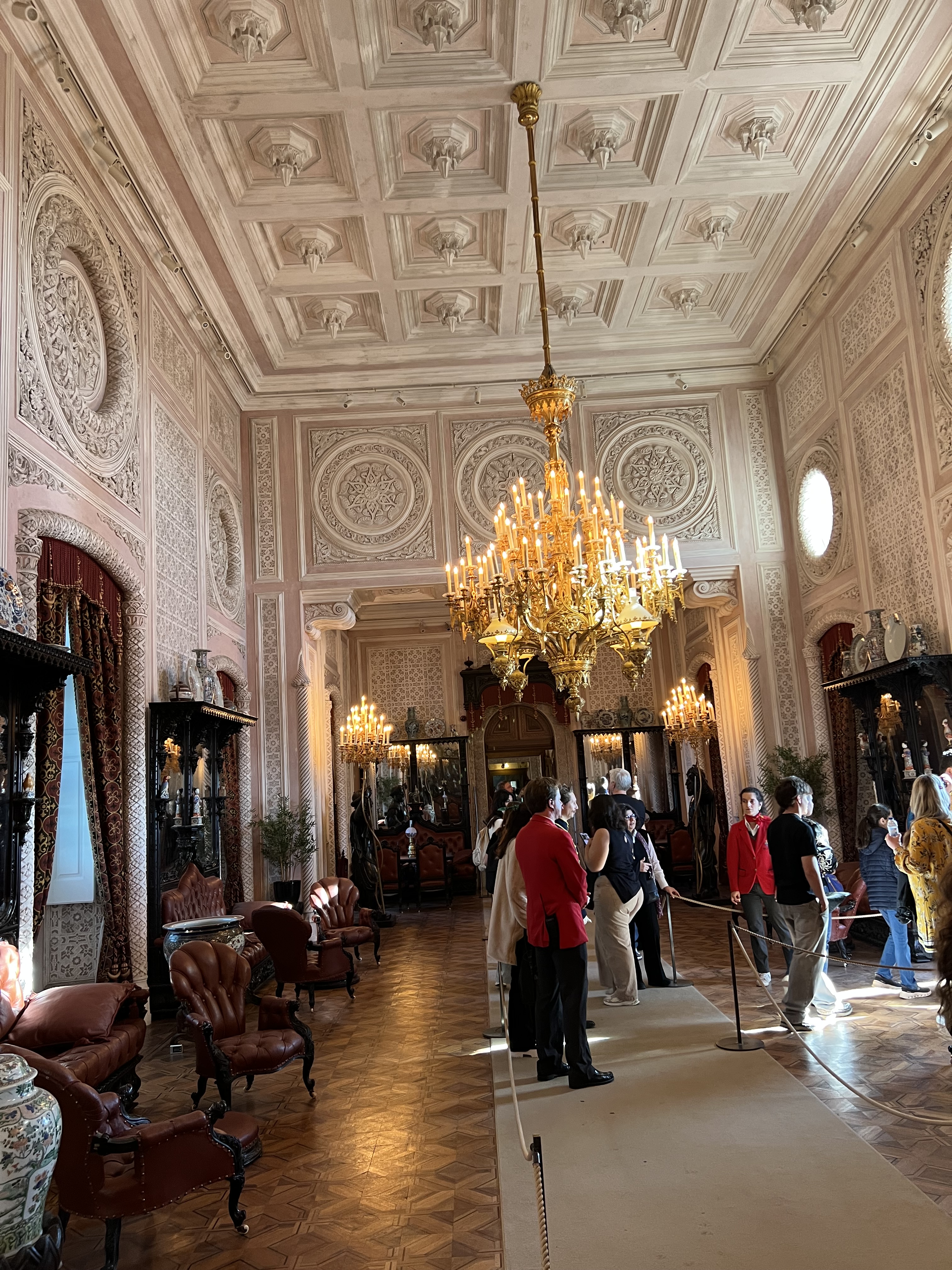
Sintra and Cascais are two very popular destinations just outside of Lisbon proper, and it was highly recommended to me that I sign up with a tour, rather than try to drive the narrow, winding roads by myself. I wisely took the tour.
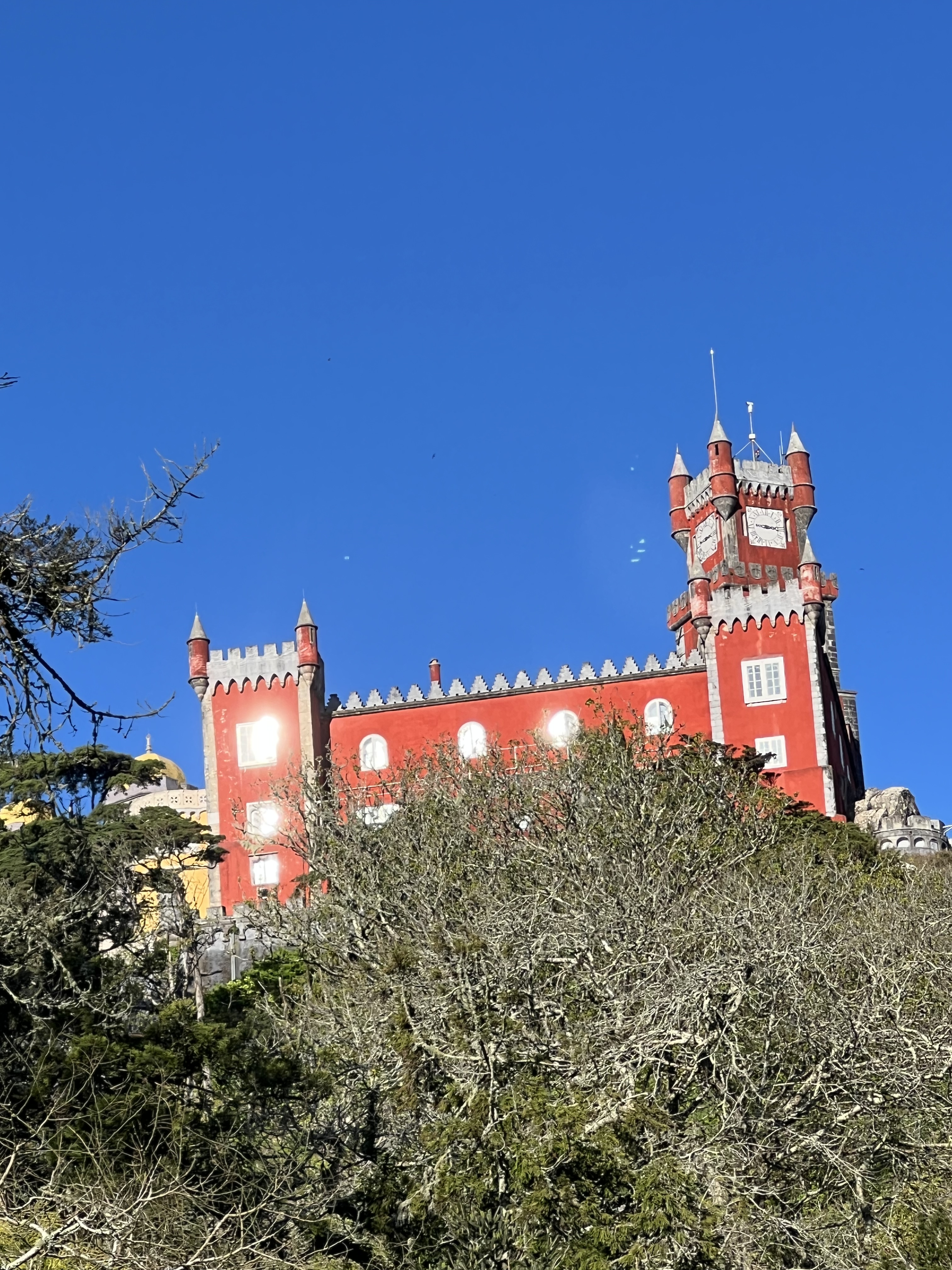
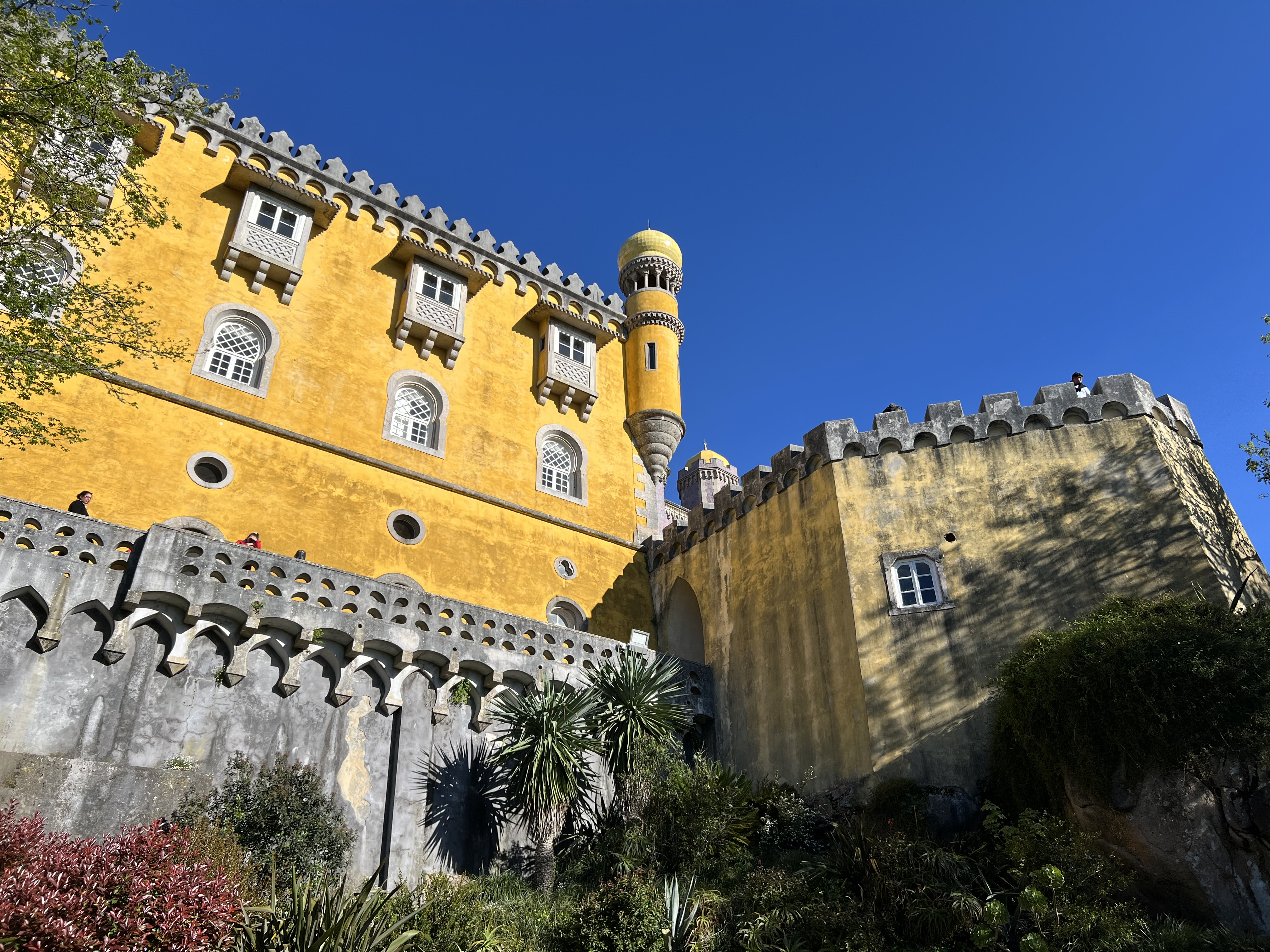
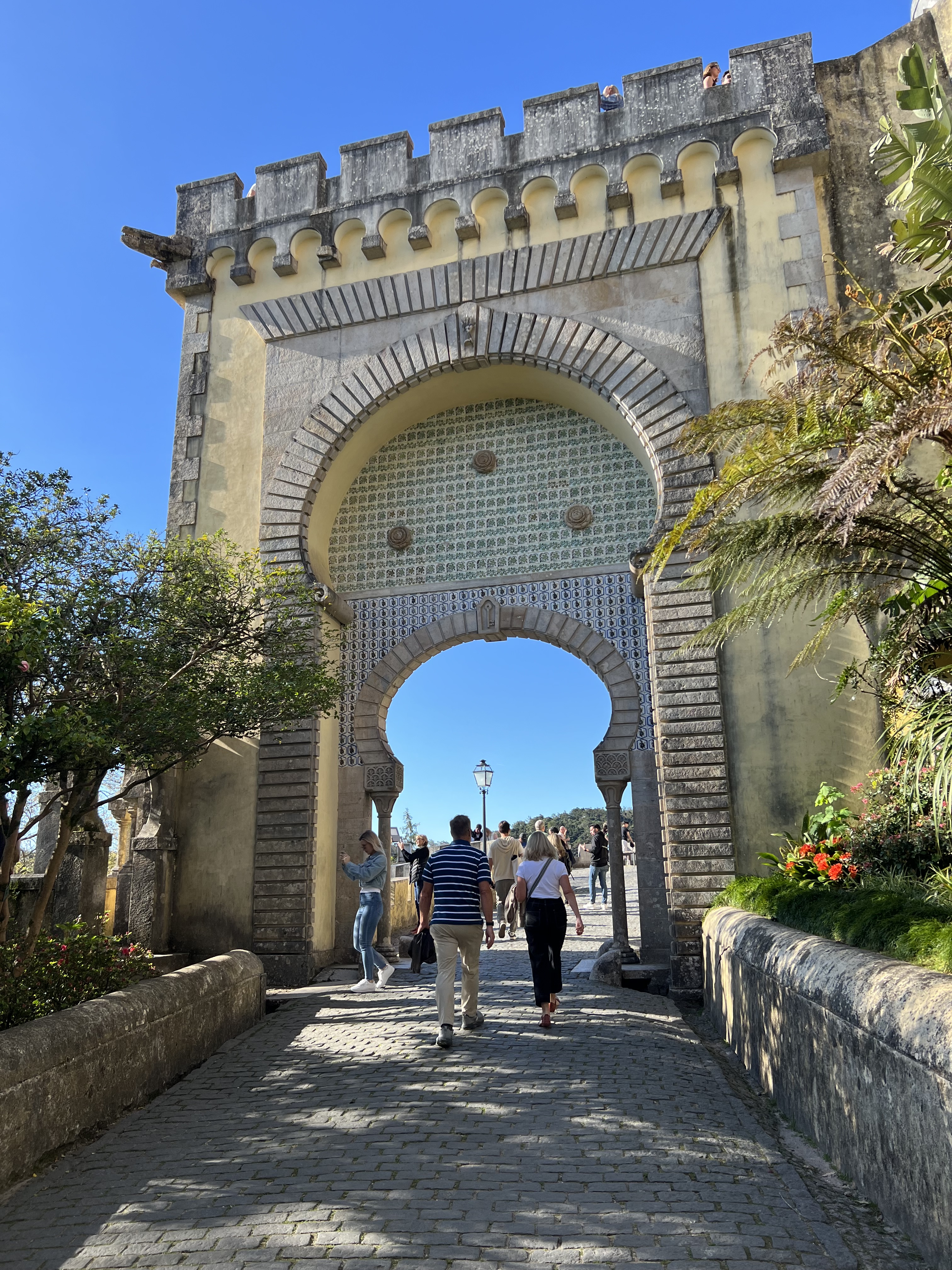
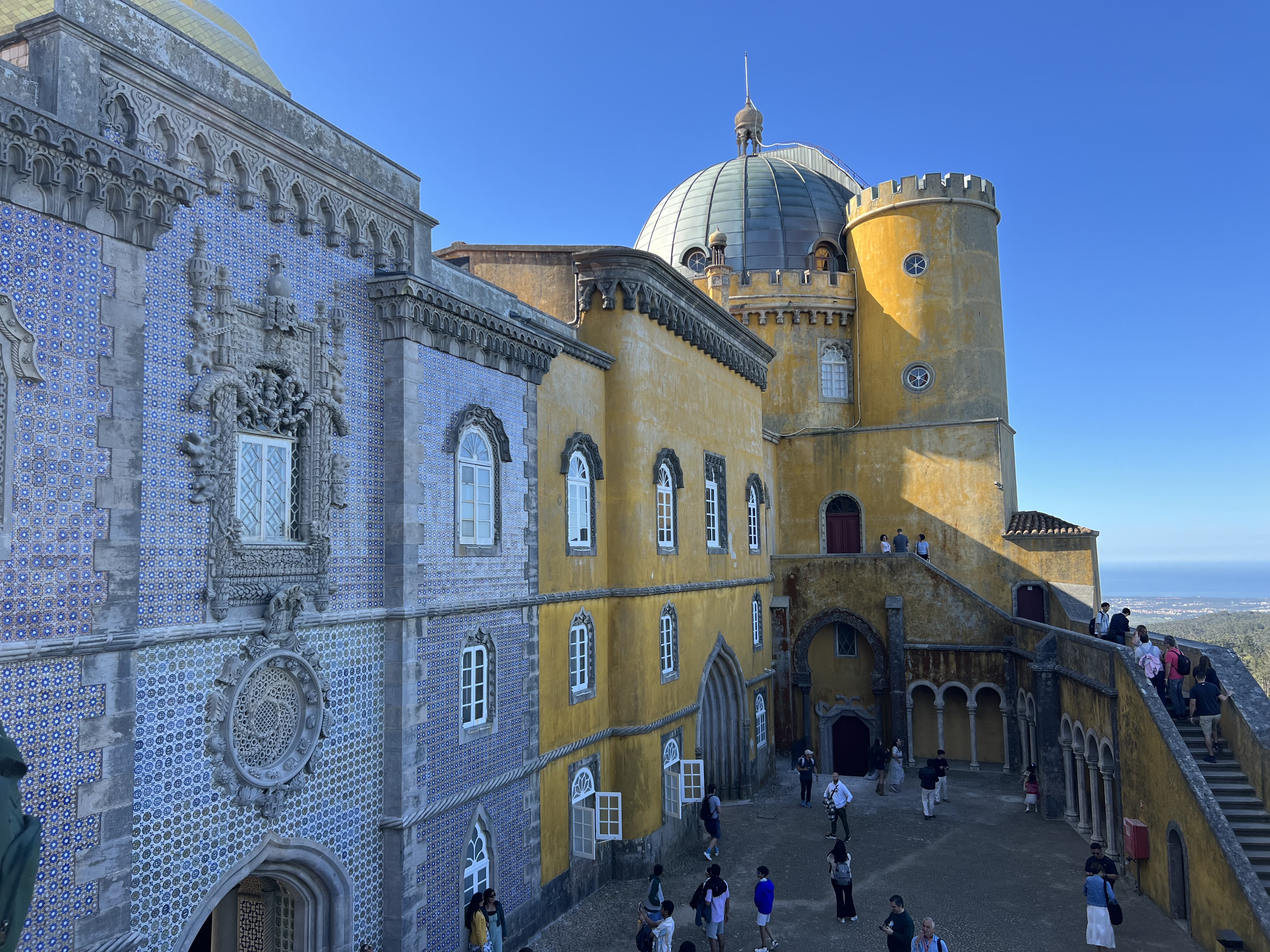
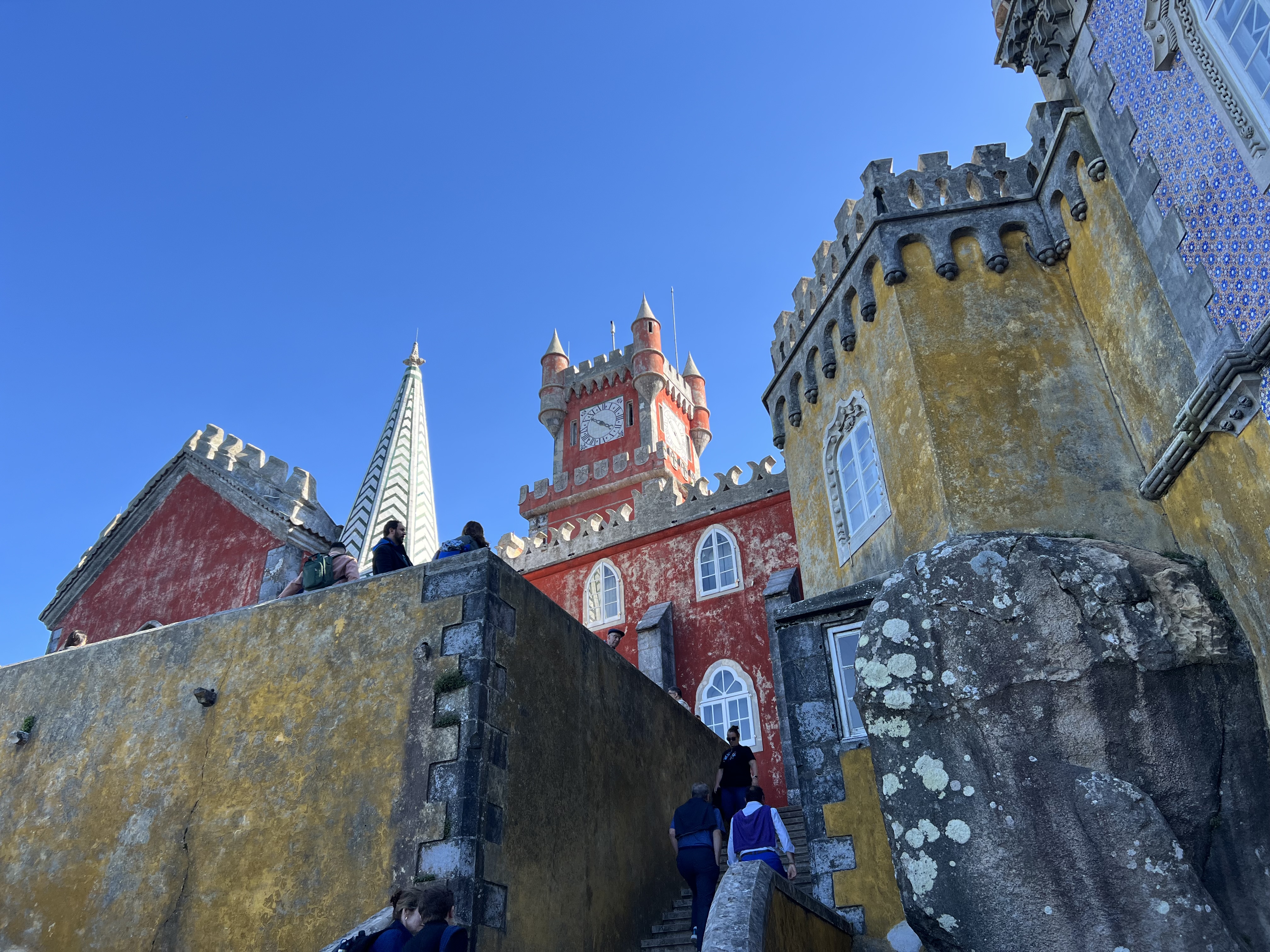
Not only was the tour informative and relaxing, but tickets to the always-popular, always-crowded Pena National Palace in Sintra, were included. It was a van of no more than 8 people, and our knowledgeable driver knew the roads really well.
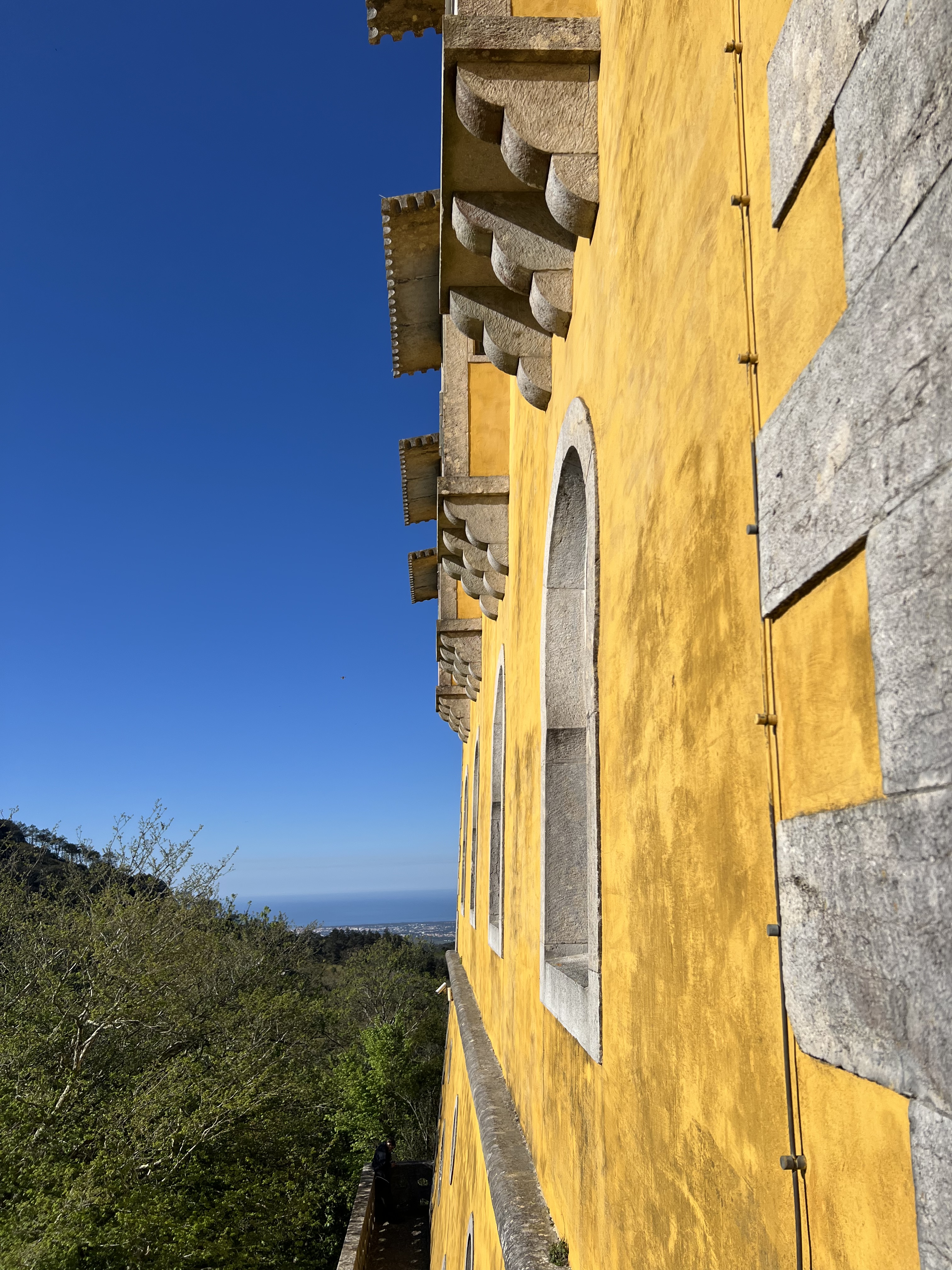
The Pena National Palace is a UNESCO World Heritage Site, and it was built by King Ferdinand II as a royal summer residence in the 19th century. But there are so many more details to the story. I’ll leave it to you to Google it if you’re interested.
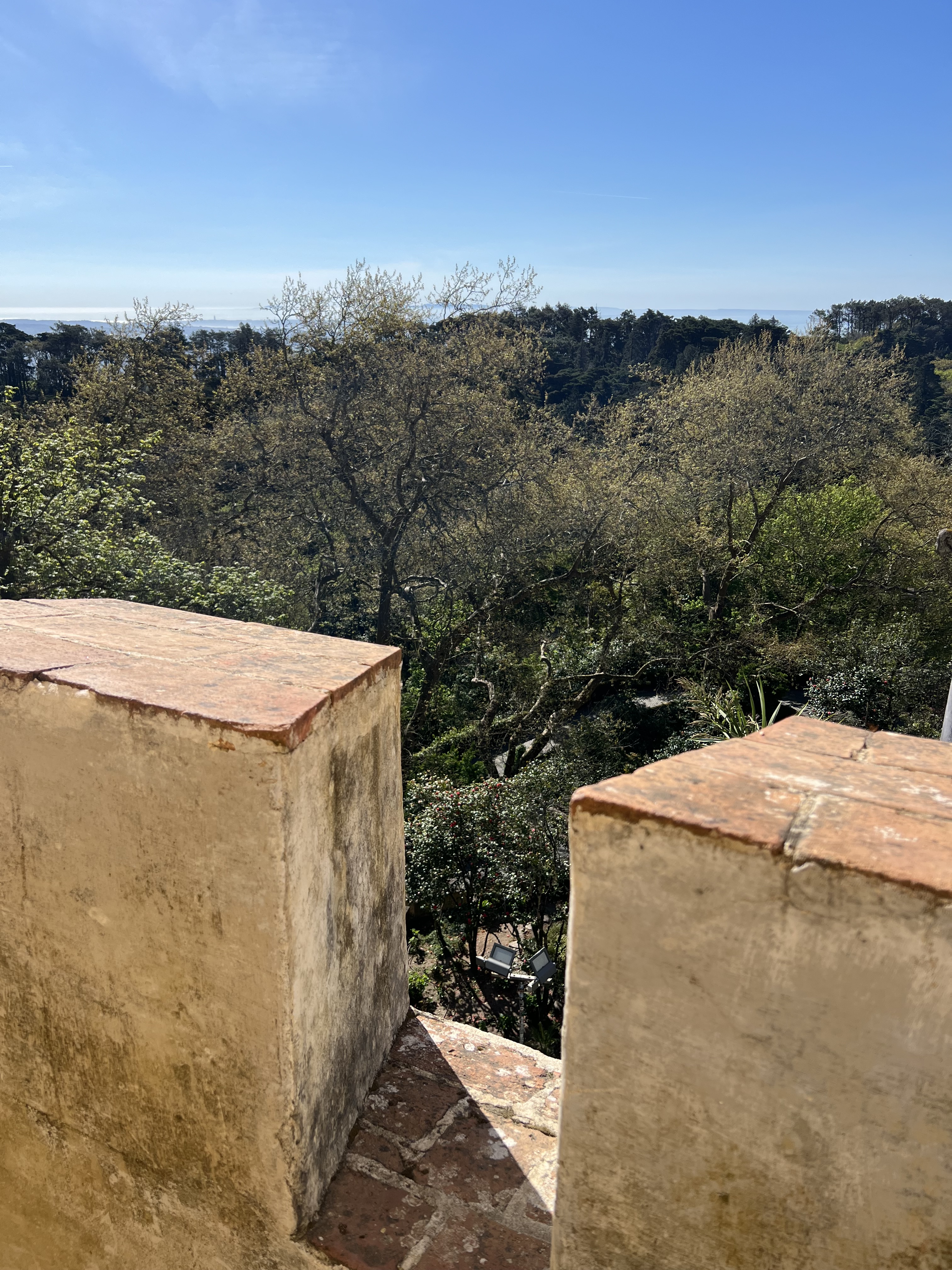
The walk uphill to the palace was quite steep, but the views we saw when we finally got there made it all worthwhile.
If you’re going to check the palace out, I highly recommend going off-season. It gets very, very crowded, with very long waits in line.
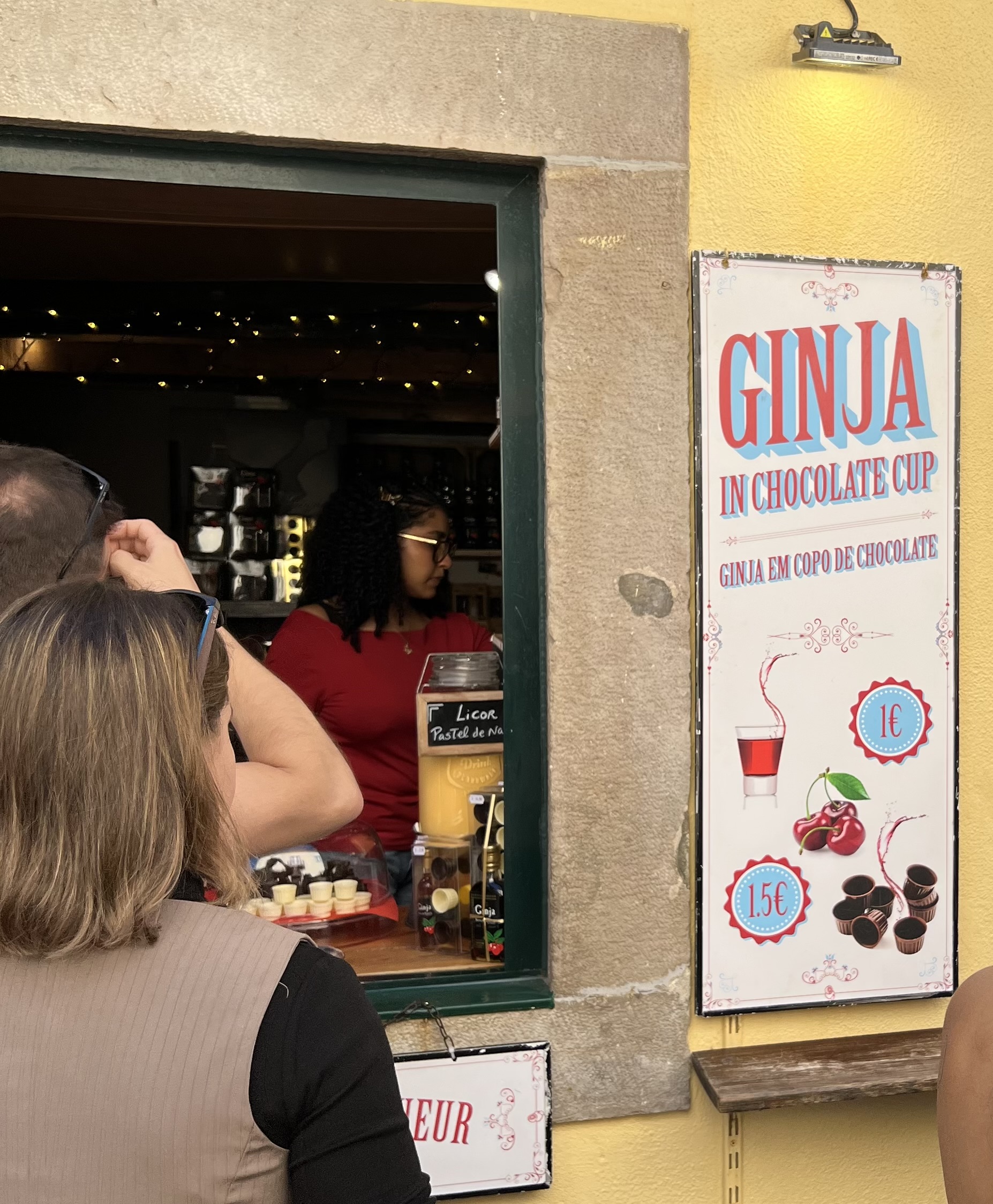
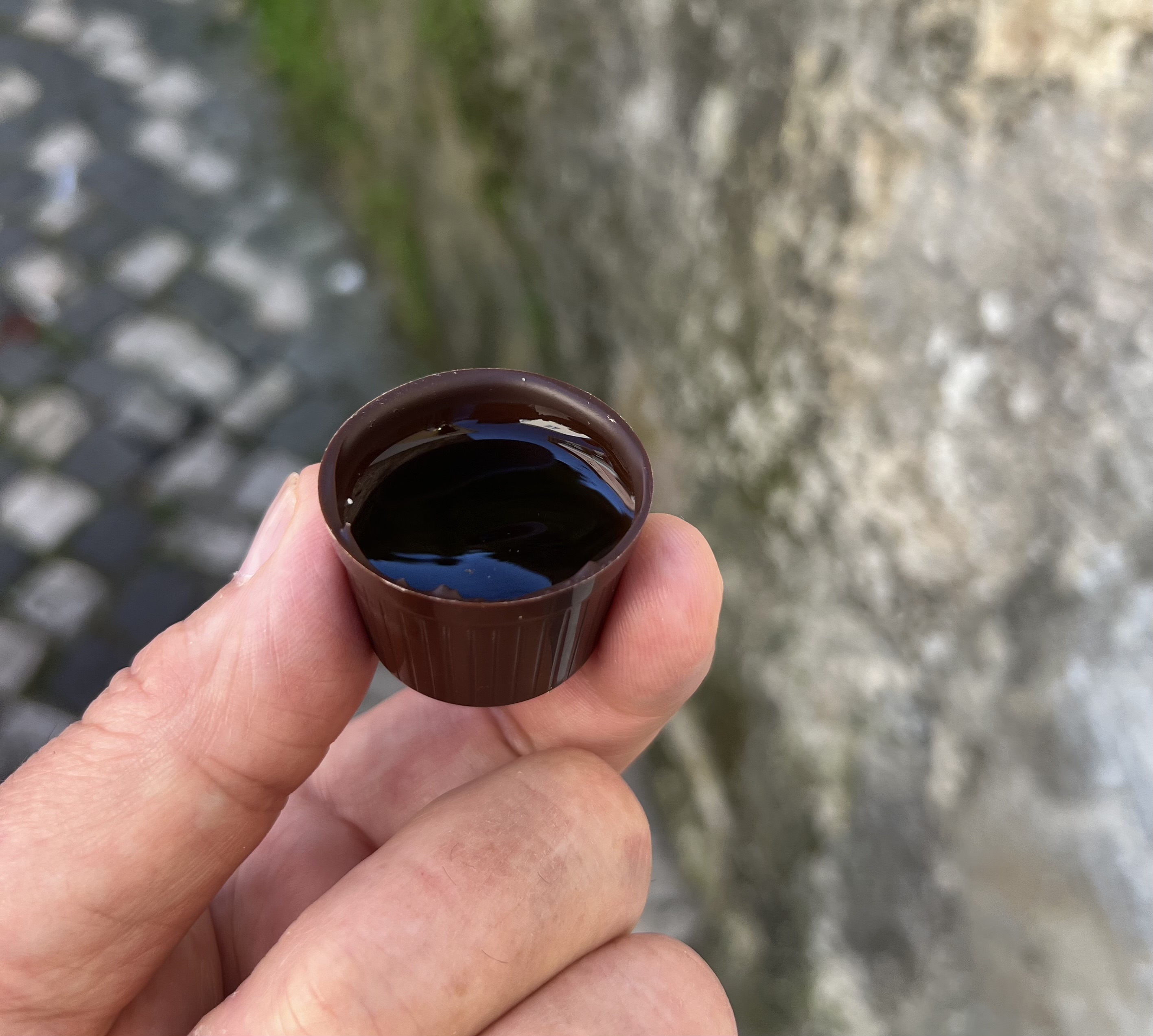
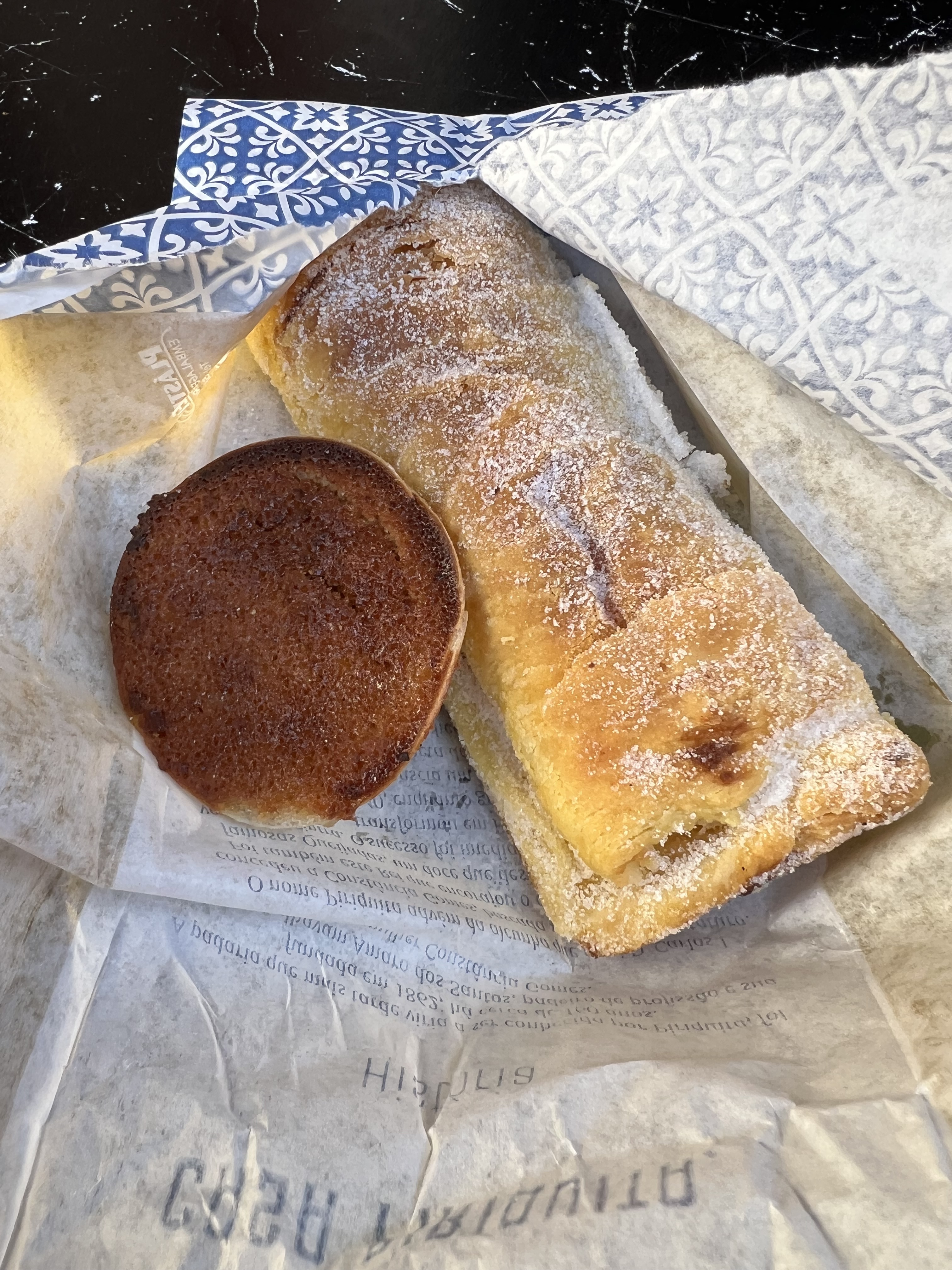
After the palace tour, we made a quick walk through the town of Sintra, stopping for some of their famous pastries and a wonderful drink called Ginja, a cherry liqueur served in a small chocolate cup.
Sweets of Sintra, from the famous Casa Piriquita bakery.
On our way to Cascais, we stopped at Cabo da Roca, the most western point in continental Europe.
We headed back to Lisbon along the coast, driving through Cascais, which is basically the Portuguese Riviera. Suddenly, there are waterfront mansions, Ferraris zooming past the tour van, and lots of beautiful people wearing expensive clothes and shopping in expensive shops. You almost feel like you’ve been transported to another country…
We made a stop in Cascais to have lunch and walk along the perfectly manicured waterfront. Only when I returned to my hotel did I realize I didn’t take any pictures in Cascais. The glitz and glam was fun to see, but it’s not what I came to Portugal for.
Leaving Algarve, the southern region of Portugal, I was going to take a longer, more scenic route back north to Lisbon along the western shore. But I was getting tired of driving, having already put about 900 miles behind me, and I had almost 200 more to go via the most direct route, which would take about 3 hours. I decided to go direct, rather than add even more hours to my journey via the scenic route.
Fascinating to see so many stork nests on the transmission towers near the highway.
Once in the city of Lisbon, I just needed to navigate my little rental car to my home for the next 3 nights: the Altis Avenida Hotel. Once there, the valet would whisk my car away and I wouldn’t need it again until it was time for me to return the car to the airport a few days later.
The hotel was wonderful, with a room on the 6th floor, giving me a great view of the city.
So many interesting places were just a walk away from my central location, and I explored a lot on foot, despite the fact that there were some serious hills challenging my bad knees!
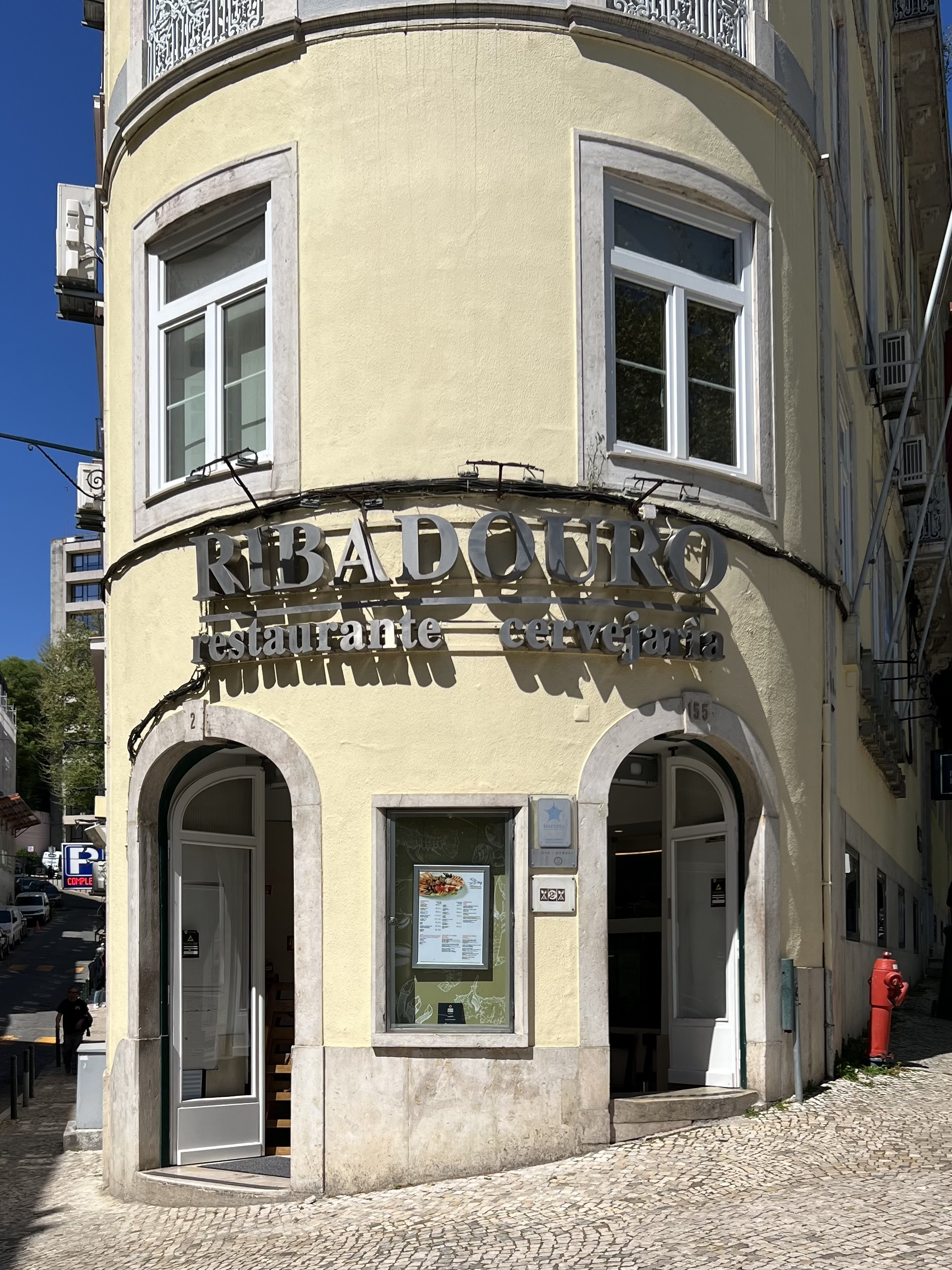
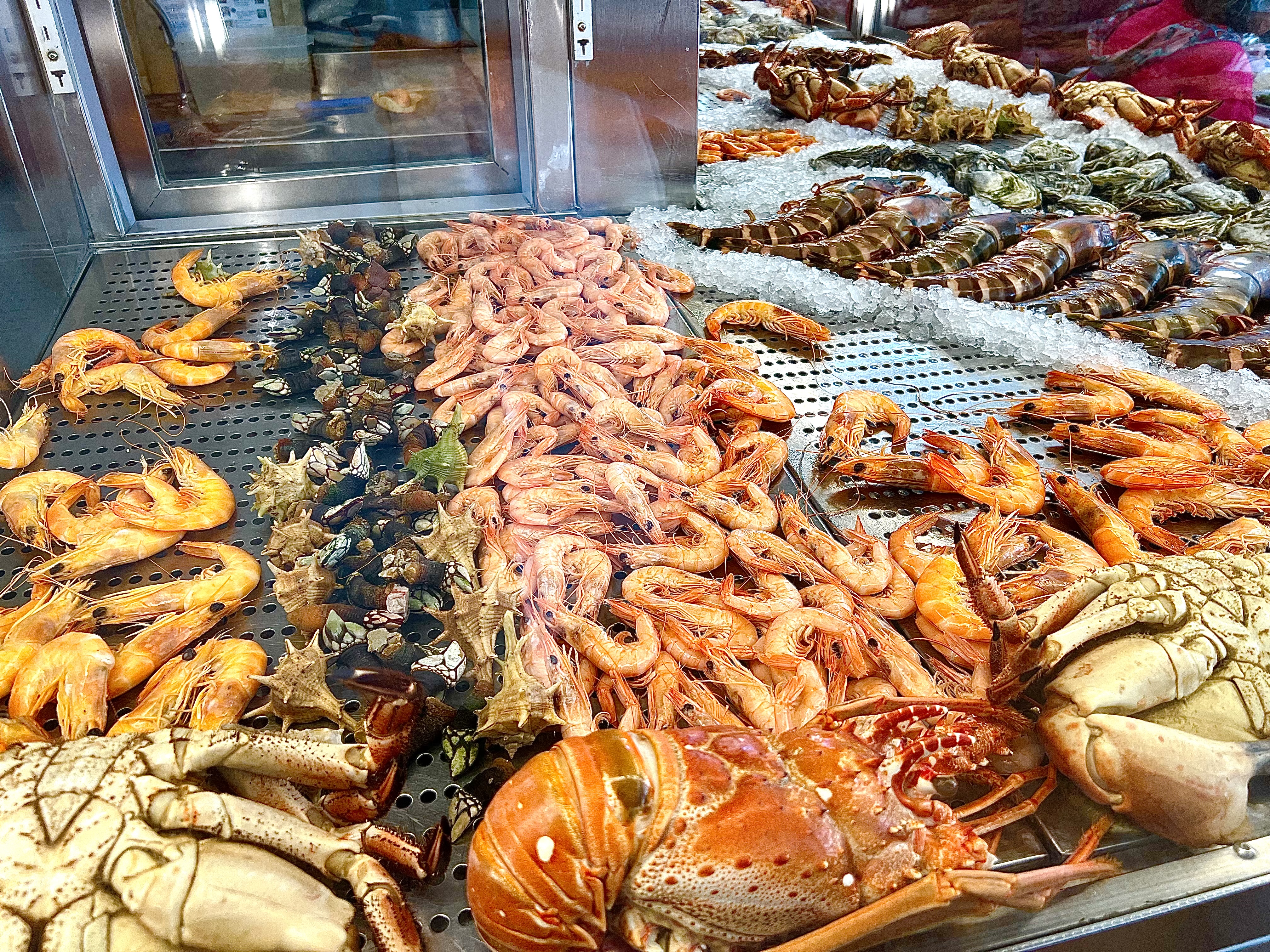
I was craving fresh seafood, and the hotel concierge told me of a place that was just a few blocks away: Ribadouro RestauranteCervejaria. It totally hit the spot.
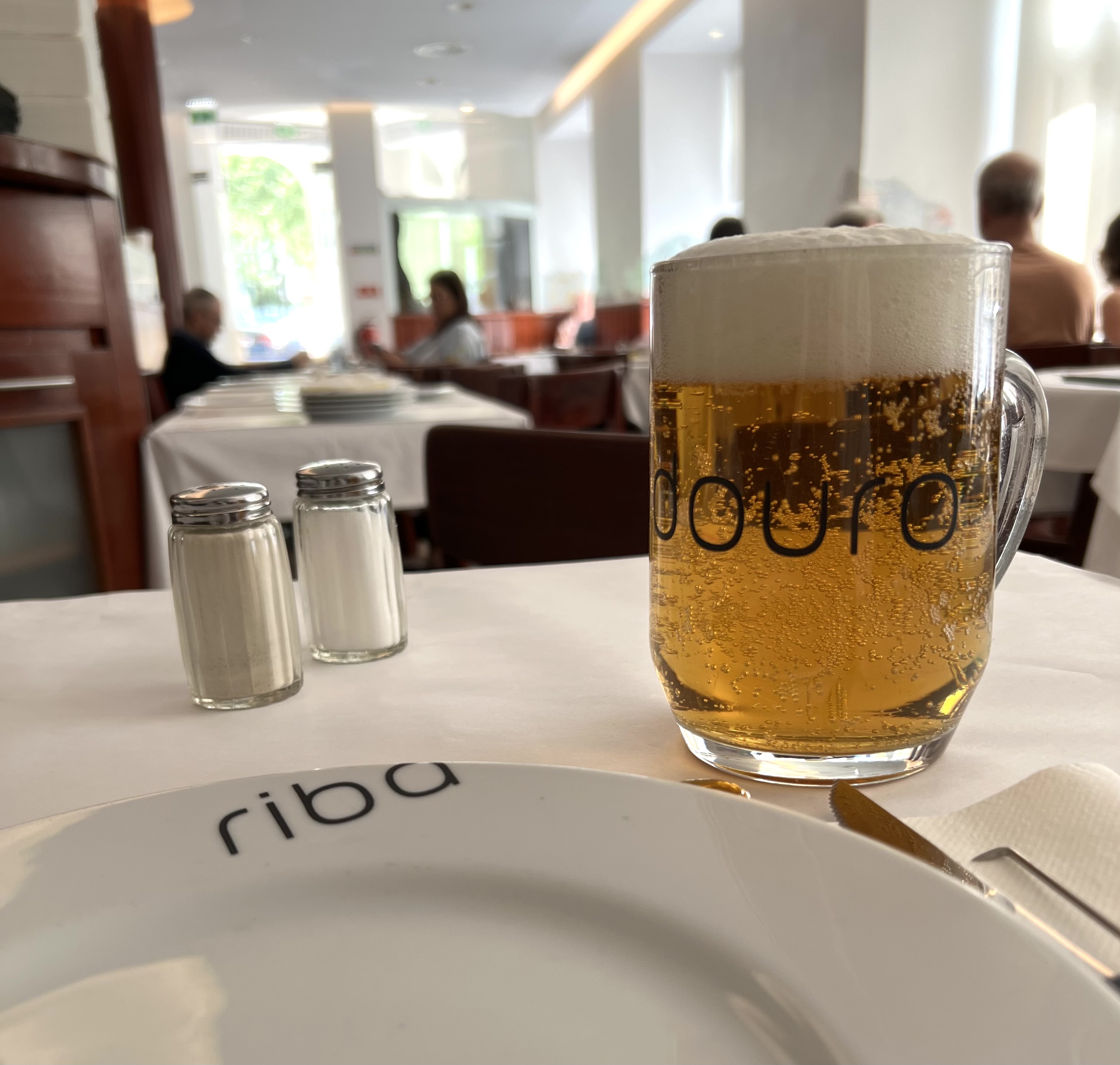
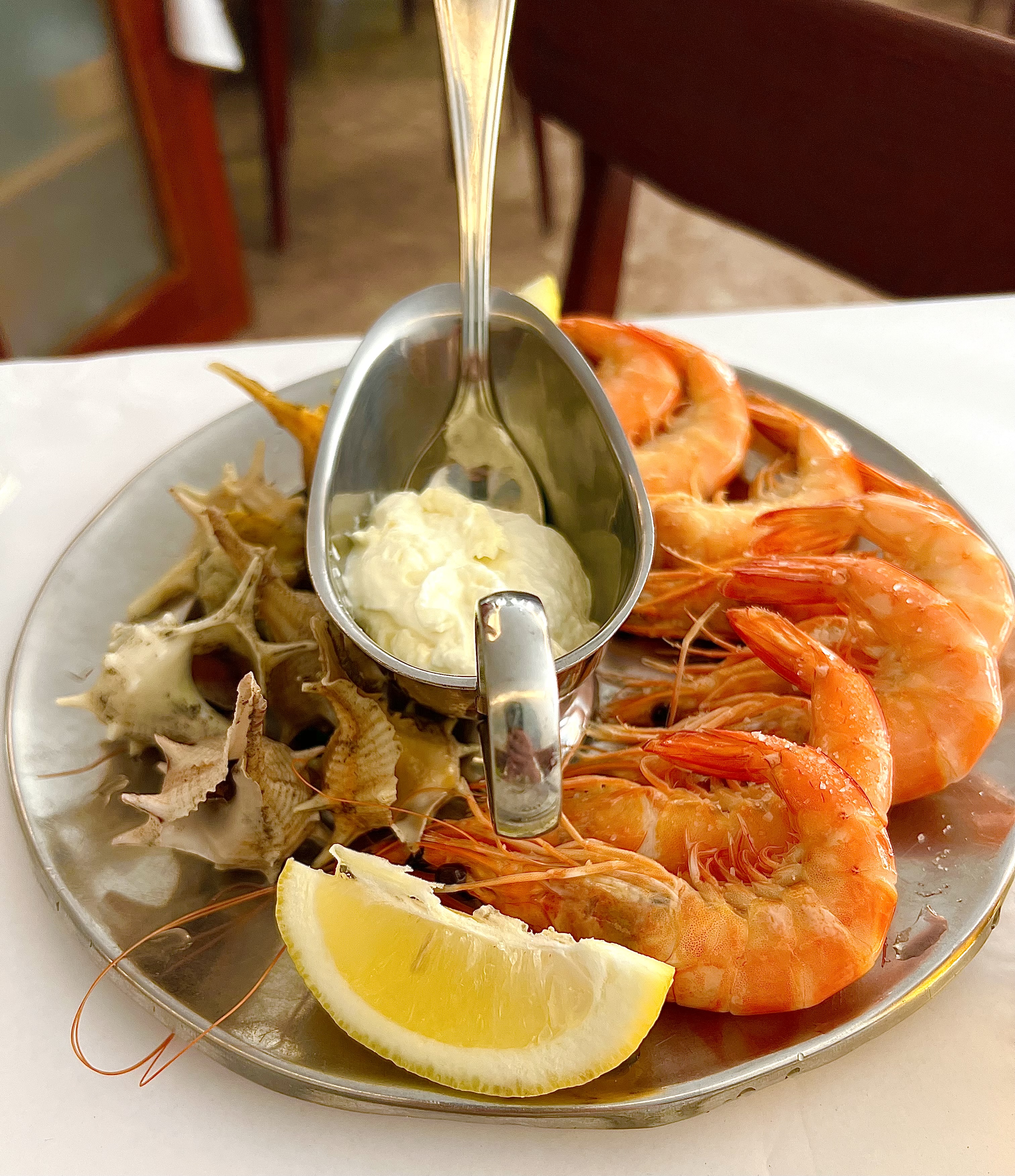
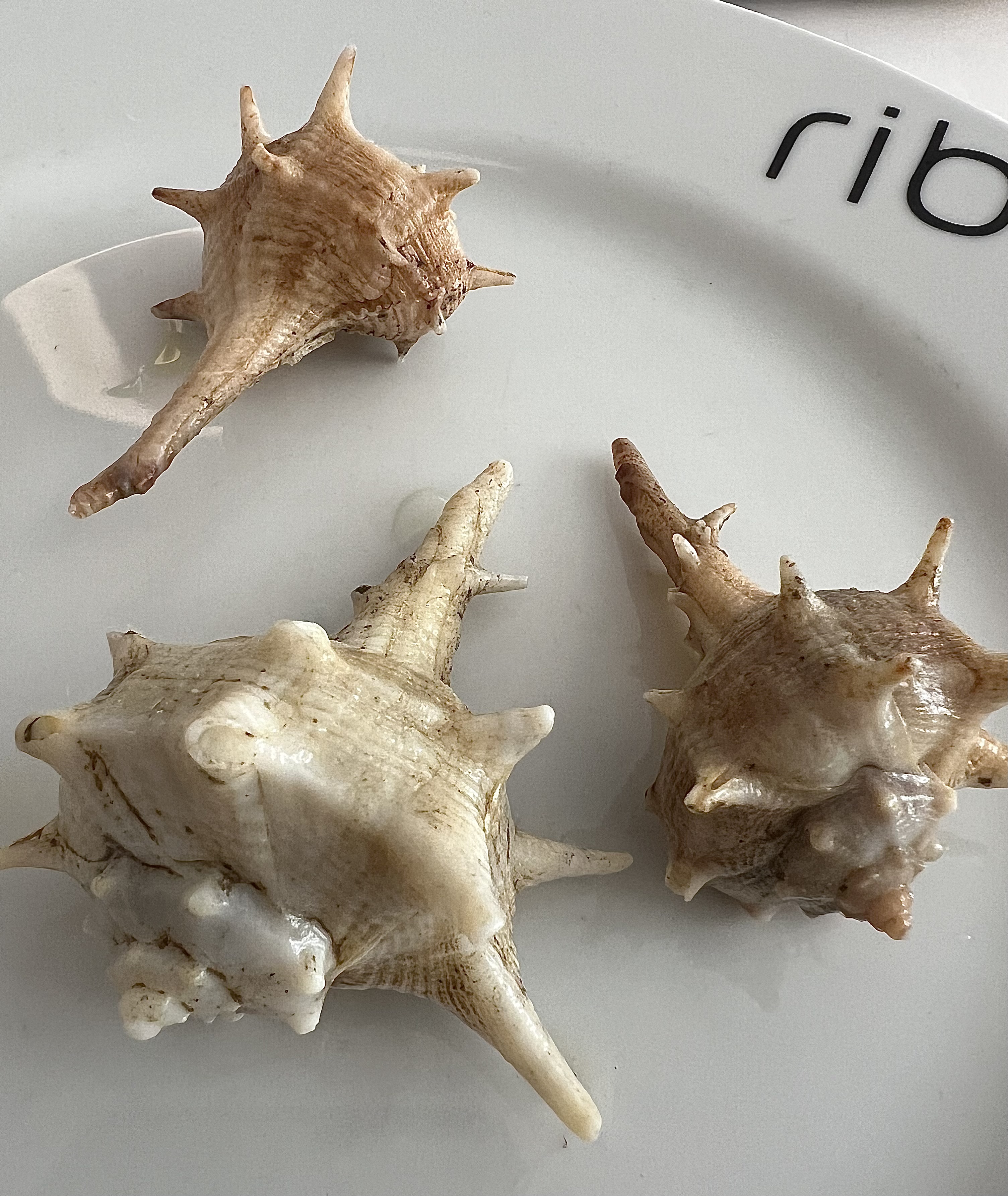
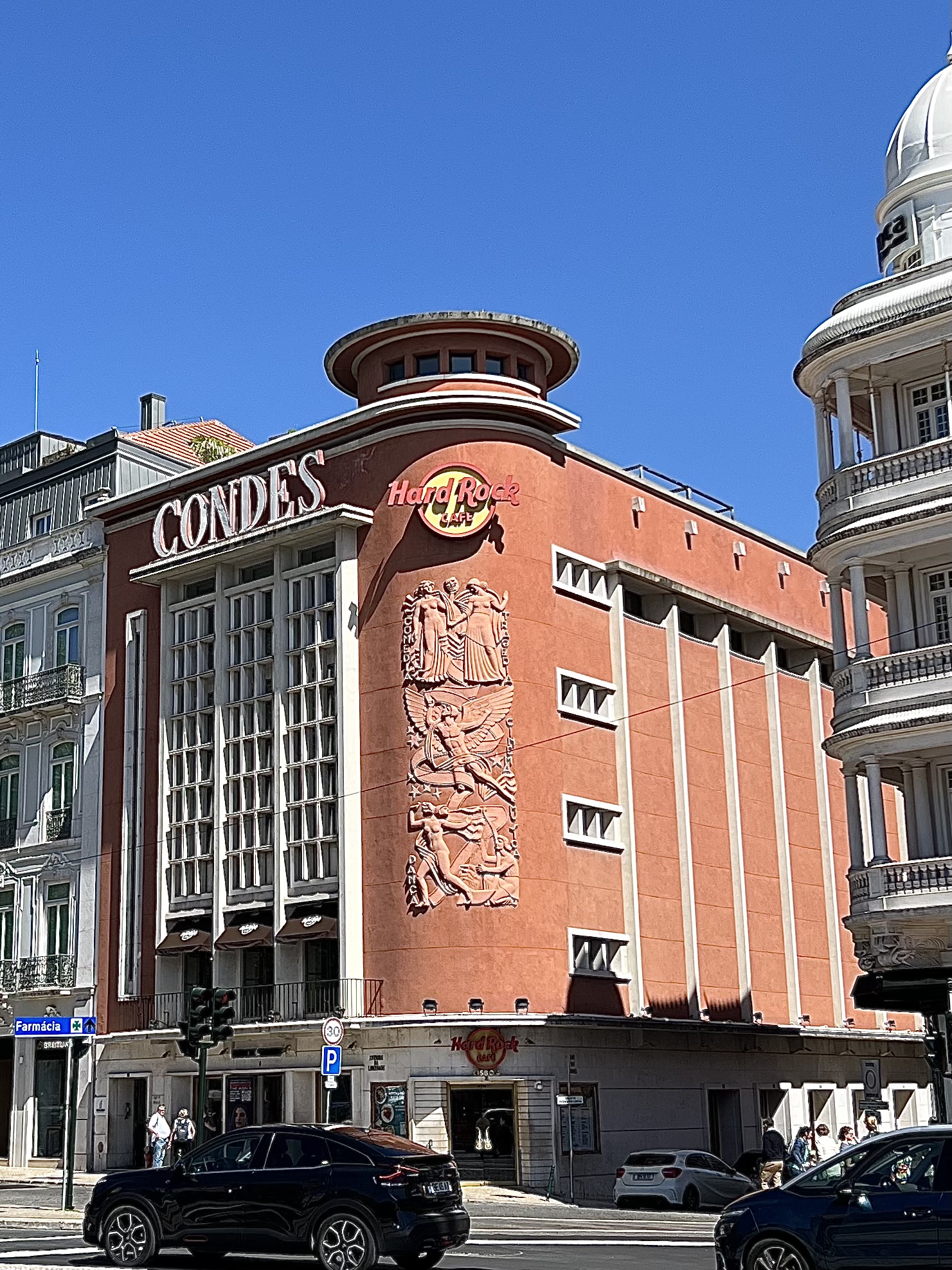
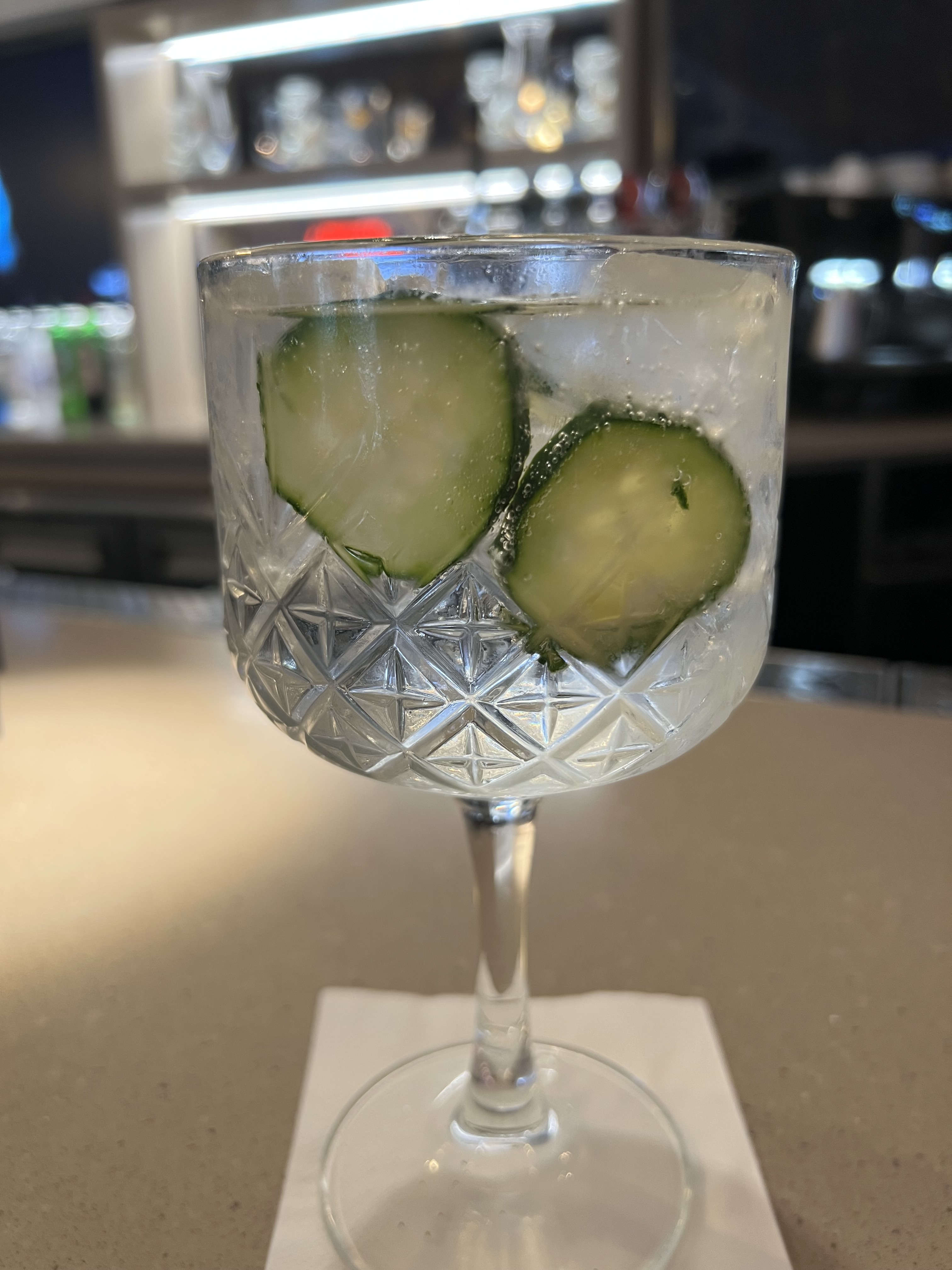
Welks and shrimp for lunch, with a beer to wash it down. Perfect on a warm, sunny day!The selection of seafood was incredible!My hotel was just a block away from the Hard Rock Cafe, a great stop for a refreshing gin and tonic…or two…
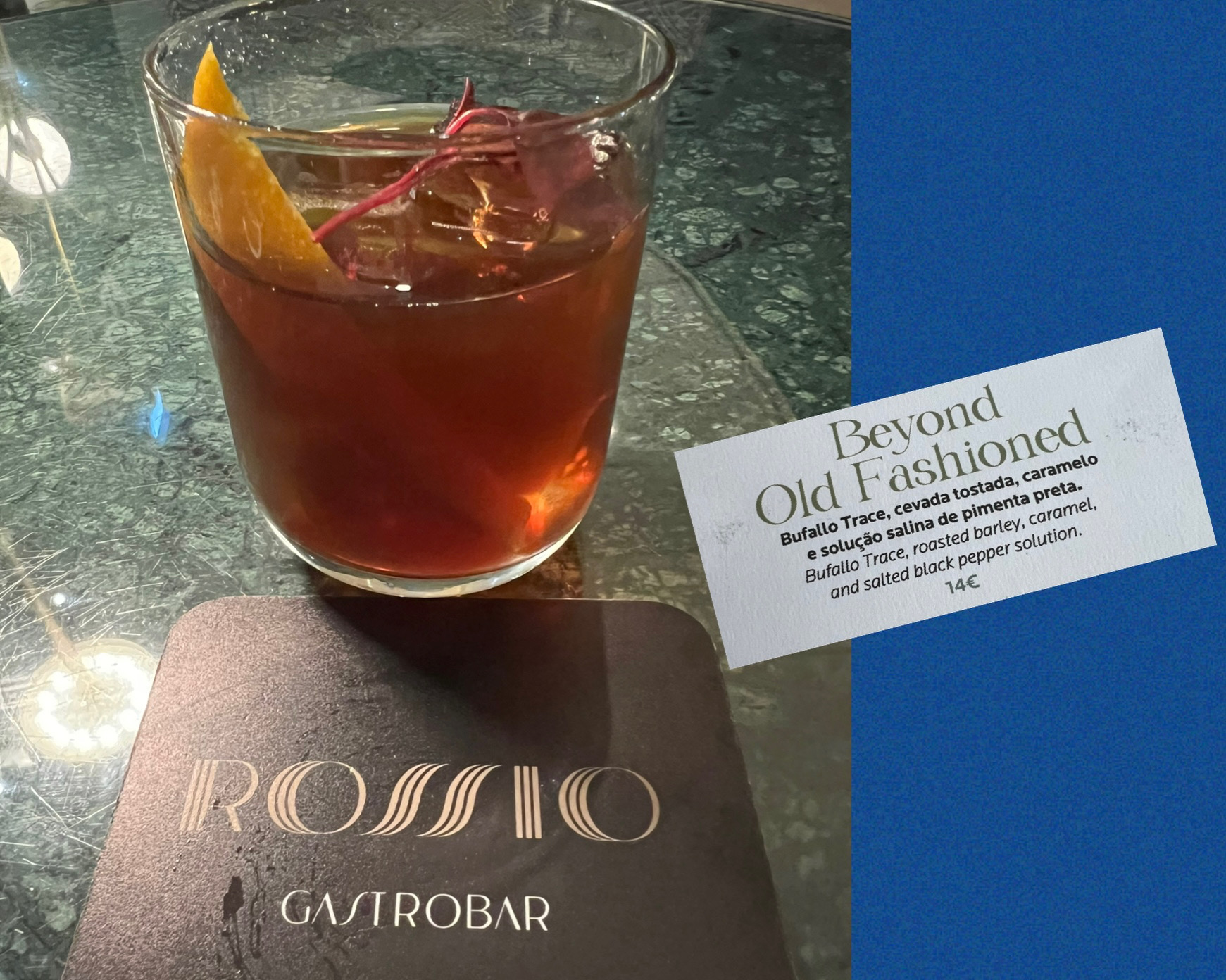
This was a wonderful cocktail that I came back for several times. As it turned out, my choice for dinner and drinks my first night was on the top floor of the hotel, at the Rossio Gastrobar. Great drinks and wonderful food…it got pretty crowded at night. The views of Lisbon from the open-air rooftop were amazing, with lively music, lots of couples, and even blankets and a dozen fire pits to keep guests warm on cooler nights. It became my last stop at the end of every day in Lisbon, and why not? My room was just an elevator ride away.
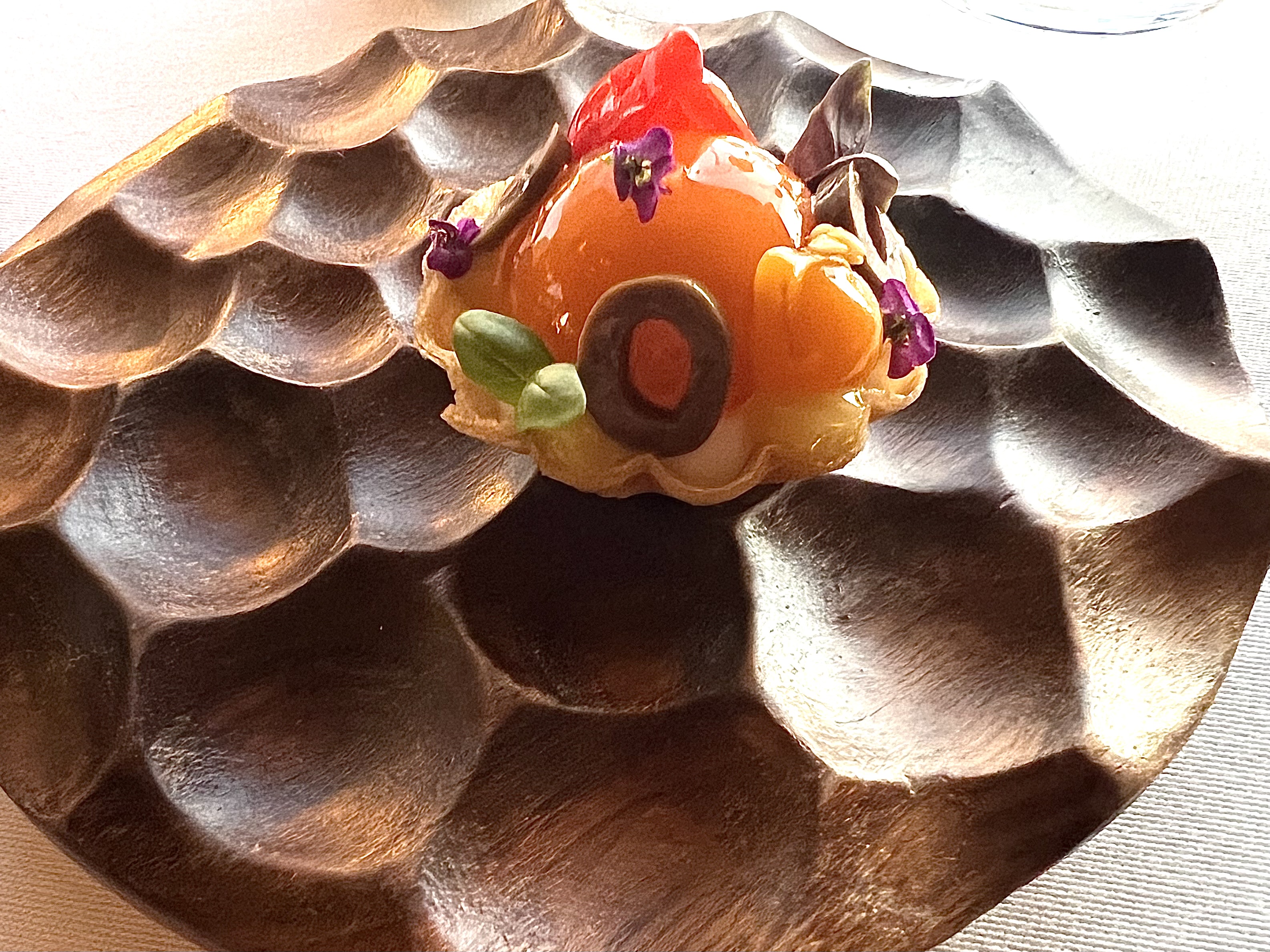
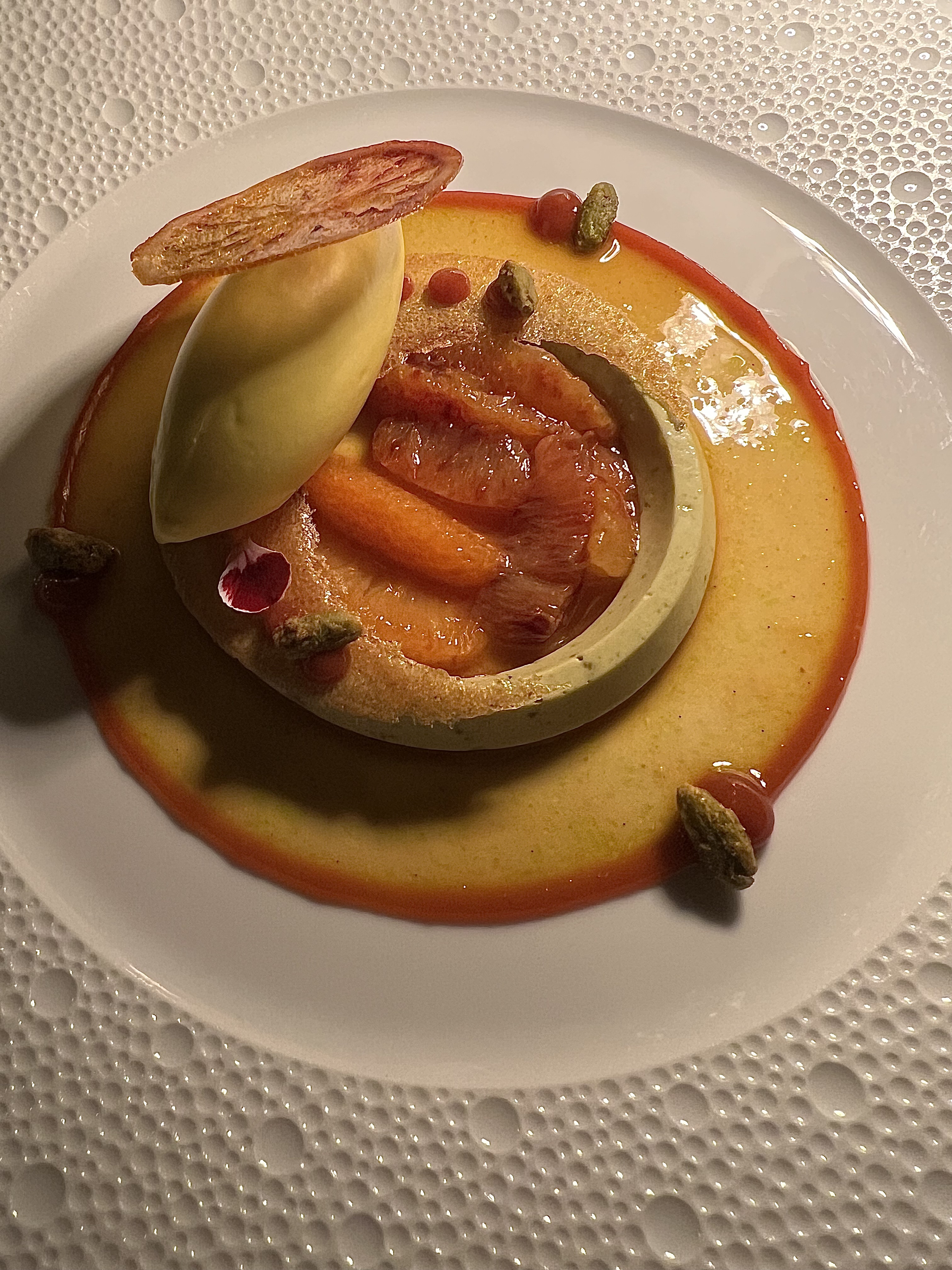
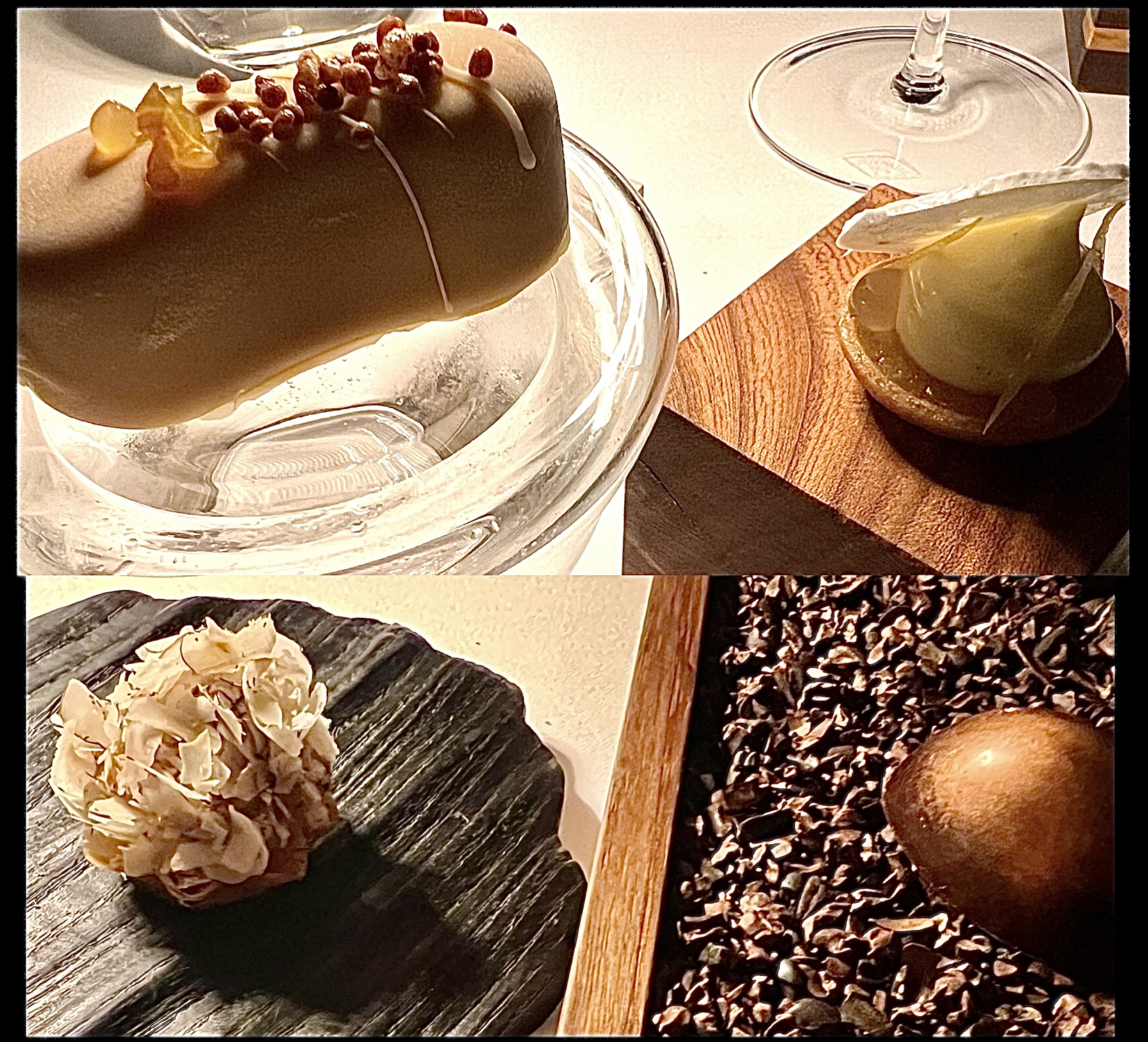
In my travels, I’ve had my share of Michelin star restaurant experiences, in Spain, England, and the US. And though the food has been amazing, only one or two are etched in my mind as perhaps the most incredible dining experience I’ve ever had. But after dining at Vila Joya on the Mediterranean in Portugal, I can now add a third to the list.
Austrian chef Dieter Koschina came to southern Portugal in 1991, and earned his first Michelin star in 1995. He received his second in 1999. And he has been creating outrageously beautiful dishes ever since.
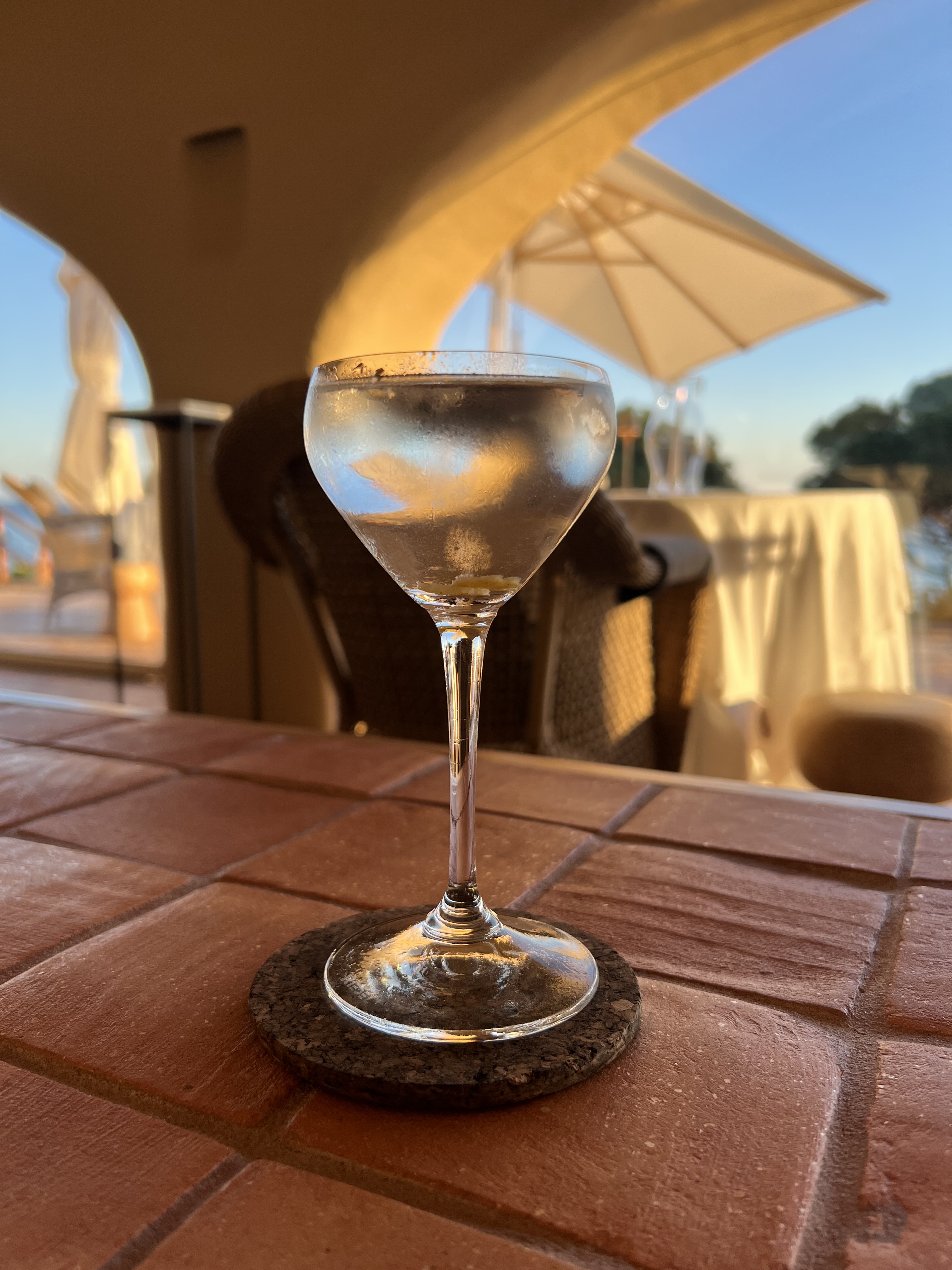
My reservation was at 7:30 PM, and they asked if I would like to make a cocktail reservation a half hour earlier, at 7. I thought that would be a great idea, and so I arrived, to be shown a comfortable couch facing the Mediterranean as I was handed the drink list. I’ve had OK cocktails up to this point on my trip, so I was really craving a perfectly made ice cold gin martini, and that’s exactly what showed up moments later.
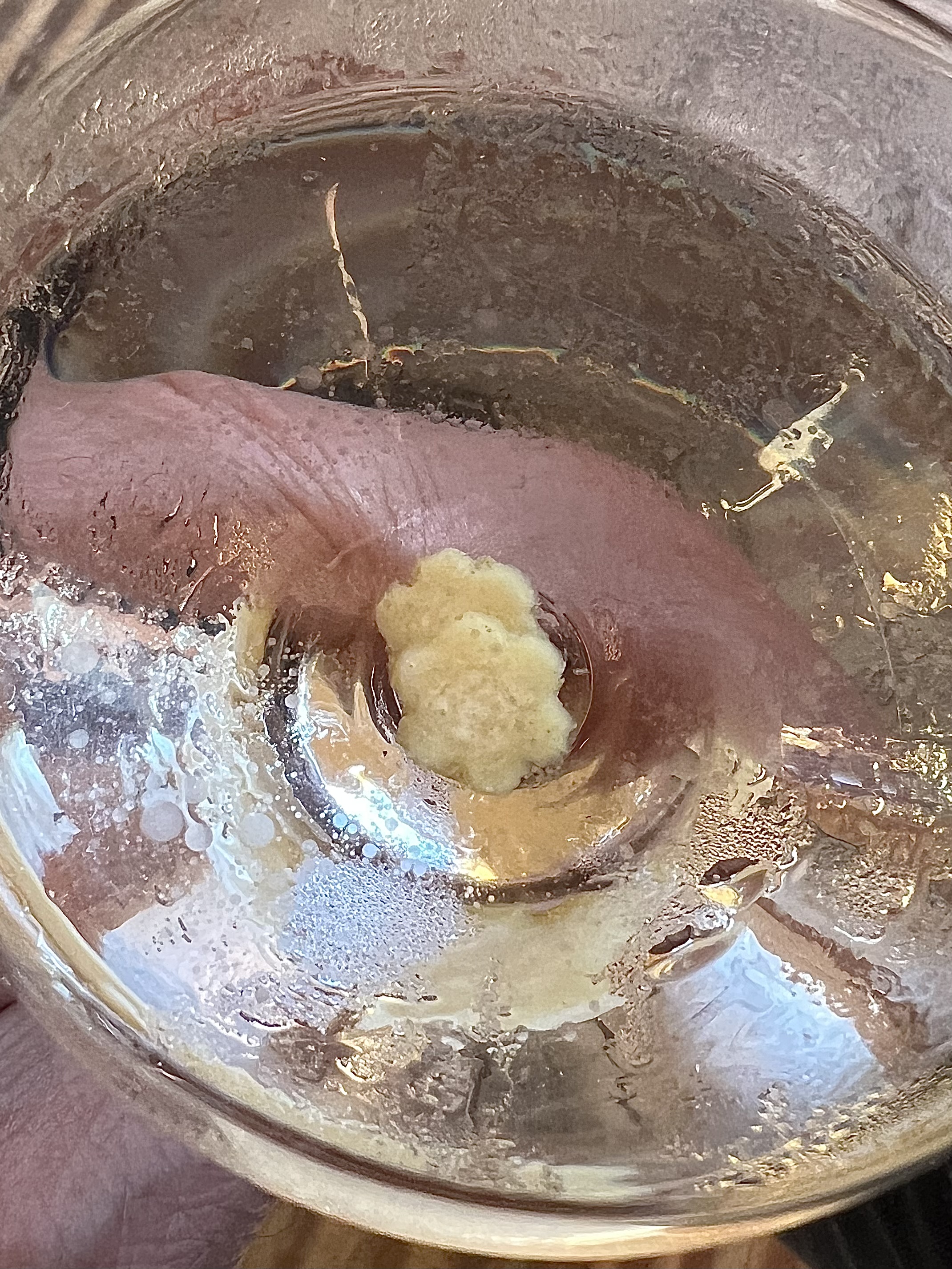
I asked for a twist in my martini, and it came with beautiful little flowers, punched out of the lemon peel.
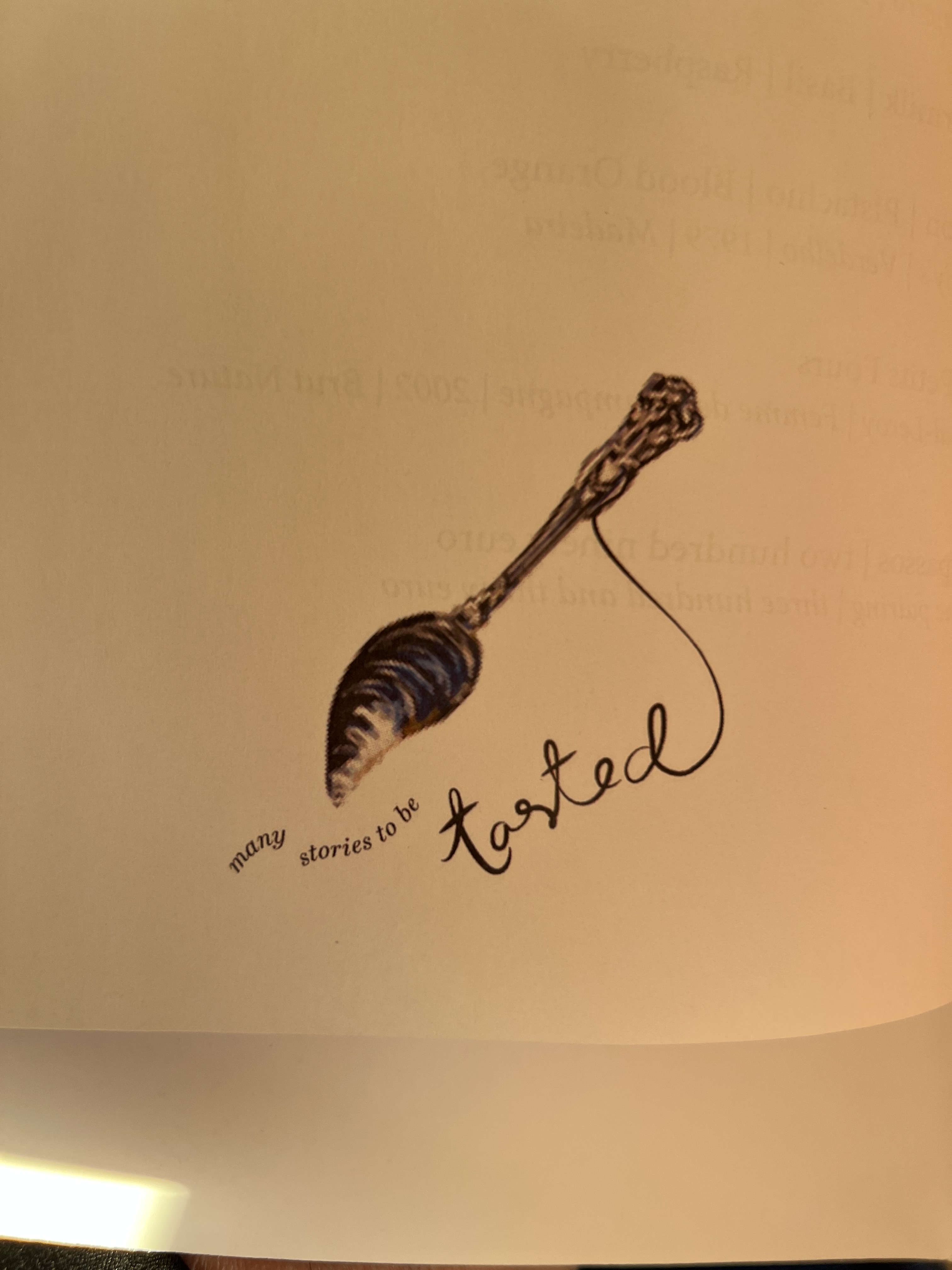
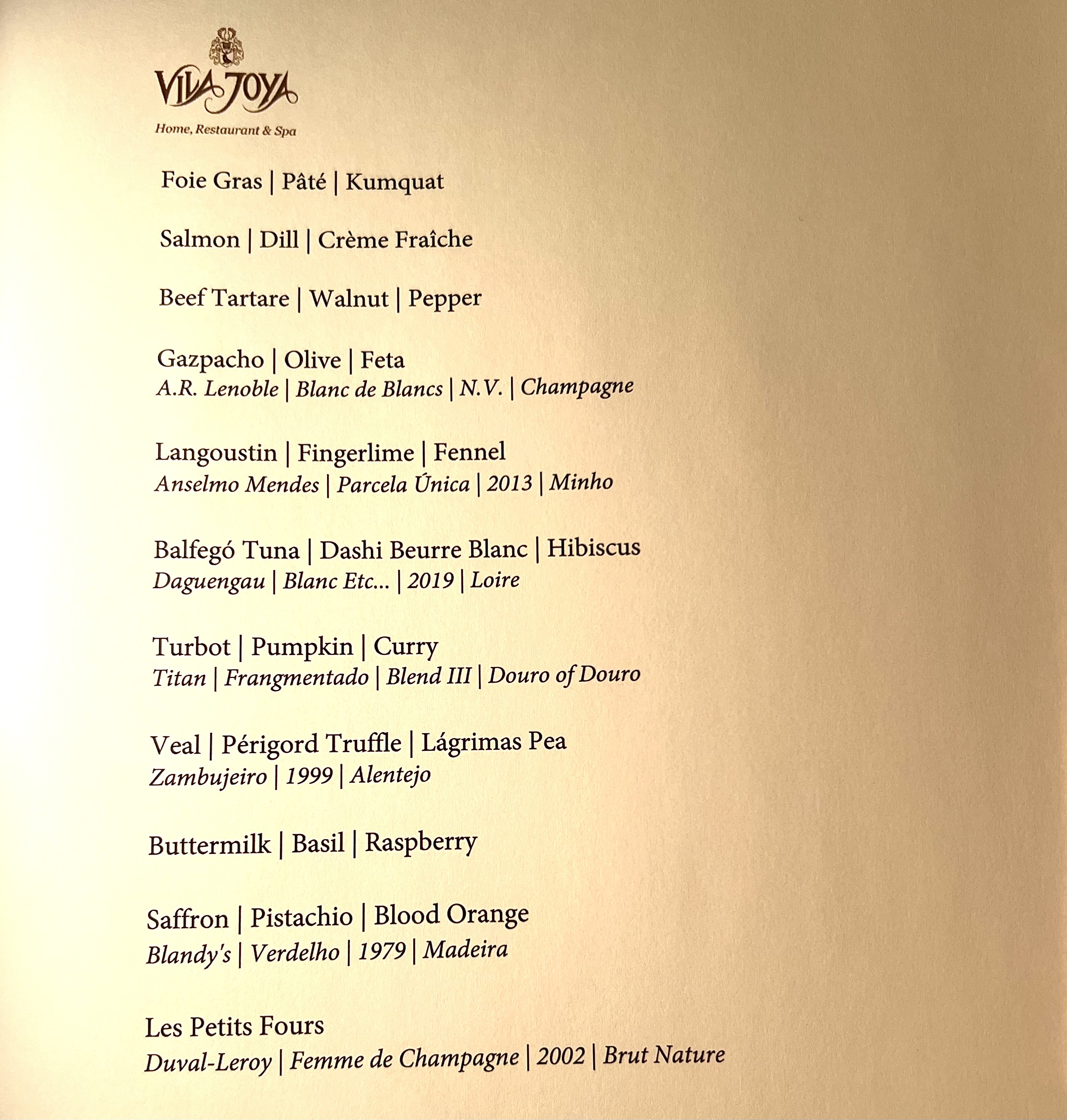
As I sipped my martini, I looked over the tasting menu I was about to explore with much anticipation.
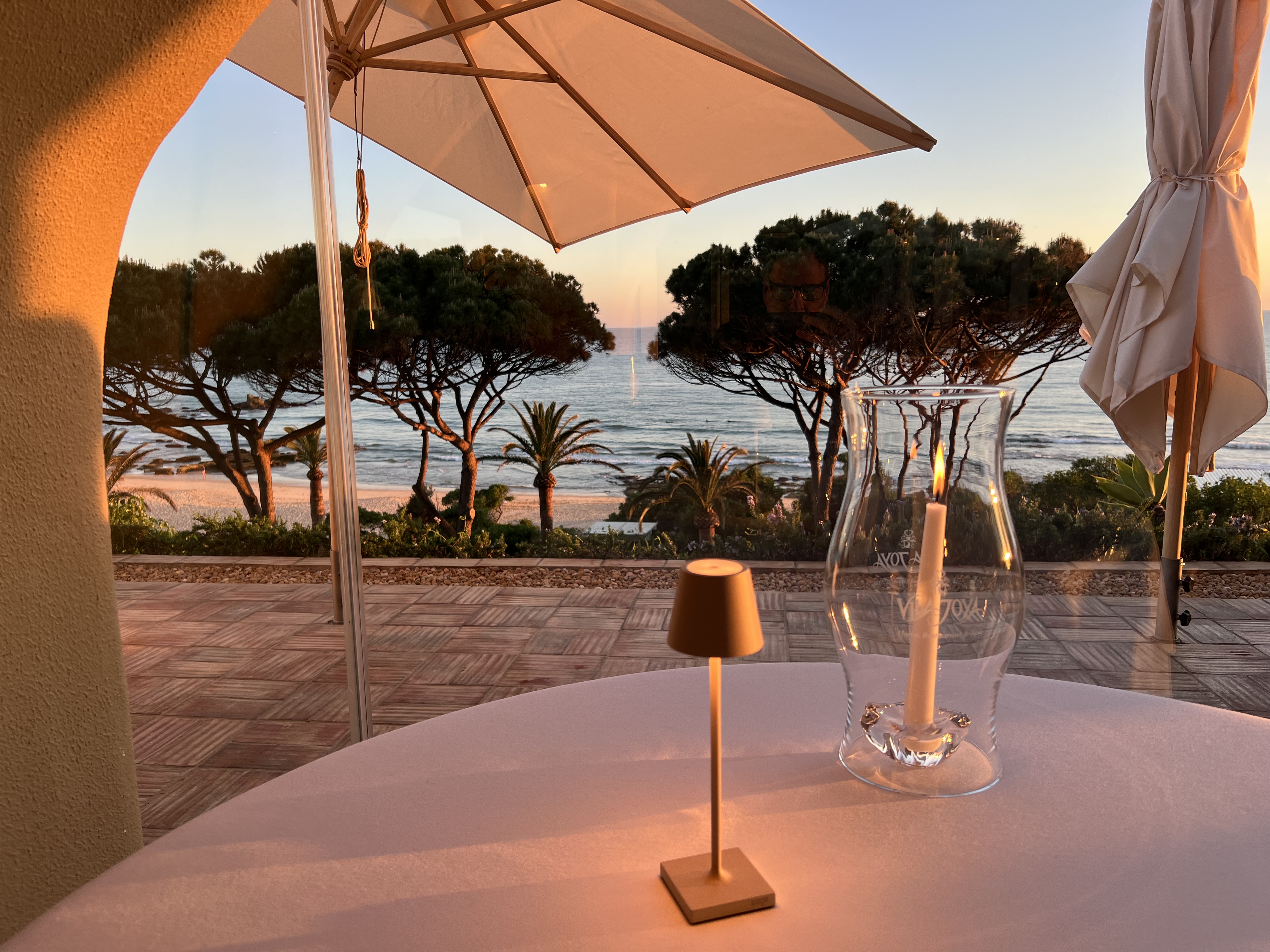
Once I finished my cocktail, I was moved a bit closer to the large floor-to-ceiling windows, to get a much better view of the beautiful Mediterranean waters below.
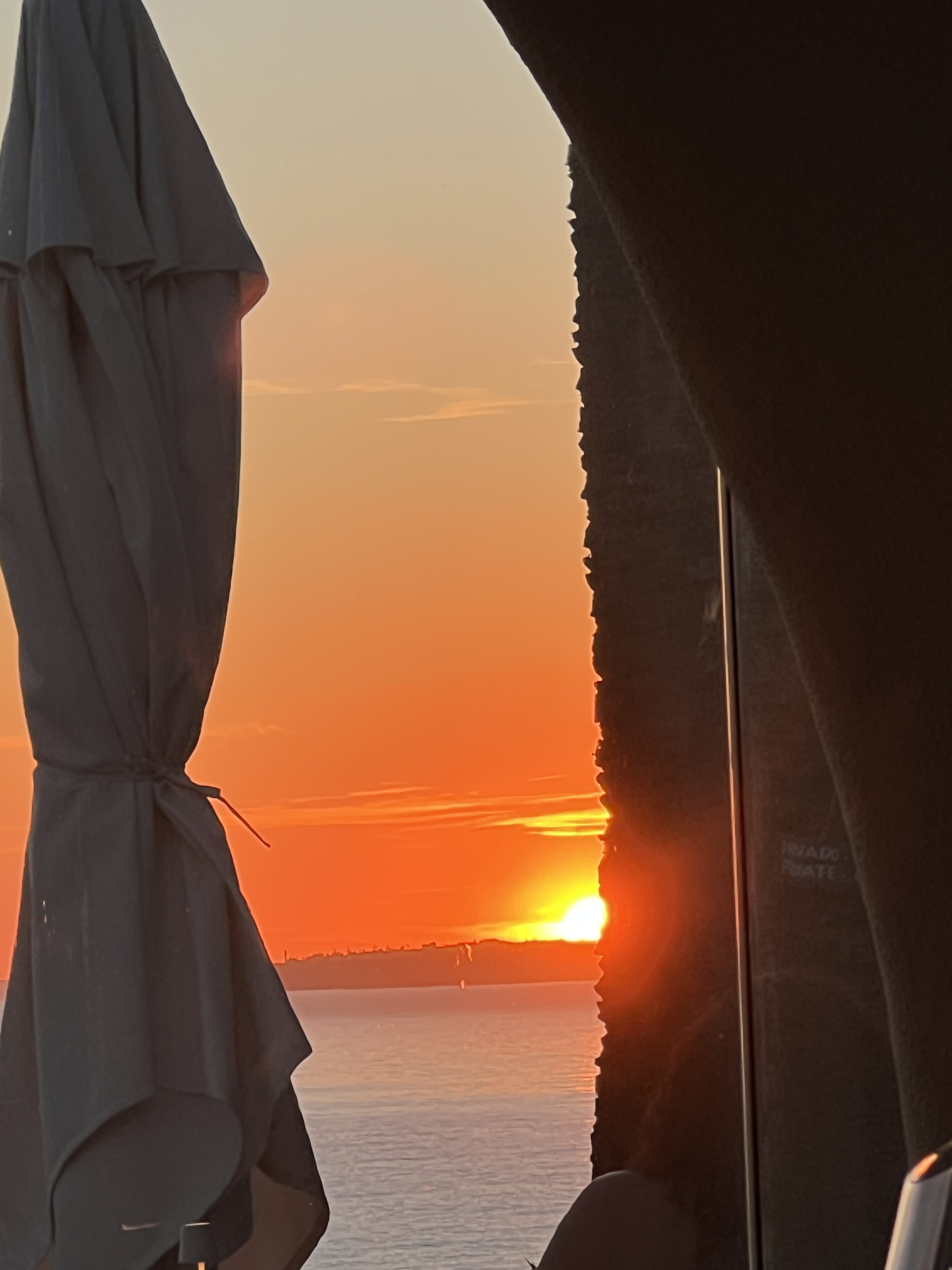
The sun was setting as I started my dinner experience, mother nature‘s light show illuminating every plate as it appeared on my table.
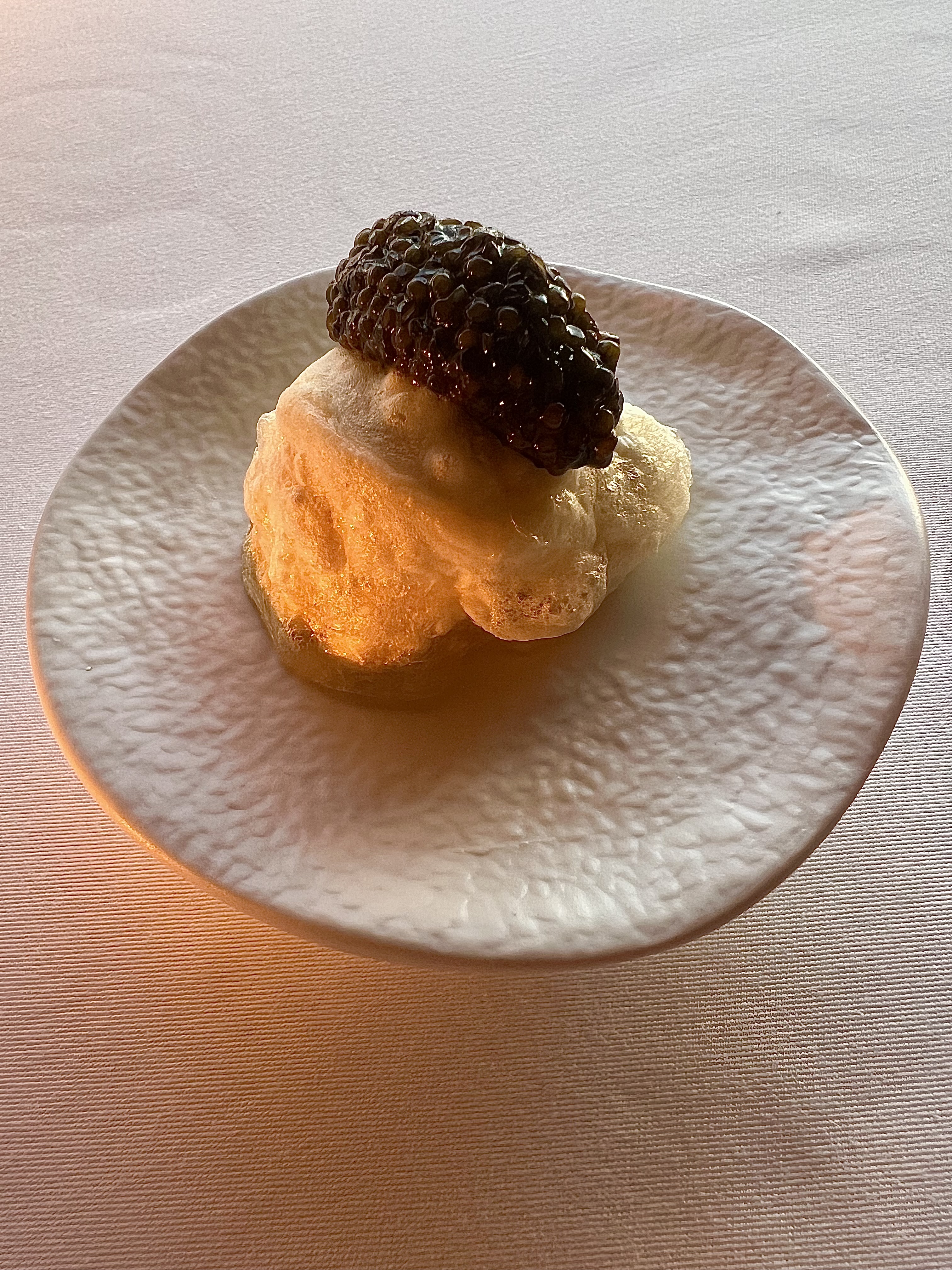
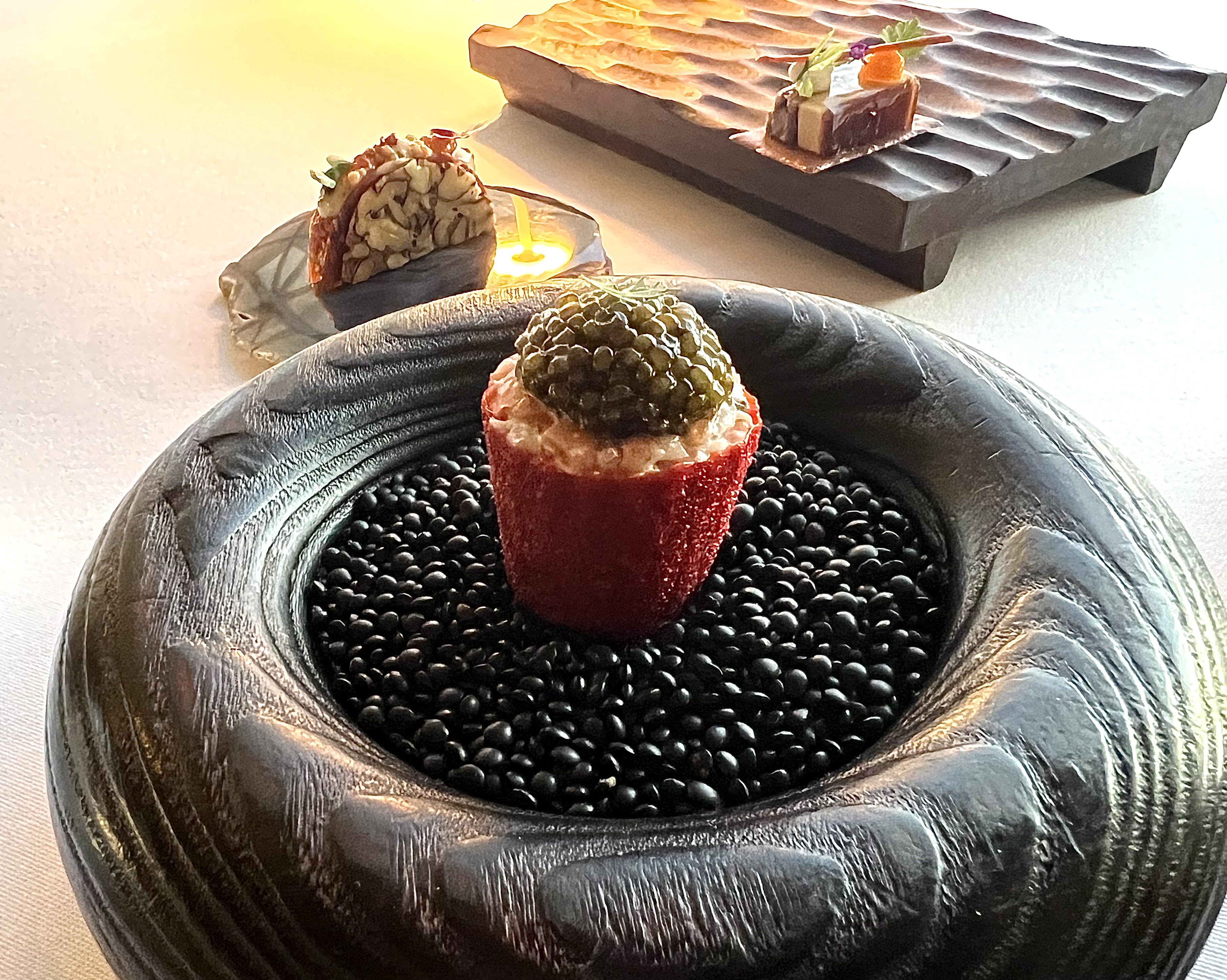
This incredibly delicate potato shell, surrounding sour cream and topped with a generous amount of caviar, was a great way to start any meal, anywhere, anytime!And so it began…
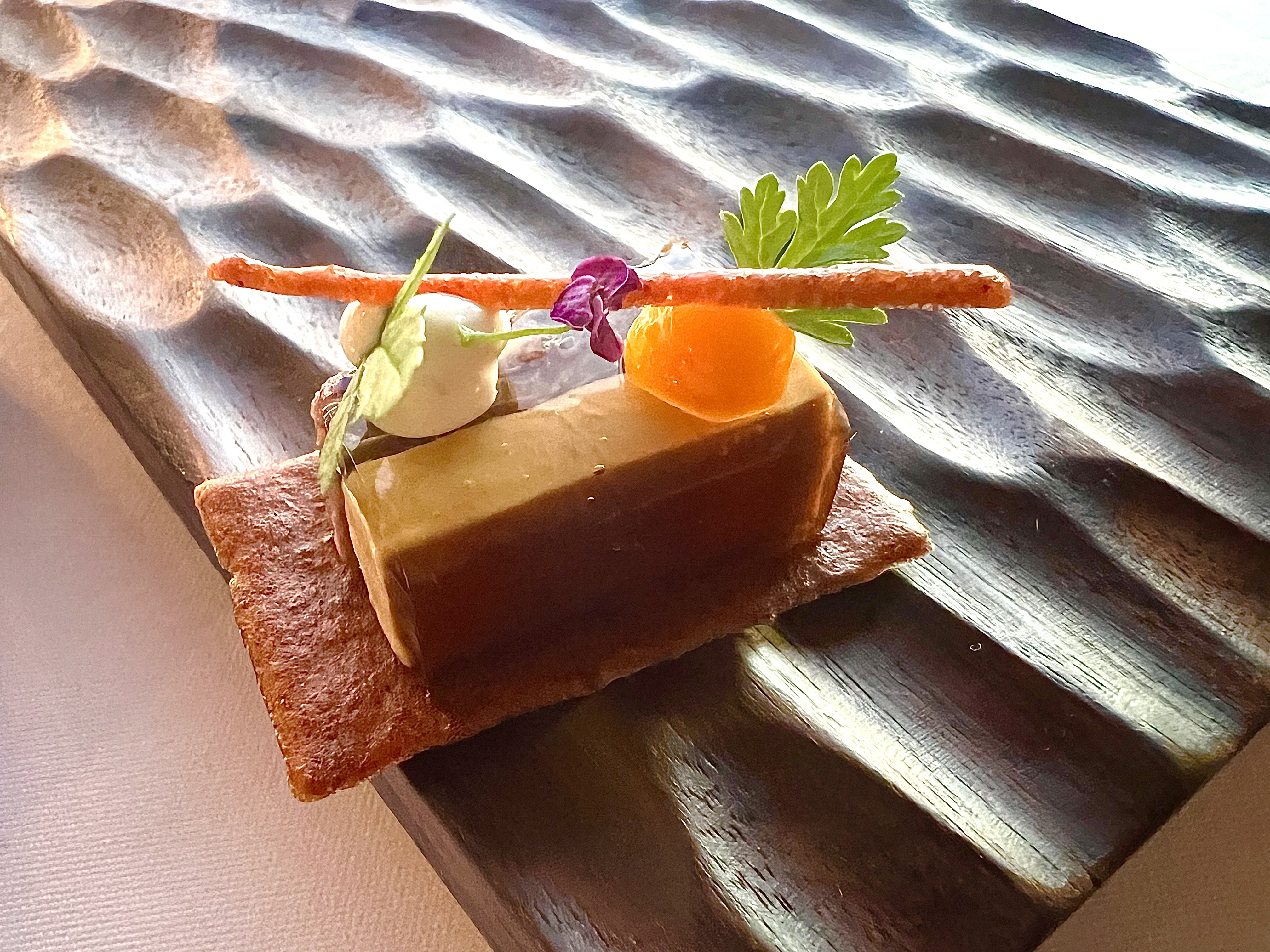
I’m going to let you follow along with the menu I posted above to see if you can match the dishes with the list!
All small plates, intensely flavored, all beautifully plated and skillfully prepared.
…And more than one dessert!
End of the meal…now dark outside…
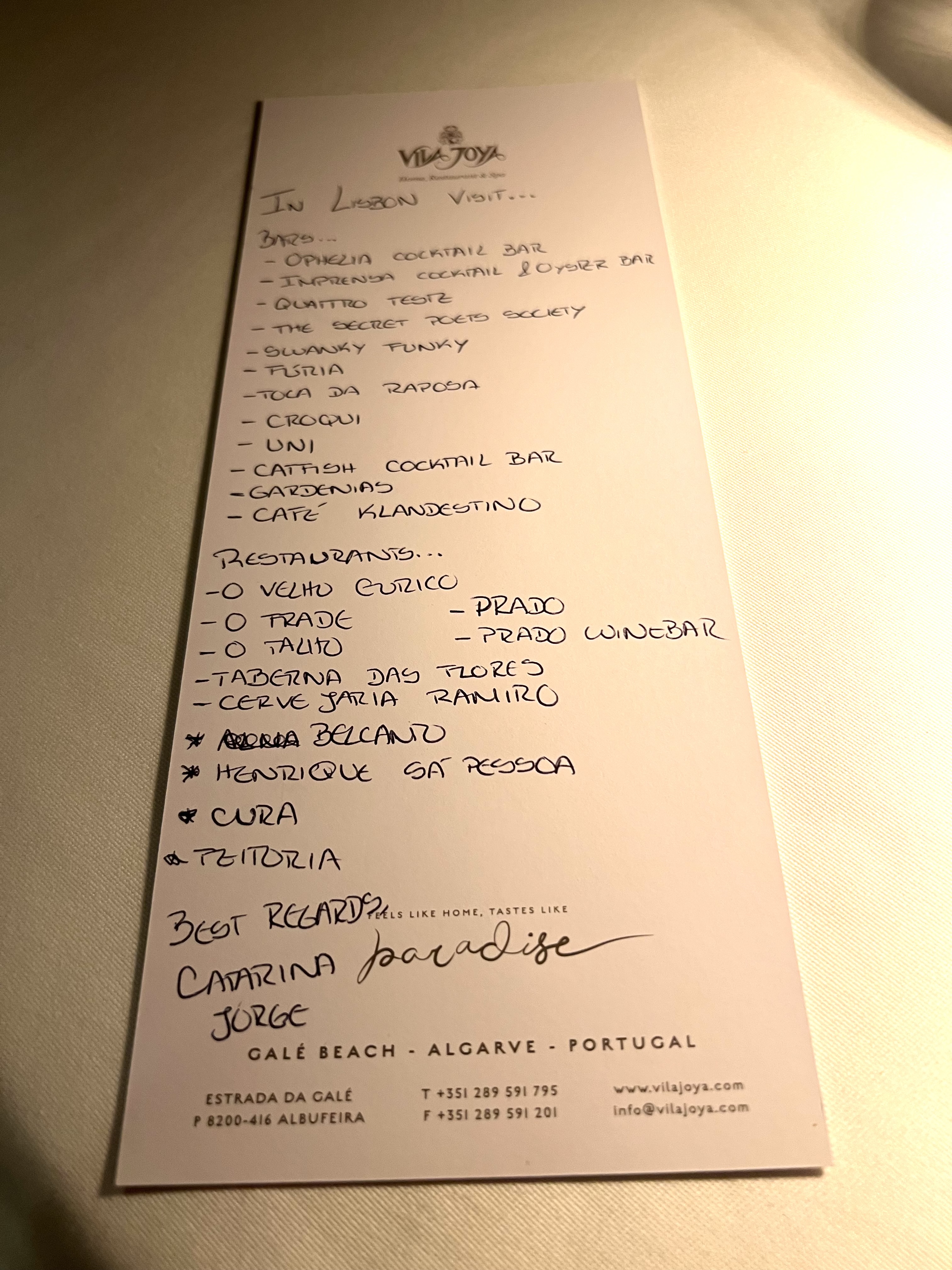
Before I departed, my lovely sommelier, Catarina, wrote down a list of great cocktail lounges and restaurants I had to visit in Lisbon, my next stop.
A look back at my 1000+ mile trip through Portugal continues…
The southernmost region of Portugal is called Algarve, and that was my ultimate destination after leaving the seaside village of Nazaré, driving through Albcobaça and Évora. It was about a 4-hour drive, not including stops (and missing exits!) I drove through miles and mile–wait, I was in Europe–kilometers and kilometers–with hectares and hectares–of vineyards and olive trees.
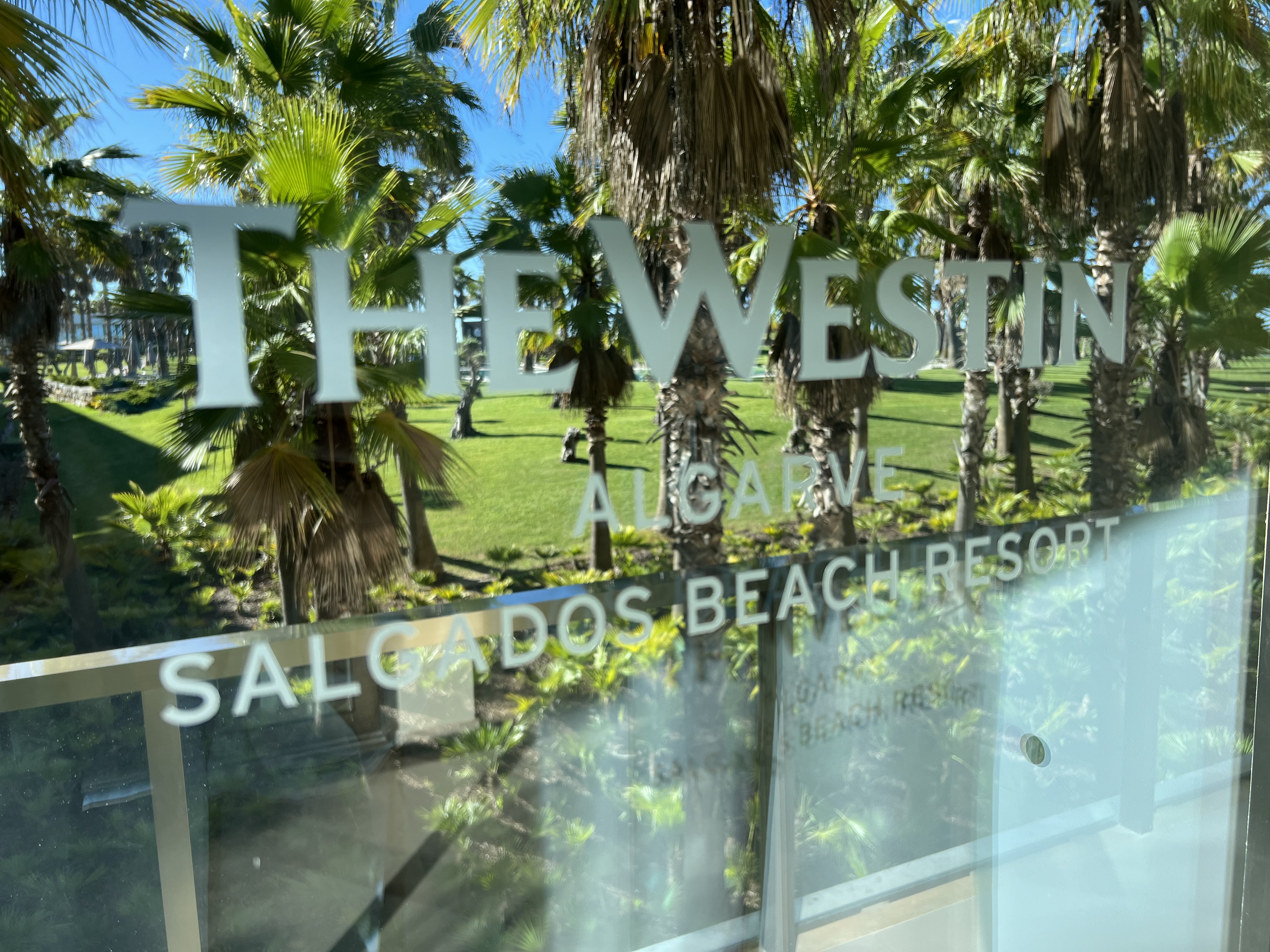
My 2-night stop was at the Westin Algarve Salgados Beach Resort, a beautiful property on the Mediterranean. And although my room was fantastic and the grounds were impeccable, there were a few maintenance issues with my room. And for food, only the lobby bar area was open my first night. Sadly, although we were far from the busy season, it was clear the staff was completely unprepared, perhaps even untrained.
Albufeira
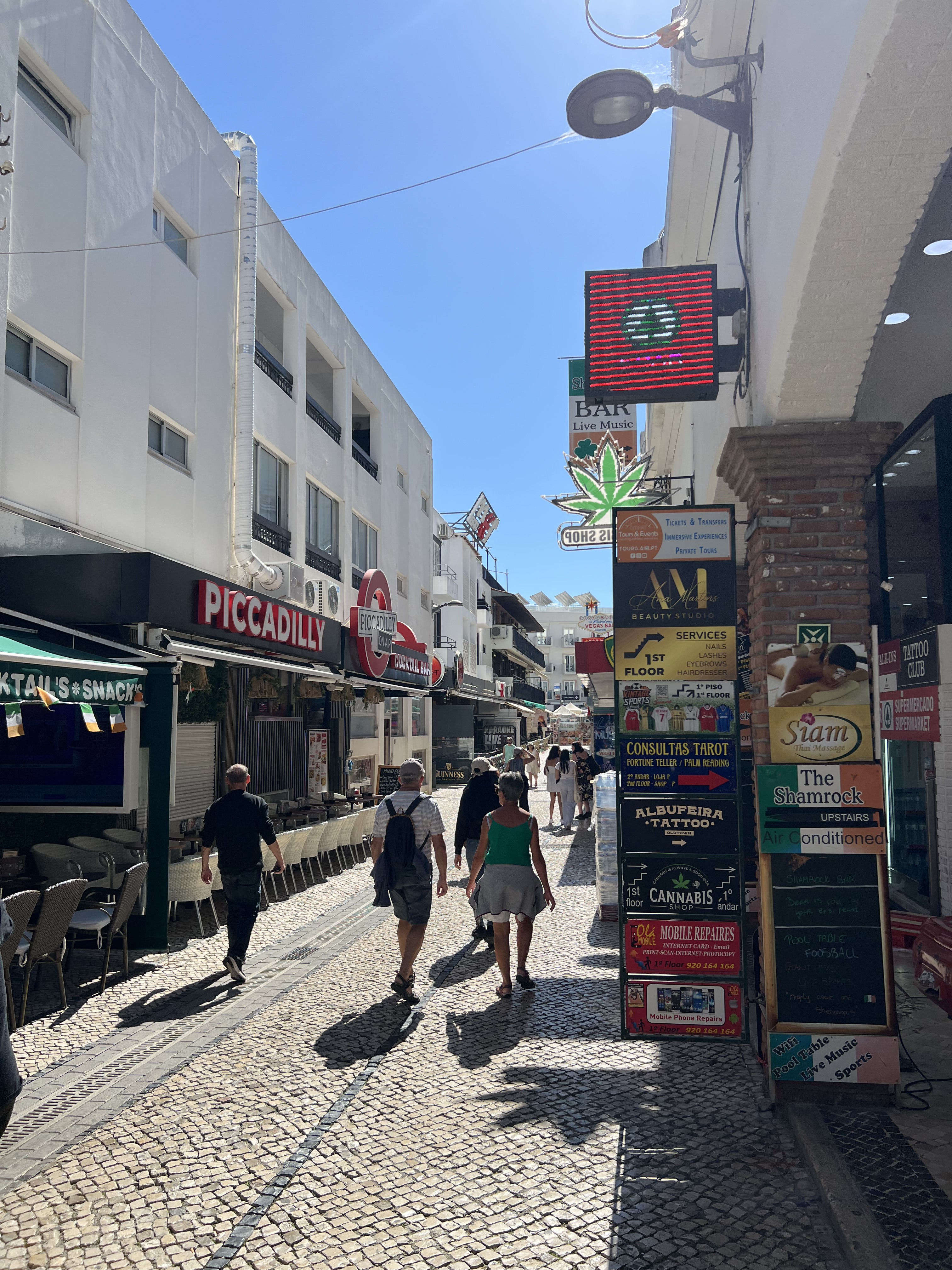
The old town of Albufeira was a quick Uber ride away, and I spent an afternoon walking up and down the narrow streets that were packed with souvenir shops, bars and restaurants. It reminded me of Bourbon Street in New Orleans, just a tourist trap, but with a lot less charm and no good music (except for one local street performer.)
I almost booked a hotel in Albufeira, and I’m so glad I didn’t. If it was this noisy in the off-season, I can’t even imagine what the busy season would be like, especially in the evening when the real loud partying begins.
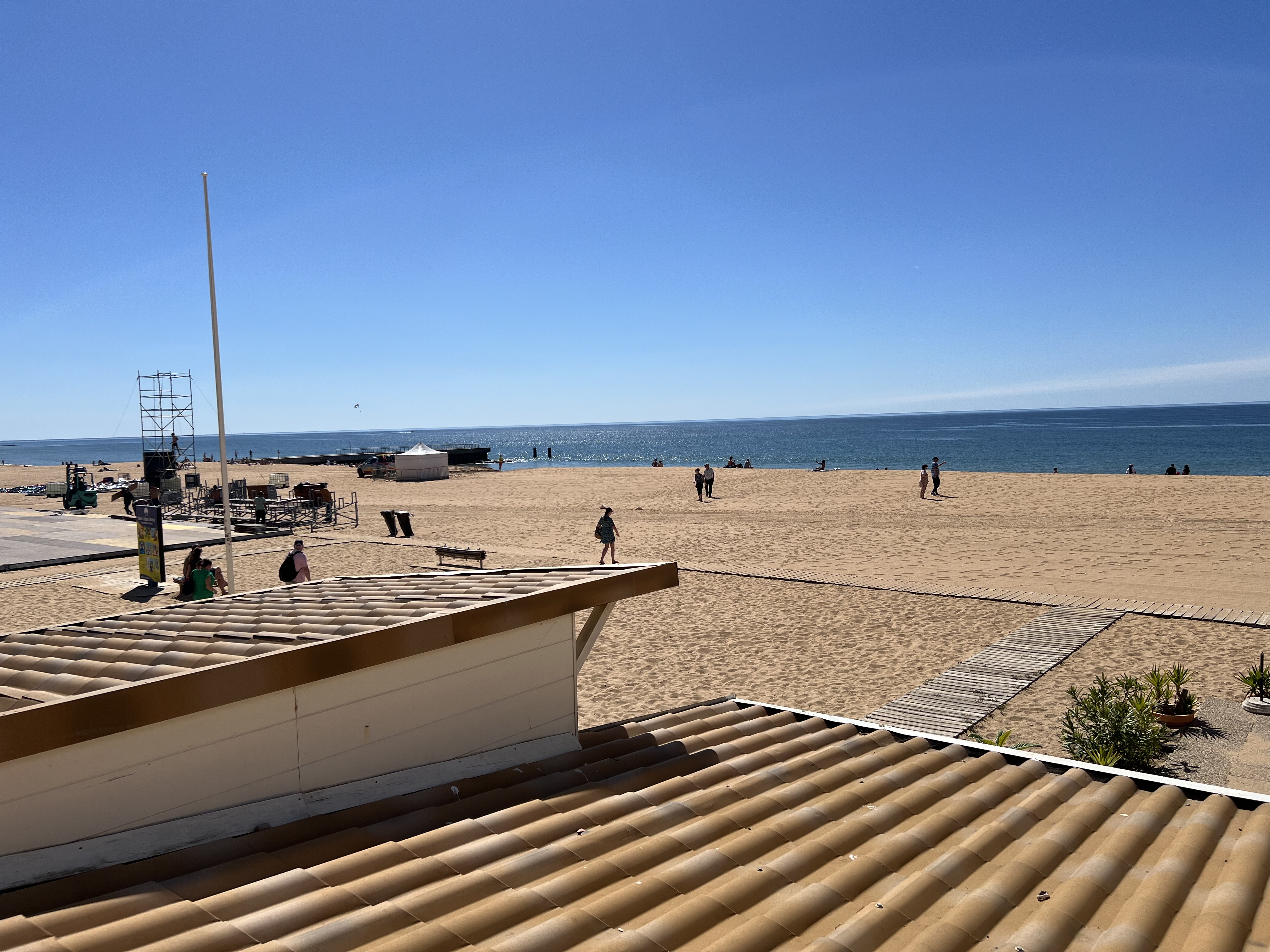
A view of the Mediterranean
I was glad to say I visited, but I was also glad to leave. Perhaps the least attractive and least inviting part of my entire trip.
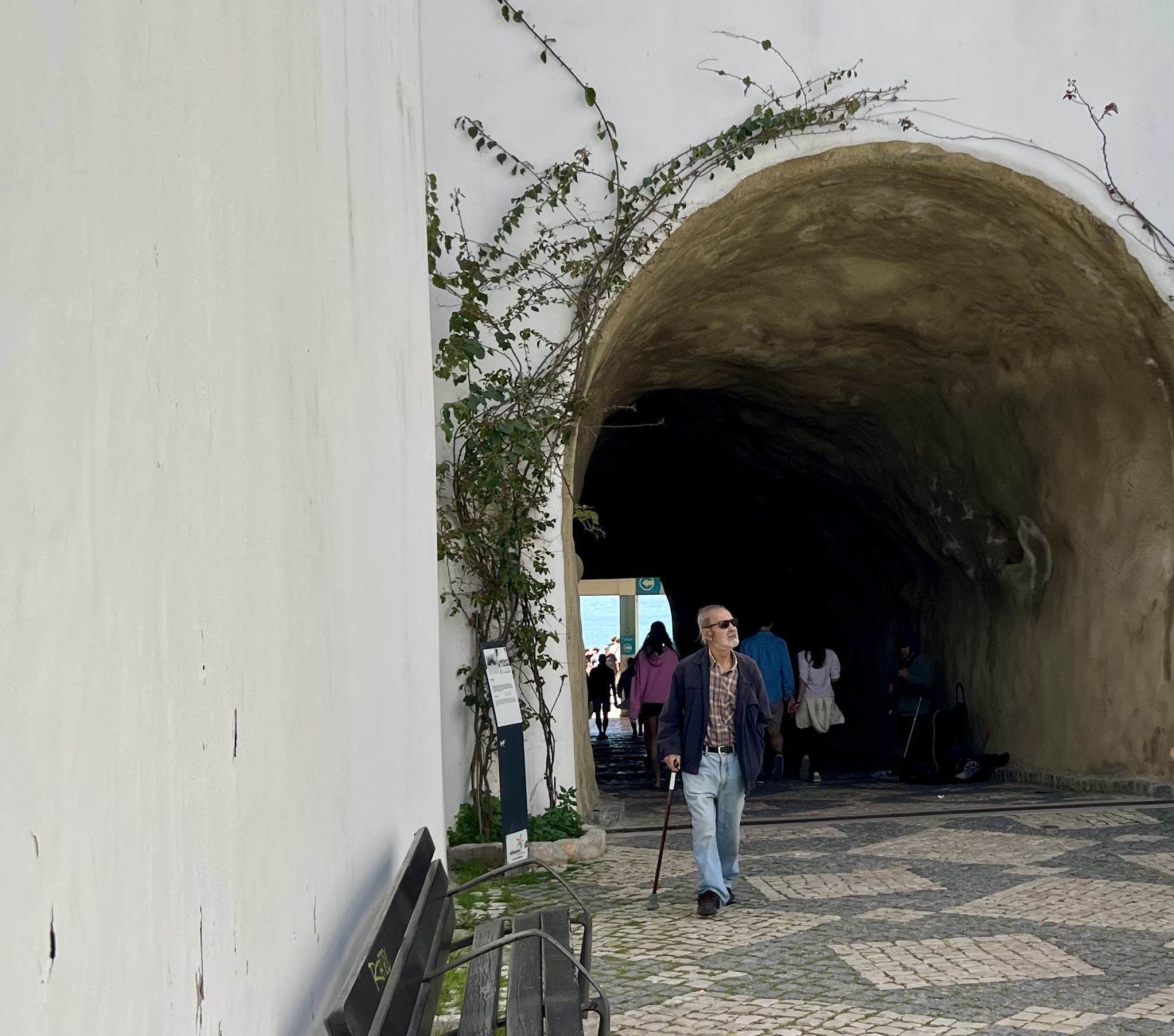
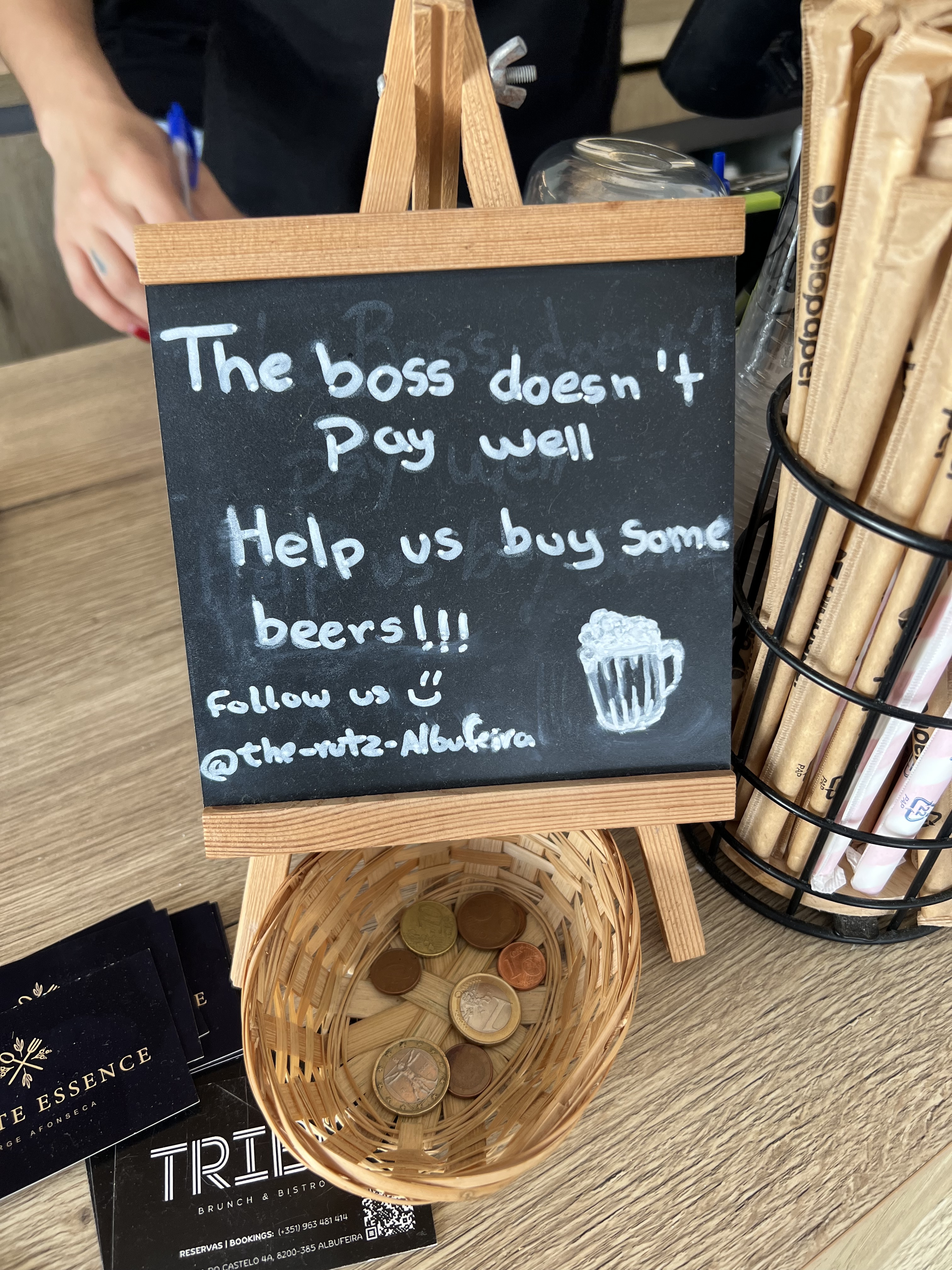
The somewhat famous Albufeira “tunel,” built in the 1930’s to give people access to the beach.The only food I had in Albufeira was this iced cappuccino. And it was the best coffee I had on the entire trip!The young ladies working the coffee shop were jammin’ all day, so I made sure to treat them well.Wanna paint a target on your back? Take the “tourist train!”
Starting in the mid 1700’s, sailors in the British Navy were given a daily ration of rum. They called it a “tot,” and the practice of daily “tot” distribution lasted for almost 200 years, until July 31, 1970. When it ended, not only were there many sad British sailors, but there was also a vast amount of leftover rum. Much of it was sold off at high prices because the taste was excellent and the methods of its distillation were no longer used.
It made sense. In the old days, when liquids were stored in wooden barrels aboard ship, water, beer, and wine would go bad very quickly. Only something with a much higher alcohol content wouldn’t spoil. Rum was the answer. And getting the sailors drunk every day kept them from deserting…it was good for morale!
But while the sailors drank rum, Royal Navy officers drank gin. The use of exotic spices in gin was made possible by imports from Africa and Asia. Gin’s prevalence around the world is largely due to the fact that sailors set foot in many new cities on new continents.
And though the British Navy stopped the practice of issuing alcohol to its sailors in 1970, the Royal New Zealand Navy abolished the practice as late as 1990!
Until a recent trip to New Zealand, I was not a huge fan of gin. Don’t get me wrong: I liked it. A gin and tonic was a nice refreshing drink on a hot summer’s day. And my fascination with the Vesper martini, a combination of gin and vodka, made me appreciate gin even more.
But it wasn’t until I went to New Zealand, and tasted their magnificent gins, in combination with delicious tonics only available in that country, did I really start to appreciate the subtle differences between them.
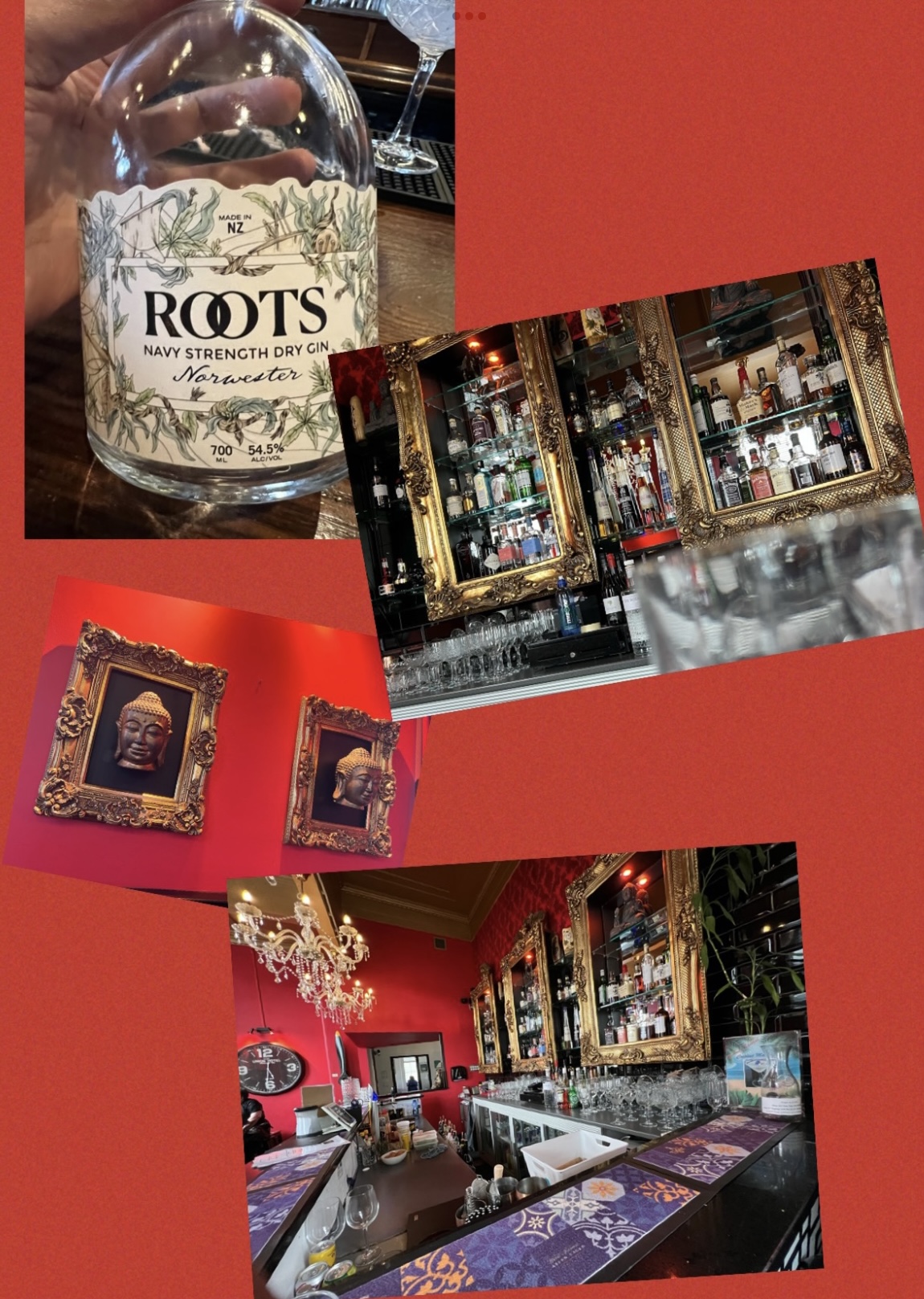
The first thing that caught my eye when I was served a sample of Roots gin, distilled in Marlborough, was the label: “Navy strength dry gin.” I asked what that meant. Well, for one thing, it had more alcohol. And the reason for that was surprising. Since gin, like rum, was stored in wooden barrels on ships, very often next to barrels of gunpowder, the gin had to contain enough alcohol so that if it spilled onto the gunpowder, the gunpowder would still ignite! Not enough alcohol in the gin would waterlog the gunpowder and make it useless. So tests were actually done by pouring gin on gunpowder to see what the minimum percentage of alcohol was required to keep the gunpowder burning. The answer was about 57%. Anything below that and the gunpowder would not burn. They coined the term “Navy strength.”
(Although the bottle of Roots gin above weighs in at 54.5%, it’s properly called “Navy strength.” In 1866, to keep sailors from getting completely hammered, the British Royal Navy reduced the alcohol content of the rum they were distributing to 54.5%. Hence, a new “Navy strength.”)
I was allowed to take only 1 bottle home from New Zealand, but, as you can see, it was not Navy strength. Still delicious!
The other advantage to a Navy strength gin is taste. If you’re not diluting it with water, not only are you getting more alcohol, but you’re also getting more of the herbaceous flavor you want in a gin.
Up until my trip to New Zealand, my experience with gin was limited to the usual list of suspects: Tanqueray,Bombay Sapphire, and Hendrick’s. I also more recently discovered Ford’s, a very nice London dry gin I sometimes use in my Vesper martinis.
But in New Zealand, many of the gins were floral and herb-forward, and I found that I like that. I like that a lot. For example, Victor, another Marlborough gin, was like “Hendrick’s on steroids.” I said that to my bartender at the Urban Eatery and Oyster Bar in Nelson, NZ, and she agreed. Delicious.
Although gins may vary in alcohol content, rules about serving liquor in New Zealand are very strict, certainly by US standards. For example, a “double” in New Zealand is 30ml. That’s 1 ounce! And that’s a standard pour for a cocktail. You can, I found out, ask for a “double-double.” And in that case, they would serve you a 1-ounce shot on the side with your drink, and you would have to pour it in yourself.
When I told the bartenders in New Zealand that we have 4-ounce martinis at any decent steakhouse in the US, and they realized that was 120 mls, their jaws pretty much dropped and hit the bar. One bartender gasped: “That’s irresponsible!” I told her that two of those drinks is widely considered the “businessman’s lunch” here in the states. She just shook her head.
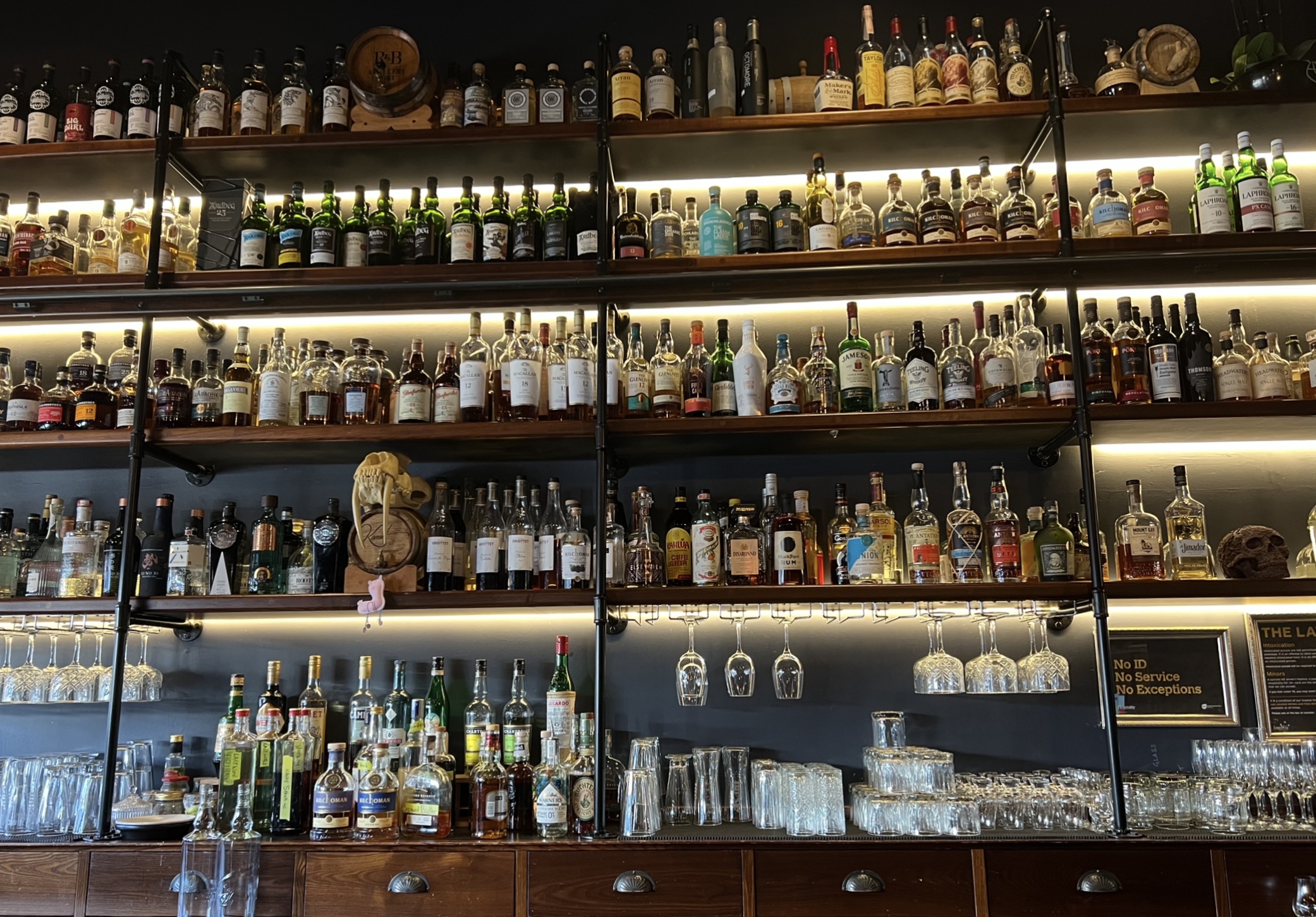
Much to choose from at Kismet, my favorite bar in Nelson, NZ.
The phrase “proof” also has a very different meaning.
In the states, it’s pretty simple: it’s double the percentage of alcohol. So a bottle that’s 40% alcohol is 80 proof.
But the phrase “proof” comes from there British Royal Navy’s “proof” test. They would take the gin, pour it onto gunpowder, and if it ignited, that would prove there is sufficient alcohol in the gin. They would say that the gin was “gunpowder proof,” and it would be allowed onboard the ship.
So in the UK, a spirit with 57.15% is 100 degrees proof. A spirit with 40% alcohol is 70 degrees proof.
For me, it’s easier to simply remember to check the percentage of alcohol, and go from there.
One of the reasons I fell in love with New Zealand gin was because it was often served with East Imperial tonic, a New Zealand product that was not available in the United States for some time. But when I returned from my trip, I googled it and found that it was now being distributed in the US! When the amount of alcohol you’re allowed in your glass is limited (by our standards, anyway), what fills the rest of it up becomes incredibly important. East Imperial was the best line of tonics I’ve ever tried. (I’m saying was now, because, sadly, the company went under last year, and I managed to purchase a couple of 12-packs of the last of the available inventory. Once it’s gone, it’s back to Fever Tree.)
It stands to reason that a great cocktail is the sum total of its parts: great gin, great tonic, great ice.
I was enjoying a few Roots and tonics at the Bamboo Tiger, a bar inside the D’Urville Hotel in Blenheim, NZ, when we felt earthquake tremors. (My first!) It only lasted a few seconds, and when the chandeliers stopped moving, everyone pretty much went right back to business!
I spent about 10 days last summer in Scotland and Ireland, and though they’re known for their whiskey, it was their gins that really impressed me. But I’ll save that for another blog.
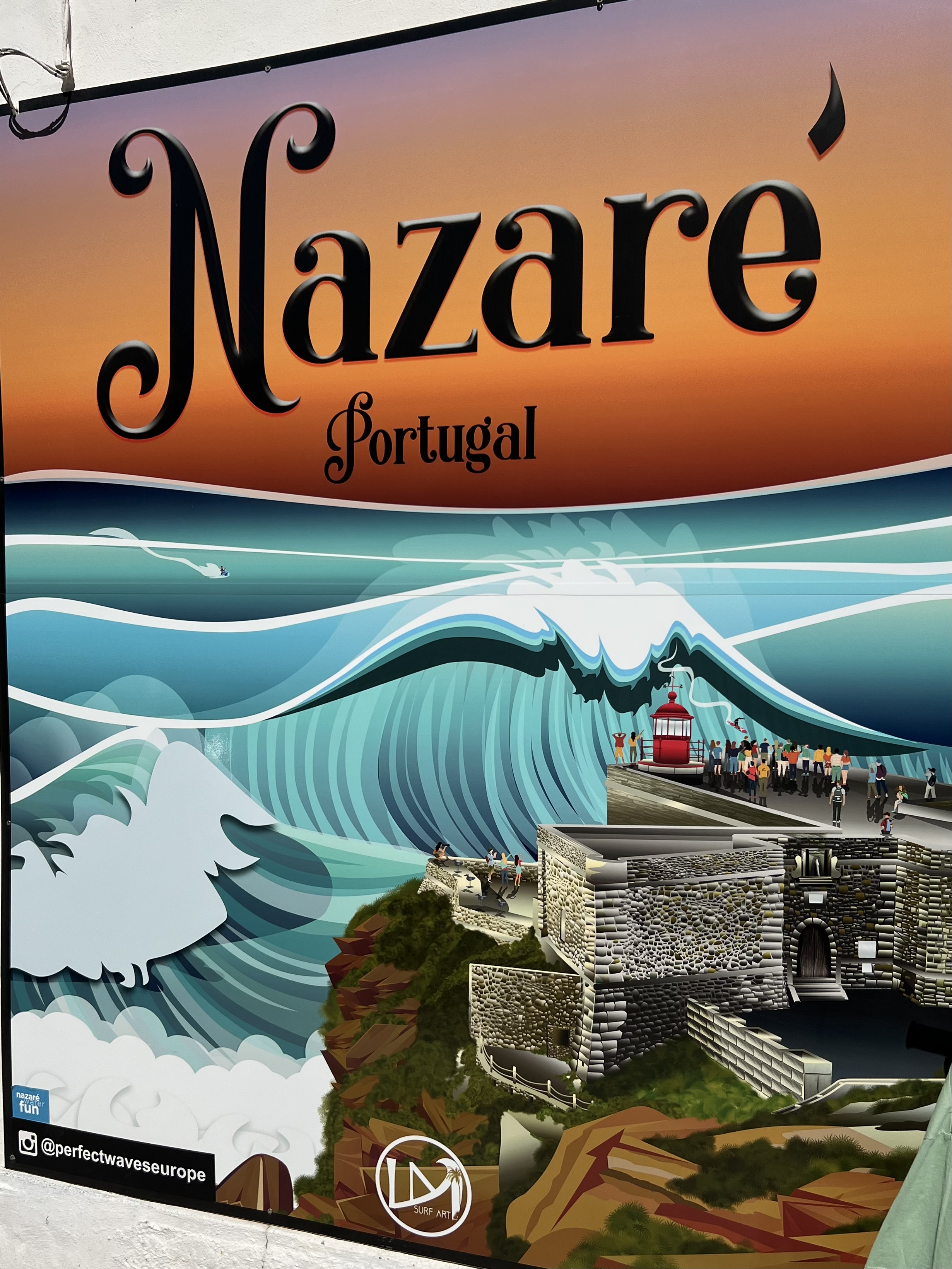
You’ve probably seen on You Tube those videos of the crazy 100-foot waves that surfers try to conquer every year. Well, that happens during the winter months at Nazaré, Portugal. The primary factor in making those massive waves is an enormous underwater canyon, the Nazaré Canyon, that stretches for about 220 kilometers, running perpendicular to the shoreline. The deep-sea trench ends just a few meters off the shore of Praia do Norte, where the water depth is till about 20 meters. The drastic transition from deep to shallower water causes the enormous waves.
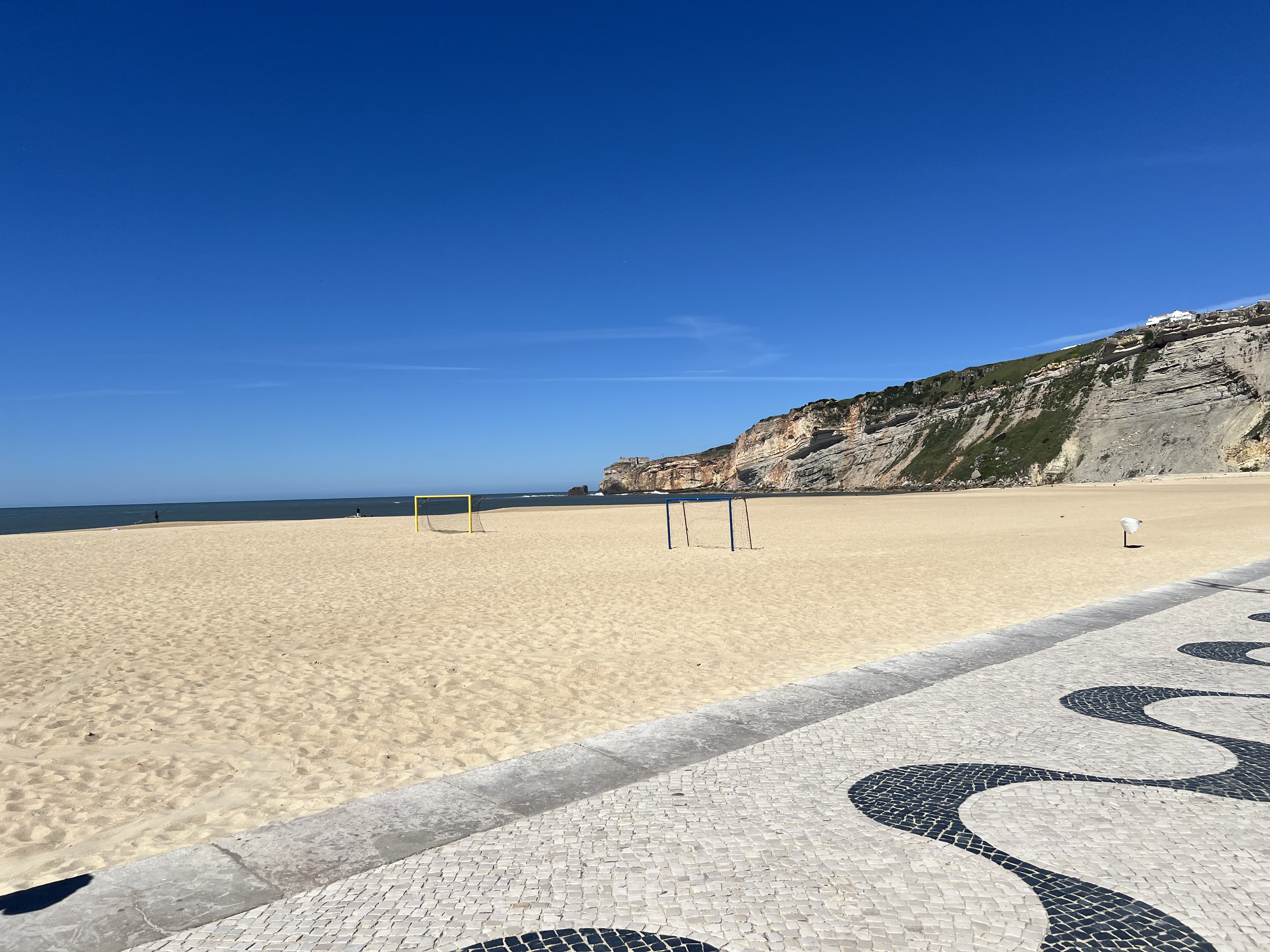
In the summer, Nazaré and Praia de Norte are quite a bit calmer! Almost hard to believe those waves actually can happen here.
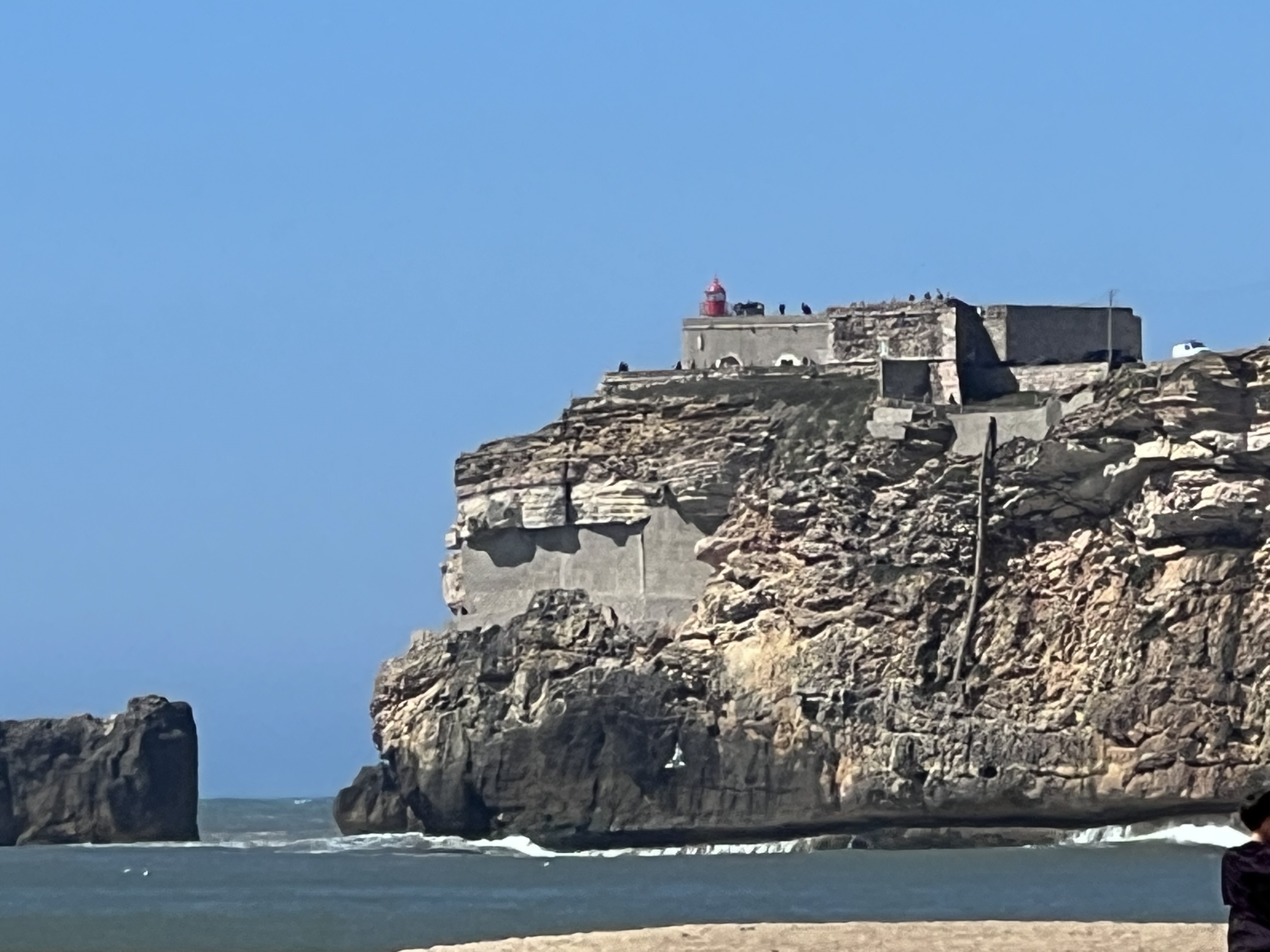
That red lighthouse is where fans watch those crazy surfers do their thing!
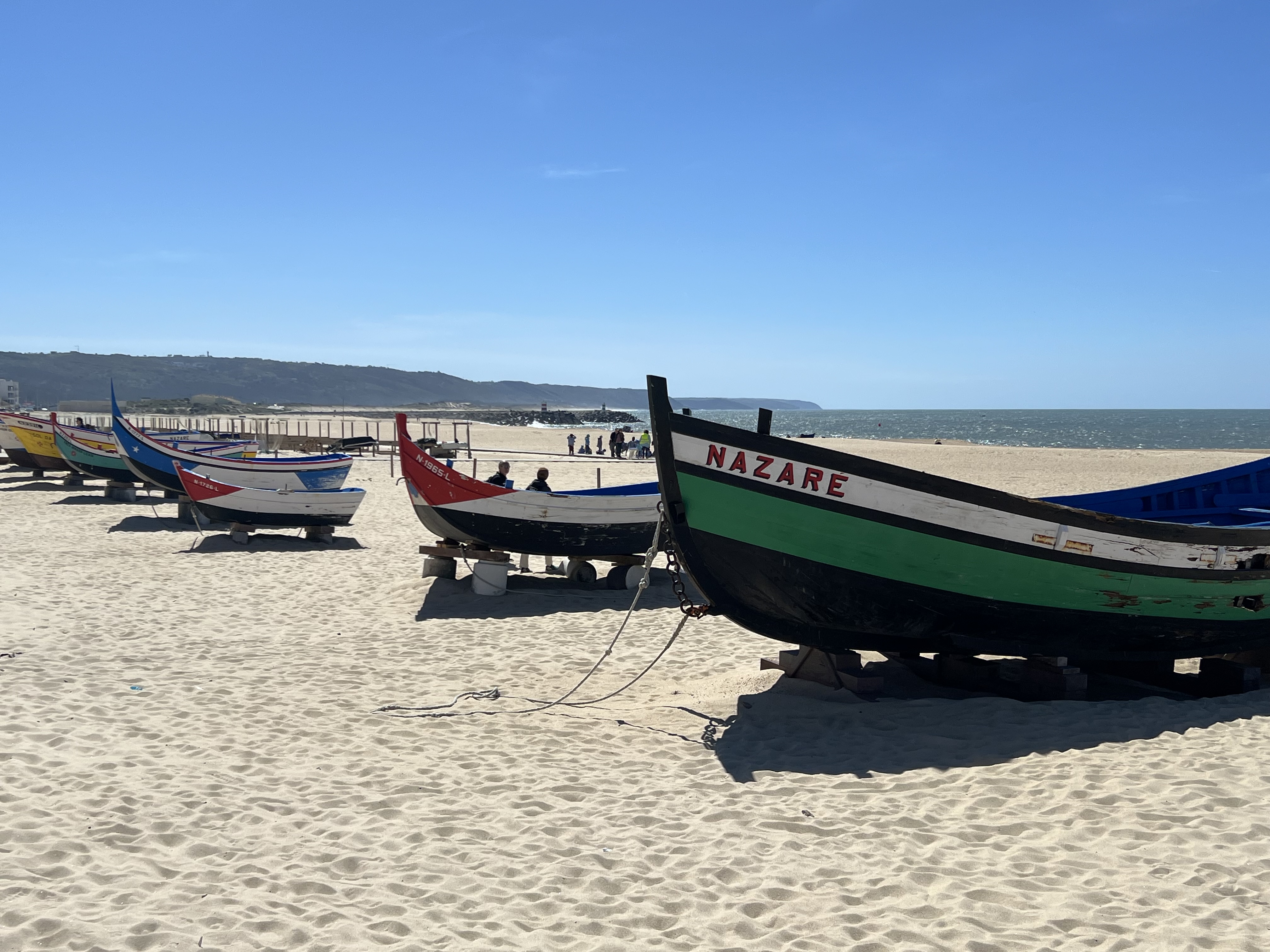
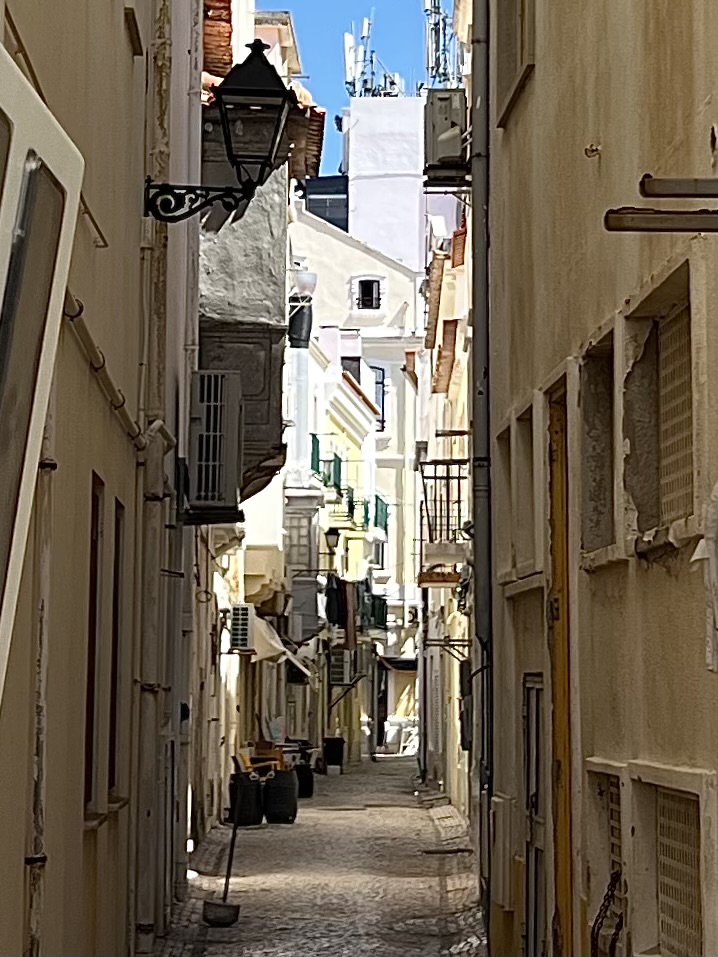
I found Nazaré to be one of my favorite stops on my trip through Portugal…a sleepy surfer town with lots of restaurants and shops, and a great beach to walk.
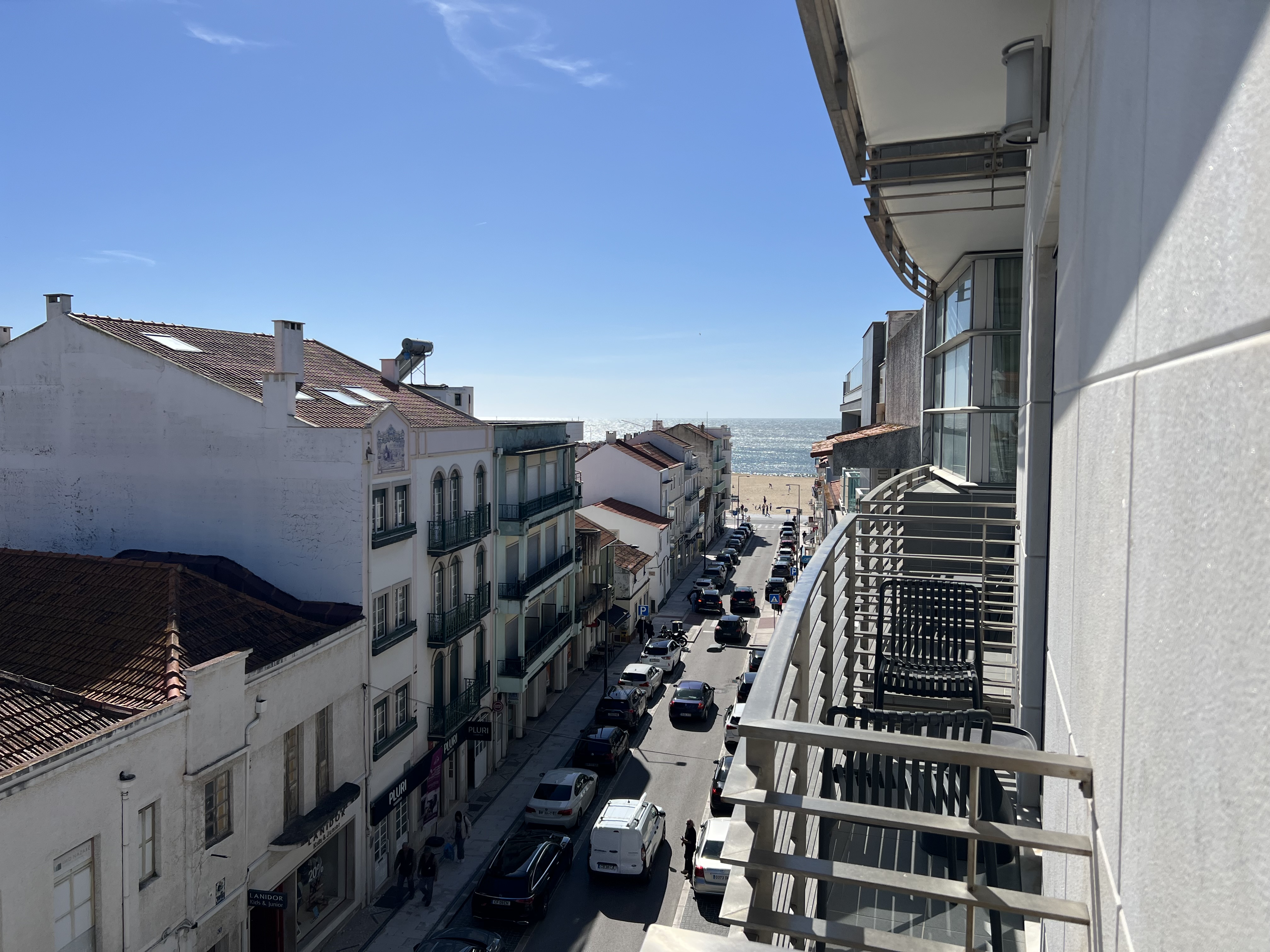
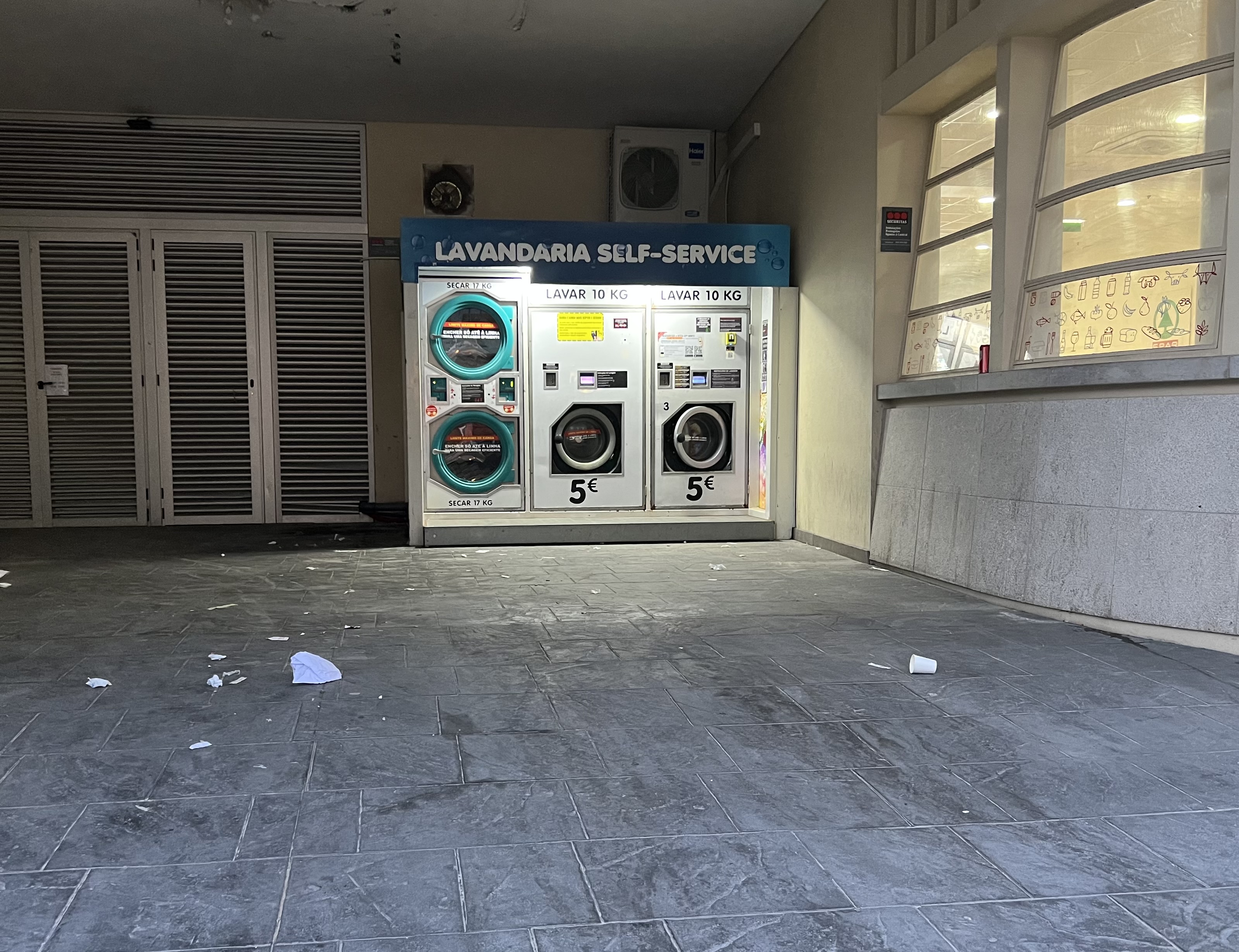
Later in the day, the local soccer players come out and play until the sun goes down.The view from my room balcony at Hotel Praia, where I stayed. A great little hotel with underground parking (a rarity) and excellent location for walking.You can even do your laundry right on the street!
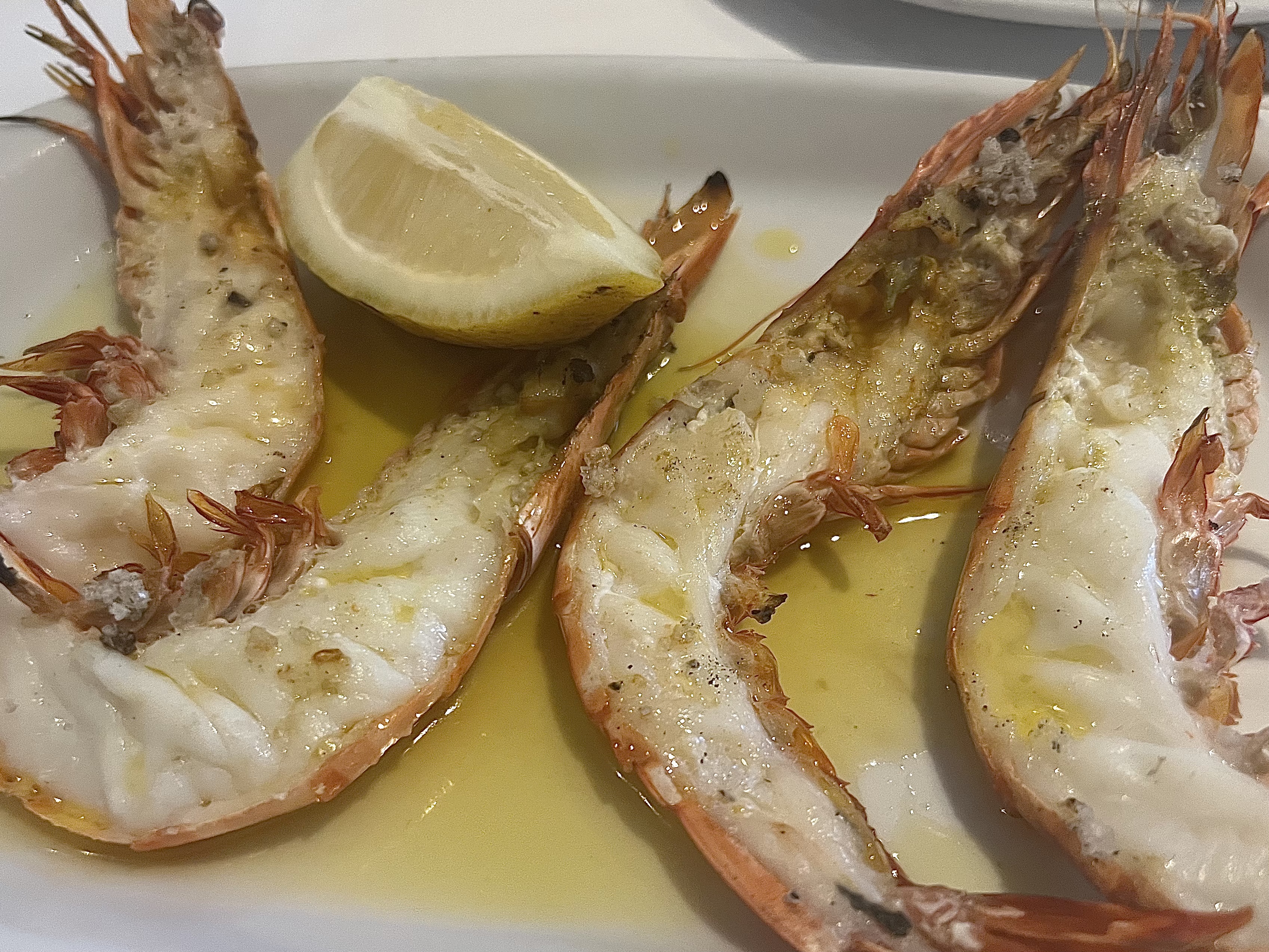
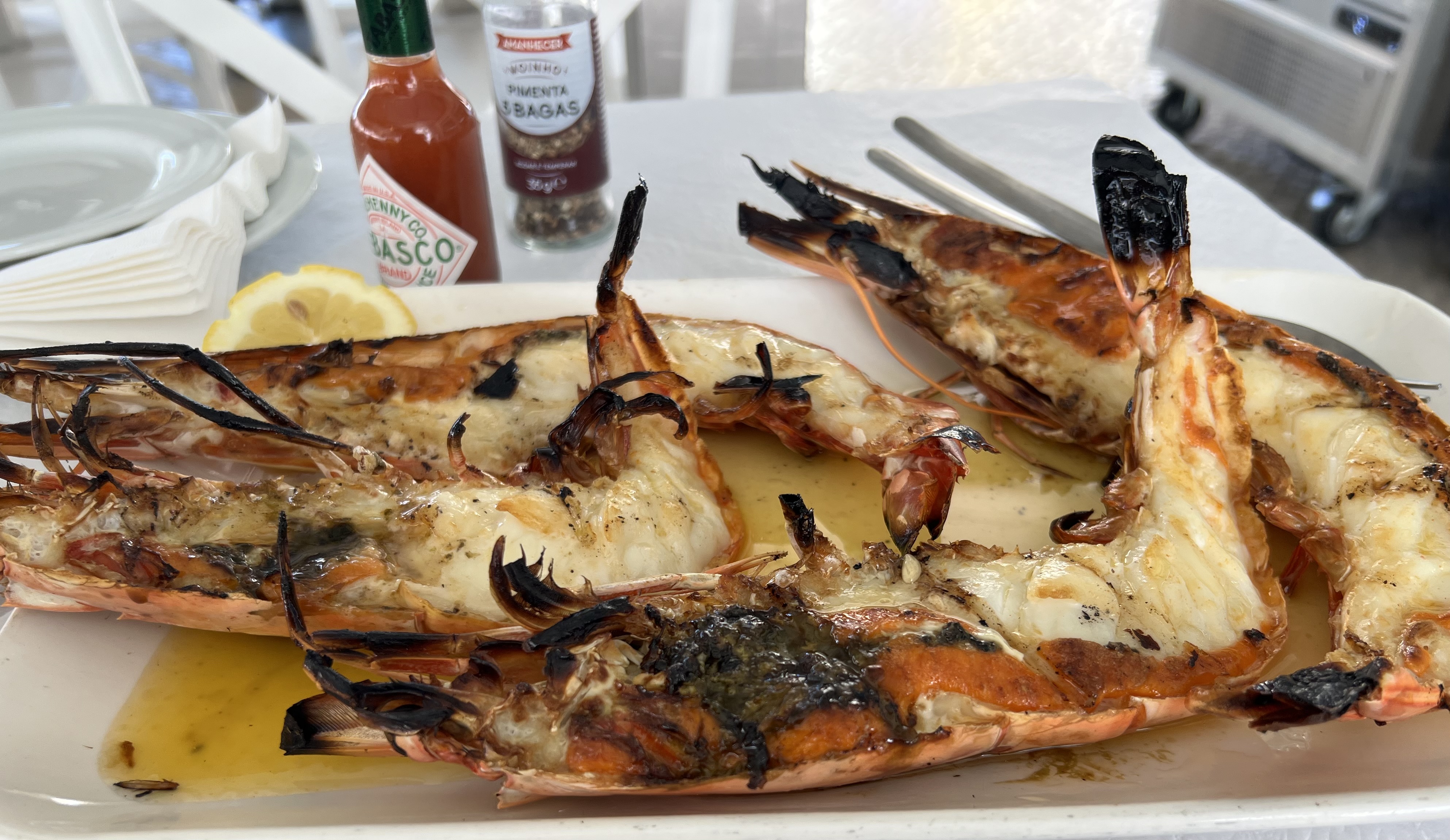
Of course, there’s the most casual meal to fantastic seafood available in Nazaré. The tiger prawns are the size of a lobster!
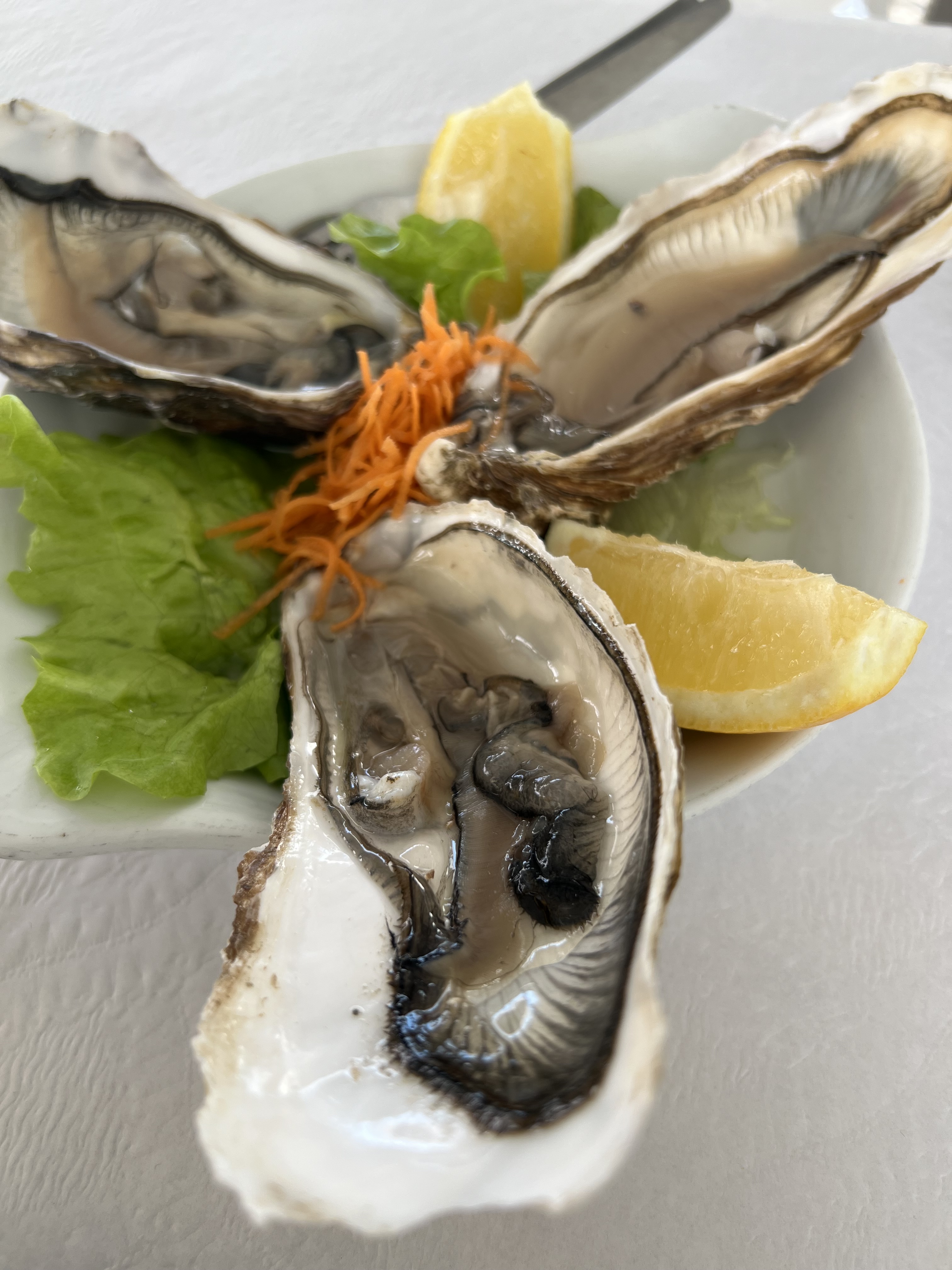
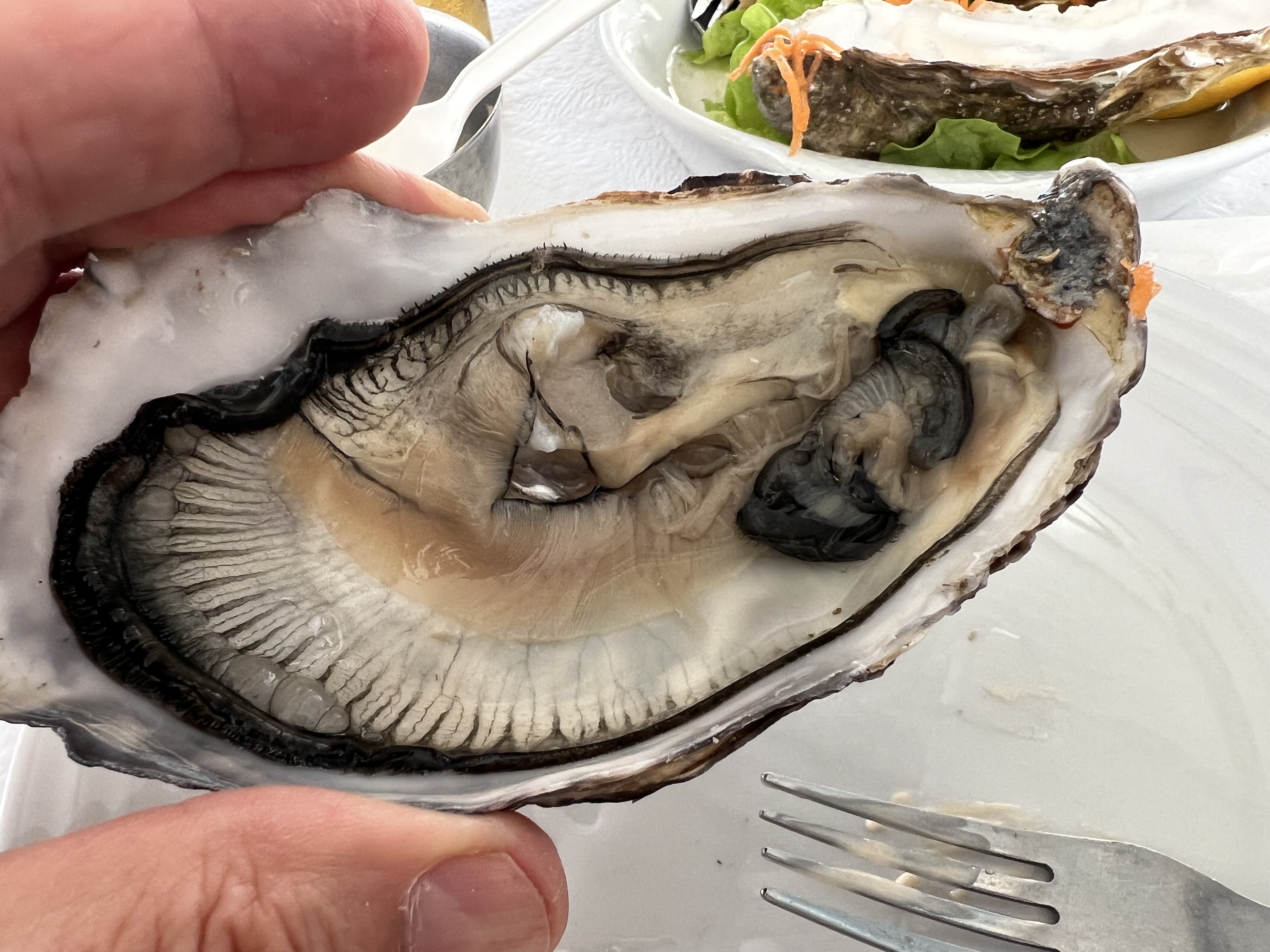
And they grow some really big oysters here, too!
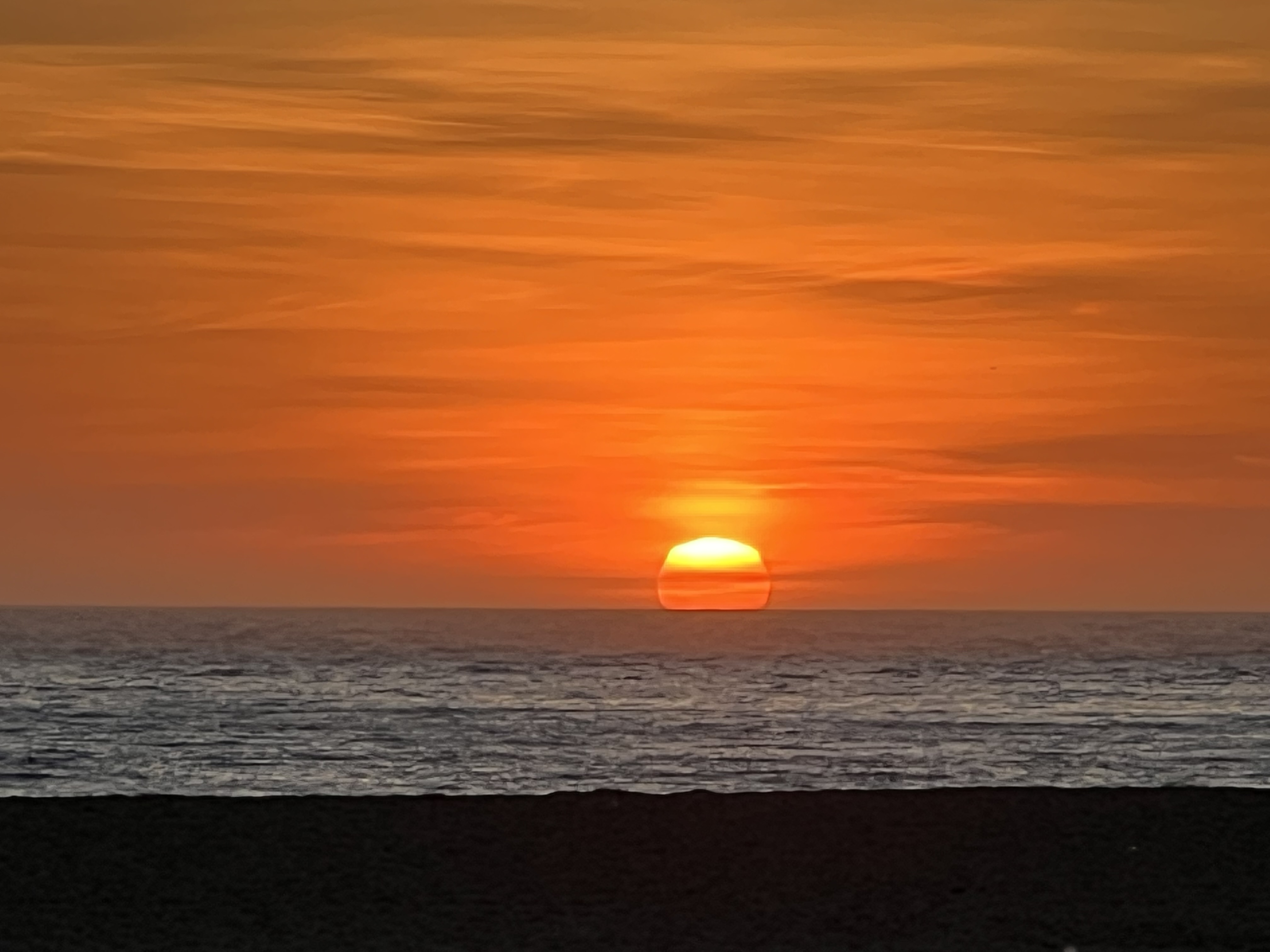
And, being on the west coast of Portugal, you get great sunsets!
Plaia do Norte when the waves aren’t crazy! You can actually drive onto the beach. (The view is from the north side of the red lighthouse, whereas the town of Nazaré is south of it.)
It’s my birthday! I just might have a Vesper (or two) to celebrate!
An update on the Dukes Hotel: right now, they are refurbishing it, so the hotel is closed. But the Dukes Bar remains open for business! That means you don’t have to battle with hotel guests to get a seat at this iconic bar! Almost worth a trip to London just to get a seat before the hotel reopens this fall!
A few years ago, I took a trip to London with my daughter, and we checked off quite a large list of things we wanted to do: trips to Oxford and Stonehenge, museums, the theater, restaurants with fabulous food (and some with equally amazing views), college tours, a proper British afternoon tea at the Ritz, and much more.
One of the top things on my personal list was to pay a visit to the renowned Dukes Bar at the Dukes Hotel, where, as legend has it, Ian Fleming, the author of the James Bond novels, not only came up with the phrase “shaken, not stirred,” but also created the now-famous Vesper martini.
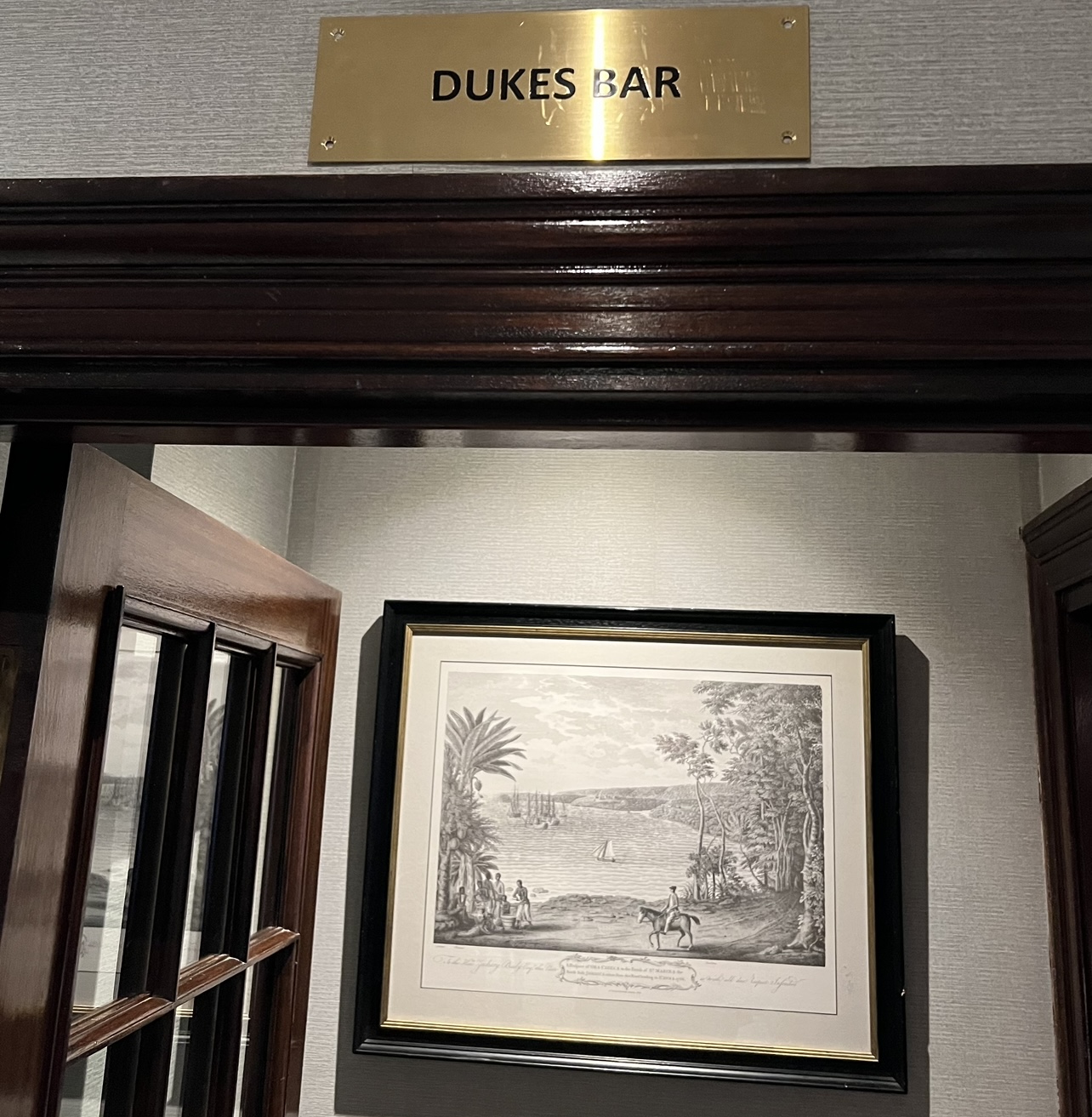
Sadly, this is as close as I got to the Dukes Bar. People who stay at the hotel get to reserve a space in the incredibly small bar area, and everyone else has to wait in line on a first-come, first-served basis. Unfortunately for me, the wait to be seated was way too long and I never got to experience the Dukes Bar for myself.
*sigh*…looks like I’ll need to make another trip to London to check this one off my bucket list.
In the meantime, I can enjoy a Vesper at home…
At first, it seemed almost silly to try to make one…but the classic James Bond martini has always fascinated me. I’m not talking about the clichéd Sean Connery “vodka martini, shaken, not stirred.” I’m talking about the real James Bond martini, which appeared in Ian Fleming’s first 007 novel “Casino Royale” and only appeared in the 2006 “Casino Royale” motion picture starring Daniel Craig (the best Bond of all, if you ask me.)
To quote the novel:
‘A dry martini,’ he said. ‘One. In a deep champagne goblet.’ ‘Oui, monsieur.’ ‘Just a moment. Three measures of Gordon’s (gin), one of vodka, half a measure of Kina Lillet. Shake it very well until it’s ice-cold, then add a large thin slice of lemon peel. Got it?’ ‘Certainly, monsieur.’ The barman seemed pleasant with the idea. ‘Gosh that’s certainly a drink,’ said Leiter.
Bond laughed. ‘When I’m … er … concentrating.’ he explained, ‘I never have more than one drink before dinner. But I do like that one to be large and very strong and very cold and very well-made. I hate small portions of anything, particularly when they taste bad. This drink’s my own invention. I’m going to patent it when I can think of a good name.’
He watched carefully as the deep glass became frosted with the pale golden drink, slightly aerated by the bruising of the shaker. He reached for it and took a long sip.
‘Excellent,’ he said to the barman, ‘but if you can get a vodka made with grain instead of potatoes, you will find it still better.’
Bond named this drink the Vesper martini, after the character Vesper Lynd, portrayed by Ursula Andress in the 1967 adaptation, and Eva Green in the 2006 adaptation of “Casino Royale.”
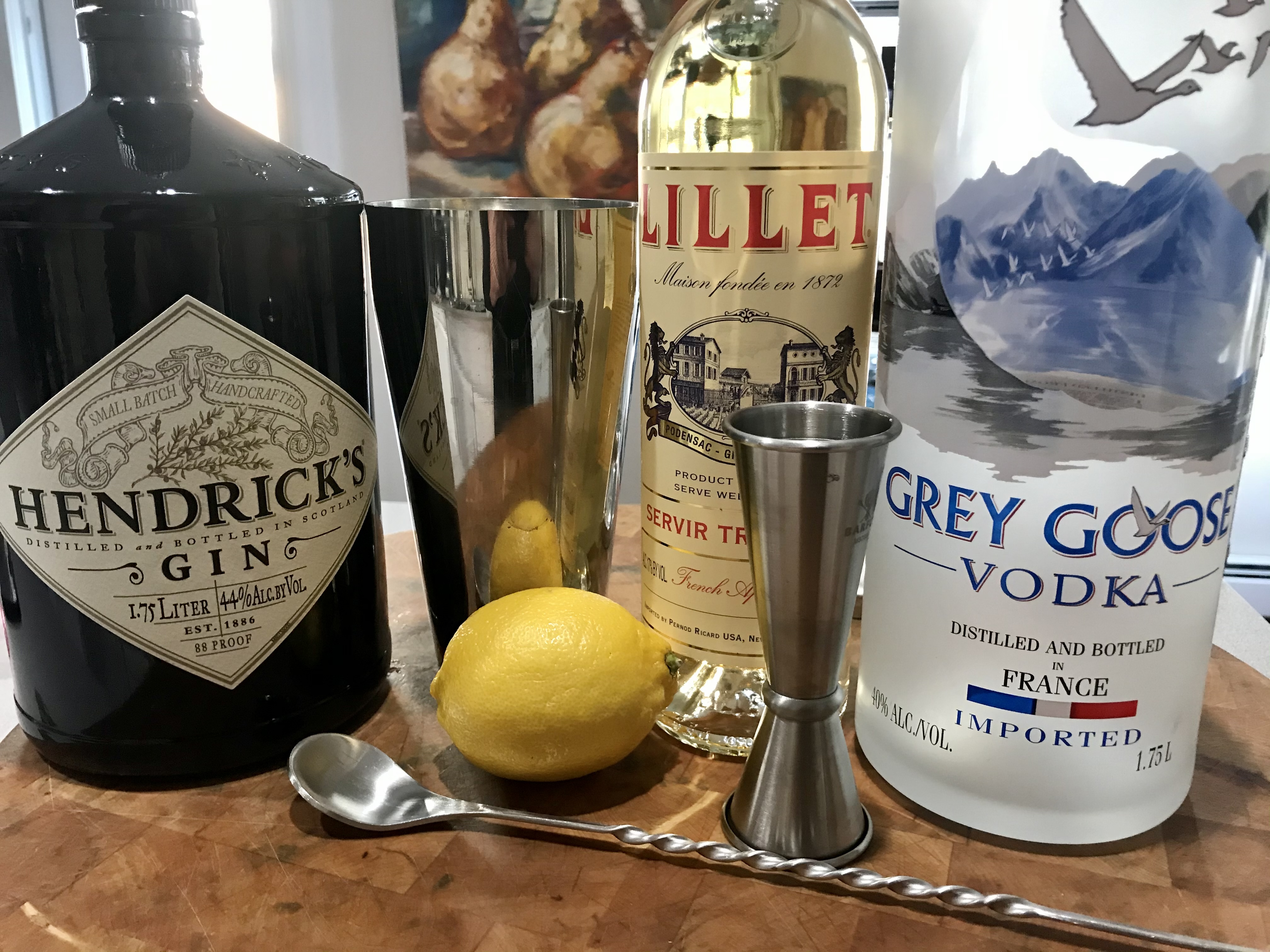
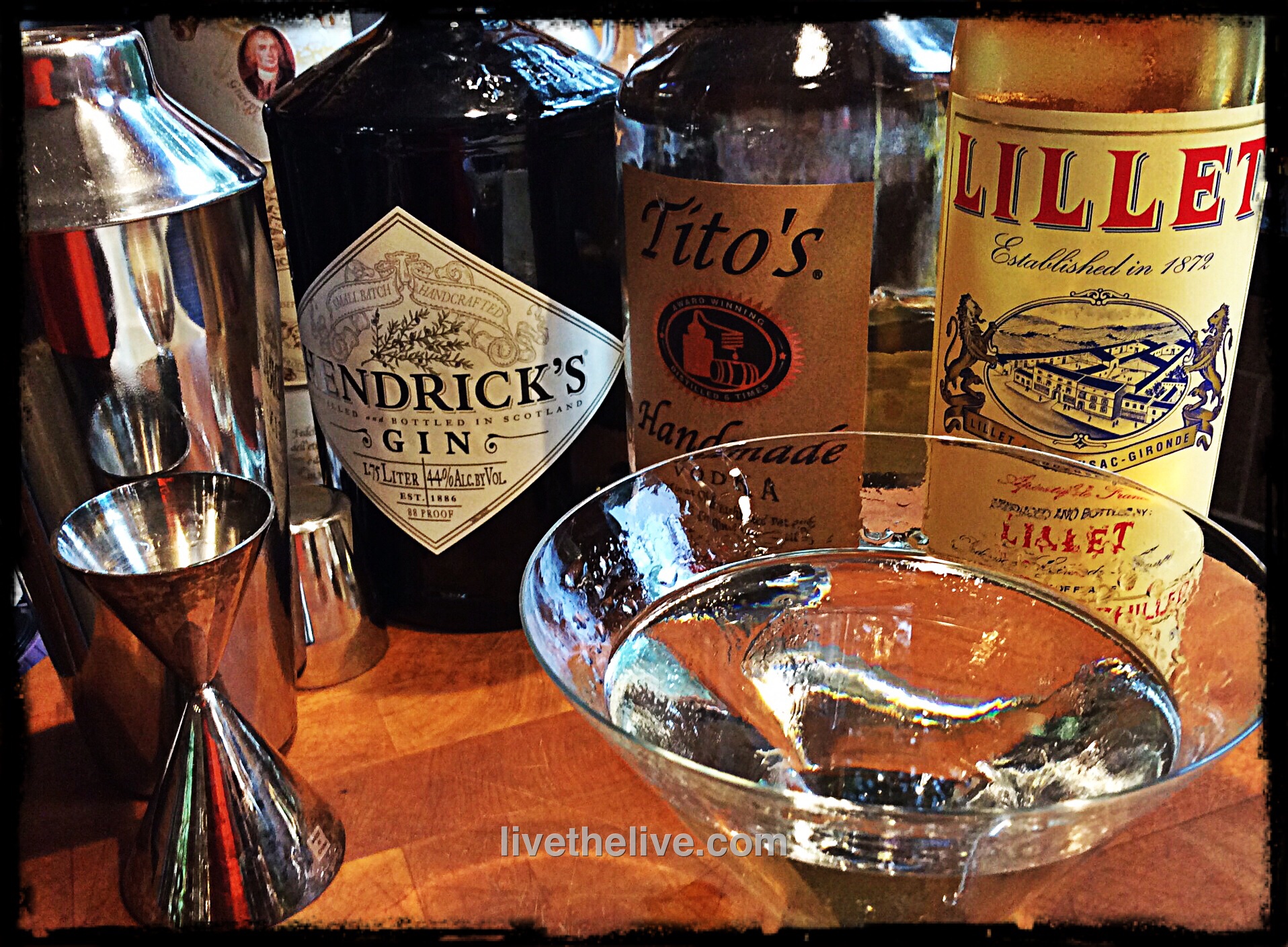
My first homemade version of this classic drink remained true to the measurements of the original, though I changed brands due to personal preference. In the novel, Bond just asks for “vodka.” (Of course, this was back in the 1950’s when we didn’t have hundreds of brands to choose from!) My choice for best-bang-for-the-buck grain vodka is Tito’s, made from corn. But an excellent choice for wheat-based vodka is Grey Goose.
Bond asks for Gordon’s gin. I’m partial to the floral notes of Hendrick’s.Again, in the 50’s, what good British agent wouldn’t drink Gordon’s?
And the original Kina Lillet had its recipe changed in the 1980’s to keep up with the times by reducing the quinine, which made it bitter. (Kina refers to the quinine, so it was removed from the label when the quinine was removed from the formula.) The French aperitif wine, Lillet, is today’s version: a blend of wine grapes, oranges, orange peels and quinine. Lillet is not a vermouth, though you’ll find it in the vermouth section of your favorite liquor store. With the rise in popularity of the Vesper martini, many bartenders and aficionados claim it’s just not the same without the original Kina Lillet formulation, and a search began to find a better substitute, one with a more pronounced quinine assertiveness.
Enter Cocchi Americano, an aromatized wine also found in the vermouth section of many liquor stores. With its quinine-forward recipe, Vesper fans claim it comes closer to the original Kina Lillet. Add a more London-style dry gin to the mix, like Bombay Sapphire, and you just about nail the cocktail Bond created all those years ago.
So…with measurements true to Bond, may I suggest two versions of the same cocktail!
My original, more floral, version…
3 oz. Hendrick’s gin 1 oz. grain-based vodka (like Tito’s or Grey Goose) 1/2 oz. Lillet
Combine these over ice in a cocktail shaker, and shake vigorously. Strain it into a chilled martini glass. I’m happy with a lemon peel or even olives with this combination.
Or…
The version closer to Bond’s original, which is equally wonderful in its own right: crisp and refreshing, a strong drink with a hint of bitterness from the quinine. Dangerously addictive!
3 oz. London dry gin (like Bombay Sapphire)
1 oz. grain-based vodka (like Grey Goose)
1/2 oz. Cocchi Americano
Combine these over ice in a cocktail shaker, and shake vigorously. Strain it into a chilled martini glass. Garnish with a large, thin lemon peel.
With the rising popularity of the Vesper martini, and the use of Cocchi Americano instead of Lillet, the makers of Lillet now claim they “never removed” the quinine from their original recipe. Many feel this is an outright lie, (back-pedaling a bit, aren’t we?) because they themselves stated they changed in the formula back in the 80’s. A little too late now for them to re-formulate. CocchiAmericano has become the go-to with many bartenders (and myself) when recreating this classic cocktail. But if I can’t find it at my favorite liquor store, Lillet will do in a pinch.
If you don’t want to spend the extra cash for Grey Goose, I found that this combination is also very satisfying: for the vodka, go with the original red label of Stoli with Bombay Sapphire gin and CocchiAmericano in the original proportions.