I call this a milk liqueur, because I remember my Mom made it when I was younger, and she called it “pieninis likeris” (milk liqueur) in Lithuanian. But a good friend of mine, knowledgable in all things alcohol, said that it’s not much different than a “milk punch,” something that was common in New Orleans.
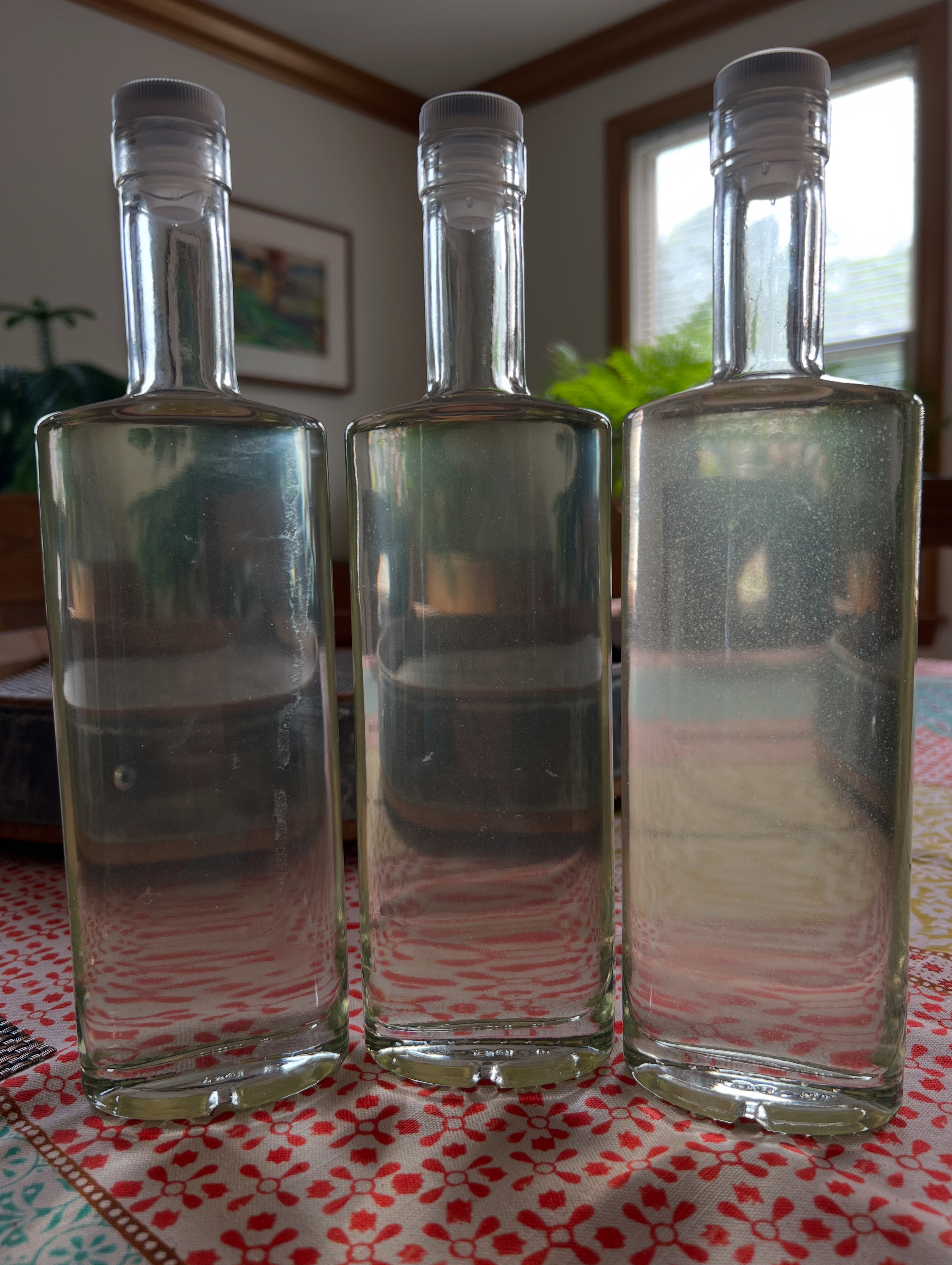
The milk liqueur recipe I based mine on was not my Mom’s…she never showed me how to make it. I found it listed under Portuguese recipes, so it looks like this thing is pretty common among many nationalities. And why not? It’s delicious!
If you’ve ever made ricotta cheese at home, there are some similarities. With ricotta, you add vinegar or lemon juice to milk to make it curdle and then separate the curds from the whey. It’s a similar process for this liqueur.
My twist to the recipe is to add a vanilla bean to the mix, because, how can it possibly hurt?
My preferred vodka for all liqueur recipes is one that is as flavorless, as neutral, as possible. And for me, that’s Absolut. I use 80-proof Absolut for this recipe. (I use 100-proof Absolut for my limoncello.)
I used whole milk for this recipe, and if you can, avoid using ultra-pasteurized milk. (That’s harder to do than it sounds!) I don’t mean raw milk…I haven’t used that, and can’t vouch for the results. But I did find some “normally” pasteurized/homogenized whole milk from a local dairy, and that seemed to work fine.
1 liter 80-proof vodka
1 quart whole milk
4 cups sugar
the juice and peel of 1 or more lemons, depending on their size and juiciness
1 whole vanilla bean
1 gallon glass jar with lid
cheese cloth
paper filters for coffee machines
In a gallon-sized glass container with a tight-sealing lid, pour in the vodka and the milk. Add the sugar, and swish it all around to start dissolving it.
Using a vegetable peeler, carefully peel the outer yellow skin of the lemons, avoiding the bitter white pith underneath. Place them in the jar. Carefully squeeze the lemons, avoiding the seeds, and add the juice to the mix. Toss the used lemons into your compost.
Drop in the vanilla bean.
Seal the container, and swish it around, making sure everything gets mixed.
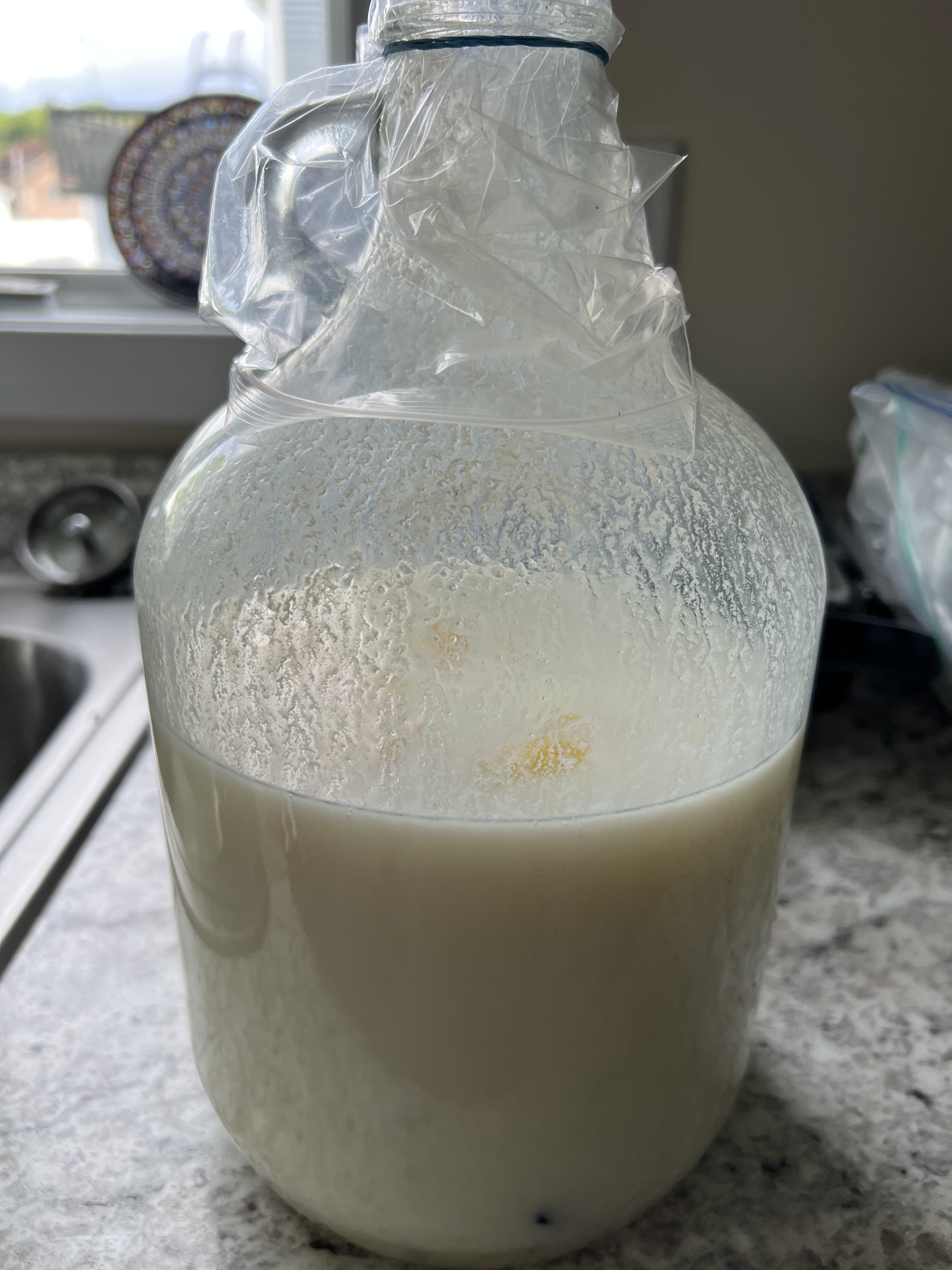
Place the container in a shady part of the kitchen, at room temperature but away from sun and heat, and swish it around once or twice every day. You’ll see the dairy start to separate from the rest of the liquid, but keep swishing it every day nonetheless.

After 10 days, the liqueur is ready!

I used a double layer of cheese cloth, placed in a sieve, and it did a good job of capturing most of the milk solids. I had to go through 4 cloths to get the job done, but at the end, I had a cloudy liquid that needed one more filtration process.

Like I do with my Lithuanian honey liqueur, Krupnikas, I placed a series of funnels with coffee filters over Mason jars and tall glasses, and poured the cloudy liquid through the filters, changing them as needed, as they did tend to clog up.
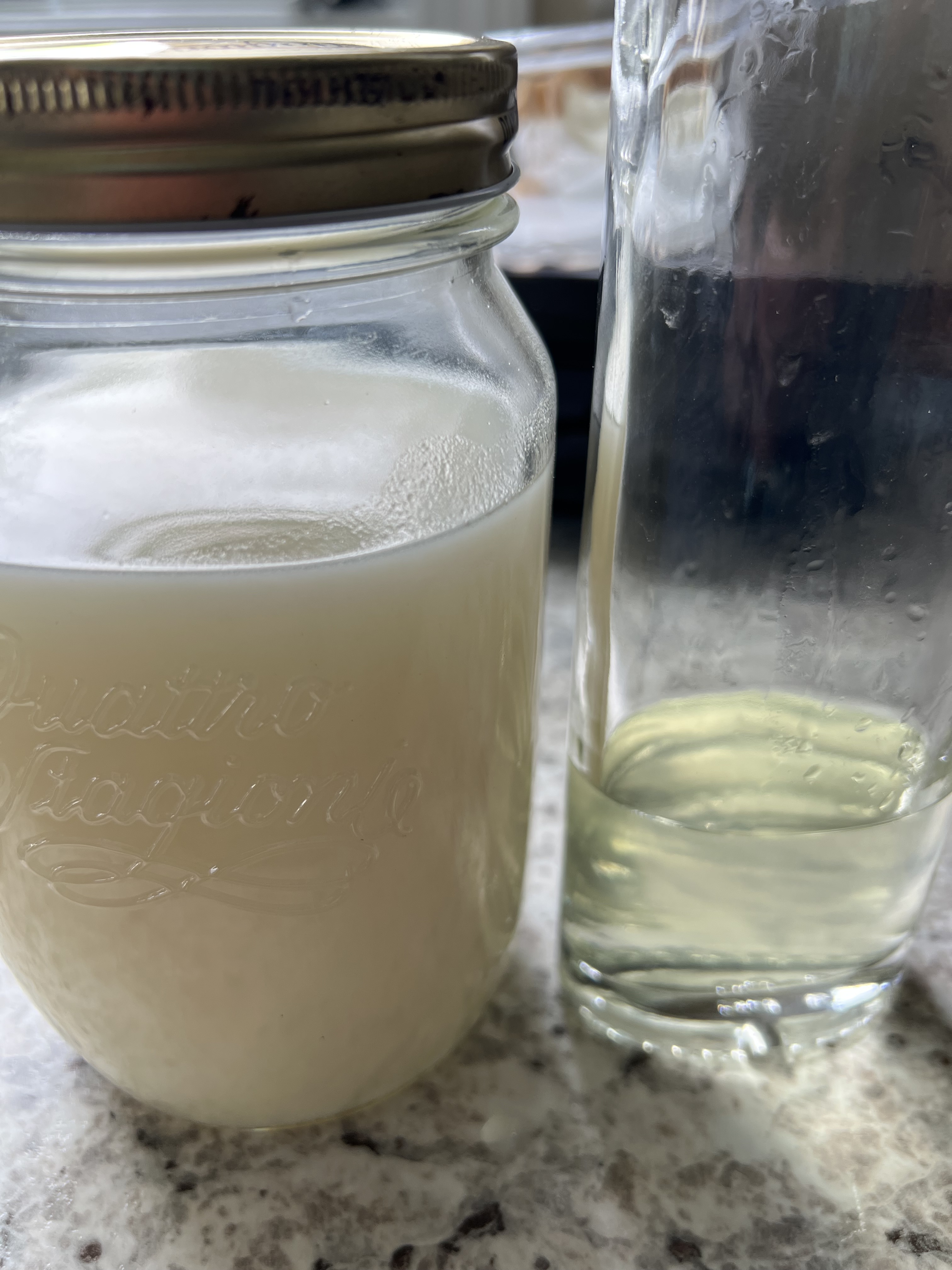
At the end, I had a relatively clear final product that was absolutely delicious, and maybe even better than the stuff my Mom made!

 Live the Live ™