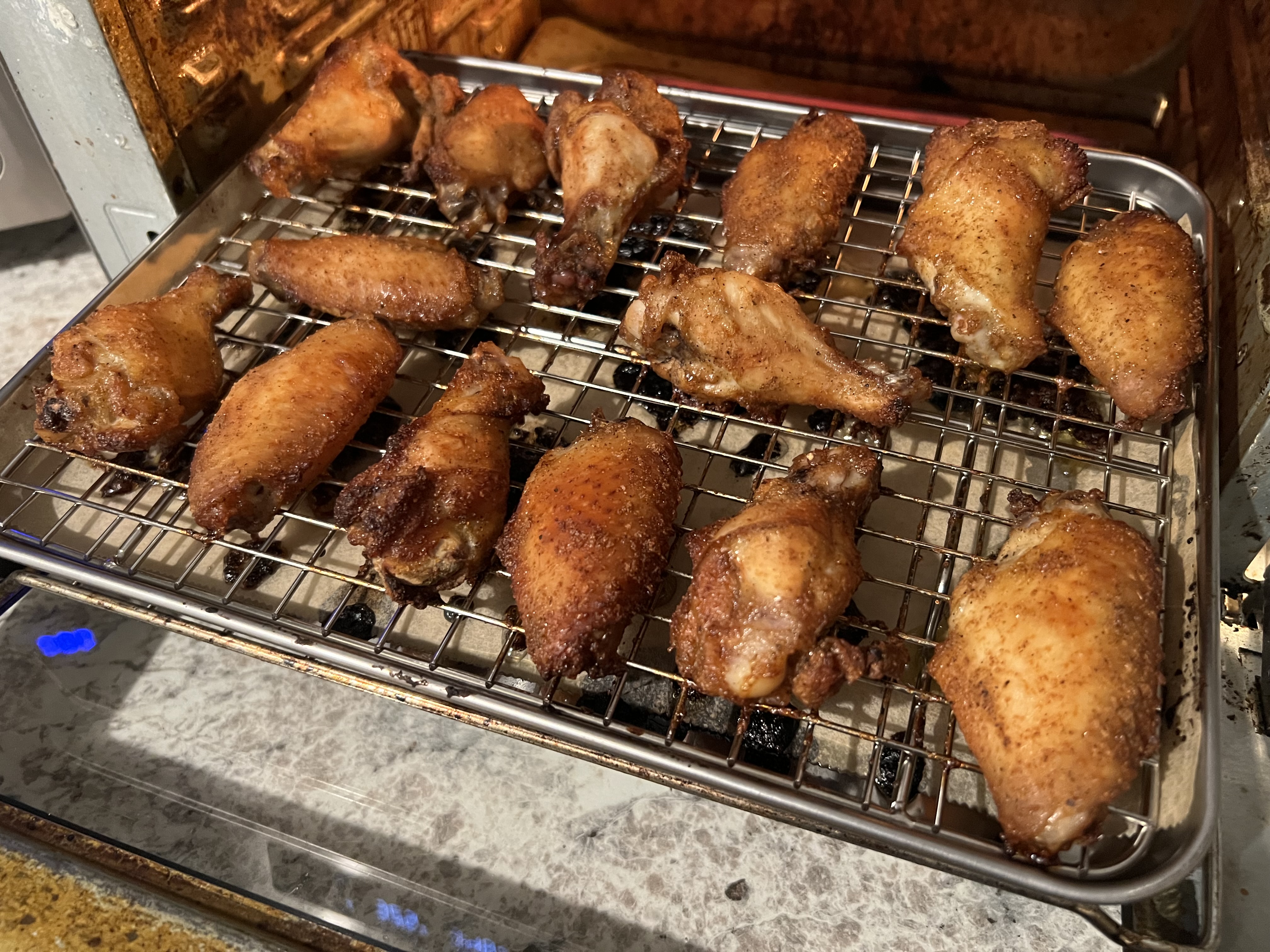
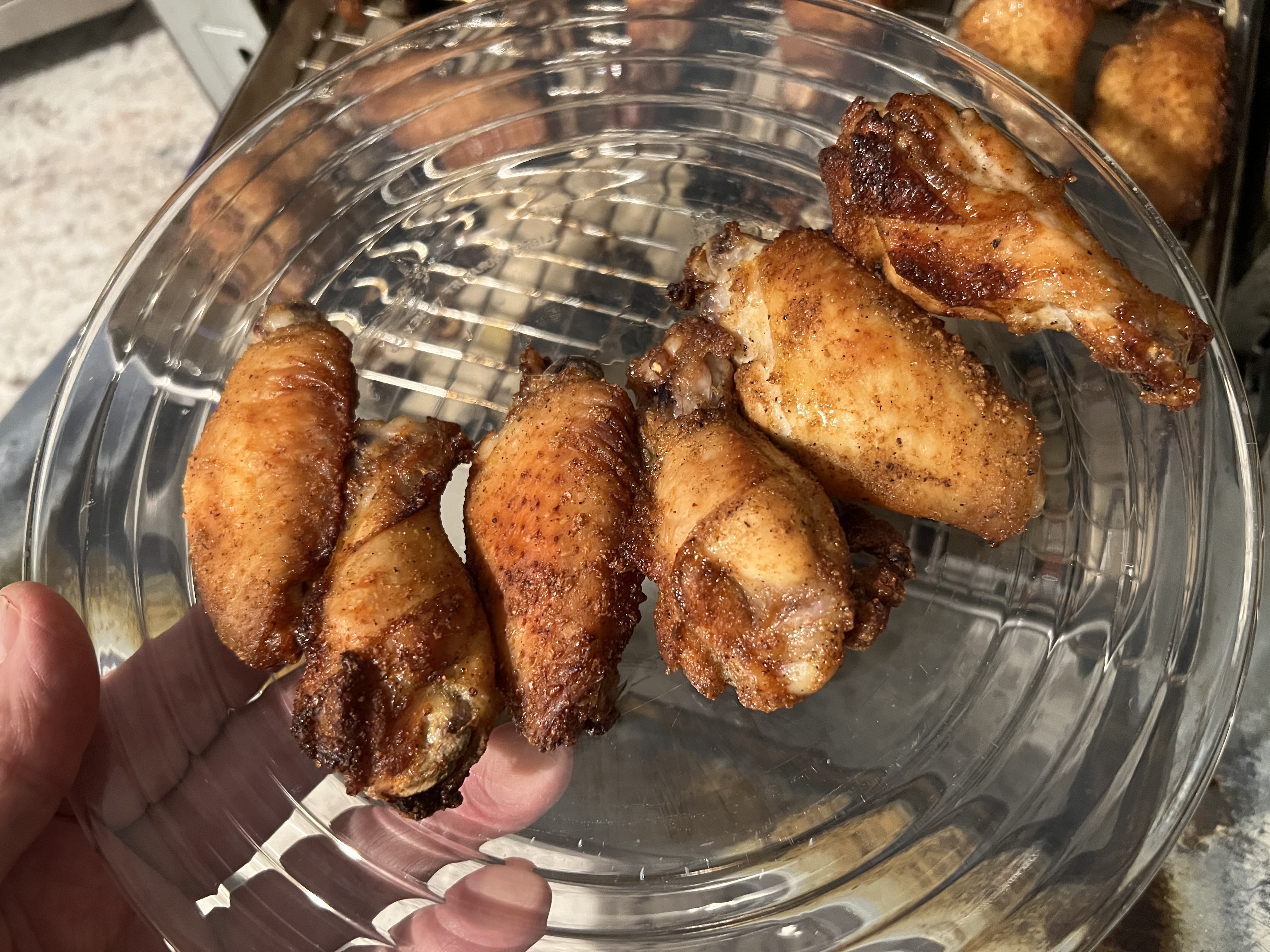
I love chicken wings. I could eat them every day. But I like to change up the flavors once in a while. So I often improvise. Sometimes, it’s…meh. But this last time, it was pretty tasty!
To keep calories a little lower–because, let’s face it, chicken wings are full of tasty fat and gristle–I usually bake my wings, not fry them.
4 tablespoons brown sugar 2 tablespoons granulated garlic 2 tablespoons granulated onion 2 tablespoons Kosher salt 1 teaspoon black pepper
I cut the tips off the wings and save them for future use, when I’m making chicken broth. And I like to cut the wings at the joint to get two pieces, but that’s a personal preference. Place all the wing pieces in a large plastic zip bag.
In a bowl, combine the rice vinegar, soy sauce, and sesame oil. Pour this into the bag of wings, seal it tightly, and squish it around so that the marinade gets to every part of the wings. Let this marinate for at least an hour at room temperature.
In a separate bowl, combine the brown sugar, garlic, onion, salt and pepper.
When the wings have marinated long enough, get a bowl large enough to hold all the wings. Transfer the wings to this bowl, and discard the used marinade.
Dust the wings with about 1/3 of the seasonings, and toss the wings to coat. Dust again and toss. Do it one more time, using up all the seasonings, making sure the wings are evenly coated.
Pre-heat a convection oven (or air fryer, for you younger kids) to 325. Place the wings on a raised rack above a baking sheet (I like to line the sheet with parchment paper to catch the drips) and bake for about an hour, until the wings are crispy.
Note: If you bake the wings at a higher temperature, you could burn the sugar, so low and slow is the way to go!
I posted an Instagram photo of soup I made the other day, and had quite a few friends ask me what the recipe was. My daughter got hit with a cold a while back, and I knew only one thing would help: a bowl of my homemade chicken soup. But rather than adding pasta or potatoes, I decided to give it an Asian kick. It was simple, delicious, and soothing.
Making the ingredients for a great bowl of chicken soup, or wonton soup for that matter, takes a little time. But once you’ve got them, you can freeze them, so that putting them all together takes no time at all.
The key to a great chicken soup is making your own chicken stock. Let’s be honest, nothing out of a carton can possibly compare. For one thing, I buy the best quality pastured chicken I can get. Here in Rhode Island, that means buying from local farms when available.
I prefer buying a whole bird, roasting it for dinner, then removing all the meat from the carcass before I start making stock. If I’m making fried chicken for dinner, I’ll cut the raw bird up into pieces, then drop the raw carcass into a pot to start the process. Either way–a cooked bird or raw bird works great. (Just remember that a cooked bird can have some salt on it, so you don’t want to add any.)
Making chicken stock is incredibly easy. It just takes time, which is an ingredient many people don’t have enough of. Honestly, though, if you’ve got time to binge-watch your favorite show on Netflix or watch a football game on a Sunday afternoon, you can make stock. If you can’t make stock at the same time you’re making dinner, simply put the carcass in a Ziploc bag and toss it in the freezer until you’ve got more time.
If you don’t want to deal with cutting up a chicken carcass, buy a pack of chicken parts. It doesn’t really matter what parts you use, as long as it’s something on the bone. You want all that good fat and gelatin.
Once you’re ready to make stock, fill a large pot with clean, filtered water. Drop in the chicken carcass or pieces. Chop an onion in half, 2 or 3 celery spears, and 2 or 3 carrots. (Wash the carrots well, or just peel them.) Everything goes in the pot. Turn the burner on high, and let it come to a boil. If it’s boiling too hard and spilling over, reduce the heat to medium.
Let it go for at least an hour, two or three is better. If it looks like too much water has evaporated, simply add more. How intense you want your stock is really up to you. You can reduce it like crazy to make something very concentrated, or you can cook it down to a point where it’s user-friendly right away. The best way to know is to taste it along the way.
When making your stock, feel free to add any other ingredients you like. But I stick with only the onion, carrots, and celery–avoiding garlic, salt, bay leaves, and other flavorings–adding them only when I use the stock at a later time in a particular soup or recipe.
Once the stock is done, I let it cool a bit before I strain it and pour it into individual plastic containers with tightly sealing lids. (Don’t use glass if the stock is going into the freezer!) Then it’s off to the freezer until I need to use it in a recipe.
When it’s time to make soup, I run the frozen container under warm water, and drop the frozen “block of stock” into a sauce pan, adding a little water to it, setting the burner on medium to thaw. Then it’s time to decide on what I want to put in my soup. Most of the time that simply means using whatever I’ve got in my fridge.
When I made my almost-instant wonton soup the other day, I had some carrots and organic kale in the fridge. (I only buy organic kale. The regular stuff is loaded with pesticides.)
I peeled and thinly sliced the carrots, and I removed the stem from the kale before chopping it up. I dropped the veggies in the soup and brought the heat up to high to get it to a boil.
If I’m using potatoes, I usually peel and chop them into small cubes and add them raw to the boiling stock. If I’m adding chicken, I usually choose already-cooked chopped breast meat. And if I’m using pasta, I use dry or pre-cooked, but I only add the pre-cooked pasta at the very end to avoid it turning mushy. When making chicken noodle soup, I add a pinch of salt and, for flavor, a pinch of dried bouquet garni to the pot.
With my wonton soup, I skipped the pasta and potatoes, because I had a package of dumplings in my freezer. A half-dozen of them, still frozen, go right into the boiling water. They’re fully cooked in about 5 minutes.
These dumplings were delicious in my soup.
Once the dumplings are cooked, the soup is done! I turn the heat off, and add a couple of drops of sesame oil to the soup, mixing it in well.
Once I’ve placed the soup in the bowl, a few splashes of soy sauce, and it’s ready to serve.
Growing up in a Lithuanian family, there was a small group of foods that I had to love to survive, since they constantly appeared on the dinner table: potatoes, cabbage, mushrooms, herring, and beets. Fortunately for me, I loved them all, despite my Mom’s desire to boil everything to death.
One of the many uses for beets, besides a cold summer soup and a hot winter soup, was pickling. Pickled beets are an excellent side dish for any hearty meat dish. (I love ’em with kielbasa!) Store-bought pickled beets pack way too much sugar in every jar, so it was time to make my own. The addition of hard-boiled eggs to the mix is a personal one. If you don’t like ’em, leave ’em out and add more beets.
A real time saver is a product called Love Beets, which you can find in any supermarket. If you use them, you can skip the roasting of the beets altogether.
4 to 8 beets, scrubbed (your favorite variety)
1 cup apple cider vinegar
1 cup water
3 garlic cloves, crushed
3 tablespoons sugar
2 teaspoons whole black peppercorns
1 tablespoon Kosher salt
1 onion, sliced (I like Vidalias)
4 hard-boiled eggs, peeled (optional)
6 fresh dill sprigs
Pre-heat the oven to 450.
If you’re using fresh beets, wash them well and then wrap the beets in foil and roast them for about an hour, until tender. When they’re cool enough, carefully peel and quarter them. (Otherwise, just open the pack of Love Beets and you’re ready to go.)
In a medium saucepan, combine the vinegar, water, garlic, sugar, peppercorns and salt. Bring it to a boil and simmer over moderately high heat, stirring until the sugar has dissolved. Let the pickling liquid cool to warm, about 15 minutes.
In a heat-proof glass jar or container, layer the beets, onion, eggs (optional) and dill sprigs and then cover them with the pickling liquid. Put the lid on the jar.
Let the jar stand at room temp for 2 hours, then place it in the fridge overnight.
They stay fresh for a week, but they won’t last that long!
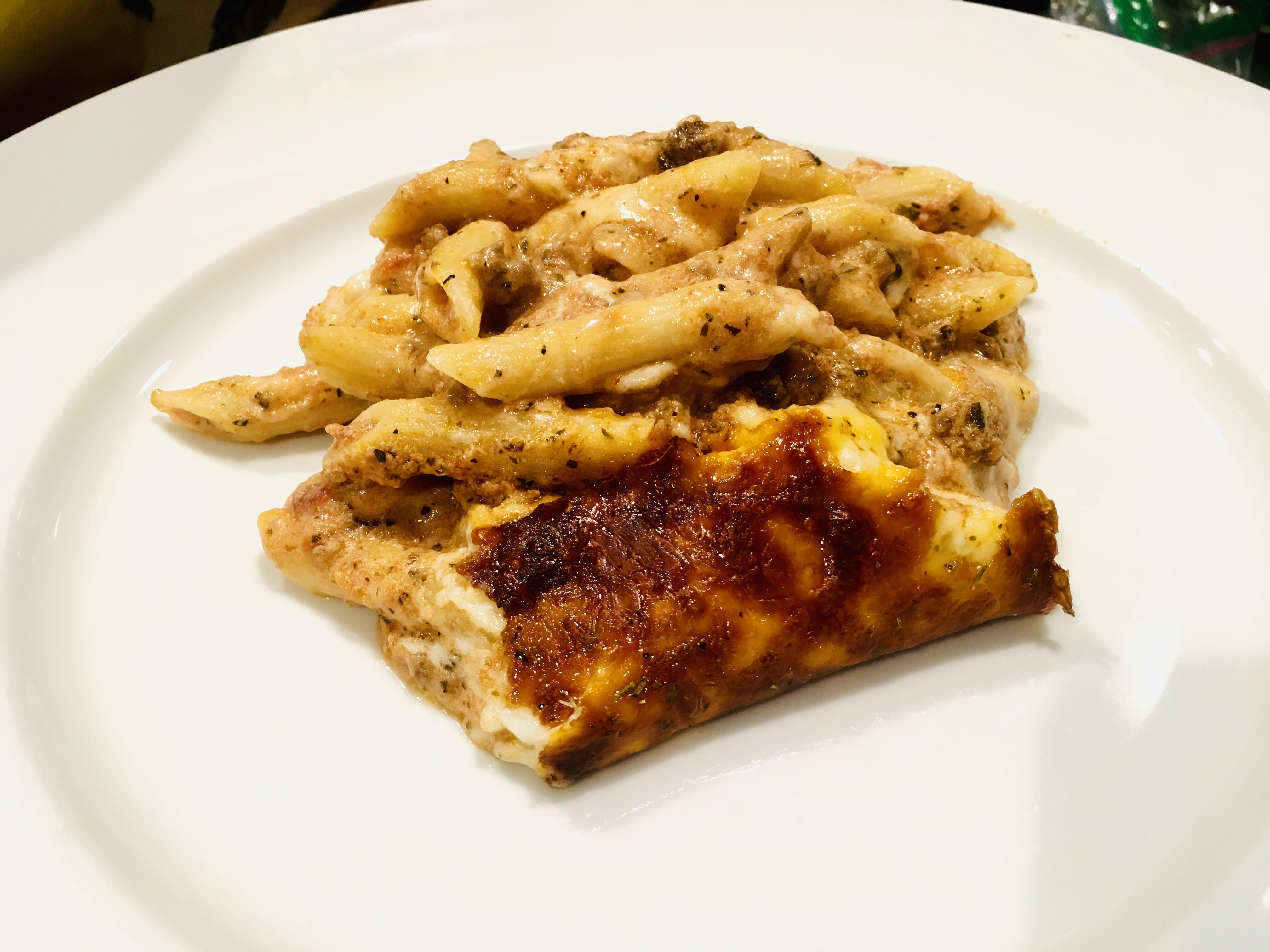
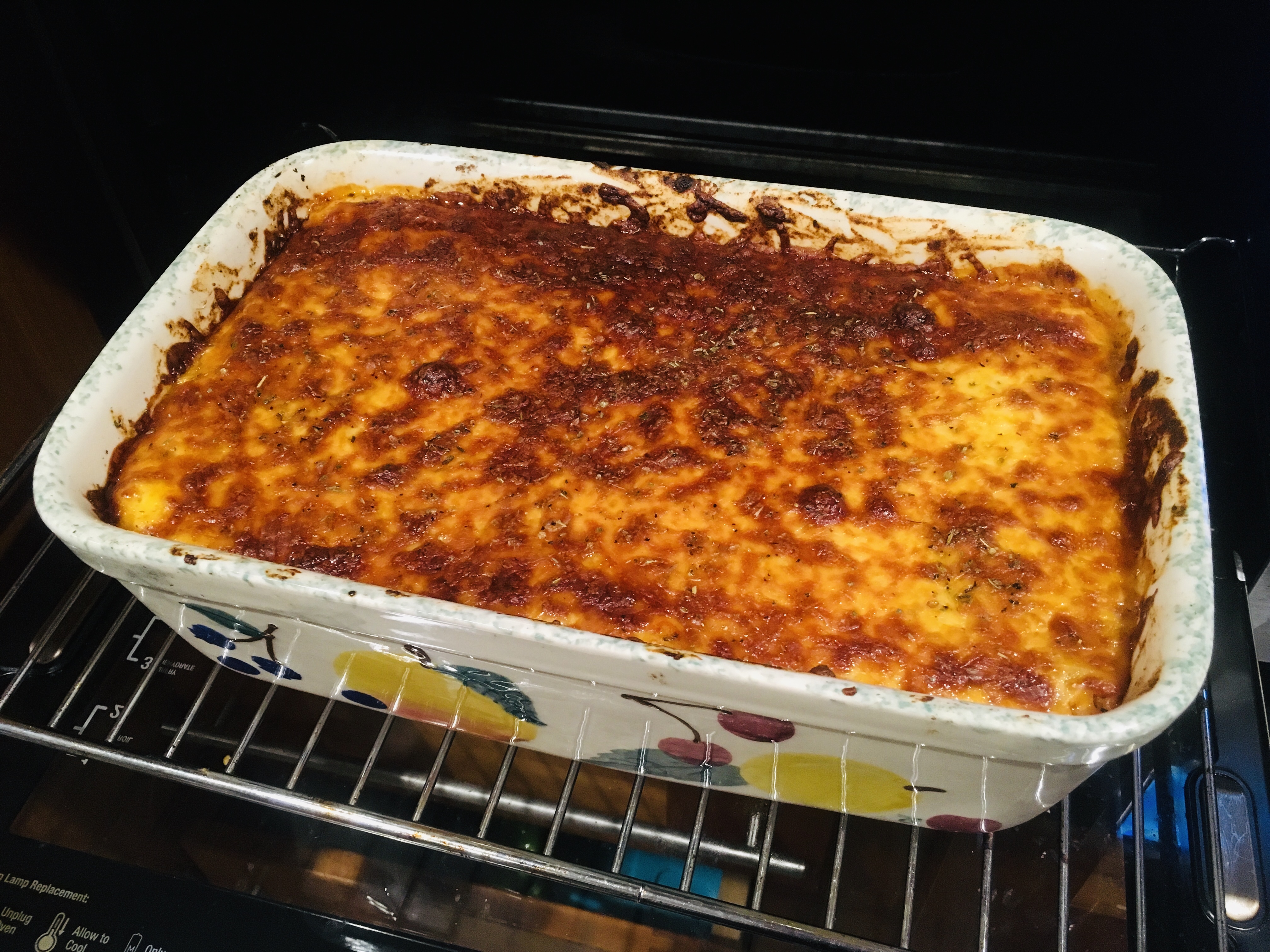
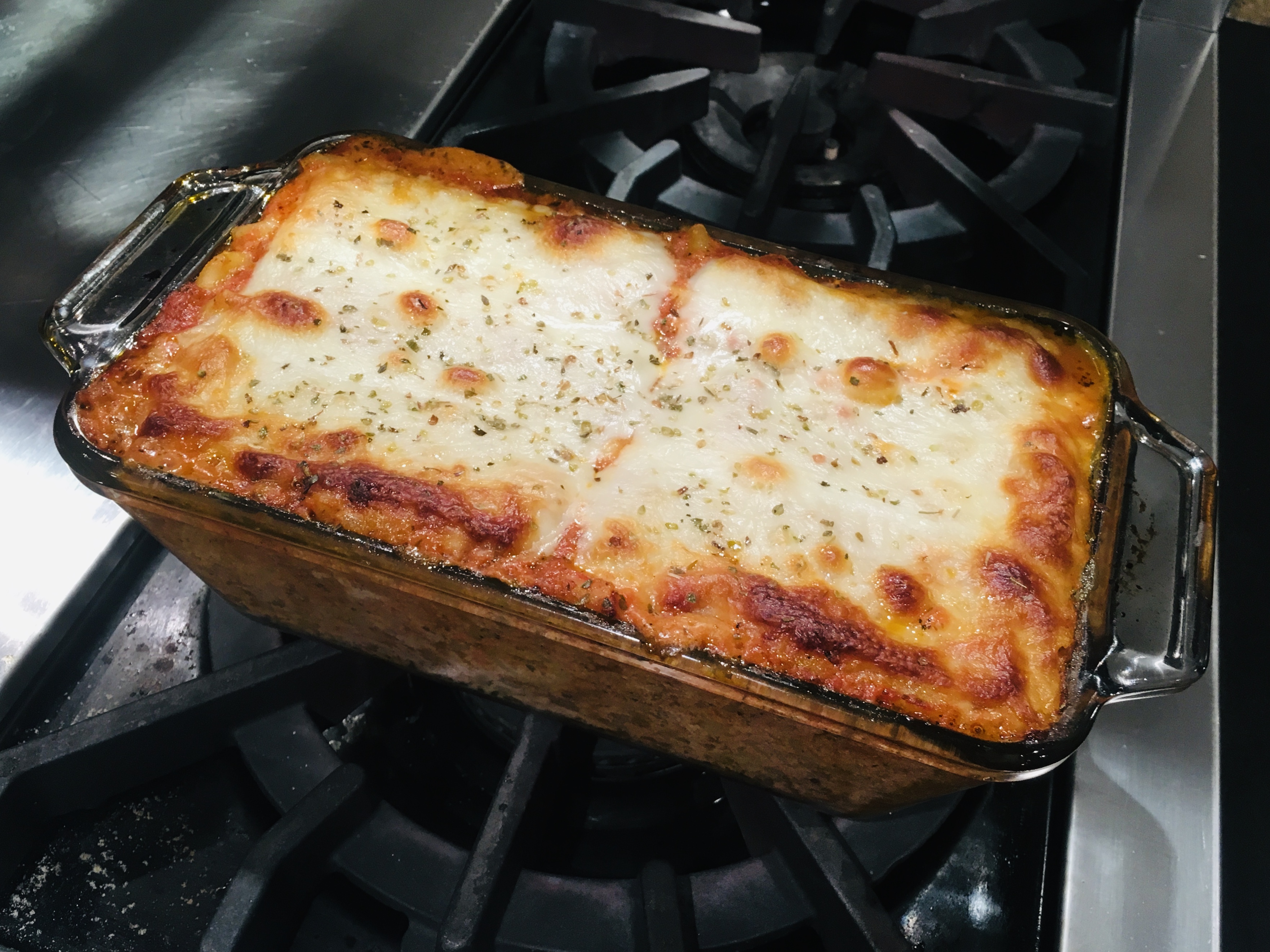
My baked ziti recipe is always a crowd pleaser. This time, I used rigatoni pasta, because that’s what I had in the cupboard, but use whatever shape you like.
As a teenager growing up on Long Island, I worked long hours at a local Italian restaurant called Pizza City East in Plainview. (The original Pizza City was in Ozone Park, Queens.) Though the pay sucked, I made some important friendships that have lasted to this day. I also learned many Italian cooking basics: how to open clams for red and white clam sauce, the secrets of great pizza dough, the art of a perfect espresso, and how to make massive quantities of baked ziti.
When I got older and I shared an apartment with my buddy, Don, we would regularly invite a large crowd of people over for a party, and a huge tray of baked ziti was an inexpensive and hugely popular way to feed a crowd that was doing some serious drinking.
The basic ingredients of baked ziti are the same as lasagna, the main difference being the wetness factor. If you make lasagna too wet, the thing will fall apart when you try to slice it. But baked ziti is meant to be sloppy, and it actually shines in its incredible gooiness!
My baked ziti consists of a meat sauce and 4 cheeses (ricotta, mozzarella, provolone, and Parmigiano Reggiano) using pasta that is boiled much firmer than al dente. Technically, I like to use penne, not ziti. It’s firmer, and really works well with this recipe. And there are plenty of great pasta choices out there for gluten-free diets. Our favorite brand of GF pasta is Garofalo.
I used to add a béchamel sauce to this recipe, but I’ve found that plain milk does the job just as well. Béchamel is better used in lasagna, where you want a bit of a thickening agent to keep it firm.
Gooey and delicious!
Meat Sauce…
1 small onion, finely chopped
1 small carrot, finely chopped
1 lb. grass-fed ground beef or pastured pork, or a combination of both
1 tablespoon dried parsley
2 teaspoons dried oregano
1 teaspoon dried basil
1 teaspoon salt
1 teaspoon granulated garlic
1/2 teaspoon black pepper
1 28-oz. can whole tomatoes
extra virgin olive oil for sautéing
Heat a tablespoon or 2 of olive oil in a large pan and sauté the onions until translucent. I finely chop the carrots by peeling them all the way down until there’s nothing but a pile of peeled pieces, then chopping them up so small, they almost melt into the sauce. Add the carrots and cook for 2 minutes. Add the beef (or pork) and cook the meat until it browns. Add the parsley, oregano, basil, salt, garlic and pepper and mix well.
Empty the can of tomatoes into a blender and blend it until smooth. Add this to the pan and mix well.
Cook the meat sauce for about 10 minutes, then remove it from the heat and set it aside.
In a bowl, combine the provolone, ricotta, mozzarella (save a little bit to sprinkle on top at the end), Parmigiano Reggiano, and milk. Add this mixture to the meat sauce and mix well.
For baked ziti, I use a deeper pan than I would for lasagna, about 4″ deep.
Boil the pasta in a pot of salty boiling water until very firm…firmer than al dente. Drain the pasta and pour it into the pan. Add the cheese and sauce mix and mix it all really well.
Smooth the top of the ziti mix flat with the back of a large spoon, then sprinkle the remaining mozzarella evenly over the top. Sprinkle a little oregano on top, and place the pan in the oven to bake for 30 minutes, or until the mozzarella on top is a beautiful golden brown.
As I mentioned previously, Stolifiled for bankruptcy in 2024, and now they’re getting rid of their USA inventory. I grew up with this vodka, so I’m making sure I have a supply of it at home before it’s all gone.
I consider Stoli elit to be the best vodka out there, so I’ve already secured my stash! (I never mix with it.)
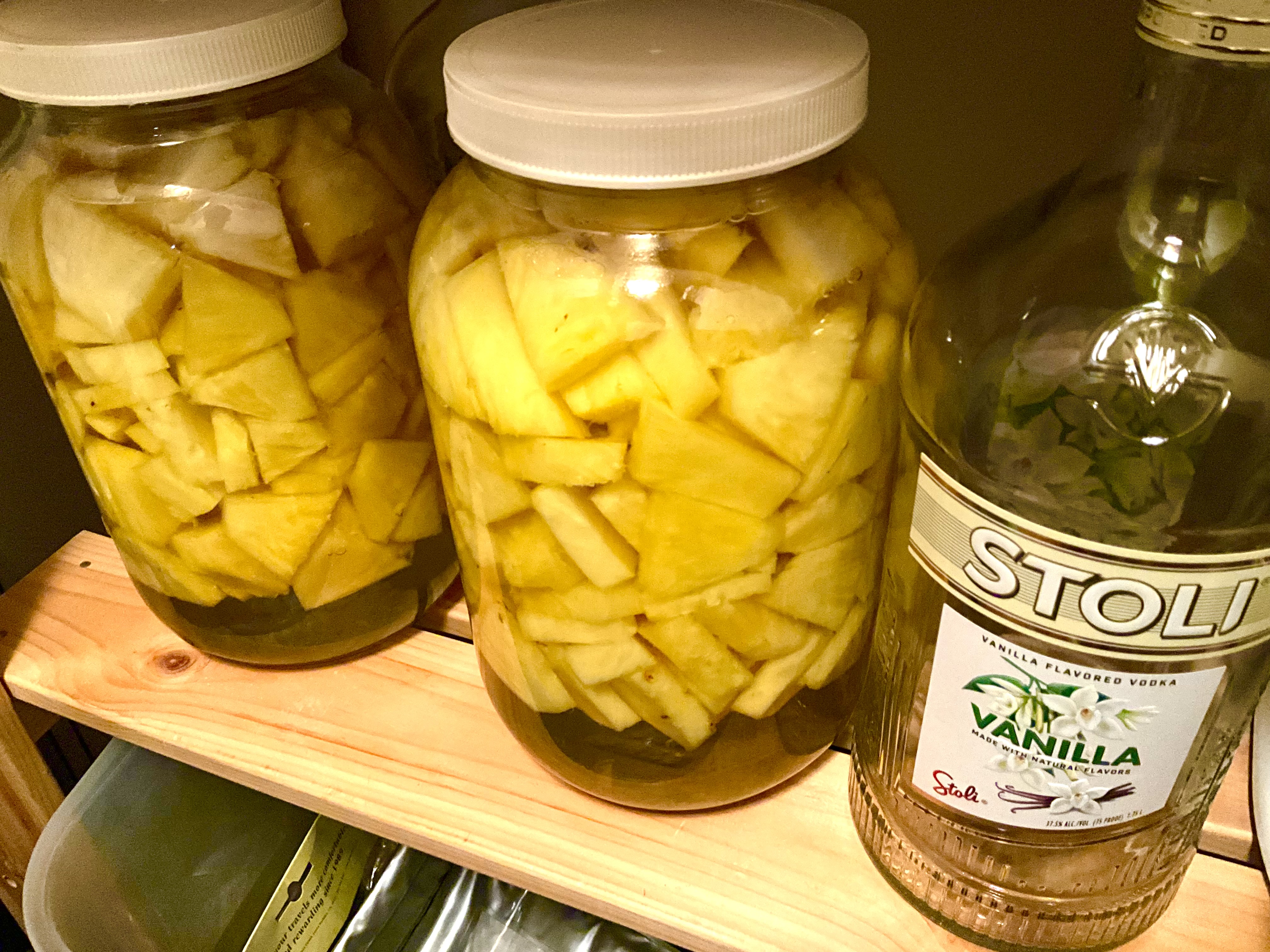
And I consider Stoli Vanillato be the best vanilla vodka you can find. This recipe , which I’ve been making for many years, is still my favorite way to use it in a cocktail.
The inspiration for this incredibly easy to make cocktail is the famous Capital Grille Stoli Doli. I think I’ve done it one better with my Velvet Elvis.
A Stoli Doli is simply Stoli vodka that has been infused with fresh pineapple. If you sit at the bar at the Capital Grille, you won’t be able to miss the very large jar of freshly-cut pineapple pieces swimming in vodka. They literally pour it “from the tap,” and serve it straight up, like a martini, or on the rocks. It’s delicious, and I’ve certainly had my share of them.
I decided to make my own at home one day, to serve to my friends at an upcoming party. But to my disappointment, I didn’t have any Stoli vodka in the house. (An embarrassment to most Lithuanians.) But…I found a bottle of Stoli Vanilla, and it changed everything! I used that instead of regular Stoli and I came up with a sweeter, smoother drink that is now legendary among my friends.
Find a gallon-sized glass jar with a lid. Peel, core and slice the pineapples and drop the pieces in the jar. Pour the vodka in, mix well, and seal the jar. Keep it at room temperature for 7–10 days, giving it a gentle shake every day.
After 7–10 days (don’t worry…a little longer won’t hurt anything), strain it, squeezing the pineapple pieces to get every bit of liquid out. Discard the pineapple pieces. (As much as you might think they would be fun to munch, they’ve given up all their flavor to the cocktail, and taste terrible!)
Keep the Velvet Elvis refrigerated. Serve with rocks (or 1 big rock!), or shaken and poured into a martini glass.
If you’re like me and you grill outdoors year ’round, this is for you. But in case of nasty weather, this works indoors as well.
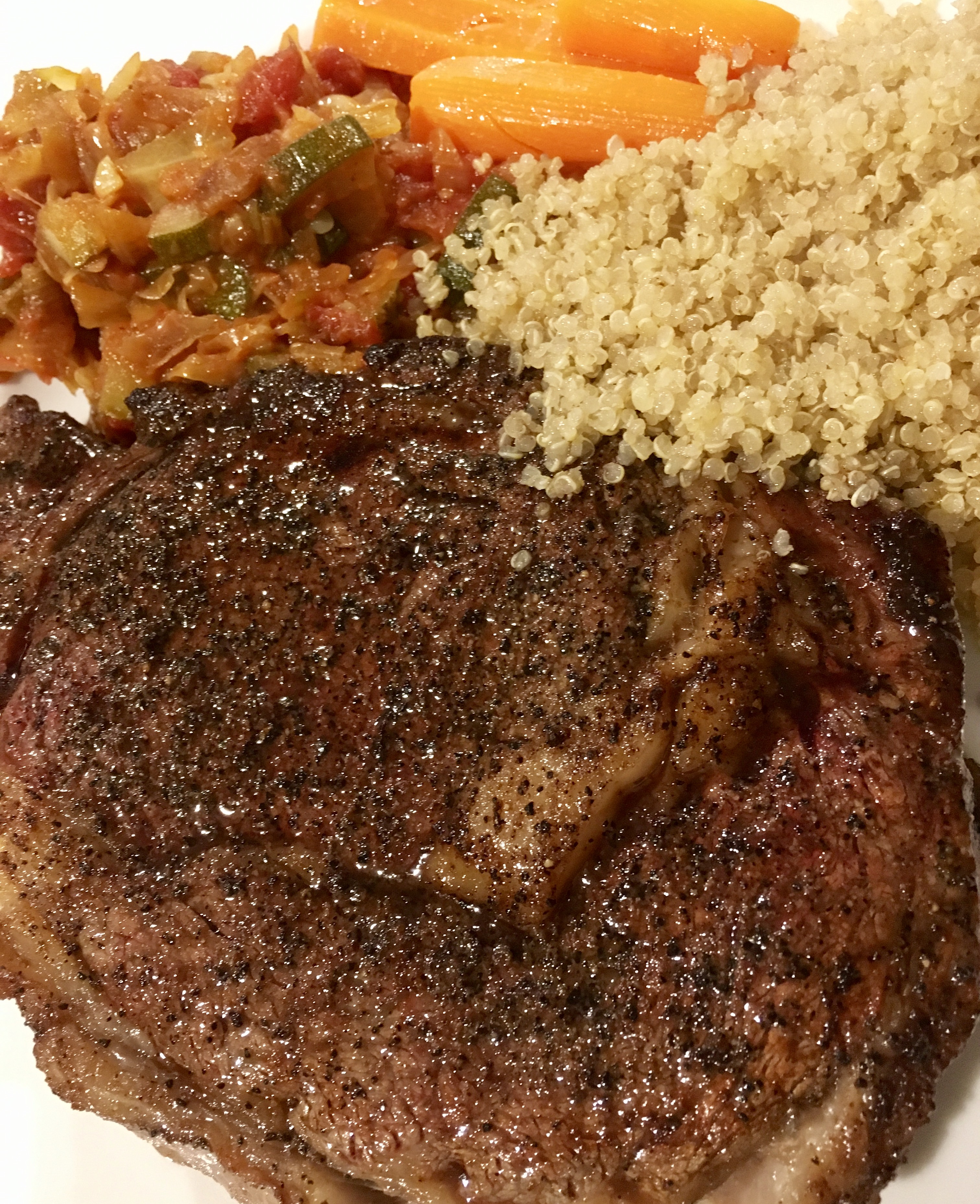
I rarely order beef at a restaurant, because I can usually make a better steak at home. For one thing, I use humanely raised grass-fed beef, something few restaurants offer. And I can cook it for less than a third of the price of a steakhouse. Granted, most steakhouses dry-age their beef, a time-consuming process of taking slabs of beef and keeping them in a fridge for weeks until a certain amount of moisture is sucked out of the meat, intensifying the flavor. I’ve done that at home in my fridge, but it takes a lot of time and effort.
There is one steak that I couldn’t match for the longest time, and that was the Capital Grille’s bone-in Kona crusted dry-aged NY strip. I would have dreams about that steak! It was time to find a way to make something that would satisfy my craving for that amazing steak at home.
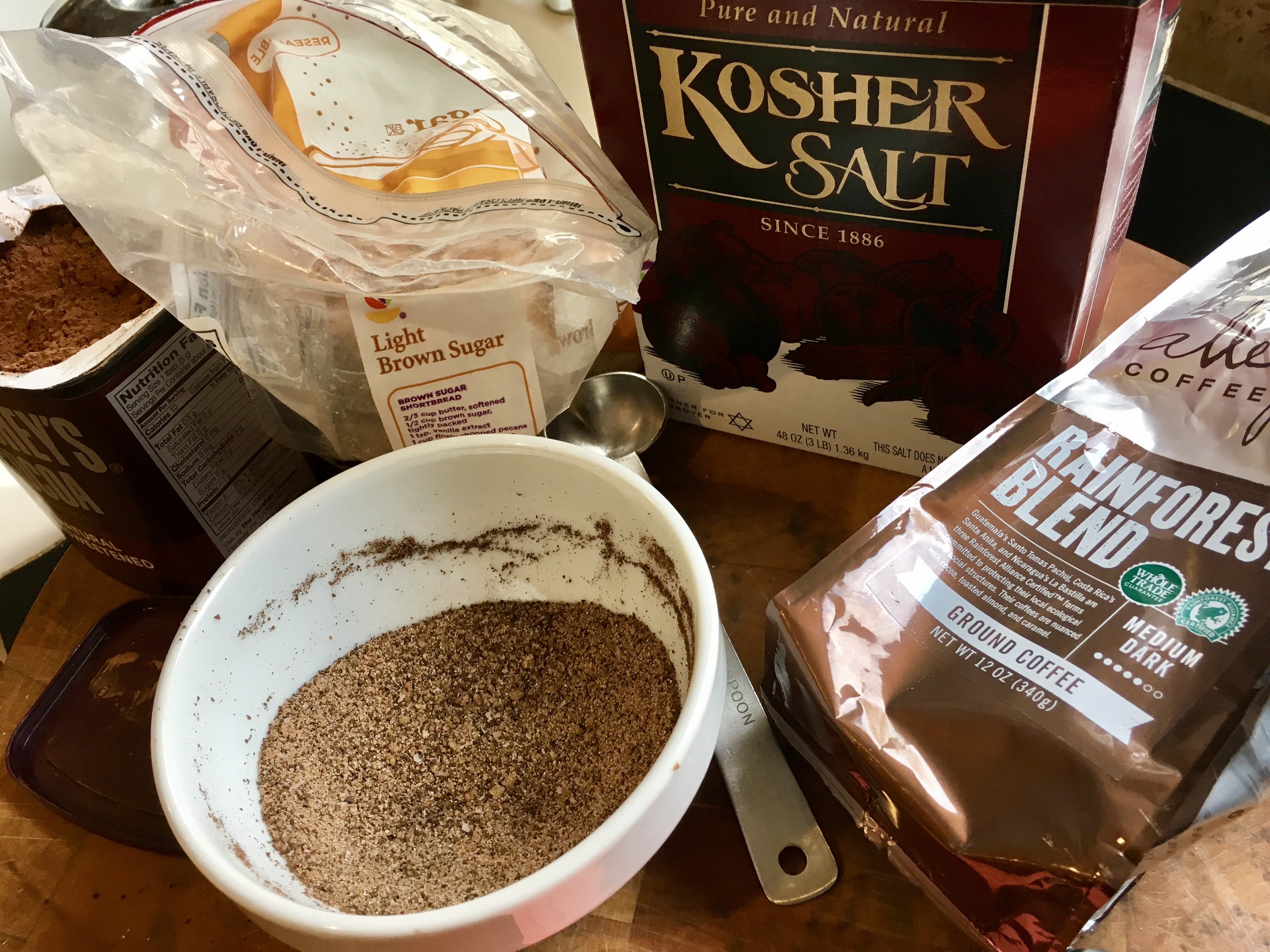
Looking at a variety of coffee rub recipes on-line, I started the slow and steady process of combining ingredients in just the right proportions, tasting as I went. What I came up with really accentuated the flavor of the beef I was cooking, better than I had imagined!
3 tablespoons brown sugar
1 tablespoon Kosher salt
1 tablespoon ground coffee (use your favorite)
1 teaspoon granulated garlic
1 teaspoon granulated onion
1 teaspoon unsweetened cocoa powder
Combine the ingredients, mixing well, and keep them in a tightly sealed container at room temperature.
The secret ingredients are the brown sugar and the cocoa. The brown sugar gives the steak a caramelized crust when cooking, and the cocoa rounds out the flavors and gives the beef an extra “umph!”
When using, sprinkle the seasoning liberally on both sides of the steak before cooking. When cooking indoors, I like to add bacon fat to a hot cast iron skillet, searing the steak on all sides, and then finishing it in the oven. But let’s face it: nothing beats the grill!
A side note : I’m going to a party today where I was asked to bring pulled pork. I used this rub on the pork shoulder, and it came out fantastic! It also works really well with chicken!
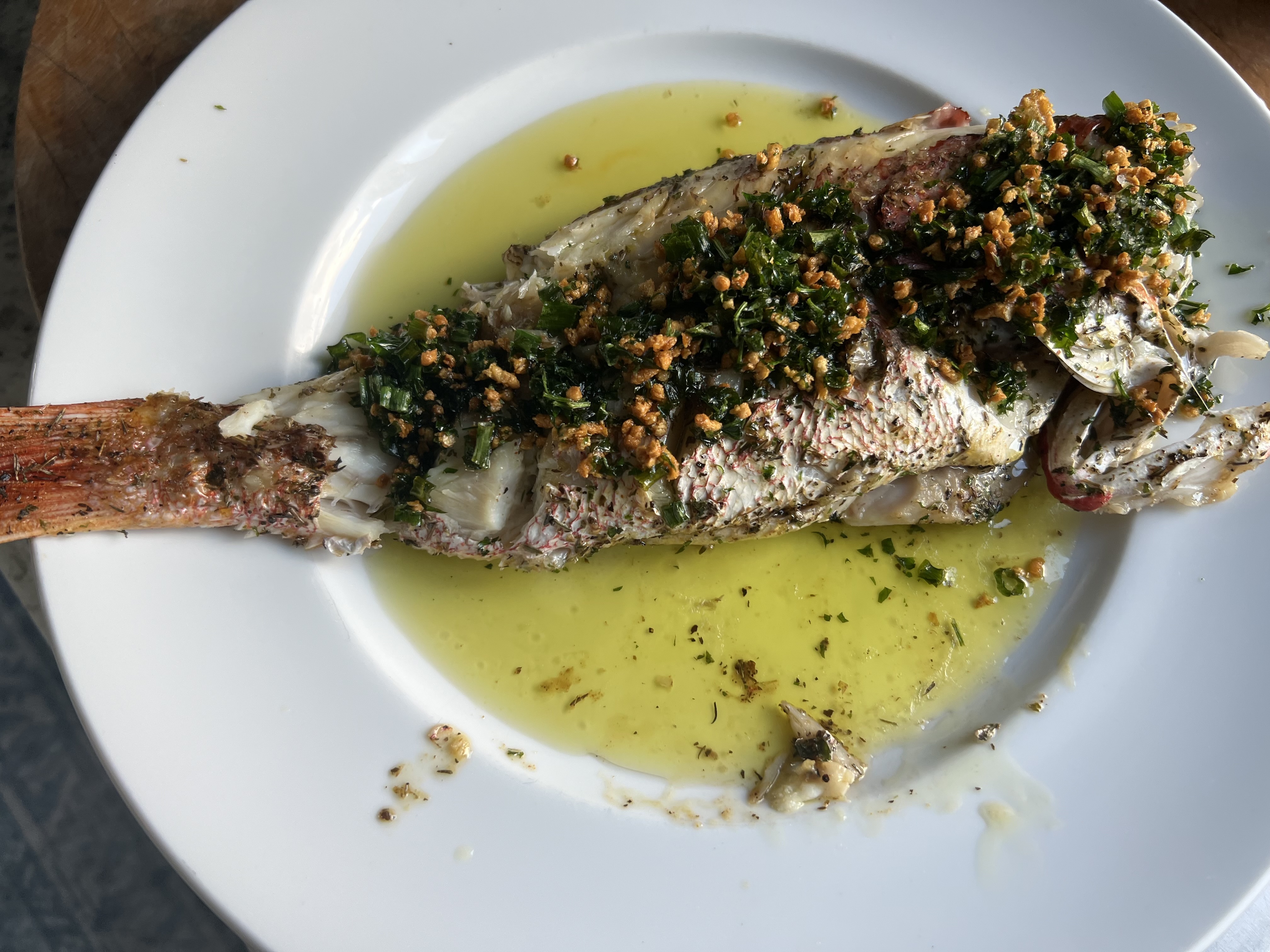
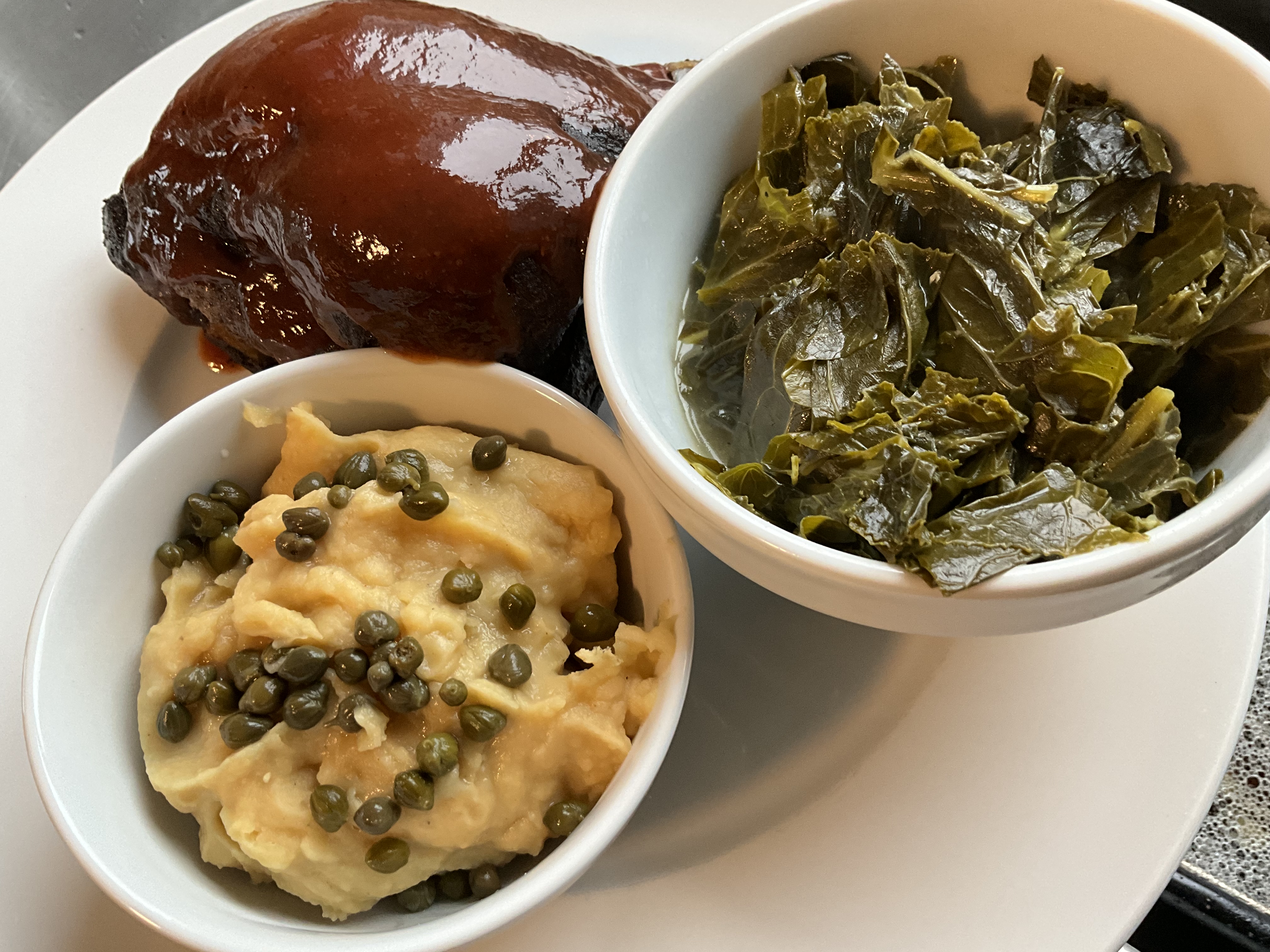
Whole red snapper. I almost always order a whole fish when I see it on the menu at a restaurant. But I’ve never tried cooking one at home until now. My fishmonger cleaned and scaled the fish, so I just rubbed it with extra virgin olive oil, salt and pepper and put it on a sheet pan in a preheated 350° oven. I cooked it until the fish registered 140° on a thermometer. And in a pan on the stovetop, I made a variation of aglio olio: extra virgin olive oil, lots of chopped garlic, chopped parsley, and some scallions. Fried it up until the garlic was crispy and poured it on top of the fish.That may not look like ribs in the corner, but it’s a nice, fat, Berkshire pork rib with my homemade barbecue sauce. Smoked it with hickory for about five hours. Found some organic collards at Whole Foods, so I cooked them down, throwing leftover chicken parts into the pot, to give it some flavor. When it was time to serve, I reheated them, seasoning with salt and pepper. Kept it simple. And finally, what they call ‘fava” in Santorini, Greece. It’s actually yellow split peas that I boiled in a pot of water and chicken stock, with an onion thrown in. Cooked it all down until it became a porridge, and then I put it in the blender to whip it up. Served with capers.And let’s talk cocktails. I’ve been a fan of Vesper martinis forever, but I’m getting tired of Lile’s, and since I don’t use it that often, it goes bad in the fridge. Same thing with Cocchi Americano. (Those are the two fortified wines that most people will argue back-and-forth about when it comes to what belongs in a Vesper.) But I have more use for an excellent vermouth so my “faux” Vesper is three parts gin, one part vodka, and just a rinse of the glass with the vermouth. Twist of lemon.
Chimichurri is a garlicky, herby green sauce usually used with grilled meats. This pesto-like condiment originated in Argentina and is also commonly used in Nicaragua and Uruguay. Though some recipes include cilantro, many people insist the original is made only with parsley. To pack an extra punch, chimichurri also makes an excellent marinade for grilled meats.
My buddy, Lee, a chemist and avid chimichurri fan, is the inspiration for my version of this sauce. It’s incredibly easy to make. Just make sure to use fresh ingredients, and it’s always a good idea to wash all the veggies before using, even if you’re going organic.
1 bunch flat-leaf parsley, chopped 1/4 cup water 1 medium onion, chopped 3 cloves garlic, minced 3–4 tablespoons fresh oregano, leaves only (or 1 tablespoon dry) 1 tablespoon paprika 1 teaspoon crushed bay leaf 1 tablespoon coarse sea salt 1 teaspoon freshly ground black pepper pinch red pepper flakes 1/4 cup red wine vinegar 1/2 cup extra virgin olive oil
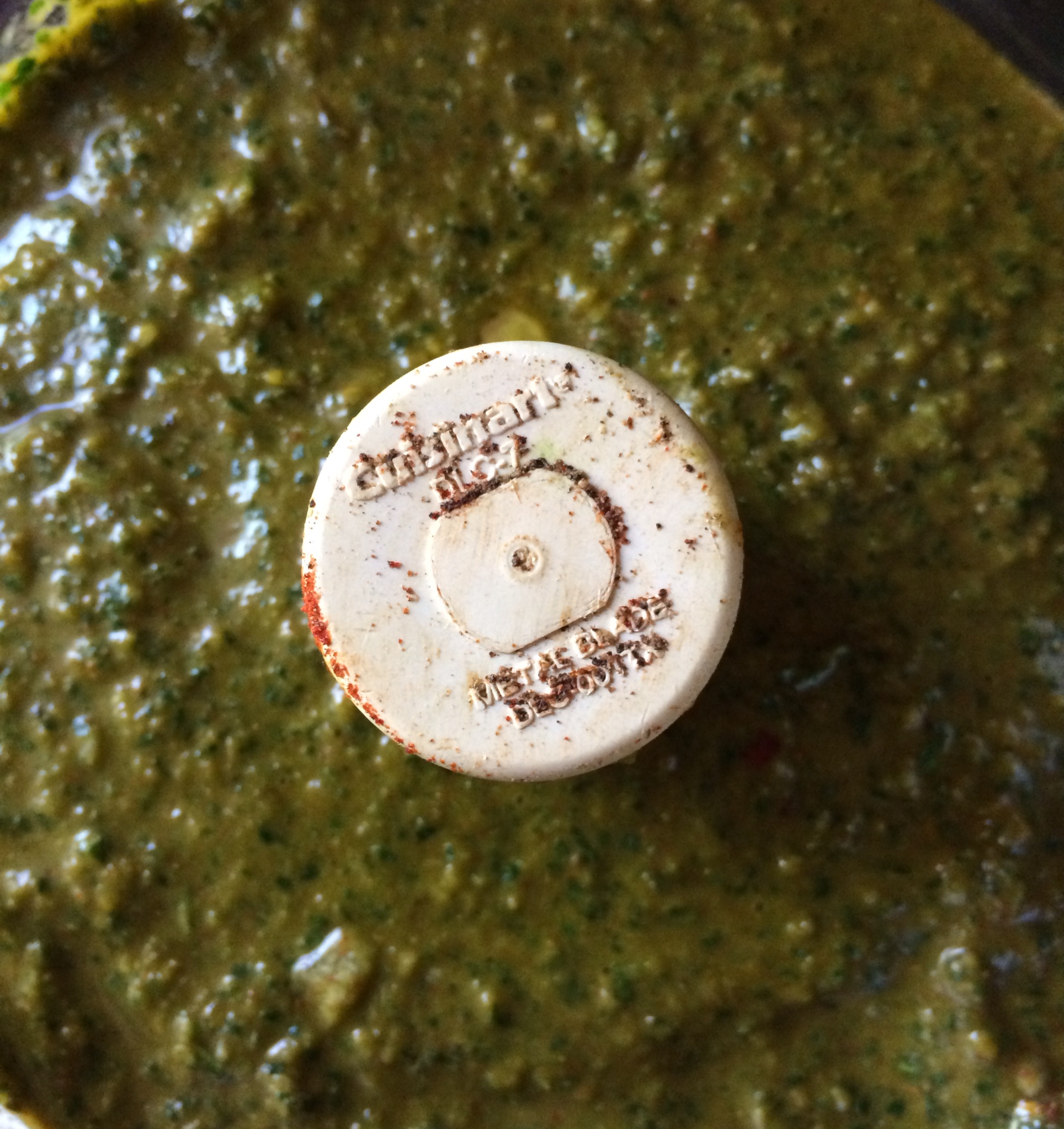
Place all the parsley and the water in a food processor and begin to chop, pulsing for a second at a time. When the parsley is in small pieces, stop pulsing and add the remaining ingredients, except the vinegar and olive oil. Start the processor on a full run now, and slowly pour in the vinegar, then the olive oil. Try not to make it too smooth…leave some tasty bits. Allow it to rest for at least 30 minutes, but overnight in the fridge is best.
I marinated 2 grass-fed beef ribeyes in chimichurri overnight, simply smearing the meat with the sauce, and placing the ribeyes in a resealable plastic bag in the fridge. The next day, I let the beef come to room temperature and I wiped the marinade off. I discarded the marinade, then I re-seasoned the beef with a little salt and pepper and pan seared them, finishing them in a 350-degree oven until medium-rare. A little dipping of fresh chimichurri on the side.
Grass-fed beef ribeyes with chimichurri
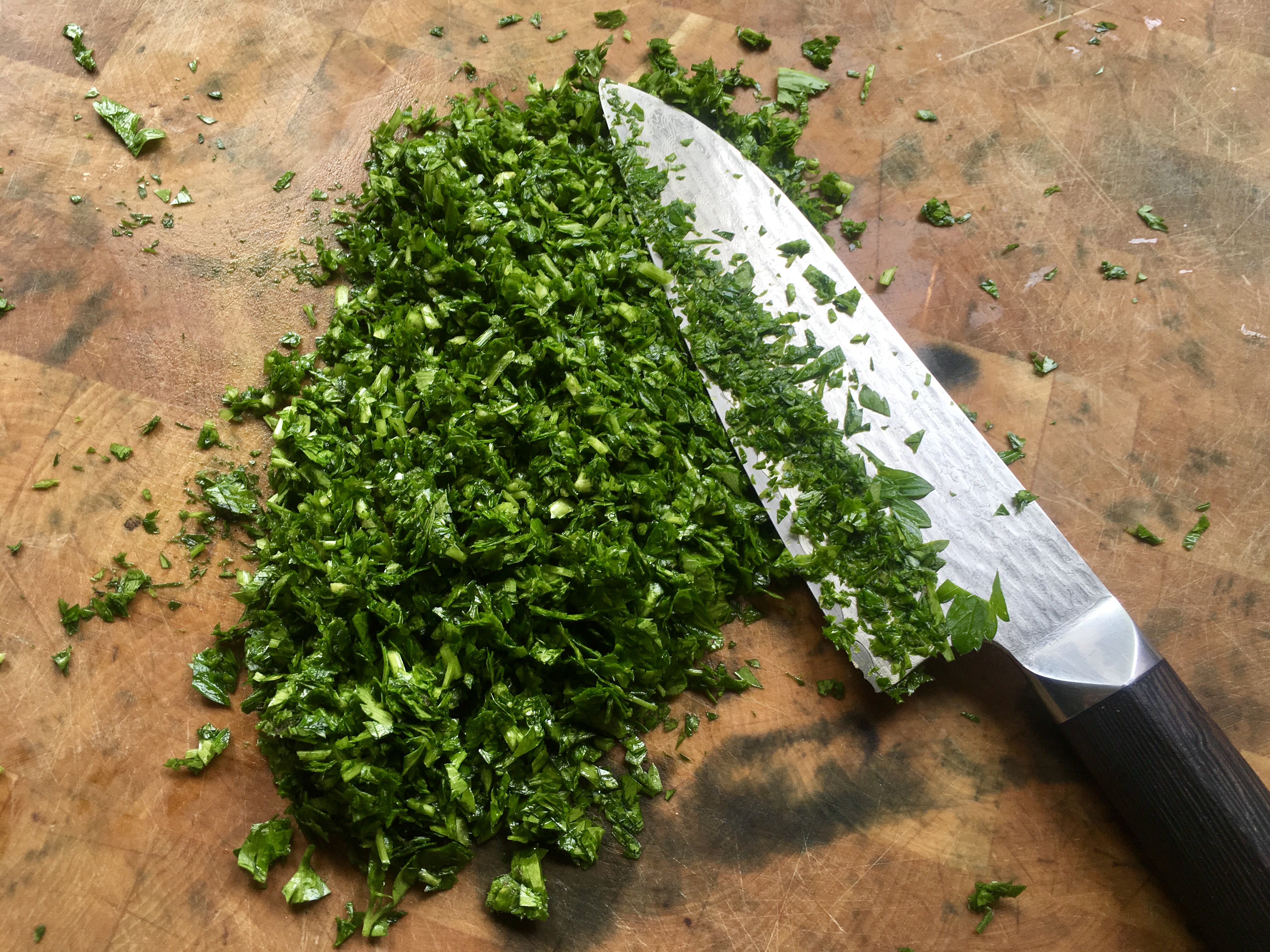
Lots of fresh parsley is key!
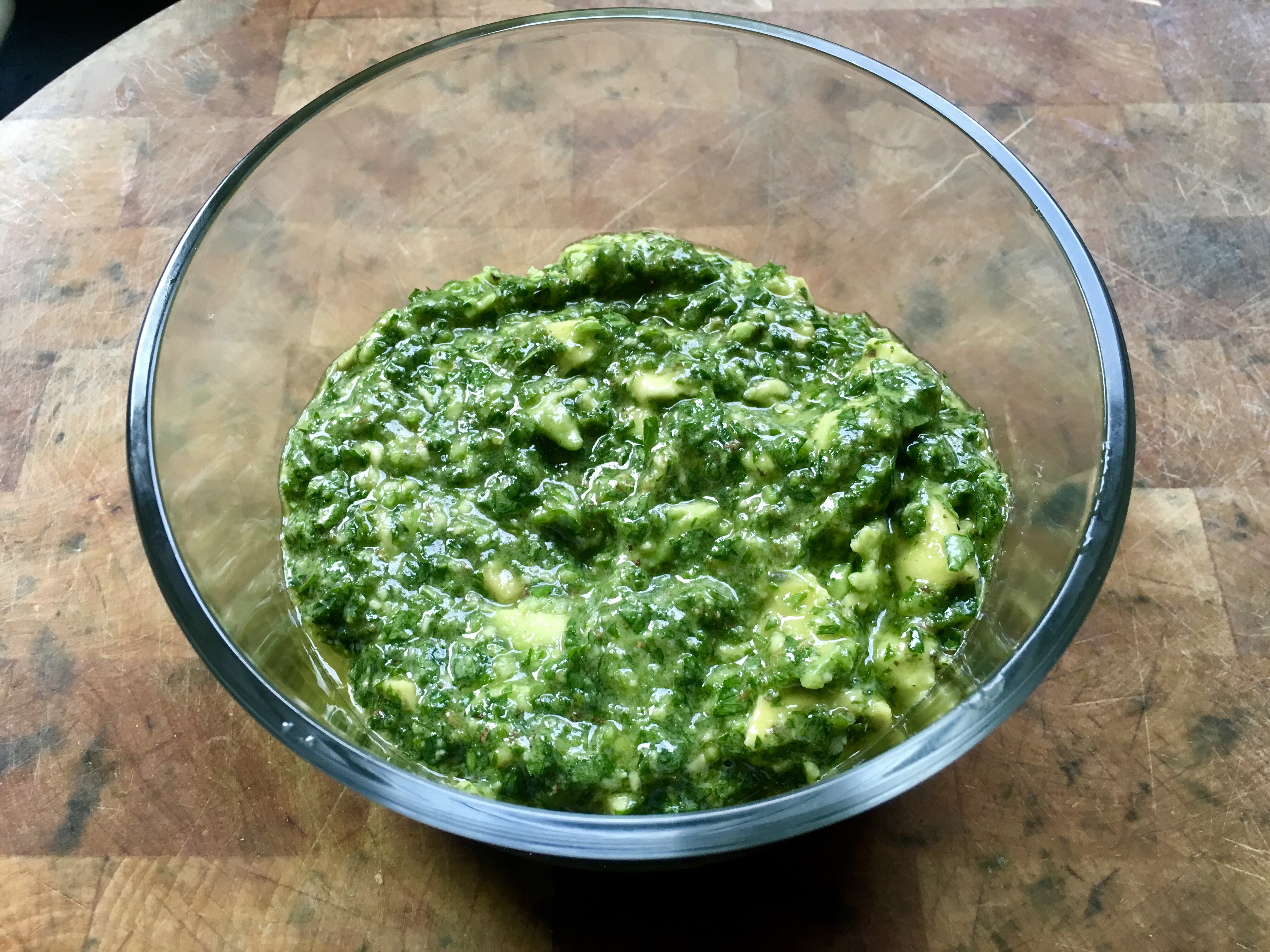
I recently saw a recipe that had some chimichurri ingredients but also included avocado, and thought: now that sounds tasty! It’s not the classic recipe, of course, but it is delicious! I can see this used as a dip for veggies or chips. The fresh lime juice keeps the avocado from browning.
1/3 cup extra virgin olive oil 1/4 cup fresh lime juice 1 garlic clove, minced 1 cup finely chopped parsley 1 tablespoon finely chopped oregano, or 1 teaspoon dry oregano 1 Hass avocado, peeled, pitted and diced Kosher salt
In a medium bowl, whisk the olive oil with the lime juice, garlic and a pinch of salt. Stir in the parsley and oregano and let it stand at room temperature for 30 minutes. Fold in the avocado and season with salt.
Avocado “chimi.” Chunky and tasty.
This “chimi” can be refrigerated for up to 4 hours.
When it comes to grilling, lamb is often overlooked. Some folks think it tastes too gamey, which can be true with grass-fed lamb that comes from New Zealand or Australia. Although you can’t beat their strict quality standards, the flavor can be intense.
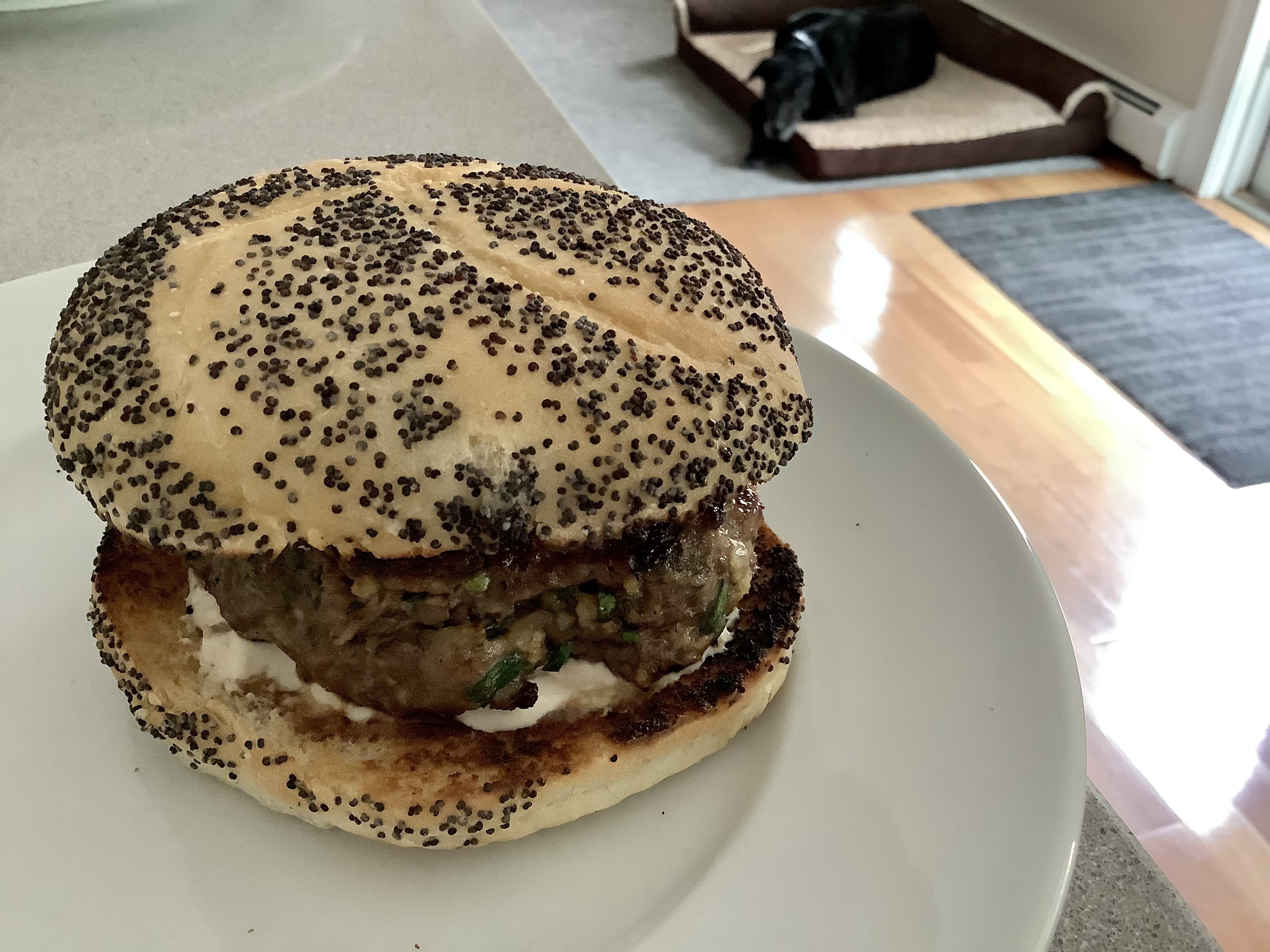
I don’t mind that intense lamb flavor in a chop, but when I make lamburgers, I like to mix ground beef with ground lamb to give it a milder flavor. And when I cook them over hardwood charcoal, the flavor is outstanding! Even seared in a cast iron skillet and finished in the oven, these burgers are awesome.
1 lb. ground lamb
1 lb. ground beef
1/2 onion, minced
1 tablespoon Dijon mustard
1 teaspoon each fresh parsley, mint, and dill, finely chopped
1 teaspoon dried Greek oregano
1/2 teaspoon cumin
1 large clove garlic, squeezed through a garlic press
1 scallion, finely chopped, green part only
1/2 cup breadcrumbs
1 egg
1 teaspoon salt
1/2 teaspoon black pepper
Fresh herbs make the difference!
Heat the olive oil in a skillet over medium heat. Add the onion. Cook it until it’s translucent, about 6 minutes. Transfer the onion to a plate to cool.
In a bowl, mix the cooled onion, mustard, parsley, mint, dill, oregano, cumin, garlic, scallion, and salt and pepper.
In another bowl, combine the lamb with the beef, so they are mixed well. Then add the onion mix bowl to the meat and make sure all the ingredients are combined. Add the breadcrumbs and mix again. Then add the egg and mix one more time.
Form the meat into patties. Place them on a baking sheet covered with non-stick foil, and place the baking sheet in the fridge.
The indentation in the center of the patty keeps it from swelling up while cooking.
Don’t let the lamburgers get too cold in the fridge…just enough to firm the meat up a bit. If it gets too cold, give it a few minutes at room temp to warm up again. Grill the burgers over hardwood charcoal until they are cooked to medium.
If you’re cooking indoors, heat some avocado oil in an oven-proof pan, preferably cast iron. Sear the burgers well on both sides, then place the pan in a 350-degree oven to finish cooking.
Extra meat is great for meatballs! Just freeze them for another time.
Place the burgers on buns, and smear the bun with the feta cheese dressing.
If the food is good, someone’s always watching!
My recipe for feta cheese dressing works really well with lamburgers. But it’s also great on a salad.
3/4 cup plain Greek yogurt
1 cup mayo
1 teaspoon Worcestershire sauce
1/2 teaspoon cayenne pepper sauce, like Franks Red Hot
1 teaspoon Dijon mustard
1/2 teaspoon granulated garlic
1/2 teaspoon salt
1/2 teaspoon ground black pepper
4–5 oz. crumbled feta cheese
Combine all the ingredients in a bowl. Mix well. Cover and refrigerate. If you can wait a day, it’s even better.
I love these ribs. They’re one of the the first recipes I ever tried, and still one of my favorites. I’ll be making them again this weekend!
I like making these because you don’t need a grill or a smoker. They’re gooey, sweet and absolutely delicious!
¾ cup soy sauce 1/4 cup hoisin sauce
5 lbs. pork ribs Zest and juice of 1 lemon 2 whole star anise 2 cinnamon sticks (3”) 1/2 cup honey 4 cups chicken broth
Mix the soy sauce and the hoisin in a bowl, and set it aside. These are the marinade ingredients.
If the ribs are large, cut them into individual pieces. If they’re smaller, cluster 2 or 3 ribs together. Place them in a large pot. Cover them with water and bring it to a boil. Boil for 5 minutes. Drain the water.
Place the warm ribs on a baking sheet lined with non-stick aluminum foil or with a rack and brush them with the marinade. Let them sit for 10 minutes.
Pre-heat the oven to 350 degrees. Bake the ribs on the baking sheet for 30 minutes.
While the ribs are baking, start the sauce in a large non-stick pan or pot that will hold all the ribs: combine the lemon zest and juice, star anise, cinnamon sticks, honey and chicken broth. Bring it to a boil, then reduce it to a simmer.
When the ribs have finished baking, add them to the sauce pot and simmer on low (covered) for at least 15 minutes or until the rib meat is tender.
Turn the heat on high, uncover the pot and cook until the sauce is reduced to a glaze that coats the ribs. Be sure to reduce the heat as the sauce thickens or the sugars in the honey will burn! When the ribs are sticky and gooey, they’re ready.
Substituting grapefruit for the lemon works really well. And I like to switch the honey for maple syrup!