It had been a while since I made one of these, and my inventory of booze had changed a little bit. But the end result was still quite tasty.
First, the older recipe… And then the newer one below.
Most of the recipes for a Scorpion Bowl I found on-line don’t match the one that I’ve been using for many years. This recipe comes from a bartender (whose name I can’t remember–too many Scorpion Bowls, I guess) from a long-gone Chinese restaurant, ChinaGarden, that was in Warwick, Rhode Island. A car dealership now stands in that spot. This is the best Scorpion Bowl I’ve ever had…and continue to have!
Make sure to use top shelf booze for this or you’ll be a “Suffering Bastard” the next morning! (A little Chinese restaurant drink humor…)
Look carefully, and you may see the flame coming out of the volcano! Hope I don’t need to tell you not to drink the 151 while it’s lit! And yes, it’s an old photo: Disaronno Originale hasn’t been called Amaretto di Saronno for a long time!
2 oz. light rum (I use Don Q silver)
2 oz. dark rum (I use Mount Gay)
1 oz. gin (I use Bombay Sapphire)
½ oz. brandy (I use E&J)
½ oz. Disaronno Originale
½ oz. Cointreau
6 oz. Pineapple juice
6 oz. Orange juice
½ oz. Bacardi 151 rum for the little cup in the volcano
In a blender half-full of ice, add all the alcohol, except the 151 rum. Add the pineapple juice and the orange juice. (Use less if you like it stronger.) Give the drink a quick 1-second pulse in the blender, and pour it with all the ice into Scorpion Bowl or a very large glass or bowl. If you do have a Scorpion Bowl with the volcano in it, add the 151 rum to the bowl in the volcano. If not, you can mix the 151 into your drink.
Although all the proportions remain the same, my newer version had a few different brands than the old recipe.
My dark rum choice this time was a Rhode Island-based rum called Thomas Tew.
I went with the user-friendly Ford’s gin.
Grand Marnier is an excellent substitute for Cointreau.
And Gozio Amaretto is a real almond liqueur. Dissaronno strayed from their almond recipe decades ago, opting for cheaper stone fruits.
It’s my birthday! I just might have a Vesper (or two) to celebrate!
An update on the Dukes Hotel: right now, they are refurbishing it, so the hotel is closed. But the Dukes Bar remains open for business! That means you don’t have to battle with hotel guests to get a seat at this iconic bar! Almost worth a trip to London just to get a seat before the hotel reopens this fall!
A few years ago, I took a trip to London with my daughter, and we checked off quite a large list of things we wanted to do: trips to Oxford and Stonehenge, museums, the theater, restaurants with fabulous food (and some with equally amazing views), college tours, a proper British afternoon tea at the Ritz, and much more.
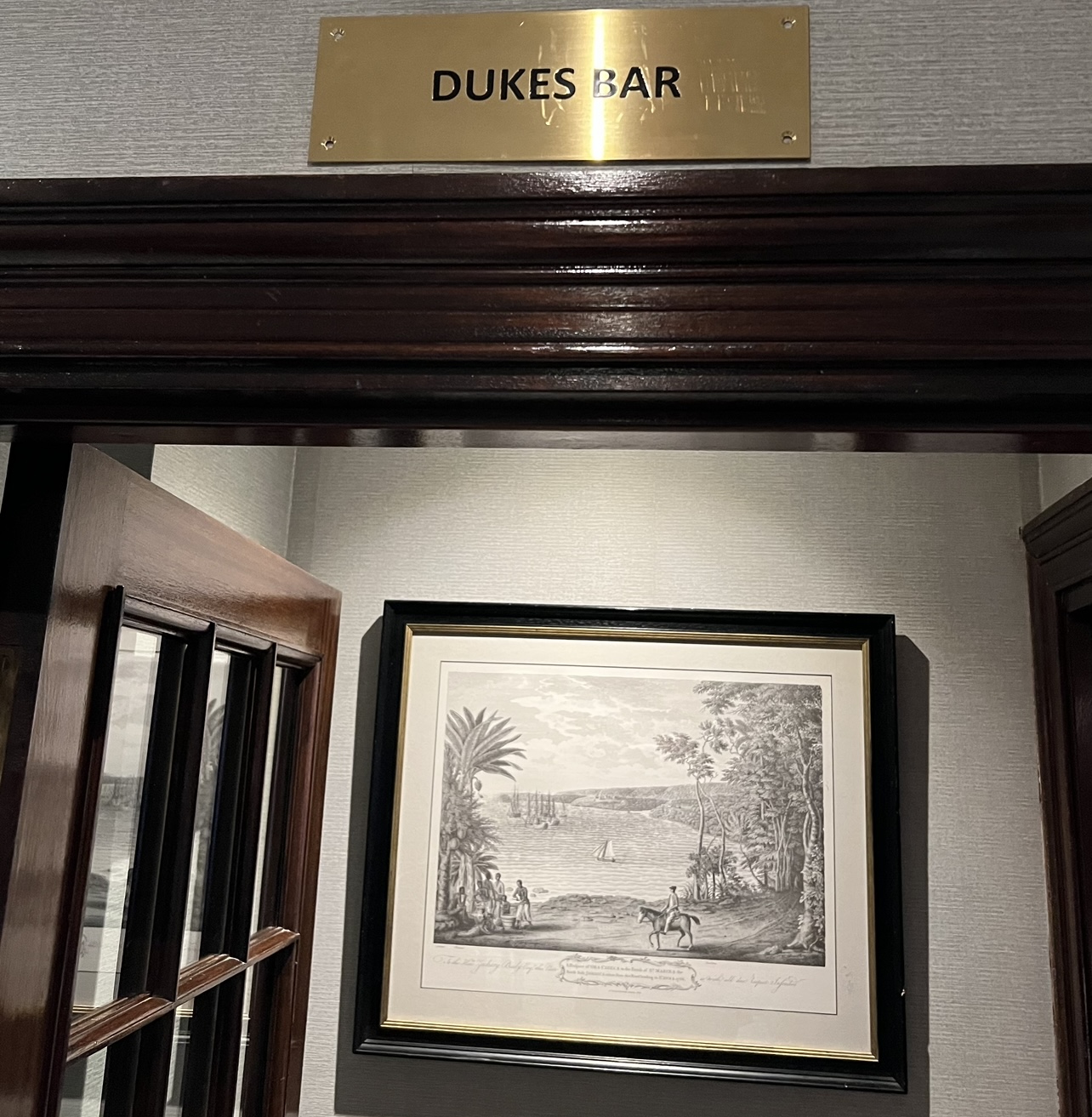
One of the top things on my personal list was to pay a visit to the renowned Dukes Bar at the Dukes Hotel, where, as legend has it, Ian Fleming, the author of the James Bond novels, not only came up with the phrase “shaken, not stirred,” but also created the now-famous Vesper martini.
Sadly, this is as close as I got to the Dukes Bar. People who stay at the hotel get to reserve a space in the incredibly small bar area, and everyone else has to wait in line on a first-come, first-served basis. Unfortunately for me, the wait to be seated was way too long and I never got to experience the Dukes Bar for myself.
*sigh*…looks like I’ll need to make another trip to London to check this one off my bucket list.
In the meantime, I can enjoy a Vesper at home…
At first, it seemed almost silly to try to make one…but the classic James Bond martini has always fascinated me. I’m not talking about the clichéd Sean Connery “vodka martini, shaken, not stirred.” I’m talking about the real James Bond martini, which appeared in Ian Fleming’s first 007 novel “Casino Royale” and only appeared in the 2006 “Casino Royale” motion picture starring Daniel Craig (the best Bond of all, if you ask me.)
To quote the novel:
‘A dry martini,’ he said. ‘One. In a deep champagne goblet.’ ‘Oui, monsieur.’ ‘Just a moment. Three measures of Gordon’s (gin), one of vodka, half a measure of Kina Lillet. Shake it very well until it’s ice-cold, then add a large thin slice of lemon peel. Got it?’ ‘Certainly, monsieur.’ The barman seemed pleasant with the idea. ‘Gosh that’s certainly a drink,’ said Leiter.
Bond laughed. ‘When I’m … er … concentrating.’ he explained, ‘I never have more than one drink before dinner. But I do like that one to be large and very strong and very cold and very well-made. I hate small portions of anything, particularly when they taste bad. This drink’s my own invention. I’m going to patent it when I can think of a good name.’
He watched carefully as the deep glass became frosted with the pale golden drink, slightly aerated by the bruising of the shaker. He reached for it and took a long sip.
‘Excellent,’ he said to the barman, ‘but if you can get a vodka made with grain instead of potatoes, you will find it still better.’
Bond named this drink the Vesper martini, after the character Vesper Lynd, portrayed by Ursula Andress in the 1967 adaptation, and Eva Green in the 2006 adaptation of “Casino Royale.”
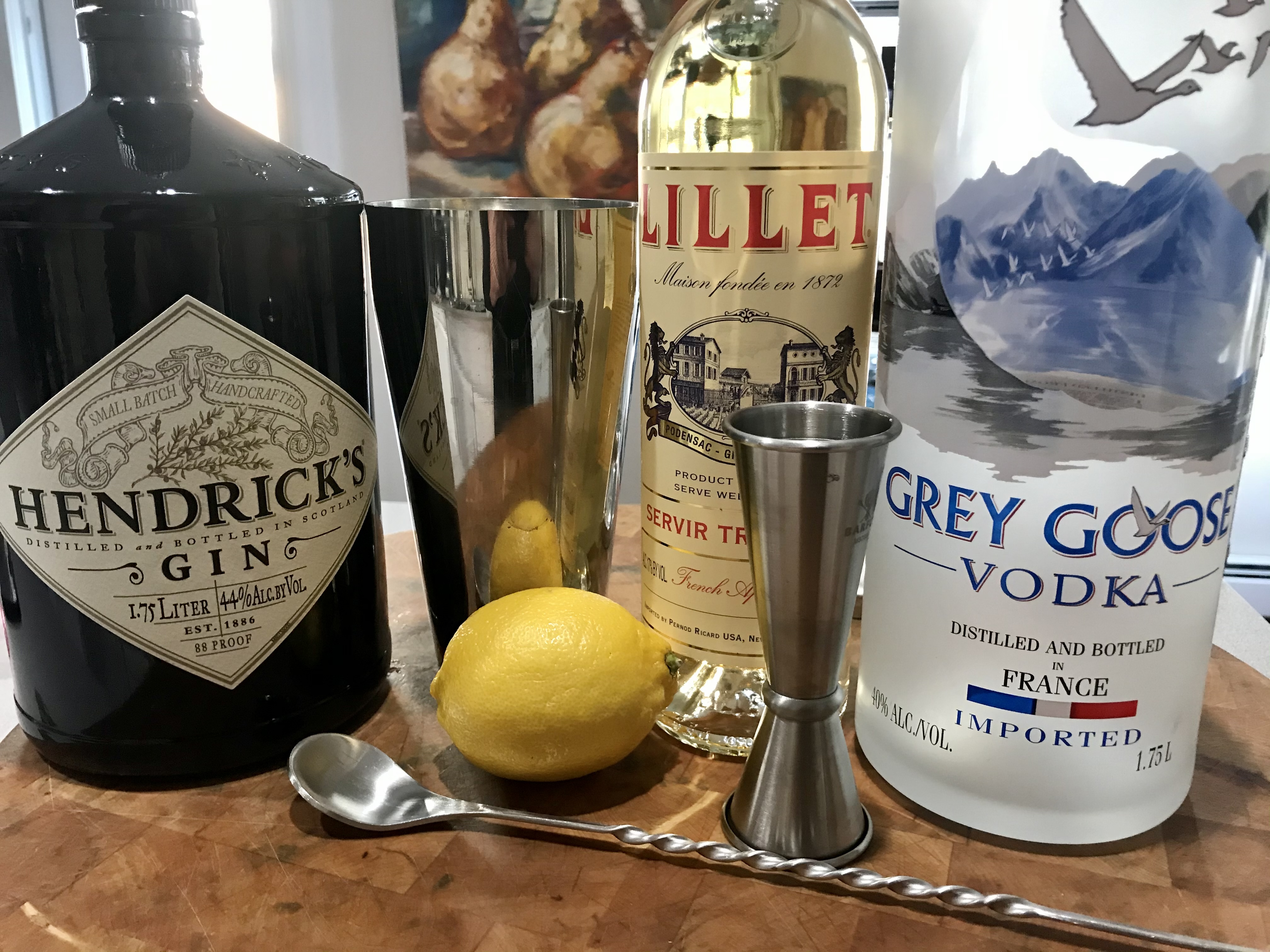
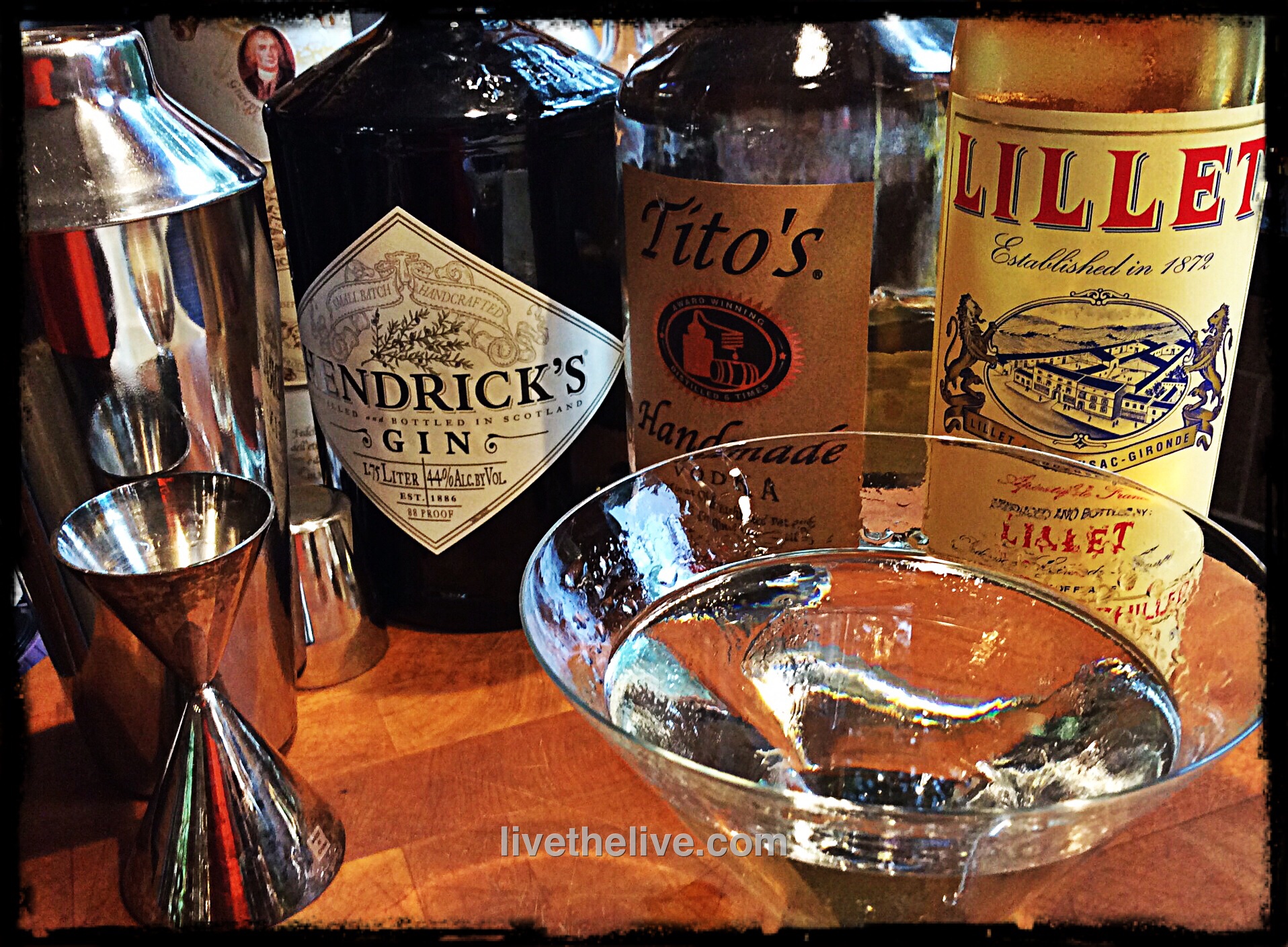
My first homemade version of this classic drink remained true to the measurements of the original, though I changed brands due to personal preference. In the novel, Bond just asks for “vodka.” (Of course, this was back in the 1950’s when we didn’t have hundreds of brands to choose from!) My choice for best-bang-for-the-buck grain vodka is Tito’s, made from corn. But an excellent choice for wheat-based vodka is Grey Goose.
Bond asks for Gordon’s gin. I’m partial to the floral notes of Hendrick’s.Again, in the 50’s, what good British agent wouldn’t drink Gordon’s?
And the original Kina Lillet had its recipe changed in the 1980’s to keep up with the times by reducing the quinine, which made it bitter. (Kina refers to the quinine, so it was removed from the label when the quinine was removed from the formula.) The French aperitif wine, Lillet, is today’s version: a blend of wine grapes, oranges, orange peels and quinine. Lillet is not a vermouth, though you’ll find it in the vermouth section of your favorite liquor store. With the rise in popularity of the Vesper martini, many bartenders and aficionados claim it’s just not the same without the original Kina Lillet formulation, and a search began to find a better substitute, one with a more pronounced quinine assertiveness.
Enter Cocchi Americano, an aromatized wine also found in the vermouth section of many liquor stores. With its quinine-forward recipe, Vesper fans claim it comes closer to the original Kina Lillet. Add a more London-style dry gin to the mix, like Bombay Sapphire, and you just about nail the cocktail Bond created all those years ago.
So…with measurements true to Bond, may I suggest two versions of the same cocktail!
My original, more floral, version…
3 oz. Hendrick’s gin 1 oz. grain-based vodka (like Tito’s or Grey Goose) 1/2 oz. Lillet
Combine these over ice in a cocktail shaker, and shake vigorously. Strain it into a chilled martini glass. I’m happy with a lemon peel or even olives with this combination.
Or…
The version closer to Bond’s original, which is equally wonderful in its own right: crisp and refreshing, a strong drink with a hint of bitterness from the quinine. Dangerously addictive!
3 oz. London dry gin (like Bombay Sapphire)
1 oz. grain-based vodka (like Grey Goose)
1/2 oz. Cocchi Americano
Combine these over ice in a cocktail shaker, and shake vigorously. Strain it into a chilled martini glass. Garnish with a large, thin lemon peel.
With the rising popularity of the Vesper martini, and the use of Cocchi Americano instead of Lillet, the makers of Lillet now claim they “never removed” the quinine from their original recipe. Many feel this is an outright lie, (back-pedaling a bit, aren’t we?) because they themselves stated they changed in the formula back in the 80’s. A little too late now for them to re-formulate. CocchiAmericano has become the go-to with many bartenders (and myself) when recreating this classic cocktail. But if I can’t find it at my favorite liquor store, Lillet will do in a pinch.
If you don’t want to spend the extra cash for Grey Goose, I found that this combination is also very satisfying: for the vodka, go with the original red label of Stoli with Bombay Sapphire gin and CocchiAmericano in the original proportions.
They say February 22nd was chosen as National Margarita Day to help us get through the end of those dreary winter months. I like the sound that, especially since we here in Southern New England are getting hit with more snow this weekend.
I love watermelon margaritas, especially when they’re made with the sweetness of fresh watermelons.
All you need.
Many recipes add a lot of sugar: sugar on the rim of the glass as well as sugar in the margarita itself. I think that a ripe watermelon and the Cointreau add enough sweetness, so I leave any extra sugar out of my recipe.
4 cups cubed, seeded watermelon 4 oz. (or more!) tequila (I like Patron silver) 3 tablespoons fresh squeezed lime juice 1 oz. orange liqueur (I like Cointreau)
Combine the watermelon, tequila, lime juice, and orange liqueur in a blender. Process until it’s smooth. (If I wanted to strain the watermelon juice before making the cocktail, I’d put it in the blender by itself first, whizz it up, then strain. But I’m totally OK with making this as easy as possible. Everything in the blender all at once!)
Pour it into margarita glasses filled with ice. Garnish with a lime wedge.
Watermelon margarita, aerial view. (No drone required.)
I’m not quite sure why they chose February 22nd to be National Margarita Day, but I’ll take it!
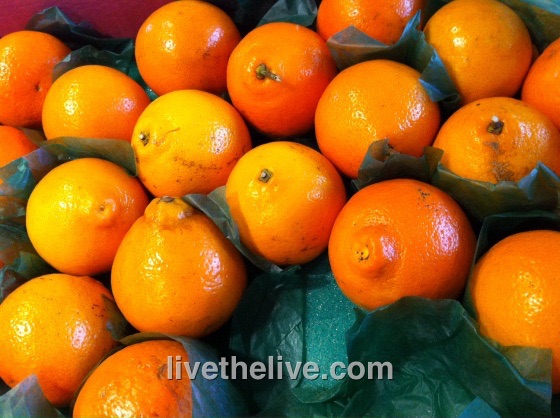
Years ago, a family relative in Florida sent us Cushman’s HoneyBells. They look like fiery red bell-shaped oranges, and they are the sweetest and juiciest fruits you’ll ever have! But they’re not really oranges at all.
HoneyBells are a unique natural hybrid of Dancy Tangerine and Duncan Grapefruit. The plants are grafted to a sour orange root-stock, and when the tree reaches maturity, it looks just like a grapefruit tree…but with oranges growing on it.
Tangelos are very similar, and can often be found at your local supermarket.
I usually make my signature margarita, the Algarita, with pineapple juice. But when I can get hold of Tangelos or HoneyBells, my recipe takes on a new twist.
2 oz. Patron silver tequila (or your favorite)
1/2 oz. Cointreau orange liqueur (or your favorite)
4 oz. fresh squeezed HoneyBell juice
1/2 oz. fresh squeezed lime juice
The Honeybells are so fresh and sweet, you can skip the Cointreau if you like.
Fill a tall glass with ice and add all the ingredients. Stir. Pour into a large margarita glass. Garnish with lime wedge. Salt optional.
Any other time of the year, substitute pineapple juice, orange juice or a combination of both for the Honey Bells.
This is my version of a holiday drink I was introduced to me by my mother-in-law from the Upper Peninsula of Michigan.
This classic is loaded with sugar. But then…so is everything else around the holidays!
9 cups water
2 cups sugar
4 “Constant Comment” tea bags
12 oz. frozen OJ concentrate
12 oz. frozen lemonade concentrate
2 cups whiskey (I use Crown Royal) 7-Up or Sprite
Boil the water and sugar, making sure the sugar dissolves. Turn off the heat and steep the tea bags in the liquid for 10 minutes. Discard the tea bags.
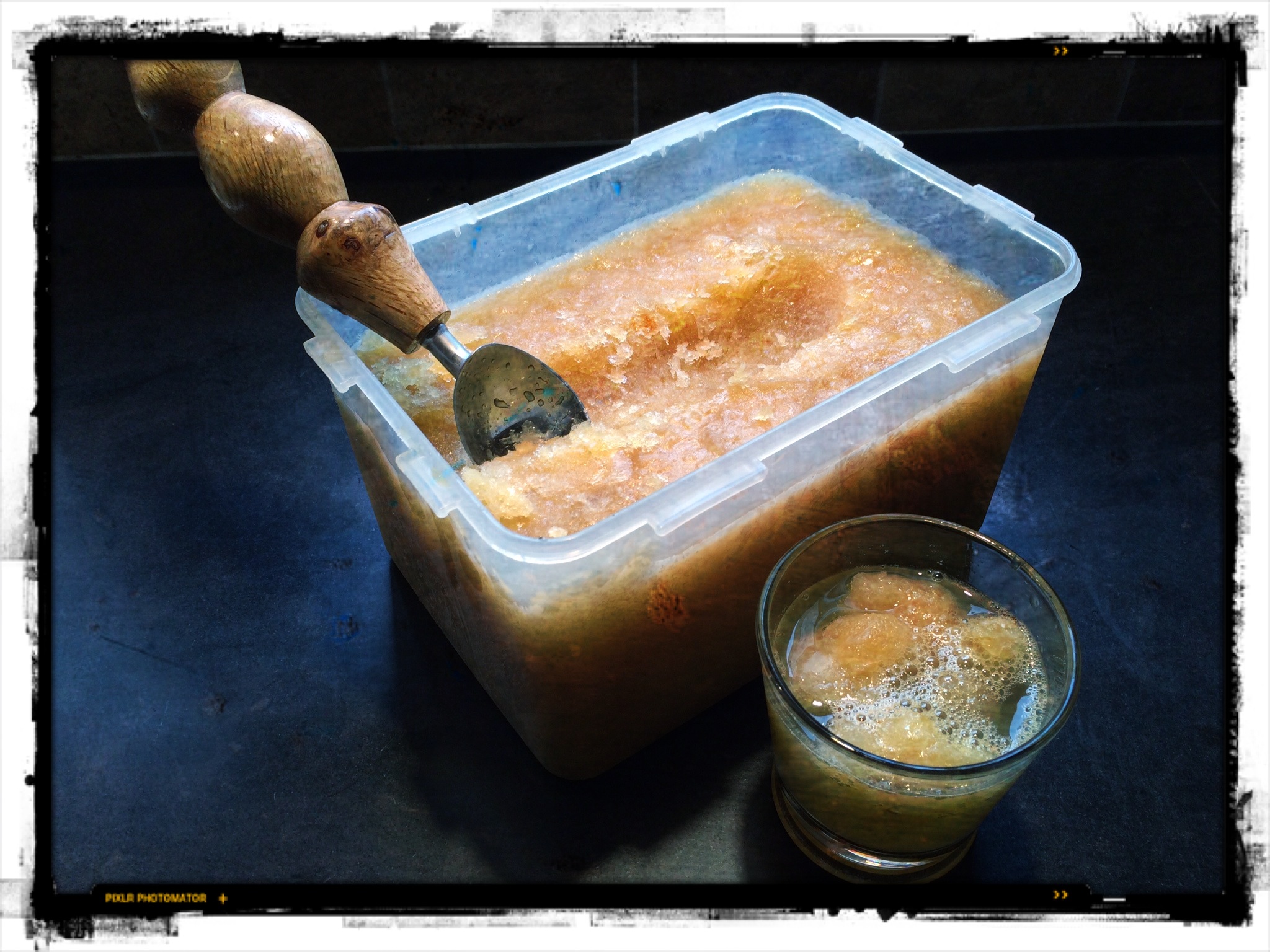
Add the OJ, lemonade and whiskey. Mix well, then pour it all into a freezable container with a lid. Freeze.
To serve: Scoop the slush out of the container (it doesn’t freeze solid) and mix it in a tall glass with 7-Up.
If you’re concerned about all that sugar, you can use a sugar substitute in the mix, and diet soda at the end. Some stores also carry low-sugar juice concentrates.
It had been a while since I made one of these, and my inventory of booze had changed a little bit. But the end result was still quite tasty.
First, the older recipe… And then the newer one below.
Most of the recipes for a Scorpion Bowl I found on-line don’t match the one that I’ve been using for many years. This recipe comes from a bartender (whose name I can’t remember–too many Scorpion Bowls, I guess) from a long-gone Chinese restaurant, ChinaGarden, that was in Warwick, Rhode Island. A car dealership (Inskip) now stands in that spot. This is the best Scorpion Bowl I’ve ever had…and continue to have!
Make sure to use top shelf booze for this or you’ll be a “Suffering Bastard” the next morning! (A little Chinese restaurant drink humor…)
Look carefully, and you may see the flame coming out of the volcano! Hope I don’t need to tell you not to drink the 151 while it’s lit! And yes, it’s an old photo: Disaronno Originale hasn’t been called Amaretto di Saronno for a long time!
2 oz. light rum (I use Don Q silver)
2 oz. dark rum (I use Mount Gay)
1 oz. gin (I use Bombay Sapphire)
½ oz. brandy (I use E&J)
½ oz. Disaronno Originale
½ oz. Cointreau
6 oz. Pineapple juice
6 oz. Orange juice
½ oz. Bacardi 151 rum for the little cup in the volcano
In a blender half-full of ice, add all the alcohol, except the 151 rum. Add the pineapple juice and the orange juice. (Use less if you like it stronger.) Give the drink a quick 1-second pulse in the blender, and pour it with all the ice into Scorpion Bowl or a very large glass or bowl. If you do have a Scorpion Bowl with the volcano in it, add the 151 rum to the bowl in the volcano. If not, you can mix the 151 into your drink.
Although all the proportions remain the same, my newer version had a few different brands than the old recipe.
My dark rum choice this time was a Rhode Island-based rum called Thomas Tew.
I went with the user-friendly Ford’s gin.
Grand Marnier is an excellent substitute for Cointreau.
And Gozio Amaretto is a real almond liqueur. Dissaronno strayed from their almond recipe decades ago, opting for cheaper stone fruits.
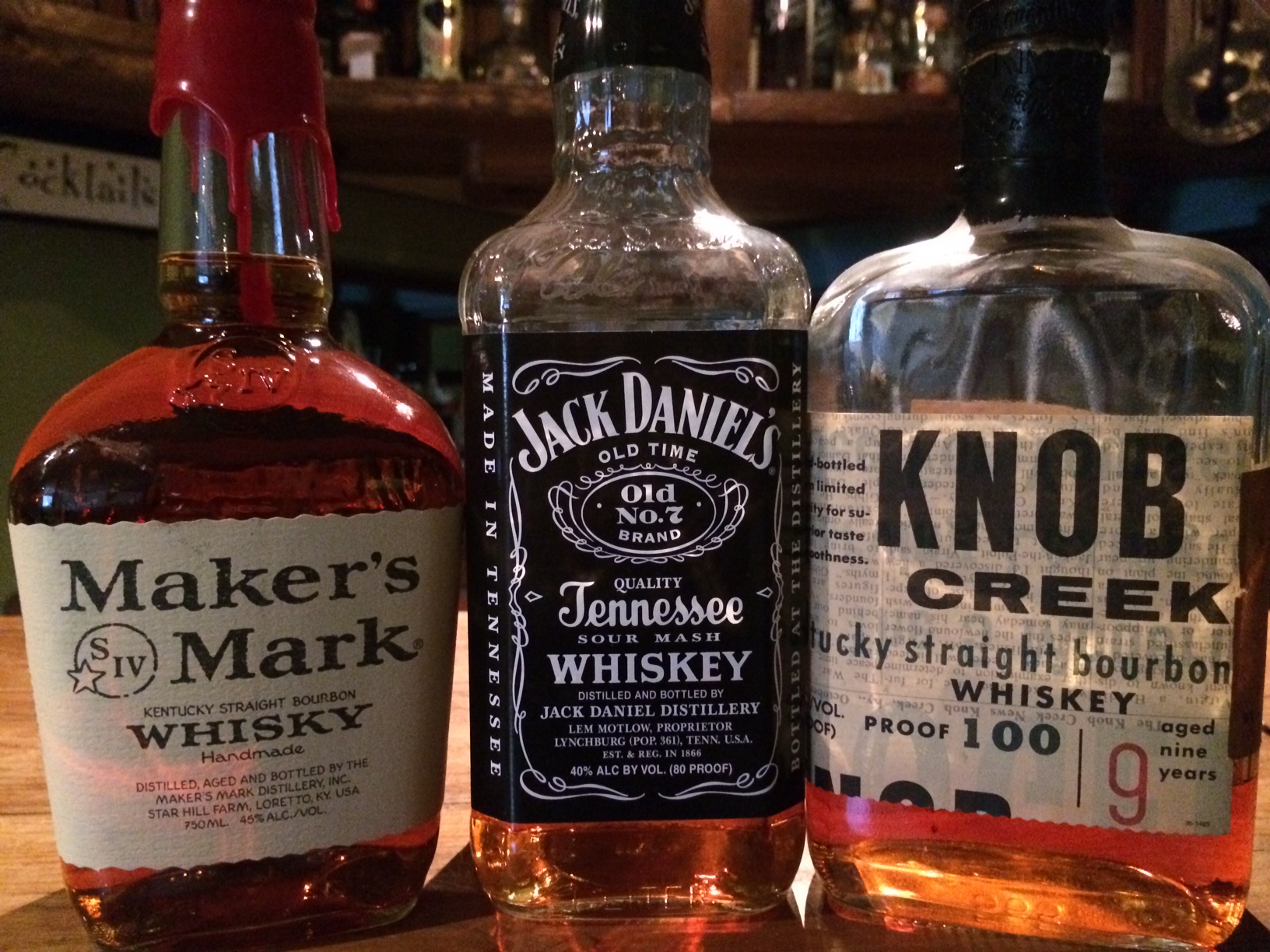
There seems to be some confusion about the spelling of whiskey and/or whisky, but the use of the letter “e” (or the lack thereof) is not random. Here’s the best explanation I’ve found…
The spelling whisky (plural whiskies) is generally used for those distilled in Scotland, Wales, Canada, and Japan. Whiskey (with an e; plural whiskeys) is used for the spirits distilled in Ireland and in the United States. The BATF (Bureau of Alcohol, Tobacco and Firearms) in 1968 specified “whisky” as the official U.S. spelling, but allowed labeling as “whiskey” in deference to tradition. Most U.S. producers still use the “whiskey” spelling, though as you can see, Maker’s Mark chooses not to.
International law reserves the term “Scotch whisky” to those whiskies produced in Scotland. Scottish law specifies that the whisky must be aged for a minimum of three years and one day, in oak casks. Whiskies produced in other countries in the Scotch style must use another name. Similar conventions exist for “Irish whiskey,” “Canadian whisky,” and “Bourbon whiskey.” In North America, as well as in Continental Europe, the abbreviated term “Scotch” is usually used for “Scotch Whisky.” In England, Scotland, and Wales, the term “whisky” almost always refers to “Scotch Whisky”, and, as I learned when I traveled to Scotland, nobody calls it “Scotch.”
And while we’re on the topic, what is bourbon?
Bourbon is a type of whiskey.
Today, “bourbon” has a specific legal meaning that has little to do with its geographic origins. That definition, now federal law, has existed in its present form only since about the end of the 19th century. According to federal law, bourbon must be at least 51% corn, distilled at less than 160 proof, and aged for at least two years in new, charred oak barrels. (There are some other requirements, but those are the main ones.) Bourbon also must be made within the borders of the United States. In other words, a foreign product that meets all the other requirements still cannot be sold in the U.S. as bourbon.
As I learned on my tour of the legendary Oban distillery in Scotland, the reason why bourbon must be aged in new, charred oak barrels goes back to the days of Prohibition. Once alcohol was legalized again, the coopers union wanted to make sure they had job security. So they convinced the government to require new barrels for every new batch of bourbon made. Once that barrel is used, it can’t be used for bourbon again. The Scottish, always frugal, would then buy all those barrels from American distilleries, and use them to age their own whiskey. So those barrels don’t ever go to waste. (Companies like Diageo, that own Bulleit bourbon in the US and Oban whisky in scotland avoid the middleman buy shipping their own used barrels from America to scotland for reuse.)
Contrary to popular belief, there has never been a legal requirement that bourbon be made in Kentucky, which is why most Kentucky producers call their product “Kentucky Bourbon.” Today there are some, but not many, examples of non-Kentucky bourbon left: VirginiaGentleman, Bowman’s, and Woodstone Creek Straight Bourbon are a few.
Still confused? My advice is to sit back with your favorite glass of whisky, whiskey or bourbon…and just enjoy. Cheers!
Right now, I’m trying out a new eggnog recipe, which I will post later if successful. It’s based on Alton Brown’s aged eggnog recipe, which uses a dozen raw egg yolks. He mixes the yolks with sugar, and then adds a LOT of alcohol to it, in the hopes of killing any salmonella bacteria that might be lurking about. The egg yolk/sugar/booze mix sits in sealed Mason jars in the fridge for at least 3 weeks, giving the alcohol time to do its job. Only then is the dairy added. Seems to make sense, but I’ll let you know when it’s done. But this recipe does take time. So if you want to whip up a pretty darn tasty eggnog in a hurry, my recipe below, one that I get asked about every year, is the way to go…
Let’s face it: there’s no such thing as healthy eggnog. This recipe is absolutely delicious but is also a heart attack in a glass. I updated this recipe a couple of years ago so that you don’t need to worry about salmonella (because you’re not using raw eggs)…though the alcohol will certainly still get you! (So I guess calling it “safe” is a matter of opinion!)
The solution is to buy pasteurized eggs.
Some supermarkets now carry whole eggs in the shell that have been pasteurized, though they are hard to find. But the Whole Foods near me does carry pasteurized real whole liquid eggs under the Vital Farms name, and they work perfectly with this recipe. The original recipe called for 15 (!) raw eggs. A 16-oz. container of Vital Farms liquid eggs is the same as about 9 eggs. So I need one full 16 oz. container, and then another 10 oz. or so for this recipe.
Now the only thing I need to worry about are too many calories and too much alcohol!
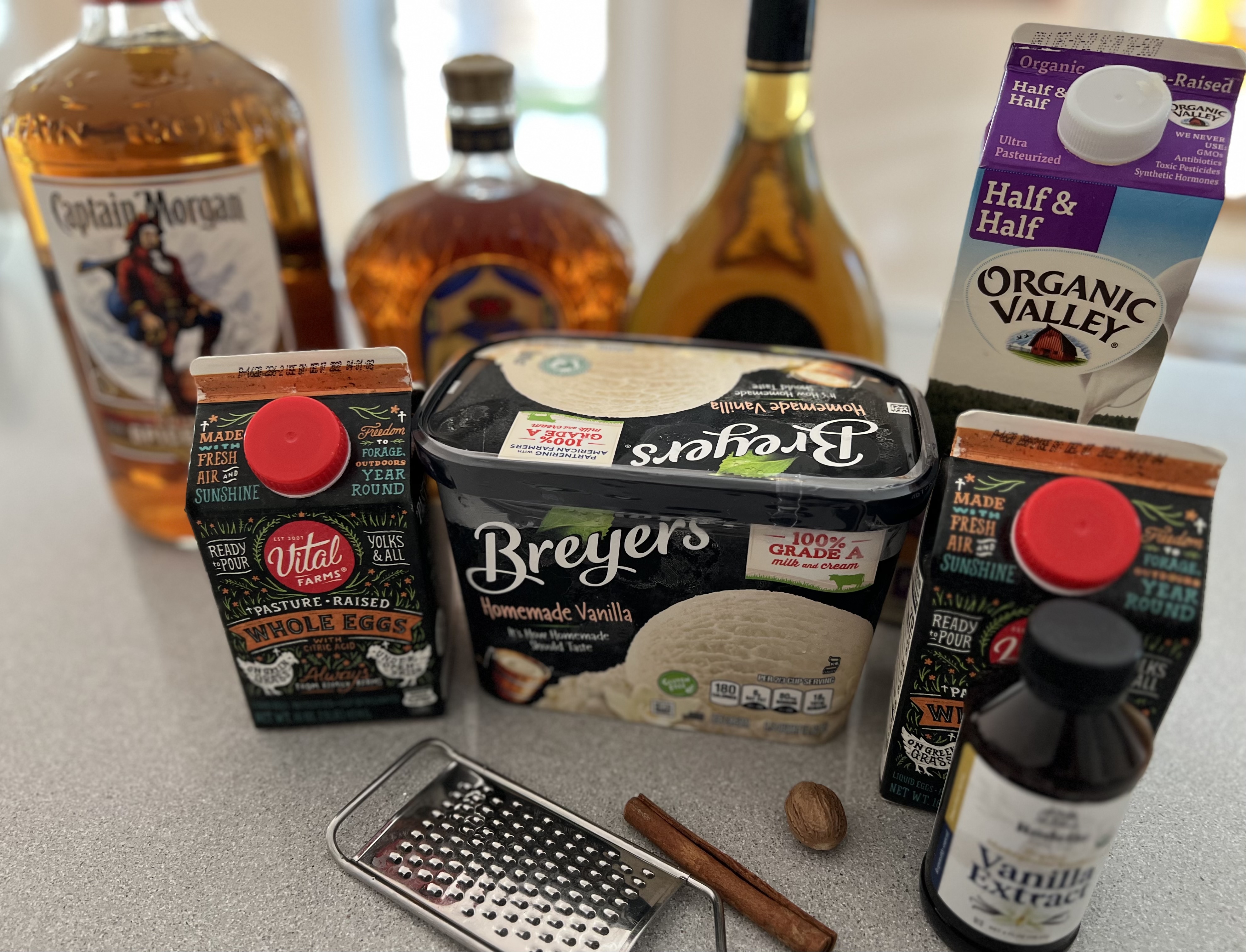
1.5 quarts vanilla ice cream (I use Breyer’s)
1 pint half & half
Just over 26 oz. Vital Farms liquid whole eggs (the equivalent of 15 whole raw eggs)
1 teaspoon vanilla extract
1/2 teaspoon cinnamon
1/2 teaspoon nutmeg
1/4 cup pure maple syrup
6 oz. of each:
spiced rum (I use Captain Morgan)
whiskey (I use Crown Royal)
brandy (I use E&J)
I let the ice cream soften one day in the fridge. I carefully mix the ice cream, half-and-half, eggs, vanilla, cinnamon and nutmeg in a blender.
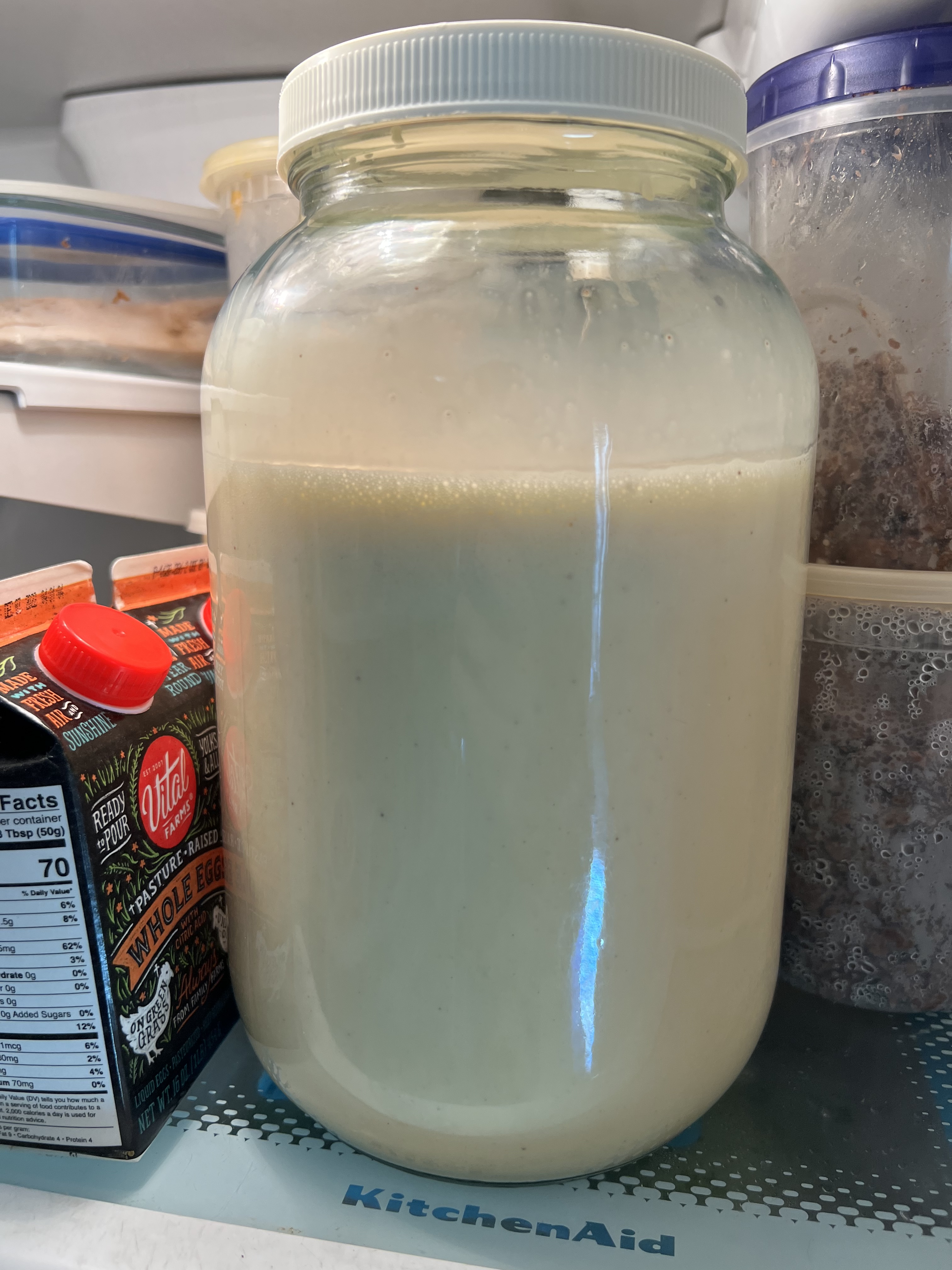
My blender is pretty big, but I find that it’s full at this point. So I pour everything into a gallon-size glass jar.
To the jar, I add the maple syrup and all the liquor. Then I whisk everything together, making sure I get down to the bottom of the jar.
After it’s fully mixed, I place the lid on the jar, and move the eggnog to the fridge, where I let it sit for at least 12-24 hours for the flavors to blend. Even longer is better.
One final mix and taste to determine whether I want more cinnamon, nutmeg or maple syrup, and it’s good to go!
It goes well with coffee…just maybe not for breakfast!
And by the way, it’s pretty darn tasty with coffee! Just imagine a variation on a White Russian, with eggnog and freshly brewed coffee, and a bit of a drizzle of maple syrup on top!
I love onions! Raw, sautéed, caramelized, yellow, Spanish, Bermuda, Vidalia, Texas Sweets, scallion, pearl, Crimini, Walla Walla…they can do no wrong. In fact, my family gave me the Lithuanian nickname: “Ponas Svogūnas.” (“Mr. Onion.”)
I also love vodka martinis! So if I’m going to buy a top shelf vodka like Stoli Elit or Chopin, I’m not going to ruin it with jarred cocktail onions, brined with cheap vermouth, found in the bar mixers section of my local supermarket. Who knows how long those nasty things have been sitting on the shelf?
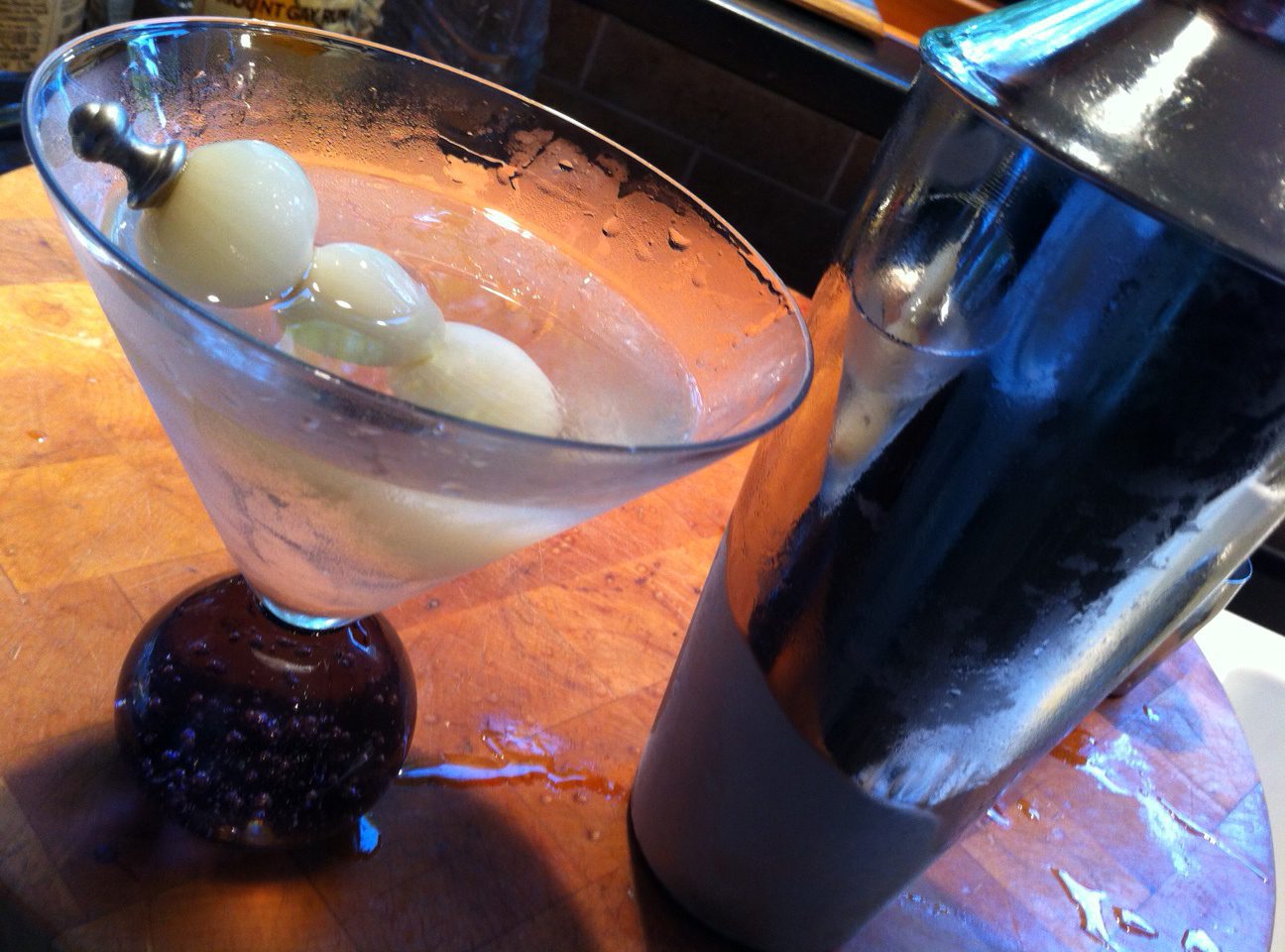
No, I’m going to make my own cocktail onions to enjoy a proper Gibson!
The Gibson martini is simply one with onions instead of olives, and the story of its origin is somewhat unclear. According to one story, it was invented by Charles Dana Gibson, who created the popular Gibson Girl illustrations. Supposedly, he challenged Charley Connolly, the bartender of the private club, ThePlayers, in New York City, to improve on a martini. Connolly simply substituted an onion for the olive and named it after Gibson.
Another story claims a man named Gibson dropped an onion in his water-filled martini glass to differentiate between his own drink and that of his colleagues, who were imbibing heavily.
Some stories about the Gibson don’t even mention an onion. (?)
And yet another story, now considered the more probable one, is that the Gibson martini was invented at the BohemianClub in San Francisco in the 1890’s by Walter D. K. Gibson. There is documentation as early as 1898 to back that up.
Whatever story you want to believe, the Gibson martini was originally made with gin, not vodka, but that’s strictly a personal preference–and I don’t use any vermouth. (I think the biggest injustice you can do to high-quality vodka is ruin it with low-quality vermouth. But that rule applies to any alcohol and any mixer. It’s only as good as its worst ingredient–and that includes the ice!)
My first attempt at homemade cocktail onions was not a success. I bought pearl onions and did what the package instructions said: I dropped them in boiling water for a couple of minutes, then moved them to ice water to let them cool. Then a gentle squeeze on one end of the onion would make it pop right out of its skin. Easy, right?
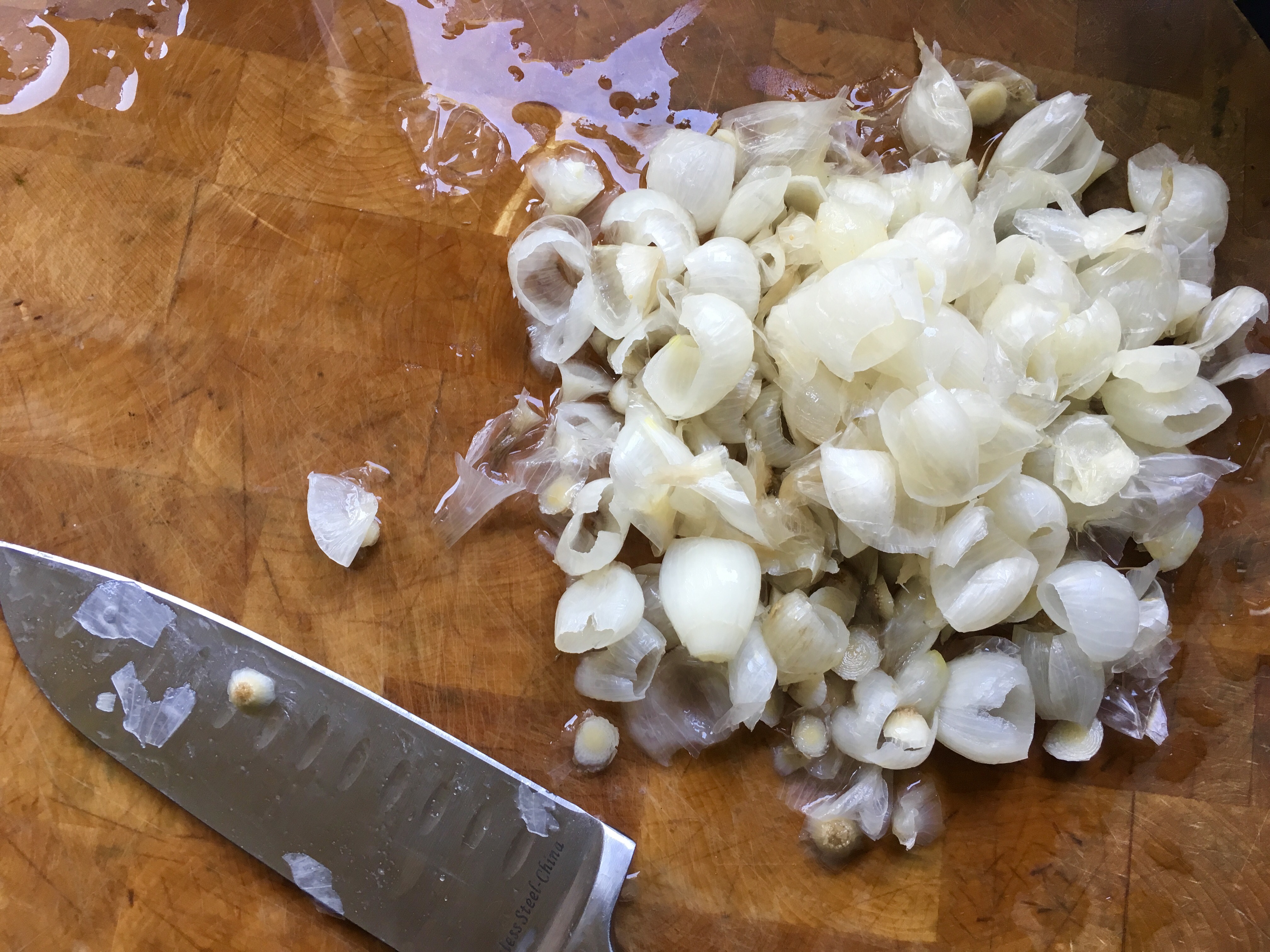
Well, it didn’t work out that way. For one thing, the onions got soft…not what I wanted. I had to cut one end of the bulb with a knife. And even then, when I squeezed the onion, the part that popped out was about half the size of the original onion…there was a lot of waste.
After brining, they tasted OK, but they never had that crisp bite I wanted. They were mushy. I realized that boiling was not the way to go.
A lot of waste.
I knew there had to be a better way. Then I discovered already peeled pearl onions at Whole Foods. I have to be honest…I won’t use any other onions now. They’re big, plump, and exactly what I want. Some might say they’re too big…but I don’t have a problem with that.
Sure, these are much larger than the onions you find in a jar. But tell me how that’s a problem!
1 lb. pearl onions, peeled, ends cut off
1 cup white vinegar
1/2 cup apple cider vinegar
1 1/2 cups water
3/4 cup sugar (I like turbinado sugar)
10 peppercorns
1 teaspoon salt (per quart-sized Mason jar)
2 cloves garlic
Combine the white vinegar, apple cider vinegar, water, sugar, and peppercorns in a medium-sized saucepan. Bring it to a boil, making sure the sugar dissolves completely. Remove it from the heat.
Slice the ends off the onions.
I’ve found that if I allow the brining liquid to get inside the onions, especially these larger ones, they’ll get tastier faster…and who doesn’t want that? So I take a thin metal or bamboo barbecue skewer and push it through the center of the top of the onions, all the way through the center of the bottom of the onions. Now there’s a little “tunnel” for that brine to get in, and it can work its magic from the inside out!
Not skewering the onions simply means it’ll take longer for that brine to seep in…but that’s perfectly fine if you want a not-so-briny onion.
In a quart-sized Mason jar, add the teaspoon of salt and garlic cloves. Pour a little of the hot vinegar liquid in the Mason jar to dissolve the salt. Add the onions to the jar, as tightly as you can, then fill the jar to the top with the vinegar liquid.
Screw the top of the jar on tightly, and turn it upside-down a couple of times to mix everything together. If it looks like the level of the liquid has gone down a bit, open the jar and top it off with the vinegar liquid, then re-seal it.
Let the jar cool to room temperature, then move it to the fridge. You can use the onions as soon as the craving hits you, but they’ll taste better if you give them a few days to a week.
OK…so if after reading this, you just don’t want to go through the whole process of making your own cocktail onions, there is one product that I just recently discovered that does the trick: Aunt Nellie’s. You can find them in the jarred veggie section of just about any supermarket, next to pickled beets and things like that. It’s a milder brine, and so the onions taste quite good. No nasty cheap vermouth to ruin your good martini.
Sometimes, a cool adult beverage is just what you need after a long day of yard work. The cucumber plants in my garden have started producing, so it’s time to make this refreshing cocktail!
4 fresh cucumbers, peeled and seeded
Small ice cubes
1 cup loosely packed fresh mint leaves
2 teaspoons granulated organic cane sugar
3 tablespoons fresh lime juice
4 oz. vodka (I like Tito’s or Ketel One)
1 oz. orange liqueur (I like Cointreau)
Peel and seed the cucumbers. Coarsely chop them and then purée them in a food processor until smooth. Strain them through a fine sieve, pressing the solids to extract as much liquid as possible. Or, if you have one, use a juicer. Set the extracted cucumber juice aside.
To a large glass pitcher, add the mint leaves, sugar and lime juice. Muddle the ingredients so that the mint leaves release their oils. Add 3/4 cup (at least) of the cucumber juice. Add the vodka and Cointreau. Muddle again briefly.
Fill tall drinking glasses with ice cubes. Strain the cocktail into the glasses. Garnish with a cucumber spear or peel…or mint.
If you grow your own cucumbers and mint in your garden, this cocktail tastes even better…a fine reward for a job well done!















 Live the Live ™