Archive for the ‘Food’ Category


My daughter’s home for spring break, and I’m not surprised this is one of the dishes she’s requesting while she’s here. Guess I gotta get to work!

I think I spent half of my childhood in the kitchen, watching my Mom and grandmother make koldūnai (kohl-doo-nayh), the Lithuanian version of a pierogi, by hand, at lightning speed. They would roll a simple dough into a log about 1″ in diameter, then cut it into 1″ pieces, twirling each piece between their fingers to make a flat pancake, filling each with a small spoonful of meat or mushrooms, then folding it over, crimping the edges to make a crescent-shaped dumpling. It blew my mind that they could crank out over a hundred of these little masterpieces in no time, placing them on a cookie sheet and freezing them until it was time to cook.


One of the main reasons why I prefer Lithuanian koldūnai over the basic Polish pierogi is the filling. For me, standard pierogi fillings like potatoes, cheese, and sauerkraut just don’t cut it. My Mom would mix ground beef with chopped onions sautéed in butter, a couple of eggs, and milk crackers soaked in milk. She’d add salt and pepper, then spoon that beautiful beef blend into her koldūnai.


The other delicious stuffing, usually reserved for special holidays like Christmas Eve and Easter, was made from mushrooms. Italy may lay claim to the porcini, but the fact of the matter is, Lithuania is bolete heaven. (We call them baravykai.)


When they’re dried and rehydrated, their incredible flavor is so intense, you don’t need many of them to flavor a large amount of regular button mushrooms. We’d get our dried boletes from relatives in Lithuania every year. Mom would place a handful in some boiling water and let them steep until they swelled up and could easily be chopped and added to the other mushrooms. She’d then pour the mushroom liquid into the pan as well, not wasting a bit of that magical porcini flavor. The mushrooms were simply sautéed in butter, cooled, and then used to fill the koldūnai.


I found that my Mom’s log method was too much work. I roll the dough out into a sheet with a rolling pin, then cut circles with a glass. Yes, that’s mac-and-cheese up front!


A few years ago, I decided it was time to try my hand at making koldūnai. As I recall, my Mom simply mixed water with flour to make the dough, kneaded it into a log, and off she went. I decided to go with the rolling pin and glass cutting method, because I found it to be a bit easier creating more uniform koldūnai.


The biggest challenges I had making koldūnai was my own clumsiness and lack of experience. Once I got the hang of it, things moved along steadily, and it didn’t take long for me to make a decent batch–not all perfect, but not bad for a first try.


My recipe follows. If you’re on a gluten-free diet, have no fear! That recipe is at the bottom of the blog.


The rolling pin method.


This time around, I made four kinds of koldūnai: traditional (ground beef as well as mushroom) and non-traditional (mac & cheese and pulled pork.)  Patty’s Pierogis, a restaurant in nearby Fall River, Massachusetts, and featured on Food Network’s “Diners, Drive-Ins and Dives,” is where my daughter first had mac & cheese pierogis. She was instantly hooked and begs for them every year.


Here’s my beef recipe…


1/2 onion, finely chopped
1 pat of butter
1 lb. ground beef
1 egg
1/2 cup breadcrumbs

Finely chop the onion and sauté it in the butter until translucent. Let it cool, then add it to 1 lb. of thawed ground beef. Add the egg and the breadcrumbs. Season with salt and pepper. Mix the ingredients thoroughly and keep the meat in the fridge until you’re ready to use it.


Two pots of boiling salted water: one for the meat-filled koldūnai, and one for the mac-and-cheese filled koldūnai.

Two pots of boiling salted water: one for the meat-filled koldūnai, and one for the mac-and-cheese filled koldūnai…so I don’t get ’em mixed up!


In my childhood home, you cannot possibly serve koldūnai without sour cream on the side and without spirgučiai (spir-guh-chay), chopped and fried bacon and onions, that are sprinkled on top.


1 lb. bacon, finely chopped
1 large onion, finely chopped

In a large pan, fry the chopped bacon until it’s almost crisp. Never drain the fat! Add the chopped onions and cook until they are soft. Set aside.  (My Mom always kept a stash of spirgučiai in a container in the fridge, and sprinkled them on anything and everything.)


duni 4


Making the dough is simple.


2 cups all-purpose flour
1 cup water

I don’t use salt in the dough because I boil the koldūnai in salted water later.


Combine the ingredients in a bowl, mixing with your hands. Keep adding flour in small amounts until the dough isn’t wet and sticky. When it forms a nice ball, remove it from the bowl and place it on a floured surface and knead it a bit more. Cut the ball into quarters, and work with these smaller pieces of dough.


For the rolling-pin method, roll each quarter out until the dough is about 1/8″ thick. Cut circles out of the dough using a cookie cutter, rocks glass, or whatever else you have handy. Add about a teaspoonful of filling in the center of the dough (a melon baller works great), then fold the edges over and pinch them with your fingers. Flip it over and pinch again, making sure none of the filling seeps out. A tight edge means the koldūnai won’t break open when you put them in boiling water.


Who knew a rocks glass had more uses than just to hold a great Manhattan?


Some stuffed with mac and cheese!


I recently discovered these “pierogi makers.” You lay the dough in them, add your filling, and then close them. They automatically crimp the edges for you. They work pretty well…sometimes. It’s faster with the traditional method.


I always double-check the crimped edges, because your koldūnai will fall apart in the boiling water if you don’t seal them well!


Place the koldūnai on a sheet pan dusted with flour, and when you’re done, place the sheet pan in the freezer.


Ready for the freezer!


Sometimes the chef gets punchy after making koldūnai all day long!


Get a large pot of salted water boiling. Drop the koldūnai in gently, being careful not to overcrowd them. If the dough is thin, the koldūnai will be ready when they float up to the surface. A thicker dough will need longer cooking. The best way to know if they’re done is by taking one out, cutting it open and having a look (and taste!)


When plating, sprinkle generously with spirgučiai, and serve with sour cream on the side.


duni 4


If you need to go gluten-free…good news! You can still have your koldūnai! The mushroom filling is already gluten-free. For the breadcrumbs in the beef filling, I take slices of Udi GF bread, toast them, and zap them in a food processor. Excellent breadcrumbs! And I use store-bought GF mac-and-cheese.


GF Mac and cheese, with a little extra cheddar.


For a rustic dough, this recipe works great. (Thanks to my sister, who shared it with me.)


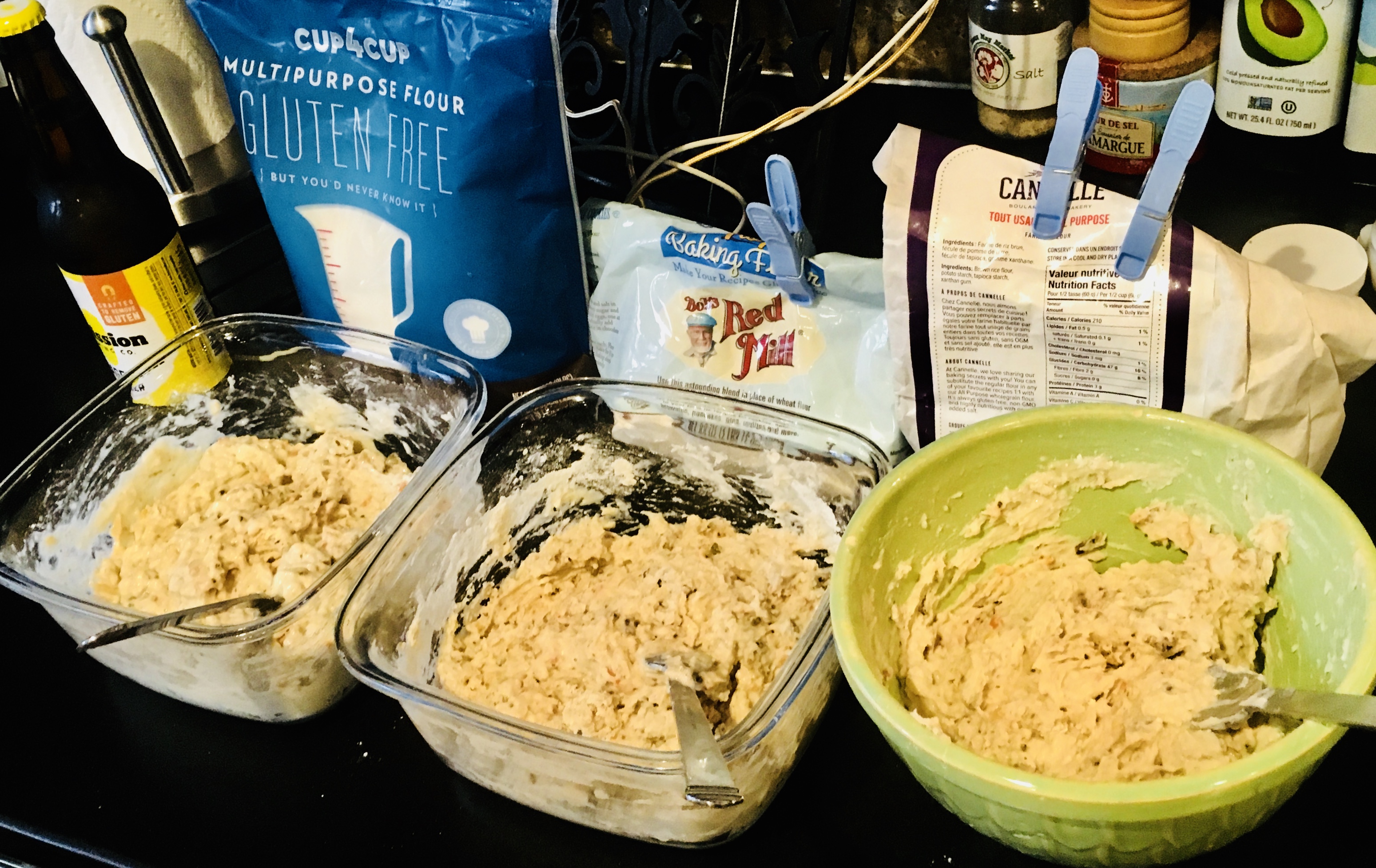
Excellent GF flours.


1 1/2 cups all-purpose gluten-free flour (I use Cup4Cup)
1 1/2 cups rice flour (I use Cup4Cup Wholesome Flour)
2 eggs
pinch of salt
water

Combine the flour and salt in a bowl. Add the eggs and mix. (I use my hands for this.) Slowly add water to the dough until it pulls from the sides of the bowl and makes a nice ball of dough. I cut the dough in half and use a well-floured rolling pin to roll it flat.


The finished product! The rice flour gives it a darker, grainier texture. A more rustic taste, but still delicious!


A newer, less rustic gluten-free version here…


These are also gluten-free, but I used a different recipe and a different brand of flour. I mixed 2 cups of King Arthur GF flour with one cup of water and 1 teaspoon of xanthan gum. Then I added more flour or water, depending what was needed, to get the right consistency. A very easy to work with dough!


PRETZEL BREAD

Posted: March 20, 2026 in Food, Recipes, Uncategorized
Tags: , , , , ,

As much as I’m a fan of sourdough–or any great bread for that matter–pretzel bread has a special place in my heart.

I found a pretzel bread recipe that uses baking soda, a much milder and safer alkaline alternative to lye (which is what many bakeries use.)


image


½ cup water
½ cup milk
2 tablespoons butter, softened
3 cups all-purpose flour
2 tablespoons brown sugar
1 tablespoon yeast
2 teaspoons salt
1 egg, separated
Cooking spray
¾ cup baking soda
Kosher salt or pretzel salt for sprinkling

Combine the water, milk and butter in a glass container and microwave it about 45 seconds to melt the butter and warm the milk. Set it aside.

In a mixing bowl, combine the flour, brown sugar, yeast, salt and egg yolk. Slowly add the milk mixture and mix until the dough comes together. If it seems too dry, add small amounts of water. Knead the dough until it is smooth and springy, about 5 minutes.

Place the dough in a bowl sprayed with cooking spray. Flip it over so all sides get oiled, and then wrap the bowl with plastic wrap. Place it in a warm place until the dough has doubled in size, about an hour.

Pre-heat the oven to 375 degrees.

Turn out the risen dough on a floured surface and divide it into equal pieces. You can make 15 small slider-sized buns, 8 burger buns, 8 hot dog buns or any other shape you like. Once all the pieces have been rolled, cover them with a clean dish towel and set them aside to rest.

While the dough is resting, heat about 12 cups of water in a large pot. When it comes to a gentle boil, carefully pour the baking soda into it. It will foam and bubble vigorously.

Add the rested pieces of dough to the simmering water and poach them for about 30 seconds and then flip them over for another 30 seconds. Don’t overcrowd the pot; you need to do this in batches.

With a slotted spoon or spatula, lift the poached buns onto a Silpat baking sheet (or a baking sheet sprayed with oil, then sprinkled with cornmeal.)

Froth the egg white with a fork, then brush each bun with the egg white.

Using a sharp knife, make a few slits on the top of the buns, about ¼-inch deep. Sprinkle them with Kosher salt, then bake for 20 minutes until they’re golden brown.

It’s National Sloppy Joe Day!

Instead of opening a nasty can of Manwich or other similar product, the classic Sloppy Joe sandwich is easy enough to make from scratch.

My version takes on a Mexican twist (hence the name Sloppy José), using seasoned taco meat and a great barbecue sauce. Putting them together with a sprinkling of Mexican cheese on a bun with lettuce and tomato makes for one sloppy but delicious sandwich!


sloppy jose


For the barbecue sauce…

2 cups ketchup
3/4 cup water
6 tablespoons white vinegar
6 tablespoons apple cider vinegar
6 tablespoons brown sugar
3 tablespoons Worcestershire sauce
1 tablespoon chili powder
2 teaspoons salt
2 teaspoons black pepper
1 1/2 teaspoons cumin


Mix all the ingredients in a saucepan and simmer until the flavors have blended, about 20 minutes. Remove from the heat and cool to room temp. If you store it in an airtight container in the fridge, it’ll stay good for a few months.


For the seasoned taco meat…

1 teaspoon granulated garlic
1 teaspoon onion powder
1/4 teaspoon crushed pepper flakes
1 teaspoon dried Mexican oregano
1 teaspoon paprika
2 teaspoons ground cumin
1 teaspoon sea salt
1 teaspoon black pepper
1 Spanish onion, finely chopped
olive oil
2 lbs. grass-fed ground beef


Combine all the spice ingredients in a bowl.

Sauté the onions in a bit of olive oil until translucent. Add the beef and sauté until cooked, mixing in the spice mixture a little at a time until you’ve used it all.


For the sandwich…

Take some of the taco meat and place it in a small non-stick pan and heat it on medium. Squirt in as much of the barbecue sauce as you like, mixing thoroughly. Sprinkle some grated Mexican cheese on top. (I like Cotija, which is like a Mexican feta, but a bag of mixed cheeses works great, too.) Mix thoroughly, letting it all melt together into one warm, gooey mess. Throw it on a bun. Add lettuce, tomato, avocado slices, whatever you like!


If you watch as much Food Network and Cooking Channel as I do, you’ve probably heard of Big Bob Gibson’s Bar-B-Q in Decatur, Alabama. Smokin’ and grillin’ since 1925, they put the now-famous Alabama white sauce on the map. They would smoke whole birds, then dunk the entire bird in a bucket of white sauce before returning them to the smoker to cook some more. And then they’d serve more of the precious white sauce on the side as you tore into the most amazing chicken you’ve ever had.

I lived in Mobile, Alabama about 37 years ago. Never made it to Decatur. Probably never will. So it was time for me to try to recreate the magic at home. I think I did pretty well.

If you Google “Alabama white sauce,” you’ll get dozens of versions, each, I’m sure, pretty similar and pretty good. I did just that, and then tweaked it to make it my own.

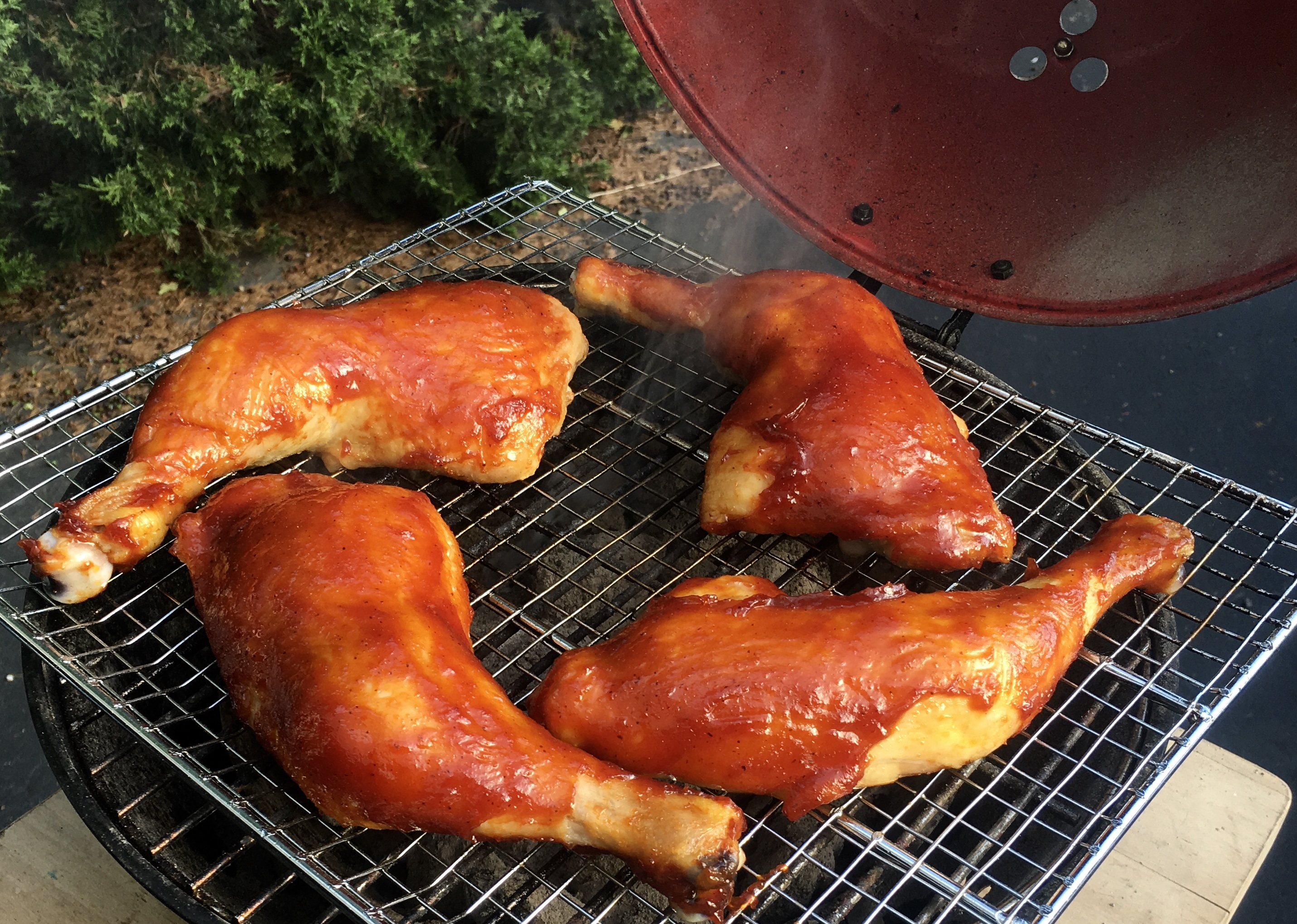
I don’t smoke the birds. I simply season them with salt and pepper, and roast them in a convection oven at 350. When they’re almost done, I brush the chicken all over very liberally with my white sauce…bottom of the bird, too. Then it goes back in the oven for a little bit more.


Parts work as well as whole birds. I love using leg quarters for this recipe.


Combine all the ingredients and mix well. I like to keep it in a container with a lid so I can shake it up before using it.


It’s my birthday! I just might have a Vesper (or two) to celebrate!

An update on the Dukes Hotel: right now, they are refurbishing it, so the hotel is closed. But the Dukes Bar remains open for business! That means you don’t have to battle with hotel guests to get a seat at this iconic bar! Almost worth a trip to London just to get a seat before the hotel reopens this fall!

A few years ago, I took a trip to London with my daughter, and we checked off quite a large list of things we wanted to do: trips to Oxford and Stonehenge, museums, the theater, restaurants with fabulous food (and some with equally amazing views), college tours, a proper British afternoon tea at the Ritz, and much more.

One of the top things on my personal list was to pay a visit to the renowned Dukes Bar at the Dukes Hotel, where, as legend has it, Ian Fleming, the author of the James Bond novels, not only came up with the phrase “shaken, not stirred,” but also created the now-famous Vesper martini.
Sadly, this is as close as I got to the Dukes Bar. People who stay at the hotel get to reserve a space in the incredibly small bar area, and everyone else has to wait in line on a first-come, first-served basis. Unfortunately for me, the wait to be seated was way too long and I never got to experience the Dukes Bar for myself.
*sigh*…looks like I’ll need to make another trip to London to check this one off my bucket list.
In the meantime, I can enjoy a Vesper at home…
At first, it seemed almost silly to try to make one…but the classic James Bond martini has always fascinated me. I’m not talking about the clichéd Sean Connery “vodka martini, shaken, not stirred.” I’m talking about the real James Bond martini, which appeared in Ian Fleming’s first 007 novel “Casino Royale” and only appeared in the 2006 “Casino Royale” motion picture starring Daniel Craig (the best Bond of all, if you ask me.)
Bondtini
To quote the novel:
‘A dry martini,’ he said. ‘One. In a deep champagne goblet.’ ‘Oui, monsieur.’ ‘Just a moment. Three measures of Gordon’s (gin), one of vodka, half a measure of Kina Lillet.  Shake it very well until it’s ice-cold, then add a large thin slice of lemon peel. Got it?’ ‘Certainly, monsieur.’ The barman seemed pleasant with the idea. ‘Gosh that’s certainly a drink,’ said Leiter. 
Bond laughed. ‘When I’m … er … concentrating.’ he explained, ‘I never have more than one drink before dinner. But I do like that one to be large and very strong and very cold and very well-made. I hate small portions of anything, particularly when they taste bad. This drink’s my own invention. I’m going to patent it when I can think of a good name.’ 
He watched carefully as the deep glass became frosted with the pale golden drink, slightly aerated by the bruising of the shaker. He reached for it and took a long sip. 
‘Excellent,’ he said to the barman, ‘but if you can get a vodka made with grain instead of potatoes, you will find it still better.’ 
Bond named this drink the Vesper martini, after the character Vesper Lynd, portrayed by Ursula Andress in the 1967 adaptation, and Eva Green in the 2006 adaptation of “Casino Royale.”
My first homemade version of this classic drink remained true to the measurements of the original, though I changed brands due to personal preference. In the novel, Bond just asks for “vodka.” (Of course, this was back in the 1950’s when we didn’t have hundreds of brands to choose from!) My choice for best-bang-for-the-buck grain vodka is Tito’s, made from corn. But an excellent choice for wheat-based vodka is Grey Goose.
Bond asks for Gordon’s gin. I’m partial to the floral notes of Hendrick’s. Again, in the 50’s, what good British agent wouldn’t drink Gordon’s?
And the original Kina Lillet had its recipe changed in the 1980’s to keep up with the times by reducing the quinine, which made it bitter. (Kina refers to the quinine, so it was removed from the label when the quinine was removed from the formula.) The French aperitif wine, Lillet, is today’s version: a blend of wine grapes, oranges, orange peels and quinine. Lillet is not a vermouth, though you’ll find it in the vermouth section of your favorite liquor store. With the rise in popularity of the Vesper martini, many bartenders and aficionados claim it’s just not the same without the original Kina Lillet formulation, and a search began to find a better substitute, one with a more pronounced quinine assertiveness.
ingredients again
Enter Cocchi Americano, an aromatized wine also found in the vermouth section of many liquor stores. With its quinine-forward recipe, Vesper fans claim it comes closer to the original Kina Lillet. Add a more London-style dry gin to the mix, like Bombay Sapphire, and you just about nail the cocktail Bond created all those years ago.
So…with measurements true to Bond, may I suggest two versions of the same cocktail!
My original, more floral, version…
3 oz. Hendrick’s gin
1 oz. grain-based vodka (like Tito’s or Grey Goose)
1/2 oz. Lillet
Combine these over ice in a cocktail shaker, and shake vigorously. Strain it into a chilled martini glass. I’m happy with a lemon peel or even olives with this combination.
Bondtini2
Or…
The version closer to Bond’s original, which is equally wonderful in its own right: crisp and refreshing, a strong drink with a hint of bitterness from the quinine. Dangerously addictive!
3 oz. London dry gin (like Bombay Sapphire)
1 oz. grain-based vodka (like Grey Goose)
1/2 oz. Cocchi Americano
Combine these over ice in a cocktail shaker, and shake vigorously. Strain it into a chilled martini glass. Garnish with a large, thin lemon peel.

With the rising popularity of the Vesper martini, and the use of Cocchi Americano instead of Lillet, the makers of Lillet now claim they “never removed” the quinine from their original recipe. Many feel this is an outright lie, (back-pedaling a bit, aren’t we?) because they themselves stated they changed in the formula back in the 80’s. A little too late now for them to re-formulate. Cocchi Americano has become the go-to with many bartenders (and myself) when recreating this classic cocktail. But if I can’t find it at my favorite liquor store, Lillet will do in a pinch.

If you don’t want to spend the extra cash for Grey Goose, I found that this combination is also very satisfying: for the vodka, go with the original red label of Stoli with Bombay Sapphire gin and Cocchi Americano in the original proportions.
Cheers!

Let’s face it: there are few foods as magical as bacon. Add bacon to just about any dish you’re preparing, and it elevates it to incredible new heights of flavor. The BLT is possibly the greatest food combination ever invented: just a few simple, fresh ingredients, when placed together, transforming into one of the greatest sandwiches on planet Earth.

BLT wraps: home-cured and smoked bacon, local farmstead romaine, home garden tomatoes, always Hellman’s mayo.

If I’m buying bacon, I go on-line to Burger’s Smokehouse, a family run business in Missouri that has made great bacon for decades. The prices are good, and they include shipping. (smokehouse.com) I buy in quantity and freeze what I don’t need right away. My favorite is the thick-sliced country bacon “steaks.”

But nothings beats making your own.

Bacon comes from the pork belly, and they’re easy to find in any good butcher shop. But to get something a notch above, I’ll buy a heritage breed, like Berkshire pork, from Heritage Pork International. (heritagepork.com)  I follow the simple curing techniques outlined in “Charcuterie,” a great book written by Michael Ruhlman and Brian Polcyn.

To cure bacon, all you really need is salt and sugar, and what they in the curing biz call “pink salt,” which is not to be confused with salt that happens to be pink, like Himalayan salt you would find in a gourmet store. Pink curing salt is bright pink to let you know that it’s a special salt that should only be used in small quantities for curing. The reason is: nitrites. Nitrites delay the spoilage of the meat, and help keep the flavors of spices and smoke. They also keep the meat nice and pink instead of an unappetizing gray. That’s good. However, nitrites can break down into nitrosamines, which have been known to cause cancer in lab animals. But let’s face it: you would need to eat a ton of cured meat to really worry about this. (I buy uncured deli meats and hot dogs at the supermarket, because processed meats are a different story. But since I know exactly what goes into my own bacon, I’m not worried about the level of nitrites.)

To make the basic dry cure:

1/2 lb. kosher salt (I use Diamond Crystal Kosher salt)
1/2 cup light brown sugar or turbinado sugar
1 oz. pink curing salt

Mix the ingredients well. An important note: all salts do not all weigh the same, so go by the weight and not a cup measurement. (Morton’s Kosher salt, for example, is heavier than Diamond Crystal.) I keep this basic dry cure stored in my pantry, ready to use when I need it.

When it’s time to be makin’ the bacon, I combine this dry cure with other ingredients to make my bacon rub.

My bacon rub:

1/2 cup basic dry cure
1/2 cup brown sugar or turbinado sugar
1 tablespoon fresh cracked black pepper
1 tablespoon granulated garlic
1 tablespoon granulated onion

Mix these ingredients well (yes, there’s quite a bit of sugar there, but I like my bacon a little sweet!) Rub it generously all over the pork belly.

I have a large plastic container with a lid that fits one average (4-lb.) slab of pork belly perfectly. I place the belly inside it, put the lid on, and place the container in the fridge. (Sometimes, I’ll season the belly and wrap it tightly with plastic wrap before putting it in the container. Optional.) The pork belly stays there for at least a couple of weeks, maybe three. I flip the belly every few days. You’ll see that the salt will draw moisture out of the meat and form a gooey brine. This brine will continue to cure your pork belly, so leave it in there. Just flip it, put the lid back on the container, and back in the fridge.

In two or three weeks, you’ll be able to tell the pork belly has cured because it feels firm. Wash the brine off the meat well with cold water, and pat it dry with paper towels. Place the belly in the fridge for an hour or so and it will develop a tackiness to the touch. This is a thin layer of proteins known as a pelicle, and it helps the smoke stick to the meat.

Now it’s time to cook. You can simply cook the pork belly (without smoking it) at 200° for about 2 hours, until the internal temperature reaches 160°. This isn’t bacon…it’s pancetta. Or you can simply slice it and fry it up in a pan. (Also delicious.) But it’s the smoke that makes it bacon.

Smoking foods can be a challenge to many, so a great alternative to the traditional charcoal smoker is an electric one. It allows you to control the exact temperature inside the smoker without checking on it constantly (a real luxury when you’re slow smoking brisket or pork shoulder for many hours), and it offers a tray where you place your wood chips or pellets to give your food that authentic smoky flavor.

My electric smoker has a digital readout, which allows me to set an exact temperature. I smoke my pork belly at 250° for 2 hours, using hickory chips. (I’m not a fan of applewood, the other commonly used smoking wood for bacon.)

Bellies in the smoker
Bellies in the smoker. A water bath underneath to catch any grease drippage.
Smoked bacon
A couple of hours later: beautiful bacon!
The reward is so worth the effort. Just remember that you still need to cook the bacon before you can eat it. Don’t eat it straight out of the smoker. That first slice you cut off your bacon and toss in a pan to lightly fry for a few moments will be the best bite you’ve ever had in your life!

I recently received this wonderful gift from my buddy, Dr. Chezwick. I’ll be using the same techniques that I would for a regular slab of bacon, only I’ll cure it for less time, since it weighs less, and is thinner. I’m thinking it will be delicious!

Even though we’re still shoveling ourselves out from under the last snowstorm here in New England, now’s the time to start prepping brisket for corned beef on St. Patrick’s Day!

Before every St. Patty’s Day, supermarkets are full of packages of processed corned beef in preparation for the big celebration. But, interestingly, corned beef isn’t really an authentic Irish dish.

The phrase “corned beef” was coined by the British, and although the Irish were known for their corned beef throughout Europe in the 17th century, beef was far too expensive for the Irish themselves to eat and all of it was exported to other countries. Owning a cow in Ireland was a sign of wealth, and the Irish used theirs for dairy products, not beef.

The Irish ate pork, and a lot of it, because it was cheap to raise pigs, and they traditionally prepared something like Canadian bacon to celebrate St. Patrick’s Day in Ireland.

In the 1900’s, when the Irish came to America, both beef and salt were more affordable, and the Irish, who lived in poor, tight-knit communities, often next to Jewish communities, bought much of their beef from Kosher butchers. And so many of the Irish learned how to corn their beef using Jewish techniques, but adding cabbage and potatoes to the mix. That’s what we have today.

It takes about 3 weeks to make corned beef. Doing it yourself is not difficult. It just takes time.

Corned beef has nothing to do with corn. ‘Corning’ is a technique for preserving raw meats for long periods by soaking it in a salt brine. This method was used in England before the days of commercial refrigeration. Back then, the large salt kernels used in the brine were called “corns.”

Brining is a time-honored way of preserving meat and it prevents bacteria from growing. Both pastrami and corned beef are made by this method. Both start with a brisket of beef. Corned beef is then cooked–usually boiled–and served. Pastrami is made when the brined meat is rubbed with more spices and then smoked to add extra flavor. So corned beef and pastrami are the same meat, just treated differently.

Saltpeter is an ingredient that has been used in brining beef for years. It adds the traditional pink coloring to the corned beef and pastrami meat, a bit more appetizing than the gray color it tends to have if you don’t use it.

Saltpeter can also contain carcinogens, so there’s always talk of avoiding it. It’s found in pink curing salt, which is used in small amounts during the curing process. (Not to be confused with Himalayan pink salt, which is just plain salt.) Since I only make my corned beef once a year, I’m OK with it either way. The general rule of thumb is only 1 teaspoon pink curing salt per 5 pounds of meat.

I get grass-fed brisket in 10-pound slabs, but use whatever size you find comfortable. Just don’t go too small, or the brine will make that tiny piece of meat extremely salty.

Brining the beef brisket
Step one: corned beef…

beef brisket (about 8-10 pounds)
2 teaspoons paprika
1/4 cup warm water
3 cloves of minced garlic
2 tablespoons sugar
1 tablespoon mixed pickling spices
3/4 cup salt
1 teaspoon pink curing salt (optional)
2 quarts water

Place the brisket in a large container made of non-reactive material, like glass or plastic.

In the 1/4 cup of warm water, dissolve the sugar, minced cloves, paprika and pickling spices.

Dissolve the 3/4 cup of salt (and optional teaspoon of pink curing salt) in the 2 quarts of water. Pour in the sugar/garlic/paprika/pickling spices mix and stir everything together. Pour the mixture over the meat in the container. Make sure the meat is totally beneath the surface of the liquid. (You may need to weigh it down to do this. I place a couple of plates on top, which pushes the meat down into the brine.) If there’s just not enough liquid, double the recipe, leaving out the pink salt the second time. Cover the container.

Refrigerate the container and its contents for 3 weeks, turning the meat once or twice per week. At the end of the third week, remove the container from the refrigerator and take out the meat. Soak the meat in several changes of fresh cold water over a period of 12 hours to remove the excess salt. I add ice to the water to keep the meat cold.

At this point, if you want corned beef, most people boil it.

I prefer to lay some aluminum foil down on a sheet pan. Then I coarsely chop carrots, onions, and celery, placing them in a single layer on the foil. Then I lay my brisket on top of the veggies, and wrap the meat tightly in the foil. I place the baking pan in a pre-heated 350 degree oven and cook for about 3 1/2 hours. (That’s for an 8-pound slab of meat. The cooking time will be less for a smaller cut.)

If you want to make pastrami, there are more steps to take…

Step two: making Pastrami…
pastrami

Brined and rinsed corned beef brisket from above recipe, patted dry with paper towels
1/4 cup Kosher salt
1/4 cup paprika
3 tablespoons coriander seeds
2 tablespoons black peppercorns
2 tablespoons yellow mustard seeds
1 tablespoon white peppercorns
3 tablespoons brown sugar
1 tablespoon granulated garlic

Combine the coriander seeds, black and white peppercorns and mustard seeds in a spice grinder and grind them coarsely. Place them in a bowl. Add the salt, paprika, brown sugar and granulated garlic. Mix well.

Rub the mix into the corned beef well, covering all sides.

Heat your smoker to 225 degrees and smoke the meat for several hours. (My wood of choice is always hickory.) When the internal temperature of the meat has reached 165 degrees, it’s done. It isn’t necessary to smoke pastrami as long as you would a regular brisket because the long brining time makes the meat more tender, and you’ll be steaming it next.

It is very important that absolutely everything that comes in contact with the meat is very clean. (This includes your hands.) Also, make very sure that every inch of the meat reaches the 165 degrees before it is removed from the smoker. The corned beef is now pastrami.

Delis that serve pastrami go one step further: they steam the meat so that it becomes incredibly tender and easy to slice. I place a baking pan with boiling water in the center of a 350° oven. I put a grate on top of it, placing the pastrami on top of the grate. Then I invert a bowl over the pastrami to keep the steam in. I will cook it this way for at least an hour to steam the meat before slicing and serving.

They say February 22nd was chosen as National Margarita Day to help us get through the end of those dreary winter months. I like the sound that, especially since we here in Southern New England are getting hit with more snow this weekend.

I love watermelon margaritas, especially when they’re made with the sweetness of fresh watermelons.


All you need.


Many recipes add a lot of sugar: sugar on the rim of the glass as well as sugar in the margarita itself. I think that a ripe watermelon and the Cointreau add enough sweetness, so I leave any extra sugar out of my recipe.


4 cups cubed, seeded watermelon
4 oz. (or more!) tequila (I like Patron silver)
3 tablespoons fresh squeezed lime juice
1 oz. orange liqueur (I like Cointreau)


Combine the watermelon, tequila, lime juice, and orange liqueur in a blender. Process until it’s smooth. (If I wanted to strain the watermelon juice before making the cocktail, I’d put it in the blender by itself first, whizz it up, then strain. But I’m totally OK with making this as easy as possible. Everything in the blender all at once!)

Pour it into margarita glasses filled with ice. Garnish with a lime wedge.


Watermelon margarita, aerial view. (No drone required.)


Fat Tuesday is February 17! Laissez les boss temps rouler!

Back in the 80’s, I worked at a radio station in Mobile, Alabama. My New York buddies thought I was crazy to move to the South, but that’s where the job was. When they realized that I was only a 2-hour ride from New Orleans, I wasn’t so crazy after all! I spent every possible weekend there: the food, the music, the people…

When I moved to Rhode Island, I really missed all the fun of the Big Easy. So I decided to have a Mardi Gras party every year. I’d invite 80+ people, and I cooked all of the dishes myself. I made all the classics: red beans and rice, crawfish etouffe, gumbo, Cajun chicken (my own recipe), and, of course,  jambalaya.

image

For the seasoning mix:
2 bay leaves
1 teaspoon salt
1/2 teaspoon white pepper
1 teaspoon granulated garlic
1/4 teaspoon cayenne pepper
1/4 teaspoon black pepper
I find it easier to measure and chop all the ingredients before I start cooking.
4 tablespoons olive oil
1 1/2 cups finely chopped onions, in all
1 1/2 cups finely chopped celery, in all
1 1/2 cups good quality chopped ham
1 1/2 cups chopped andouille sausage (Here in RI, I use local Portuguese chourico from Fall River, MA)
1 teaspoon cayenne pepper sauce (I use Frank’s Red Hot)
3/4 cup tomato sauce made from pureed whole tomatoes
2 cups uncooked rice (I like Texmati brown basmati rice)
3 cups chicken stock (preferably homemade)
1 lb. peeled and de-veined wild-caught American shrimp
image

Over medium-high heat, heat the olive oil in a large sauce pan. Add 3/4 cup of the onions and 3/4 cup of the celery. Cook until the onions are translucent.

Stir in the seasoning mix, then the chopped ham and the chourico, and then the cayenne pepper sauce. Cook until the onions are a dark brown, about 20 minutes, stirring constantly.

Add the remaining 3/4 cup of the onions and celery. Cook about 5 minutes.

Open a can of whole tomatoes and puree them in a food processor to make sauce. Add 3/4 cup of this and cook for about 5 minutes.

Stir in the rice, mixing well. Reduce the heat and simmer for about 12 minutes.

Add the chicken stock, stir well, and bring it all to a boil. Then reduce the heat and simmer, covered, over very low heat until the rice is tender but firm, about 15 minutes.

Remove the cover, toss in the shrimp, stir, then put the cover back on and cook for 5 minutes more.

Sometimes it’s hard to get wild-caught American shrimp at my local seafood store or supermarket. But for me, buying tiger shrimp or other Asian products is not an option. Once I learned about how they are farmed, I decided I’d never eat those shrimp again!

When I find wild-caught American shrimp locally, I buy extra to keep in the freezer. (The better supermarkets, like Whole Foods, have them.) For many years, I bought my shrimp online from http://www.cajungrocer.com. Not only will you find shrimp there, you’ll find many other Cajun classics: King cakes, Turduckens, andouille and alligator sausage, even live crawfish. And the price of their shrimp, even with shipping, is the same as the nasty Asian shrimp you buy in the store. Make some room in your freezer, order large to save, and stock up on the real deal!

If I’m at a steakhouse and craving beef, I’ll usually order a cut like porterhouse or ribeye…great cuts of meat that need nothing more than a little salt and pepper, and a skillful grillmaster. The prep on that slab of meat before it even hits the grill has already been done: carving, dry-aging, trimming.

At home, I eat only humanely raised grass-fed beef. It’s expensive, so I buy the cuts that cost less, but need a bit of TLC before cooking. A cut like beef flap, which comes from the bottom sirloin butt (the back of the animal), looks like a skirt steak, a hanger steak, or a flank steak because of its thinness, but each comes from a different part of the animal.

Though the beef flap is somewhat thin, I will often slice it lengthwise into two thinner pieces, because the meat’s thickness often varies, which can give you uneven cooking. I like to cook it hot and fast on a hardwood fire grill, but still keep it medium-rare. If the weather is really unforgiving, like it is right now, cooking the beef in a hot cast iron skillet works really well, too.

Marinades are the key to tenderizing and flavoring tougher or cheaper cuts of meat. What you put in your marinade really depends on what flavors you like.

The recipes below are for 3 to 5 lbs. of beef. I always make more, because leftover marinated grilled beef makes an awesome steak and egg breakfast the next day!


A cold winter's night is no excuse not to grill!

A cold night is no excuse not to grill!


The instructions with all of these marinades is basically the same: combine all the ingredients in a bowl. Cut the beef flap (or whatever cut of meat you’re using) to a manageable size so that it fits a gallon-sized Ziploc bag easily. (Smaller, thinner pieces will also absorb the marinade better.) Place the beef in the bag, and then pour the marinade into the bag. Squeeze the excess air out and seal the bag. Gently squish the bag around so that the marinade makes contact with all the meat. Place the bag in a bowl in the fridge overnight, squishing the bag every few hours to make sure the marinade penetrates the meat. The bowl will prevent any accidents from happening in your fridge in case the bag leaks. The next day, remove the bag from the fridge and let it come to room temperature before grilling the meat. Discard the leftover marinade.

ALZ MARINADE #355
1/4 cup olive oil
1 lemon, zest and juice
1 tablespoon Worcestershire sauce
1 tablespoon soy sauce
1 teaspoon garlic salt
1 teaspoon Dijon mustard

Combine the ingredients. Marinate the meat overnight in the fridge or several hours at room temperature. Grill.


Marinating beef flap.

Marinating beef flap.


On the North Fork of Long Island, in the middle of wine country, there’s a restaurant that’s been around for a long time: a sort of hole-in-the-wall place you might not think twice about visiting, unless you hear that they’ve got a special secret marinade for their beef. The place is called The Elbow Room (I think they’ve expanded to a second or third location by now), and though I wasn’t impressed by the quality of their beef, I was impressed with its flavor. Here, with the help of friends, is what we think comes as close to that marinade as we can get. Gravymaster is a product you can find in any supermarket, usually in the gravy section. This marinade also works well with beef tips or a London broil.


ingredients

1 cup soy sauce
1/4 cup Gravymaster
2 large Vidalia onions
2 cloves of garlic
2 teaspoons celery seed
1/2 teaspoon black pepper

Combine the onions and garlic in a large food processor and purée. Add the remaining ingredients and run the processor until it’s smooth and sort of resembles root beer (below.)


marinade


Marinate the meat overnight in the fridge or for several hours at room temperature. Grill. Awesome with beef sirloin tips (below.)


beef-tips


This incredibly simple marinade falls into the “Italian” category. You could almost use it as an Italian dressing on salads, but it works really well as a marinade for beef.

1/2 cup olive oil
1/4 cup balsamic vinegar
2 teaspoons Kosher salt
1 teaspoon pepper

The balsamic vinegar I use is not the expensive aged stuff that costs a fortune. It’s the $9-a-bottle stuff you can find in any supermarket. Simply combine the ingredients. Marinate the meat in the fridge overnight or for several hours at room temperature. Grill.