There’s no doubt I love my food. And just because I’ve decided to lose some weight, it doesn’t mean I’m going to give up on tasty meals. My diet simply consists of fewer calories in than out…a slow but steady process that takes patience and willpower. But it’s safe, and it works. When you realize you didn’t gain weight by more than 2 pounds per week, you understand you can’t lose it any faster, either.
I’m limiting my calorie intake to about 1500 calories a day, based on my height, weight, and age. That requires that I weigh and measure everything I eat, and read every food label. A small kitchen scale is an absolute necessity.
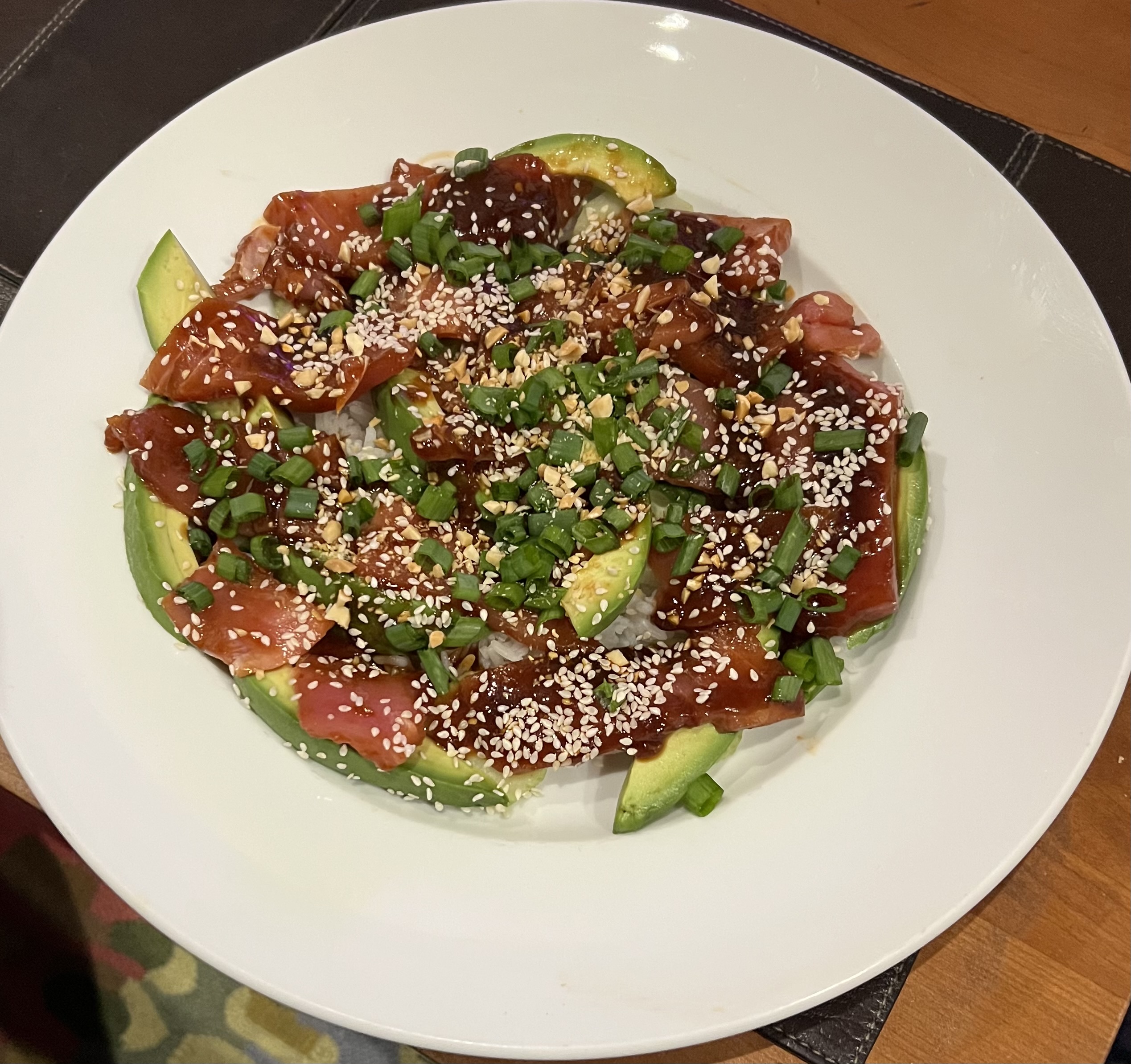
Here’s an example of a delicious dinner I had and how it all broke down…
Raw tuna: 168 calories.
Avocado : 200 calories.
Jasmine rice: 105 calories.
Peanuts: 25 calories.
Sesame seeds: 20 calories.
Asian marinade, which consisted of soy sauce, hoisin sauce, rice vinegar, sesame oil, and Chinese chili garlic sauce: 110 calories.
Total: 628 calories.
I weighed and measured every bit of that meal to get those numbers. (By the way, I gave zero calories for the green onion I scattered on top.)
So, if I know I want to have that meal for dinner, I have to make sure that I don’t have too much food for breakfast or lunch…especially if I also want to have a cocktail in the evening!
The reason why so many people fail at diets is because they require discipline, and that is tougher than it sounds. If you don’t weigh and write down everything you eat every day, I guarantee you are underestimating how many calories you’ve consumed.
I used to write everything down on paper. Now I use an app called The Fitness Chef, that lets me plug in the numbers of everything I eat and have it right on my phone for reference. It’s great when I’m on the road or at a restaurant, because it also features a scanner that does a pretty darn good job of determining how many calories your plate has, simply by taking a photograph of it.
I moved to my current home in the fall of last year. One of the toughest things to say goodbye to in my previous garden was my asparagus patch. Over the years, I had grown loads and loads of delicious asparagus, but sadly, there was no good way to transport that patch to my new place.
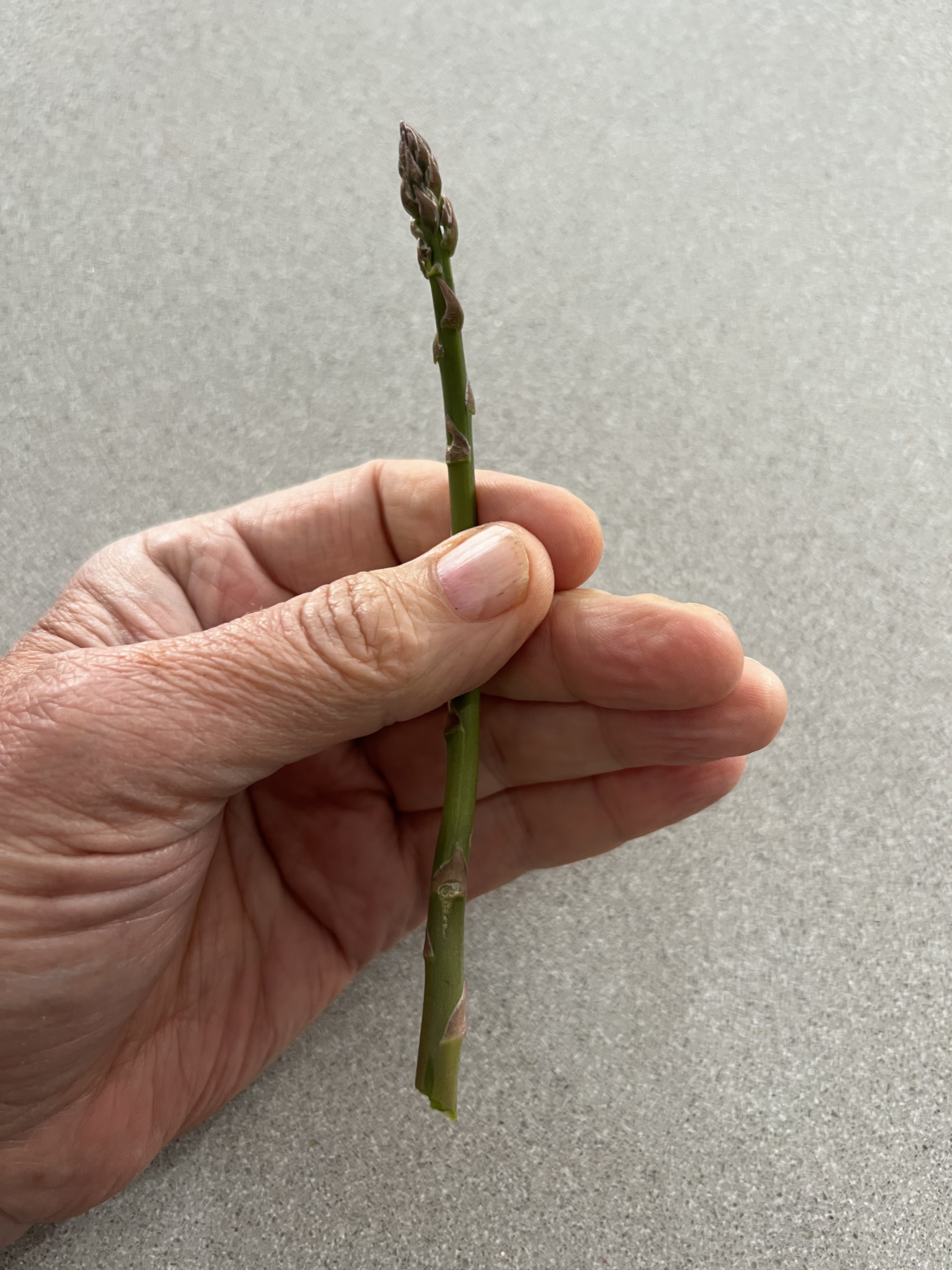
I’ve got a much smaller garden space at my current home, a small space that gets full sun, and despite its limited size, asparagus is too important of a crop to leave out. So I bought a bunch of plants this spring, and planted them. And now I have to wait. They say you’re not supposed to harvest asparagus for at least a couple of years to let the new bed establish, but I found that pretty much impossible to do…I have to have at least a bit of a taste.
Hoping to get some spears next season!
In the meantime, I can only look back at my previous success with asparagus…
The home garden is already showing signs of activity. Overwintered dill and arugula seeds are sprouting. And cool weather seeds that I’ve sown early: peas, turnips, radishes, and others are doing the same.
Asparagus is really easy to grow. You just need the space, and the plants practically do the rest.
Space them about a foot apart, and before you know it, you will have a vast network of tasty stalks sprouting through the soil every spring. They are so much better than anything you can buy in a supermarket.
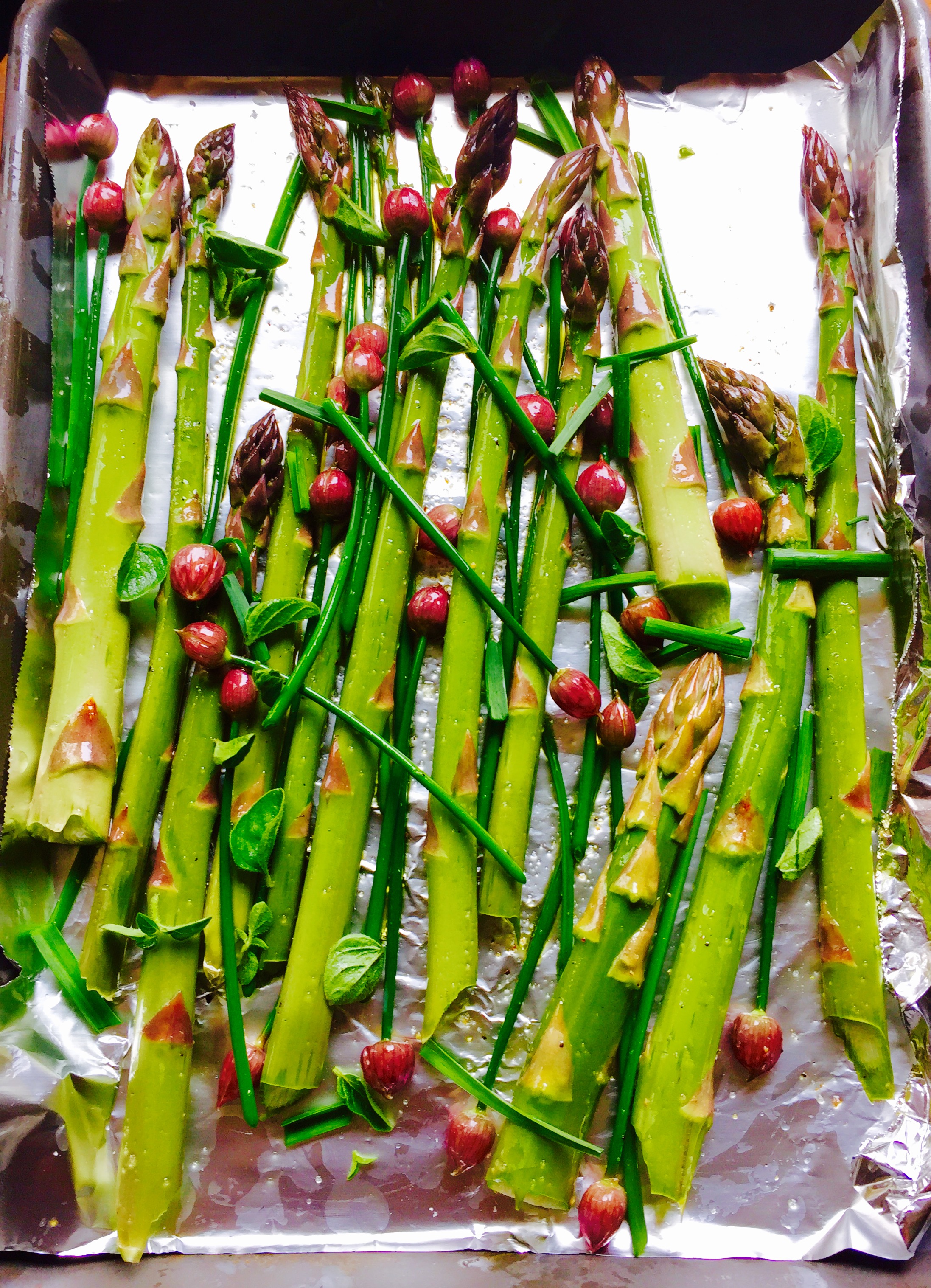
In the start of the growing season, the stalks don’t even make it into the house. I cut them and just eat them straight out of the garden. Eventually, they make the move to the kitchen, where I love to simply place them on a baking sheet and drizzle a little olive oil over them. Salt and pepper…and then in a 400-degree oven until they’ve caramelized.
Sometimes I toss some tasty chives with blossom buds on top of the asparagus and roast.
In the past, I’ve had I so much asparagus that I just didn’t know what to do with them all. So I started pickling them…a really easy process that ensured I had delicious asparagus well into the summer.
Several bunches of asparagus spears
2 cups white vinegar
1 cup cider vinegar
1 1/2 cups sugar
3 cups water
20 peppercorns
Garlic cloves, peeled
Kosher salt (1 teaspoon per quart-sized Mason jar. Use less for smaller jars.)
Bring the vinegar, water, sugar and peppercorns to a boil. Set the pan aside.
Trim the bottom of the asparagus spears so that the spears are just slightly shorter than the height of the quart-sized Mason jar you will use. Or cut them into pieces that will fit smaller jars.
Pack the jars as tightly as you can with the asparagus spears. (They will shrink when processed.) Add the garlic clove and 1 teaspoon of salt to every quart-sized Mason jar…less for smaller jars.
Fill the jars with the vinegar mixture and seal them tightly.
Process the jars for 10 minutes. Let them cool before placing them in the refrigerator. If you know you’re going to eat all the asparagus in the next week, processing isn’t really necessary.
DOES YOUR PEE SMELL FUNNY WHEN YOU EAT ASPARAGUS?
Asparagus has a sulfur-containing compound identified by scientists as methyl mercaptan. A colorless gas, this compound is also found in blood, feces, garlic, eggs, cheese and even skunk secretions. Another ingredient found in asparagus is asparagine. Present in foods like dairy products, seafood, poultry, fish and nuts, this amino acid is known to have a distinctive smell when heated. To metabolize both methyl mercaptan and asparagine, your body needs to break these compounds down and it’s this breakdown that’s responsible for your urine’s strange smell.
Since both methyl mercaptan and asparagine are associated with the sense of smell, there is debate over which ingredient is actually responsible for the asparagus-urine phenomenon. It could be one, or both.
Many people claim that, regardless of asparagus consumption, their urine does not smell. There are multiple theories about that as well. The first claims that everyone’s urine is in fact affected by asparagus, but only about half of the population have the specific gene that is required to smell the change. On the other hand, the second theory states that only half of the world’s population has the gene that’s required to break down the compounds found in asparagus and, if the body doesn’t break them down, no smell is emitted. In fact, one study published in the British Journal of Clinical Pharmacology found that only 46 percent of British people tested produced the odor while 100 percent of French people tested did. So whatever the reason, asparagus will forever be known as the vegetable that makes your urine smell strange.