Archive for the ‘garden’ Category

If you’ve got a windowsill, you can grow a variety of sprouts that will add lots of fresh flavor to any salad or stir fry. Once you’ve sprouted the seeds, the clock starts, and they can go badly rather quickly. That’s why the sprouts that you buy in a supermarket can already be half way to stale city before you even bring them home. Growing your own assures fresh sprouts when you want them, and you can’t beat the flavor.


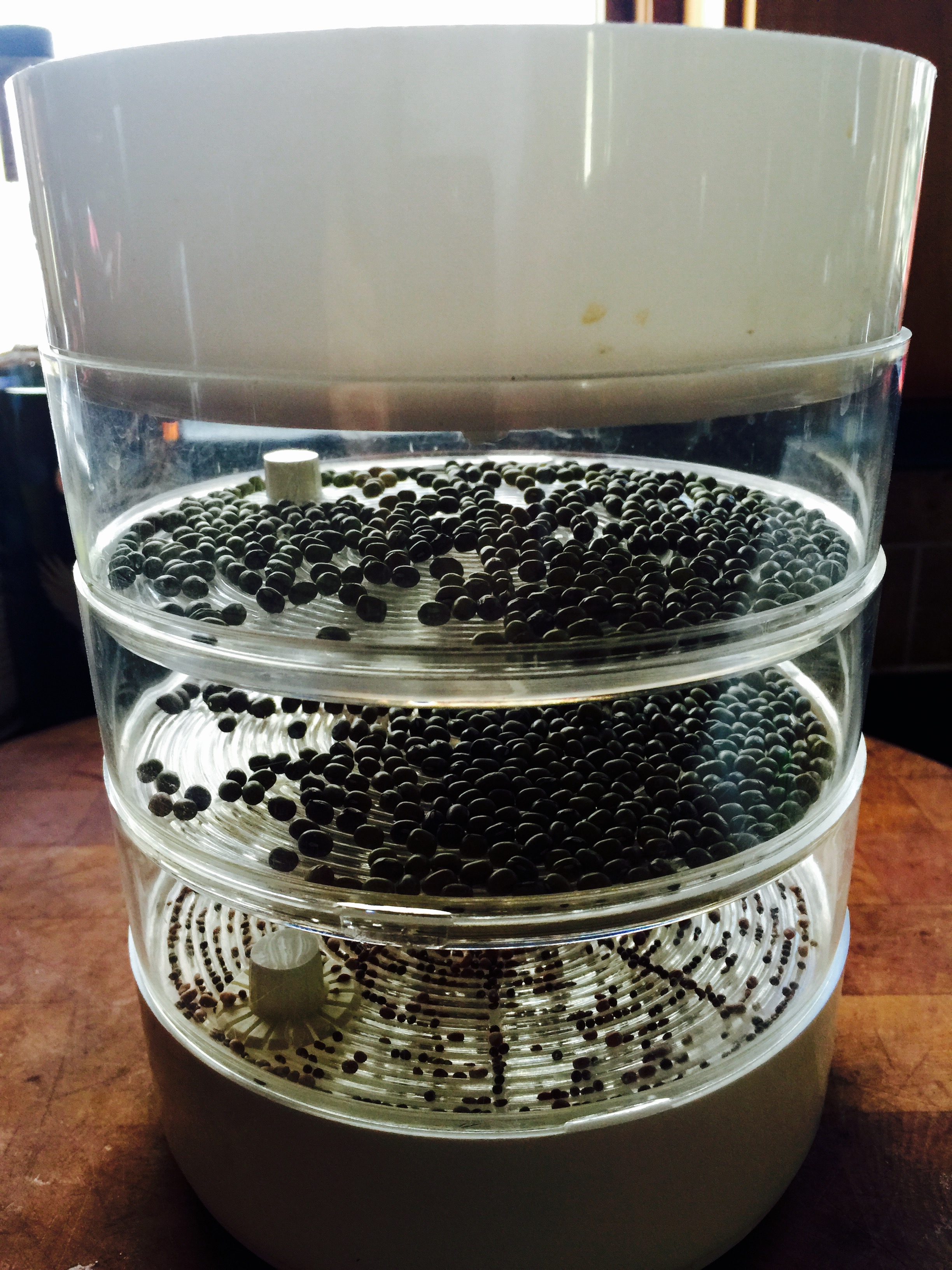
Two trays of mung bean seeds and one tray of a radish mix.

Two trays of mung bean seeds and one tray of a radish mix.


Suppliers of sprouting seeds are easy to find. My two favorites are High Mowing Seeds (www.highmowingseeds.com) and Johnny’s Selected Seeds (www.johnnyseed.com.) They also sell the sprouter, which is a stackable plastic structure that holds several layers of seeds at one time.

Stacked and ready to go.

Stacked and ready to go.


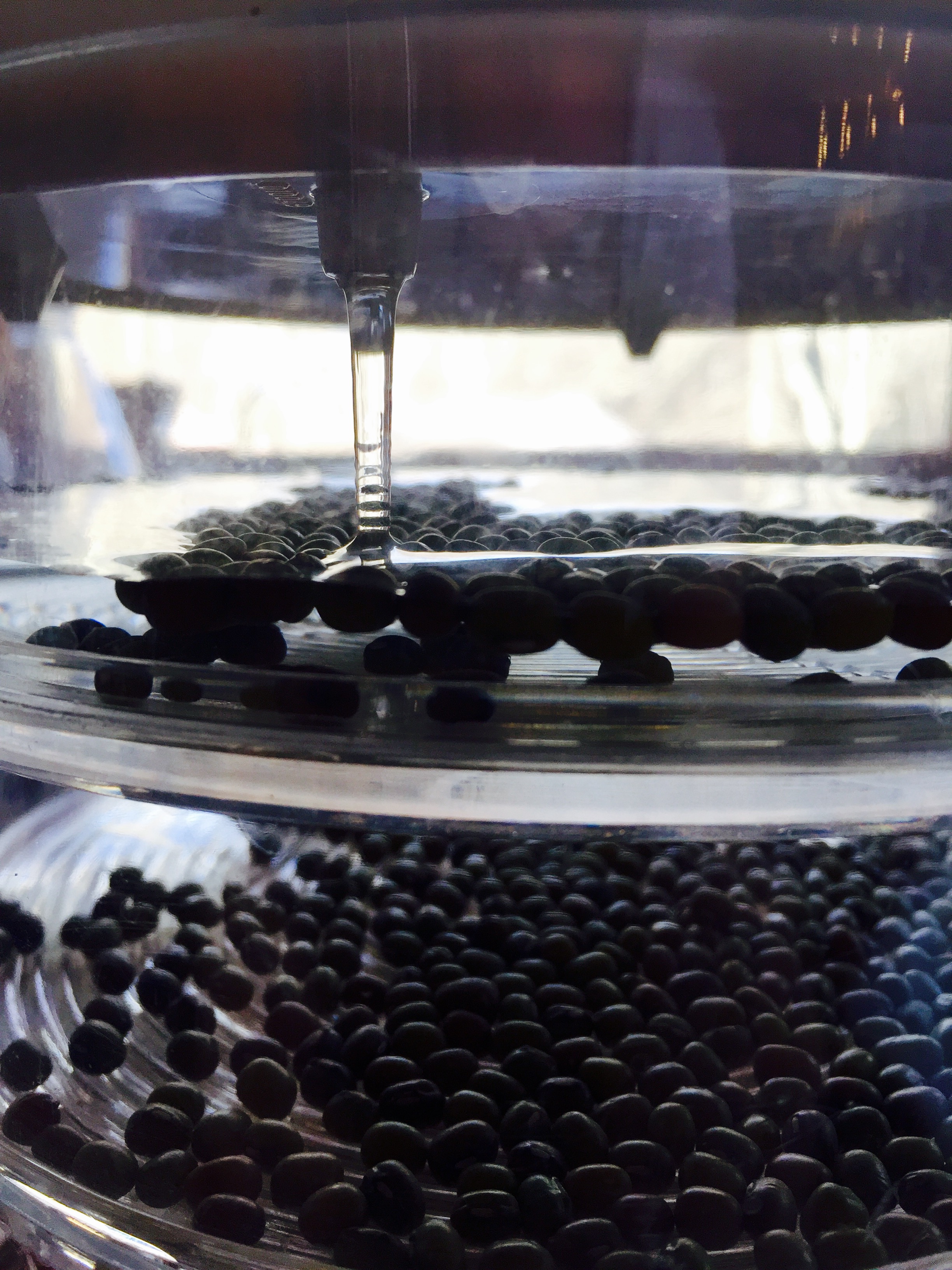
Just pour in the seeds, stack ’em up, and pour water in the top. The water trickles down through the layers, leaving behind just enough moisture to germinated the seeds.

Water trickles down through the different levels.

Water trickles down through the different levels.

Water the seeds a few times a day and in just two days, you’ll see your sprouts come alive. within 4 or 5 days, they’re totally grown, at which time you can bag them and keep them in the fridge, and start a new batch of sprouts.

Mung bean sprouts after just one day.

Sprouts after just one day.


...and after several days.

…and after several days.

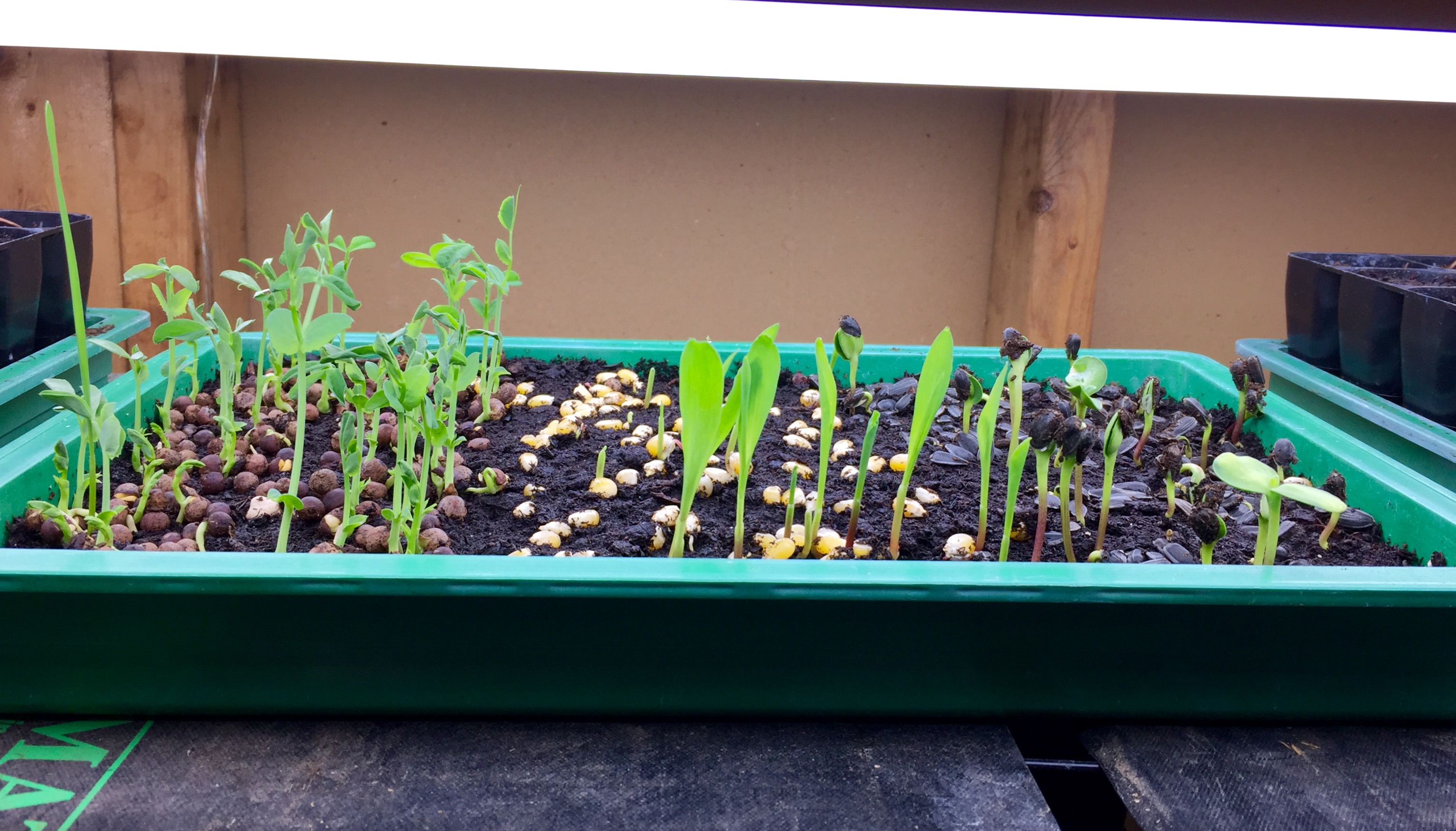
If you like micro greens, those are pretty easy to grow indoors as well, though you’ll need a windowsill with good sunlight. (Grow lights work well, too.) You place some potting mix in a shallow tray, press the seeds into the potting mix, and then water them.

Seeds ready to sprout (from left to right): sunflower, popcorn, peas.

Seeds ready to sprout (from left to right): sunflower, popcorn, peas.


In a few days, the seeds will start to sprout. when they get a few inches tall, simply snip them with a pair of scissors, and toss them into your salad. When all the seeds have sprouted, the soil and the used seeds can all go into your compost pile or garden.

Sprouting under grow lights.

Sprouting under grow lights.


I’ve bested the old adage: “Plant your peas by St. Patrick’s Day” by a week! Today’s unusually warm weather got me out in the yard, and although this 32-foot square raised bed doesn’t look like much right now, underneath that soil lurks Sugar Snap peas, Arugula, Easter Egg radishes, Spinach, and a variety of Asian greens.


FullSizeRender


That fencing material on the ground will surround the bed to keep nosy bunnies from devouring the first tasty shoots that pop up out of the soil.

I’ll take pictures every few weeks so we can see the progress.

ORGANIC OR NOT ORGANIC?

Posted: December 29, 2015 in Food, garden, tomatoes
Tags: , , , ,

You might be thinking of eating more healthy fruits and veggies in 2016, and organic is usually the way to go. But considering the price difference, it’s not always easy to simply buy organic over non-organic produce. Although I tend to buy mostly organic products, there are times when I think it’s not all that necessary. By the same token, there are times when it is absolutely necessary.

organic

Despite the organic label… despite the fact that produce has been triple washed or whatever other nonsense they claim, I always wash my produce before eating. And I store it in a new, clean plastic bag or container in the fridge, recycling the old clam shell container.

I try to avoid any produce from Mexico or South America, where they’re allowed to use pesticides banned long ago in the United States. I don’t even trust the organic products from those areas. (Hey, if they tell you not to drink the water when you vacation in Mexico, why would you want them to water your produce with it?)

And I buy seasonal organic produce from my local farmers whenever possible.

Here are a few of what are known as the “dirty dozen:”

Strawberries: Always go organic. Non-organic strawberries are bathed in pesticides and no amount of washing with water will remove them. There’s no way I’m going to put that in my daughter’s smoothie.
Speaking of strawberries, the greens on each fruit are totally edible, and you won’t notice them at all if you’re using them for smoothies. Just wash the fruits and then throw the whole thing into your blender.
I usually buy a large quantity of organic strawberries when they’re on sale, wash them thoroughly in cold water, and then freeze them in small bags to use for smoothies later.

Apples: Always go organic. I have two apple trees in my yard and I know what a nightmare it is to keep the bugs away from them. The only way you can do that is by spraying the living hell out of those trees. Unfortunately for me, the days of going to an orchard with the family and picking our own apples are long gone, because I know what they have to do to make them look pretty on the branch.

Potatoes: Always go organic. These are sprayed heavily as well. And then there’s the added bonus of spraying the harvested potatoes afterwards to prevent them from sprouting while in storage.


Since the US Environmental Protection Agency doesn’t do its job to let you know about pesticides in your food, groups like the EWG, the Environmental Working Group, do it for them. Other produce that falls into the “dirty dozen” category, as listed by the EWG: celery, peaches, bell peppers, spinach, imported nectarines, cucumbers, cherry tomatoes, kale, collard greens, zucchini, lettuce, blueberries. Always buy organic versions of these if you want to avoid ingesting pesticides. Remember, washing the fruit does not wash off the pesticide!


Fruits with skin you peel: bananas, oranges and other citrus, melons, etc…I’m OK with non-organic, but I wash the outside thoroughly before cutting into the fruit, and I don’t use the skin. If I need the zest of citrus for a recipe, I use organic…but those can be hard to find.

“The clean fifteen,” meaning produce you can buy that is not organic (according to the EWG): onions, sweet corn (which I totally disagree with, thanks to Monsanto’s Round-Up ready crops), pineapple, avocado, asparagus, frozen sweet peas, mango, papayas, eggplant, cantaloupe (domestic), kiwi, cabbage, watermelon, sweet potatoes, grapefruit, mushrooms. I would still keep my purchases to produce grown in the USA. Pesticides that are banned in the USA are still used in other countries.

Here’s some technical labeling info you may or may not know…

Natural: This is a marketing word – not a scientific label. The FDA requires only one natural ingredient to be present for an entire product to be labeled “natural.” This means that as long as a company has one natural ingredient despite multiple harmful chemical ingredients, they can still call the product natural. (As my buddy, Lee, a PhD in Chemistry once told me: “Hey…cyanide is ‘natural!'”) So always read the label!

USDA Certified Organic: Product labels that feature this term are manufactured by operators who comply with annual inspections, as well as random checks, to ensure they’re adhering to the USDA’s organic standards. This includes, among many things, a three-year process to properly fortify the farmland. It’s also important to note that many local farmers that do adhere to “organic” standards can’t afford the fee to apply the “organic” label to their products. So, talk to your local farmer about it.

Here are a few permutations of the USDA’s “organic” label:

    • 100 percent organic: Product must contain (excluding water and salt) only organically produced ingredients. Products may display the USDA Organic Seal and must display the certifying agent’s name and address.
    • Organic: Product must contain at least 95 percent organically produced ingredients (excluding water and salt). Remaining product ingredients must consist of non-agricultural substances approved on the National List or non-organically produced agricultural products that are not commercially available in organic form, also on the National List. Products may display the USDA Organic Seal and must display the certifying agent’s name and address.
    • Made with more organic ingredients: Products contain at least 70 percent organic ingredients and product label can list up to three of the organic ingredients or “food” groups on the principal display panel. For example, body lotion made with at least 70 percent organic ingredients (excluding water and salt) and only organic herbs may be labeled either “body lotion made with organic lavender, rosemary, and chamomile,” or “body lotion made with organic herbs.” Products may not display the USDA Organic Seal and must display the certifying agent’s name and address.

    Of course, all this assumes honest labeling on packaging. Bottom line: read labels, ask questions, and support your local farmers.



    A few years ago, at Le Saint-Amour, a great restaurant in Quebec City, the dish I ordered had these small strange-looking root vegetables sitting next to my roasted duck entrée. They resembled tiny twisted parsnips…or caterpillars! I needed to know what these things were, and so I asked my French waiter, who came back with a piece of paper that had the word “crosne” written on it. He said: “I don’t know how they say it in English.”
    Back at the hotel room, I went right to the laptop and started a search on-line and discovered that crosnes (pronounced crones) are also known as Chinese artichokes, and although they are somewhat common in European gardens, they’re really difficult to find in the states.
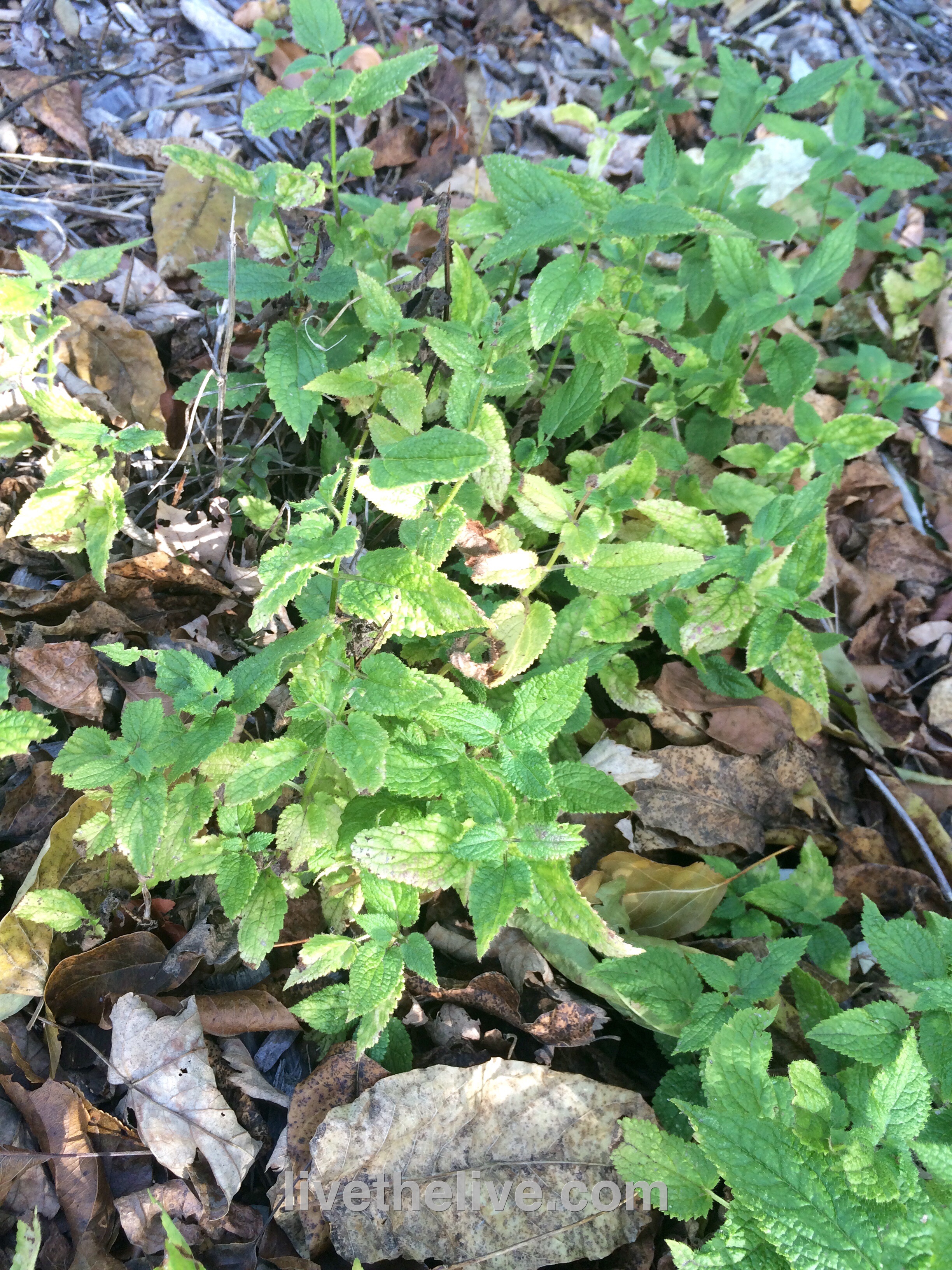
    The leaves look like mint, but don't have a fragrance.

    The leaves look like mint, but don’t have a fragrance.

    The plant is a relative of mint (though the leaves have no aroma), a perennial, is easy to grow, spreads on its own, and has those small, convoluted and delicious root clumps (known as tubers to gardeners.) So what’s not to like? Well, apparently, it’s not the gardeners that don’t want to deal with them…it’s the chefs! The tubers are very small and need a little extra effort to make sure they’re washed clean before cooking. They don’t need to be peeled (now that would be a pain in the ass) but to many chefs, even the washing is too much of a hassle.
    image
    As a Master Gardener, I found all of this pretty interesting so I searched for sources to buy crosnes plants. It took a while (most growers were in Europe or Great Britain), but I finally found a source in Oregon that sold the plants and I bought a few for my home garden.
    image

    Much like mint, crosnes are pretty hardy and are tough to remove once well established, so they need to be planted in an area where you don’t mind if they take over. The tubers are ready to harvest October through November, and as long as I leave some in the ground over the winter, the crosnes will be back again the next year. Seems pretty low-maintenance for such a delicious treat!

    image

    As for preparation, a light saute in olive oil and butter (or lard), and a little salt and pepper, is all they need. They also go well with a deep, rich demi glace reduction like I had with my duck at Le Saint-Amour.

    If you grow tomato plants in pots, you already know that you don’t need an actual garden plot to have a successful harvest of fresh produce. Herbs and greens can also be grown without much effort.

    But have you tried potatoes or sweet potatoes?

    image

    POTATOES

    Growing potatoes in pots is actually better in many ways than growing them in your garden. They can take up some serious garden space, especially tough for gardeners that have a relatively small space to grow their veggies. Putting potatoes in pots makes them concentrate their growing efforts on the limited space they’re given, and I’ve found that they produce a sizable harvest despite their restrictions.

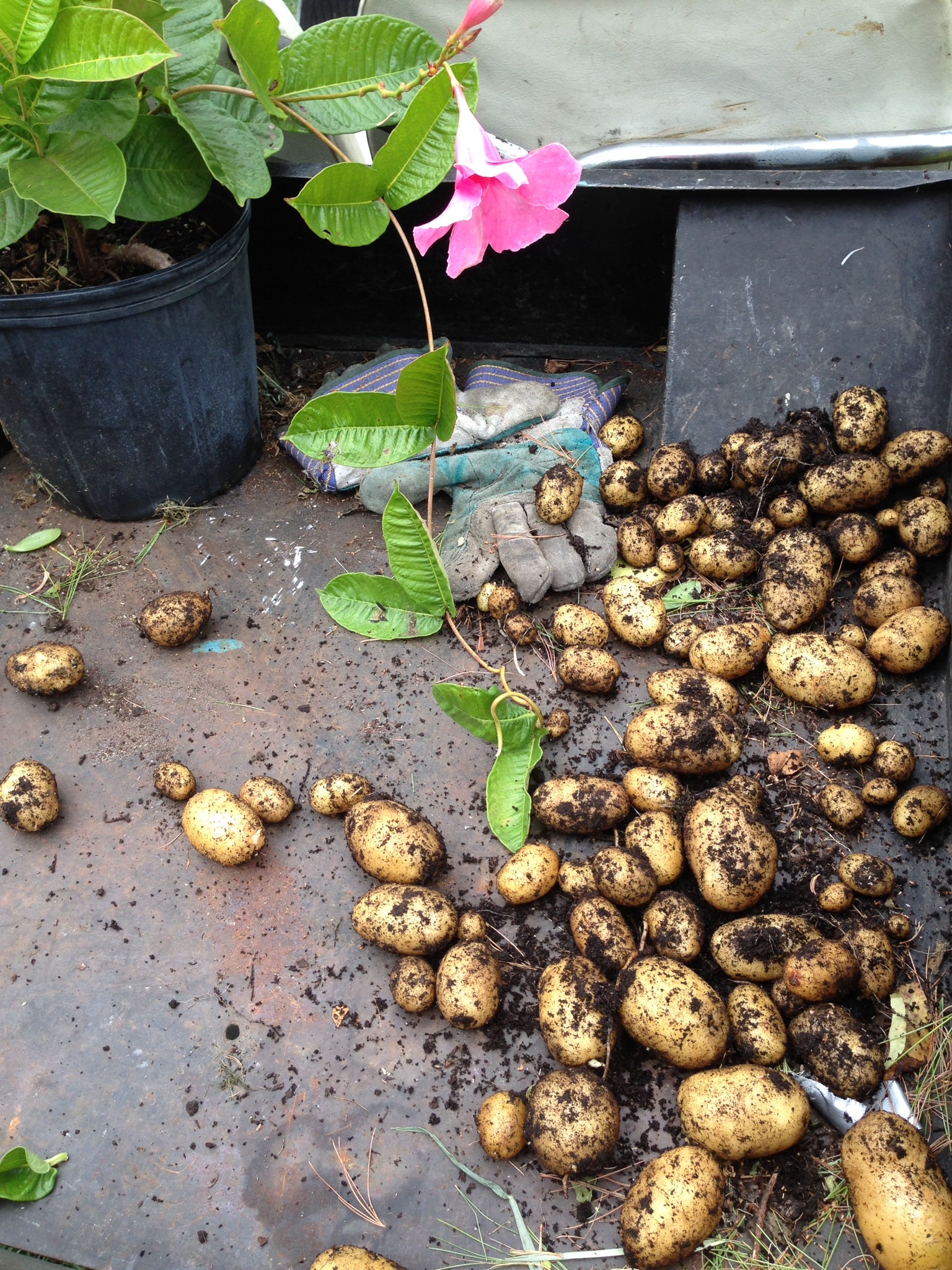
    You can buy seed potatoes from gardening companies online but you can also go to the store and simply buy a bag of organic potatoes. Have some of them for dinner, and leave the rest in a corner without sunshine to sprout right in the bag. Because they’re organic, they haven’t been sprayed with a sprout-inhibitor, and you’ll see that they’ll start to grow in no time. (You can also place each potato in a glass of water to aid in sprouting.) Once the potatoes sprout, cut each into 2 or 3 pieces, each piece with a bud. Get a large pot you want to grow them in (plastic is lighter and easier), making sure it has holes in the bottom for drainage, and fill it with only 3 inches of soil. Gently press the potato buds into this soil about 4 inches apart and water them. Every week as they grow, keep adding soil to the pot all the way up the stems to just under the top leaves. When you’ve filled the pot with soil, let the potatoes continue growing…they’re now on their own. They will bloom, and then the stems will start to wither and die. When the stems have died off (if you can wait that long!) simply tilt the pot over and you’ll pour out your potato harvest! Lots of fun for the kids to find this “buried treasure.”


    Sweet potatoes growing in my yard in a pot with elephant ears.

    Sweet potatoes growing in my yard in a pot with elephant ears.

    SWEET POTATOES

    My wife loves sweet potato vines to decorate flower pots. So instead of  buying decorative sweet potato vines that don’t produce edible fruit, I buy edible sweet potato plants from a reliable garden catalog. I simply stick them in the potting soil next to our favorite flowers and let them grow all season long. The decorative leaves will cascade down the sides of the flower pots, but inside, under the soil surface, they’ll be secretly making delicious sweet potatoes!

    When the growing season is over, gently dig away the potting soil in the pot (I use my hands to prevent damaging the sweet potatoes) and admire your harvest!

    image

    Potatoes and sweet potatoes need to be store in a cool place away from sunlight (and away from onions.) A cool garage works great.


    Happy National Vodka Day! If you think cucumbers are boring, this drink will change your mind. Garden-fresh cukes are always best.


    image

    4 fresh cucumbers, peeled and seeded
    Small ice cubes
    1 cup loosely packed fresh mint leaves
    2 teaspoons granulated organic cane sugar
    3 tablespoons fresh lime juice
    1/2 cup vodka (I like Tito’s)
    1 oz. orange liqueur (I like Cointreau)


    Peel and seed the cucumbers. Coarsely chop them and then purée in a food processor until smooth. Strain through a fine sieve, pressing solids to extract as much liquid as possible. Or, if you have one, use a juicer. Set the cucumber juice aside.

    To a large glass pitcher, add the mint leaves, sugar and lime juice. Muddle the ingredients so that the mint leaves release their oils. Add 3/4 cup (at least) of the cucumber juice. Add the vodka and Cointreau. Muddle again briefly.

    Fill tall drinking glasses with ice cubes. Strain the cocktail into glasses. Garnish with a cucumber spear or mint.

    Now’s the time to head to your local farm stand and pick up a bag of gorgeous plum tomatoes, before the season is gone! And this is what you do with them…

    These are not sun-dried tomatoes. They’re better, because fresh plum tomatoes are still moist after roasting, with a bit of that magic tomato liquid in every cup! A great, simple platter to offer at parties.

    Tomatoes before

    Tomatoes before

    12 to 18 halved, seeded plum tomatoes
    1/4 cup extra virgin olive oil
    2 tablespoons organic cane sugar
    Freshly ground pepper
    Fleur de Sel or sea salt

    Pre-heat the oven to 250.

    Line a baking sheet with foil and rub it lightly with olive oil.

    Arrange halved and seeded tomatoes on it in a single layer, cut side up. Drizzle evenly with 1/4 cup olive oil, sprinkle with 2 tablespoons sugar, and season with pepper to taste.

    Bake the tomatoes until they are still juicy but slightly wrinkled, about 3 hours. Transfer to a platter and let cool slightly.

    Just before serving, sprinkle tomatoes with Fleur de Sel, and garnish if you like, with chopped parsley leaves, mint leaves, or basil.

    Tomatoes after

    Tomatoes after

    KOHL-SLAW

    Posted: August 11, 2015 in Food, garden, Recipes
    Tags: , , , ,

    Kohlrabi is probably one of the most misunderstood vegetables you’ll find in the supermarket. Most people don’t have a clue about what to do with them. Kohlrabi is a member of the cabbage family and can be eaten raw as well as cooked.

    For me, the real joy of kohlrabi is biting into a crunchy, sweet, freshly picked and peeled bulb right out of the garden. Unfortunately, much of the kohlrabi you find in a supermarket is grown larger than a tennis ball, making it tough, woody and dry. And they usually remove all the leaves, which are delicious cooked or raw.

    I decided to make a slaw with the leaves and bulbs of my kohlarabi harvest, to best use all the parts of the plant. I used my Awesomesauce as the dressing. Find the recipe here: http://wp.me/p1c1Nl-gT

    kohlrabi LTL

    2 kohlrabi bulbs, with leaves
    1 carrot
    Alz Awesomesauce
    salt and pepper to taste


    Wash the veggies thoroughly before using. Pull the leaves off the kohlrabi bulb, and remove the stems. Grab a bunch of leaves at a time, roll them up tightly, and slice as thinly as you can into thin ribbons. Place in a bowl. Do this with all the leaves.

    Peel the thick skin off the kohlrabi bulb and slice it as thinly as you can. Then take the slices and cut thin sticks out of them. Toss into the bowl.

    Season the leaves and bulbs slices with a little salt and pepper, then add Awesomesauce to taste and toss well.

    Refrigerate covered, and let the flavors blend for a couple of hours before using.

    It’s interesting that an Eastern European country that is as far north as Newfoundland has one of the most refreshing cold summer soups of any country in Europe. It’s a cold beet soup called Šaltibarščiai (pronounced shul-tih barsh-chay) and it’s classic Lithuanian cooking at its best.

    No summer was complete without my Mom’s Šaltibarščiai on the table, and my Dad always insisted on eating it with boiled potatoes on the side. Now residing in an assisted living facility, my Mom has not had this soup in many years, so I made her a batch when she came to visit recently.

    There are many different variations of this soup. For example, many Lithuanians today use keffir instead of buttermilk. My Mom insists this is a “Russian influence” and not a good thing. I just think buttermilk tastes better.

    securedownload


    1 quart buttermilk
    4 hard-boiled eggs, peeled and chopped
    3 cucumbers, peeled, seeded and chopped
    8 beets, cooked, peeled and chopped
    1 tablespoon finely chopped fresh dill
    1 scallion, finely chopped, greens only
    salt
    a pile of boiled potatoes (optional)


    Pour the buttermilk into a large bowl. If it’s very thick, you can dilute it a bit with fresh water.

    Peel and chop the eggs and toss them in the bowl. Peel, seed and chop the cukes…then into the bowl.

    I love Love Beets, hermetically sealed cooked and peeled beets, ready to use, available in most supermarkets. (In the old days, my Mom would simply use canned beets.) I open a couple of packs of Love Beets, pouring the beet juice into the bowl. I chop the beets and add them as well.

    Grab some fresh dill and chop it finely. Add it to the bowl. Finely chop the greens of one or two scallions and sprinkle some salt on them. Rub the salt into the scallions, mashing them a bit, softening them. Then add the to the bowl.

    Stir everything together, put a lid on the bowl, and let it chill in the fridge for a few hours.

    Remove from fridge, stir, and season with more salt if needed.


    The corn is out on farm stands in my neighborhood, and it’s really hard to resist, despite the fact that corn is at the top of the loaded-with-pesticides list of veggies. Organic farmers struggle with corn because it demands a lot and produces little in return, so I’m growing my own patch this year, a small 5-by-5 foot square that will yield a couple dozen organic ears, if I do it right.

    By now, I’m sure you’ve seen those videos where the person takes corn still in the husk, pops it in the microwave, and then slips out a perfect ear of corn without any silk minutes later. If you haven’t, here’s one of them…

    There are 2 problems with this method: 1) It takes forever to do a dozen ears…and 2) It ruins the damn corn!

    corn1

    Why would anyone who’s passionate about fresh corn, stick it in a microwave and nuke the living hell out of it? Fresh corn needs a minimalist approach. It should be eaten practically raw…not bombarded with gamma rays and dehydrated in to shriveled kernels.

    I love my corn right off the cob…and I still stick to the tried-and-true method of putting it in a pot of water and boiling it for a very short time. Do I get a few strands of silk? Sure. That’s part of the deal. Real corn has silk…just like real fish has bones. Get over it.

    My wife and daughter like their corn off the cob. In that case, I shuck the corn, stand the ear up in a bowl while it’s still raw, and slice down with a knife to remove the kernels. I then lightly saute the corn in a pan with unsalted organic butter and a pinch of Fleur de Sel. Those pieces that have several rows of kernels stuck together, across and down, are the favorites.

    corn2


    One other way I’ve cooked corn is the “cooler corn” method, which is great when you have a large crowd to feed. Get your favorite cooler and make sure it’s clean inside. Shuck your corn and place the ears in the cooler. Boil a large pot of water on the stove and then pour the hot water over the corn. Close the cooler lid tightly and let it sit for about 30 minutes. You will have perfect corn every time.