Archive for the ‘Santorini’ Category

Though it may sound Japanese, the word “saganaki” refers to a small frying pan used in Greek cooking. The most famous of these dishes, simply called saganaki, is a fried cheese, often flamed at the end with a little ouzo.

Shrimp saganaki is one of my favorite Greek dishes, and it usually involves cooking shrimp in a tomato-based sauce with plenty of feta cheese sprinkled in. It’s a simple yet fantastic dish if the ingredients are fresh. Doesn’t hurt to be sitting in a taverna on the beautiful island of Santorini while eating it, either!

Graviera cheese

Graviera cheese

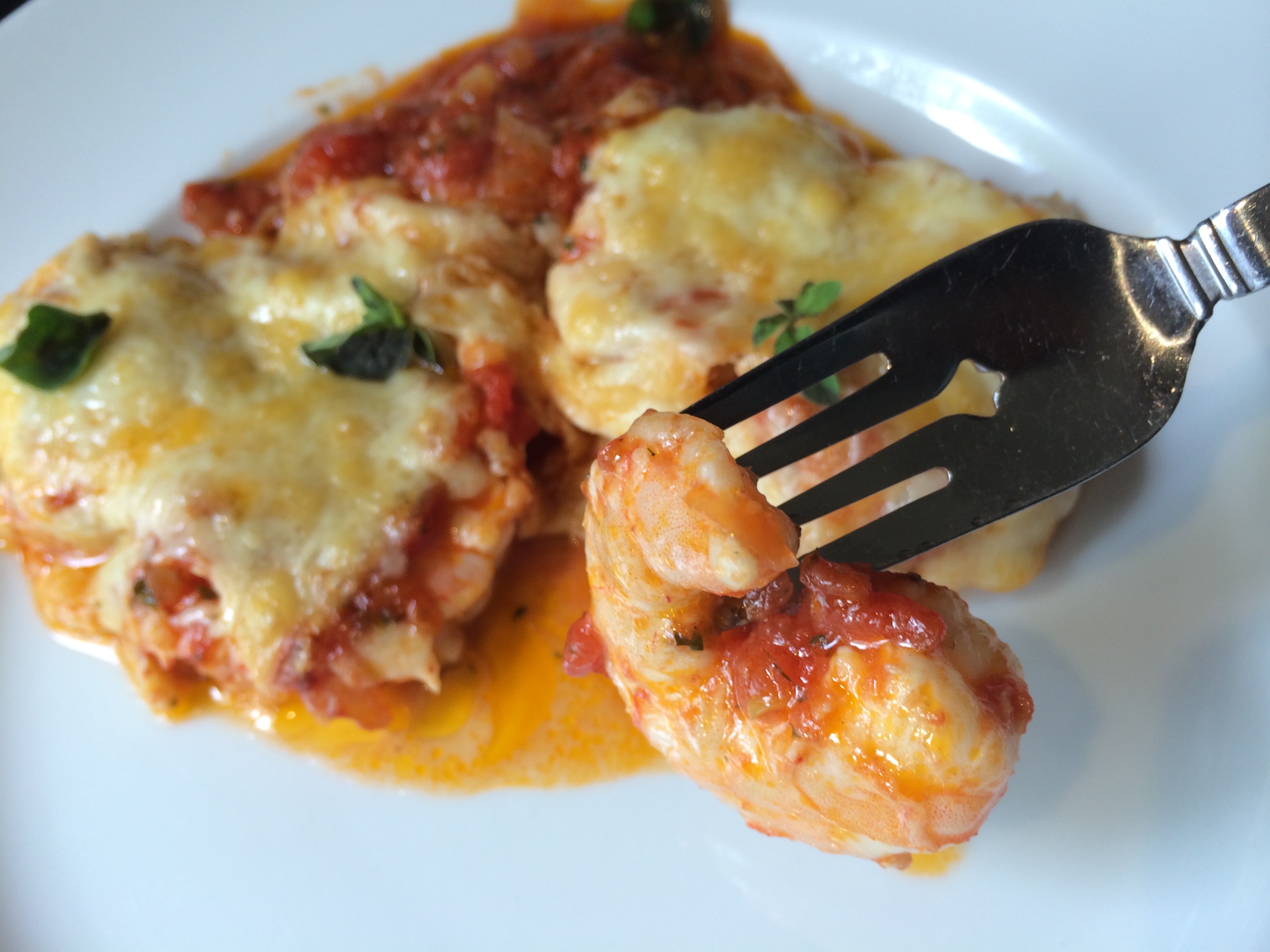
I had a slab of Graviera cheese from my most recent trip to Santorini, and decided to recreate shrimp saganaki using that instead of feta. It was pretty damn amazing…

Melty, gooey, delicious!

Melty, gooey, delicious!


Ingredients:


300 g grated Graviera cheese

1 can (28 oz) whole tomatoes

1 lb (about 24) shrimp, peeled and deveined

1 medium onion, chopped

juice of 1/2 lemon

1/4 cup olive oil

2 cloves garlic, through a press

pinch red pepper flakes

1 1/2 tablespoons fresh dill, finely chopped

1 tablespoon fresh oregano, finely chopped

1 1/2 tablespoons Ouzo

salt and pepper


Peel and devein the shrimp. Squeeze the juice of  1/2 of a lemon on to the shrimp and toss. Set aside.

In a large pan, saute the onions in the olive oil until translucent. Add garlic and cook for a few seconds more.

Crush or puree tomatoes and add to the pan. Add red pepper flakes, dill and oregano, and salt and pepper. Add Ouzo.

Let this sauce cook down for a bit until all the flavors have blended together.

Pour a layer of the sauce on the bottom of a metal broiler-proof pan. Lay the shrimp in a single layer into the sauce. Cover the shrimp with the rest of the sauce and sprinkle the grated Graviera on top.

Place the pan in the broiler and cook until the cheese is brown and bubbly.

shrimp saganaki


After years of unfailing service, my trusty backpack has decided that its days of journeying are over.

It was all so sudden…

Edges fraying, zippers jammed, stitching coming loose, rubberized grommets dry and brittle, mesh water bottle compartments sagging–their elasticity nothing but a memory–I suppose I simply refused to acknowledge the signs of a life well-traveled coming to an end.

BACKPACK

Over the past five years, my backpack has carried bottles of wine and bags of fava across Santorini…ocean-carved granite stones from Monhegan Island off the coast of Maine…conch shells from the beaches of Anguilla….an unlikely combination of amber and smoked fish off the Baltic coast of Lithuania…jars of pate from gourmet stores in Quebec City…questionable electronics purchased on a street corner in Times Square…crocks of magnificent Maille mustard from Paris…gurgling 5-liter cans of olive oil from Puglia…cryo-vacced sausages from San Sebastian…sacks of Fleur de Sel purchased roadside in Guerande, France…dried fruit and nuts from the Souk in Marrakech…and full-sized, stinky wheels of young Pecorino from an outdoor market in Faro.

My backpack cradled all the things that ensured my safety and comfort on my journeys: passports, wallet, pocket knife, flashlight, a few feet of rope, note pad, business cards for livethelive.com, water, energy bars, Valium and Ambien for those long plane trips, Pepto for those bad food choices, and Immodium for those really bad food choices.
It accompanied me while snorkeling in St John…loading up on pasties and smoked whitefish at the foot of the Mackinac Bridge in Michigan’s Upper Peninsula…swimming with dolphins in Moorea…riding camels along the Morrocan coast in Essouria…slurping oysters by the dozen in Pensacola Beach…flying in a hot air balloon over the vineyards outside of Barcelona…diving off the rocks in Capri…circling the dog track at the New Orleans Jazz Festival…boogie-boarding at Nauset Beach on Cape Cod…touring via helicopter over mountains and glaciers to Milford Sound in New Zealand…and relaxing poolside at the Four Seasons Resort in West Palm Beach.

Always behind me and never a complaint. A fond farewell. Thanks for watching my back, pack.

They call it fava, but it’s not the bean we usually associate with that name. Originally, broad beans were used in this dish, but quickly it changed to a type of yellow shelled lentil that is much smaller and flavorful than its American counterpart, the yellow split pea, no doubt due in part to the dry, volcanic Santorini soil it grows in. The lentil is smaller and the art of turning this simple gem into a sublime porridge is worth learning.
The fava at Dimitris Amoudi Taverna

The fava at Dimitris Amoudi Taverna

As common in Santorini as pasta is in Italy, grains of fava have been found in archaeological sites in the ancient city of Akrotiri (on the southern side of Santorini) dating as far back as 3500 years ago. Every taverna on the island offers their own version of fava, and though the differences are subtle, they can be significant.
Most recipes start with the dried lentils, which are washed thoroughly. They are added to a pot of fresh water and then boiled until the water reduces and the lentils slowly absorb the liquid and soften into a porridge. Often chopped onion is added to the pot of water in the very beginning, so that it completely dissolves and flavors the fava. Some recipes call for a subtle mixture of local dried herbs, similar to oregano and thyme, to be wrapped in cheesecloth and added to the pot to infuse flavor.
Like making a great Italian tomato sauce, cooking fava is a labor love. It requires low heat and constant stirring to make it perfectly smooth. Often it is pureed in a blender at the end.
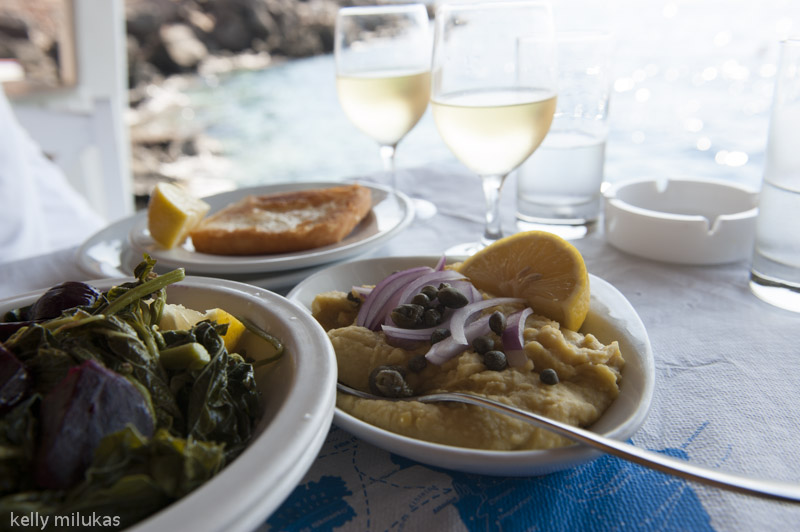
When the fava is ready to serve, the toppings can vary. Thin slices of red onion and a liberal drizzle of Greek olive oil are common. Sometimes it is topped with locally harvested and brined caper berries or caper berry leaves, or a few kalamata olives.
Proud of his fava

Proud of his fava

On our recent trip to Santorini, our most memorable fava dishes were a simple, rustic version with onion, capers, olive oil and a side of lemon at Dimitris in Amoudi, and a light-as-a-cloud creamy fava topped with caper berry leaves and olive oil at Roka in Oia.
Finding real Santorini fava can be difficult and expensive on line, but it is possible. You can easily find dried yellow split peas in local US supermarkets, but it’s not quite the same.
My personal touch–no surprise here–bacon! I finely chop and then fry a small amount of bacon and sauté it with the chopped onion, then add it (with the bacon fat) to the boiling pot of fava and water in the beginning.

SANTORINI, GREECE

Posted: August 26, 2013 in Food, Santorini, travel, Uncategorized
Tags: , ,

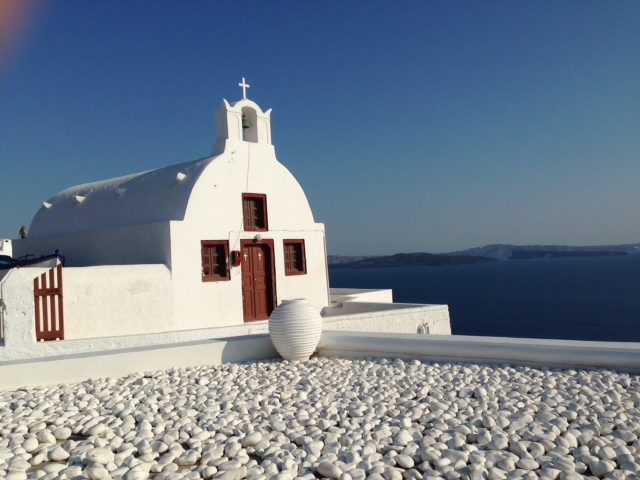
santorini1 santorini2 santorini3Back for our third visit on this incredible legendary island. Though many things have changed in the last five years–larger crowds, more humungous tour buses squeezing through very narrow streets, more high-end hotel construction–the essence of the this island, and of the magical town of Oia, where we always stay, (pronounced Ee-yah) has remained intact. The people are as friendly as ever, and more than happy to share their heritage with you.

As I write this, I can hear the jingling of the bells on the donkeys that carry people up the long and steep winding stairway that connects the waterfront town of Amoudi below to the cliffside village of Oia above.

In future posts, I’ll discuss where to go, what to do, where to eat, and what to avoid.

No elevators here. Get your sturdiest walking shoes on and get ready to rock!