Posts Tagged ‘dessert’

Happy new year! If you’re not dieting, this is a great way to start the new year! 😆

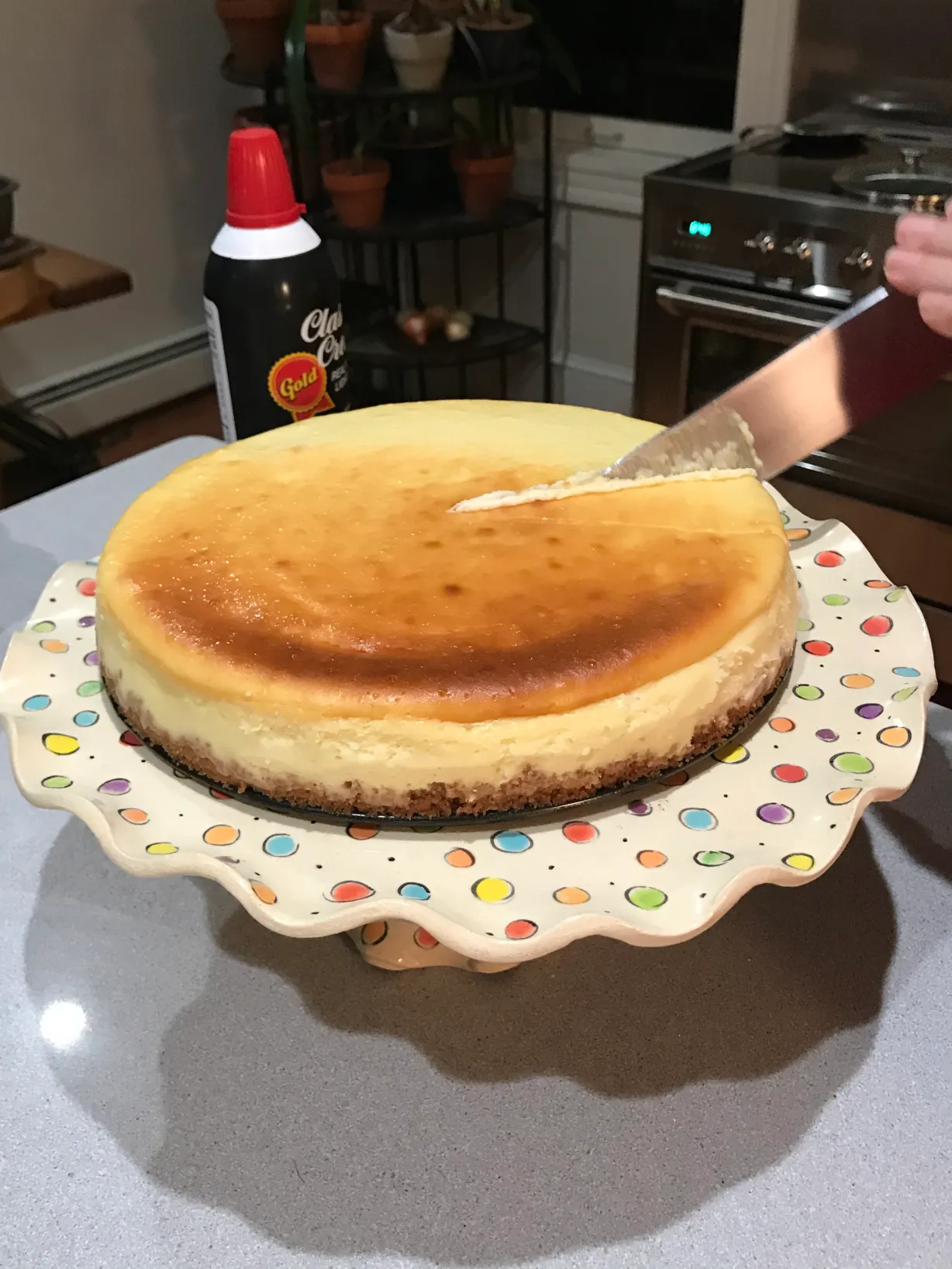
This recipe is not only delicious, but it results in a perfectly cooked cheesecake with no cracking.

One of the keys to a great cheesecake right is placing it in a water bath while baking. But if the springform pan allows water in (and they all do), it creates problems. The solution is to foil-wrap the springform pan really well.

But first, the crust…

1-1/2 cups graham cracker crumbs, from 12 whole crackers
5 tablespoons unsalted butter, melted
2 tablespoons sugar
1/8 teaspoon salt

Preheat the oven to 375° and set an oven rack in the lower middle position.

Here’s the crucial part: Wrap a 9- or 10-inch springform pan with one large piece of heavy-duty aluminum foil, covering the underside and extending all the way to the top so there are no seams on the bottom or sides of the pan. Just to make sure, repeat this process with another sheet of foil for insurance. This keeps the water bath out of your cheesecake, so do a thorough job of it!

Then spray the inside of the pan with nonstick cooking spray.

In a medium bowl, combine the graham cracker crumbs, melted butter, sugar, and salt. Stir until it’s well combined. Press the crumbs into an even layer on the the bottom of the prepared pan. Bake the crust for 10 minutes, until set. Remove the pan from the oven and set it aside.


32 oz. (four 8-oz. blocks) cream cheese, at room temperature
2 cups sugar 
3 tablespoons all-purpose flour
4 teaspoons vanilla extract
1 teaspoon packed lemon zest, from 1 lemon
2 teaspoons fresh lemon juice, from 1 lemon 
1/4 teaspoon salt
6 large eggs 
1/2 cup sour cream


Reduce the oven temperature to 325°F. Boil some water.

In the bowl of an electric mixer fitted with the paddle attachment, beat the cream cheese, sugar, and flour together on medium speed until just smooth, about 1 minute. Scrape the bottom and sides of the bowl to be sure the mixture is evenly combined.

Add the vanilla, lemon zest, lemon juice, and salt. Beat on low speed until it’s all just combined. Add the eggs, one at a time, mixing on low speed until incorporated, scraping the bowl as necessary. Mix in the sour cream. Make sure the batter is uniform but don’t over-mix it.

By now, the oven should be cooled to 325°.

Set the cheesecake pan in a large roasting pan. Pour the batter on top of the crust. Pour the boiling water into the large roasting pan to come about 1 inch up the side of the cake pan.
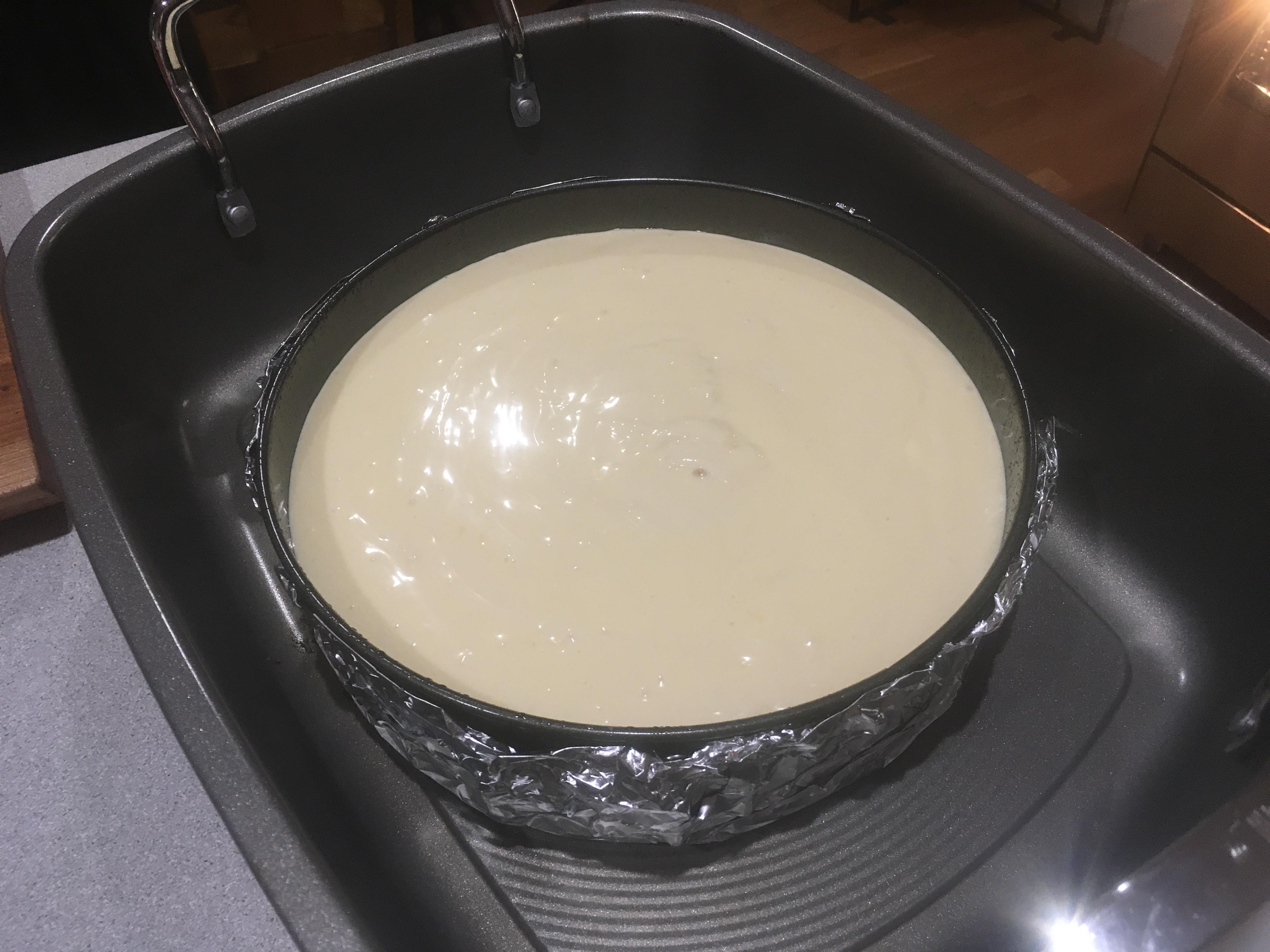
Bake until the cake is just set, 1 hour and 30 minutes to 1 hour and 45 minutes (the cake should wobble just a bit when the pan is nudged). Remember: the cake will continue to cook outside of the oven before it cools!

Carefully remove the roasting pan from the oven and set it on a wire rack. Cool the cheesecake in the water bath until the water is just warm, about 45 minutes.
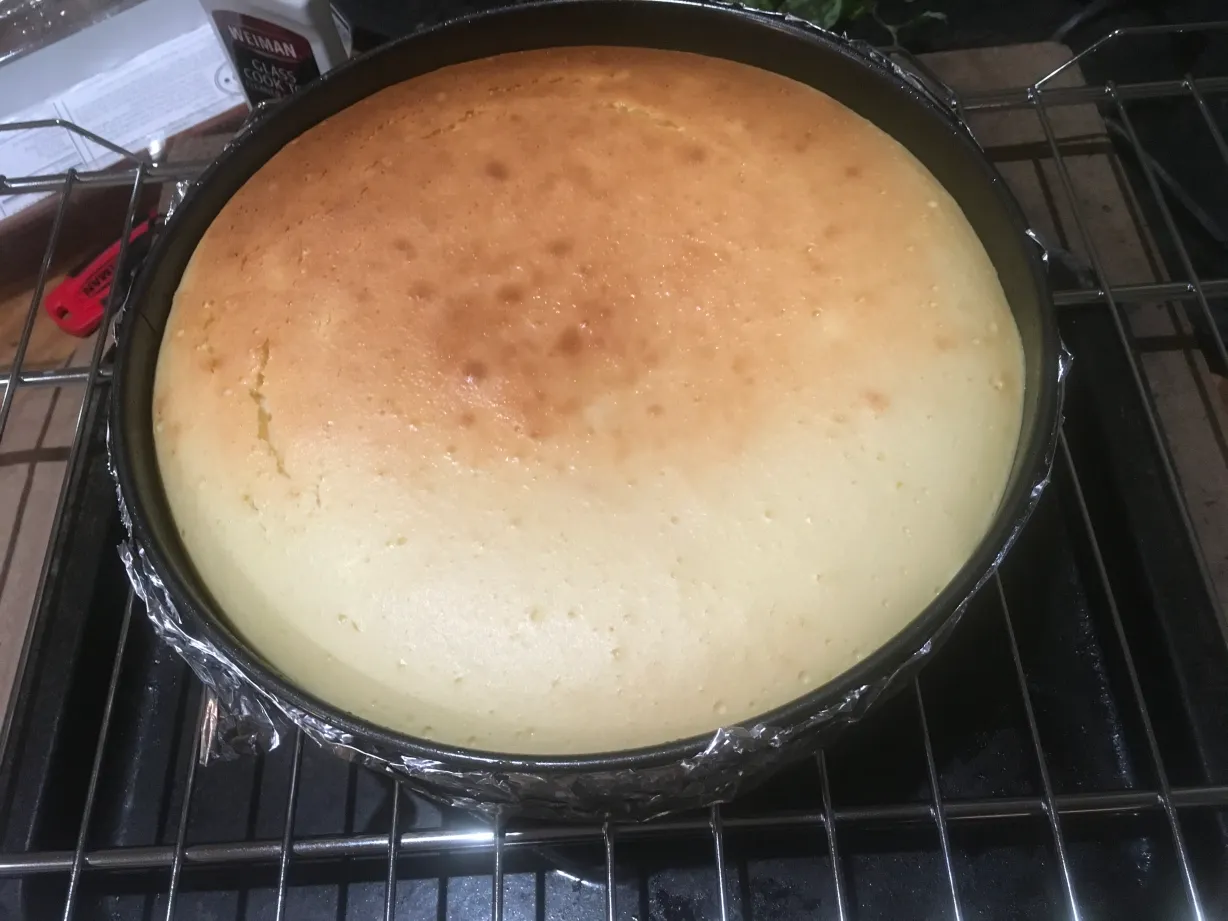
Remove the springform pan from the water bath and discard the foil. If necessary, run a thin-bladed knife around the edge of the cake to make sure it’s not sticking to the sides (which can cause cracks as it cools), then cover it with plastic wrap and put it in the fridge to cool for at least 8 hours or overnight.
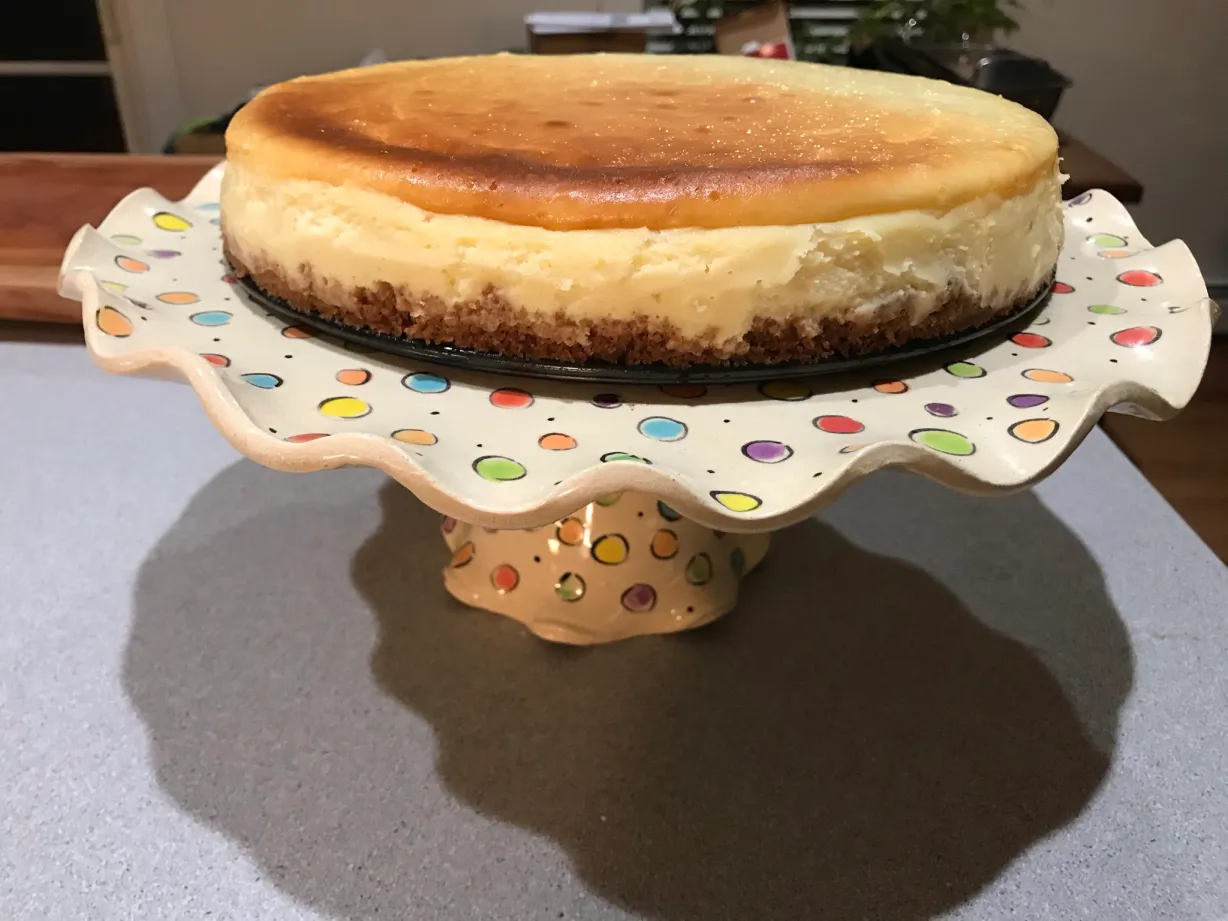
After 8 hours, remove the sides of the springform pan. I like to serve the cheesecake right from the base of the pan. I’ve found that trying to remove the pan base only messes up the crust.

The secret to slicing beautiful pieces of cheesecake is to slice with a sharp knife, rinsing it in warm water and wiping it dry between every slice. 
AN UPDATE: I recently tried this recipe again, only to realize at the last minute that I lost my springform pan when I moved a year ago! All I had was a (relatively new, non-stick) baking pan, so I figured I’d give it a try. I knew my ingredients would taste good. I just didn’t know if I’d be able to get the cheesecake out of the pan!
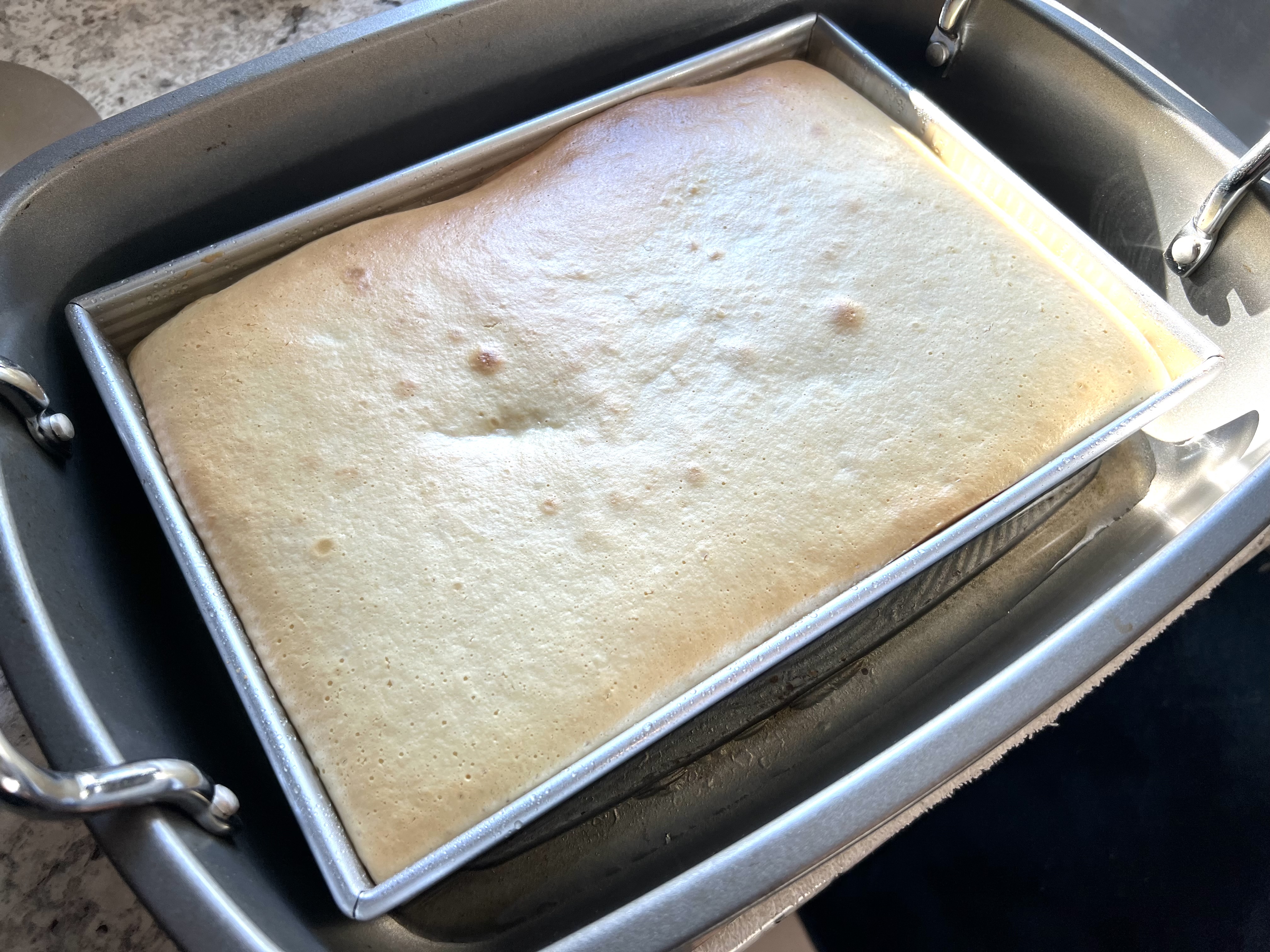
The good news is: it cooked properly and tasted great!

The bad news is: it was a bit messy slicing it and removing it cleanly from the baking pan.

But baking a cheesecake without a springform pan can be done!

MY KILLER APPLE PIE RECIPE

Posted: November 28, 2025 in Uncategorized
Tags: , , , ,

There are a million apple pie recipes online, and people argue whether they should go with an all-shortening or all-butter crust, or even a crust with a combination of the two. I used to be a half-butter, half-shortening guy, myself. But over they years, I’ve become an all-butter guy, because quite frankly, shortening is nasty. And butter…is butter!

I choose to bake the pie the day before serving it. And I prepare the dough the day before that. That way, it has time to rest in the fridge overnight. When you’re ready to bake, remove the dough from the fridge and work with it as cold as you can. If you thaw it too much, you’ll lose the magic of the little butter chunks scattered through the dough.

For the dough…

2 1/2 cups all-purpose organic flour (I like King Arthur)
1/2 teaspoon salt
1 tablespoon sugar
1 cup butter, chilled and diced into cubes
1/2 cup very cold ice water

You can mix the dough ingredients by hand in a bowl, but I prefer a food processor.

Combine the flour, salt and sugar in the food processor and give it a quick pulse to mix. Drop the cubes of butter into the flour mixture, and then pulse the processor until the dough mixture resembles coarse crumbs, and the butter is reduced to pea-sized bits.

Add 1/4 cup of the water, and run the processor. Keep adding a little water at a time, and as soon as the dough forms a ball and pulls away from the sides of the processor bowl, stop! You don’t want to overwork the dough.

Remove the dough to a floured surface and knead it into a ball. Cut the ball in half, and roll each half into a thick, round pancake about an inch thick. wrap these tightly with plastic wrap and place them in the fridge until you’re ready to bake.

For the pie filling…

3 lbs. Granny Smith apples, peeled and sliced into 1/4″ thick slices
1/2 cup butter
3 tablespoons all-purpose organic flour
1/3 cup apple cider
1/2 cup granulated sugar
1/2 cup light brown sugar
2 teaspoons real vanilla extract
2 teaspoons cinnamon
1/8 teaspoon nutmeg

Preheat the oven to 425.

Remove the dough from the fridge. While it’s warming up, prepare the apples.

Peel and slice the apples into 1/4″ wide pieces. (I like to cut some a little thinner and some a little thicker, so I get different textures of apple when the pie has baked.) Place them in a large bowl.

Melt the butter in a saucepan, and add the flour. Whisk well to make a roux. Add the juice, both sugars, vanilla, cinnamon and nutmeg. Bring it to a low boil, stirring constantly, then remove from the heat.

Pour the contents of the saucepan into the large bowl with the apples, saving about 1/4 cup butter-sugar sauce for later. Mix the sauce with the apples really well, making sure they’re completely coated.

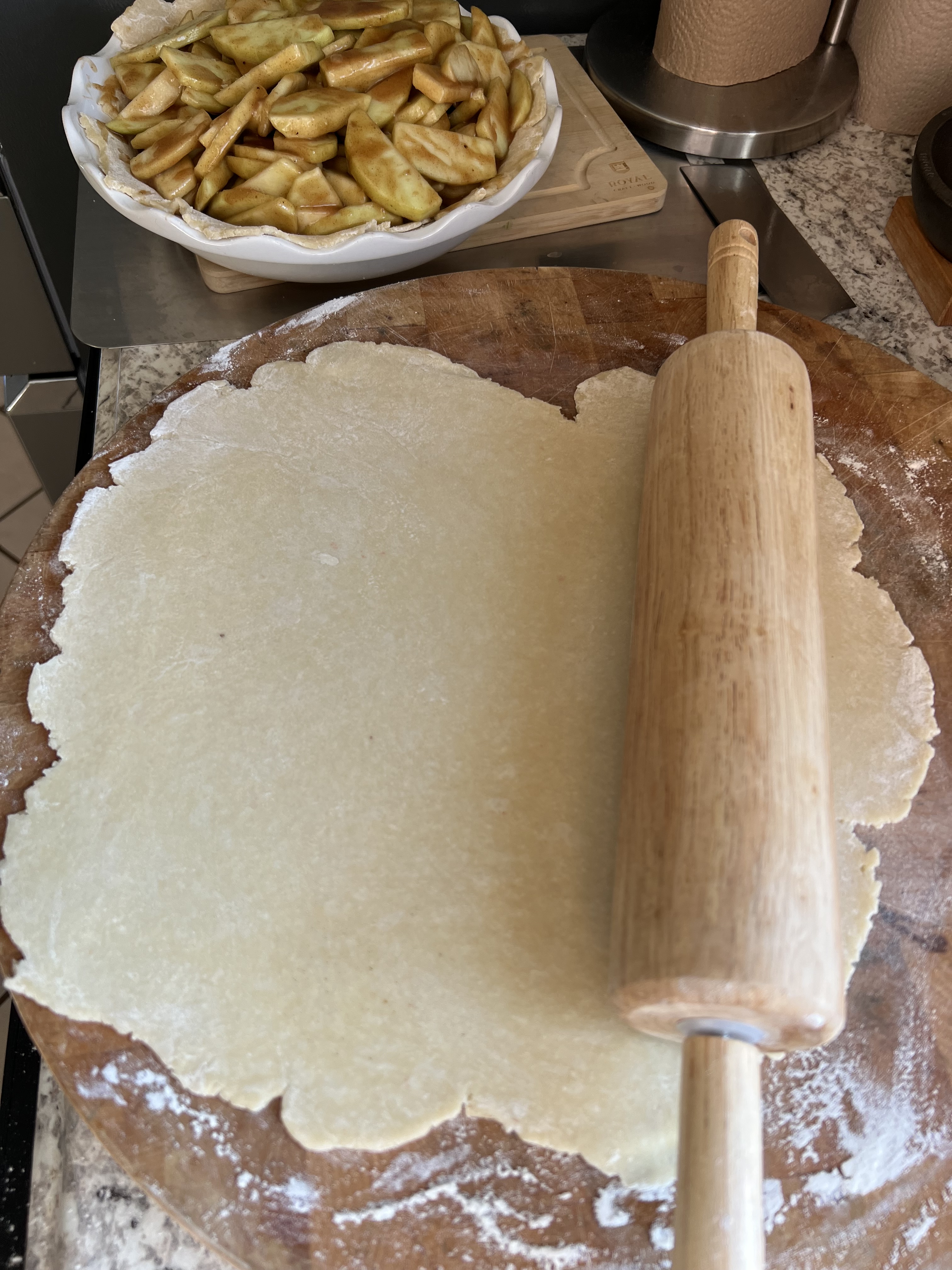
Unwrap one of the dough pieces. On a lightly floured surface, roll it out large enough to fit the bottom and sides of a 9″ pie pan. Let it hang about a 1/2″ over the top edge of the pan, for crimping later.

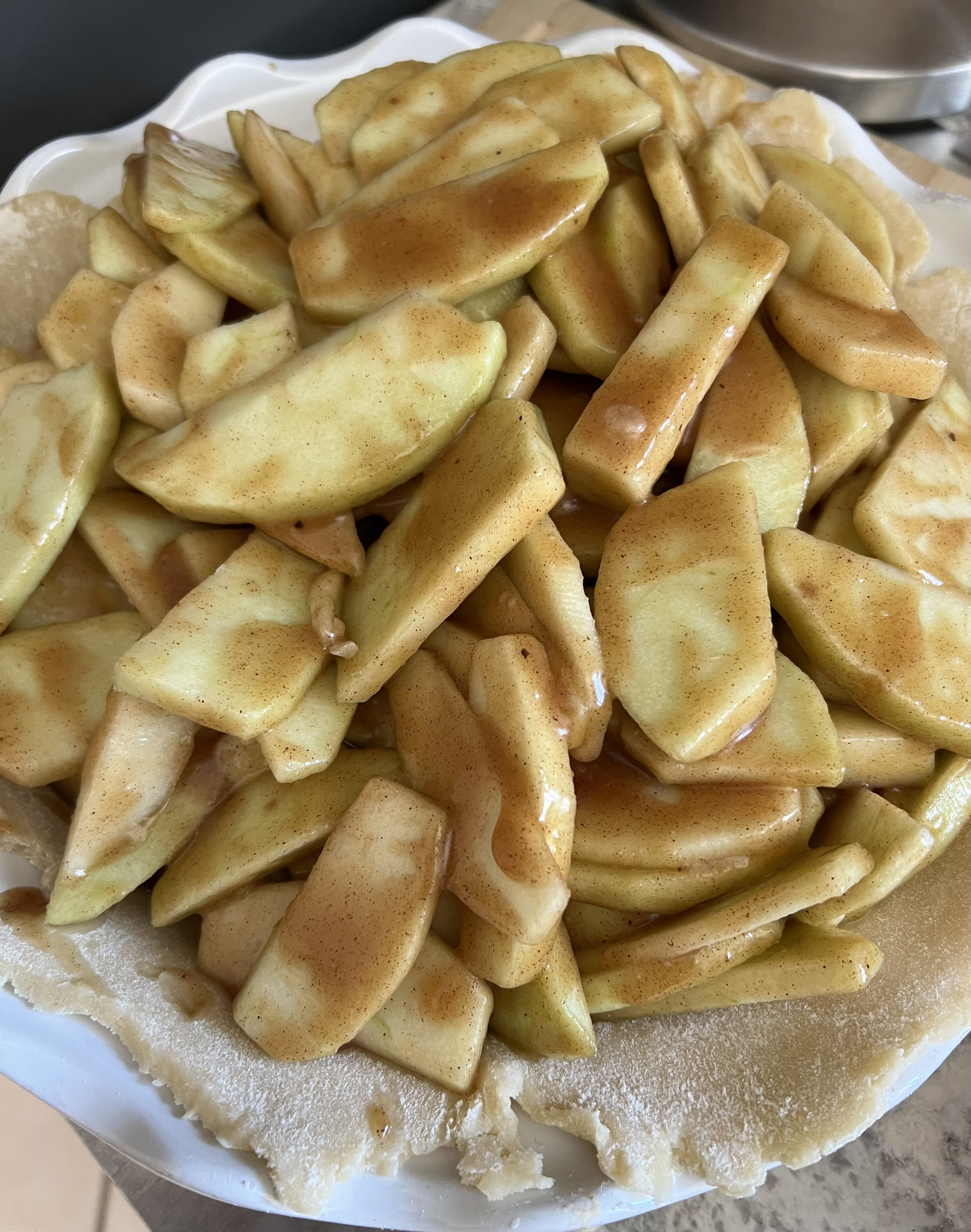
Carefully transfer the apple mixture into the pie pan, making sure you get every little bit of that butter-sugar sauce in there. The apples will form a large mound. don’t worry…they’ll cook down.

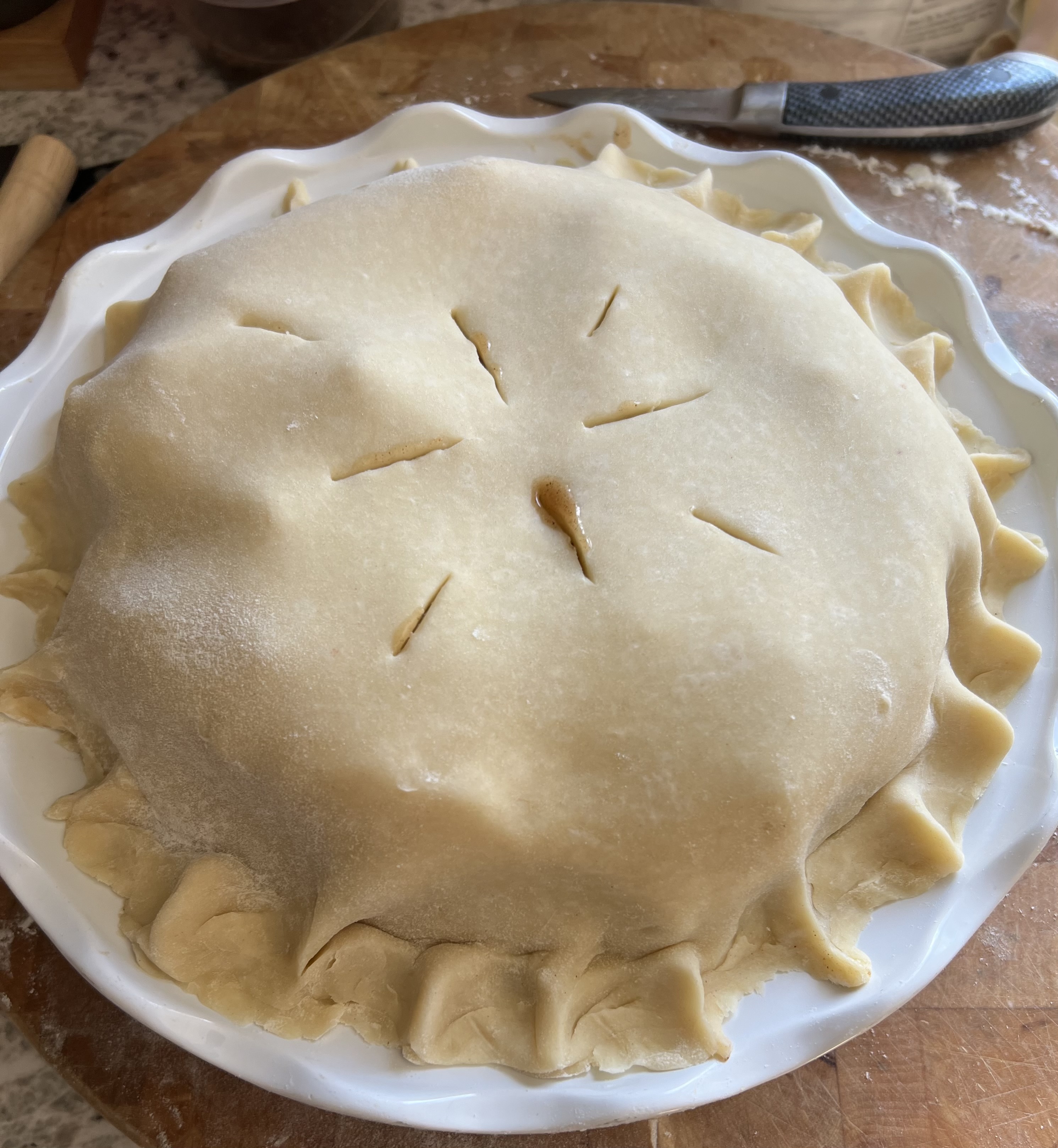
Unwrap the other piece of dough and roll it out so that it fits over the top of the mound of apples. Tuck the excess edges of the upper crust under the overlapping bottom crust, pinching the two halves together, making as tight a seal around the pie as you can. (Don’t cut any of that crust away…use it! It’s delicious!) Cut several slots in the top of the crust to let steam out while the pie cooks.

Take that 1/4 cup of reserved butter-sugar sauce, add a little water to it, and brush it all over the top of the crust, brushing evenly over the entire crust.

Place the pie on a baking sheet and bake it at 425 for about 15 minutes. Then drop the oven temperature to 350 and bake for another 50 minutes, or until the top is golden brown and crisp. If it looks like the edges of your pie are browning too quickly, tent around the edges loosely with foil. Remember, ovens vary!

Let the pie cool completely. I prefer to let it cool overnight, to be served the next day. We like to serve it with good-quality vanilla ice cream.

Of course, apple pie and coffee is an excellent breakfast the next morning!


MILK LIQUEUR

Posted: June 8, 2025 in Uncategorized
Tags: , , , ,

I call this a milk liqueur, because I remember my Mom made it when I was younger, and she called it “pieninis likeris” (milk liqueur) in Lithuanian. But a good friend of mine, knowledgable in all things alcohol, said that it’s not much different than a “milk punch,” something that was common in New Orleans.

The milk liqueur recipe I based mine on was not my Mom’s…she never showed me how to make it. I found it listed under Portuguese recipes, so it looks like this thing is pretty common among many nationalities. And why not? It’s delicious!

If you’ve ever made ricotta cheese at home, there are some similarities. With ricotta, you add vinegar or lemon juice to milk to make it curdle and then separate the curds from the whey. It’s a similar process for this liqueur.

My twist to the recipe is to add a vanilla bean to the mix, because, how can it possibly hurt?

My preferred vodka for all liqueur recipes is one that is as flavorless, as neutral, as possible. And for me, that’s Absolut. I use 80-proof Absolut for this recipe. (I use 100-proof Absolut for my limoncello.)

I used whole milk for this recipe, and if you can, avoid using ultra-pasteurized milk. (That’s harder to do than it sounds!) I don’t mean raw milk…I haven’t used that, and can’t vouch for the results. But I did find some “normally” pasteurized/homogenized whole milk from a local dairy, and that seemed to work fine.

1 liter 80-proof vodka
1 quart whole milk
4 cups sugar
the juice and peel of 1 or more lemons, depending on their size and juiciness
1 whole vanilla bean
1 gallon glass jar with lid
cheese cloth
paper filters for coffee machines

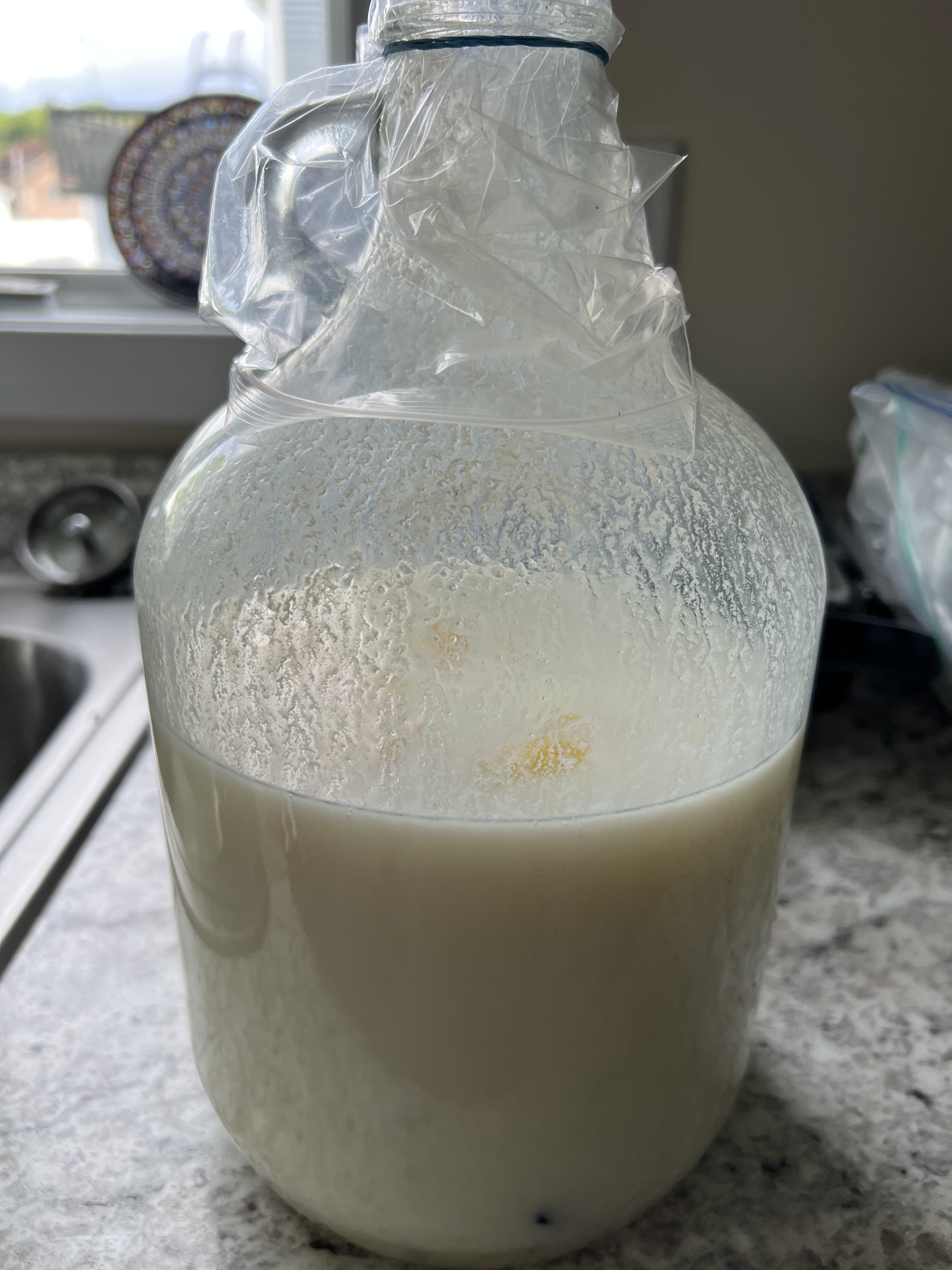
In a gallon-sized glass container with a tight-sealing lid, pour in the vodka and the milk. Add the sugar, and swish it all around to start dissolving it.

Using a vegetable peeler, carefully peel the outer yellow skin of the lemons, avoiding the bitter white pith underneath. Place them in the jar. Carefully squeeze the lemons, avoiding the seeds, and add the juice to the mix. Toss the used lemons into your compost.

Drop in the vanilla bean.

Seal the container, and swish it around, making sure everything gets mixed.

Place the container in a shady part of the kitchen, at room temperature but away from sun and heat, and swish it around once or twice every day. You’ll see the dairy start to separate from the rest of the liquid, but keep swishing it every day nonetheless.

After 10 days, the liqueur is ready!

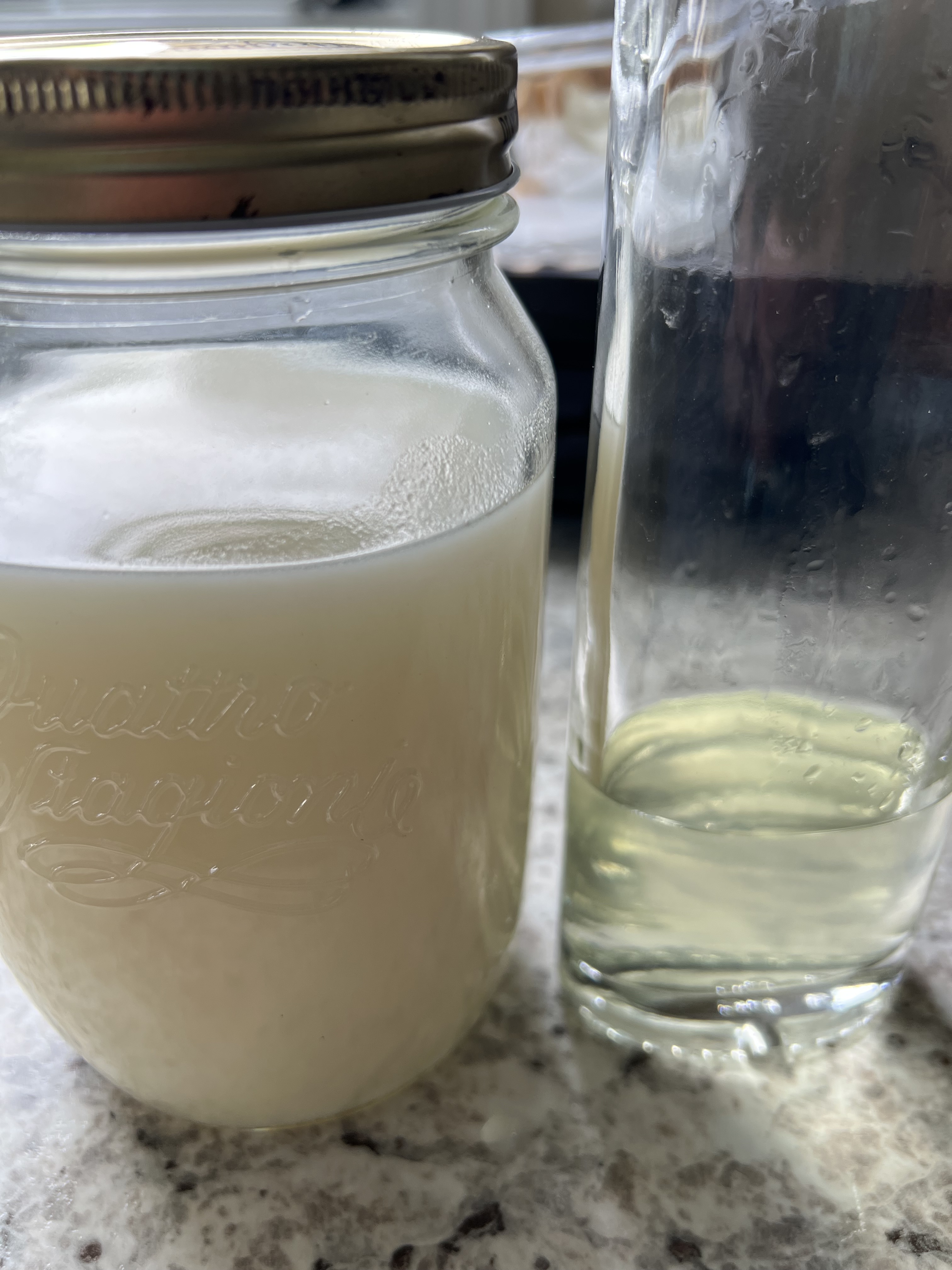
I used a double layer of cheese cloth, placed in a sieve, and it did a good job of capturing most of the milk solids. I had to go through 4 cloths to get the job done, but at the end, I had a cloudy liquid that needed one more filtration process.

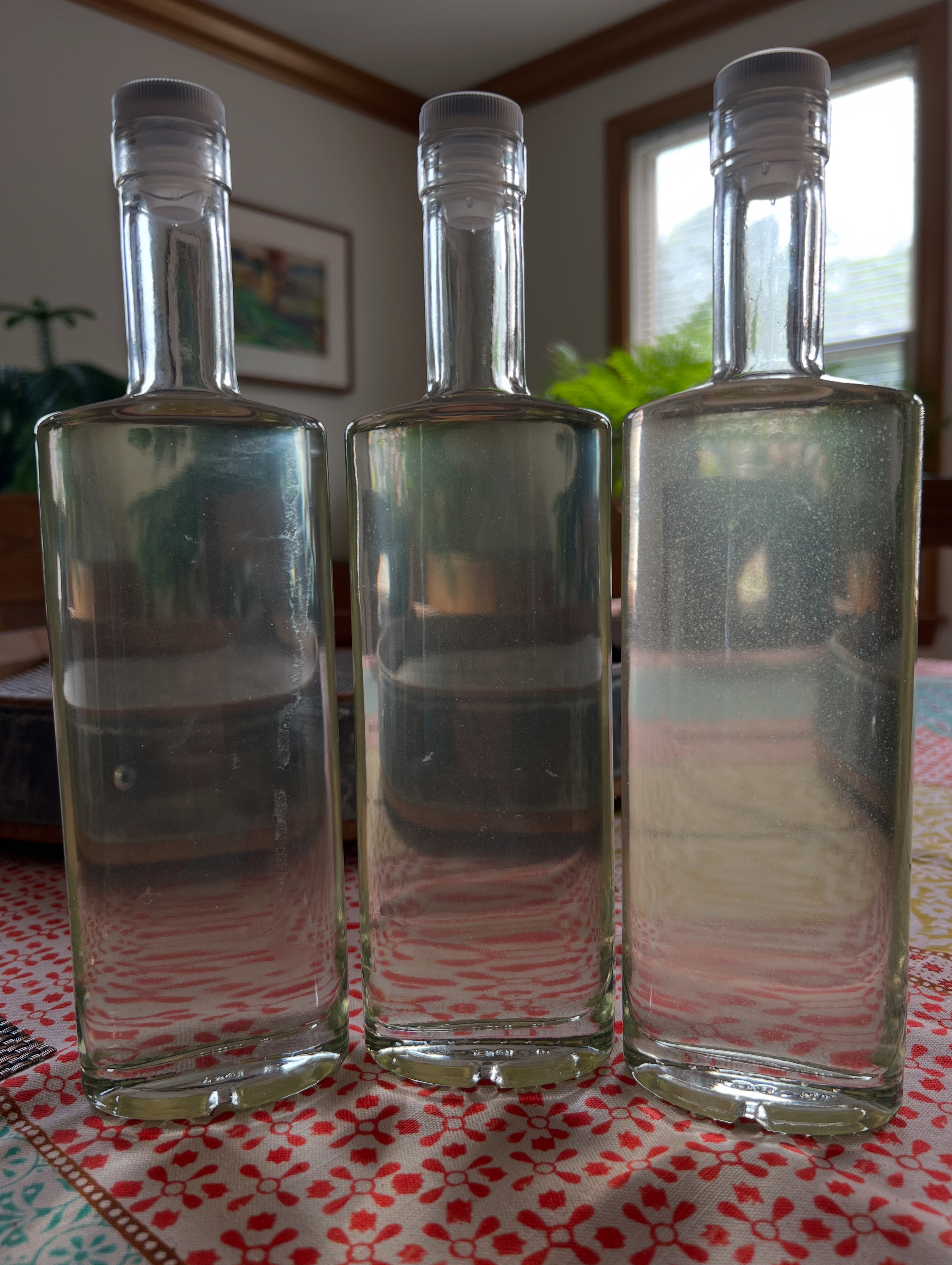
Like I do with my Lithuanian honey liqueur, Krupnikas, I placed a series of funnels with coffee filters over Mason jars and tall glasses, and poured the cloudy liquid through the filters, changing them as needed, as they did tend to clog up.

At the end, I had a relatively clear final product that was absolutely delicious, and maybe even better than the stuff my Mom made!

Sometimes I can’t decide what to make for dessert. So one time I combined several traditional dessert ideas into one: a little pumpkin pie, a little cheesecake, and touch of tiramisu.

The challenge was to also make it gluten-free, since we had gluten-sensitive guests.  So rather than using traditional lady fingers like in tiramisu, I used a gluten-free product that replaces graham crackers. And instead of presenting it in a trifle bowl, I chose to make individual servings.

image

1 1/2 cups heavy whipping cream
2 packages (8 oz. each) cream cheese, softened
1 can (15 oz.) prepared pumpkin
3/4 cup milk
1/2 cup brown sugar, packed
4 teaspoons pumpkin or apple pie spice, divided
2 teaspoons vanilla extract, divided
1 cup strong brewed coffee, room temp ( I used espresso)
1 box (22 oz.) graham crackers or gluten-free substitute


image

In a large bowl, whip the cream until soft peaks form. Set it aside.

In another large bowl, combine the cream cheese, pumpkin, milk, brown sugar, 2 teaspoons of the pumpkin spice, and 1 teaspoon vanilla. Beat it with mixer until it’s well blended. Fold it gently into the whipped cream.

Pour the graham crackers into a food processor and process until you get very fine crumbs. Pour those into a bowl.

In a separate small bowl, combine the coffee, and the remaining pumpkin spice and vanilla. Pour the coffee mixture into the processed graham crackers a little at a time, and mix with a fork, until it resembles wet sand.

In each glass, alternately layer the pumpkin cream and the graham cracker mix. Let it firm up in the fridge, if you like, before serving.

Serve with a little extra whipped cream on top, or with ice cream on the side.

Last Thanksgiving, I combined several traditional desserts in one: pumpkin pie, cheesecake, and tiramisu. The challenge was also to make it gluten-free. That was actually easier than it sounds.

Rather than using the traditional lady fingers you’d find in tiramisu, I used a gluten-free product that replaces graham crackers. And I served the dessert in individual bowls.


image

1 1/2 cups heavy whipping cream
2 packages (8 oz. each) cream cheese, softened
1 can (15 oz.) prepared pumpkin
3/4 cup milk
1/2 cup brown sugar, packed
4 teaspoons pumpkin or apple pie spice, divided
2 teaspoons vanilla extract, divided
1 cup strong brewed coffee, room temp ( I use espresso)
1 box (22 oz.) graham crackers or the gluten-free substitute


image

In a large bowl, whip the cream until soft peaks form. Set it aside.

In another large bowl, combine the cream cheese, pumpkin, milk, brown sugar, 2 teaspoons of the pumpkin spice, and 1 teaspoon of the vanilla. Beat with a mixer until well blended. Fold it gently into the whipped cream.

Pour the graham crackers into a food processor and process until you get very fine crumbs. Pour the crumbs into a bowl.

In a separate small bowl, combine the coffee and remaining pumpkin spice and vanilla. Pour the coffee mixture into the graham crackers a little at a time, and mix with a fork, until it resembles wet sand.

In each glass, alternately layer the pumpkin cream and the graham cracker mix. Serve with a little extra whipped cream on top, or with ice cream on the side.

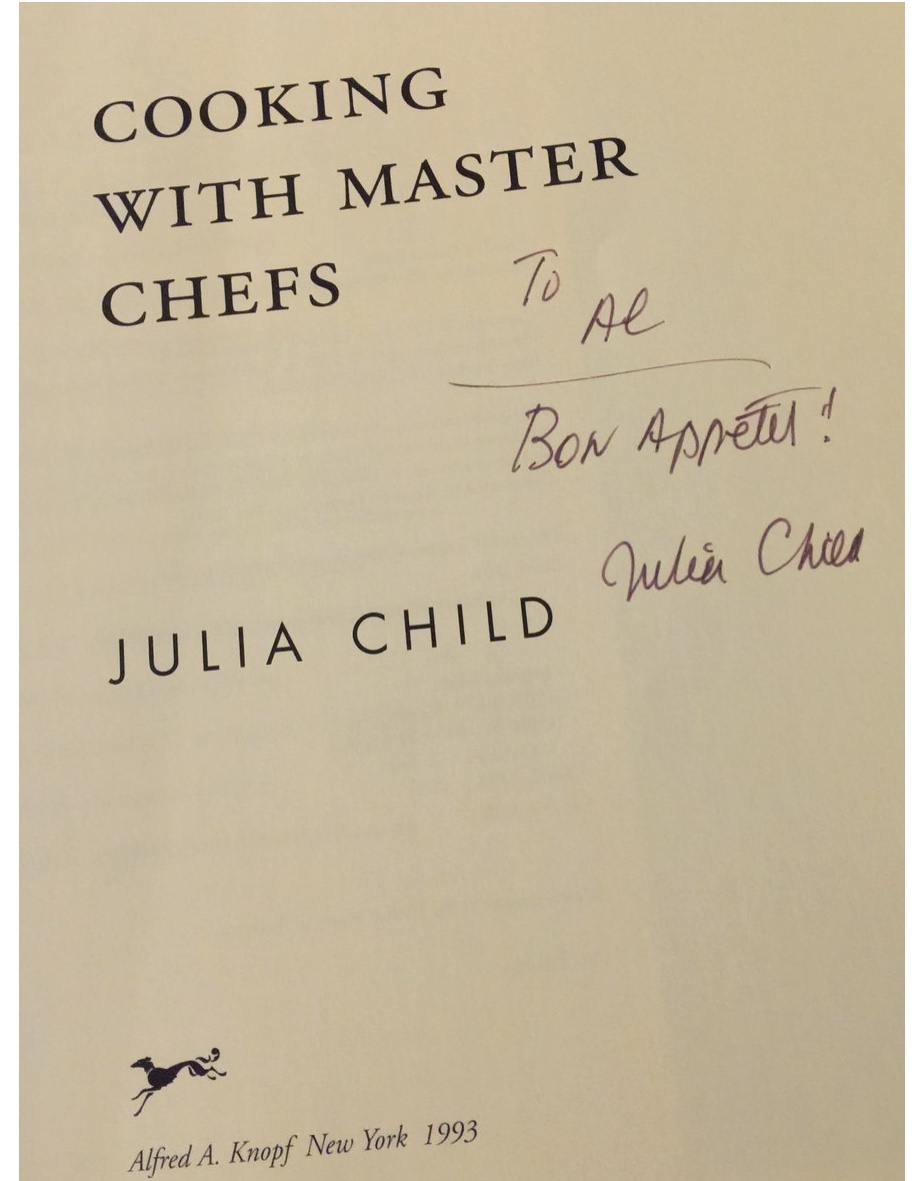
Julia Child was my first guide for many of the dishes that I still make today. My Mom and I would watch “The French Chef” on WNET, Channel 13, our PBS station back home in New York.  Later, I’d start buying Julia’s cookbooks, and I was lucky enough to not only interview her, but meet her just a few years before she passed away. She was a lovely, down-to-earth lady, and someone I’ll never forget.


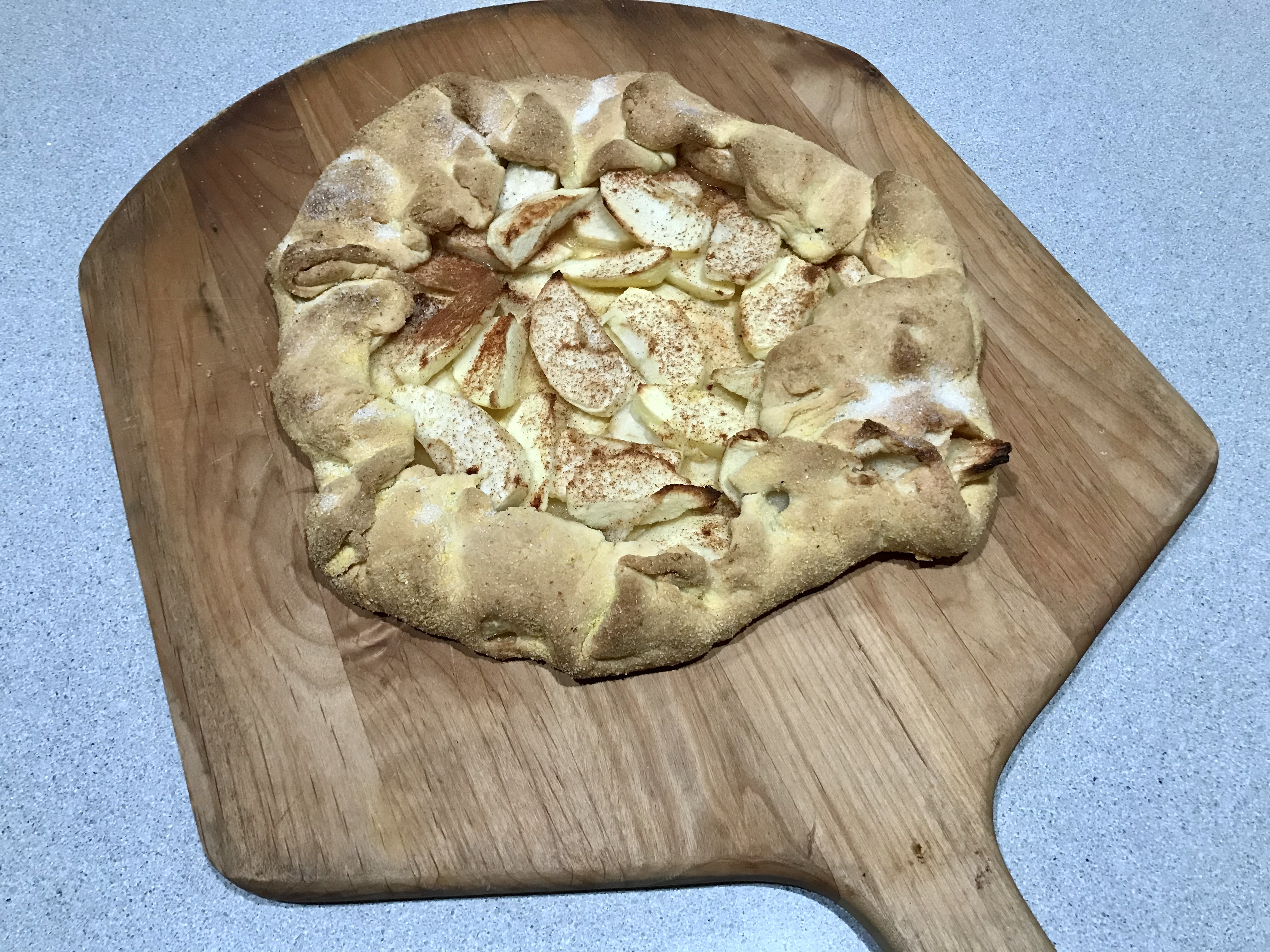
The classic rustic galette was the first dessert I learned how to bake, straight from the pages of “Baking with Julia.” I generally stayed away from desserts because they required a lot of exact measurements, and that just wasn’t my style of cooking. So when I saw that this rustic galette required none of those things, and yet tasted absolutely delicious, I realized I had found my dessert! And the galette was versatile: I could use whatever ripe fruit I could get my hands on, so it became a dessert that changed with the seasons.


Making one large galette, I found that using my pizza peel was a great way to slide it in and out of the oven easily.


3 tablespoons sour cream
1/3 cup ice water
1 cup all-purpose flour
1/4 cup yellow cornmeal
1 teaspoon sugar
1/2 teaspoon salt
7 tablespoons cold unsalted butter, cut into about 8 pieces
1 1/2 cups mixed fresh berries or cut-up peeled fruit (I used apples)
1 tablespoon plus 1 teaspoon sugar
1 tablespoon cold, unsalted butter


I stirred the sour cream and 1/3 cup ice water together in a bowl and set it aside.

I put the flour, cornmeal, sugar, and salt in the bowl of a food processor fitted with the metal blade and pulsed it to combine.

I dropped the butter pieces into the processor and pulsed 8 to 10 times, or until the mixture was speckled with pieces of butter about the size of a pea. Then, with the machine running, I added the sour cream mixture and processed just until the dough formed soft, moist curds.

The original recipe says to divide the dough in half, pressing each into a disk. This time, I chose to make one large disc, which I wrapped and chilled in the fridge overnight.

I positioned a rack in the lower third of the oven, slid in my pizza stone, and pre-heated the oven to 400.

I spread the apples (or whatever fruit is desired) over the dough, leaving a 2 to 3-inch border. I sprinkled 1 tablespoon of the sugar over the fruit. (A pinch of cinnamon with the apples didn’t hurt, too!) I cut the butter into slivers and scattered it onto the fruit. I carefully folded the uncovered border of the dough over the filling, allowing it to fold naturally onto itself as I lifted it and worked around the galette. It’s supposed to look rustic, so no sweat if it doesn’t look perfect.

Then I dipped a pastry brush in water, lightly brushing the edge of the crust with it, then sprinkling the remaining teaspoon of sugar onto the crust.

Because I chose to make one large galette, I dusted my trusty pizza peel with corn flour, and built the galette on that, sliding it onto the pizza stone that I heated up in my 400-degree oven.


I baked the galette for 35 to 40 minutes, until it was golden and crisp. I moved the baking sheet to a cooling rack and let the galette cool for 10 minutes. I like to serve it warm with fresh whipped cream on the side.

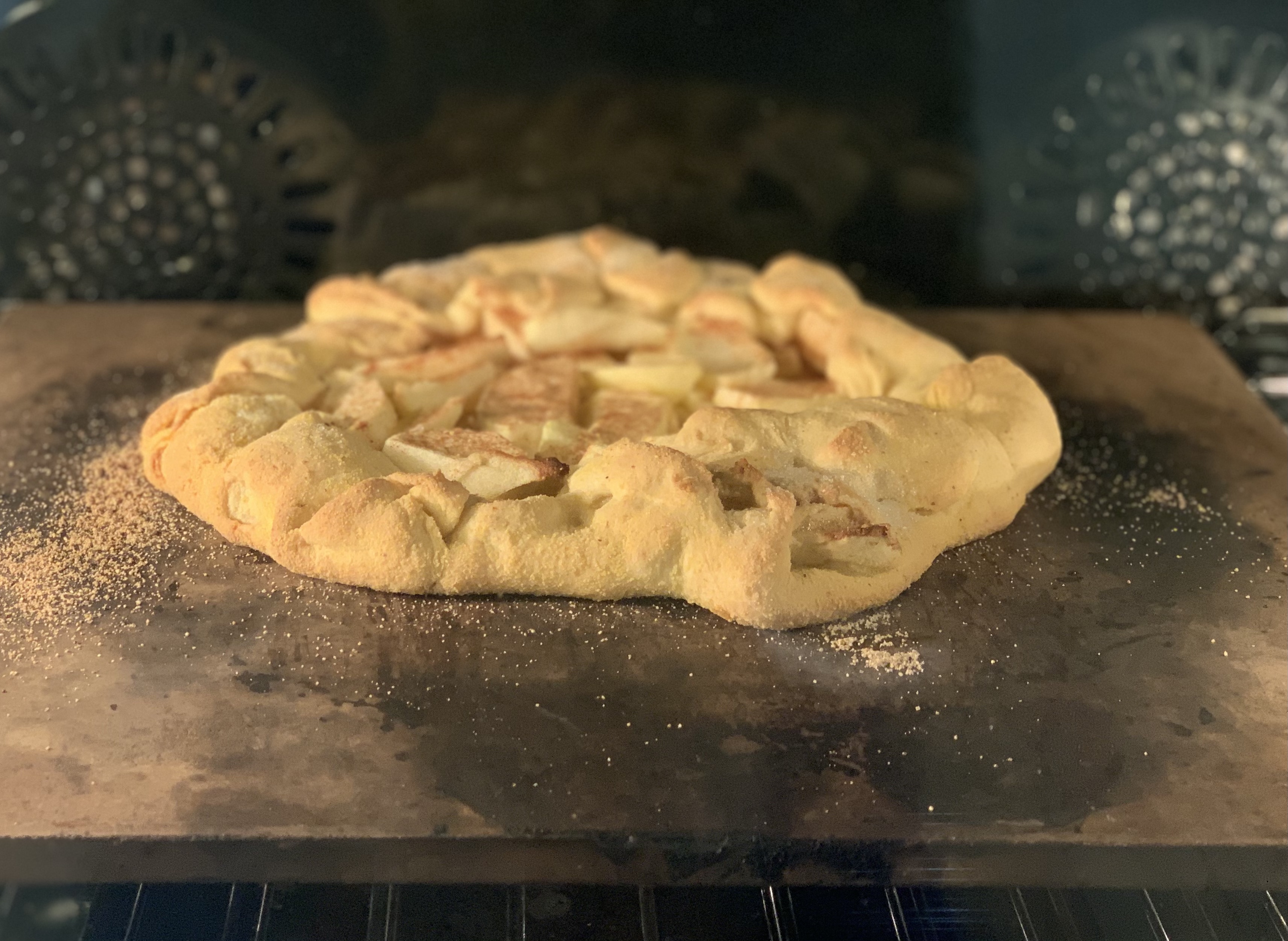
Baking on the pizza stone.


TIP: I’ve found that despite keeping the butter cold and using ice water, sometimes my dough doesn’t want to cooperate, and I don’t get the pea-sized curds when I’ve added the butter to the processor. Also, when I add the sour cream/water mixture, I often don’t get that ball of dough I’m hoping for.

No worries: I simply scrape the dough out of the processor bowl onto a floured surface, and I knead it gently into a disc. It will be really floppy and mushy sometimes. That’s OK. I just wrap it in plastic and place it in the fridge overnight.

The next day, the dough has firmed up, and I can roll it flat with a rolling pin on a well-floured surface to keep it from sticking. That’s why I like the pizza peel idea so much: I dust it really well with corn meal, which acts like little ball-bearings, build the galette right on top of it. The corn meal keeps the surface slippery so the dough slides right off the peel and into the oven.


This past Thanksgiving, I combined several traditional desserts in one: pumpkin pie, cheesecake, and tiramisu. The challenge was to make it gluten-free, since my wife is sensitive to gluten. Rather than using the traditional lady fingers used in tiramisu, I used a GF product that replaces graham crackers. And though it can be presented in a trifle bowl, I made individual servings.
image

1 1/2 cups heavy whipping cream
2 packages (8 oz. each) cream cheese, softened
1 can (15 oz.) prepared pumpkin
3/4 cup milk
1/2 cup brown sugar, packed
4 teaspoons pumpkin or apple pie spice, divided
2 teaspoons vanilla extract, divided
1 cup strong brewed coffee, room temp ( I use espresso)
1 box (22 oz.) graham crackers or gluten-free substitute

image

In a large bowl, whip the cream until soft peaks form. Set aside.
In another large bowl, combine the cream cheese, pumpkin, milk, brown sugar, 2 teaspoons pumpkin spice, and 1 teaspoon vanilla. Beat with a mixer until well blended. Fold gently into the whipped cream.
Pour the graham crackers into a food processor and process until you get very fine crumbs. Pour into a bowl.
In a separate small bowl, combine the coffee and remaining pumpkin spice and vanilla. Pour the coffee mixture into the graham crackers a little at a time, and mix with a fork, until it resembles wet sand.
In each glass, alternately layer the pumpkin cream and the graham cracker mix. Serve with a little extra whipped cream on top, or with ice cream on the side.

This past Thanksgiving, I couldn’t decide what to make for dessert. So I combined several traditional desserts in one: pumpkin pie, cheesecake, and tiramisu. The challenge was to make it gluten-free, since my wife is sensitive to gluten. Rather than using the traditional lady fingers used in tiramisu, I used a gluten-free product that replaces graham crackers. And though it can be presented in a trifle bowl, I made individual servings.
image
Ingredients:

1 1/2 cups heavy whipping cream
2 packages (8 oz each) cream cheese, softened
1 can (15 oz) prepared pumpkin
3/4 cup milk
1/2 cup brown sugar, packed
4 teaspoons pumpkin or apple pie spice, divided
2 teaspoons vanilla extract, divided
1 cup strong brewed coffee, room temp ( I use espresso)
1 box (22 oz) graham crackers or gluten-free substitute

image

In a large bowl, whip the cream until soft peaks form. Set aside.
In another large bowl, combine cream cheese, pumpkin, milk, brown sugar, 2 teaspoons pumpkin spice, and 1 teaspoon vanilla. Beat with mixer until well blended. Fold gently into the whipped cream.
Pour the graham crackers into a food processor and process until you get very fine crumbs. Pour into a bowl.
In a separate small bowl, combine coffee, and remaining pumpkin spice and vanilla. Pour the coffee mixture into the graham crackers a little at a time, and mix with a fork, until it resembles wet sand.
In each glass, alternately layer the pumpkin cream and the graham cracker mix. Serve with a little extra whipped cream on top, or with ice cream on the side.