It had been a while since I made one of these, and my inventory of booze had changed a little bit. But the end result was still quite tasty.
First, the older recipe… And then the newer one below.
Most of the recipes for a Scorpion Bowl I found on-line don’t match the one that I’ve been using for many years. This recipe comes from a bartender (whose name I can’t remember–too many Scorpion Bowls, I guess) from a long-gone Chinese restaurant, ChinaGarden, that was in Warwick, Rhode Island. A car dealership now stands in that spot. This is the best Scorpion Bowl I’ve ever had…and continue to have!
Make sure to use top shelf booze for this or you’ll be a “Suffering Bastard” the next morning! (A little Chinese restaurant drink humor…)
Look carefully, and you may see the flame coming out of the volcano! Hope I don’t need to tell you not to drink the 151 while it’s lit! And yes, it’s an old photo: Disaronno Originale hasn’t been called Amaretto di Saronno for a long time!
2 oz. light rum (I use Don Q silver)
2 oz. dark rum (I use Mount Gay)
1 oz. gin (I use Bombay Sapphire)
½ oz. brandy (I use E&J)
½ oz. Disaronno Originale
½ oz. Cointreau
6 oz. Pineapple juice
6 oz. Orange juice
½ oz. Bacardi 151 rum for the little cup in the volcano
In a blender half-full of ice, add all the alcohol, except the 151 rum. Add the pineapple juice and the orange juice. (Use less if you like it stronger.) Give the drink a quick 1-second pulse in the blender, and pour it with all the ice into Scorpion Bowl or a very large glass or bowl. If you do have a Scorpion Bowl with the volcano in it, add the 151 rum to the bowl in the volcano. If not, you can mix the 151 into your drink.
Although all the proportions remain the same, my newer version had a few different brands than the old recipe.
My dark rum choice this time was a Rhode Island-based rum called Thomas Tew.
I went with the user-friendly Ford’s gin.
Grand Marnier is an excellent substitute for Cointreau.
And Gozio Amaretto is a real almond liqueur. Dissaronno strayed from their almond recipe decades ago, opting for cheaper stone fruits.
It’s my birthday! I just might have a Vesper (or two) to celebrate!
An update on the Dukes Hotel: right now, they are refurbishing it, so the hotel is closed. But the Dukes Bar remains open for business! That means you don’t have to battle with hotel guests to get a seat at this iconic bar! Almost worth a trip to London just to get a seat before the hotel reopens this fall!
A few years ago, I took a trip to London with my daughter, and we checked off quite a large list of things we wanted to do: trips to Oxford and Stonehenge, museums, the theater, restaurants with fabulous food (and some with equally amazing views), college tours, a proper British afternoon tea at the Ritz, and much more.
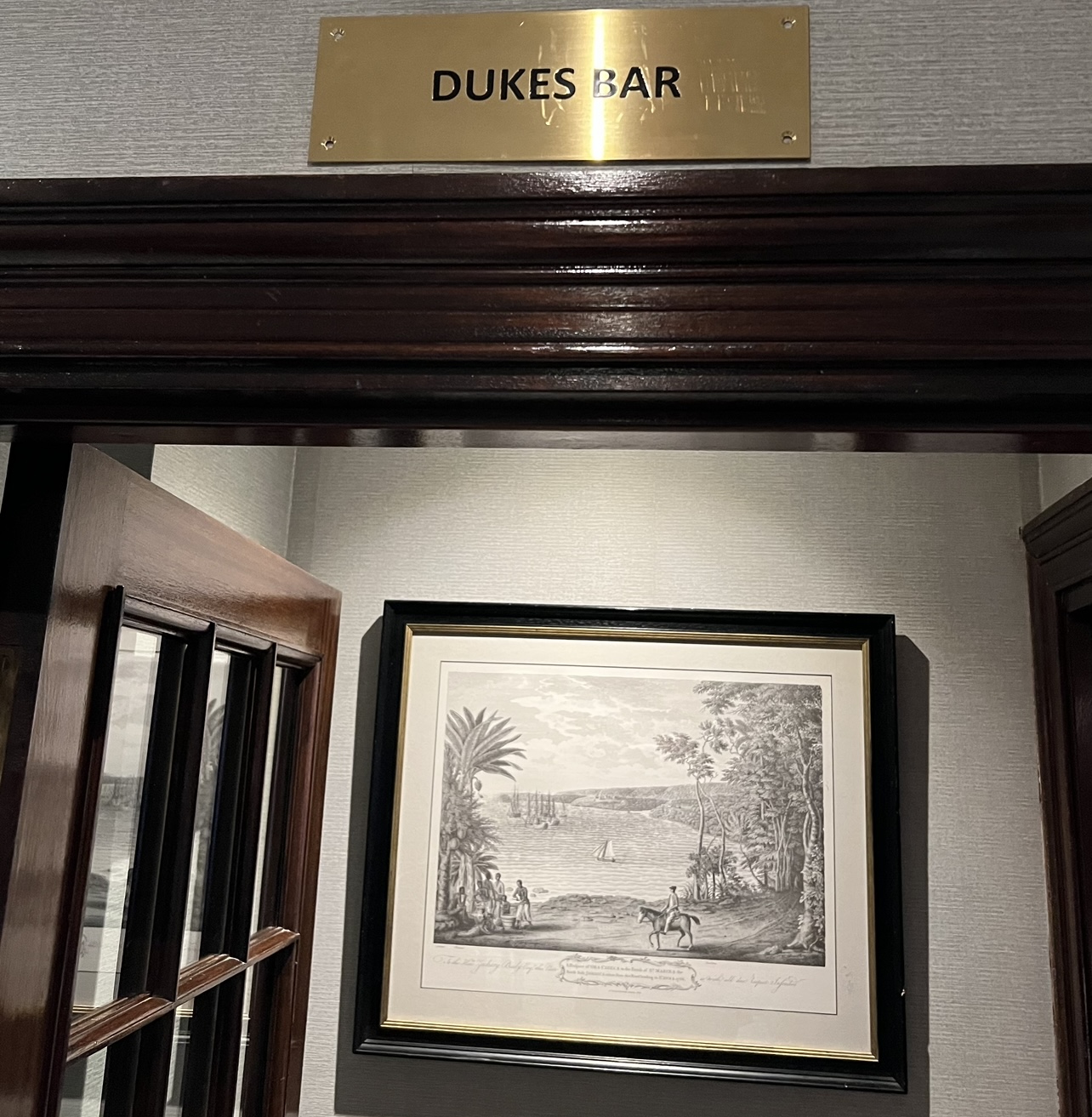
One of the top things on my personal list was to pay a visit to the renowned Dukes Bar at the Dukes Hotel, where, as legend has it, Ian Fleming, the author of the James Bond novels, not only came up with the phrase “shaken, not stirred,” but also created the now-famous Vesper martini.
Sadly, this is as close as I got to the Dukes Bar. People who stay at the hotel get to reserve a space in the incredibly small bar area, and everyone else has to wait in line on a first-come, first-served basis. Unfortunately for me, the wait to be seated was way too long and I never got to experience the Dukes Bar for myself.
*sigh*…looks like I’ll need to make another trip to London to check this one off my bucket list.
In the meantime, I can enjoy a Vesper at home…
At first, it seemed almost silly to try to make one…but the classic James Bond martini has always fascinated me. I’m not talking about the clichéd Sean Connery “vodka martini, shaken, not stirred.” I’m talking about the real James Bond martini, which appeared in Ian Fleming’s first 007 novel “Casino Royale” and only appeared in the 2006 “Casino Royale” motion picture starring Daniel Craig (the best Bond of all, if you ask me.)
To quote the novel:
‘A dry martini,’ he said. ‘One. In a deep champagne goblet.’ ‘Oui, monsieur.’ ‘Just a moment. Three measures of Gordon’s (gin), one of vodka, half a measure of Kina Lillet. Shake it very well until it’s ice-cold, then add a large thin slice of lemon peel. Got it?’ ‘Certainly, monsieur.’ The barman seemed pleasant with the idea. ‘Gosh that’s certainly a drink,’ said Leiter.
Bond laughed. ‘When I’m … er … concentrating.’ he explained, ‘I never have more than one drink before dinner. But I do like that one to be large and very strong and very cold and very well-made. I hate small portions of anything, particularly when they taste bad. This drink’s my own invention. I’m going to patent it when I can think of a good name.’
He watched carefully as the deep glass became frosted with the pale golden drink, slightly aerated by the bruising of the shaker. He reached for it and took a long sip.
‘Excellent,’ he said to the barman, ‘but if you can get a vodka made with grain instead of potatoes, you will find it still better.’
Bond named this drink the Vesper martini, after the character Vesper Lynd, portrayed by Ursula Andress in the 1967 adaptation, and Eva Green in the 2006 adaptation of “Casino Royale.”
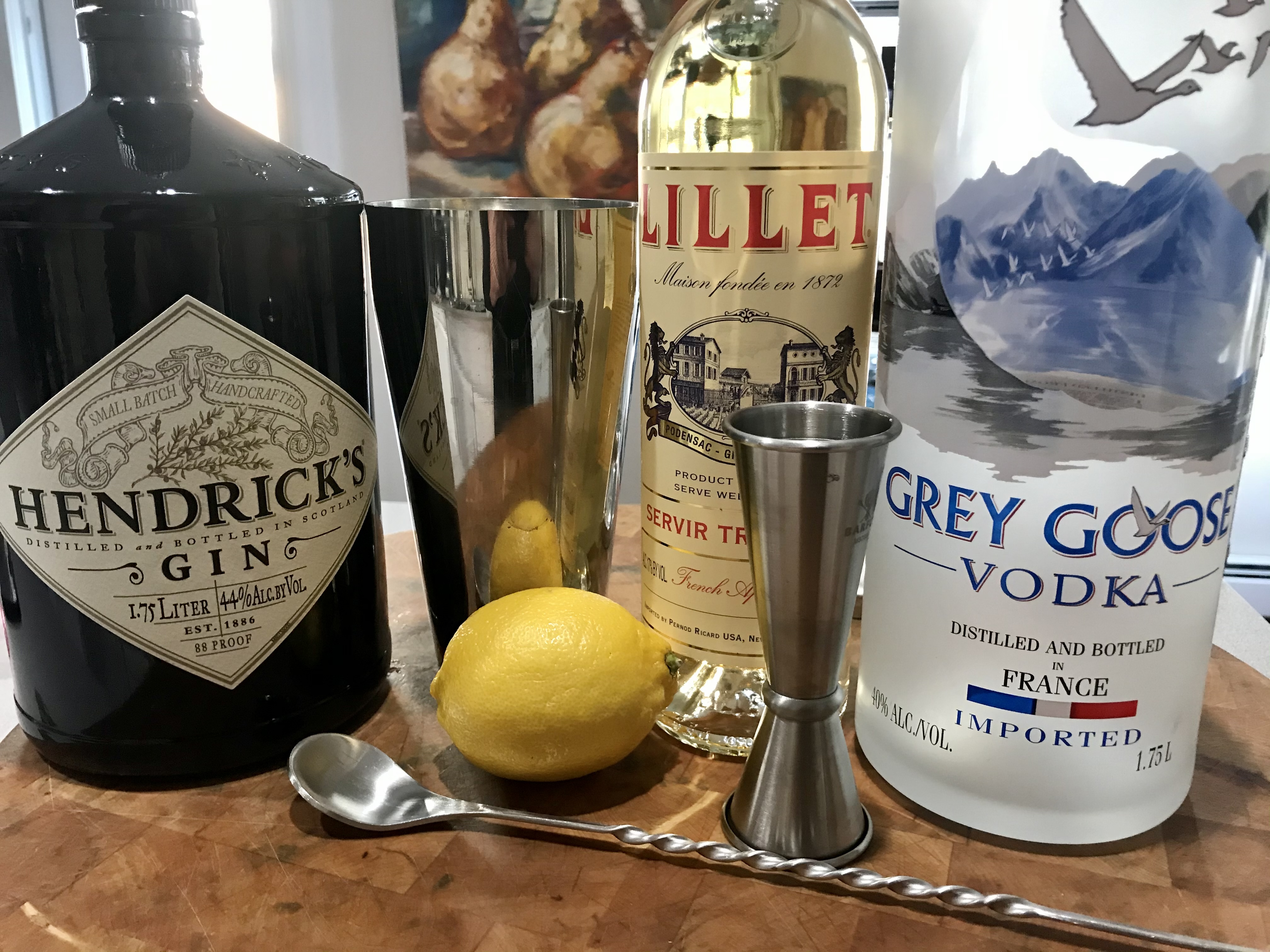
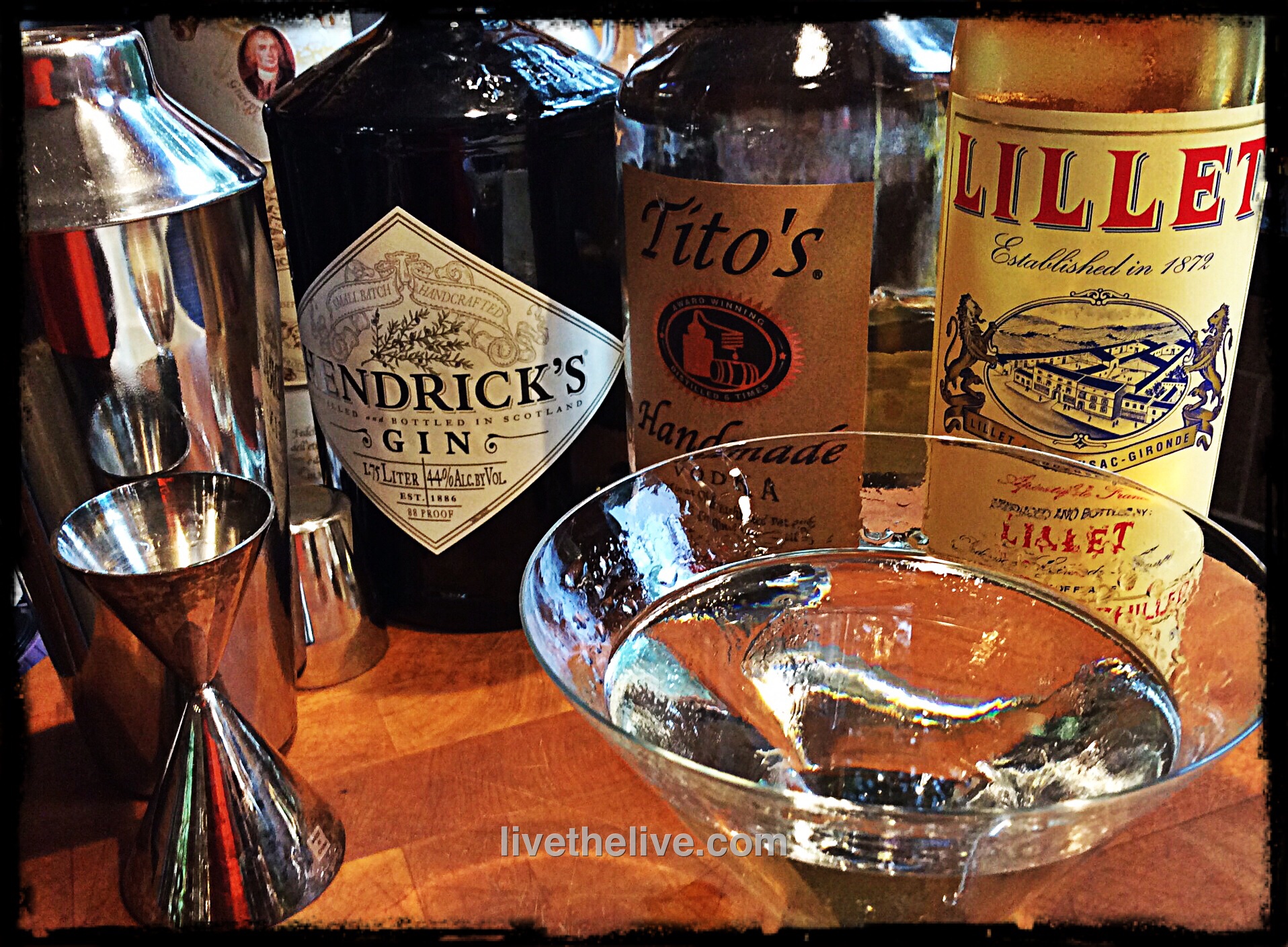
My first homemade version of this classic drink remained true to the measurements of the original, though I changed brands due to personal preference. In the novel, Bond just asks for “vodka.” (Of course, this was back in the 1950’s when we didn’t have hundreds of brands to choose from!) My choice for best-bang-for-the-buck grain vodka is Tito’s, made from corn. But an excellent choice for wheat-based vodka is Grey Goose.
Bond asks for Gordon’s gin. I’m partial to the floral notes of Hendrick’s.Again, in the 50’s, what good British agent wouldn’t drink Gordon’s?
And the original Kina Lillet had its recipe changed in the 1980’s to keep up with the times by reducing the quinine, which made it bitter. (Kina refers to the quinine, so it was removed from the label when the quinine was removed from the formula.) The French aperitif wine, Lillet, is today’s version: a blend of wine grapes, oranges, orange peels and quinine. Lillet is not a vermouth, though you’ll find it in the vermouth section of your favorite liquor store. With the rise in popularity of the Vesper martini, many bartenders and aficionados claim it’s just not the same without the original Kina Lillet formulation, and a search began to find a better substitute, one with a more pronounced quinine assertiveness.
Enter Cocchi Americano, an aromatized wine also found in the vermouth section of many liquor stores. With its quinine-forward recipe, Vesper fans claim it comes closer to the original Kina Lillet. Add a more London-style dry gin to the mix, like Bombay Sapphire, and you just about nail the cocktail Bond created all those years ago.
So…with measurements true to Bond, may I suggest two versions of the same cocktail!
My original, more floral, version…
3 oz. Hendrick’s gin 1 oz. grain-based vodka (like Tito’s or Grey Goose) 1/2 oz. Lillet
Combine these over ice in a cocktail shaker, and shake vigorously. Strain it into a chilled martini glass. I’m happy with a lemon peel or even olives with this combination.
Or…
The version closer to Bond’s original, which is equally wonderful in its own right: crisp and refreshing, a strong drink with a hint of bitterness from the quinine. Dangerously addictive!
3 oz. London dry gin (like Bombay Sapphire)
1 oz. grain-based vodka (like Grey Goose)
1/2 oz. Cocchi Americano
Combine these over ice in a cocktail shaker, and shake vigorously. Strain it into a chilled martini glass. Garnish with a large, thin lemon peel.
With the rising popularity of the Vesper martini, and the use of Cocchi Americano instead of Lillet, the makers of Lillet now claim they “never removed” the quinine from their original recipe. Many feel this is an outright lie, (back-pedaling a bit, aren’t we?) because they themselves stated they changed in the formula back in the 80’s. A little too late now for them to re-formulate. CocchiAmericano has become the go-to with many bartenders (and myself) when recreating this classic cocktail. But if I can’t find it at my favorite liquor store, Lillet will do in a pinch.
If you don’t want to spend the extra cash for Grey Goose, I found that this combination is also very satisfying: for the vodka, go with the original red label of Stoli with Bombay Sapphire gin and CocchiAmericano in the original proportions.
I’m not quite sure why they chose February 22nd to be National Margarita Day, but I’ll take it!
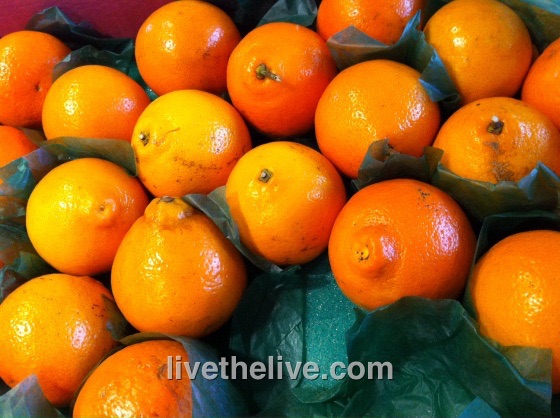
Years ago, a family relative in Florida sent us Cushman’s HoneyBells. They look like fiery red bell-shaped oranges, and they are the sweetest and juiciest fruits you’ll ever have! But they’re not really oranges at all.
HoneyBells are a unique natural hybrid of Dancy Tangerine and Duncan Grapefruit. The plants are grafted to a sour orange root-stock, and when the tree reaches maturity, it looks just like a grapefruit tree…but with oranges growing on it.
Tangelos are very similar, and can often be found at your local supermarket.
I usually make my signature margarita, the Algarita, with pineapple juice. But when I can get hold of Tangelos or HoneyBells, my recipe takes on a new twist.
2 oz. Patron silver tequila (or your favorite)
1/2 oz. Cointreau orange liqueur (or your favorite)
4 oz. fresh squeezed HoneyBell juice
1/2 oz. fresh squeezed lime juice
The Honeybells are so fresh and sweet, you can skip the Cointreau if you like.
Fill a tall glass with ice and add all the ingredients. Stir. Pour into a large margarita glass. Garnish with lime wedge. Salt optional.
Any other time of the year, substitute pineapple juice, orange juice or a combination of both for the Honey Bells.
If I asked you to name a cocktail that defines New Orleans, you might say The Hurricane. After all, it’s a tourist favorite at the famous Pat O’Brien’s on Bourbon Street.
But the official cocktail of New Orleans is the Sazerac, a potent concoction that was created early in the 19th century by Antoine Amédée Peychaud, a Creole apothecary who emigrated to New Orleans from the West Indies and set up shop in the French Quarter. He was known to dispense a proprietary mix of aromatic bitters from an old family recipe, now famously known as Peychaud’s bitters.
Sazerac ingredients.
Around 1850, Sewell T. Taylor sold his New Orleans bar, the Merchants Exchange Coffee House, to become an importer of spirits, and he began to import a brand of cognac named Sazerac-de-Forge et Fils. Meanwhile, Aaron Bird assumed proprietorship of the Merchants Exchange and changed its name to Sazerac Coffee House.
Legend has it that Bird began serving the “Sazerac Cocktail,” made with Sazerac cognac imported by Taylor, and allegedly with bitters being made by the local apothecary, Antoine Amedie Peychaud. The Sazerac Coffee House subsequently changed hands several times, until around 1870, when Thomas Handy became its proprietor. It is around this time that the primary ingredient in a Sazerac changed from cognac to rye whiskey, due to the phylloxera epidemic in Europe that devastated the vineyards of France.
At some point before his death in 1889, Handy recorded the recipe for the cocktail, which made its first printed appearance in William T. Boothby’s “The World’s Drinks and How to Mix Them” in 1908, although his recipe calls for Selner bitters, not Peychaud’s. After absinthe was banned in the United States in 1912, it was replaced by various anise-flavored liqueurs, most notably the locally produced Herbsaint, which first appeared in 1934.
In March 2008, Louisiana state senator Edwin R. Murray filed Senate Bill 6 designating the Sazerac as Louisiana’s official state cocktail. The bill was defeated on April 8, 2008. But, after further debate, on June 23, 2008, the Louisiana Legislature agreed to proclaim the Sazerac as New Orleans’ official cocktail.
The Sazerac, served at the Sazerac Bar in New Orleans.
It’s always more fun when someone makes your drink for you!
Peychaud’s bitters are now owned by the Buffalo Trace distillery, home of many a fine bourbon, and also the makers of Sazerac rye, a registered trademark. So the Sazerac Bar has to pay a fee to use the name. That also explains why they use Sazerac rye in their version of this classic cocktail.
But like many popular drinks, everybody has their own version of a Sazerac. In fact, if you Google the drink, you’ll find dozens of versions: with cognac, rye, or bourbon (or even a combination)…with a sugar cube or simple syrup…and with a variety of absinthes.
Note: you can buy simple syrup–I prefer it in this recipe over sugar cubes–but it’s easy to make at home. Simply combine a cup of sugar with a cup of water in a saucepan and heat it until all the sugar dissolves. I keep my simple syrup in the fridge in a sealed container.
2 oz. rye whiskey (I use Old Overholt ) 1/2 oz. simple syrup 3 dashes Peychaud’s bitters Absinthe, to rinse, about 1/4 oz. (I use Herbsaint) garnish lemon peel
Add ice to a rocks glass to chill it. (I also put it in the freezer.)
While it’s chilling, get a cocktail mixing glass, add some ice, and combine the rye, simple syrup, and the bitters, and stir. (Thirty times, according to tradition.)
Take the rocks glass out of the freezer, pour the ice out, and pour the Herbsaint into the glass, swirling it around to coat the glass, then pouring out the excess.
Strain the mix of rye, simple syrup, and bitters into the rocks glass with the Herbsaint.
Run a lemon peel around the rim of the glass and garnish with it.
For me, rye, specifically Old Overholt, is the down-and-dirty way to go. After all, this is not a kiddy drink. A few sips, and you’re feeling no pain.
A Sazerac at the Napoleon House in New Orleans.
Though sipping a Sazerac in New Orleans is an amazing experience in itself, and I’ve had it at the SazeracBar as well as the Napoleon House and other bars in NOLA…perhaps my craziest Sazerac experience happened at the famous White Horse Tavern in New York City, the Big Apple’s second oldest continuously running bar. (It opened in 1880.) I think this is where I was told to use Old Overholt in my Sazerac, and have ever since.
Dylan Thomas was a regular there, and other celebrities, like Norman Mailer, Jim Morrison, Bob Dylan, and Hunter S. Thompson also had drinks there. So it’s probably not surprising that my buddy, Lee, and I overindulged on Sazeracs at this historic tavern.
It was a very cold winter’s night in the late 1980’s–a blizzard, in fact–and we decided to go out drinking in the city, because I was back home in New York on holiday vacation from Alabama, where I was working at the time. We had more than our share of Sazeracs, when we decided we would walk to a new eatery called the Gulf Coast, located on the west side. (All we knew was that the restaurant was about 10 blocks from where we were, but after 4 Sazeracs, “where we were” was questionable, to say the least.)
Now, this was before the internet–before cell phones–before Uber–and no cabs were running (because it was a blizzard, after all)–so we decided we would walk! Not the smartest thing we’ve ever done. It only took a few blocks for us to realize, even in our drunken stupor, that we made a very bad choice! We were certain that we would be found, huddled and frozen in an alley somewhere, only after the spring thaw.
The storm was so bad, we couldn’t even find our way back to the bar. Miraculously, somehow, we did make it to the Gulf Coast, and we lived to tell the tale.
As Homer Simpson once said: “To alcohol…the cause of, and cure for, all of life’s problems!”
Sazeracs. Try your first one at home. Or take an Uber!
This is my version of a holiday drink I was introduced to me by my mother-in-law from the Upper Peninsula of Michigan.
This classic is loaded with sugar. But then…so is everything else around the holidays!
9 cups water
2 cups sugar
4 “Constant Comment” tea bags
12 oz. frozen OJ concentrate
12 oz. frozen lemonade concentrate
2 cups whiskey (I use Crown Royal) 7-Up or Sprite
Boil the water and sugar, making sure the sugar dissolves. Turn off the heat and steep the tea bags in the liquid for 10 minutes. Discard the tea bags.
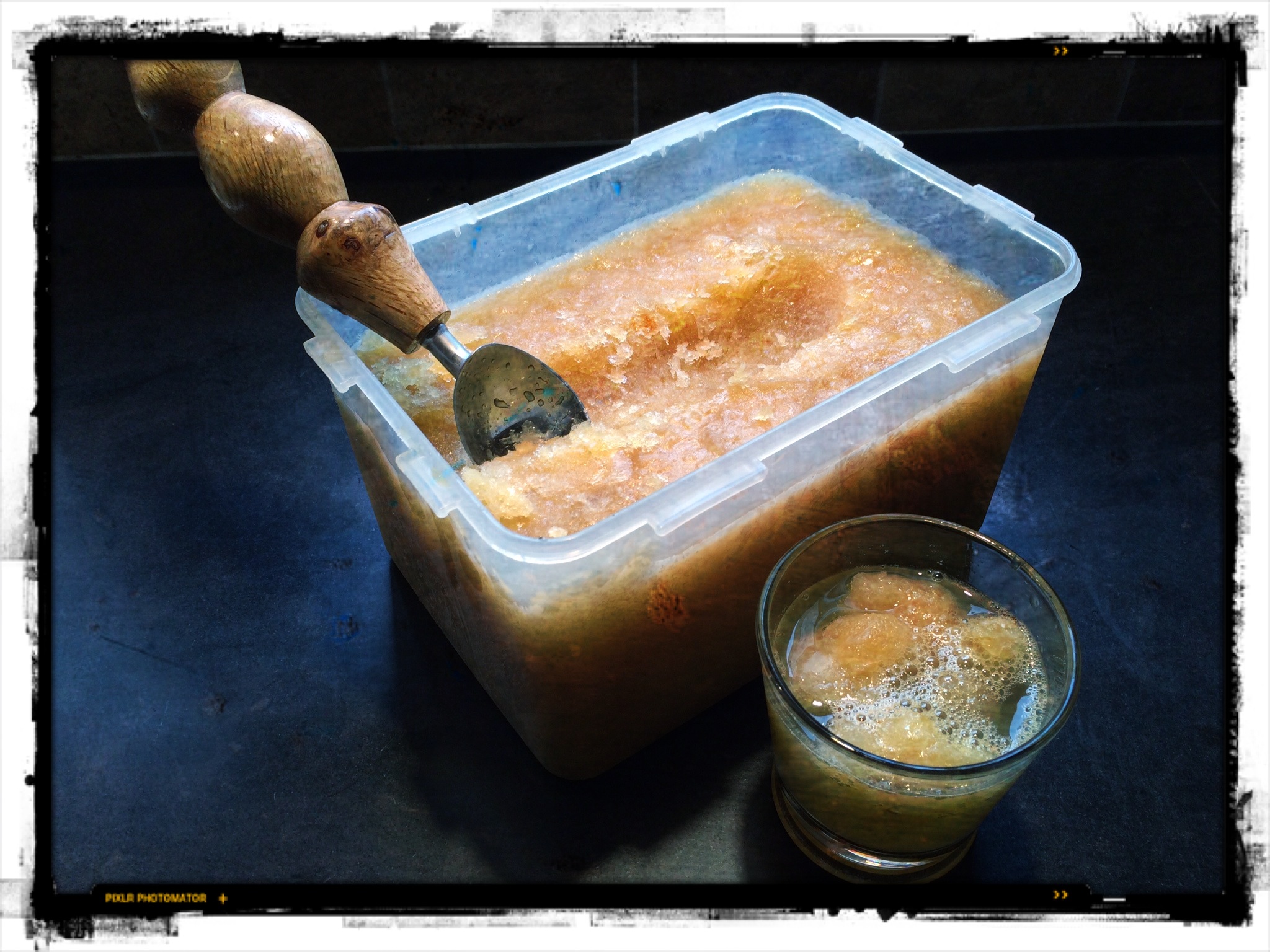
Add the OJ, lemonade and whiskey. Mix well, then pour it all into a freezable container with a lid. Freeze.
To serve: Scoop the slush out of the container (it doesn’t freeze solid) and mix it in a tall glass with 7-Up.
If you’re concerned about all that sugar, you can use a sugar substitute in the mix, and diet soda at the end. Some stores also carry low-sugar juice concentrates.
It had been a while since I made one of these, and my inventory of booze had changed a little bit. But the end result was still quite tasty.
First, the older recipe… And then the newer one below.
Most of the recipes for a Scorpion Bowl I found on-line don’t match the one that I’ve been using for many years. This recipe comes from a bartender (whose name I can’t remember–too many Scorpion Bowls, I guess) from a long-gone Chinese restaurant, ChinaGarden, that was in Warwick, Rhode Island. A car dealership (Inskip) now stands in that spot. This is the best Scorpion Bowl I’ve ever had…and continue to have!
Make sure to use top shelf booze for this or you’ll be a “Suffering Bastard” the next morning! (A little Chinese restaurant drink humor…)
Look carefully, and you may see the flame coming out of the volcano! Hope I don’t need to tell you not to drink the 151 while it’s lit! And yes, it’s an old photo: Disaronno Originale hasn’t been called Amaretto di Saronno for a long time!
2 oz. light rum (I use Don Q silver)
2 oz. dark rum (I use Mount Gay)
1 oz. gin (I use Bombay Sapphire)
½ oz. brandy (I use E&J)
½ oz. Disaronno Originale
½ oz. Cointreau
6 oz. Pineapple juice
6 oz. Orange juice
½ oz. Bacardi 151 rum for the little cup in the volcano
In a blender half-full of ice, add all the alcohol, except the 151 rum. Add the pineapple juice and the orange juice. (Use less if you like it stronger.) Give the drink a quick 1-second pulse in the blender, and pour it with all the ice into Scorpion Bowl or a very large glass or bowl. If you do have a Scorpion Bowl with the volcano in it, add the 151 rum to the bowl in the volcano. If not, you can mix the 151 into your drink.
Although all the proportions remain the same, my newer version had a few different brands than the old recipe.
My dark rum choice this time was a Rhode Island-based rum called Thomas Tew.
I went with the user-friendly Ford’s gin.
Grand Marnier is an excellent substitute for Cointreau.
And Gozio Amaretto is a real almond liqueur. Dissaronno strayed from their almond recipe decades ago, opting for cheaper stone fruits.
Right now, I’m trying out a new eggnog recipe, which I will post later if successful. It’s based on Alton Brown’s aged eggnog recipe, which uses a dozen raw egg yolks. He mixes the yolks with sugar, and then adds a LOT of alcohol to it, in the hopes of killing any salmonella bacteria that might be lurking about. The egg yolk/sugar/booze mix sits in sealed Mason jars in the fridge for at least 3 weeks, giving the alcohol time to do its job. Only then is the dairy added. Seems to make sense, but I’ll let you know when it’s done. But this recipe does take time. So if you want to whip up a pretty darn tasty eggnog in a hurry, my recipe below, one that I get asked about every year, is the way to go…
Let’s face it: there’s no such thing as healthy eggnog. This recipe is absolutely delicious but is also a heart attack in a glass. I updated this recipe a couple of years ago so that you don’t need to worry about salmonella (because you’re not using raw eggs)…though the alcohol will certainly still get you! (So I guess calling it “safe” is a matter of opinion!)
The solution is to buy pasteurized eggs.
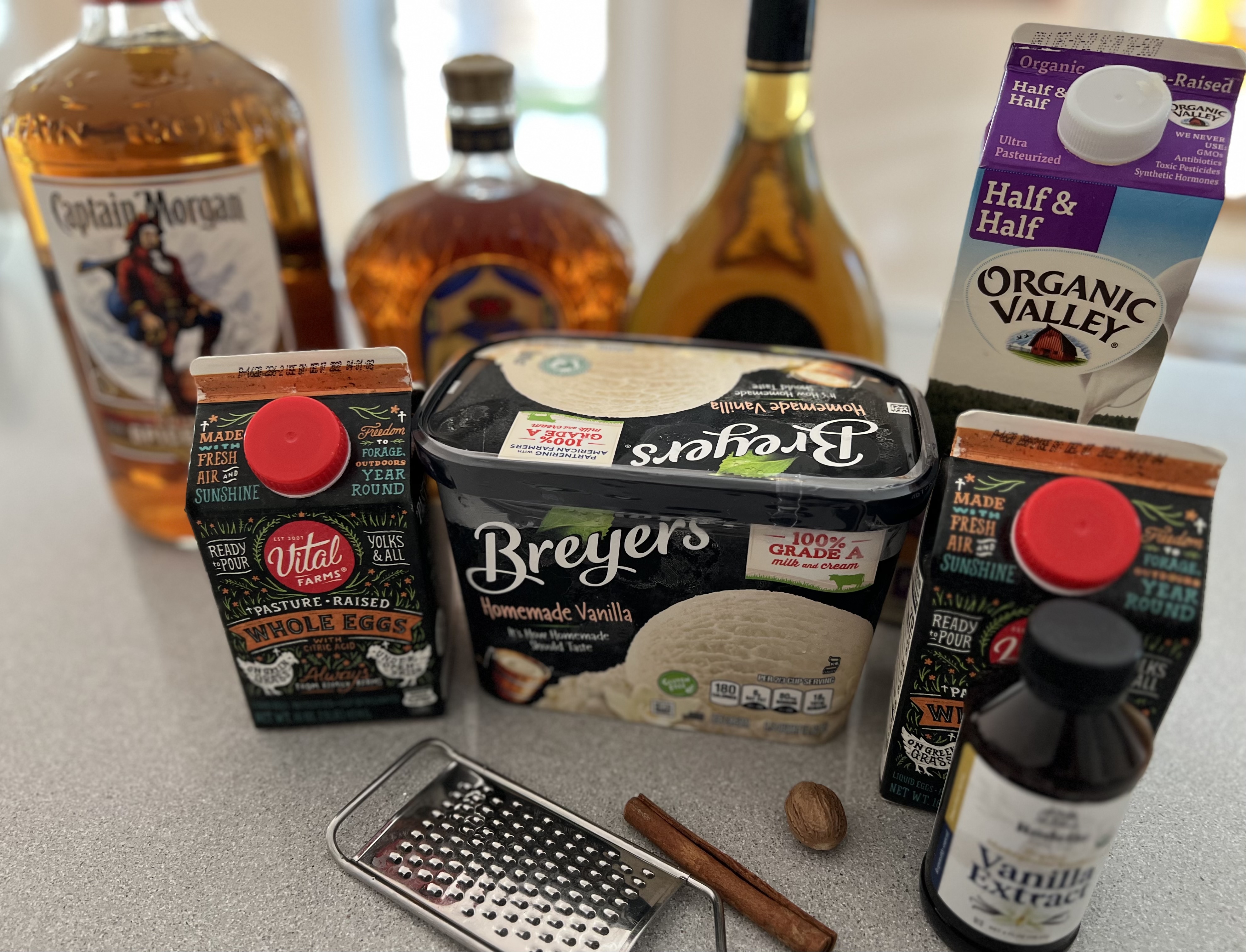
Some supermarkets now carry whole eggs in the shell that have been pasteurized, though they are hard to find. But the Whole Foods near me does carry pasteurized real whole liquid eggs under the Vital Farms name, and they work perfectly with this recipe. The original recipe called for 15 (!) raw eggs. A 16-oz. container of Vital Farms liquid eggs is the same as about 9 eggs. So I need one full 16 oz. container, and then another 10 oz. or so for this recipe.
Now the only thing I need to worry about are too many calories and too much alcohol!
1.5 quarts vanilla ice cream (I use Breyer’s)
1 pint half & half
Just over 26 oz. Vital Farms liquid whole eggs (the equivalent of 15 whole raw eggs)
1 teaspoon vanilla extract
1/2 teaspoon cinnamon
1/2 teaspoon nutmeg
1/4 cup pure maple syrup
6 oz. of each:
spiced rum (I use Captain Morgan)
whiskey (I use Crown Royal)
brandy (I use E&J)
I let the ice cream soften one day in the fridge. I carefully mix the ice cream, half-and-half, eggs, vanilla, cinnamon and nutmeg in a blender.
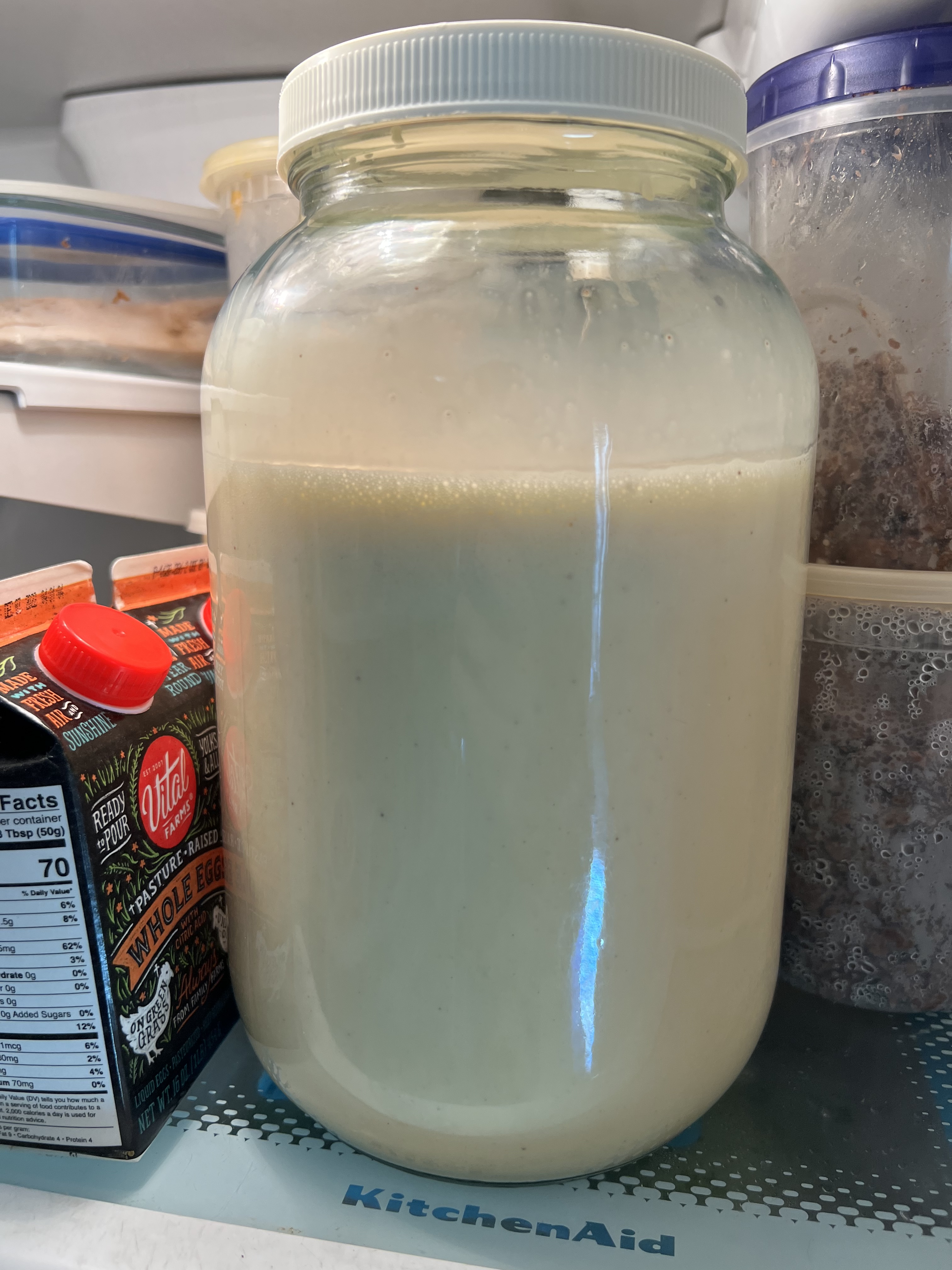
My blender is pretty big, but I find that it’s full at this point. So I pour everything into a gallon-size glass jar.
To the jar, I add the maple syrup and all the liquor. Then I whisk everything together, making sure I get down to the bottom of the jar.
After it’s fully mixed, I place the lid on the jar, and move the eggnog to the fridge, where I let it sit for at least 12-24 hours for the flavors to blend. Even longer is better.
One final mix and taste to determine whether I want more cinnamon, nutmeg or maple syrup, and it’s good to go!
It goes well with coffee…just maybe not for breakfast!
And by the way, it’s pretty darn tasty with coffee! Just imagine a variation on a White Russian, with eggnog and freshly brewed coffee, and a bit of a drizzle of maple syrup on top!
I recently rediscovered a story I wrote a couple of years ago, after my trip to New Zealand. I had hopes of getting it published somewhere, with no luck. So, what the heck…I’ll reprint it here, adding a few photos to help with the story.
A Guy Walks Into a (New Zealand) Bar…
I recently returned from a two-week trip to New Zealand, touring the northern half of the South Island, clocking over a thousand miles by car and train.
My journey started and ended in Nelson, the oldest city on the South Island. It was a great home base to explore the famous Abel Tasman National Park, ending each day with dinner and drinks.
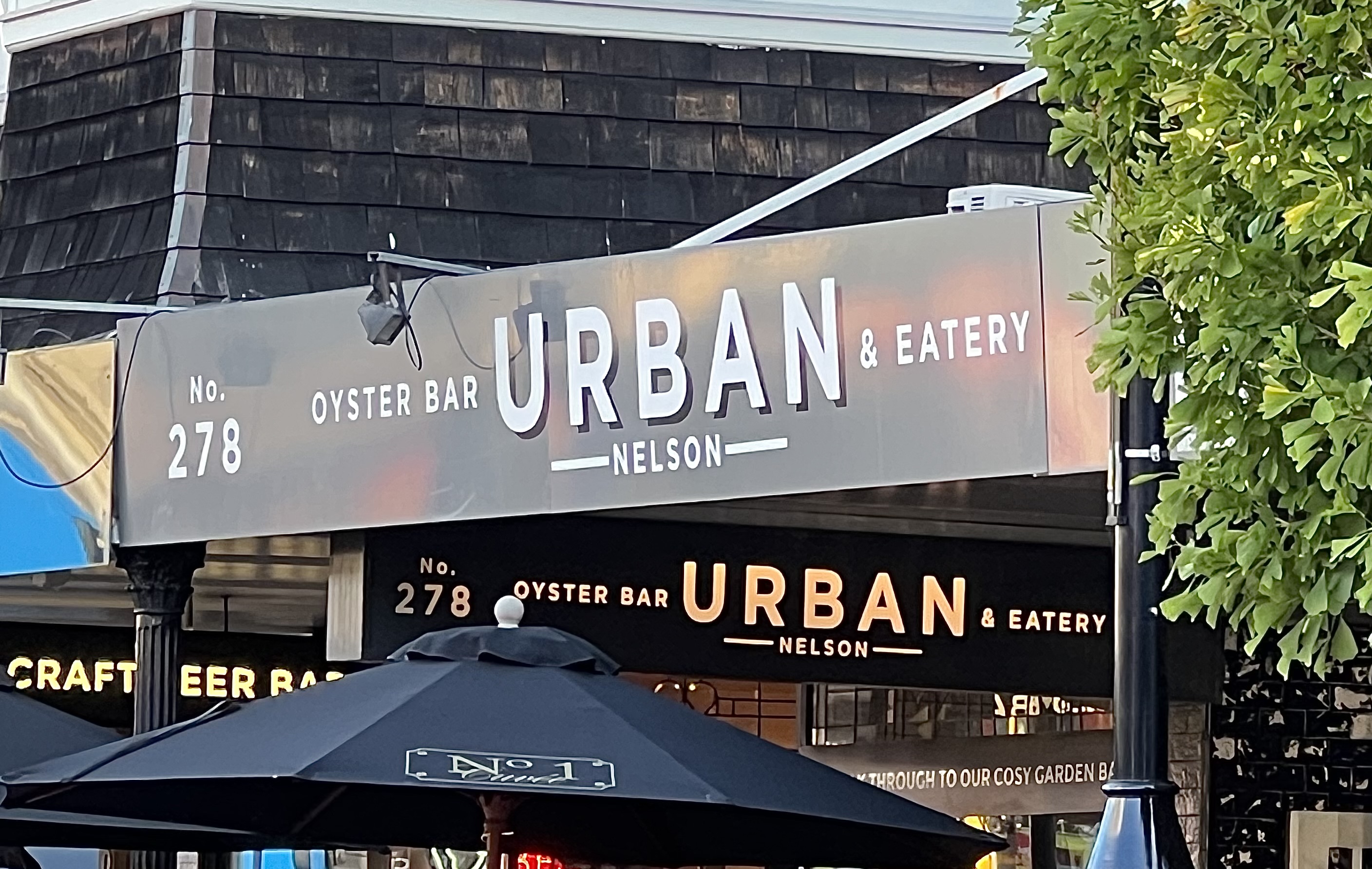
One of my favorite stops was the Urban Eatery and Oyster Bar in Nelson, where fresh, creative seafood filled the menu. I walked in and noticed there were no seats at the bar, my spot of choice when I’m traveling solo. I had made a reservation, but I saw a bar stool in the corner and pulled it up to the bar, much to the surprise of the bartender and manager.
The manager explained that no one usually sits at the bar in New Zealand, opting for small tables, but it being obvious that I was an American, if I chose to do so, I was more than welcome to. I did get some interesting glances as I pulled my barstool up.
Bar view.
The bartender, a lovely young woman who perhaps wasn’t used to having someone to talk to in her workspace, asked me what I wanted to drink. I was craving for a vodka martini, very dry, expecting what I got at most American restaurants: 3 to 4 ounces of vodka, chilled, in a martini glass with olives. But instead, she hesitated.
She explained: “Here in New Zealand, if you order a ‘double,’ you get 30 mls.” (I quickly Googled it to find it was only 1 ounce.) “But, legally, I can pour an extra 30 mls into a shot glass that you can then pour into your glass yourself.”
Doing quick ounces-to-mls math in my head, I explained that a martini in the States can be almost 4 ounces, or 120 mls, and I could see her eyes widen in disbelief. “That’s irresponsible!” she gasped.
I laughed as I told her that two of those monstrous drinks were commonly referred to as a “businessman’s lunch” in the States, and she shook her head as she poured my first ounce in a rocks glass and then poured my side shot. (There were no martini glasses in sight.)
I poured my extra ounce into my glass and it still looked really low. “I’m guessing not too many people order martinis,” I said. “What do you usually fill the rest of the glass with?”
“Tonic, olive brine if it’s dirty, something like that.”
Ordering beer in New Zealand was simpler. It was served mostly in pints. Wine glasses, however, had a clearly marked line on each glass, a regulation set nationally. No “nice pours” the bartender would sometimes give you at the end of the bottle.
Clos Henri Vineyard, Marlborough
They allowed me to order as many drinks as I wanted, as long as I wasn’t inebriated, but it felt a little embarrassing to have to order so many drinks.
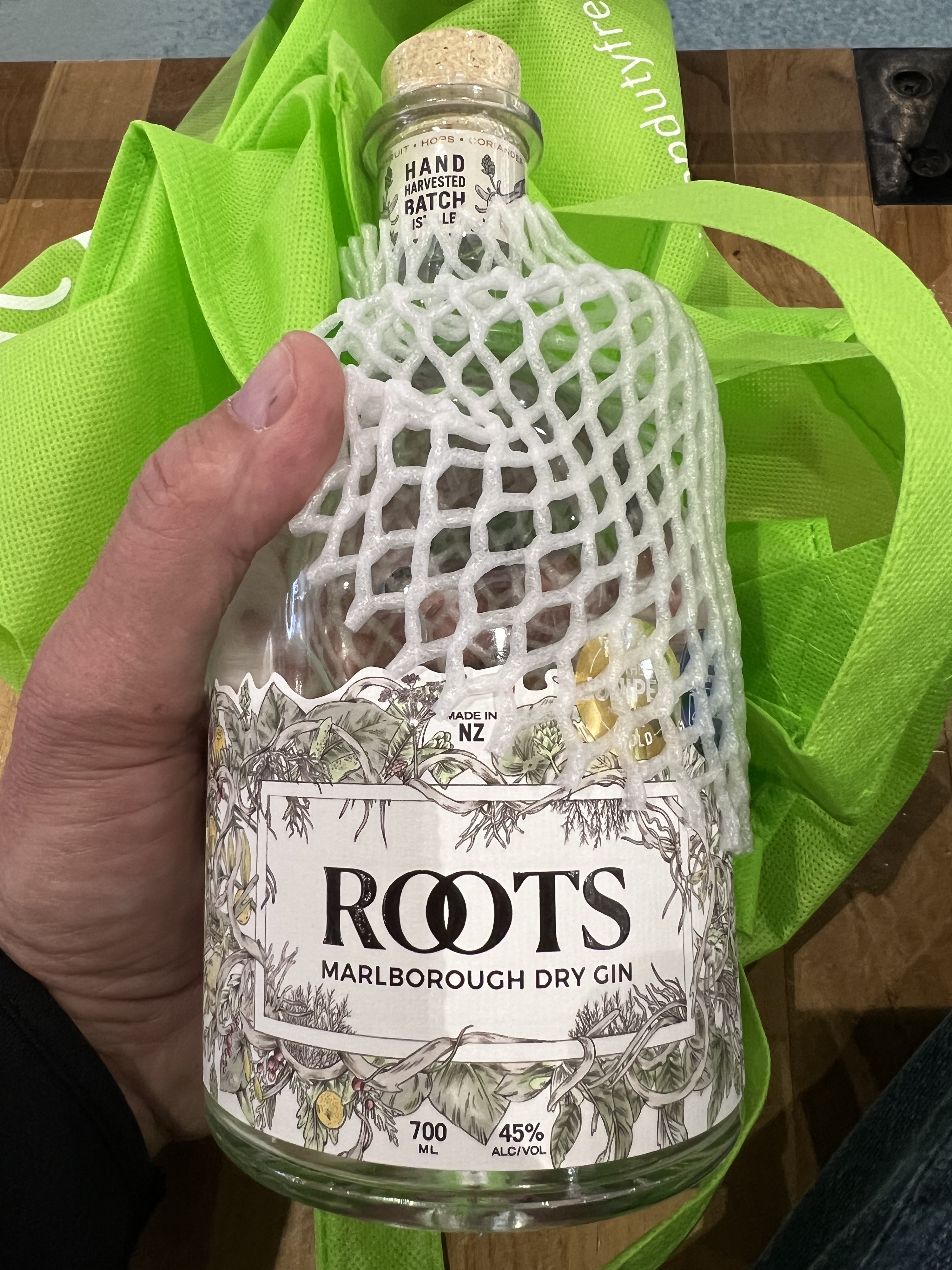
Down the street in Nelson, I visited Kismet, a very well-stocked cocktail bar, though their choice of vodka was small due to its limited popularity. The drink of choice is gin, and there are a good number of distilleries in New Zealand, many in Marlborough wine country, that produce delicious floral, herbaceous gins. My own experience with gin was limited to a whatever-and-tonic, but here…gin was something special.
Kismet in Nelson. Great bar!
I tried a couple of brands: Victor, with powerful floral notes that reminded me of Hendrick’s on steroids, and Roots, another Marlborough product. The Roots bottle was labeled “Navy strength,” registering at 54.5%, and I soon realized that if I ordered a “double-double,” as I came to call it, I’d get more alcohol in my drink with gin. I was sold.
(“Navy strength” refers to a time when gin was stored on Navy ships in wooden barrels next to the gun powder, and if there was an accidental gin spill, it had to have enough alcohol in it to still allow the gin-soaked gunpowder to ignite. Hence: “Navy strength.”)
A Roots double-double with just a splash of New Zealand’s own craft-made East Imperial tonic, and I was a happy man.
Wherever I went in New Zealand after that, my use of the phrase “double-double,” with a little smile, made the bartender understand I was here for the alcohol, and not for the filler. I couldn’t be more obviously American if I wore a red-white-and-blue bandana on my head.
A double-double of vodka (they all seem to serve only Finlandia, despite a couple of New Zealand brands I’ve had in the States) with olives at Bamboo Tiger in Blenheim. A double-double of bourbon in my Manhattan at Amazonita in Christchurch. A double-double of Mt. Gay with a splash of Coke at Oxley’s Bar & Kitchen in Picton. I got the hang of this!
Oxley’s Bar & Kitchen
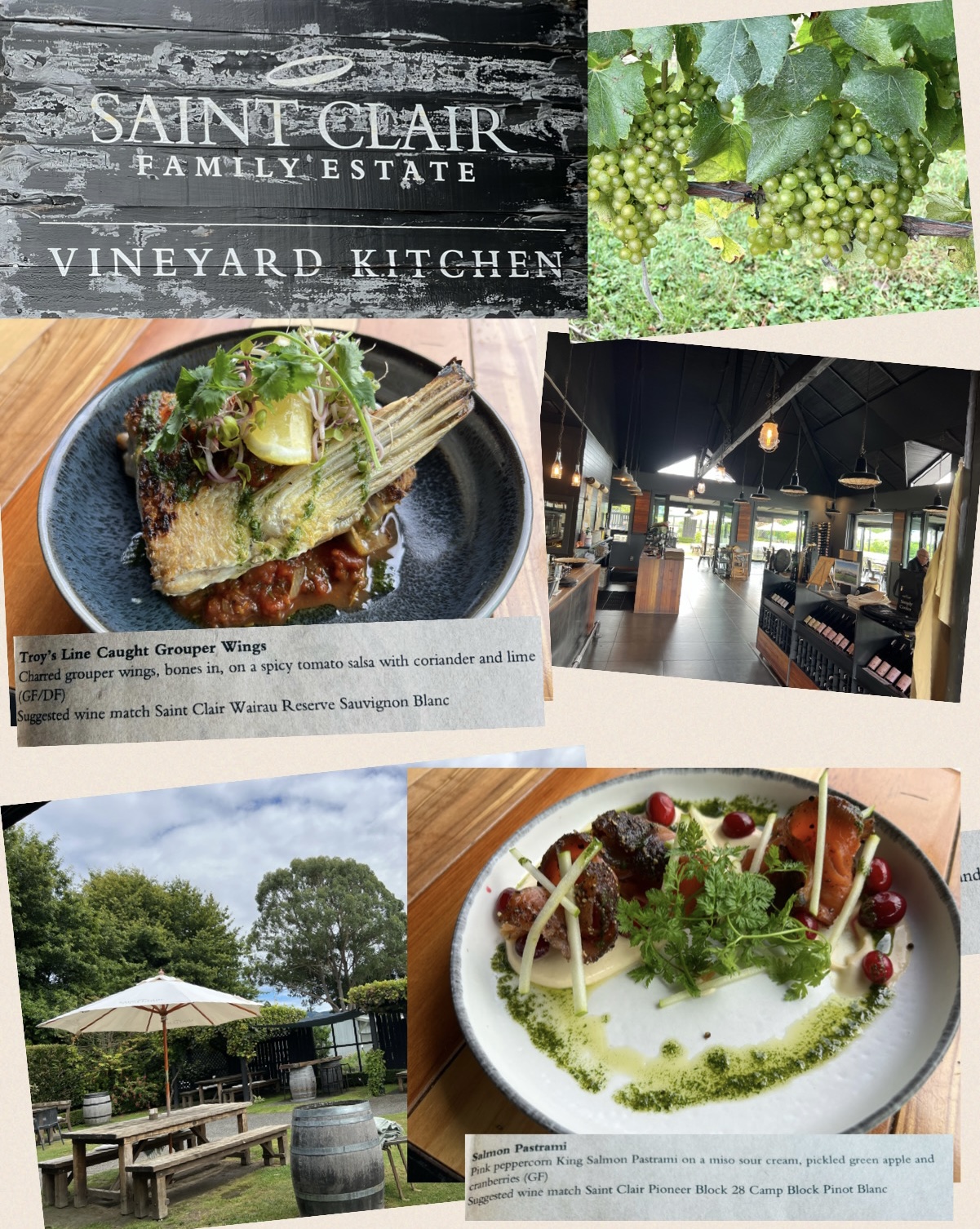
Many wineries in New Zealand have wonderful restaurants, and sadly my attempt at humor by ordering a double-double of wine didn’t go over too well. But, I was able to enjoy more than one filled-to-the-line glass of Chardonnay at Black Estate Winery in Canterbury or Sauvignon Blanc at Saint Clair Family Estate Vineyard Kitchen in Marlborough.
Black Estate, outside of ChristchurchSaint Clair Family Estate Vineyard Kitchen, BlenheimGin tasting in Marlborough
Back on my homeward bound 17 1/2-hour non-stop from Auckland to JFK, I asked for a double-double of vodka on the rocks, and got it, along with a look from the flight attendant like I was some kind of lush. I wonder if her attitude would change when we crossed into US airspace…
The inspiration for this incredibly easy to make cocktail is the famous Capital Grille Stoli Doli. I think I’ve done it one better with my Velvet Elvis.
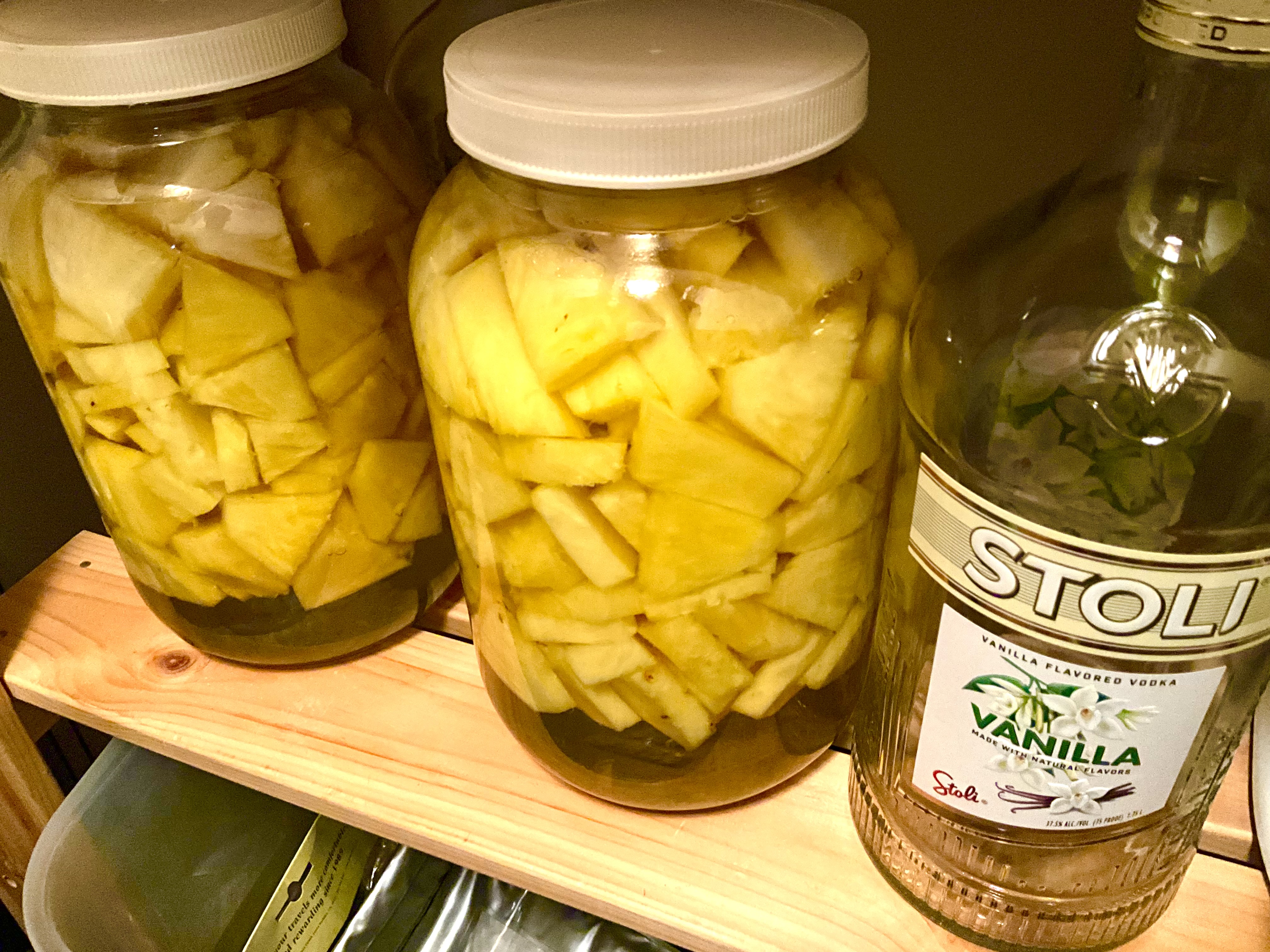
A Stoli Doli is simply Stoli vodka that has been infused with fresh pineapple. If you sit at the bar at the Capital Grille, you won’t be able to miss the very large jar of freshly-cut pineapple pieces swimming in vodka. They literally pour it “from the tap,” and serve it straight up, like a martini, or on the rocks. It’s delicious, and I’ve certainly had my share of them.
I decided to make my own at home one day, to serve to my friends at an upcoming party. But to my disappointment, I didn’t have any Stoli vodka in the house. (An embarrassment to most Lithuanians.) But…I found a bottle of Stoli Vanilla, and it changed everything! I used that instead of regular Stoli and I came up with a sweeter, smoother drink that is now legendary among my friends.
Find a gallon-sized glass jar with a lid. Peel, core and slice the pineapples and drop the pieces in the jar. Pour the vodka in, mix well, and seal the jar. Keep it at room temperature for 7–10 days, giving it a gentle shake every day.
After 7–10 days (don’t worry…a little longer won’t hurt anything), strain it, squeezing the pineapple pieces to get every bit of liquid out. Discard the pineapple pieces. (As much as you might think they would be fun to munch, they’ve given up all their flavor to the cocktail, and taste terrible!)
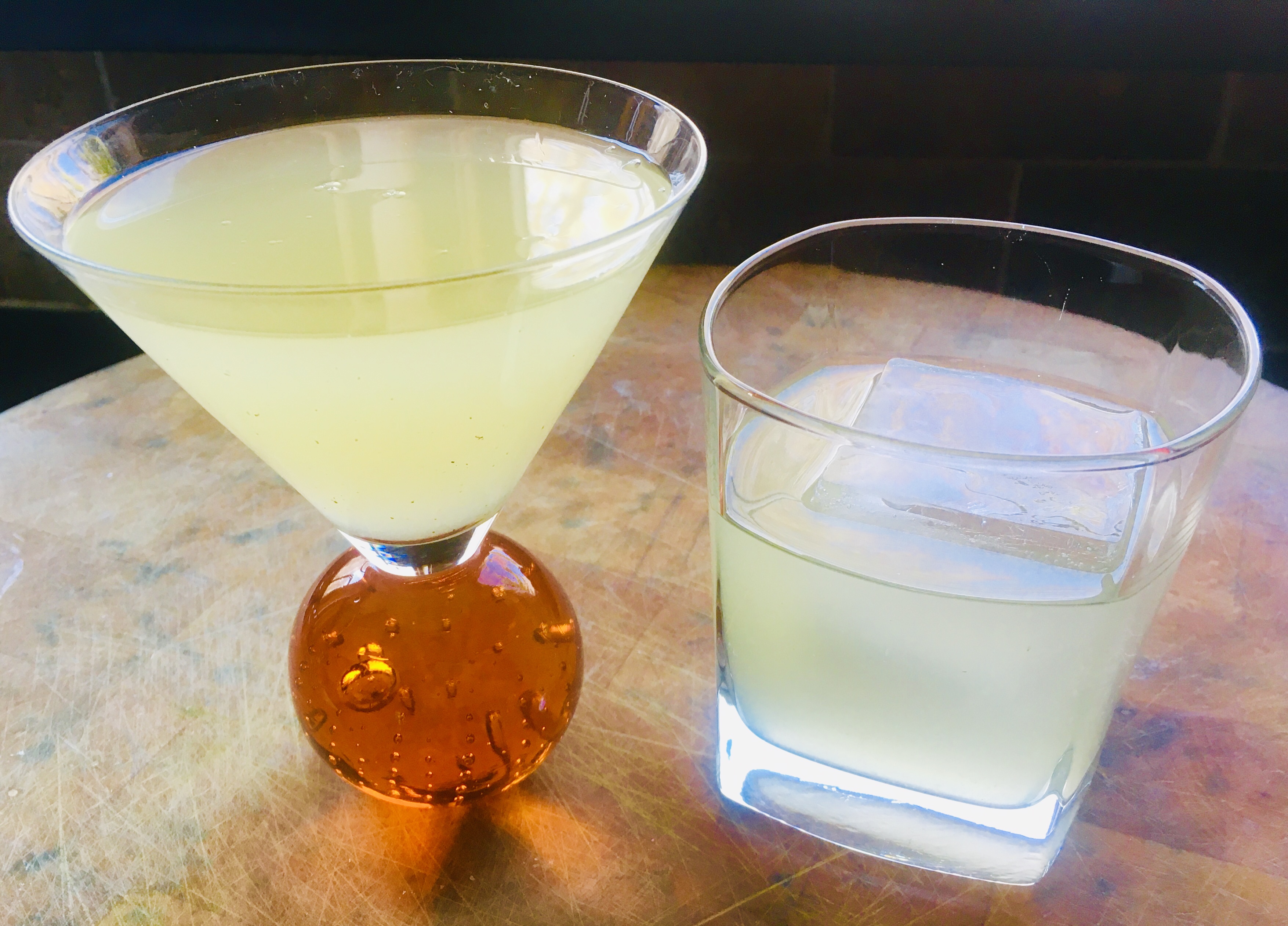
Keep the Velvet Elvis refrigerated. Serve with rocks (or 1 big rock!), or shaken and poured into a martini glass.
The 151st running of the Kentucky Derby is today and although I’m not a big horse racing fan, I am a huge fan of the official drink: the Mint Julep!
The Mint Julep is such a perfect, classic and historic bourbon drink, it seems silly to wait until Derby Day to have one. Of course, as any aficionado of spirits will tell you, there are as many right ways as wrong ways of making one.
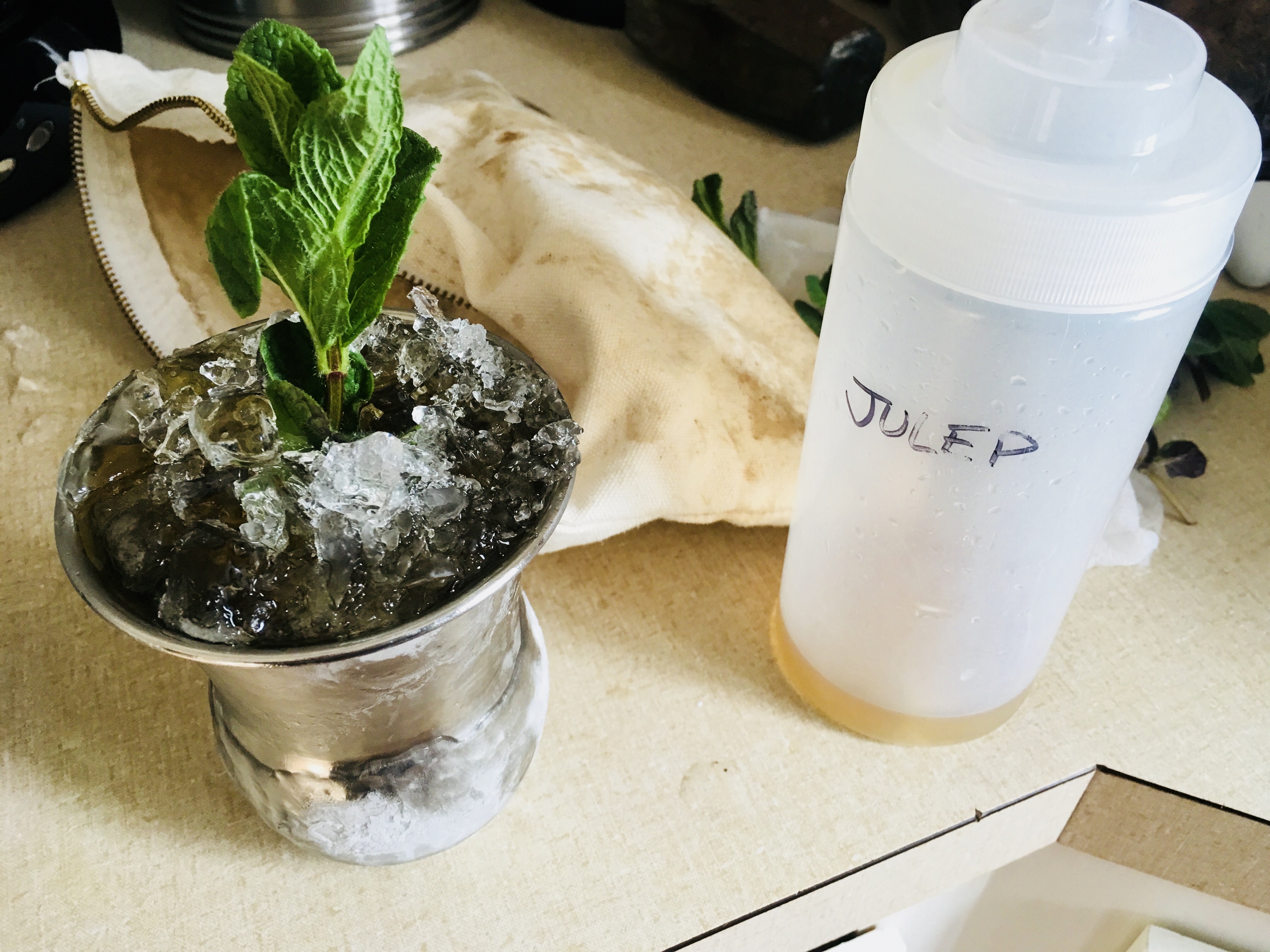
The first step in my Mint Julep is making the simple syrup. Learning from one of my old radio buddies, my pal Rick O’B, I infuse mint into my simple syrup to take my cocktail to the next level. I use the standard ratio of 1 cup of clean, filtered water to 1 cup of sugar. I place the sugar and water in a saucepan and heat until just boiling. I’ve found that it needs to reach this stage for the sugar to really dissolve.
Waiting for the sugar to dissolve.
As soon as it starts to boil, I remove the saucepan from the heat, and throw in a handful of freshly picked mint leaves, stirring to make sure the mint gets in there, and then I leave the saucepan to cool to room temperature.
Once it’s at room temp, I strain the simple syrup into a bottle with a tight sealing lid, and place it in the refrigerator to cool. It will keep for about a week.
An equally important ingredient for a perfect Mint Julep is the ice: specifically, crushed ice from clean, filtered water. Don’t even think of using tap water for any cocktail much less this one. Why ruin an expensive bottle of bourbon by going cheap on the ice? I make my own ice cubes, then put them in an untreated canvas ice bag and bash them with a mallet to the perfect crushed size. But if you don’t want to go through all the trouble, just buy a bag of good ice. Untreated canvas bags for crushing ice can be purchased online from bar supply companies for about $30. I got an untreated canvas tool bag (the exact same shape and size) at Home Depot for 3 bucks.
Da bag.
The next step is a little tougher: which bourbon to choose. The explosion of choices on the bourbon market has made it all but impossible for the average imbiber to know which bourbon is best for their tastes. If you’re a beginner, I suggest you go to a trusted bartender and explain that you’re new to the bourbon world, and could you have the tiniest of tastes and sniffs of what he’s got at his bar. Chances are, you’ll get a sampling of some of the better known brands: Maker’s Mark, Woodford Reserve, perhaps Buffalo Trace or Bulleit, and the standard Jim Beam. This is a very good start. (Also, hinting to wife and friends that “I’m trying new bourbons” around your birthday or Father’s Day inevitably gets you a few bottles as well!)
My go-to bourbon for Mint Juleps used to be Eagle Rare 10-year-old when it was around $32.99 a bottle. Now it’s up to $80! My latest go-to bourbon is 1792 Small Batch. At $29, it’s almost unbelievable, like someone made a mistake in the stock room! Very tasty on its own and great for mixing. Others that work well and are around the same price range include Buffalo Trace, and Larceny.
Finally, a Mint Julep needs a metal–not glass– Julep cup. Made of pewter or aluminum, it frosts on the outside as you stir your drink, keeping your beverage ice-cold on even the hottest of days.
3 oz. bourbon 1 oz. mint-infused simple syrup crushed ice Julep cup Fresh mint for garnish
Crush the ice and pack it into the Julep cup, even letting it dome slightly over the top. Don’t worry…the alcohol will melt it.
I like to add 1.5 ounces of bourbon, then the ounce of simple syrup, another 1.5 ounces of bourbon on top, and then a quick squirt of simple syrup to top it off. Break off a few mint leaves from the stem and push them into the ice. A beautiful layer of frost will form on the outside of the cup. Add more ice, if necessary, and garnish with a sprig of mint.
A nice selection of bourbons. This is an old photo: that Pappy Van Winkle is long gone…but I saved the bottle!






















 Live the Live ™