Archive for the ‘Drinks’ Category

One of the new all-the-rage health drinks is something called Bulletproof Coffee. Bulletproof is a brand name for a coffee that has had “toxins removed” through a special process, according to its creator. (According to my friend, Lee, a PhD in chemistry, that’s a load of crap.)

To make the drink, you combine Bulletproof Upgraded coffee blend, grass-fed butter or ghee (a clarified butter commonly used in Indian cooking,) and their special Bulletproof “Brain Octane Oil.” (The Octane Oil is another product that claims to have beneficial properties far beyond coconut oil. Again…I have my doubts.)

image

They claim this coffee combination gives you a lasting lift, not a spike that many caffeine drinks can, and the good fats in the drink keep your brain and body satisfied all morning long.

Rather than buy all the expensive Bulletproof products, my friends Doug and Jenn here at the radio station decided to make their own version of this drink. Besides tasting incredibly awesome, it definitely feels like it does some good…for a much more reasonable price.

image

It may sound bizarre at first, but you add a tablespoon of grass-fed unsalted butter or ghee (again, unsalted) to a blender. Then you add a tablespoon of coconut oil (replacing the expensive “Brain Octane Oil.”) Brew your favorite coffee (8 to 12 oz.) and add the hot coffee to the blender. Then turn the blender on and let it rip until all the ingredients have been thoroughly blended.

You need to use hot coffee for this so the fats melt and you get a nice mouth-feel. That’s it. Now drink! No cream or sugar needed.

The premise is that your body is starved for healthy fats. This drink supplies some. I’ll be trying this drink for a few weeks to see if it makes any difference in how I feel.

Just remember: just any butter won’t do. It has to be butter from grass-fed cows. (Many Irish brands are grass-fed…just make sure it’s unsalted.) If you can’t find it, ghee is a good substitute.
BAD BOTTLED WATER

Posted: April 8, 2015 in Drinks, Food
Tags: , , , , ,
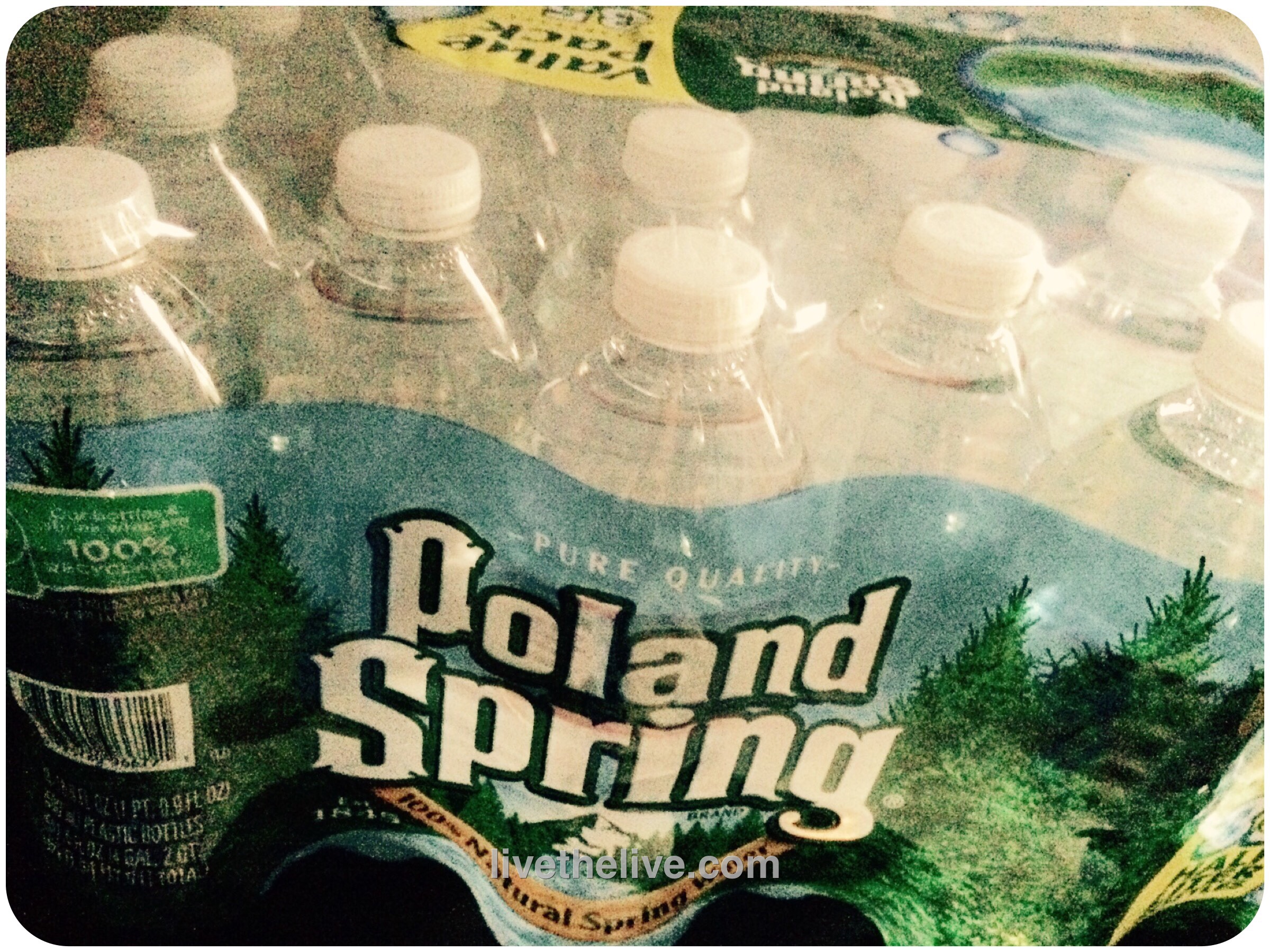
With the weather finally getting warmer, see if this scenario is familiar to you: We’re going on a family drive. My wife says to put some bottles of water in the car. We go on the drive and drink some of the water, leaving the remaining bottles in the car where it gets hot. My wife tells me to throw out those water bottles, because they’re “bad.” Repeat with every trip.

She’s right in one sense. The heat probably has compromised the water in the bottles, leaching nasty stuff from the plastic. But that didn’t happen in my car. That happened before we even bought the water!
image
The long trip for a plastic water bottle, from a natural spring (or a tap, where most bottled water comes from) to your hands, is not refrigerated. The bottles are filled and sealed. They’re put on pallets. And they are shipped in a hot truck to a warehouse, where they are stored (un-refrigerated) until they are delivered (via hot truck) to a regional warehouse, where it is stored (un-refrigerated) until it is delivered (via hot truck) to your local store, where it is held on the loading dock in the blazing sun until it can be stored in the back un-refrigerated, then brought out to the storefront where you buy it and put it in your hot car until you get home.
And the trip is even longer for water that comes from overseas: stored in the cargo holds of ships, left sitting out on docks, etc.
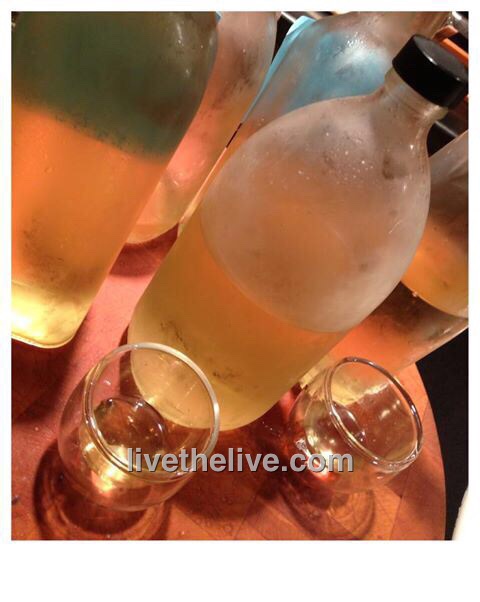
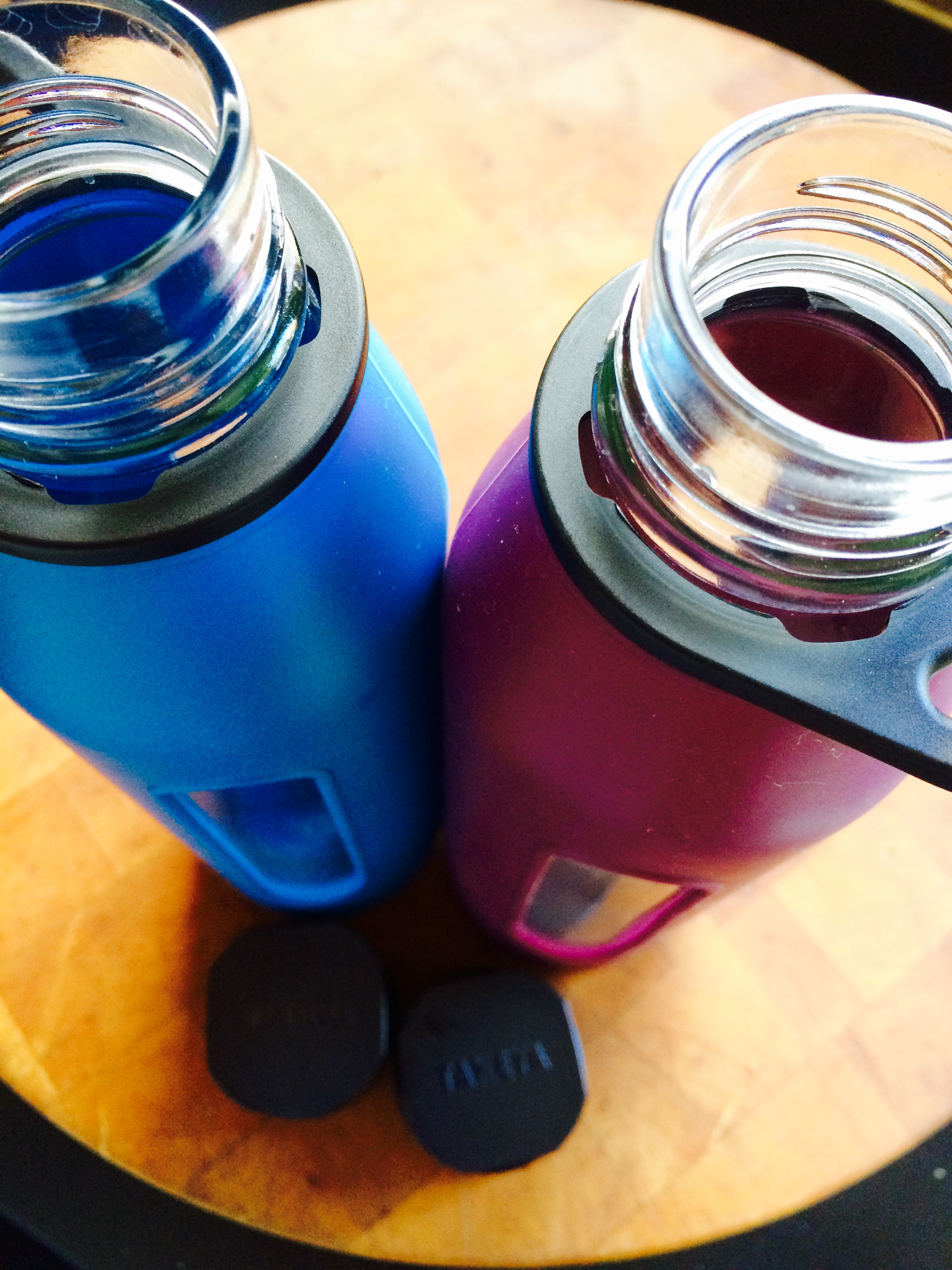
The answer for your health as well as the environment is simple: stop buying drinking water in plastic bottles! Sure, you can buy water in BPA-free plastic, but now there’s evidence that BPA substitutes are just as bad for your health as BPA. The better answer is to buy a filter, if you don’t already have one in your sink or fridge, and bring your own water with you in a stainless steel or glass container. My container of choice is a glass bottle with a protective silicone sleeve. It’s called Takeya and you can find it at Amazon.
FullSizeRender
In addition to the heat factor, bottled water is bad for other reasons: you don’t know how old the water is…and you don’t know the treatment process used to disinfect the water. Most municipal water sources, which supply most bottled water manufacturers, use a chlorine treatment of the water to disinfect it. Unfortunately, chlorine disinfection produces what’s called disinfection-by-products or DBPs in the water. Some DBPs have been shown to increase the risk of cancer and other illnesses.
We’re supposed to be drinking more water because it’s good for us, right? I’m going to start by drink better water.

It’s not a Leap Year this year (next year is), but that doesn’t mean we should wait another year for a taste of a Leap Year Cocktail.

This special drink was created in 1928 by Harry Craddock, who worked at the American Bar in London at that time.

FullSizeRender (2)


2 oz. gin

1/2 oz. Grand Marnier

1/2 oz. sweet vermouth

1/4 oz. fresh lemon juice


Combine all the ingredients with ice in a cocktail shaker and shake vigorously for 30 seconds. Pour into a chilled martini glass and garnish with a twist of lemon.

Cheers!

You’d think it would be Cinco de Mayo, but February 22nd is National Margarita Day! My personal recipe, called the Algarita, uses no sour mix…just 4 basic ingredients. I still have a small stash of the Honeybells mentioned here, but the original recipe, below, uses pineapple juice. Cheers!
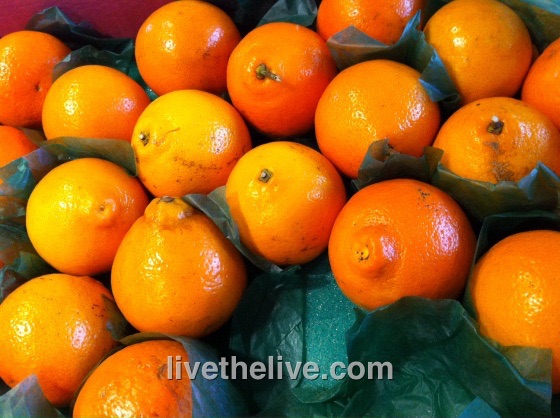
My wife’s aunt in Florida sends us an awesome gift every year. It’s a box of Cushman’s HoneyBells. They look like fiery red bell-shaped oranges, but they’re not really oranges at all.
 image
HoneyBells are a unique natural hybrid of Dancy Tangerine and Duncan Grapefruit. The plants are grafted to a sour orange root-stock, and when the tree reaches maturity, it looks just like a grapefruit tree…but with oranges growing on it. They’re available for a very short time in the winter.
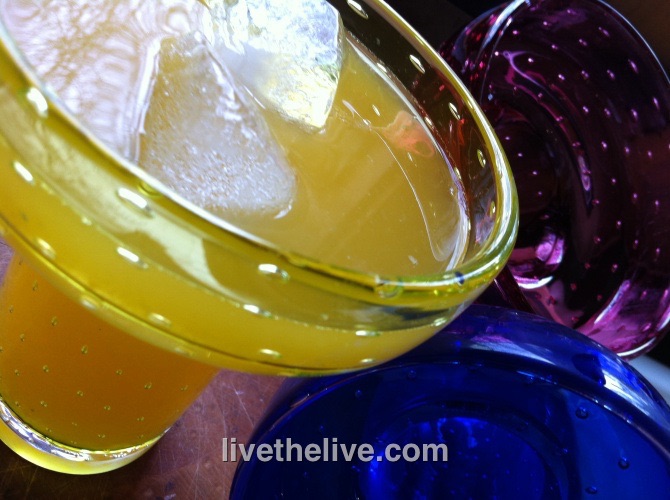
I usually make my signature margarita, the Algarita, with pineapple juice. But when I get those HoneyBells in the mail, my recipe takes on a new twist:
 image
HONEYBELL ALGARITAS
2 oz. Patron silver tequila (3 oz. is even better!)
1/2 oz. Cointreau orange liqueur
4 oz. pineapple juice (or fresh-squeezed HoneyBell juice, when in season)
1/2 oz. fresh-squeezed lime juice
Fill a cocktail shaker or tall glass with ice and add all the ingredients. Stir vigorously. Pour into a large margarita glass. Garnish with a lime wedge. Salt optional.
 image

No trip to Madrid is complete without visiting a couple of food markets. The quality and selection of foods, ready-to-eat on location or packaged to go, is mind-boggling!

Mercado de San Miguel

Mercado de San Miguel

On our recent trip to Madrid, we sampled foods from two food markets: Mercado de San Miguel and Mercado San Anton.

Mercado de San Miguel

Mercado de San Miguel

Praised by many as the best market in the city, Mercado de San Miguel is near the tourist center of Madrid, by the Plaza Mayor, a plaza featuring open-air restaurants, outdoor concerts and loads of street performers looking to make a few bucks. The choice of foods at Mercado de San Miguel is incredible, and you’ll be hard-pressed to find an empty seat.

My not-so-adventurous daughter found happiness in a personal pizza.

My not-so-adventurous daughter found happiness in a personal pizza.

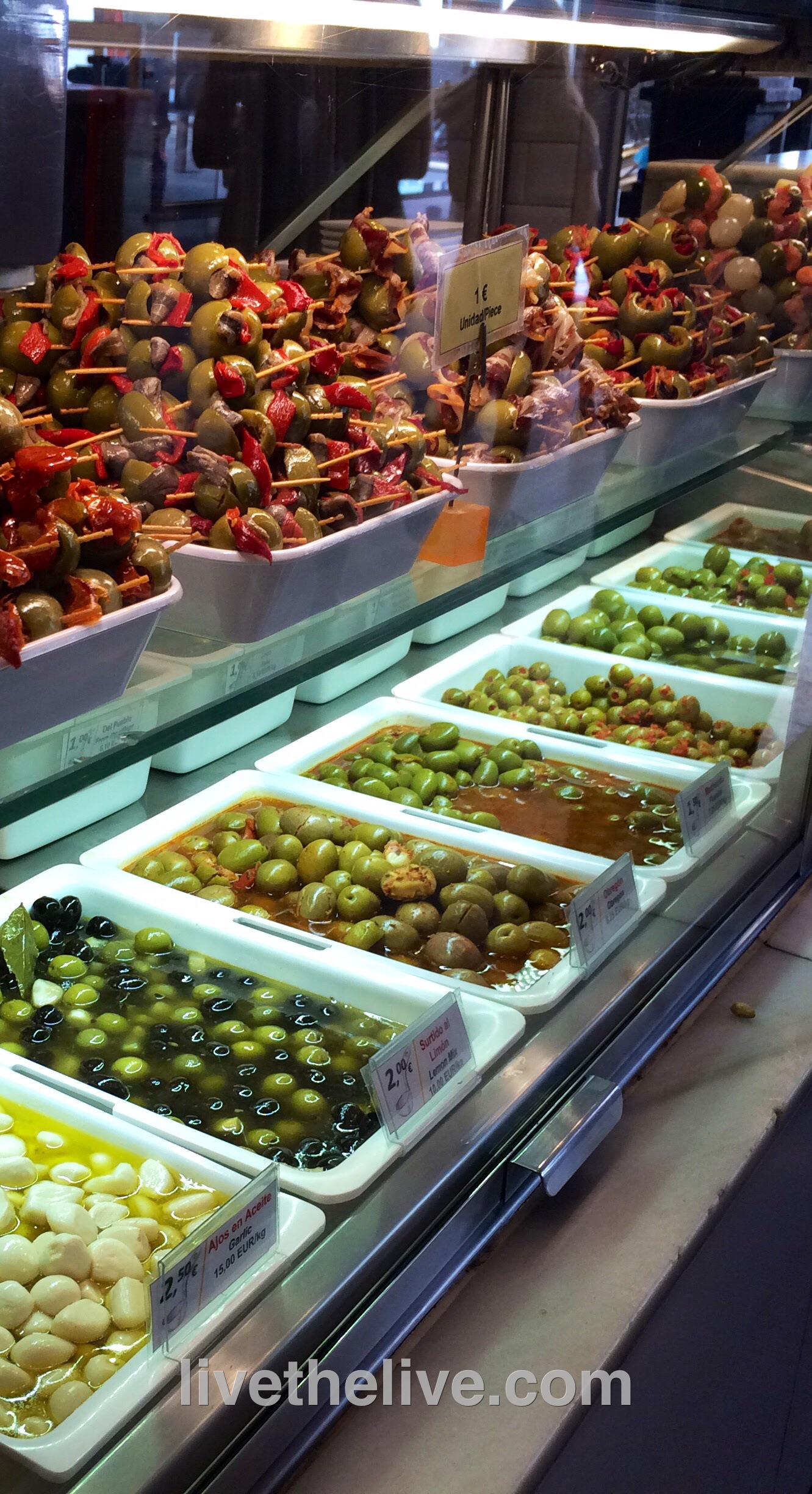
It’s worth the extra effort to elbow your way over to your own private corner of the market to enjoy everything from olives to oysters.

image


image


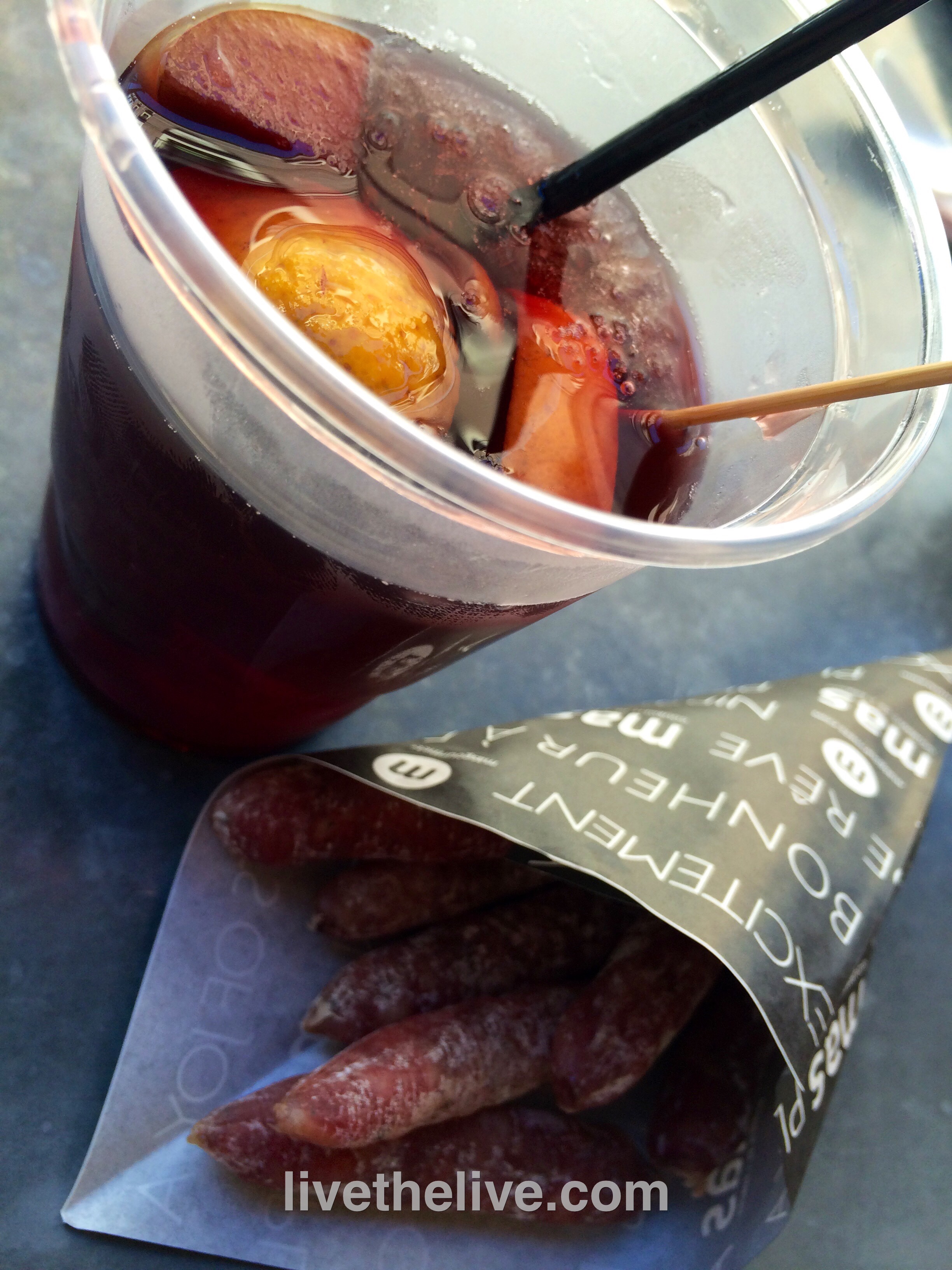
House-made sangria and little salamis served up like french fries.

House-made sangria and little salamis served up like french fries.

Grilled sardines.

Grilled sardines.

Sweet as well as savory bites.

Sweet as well as savory bites.

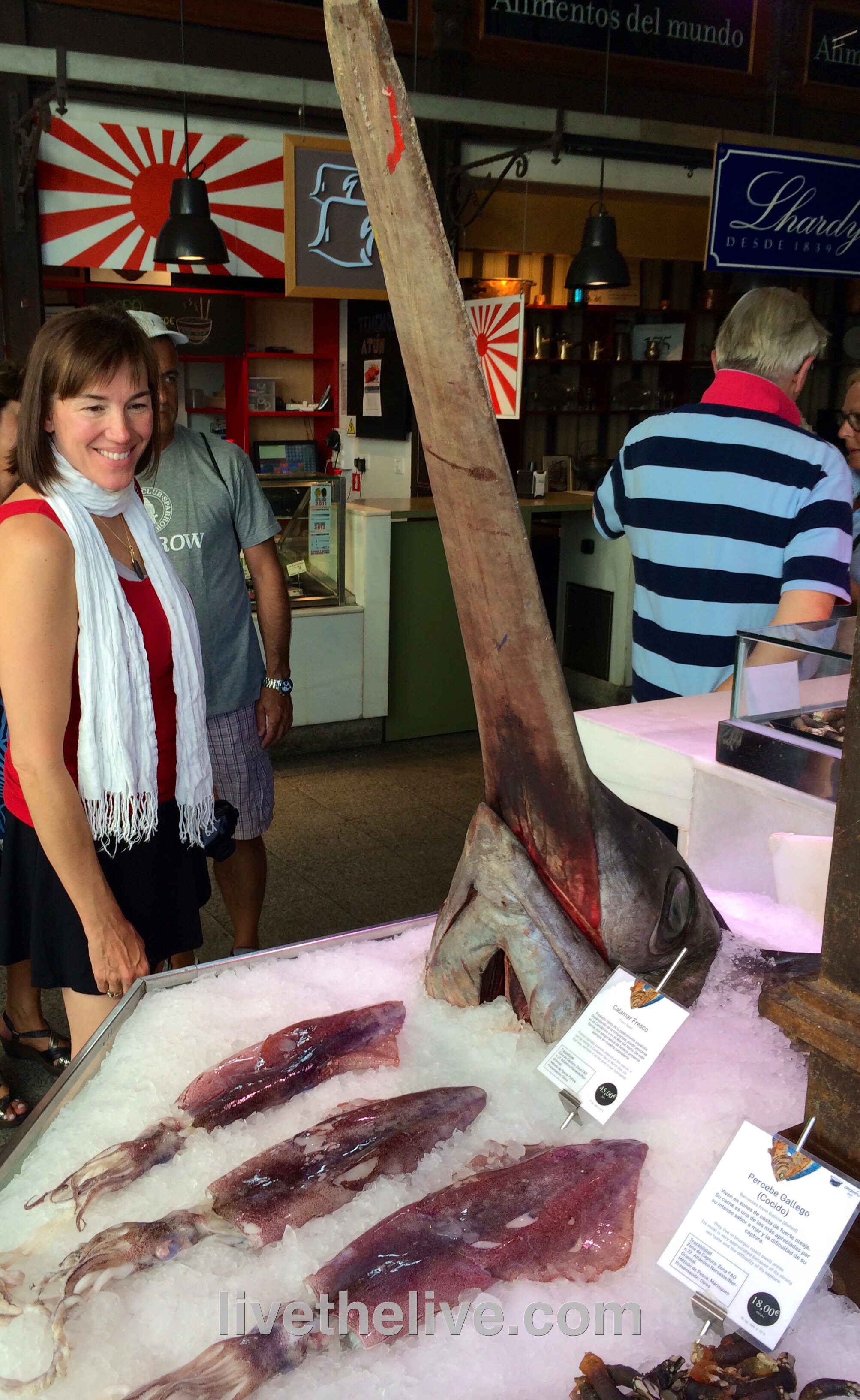
If you’re lucky enough to have a place to cook, you can take home some fantastic seafood…

image


…including swordfish and squid!

image


Though the Mercado de San Miguel clearly has it all, its large size and huge crowds can be a challenge to those not wanting to stand in long lines. The Mercado San Anton across town, meanwhile, is funky, smaller and a more manageable market.

Pork heaven at Mercado San Anton.

Pork heaven at Mercado San Anton.


Mercado San Anton has five floors. Three feature food shops and tapas bars. Grab a bite and a drink right there or take it with you.

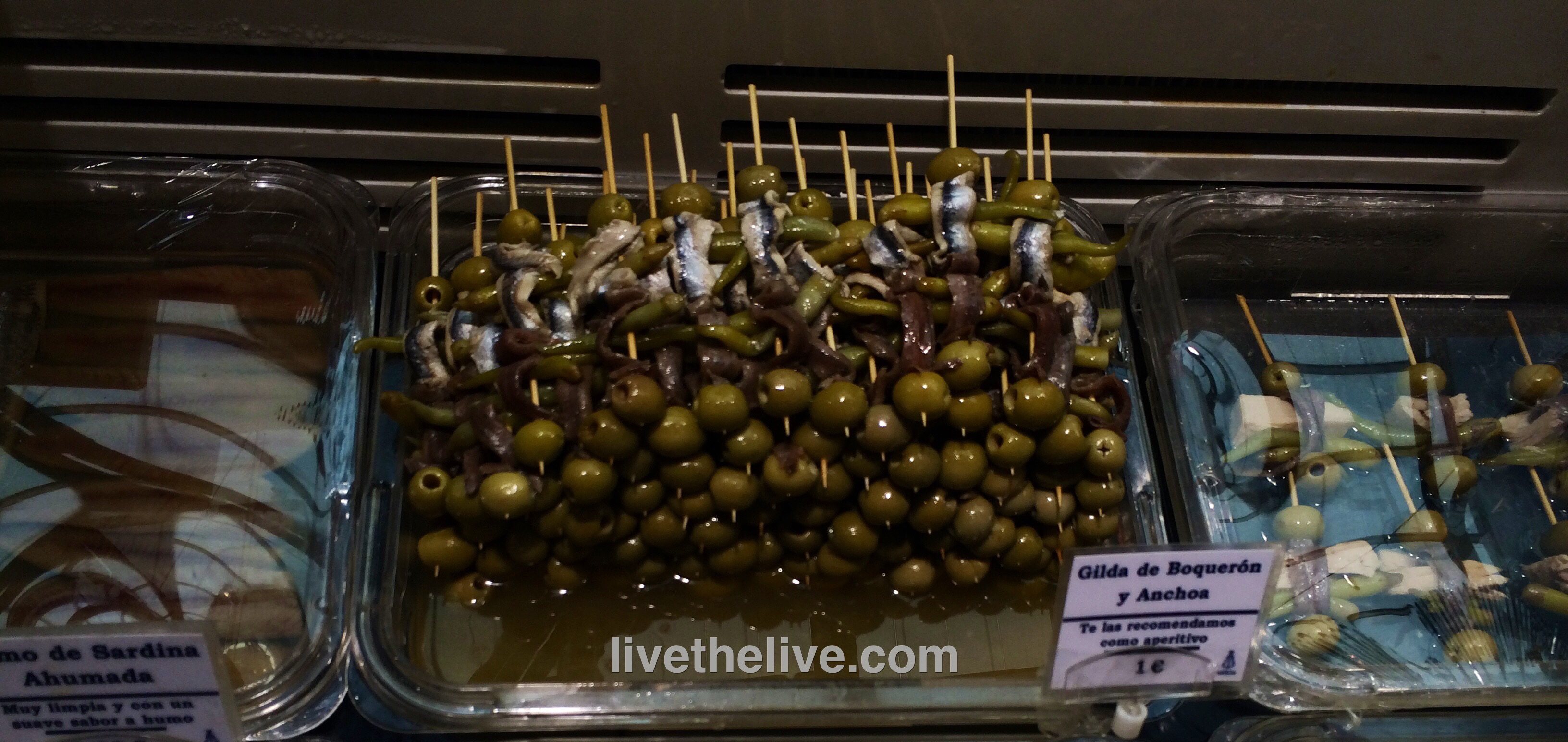
Our favorite tapas when in Spain: a skewer of olives, peppers and anchovies.

Our favorite tapas when in Spain: Gilda de Boqueron y Anchoa (a skewer of olives, peppers and anchovies.)

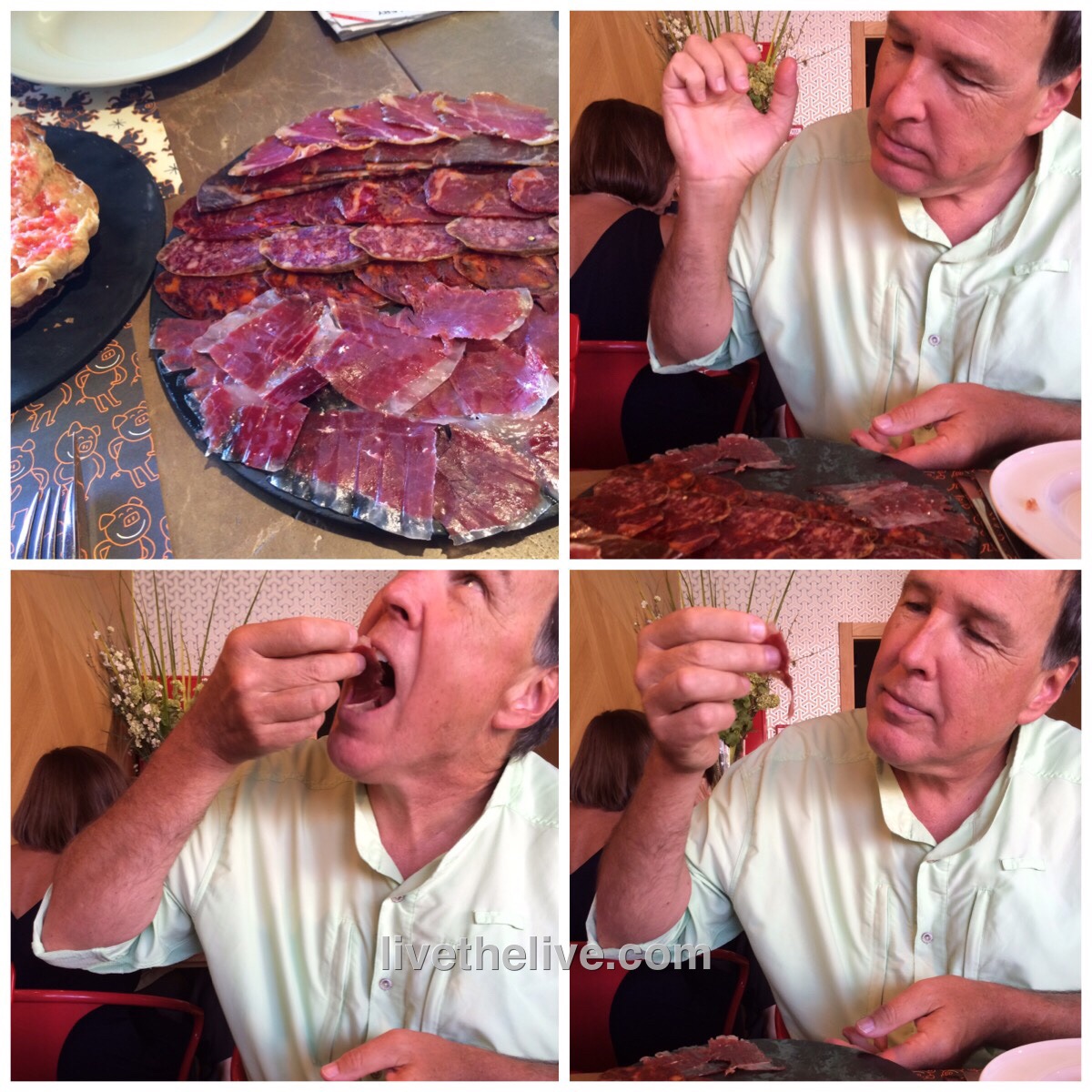
And on the top floor: a great restaurant that you shouldn’t miss: La Cocina de San Anton. If for no other reason, you need to dine here to experience the magnificent plate of Iberico ham and other meats they offer, sliced to order. This is truly a situation where more is more.

Acorn-fed Iberico ham: there's nothing like it!

Acorn-fed Iberico ham: there’s nothing like it!


The window at Cocina de San Anton.

The window at Cocina de San Anton: it’s all about the pig!

We’d go back to the Mercado San Anton in a heartbeat. Located in the colorful Chueca neighborhood full of art galleries, it’s a place where you can easily spend hours and hours over lunch.

Madrid has many fine restaurants. But tapas are a great way for any self-respecting foodie to explore the markets for a real taste of this beautiful city.

image


One last cocktail before we move into 2015. Thanks for reading this blog and please tell your friends about it! I hope 2015 brings you many eating and drinking adventures…that is, after we all diet for the first month or so and then give up!
My wife’s aunt in Florida sends us an awesome gift every year. It’s a box of Cushman’s HoneyBells. They look like fiery red bell-shaped oranges, and they are the sweetest and juiciest fruit you will ever have! But they’re not really oranges at all.
 image
HoneyBells are a unique natural hybrid of Dancy Tangerine and Duncan Grapefruit. The plants are grafted to a sour orange root-stock, and when the tree reaches maturity, it looks just like a grapefruit tree…but with oranges growing on it.
HoneyBells are available for a very short time every winter…and that time is NOW. So if you’re at all interested, check out www.honeybell.com. Cushman’s was bought out by the fruit giant Harry & David some years ago, but the excellent quality of the product and their fine service has not changed.
I usually make my signature margarita, the Algarita, with pineapple juice. But when I get those HoneyBells in the mail, my recipe takes on a new twist:
 image
HONEYBELL ALGARITAS
2 oz. Patron silver tequila
1/2 oz. Cointreau orange liqueur
4 oz. fresh squeezed HoneyBell juice
1/2 oz. fresh squeezed lime juice
Fill a tall glass with ice and add all the ingredients. Stir vigorously. Pour into a large margarita glass. Garnish with lime wedge. Salt optional.
 image
The HoneyBell clock is ticking…get ‘em soon or you’ll need to wait a year!
Any other time of the year, substitute pineapple juice, orange juice or a combination of both for the Honey Bells.

Let’s face it: there’s no such thing as healthy eggnog. This recipe kicks ass but is also a heart attack in a glass.

My buddy, Rick Sammarco, a former bartender at Mill’s Tavern in Providence, RI, credits his father, Al, for this eggnog. The original recipe calls for a lot more of everything. I’ve cut it down to a “more reasonable” size. It’s been so long since I bought ice cream, that I didn’t even know that the standard half-gallon size was replaced by a 1.5 quart size!

A word about salmonella: most cases are caused by raw chicken, not raw eggs. Eggs you get in the supermarket are washed so the chance of salmonella, found on the exterior, is minimal. (The inside of the egg is sterile.) Plus, you’re dumping a lot of booze into this drink and that will kill bacteria. In fact, some recipes say to make your eggnog weeks in advance to “sterilize” the drink.


image


Ingredients:


1.5 quarts vanilla ice cream (I use Breyer’s)

1 pint half and half

15 whole eggs (raw)

½ teaspoon vanilla extract

1/4 teaspoon cinnamon

1/4 teaspoon nutmeg


At least 3/8 cup of each:

spiced rum (I use Capt. Morgan)

whiskey (I use Crown Royal)

brandy (I use E&J)


Let the ice cream soften 1 day in the fridge. Mix ice cream, eggs, vanilla, half and half in a blender.

Add spices and liquor. Blend until it’s frothy.

Taste, and add more cinnamon and nutmeg if you like.

After fully blended, let sit in fridge 12-24 hours for flavors to blend. Even longer is better.


This is my version of a holiday drink I was introduced to by my mother-in-law from the Upper Peninsula of Michigan. I knew I was marrying into the right family after one sip!

image


Ingredients:

9 cups water
2 cups sugar
4 “Constant Comment” tea bags
12 oz frozen OJ concentrate, thawed
12 oz frozen lemonade concentrate, thawed
2 cups whiskey (I use Crown Royal)
7Up or Sprite

Boil water and sugar, making sure sugar dissolves. Turn off heat and steep tea bags in liquid for 10 minutes. Discard tea bags.
Add thawed OJ and lemonade concentrates and the whiskey. Mix well, and pour into a freezeable container with a lid. Freeze overnight.

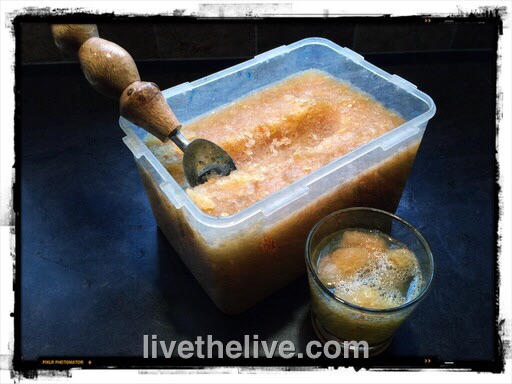
To serve: Scoop the slush out of the container (it doesn’t freeze solid) and mix in a tall glass with 7 Up.

There’s a lot of sugar in this recipe, but there are many places to use substitutes if you like: Splenda instead of sugar, low-sugar concentrates, and diet soda. Then again, there’s a lot to be said for just pouring the whiskey into a rocks glass and relaxing! Cheers!

Many years ago, my wife and I visited the Amalfi coast, and we spent several nights on the beautiful island of Capri. On our last night, we dined at the Grand Hotel Quisisana, and our meal ended with a glass of the most delicious limoncello I’d ever had.

I asked the waiter if it was possible to get the recipe of the limoncello, and he made a big deal about the recipe being a “secret.” Though disappointed, I understood, and I left Capri thinking that I would never taste that limoncello again.

Two weeks later, now back at home, I was reading the latest issue of Conde Nast Traveler, and there in black and white, was the Quisisana limoncello recipe! WTF?

My twist on the recipe: instead of lemons, I use grapefruit. I’ve tried other citrus, too, like oranges, but grapefruit-cello is fantastic!

Four ingredients. As Tom Petty said: "The waiting is the hardest part!"

Four ingredients. As Tom Petty said: “The waiting is the hardest part!”


Ingredients:

4 lbs lemons or grapefruit, zest only

2 750-ml bottles 100 proof vodka (I prefer Absolut)

5 1/2 cups sugar

6 cups filtered water


Using a vegetable peeler, gently peel the zest off all the lemons (or grapefruit), making sure you don’t get any of the white pith that could make the limoncello bitter. Place all the zest in the bottom of a glass jar with a lid that can hold all the vodka.

Pour the vodka on top of the zest pieces, seal the container, and keep at room temperature for a week, swirling the jar around gently once a day.

On the sixth day, combine the sugar and water in a pot over medium-high heat, and stir until all the sugar dissolves completely. Remove from the heat, cover, and let it thoroughly cool to room temperature (overnight is best.)

On day seven, strain the zest, pouring the infused vodka into a clean glass jar. Discard the zest.

Pour the sugar/water mixture into the vodka and mix well.

At this point, you can pour the finished product into individual bottles, but let it mellow for about a month before drinking.

I keep my limoncello/grapefruitcello refrigerated.