Archive for the ‘Uncategorized’ Category

Sometimes a small bite can take a lot of preparation, and you just don’t appreciate it until you decide to make it yourself. That’s especially true with the classic Danish open sandwich called Smørrebrød. The ingredients can vary, but one of my favorite versions is with smoked salmon, which I enjoyed here in Rhode Island, at Persimmon, in Providence.

Chef Champe Speidel’s Salmon Smørrebrød at Persimmon.

A couple of years ago, some very special friends were coming over for dinner, and I decided this would be the event where I debuted my own version of Salmon Smørrebrød. I had my work cut out for me…

It starts with the salmon. One of the finest sources of wild-caught Alaskan sockeye salmon is Vital Choice, a purveyor of extremely high-quality wild-caught seafood. I ordered several large fillets and had them shipped frozen to my home. I thawed a couple of the fillets in the fridge, and then cured them for several days.

Make sure you get your salmon from a reliable source, and always get wild-caught from Alaska, never farmed.

The recipe for the cure mix is simple:

1 cup Kosher salt
1/2 cup cane sugar
1/2 cup brown sugar
1 tablespoon crushed black peppercorns

Combine these ingredients in a bowl. Mix well.

Use a container that will hold the fillets without bending them. It also needs to be watertight, because the salt extracts moisture from the fish, and you don’t want spills from the liquids released during the curing process.

First, the plastic. Then, a layer of the cure mix. Then the salmon fillet, skin-side-down. More cure mix on top. Then the second fillet, with more cure mix on top of that.

Lay a few sheets of plastic wrap on the bottom, allowing them to fall over the sides of the container. Sprinkle a good, even layer of the cure mix on the bottom. Lay down the first salmon fillet, skin side down, on top of the cure mix. Add more cure mix on top of the fillet to cover it completely. Lay the second fillet on top of that, then cover it completely with more of the cure mix. Fold the plastic wrap tightly over the top, pressing out as much air as you can.

Finally, wrapping the whole thing up tightly in plastic.

Pressure on the salmon helps the curing process, so the cure mix makes good contact with the flesh. I weigh it down with a few cans of tomato sauce.

Even pressure on the salmon fillets helps the curing process.

Put the salmon in the fridge for at least 48 hours, until the fillets are firm to the touch.

The fillets have changed color and are firmer to the touch once cured.

Once the salmon has cured, remove it from the plastic wrap and wash it thoroughly with clean, cold water to remove as much of the salt as possible. Some of the peppercorns will imbed themselves in the fish…remove those, too. Pat the fillets dry with paper towels.

The salmon is ready to eat just like this, but…

At this point, you’ve got Gravlax, and it’s delicious just the way it is. But I chose to go one step further and smoke the salmon, so I put the fillets on a metal rack in my fridge, skin side down, and let them dry out a bit for an hour or so. When the salmon dries, the flesh gets a bit tacky. That’s called the pellicle, and the sticky surface of the fish helps the smoke molecules adhere better. It’s a good thing.

The salmon fillets, drying in the fridge.

While the salmon is drying in the fridge, I get my smoking gear ready.

I like to use charcoal briquets and hickory chips for the smoking process. I bring my small camping grill next to my larger home grill. Using my charcoal chimney, I light the briquets and let them burn until they’re ashed over. Using a small smoking box, I place some hickory chips inside, then add a couple of hot briquets to it, making sure they burn the chips and the smoking starts. I place the smoking box inside my large grill with the vents open, laying my salmon fillets (skin-side-down) next to the smoking box. I close the lid of the grill, and let the smoking begin.

Lighting briquets in the camping grill before moving them to the larger grill.

Ashed-over coals in the chimney.

This is as close to a cold-smoking process as you can get at home. There is no heat actually cooking the salmon, just a smoke-filled grill that needs to be replenished every once in a while with hot coals and more hickory chips. I smoke the salmon for a couple of hours.

Let the smoking begin!

Once the salmon has smoked, you’ve got yourself a really special treat. You must eat some at this point, just to reward yourself for a job well done! Then, wrap the rest of the salmon tightly in plastic wrap, and keep it refrigerated until you’re ready to serve it. It will stay fresh in the fridge for several days.

My research for Salmon Smørrebrød resulted in many variations, but I ultimately chose one that used a horseradish cream on the fish. Just so happened that I have a giant horseradish plant growing in my garden, so it was time to dig some of the roots up!

Digging up horseradish.

Once I dug the roots out and washed them clean, they needed to be peeled down to their white center. Then they were ready to be grated. I used the same system my grandfather did, many years ago: a simple hand grater for the job. If you thought you cry when you slice onions, you ain’t seen nuthin’ until you’ve grated horseradish! But it’s worth the effort.

Cleaned horseradish roots, before peeling and grating.

You need freshly grated horseradish, not the prepared stuff you find in the supermarket for the cream…

12 tablespoons sour cream
6 tablespoons plain Greek yogurt
4 tablespoons freshly grated horseradish
8 teaspoons freshly squeezed lemon juice
4 pinches of sugar
Kosher salt to taste

Combine these ingredients in a bowl and mix well. It keeps for at least a day, so you can make it the night before serving. This is a lot of horseradish cream, but I was making enough to serve 12 people.

The horseradish cream…delicious on a lot of things!

1 fennel bulb
2 Granny Smith apples
1 tablespoon freshly squeezed lemon juice

A few hours before serving, thinly slice a fennel bulb–paper-thin if you can–and place the slices in a bowl of ice water. Peel and core 2 Granny Smith apples and slice them as thinly as you can, placing them in the ice bath as well. After an hour, remove the fennel and apple slices from the ice water, pat them dry with paper towels, and place them in a bowl, sprinkling them with the lemon juice. Toss, mixing well, and then place the bowl in the fridge until you’re ready to use it.

Slicing the fennel as thinly as possible.

A few last ingredients…

Sliced bread
Softened unsalted butter
Fresh dill sprigs

Smørrebrød is a sandwich, so of course, I needed some bread. I chose something from my heritage: Lithuanian bread, a combination of rye and pumpernickel that I find when I go back home to New York. I keep it in the freezer until I need it, and for this recipe, I sliced it thin.

Getting the ingredients together. The Lithuanian bread is the brown bread. We also had a couple of slices of gluten-free bread.

Now we’re finally ready to build this thing!

Slicing the salmon as thinly as possible.

Rather than making all the sandwiches myself, I decided I’d teach a Master Class of Smørrebrød-making with my fabulous guests. So I brought all the ingredients out, and we started building our sandwiches as I sliced the salmon as thinly as possible.

First, you take your slice of Lithuanian bread and spread some of the butter on it.

Then, layer the fabulous salmon on top.

Next, a healthy spread of the horseradish cream.

Top with some of the sliced fennel and apple.

Garnish with just a few fresh sprigs of dill.

And then top it all off with a friendly sprinkling of Fleur de Sel, or your favorite sea salt.

Fleur de Sel at the end makes all the difference!

And that’s my Salmon Smørrebrød…a labor of love. But that’s what you do for friends, right?

Time to eat!

Leftover ingredients make a great sandwich on an everything bagel the next day!

If you watch as much Food Network and Cooking Channel as I do, you’ve probably heard of Big Bob Gibson’s Bar-B-Q in Decatur, Alabama. Smokin’ and grillin’ since 1925, they put the now-famous Alabama white sauce on the map. They would smoke whole birds, then dunk the entire bird in a bucket of white sauce before returning them to the smoker to cook some more. And then they’d serve more of the precious white sauce on the side as you tore into the most amazing chicken you’ve ever had.

I lived in Mobile, Alabama about 37 years ago. Never made it to Decatur. Probably never will. So it was time for me to try to recreate the magic at home. I think I did pretty well.

If you Google “Alabama white sauce,” you’ll get dozens of versions, each, I’m sure, pretty similar and pretty good. I did just that, and then tweaked it to make it my own.

I don’t smoke the birds. I simply season them with salt and pepper, and roast them in a convection oven at 350. When they’re almost done, I brush the chicken all over very liberally with my white sauce…bottom of the bird, too. Then it goes back in the oven for a little bit more.


Parts work as well as whole birds. I love using leg quarters for this recipe.


Combine all the ingredients and mix well. I like to keep it in a container with a lid so I can shake it up before using it.


CHINESE BBQ PORK

Posted: March 8, 2026 in Uncategorized
Tags: , , , ,

Inspired by the classic Chinese pork dish called Char Siu Pork, I decided to give it my own spin.

The original recipe calls for pork neck or collar, or pork shoulder…fattier cuts. I chose pieces of heritage Berkshire pork belly that I had already cured, but not smoked.

As with almost any recipe that calls for honey, I choose to use maple syrup instead.

And the classic Char Siu Pork uses food coloring, to give it that signature red-dyed look. I chose not to use food coloring.

The marinade is pretty straightforward, and I added a tweak or two of my own…


1/4 cup maple syrup
1/4 cup hoisin sauce
2 tablespoons brown sugar
2 tablespoons soy sauce
1 tablespoon oil (I use avocado oil)
1 teaspoon Chinese five spice powder
1 teaspoon sesame oil
1 teaspoon rice vinegar
2 lbs. pork belly (in this case, it is already cured)

Cut the pork belly into manageable pieces, placing them in a large freezer bag.

Combine the marinade ingredients in a bowl, mixing well, then add it to the bag with the pork belly. Seal the bag tightly, and squish it around, to make sure the marinade covers all surfaces of the pork.

Marinating needs to be for at least 4 hours, but overnight in the fridge is even better. Place the freezer bag with the pork on a sheet pan or in a bowl, to avoid any accidental spillage in the fridge.

About an hour or two before cooking, remove the pork from the fridge, to bring it to room temperature.

Pre-heat the oven to 325°.

Remove the pork from the marinade, and place it on a rack. Roast it for 30 minutes.

Meanwhile, pour the remaining marinade into a saucepan. Bring it to a simmer over medium-high heat, and cook for 2 minutes until it’s syrupy, being careful not to burn the sugars. Remove it from the heat. (Do not taste the marinade before doing this, since it touched raw pork!)

After the pork has roasted for 30 minutes, take it out of the oven, and brush it with the marinade. Flip it over and brush it again, then return it to the oven for another 30 minutes.

Remove the pork from the oven, and brush it again with the marinade, returning it to the oven for 20 more minutes.

If the pork looks like it’s charring too quickly, cover it with foil.

At this point, measure the temperature of the pork. It should be 165°. The meat should be tender, but not falling apart, and it should be caramelized and sticky from the marinade. Let it rest 10 minutes before slicing it.


My daughter loves foods that are heavy on the garlic, so this is a special treat we make when diets don’t matter! It’s buttery, it’s garlicky, it’s carby, and it’s absolutely delicious!

I use 2 kinds of garlic in my garlic bread: fresh and granulated. I think it packs a garlicky punch even better than either one alone. And passing the fresh garlic through a press ensures that it will cook quickly and not leave you with that raw garlic taste in your mouth.

Although I love French baguettes, they’re too thin and crisp for garlic bread. I buy that long, soft, Italian loaf you can find in just about any supermarket bakery. When it bakes, the outside edges are nice and crispy, while the inside of the loaf stays soft…exactly what you want! The Italian loaf is big, so not only do I cut it lengthwise, I then cut each piece in half. This will make enough for us to enjoy one evening, and still store some in the freezer for a future craving.

This recipe makes enough for 1 garlic bread, 1 cheesy garlic bread, and also the bread you’ll be putting in the freezer for another time.

The delicious final product…but I digress…

2 sticks (8 oz.) unsalted butter
2 (or more!) large cloves garlic, squeezed through a press
1 teaspoon granulated garlic
1 teaspoon sea salt
1 teaspoon oregano
1 teaspoon parsley
grated mozzarella cheese…a few ounces

In a bowl, let the butter soften to room temperature. Once it’s soft, squeeze the fresh garlic cloves through a garlic press and add them to the butter. Then add the granulated garlic, salt, oregano and parsley. Using a fork, mix the ingredients really well until you have a beautiful garlic and herb butter. (Once it’s mixed, I find it’s easier to spread with a spatula or the back of a large spoon.)

Spread the garlic butter evenly on all 4 pieces of bread you’ve cut. Use it all up! Going thin on the butter serves no purpose here!

Place one of the loaves on a baking sheet. Add the grated mozzarella to one of the other loaves, and place it on the baking sheet as well.

Regular garlic bread on the left, cheesy garlic bread on the right…ready to go into the oven.

Pre-heat the oven to 400 degrees.

With the other two pieces of bread, I simply put them together…with cheese inside or not…

…and wrap them in aluminum foil. I place that in a freezer bag and keep it frozen until we have another craving. When it’s time to cook, I pre-heat the oven to 350, and bake the loaf in the foil for about 25 minutes. I take it out of the foil at the very end and bake another 5 minutes to get it to crisp up.

Ready to be devoured!

With the oven at 400, I bake my garlic bread and cheesy garlic bread for about 10 minutes, or until the edges of the bread start to turn a golden brown and the cheese on the cheesy side starts to melt.

I cut each piece in half so my daughter and I share in the 2 breads. There’s never any leftovers!

Colder weather always has me craving comfort food…and nothing says comfort more than Shepherds Pie!


To make this recipe, I used organic vegetables, organic grass-fed dairy products, grass-fed beef, pastured eggs, and homemade chicken stock. These extra efforts made a big difference to me, but use what you are most comfortable with and have easiest access to.

And although the basic recipe calls for beef, I’ve had great success using lamb and even venison.

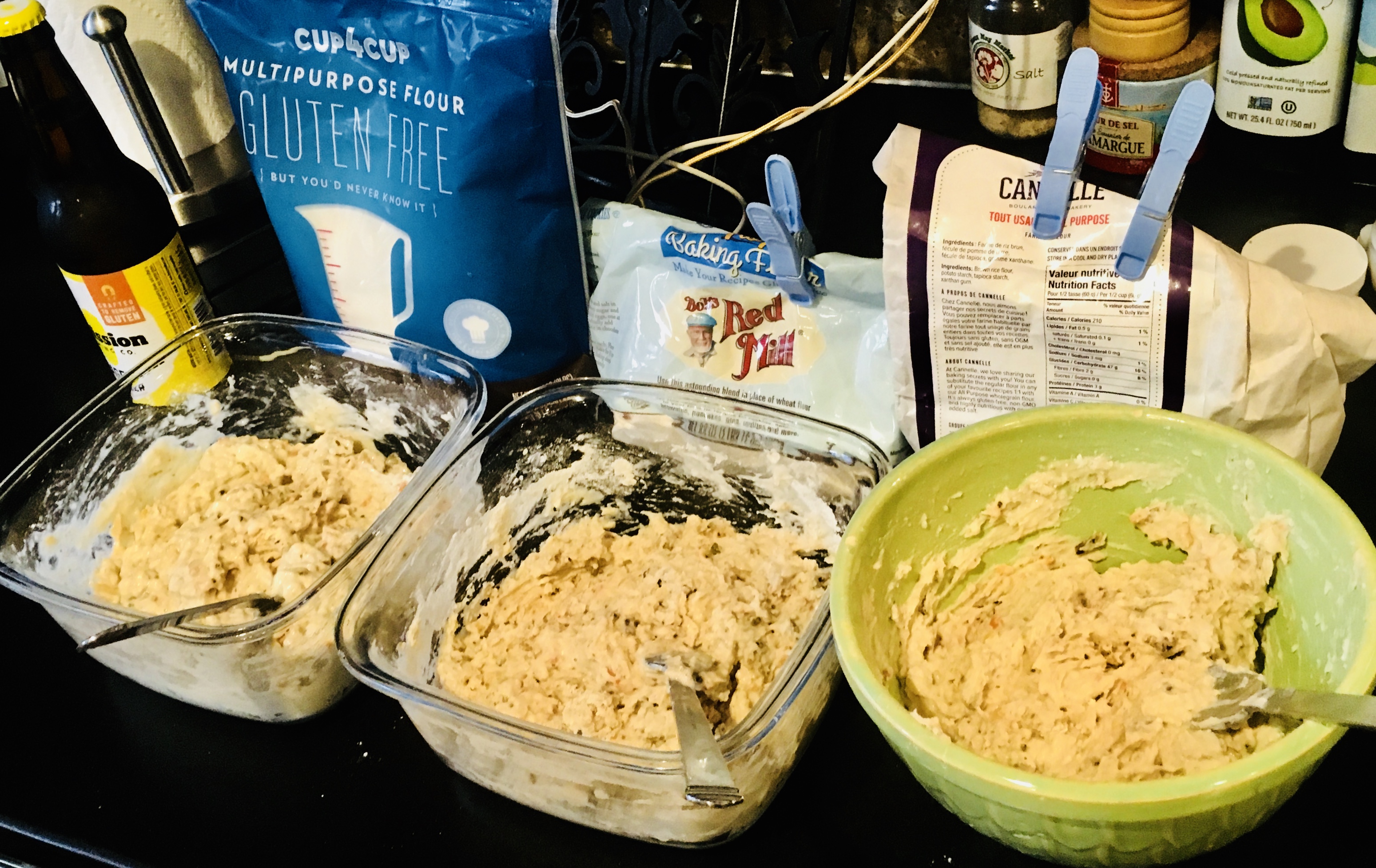
If you’re on a gluten-free diet, the only gluten in this recipe is in the all-purpose flour. Using a GF flour, like Cup4Cup or Bob’s Red Mill 1 to 1 Baking Flour, does a great job of thickening without the gluten.

Potatoes are the classic ingredient in Shepherds pie, but I found that sweet potatoes are a fantastic substitute. (See the photos at the bottom of the blog.) Give either one a shot yourself, or be really bold and try a combination of the two! The procedure is the same either way…

2 oz. cheddar cheese

1 1/2 lbs. Russets (or sweet potatoes), peeled and cubed
1/4 cup half-and-half
2 oz. unsalted butter
3/4 teaspoon Kosher salt
1/4 teaspoon freshly ground black pepper
1 egg yolk
 

Grate the cheddar cheese. Set it aside for later.

Peel and cube the potatoes and place them in a pot of cold water. Bring it to a boil and cook the potatoes until they are fork-tender.
While they are boiling, place the half-and-half and butter in a microwave safe bowl and zap them for 35 seconds to warm them up.
Once the potatoes are done, drain them and place them back in the pot. Add the half-and-half and butter and mash really well. Add the salt and pepper and continue mashing. Finally, add the egg yolk, mixing quickly and thoroughly. Then set the potatoes aside.


The meat filling…

2 tablespoons bacon fat (or your favorite oil)
1 cup chopped onion
2 carrots, peeled and diced small
2 garlic cloves, minced

1 1/2 lbs. beef, cut into 1/2″ cubes
1 teaspoon Kosher salt
1/2 teaspoon freshly ground black pepper
2 tablespoons all-purpose flour
2 teaspoons tomato paste
1 cup chicken broth, preferably homemade
1 teaspoon Worcestershire sauce
2 teaspoons freshly chopped rosemary leaves
1 teaspoon freshly chopped thyme leaves
1/2 cup fresh or frozen corn
1/2 cup of fresh or frozen peas

Preheat the oven to 400°.

While the potatoes are cooking (above), prepare the meat filling.

Place the bacon fat or oil in a pan and set it on medium high heat. Add the onions and the carrots and cook until the onions are translucent. Add the garlic and stir.
Add the beef and the salt and pepper and cook until the meat has browned nicely.
Sprinkle the meat with the flour, and mix to combine, cooking for another minute.
Add the tomato paste, chicken broth, Worcestershire sauce, rosemary and thyme, and stir to combine.
Bring this to a boil, reduce it to a simmer, and cook it for about 10 minutes, until the sauce has thickened nicely.

Add the corn and the peas to the meat mixture, and then pour it all into a baking pan. ( I used a 9-inch round metal baking pan that was about 3 inches deep.)

Spread the mashed potatoes on top of the meat mixture. If you use the mashed potatoes all around the edges, it seals the meat mixture in, and prevents bubbling over and messing up your oven. A rubber spatula makes this job easy.

Place the pan on a parchment-lined baking sheet (to prevent spills), and in the oven to bake for 15 minutes.

After 15 minutes, remove the pan and sprinkle the grated cheddar cheese on top of the potatoes. Then return the pan to the oven for 10 more minutes, until the cheese has melted and created a beautiful golden crust on top.

Remove the pan from the oven, placed it on a wire rack, and let it cool at least 15 minutes before serving.


As I said earlier, sweet potatoes make a great substitute for regular potatoes. Give them a try!


Even though we’re still shoveling ourselves out from under the last snowstorm here in New England, now’s the time to start prepping brisket for corned beef on St. Patrick’s Day!

Before every St. Patty’s Day, supermarkets are full of packages of processed corned beef in preparation for the big celebration. But, interestingly, corned beef isn’t really an authentic Irish dish.

The phrase “corned beef” was coined by the British, and although the Irish were known for their corned beef throughout Europe in the 17th century, beef was far too expensive for the Irish themselves to eat and all of it was exported to other countries. Owning a cow in Ireland was a sign of wealth, and the Irish used theirs for dairy products, not beef.

The Irish ate pork, and a lot of it, because it was cheap to raise pigs, and they traditionally prepared something like Canadian bacon to celebrate St. Patrick’s Day in Ireland.

In the 1900’s, when the Irish came to America, both beef and salt were more affordable, and the Irish, who lived in poor, tight-knit communities, often next to Jewish communities, bought much of their beef from Kosher butchers. And so many of the Irish learned how to corn their beef using Jewish techniques, but adding cabbage and potatoes to the mix. That’s what we have today.

It takes about 3 weeks to make corned beef. Doing it yourself is not difficult. It just takes time.

Corned beef has nothing to do with corn. ‘Corning’ is a technique for preserving raw meats for long periods by soaking it in a salt brine. This method was used in England before the days of commercial refrigeration. Back then, the large salt kernels used in the brine were called “corns.”

Brining is a time-honored way of preserving meat and it prevents bacteria from growing. Both pastrami and corned beef are made by this method. Both start with a brisket of beef. Corned beef is then cooked–usually boiled–and served. Pastrami is made when the brined meat is rubbed with more spices and then smoked to add extra flavor. So corned beef and pastrami are the same meat, just treated differently.

Saltpeter is an ingredient that has been used in brining beef for years. It adds the traditional pink coloring to the corned beef and pastrami meat, a bit more appetizing than the gray color it tends to have if you don’t use it.

Saltpeter can also contain carcinogens, so there’s always talk of avoiding it. It’s found in pink curing salt, which is used in small amounts during the curing process. (Not to be confused with Himalayan pink salt, which is just plain salt.) Since I only make my corned beef once a year, I’m OK with it either way. The general rule of thumb is only 1 teaspoon pink curing salt per 5 pounds of meat.

I get grass-fed brisket in 10-pound slabs, but use whatever size you find comfortable. Just don’t go too small, or the brine will make that tiny piece of meat extremely salty.

Brining the beef brisket
Step one: corned beef…

beef brisket (about 8-10 pounds)
2 teaspoons paprika
1/4 cup warm water
3 cloves of minced garlic
2 tablespoons sugar
1 tablespoon mixed pickling spices
3/4 cup salt
1 teaspoon pink curing salt (optional)
2 quarts water

Place the brisket in a large container made of non-reactive material, like glass or plastic.

In the 1/4 cup of warm water, dissolve the sugar, minced cloves, paprika and pickling spices.

Dissolve the 3/4 cup of salt (and optional teaspoon of pink curing salt) in the 2 quarts of water. Pour in the sugar/garlic/paprika/pickling spices mix and stir everything together. Pour the mixture over the meat in the container. Make sure the meat is totally beneath the surface of the liquid. (You may need to weigh it down to do this. I place a couple of plates on top, which pushes the meat down into the brine.) If there’s just not enough liquid, double the recipe, leaving out the pink salt the second time. Cover the container.

Refrigerate the container and its contents for 3 weeks, turning the meat once or twice per week. At the end of the third week, remove the container from the refrigerator and take out the meat. Soak the meat in several changes of fresh cold water over a period of 12 hours to remove the excess salt. I add ice to the water to keep the meat cold.

At this point, if you want corned beef, most people boil it.

I prefer to lay some aluminum foil down on a sheet pan. Then I coarsely chop carrots, onions, and celery, placing them in a single layer on the foil. Then I lay my brisket on top of the veggies, and wrap the meat tightly in the foil. I place the baking pan in a pre-heated 350 degree oven and cook for about 3 1/2 hours. (That’s for an 8-pound slab of meat. The cooking time will be less for a smaller cut.)

If you want to make pastrami, there are more steps to take…

Step two: making Pastrami…
pastrami

Brined and rinsed corned beef brisket from above recipe, patted dry with paper towels
1/4 cup Kosher salt
1/4 cup paprika
3 tablespoons coriander seeds
2 tablespoons black peppercorns
2 tablespoons yellow mustard seeds
1 tablespoon white peppercorns
3 tablespoons brown sugar
1 tablespoon granulated garlic

Combine the coriander seeds, black and white peppercorns and mustard seeds in a spice grinder and grind them coarsely. Place them in a bowl. Add the salt, paprika, brown sugar and granulated garlic. Mix well.

Rub the mix into the corned beef well, covering all sides.

Heat your smoker to 225 degrees and smoke the meat for several hours. (My wood of choice is always hickory.) When the internal temperature of the meat has reached 165 degrees, it’s done. It isn’t necessary to smoke pastrami as long as you would a regular brisket because the long brining time makes the meat more tender, and you’ll be steaming it next.

It is very important that absolutely everything that comes in contact with the meat is very clean. (This includes your hands.) Also, make very sure that every inch of the meat reaches the 165 degrees before it is removed from the smoker. The corned beef is now pastrami.

Delis that serve pastrami go one step further: they steam the meat so that it becomes incredibly tender and easy to slice. I place a baking pan with boiling water in the center of a 350° oven. I put a grate on top of it, placing the pastrami on top of the grate. Then I invert a bowl over the pastrami to keep the steam in. I will cook it this way for at least an hour to steam the meat before slicing and serving.

Happy Mardi Gras Day!

If I asked you to name a cocktail that defines New Orleans, you might say The Hurricane. After all, it’s a tourist favorite at the famous Pat O’Brien’s on Bourbon Street.

But the official cocktail of New Orleans is the Sazerac, a potent concoction that was created early in the 19th century by Antoine Amédée Peychaud, a Creole apothecary who emigrated to New Orleans from the West Indies and set up shop in the French Quarter. He was known to dispense a proprietary mix of aromatic bitters from an old family recipe, now famously known as Peychaud’s bitters.


Sazerac ingredients.


Around 1850, Sewell T. Taylor sold his New Orleans bar, the Merchants Exchange Coffee House, to become an importer of spirits, and he began to import a brand of cognac named Sazerac-de-Forge et Fils. Meanwhile, Aaron Bird assumed proprietorship of the Merchants Exchange and changed its name to Sazerac Coffee House

Legend has it that Bird began serving the “Sazerac Cocktail,” made with Sazerac cognac imported by Taylor, and allegedly with bitters being made by the local apothecary, Antoine Amedie Peychaud. The Sazerac Coffee House subsequently changed hands several times, until around 1870, when Thomas Handy became its proprietor. It is around this time that the primary ingredient in a Sazerac changed from cognac to rye whiskey, due to the phylloxera epidemic in Europe that devastated the vineyards of France.

At some point before his death in 1889, Handy recorded the recipe for the cocktail, which made its first printed appearance in William T. Boothby’s “The World’s Drinks and How to Mix Them” in 1908, although his recipe calls for Selner bitters, not Peychaud’s. After absinthe was banned in the United States in 1912, it was replaced by various anise-flavored liqueurs, most notably the locally produced Herbsaint, which first appeared in 1934.

In March 2008, Louisiana state senator Edwin R. Murray filed Senate Bill 6 designating the Sazerac as Louisiana’s official state cocktail. The bill was defeated on April 8, 2008. But, after further debate, on June 23, 2008, the Louisiana Legislature agreed to proclaim the Sazerac as New Orleans’ official cocktail.

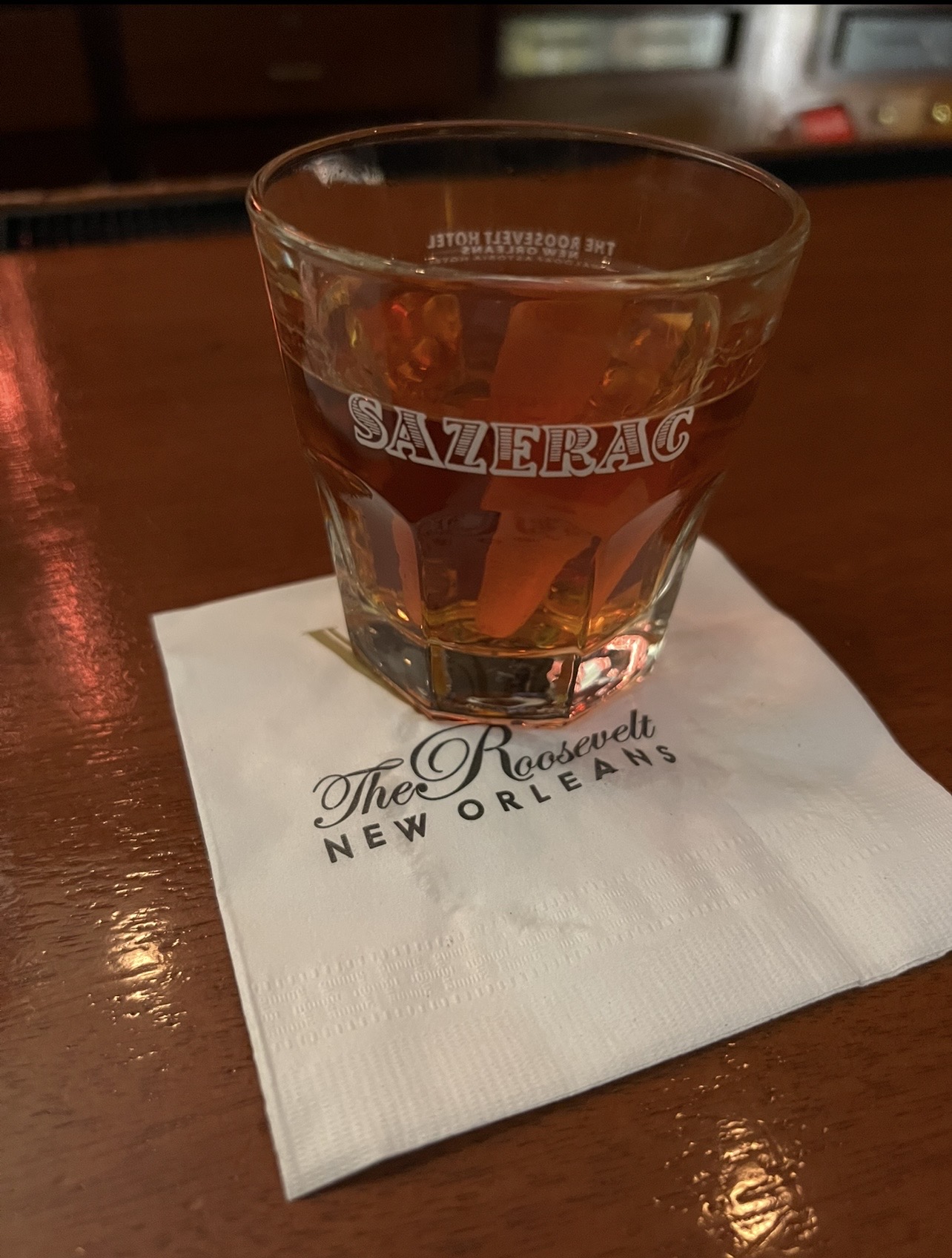
The Sazerac, served at the Sazerac Bar in New Orleans.


It’s always more fun when someone makes your drink for you!


Peychaud’s bitters are now owned by the Buffalo Trace distillery, home of many a fine bourbon, and also the makers of Sazerac rye, a registered trademark. So the Sazerac Bar has to pay a fee to use the name. That also explains why they use Sazerac rye in their version of this classic cocktail.


But like many popular drinks, everybody has their own version of a Sazerac. In fact, if you Google the drink, you’ll find dozens of versions: with cognac, rye, or bourbon (or even a combination)…with a sugar cube or simple syrup…and with a variety of absinthes.

Note: you can buy simple syrup–I prefer it in this recipe over sugar cubes–but it’s easy to make at home. Simply combine a cup of sugar with a cup of water in a saucepan and heat it until all the sugar dissolves. I keep my simple syrup in the fridge in a sealed container.


2 oz. rye whiskey (I use Old Overholt )
1/2 oz. simple syrup
3 dashes Peychaud’s bitters
Absinthe, to rinse, about 1/4 oz. (I use Herbsaint)
garnish lemon peel

Add ice to a rocks glass to chill it. (I also put it in the freezer.)

While it’s chilling, get a cocktail mixing glass, add some ice, and combine the rye, simple syrup, and the bitters, and stir. (Thirty times, according to tradition.)

Take the rocks glass out of the freezer, pour the ice out, and pour the Herbsaint into the glass, swirling it around to coat the glass, then pouring out the excess.

Strain the mix of rye, simple syrup, and bitters into the rocks glass with the Herbsaint.

Run a lemon peel around the rim of the glass and garnish with it.


For me, rye, specifically Old Overholt, is the down-and-dirty way to go. After all, this is not a kiddy drink. A few sips, and you’re feeling no pain.


A Sazerac at the Napoleon House in New Orleans.


Though sipping a Sazerac in New Orleans is an amazing experience in itself, and I’ve had it at the Sazerac Bar as well as the Napoleon House and other bars in NOLA…perhaps my craziest Sazerac experience happened at the famous White Horse Tavern in New York City, the Big Apple’s second oldest continuously running bar. (It opened in 1880.) I think this is where I was told to use Old Overholt in my Sazerac, and have ever since.

Dylan Thomas was a regular there, and other celebrities, like Norman Mailer, Jim Morrison, Bob Dylan, and Hunter S. Thompson also had drinks there. So it’s probably not surprising that my buddy, Lee, and I overindulged on Sazeracs at this historic tavern.

It was a very cold winter’s night in the late 1980’s–a blizzard, in fact–and we decided to go out drinking in the city, because I was back home in New York on holiday vacation from Alabama, where I was working at the time. We had more than our share of Sazeracs, when we decided we would walk to a new eatery called the Gulf Coast, located on the west side. (All we knew was that the restaurant was about 10 blocks from where we were, but after 4 Sazeracs, “where we were” was questionable, to say the least.)

Now, this was before the internet–before cell phones–before Uber–and no cabs were running (because it was a blizzard, after all)–so we decided we would walk! Not the smartest thing we’ve ever done. It only took a few blocks for us to realize, even in our drunken stupor, that we made a very bad choice! We were certain that we would be found, huddled and frozen in an alley somewhere, only after the spring thaw.

The storm was so bad, we couldn’t even find our way back to the bar. Miraculously, somehow, we did make it to the Gulf Coast, and we lived to tell the tale.

As Homer Simpson once said: “To alcohol…the cause of, and cure for, all of life’s problems!”


Sazeracs. Try your first one at home. Or take an Uber!

SESAME BEEF SKEWERS

Posted: February 13, 2026 in Uncategorized
Tags: , , , ,

Inspired by a recipe from chef Martin Yan, these beef skewers are absolutely delicious when grilled over hardwood charcoal, but are mighty tasty when roasted in the oven as well.


Choose a piece of beef that has some marbled fat throughout…that will give it extra flavor. Ribeye is a good choice, although this time around, I used a beautiful hunka grass-fed beef flap. I trimmed as much fat and silver skin off the beef as I could, then I sliced it thinly on the bias–that is, against the grain of the meat.

Marinate the beef for at least 4 hours in the fridge…overnight is even better.

2 tablespoons sesame seeds
1/4 cup soy sauce
1/4 cup white wine (I used an unoaked Chardonnay from Australia)
1 tablespoon freshly squeezed lime juice
1 tablespoon sesame oil
1 tablespoon sugar
2 green onions, minced
2 teaspoons minced garlic
2 teaspoons grated ginger

Place the sesame seeds in a small frying pan over medium heat. Cook the seeds, shaking the pan frequently, until the seeds have lightly browned, about 4 minutes. (If you’re using black sesame seeds, they won’t turn brown, but they’ll have a dry look to them.) Immediately remove the sesame seeds from the pan to cool, then place them in a spice grinder, and pulse until they’re ground up.

Place the crushed sesame seeds in a bowl with all the other marinade ingredients, mixing well.

Slice the beef on the bias into thin strips about 4″ long. Place all the beef in the bowl with the marinade, and squish it around to make sure all the meat makes contact with the marinade.

Place the bowl in the fridge for at least 4 hours…overnight is better. Squish the meat around every couple of hours if you can, to ensure it is coated well.

Once the meat is done marinating, remove the bowl from the fridge and let it come to room temperature.

Get out those bamboo barbecue skewers that have been sitting in the kitchen drawer for years. If you’re grilling outside, you’ll want to soak them in warm water for an hour so they don’t burn while you’re cooking. If you’re using the oven, you won’t have to.

Start skewering the beef…about 3 pieces of meat per skewer. Spread them out on the skewer a bit so they aren’t bunched up.

If you’re grilling outside, start a hardwood charcoal fire, and spread the coals out so that you have a medium fire. If it’s too hot, the beef will burn. When the fire is ready, place the skewers on the grill and watch them carefully, turning them so they cook evenly.

If you’ve got a convection oven (an “air fryer” for you youngsters), pre-heat the oven to 350. Place the skewers on a grate that is raised an inch or so above a sheet pan, so that the warm air in the oven can circulate all around the meat.


Place the sheet pan in the oven and cook the beef until it has browned nicely on the top. Then pull the pan out of the oven, and flip the skewers over, returning them to cook a little more on the other side.

Enjoy your beef skewers with whatever you like! I served mine with stir-fried vegetables, lo mein with a peanut-chili sauce, and dumplings with a homemade dipping sauce.


SHRIMP POBOY

Posted: February 12, 2026 in Uncategorized
Tags: , , , ,

I recently bought a one-pound bag of wild-caught American shrimp and had this craving for a poboy. Just so happened that the night before, I made myself a pizza, and I took part of the pizza dough, rolled it into the shape of a torpedo roll, and then baked it, saving it for a sandwich the next day.

I thought a slaw would go really well with the fried shrimp on the sandwich, so I graded some carrot and thinly sliced some cabbage, and I combined it with some leftover Alabama white barbecue sauce that I had in the fridge. It sounds crazy, but the ingredients in the sauce work perfectly for a coleslaw: mayo, vinegar, etc. Not only would the slaw add crunch to the sandwich, the Alabama sauce, with its acidity, would take the place of a remoulade for the shrimp.


All I needed now was to dredge the shrimp and fry it, to put the sandwich together.

Once the shrimp was thawed, I took eight of them (it was a package of medium-sized shrimp that came 32 or so to a pound) then I patted them dry with a paper towel, setting them aside.

I was ready to start putting this bad boy together.… Or I should say, Po boy.

First, the slaw…

1 medium carrot, grated
1/2 small cabbage, thinly sliced1 cup mayo
4 tablespoons sour cream
4 tablespoons white vinegar
2 teaspoons Dijon mustard
1 teaspoon black pepper
1 teaspoon granulated garlic
1 teaspoon granulated onion
1/2 teaspoon salt
1/2 teaspoon sugar

Place the carrot and cabbage in a large bowl. In a separate bowl, mix the other ingredients well. (Technically, Alabama white sauce uses buttermilk instead of the sour cream, but that’s what I had in my fridge, and it’s delicious with it!) Pour as much of the Alabama white sauce into the veggies as you like, depending on whether you like a wetter or drier coleslaw.

Set the coleslaw aside in the fridge, covered, until you’re ready to use it.

Save that extra Alabama white sauce for your next batch of grilled chicken!

Slice the torpedo roll in half lengthwise, and lightly toasted. Set it aside.

The set up.
1 egg, scrambled
1 cup rice flour
1 tablespoon Tony Chachere’s Cajun seasoning

In one bowl, scrambled the egg. Drop the shrimp in there, and toss them around.

In a second bowl, combine the rice, flour, and the seasoning.

Take the egg-covered shrimp, and drop them into the seasoning bowl and toss around until they’re well coated. Fry them in a pan of avocado oil until they’re golden and cooked through. Drain them on paper towels.

To assemble my Poboy sandwich, I put some mayo on both sides of the bread. Then I placed a nice thick layer of the coleslaw. Then the shrimp on top of that. And then, for even more crunch, I covered it with some baby lettuce.

Before it’s covered with lettuce!

That Poboy is now good to go!

As recently as a couple of years ago, I had never heard of beef flap. But I purchased one from Slanker’s, a distributor of grass-fed beef out in Texas, and it’s become one of my favorite cuts of beef.

You won’t find beef flap in most supermarkets…at least I haven’t been able to find it…so online ordering may be one of the only ways to give it a try.

And yes, I grill outside even in cold weather!

Beef flap is also known as bottom sirloin butt, and it comes from a part of the cow where flank steak comes from, only farther back. So it has its similarities to flank.

Beef flap is wonderfully marbled and is fantastic for a variety of dishes, including fajitas, stirfrying, or just enjoying it grilled.

I’ve marinated beef flap in many different ways, with Asian flavors and classic American BBQ spices, but one of my favorite ways is to give it a marinade that is similar to Italian dressing.

Some folks actually use bottled Italian dressing to marinate meat, but I prefer to make my own.

Olive oil
White wine vinegar
Salt
Pepper
Granulated garlic
Granulated onion
Dried oregano

Combine these ingredients in the proportions that you like in a bowl, mixing thoroughly.

I like to trim the beef flap, removing any silver skin that might be on it, and cutting it into pieces that are about 4” square and 1/4” thick. If the meat is too thick, I slice it lengthwise in half, to make a thinner cut. I place all the beef in a Ziploc bag, pour the marinade in, squeeze the air out of the bag and then seal it tightly.

I squish the bag all around to make sure that the marinade makes contact with all the meat, and I place the bag in the fridge overnight. (I usually put it in a bowl or tray, just to avoid any accidental spillage.)

The next day, I remove the meat from the fridge and let it come to room temperature before I cook it on a hot hardwood charcoal grill.

Beef flap cooks quickly on the grill, especially if you like it medium-rare, but because it has that fat marbling, it still stays juicy even if you like it well done.

And if you can’t get outside, a hot cast iron grill on the kitchen stove works just as well!