Archive for the ‘Uncategorized’ Category

This is my version of a holiday drink I was introduced to me by my mother-in-law from the Upper Peninsula of Michigan.

This classic is loaded with sugar. But then…so is everything else around the holidays!

Whiskey slush

9 cups water
2 cups sugar
4 “Constant Comment” tea bags
12 oz. frozen OJ concentrate
12 oz. frozen lemonade concentrate
2 cups whiskey (I use Crown Royal)
7-Up or Sprite

Boil the water and sugar, making sure the sugar dissolves. Turn off the heat and steep the tea bags in the liquid for 10 minutes. Discard the tea bags.

Add the OJ, lemonade and whiskey. Mix well, then pour it all into a freezeable container with a lid. Freeze.

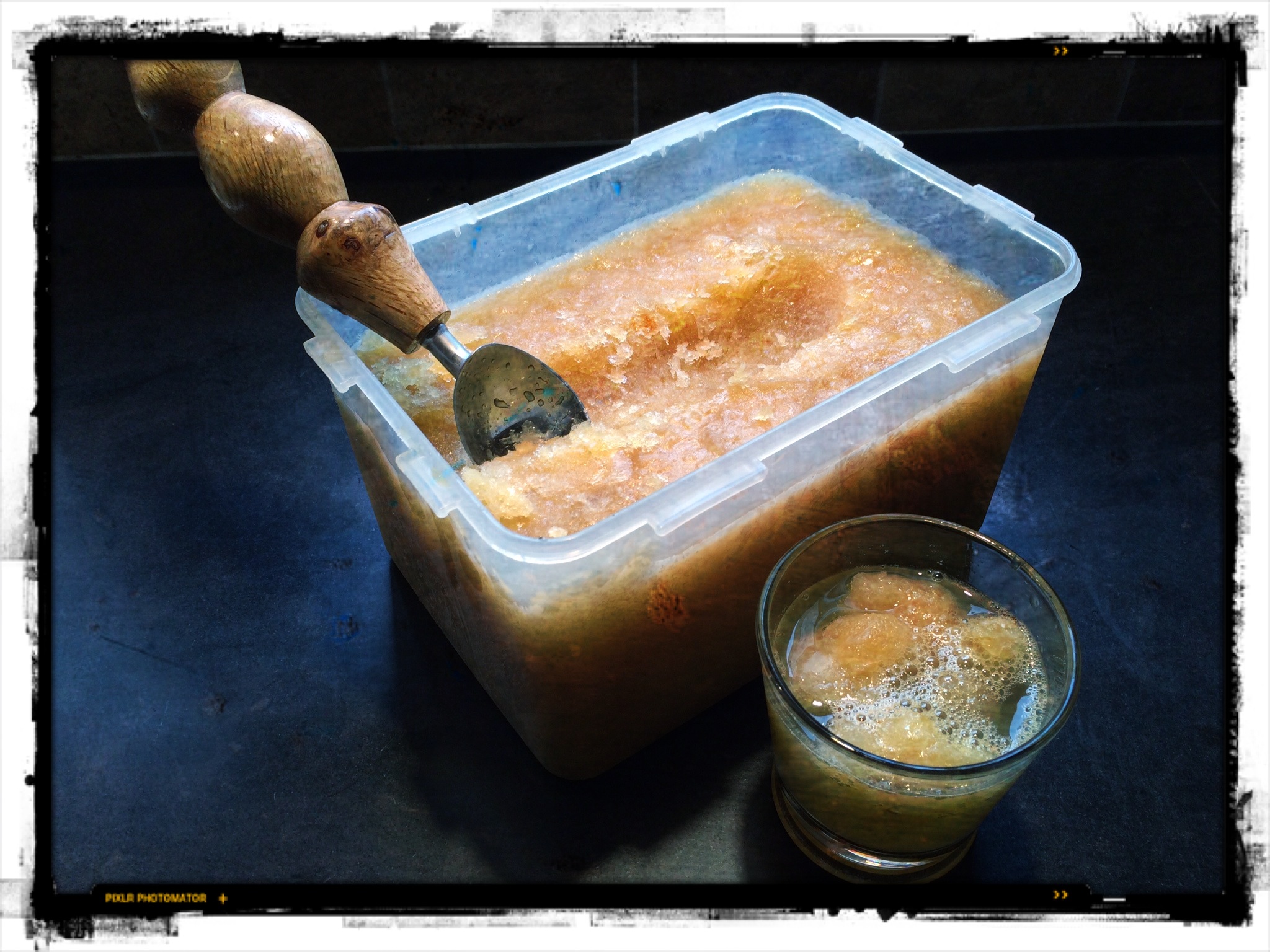
To serve: Scoop the slush out of the container (it doesn’t freeze solid) and mix it in a tall glass with 7-Up.

If you’re concerned about all that sugar, you can use a sugar substitute in the mix, and diet soda at the end. Some stores also carry low-sugar juice concentrates. I haven’t tried any of these substitutions, because when it comes to the holidays, I go big or go home!

Pork is magical. And though I’ve loved pork chops and store-bought bacon all my life, it’s only been in the last decade that I’ve learned to appreciate other cuts of pork and how they’re prepared. Guanciale is one of those meats, and it’s a key ingredient to a classic Italian dish: pasta carbonara.


In the beginning, I could only find huge jowls that required cutting and weighing to mix with the right amount of cure.

Looking at carbonara recipes online, many said the same thing: “Though a genuine carbonara uses a cured cut of pork called guanciale, it’s hard to find. So use pancetta or bacon.” Although both pancetta and bacon meats are delicious (both come from the belly of the pig…bacon is smoked, pancetta is not) the flavor and texture is not the same as a pork cheek, or jowl…and that’s what guanciale is made from.
Many years ago, my search for guanciale started with a local restaurant, the Back Eddy in Westport, Massachusetts. Being a buddy of the owner (and bribing him with alcohol), I asked if he’d order me some jowls. He did, and that worked well for a while. But I didn’t want to keep bothering him every time I wanted more, so I eventually found my own source on line that supplied me with massive jowls weighing many pounds each, as in the photo above. They were good, but a pain to work with. Eventually, that company went out of business.
I finally found my go-to pork website: http://www.heritagepork.com. They sell a variety of pork products made from a heritage breed of pig known as Berkshire, also called kurobuta. It’s delicious with wonderful fat that’s healthy and full of flavor. And conveniently, they sell pork jowls in smaller, 2-pound packs.

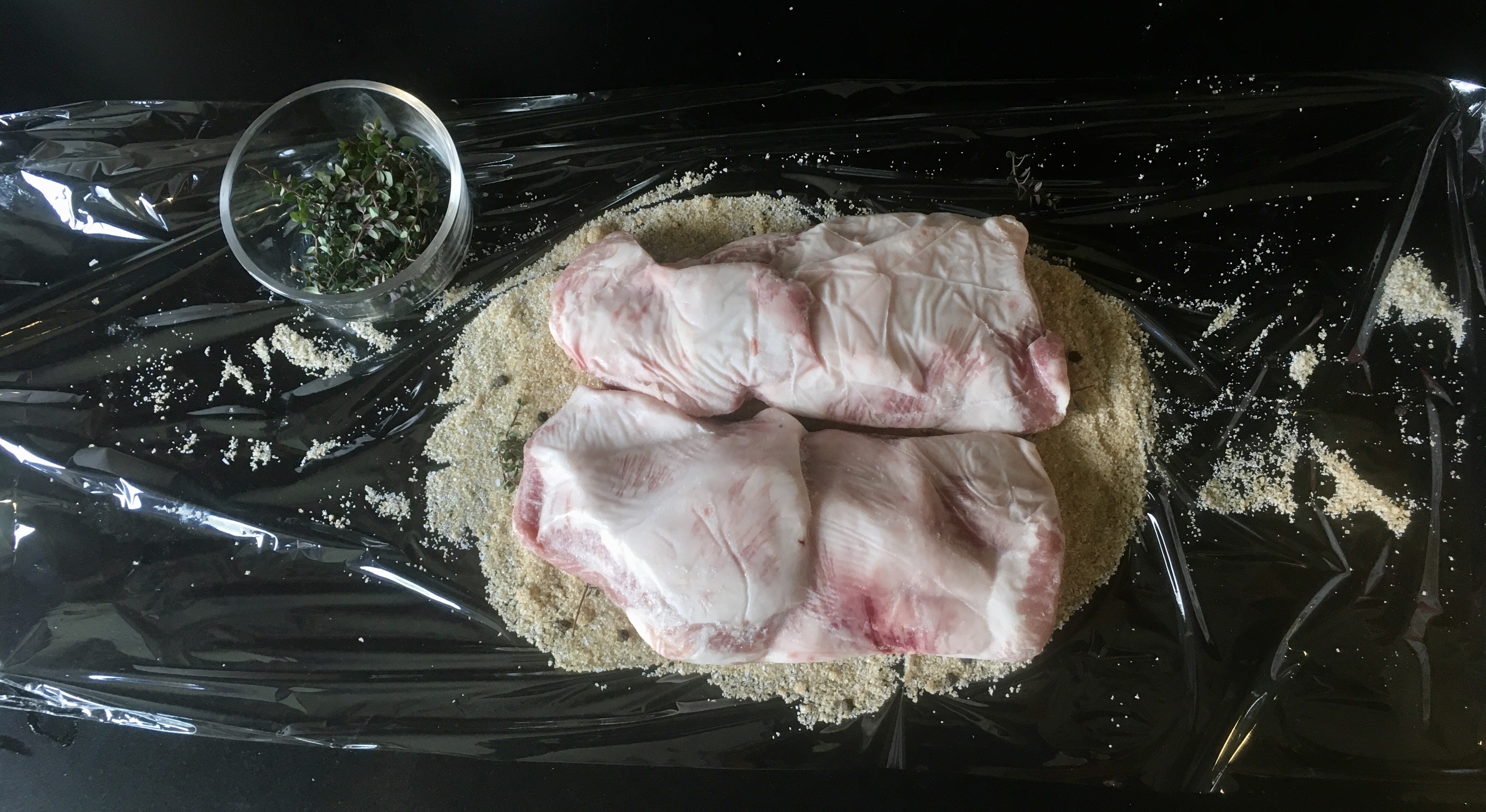
Berkshire pork jowls with fresh thyme from the garden and the dry cure mix.


My curing process is simple: sugar, salt, peppercorns, and fresh thyme. I cure the jowls for about 3 weeks. I rinse them once they’ve cured, and pat them dry. They still need to cook, but they’re ready to use for carbonara, ragu bolognese, topping a pizza, or any other delicious recipe that comes my way…and they freeze really well.
Once I made my first batch, there was no turning back!
2 lbs. raw pork jowls
1/2 cup basic dry cure mix (recipe below)
1/2 cup brown sugar
1 teaspoon whole black peppercorns
a handful of fresh thyme sprigs
Combine the basic dry cure mix, brown sugar, and peppercorns in a bowl. We’ll call this the cure.
On a large work surface, lay down several sheets of plastic wrap, overlapping each other to keep the cure from leaking through to the counter underneath. Sprinkle half of the cure onto the plastic wrap in an area where the jowls will lay. Scatter a half-dozen thyme sprigs on top of the cure. Lay the pieces of pork jowl on top of the cure and the thyme.

I place the cure and sprigs of thyme on a long sheet of plastic wrap.


The pork jowls go on top.

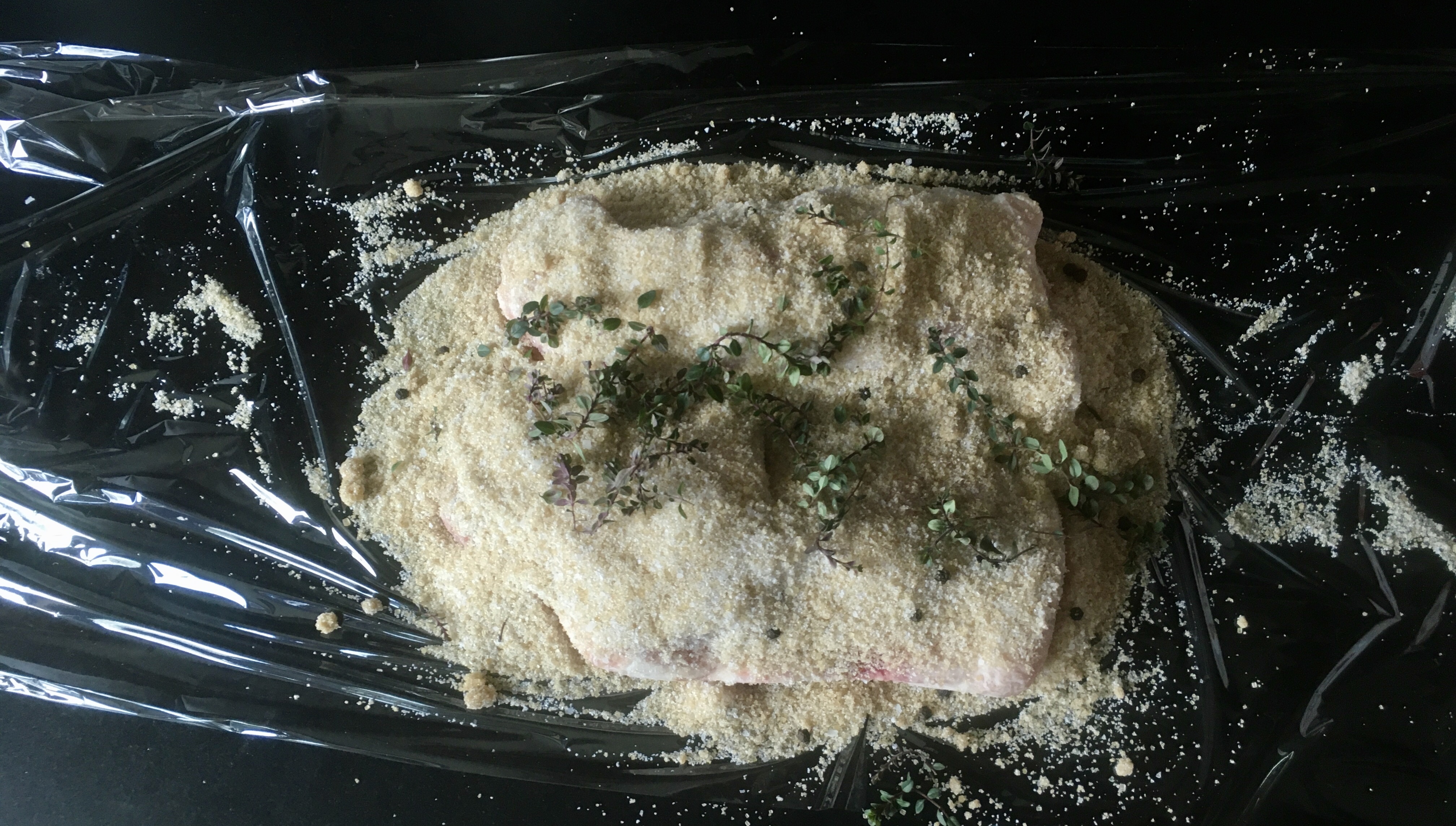
Then top the jowls with the rest of the cure, covering them evenly, and top with more thyme sprigs.

Press down on the jowls to really get the cure to stick.


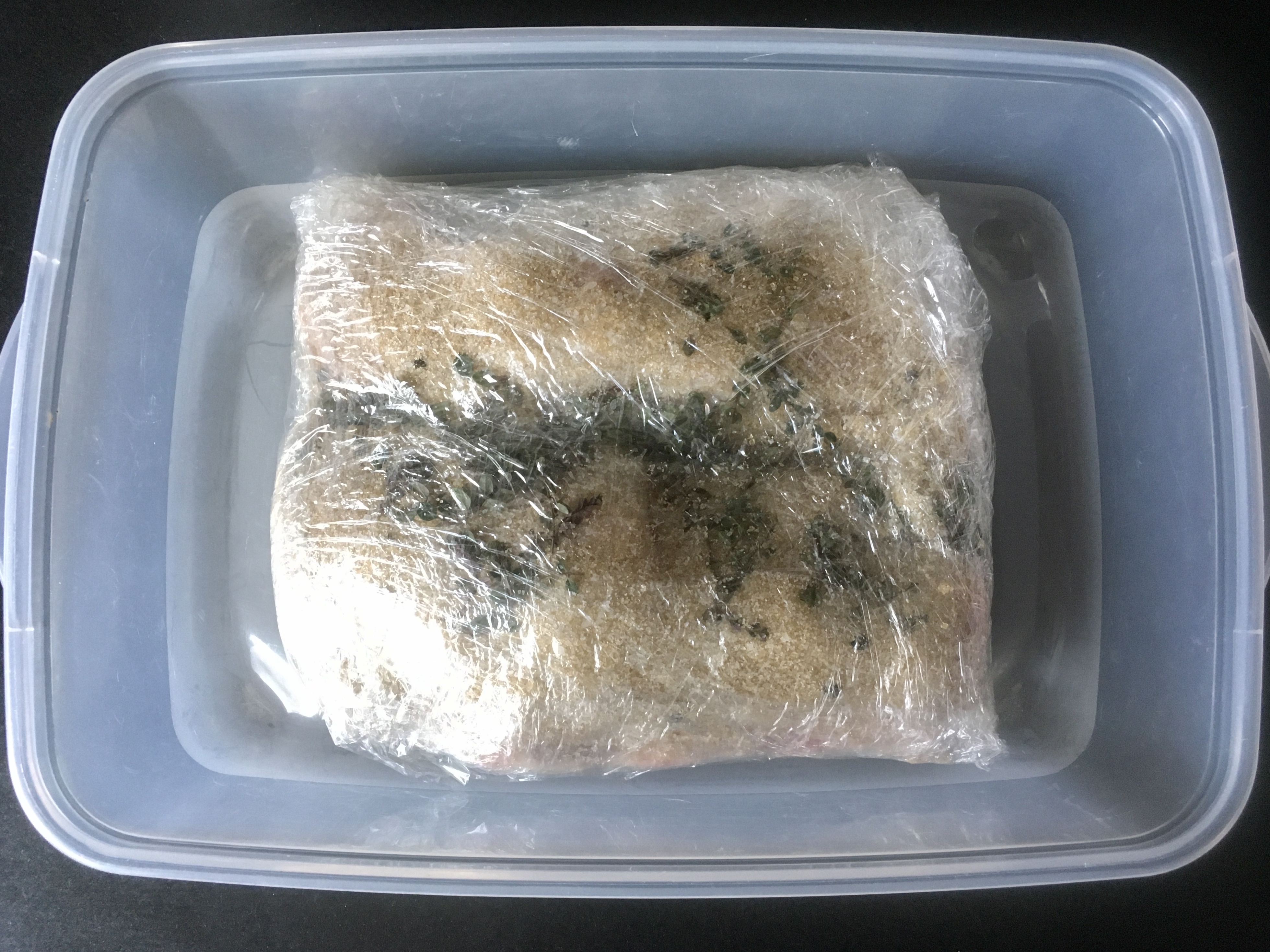
Fold the plastic wrap over the jowls as tightly as you can, pressing the cure into the meat. If the wrap is loose, use more wrap to really tighten it up. Then place the entire pork-wrapped package in a container that will hold the liquid that will ooze out during the curing process.

Into a container with a lid and into the fridge.


Place the container in the fridge to cure for 3 weeks.
Every couple of days, flip the plastic wrap package over, so that the top is now the bottom. Then return it to the fridge. You want the cure to get at every part of the pork. Don’t pour off any liquid that forms…it gets kind of gooey, but it will help the curing process.

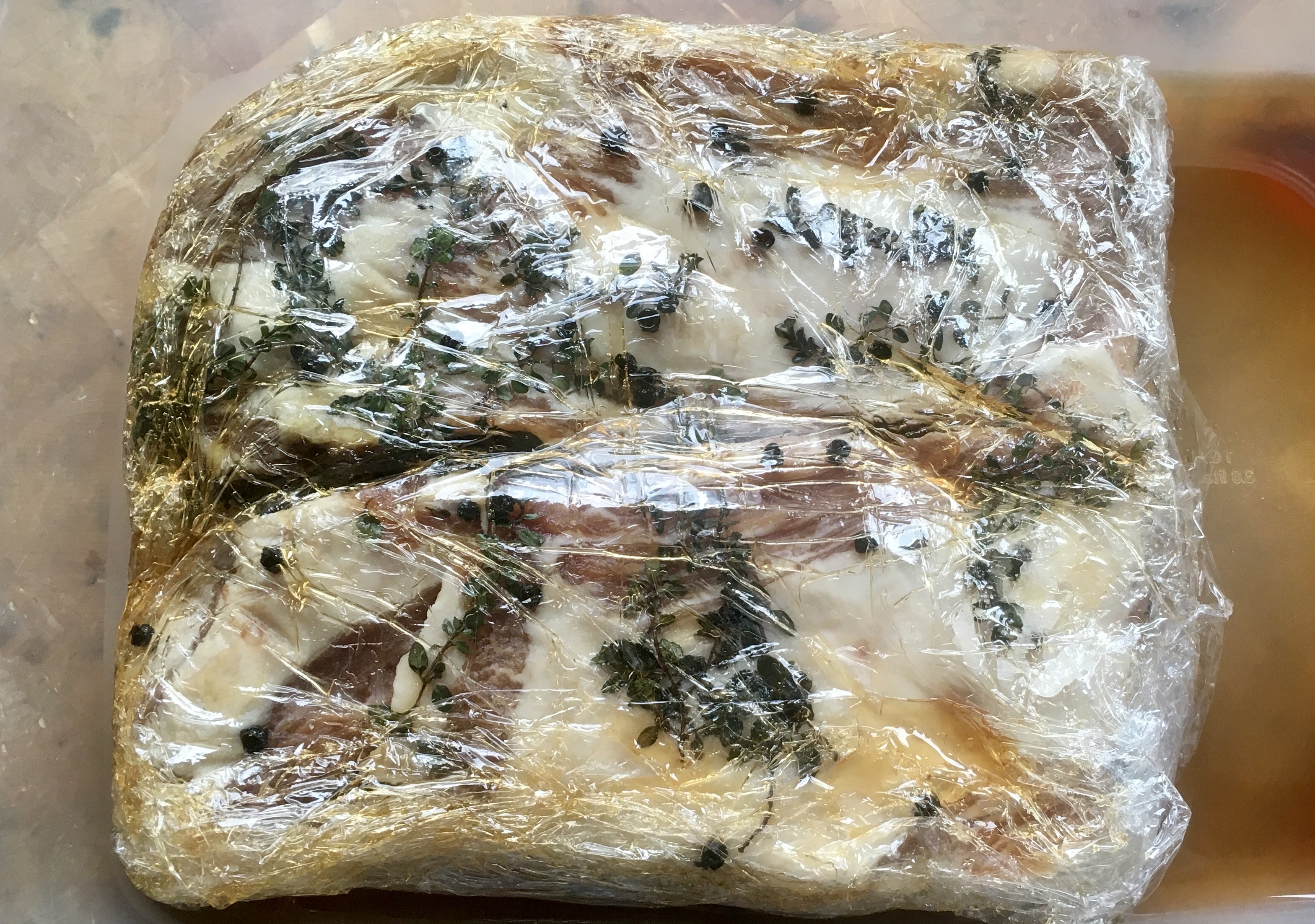
3 weeks later, it has transformed…

In about 3 weeks, the pork jowls will feel firmer. This is a sign they’ve been properly cured. Remove them from the plastic wrap, rinse them thoroughly under cold clean water, then pat them dry with paper towels.

They’re perfect…they just need a rinse.


Cured, rinsed and patted dry. Cut the guanciale into smaller pieces before freezing. A little goes a long way!


At this point, cut the guanciale into smaller pieces, wrapping each well and placing them in freezer bags. They will keep in the freezer for a long time.
Many guanciale recipes tell you to hang the meat in the fridge for at least a week after curing, but I haven’t really found the need to do that if I’m keeping them frozen. The drying process keeps the meat from getting moldy, but that’s only if you keep it at room temperature, which I don’t.

Always slice off a little to fry up a test batch! It’s all about quality control!


The Basic Dry Cure Mix
This basic dry cure mix is extremely simple, and you can cure many meats with it. But it does require a special ingredient: pink salt. This is not pink Himalayan salt. This is a very special curing salt that must be used in small amounts. (You can easily find it online.) It contains nitrites which will help preserve the meat and give it a good color. Many people get bent out of shape over nitrites these days, so you need to decide whether you want to use pink salt or not. I do, because I don’t eat pounds of guanciale like a lab rat. If you don’t use it, the meat will turn a bit gray–nothing wrong with it, just not an appealing color.
1 1/2 cups Diamond Crystal Kosher Salt
1/2 cup organic turbinado  sugar
5 teaspoons pink curing salt
Combine these ingredients and mix well. Store the basic dry cure mix in a tightly sealed plastic bag in your pantry.
An important note: the reason I give the brand name for the salt is because all Kosher salt does not weigh the same! A cup-and-a-half of Morton Kosher Salt, for example, weighs more and will throw off the recipe.

With people in my family that need to be on a gluten-free diet, I often experiment with a variety of doughs, trying to find just the right one for both, those who live a GF lifestyle and those who don’t. Those of us that can eat gluten, know that GF foods are very often sorely lacking in flavor and texture. So when a good recipe comes along, it’s worth sharing.


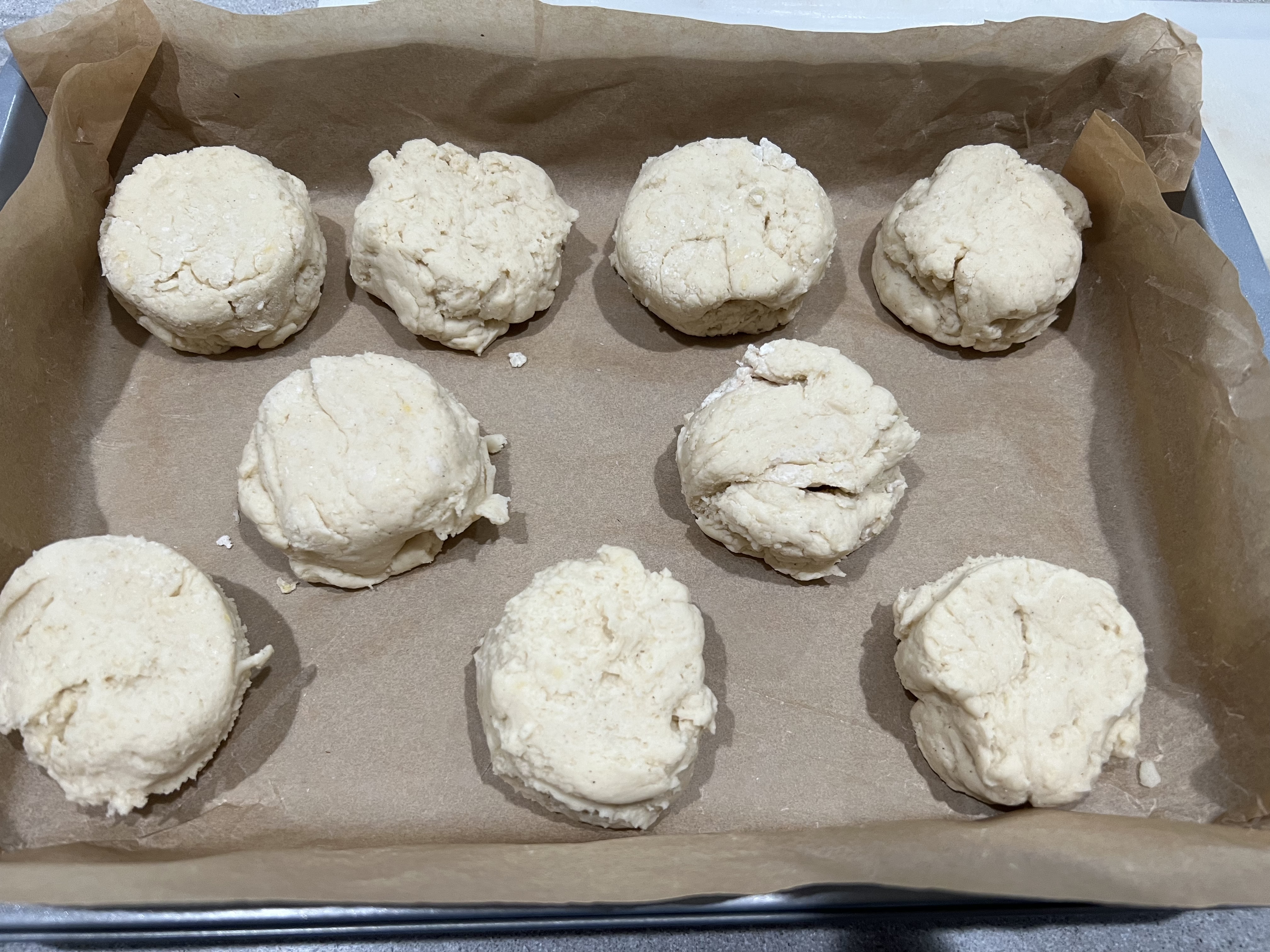
I originally made dinner rolls with this recipe, and although I was shooting for a Parker roll softness and consistency, what I got was more like a biscuit, although it was still quite soft and delicious. It got a big thumbs-up from the GF members of my family. And I thought they tasted pretty good as well.

Since I had leftover ingredients, I thought I would try making a pizza dough with the same recipe, and I think it came out quite successfully. In my experience, the biggest problem with gluten-free doughs is that you can’t stretch or mold them, they stick to your hands like crazy, and you need to use tons of oil so that they don’t stick to the pan when you’re baking. This recipe had none of those problems.

I was able to stretch the pizza dough out into a parchment lined pan, wetting my fingertips with cold water every once in a while to keep them from sticking, and then I let the dough rise for a couple of hours before popping it into the oven. But no oil was needed. And it never stuck to the parchment.


Note: not all gluten-free flours are made the same, so it’s important to use the Bob’s Red Mill flour that I have listed here. If you try another all purpose GF flour, the recipe may not work as well. I’ve tried this recipe with King Arthur GF flour, and I was told by my panel of experts that they still prefer the Bob’s Red Mill formulation. I have plans on testing one other brand, Cup4Cup, in the near future. I will keep you posted! 


So here’s the recipe…almost exactly the same for the dinner rolls and pizza crust. Both start out with these ingredients…

1/4 cup warm water, about 110 degrees
1 tablespoon dry yeast
2 3/4 cups Bob’s Red Mill 1-to-1 gluten-free Baking Flour
2 tablespoons sugar, separated
1 teaspoon Xantham gum
1 teaspoon salt
1 cup warm whole milk, about 110 degrees
1 large egg
2 tablespoons melted unsalted butter


In the bowl of a mixer, combine the warm water with the yeast. Add 1 tablespoon of the sugar as well, to get the yeast going. Stir to combine and let it stand for 5 minutes.

In a separate bowl, combine the flour, the other tablespoon of sugar, the Xantham gum, and salt. Mix well.

When the yeast has bloomed, add the dry ingredients to the mixing bowl, along with the warm milk, egg, and melted butter. Mix on medium speed for about 3 minutes. The dough will be somewhat thick.


For the dinner rolls: Scoop out the dough in 1/3 cup measurements into a a baking sheet lined with parchment. Cover it with plastic and place it in a warm place to double in size, about 1 to 2 hours.


Pre-heat the oven to 350 degrees and bake for about 20 minutes, until they’re slightly golden in color.

While the rolls are baking, melt another 2 tablespoons of butter, and brush the rolls with it when they come out of the oven. Season with a little salt.


For the pizza: Take the ball of dough out of the mixer and spread it evenly onto a parchment-lined baking pan. Wet your fingers with cold water to keep the dough from sticking.


Cover the dough with plastic and let it rise in a warm place for 1 to 2 hours. (This is a good time to prepare your sauce, cheese and toppings for the pizza. Any sauce works here, from homemade to sauce in a jar. I had a variety of cheeses in the fridge, so I made a combination of mozzarella, fontina, pecorino Romano, and provolone.)


The risen dough, 90 minutes later.


Pre-heat the oven to 350 degrees.

Bake the dough—no sauce or cheese—for 10 minutes.


Remove it from the oven, add your sauce, cheese and toppings, then put it back in the oven and bake until the cheese has melted.


STEAK AU POIVRE

Posted: December 5, 2022 in Uncategorized

A classic French beef dish, Steak au Poivre is the perfect example of delicious simplicity. If you love black pepper, you can make this wonderful dish with just a few ingredients. My personal twist was to add porcini mushrooms to the mix because…well…why not?

The classic Steak au Poivre uses a tender, lean cut of beef like filet. But I had a couple of grass-fed sirloins in the fridge, and they worked out just fine.


2 sirloin steaks, about 6 oz. each
Kosher salt
2 tablespoons whole black peppercorns
2 tablespoons butter, divided
1 teaspoon olive oil
1/3 cup Cognac, plus 1 teaspoon
1 cup heavy cream
dried porcini mushrooms (optional)


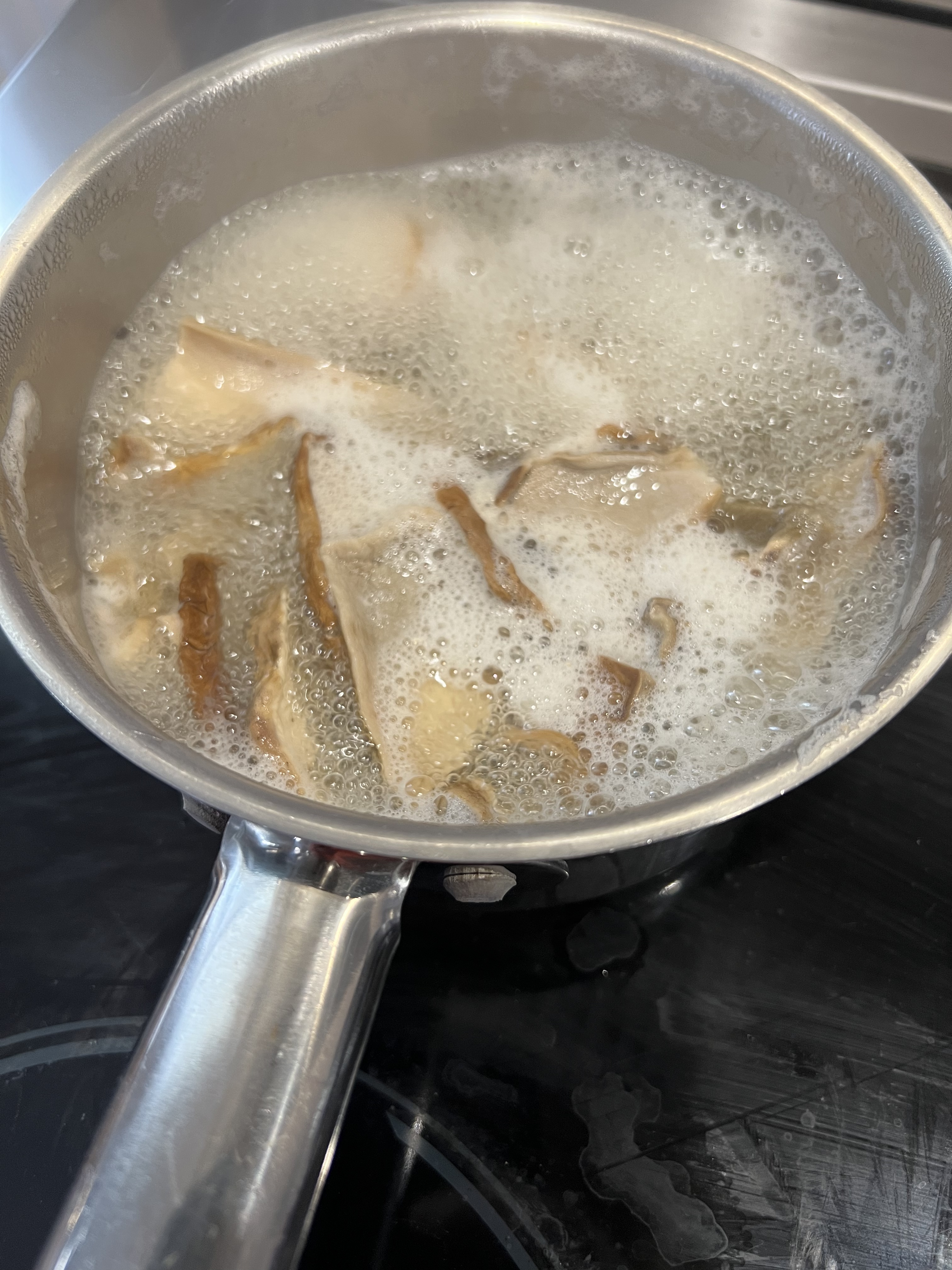
If you’re using the porcinis, place them in a sauce pan, and add water to cover them. Bring the water to a boil, set the pan aside, and let the porcinis rehydrate. Once they’ve rehydrated, remove them from the pan (save the liquid) and chop them up finely. Set them aside.


Rehydrating the porcinis.


Remove the steaks from the fridge at least 30 minutes before cooking, so they are at room temperature. Season them on all sides with the salt.

Coarsely crush the peppercorns. (I have a pepper mill that makes coarsely crushed pepper, so I used that.) Spread the peppercorns evenly on a plate, and press the sirloins, on both sides, into the pepper so that it coats the surface of the meat. Set them aside.


In a medium skillet over medium heat, melt 1 tablespoon of the butter and the olive oil. As soon as the butter and oil start to smoke, place the steaks in the pan. Cook them for about 4 minutes on each side. Once they’re done, remove the steaks, place them on a plate, and cover them with foil to keep them warm.


Pour off the excess fat from the pan, but don’t wipe the pan clean!

Back to the porcinis: in a separate skillet, add 1 tablespoon of butter and the chopped porcinis, sautéing them for a few minutes over medium heat. Slowly pour in the mushroom liquid from the sauce pan, making sure any sediment at the bottom gets left behind. Cook this liquid down with the mushrooms until it has reduced almost completely.


Back to the steak pan: off the heat, add 1/3 cup of Cognac to the pan and carefully ignite the alcohol with a long match or lighter.


Gently shake the pan until the flames die. Return the pan to the medium heat and add the cream. Bring the mixture to a boil and whisk it until the sauce coats the back of a spoon, about 5 minutes or so. Add the teaspoon of Cognac. (If you’re using the mushrooms, add them to the sauce at this point, stirring them in.)


Add the steaks back to the pan, spooning the sauce over the meat.


Serve!


I recently discovered a new version of chimichurri, one where I use basil instead of parsley, and I don’t know if I’ll go back to the old chimi ever again!

Chimichurri is a garlicky, herby green sauce usually used with grilled meats. This pesto-like condiment originated in Argentina and is also commonly used in Nicaragua and Uruguay. Though some recipes include cilantro, many people insist the original is made only with parsley. I decided to substitute basil for the parsley.

I’ve used this new “chimi” on salads, I’ve cooked shishito peppers with it, and recently, I had great success roasting chicken with it. To make the chimi…


1 large handful of fresh basil leaves, about 4 cups, loosely packed
1/4 cup water
1 medium onion, chopped
3 cloves garlic, minced
3–4 tablespoons fresh oregano, leaves only (or 1 tablespoon dry)
1 tablespoon paprika
1 teaspoon crushed bay leaf
1 tablespoon coarse sea salt
1 teaspoon freshly ground black pepper
pinch red pepper flakes
1/4 cup white wine vinegar
1/2 cup extra virgin olive oil

Place all the basil and the water in a food processor and begin to chop, pulsing for a second at a time. When the basil is in small pieces, stop pulsing and add the remaining ingredients, except the vinegar and olive oil. Start the processor on a full run now, and slowly pour in the vinegar, then the olive oil. Try not to make it too smooth…leave some tasty bits. Allow it to rest for at least 30 minutes, but overnight in a sealed container in the fridge is best.


I had a 4-pack of chicken thighs and a 4-pack of drumsticks in my freezer, so that’s what I used for this dish. But it’s just as easy to use a spatchcocked (a butterflied chicken where the backbone is removed so it lays flat) whole chicken, or any parts you prefer.


8 pieces of chicken
a bunch of tomatoes, cut into small chunks
3 to 4 oz. of feta cheese


Pre-heat the oven to 350.


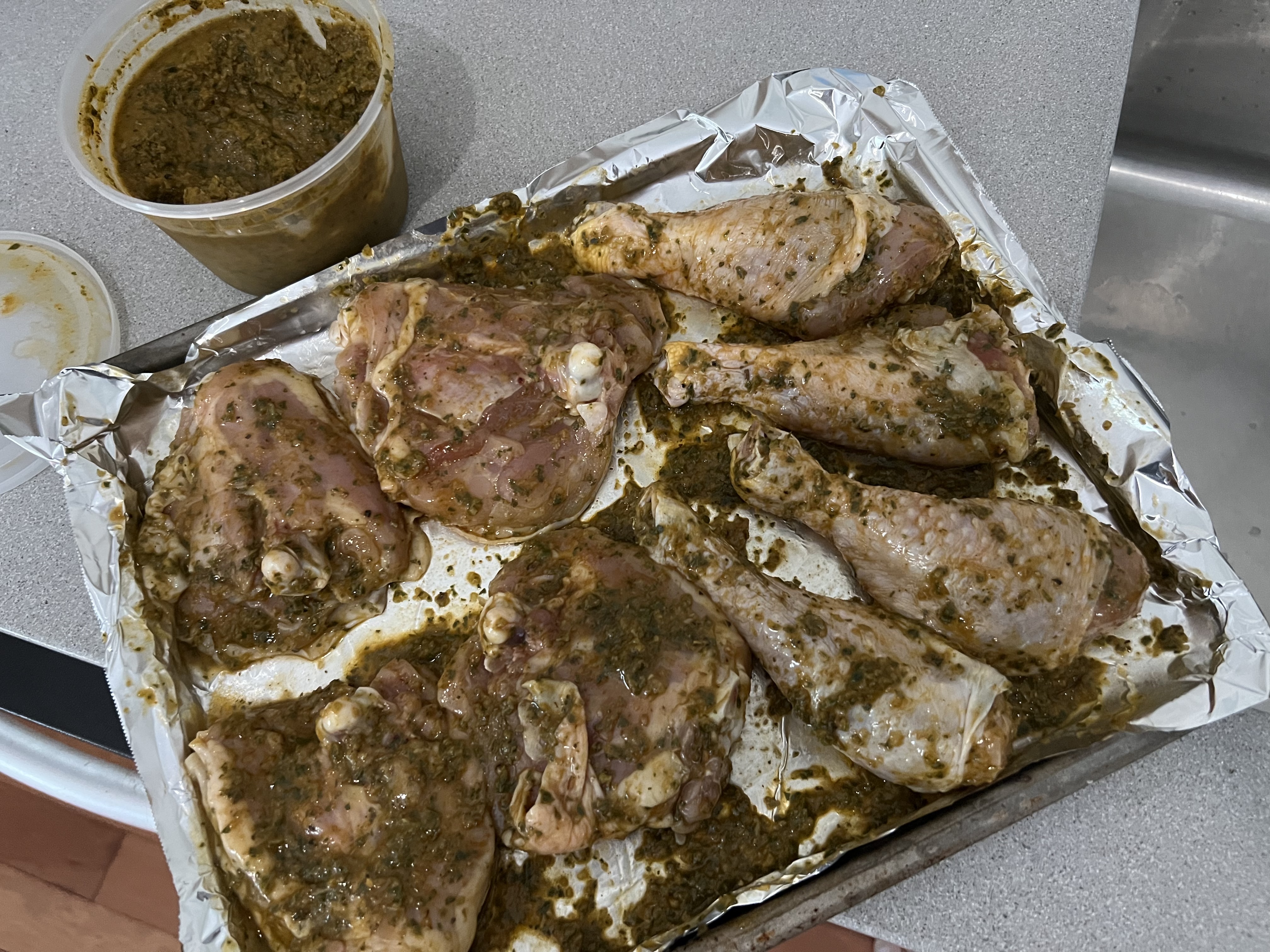
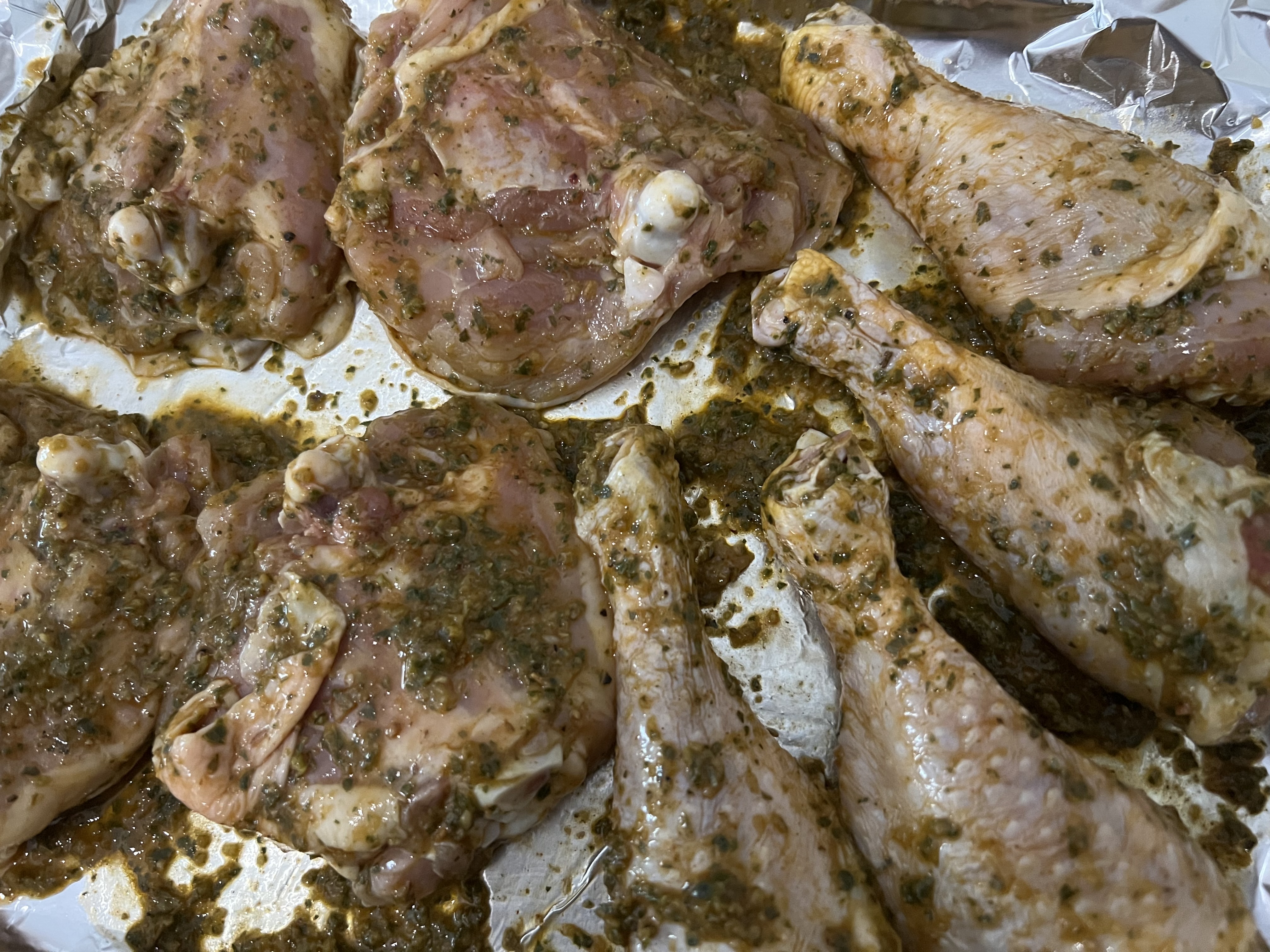
Place the thawed chicken pieces in a baking pan, and rub them really well with a generous amount of the chimi. Get it under the skin where you can, not just the outside. (Just remember that you’re handling raw chicken, so the moment you touch the chimi with raw chicken hands, you’ve contaminated the batch! Use a separate bowl with part of the chimi, so you don’t ruin the rest.)

Let the chicken marinate in the chimi at room temp for a few hours, or in the fridge overnight.


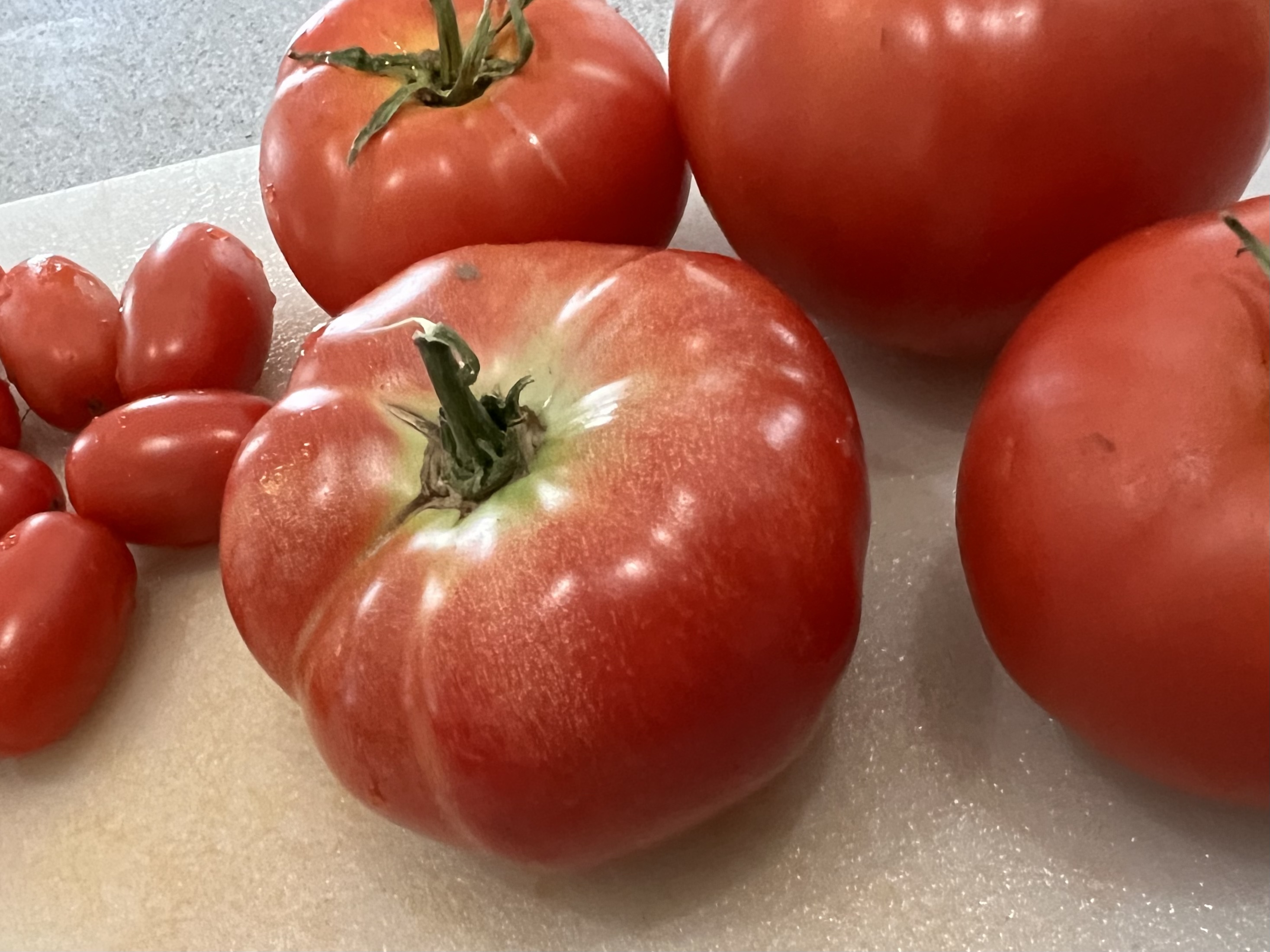
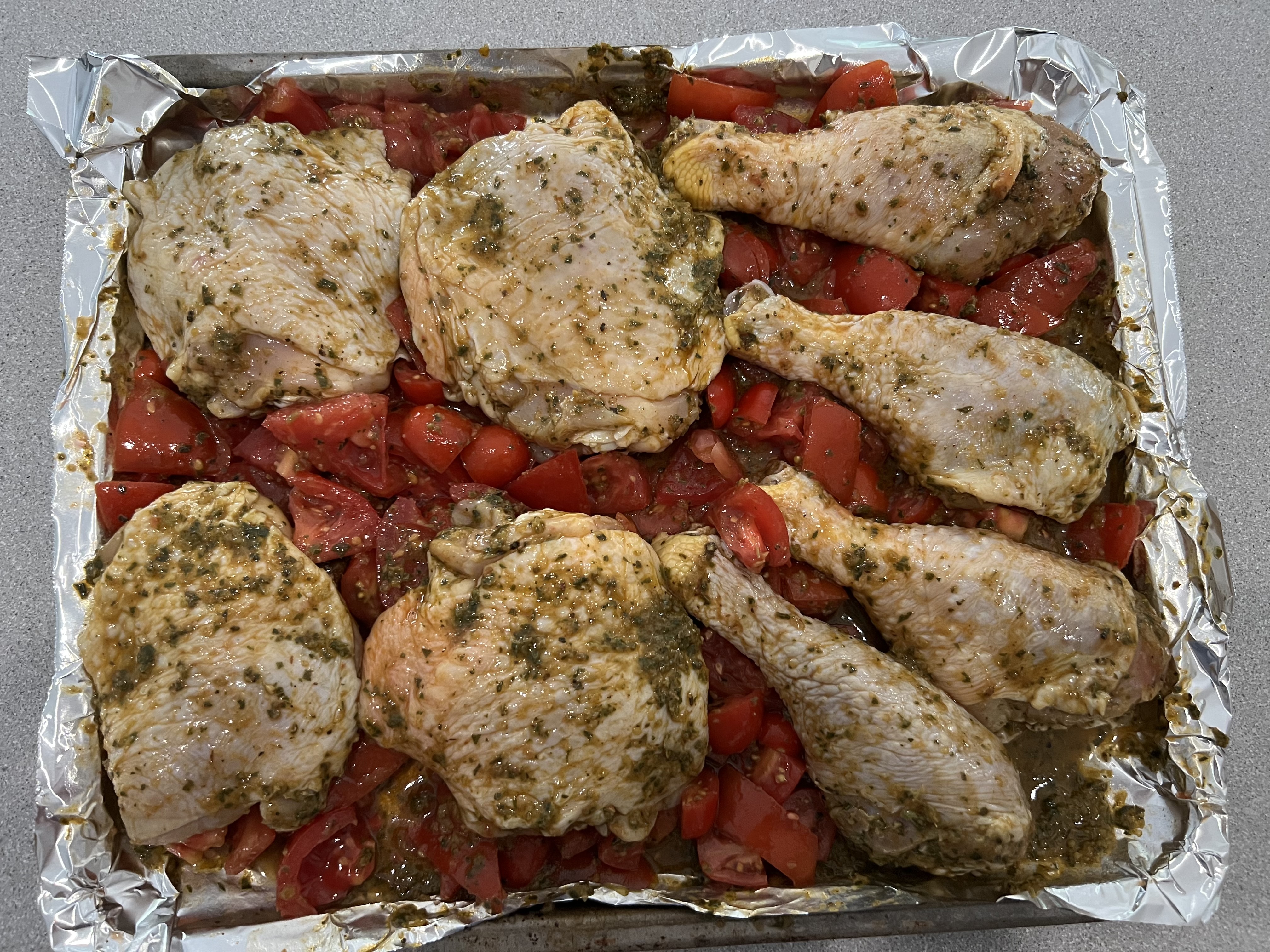
Grab a bunch of tomatoes, cut them up, removing some of the seeds (but not really worrying about it either way) and mix a little chimi in the tomatoes. Place the tomatoes on the bottom of the roasting pan, and place the chicken pieces on top, so the chicken skin will crisp up while it cooks.


Sprinkle the cubes of feta cheese all around and place the roasting pan in the oven, baking for about 45 minutes.


Serve over pasta, potatoes, or as I did, over rice. I simply boiled some jasmine rice, adding a 1/2 teaspoon of Italian seasoning in the rice water before cooking. No salt, no oil.


Sometimes a small bite can take a lot of preparation, and you just don’t appreciate it until you decide to make it yourself. That’s especially true with the classic Danish open sandwich called Smørrebrød. The ingredients can vary, but one of my favorite versions is with smoked salmon, which I enjoyed here in Rhode Island, at Persimmon, in Providence.
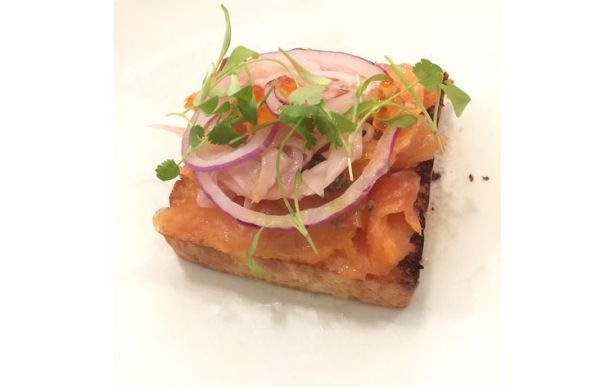
Chef Champe Speidel’s Salmon Smørrebrød at Persimmon.

A couple of years ago, some very special friends were coming over for dinner, and I decided this would be the event where I debuted my own version of Salmon Smørrebrød. I had my work cut out for me…

It starts with the salmon. One of the finest sources of wild-caught Alaskan sockeye salmon is Vital Choice, a purveyor of extremely high-quality wild-caught seafood. I ordered several large fillets and had them shipped frozen to my home. I thawed a couple of the fillets in the fridge, and then cured them for several days.
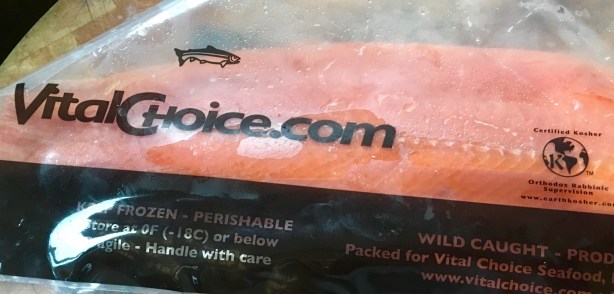
 

Make sure you get your salmon from a reliable source, and always get wild-caught, never farmed.


The recipe for the cure mix is simple:

1 cup Kosher salt
1/2 cup cane sugar
1/2 cup brown sugar
1 tablespoon crushed black peppercorns

Combine these ingredients in a bowl. Mix well.

Use a container that will hold the fillets without bending them. It also needs to be watertight, because the salt extracts moisture from the fish, and you don’t want spills from the liquids released during the curing process.
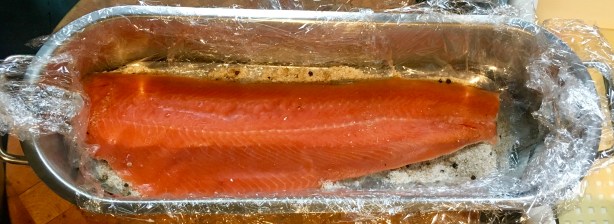
 

First, the plastic. Then, a layer of the cure mix. Then the salmon fillet, skin-side-down. More cure mix on top. Then the second fillet, with more cure mix on top of that.


Lay a few sheets of plastic wrap on the bottom, allowing them to fall over the sides of the container. Sprinkle a good, even layer of the cure mix on the bottom. Lay down the first salmon fillet, skin side down, on top of the cure mix. add more cure mix on top of the fillet to cover it completely. Lay the second fillet on top of that, then cover it completely with more of the cure mix. Fold the plastic wrap tightly over the top, pressing out as much air as you can.
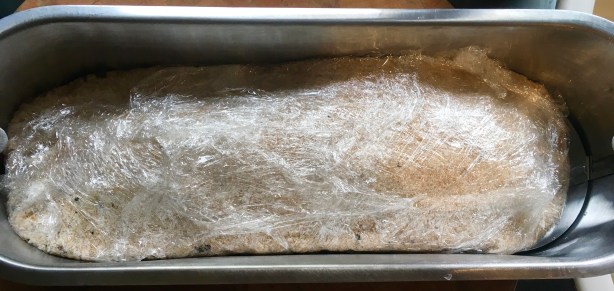
 

Finally, wrapping the whole thing up tightly in plastic.


Pressure on the salmon helps the curing process, so the cure mix makes good contact with the flesh. I weigh it down with a few cans of tomato sauce.
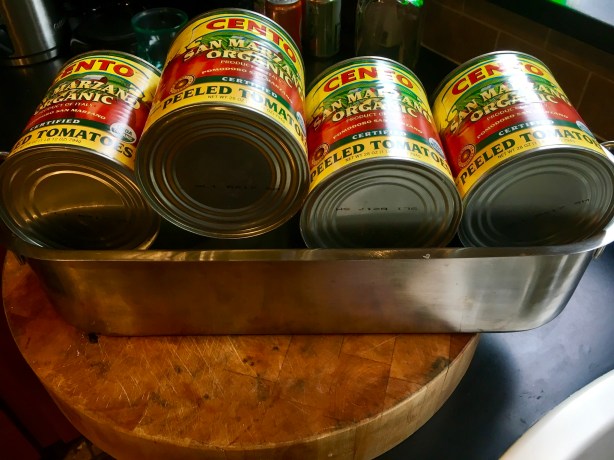
 

Even pressure on the salmon fillets helps the curing process.


Put the salmon in the fridge for at least 48 hours, until the fillets are firm to the touch.
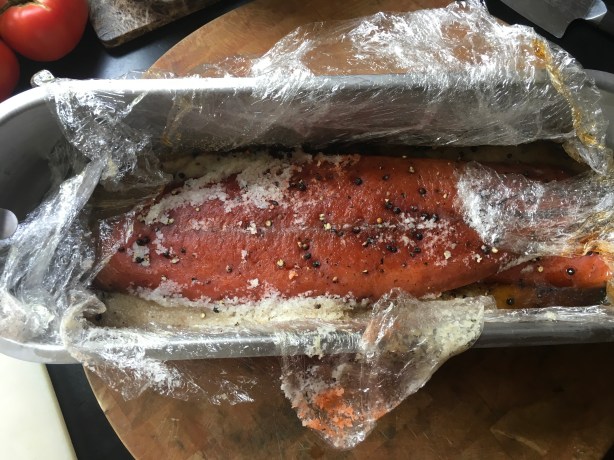
 

The fillets have changed color and are firmer to the touch once cured.


Once the salmon has cured, remove it from the plastic wrap and wash it thoroughly with clean, cold water to remove as much of the salt as possible. Some of the peppercorns will imbed themselves in the fish…remove those, too. Pat the fillets dry with paper towels.
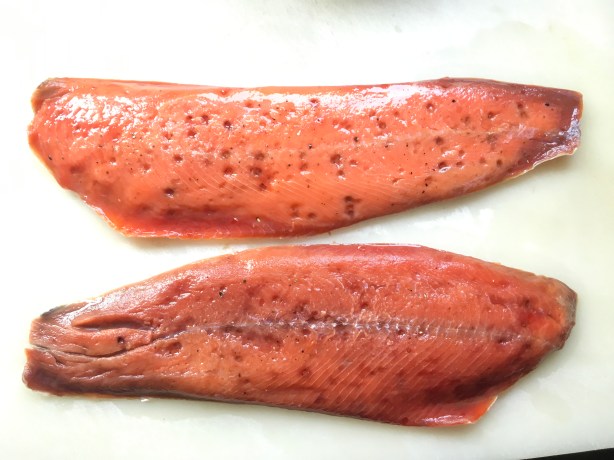
 

The salmon is ready to eat just like this, but…


At this point, you’ve got Gravlax, and it’s delicious just the way it is. But I chose to go one step further and smoke the salmon, so I put the fillets on a metal rack in my fridge, skin side down, and let them dry out a bit for an hour or so. When the salmon dries, the flesh gets a bit tacky. That’s called the pellicle, and the sticky surface of the fish helps the smoke molecules adhere better. It’s a good thing.
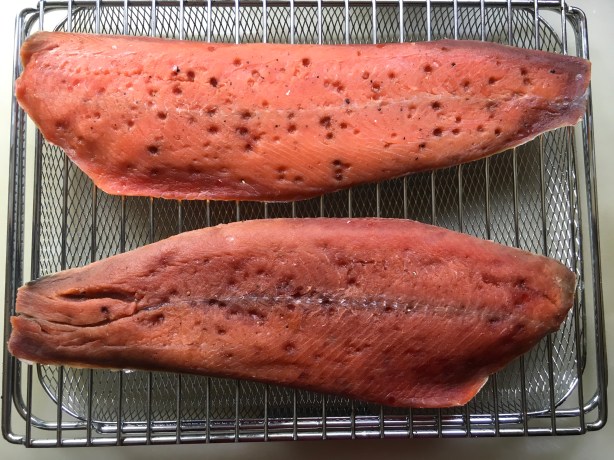
 

The salmon fillets, drying in the fridge.


While the salmon is drying in the fridge, I get my smoking gear ready.

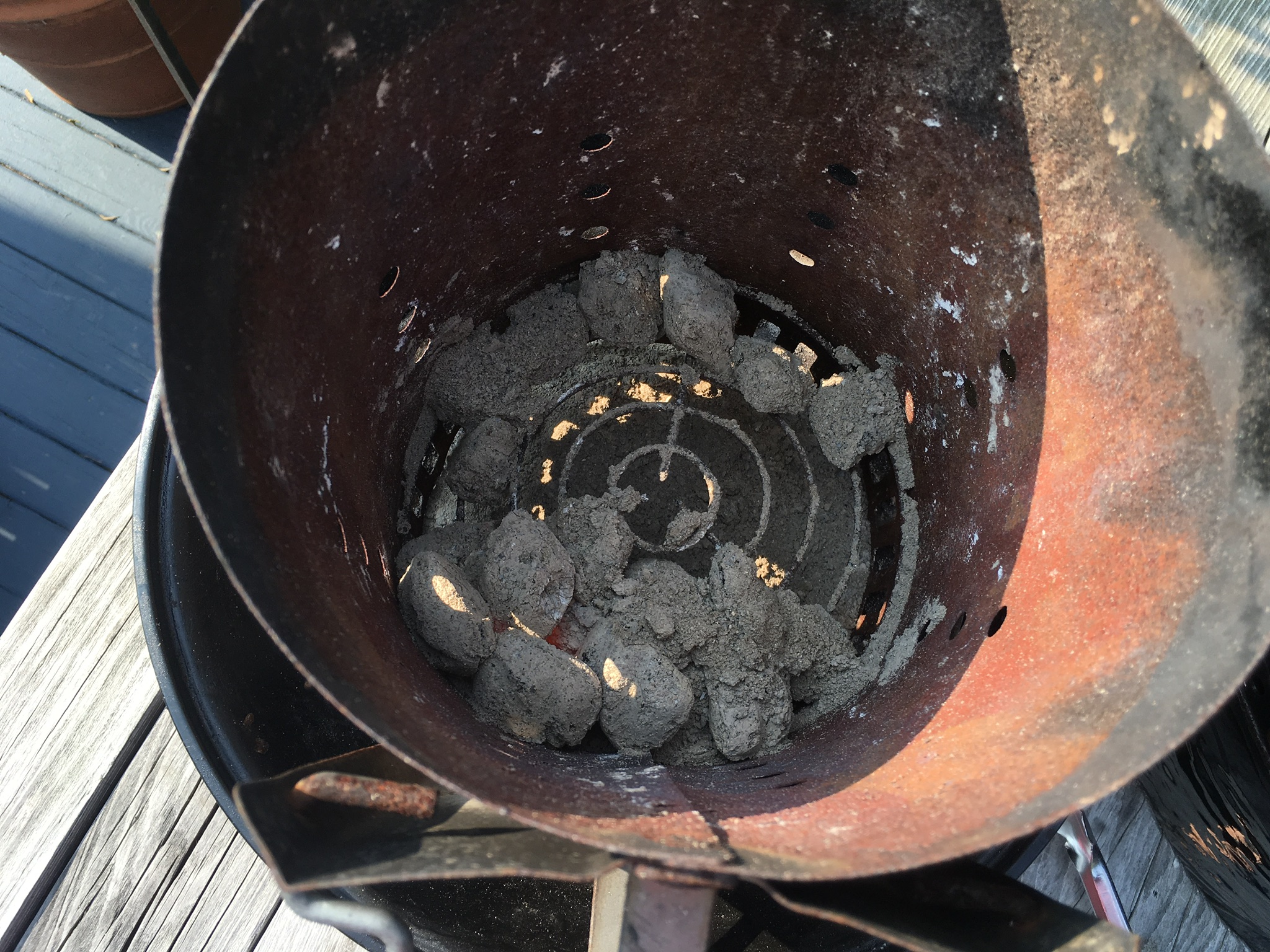
I like to use charcoal briquets and hickory chips for the smoking process. I bring my small camping grill next to my larger home grill. Using my charcoal chimney, I light the briquets and let them burn until they’re ashed over. Using a small smoking box, I place some hickory chips inside, then add a couple of hot briquets to it, making sure they burn the chips and the smoking starts. I place the smoking box inside my large grill with the vents open, laying my salmon fillets (skin-side-down) next to the smoking box. I close the lid of the grill, and let the smoking begin.
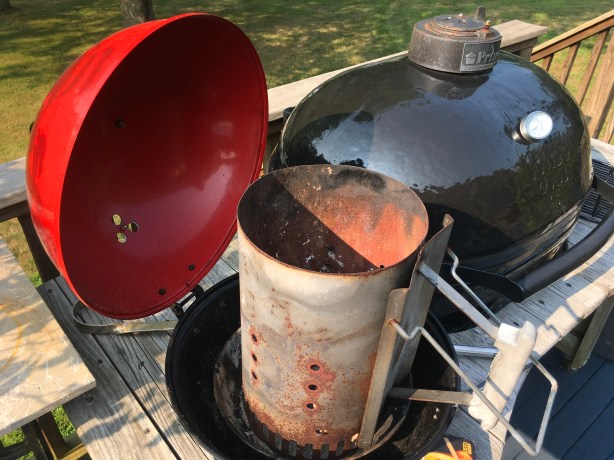
 

Lighting briquets in the camping grill before moving them to the larger grill.
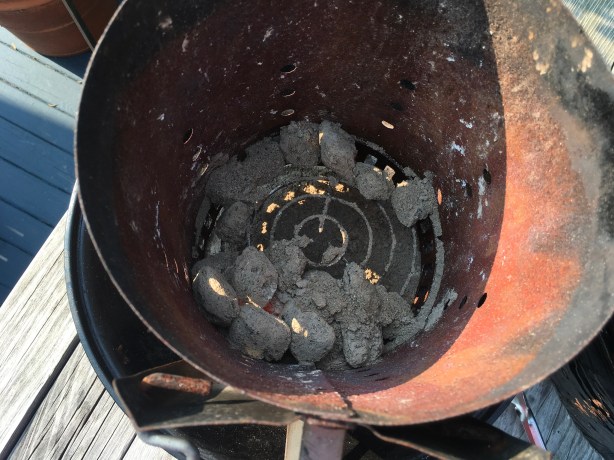
 

Ashed-over coals in the chimney.


This is as close to a cold-smoking process as you can get at home. There is no heat actually cooking the salmon, just a smoke-filled grill that needs to be replenished every once in a while with hot coals and more hickory chips. I smoke the salmon for a couple of hours.
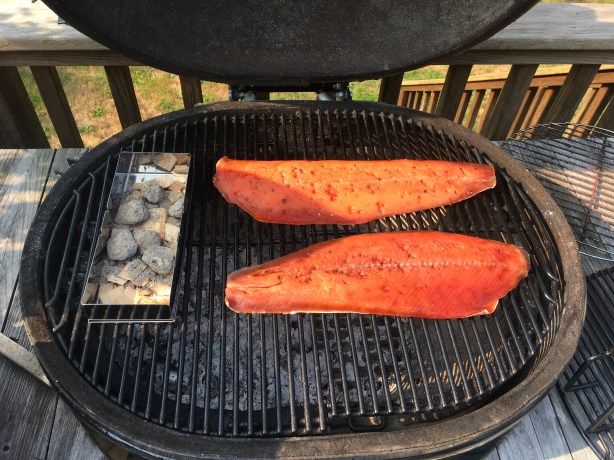
 

Let the smoking begin!


Once the salmon has smoked, you’ve got yourself a really special treat. You must eat some at this point, just to reward yourself for a job well done! Then, wrap the rest of the salmon tightly in plastic wrap, and keep it refrigerated until you’re ready to serve it. It will stay fresh in the fridge for several days.

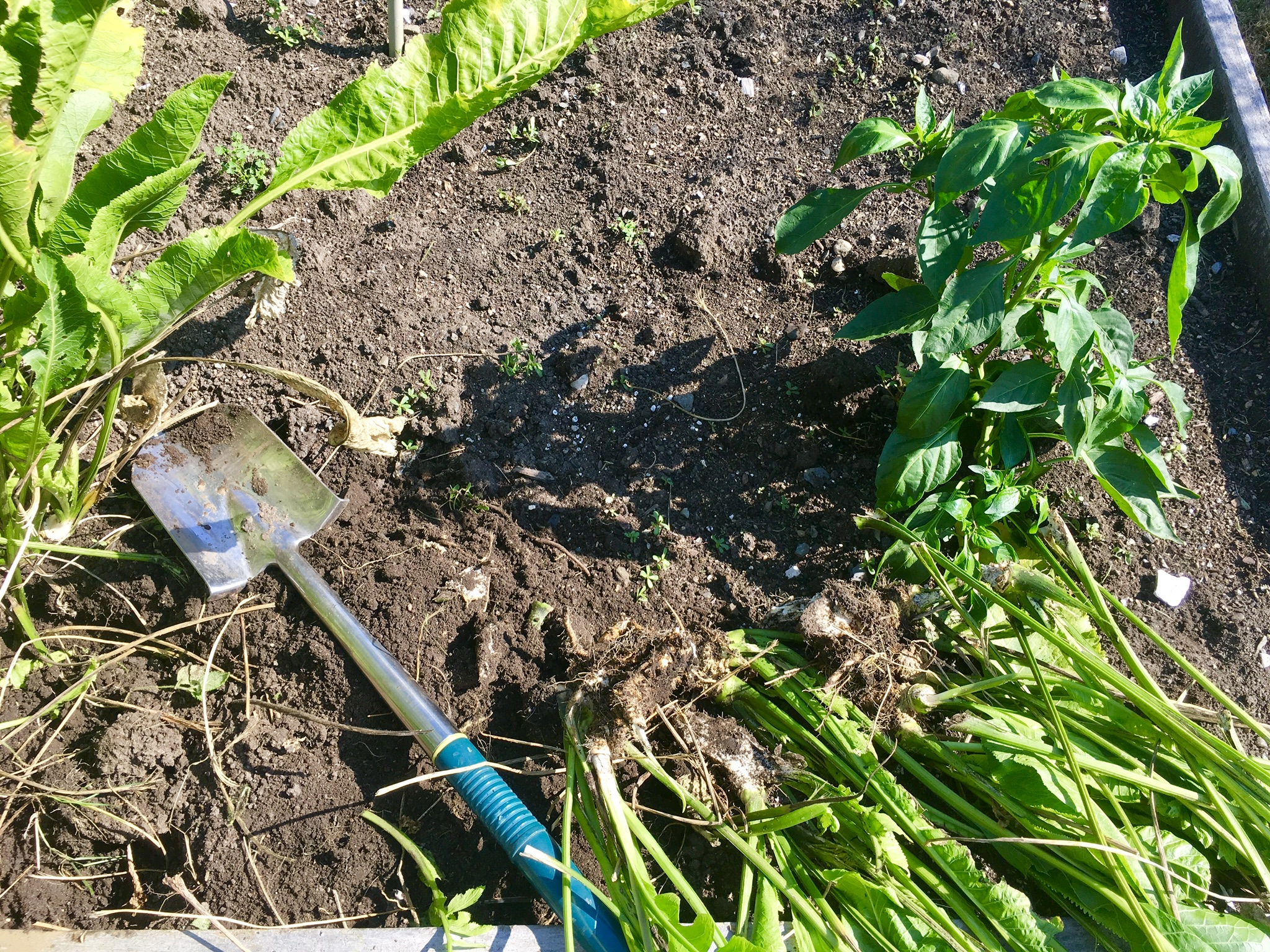
My research for Salmon Smørrebrød resulted in many variations, but I ultimately chose one that used a horseradish cream on the fish. Just so happened that I have a giant horseradish plant growing in my garden, so it was time to dig some of the roots up!
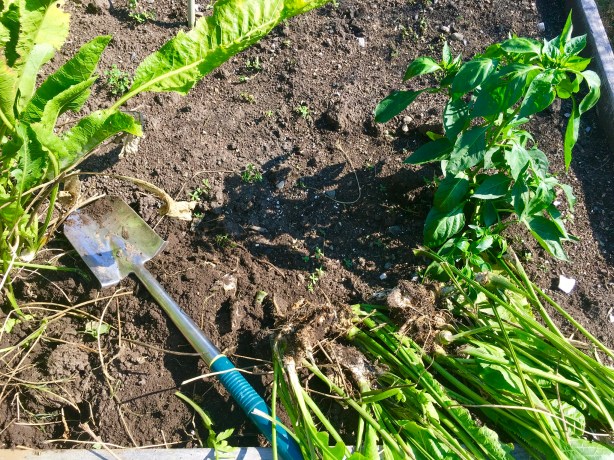
 

Digging up horseradish.


Once I dug the roots out and washed them clean, they needed to be peeled down to their white center. Then they were ready to be grated. I used the same system my grandfather did, many years ago: a simple hand grater for the job. If you thought you cry when you slice onions, you ain’t seen nuthin’ until you’ve grated horseradish! But it’s worth the effort.
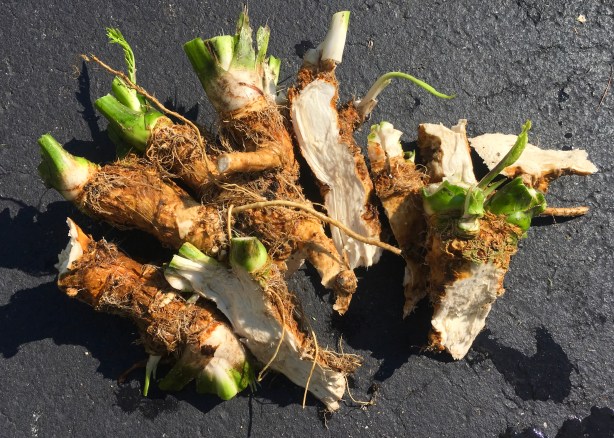
 

Cleaned horseradish roots, before peeling and grating.


You need freshly grated horseradish, not the prepared stuff you find in the supermarket for the cream…

12 tablespoons sour cream
6 tablespoons plain Greek yogurt
4 tablespoons freshly grated horseradish
8 teaspoons freshly squeezed lemon juice
4 pinches of sugar
Kosher salt to taste

Combine these ingredients in a bowl and mix well. It keeps for at least a day, so you can make it the night before serving. This is a lot of horseradish cream, but I was making enough to serve 12 people.
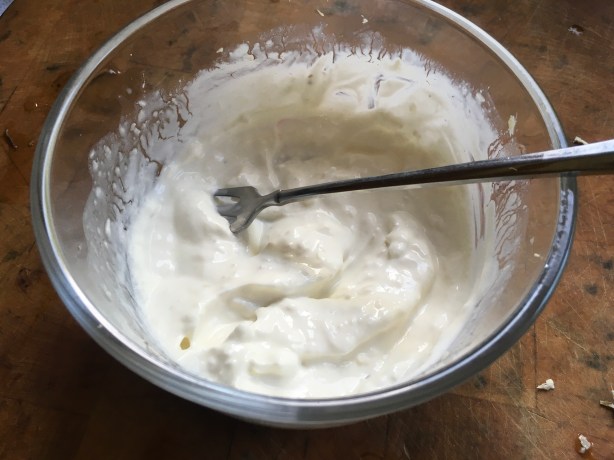
 

The horseradish cream…delicious on a lot of things!


1 fennel bulb
2 Granny Smith apples
1 tablespoon freshly squeezed lemon juice

A few hours before serving, thinly slice a fennel bulb–paper-thin if you can–and place the slices in a bowl of ice water. Peel and core 2 Granny Smith apples and slice them as thinly as you can, placing them in the ice bath as well. After an hour, remove the fennel and apple slices from the ice water, pat them dry with paper towels, and place them in a bowl, sprinkling them with the lemon juice. Toss, mixing well, and then place the bowl in the fridge until you’re ready to use it.
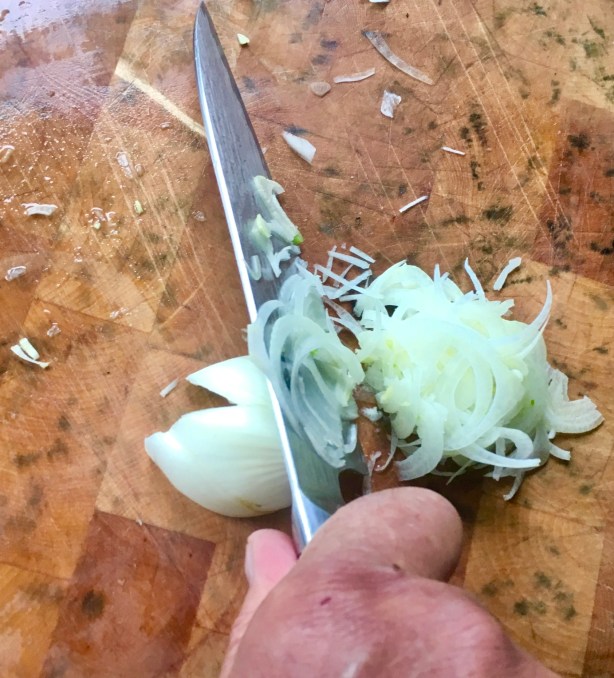
 

Slicing the fennel as thinly as possible.


A few last ingredients…

Sliced bread
Softened unsalted butter
Fresh dill sprigs

Smørrebrød is a sandwich, so of course, I needed some bread. I chose something from my heritage: Lithuanian bread, a combination of rye and pumpernickel that I find when I go back home to New York. I keep it in the freezer until I need it, and for this recipe, I sliced it thin.
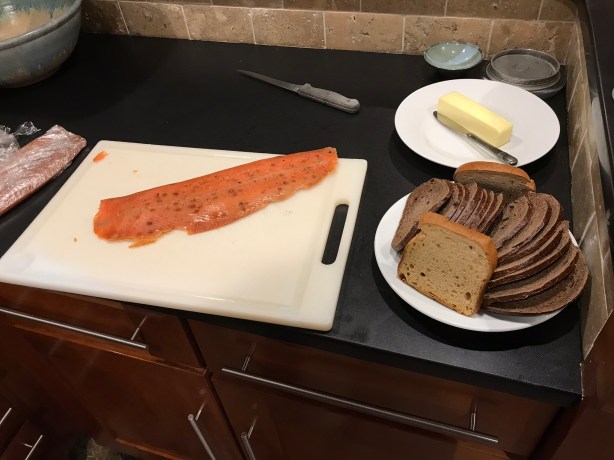
 

Getting the ingredients together. The Lithuanian bread is the brown bread. We also had a couple of slices of gluten-free bread.


Now we’re finally ready to build this thing!
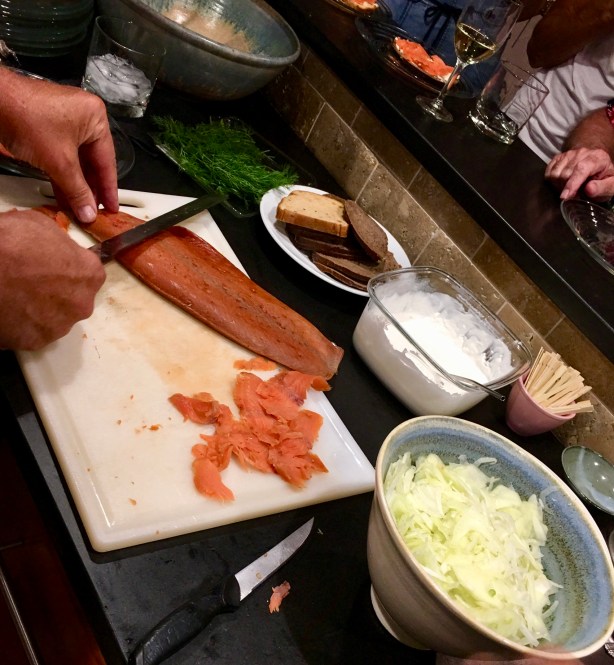
 

Slicing the salmon as thinly as possible.


Rather than making all the sandwiches myself, I decided I’d teach a Master Class of Smørrebrød-making with my fabulous guests. So I brought all the ingredients out, and we started building our sandwiches as I sliced the salmon as thinly as possible.

First, you take your slice of Lithuanian bread and spread some of the butter on it.

Then, layer the fabulous salmon on top.

Next, a healthy spread of the horseradish cream.

Top with some of the sliced fennel and apple.

Garnish with just a few fresh sprigs of dill.

And then top it all off with a friendly sprinkling of Fleur de Sel, or your favorite sea salt.
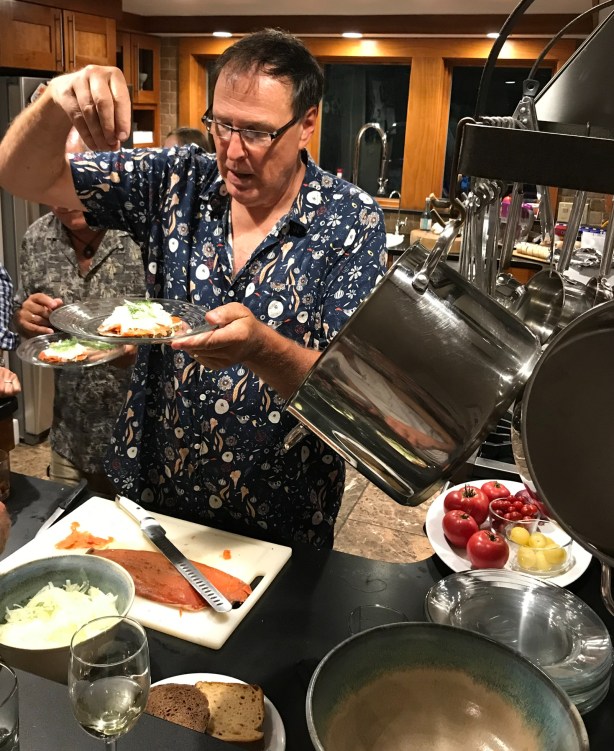
 

Fleur de Sel at the end makes all the difference!


And that’s my Salmon Smørrebrød…a labor of love. But that’s what you do for friends, right?
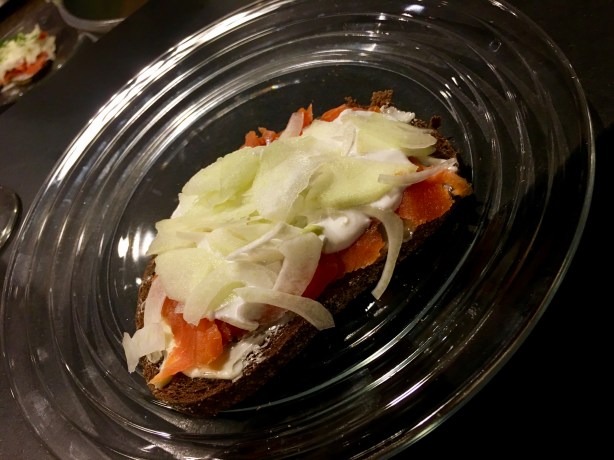
 

Time to eat!

 

Leftover ingredients make a great sandwich on an everything bagel the next day!
Let’s face it: there’s no such thing as healthy eggnog. This recipe is absolutely delicious but is also a heart attack in a glass. I’ve updated it this year so that you don’t need to worry about salmonella…though the alcohol will still get you!

My buddy, Rick Sammarco, a wicked talented bartender, credits his father, Al, for the eggnog recipe I started from. The original recipe called for a lot more of everything. I’ve cut it down to a more “user friendly” size, I’ve made it a touch sweeter, and it no longer contains the usual raw eggs found in traditional eggnogs.

Some say that “aging” eggnog–literally letting it sit in the fridge for up to 6 weeks–will give the alcohol time to kill the salmonella. But there’s no tried and true scientific evidence to support this. Sure, if you pour a ton of alcohol in the batch, 15% or even more, it might be safe. And I might risk it on myself, but I would never take a chance and serve it to friends or family. The only thing that really kills salmonella is heat, and that’s not something the average homeowner can easily do without actually cooking the eggs.

The solution is to buy pasteurized eggs.


Fortunately, some supermarkets now carry whole eggs in the shell that have been pasteurized, though they are hard to find. But my area Whole Foods does carry pasteurized real whole liquid eggs under the Vital Farms name, and they work perfectly with this recipe. The original recipe called for 15 (!) raw eggs. A 16-oz. container of Vital Farms liquid eggs is the same as about 9 eggs. So I need one full container, and then another 10 oz. or so for this recipe.

Now the only thing I need to worry about are too many calories and too much alcohol!


eggnog

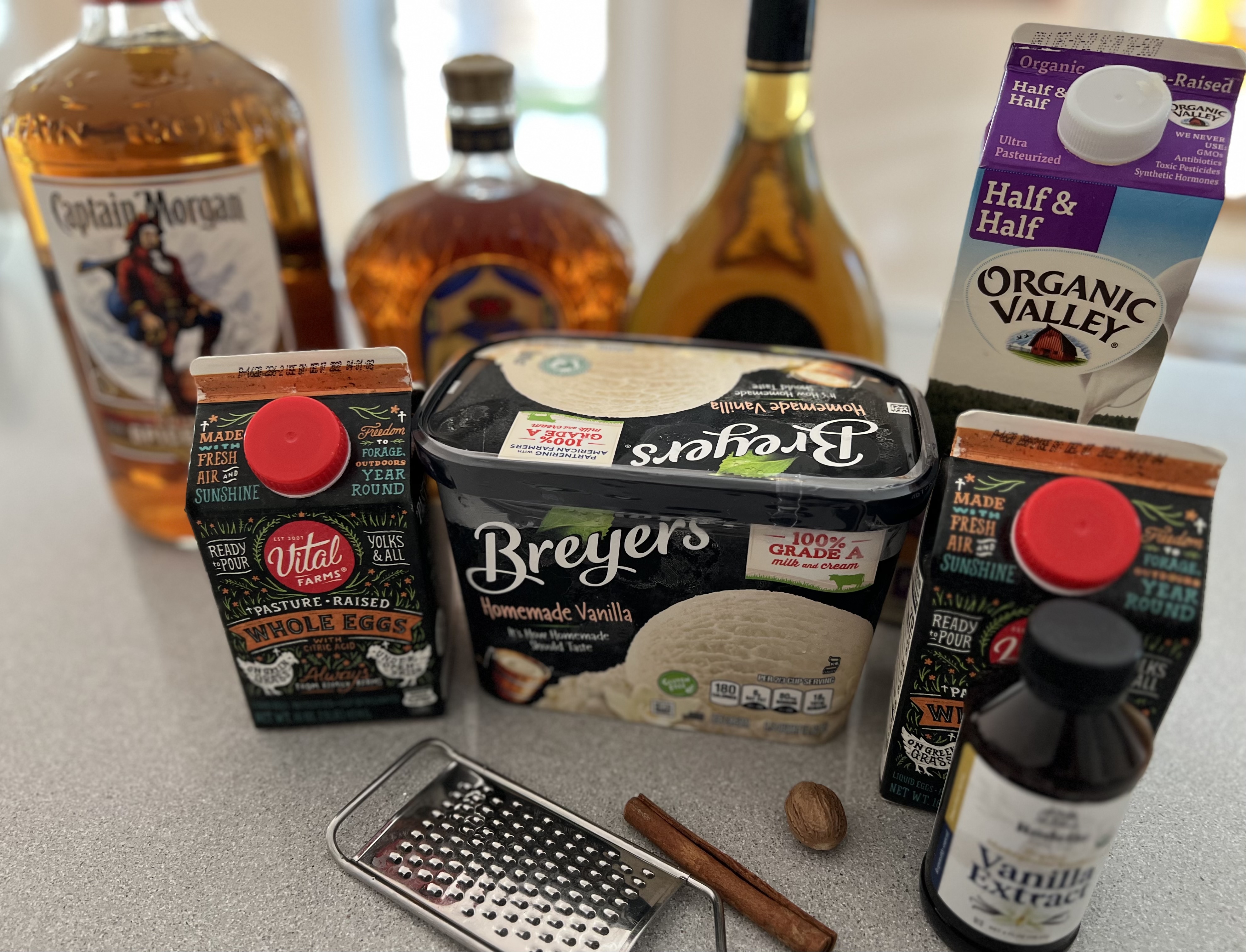
1.5 quarts vanilla ice cream (I use Breyer’s)
1 pint half & half
Just over 26 oz. Vital Farms liquid whole eggs (the equivalent of 15 whole raw eggs)
1 teaspoon vanilla extract
1/2 teaspoon cinnamon
1/2 teaspoon nutmeg
1/4 cup pure maple syrup
6 oz.  of each:
spiced rum (I use Captain Morgan)
whiskey (I use Crown Royal)
brandy (I use E&J)


I let the ice cream soften 1 day in the fridge. I mix the ice cream, half-and-half, eggs, vanilla, cinnamon and nutmeg in a blender.

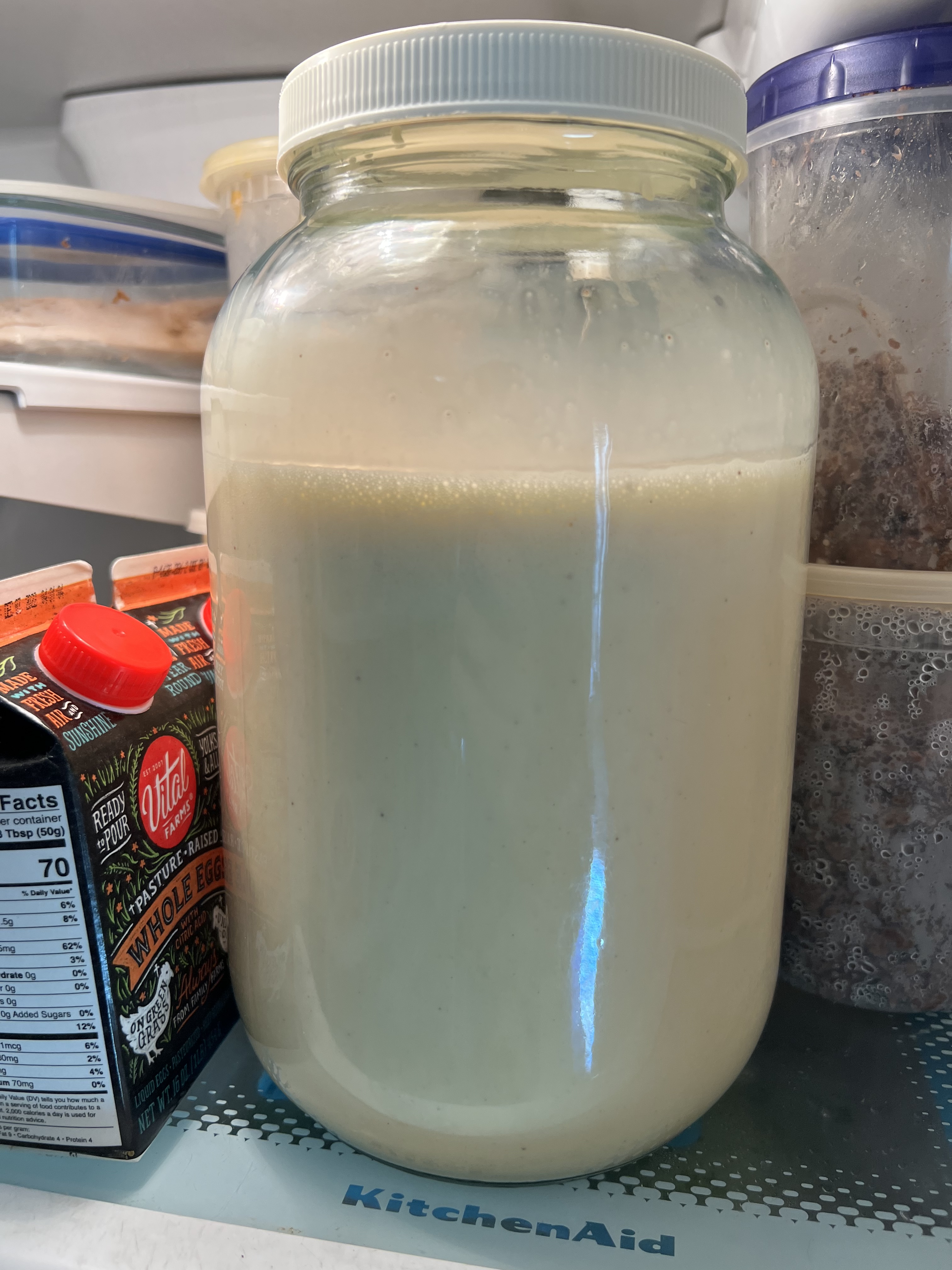
My blender is pretty big, but I find that it’s full at this point. So I pour everything into a gallon-size glass jar.

To the jar, I add the maple syrup and all the liquor. Then I whisk everything together, making sure I get down to the bottom of the jar.


After it’s fully mixed, I place the lid on the jar, and move the eggnog to the fridge, where I let it sit for at least 12-24 hours for the flavors to blend. Even longer is better.

One final taste to determine whether I want more cinnamon, nutmeg or maple syrup, and it’s good to go!


It goes well with coffee…just maybe not for breakfast!


And by the way, it’s pretty darn tasty with coffee! Just imagine a variation on a White Russian, with eggnog and freshly brewed coffee, and a bit of a drizzle of maple syrup on top!

Cheers!


CLASSIC CACIO E PEPE

Posted: November 1, 2022 in Uncategorized

There are a handful of Italian dishes that can be considered classics. They don’t require dozens of ingredients…just a few quality ingredients prepared in a particular way. We all know their names: Pasta alla Carbonara…Fettuccini Alfredo…and Cacio e Pepe.


Carbonara requires pasta, guanciale, egg yolks, black pepper and a hard cheese (Pecorino Romano or Parmigiano Reggiano). Alfredo: just  pasta, butter, cream and cheese (Parmigiano Reggiano). And Cacio e Pepe: pasta, black pepper, cheese (Pecorino Romano), and a little pasta water. Simple, but simple requires the best quality ingredients and the right method of preparation.


1 lb. spaghetti
4 teaspoons roughly ground black peppercorns
7 oz. Pecorino Romano cheese, freshly grated


Bring a pot of salted water to a boil and cook the spaghetti until it just about reaches the al dente stage.

While the pasta is cooking, heat a dry pan and dry fry the roughly ground peppercorns until they start to release their aroma.


Add a ladle of the pasta water to the pan with the peppercorns.


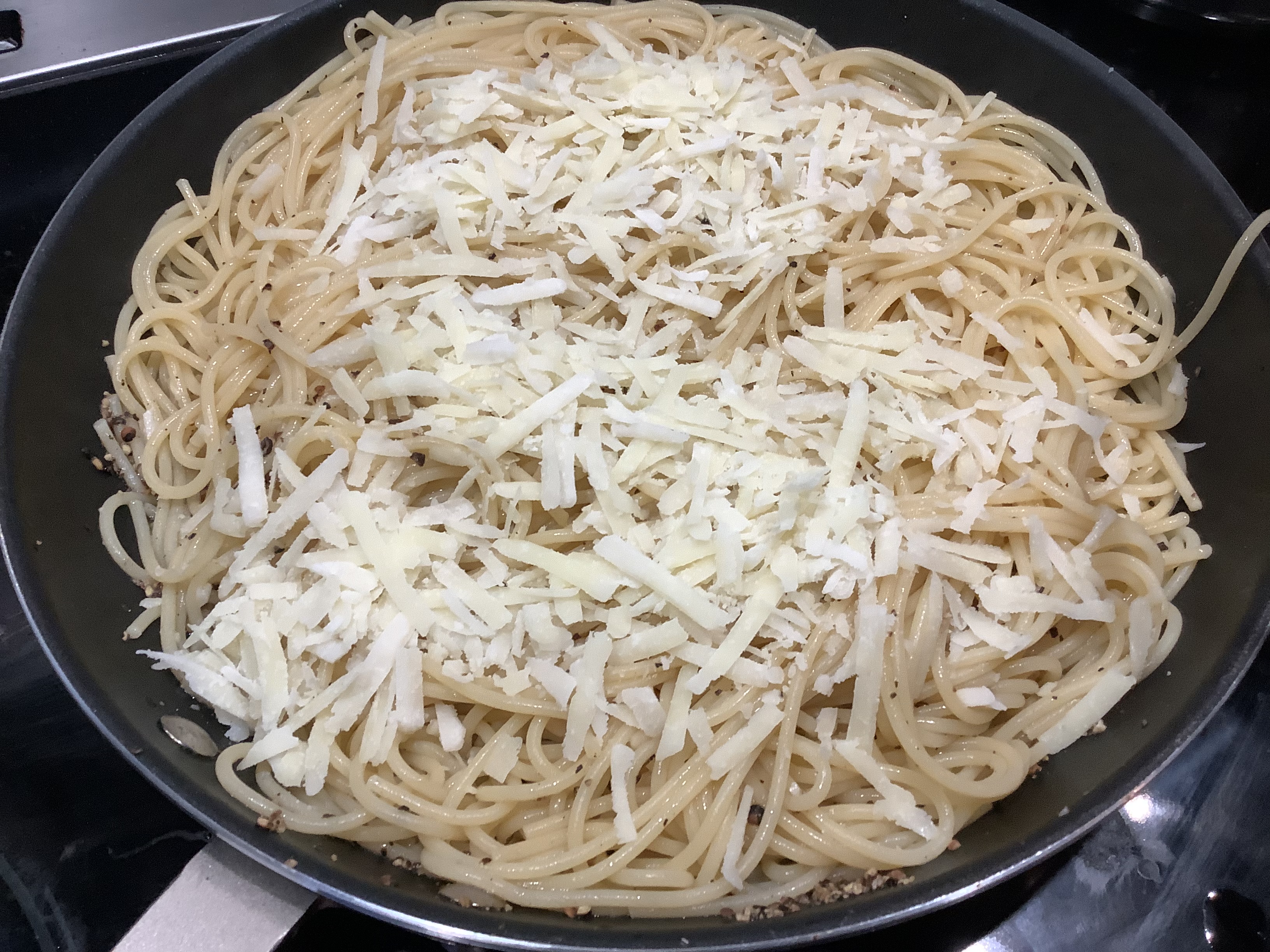
When the pasta is ready, move it to the pan with the peppercorns, saving the pasta water.


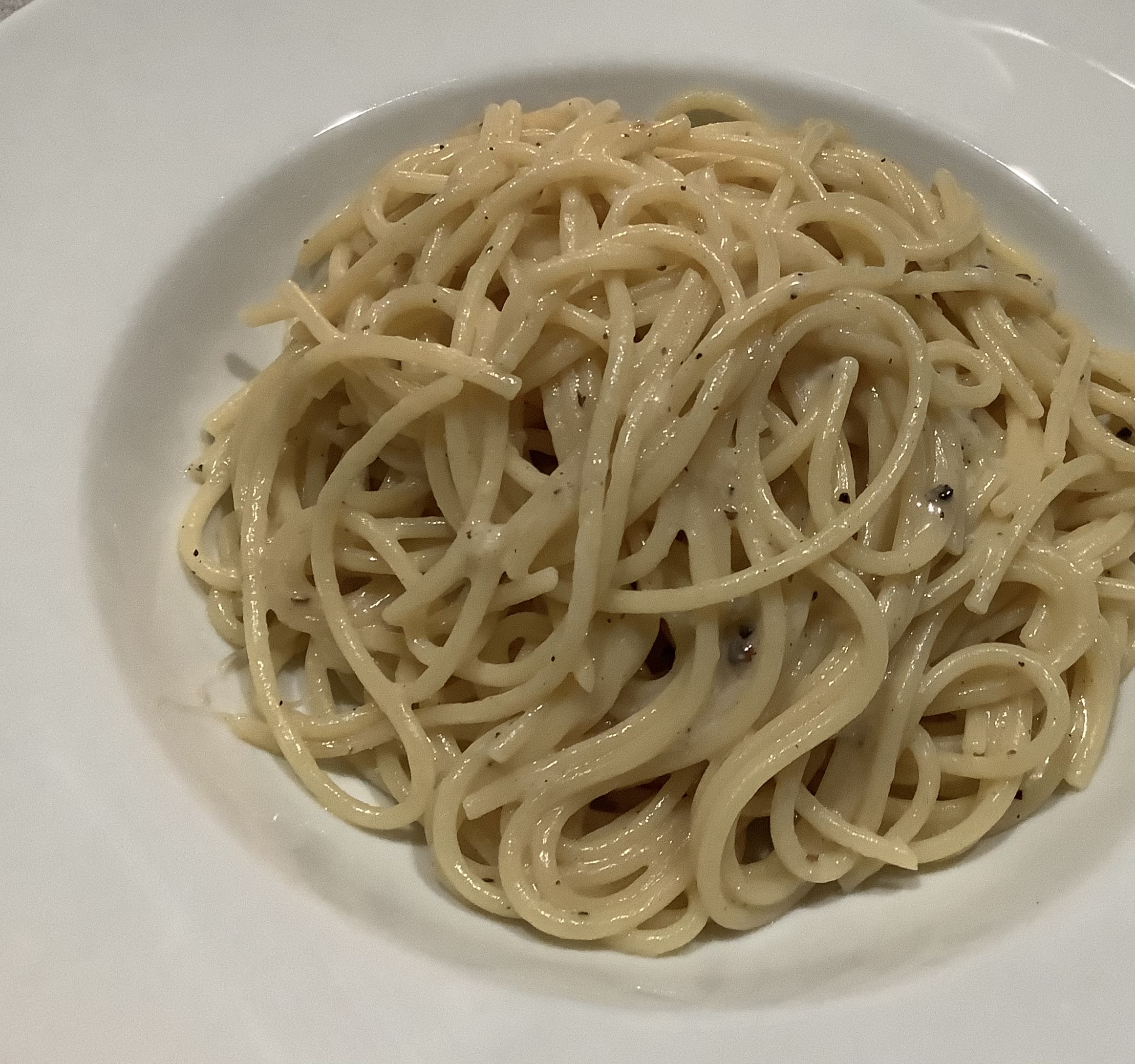
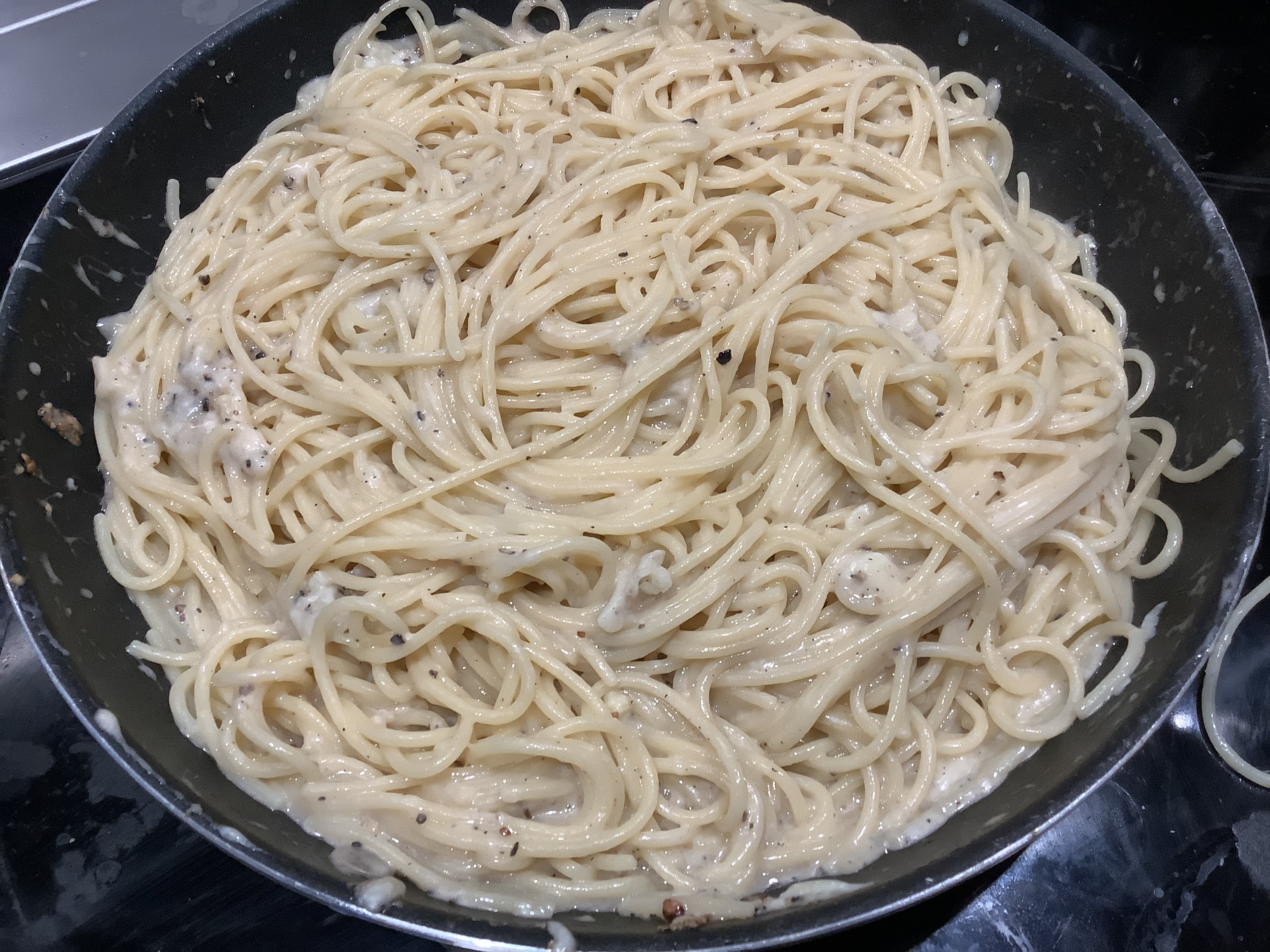
Mix the pasta and peppercorns together, and then slowly start adding the grated cheese, stirring constantly. Keep adding the cheese until you use it all. If the pasta is too dry, add more pasta water. You want the cheese and pasta water to blend to make a beautiful, creamy sauce.


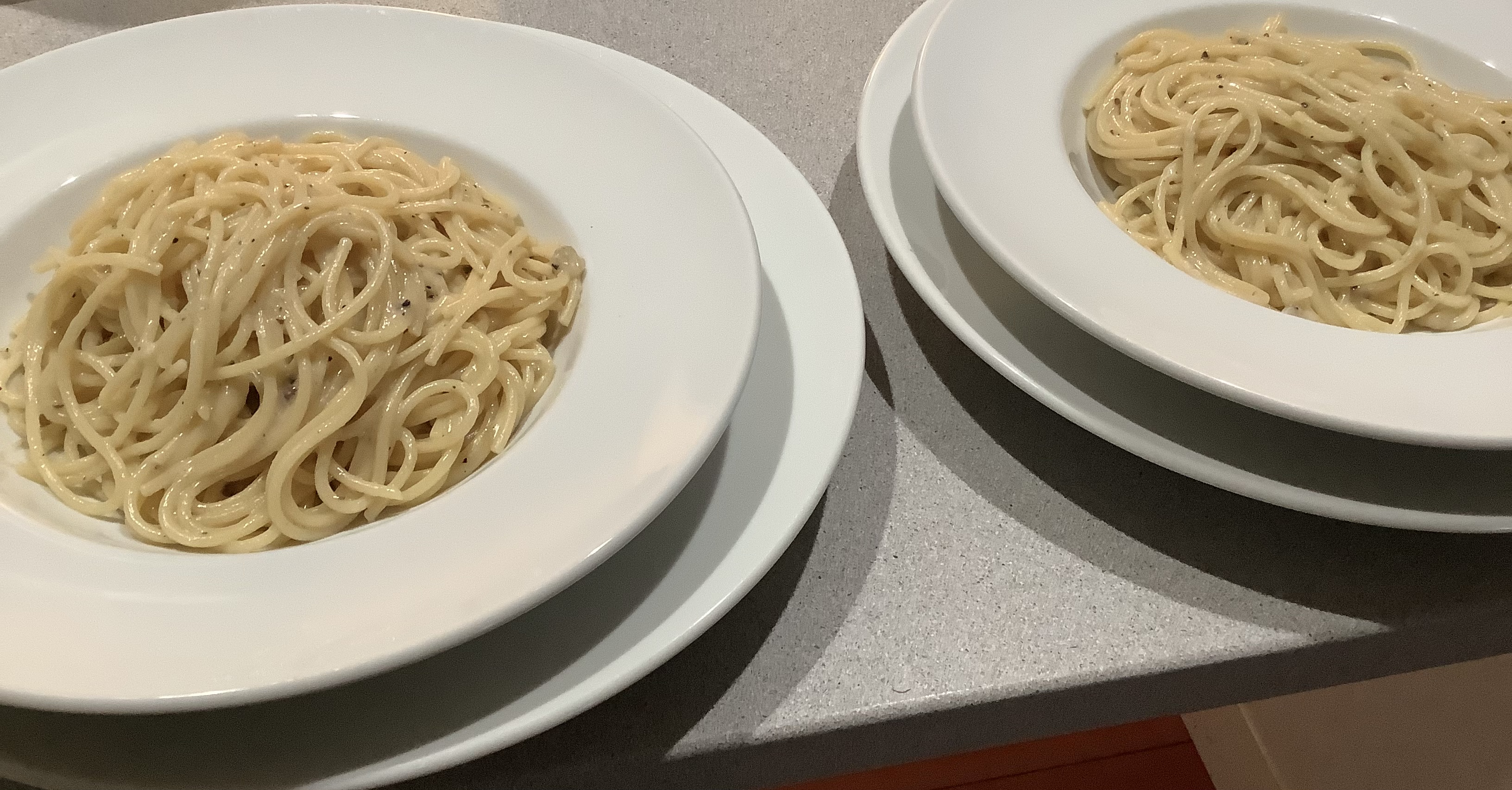
When you’ve achieved ultimate creaminess, it’s ready to serve!


BONE BROTH: MAKING YOUR OWN

Posted: October 30, 2022 in Uncategorized
Tags: , , ,

Bone broth has become all the rage…and why not? Bone broths are nutrient-dense, easy to digest, taste great and heal the body. Many people with bad digestion, or “leaky gut,” swear by it.

I use grass-fed veal or beef bones or pastured chicken bones and get great results.

Much like making a stock, the ingredients are simple and healthy. It just takes time to make a really delicious and healthy bone broth, cooking the broth ingredients for at least 24 hours…48 is better! I usually start the boiling process on a Saturday morning, letting it boil all day, literally until I go to bed that night. I turn the heat off, then restart it the next morning and boil all day again before pouring the bone broth into containers. I replace the water as needed.


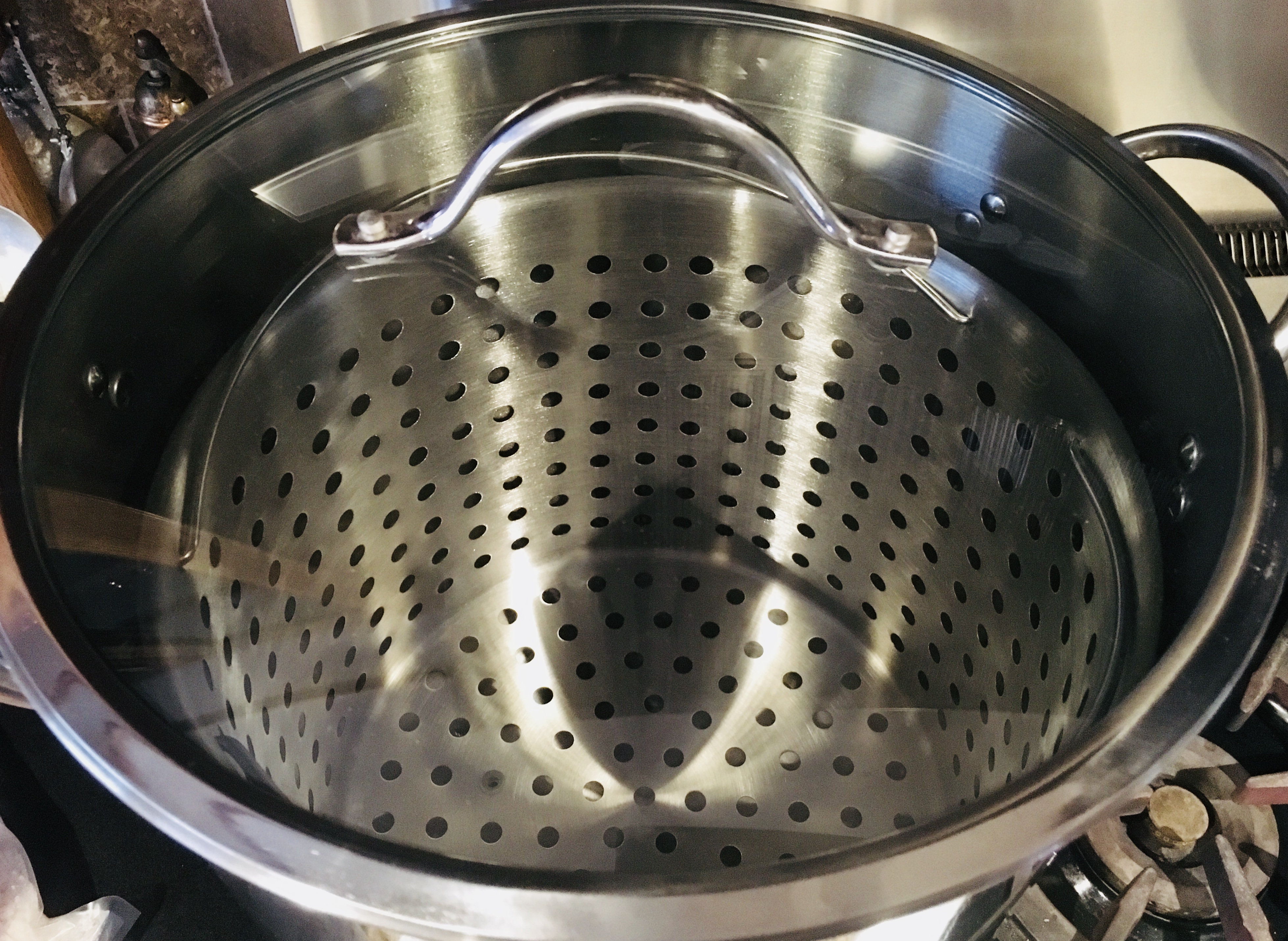
It goes without saying that you need a large pot. I just recently bought a huge 30-quart stainless steel pot with a strainer for lobster cooking. It’s also perfect for making bone broth. I fill the pot with clean, filtered water and put it on high heat.

Meanwhile, I heat the oven to 400 degrees.


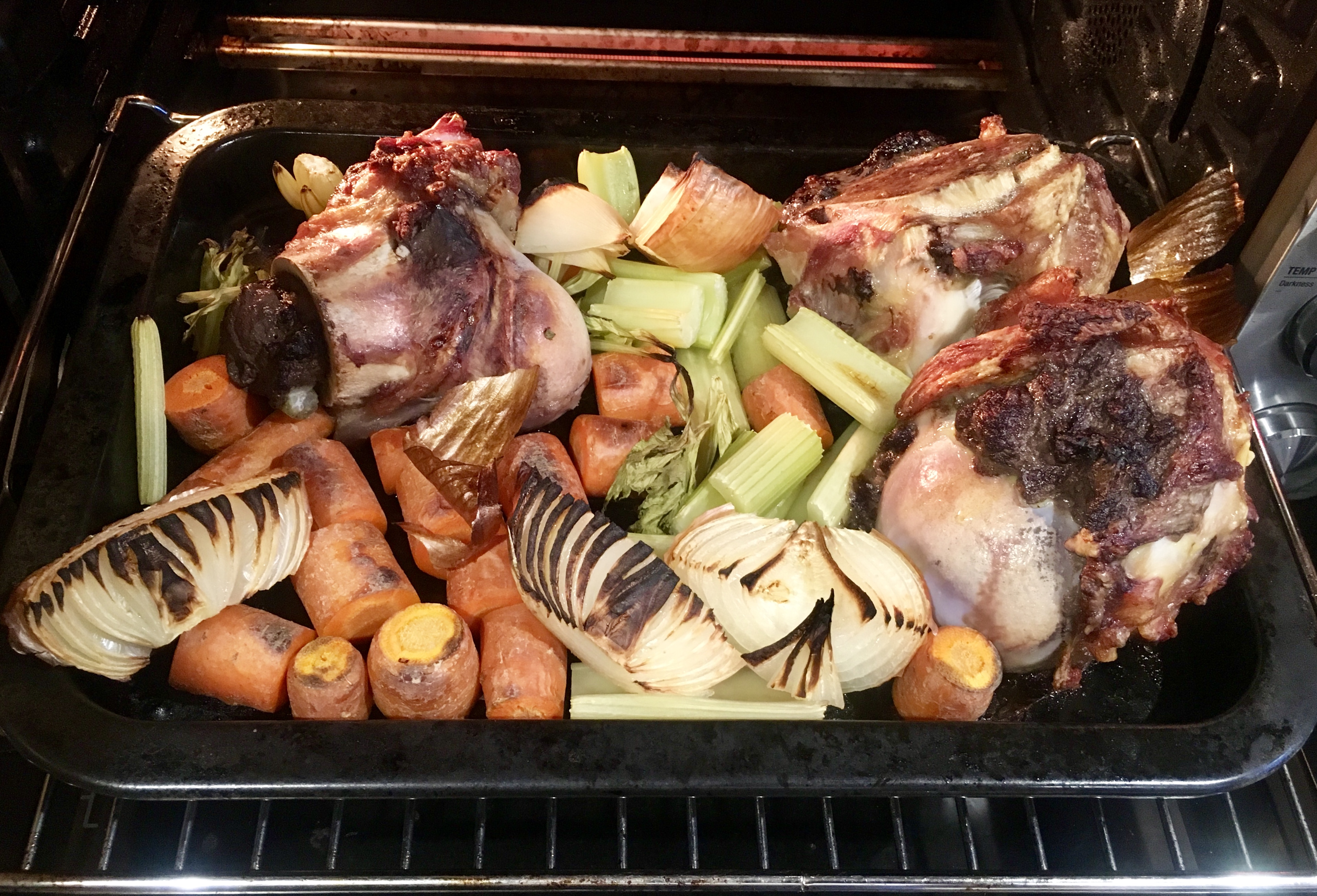
The pan of bones and veggies goes in the oven.

4  or 5 lbs. grass-fed veal bones
large pot clean filtered water
4 onions, quartered (no peeling needed)
4 carrots, roughly chopped (washed, but not peeled)
4 stalks celery, roughly chopped (washed)

I cook until the vegetables are slightly caramelized and their flavors are concentrated. I remove them from the pan and toss them in the pot of water. I put the bones back in the oven until they start to release their fat and flavors.


The veggies are ready for the pot. The bones stay in the oven a bit longer.

Once the bones have a nice brown color to them, I put them and the veggies in the pot. Any fat that was released by the bones also goes in. (This fat is healthy and full of flavor.)

Then it’s time to boil…for a very long time. I replace the water in the pot as needed, starting the boiling process on high heat, then reducing to medium, cooking with the pot covered, letting it cook for as long as I can.


After 48 hours, I finally get delicious bone broth that was worth all the effort: hearty, satisfying, healthy.

Rather than try to skim the fat off a huge pot of bone broth, I choose to portion out the broth in pint-sized containers, and keep them in the freezer. Then, when it’s time to use the bone broth, it’s easy to scrape the fat off the top of the frozen broth before I re-heat it. But I have to tell you: I don’t usually do that! The fat is go-o-o-d!


I leave spices, salt, pepper and garlic out of the bone broth, choosing to add them to the broth later, depending on what I’m using it for. If I’m simply sipping the bone broth by itself, a little sea salt as I reheat it is all that it needs.


A batch of bone broth that will last a long time!

I use bone broth to make tasty soups and stews, sauces and gravies, to flavor rice, or just heat it and drink it as is.

MARINATED LAMB LOIN

Posted: October 27, 2022 in Uncategorized

Lamb is such an underrated meat. It was one of the things my Mom cooked really well, so I grew up loving it, and was never bothered by the gaminess of it.

If the gaminess does bother you, look for American lamb. If gamier meat doesn’t bother you, go for the gusto and get grass-fed New Zealand or Australian lamb.

I recently got a couple of lamb loins and decided to marinate them, and then simply sear both sides of the loins in a hot pan, putting a lid on the pan to finish cooking. Simple and delicious.

Here’s the marinade I used…

1/2 cup olive oil
1/4 cup balsamic vinegar
1 tablespoon fresh rosemary, chopped
1 tablespoon fresh thyme leaves, chopped
1 tablespoon Kosher salt
1 tablespoon maple syrup
1 tablespoon Dijon mustard
1 teaspoon black pepper
1 teaspoon dried oregano
1 teaspoon granulated onion


Mix the marinade ingredients together in a bowl. 

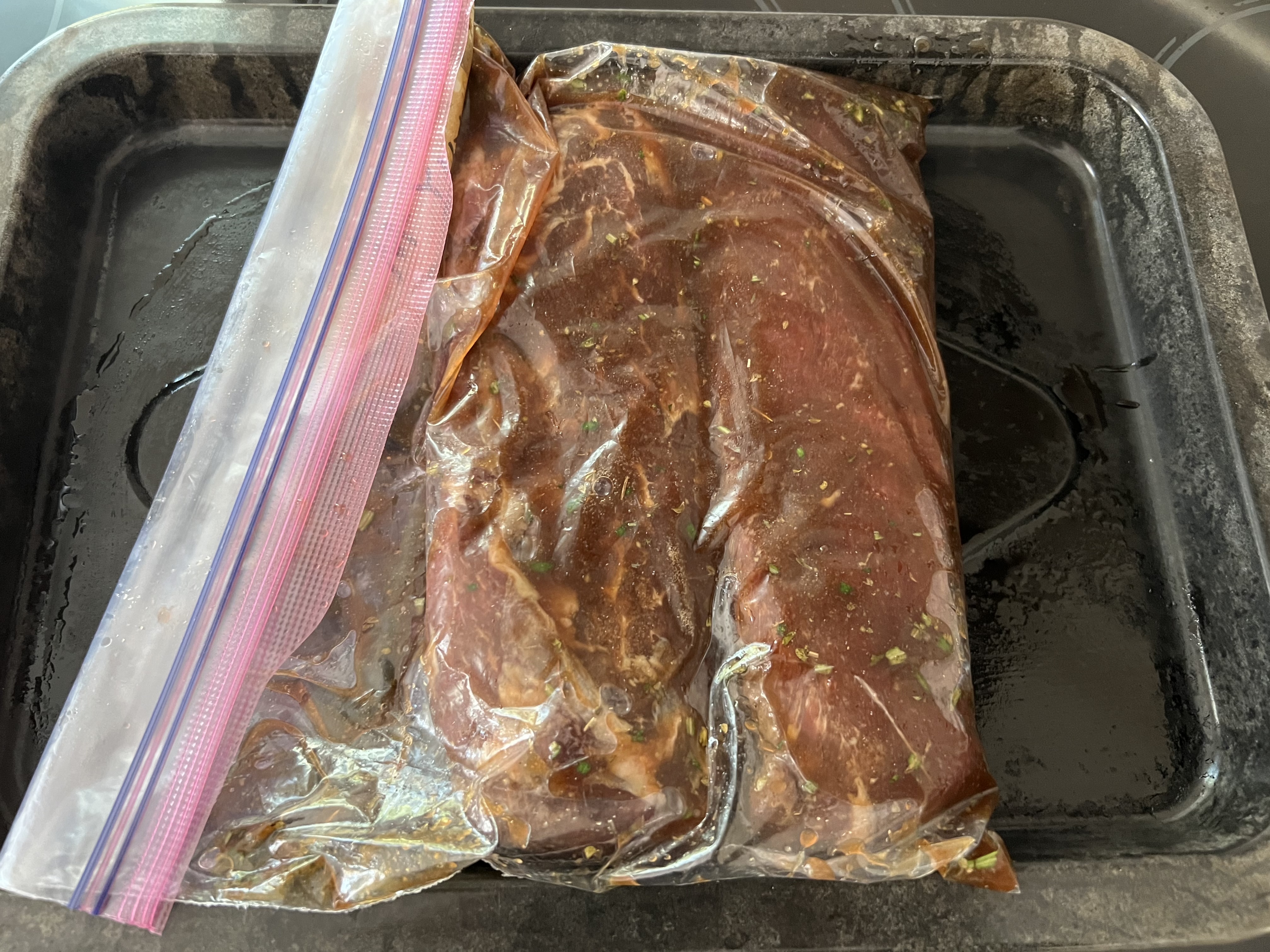
Place the lamb in a plastic bag and pour the marinade in, squishing it around to make sure it makes contact with the meat. Place it in a pan or a bowl to prevent accidental leaking.


Let the lamb marinate for several hours at room temperature, or in the fridge overnight.

Before cooking, bring the lamb back to room temperature.


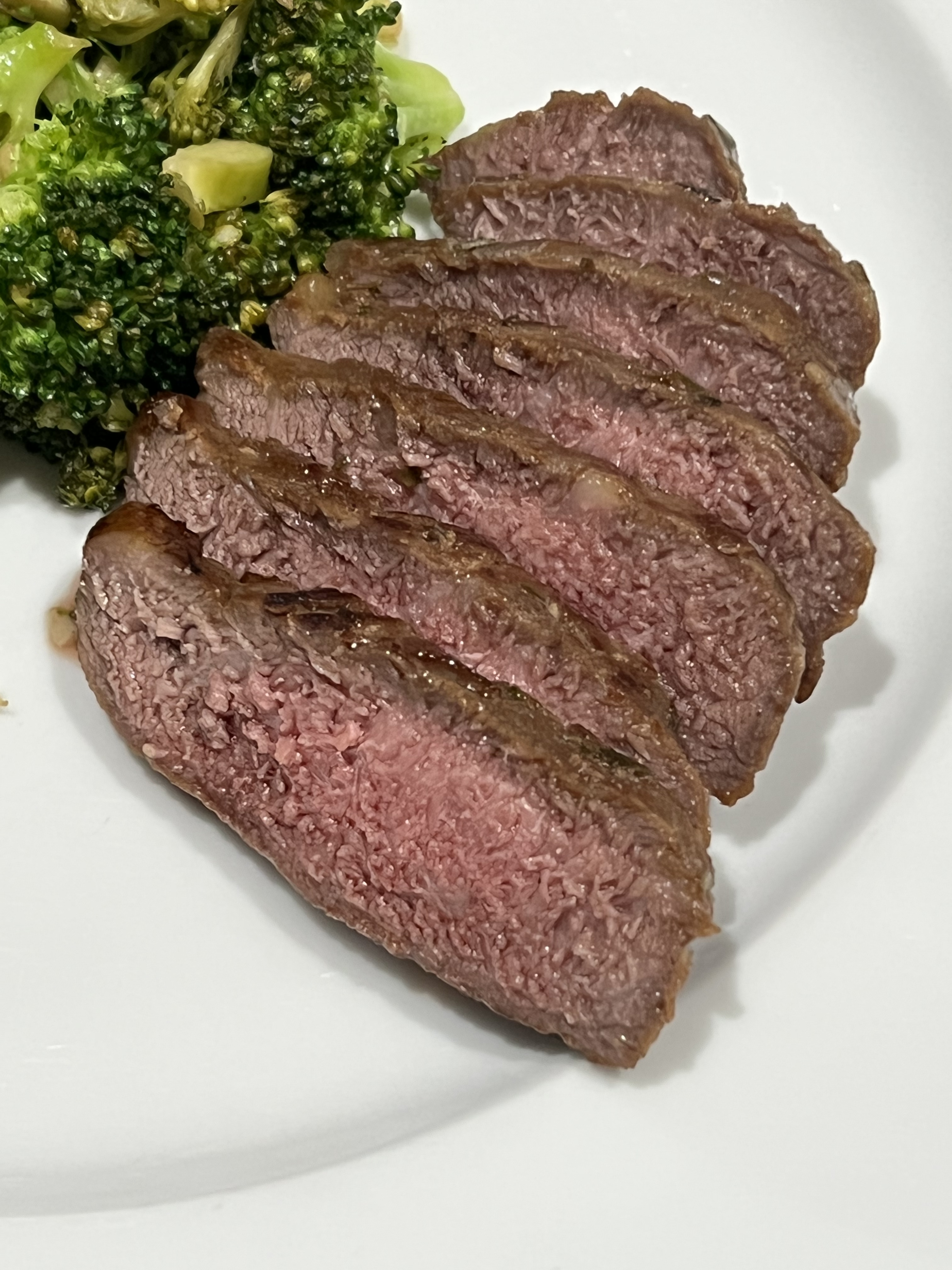
Use some oil in a hot pan, and then sear the lamb on both sides. Place a lid on the pan, and reduce the heat to medium-low.


Cook the lamb until you get the lamb to a perfect medium. Cooking to 145 degrees will get you to medium-well, so I back off that a bit for medium. But cook it the way you like it!