It’s Pizza Week here in Providence, RI, but most of the time, I prefer to make mine at home.

So let’s not talk diets right now. Let’s talk about what is probably the greatest invention since pizza itself: stuffed crust pizza.

I mean: first, there was the simple margarita pizza. Then someone thought of “extra cheese.” After that, where could we go? And then, someone who in my mind deserved the Nobel Prize for Food, came up with stuffed crust pizza. Originally the brainchild of Pizza Hut, it boldly put cheese where no cheese had gone before.


So for me, since I love to make my own pizzas, the next step was to figure out a way to make stuffed crust pizza at home. Turns out it wasn’t really that difficult.

If you’re not into going through the hassle of making your own dough, most supermarkets have pre-made pizza dough balls in the refrigerated section. Grab a couple of them, and save yourself some time and effort. (If you want to make the dough from scratch, see my recipe at the bottom of this blog.)

Same thing with the sauce: I prefer to make my own from real San Marzano tomatoes, but if you have a brand of jarred sauce you like, use that.

The rest is pretty straightforward: cheese!!


Let’s get started…

You bought or made the dough. If you bought two balls, you rolled them together to make one larger one. You poured a little olive oil in a bowl, and placed the ball of dough in that, covering with a clean towel, to let the dough rise for a few hours.

After a few hours, you punch the dough down to get rid of the air bubbles, and roll it into a ball again, putting it back in the bowl, covered, to rest for another hour or so.

Preheat the oven to 500 or it’s hottest temperature, with a pizza stone on the middle rack.

Now the dough is ready to work. Place your pizza peel on the counter you’re working on. Sprinkle the peel with a large-grained flour, like corn meal or semolina. (That acts like little ball-bearings to let the dough slide off easily.) On top of the pizza peel, stretch the dough out to a size that will be about 2 or 3 inches bigger in diameter than the peel or pizza stone you have in the oven.


Made the mistake of stretching the dough out on the counter rather than the peel, which made it hard to lift. Perhaps it was the influence of the bourbon in the background! I fixed the problem later. (I kept the bourbon.)


Buy a firm mozzarella that slices nicely into sticks. (If you use fresh mozzarella, it will get mushy in the crust.) Cut it into pieces the size of the average mozzarella stick. 
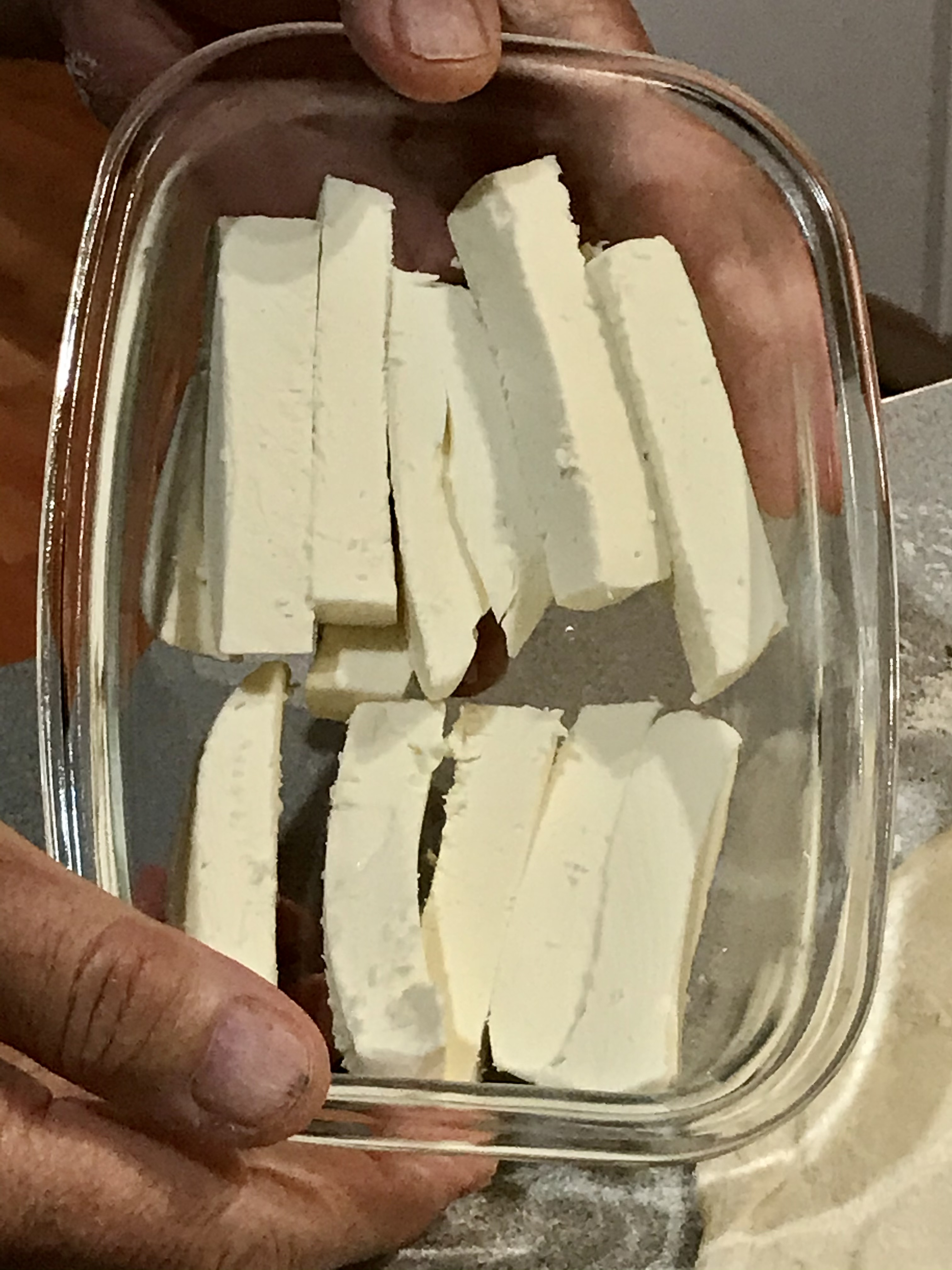


Place the sticks of mozzarella around the dough in a circle, about an inch away from the edge.


Now fold the dough over the mozzarella sticks. You might need a touch of water to make the dough stick to itself.


Now make your pizza like you normally would. Sauce it…
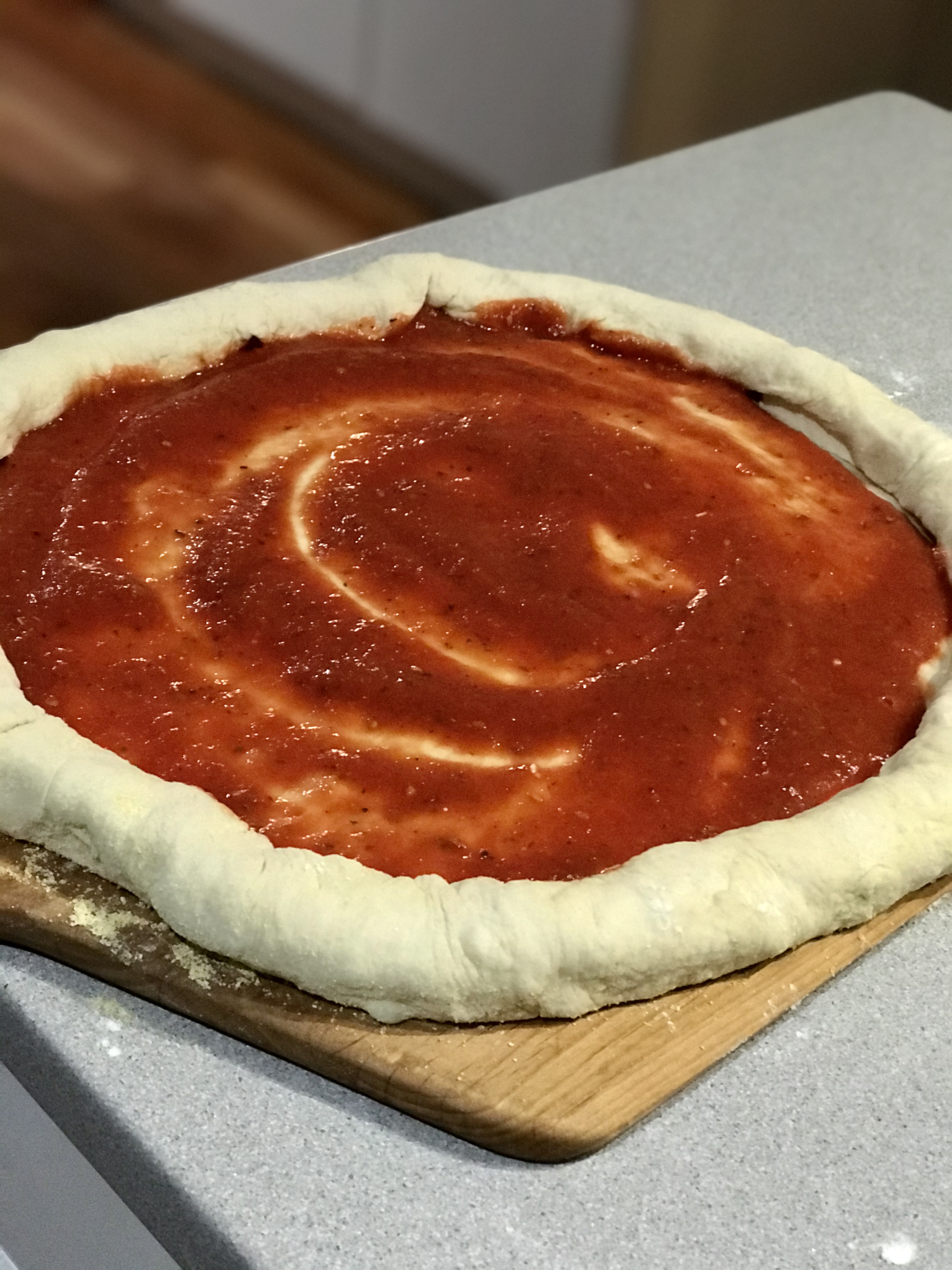


Cheese it…


Add toppings…


And bake!


You can never have too much cheese!


If you want to make your own pizza dough, here’s my recipe…

The key ingredient is 00 flour, and it can be found in specialty stores,  or online. Ratios for this recipe depend on the humidity in my kitchen on any given day.

4–5 cups 00 flour
1 cup tepid water (100 to 110 degrees)
1 tablespoon salt
1 tablespoon active dry yeast
a squirt of extra virgin olive oil

I mix all the dry ingredients in the bowl of a stand mixer, then slowly add the water as it mixes. After the ingredients are well mixed, and the dough pulls from the side of the bowl, I remove it to a floured board, where I knead the dough by hand for another 5 minutes, until it is smooth and elastic, shaping it into a ball. I rub a little olive oil over the ball of dough, place it in a bowl covered with plastic wrap or a clean towel, and let it rise at room temp for 2 hours, punching it down after that. I roll it back into a ball again, and let it rise, covered, for at least another hour.


I moved to my current home in the fall of 2020. One of the toughest things to say goodbye to in my previous garden was my asparagus patch. Over the years, I had grown loads and loads of delicious asparagus, but sadly, there was no good way to transport that patch to my new place.

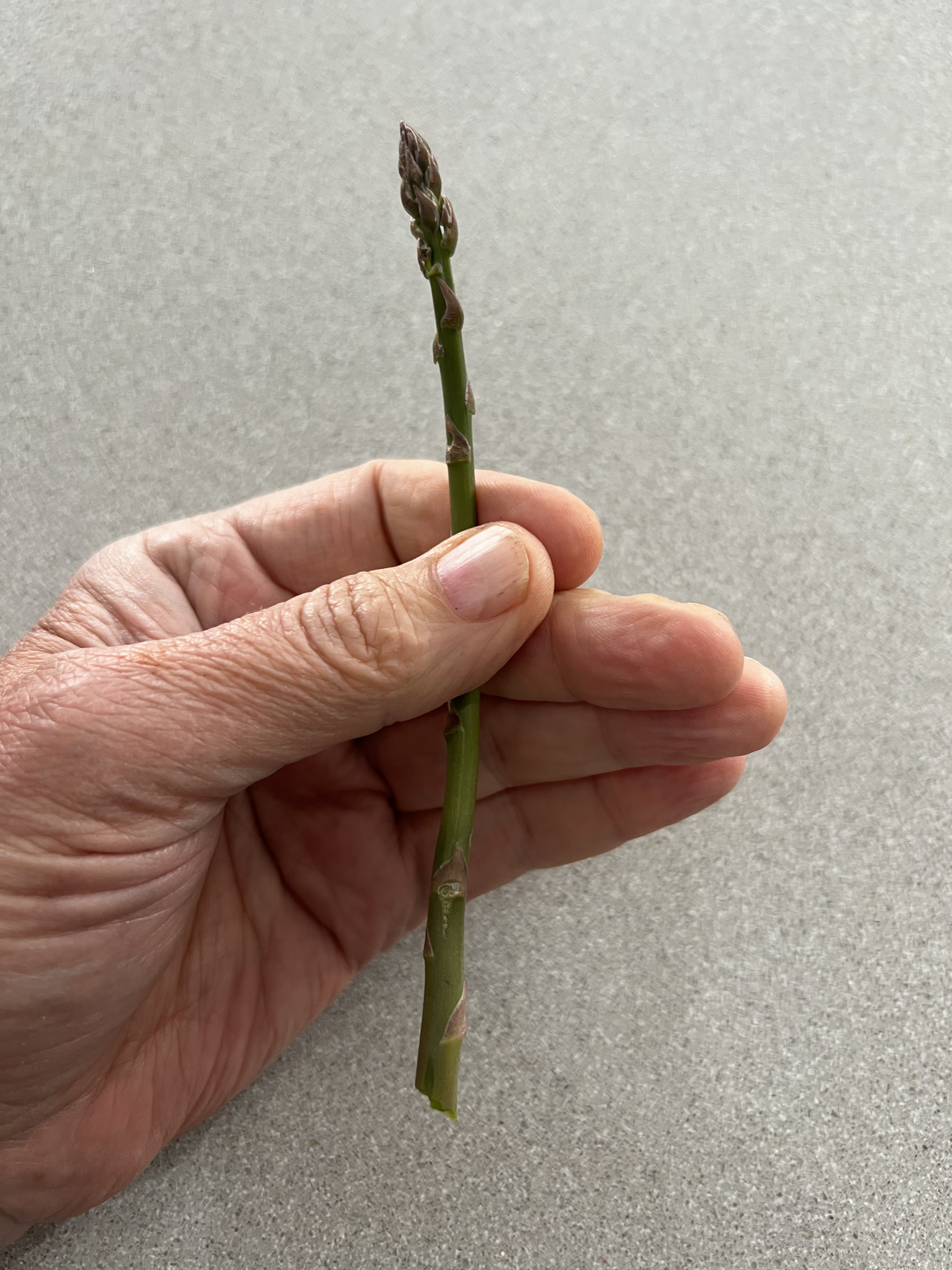
I’ve got a much smaller garden space at my new home, a small ledge that gets full sun, and despite its limited size, asparagus is too important of a crop to leave out. So I bought a bunch of plants in the fall of 2020, and planted them. I got some beautiful asparagus ferns at the end of the season. The following spring, some very tiny asparagus spears made an appearance. They say you’re not supposed to harvest asparagus for at least a couple of years to let the new bed establish, but I found that pretty much impossible to do…I have to have at least a bit of a taste.

This spring, I’m hoping for a bigger crop. It still won’t be at it’s peak, but the fact that I’m already seeing asparagus spears popping through the soil of my VedgeLedge, as I call it,  is very exciting!


Hoping to get bigger and better spears this season!


In the meantime, I can only look back at my previous success with asparagus…

The home garden is already showing signs of activity. Overwintered dill and arugula seeds are sprouting. And cool weather seeds that I’ve sown early: peas, turnips, radishes, and others are doing the same.


asparagus2013

Asparagus is really easy to grow. You just need the space, and the plants practically do the rest.
Space them about a foot apart, and before you know it, you will have a vast network of tasty stalks sprouting through the soil every spring. They are so much better than anything you can buy in a supermarket.
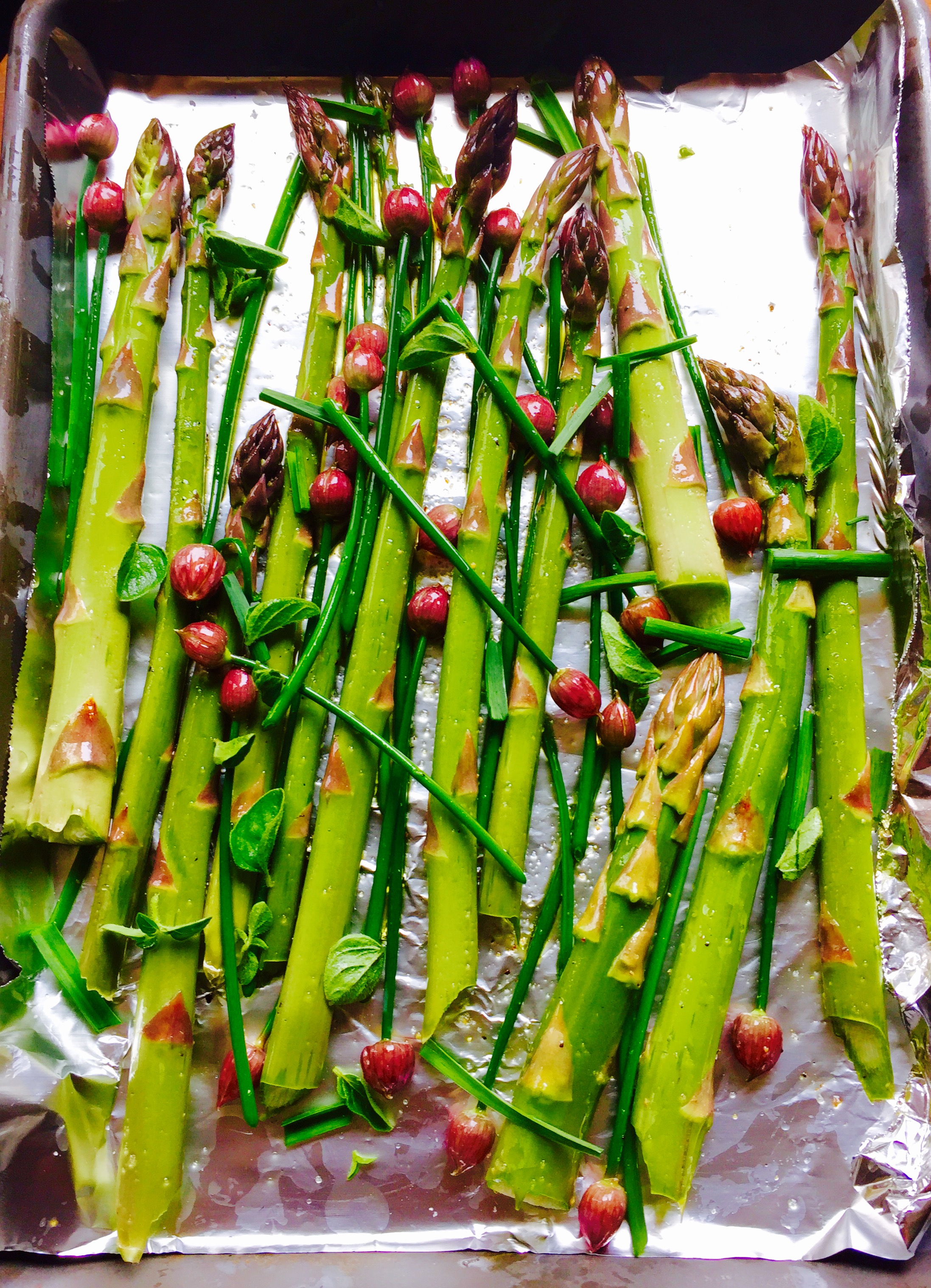
In the start of the growing season, the stalks don’t even make it into the house. I cut them and just eat them straight out of the garden. Eventually, they make the move to the kitchen, where I love to simply place them on a baking sheet and drizzle a little olive oil over them. Salt and pepper…and then in a 400-degree oven until they’ve caramelized.

Sometimes I toss some tasty chives with blossom buds on top of the asparagus and roast.


In the past, I’ve had I so much asparagus that I just didn’t know what to do with them all. So I started pickling them…a really easy process that ensured I had delicious asparagus well into the summer.

Several bunches of asparagus spears
2 cups white vinegar
1 cup cider vinegar
1 1/2 cups sugar
3 cups water
20 peppercorns
Garlic cloves, peeled
Kosher salt (1 teaspoon per quart-sized Mason jar. Use less for smaller jars.)
Bring the vinegar, water, sugar and peppercorns to a boil. Set the pan aside.
Trim the bottom of the asparagus spears so that the spears are just slightly shorter than the height of the quart-sized Mason jar you will use. Or cut them into pieces that will fit smaller jars.
Pack the jars as tightly as you can with the asparagus spears. (They will shrink when processed.) Add the garlic clove and 1 teaspoon of salt to every quart-sized Mason jar…less for smaller jars.
Fill the jars with the vinegar mixture and seal them tightly.
Process the jars for 10 minutes. Let them cool before placing them in the refrigerator. If you know you’re going to eat all the asparagus in the next week, processing isn’t really necessary.


DOES YOUR PEE SMELL FUNNY WHEN YOU EAT ASPARAGUS?

Asparagus has a sulfur-containing compound identified by scientists as methyl mercaptan. A colorless gas, this compound is also found in blood, feces, garlic, eggs, cheese and even skunk secretions. Another ingredient found in asparagus is asparagine. Present in foods like dairy products, seafood, poultry, fish and nuts, this amino acid is known to have a distinctive smell when heated. To metabolize both methyl mercaptan and asparagine, your body needs to break these compounds down and it’s this breakdown that’s responsible for your urine’s strange smell.

Since both methyl mercaptan and asparagine are associated with the sense of smell, there is debate over which ingredient is actually responsible for the asparagus-urine phenomenon. It could be one, or both.

Many people claim that, regardless of asparagus consumption, their urine does not smell. There are multiple theories about that as well. The first claims that everyone’s urine is in fact affected by asparagus, but only about half of the population have the specific gene that is required to smell the change. On the other hand, the second theory states that only half of the world’s population has the gene that’s required to break down the compounds found in asparagus and, if the body doesn’t break them down, no smell is emitted. In fact, one study published in the British Journal of Clinical Pharmacology found that only 46 percent of British people tested produced the odor while 100 percent of French people tested did. So whatever the reason, asparagus will forever be known as the vegetable that makes your urine smell strange.

Boroughs Marketplace

Posted: April 16, 2023 in Uncategorized

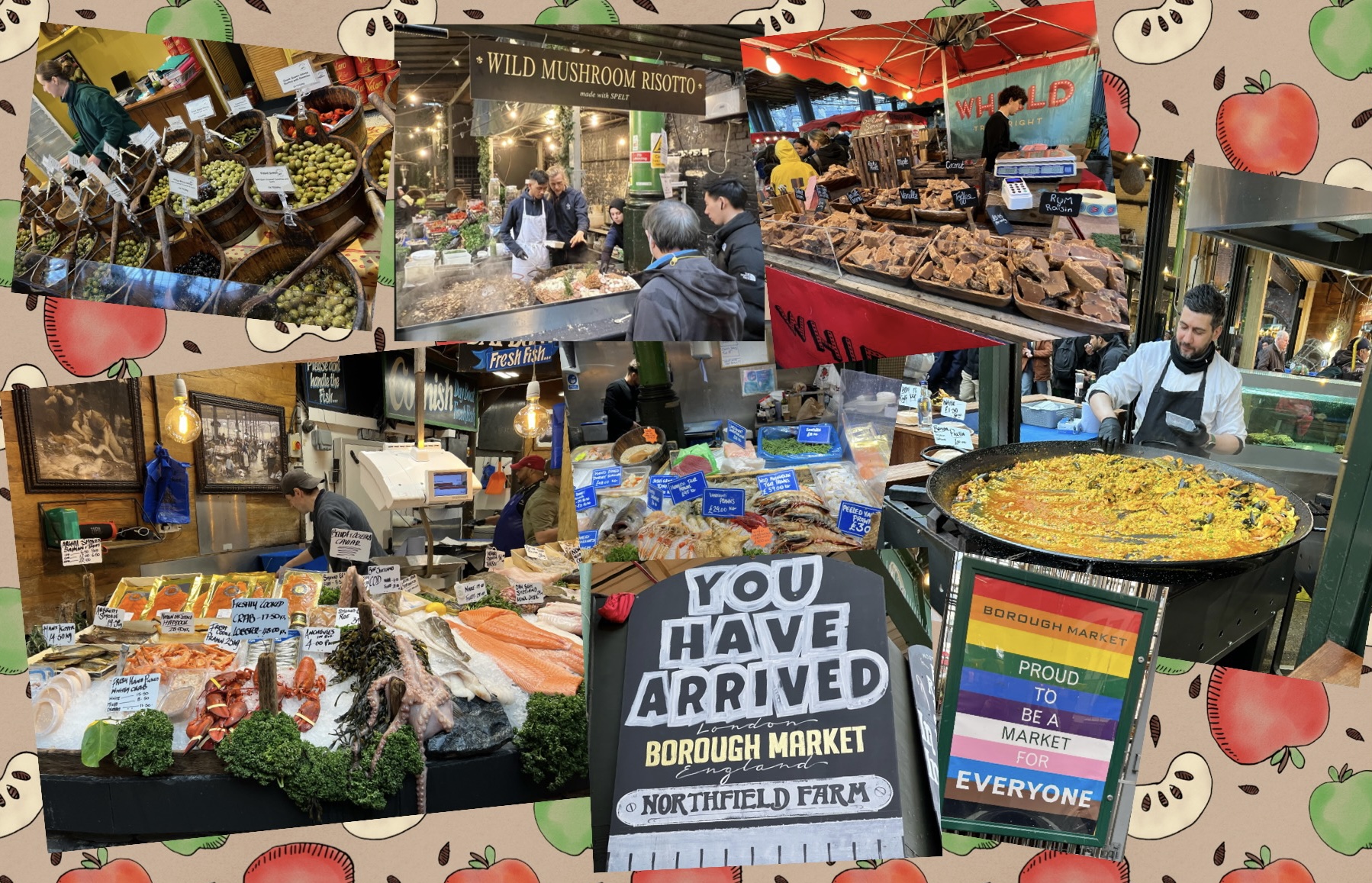
Burough Market is said to be London’s oldest. We only had about 30 minutes to walk through the whole thing, but if we had a free day, we easily could have spent it here, eating. Everything you can imagine from cheeses to truffles to meats and fish, to olives and wine. And inexpensive!

Abbey Road!

Posted: April 16, 2023 in Uncategorized

The street can get busy at times, so you have to jump out with your camera person and do the walk as quickly as possible. The locals are used to having people at the crosswalk, but it doesn’t necessarily mean they are patient about it! We did our stroll several times before we got all the shots that we wanted. There is usually a cluster of people standing on the side of the street, waiting to do the same. It’s all a matter of who’s got the most guts to jump out first!

Ave Mario in London

Posted: April 12, 2023 in Uncategorized

If I was to totally steal a concept for an Italian restaurant and open my own, Ave Mario would be it. Great food, incredible atmosphere, loud music, everybody laughing, and having a great time. Look at that bar! Several levels of restaurant with an open kitchen. Fantastic! I’ve seen nothing like this in the United States.

Acropolis Museum, Athens

Posted: April 11, 2023 in Uncategorized

The Acropolis Museum in Athens was spectacular! They unearthed ancient ruins while digging the foundation, so they had to completely redesign the museum to stand on poles, so that people could view the ruins underneath. Several areas of the museum floors are glass, so you can see the ruins from above as well. Beautiful, spacious, lots of natural light.

Ouzo!

Posted: April 9, 2023 in Uncategorized

Discovered this place in 2004. Surprised that I found it again! Wonderful Ouzo still served out of the barrel! Plaka, Athens, Greece.

Athens, Greece

Posted: April 9, 2023 in Uncategorized

The Daughters of Athens were removed from the original location and replaced with copies. The originals are on display at the Museum of the Acropolis. One daughter is missing, because she is still in England, and the Greeks are fighting to get her back.

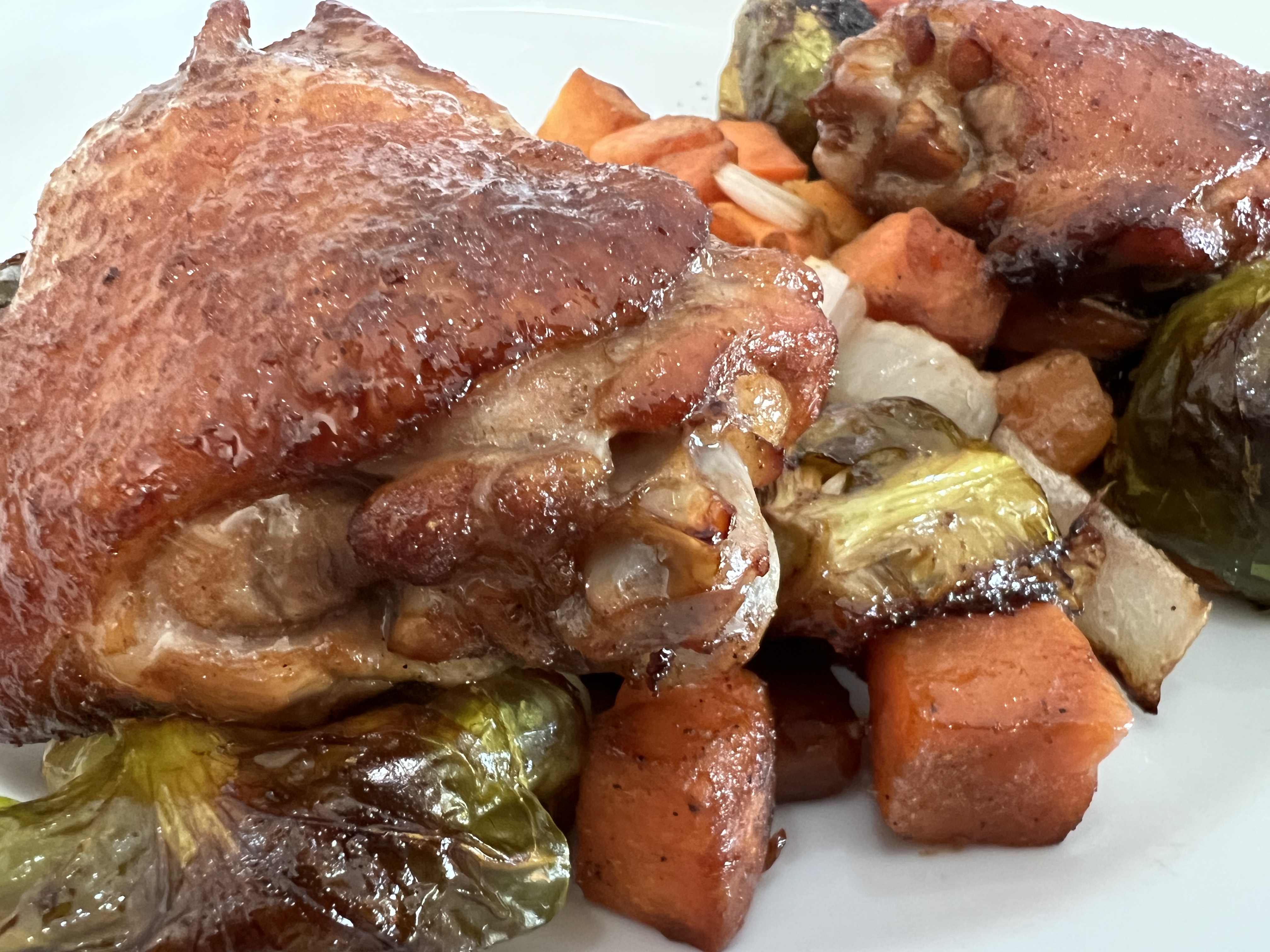
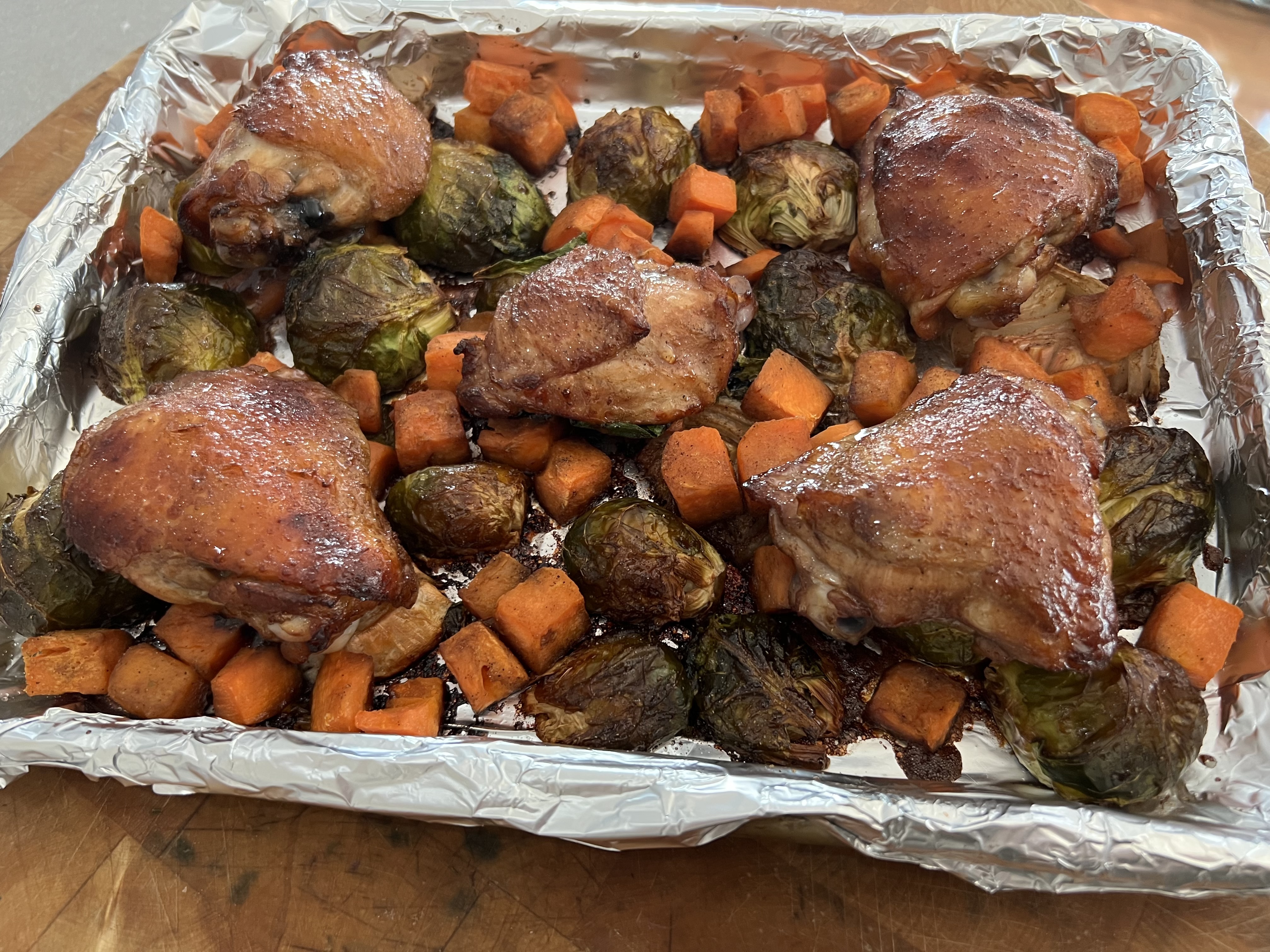
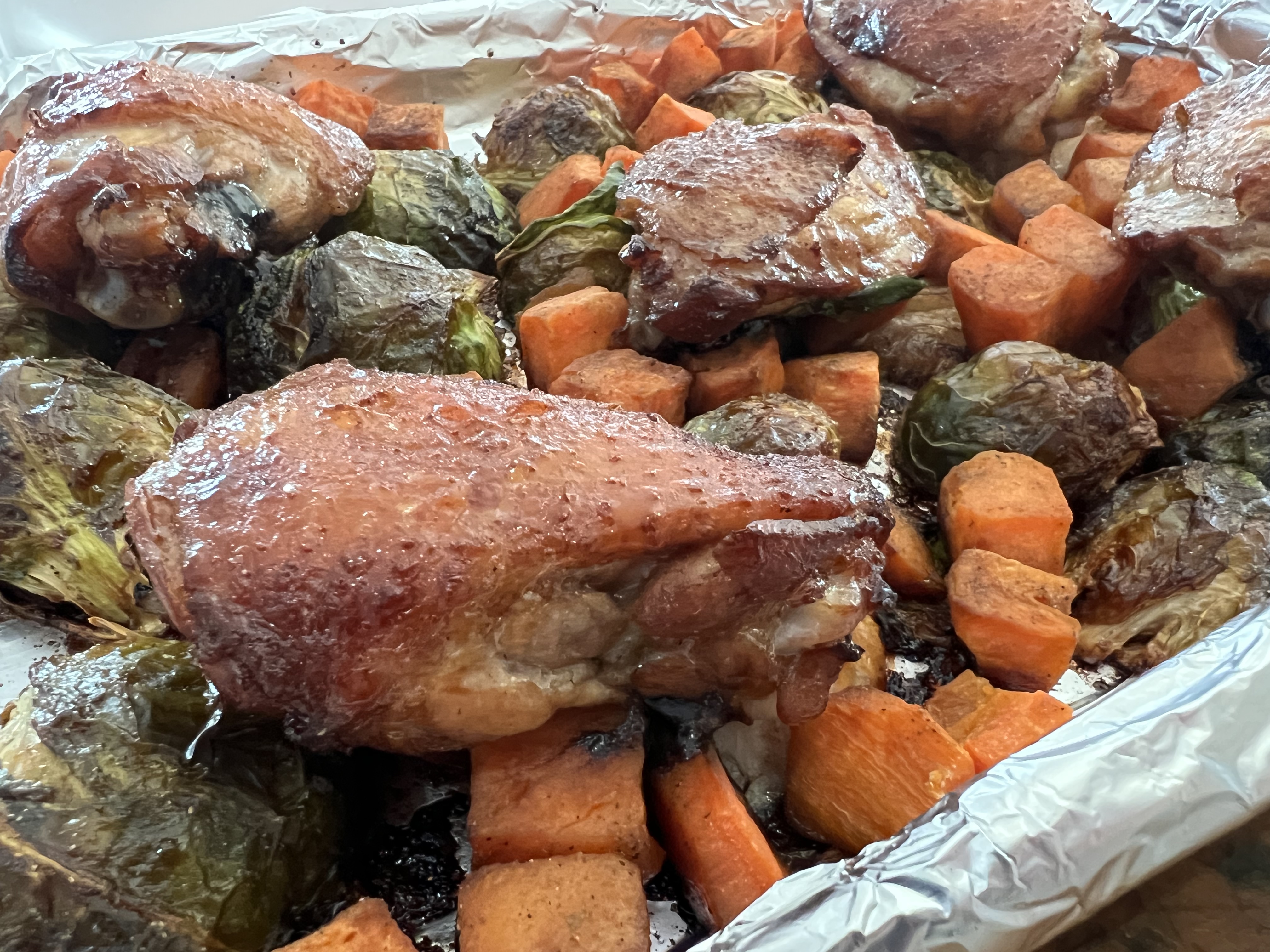
I recently saw what I thought was a pretty clever idea of taking a cabbage and slicing it into thick, steak-like pieces, laying them flat in a pan, and then placing marinated chicken on top of them to roast in the oven. The juices from the chicken would flavor the cabbage as it all cooked. I decided I’d try my own version of that recipe.

You can use any part of a chicken you like, even a whole spatchcocked chicken which would lay flat in a larger pan if you’re serving a group of people. But cooking for myself, I choose leg quarters (which are the thigh and drumstick together) or simply chicken thighs. They’re full of flavor, and have the fat content you need to drip down into the veggies below to flavor them as well. Something like chicken breast would simply be too dry.

I wanted to use what I had in my fridge, so instead of cabbage, I had Brussels sprouts–baby cabbages, in essence. I cut them in half and layer them flame-side down in a roasting pan covered with non-stick aluminum foil. I wanted more veggies, though, so I sliced up a half-onion I had in the fridge, and I also added a package of frozen organic sweet potatoes I had in my freezer. Now the bottom of my pan was full.

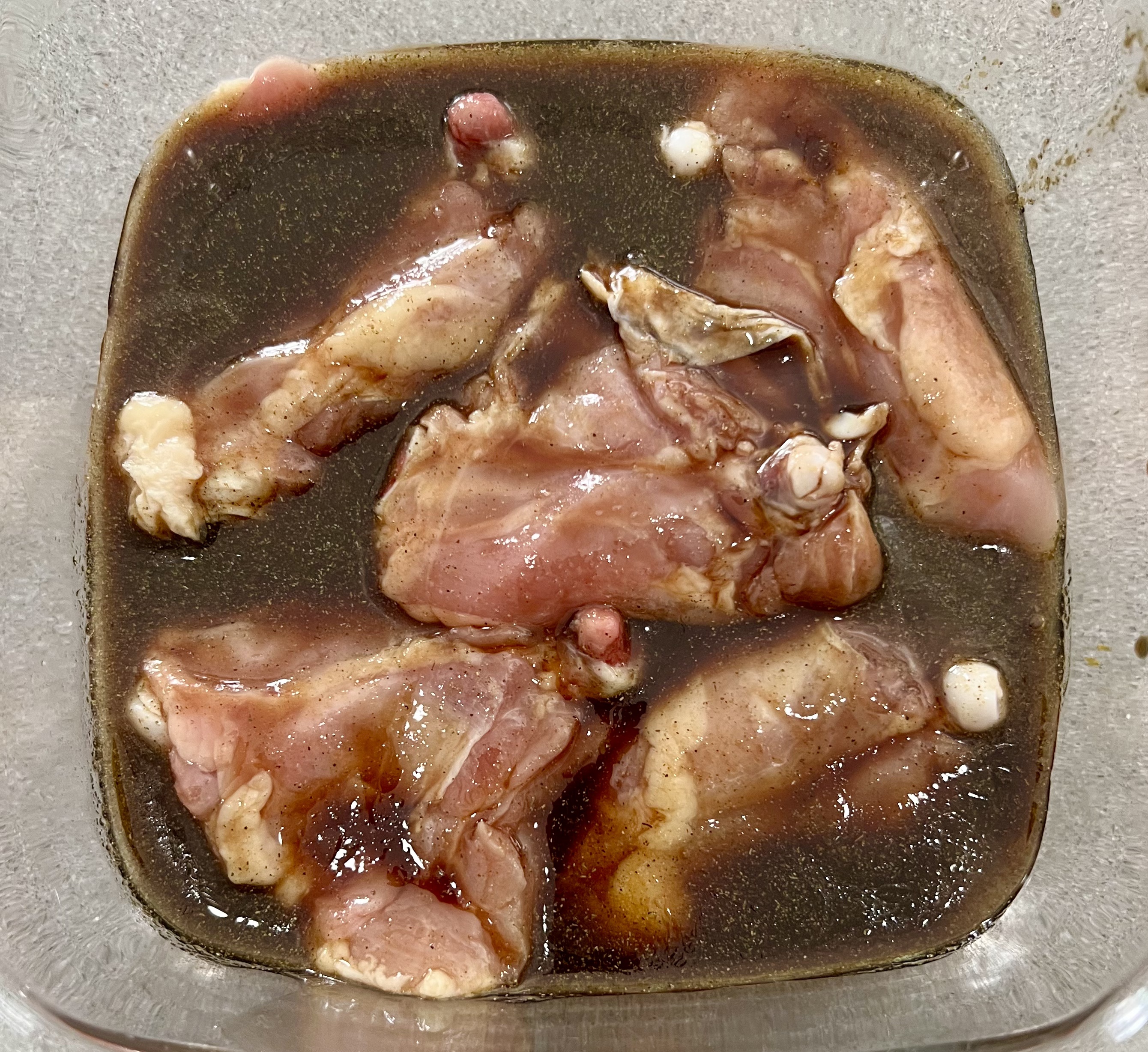
I buy humanely-raised pastured chicken, which means the birds are usually smaller than what you’d find in a supermarket (no steroid monsters here!), so one package contained 5 small chicken thighs. Once thawed, I placed them skin-side down in a glass container. Then it was time to make the marinade.

I chose a marinade that would give a beautiful caramelized color to the dish, using some of my favorite marinade ingredients.

3 oz (6 tablespoons) maple syrup
2 oz (1/4 cup) extra virgin olive oil
2 oz (1/4 cup) balsamic vinegar
1 oz (2 tablespoons) soy sauce
1 oz (2 tablespoons) Worcestershire sauce
1 tablespoon lemon juice
1 tablespoon Dijon mustard
3/4 teaspoon Kosher salt
1 teaspoon powdered rosemary
1 teaspoon granulated garlic
1/2 teaspoon black pepper

I combine all the marinade ingredients in a bowl and whisk well to mix.

I brush the tray of veggies with some of the marinade just to give them a head start on flavor.

I use about a 1/2 cup of the marinade on the chicken thighs, tossing them around in the marinade to make sure they’re well coated. Then I pour the rest of the marinade in a saucepan that I will cook on the stove top.


I like to place the thighs skin-side down and then poke some holes into the meat with a fork to really let the marinade soak in. I let them marinate at room temperature for about an hour. Any longer than that, and they need to go into the fridge.

Once I’m ready to cook, I pre-heat the oven to 325. I place the marinated thighs skin-side up over the veggies in the tray. I discard any leftover marinade in the bowl with the chicken.

While the thighs and veggies are cooking, I take the reserved marinade and heat it over medium heat in a saucepan until it reduces by half to make a nice glaze that I will brush onto the chicken when it’s done cooking.

It’s important to remember that once any of the marinade touches raw chicken, to avoid salmonella, you have to cook it before you can taste it!


Despite the large Italian community we have here in southern New England, there’s no exceptional pizza to speak of. I suppose you could say “them’s fightin’ words!” but if it’s here, I haven’t found it yet. (Fellini Pizza is about the best in Providence.)

So where is the excellent pizza? New York City, of course. OK…maybe I’m prejudiced because I’m a Brooklyn boy, and worked in a variety of pizzerias in my younger days, but there’s no doubt in my mind that if you want the best pizza–or bagel, for that matter–you’ve got to go to the Big Apple. (Even “Frank Pepe’s” in New Haven, CT is a mere stop on the way to the real deal.)

Pizza in the Big Apple can be confusing, as there are many different varieties to choose from. Brick oven pizzas abound, but there are pizza lovers who won’t settle for anything less than an old-fashioned pizza baked in a coal-fired oven. The extremely high heat of a coal-fired oven cooks the pizza in just a minute, and imparts a crusty, charred flavor you can’t get any other way. There are only about a dozen coal-fired pizzerias left in New York City, and many of them have been around for a hundred years or more, so it’s definitely a matter of making a special trip to enjoy this style of pizza. (Providence now has its own coal-fired pizza, but it just can’t compare.)

There’s plenty of good, basic pizza in New York City, too: the traditional thin, round Neopolitan pie, and the thicker, square Sicilian pie, baked in that Blodgett pizza oven we all knew in our early pizza-making days.

Many years ago, when I heard through the pizza lovers’ grapevine that a “new” pizza was out there, one that was gaining a cult following, I needed to know about it. And more importantly, I needed to taste it!

It’s called Pizza Montanara, and there’s still only a few pizzerias in New York City that serve it. The one I go to without fail is PizzArte, on West 55th, and I have to say it’s the ultimate pizza.


Pizza Montanara, sitting next to me in the car, just waiting to be devoured.


What makes Pizza Montanara so spectacular, quite simply, is that the dough is fried in oil for 30 seconds, flipped and fried another 30 seconds, before they put the sauce and cheese on it, and then they cook it in a wood burning oven. It is not greasy. The frying process puffs the dough up and creates a beautiful pillow-like softness that I’ve never experienced in a pizza before. Imagine a pizza cloud and you’ve got Pizza Montanara.

Where to get Pizza Montanara.


I’ve made Pizza Montanara at home, with limited success. I poured a few inches of olive oil in a large cast iron skillet, stretched my dough into a small pie, and gently floated it into the pan. Using a spatula and tongs, I was able to flip the fried dough over after about 30 seconds, then removed it from the pan after another 30 seconds. It was golden and puffy. I quickly sauced and cheesed it and in the oven it went. But it’s a messy process that doesn’t always come out just right. I need more practice!


Frying the pizza dough. I use olive oil for better flavor, but I have to watch the temperature, because the smoking point is low (about 375 for extra virgin olive oil) and burnt oil is not what anybody wants!


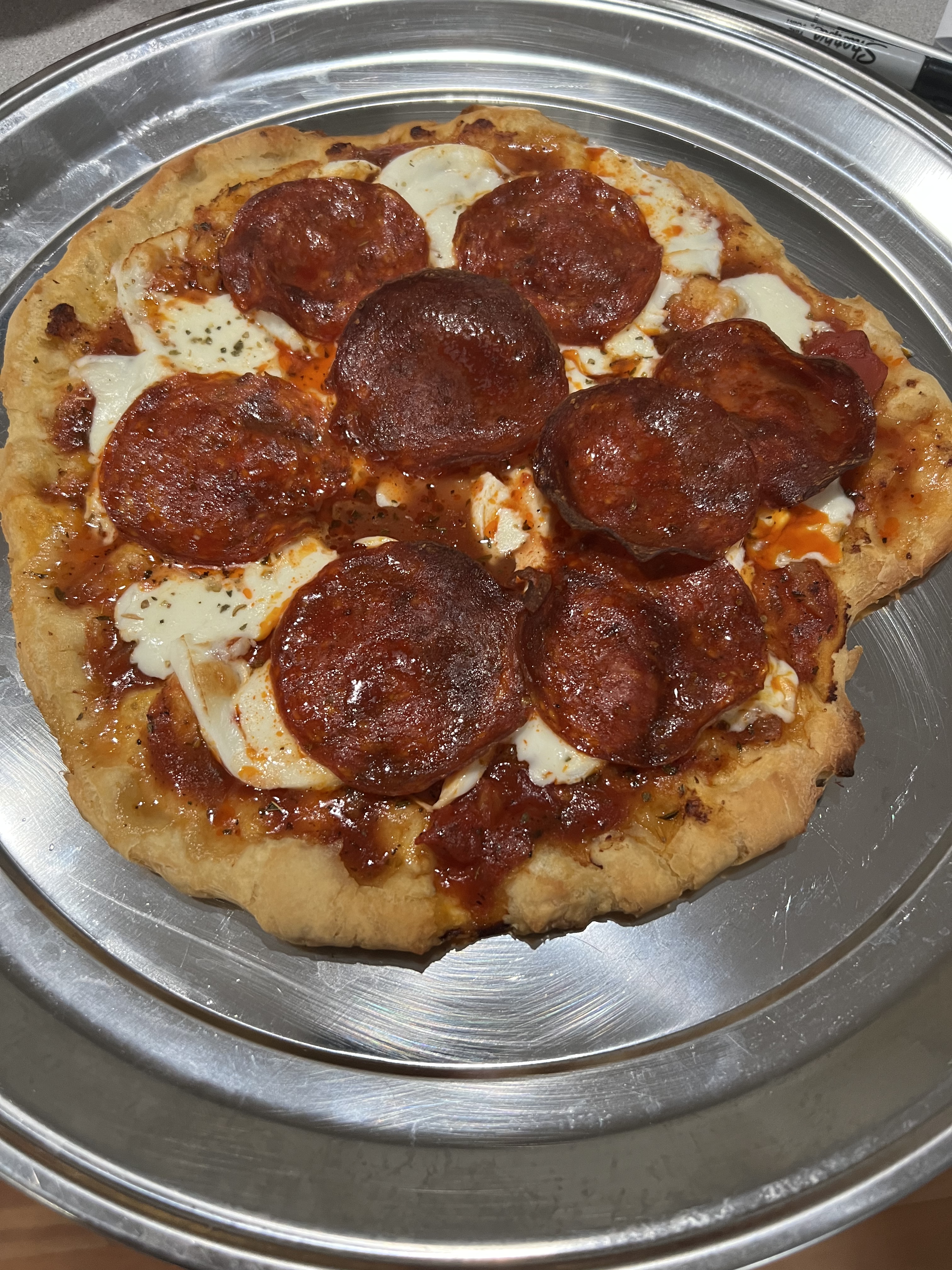
A homemade Pizza Montanara, with buffalo mozzarella and pepperoni.


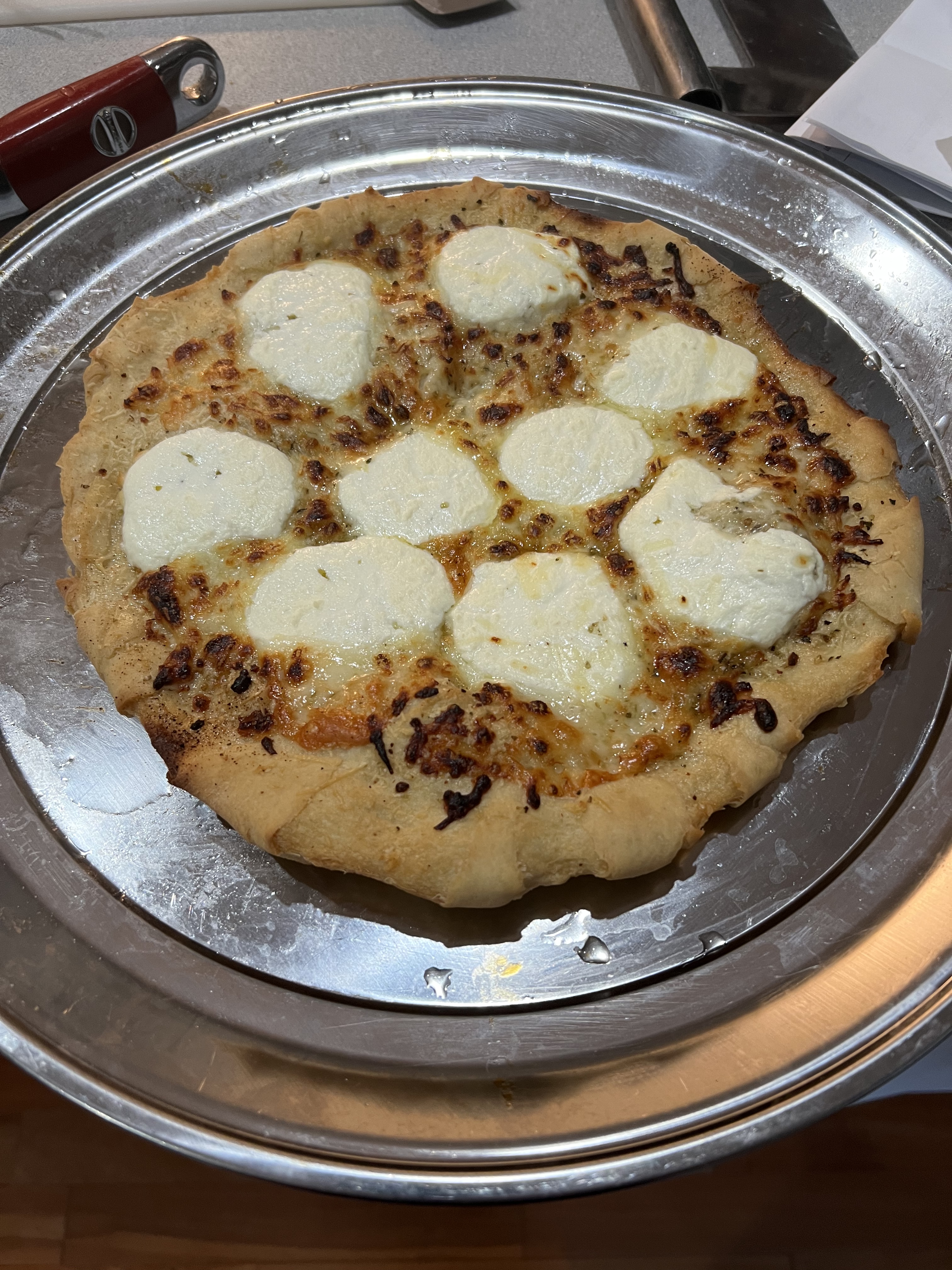
A four-cheese Montanara, with mozzarella, sharp Provolone, Parmiggiano Reggiano, and ricotta…and lots of garlic!


Every time I post a photo of Pizza Montanara on Facebook or Instagram, my friends don’t believe that this could possibly be a life-changing pizza experience. It is. After a trip to Manhattan, we’ll devour 3 pizzas on the ride home. Nothing makes New York traffic easier to bear than a Pizza Montanara in the seat next to you!

Pizza Arte also makes one helluva gluten-free pizza.