Posts Tagged ‘pizza’

CHIVE TALKIN’

Posted: May 26, 2015 in Food, garden, pizza, Uncategorized
Tags: , , , , ,

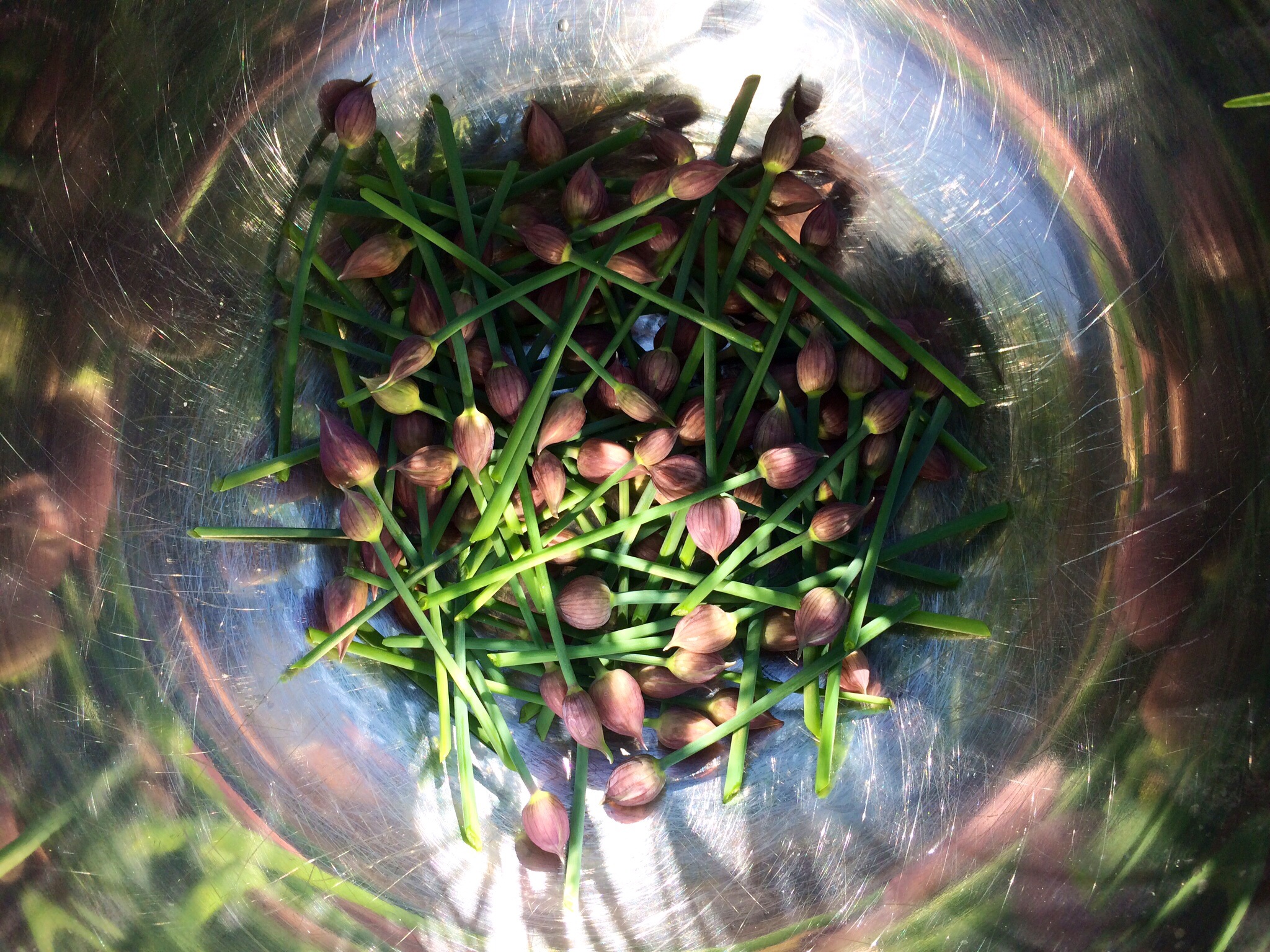
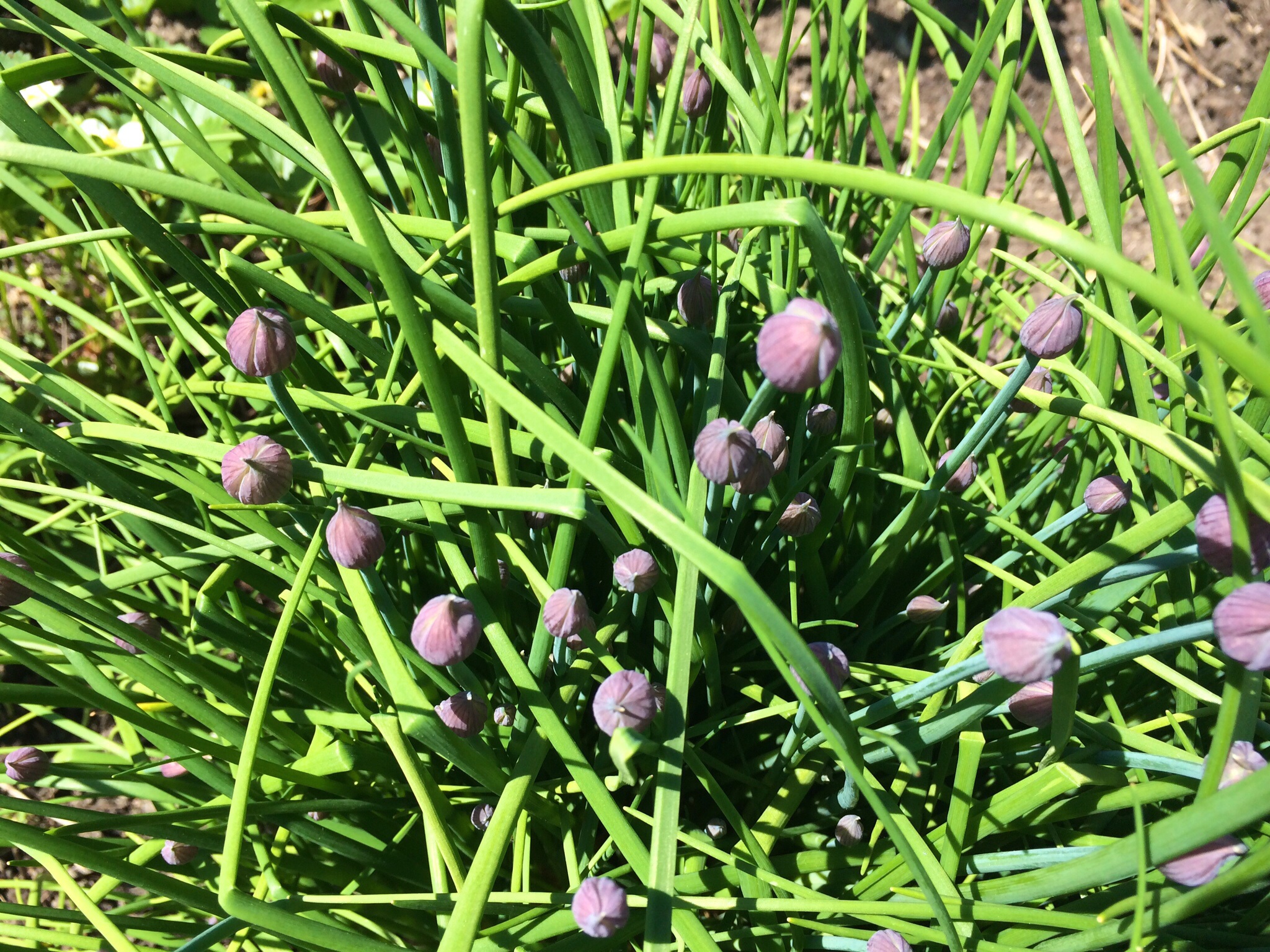
This is the time of year when the chives in my herb garden are busting out with blossoms. Before they pop, I head out every few days and snip the larger ones off the chive plants, wrap them in freezer bags and freeze them.

image

I use those blossoms over the course of the year on my signature marinated beef and chive blossom pizza. I just take a packet of chive blossoms out of the freezer, and sauté them in olive oil and salt and pepper, then sprinkle them on the pizza before baking.

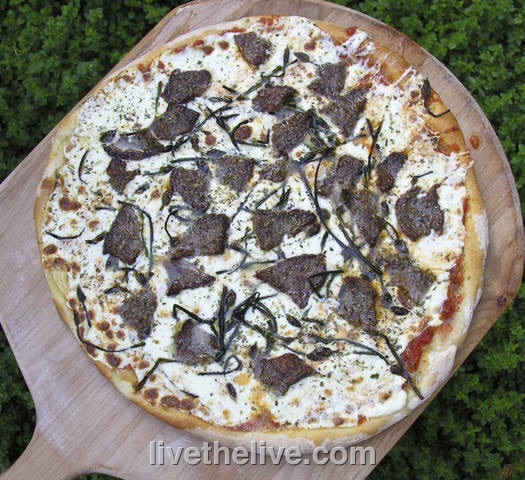
My signature marinated beef tenderloin and chive blossom pizza.

My signature marinated beef tenderloin and chive blossom pizza.

Pick 'em and freeze 'em in May!

Pick ’em and freeze ’em in May!

Chive blossoms not only add great flavor, but they look cool on the plate, too.  I’ll add them as a side to almost any meat dish, or chop them after sauteing and sprinkle them in rice or quinoa.


There are few foods that people take as personally as pizza. Tell someone that your pizza place is better than their pizza place, and chances are you’ll start a fight. Well, my pizza place is better than your pizza place, because I make it at home. Besides, I can run faster than you.

I’m not going to say that much of the pizza that I’ve tried here in Rhode Island is mediocre, but I was born in Brooklyn and grew up working in many New York pizza places in my youth. So I do have a very strong opinion on what I think makes a good or bad pizza.

My homemade pizza is all about the basics. The better quality my original ingredients are, the better my pizza will be:


The dough…

The key ingredient is 00 flour, and it can be found in specialty stores,  or online. My favorite new source is Central Milling in Logan, Utah. They make an organic 00 flour that makes for a great crust. Ratios for this recipe depend on the humidity in my kitchen on any given day, but my basic pizza dough recipe is as follows:

6 cups (16 oz.) 00 flour
1 1/3 cups tepid water
1 tablespoon salt
1 tablespoon yeast
a squirt of extra virgin olive oil

I mix all the dry ingredients in the bowl of a stand mixer or food processor with a dough blade, then slowly add the water as it mixes. After the ingredients are well mixed, and the dough pulls from the side of the bowl, I remove it to a floured board, where I knead the dough by hand for another 5 minutes, until it is smooth and elastic, shaping it into a ball. I rub a little olive oil over the ball of dough, place it in a bowl covered with plastic wrap, and let it rise for at least 2 hours, punching it down after that, and letting it rise at least another 2 hours again.

The sauce…

I’ve written before about real and fake cans of San Marzano tomatoes. I feel that San Marzanos make the best sauce, but not all cans of San Marzanos are created equal. The only way you can be guaranteed you have a real can of these beauties, grown in volcanic Italian soil in the shadow of Mt. Vesuvius, is by the D.O.P. designation on the can. (D.O.P. stands for “Denominazione d’Origine Protetta,” and signifies that it’s the real deal.) Anything else that says San Marzano may not be.

San Marzanos are so amazing, that all I do is puree them in a food processor, pour the sauce into a pan, and let it reduce until it has thickened. No spices or additions of any kind.

The cheese…

I don’t need to go super-fancy with mozzarella di bufala (cheese made from the milk of the water buffalo) …but I don’t use the mass-produced supermarket stuff, either. A nice hunk of your favorite fresh mozarella is all you need.

The toppings…

A matter of choice. I wrote a while ago about how I make my own guanciale, a cured meat that comes from pork cheeks. Chopped and fried, that is one of my daughter’s favorite pizza toppings.

But my signature pizza that wows my dinner guests is my marinated beef tenderloin and fried chive blossom pizza. I marinate and grill a piece of beef tenderloin, slicing it thin. And in the springtime, when my chive plants are budding like crazy, I snip the blossoms before they open and place them in freezer bags to use all year long. When it’s time, I grab a handful of the blossoms and fry them in a little olive oil, salt and pepper, and sprinkle them over the top of the beef tenderloin pizza. A touch of Fleur de Sel on top seals the deal.

My signature marinated beef tenderloin and chive blossom pizza.

The oven…

Many professional pizza ovens reach a temperature of 1000 degrees. My home oven only reaches 500, but it does the trick. I do use a pizza stone, and place it on the center rack of the oven, and let it heat up thoroughly for about 45 minutes before sliding a pizza onto it for cooking.

Recently, I’ve also started cooking pizzas on my barbecue grill (using a special stone for the grill) to add a smoky component. The grill gets hotter than my home oven, which is great, but it’s obviously a more work to set-up and clean.


My favorite pizza?

There are only a few pizzerias that I know of—all in NYC–that make pizza montanara, and for my money, it’s the best I’ve ever had. It’s a small, rustic pizza margherita using mozzarella di bufala and simple tomato sauce, garnished with a basil leaf. What makes it magical is the fact that after they stretch the dough–but before they put the toppings on it–they fry the dough in deep fryer with olive oil for just a minute. It puffs up like a pillow. Then they put the toppings on and quickly bake it in a very hot oven. The end result is a non-greasy, absolutely heavenly pizza cloud…the most delicious I’ve ever had.

I’ve had some great success recreating this pizza at home, frying the dough in a very large skillet of olive oil. The challenge is removing the dough out of the skillet and into a pizza pan without dripping olive oil all over my stove and setting my house on fire! So far, so good!
Despite the large Italian community we have here in southern New England, there’s no exceptional pizza to speak of. I suppose you could say “them’s fightin’ words!” but if it’s here, I haven’t found it yet. (Fellini Pizza is about the best in Providence…and New Bedford’s Brick makes a good pie.)


So where is the excellent pizza? New York City, of course. OK…maybe I’m prejudiced because I’m a Brooklyn boy, and worked in a variety of pizzerias in my younger days, but there’s no doubt in my mind that if you want the best pizza–or bagel, for that matter–you’ve got to go to the Big Apple. (Even “Frank Pepe’s” in New Haven, CT is a mere stop on the way to the real deal.)


Pizza in NYC can be confusing as there are many different varieties to choose from. Brick oven pizzas abound, but there are pizza lovers who won’t settle for anything less than a pizza baked in a coal-fired oven. The extremely high heat of a coal-fired oven cooks the pizza in just a minute, and imparts a crusty, charred flavor you can’t get any other way. There are only about a dozen coal-fired pizzerias in New York City, and many of them have been around for 100 years or more, so it’s definitely a matter of making a special trip to enjoy this style of pizza.


Plenty of good, basic pizza, too: the traditional thin, round Neopolitan pie, and the thicker, square Sicilian pie, baked in that Blodgett pizza oven we all knew in our early pizza-making days.


So several years ago, when I heard through the pizza lovers’ grapevine that a “new” pizza was out there, one that was gaining a cult following, I needed to know about it. And more importantly, I needed to taste it!


It’s called Pizza Montanara, and there’s only a few pizzerias in New York City that serve it. The one I go to without fail is PizzArte, on West 55th, and I have to say it’s the ultimate pizza.


What makes Pizza Montanara so spectacular, quite simply, is that the dough is fried in oil before they put the sauce and cheese on it, and then they cook it in a wood burning oven. It is not greasy. The frying process, which lasts only a minute, puffs the dough up and creates a beautiful pillow-like softness that I’ve never experienced in a pizza before. Imagine a pizza cloud and you’ve got Pizza Montanara.

My signature pizza: marinated beef tenderloin with chive blossoms. Not Pizza Montanara, but not bad!

My signature pizza: marinated beef tenderloin with chive blossoms. Not Pizza Montanara, but not bad!


I’ve made Pizza Montanara at home, with some success. I poured a few inches of olive oil in a large skillet, stretched my dough into a small pie, and gently floated it into the pan. Using a spatula and tongs, I was able to flip the fried dough over after about 30 seconds, then removed it from the pan after another 30 seconds. It was golden and puffy. I quickly sauced and cheesed it and in the oven it went. But it’s a messy process I’d rather leave to the pros.


I’ll be “living the live” in New York City this weekend. PizzArte already on the list for Friday night. Looks for the photos. I can’t think of anything better than an amazing Pizza Montanara before I go on my no-carb diet next week!

Many people are choosing a gluten-free diet even though they don’t suffer from Celiac disease. Though many people stay undiagnosed, gluten sensitivity is pretty common. And even if you’re not sensitive to gluten, it can cause bloating, pain and fatigue. Many doctors are advising people to remove all or most of the gluten in their diets to see if they feel better as a result.

Gluten is a protein found in wheat and wheat products. So that means no bread, pasta, pizza, even soy sauce. Gluten is a hidden ingredient in many food products, so you need to do some research to figure out what alternatives are available. We’re pretty lucky…there are now entire sections of everyday food stores that carry gluten-free products.

I don’t have any sensitivity to gluten, and quite frankly, I find it hard to live without pizza or a nice slab of freshly baked bread now and then. And all the subsititute flours: rice, corn, quinoa, chickpea, or any combination of them–they all taste bad to me. But…I have a wife that has chosen a gluten-free diet. And since I’m the one that cooks all the meals at home, I’m making a valiant effort to find tasty alternatives.

I don’t spend my time baking gluten-free bread, cookies, cakes or other desserts. We have a great bakery nearby (www.evaruths.com) that does all that. Instead, I focus on the meals I’ve always made in the past and try to “de-glutenize” them.

Two of our favorite meals are chicken parmigiana and pizza.

The chicken parmigiana was relatively easy. The only gluten in my original recipe (http://wp.me/p1c1Nl-jq) was found in the breadcrumbs that I topped the chicken pieces with. I bought a package of Glutino gluten-free bread crumbs (made from corn) and the chicken came out pretty good. I still made a regular batch for myself…but my wife gave it a thumbs up.

Gluten-free chicken before I added sauce and cheese.

Gluten-free chicken before I added sauce and cheese.

The tougher challenge was pizza. With dozens of flours to choose from, I wasn’t sure where to start. But I’m a fan of Bob’s Red Mill. I’ve been using their products for years. So when I saw they offered a Bob’s Red Mill All-Purpose gluten-free baking flour (a combination of garbanzo bean flour, potato starch, whole grain white and sorghum flour, tapioca flour and fava bean flour), I figured I’d make my first gluten-free pizza dough with that. I also learned that I had to buy some Xanthan Gum, a plant-based product that adds the elasticity that gluten usually provides.

gluten pizza1


The recipe:

1 cup gluten-free all-purpose flour

1 teaspoon xanthan gum

1 teaspoon salt

1 teaspoon sugar

1 1/4 teaspoons yeast

1 cup very warm (130 degree) water

1egg

olive oil


Use two bowls: one for the dry ingredients, one for the wet.

In the first bowl, mix flour, xanthan gum, salt, sugar and yeast with a whisk to combine.

In the second bowl, whisk egg with warm water.

Pour the wet ingredients into the dry, and using a wooden spoon, combine to form a dough. It will be somewhat dry. If it’s very dry, add a small amount of water at a time until the dough holds together.

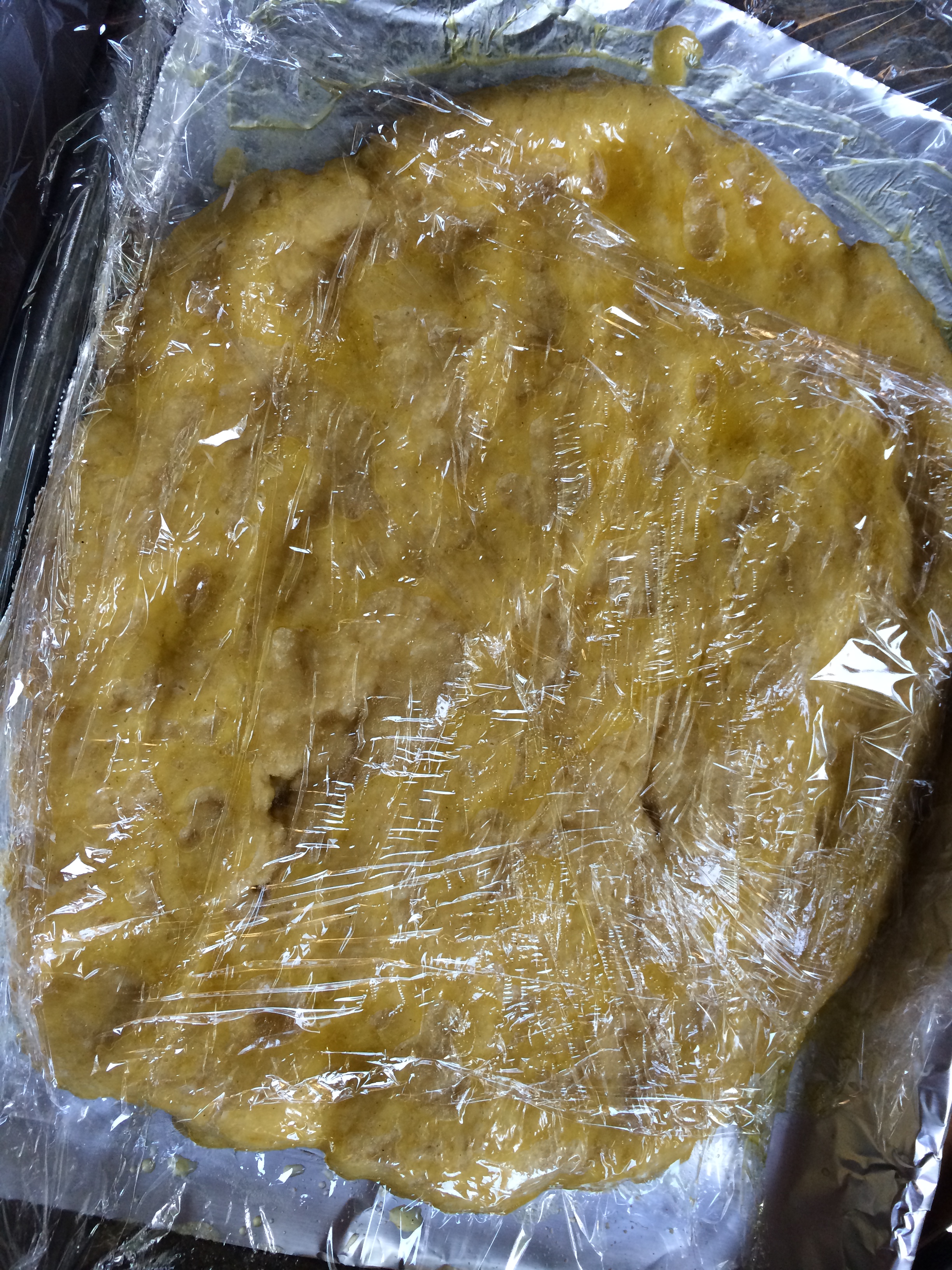
Line a small sheet pan with Reynolds non-stick aluminum foil. Spread the dough out to the desired thickness, and then brush lightly with olive oil. Cover with plastic wrap and let it rise for about 45 minutes.

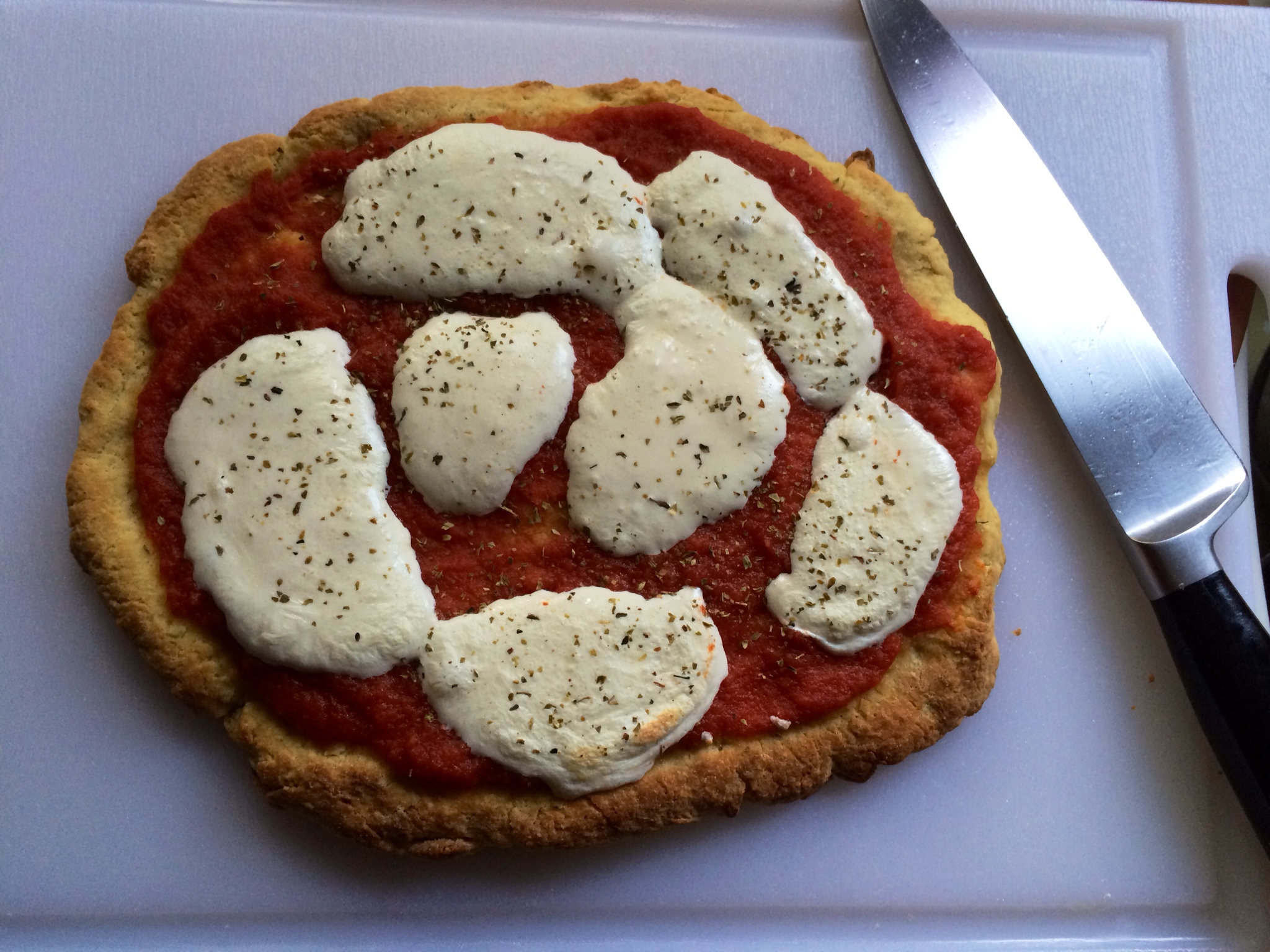
Bake the dough in a pre-heated 450-degree oven for about 5 minutes. Remove and add tomato sauce and cheese and other toppings, then place back in the oven and cook another 5 minutes, until golden.

gluten pizza2


My wife liked the pizza. I could definitely pass on it. But I will keep tweaking recipes. I’ve heard that Bob’s Red Mill now has a brand new all-purpose baking flour, Bob’s Red Mill Gluten Free 1-to-1 Baking Flour, where they’ve removed the bean flours and added xantham gum to the mix. They also have a special Pizza Crust Mix.

CHIVE TALKIN’

Posted: May 20, 2014 in Food, garden, pizza, Uncategorized
Tags: , , , , ,

This is the time of year when the chives in my herb garden are busting out with blossoms. Before they pop, I head out every few days and snip the larger blossoms off the chive plants and wrap bunches of them in Ziploc bags and freeze them.

image

I use those blossoms over the course of the next year on my signature marinated beef and chive blossom pizza. I just take a packet of chive blossoms out of the freezer, and sauté them for just a bit in olive oil and salt and pepper, then place them on the pizza before baking.

image

The chive blossoms not only add great flavor, but they look cool on the plate, too. Great as a side for almost any meat dish.


Sad to say, but despite the large Italian community we have here in Rhode Island, there is no truly excellent pizza to speak of. I suppose you could say “them’s fightin’ words!” but if it’s here, I haven’t found it yet.
So where is the excellent pizza? New York City, of course. OK…maybe I’m a bit prejudiced because I grew up there and worked in a variety of pizzerias in my younger days, but there is no doubt in my mind that if you want the best pizza (or bagel, for that matter), you have got to go to the Big Apple. Everything else is simply a bad copy.
It can be confusing in New York City as there are many different varieties of pizza to choose from, some much better than others. Brick oven pizzas abound, but there are pizza lovers who won’t settle for anything less than a pizza baked in a coal-fired oven. The extremely high heat of a coal-fired oven cooks the pizza in just a minute, and imparts a crusty, charred flavor you can’t get any other way. There are only about a dozen coal-fired pizzerias in Manhattan, and many of them have been around for over 100 years, so it’s definitely a matter of making a special trip to enjoy this style of pizza. (No new coal-fired pizzerias can be built in the city, due to more recent strict pollution control laws.)
There’s the traditional thin, round Neopolitan pie, and the thicker, square Sicilian pie. Regular mozzarella or mozzarella di bufala. Domestic or imported cheese?
Many choices, but always the same answer: it’s a matter of personal taste.
But when I heard through the pizza lovers’ grapevine that there was a “new” pizza out there, one that was gaining a cult following, I needed to know about it. And more importantly, I needed to taste it!
It’s called Pizza Montanara, and there are only a few pizzerias in New York City that serve it. The one I went to is called Pizzarte, on West 55th St, and I have to say that I have now discovered the ultimate pizza.
What makes Pizza Montanara so spectacular, quite simply, is that the dough is fried in oil before they put the sauce and cheese on it, and then it is baked in a wood burning oven. It is not greasy. In fact, the frying process, which lasts only a minute, puffs the dough up and creates a beautiful pillow-like softness that I have never experienced in a pizza before.
Pillowy goodness! Its rectangular shape is probably due to the fact that they fry it in a restaurant deep fryer.
The pizza was so good that once my wife and I ate the first pie, we ordered another. Then when it was time for us to drive home from New York, we stopped at Pizzarte and ordered two to go, which we devoured by the time we got to the Connecticut border!
The Montanara is a simple pizza margherita: dough, super-fresh tomato sauce, mozzarella di bufala, topped with a fresh basil leaf. But the frying process creates a magical treat that has got me drooling all over this blog as I write it.
It’s so good, that just a few days after returning from the city, I made my first attempt at creating a montanara pizza at home. My result: pretty successful! A little crunchier than Pizzarte’s montanara, but with a little tweaking, I may just get the hang of this thing!
A little rounder (I fried it in a pan) and I sprinkled oregano on top instead of the fresh basil leaf. But not a bad first attempt!
I’m going to back to Manhattan for Thanksgiving weekend, and pizza montanara is the first food on my list!

There are few foods that people take as personally as pizza. Tell someone that your pizza place is better than their pizza place, and chances are you’ll start a fight. Well, my pizza place is better than your pizza place, because I make it at home. Besides, I can run faster than you.

I’m not going to say that much of the pizza that I’ve tried here in Rhode Island is mediocre, but I will say that I was born in Brooklyn and grew up working in many New York pizza places in my youth. So yes, I do have a very strong opinion on what I think makes a good or bad pizza.

My homemade pizza is all about the basics. The better quality my original ingredients are, the better my pizza will be:


The dough…

The key ingredient is 00 flour, and it can be found in specialty stores,  or online. My favorite new source is Central Milling in Logan, Utah. They make a 00 flour that is top notch. I buy it through the Forno Bravo pizza oven website: http://www.fornobravo.com/store/Tipo-00-Pizza-Flour/ It makes a crustier and more flavorful dough. Ratios for this recipe depend on the humidity in my kitchen on any given day, but my basic pizza dough recipe is as follows:

4–5 cups 00 flour

1 cup tepid water

1 Tablespoon salt

1 packet Italian pizza yeast

a squirt of extra virgin olive oil

I mix all the dry ingredients in the bowl of a stand mixer, then slowly add the water as it mixes. After the ingredients are well mixed, and the dough pulls from the side of the bowl, I remove it to a floured board, where I knead the dough by hand for another 5 minutes, until it is smooth and elastic, shaping it into a ball. I rub a little olive oil over the ball of dough, place it in a bowl covered with plastic wrap, and let it rise for 2 hours, punching it down after that, and letting it rise another 2 hours again.

The sauce…

I’ve written a previous blog about real and fake cans of San Marzano tomatoes. I feel that San Marzanos make the best sauce, but not all cans of San Marzanos are created equal. The only way you can be guaranteed you have a real can of these beauties, grown in volcanic Italian soil in the shadow of Mt Vesuvius, is by the D.O.P. designation on the can. (D.O.P. stands for “Denominazione d’Origine Protetta,” and signifies that it’s the real deal.) Anything else that says San Marzano may not be.

San Marzanos are so amazing, that all I do is puree them in a food processor, pour the sauce into a pan, and let it reduce until it has thickened. No spices or additions of any kind.

The cheese…

I don’t need to go super-fancy with mozzarella di bufala (cheese made from the milk of the water buffalo) …but I don’t use the mass-produced supermarket stuff, either. Whole Foods has fresh mozarella from Maplebrook Farms in Vermont, and it is excellent.

The toppings…

A matter of choice. I wrote a while ago about how I make my own guanciale, a cured meat that comes from pork cheeks. Chopped and fried, that is one of my daughter’s favorite pizza toppings.

But my signature pizza that wows my dinner guests is my marinated beef tenderloin and fried chive blossom pizza. I marinate and grill a piece of beef tenderloin, slicing it thin. And in the springtime, when my chive plants are budding like crazy, I snip the blossoms before they open and place them in Ziploc freezer bags to use all year long. When it’s time, I grab a handful of the blossoms and fry them in a little olive oil, salt and pepper, and sprinkle them over the top of the beef tenderloin pizza. A touch of Fleur de Sel on top seals the deal.

My signature marinated beef tenderloin and chive blossom pizza.

The oven…

Many professional pizza ovens reach a temperature of 1000 degrees. My home oven only reaches 500, but it does the trick. I do use a pizza stone, and place it on the center rack of the oven, and let it heat up thoroughly before sliding a pizza onto it for cooking.

Recently, I’ve also started cooking pizzas on my barbecue grill (using a special stone for the grill) to add a smoky component. The grill gets hotter than my home oven, which is great, but it’s obviously a more work to set-up and clean.


My favorite pizza?

There are only a few pizzerias that I know of—all in NYC–that make pizza montanara, and for my money, it’s the best I’ve ever had. It’s a small, rustic pizza margherita using mozzarella di bufala and simple tomato sauce, garnished with a basil leaf. What makes it magical is the fact that after they stretch the dough–but before they put the toppings on it–they fry the dough in deep fryer with olive oil for just a minute. It puffs up like a pillow. Then they put the toppings on and quickly bake it in a very hot oven. The end result is a non-greasy, absolutely heavenly pizza cloud…the most delicious I’ve ever had.

I’ve actually had some great success recreating this pizza at home, frying the dough in a very large skillet of olive oil. The challenge is removing this giant piece of dough out of the skillet and into a pizza pan without dripping olive oil all over my stove and setting my house on fire! So far, so good!