Archive for the ‘guanciale’ Category

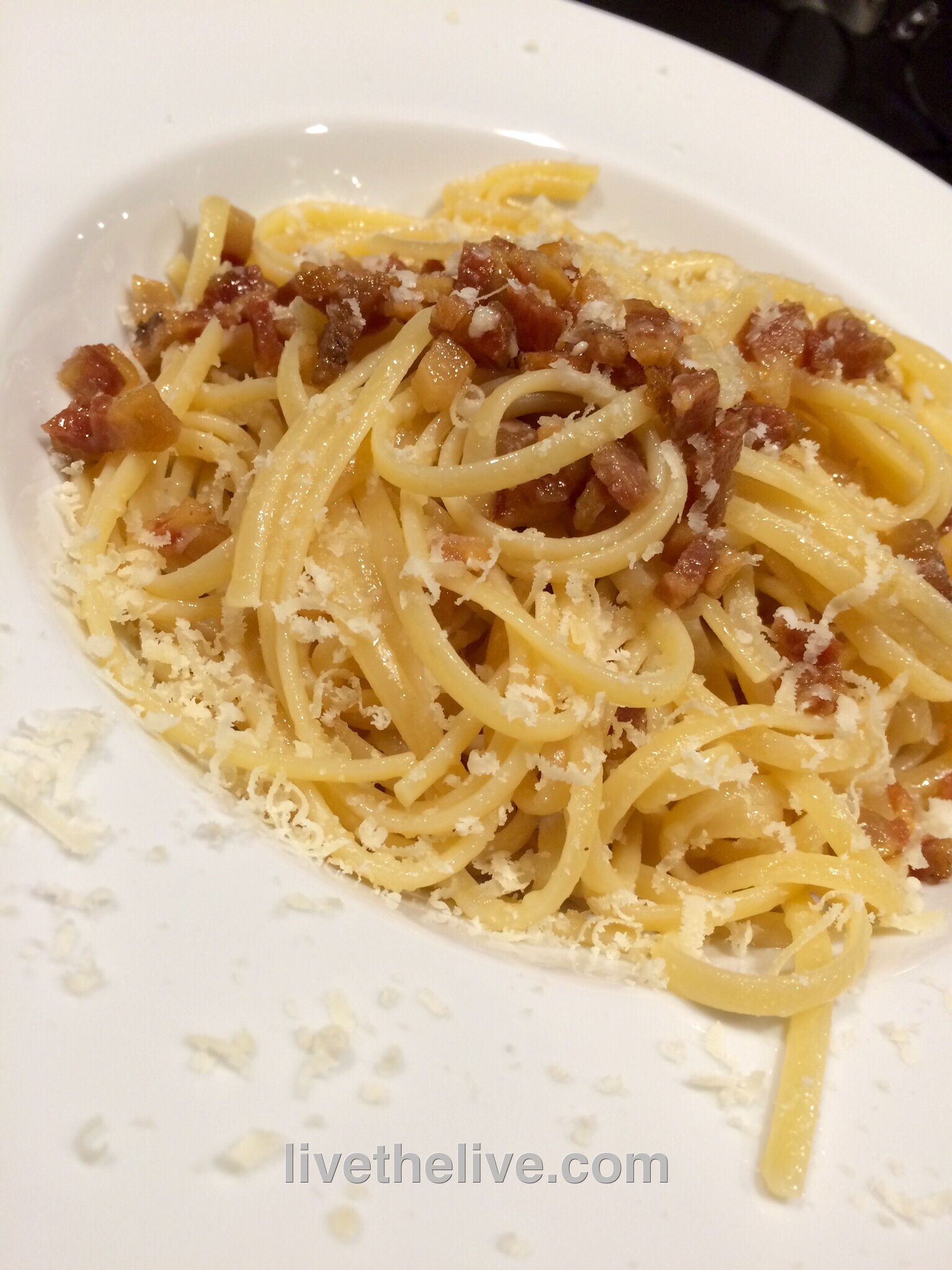
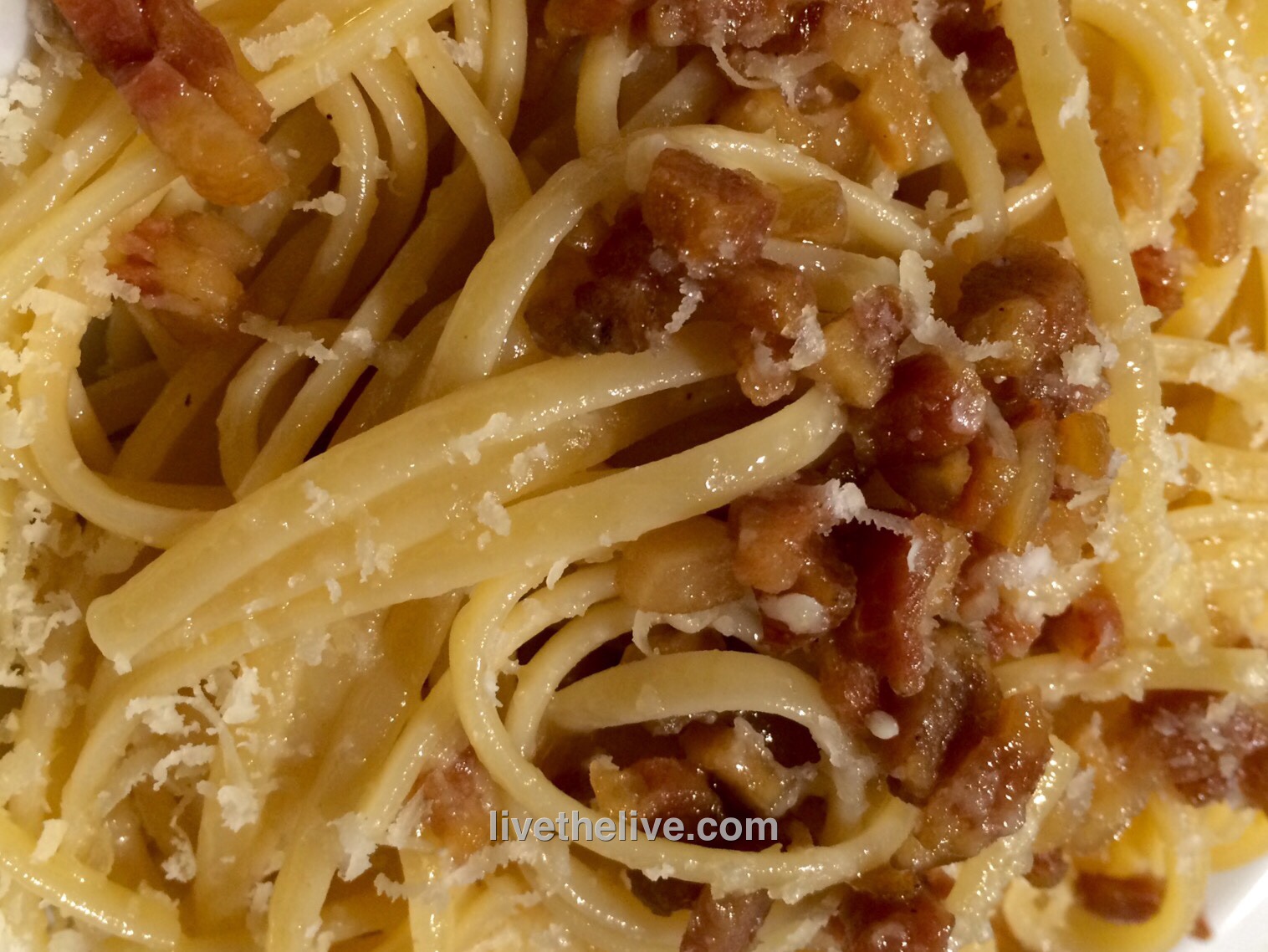
Spaghetti alla Carbonara and Fettuccine Alfredo are my two favorite pasta dishes. Little did I realize that if I took the best of each one, I’d have something that would just blow me (and my family) away. The addition of chicken and peas made for a more balanced plate. This will now be my go-to dish when guests arrive, since many parts can be prepared ahead of time. And you’d never know that this dish is completely gluten-free!
fullsizerender-4

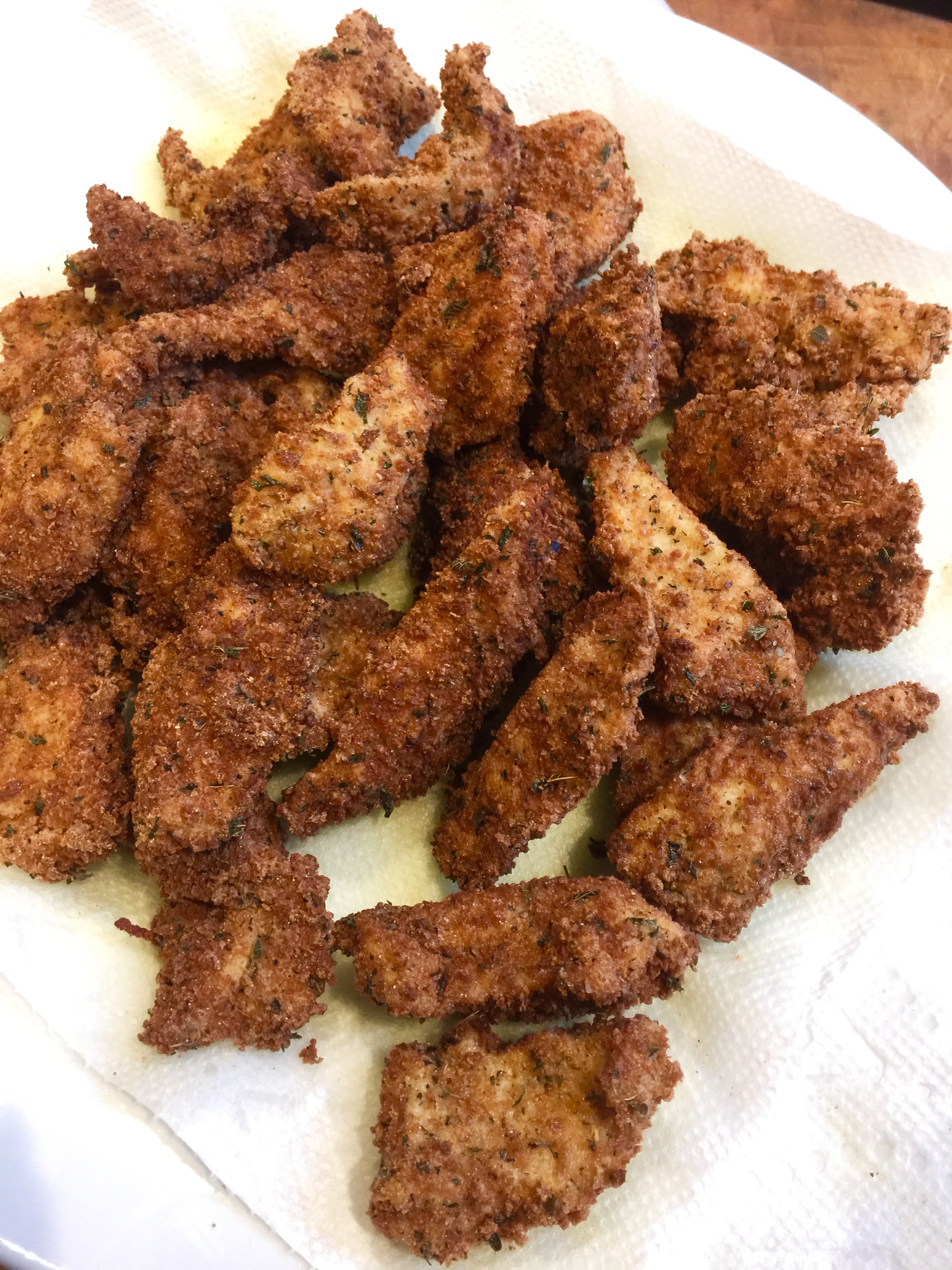
Start with the chicken…

The breading for the chicken uses gluten-free bread that I’ve toasted, crumbled and put into a food processor to make breadcrumbs. You get a lot more flavor this way than using store-bought GF breadcrumbs from a can. I add gluten-free flour to it to lighten it up. Cup4Cup is by far the best GF flour I’ve tried.

1/2 lb. chicken breasts, cut into 1″ pieces
1 egg, scrambled
4 oz. sliced gluten-free bread, toasted (I use Udi’s frozen bread)
1/2 cup gluten-free flour (I use Cup4Cup)
3 teaspoons dried parsley
2 teaspoons dried oregano
1 teaspoon dried basil
1/2 teaspoon granulated garlic
1/2 teaspoon granulated onion
1 1/2 teaspoons salt
1/4 teaspoon pepper
olive oil, for frying

Scramble the egg in a bowl. Cut the chicken into pieces, and add them to the egg, making sure they get evenly coated. Set aside.

In another bowl, combine the bread crumbs, flour, parsley, oregano, basil, garlic, onion, salt and pepper. Set aside.

Fill a pan with about an inch of olive oil. Heat to medium-high, for frying.

In batches not to overcrowd the pan, take the chicken pieces out of the egg and toss them in the bread crumb mixture, shaking off the excess. Place them carefully in the hot oil and fry on both sides until golden. Since they’re small pieces, they should cook all the way through easily. Drain on a plate covered with paper towels. Do this with all the chicken and set aside. Try not to eat it all before you make the rest of the dish! (This chicken can also be eaten as is–these are my daughter’s favorite nuggets–or used with tomato sauce and cheese to make a delicious chicken parmigiana.)

fullsizerender-6

The carbonara factor…

Many recipes for Spaghetti alla Carbonara use pancetta or bacon. But the original recipe calls for guanciale: cured (but not smoked) pig jowls, or cheeks. It’s easy enough to find in a good Italian food store, but I cure my own. I buy raw heritage Berkshire pork jowls from a farm that raises the pigs humanely, and cure the jowls for about 3 weeks in a combination of salt, pepper and fresh thyme leaves. Then I rinse them, pat them dry, and cut them into portion-sized pieces, which I wrap individually and freeze until I need them. It’s a lot of work, but to me, totally worth it.

3 oz. guanciale

If the guanciale is frozen, let it thaw just a little, then cut it into the smallest cubes you can manage. Place it in a pan and cook them until they’ve browned and crisped beautifully. Keep an eye on the pan, as guanciale can burn easily. Use the fried meat bits for this recipe and save the fat for flavoring a future dish! Set aside.

The Alfredo sauce…

Despite what you get in crappy restaurants like Olive Garden, Alfredo sauce should not be runny or soupy. It should cling to the pasta and be rich in flavor. I use Garofalo gluten-free pasta exclusively, because it tastes just like real pasta. Believe me, I’ve tried every GF pasta out there. I buy mass quantities at Amazon.

1 cup heavy cream
3 tablespoons butter
Fleur de Sel or sea salt
1 lb. pasta, fresh or dried (I used linguine this time because that’s what I had in my pantry)
2/3 cup freshly grated Parmigiano Reggiano cheese
freshly ground black pepper
a very tiny grating of fresh nutmeg (optional for this dish–I leave it out–but used when I make Alfredo)


Put 2/3 of the cream and all the butter in a large saucepan that will later accommodate all the pasta. Simmer over medium heat for less than a minute, until the butter and cream have thickened a bit. Turn off the heat.

Drop the pasta in a bowl of boiling salted water. If the pasta is fresh, it will take just seconds. If it’s dry, it will take a few minutes. Gluten-free pasta, which is what I use, takes a little longer. Either way, you want to cook the pasta even firmer than al dente, because it will finish cooking in the pan with the butter and cream. Drain the pasta immediately when it reaches that firm stage, and transfer it to the pan with the butter and cream, tossing the pasta gently for a few seconds to coat.

Turn the heat under the saucepan on low, tossing the pasta, coating it with the sauce. Add the rest of the cream, all the Parmigiano Reggiano, a bit of pepper (no salt because the guanciale will add more saltiness later), and the nutmeg (if you’re using it.) Toss briefly until the sauce has thickened and the pasta is well-coated.


At this point, you don’t want the pasta to get to dry, so you add…

1 cup of frozen peas

…tossing gently to warm them through. Also add the cooked guanciale at this time.

fullsizerender-5


Plate the pasta in a bowl or dish and serve the chicken alongside.


Pork is magical. And though I’ve loved bacon and pork chops all my life, it’s only recently that I’ve started to appreciate other cuts of pork and how to prepare them. That includes guanciale (pronounced gwan-chee-ah-lay), meat that comes from the cheek (or jowls) of the pig and is cured but not smoked. The process is similar to making pancetta, only pancetta comes from the belly of the beast.
It all started when I wanted to make an authentic spaghetti carbonara, which uses guanciale, not bacon or pancetta as many recipes state. But finding raw pork jowls wasn’t easy at first. Many websites offered smoked jowls. But raw jowls were almost impossible to find, and I just about gave up until I visited my friends Sal and chef Aaron at the Back Eddy restaurant in Westport, Massachusetts. I told them of my dilemma and they said: “Pork jowls? Oh, we can order them for you!” I was psyched!
About a week later, I picked up my jowls, individually wrapped in hermetically sealed ¼ pound packages, and my curing began. The process is simple: salt, pepper, some fresh thyme. Rub it all over the meat, wrap it tightly, and place it in the fridge to cure for a week or two.
4445B294-694F-4519-AB71-778490B12592
Finding room in my spare fridge to cure the meat was easy…everything fit snugly in a Ziploc bag. But after curing, and once I rinsed the excess salt off the jowl pieces, I had to dry them (all 24 of them since I bought 6 pounds.) So I rigged up a special hanging system that used bungy cords and vinyl cable ties. And three weeks later, I was frying up my guanciale in a saute pan and adding it to vegetables, potatoes, and pizza. I even gave guanciale gifts to my foodie friends.
FullSizeRender (2)
Since that first curing effort, many things had changed. I have several excellent sources for pork jowls, and I buy large 3-pound jowls (big pig!) at one time. And I’ve found 1001 uses for guanciale: pizza, ragu Bolognese, adding flavor to broccoli or brussels sprouts, and more. And, oh yes…I finally made the carbonara recipe with it as well. Here’s my recipe for ragu Bolognese using guanciale: http://wp.me/p1c1Nl-Pc
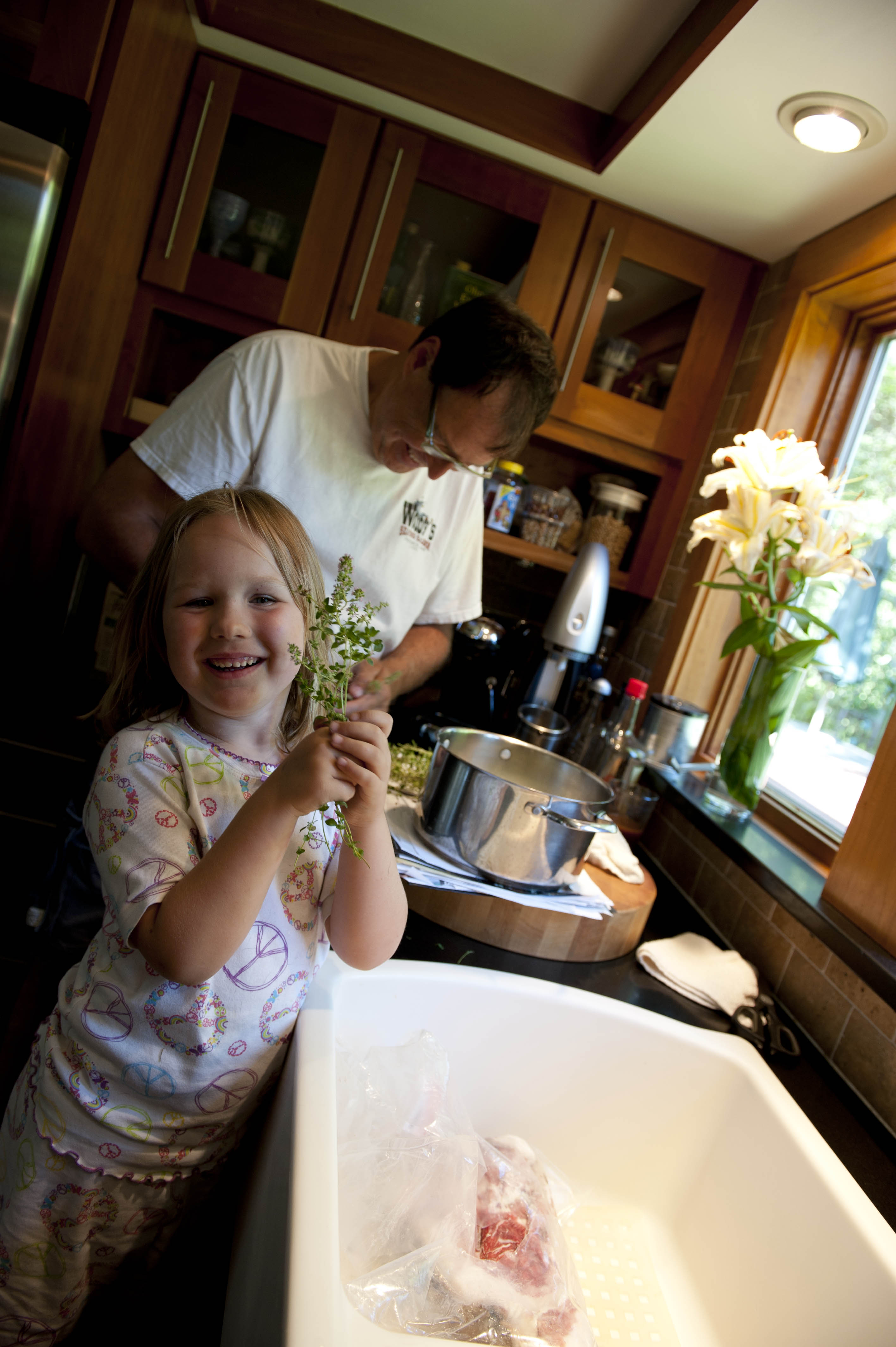
Always good to have a helper.

Always good to have a helper.

Pasta is not something I’m currently eating on my low-carb diet. But it’s a great recipe I wanted to pass on to others.

Sometimes the simplest dishes are the toughest to execute well. Spaghetti alla Carbonara is one of those dishes. All you need is pasta, olive oil, raw eggs (separated), guanciale, grated Parmigiano-Reggiano and pepper. (Real carbonara doesn’t use cream.)

You boil the pasta. Chop the guanciale (cured pork cheeks or jowls) and saute in a pan with the olive oil. Do not drain the fat. Drain the pasta and drop it into the pan with the guanciale, adding about 1/4 cup of the pasta water. Shake it around for a minute and remove from the heat. Add some of the cheese and the egg whites, season with pepper, and mix the pasta well. Separate into bowls, making a nest with the pasta. Add an egg yolk to each, sprinkling more cheese on top. What could go wrong, right?

There’s a lot to be said for finesse!

I make my own guanciale. I buy Berkshire pork jowls and cure them. Then they go through a drying phase for a few weeks before I wrap and freeze them in chunks. Whenever a dish calls for guanciale (my daughter loves it on pizza), I simply unwrap some, let it thaw, then chop it up and saute it. The fat in the pork jowls is very different from other parts of the pig, and there’s no replacing that flavor. When making Spaghetti all Carbonara, some cooks replace the guanciale with pancetta or bacon, but that’s not for me.

It’s also important to note that this dish relies a lot on fat, so good fat is really important. Berkshire pork fat has good fat. Organic butter has good fat. And the cheese? Parmigiano-Reggiano isn’t called “The King of Cheeses” for no reason!

I decided to make a Not-Quite-Carbonara dish. I say “not quite” because I left out the eggs, which my daughter doesn’t like. It still came out pretty damn good…

image


1 lb. pasta (we like bucatini over spaghetti)

1 lb. Berkshire pork guanciale, chopped into small (1/4″) cubes

olive oil

2 tablespoons unsalted organic butter

1/2 cup freshly grated Parmigiano-Reggiano

black pepper


Boil the pasta to the just-before-al dente stage.

In a large saucepan, heat the guanciale and olive oil until the fat has rendered. Do not drain the fat. Turn the heat off, add the butter and let it melt.

Drain the pasta and drop it into the pan with the guanciale, stirring the pasta around to coat with the ingredients. Sprinkle in 1/4 cup of the Parmigiano-Reggiano and season with pepper, still mixing.

Distribute the pasta into individual bowls, making sure everyone gets the tasty bits of guanciale. Sprinkle some more of the Parmigiano-Reggiano on top. Serve immediately.

image


Pork is magical. And though I’ve loved bacon and pork chops all my life, it’s only recently that I’ve started to appreciate other cuts of pork and how they’ve been prepared.
No store-bought bacon for me. I have a favorite website where I’ve bought the best quality bacon on line from Missouri for years: http://www.smokehouse.com/.
My Italian pork sausages and larger cuts of pork (like shoulders, bellies, and big fat pork chops) come from Caw Caw Creek, the only certified humane heritage breed pork farm in North Carolina. http://www.cawcawcreek.com/.
My pork ribs and liverwurst come from my friends at Simmons Farm in Middletown, RI, a certified organic farm. http://www.simmonsorganicfarmri.com/
And sometimes, my pork can come from surprising places, like my rafting guide friend Rob, whose family runs Crabapple Whitewater in the Forks, Maine, where I raft on the kennebec and Dead Rivers every year. Rob decided to raise two pigs this past year, and he’s willing to trade pork jowls for a few bottles of my homemade Lithuanian honey liqueur called Krupnikas.
Pork jowls?
Weighing the jowl pieces
It all started when I wanted to make an authentic spaghetti carbonara. Since I worship at the Italian food altar of chef Mario Batali, I went to his website to look up his recipe. It said that although many people use bacon or pancetta (both from the belly of the pig—the bacon is smoked, pancetta is not)…authentic carbonara is made with guanciale (pronounced gwan-chee-ah-lay).
Guanciale is cured (but not smoked) and made from pork jowls…that would be the cheeks of the pig. According to Batali, you take raw jowls, cure them for about a week in sugar, salt, peppercorns and fresh thyme, then hang the meat to dry. The result is a delicious pork product that you slice and fry and use in carbonara or any other recipe that calls for a tasty addition of porky goodness.
The flavor of pork jowls is subtly different than that of pancetta. There is a very special mouth-feel to the fat that makes guanciale so good. And once I made my first batch, there was no turning back!
But finding raw pork jowls was not easy. Many websites offered smoked jowls. But raw jowls were almost impossible to find, and I just about gave up until I visited my friends Sal and chef Aaron at the Back Eddy in Westport, Massachusetts. I told them of my dilemma and they said: “Pork jowls? Oh, we can order them for you!” I was psyched!
About a week later, I picked up my jowls, individually wrapped in hermetically sealed ¼ pound packages, and my curing began, following Batali’s recipe.
Getting the curing ingredients together: picking thyme leaves.
Finding room in my spare fridge to cure the meat was easy…everything fit snugly in a Ziploc bag. But once it was time to dry the jowls (all 24 of them since I bought 6 pounds,) I had to rig up a special hanging system that used bungy cords, vinyl cable ties, and beer cans…don’t ask. But it worked! And three weeks later, I was frying up my guanciale in a sautee pan and adding it to vegetables, potatoes, and pizza. I even gave guanciale gifts to my foodie friends. And before long, it was time to make more.
Since that first curing effort, some things had changed. My source for heritage pork, Caw Caw Creek, now carried pork jowls, too. And I was able to buy a couple of 3-pound jowls at a time. They were big, thick, and what I originally envisioned when I dreamed of the jowl of a pig that weighed 300 pounds or more. I cut the two big jowls into 1/2–pound, 3-inch thick slabs, and cured them using the same recipe.
A big, beautiful jowl in its native habitat.
Jowls with curing spices.
All was fine until one time, I went away on vacation, and a hurricane hit our neighborhood, knocking the power out. Fortunately, my good neighbors came to my rescue and started up my generator, plugged in the fridge, and saved the guanciale! I was back in business.
Curing and hanging completed (I now used a far more sophisticated system of stereo wire instead of bungy cords and beer cans, as seen in the photo,) I’ve been sharing the goodness of this incredible and little-known pork product with anyone who would listen—and taste.
A year ago, I had never heard of guanciale. Now, I can’t imagine not having a slab at the ready in my fridge. I use it just about anywhere I would use bacon, short of a BLT.
And by the way…I’ve yet to make the spaghetti carbonara recipe!