Archive for the ‘Uncategorized’ Category

JUSTANOTHERRIB RECIPE

Posted: January 2, 2026 in Uncategorized
Tags: , , , ,

Yeah, it’s cold outside. But sometimes, only ribs will do.

The classic “Adams Ribs” episode of M*A*S*H is one of my favorites. Hawkeye’s speech about the city of Chicago said it all: “Chicago. Hog butcher for the world. Toolmaker. Stacker of wheat. Player with railroads and the nation’s freight handler. Stormy, husky, brawling, City of the Big Shoulders. Sandberg knew, Radar. Spareribber for the universe! Maker of meat on a bone! The home of the pigsicle! Give me your tired, your poor… your cole slaw.”

There’s a million ways to make great pork ribs….and only a few ways to really ruin them. So, yeah, here’s another rib recipe. But it’s good.

I like using Berkshire pork St. Louis style ribs. They’re fattier than beef ribs, so I don’t have to worry as much about them drying out. I always remove the skin on the back of the ribs before rubbing them down with my spice rub.


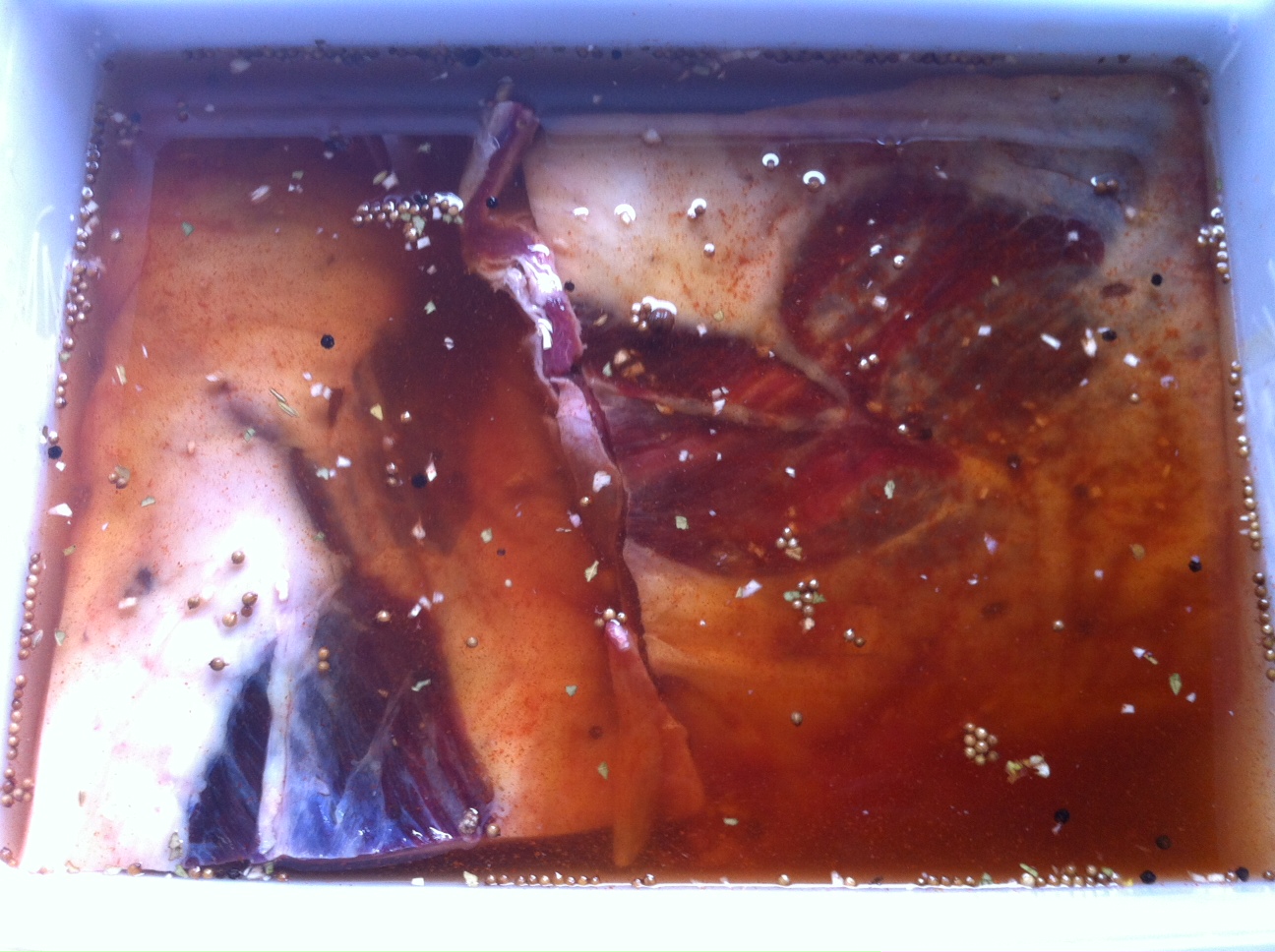
Rubbed-down ribs. I let them sit for an hour at room temp before smoking.

8 to 10 lbs. pork ribs
spice rub (see below)
barbecue sauce (see below)


Spice rub

2 tablespoons brown sugar
1 tablespoon granulated garlic
1 tablespoon salt (I like using fine sea salt)
1 tablespoon black pepper
1 tablespoon celery seed (not celery salt)
1 tablespoon granulated onion


Combine all the spice rub ingredients. I like to grind the celery seed in a spice grinder before mixing with the others, so that I don’t get crunchy bits.

If the pork rib slabs are long, cut them in half so they’re easier to work with (and so they fit in the smoker!)

Rub the ribs with the spice rub, and place them in a 250° oven or smoker. Place a pan of water underneath to keep them moist and to catch any grease that drips down. I use an electric smoker, so during those 3 hours of cooking, I add hickory chips once an hour.


After 3 hours of smoking with hickory chips. I place one rack on top of another, brushing them with sauce, then wrapping them in foil.


While the ribs are cooking, it’s time to make the barbecue sauce. I like a citrus-based, sweeter sauce, and this time, I had some mandarin oranges in the kitchen. But you can easily substitute regular oranges, lemons, limes or even grapefruit for this recipe.

1 cup ketchup
1/2 cup mandarin orange juice (or other citrus juice)
zest of 2 mandarin oranges (or other citrus)
1/4 cup brown sugar
3 tablespoons butter
1 teaspoon hot sauce (I like Frank’s Red Hot)
1 teaspoon Worcestershire sauce
1 teaspoon granulated garlic
1/4 teaspoon black pepper


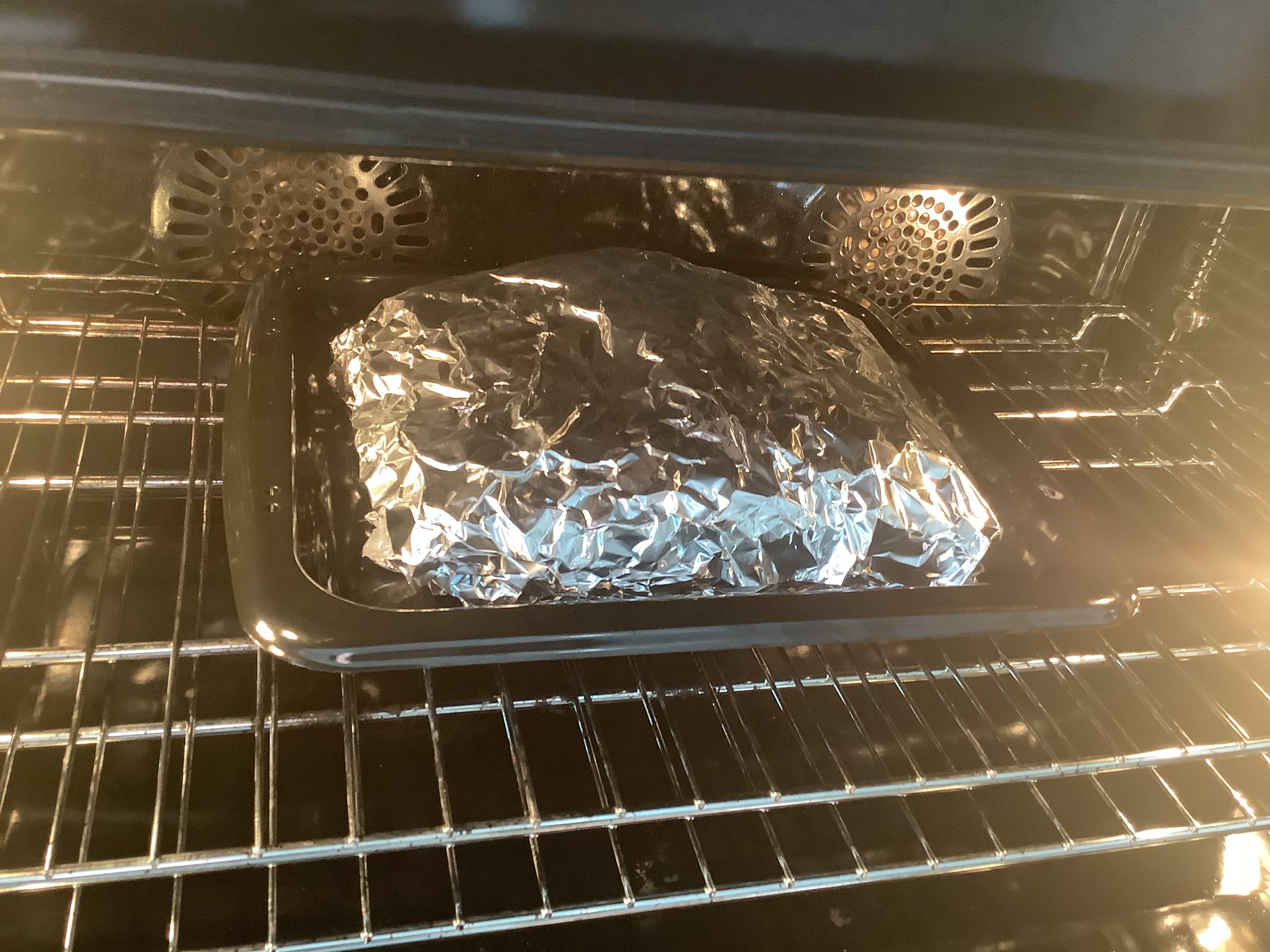
Brushed with sauce before wrapping in foil for the last 2 hours of cooking.


Remove the ribs from the smoker, place them individually on a piece of aluminum foil, and brush them with the barbecue sauce on all sides. Wrap them completely with the foil and place them on a baking sheet in a pre-heated 250° oven. Cook for 2 hours more.

Why cut them into individual ribs when you know you’re going to eat the rack anyway?


Happy new year! If you’re not dieting, this is a great way to start the new year! 😆

This recipe is not only delicious, but it results in a perfectly cooked cheesecake with no cracking.

One of the keys to a great cheesecake right is placing it in a water bath while baking. But if the springform pan allows water in (and they all do), it creates problems. The solution is to foil-wrap the springform pan really well.

But first, the crust…

1-1/2 cups graham cracker crumbs, from 12 whole crackers
5 tablespoons unsalted butter, melted
2 tablespoons sugar
1/8 teaspoon salt

Preheat the oven to 375° and set an oven rack in the lower middle position.

Here’s the crucial part: Wrap a 9- or 10-inch springform pan with one large piece of heavy-duty aluminum foil, covering the underside and extending all the way to the top so there are no seams on the bottom or sides of the pan. Just to make sure, repeat this process with another sheet of foil for insurance. This keeps the water bath out of your cheesecake, so do a thorough job of it!

Then spray the inside of the pan with nonstick cooking spray.

In a medium bowl, combine the graham cracker crumbs, melted butter, sugar, and salt. Stir until it’s well combined. Press the crumbs into an even layer on the the bottom of the prepared pan. Bake the crust for 10 minutes, until set. Remove the pan from the oven and set it aside.


32 oz. (four 8-oz. blocks) cream cheese, at room temperature
2 cups sugar 
3 tablespoons all-purpose flour
4 teaspoons vanilla extract
1 teaspoon packed lemon zest, from 1 lemon
2 teaspoons fresh lemon juice, from 1 lemon 
1/4 teaspoon salt
6 large eggs 
1/2 cup sour cream


Reduce the oven temperature to 325°F. Boil some water.

In the bowl of an electric mixer fitted with the paddle attachment, beat the cream cheese, sugar, and flour together on medium speed until just smooth, about 1 minute. Scrape the bottom and sides of the bowl to be sure the mixture is evenly combined.

Add the vanilla, lemon zest, lemon juice, and salt. Beat on low speed until it’s all just combined. Add the eggs, one at a time, mixing on low speed until incorporated, scraping the bowl as necessary. Mix in the sour cream. Make sure the batter is uniform but don’t over-mix it.

By now, the oven should be cooled to 325°.

Set the cheesecake pan in a large roasting pan. Pour the batter on top of the crust. Pour the boiling water into the large roasting pan to come about 1 inch up the side of the cake pan.

Bake until the cake is just set, 1 hour and 30 minutes to 1 hour and 45 minutes (the cake should wobble just a bit when the pan is nudged). Remember: the cake will continue to cook outside of the oven before it cools!

Carefully remove the roasting pan from the oven and set it on a wire rack. Cool the cheesecake in the water bath until the water is just warm, about 45 minutes.

Remove the springform pan from the water bath and discard the foil. If necessary, run a thin-bladed knife around the edge of the cake to make sure it’s not sticking to the sides (which can cause cracks as it cools), then cover it with plastic wrap and put it in the fridge to cool for at least 8 hours or overnight.

After 8 hours, remove the sides of the springform pan. I like to serve the cheesecake right from the base of the pan. I’ve found that trying to remove the pan base only messes up the crust.

The secret to slicing beautiful pieces of cheesecake is to slice with a sharp knife, rinsing it in warm water and wiping it dry between every slice. 

AN UPDATE: I recently tried this recipe again, only to realize at the last minute that I lost my springform pan when I moved a year ago! All I had was a (relatively new, non-stick) baking pan, so I figured I’d give it a try. I knew my ingredients would taste good. I just didn’t know if I’d be able to get the cheesecake out of the pan!

The good news is: it cooked properly and tasted great!

The bad news is: it was a bit messy slicing it and removing it cleanly from the baking pan.

But baking a cheesecake without a springform pan can be done!

This is my version of a holiday drink I was introduced to me by my mother-in-law from the Upper Peninsula of Michigan.

This classic is loaded with sugar. But then…so is everything else around the holidays!

Whiskey slush

9 cups water
2 cups sugar
4 “Constant Comment” tea bags
12 oz. frozen OJ concentrate
12 oz. frozen lemonade concentrate
2 cups whiskey (I use Crown Royal)
7-Up or Sprite

Boil the water and sugar, making sure the sugar dissolves. Turn off the heat and steep the tea bags in the liquid for 10 minutes. Discard the tea bags.

Add the OJ, lemonade and whiskey. Mix well, then pour it all into a freezable container with a lid. Freeze.

To serve: Scoop the slush out of the container (it doesn’t freeze solid) and mix it in a tall glass with 7-Up.

If you’re concerned about all that sugar, you can use a sugar substitute in the mix, and diet soda at the end. Some stores also carry low-sugar juice concentrates.

BALSAMIC BRAISED PORK CHOPS

Posted: December 7, 2025 in Uncategorized
Tags: , , , ,

I was in the supermarket the other day, and a pack of pork chops called to me as I walked by the meat department. I hadn’t had pork chops in ages, and it was time to try something new with them.

The balsamic vinegar used in this recipe is not the crazy expensive stuff. It’s the bottle you probably already have in your kitchen cabinet that costs about nine bucks.

This recipe works with thick or thin pork chops, your choice.

The cool thing about this recipe is that you make it all in one pan, and on the stovetop.

4 or 5 bone-in pork chops
olive oil
Kosher salt and freshly cracked black pepper
2 teaspoons dried thyme
1 large Spanish onion, diced
2 large cloves of garlic, minced
2 cups chicken broth (homemade is always best)
3 tablespoons Dijon mustard
5 tablespoons balsamic vinegar
6 tablespoons brown sugar
2 tablespoons Worcestershire sauce

Season the pork chops with the salt, pepper and thyme.

Add some olive oil to a large pan, and when it’s hot, sear the pork chops on both sides until they’re nice and brown.

Remove the pork chops from the pan and set them aside. Pour out the fat in the pan, add a touch of olive oil, and put it back on the heat. Add the onions, sautéing them for about 10 minutes until they’ve softened, and then add the garlic. Sauté a minute more.

Add the chicken broth, Dijon, balsamic vinegar, brown sugar and Worcestershire sauce. Stir to combine.

Return the pork chops back to the pan, nestling them down into the sauce. Add any of the juices that may have collected when you set the chops aside.

Bring the pan to a boil, then reduce to a simmer and cover the pan. Let it cook for 45 to 60 minutes. I like to flip the chops about halfway through the cooking process.

To serve, remove the chops from the pan, and smother them with the sauce! You may want to reduce or thicken the sauce a bit, but I like it just the way it is!

There seems to be some confusion about the spelling of whiskey and/or whisky, but the use of the letter “e” (or the lack thereof) is not random. Here’s the best explanation I’ve found…
whiskeywhisky
The spelling whisky (plural whiskies) is generally used for those distilled in Scotland, Wales, Canada, and Japan. Whiskey (with an e; plural whiskeys) is used for the spirits distilled in Ireland and in the United States. The BATF (Bureau of Alcohol, Tobacco and Firearms) in 1968 specified “whisky” as the official U.S. spelling, but allowed labeling as “whiskey” in deference to tradition.  Most U.S. producers still use the “whiskey” spelling, though as you can see, Maker’s Mark chooses not to.
International law reserves the term “Scotch whisky” to those whiskies produced in Scotland. Scottish law specifies that the whisky must be aged for a minimum of three years and one day, in oak casks. Whiskies produced in other countries in the Scotch style must use another name. Similar conventions exist for “Irish whiskey,” “Canadian whisky,” and “Bourbon whiskey.” In North America, as well as in Continental Europe, the abbreviated term “Scotch” is usually used for “Scotch Whisky.” In England, Scotland, and Wales, the term “whisky” almost always refers to “Scotch Whisky”, and, as I learned when I traveled to Scotland, nobody calls it “Scotch.” 
And while we’re on the topic, what is bourbon?
Bourbon is a type of whiskey.
Today, “bourbon” has a specific legal meaning that has little to do with its geographic origins. That definition, now federal law, has existed in its present form only since about the end of the 19th century. According to federal law, bourbon must be at least 51% corn, distilled at less than 160 proof, and aged for at least two years in new, charred oak barrels. (There are some other requirements, but those are the main ones.) Bourbon also must be made within the borders of the United States. In other words, a foreign product that meets all the other requirements still cannot be sold in the U.S. as bourbon.
As I learned on my tour of the legendary Oban distillery in Scotland, the reason why bourbon must be aged in new, charred oak barrels goes back to the days of Prohibition. Once alcohol was legalized again, the coopers union wanted to make sure they had job security. So they convinced the government to require new barrels for every new batch of bourbon made. Once that barrel is used, it can’t be used for bourbon again. The Scottish, always frugal, would then buy all those barrels from American distilleries, and use them to age their own whiskey. So those barrels don’t ever go to waste. (Companies like Diageo, that own Bulleit bourbon in the US and Oban whisky in scotland avoid the middleman buy shipping their own used barrels from America to scotland for reuse.)
Contrary to popular belief, there has never been a legal requirement that bourbon be made in Kentucky, which is why most Kentucky producers call their product “Kentucky Bourbon.” Today there are some, but not many, examples of non-Kentucky bourbon left: Virginia Gentleman, Bowman’s, and Woodstone Creek Straight Bourbon are a few.
Still confused? My advice is to sit back with your favorite glass of whisky, whiskey or bourbon…and just enjoy. Cheers!

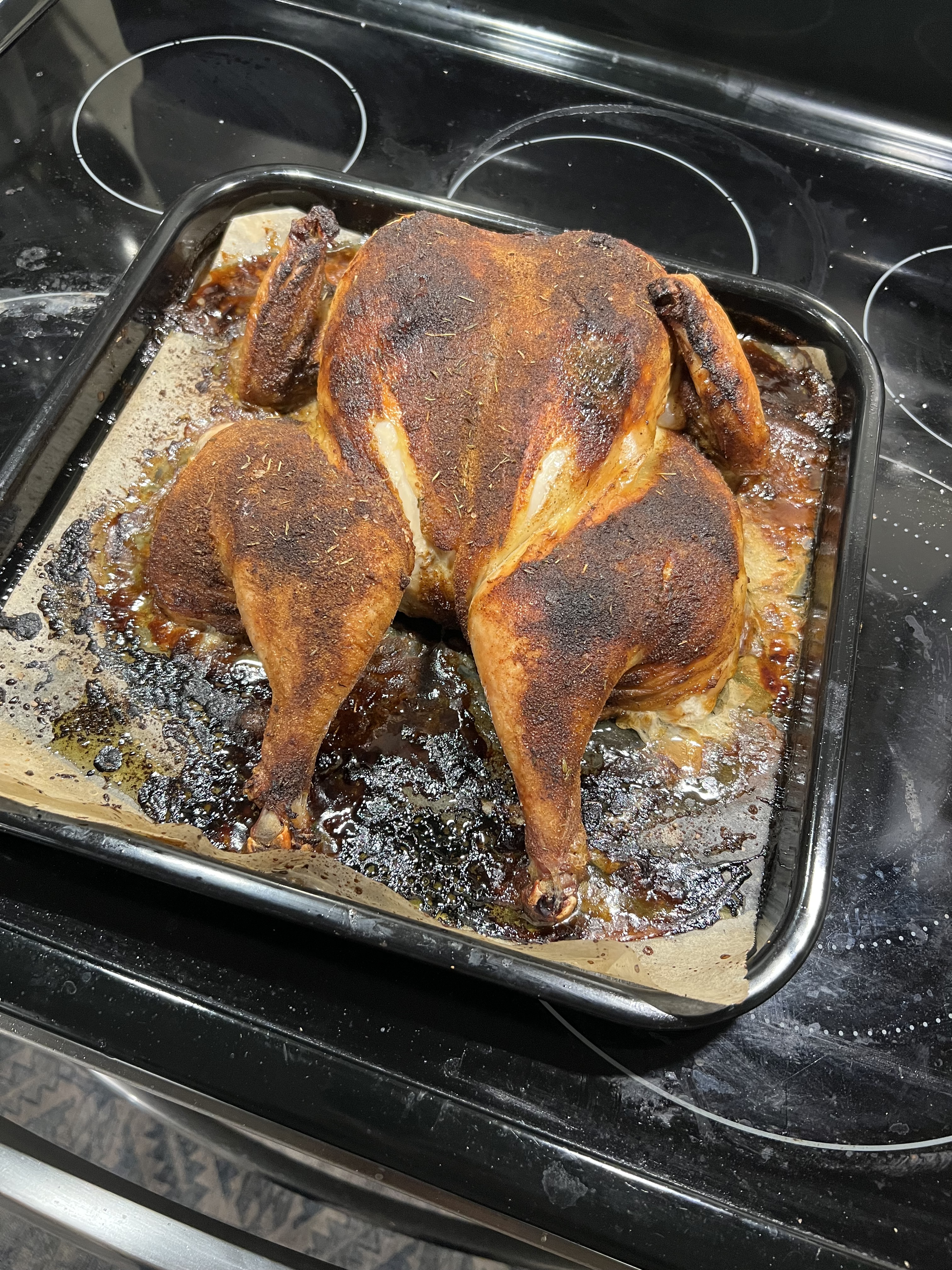
TANDOORI ROAST CHICKEN

Posted: November 30, 2025 in Uncategorized
Tags: , , , ,

My family has made it pretty clear over the last half-dozen years or so that they’re tired of turkey on Thanksgiving. So when I saw a recipe in “Food and Wine” Magazine for a roasted turkey with Indian spices, I thought: “Why not try this with chicken?”

The recipe is from Food Network’s Maneet Chauhan, who is a regular on “Guy’s Grocery Games,” “Tournament of Champions,” etc. She’s got herself a restaurant empire in Nashville, of all places, and her knowledge of Indian food is pretty incredible. I knew I couldn’t go wrong using her recipe.

Indian cuisine is still pretty new to me, though I’ve made classic dishes like butter chicken. There are many ingredients in this dish that the average person won’t have in their cupboard, (ginger-garlic paste, tandoori masala, garam masala, kasoori methi, ghee) and maybe not even in the local supermarket. So you might have to do what I did, and look these things up on line and buy them ahead of time. But I found it all to be a great learning process.

You can marinate the bird overnight, or prepare it right before cooking. I choose to marinate overnight, because you have more time to really flavor the meat.

1 6-to-7-lb. chicken (I used a Perdue Oven Stuffer Roaster)
1/2 cup whole milk yogurt
1/4 cup chopped fresh cilantro
1/4 cup cream cheese, softened
1/4 cup ginger-garlic paste
1/4 cup fresh lemon juice, plus 1 lemon sliced in quarters
2 1/2 tablespoons tandoori masala
2 teaspoons Kosher salt
1 1/2 teaspoons garam masala
1 1/2 teaspoons kasoori methi
1/2 teaspoon black pepper
2 cups water
1 large yellow onion, roughly chopped
1 large carrot, roughly chopped

Thaw the bird and remove the giblets. Save them for another time.

In a bowl, combine the yogurt, cilantro, cream cheese, ginger-garlic paste, lemon juice, tandoori masala, salt, garam masala, kasoori methi and black pepper.

Gently slide your fingers under the skin of the breast and thigh of the chicken to loosen it. Generously rub the yogurt marinade under the skin as far as you can reach without tearing it. Also spread some of the marinade inside the cavity of the bird. Take the lemon quarters and stuff them into the cavity of the bird as well. Tie the legs of the bird together to close the cavity.

Note: You don’t want the marinade on the outside of the skin until right before cooking! So save some of the marinade in the fridge for the next day.

Place the bird on a pan and in the fridge, uncovered, overnight.

The next day, pre-heat the oven to 425°. Remove the chicken from the fridge one hour before cooking, to bring it to room temperature. Rub the remaining marinade all over the bird in a thin layer.

To cook the bird, you want to place it in a roasting pan that elevates it off the bottom of the pan. In the bottom of the pan, pour in the water, and add the onion and carrot pieces. Place a rack on top of that, and put the chicken on top.

Bake the chicken at 425° for 35 minutes. Then drop the oven temperature to 350° and bake for 20 to 30 minutes more. Check the temperature of the bird by placing an instant-read thermometer in the inner thigh, being careful not to hit the bone. It should read 165°. Remove the bird from the roasting pan and place it on a plate. Cover it with foil to let it rest for 20 to 30 minutes.

While the chicken is resting, it’s time to make the gravy.

2 tablespoons ghee
1 teaspoon cumin seeds
1 teaspoon tandoori masala
2 tablespoons cornstarch
2 cups chicken stock
pan drippings from roasting the chicken

Melt the ghee in a saucepan over medium heat. Add the cumin seeds and tandoori masala. Cook, stirring often, being careful not to burn them. Whisk in the cornstarch, mixing well to avoid lumps. Then slowly add the chicken stock. Pour in the drippings from roasting the chicken. (You don’t need the onion and carrot–they’ve done their job.) Bring it to a simmer, then reduce the heat, and cook, stirring constantly, until the gravy is thick enough to coat the back of a spoon. To serve, pour the gravy through a wire-mesh strainer into a gravy boat.

MY KILLER APPLE PIE RECIPE

Posted: November 28, 2025 in Uncategorized
Tags: , , , ,

There are a million apple pie recipes online, and people argue whether they should go with an all-shortening or all-butter crust, or even a crust with a combination of the two. I used to be a half-butter, half-shortening guy, myself. But over they years, I’ve become an all-butter guy, because quite frankly, shortening is nasty. And butter…is butter!

I choose to bake the pie the day before serving it. And I prepare the dough the day before that. That way, it has time to rest in the fridge overnight. When you’re ready to bake, remove the dough from the fridge and work with it as cold as you can. If you thaw it too much, you’ll lose the magic of the little butter chunks scattered through the dough.

For the dough…

2 1/2 cups all-purpose organic flour (I like King Arthur)
1/2 teaspoon salt
1 tablespoon sugar
1 cup butter, chilled and diced into cubes
1/2 cup very cold ice water

You can mix the dough ingredients by hand in a bowl, but I prefer a food processor.

Combine the flour, salt and sugar in the food processor and give it a quick pulse to mix. Drop the cubes of butter into the flour mixture, and then pulse the processor until the dough mixture resembles coarse crumbs, and the butter is reduced to pea-sized bits.

Add 1/4 cup of the water, and run the processor. Keep adding a little water at a time, and as soon as the dough forms a ball and pulls away from the sides of the processor bowl, stop! You don’t want to overwork the dough.

Remove the dough to a floured surface and knead it into a ball. Cut the ball in half, and roll each half into a thick, round pancake about an inch thick. wrap these tightly with plastic wrap and place them in the fridge until you’re ready to bake.

For the pie filling…

3 lbs. Granny Smith apples, peeled and sliced into 1/4″ thick slices
1/2 cup butter
3 tablespoons all-purpose organic flour
1/3 cup apple cider
1/2 cup granulated sugar
1/2 cup light brown sugar
2 teaspoons real vanilla extract
2 teaspoons cinnamon
1/8 teaspoon nutmeg

Preheat the oven to 425.

Remove the dough from the fridge. While it’s warming up, prepare the apples.

Peel and slice the apples into 1/4″ wide pieces. (I like to cut some a little thinner and some a little thicker, so I get different textures of apple when the pie has baked.) Place them in a large bowl.

Melt the butter in a saucepan, and add the flour. Whisk well to make a roux. Add the juice, both sugars, vanilla, cinnamon and nutmeg. Bring it to a low boil, stirring constantly, then remove from the heat.

Pour the contents of the saucepan into the large bowl with the apples, saving about 1/4 cup butter-sugar sauce for later. Mix the sauce with the apples really well, making sure they’re completely coated.

Unwrap one of the dough pieces. On a lightly floured surface, roll it out large enough to fit the bottom and sides of a 9″ pie pan. Let it hang about a 1/2″ over the top edge of the pan, for crimping later.

Carefully transfer the apple mixture into the pie pan, making sure you get every little bit of that butter-sugar sauce in there. The apples will form a large mound. don’t worry…they’ll cook down.

Unwrap the other piece of dough and roll it out so that it fits over the top of the mound of apples. Tuck the excess edges of the upper crust under the overlapping bottom crust, pinching the two halves together, making as tight a seal around the pie as you can. (Don’t cut any of that crust away…use it! It’s delicious!) Cut several slots in the top of the crust to let steam out while the pie cooks.

Take that 1/4 cup of reserved butter-sugar sauce, add a little water to it, and brush it all over the top of the crust, brushing evenly over the entire crust.

Place the pie on a baking sheet and bake it at 425 for about 15 minutes. Then drop the oven temperature to 350 and bake for another 50 minutes, or until the top is golden brown and crisp. If it looks like the edges of your pie are browning too quickly, tent around the edges loosely with foil. Remember, ovens vary!

Let the pie cool completely. I prefer to let it cool overnight, to be served the next day. We like to serve it with good-quality vanilla ice cream.

Of course, apple pie and coffee is an excellent breakfast the next morning!


What’s a Thanksgiving dinner without Parker House rolls? Parker House rolls are one of my all-time favorite treats. They’re so light and delicious because milk and melted butter are used to make the dough. I’d make and eat them every weekend if it wasn’t for the fact that I’d gain a ton of weight in the process! So…I save them for special occasions. There really is a Parker House. It’s a hotel in Boston where the rolls originated in the 1870’s. Legend has it that a disgruntled hotel baker threw a batch of unfinished rolls in the oven, and when they came out, they had a folded pocketbook shape that made them light on the inside, and crisp and buttery on the outside. A legend was born. There are hundreds of Parker House Roll recipes out there, but this is the one I swear by. It’s a great excuse to get out my old Kitchenaid standing mixer.
1 stick unsalted butter, melted and cooled, plus softened butter for brushing
1 tablespoon active dry yeast 1/4 cup lukewarm water (100 to 110 degrees) 1/4 cup sugar 1 cup whole milk, warmed 2 large eggs, at room temperature 4 cups all-purpose flour, plus more for dusting 2 1/2 teaspoons Kosher salt (I use Diamond Crystal)
Brush a large bowl with butter. In the bowl of a stand mixer fitted with a paddle, combine the yeast with the water and a pinch of sugar. Let it stand until it gets foamy, about 10 minutes. This gets the yeast happy. Add the milk, melted butter, eggs and remaining sugar and mix until it’s all combined. Now switch to the dough hook and add the flour and salt. Knead at low speed until a smooth ball forms, about 2 minutes. Scrape the dough onto a lightly floured board and knead it gently into a ball. Then place the ball in the buttered bowl, covering it with plastic wrap, and placing the bowl in a warm place. Let the dough double in volume. It’ll take about 1 1/2 hours. Pre-heat the oven to 350. Grease a 9-by-13 baking dish with more butter. Turn the dough out onto a lightly floured board again, punching out the air bubbles, and forming it into a ball again. Cut the ball in half, then each half into 8 pieces. You can either leave the pieces in their wedge shape, placing them in the baking dish top side up. Or you can roll the wedges into balls, placing them into the baking dish, spacing them out evenly. Cover the baking dish with plastic wrap and let the dough rise again for about 30 minutes. By then, your oven will be nice and warm. Bake the rolls for 20 to 25minutes, until they’re a beautiful golden color. Serve them warm or at room temperature. If you bake the rolls earlier in the day, you can cover them in plastic wrap, and the re-heat gently before serving.
Generally speaking, I’m not a fan of many gluten-free desserts or snacks. Gluten-free food isn’t any healthier than a food that contains wheat. It’s just that some people are allergic to gluten–it’s as simple as that.

That being said, this brownie/cake combo is full of great flavor, thanks to ground hazelnuts.

When buying hazelnuts, remember that you want raw nuts. Try to get the best quality you can find. No surprise: Amazon is a great source for that.


image


9 oz. ground hazelnuts
5 1/2 oz. (2/3 cup) sugar
4 oz. (1 stick) unsalted butter
4 eggs
1 oz. cocoa powder
1 tablespoon baking powder


A double-batch bakes a bundt pan perfectly. Make extra: it freezes well!

A double-batch bakes a bundt pan perfectly. Make extra: it freezes well!


Pre-heat the oven to 350.

Pour the hazelnuts into a food processor and grind them as fine as you can. It won’t be powdery, like flour, but like tiny particles. Dump them into a separate bowl.

Back in the food processor bowl, add the sugar and butter and pulse until combined.  Crack the eggs in a separate bowl, and add them slowly to the sugar and butter, pulsing to mix in between each addition.

Pour the ground hazelnuts into the mixture a little at a time, pulsing after each addition. Add the cocoa powder and baking powder, straining them through a sieve to keep out lumps, and pulse again. Scrape down the sides of the bowl and give it all one last mix.

Pour the batter into a buttered pan and bake at 350 for 30 minutes. The brownies will rise as they bake, so make sure your pan is deep enough to accommodate the dough rising as it cooks. Otherwise, you’ll get a brownie overflow!

Right now, I’m trying out a new eggnog recipe, which I will post later if successful. It’s based on Alton Brown’s aged eggnog recipe, which uses a dozen raw egg yolks. He mixes the yolks with sugar, and then adds a LOT of alcohol to it, in the hopes of killing any salmonella bacteria that might be lurking about. The egg yolk/sugar/booze mix sits in sealed Mason jars in the fridge for at least 3 weeks, giving the alcohol time to do its job. Only then is the dairy added. Seems to make sense, but I’ll let you know when it’s done. But this recipe does take time. So if you want to whip up a pretty darn tasty eggnog in a hurry, my recipe below, one that I get asked about every year, is the way to go…

Let’s face it: there’s no such thing as healthy eggnog. This recipe is absolutely delicious but is also a heart attack in a glass. I updated this recipe a couple of years ago so that you don’t need to worry about salmonella (because you’re not using raw eggs)…though the alcohol will certainly still get you! (So I guess calling it “safe” is a matter of opinion!)
The solution is to buy pasteurized eggs.

Some supermarkets now carry whole eggs in the shell that have been pasteurized, though they are hard to find. But the Whole Foods near me does carry pasteurized real whole liquid eggs under the Vital Farms name, and they work perfectly with this recipe. The original recipe called for 15 (!) raw eggs. A 16-oz. container of Vital Farms liquid eggs is the same as about 9 eggs. So I need one full 16 oz. container, and then another 10 oz. or so for this recipe.

Now the only thing I need to worry about are too many calories and too much alcohol!

eggnog

1.5 quarts vanilla ice cream (I use Breyer’s)
1 pint half & half
Just over 26 oz. Vital Farms liquid whole eggs (the equivalent of 15 whole raw eggs)
1 teaspoon vanilla extract
1/2 teaspoon cinnamon
1/2 teaspoon nutmeg
1/4 cup pure maple syrup
6 oz.  of each:
spiced rum (I use Captain Morgan)
whiskey (I use Crown Royal)
brandy (I use E&J)

I let the ice cream soften one day in the fridge. I carefully mix the ice cream, half-and-half, eggs, vanilla, cinnamon and nutmeg in a blender.

My blender is pretty big, but I find that it’s full at this point. So I pour everything into a gallon-size glass jar.

To the jar, I add the maple syrup and all the liquor. Then I whisk everything together, making sure I get down to the bottom of the jar.

After it’s fully mixed, I place the lid on the jar, and move the eggnog to the fridge, where I let it sit for at least 12-24 hours for the flavors to blend. Even longer is better.

One final mix and taste to determine whether I want more cinnamon, nutmeg or maple syrup, and it’s good to go!

It goes well with coffee…just maybe not for breakfast!

And by the way, it’s pretty darn tasty with coffee! Just imagine a variation on a White Russian, with eggnog and freshly brewed coffee, and a bit of a drizzle of maple syrup on top!

Cheers!