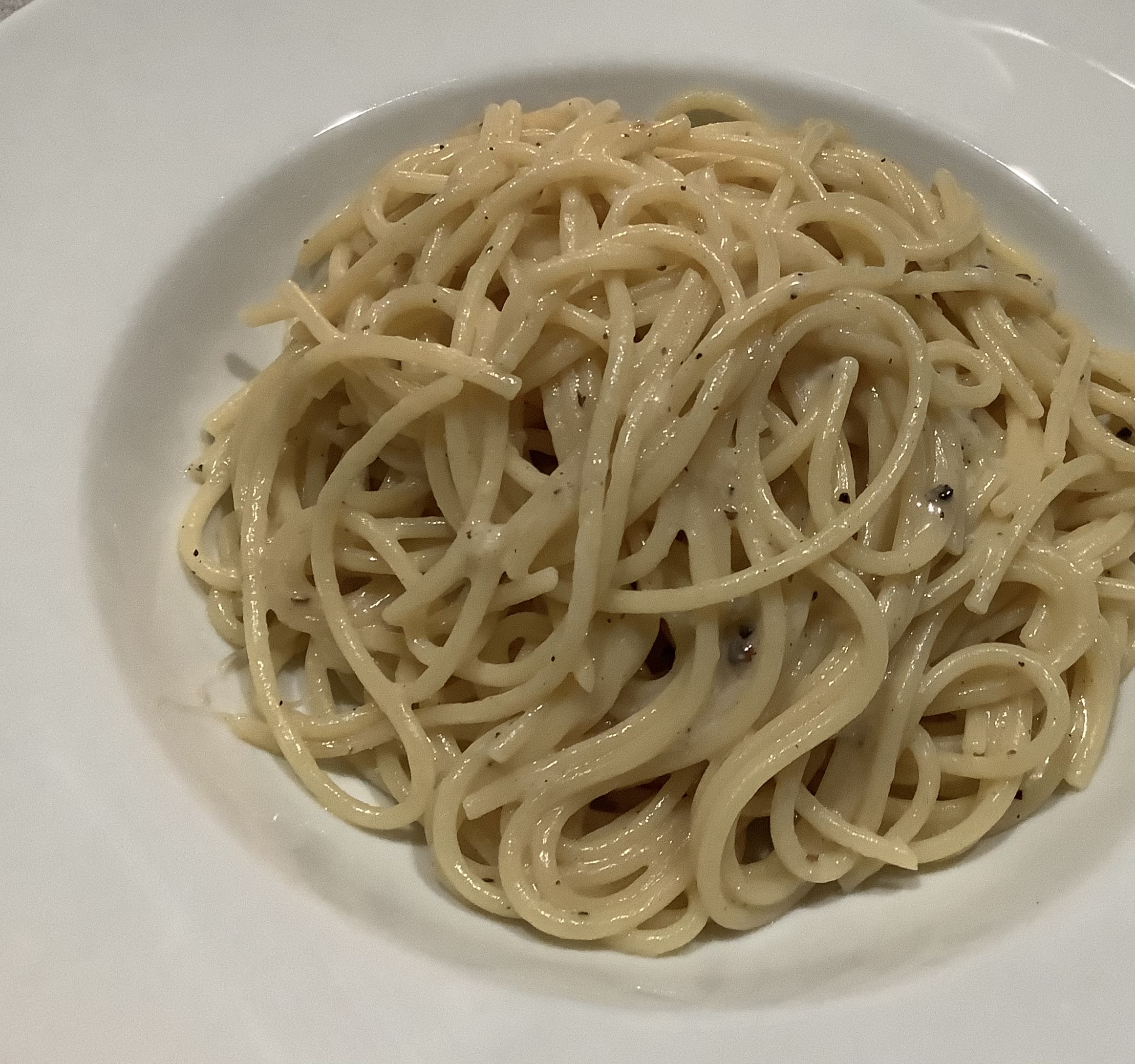
There are a handful of Italian dishes that can be considered classics. They don’t require dozens of ingredients…just a few quality ingredients prepared in a particular way. We all know their names: Pasta alla Carbonara…Fettuccini Alfredo…and Cacio e Pepe.
Carbonara requires pasta, guanciale, egg yolks, black pepper and a hard cheese (Pecorino Romano or Parmigiano Reggiano). Alfredo: just pasta, butter, cream and cheese (Parmigiano Reggiano). And Cacio e Pepe: pasta, black pepper, cheese (Pecorino Romano), and a little pasta water. Simple, but simple requires the best quality ingredients and the right method of preparation.
1 lb. spaghetti 4 teaspoons roughly ground black peppercorns 7 oz. Pecorino Romano cheese, freshly grated
Bring a pot of salted water to a boil and cook the spaghetti until it just about reaches the al dente stage.
While the pasta is cooking, heat a dry pan and dry fry the roughly ground peppercorns until they start to release their aroma.
Add a ladle of the pasta water to the pan with the peppercorns.
When the pasta is ready, move it to the pan with the peppercorns, saving the pasta water.
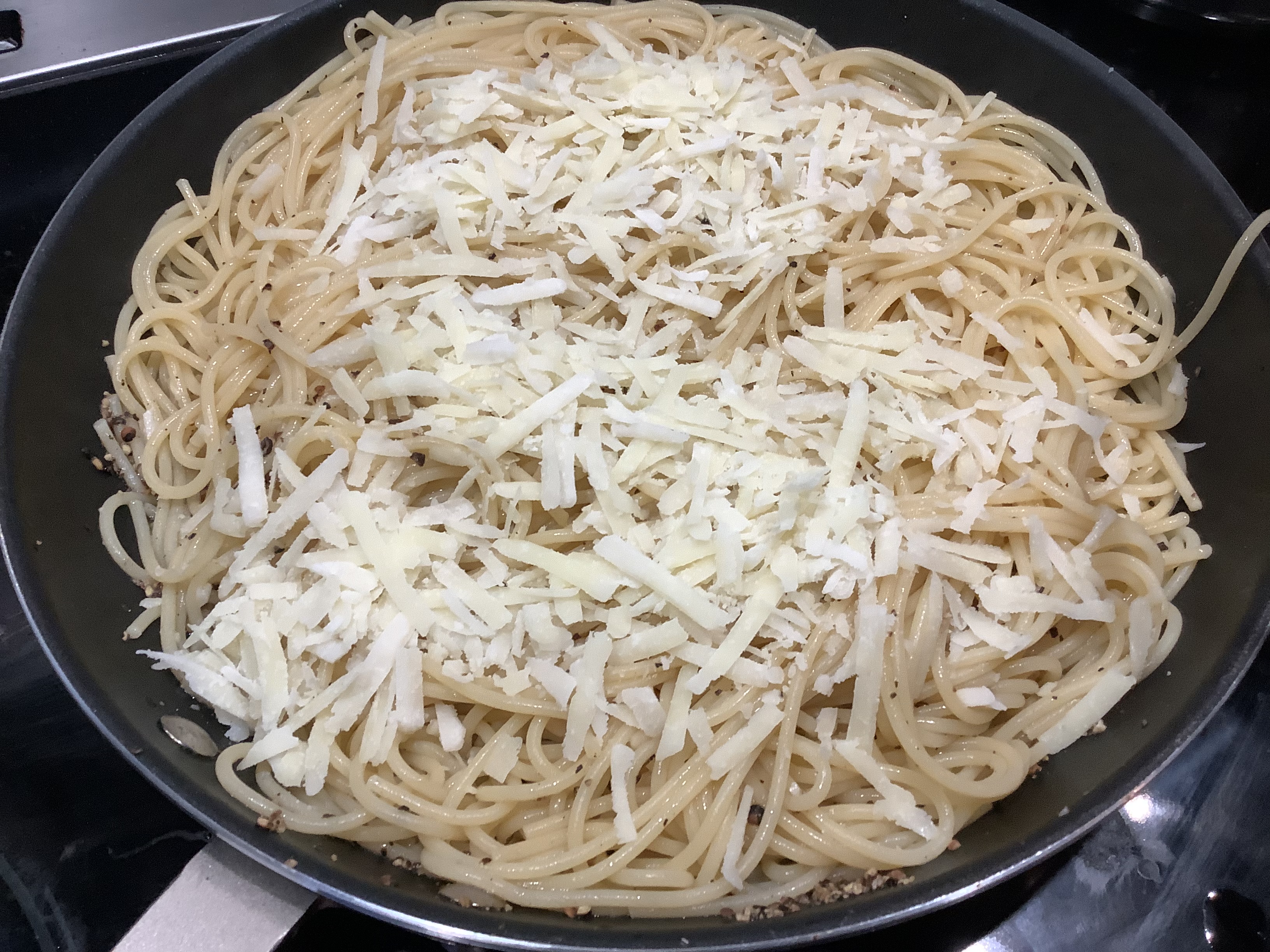
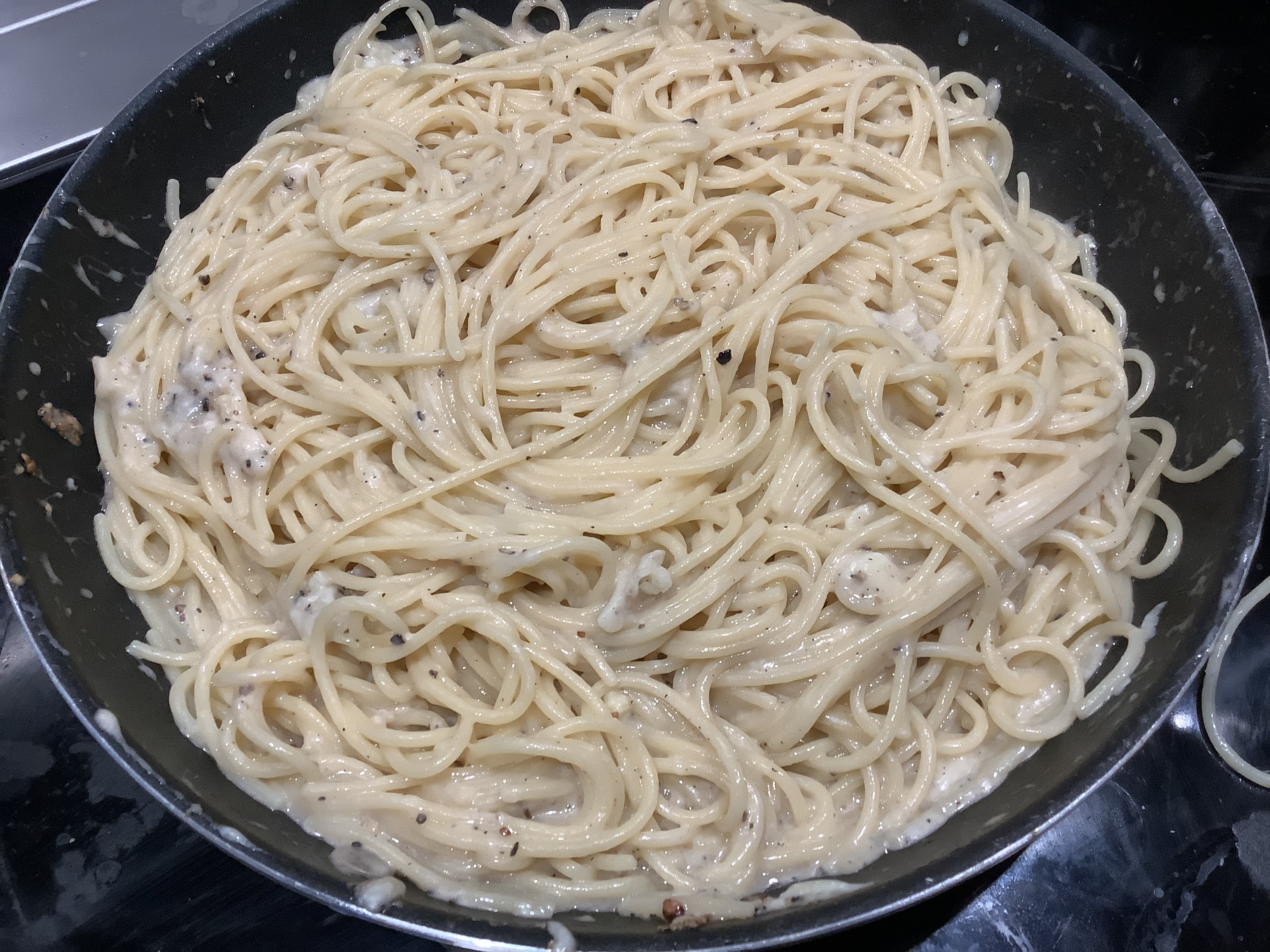
Mix the pasta and peppercorns together, and then slowly start adding the grated cheese, stirring constantly. Keep adding the cheese until you use it all. If the pasta is too dry, add more pasta water. You want the cheese and pasta water to blend to make a beautiful, creamy sauce.
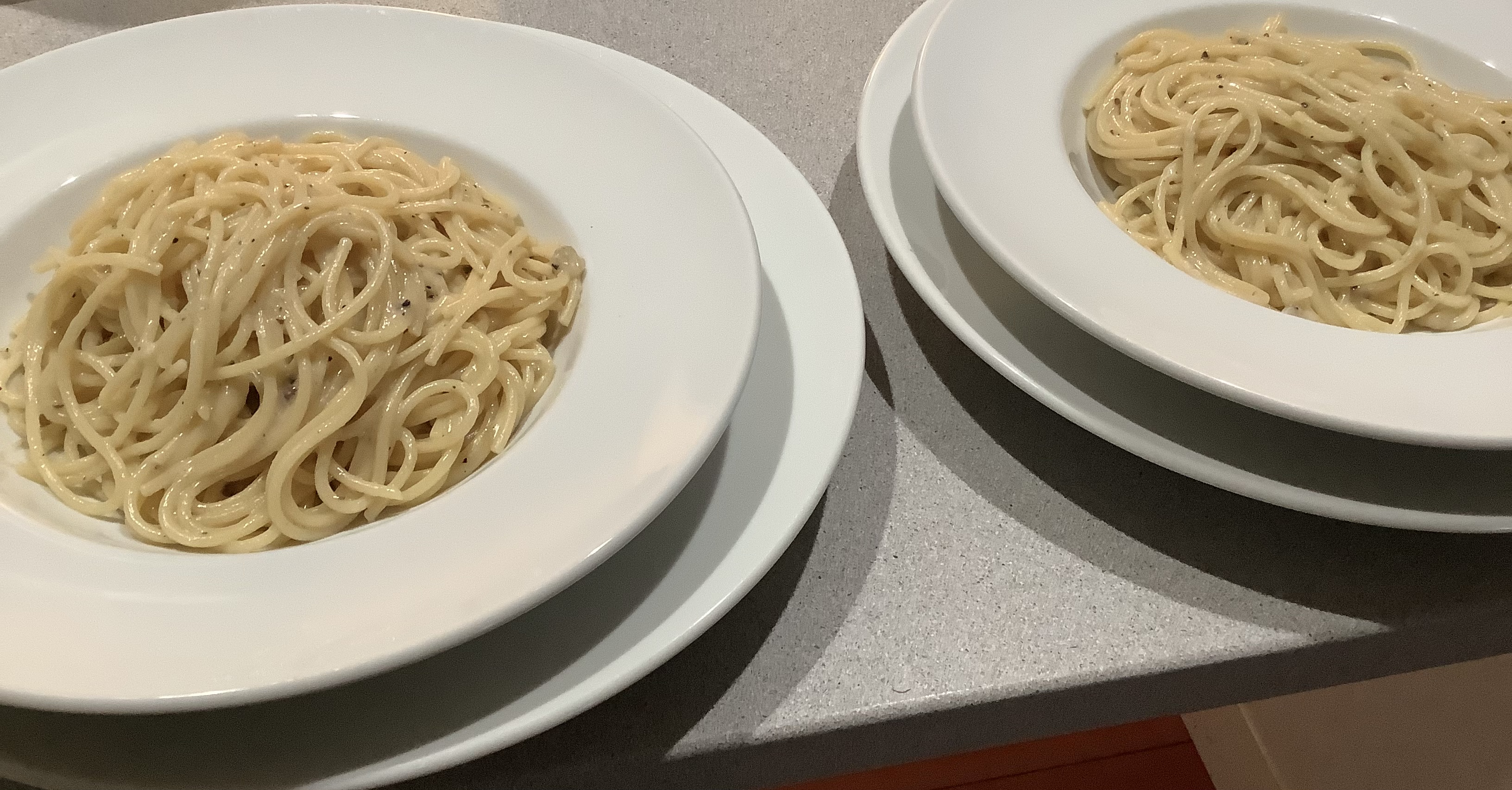
When you’ve achieved ultimate creaminess, it’s ready to serve!
Baked ziti, lasagna, and baked ravioli are all “cousins” …slightly different versions of basically the same dish. Yet each one is unique, and it’s fun to change them up when you’re in the mood for something gooey and cheesy.
I made this recipe recently, when my daughter invited some friends over, and they wanted to avoid meat. The extra layer of spinach makes it at least a tiny bit healthy! (I prefer fresh spinach over frozen.)
Great having a fresh pasta shop in my own town!
I used fresh pasta for this dish (it came frozen and I thawed it), so no need to cook it ahead of baking. But you will have to cook dried pasta to a very chewy al dente stage if you choose to use it. (Not recommended for this recipe.)
1 lb. fresh or frozen raviolis (I used ravioli stuffed with burrata and spinach this time) 1 can (28 oz.) tomatoes 2 tablespoons olive oil 1 tablespoon balsamic vinegar 2 teaspoons granulated garlic 1 teaspoon dried oregano 1 teaspoon Kosher salt Fresh ground black pepper 2 cups fresh spinach, washed 1 1/2 cups shredded whole milk mozzarella 1/2 cup freshly grated Parmigiano Reggiano
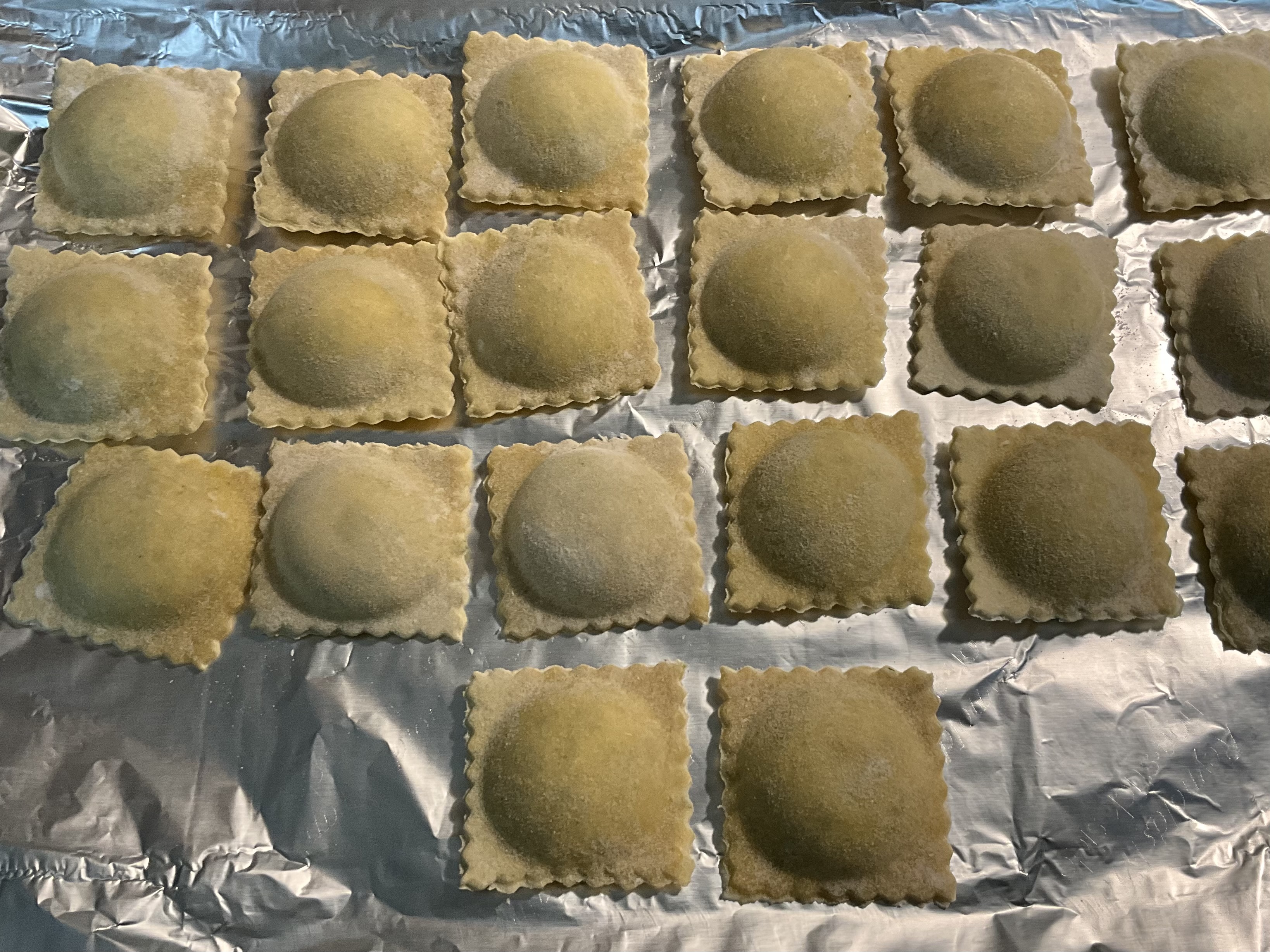
Thaw the raviolis, if frozen, by placing them on a baking sheet with non-stick foil. Cover them with plastic wrap to keep the moisture in to avoid cracking. (It’s not a big deal if they do.)
Preheat the oven to 400° .
Blend the tomatoes in a food processor or blender, then pour them into a large bowl. Add the olive oil, balsamic vinegar, garlic, oregano, salt and pepper (to taste.)
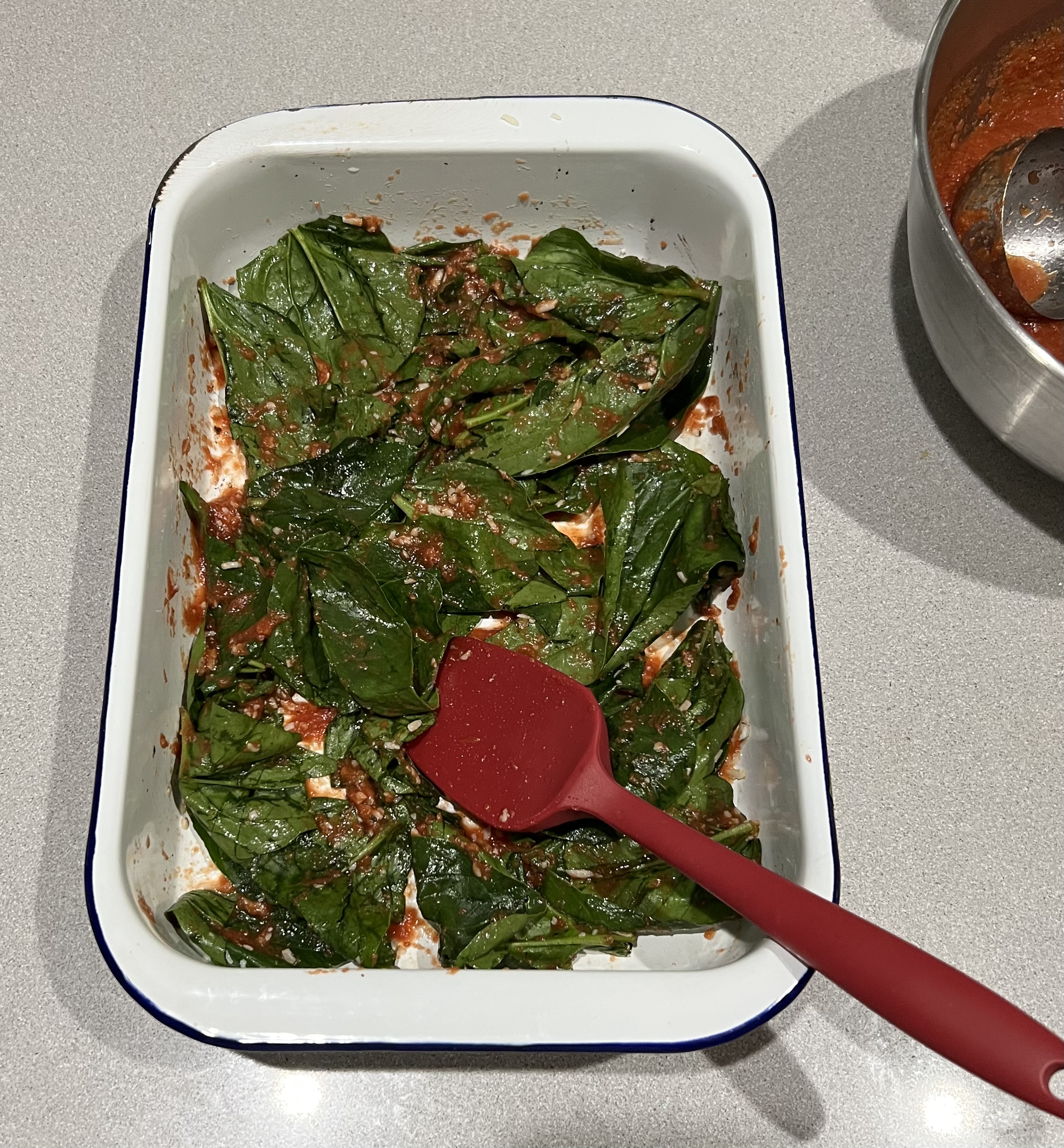
Spread the spinach out in the bottom of a large baking pan. Take a ladle full of the sauce and mix it with the spinach to soften it and give it moisture.
Dunk the raviolis in the sauce, then lay them on top of the spinach, one by one. Then pour the sauce on top of the raviolis. (If you use tortellini, you can mix them right into the sauce, because they’re sturdy.)
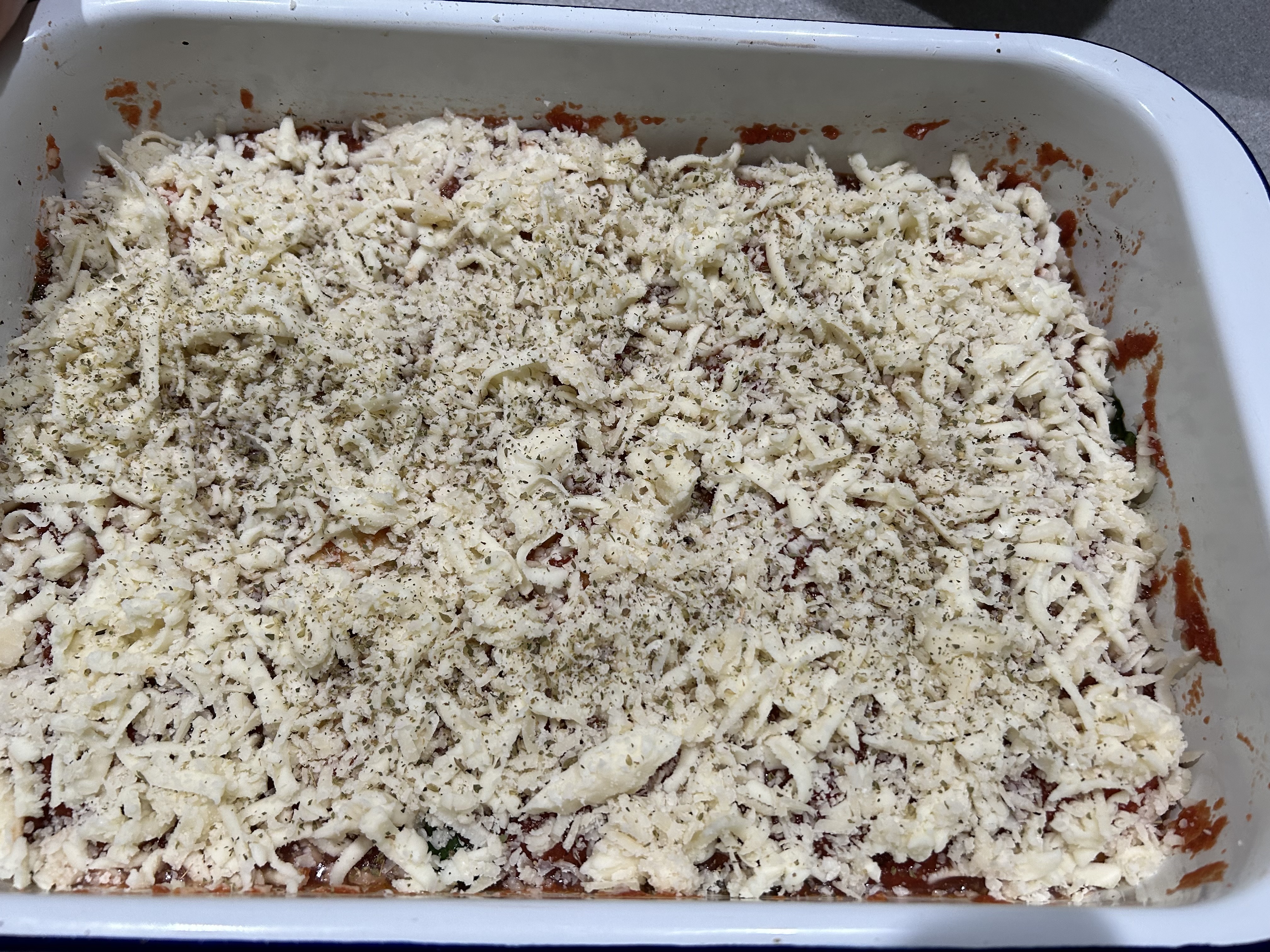
Cover the raviolis evenly with the mozzarella, then with the Parmigiano Reggiano. Dust some dried oregano on top.
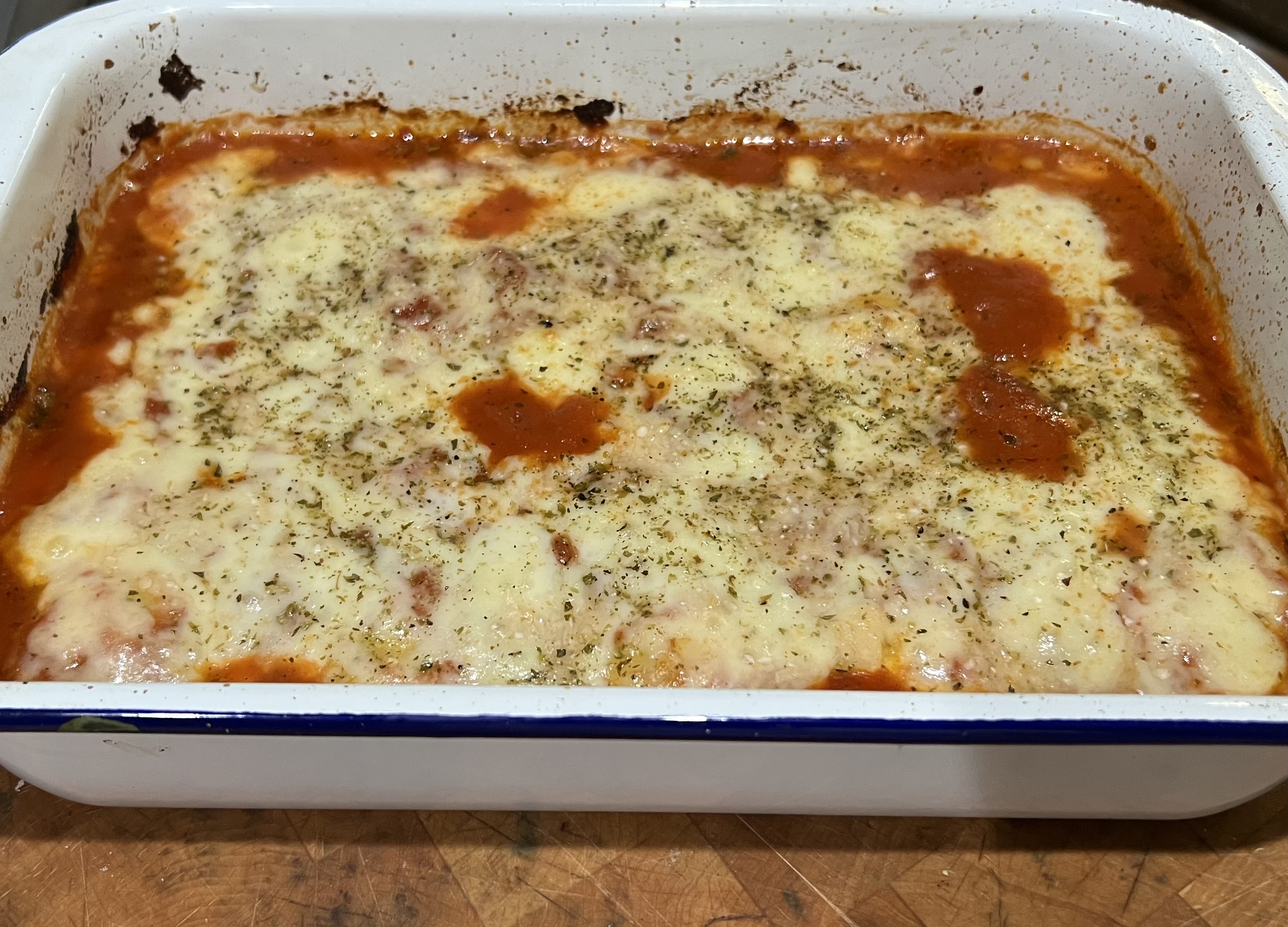
Bake until the cheese melts and turns golden, and the sauce is all bubbly. Let it cool a bit before serving.
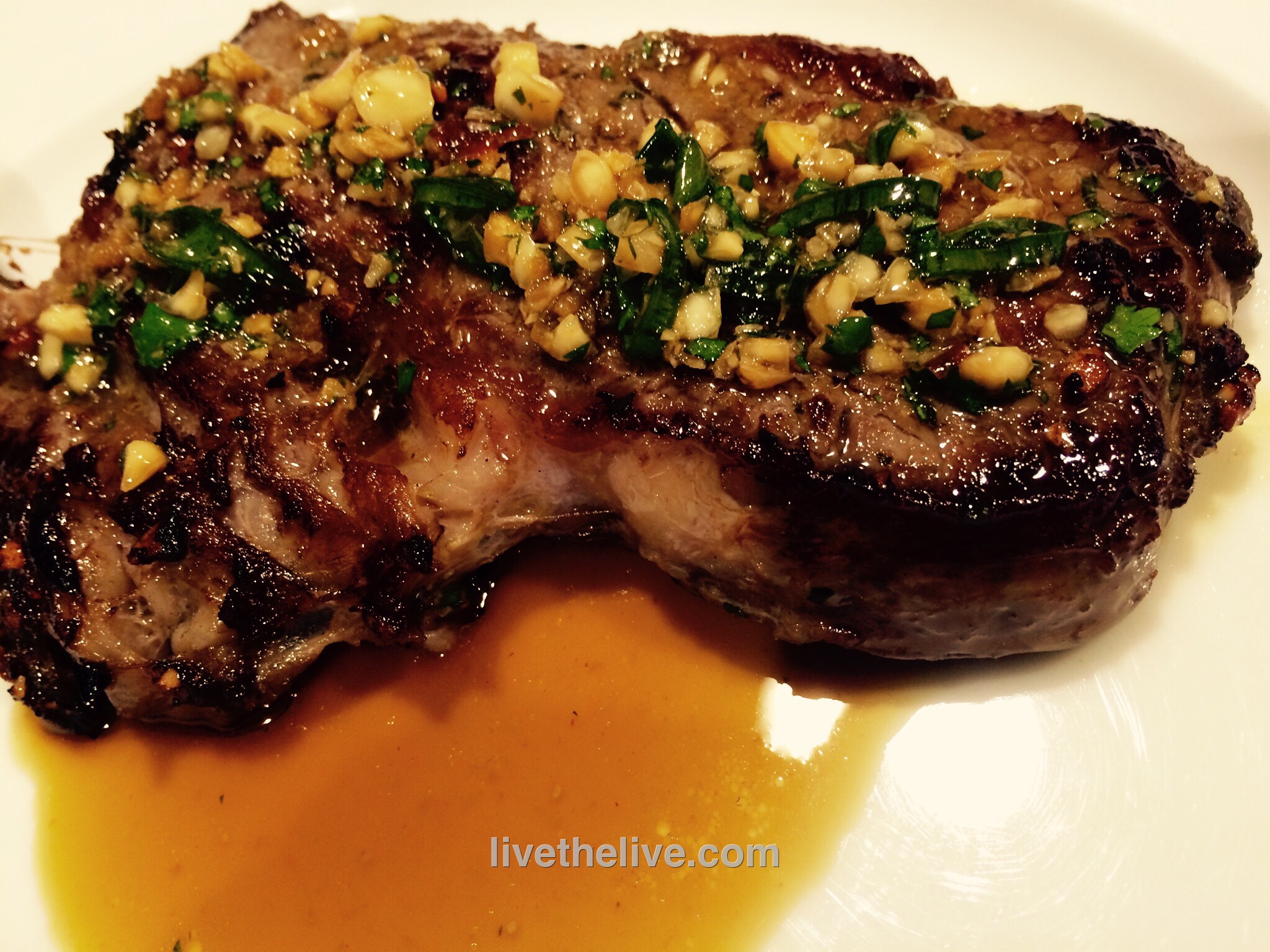
This is a really delicious grilled steak full of wonderful Thai flavors. You do need to marinate it overnight, so keep that in mind. The overnight marinating is key to the intense and unbelievable flavor of the beef.
The original recipe called for skirt steak, but I didn’t have any in my freezer. I did have a fat ribeye, though, so once I thawed it, I sliced it lengthwise to get two large, thin steaks which would easily suck up the marinade I was going to make. And the ribeye was nicely marbled, so it stayed juicy and tender. Beef flap or flank steak are cuts is that would work well with this recipe.
2 lbs. beef ribeye (or skirt steak or beef flap)
1/4 cup chicken stock (homemade is best)
In a bowl, whisk together the sesame oil, soy sauce, ginger, garlic, cilantro, peanuts, scallions, sugar, lime juice and chile oil. Transfer half of it to a shallow dish.
Add the steak to the dish and turn the meat to coat it well. Cover and refrigerate the beef overnight. Refrigerate the other half of the marinade in a separate container.
The next day, light a grill. While it’s warming up, get out a sauce pan and pour the chicken stock in along with the reserved marinade. Heat it to combine it well, but not letting it reach a boil. Remove it from the heat and let it come to room temperature. This will be the dipping sauce for the beef.
About 30 minutes before cooking, take the marinated steak out of the fridge and let it come to room temperature. Season it with salt and pepper, and grill it over high heat until it’s medium-rare, about 5 minutes.
If it’s too cold to light a grill, or if you just want to use the oven, heat a cast iron pan on the stovetop, add a few drops of avocado oil or pork fat, and sear the beef on both sides before placing it in a pre-heated 375° oven to finish cooking.
The original recipe for this white bean soup used bits of bacon. But it just so happened that I was planning on slow-cooking a pork shoulder in my smoker today. When the smoked pork met the white bean soup, it was a match made in pig heaven! (Of course, it would work with brisket or chicken as well…)
2 medium onions, finely chopped
1 medium fennel bulb, finely chopped
1 smashed garlic clove
3 cans (15 1/2 oz.) cannellini beans, drained and rinsed, 1 1/2 cups reserved
40 oz. veal bone broth (or chicken broth, if you prefer)
1/4 teaspoon bouquet garni
1 teaspoon salt
1/4 teaspoon black pepper
Bacon fat and/or olive oil
A slab of slow-cooked smoked pork shoulder, pulled and shredded
In a large heavy saucepan, sauté the onion, fennel, and garlic in bacon fat or olive oil until they are tender, about 8 minutes.
Drain and rinse the cannellini beans, reserving 1 1/2 cups for later. Pour the beans in the saucepan.
Add the veal (or chicken) broth, the bouquet garni, and the salt and pepper.
Simmer for 15 minutes, then turn the heat off and let it cool for 15 minutes.
Puree the soup in batches in a blender, until smooth.
Return the soup to the pot and add the reserved beans. Heat for 10 minutes, and then taste it, adding more salt and pepper, if needed.
To serve, place a mound of the pork, cubed or pulled, in the center of a bowl. Pour the soup on top, and drizzle with a touch of extra virgin olive oil. Chopped scallions, or fresh chives, or parsley on top never hurt!
I’ve seen a lot of recipes lately that feature barbecue sauces made with berries. I’m a fan of a sweeter barbecue sauce, so this was right up my alley! The first time I made it, I didn’t have any chicken or beef stock on hand, so I used veal bone broth, which was pretty intense. The flavor of the sauce was delicious, but a lighter stock allows the flavor of the berry flavor to come through better.
Edible art!
12 oz. jar of blackberry preserves
1 cup chicken or beef stock
1/2 cup ketchup
1/4 cup turbinado sugar
juice of 1/2 large lemon (or 1 small lemon)
2 tablespoons apple cider vinegar
Cooking ribs is a low and slow process, so start by cooking the ribs in a smoker at 250 degrees for about 4 hours. I like to use hickory wood when smoking pork. If you don’t have a smoker handy, you can simply place the ribs on a sheet pan in a 250-degree oven and bake for 4 hours.
While the ribs are cooking, combine all the ingredients in a sauce pan. Heat to a boil, then reduce it to a simmer and cook it for about 20 minutes, until slightly thickened.
After the ribs cook for 4 hours, baste them on both sides with the sauce, and wrap them in aluminum foil. Bake them in the foil–still at 250–for another hour.
I get requests for this recipe every year. It’s absolutely delicious!
Let’s face it: there’s no such thing as healthy eggnog. This recipe is absolutely delicious but is also a heart attack in a glass. I updated this recipe a couple of years ago so that you don’t need to worry about salmonella (because you’re not using raw eggs)…though the alcohol will certainly still get you! (So I guess calling it “safe” is a matter of opinion!)
My buddy, Rick Sammarco, a wicked talented bartender, credits his father, Al, for the eggnog recipe I started from.
Some say that “aging” eggnog that uses raw eggs–literally letting it sit in the fridge for up to 6 weeks–will give the alcohol time to kill the salmonella. But there’s no real scientific evidence to support this. Sure, if you pour a ton of alcohol in the batch, 15% or even more, it might be safe. And I might risk it on myself, but I would never take a chance and serve it to friends or family. The only thing that really kills salmonella is heat, and that’s not something the average homeowner can easily do without actually cooking the eggs.
The solution is to buy pasteurized eggs.
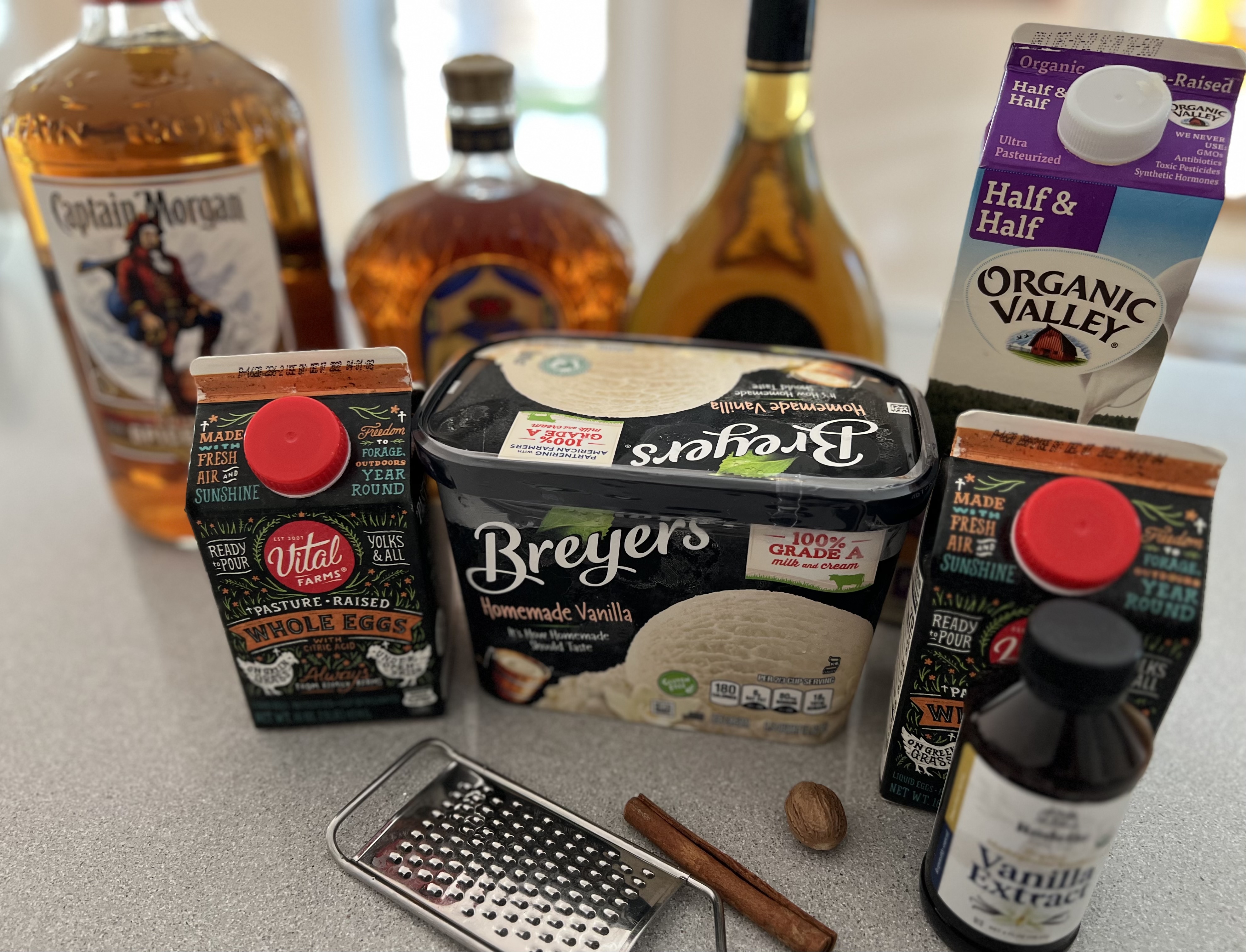
Some supermarkets now carry whole eggs in the shell that have been pasteurized, though they are hard to find. But the Whole Foods near me does carry pasteurized real whole liquid eggs under the Vital Farms name, and they work perfectly with this recipe. The original recipe called for 15 (!) raw eggs. A 16-oz. container of Vital Farms liquid eggs is the same as about 9 eggs. So I need one full 16 oz. container, and then another 10 oz. or so for this recipe.
Now the only thing I need to worry about are too many calories and too much alcohol!
1.5 quarts vanilla ice cream (I use Breyer’s)
1 pint half & half
Just over 26 oz. Vital Farms liquid whole eggs (the equivalent of 15 whole raw eggs)
1 teaspoon vanilla extract
1/2 teaspoon cinnamon
1/2 teaspoon nutmeg
1/4 cup pure maple syrup
6 oz. of each:
spiced rum (I use Captain Morgan)
whiskey (I use Crown Royal)
brandy (I use E&J)
I let the ice cream soften one day in the fridge. I carefully mix the ice cream, half-and-half, eggs, vanilla, cinnamon and nutmeg in a blender.
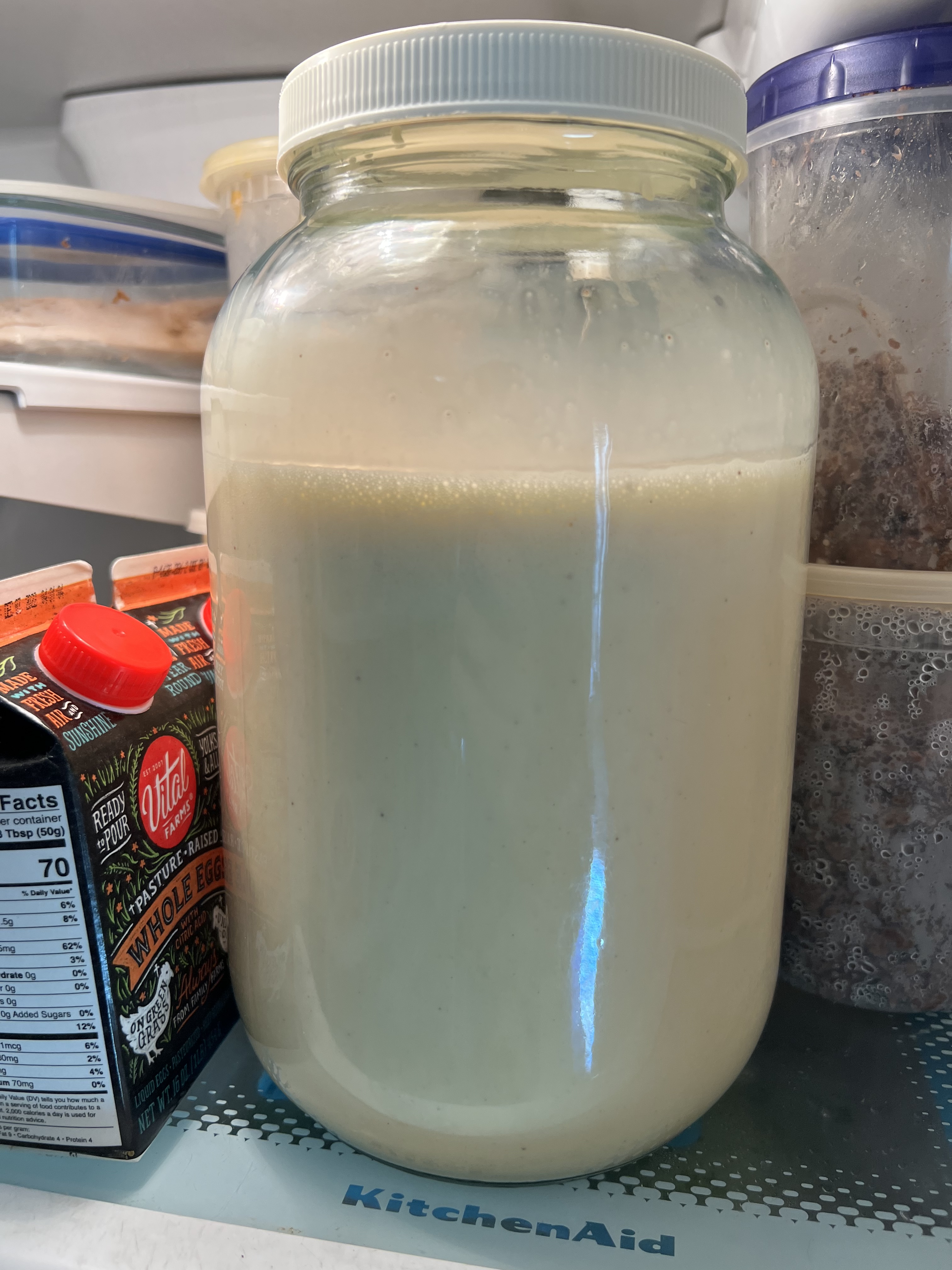
My blender is pretty big, but I find that it’s full at this point. So I pour everything into a gallon-size glass jar.
To the jar, I add the maple syrup and all the liquor. Then I whisk everything together, making sure I get down to the bottom of the jar.
After it’s fully mixed, I place the lid on the jar, and move the eggnog to the fridge, where I let it sit for at least 12-24 hours for the flavors to blend. Even longer is better.
One final mix and taste to determine whether I want more cinnamon, nutmeg or maple syrup, and it’s good to go!
It goes well with coffee…just maybe not for breakfast!
And by the way, it’s pretty darn tasty with coffee! Just imagine a variation on a White Russian, with eggnog and freshly brewed coffee, and a bit of a drizzle of maple syrup on top!
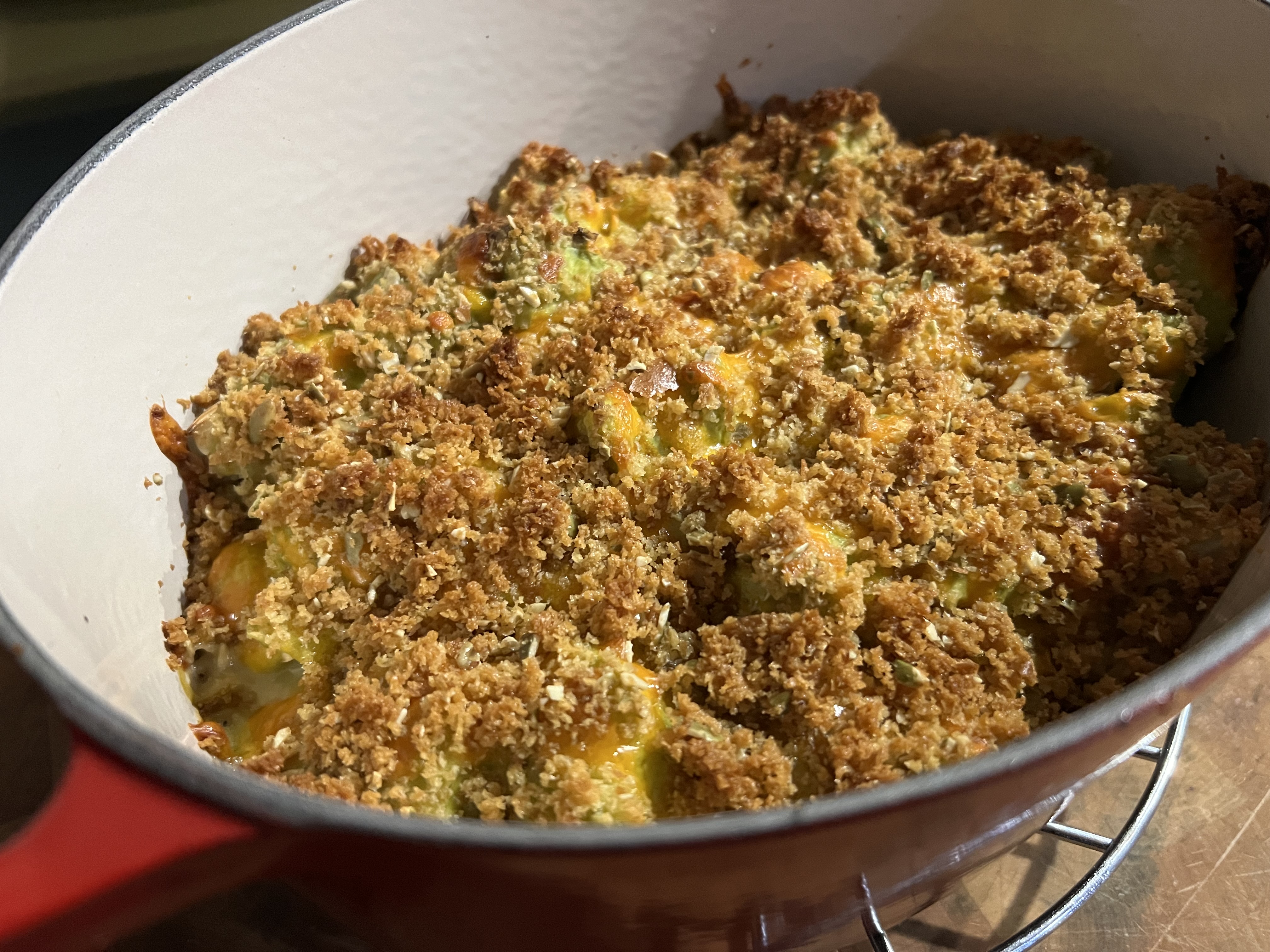
If you want a double bang for your veggie buck, this is it. I based this recipe on a similar one from Jamie Oliver. It’s a great side dish with any main course, especially a steak or roasted chicken.
And it’s up to you…if you don’t want to do any chopping, you can easily use frozen veggies.
Bouquet garni is an herb blend easily found in any supermarket spice section.
To make this dish gluten-free, simply use GF flour for the sauce, and a piece of GF bread for the bread crumb topping.
In a saucepan, melt the butter and add the flour, stirring constantly to make a roux. Stir in the garlic and bouquet garni. Slowly add the milk, stirring all the time, until you have a nice béchamel sauce. Set it aside for a moment.
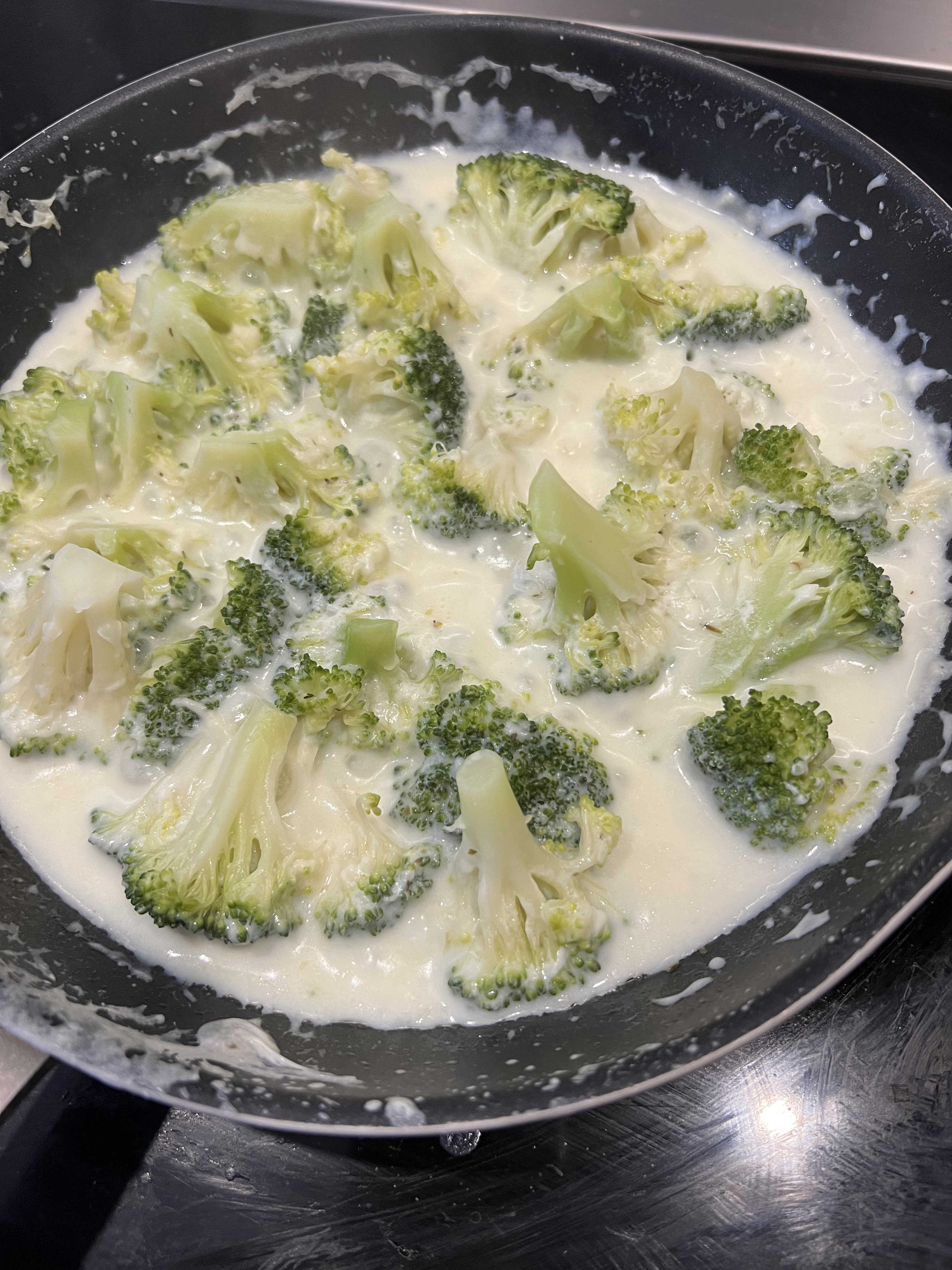
In a large pan, pour in the broccoli. (If you’re using frozen, you don’t have to thaw it.) Pour the béchamel sauce over the broccoli, and simmer it over medium-low heat, covered, for about 20 minutes, until the broccoli is soft and cooked through.
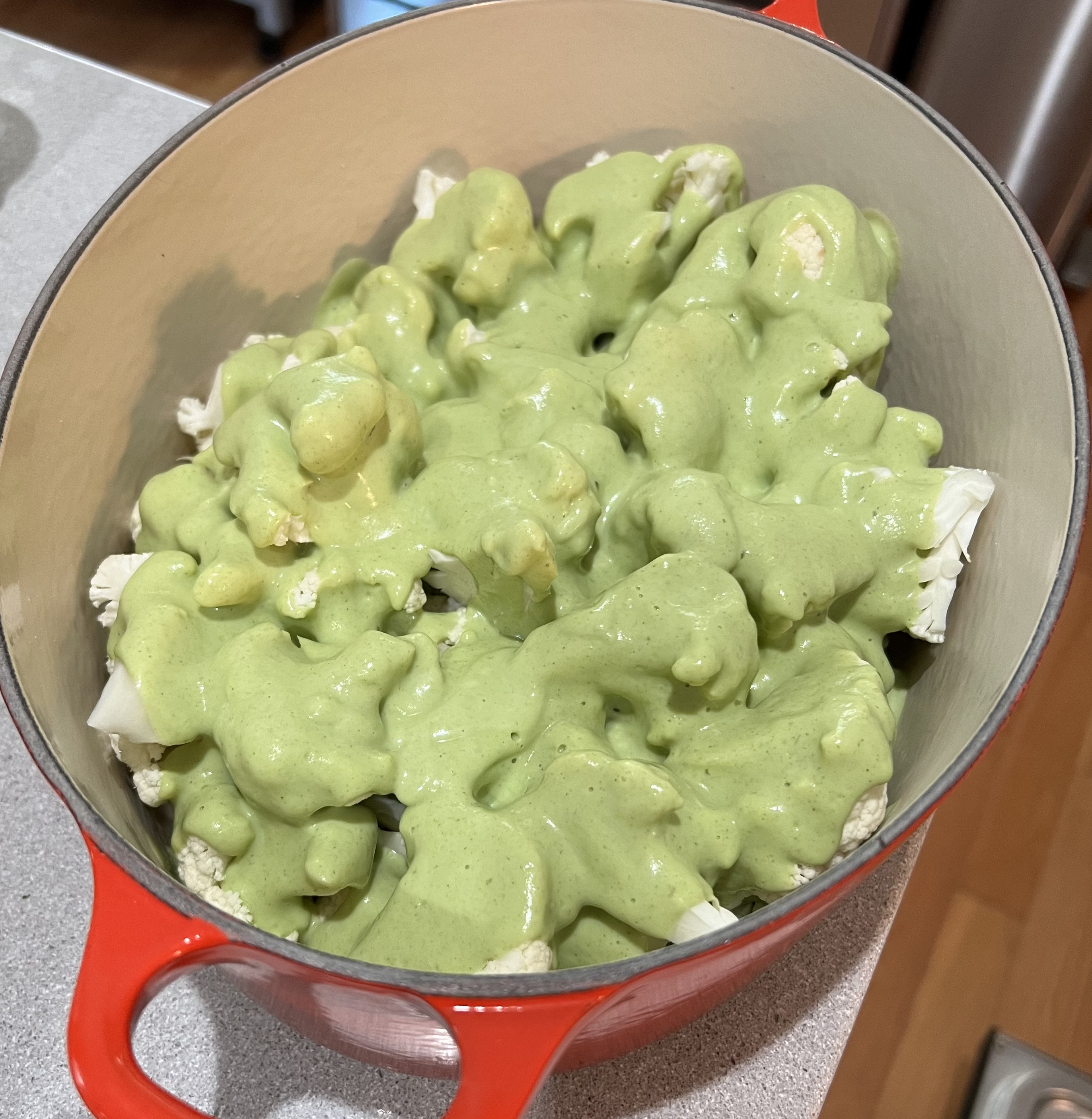
Everything in the pan goes into a blender. Season well with salt and pepper. Whiz it up until you have a broccoli sauce.
Placed all the cauliflower in a large ovenproof casserole dish. (Again, the veggies can be frozen.) Pour the broccoli sauce on top.
Sprinkle the cheddar cheese on top of that.
In a food processor, tear up and toss in the pieces of bread. (Some day-old Italian bread works great. I had a day-old brioche bun.) Sprinkle in some olive oil. Process until crumbly. Throw in the almonds and process for a few seconds again.
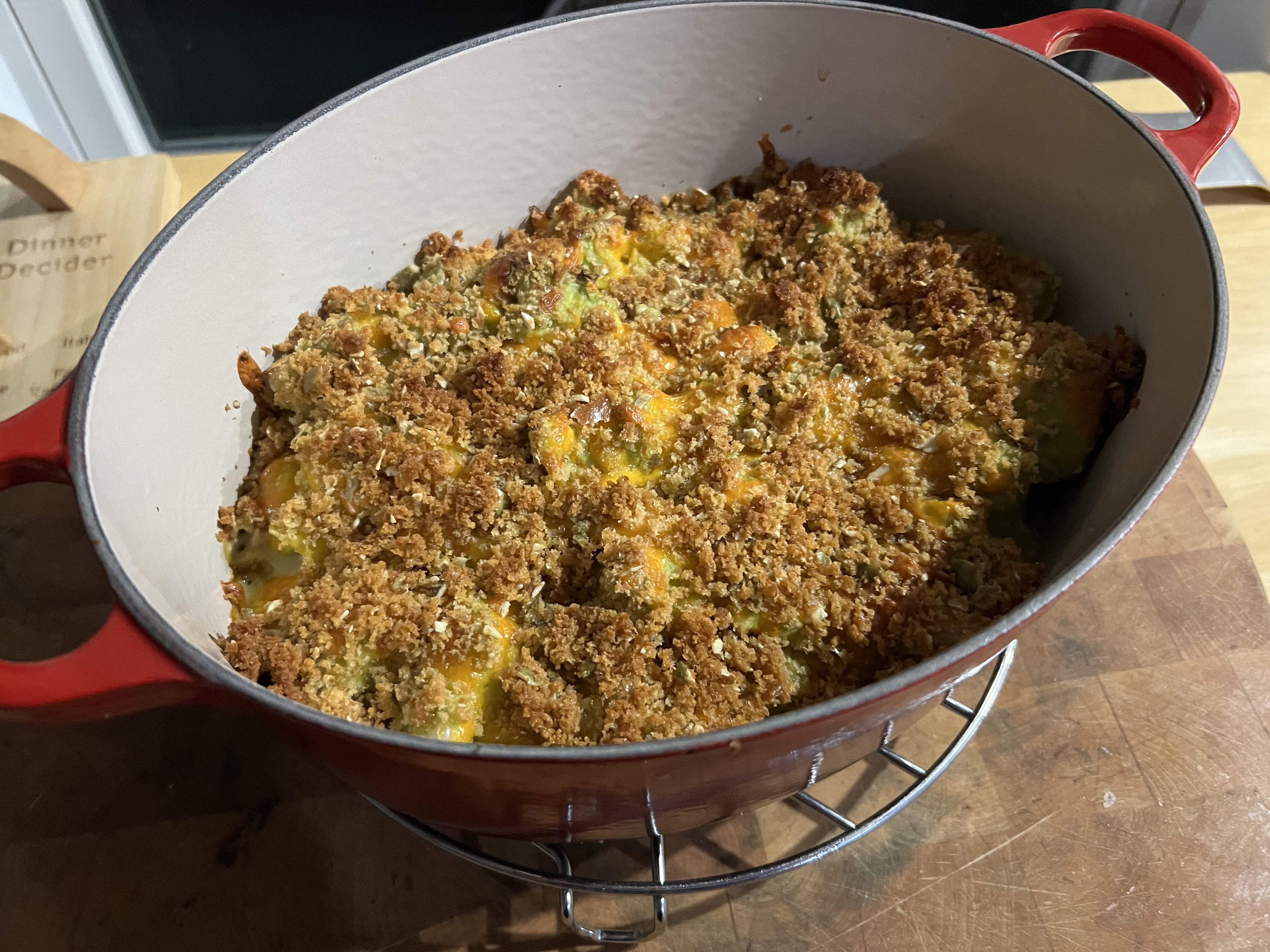
Sprinkle the bread crumb/almond mixture over the cheddar and bake for about 45 minutes until golden and cooked through.
This is an easy marinade to make and, depending on what meat you prefer, works for both.
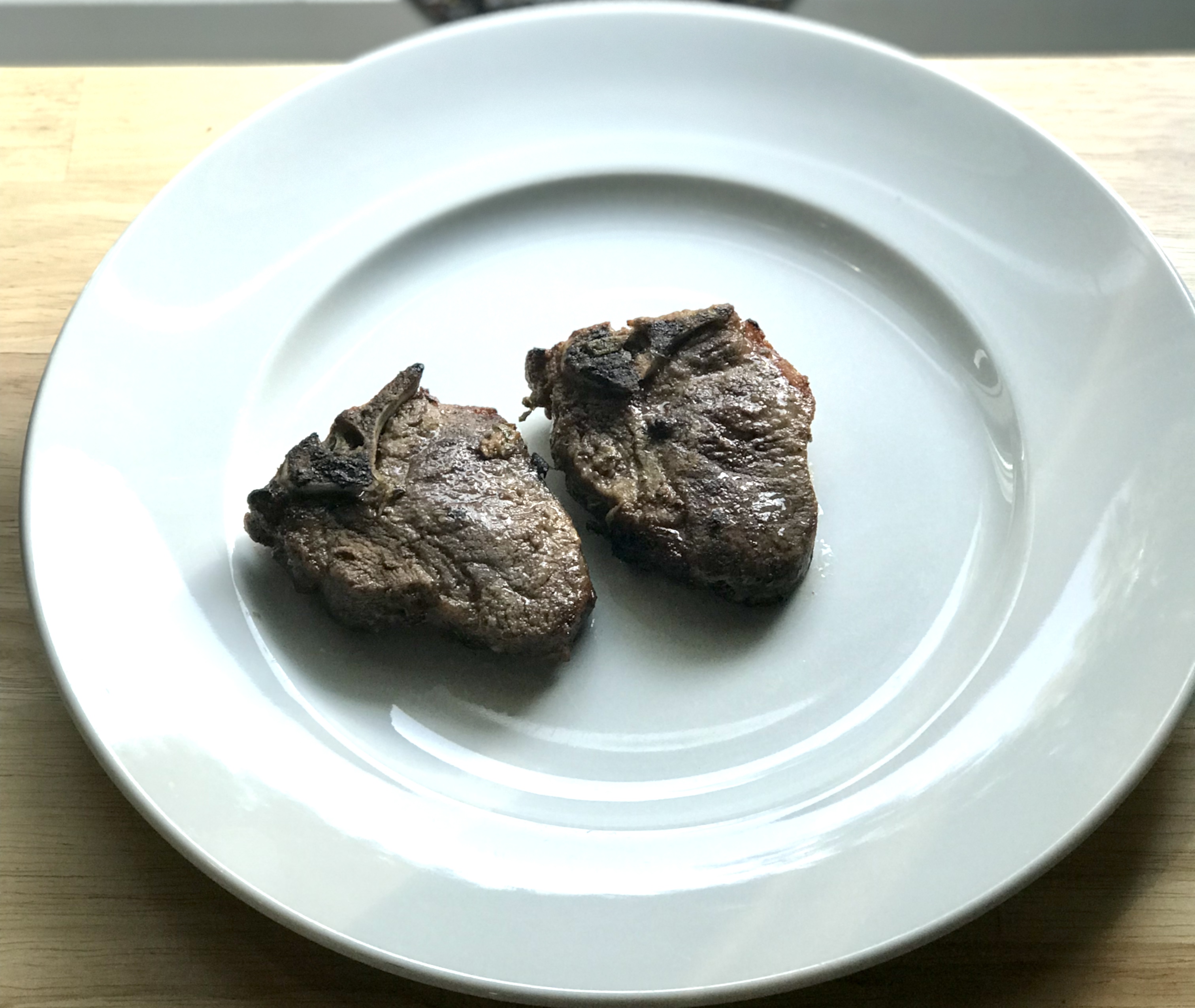
I marinated and roasted both lamb and chicken with this marinade, and both worked great. So if you’re not as big a fan of lamb as I am, no worries.
The key to the success of this dish is to make sure you give the meat a lot of time to suck up the marinade, and to season the meat well.
1/4 cup Dijon mustard The zest and juice of a lemon 2 tablespoons maple syrup 1 teaspoon garlic salt 1/2 teaspoon Kosher salt 1/4 teaspoon black pepper Fresh thyme and rosemary, chopped fine
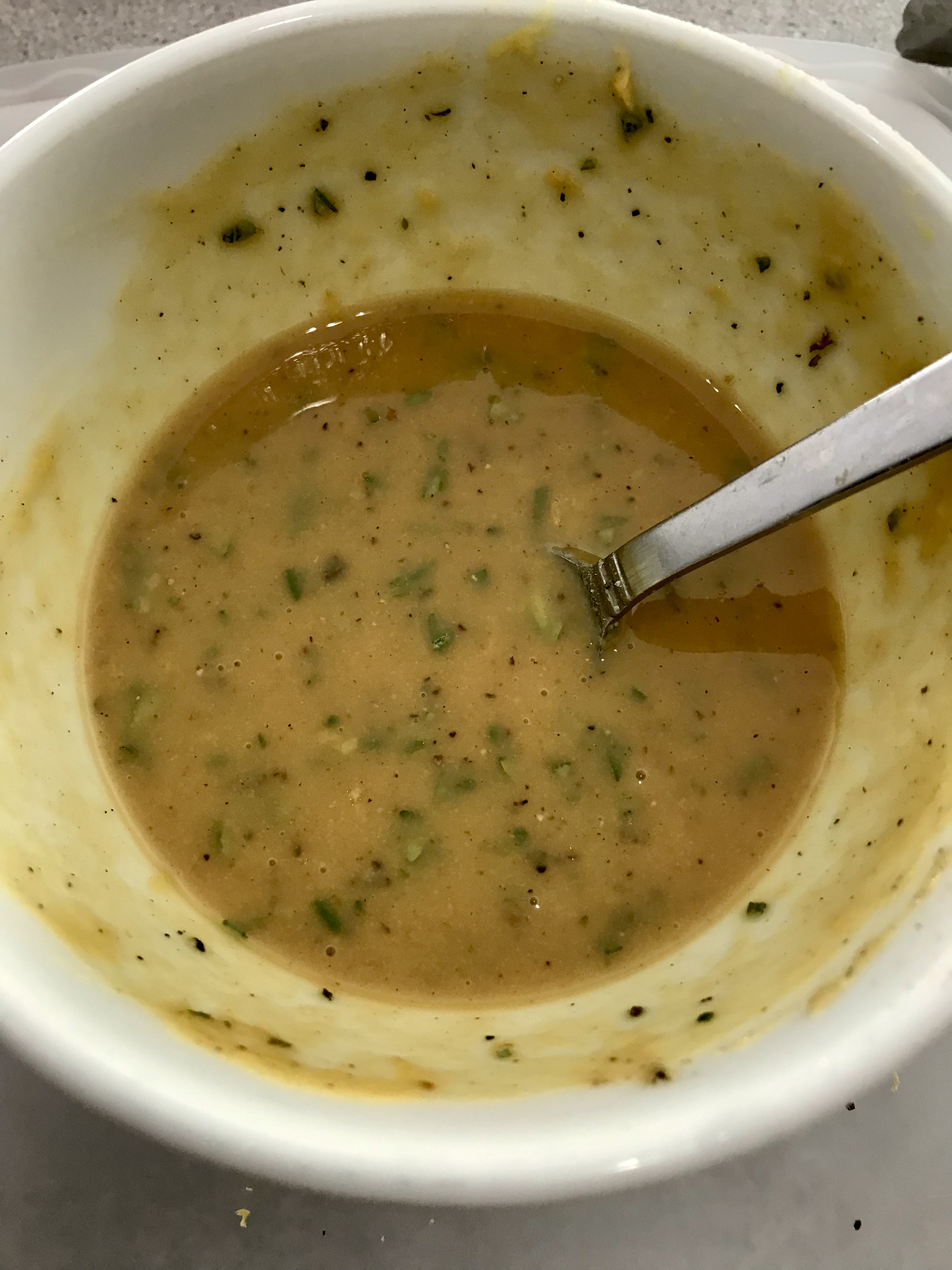
Combine all the ingredients in a bowl and mix well.
Place the lamb and/or chicken in a Ziploc bag and pour in the marinade, squishing it around so that it really covers the meat. Marinate the meat at room temp for at least 3 hours, but overnight in the fridge is best. Make sure to squish the bag around every few hours to make sure all parts get the marinade.
The next day, pre-heat the oven to 350 degrees.
Place the marinated meats on a sheet pan with non-stick foil. Season the meat with salt and pepper.
Pour whatever marinade is left in the bag into a bowl and use it to baste the meats as they cook. (Don’t use any of the marinade without cooking it–it has touched raw meat!) Bake until medium for the lamb, or all the way through for the chicken. At the end of cooking, toss the meat under the broiler for a few minutes to get a nice char.
Grilling is certainly an option for this dish. Lamb can be cooked directly on the grill, all the way through. Chicken will require to be pre-cooked in an oven or cooked over medium heat on the grill to make sure it’s cooked all the way through before that final char.
There are a million apple pie recipes online, and people argue whether they should go with an all-shortening or all-butter crust, or even a crust with a combination of the two. I used to be a half-butter, half-shortening guy, myself. But over they years, I’ve become an all-butter guy, because quite frankly, shortening is nasty. And butter…is butter!
I choose to bake the pie the day before serving it. And I prepare the dough the day before that. That way, it has time to rest in the fridge overnight. When you’re ready to bake, remove the dough from the fridge and work with it as cold as you can. If you thaw it too much, you’ll lose the magic of the little butter chunks scattered through the dough.
For the dough…
2 1/2 cups all-purpose organic flour (I like King Arthur) 1/2 teaspoon salt 1 tablespoon sugar 1 cup butter, chilled and diced into cubes 1/2 cup very cold ice water
You can mix the dough ingredients by hand in a bowl, but I prefer a food processor.
Combine the flour, salt and sugar in the food processor and give it a quick pulse to mix. Drop the cubes of butter into the flour mixture, and then pulse the processor until the dough mixture resembles coarse crumbs, and the butter is reduced to pea-sized bits.
Add 1/4 cup of the water, and run the processor. Keep adding a little water at a time, and as soon as the dough forms a ball and pulls away from the sides of the processor bowl, stop! You don’t want to overwork the dough.
Remove the dough to a floured surface and knead it into a ball. Cut the ball in half, and roll each half into a thick, round pancake about an inch thick. wrap these tightly with plastic wrap and place them in the fridge until you’re ready to bake.
For the pie filling…
3 lbs. Granny Smith apples, peeled and sliced into 1/4″ thick slices 1/2 cup butter 3 tablespoons all-purpose organic flour 1/3 cup apple cider 1/2 cup granulated sugar 1/2 cup light brown sugar 2 teaspoons real vanilla extract 2 teaspoons cinnamon 1/8 teaspoon nutmeg
Preheat the oven to 425.
Remove the dough from the fridge. While it’s warming up, prepare the apples.
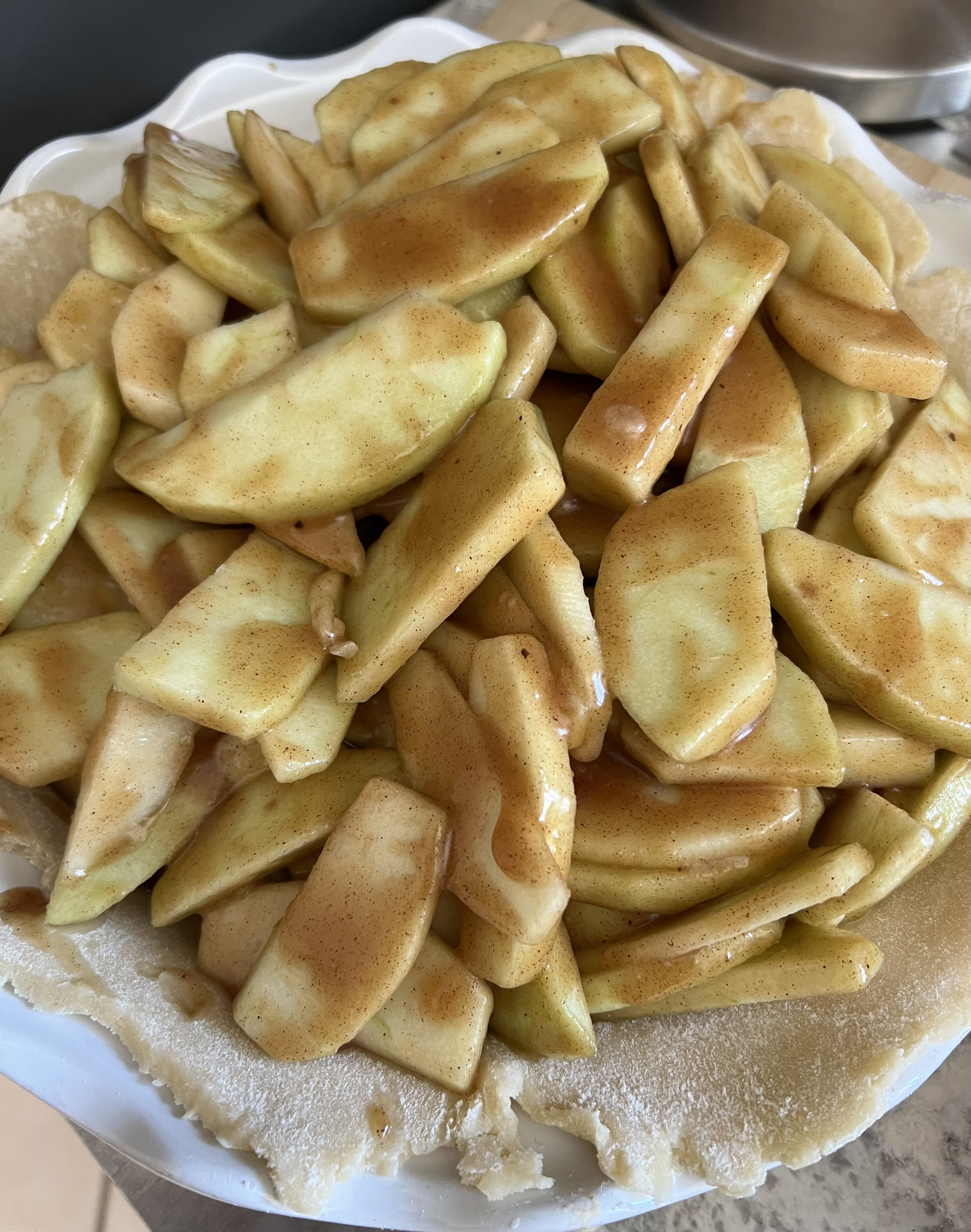
Peel and slice the apples into 1/4″ wide pieces. (I like to cut some a little thinner and some a little thicker, so I get different textures of apple when the pie has baked.) Place them in a large bowl.
Melt the butter in a saucepan, and add the flour. Whisk well to make a roux. Add the juice, both sugars, vanilla, cinnamon and nutmeg. Bring it to a low boil, stirring constantly, then remove from the heat.
Pour the contents of the saucepan into the large bowl with the apples, saving about 1/4 cup butter-sugar sauce for later. Mix the sauce with the apples really well, making sure they’re completely coated.
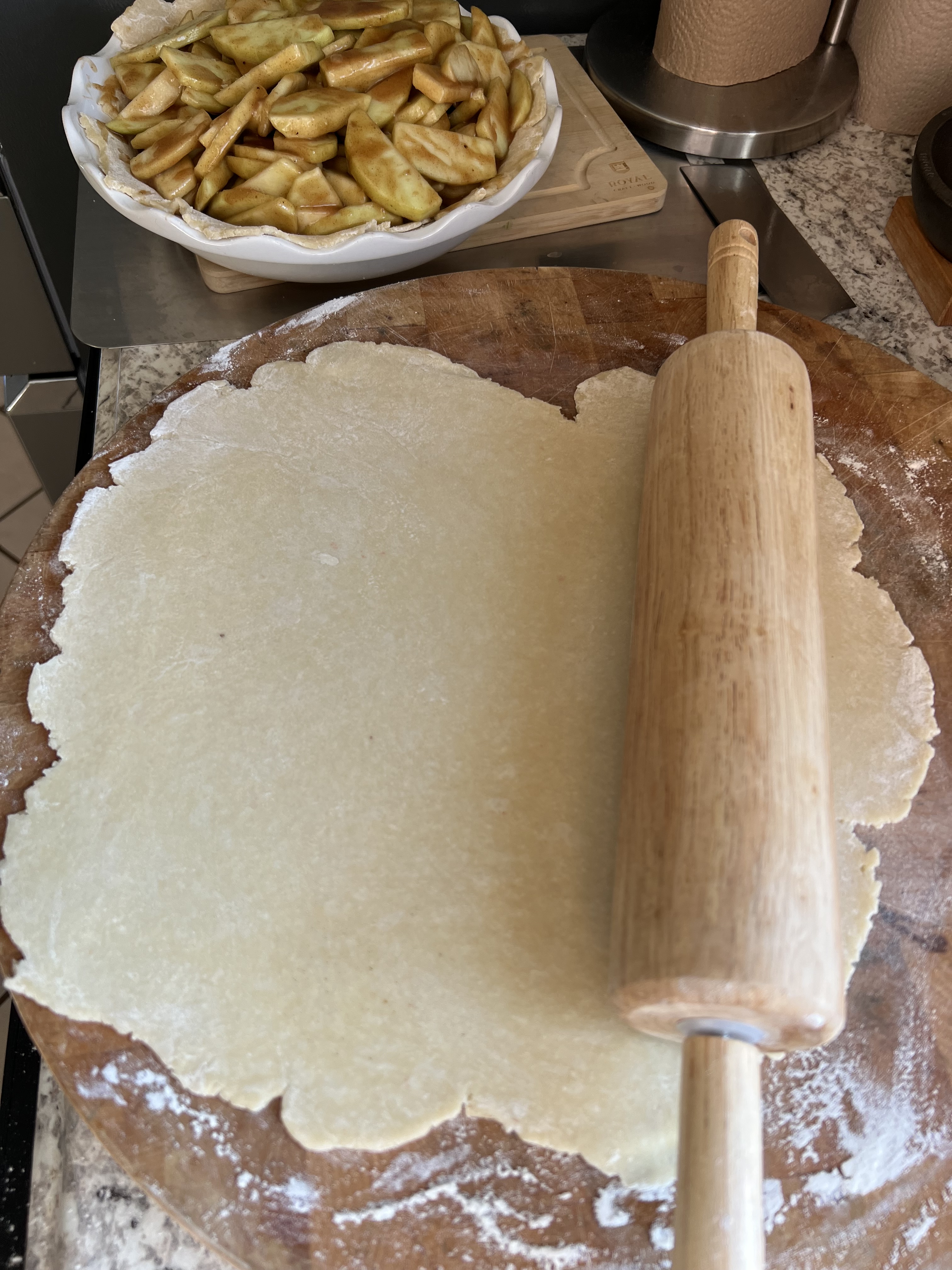
Unwrap one of the dough pieces. On a lightly floured surface, roll it out large enough to fit the bottom and sides of a 9″ pie pan. Let it hang about a 1/2″ over the top edge of the pan, for crimping later.
Carefully transfer the apple mixture into the pie pan, making sure you get every little bit of that butter-sugar sauce in there. The apples will form a large mound. don’t worry…they’ll cook down.
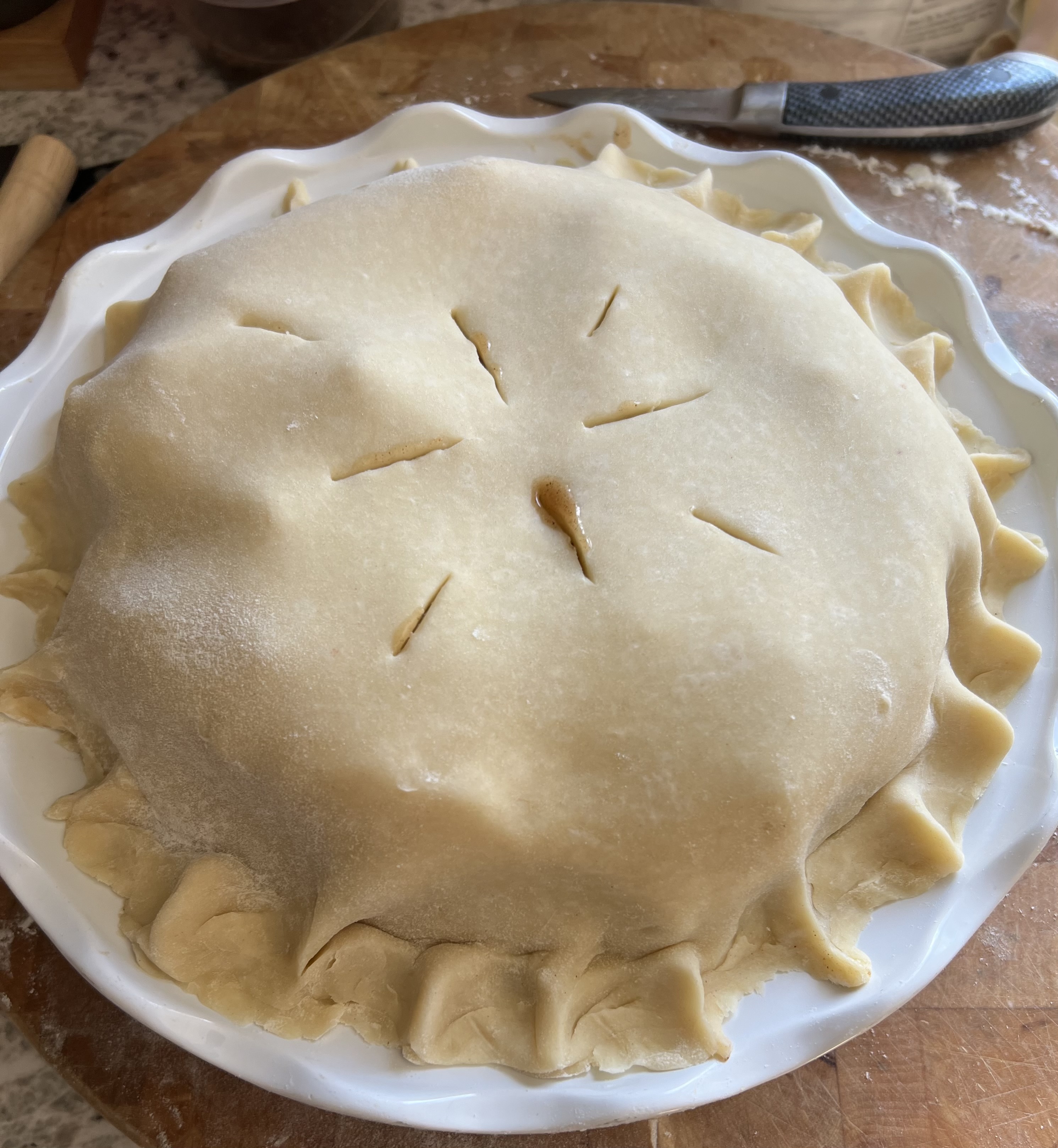
Unwrap the other piece of dough and roll it out so that it fits over the top of the mound of apples. Tuck the excess edges of the upper crust under the overlapping bottom crust, pinching the two halves together, making as tight a seal around the pie as you can. (Don’t cut any of that crust away…use it! It’s delicious!) Cut several slots in the top of the crust to let steam out while the pie cooks.
Take that 1/4 cup of reserved butter-sugar sauce, add a little water to it, and brush it all over the top of the crust, brushing evenly over the entire crust.
Place the pie on a baking sheet and bake it at 425 for about 15 minutes. Then drop the oven temperature to 350 and bake for another 50 minutes, or until the top is golden brown and crisp. If it looks like the edges of your pie are browning too quickly, tent around the edges loosely with foil. Remember, ovens vary!
Let the pie cool completely. I prefer to let it cool overnight, to be served the next day. We like to serve it with good-quality vanilla ice cream.
Of course, apple pie and coffee is an excellent breakfast the next morning!
Recently, my daughter and I visited Pittsburgh, and we really enjoyed a meal at an Argentinian restaurant, Balvanera. Interestingly, there was one dish on the menu that seemed more Mediterranean than Argentinian: roasted carrots on a bed of labneh. We enjoyed it so much, I made it my mission to find a recipe similar to it and prepare it as part of our Thanksgiving dinner. It was a success!
If you’re not familiar with labneh, it’s a soft cheese made by straining yogurt to remove the whey. It’s not always easy to find, but supermarkets like Whole Foods do carry it. You can also make your own by straining Greek yogurt through cheese cloth in a fridge overnight.
We used the already-peeled bagged organic carrots for this dish, but if you can’t find them, simply peel and slice your carrots to about a 2-inch diagonal length.
1 lb. organic carrots, peeled and sliced into 2-inch diagonal pieces 2 tablespoons garlic, minced 2 teaspoons fresh lemon juice 2 teaspoons Za’atar spice blend 1 teaspoon dried parsley 1 teaspoon Kosher salt 1/2 teaspoon cracked black pepper 1/2 teaspoon ground cumin 2 tablespoons roughly chopped pistachios 2–3 tablespoons maple syrup Fleur de Sel or other finishing salt
Preheat the oven to 425.
Line a baking sheet with parchment or non-stick foil and place the carrots on the sheet.
In a bowl, combine the olive oil, garlic, lemon juice, Za’atar, parsley, salt, pepper, and cumin. Mix well, and then pour it all over the carrots.
Toss the carrots and the other ingredients using your hands to get the seasoning all over every part of the carrots, until they’re evenly coated. (The carrots, not your hands!)
Roast the carrots for about 30 minutes. Look for them to start caramelizing around the edges. You don’t want them mushy…you still want some bite to them.
Spread the labneh onto a plate or platter, and then top with the roasted carrots. Sprinkle the pistachios on top, and drizzle with the maple syrup. A finishing touch of Fleur de Sel makes it perfect!


















 Live the Live ™