Posts Tagged ‘travel’

Starting in the mid 1700’s, sailors in the British Navy were given a daily ration of rum. They called it a “tot,” and the practice of daily “tot” distribution lasted for almost 200 years, until July 31, 1970. When it ended, not only were there many sad British sailors, but there was also a vast amount of leftover rum. Much of it was sold off at high prices because the taste was excellent and the methods of its distillation were no longer used.

It made sense. In the old days, when liquids were stored in wooden barrels aboard ship, water, beer, and wine would go bad very quickly. Only something with a much higher alcohol content wouldn’t spoil. Rum was the answer. And getting the sailors drunk every day kept them from deserting…it was good for morale!

But while the sailors drank rum, Royal Navy officers drank gin. The use of exotic spices in gin was made possible by imports from Africa and Asia. Gin’s prevalence around the world is largely due to the fact that sailors set foot in many new cities on new continents.

And though the British Navy stopped the practice of issuing alcohol to its sailors in 1970, the Royal New Zealand Navy abolished the practice as late as 1990!

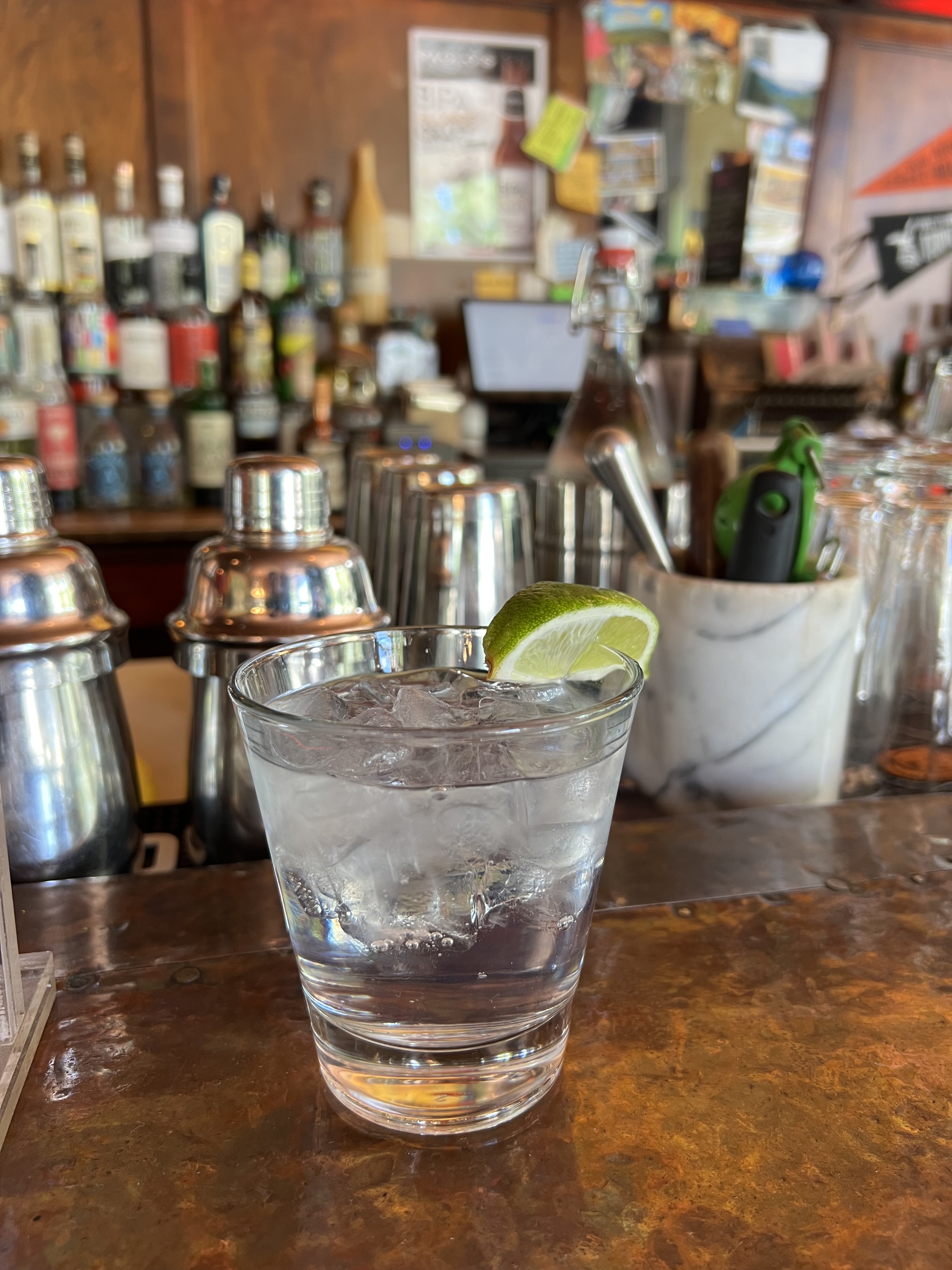
Until a recent trip to New Zealand, I was not a huge fan of gin. Don’t get me wrong: I liked it. A gin and tonic was a nice refreshing drink on a hot summer’s day. And my fascination with the Vesper martini, a combination of gin and vodka, made me appreciate gin even more.

But it wasn’t until I went to New Zealand, and tasted their magnificent gins, in combination with delicious tonics only available in that country, did I really start to appreciate the subtle differences between them.

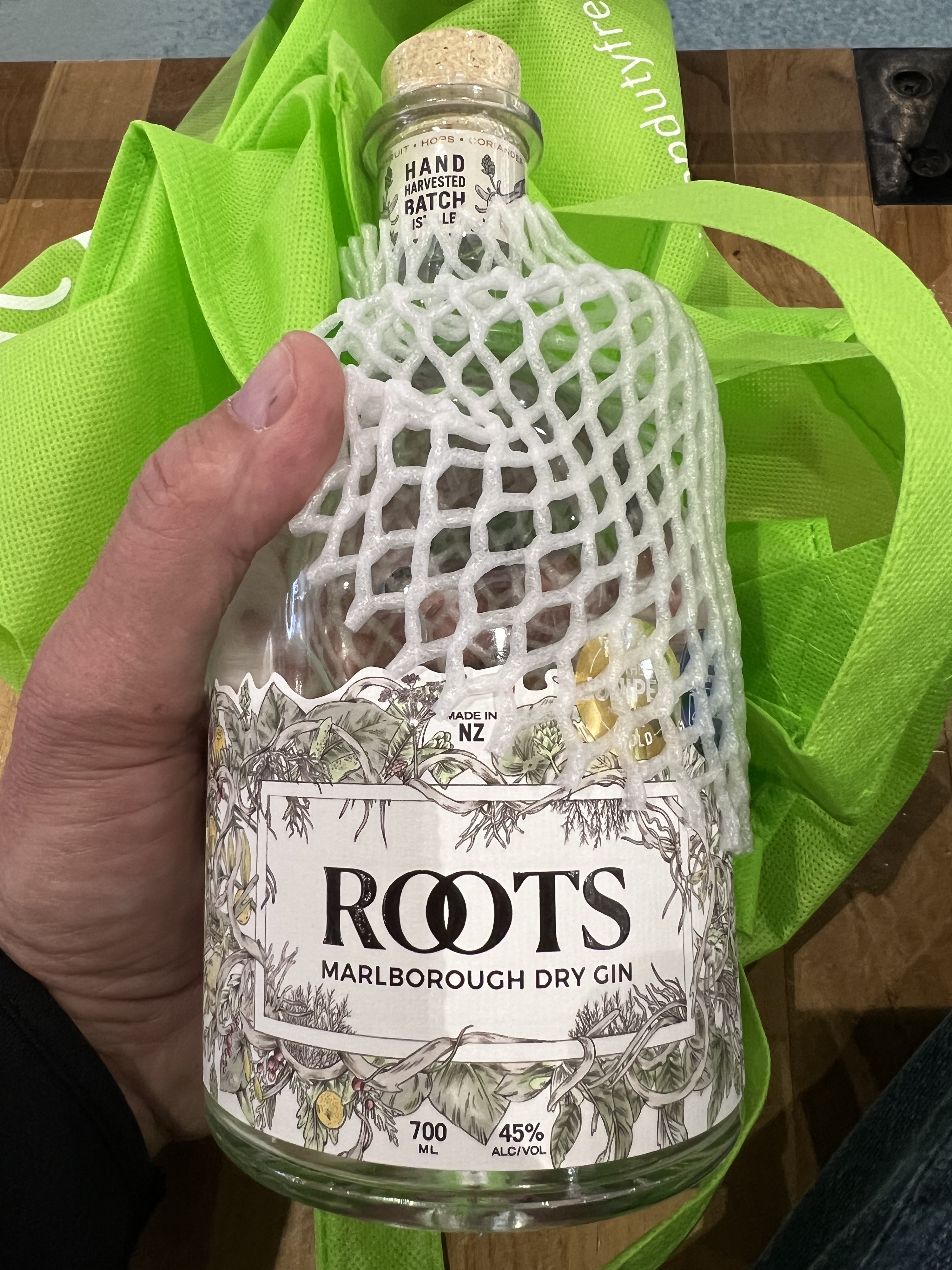
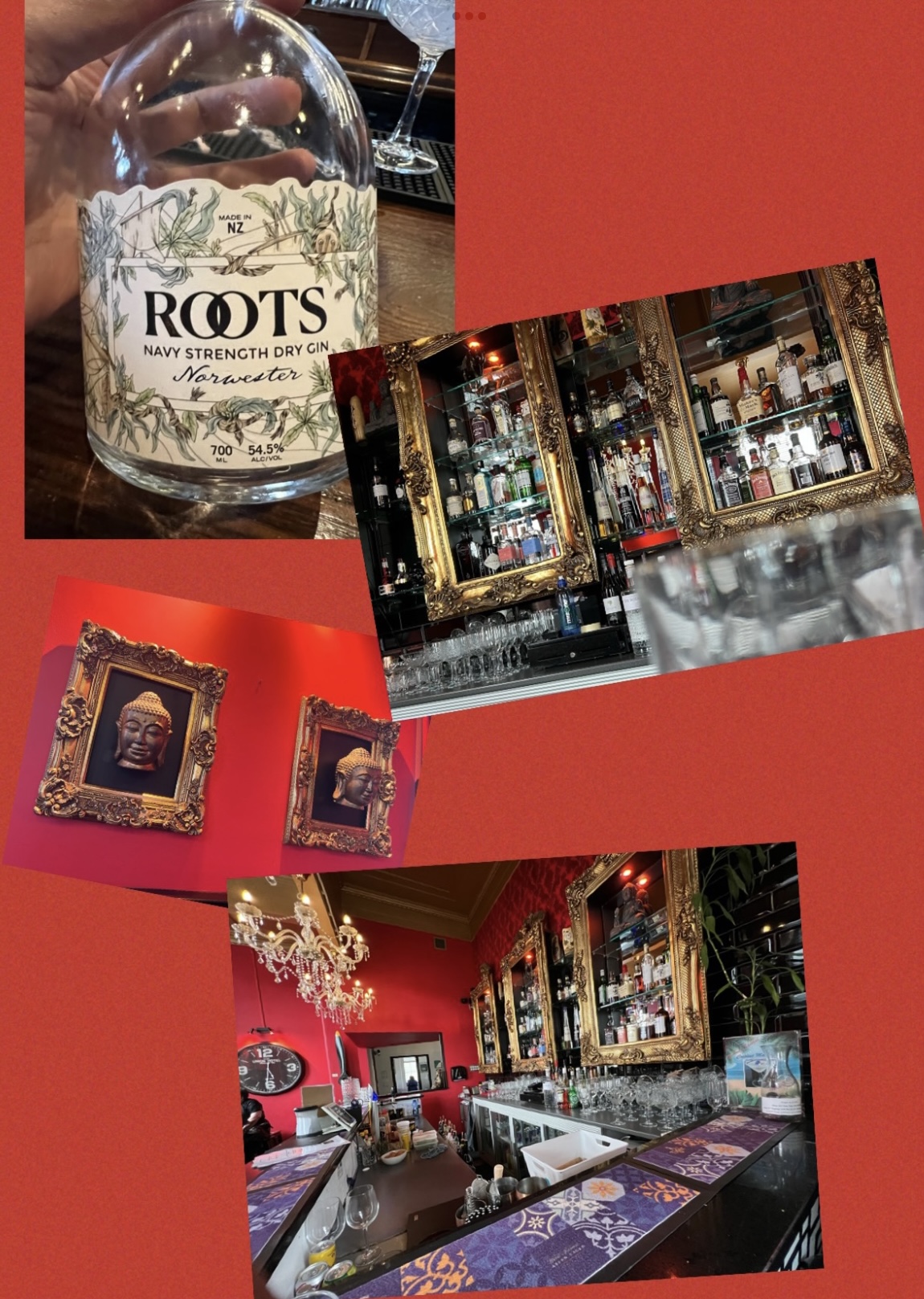
The first thing that caught my eye when I was served a sample of Roots gin, distilled in Marlborough, was the label: “Navy strength dry gin.” I asked what that meant. Well, for one thing, it had more alcohol. And the reason for that was surprising. Since gin, like rum, was stored in wooden barrels on ships, very often next to barrels of gunpowder, the gin had to contain enough alcohol so that if it spilled onto the gunpowder, the gunpowder would still ignite! Not enough alcohol in the gin would waterlog the gunpowder and make it useless. So tests were actually done by pouring gin on gunpowder to see what the minimum percentage of alcohol was required to keep the gunpowder burning. The answer was about 57%. Anything below that and the gunpowder would not burn. They coined the term “Navy strength.”

(Although the bottle of Roots gin above weighs in at 54.5%, it’s properly called “Navy strength.” In 1866, to keep sailors from getting completely hammered, the British Royal Navy reduced the alcohol content of the rum they were distributing to 54.5%. Hence, a new “Navy strength.”)

I was allowed to take only 1 bottle home from New Zealand, but, as you can see, it was not Navy strength. Still delicious!

The other advantage to a Navy strength gin is taste. If you’re not diluting it with water, not only are you getting more alcohol, but you’re also getting more of the herbaceous flavor you want in a gin.

Up until my trip to New Zealand, my experience with gin was limited to the usual list of suspects: Tanqueray, Bombay Sapphire, and Hendrick’s. I also more recently discovered Ford’s, a very nice London dry gin I sometimes use in my Vesper martinis.

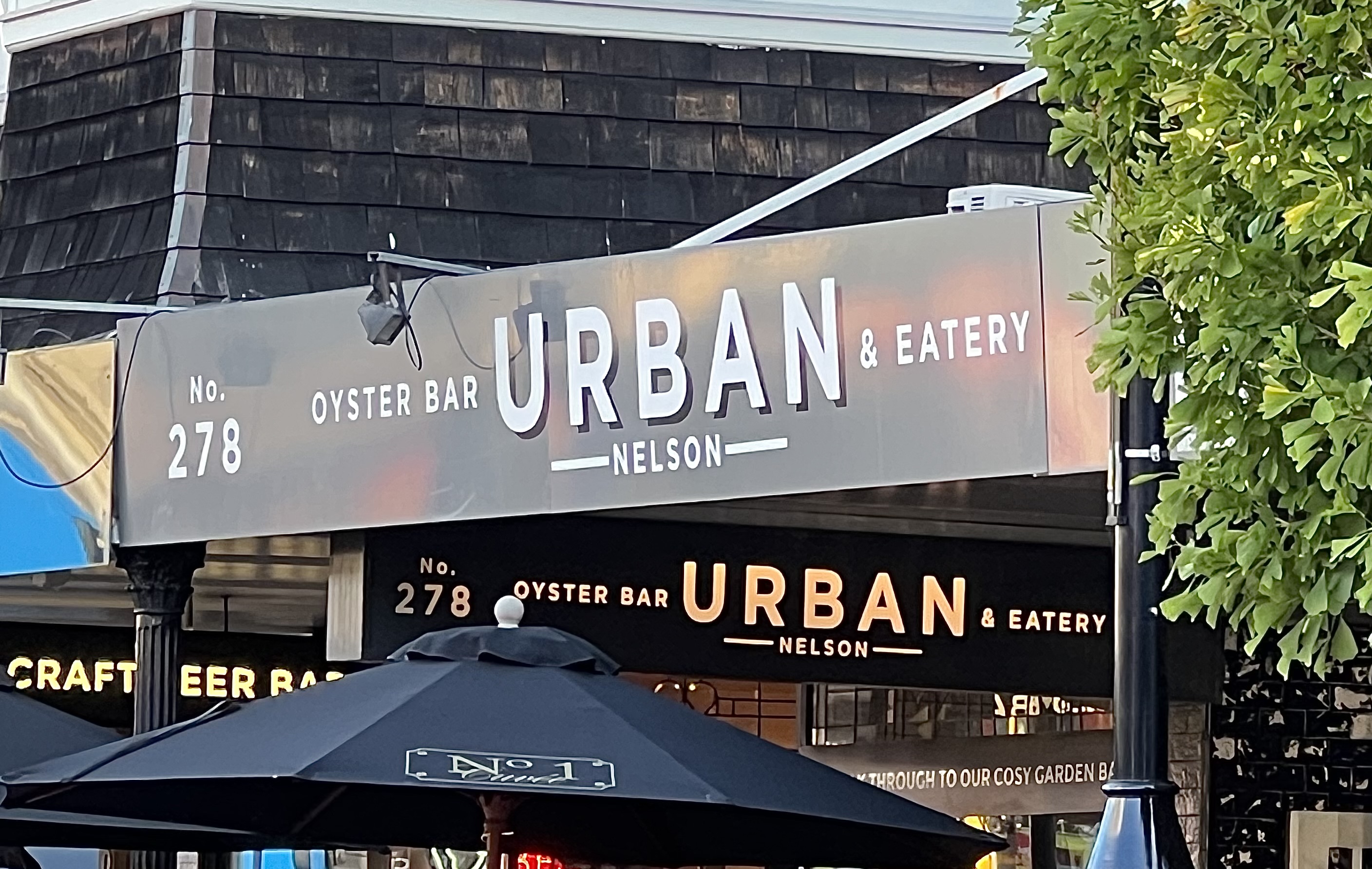
But in New Zealand, many of the gins were floral and herb-forward, and I found that I like that. I like that a lot. For example, Victor, another Marlborough gin, was like “Hendrick’s on steroids.” I said that to my bartender at the Urban Eatery and Oyster Bar in Nelson, NZ, and she agreed. Delicious.

Although gins may vary in alcohol content, rules about serving liquor in New Zealand are very strict, certainly by US standards. For example, a “double” in New Zealand is 30ml. That’s 1 ounce! And that’s a standard pour for a cocktail. You can, I found out, ask for a “double-double.” And in that case, they would serve you a 1-ounce shot on the side with your drink, and you would have to pour it in yourself.

When I told the bartenders in New Zealand that we have 4-ounce martinis at any decent steakhouse in the US, and they realized that was 120 mls, their jaws pretty much dropped and hit the bar. One bartender gasped: “That’s irresponsible!” I told her that two of those drinks is widely considered the “businessman’s lunch” here in the states. She just shook her head.

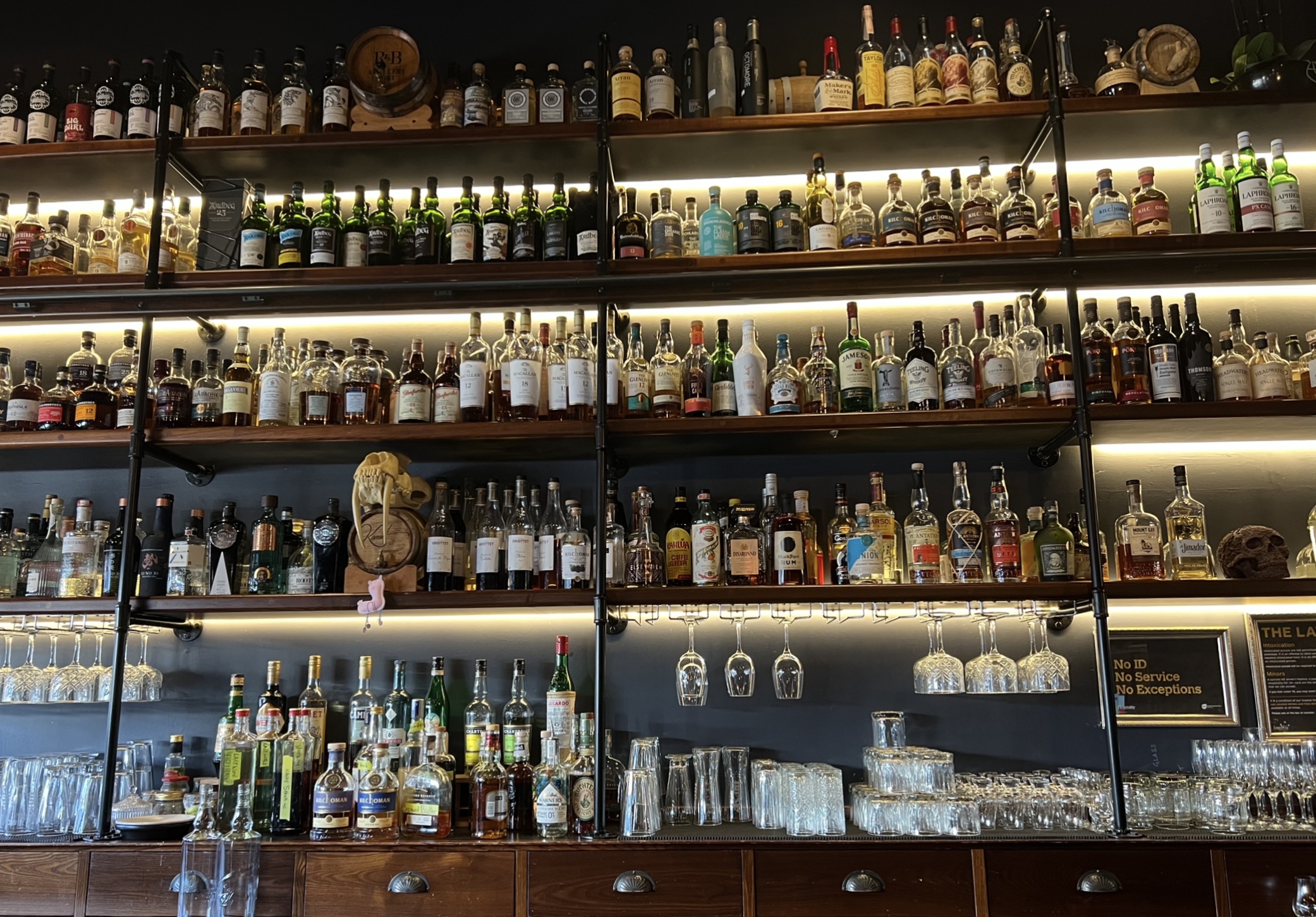
Much to choose from at Kismet, my favorite bar in Nelson, NZ.

The phrase “proof” also has a very different meaning.

In the states, it’s pretty simple: it’s double the percentage of alcohol. So a bottle that’s 40% alcohol is 80 proof.

But the phrase “proof” comes from there British Royal Navy’s “proof” test. They would take the gin, pour it onto gunpowder, and if it ignited, that would prove there is sufficient alcohol in the gin. They would say that the gin was “gunpowder proof,” and it would be allowed onboard the ship.

So in the UK, a spirit with 57.15% is 100 degrees proof. A spirit with 40% alcohol is 70 degrees proof.

For me, it’s easier to simply remember to check the percentage of alcohol, and go from there.

One of the reasons I fell in love with New Zealand gin was because it was often served with East Imperial tonic, a New Zealand product that was not available in the United States for some time. But when I returned from my trip, I googled it and found that it was now being distributed in the US! When the amount of alcohol you’re allowed in your glass is limited (by our standards, anyway), what fills the rest of it up becomes incredibly important. East Imperial was the best line of tonics I’ve ever tried. (I’m saying was now, because, sadly, the company went under last year, and I managed to purchase a couple of 12-packs of the last of the available inventory. Once it’s gone, it’s back to Fever Tree.)

It stands to reason that a great cocktail is the sum total of its parts: great gin, great tonic, great ice.

I was enjoying a few Roots and tonics at the Bamboo Tiger, a bar inside the D’Urville Hotel in Blenheim, NZ, when we felt earthquake tremors. (My first!) It only lasted a few seconds, and when the chandeliers stopped moving, everyone pretty much went right back to business!

I spent about 10 days last summer in Scotland and Ireland, and though they’re known for their whiskey, it was their gins that really impressed me. But I’ll save that for another blog.

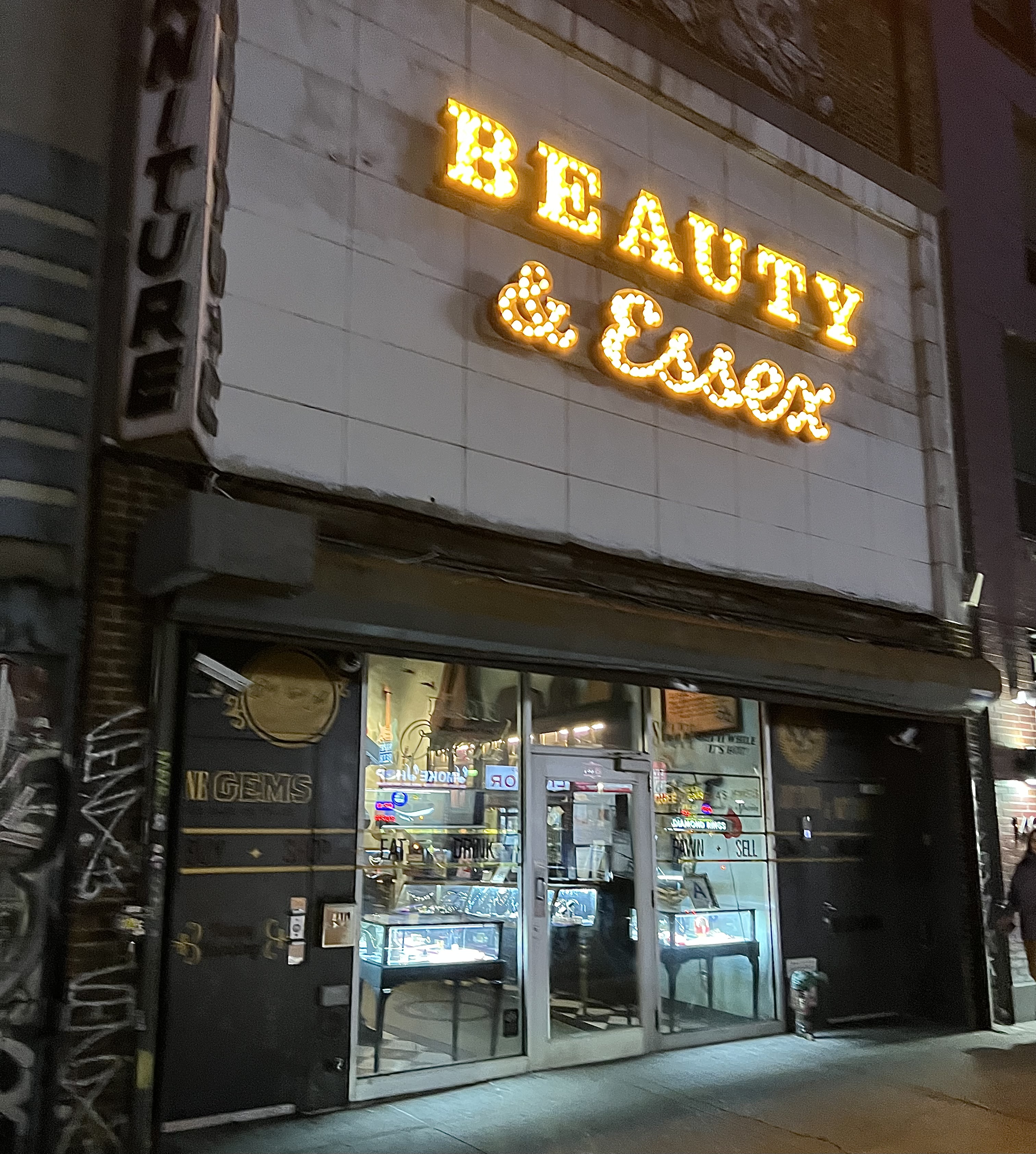
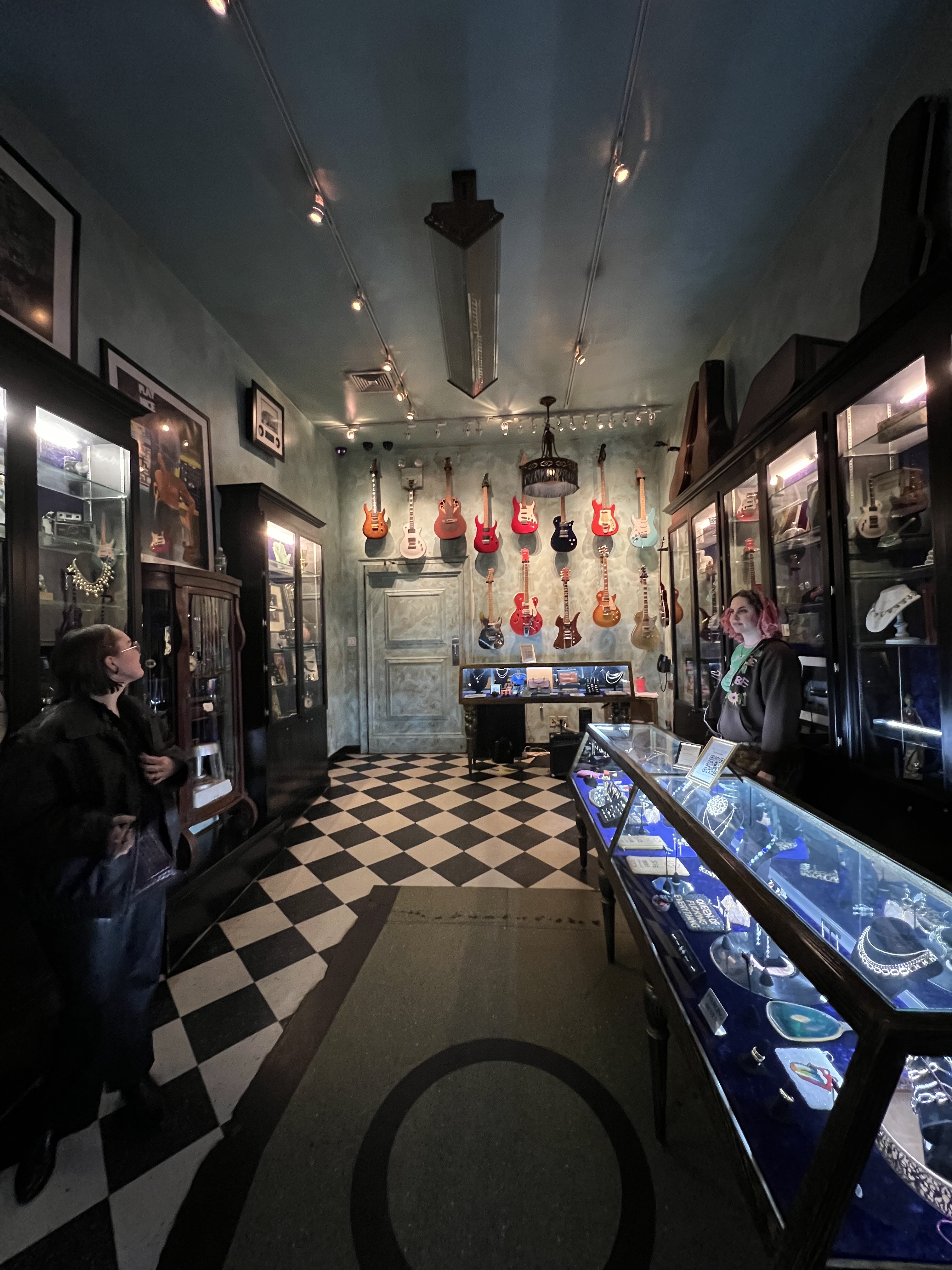
On the lower east side of Manhattan, you walk into what looks like a pawn shop. And it is, in fact, a real shop where you can buy what’s on display. But go through the back door, and it opens up into an exciting dining experience created by Food Network chef Chris Santos, who grew up in our little state of Rhode Island.

Enter through the door in the back!

Beauty and Essex is hip and dark, with music loud enough for a fun vibe, but not so loud that you can’t have a conversation while dining.

A sip at the bar while our table was prepared. It was not a long wait.

Our server’s name was Crewe, and the dude had the skills. We were there to celebrate my birthday, and we wanted to take it slow and have a good time. Not once did we feel rushed, nor did the plates come out of the kitchen too quickly. Nor did it take too long for the next drink to arrive. Crewe knew.

The food was fun. Mostly small plates meant to be shared. And the main courses were beautifully executed as well.

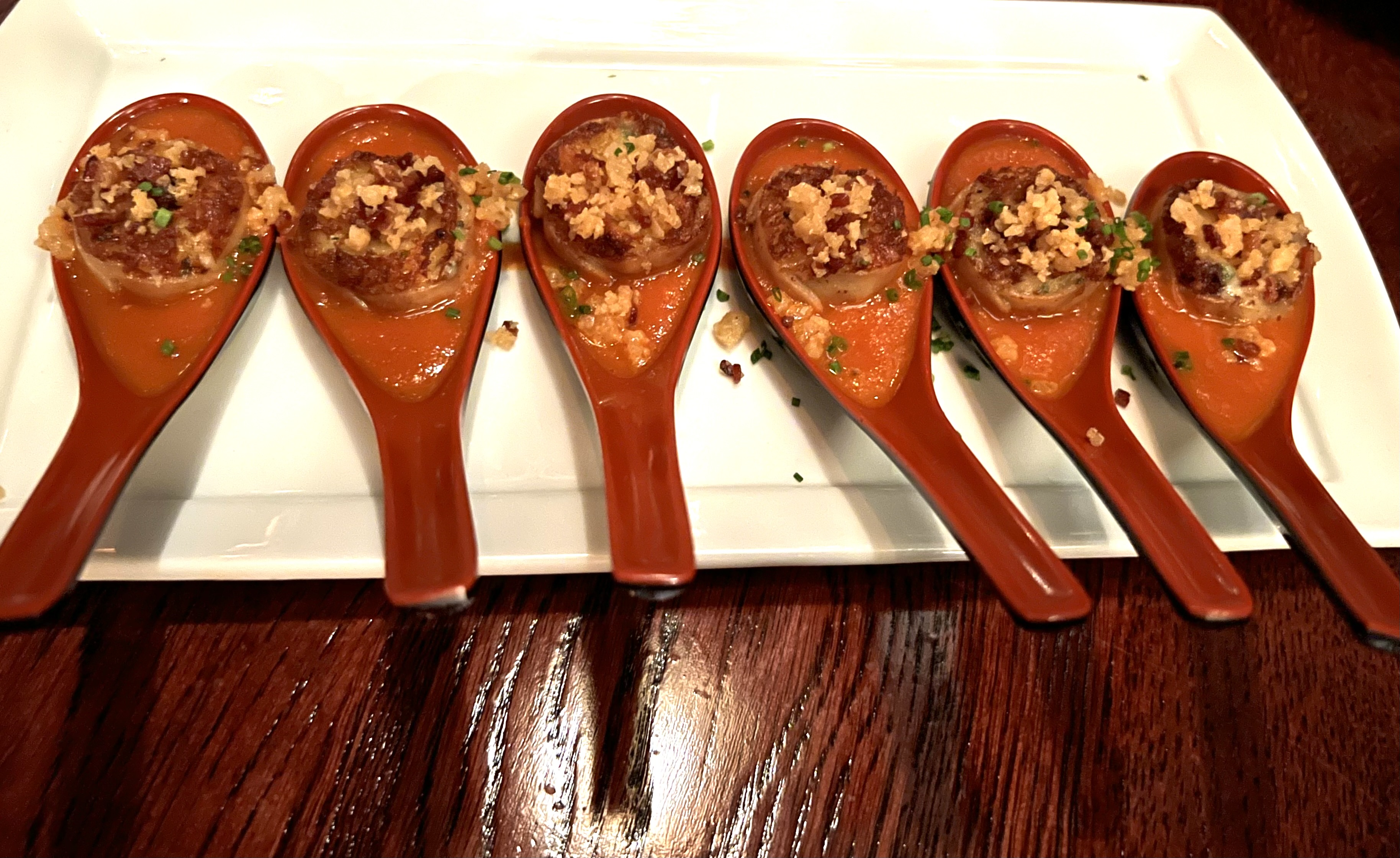
Grilled cheese, smoked bacon and tomato soup dumplings. Close your eyes, and it takes you back.

Little French dips: super tender prime sirloin with Gruyere, horseradish-garlic aioli, and house-made au jus.

Cauliflower tacos with apple miso marinade, gochujang, and charred scallion salsa.

The house salad.

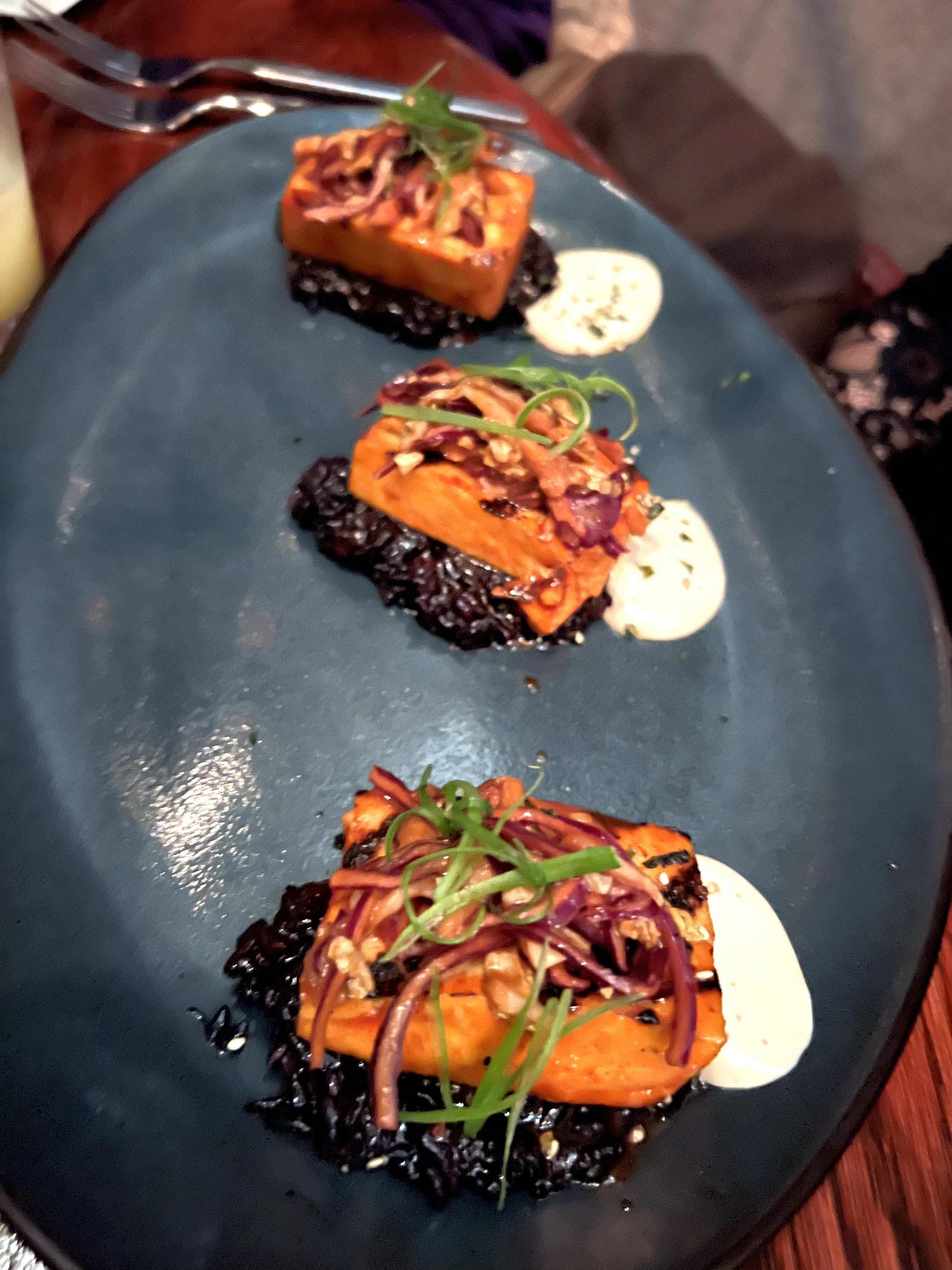
Grilled tofu with black garlic risotto, gochujang slaw and ginger aioli.

A most excellent burger.

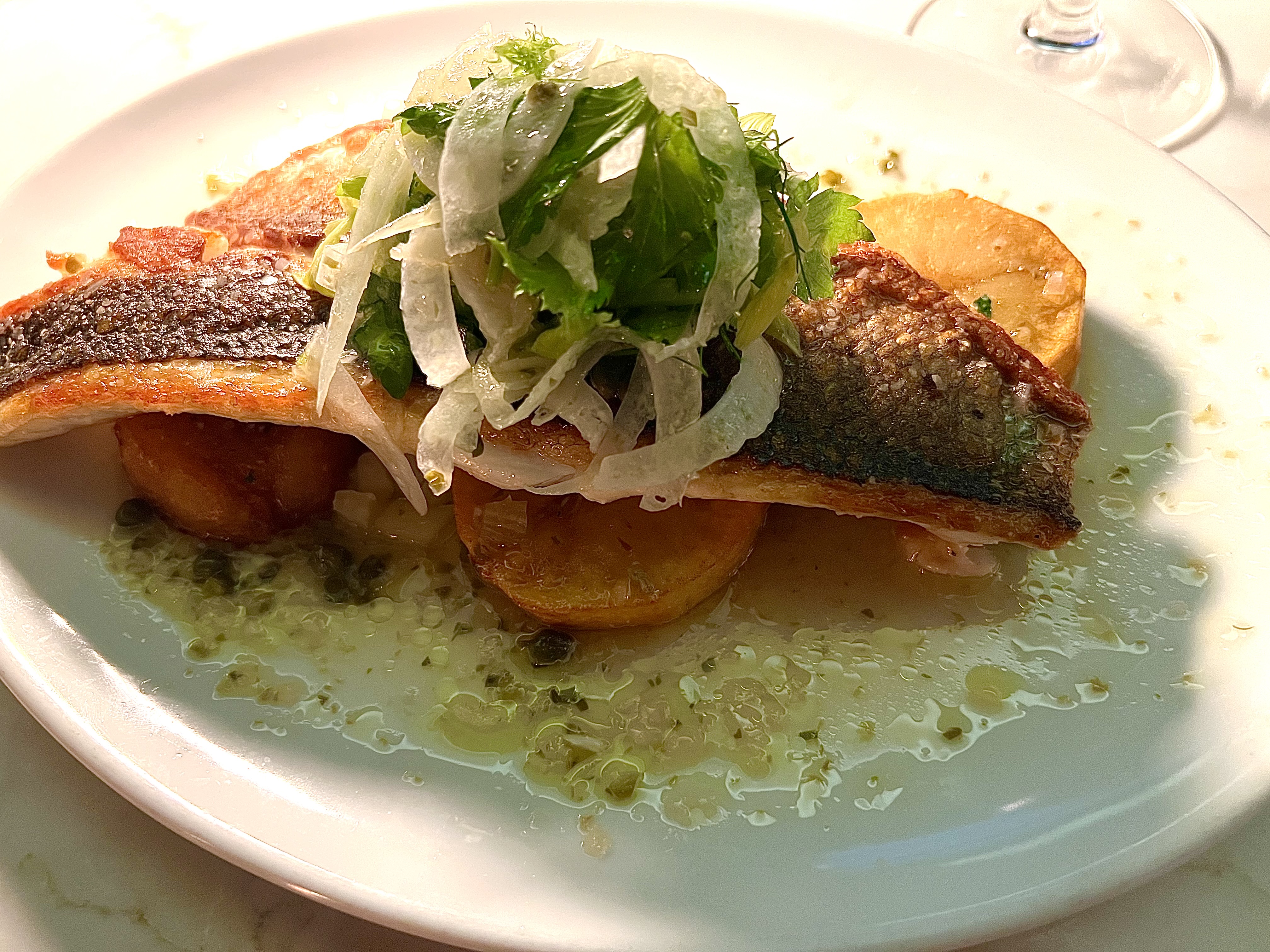
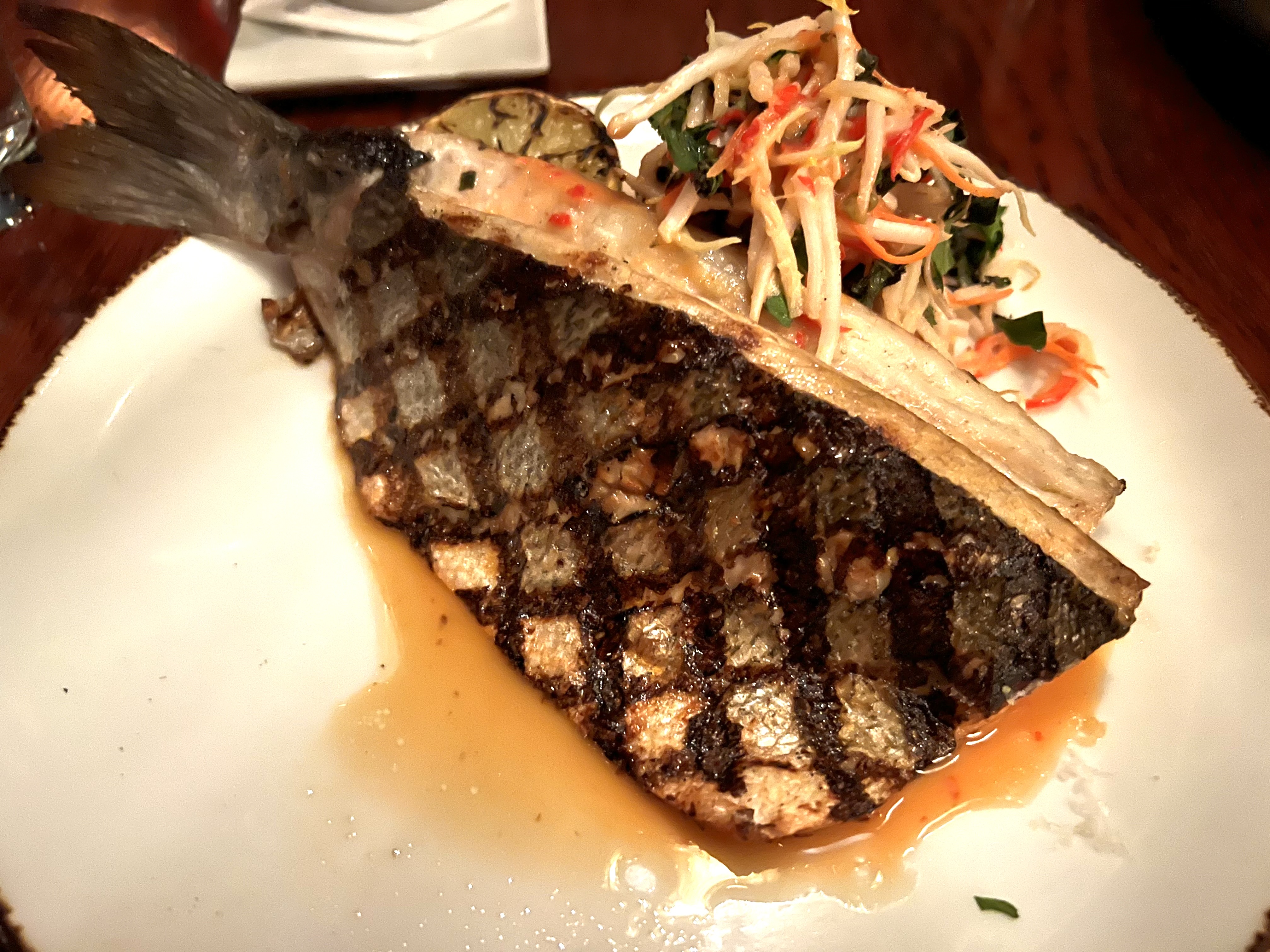
Perfectly prepared whole branzino.

House-made doughnuts with 3 sauces.

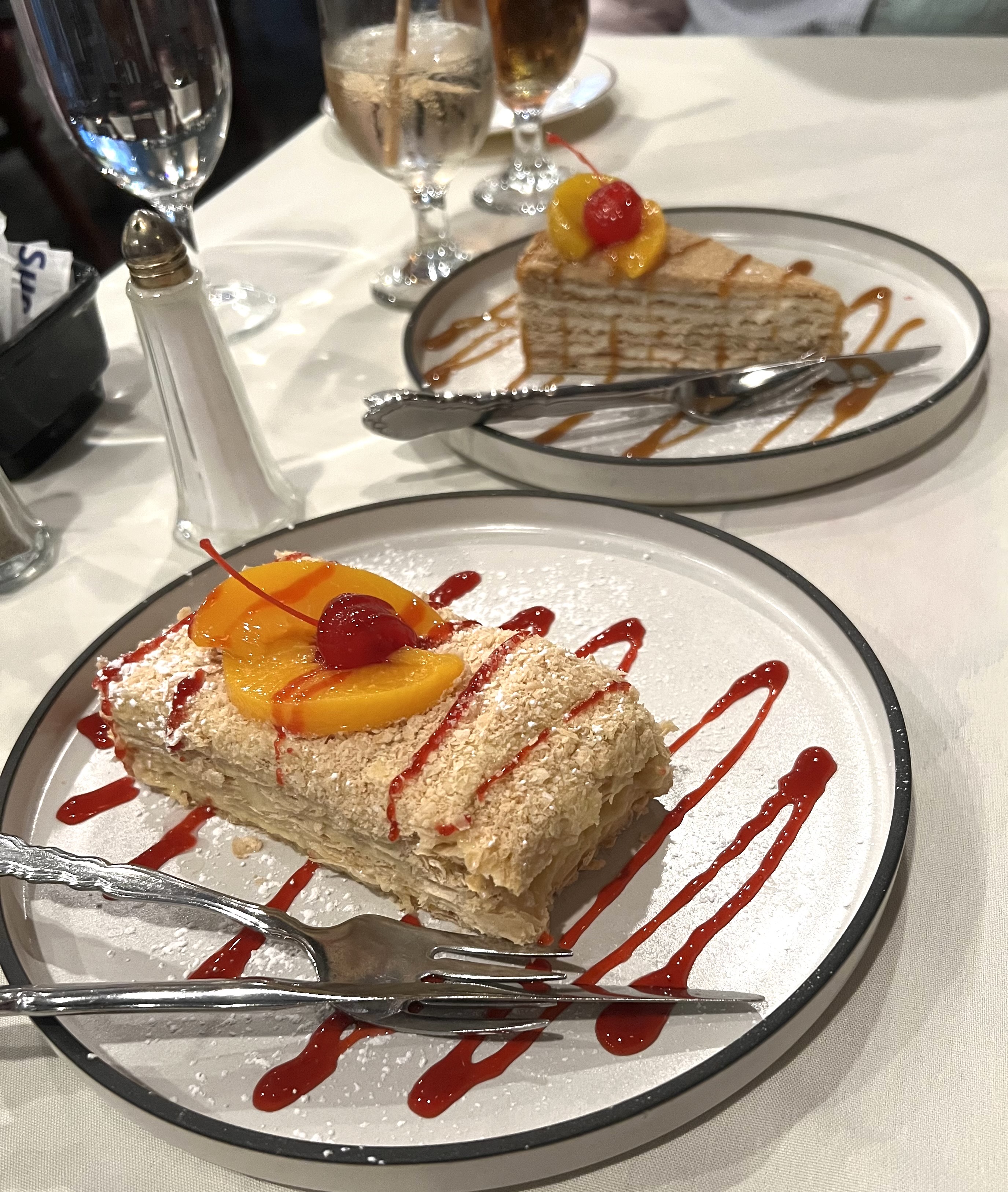
A wildly creative and delicious black forest dessert.

There are two other “Beauty and Essex” locations: one at the Cosmopolitan in Las Vegas and the newest one at Mohegan Sun in Uncasville, Connecticut. Both apparently have the same pawn shop entrance. But there’s something very special about it being literally on a street in New York City, with traffic buzzing by and graffiti on the walls, that makes this place the destination.

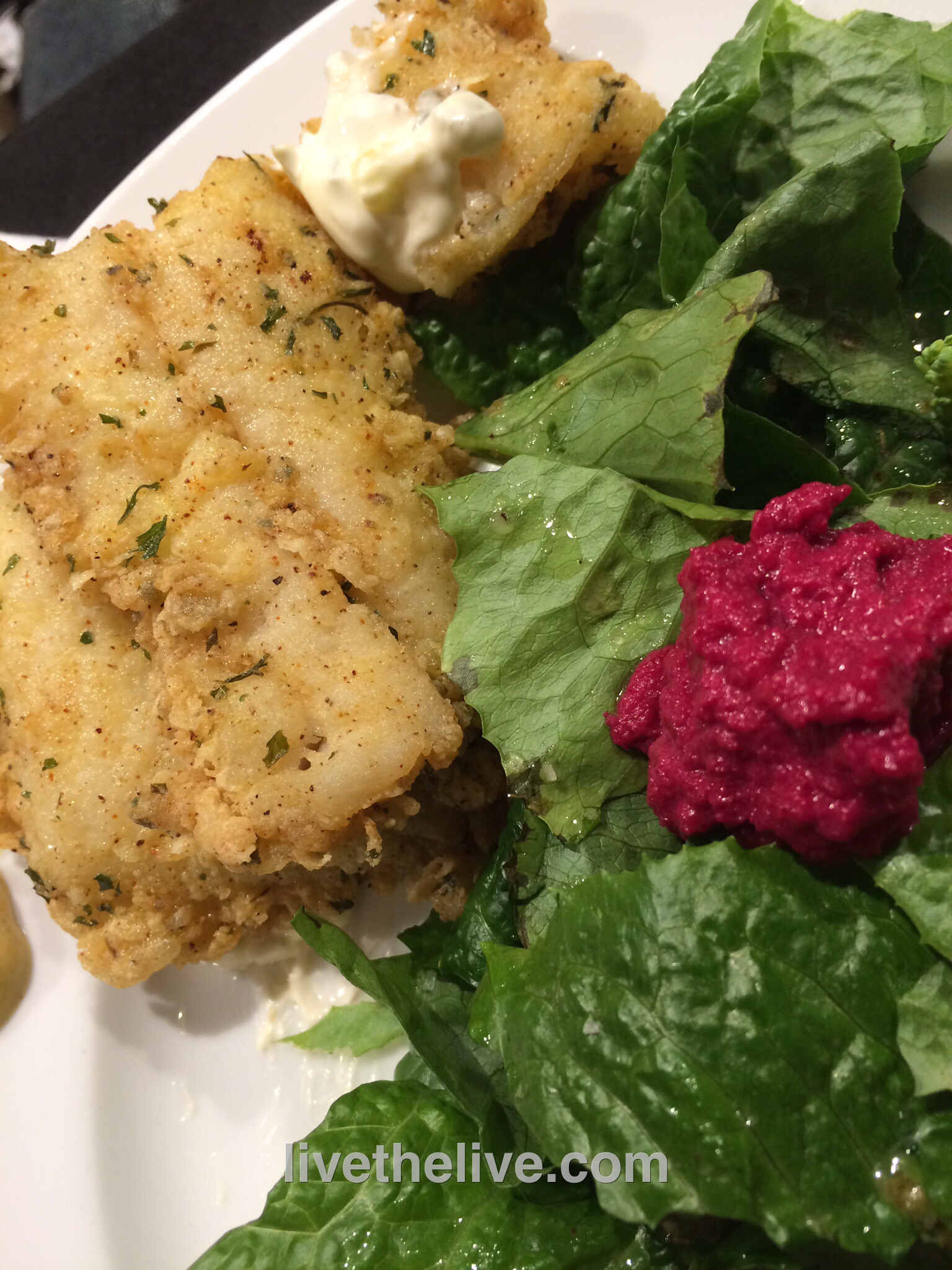
It’s always a challenge when you’re watching your calories. Fish is a great source of protein, and I love it sautéed in a little butter and olive oil with Paul Prudhomme’s Seafood Magic seasoning on it. But let’s face it, that gets old after a while, and we all know there’s nothing tastier than fried fish.

Rather than using a heavy beer batter like I used to do, I came up with a very light gluten-free-flour-based seasoning that gave the fresh-caught local fish I bought incredible flavor and crunch without a carb overload and without gluten. (I’m not on a gluten-free diet, but most GF flour is made from rice, and rice flour that gives you a lighter, crispy texture.)

There are many gluten-free flours out there now. My favorites are King Arthur and Cup 4 Cup, but use whatever GF flour you prefer. (Just make sure that rice flour is a key ingredient in it.)


image

1 cup flour (all-purpose or gluten-free)
1 tablespoon dried parsley
2 teaspoons salt
1 teaspoon oregano
1 teaspoon granulated onion
1 teaspoon paprika
1/2 teaspoon pepper
1/2 teaspoon granulated garlic
2 eggs
fresh locally caught fish fillets of your choice (I used fluke and ocean perch)
avocado oil for frying

In a flat bowl you will use to dredge the fish fillets, combine the flour, parsley, salt, oregano, onion, paprika, pepper and garlic.

In a separate flat bowl, scramble the 2 eggs.

Pour about 1/2″ of the oil in a pan and heat to medium-high heat, about 325° measured with a thermometer.

Dip the fish fillets first in the eggs, coating well. Then dredge them in the flour mixture, pressing down on both sides, so the flour mixture really sticks to the fish. Then shake the fillets lightly to remove the excess flour and gently lay the them in the hot oil. Fry them until they’re golden. (Fresh fish doesn’t take a long time.)

I made a quick and delicious tartare sauce using Hellman’s mayonnaise, dill pickle relish and Maille sauterne mustard.

If I asked you to name a cocktail that defines New Orleans, you might say The Hurricane. After all, it’s a tourist favorite at the famous Pat O’Brien’s on Bourbon Street.

But the official cocktail of New Orleans is the Sazerac, a potent concoction that was created early in the 19th century by Antoine Amédée Peychaud, a Creole apothecary who emigrated to New Orleans from the West Indies and set up shop in the French Quarter. He was known to dispense a proprietary mix of aromatic bitters from an old family recipe, now famously known as Peychaud’s bitters.


Sazerac ingredients.


Around 1850, Sewell T. Taylor sold his New Orleans bar, the Merchants Exchange Coffee House, to become an importer of spirits, and he began to import a brand of cognac named Sazerac-de-Forge et Fils. Meanwhile, Aaron Bird assumed proprietorship of the Merchants Exchange and changed its name to Sazerac Coffee House

Legend has it that Bird began serving the “Sazerac Cocktail,” made with Sazerac cognac imported by Taylor, and allegedly with bitters being made by the local apothecary, Antoine Amedie Peychaud. The Sazerac Coffee House subsequently changed hands several times, until around 1870, when Thomas Handy became its proprietor. It is around this time that the primary ingredient in a Sazerac changed from cognac to rye whiskey, due to the phylloxera epidemic in Europe that devastated the vineyards of France.

At some point before his death in 1889, Handy recorded the recipe for the cocktail, which made its first printed appearance in William T. Boothby’s “The World’s Drinks and How to Mix Them” in 1908, although his recipe calls for Selner bitters, not Peychaud’s. After absinthe was banned in the United States in 1912, it was replaced by various anise-flavored liqueurs, most notably the locally produced Herbsaint, which first appeared in 1934.

In March 2008, Louisiana state senator Edwin R. Murray filed Senate Bill 6 designating the Sazerac as Louisiana’s official state cocktail. The bill was defeated on April 8, 2008. But, after further debate, on June 23, 2008, the Louisiana Legislature agreed to proclaim the Sazerac as New Orleans’ official cocktail.

The Sazerac, served at the Sazerac Bar in New Orleans.


It’s always more fun when someone makes your drink for you!


Peychaud’s bitters are now owned by the Buffalo Trace distillery, home of many a fine bourbon, and also the makers of Sazerac rye, a registered trademark. So the Sazerac Bar has to pay a fee to use the name. That also explains why they use Sazerac rye in their version of this classic cocktail.


But like many popular drinks, everybody has their own version of a Sazerac. In fact, if you Google the drink, you’ll find dozens of versions: with cognac, rye, or bourbon (or even a combination)…with a sugar cube or simple syrup…and with a variety of absinthes.

Note: you can buy simple syrup–I prefer it in this recipe over sugar cubes–but it’s easy to make at home. Simply combine a cup of sugar with a cup of water in a saucepan and heat it until all the sugar dissolves. I keep my simple syrup in the fridge in a sealed container.


2 oz. rye whiskey (I use Old Overholt )
1/2 oz. simple syrup
3 dashes Peychaud’s bitters
Absinthe, to rinse, about 1/4 oz. (I use Herbsaint)
garnish lemon peel

Add ice to a rocks glass to chill it. (I also put it in the freezer.)

While it’s chilling, get a cocktail mixing glass, add some ice, and combine the rye, simple syrup, and the bitters, and stir. (Thirty times, according to tradition.)

Take the rocks glass out of the freezer, pour the ice out, and pour the Herbsaint into the glass, swirling it around to coat the glass, then pouring out the excess.

Strain the mix of rye, simple syrup, and bitters into the rocks glass with the Herbsaint.

Run a lemon peel around the rim of the glass and garnish with it.


For me, rye, specifically Old Overholt, is the down-and-dirty way to go. After all, this is not a kiddy drink. A few sips, and you’re feeling no pain.


A Sazerac at the Napoleon House in New Orleans.


Though sipping a Sazerac in New Orleans is an amazing experience in itself, and I’ve had it at the Sazerac Bar as well as the Napoleon House and other bars in NOLA…perhaps my craziest Sazerac experience happened at the famous White Horse Tavern in New York City, the Big Apple’s second oldest continuously running bar. (It opened in 1880.) I think this is where I was told to use Old Overholt in my Sazerac, and have ever since.

Dylan Thomas was a regular there, and other celebrities, like Norman Mailer, Jim Morrison, Bob Dylan, and Hunter S. Thompson also had drinks there. So it’s probably not surprising that my buddy, Lee, and I overindulged on Sazeracs at this historic tavern.

It was a very cold winter’s night in the late 1980’s–a blizzard, in fact–and we decided to go out drinking in the city, because I was back home in New York on holiday vacation from Alabama, where I was working at the time. We had more than our share of Sazeracs, when we decided we would walk to a new eatery called the Gulf Coast, located on the west side. (All we knew was that the restaurant was about 10 blocks from where we were, but after 4 Sazeracs, “where we were” was questionable, to say the least.)

Now, this was before the internet–before cell phones–before Uber–and no cabs were running (because it was a blizzard, after all)–so we decided we would walk! Not the smartest thing we’ve ever done. It only took a few blocks for us to realize, even in our drunken stupor, that we made a very bad choice! We were certain that we would be found, huddled and frozen in an alley somewhere, only after the spring thaw.

The storm was so bad, we couldn’t even find our way back to the bar. Miraculously, somehow, we did make it to the Gulf Coast, and we lived to tell the tale.

As Homer Simpson once said: “To alcohol…the cause of, and cure for, all of life’s problems!”


Sazeracs. Try your first one at home. Or take an Uber!

Sure, it’s Super Bowl Sunday, but Fat Tuesday is just 2 days away! Why not celebrate it early?

If I asked you to name a cocktail that defines New Orleans, you might say The Hurricane. After all, it’s a tourist favorite at the famous Pat O’Brien’s on Bourbon Street.

But the official cocktail of New Orleans is the Sazerac, a potent concoction that was created early in the 19th century by Antoine Amédée Peychaud, a Creole apothecary who emigrated to New Orleans from the West Indies and set up shop in the French Quarter. He was known to dispense a proprietary mix of aromatic bitters from an old family recipe, now famously known as Peychaud’s bitters.

Sazerac ingredients.

Around 1850, Sewell T. Taylor sold his New Orleans bar, the Merchants Exchange Coffee House, to become an importer of spirits, and he began to import a brand of cognac named Sazerac-de-Forge et Fils. Meanwhile, Aaron Bird assumed proprietorship of the Merchants Exchange and changed its name to Sazerac Coffee House

Legend has it that Bird began serving the “Sazerac Cocktail,” made with Sazerac cognac imported by Taylor, and allegedly with bitters being made by the local apothecary, Antoine Amedie Peychaud. The Sazerac Coffee House subsequently changed hands several times, until around 1870, when Thomas Handy became its proprietor. It is around this time that the primary ingredient in a Sazerac changed from cognac to rye whiskey, due to the phylloxera epidemic in Europe that devastated the vineyards of France.

At some point before his death in 1889, Handy recorded the recipe for the cocktail, which made its first printed appearance in William T. Boothby’s “The World’s Drinks and How to Mix Them” in 1908, although his recipe calls for Selner bitters, not Peychaud’s. After absinthe was banned in the United States in 1912, it was replaced by various anise-flavored liqueurs, most notably the locally produced Herbsaint, which first appeared in 1934.

In March 2008, Louisiana state senator Edwin R. Murray filed Senate Bill 6 designating the Sazerac as Louisiana’s official state cocktail. The bill was defeated on April 8, 2008. But, after further debate, on June 23, 2008, the Louisiana Legislature agreed to proclaim the Sazerac as New Orleans’ official cocktail.

The Sazerac, served at the Sazerac Bar in New Orleans.

It’s always more fun when someone makes your drink for you!

Peychaud’s bitters are now owned by the Buffalo Trace distillery, home of many a fine bourbon, and also the makers of Sazerac rye, a registered trademark. So the Sazerac Bar has to pay a fee to use the name. That also explains why they use Sazerac rye in their version of this classic cocktail.

But like many popular drinks, everybody has their own version of a Sazerac. In fact, if you Google the drink, you’ll find dozens of versions: with cognac, rye, or bourbon (or even a combination)…with a sugar cube or simple syrup…and with a variety of absinthes.

Note: you can buy simple syrup–I prefer it in this recipe over sugar cubes–but it’s easy to make at home. Simply combine a cup of sugar with a cup of water in a saucepan and heat it until all the sugar dissolves. I keep my simple syrup in the fridge in a sealed container.


2 oz. rye whiskey (I use Old Overholt )
1/2 oz. simple syrup
3 dashes Peychaud’s bitters
Absinthe, to rinse, about 1/4 oz. (I use Herbsaint)
garnish lemon peel

Add ice to a rocks glass to chill it. (I also put it in the freezer.)

While it’s chilling, get a cocktail mixing glass, add some ice, and combine the rye, simple syrup, and the bitters, and stir. (Thirty times, according to tradition.)

Take the rocks glass out of the freezer, pour the ice out, and pour the Herbsaint into the glass, swirling it around to coat the glass, then pouring out the excess.

Strain the mix of rye, simple syrup, and bitters into the rocks glass with the Herbsaint.

Run a lemon peel around the rim of the glass and garnish with it.

For me, rye, specifically Old Overholt, is the down-and-dirty way to go. After all, this is not a kiddy drink. A few sips, and you’re feeling no pain.
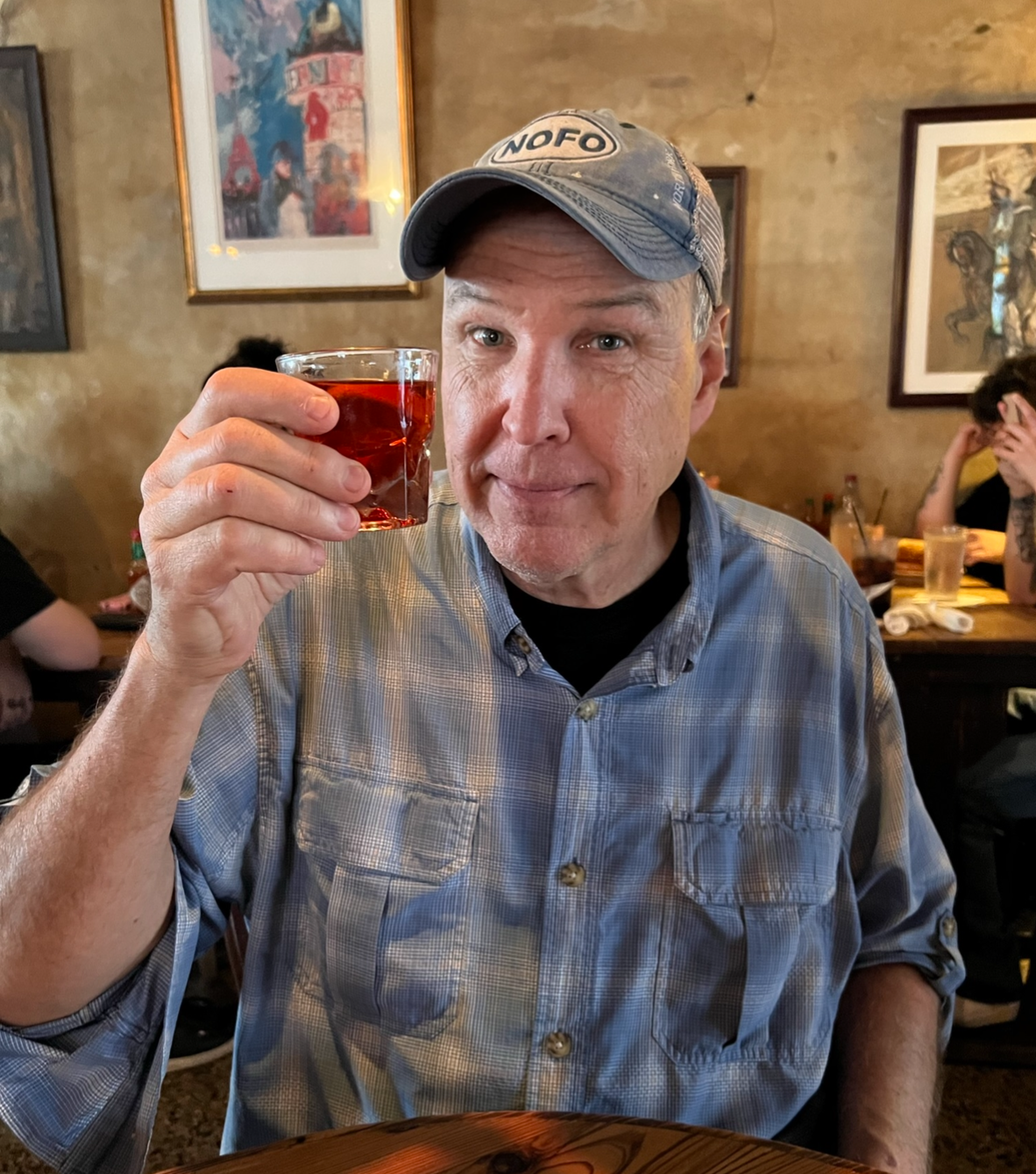
A Sazerac at the Napoleon House in New Orleans.

Though sipping a Sazerac in New Orleans is an amazing experience in itself, and I’ve had it at the Sazerac Bar as well as the Napoleon House and other bars in NOLA…perhaps my craziest Sazerac experience happened at the famous White Horse Tavern in New York City, the Big Apple’s second oldest continuously running bar. (It opened in 1880.) I think this is where I was told to use Old Overholt in my Sazerac, and have ever since.

Dylan Thomas was a regular there, and other celebrities, like Norman Mailer, Jim Morrison, Bob Dylan, and Hunter S. Thompson also had drinks there. So it’s probably not surprising that my buddy, Lee, and I overindulged on Sazeracs at this historic tavern.

It was a very cold winter’s night in the late 1980’s–a blizzard, in fact–and we decided to go out drinking in the city, because I was back home in New York on holiday vacation from Alabama, where I was working at the time. We had more than our share of Sazeracs, when we decided we would walk to a new eatery called the Gulf Coast, located on the west side. (All we knew was that the restaurant was about 10 blocks from where we were, but after 4 Sazeracs, “where we were” was questionable, to say the least.)

Now, this was before the internet–before cell phones–before Uber–and no cabs were running (because it was a blizzard, after all)–so we decided we would walk! Not the smartest thing we’ve ever done. It only took a few blocks for us to realize, even in our drunken stupor, that we made a very bad choice! We were certain that we would be found, huddled and frozen in an alley somewhere, only after the spring thaw.

The storm was so bad, we couldn’t even find our way back to the bar. Miraculously, somehow, we did make it to the Gulf Coast, and we lived to tell the tale.

As Homer Simpson once said: “To alcohol…the cause of, and cure for, all of life’s problems!”

Sazeracs. Try your first one at home. Or take an Uber!
One of the best reasons to visit Rhode Island in the summertime is Block Island. Ferries sail from Point Judith, RI as well as Newport, and Fall River, MA. You can even grab one from New London, CT and Montauk, NY. For me, Point Judith, though on the other side of the state, is the most convenient, because I can grab the high-speed ferry and be there in 30 minutes. For someone that’s not crazy about being on a boat, it’s as fast and as smooth as it gets!

Block Island used to be a well-kept secret, but on a recent weekend, it was clear that the secret was out! The island was packed, and it seemed like every ferry was loaded to the brim with day trippers. That also meant that parking spaces in Point Judith became quite the hassle, and on our trip, we actually got what amounted to the second-to-last parking space after being shut out of dozens of huge parking lots in the area.

Despite using the Waze app, which told me we’d get there on time, we had no idea we’d be searching for a parking space for a really long time. Finding that second-to-last space, and running to the boat with our packs on our backs, we were literally the last people on the ferry.

So rule #1 about going to Block Island during peak tourist season: make reservations online, but still give yourself a lot more time than you think you’ll need to find a parking space!

My buddy, Scarpetti from 94HJY, our radio station in Providence, RI, was doing a live broadcast from Ballard’s the Saturday we traveled, and we hung out there for lunch. Great drinks, excellent food, live music, all on the beach: Ballard’s is just steps away from the ferry dock. It’s no surprise that many people that have been to Block Island have only been to Ballard’s and nowhere else!


We made it to Ballard’s! Time for a drink!


I was on Block Island with my daughter, who looks forward to our yearly trip to the island. I also do a live broadcast from Ballard’s, but this year my schedule changed and I couldn’t do it, so we figured we’d just skip the island this summer. But then we got really lucky, thanks to some friends with connections, and found a room for a single night. (In season, most hotels require a minimum 2-night stay, and usually, I book my room far in advance to get the best deal, but this was a last-minute travel decision.)


The Narragansett Inn. Nothing fancy, but all we needed.


We stayed at the Narragansett Inn, which is about a mile and a half from town. Totally basic: no AC, small rooms, shared baths, but it was clean and it was the only place that allowed us to spend 1 night. They also offered a really nice breakfast buffet, included in the room price.


Hangin’ at The Oar.


We had dinner at The Oar, a really popular restaurant and bar that is always jammin’, partly because they are world-famous for their mudslides. I had a couple on this trip, and I have to say that my memory of the mudslides was better than the real thing. They seemed a bit watered down this time, despite my ordering top-shelf booze in them. No matter, that didn’t stop me from getting a brain freeze!


Mudslide brain freeze!


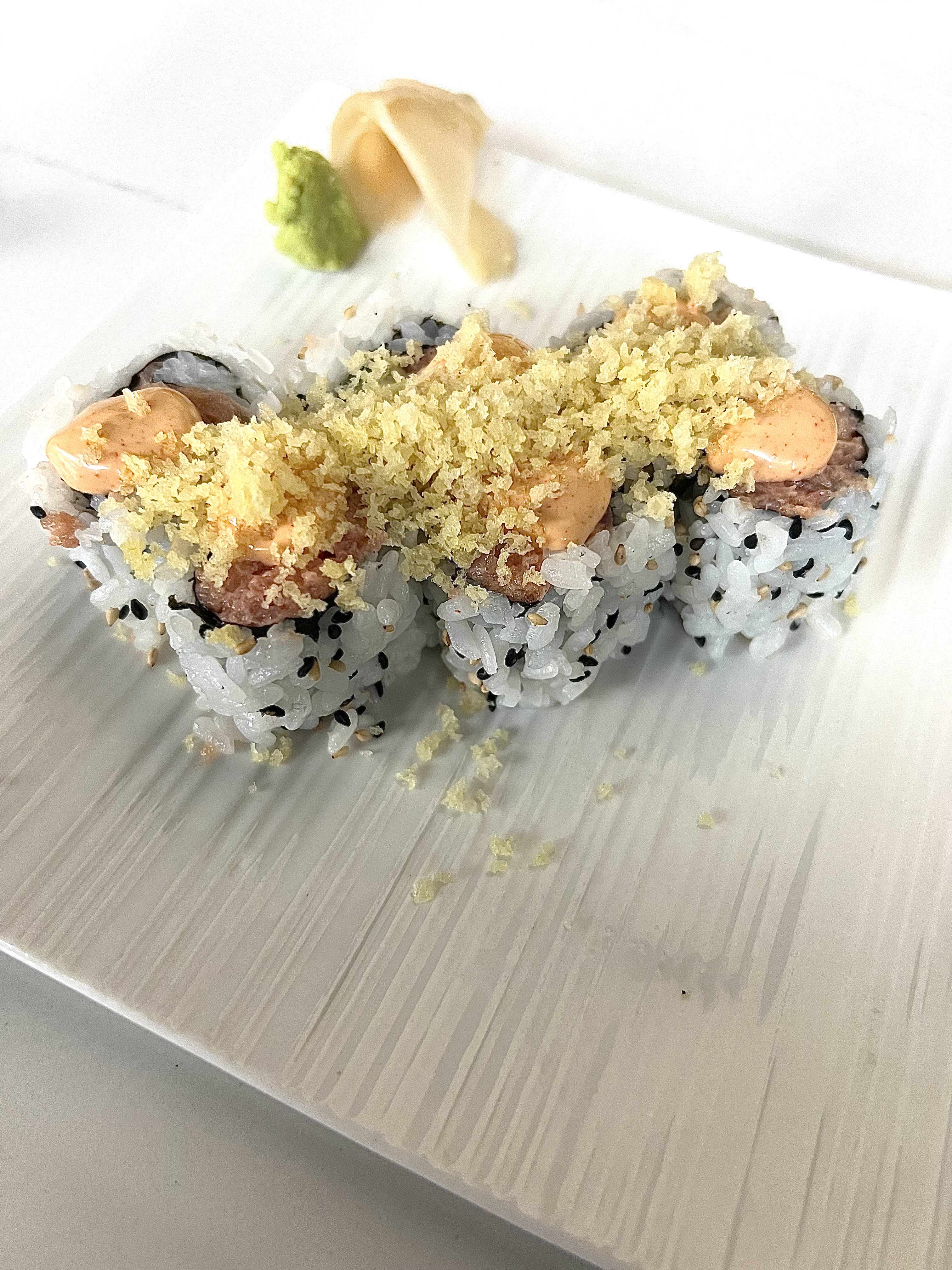
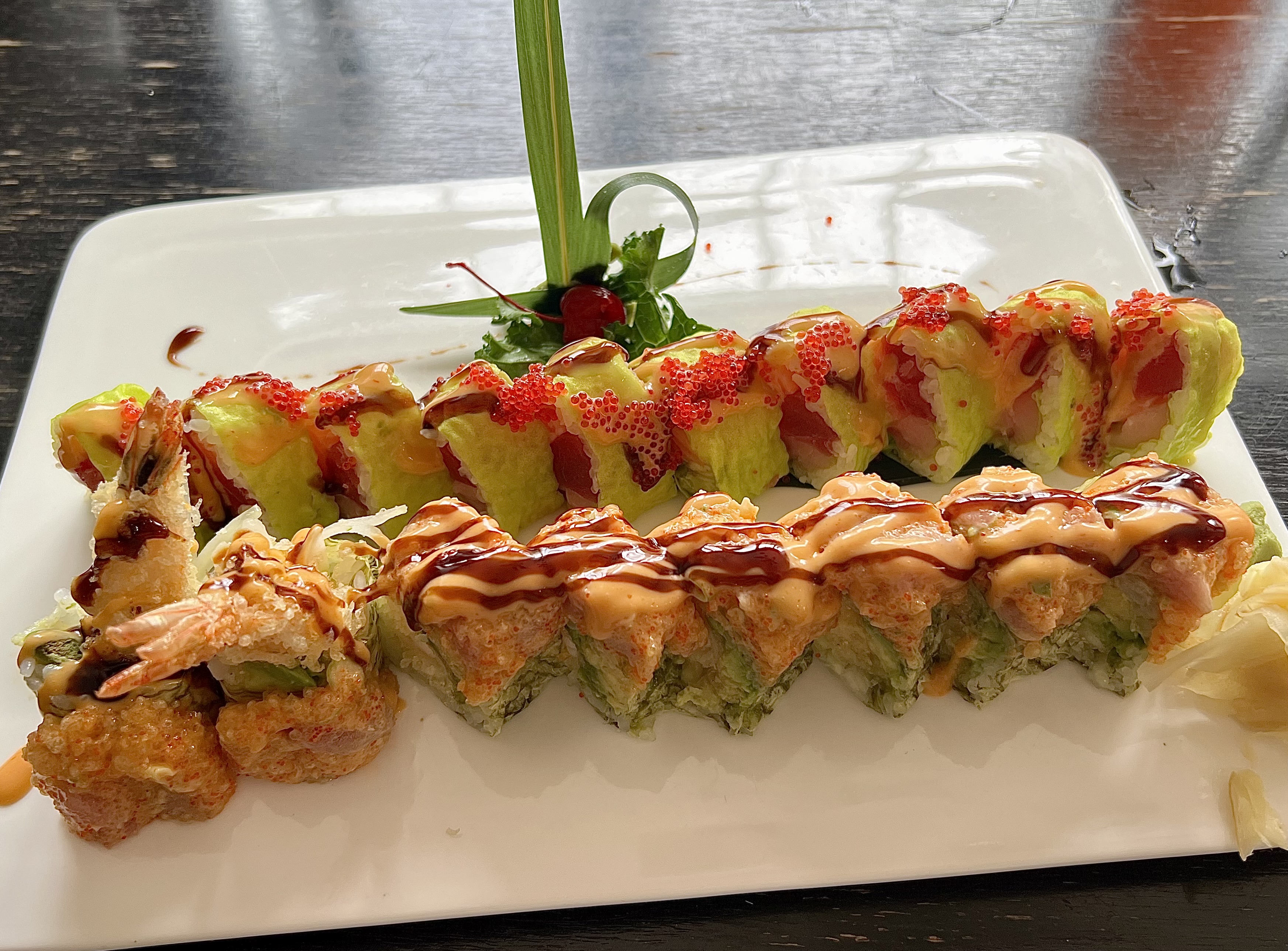
The food at The Oar was great. My daughter enjoyed tacos, while I had a half-dozen Block Island oysters followed by one of their signature sushi rolls called the Candy Cane: shrimp tempura with tuna. It was delicious, and finding really good sushi on the island was a wonderful surprise.


The Candy Cane sushi roll.


Taxis run all over Block Island (no Ubers) and you really don’t wait very long for one to arrive. we took one back to town from The Oar, and did what everybody was doing: watched the last of the ferries return the daytrippers back home, and then walked around the various souvenir shops, finally grabbing some ice cream before heading back to the hotel.


The old Surf Hotel has been refurbished and is now the Block Island Beach House. We didn’t go inside…but it looks nice!


Back at the Narragansett Inn, we grabbed a couple of Adirondack chairs and watched the sunset before calling it a day.


Sunset on Block Island.


There’s lots to do on Block Island. You can rent bikes or mopeds…you can hike trails to remote beaches…you can party the night away, pub crawling to dozens of bars…you can rent entire homes and just enjoy the sea breezes and the peace and quiet…or you can stay in hotels and enjoy a bit more of the nightlife.

The secret to success with Block Island is to plan and book early. Off-season, the island is just as beautiful and not as crowded. And if you plan on bringing your car to the island, you literally need to be booking the car ferry in January!


First-run movies play at the theater, though sometime people have fun with the sign…


I’ve done all of it, from renting a house to staying in a variety of hotels. It’s all good and a really unique experience. Get to the Block!

ST. LUCIA…LOOKING BACK

Posted: April 25, 2019 in Uncategorized
Tags: ,

Now that I’m home from my trip to St. Lucia, I’ve had a chance to think about the wonderful people I’ve met, and the unique experiences I’ve had.

My driver, Anthony, and I having one last sip of spiced rum before I headed to the airport to go home.


One of the smartest things I did was to hire a knowledgeable driver, Anthony, take me just about everywhere. Though I did rent a car for one day and took the winding, volcanic St. Lucian roads into my own hands, I stayed on the main drag, and I didn’t get out to mingle with the locals like I did when Anthony was by my side. Like many Caribbean islands I’ve been to, there’s quite a bit of poverty on this island. And people make a living any way they can. Sometimes it’s less than friendly. But for the most part, the people I met were grateful that I was there to appreciate their island and learn about their way of life.

I bought a conch shell from this fellow.


St. Lucia’s big crop and major export is bananas, most of which goes to the United Kingdom. You see huge banana plantations everywhere as you travel the main roads of the island. Their beer, Piton, stays on St. Lucia, which is too bad, because it tasted pretty good on those very hot days. And the big money, of course, comes from tourism.

Piton Gold has more alcohol than their regular beer. Works for me!


Chairman’s Reserve rum…the good stuff.


Bounty was good for mixing.


In some ways, St. Lucia is a few steps ahead in the tourism game. I’ve been to my share of tiny island airports, and some are dirty, hot, and completely disorganized. St. Lucia’s international airport is clean, air-conditioned, and the boarding of passengers was done in an orderly fashion.

The waiting area at the airport. There’s also a food court upstairs.


As far as I’m concerned, it doesn’t matter how great the vacation was. If leaving the island becomes a nightmare at the airport, I will never return, and I won’t recommend it to anyone else, either. St. Lucia gets a big thumbs-up for that.


The island is large, and most of the roads are well-paved, though they wind up, down and around the island’s mountainous terrain. It took 90 minutes to get from the airport to the property I was renting in Marigot Bay, and that’s only halfway up the island. If all you’re doing is going to one of the three Sandals resorts (all in the northwest part of the island, just past Castries…about 2 hours from the airport), then maybe that’s fine. But if you’re like me, and you want to get out and explore a bit, transportation, whether by car or water taxi, is a large cash-only cost, especially if you’re traveling solo with no one to share the ride.

A map of St. Lucia I brought from home. The orange highlighted roads were all the ones I traveled on my trip! A lot of driving! The pink highlight at the bottom is the international airport…the pink highlight on the left is Anse Chastanet…and the black writing further up on the left is Marigot Bay, where I stayed.


Eastern Caribbean coins, or EC, are used here. One US dollar = 2.7 EC dollars.


Most established restaurants and bars will have a good selection of booze to choose from. But unfortunately, they measure their shots here (a pet peeve of mine), so if you want a “real” drink, you’ll need to ask for a double. Sometimes, if you’ve befriended the bartender, they’ll start pouring more generously toward the end of the night. A good tip never hurts!

Driving is on the left-hand side of the road, with the steering wheel on the right. Concentrate! Don’t drink and drive!


The local restaurants often have some liquor to offer as well, but what they have varies greatly. Still, you can’t go wrong with rum. (Mt. Gay, one of my favorites, is available almost everywhere.) If you’re an adventurer when it comes to drinking, ask for “spiced,” which is a house-made spiced rum. They take a gallon jug, fill it with overproof rum, add some local sticks and twigs (probably cinnamon and other stuff), add some spices, and then something like grenadine to make it red and sweet. They pour it in a small cup for you to enjoy. It’s very strong, very sweet, and it burns all the way down…not that that’s a bad thing!

Local spiced rum!


The Rum Cave at the Marigot Bay Resort and Marina, a more luxurious choice for dinner and drinks, offered tapas and a nice choice of rums…even rum tasting sessions.


Drinking and driving, though discouraged with billboard ads, is not strictly regulated, and it’s not unusual for a driver to have a beer in one hand while steering with the other.

Another way to earn money: making charcoal to sell to hotels for barbecuing.


Many St. Lucians, like my friend, Anthony, see tourism as their way to make a living, so they welcome it. But in the beginning, as we were driving from the airport to my rental cottage, we passed many poor towns, with beat up old shacks on the side of the road. Trash was everywhere, including stripped cars and old trucks overgrown with grass, showing they’ve been there–and will be–for some time. It reminded me of Anguilla and a few other islands I’ve been to. Seeing some of these things was a bit disturbing in the beginning, but it’s also amazing how quickly I got used to it and almost ignored it after a while. Maybe that’s typical…or maybe that says something about us as human beings.

On the northern part of the island: the set-up for baking bread on the side of the road…a large drum, sheet metal, a wheel rim, and a few cinder blocks.


The roadside bakeries that I explored in the north and the south, were a once-in-a-lifetime experience.

That’s my buddy, Anthony, being served!


Bread baking on the southern part of the island: a homemade concrete stove.


A delicious Caribbean lunch from an out-of-the-way restaurant where only the locals go.


This lovely lady serves fresh-caught grilled conch in Gros Islet on Wednesdays and Fridays…and she sells out quickly. It was delicious!


The grilled conch, with rice and an onion-garlic sauce.


It’s good to visit some of these shacks–preferably with a local guide (like my friend, Anthony) who knows what he’s doing, and knows the people. They’re hard-working, and aren’t looking for a handout.

A voltage converter is mandatory. Most electrical outlets are 220 volts. (American flag optional.)


I passed dozens of small stands on the side of the road selling bananas, pumpkins, tomatoes, ginger, and other local produce. There were small food trucks, souvenir stands, and tiny little shacks that could barely hold 3 bar stools with signs that exclaimed: “Come in. Refresh Yourself!” Local spiced rum and other beverages were served inside.

One of the Pitons.


The very northern tip of St. Lucia. It’s a 90-minute ferry ride from here to Martinique.


Marigot Bay at sunset, from the balcony of Julietta’s restaurant. I had an excellent grilled mahi dinner here.


A little morning drizzle brings rainbows.


Although the beaches on St. Lucia are open to the public, even those that belong to the fancy resorts, they often make access difficult for the regular folk that just want to spend the day there and go for a swim. At Anse Chastanet, one of the most luxurious resorts on the island, you can throw your blanket on the sand in a designated area for free. But a chair is $24 a day, and it’s positioned away from the hotel guests who are paying a pretty penny to be separated from the “riff-raff.” I also got approached by a local trying to sell me a variety of hiking and sailing packages, something that’s pretty common everywhere.

Anse Chastanet: visitors stay on this side of the bar. Still, could be worse, right?


Red snapper coconut ceviche at Anse Chastanet.


I’m not a cruise guy. I’m not an all-inclusive resort guy. I think most people who have been to St. Lucia have done one or the other. It’s a very limited experience. If you’re staying in a resort surrounded by barbed wire and you never leave, what difference does it make where you go?–St. Lucia, Jamaica, Cancun…it’s all the same. You don’t meet the people, apart from those selling souvenirs and duty-free liquor. And you don’t sample real St. Lucian food, a wonderful mix of French, East Indian, and British dishes, mixed with local mangoes, plantains, oranges, and root vegetables.

Enjoying a freshly opened coconut on the side of the road. First you drink the coconut water, then scoop out the soft meat inside.


Banana ketchup, which tastes more like banana mustard. I got hooked.


St. Lucia has many luxurious resorts where the rich and famous come to hide. But for me, the real St. Lucia is a get-out-of-your-comfort-zone island. That’s where the genuine island experience is.


ST. LUCIA…Day 5

Posted: April 10, 2019 in Uncategorized
Tags: , , ,

My driver and newest best friend, Anthony, was telling me about this woman who cooks the most amazing grilled conch. But she only serves it on Wednesdays and Fridays. And considering today is Wednesday, and my last full day on the island, it was imperative that I go and check it out.


He told me it would be unlike any conch I’ve ever had before… And he was right!


I think she marinated and then grilled it, but didn’t overcook it, so it was absolutely delicious with a little bit of a bite.


She served it with rice on the side, And then poured this amazing sauce made of sautéed onions and garlic over everything. It was fantastic!


It was a long ride from my comfortable little hut, but it was absolutely worth it.


On the way back, we stopped at another roadside bakery, where a woman was baking amazing bread.

That’s my buddy, Anthony, being served!


Flour, water, yeast, salt.  The natural warmth and humidity of the air was perfect for proofing the bread before baking.

The sheer ingenuity of the people on this island… Utilizing anything they can get their hands on. Really amazing.


And the bread was absolutely delicious!

ST. LUCIA…Day 4

Posted: April 9, 2019 in Uncategorized
Tags: ,

When I’m asked for my best advice for traveling, my top reply is: make friends with a local.  Nobody knows like someone who’s lived there all their life.

In the case of my driver, Anthony, he knew all the back roads to avoid traffic in the bigger city. He knew all the food places where the locals, not the tourists, eat.

And I noticed how the locals looked at me, giving me a thumbs up, when they saw that I was supporting one of their own.

Today’s island tour covered mostly the northern part of the country. We had lunch at a simple Caribbean restaurant, where I had delicious grilled chicken with salad, rice, potato salad, and noodles.


I grabbed myself another bottle of St. Lucian rum, this time a little less fancy than what I have been drinking before. But it totally works with a mixer.


I discovered something called banana ketchup, which I have to take home!


And in the heat of the day, I enjoyed fresh coconut water.  Afterwards, with a couple of swift moves of his machete, the gentleman split the coconut in half and made a makeshift spoon that let me scoop out all the soft interior meat. Delicious!


( Anthony is a great driver… But not the best photographer! )


My 12-year-old daughter’s at the age where she’s fascinated by the world of music. Working in radio, I’m lucky that I’m able to offer her some great experiences. Thanks to my boss, Rob, the man with all the connections, she got to meet her favorite band, AJR. She went backstage and met the guys from Imagine Dragons. She received a hand-written birthday greeting from Brendan Urie of Panic! at the Disco.

I saw my first concert at the age of 17. It was Three Dog Night and T.Rex at the Nassau Coliseum on Long Island. My daughter has already seen more concerts than I did in my teens.

As touristy as they are (and as mediocre as the food is), Hard Rock Cafes and their walls full of pictures, guitars, photos and other memorabilia, offer a glimpse into the world of music that fascinates my daughter. Once she visited her first Hard Rock, the world’s largest at Universal Studios in Orlando, Florida, she was hooked. If we were traveling anywhere near a Hard Rock Cafe, we had to go.

The Hard Rock at Universal was followed by New York City, Washington DC, the Cayman Islands, Paris, and Reykjavik. Yet we never made to the one in Boston, closest to our home in Rhode Island. It was time to go.

Hard Rock Cafe, Boston.


Our stay in Boston began with lunch at the Hard Rock Cafe, near Fanuel Hall. Nothing particularly amazing about the venue, but we could now scratch it off the list.

I clearly don’t know what the hell I’m doing.


Because our main point of going to Boston was to visit the New England Aquarium, I chose to get a room at the Marriott Long Wharf Hotel, located right on the water and literally a few steps from the aquarium. The area around Long Wharf includes many restaurant and shopping choices.

The Marriott Long Wharf is a huge hotel, and I was surprised at just how clean the property was, despite the vast numbers of people who were moving through the lobby and hallways. Our room was clean and technologically up-to-date: everything you’d want in a hotel room. Beds were comfortable, towels were plentiful.

The only complaint I had about our hotel is one that I have with most of the Marriotts and Westins that I’ve been to recently. They’ve decided to make the move away from old-fashioned room service with carts, real plates and silverware, and decent food. Now they all offer what amounts to take-out service. You get a bag full of cardboard boxes that contain your meals….paper napkins…plastic utensils…and crappy food. I highly doubt all of this gets recycled. So in a world where we’re supposed to be thinking about how not to overload our landfills, these guys came up with the idea to make everything disposable. Really dumb. Goes without saying that we didn’t eat at the hotel.

No carts. No fuss. No thanks.


The New England Aquarium is a great place to take the family and see penguins up close. We arrived at feeding time, and it was fun to watch them eat; some of them fussy, some of them devouring their offerings of fish. The center of the building is a spiral, and inside the spiral is a huge 4-story aquarium. So as you slowly walk up the spiral, you get a constantly changing view of the aquarium and the thousands of fish and other sea life (manta rays, tortoises, sea horses, jellyfish, starfish, eels, seals, and lots more that thrive there. Again, you might be lucky to catch them at feeding time, when workers in scuba gear swim down to the different groups of fish and make sure they get fed.

One note: buy your tickets online before you go. The outdoor line for last-minute ticket buyers was huge, and we visited on a bone-chilling winter’s day. Those people standing in line were very unhappy. We just walked right in with our online printed tickets.


The Red Lantern in Boston.


We don’t have many great Asian restaurant choices in Rhode Island, so when we go to Boston, it’s almost always on our list. This time, we decided to skip Chinatown and go to a restaurant that was as much about the atmosphere as it was about the food: The Red Lantern. Great music, cool lighting, awesome design, very good food and a huge cocktail menu. My daughter had miso soup and a massive delicious bowl of beef lo mein. I shoved a few large chopstick-fulls into my mouth “for blogging purposes.” Really good. I started with a plate of boneless ribs, sweet and sticky. My main dish was a huge spicy tuna toro maki roll: a tempura fried roll with avocado, cucumber, chili soy and toro tuna, slightly torched. Over the top. The Red Lantern has a beautiful bar, and my original mai-tai was well-made, though very sweet.

Dessert selections weren’t what we wanted…and we needed a breather…so we Ubered over to Newbury Street, where we found a wonderful gelato shop: Amorino. It’s an Italian chain, and they know how to do gelato!

I suppose if I wasn’t hanging out with my daughter, I’d take this opportunity to go to a bar for one last cocktail, but instead, we just went back to the hotel and focused on the next day, thinking we’d hit the indoor pool. Turns out it wasn’t a great idea, because the pool last the Marriott Long Wharf was really small and full of screaming little kids. Plan B: find a really great Sunday brunch.

Mooo, in Boston.


Mooo is a steak restaurant inside the beautiful XV Beacon Hotel, on historic Beacon Street. As I was searching for brunch possibilities, I saw the tempting list of freshly-baked treats on their menu, very different from those offered elsewhere, and I knew this was where we needed to go. We were not disappointed!

Ordering the cinnamon buns was a no-brainer. The moment they say on the menu that you “need to give it a little extra time,” you know it’s going to be worth the wait! as we slowly pulled apart the gooey rolls, shoving them into mouth, I moaned like Patton Oswalt in The Secret Life of Walter Mitty: “Cinnnabonnnn……” (Though it was way better than any Cinnabon I ever head!)

The incredible cinnamon buns at Mooo.


My daughter knew almost instantly that she was going to have the chocolate chip pancakes…with a side of bacon, of course. I was contemplating the lobster eggs Benedict (I’m a huge fan of bennies), but then I said to myself: “Wait…this is a steak restaurant. They have half-a-dozen steak and eggs offerings on the menu. Have a steak, for crying out loud!” My inner voice served me well.

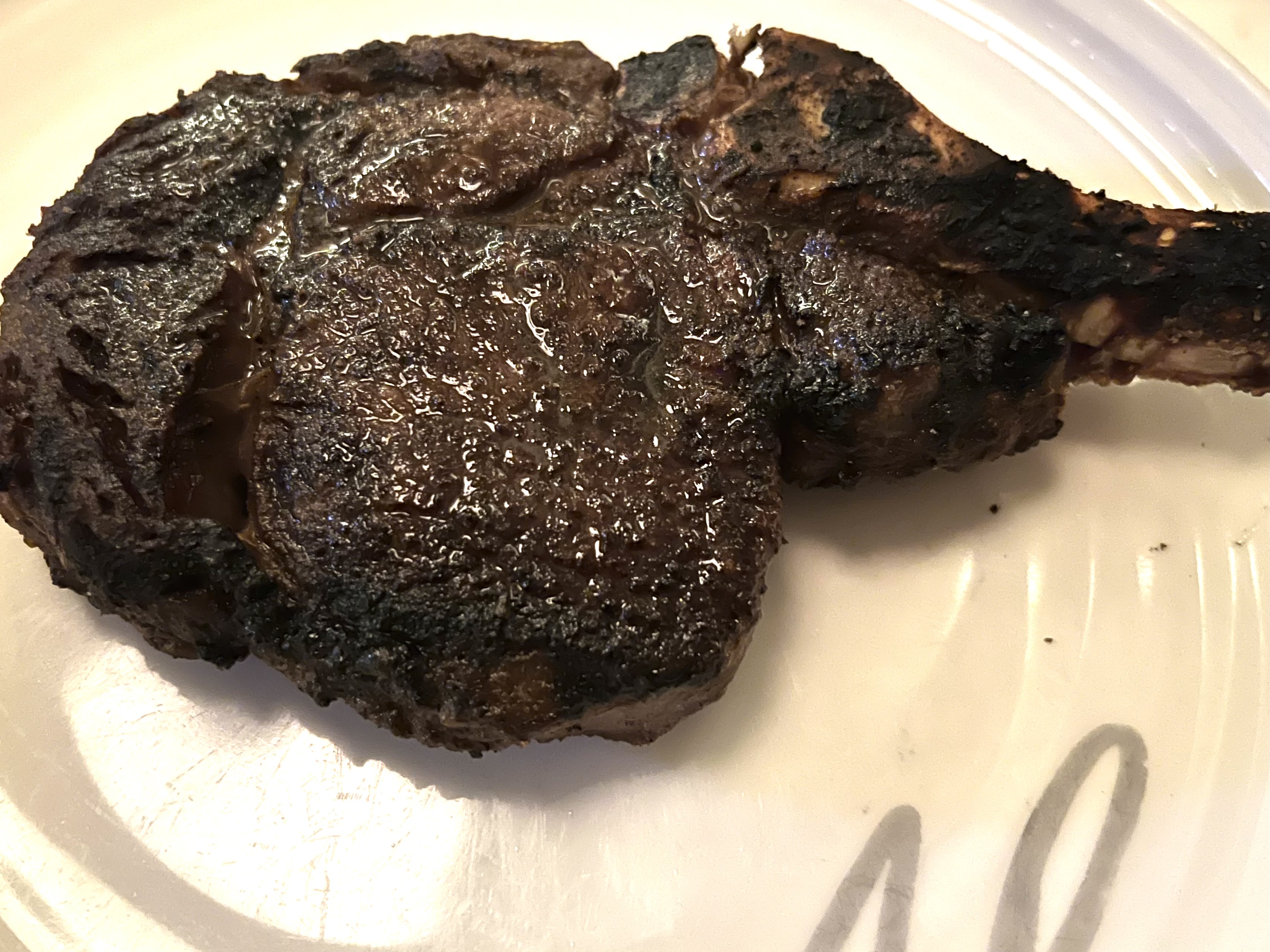
I had a choice of 2 ribeyes: either a 12-oz. American corn-fed ribeye, or a 14-oz. pastured, grass-fed Australian ribeye. I’m a grass-fed guy, so the larger Australian ribeye (which was also less expensive) was a no-brainer. It was cooked to a perfect medium-rare, and was one of the best steaks I’ve had in a very long time. A couple of eggs and a side of perfectly cooked potatoes made for an ideal meal.

Brunch is served!


Mooo was such a great choice for brunch that I will keep it in mind for dinner on a return trip to Boston.


We returned to our hotel after brunch, simply to pack up and head home. A nice 24-hour getaway with wonderful food and a fun time with my daughter. I know my daughter and I will be back in June to see a Billie Eilish concert at the Rockland Trust Bank Pavilion, so we’ll have more opportunities to hit a couple of restaurants, this time in the Seaport District, which, sadly, is being overrun by so much new construction that you can’t even see the water anymore. It’s sad because Boston’s traffic has just been rated the worst in the country, and this will only add to a crumbling infrastructure that is already overloaded.