Archive for February, 2024

I’ve gotten a few requests for my chicken fried rice recipe. Not sure if it’s authentic Asian, but I use a lot of the flavors and veggies that I find in chicken fried rice when I get takeout. It’s really not a difficult thing to do, but it does take some work, chopping everything up and getting it ready.

I don’t have a wok, and I don’t think it’s necessary. As long as you have a pan that’s big enough to hold everything at the end, you’re good to go.

All the Asian ingredients can be found in any supermarket. And if you want this dish to be gluten-free, use GF soy sauce and hoisin sauce. La Choy and Kikkoman make them.


I like to start by sautéing all the veggies, then removing them from the pan, putting them in a separate bowl, and then continuing with the chicken. It seems like the best order of business for me.

They say that you should use day-old rice, so, if you plan on making this recipe, boil up some rice the day before, and put it in the fridge. I like to use jasmine rice, but use whatever rice you like.

All measurements for this recipe are approximate. Again, add more of what you like, and take away what you don’t.

Don’t be afraid to explore the international aisle in your supermarket as well as the produce section for interesting veggies that you can add to this dish. I’m not a fan of water chestnuts, but that’s one option. And if you don’t like the little corn cobs, add some frozen corn. Bok choy, mushrooms, and scallions are all great choices.


1 tablespoon soy sauce
1 tablespoon hoisin sauce 
2 teaspoons rice vinegar 
1 teaspoon (or more) Chinese garlic sauce
1 teaspoon sesame oil

1 small onion, finely chopped
1cup of finely chopped cabbage
1/2 can of small Asian corn cobs, chopped
1 cup or more chopped broccoli
1 cup mung bean sprouts or pea shoots
1 cup frozen peas (optional)


3 cups of cooked rice
1 1/2 pounds of chicken breast, cut into small cubes
2 eggs


To make the marinade, combine the soy sauce, hoisin sauce, rice vinegar, Chinese garlic sauce, and sesame oil in a bowl.

Cut the chicken breasts into small 1/2-inch cubes and place them in a bowl. Add the marinade to the chicken, and make sure the meat is coated well. Let it marinate for a couple of hours at room temperature, or in the fridge if you need more time.

Get a large pan that will hold everything and put it on high heat. Add an oil with a high smoke point, like peanut oil, avocado oil or grapeseed oil.

Add the onions to the pan and sauté until they’re translucent. Add the cabbage, and let it wither. Add the corn cobs and sauté for a few minutes. Add the chopped broccoli, and continue to sauté. You can add the bean sprouts now, or save them for later if you want them to be very crunchy. Save the peas for later.

When the veggies have softened, pour them into a bowl and return the pan to the stove top. Add a little more oil and let it heat up.

Add the chicken pieces to the pan, pouring in all the marinade with it. Make sure the chicken is thoroughly cooked, and just starts to caramelize.

Scramble the two eggs in a small bowl and add them to the pan, constantly moving the chicken and eggs around to fully cook the eggs.

Add the rice to the pan and mix everything thoroughly. Then return the veggies and mix thoroughly again.

This is where you taste everything. Add what you think it needs. Maybe it’s some soy sauce…maybe a little hoisin…maybe salt and pepper…maybe a little sesame oil. Maybe more of everything! It’s up to your individual taste.

Toss the fried rice with the added seasonings, then add the bean sprouts and the peas, giving it one more good mix.

This chicken fried rice is great as meal in itself, and leftovers are always welcome.

I’ve had Clams Casino in many different forms. Back when I worked in Italian restaurants in New York, we would make a breadcrumb mixture, press it onto a freshly opened whole clam, and then place a small piece of bacon on top before it went into the oven. It was good, but the clam often stuck to the shell, and many people didn’t want to gulp down a whole clam like that.


Oyster knife (left) and a clam knife (right.) Different tools for different jobs.


When it was time for me to make my own recipe, I decided that I would chop the clams and mix them into the breadcrumb mix, so that every bite was the same.

2 tablespoons olive oil
1/3 cup finely chopped Vidalia or other sweet onion (about a 1/2 an onion)
2 garlic cloves, squeezed through a garlic press
1/3 cup dry white wine
1/3 cup unflavored bread crumbs
1 tablespoon fresh Italian parsley, finely chopped
1/2 teaspoon dried oregano
Freshly cracked black pepper
2 dozen medium sized clams
1/3 lb. bacon, cut in small squares to fit the clam shells
Heat the olive oil in a pan over medium heat. Add the onions, and sauté them until they’re translucent. Add the garlic, and cook for 10 seconds. Add the wine and simmer for a minute. Add the bread crumbs, and stir the mixture until it becomes thicker, like a paste. Add the parsley and oregano. Season with pepper. (There’s going to be plenty of salt in the clam juice and bacon, so no salt is needed.)

The bread crumb mixture.

Remove the pan from the heat and let it cool.
It’s time to open the clams. If you know how to do that, open them over a sieve with a bowl underneath so that the clam meats and juices are captured. Discard any broken shells, but save the good ones.
If you struggle with opening clams, this method makes it a little easier: Bring a large pot of water to boil, and drop the clams into it, about 10 at a time, for 30 seconds. Don’t let them open! Remove the clams with a slotted spoon and place them in a bowl to cool. Continue doing this in small batches until all the clams have been in the water. You’ll find this makes opening the clams much easier. Then proceed as above.
Once you’ve shucked all the clams, let the clam juice sit for a bit, so that any grit settles to the bottom of the bowl. Then pour off the clean clam juice and add it to your bread crumb mixture. (Don’t worry if it looks soggy at this point.)

Looking a little soggy, but that’s OK.

I like to hand chop the clam meats instead of using a food processor. You want tasty clam chunks, not too big, but not mush. Add the clams to the the bread crumb mix.
At this point, if the clam mix looks very soggy, simply add a little more bread crumb to dry it out.
Preheat the oven to 350 degrees.
Line a large baking sheet with foil. Separate the clam shell halves and wash them, making sure you don’t have any shell fragments left in the clam shell.  Fill them with the clam mixture, mounding them slightly, and placing each one on the baking sheet.

Clams and bacon…delicious!

Cut the bacon in small squares to fit the clam shells. Place a small piece of raw bacon on the top of each clam.
Bake until the clams are just cooked through, the topping is golden, and the bacon is cooked, about 30 minutes.

This makes a great appetizer, but it’s hard to just eat a few!

CHIMICHURRI

Posted: February 2, 2024 in beef, Food, grilling, marinade
Tags: , , , ,

Chimichurri is a garlicky, herby green sauce usually used with grilled meats. This pesto-like condiment originated in Argentina and is also commonly used in Nicaragua and Uruguay. Though some recipes include cilantro, many people insist the original is made only with parsley. To pack an extra punch, chimichurri also makes an excellent marinade for grilled meats.

My buddy, Lee, a chemist and avid chimichurri fan, is the inspiration for my version of this sauce. It’s incredibly easy to make. Just make sure to use fresh ingredients, and it’s always a good idea to wash all the veggies before using, even if you’re going organic.


chimi


1 bunch flat-leaf parsley, chopped
1/4 cup water
1 medium onion, chopped
3 cloves garlic, minced
3–4 tablespoons fresh oregano, leaves only (or 1 tablespoon dry)
1 tablespoon paprika
1 teaspoon crushed bay leaf
1 tablespoon coarse sea salt
1 teaspoon freshly ground black pepper
pinch red pepper flakes
1/4 cup red wine vinegar
1/2 cup extra virgin olive oil

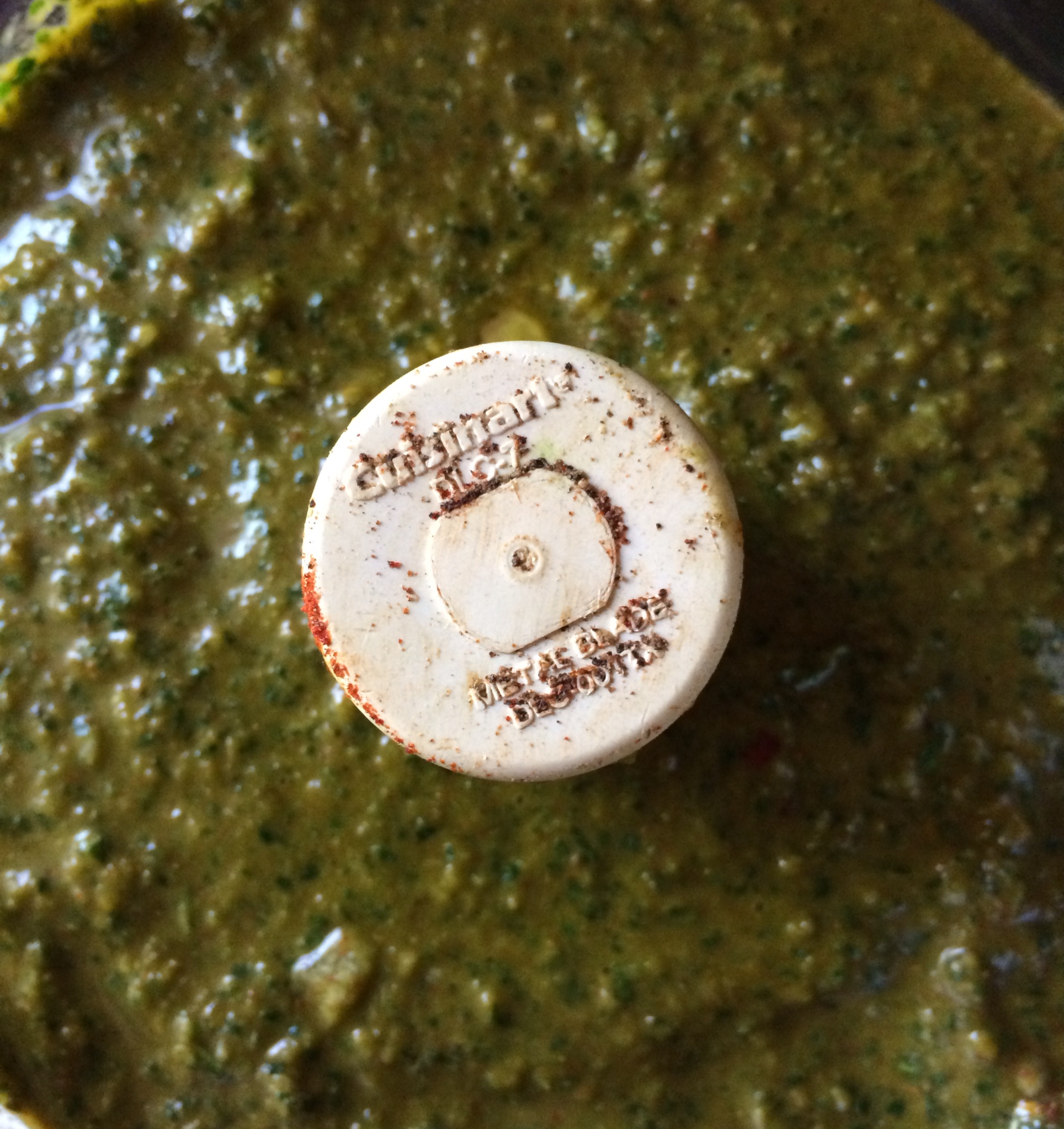
Place all the parsley and the water in a food processor and begin to chop, pulsing for a second at a time. When the parsley is in small pieces, stop pulsing and add the remaining ingredients, except the vinegar and olive oil. Start the processor on a full run now, and slowly pour in the vinegar, then the olive oil. Try not to make it too smooth…leave some tasty bits. Allow it to rest for at least 30 minutes, but overnight in the fridge is best.

I marinated 2 grass-fed beef ribeyes in chimichurri overnight, simply smearing the meat with the sauce, and placing the ribeyes in a resealable plastic bag in the fridge. The next day, I let the beef come to room temperature and I wiped the marinade off. I discarded the marinade, then I re-seasoned the beef with a little salt and pepper and pan seared them, finishing them in a 350-degree oven until medium-rare. A little dipping of fresh chimichurri on the side.


Grass-fed beef ribeyes with chimichurri

Grass-fed beef ribeyes with chimichurri


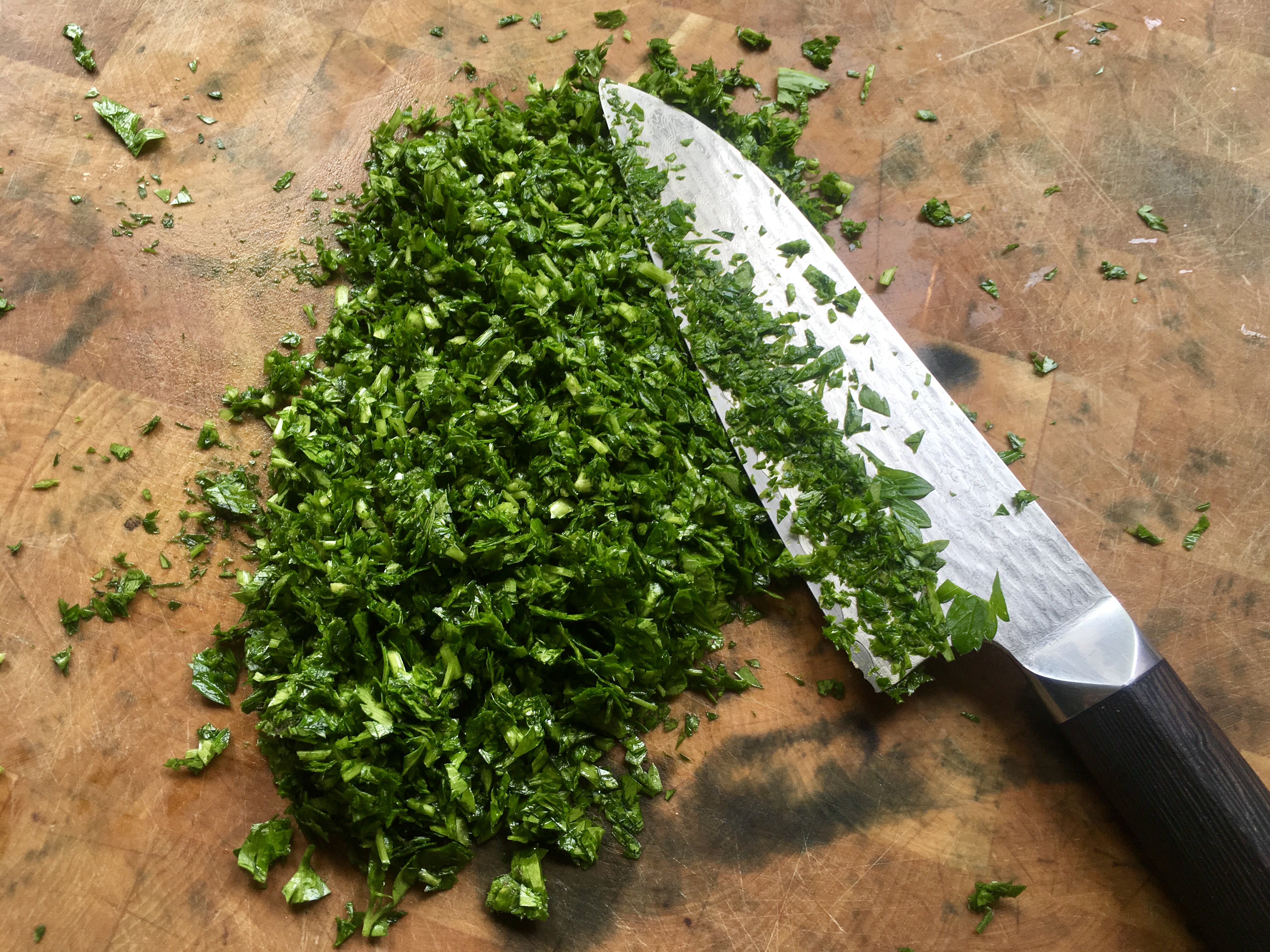
Lots of fresh parsley is key!


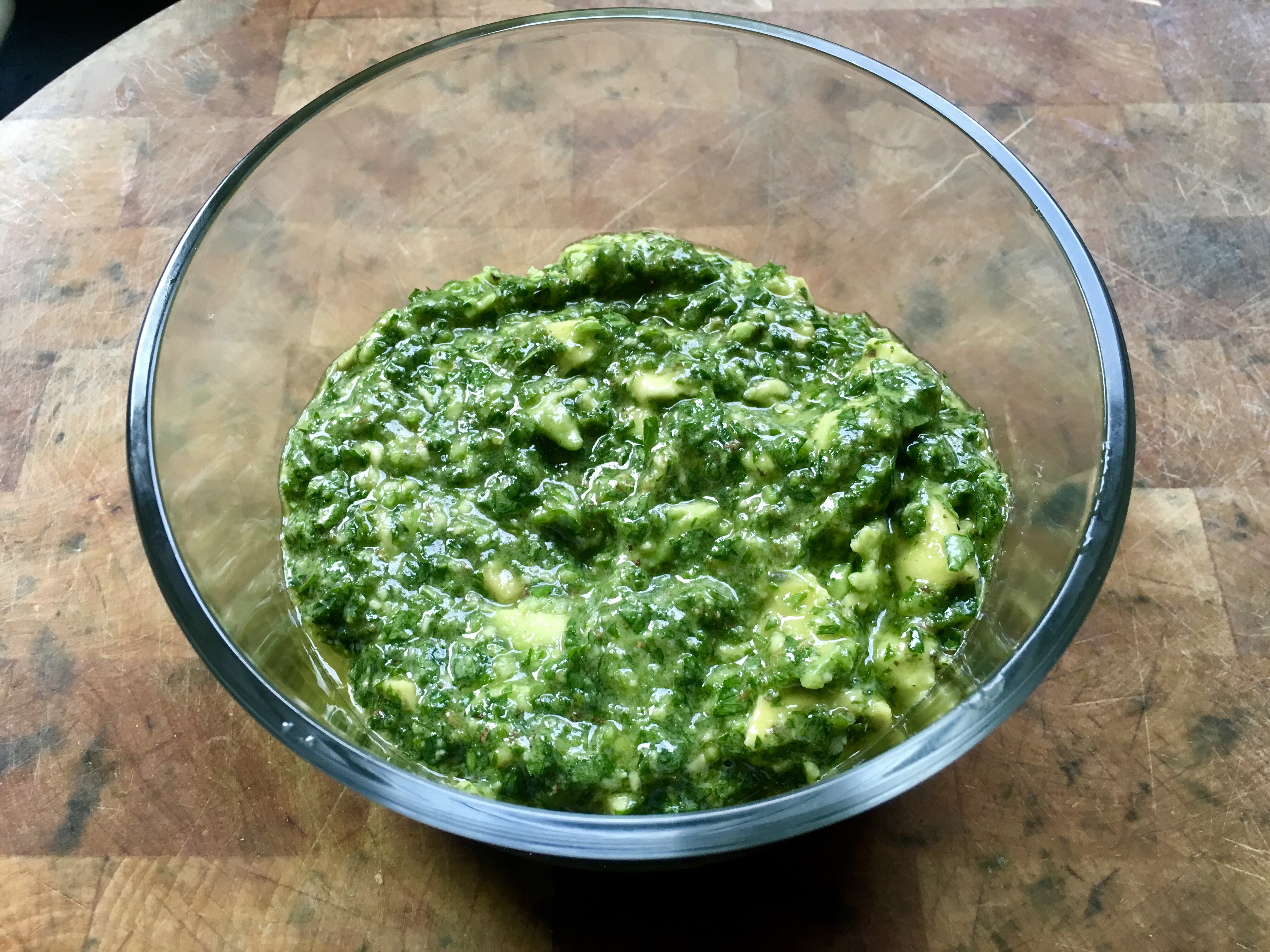
I recently saw a recipe that had some chimichurri ingredients but also included avocado, and thought: now that sounds tasty! It’s not the classic recipe, of course, but it is delicious! I can see this used as a dip for veggies or chips. The fresh lime juice keeps the avocado from browning.


1/3 cup extra virgin olive oil
1/4 cup fresh lime juice
1 garlic clove, minced
1 cup finely chopped parsley
1 tablespoon finely chopped oregano, or 1 teaspoon dry oregano
1 Hass avocado, peeled, pitted and diced
Kosher salt

In a medium bowl, whisk the olive oil with the lime juice, garlic and a pinch of salt. Stir in the parsley and oregano and let it stand at room temperature for 30 minutes. Fold in the avocado and season with salt.


Avocado “chimi.” Chunky and tasty.


This “chimi” can be refrigerated for up to 4 hours.