Archive for the ‘tomatoes’ Category

Now’s the time to head to your local farm stand and pick up a bag of gorgeous plum tomatoes, before the season is gone! And this is what you do with them…

These are not sun-dried tomatoes. They’re better, because fresh plum tomatoes are still moist after roasting, with a bit of that magic tomato liquid in every cup! A great, simple platter to offer at parties.

Tomatoes before

Tomatoes before.

12 to 18 halved, seeded plum tomatoes
1/4 cup extra virgin olive oil
2 tablespoons organic cane sugar
Freshly ground pepper
Fleur de Sel or sea salt

Pre-heat the oven to 250.

Line a baking sheet with foil and rub it lightly with olive oil.

Arrange halved and seeded tomatoes on it in a single layer, cut side up. Drizzle evenly with 1/4 cup olive oil, sprinkle with 2 tablespoons sugar, and season with pepper to taste.

Bake the tomatoes until they are still juicy but slightly wrinkled, about 3 hours. Transfer them to a platter and let them cool slightly.

Just before serving, sprinkle the tomatoes with Fleur de Sel, and garnish if you like, with chopped parsley leaves, mint leaves, or basil. (Bacon bits sound pretty good, too!)


Tomatoes after

Tomatoes after!

When it’s done right, gazpacho is one of the most delicious summer soups you’ll ever have. The secret, of course, is using super-fresh veggies. That’s why I crave it at the first sign of a vine-ripened tomato in my garden or a local farm stand. When my tomato plants have dozens of ripening fruits on them every day, I eat some in salads…I make tomato sauce with others…but the reddest and ripest become gazpacho!


I never make this out of season, and I’m always wary of restaurants that do! Very often, they’ll try to hide the taste of older veggies by adding too much salt or lots of spice.

The consistency of gazpacho is a personal preference. I like mine a bit chewy…not chunky like salsa, but not watery like soup…somewhere in between the two is perfection.

All the work is pretty much in the slicing, peeling and chopping…so I do it carefully.


1 large Vidalia onion, peeled and roughly chopped
1 carrot, peeled and roughly chopped
5 large tomatoes, peeled, seeded, and roughly chopped
2 medium cucumbers, peeled, seeded, and roughly chopped
6 sprigs of flat-leaf parsley
1/2 cup olives, drained  (I like kalamatas)
1/2 cup good quality extra virgin olive oil
Juice of 1/2 a large lemon
3 tablespoons white vinegar
Sea salt and freshly cracked black pepper

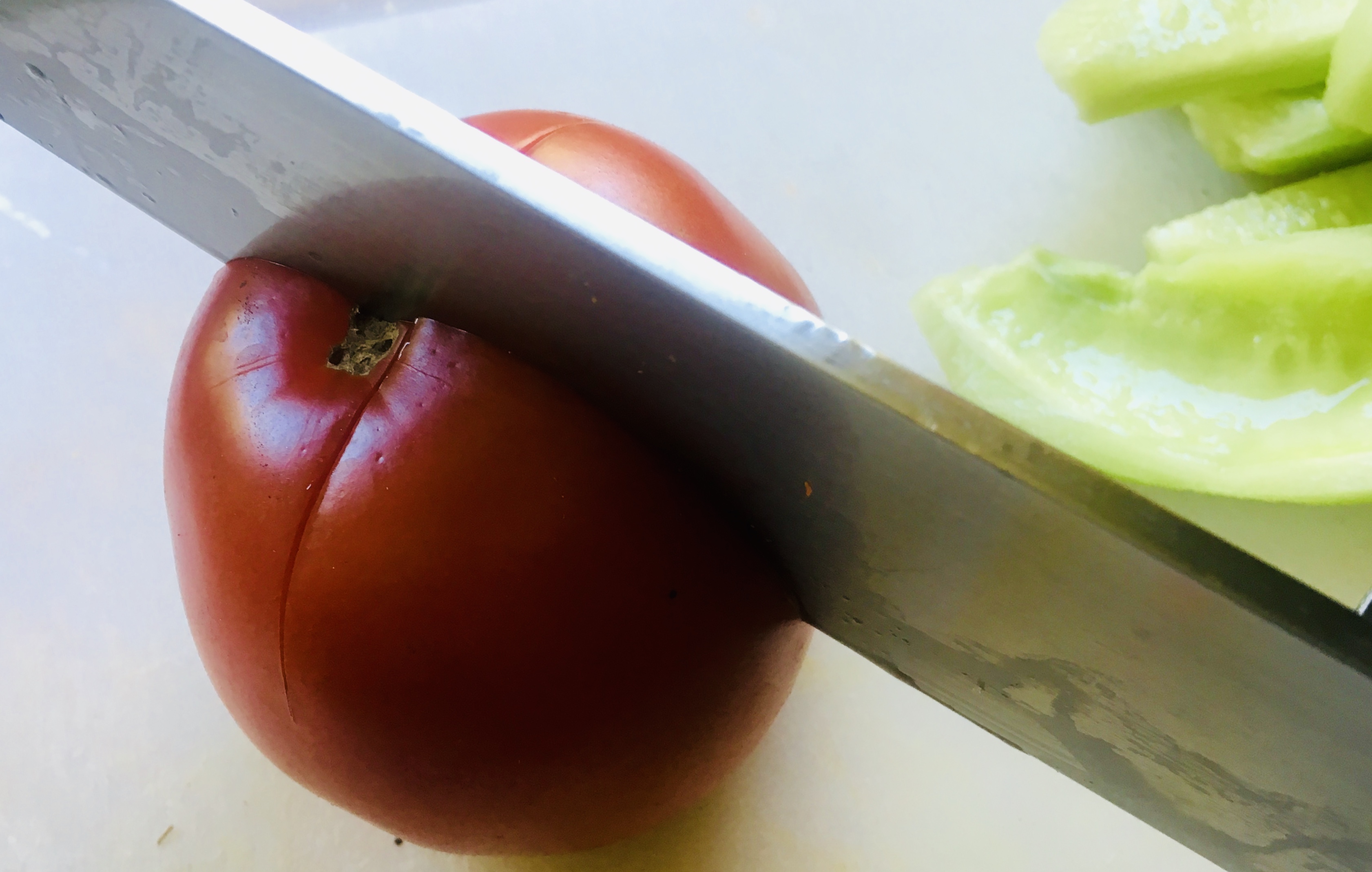
An easy way to peel tomatoes is to turn them upside down and make an X with a knife, puncturing the skin. Drop the tomatoes in boiling water for about 30 seconds, and the skin will start peeling away from the meat. Scoop the tomatoes out of the water, and immediately drop them into a bowl of ice water, letting them cool for 5 minutes. The skin will peel right off. Cut the tomatoes in half and (over the sink!) gently press your thumbs into the seed compartments, popping them out. Give the tomato a little shake to remove any last seeds, and it’s ready to be chopped.


Make an X, then drop the tomatoes in boiling water for 30 seconds.


While the tomatoes are cooling, you can peel and chop the other veggies.

Peel and roughly chop the onion and carrot, and place them in a food processor. Let it run for about 10 seconds.

Add the peeled and seeded tomatoes, the peeled and seeded cucumbers, and the sprigs of parsley and continue processing.

Add the olives, olive oil, lemon juice, vinegar, sea salt and black pepper.


Process until the veggies are finely chopped, and you’ve got a soup. Store it in the fridge for at least one hour to chill before serving.


Garnish with a sprig of parsley and a sprinkle of Fleur de Sel or other tasty finishing salt.

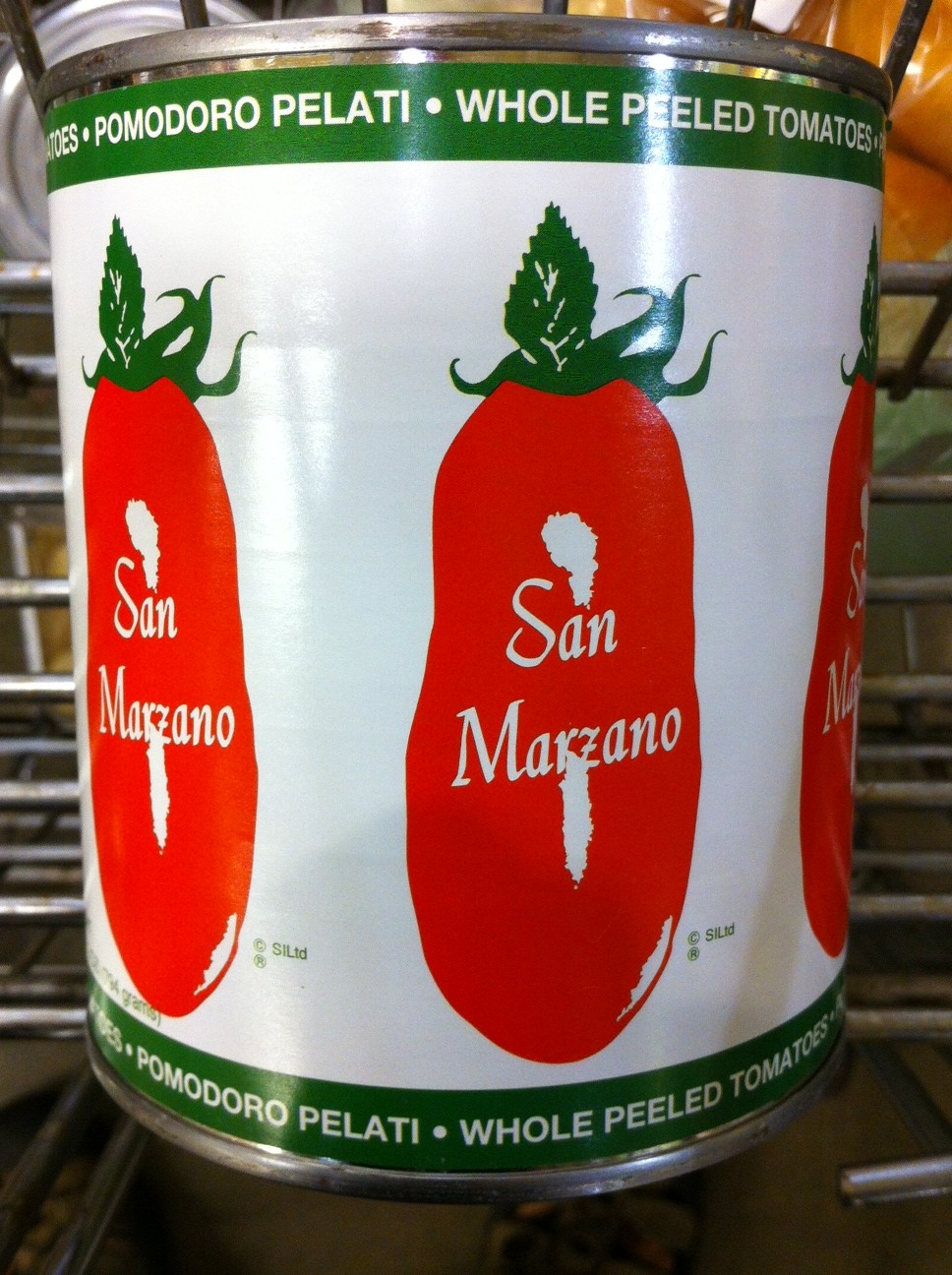
If you do your share of Italian recipes, a common product found in just about any store has many people confused: San Marzano tomatoes. Most good cooks agree that San Marzano tomatoes are some of the best canned tomatoes you can buy.

But unfortunately,  the label can say “San Marzano tomatoes” even if they are not real San Marzano tomatoes.

San Marzano is a region in Italy near Naples and Mt. Vesuvius, and the special combination of climate and volcanic soil make these plum tomatoes world-famous. They have less water, fewer seeds and are picked off the vine when perfectly ripe, then processed the same day.

But San Marzano is a variety of tomato, too…and so you can have a can of San Marzano tomatoes that are not from San Marzano. And to add to the confusion, there’s actually a brand of tomatoes called San Marzano, with tomatoes grown in the United States. Bet your sweet bippy the sellers of these tomatoes are counting on you not to know the difference!

Sold everywhere, but not real San Marzanos from Italy. Grown in the USA.

The company has now changed their label, just calling it "SM."

The company has now changed their label, just calling it “SMT.”

Real San Marzano Tomatoes are a very old variety, extremely limited in quantity, grown and produced exclusively in the San Marzano region of Italy. Because production is so very limited, the Italian Government and the European Union have formed a way of protecting consumers from fraud by having San Marzano tomatoes tightly controlled. DOP, or denomination of protected origin, is the mechanism that the government is using to control the production and marketing of genuine San Marzano tomatoes. Labels for DOP products must be individually numbered and manually applied to each can in specific lots and government officials must oversee this application. So here’s the deal: unless you see “DOP” on the label with a hand-stamped number on the can, it’s not a real San Marzano tomato.

Nope. Italian, but not from the region.

Nope. Italian, and the correct variety, but not from the region.

Nope. "San Marzano region," but not necessarily the variety.

Nope. “San Marzano region,” but not necessarily the variety.

Nope. San Marzan "style."

Nope. San Marzan “style.”

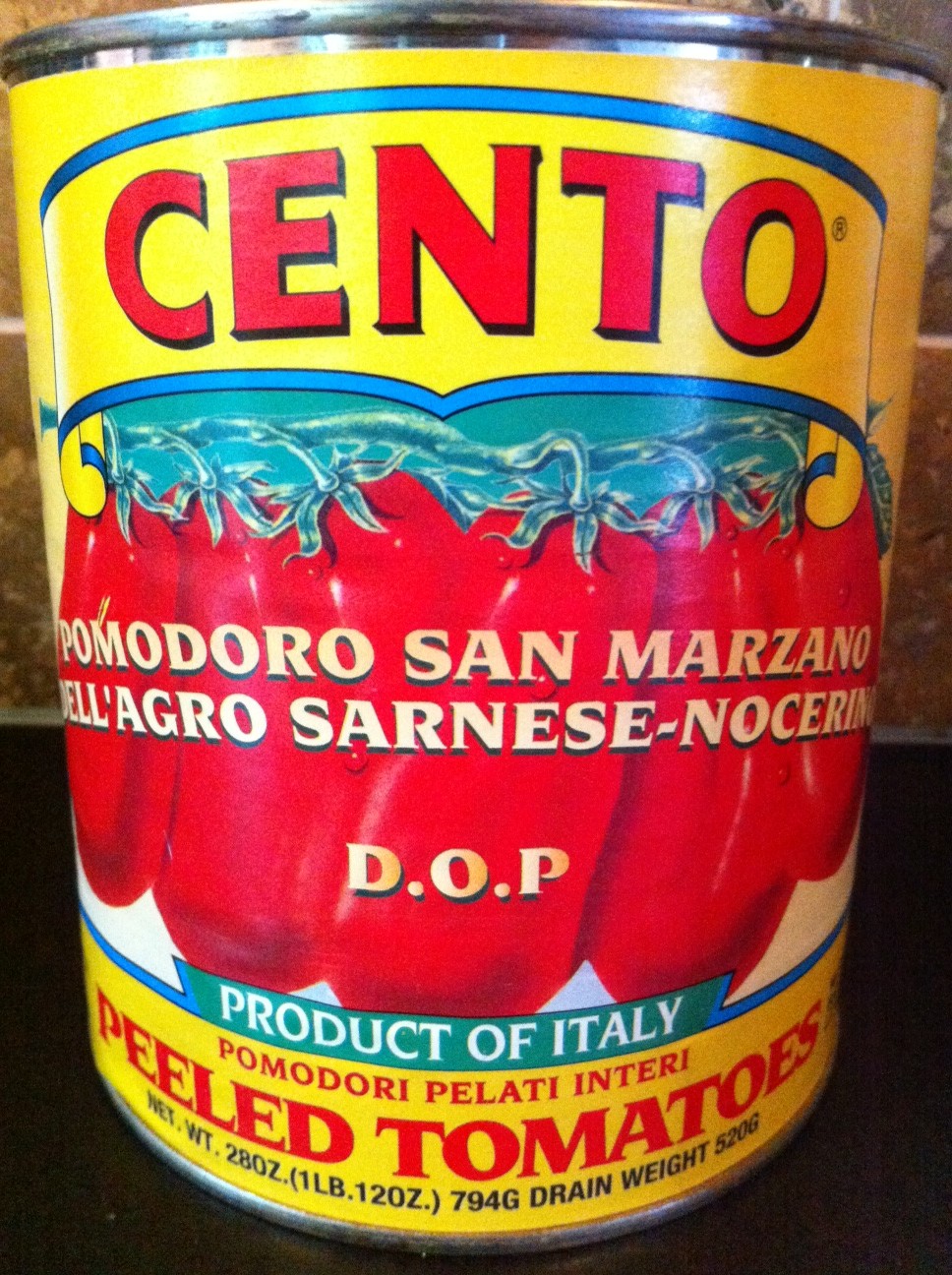
Yes! Always look for D.O.P. on the can or jar.

Yes! Always look for D.O.P. on the can or jar.


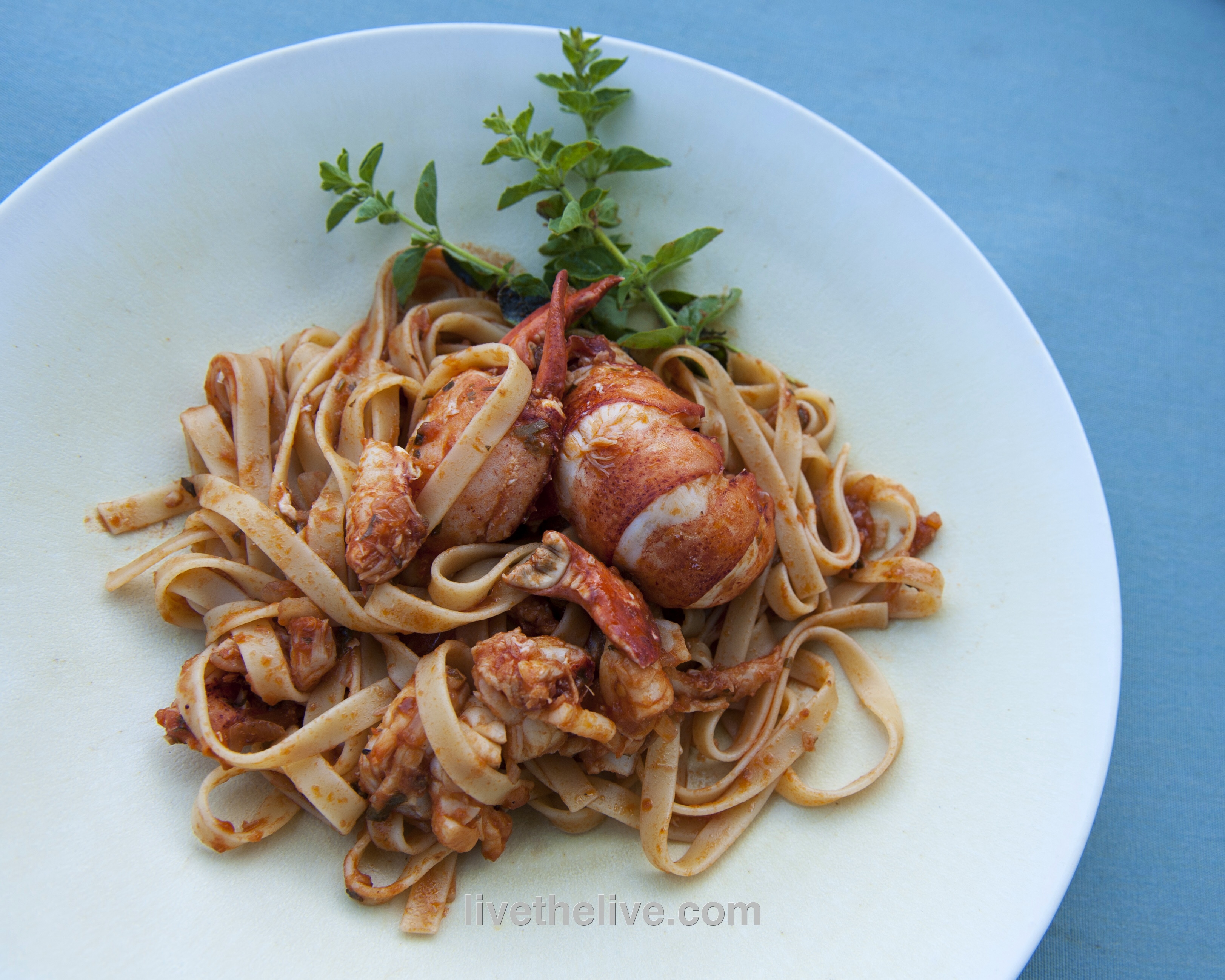
One of the most incredible dishes we’ve had was on the beautiful island of Santorini, Greece: pasta with lobster sauce. It’s one of those dishes that takes time to prepare, because the lobster sauce they make is a labor of love…time consuming, but so spectacular.


Cooked lobster LTL


To try to copy that lobster sauce we had in Santorini, I start with a kick-ass lobster stock. It’s simple but flavorful:


clean, empty claws, tails and bodies from two 1-1/2 lb. boiled lobsters (use the legs, too)
12 cups water
1/2 onion
3 celery stalks
1 carrot

Place all the ingredients in a large pot and set it on high heat. Crush the lobster shells (I use a potato masher!) Cook until the stock is reduced by half.

Strain the stock, discarding the lobster shells and veggies. Bring the stock back to the heat and reduce it until all you have left is 1 cup of intense stock.


Pasta with lobster sauce

Now that you have the stock, you can make the sauce!


1/2 onion, finely chopped
1 garlic clove, finely chopped
pinch of Italian red pepper flakes
1 teaspoon parsley
extra virgin olive oil
1/2 cup lobster stock
1/4 cup San Marzano tomato sauce (see below)
splash of white wine (I use an un-oaked Chardonnay)
salt and pepper
1 tablespoon unsalted butter (optional)
1/2 lb. cooked pasta (firmer than al dente)

Add some olive oil to a pan and sauté the onions until translucent. Season with salt and pepper. Add the garlic and cook for 10 seconds. Add the red pepper flakes and parsley.

Add 1/4 cup of the lobster stock and let it cook, reducing it by half. Add the other 1/4 cup of lobster stock and then the tomato sauce. Let it cook for a couple of minutes and add the white wine. Cook for a few minutes more, to cook out the alcohol.

Cook the pasta and drain it even before it reaches the al dente stage. Place the pasta in the pan with the sauce, heating and coating it thoroughly. A touch of butter can’t hurt anything!
Serve immediately, with or without the lobster meat. (Since the lobster was already cooked, you just need to add it to the pan for a few minutes to warm it through.)


For the San Marzano tomato sauce: I pour a can of San Marzano tomatoes  into a food processor or blender and blend. Pour it into a pan and reduce it over medium heat by half, until the sauce has thickened. Then use it in this recipe.

I’ve never met a ceviche I didn’t like. Sometimes, nothing can stop a serious seafood craving like sushi, sashimi or ceviche. They require the freshest seafood and veggies you can get your hands on. And other than some fine chopping, they require little else.

The acid in citrus juices basically “cooks” the seafood in a process very similar to applying heat, but when I use shrimp in ceviche, I place them in some boiling salted water first…although very briefly.

This recipe is a great appetizer for you and your guests.


Crazy colored shrimp, thanks to blood oranges.

Crazy colored shrimp, thanks to blood oranges.


For the poaching liquid…
2 quarts water
1/4 cup salt
For the ceviche…
1 pound raw wild-caught American shrimp, peeled and deveined
juice of 2 lemons
juice of 2 limes
juice of 2 oranges (I had blood oranges this time)
1 cup diced seeded peeled cucumber
1/2 cup finely chopped red onion
pinch of red pepper flakes
1 cup diced seeded tomato
1 avocado, chopped into 1/2″ cubes
1 tablespoon roughly chopped cilantro leaves, plus more for garnish
1/4 cup extra virgin olive oil
1/4 teaspoon Fleur de Sel

Combine the water and 1/4 cup salt in a saucepan and bring it to a boil. Add the shrimp and immediately turn off the heat. Let the shrimp sit for just a minute, then drain and transfer them to a bowl of ice and place them in the fridge to cool.

Remove the cooled shrimp from the fridge and drain the water, and get rid of the ice. Chop the shrimp into 1/2″ pieces and place them in a medium non-reactive bowl. Add the lemon, lime and orange juice. Stir in the cucumber, onion and pepper flakes. Refrigerate this for an hour.

Stir in the tomato, avocado, chopped cilantro, olive oil and Fleur de Sel into the shrimp mixture. Let it stand at room temperature for 30 minutes before serving. Garnish with cilantro leaves, if desired.

Though I’m a fan of renowned Italian chef Marcella Hazan, I had never heard of what many claim to be her most famous recipe: her 3-ingredient tomato sauce. (OK, salt makes 4.) Recently, I read an article about it and thought I had to try it for myself. The results were amazing: a subtle hint of onion, and a creamy smooth sauce thanks to the butter. You can use a regular can of tomatoes, but real San Marzano tomatoes will give the best results. How do you know if you’ve got real San Marzano’s? Just so happens I have a pet peeve about that. Read below the recipe.

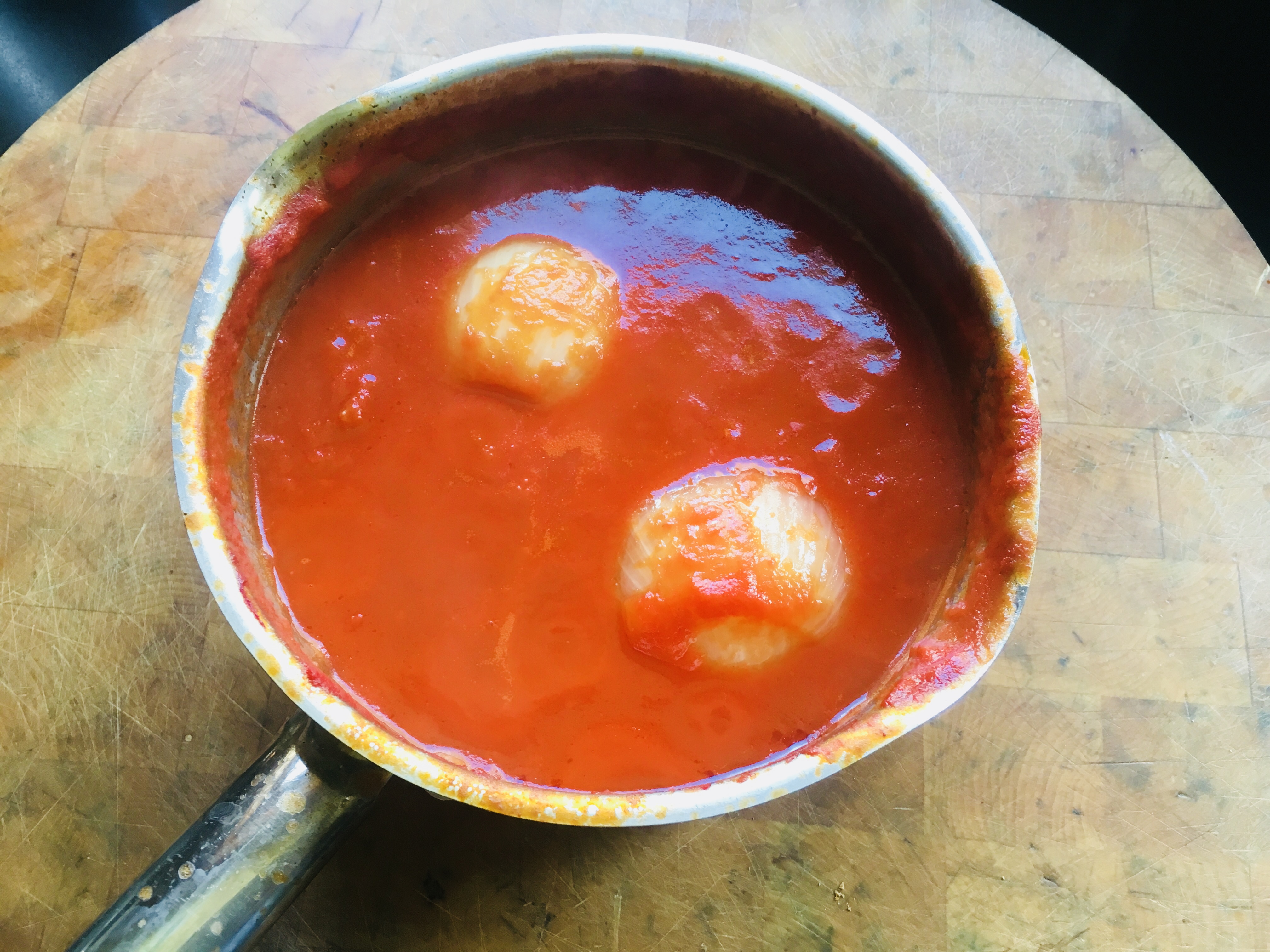
The sauce before onion removal.


1 28 oz. can San Marzano tomatoes
5 tablespoons butter (I use unsalted)
1 onion, peeled and cut in half
salt

In a saucepan, combine the entire can of tomatoes (tomatoes and juice) and the butter, and add the onion with a couple of pinches of salt. Place the heat on medium, bring it to a simmer, and then cook for 45 minutes, stirring occasionally, breaking the tomatoes with a spoon. Add more salt, if needed.

When the sauce is done, remove the onion.
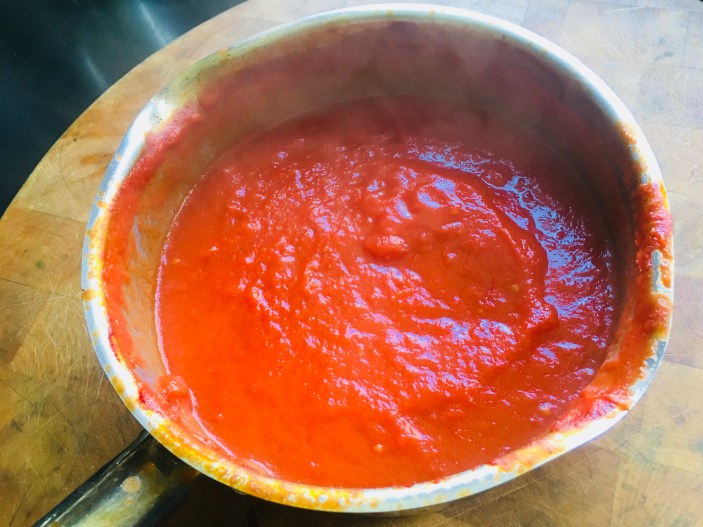
Silky smooth and ready to use.


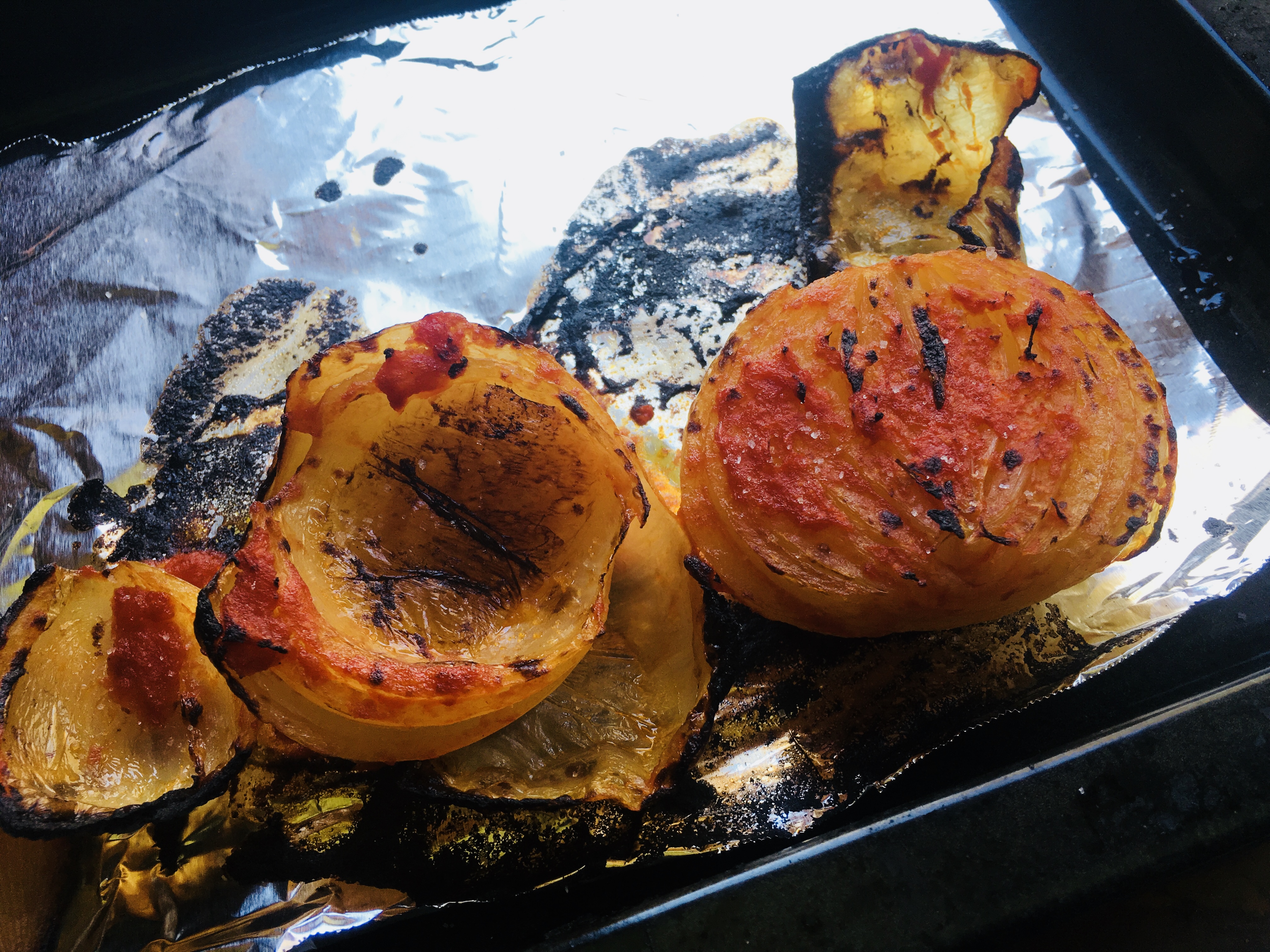
The original recipe says to discard the onion. What?! I’m an onion fanatic and I can tell you throwing the onion out is a sin. Here’s what I do: I place the onion on a baking sheet and put it under the broiler of my toaster oven: 5 minutes on one side, flip it, then 5 minutes on the other. If you’ve got a screamin’ broiler, those onions will have beautiful charred edges and the bits of tomato sauce left on the onion will caramelize to a fabulous intense, sweet paste. You then sprinkle Fleur de Sel on it, and devour it.
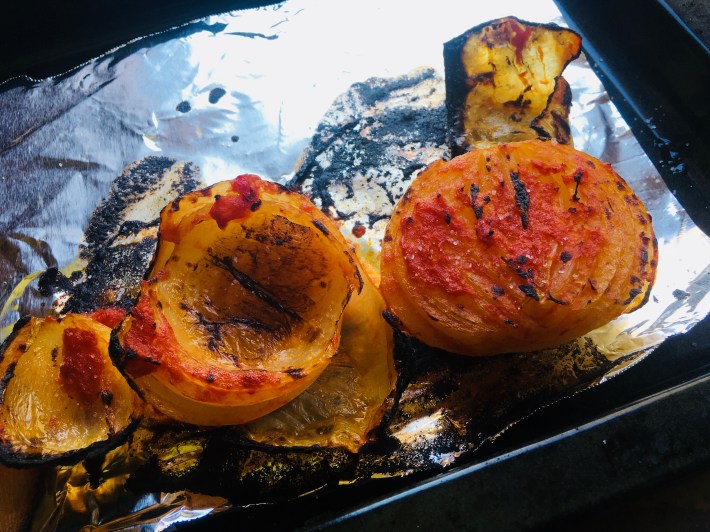
Never throw the onion away!


If you do your share of Italian recipes, you’ve used San Marzano tomatoes. Most good cooks agree that San Marzano’s are the best canned tomatoes you can buy.

Unfortunately,  the label can say “San Marzano tomatoes” even if they are not real San Marzano tomatoes.

San Marzano is a region in Italy near Naples and Mt. Vesuvius, and the special combination of climate and volcanic soil make these plum tomatoes world-famous. They have less water, fewer seeds and are picked off the vine when perfectly ripe and processed the same day.

But San Marzano is a variety of tomato, too…so you can have a can of San Marzano tomatoes that are not from San Marzano. And to add to the confusion, there’s actually a brand of tomatoes called San Marzano, with tomatoes grown in the United States. Bet your ass the sellers of these tomatoes are counting on you not to know the difference!
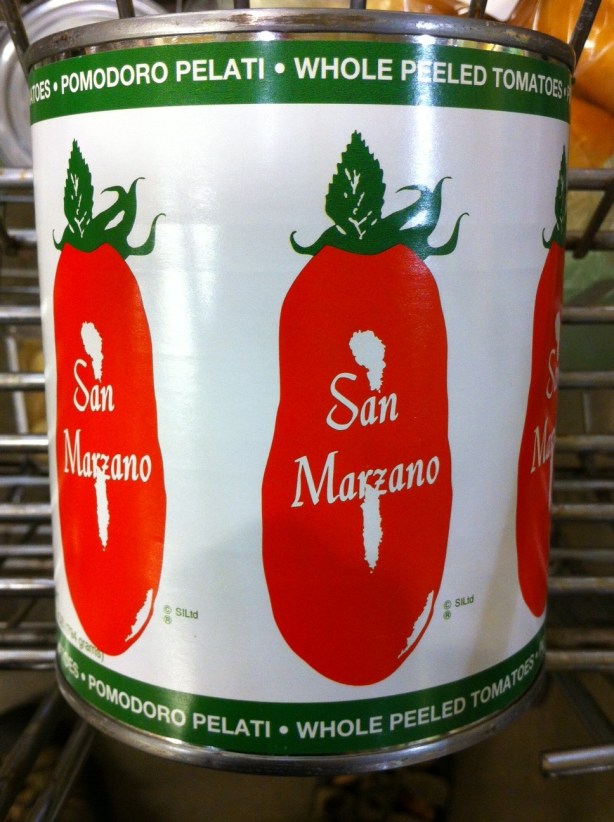
Sold everywhere, but these are NOT real San Marzano tomatoes. They’re grown in the USA.


Real San Marzano Tomatoes are a very old variety, extremely limited in quantity, grown and produced exclusively in the San Marzano region of Italy. Because production is so very limited, the Italian Government and the European Union have formed a way of protecting consumers from fraud by having San Marzano tomatoes tightly controlled. DOP, or denomination of protected origin, is the mechanism that the government is using to control the production and marketing of genuine San Marzano tomatoes. Labels for DOP products must be individually numbered and manually applied to each can in specific lots and government officials must oversee this application. So here’s the deal: unless you see “DOP” on the label with a hand-stamped number on the can, it’s not a real San Marzano tomato.
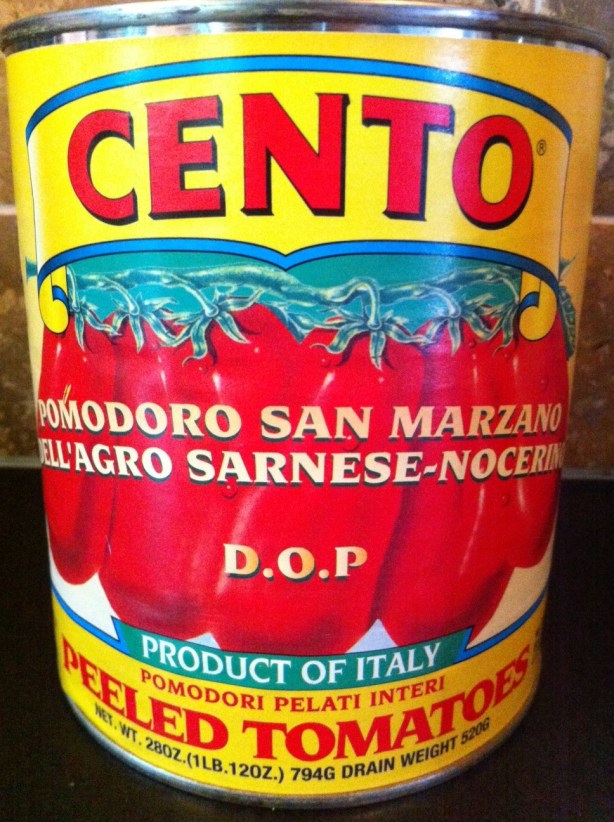
 

Yes! Real San Marzano tomatoes. Cento also sells non-certified San Marzano’s, so always look for the DOP on the can.


Another way to tell when you’re in the market is simple. Check the price. Your average can of tomatoes will be in the $2 range. Real DOP San Marzano tomatoes: about $4–$5 a can. It’s all about quality. Buy them on sale, and you’ll not only save a few bucks, but you’ll have them when you need them at arm’s reach!
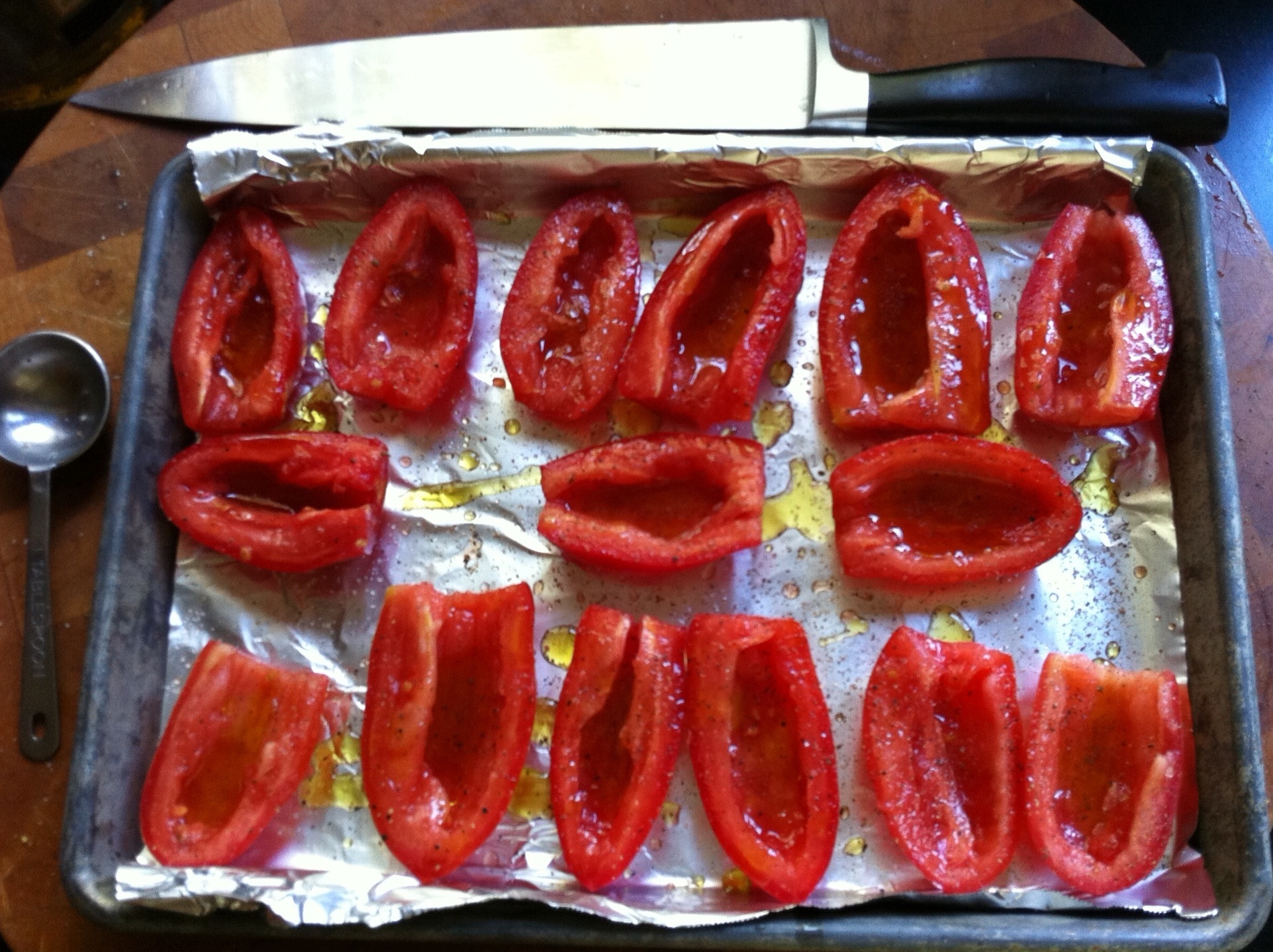
Now’s the time to head to your local farm stand and pick up a bag of gorgeous plum tomatoes, before the season is gone! And this is what you do with them…

These are not sun-dried tomatoes. They’re better, because fresh plum tomatoes are still moist after roasting, with a bit of that magic tomato liquid in every cup! A great, simple platter to offer at parties.

Tomatoes before

Tomatoes before.

12 to 18 halved, seeded plum tomatoes
1/4 cup extra virgin olive oil
2 tablespoons organic cane sugar
Freshly ground pepper
Fleur de Sel or sea salt

Pre-heat the oven to 250.

Line a baking sheet with foil and rub it lightly with olive oil.

Arrange halved and seeded tomatoes on it in a single layer, cut side up. Drizzle evenly with 1/4 cup olive oil, sprinkle with 2 tablespoons sugar, and season with pepper to taste.

Bake the tomatoes until they are still juicy but slightly wrinkled, about 3 hours. Transfer them to a platter and let them cool slightly.

Just before serving, sprinkle the tomatoes with Fleur de Sel, and garnish if you like, with chopped parsley leaves, mint leaves, or basil. (Bacon bits sound pretty good, too!)


Tomatoes after

Tomatoes after!

When it’s done right, gazpacho is one of the most delicious summer soups you’ll ever have. The secret, of course, is using super-fresh veggies. That’s why I crave it at the first sign of a vine-ripened tomato in my garden or a local farm stand. When my tomato plants have dozens of ripening fruits on them every day, I eat some in salads…I make tomato sauce with others…but the reddest and ripest become gazpacho!


I never make this out of season, and I’m always wary of restaurants that do! Very often, they’ll try to hide the taste of older veggies by adding too much salt or lots of spice.

The consistency of gazpacho is a personal preference. I like mine a bit chewy…not chunky like salsa, but not watery like soup…somewhere in between the two is perfection.

All the work is pretty much in the slicing, peeling and chopping…so I do it carefully.


1 large Vidalia onion, peeled and roughly chopped
1 carrot, peeled and roughly chopped
5 large tomatoes, peeled, seeded, and roughly chopped
2 medium cucumbers, peeled, seeded, and roughly chopped
6 sprigs of flat-leaf parsley
1/2 cup olives, drained  (I like kalamatas)
1/2 cup good quality extra virgin olive oil
Juice of 1/2 a large lemon
3 tablespoons white vinegar
Sea salt and freshly cracked black pepper

An easy way to peel tomatoes is to turn them upside down and make an X with a knife, puncturing the skin. Drop the tomatoes in boiling water for about 30 seconds, and the skin will start peeling away from the meat. Scoop the tomatoes out of the water, and immediately drop them into a bowl of ice water, letting them cool for 5 minutes. The skin will peel right off. Cut the tomatoes in half and (over the sink!) gently press your thumbs into the seed compartments, popping them out. Give the tomato a little shake to remove any last seeds, and it’s ready to be chopped.


Make an X, then drop the tomatoes in boiling water for 30 seconds.


While the tomatoes are cooling, you can peel and chop the other veggies.

Peel and roughly chop the onion and carrot, and place them in a food processor. Let it run for about 10 seconds.

Add the peeled and seeded tomatoes, the peeled and seeded cucumbers, and the sprigs of parsley and continue processing.

Add the olives, olive oil, lemon juice, vinegar, sea salt and black pepper.


Process until the veggies are finely chopped, and you’ve got a soup. Store it in the fridge for at least one hour to chill before serving.


Garnish with a sprig of parsley and a sprinkle of Fleur de Sel or other tasty finishing salt.

One of the most incredible dishes I’ve had on the beautiful island of Santorini, Greece, is lobster with pasta. It’s one of those dishes that takes time to prepare, because the lobster sauce they make is a labor of love…time consuming, but so spectacular.


Cooked lobster LTL


To try to copy that lobster sauce we had in Santorini, I start with a kick-ass lobster stock. It’s simple but flavorful:


clean, empty claws, tails and bodies from two 1-1/2 lb. lobsters (use the legs, too)
12 cups water
1/2 onion
3 celery stalks
1 carrot

Place all the ingredients in a large pot and set it on high heat. Crush the lobster shells (I use a potato masher!) Cook until the stock is reduced by half.

Strain the stock, discarding the lobster shells and veggies. Bring the stock back to the heat and reduce it until all you have left is 1 cup of intense stock.


Pasta with lobster sauce

Now that you have the stock, you can make the sauce!


1/2 onion, finely chopped
1 garlic clove, finely chopped
pinch of Italian red pepper flakes
1 teaspoon parsley
extra virgin olive oil
1/2 cup lobster stock
1/4 cup San Marzano tomato sauce (see below)
splash of white wine (I use an un-oaked Chardonnay)
salt and pepper
1/2 lb. cooked pasta (firmer than al dente)

Add some olive oil to a pan and sauté the onions until translucent. Season with salt and pepper. Add the garlic and cook for 10 seconds. Add the red pepper flakes and parsley.

Add 1/4 cup of the lobster stock and let it cook, reducing it by half. Add the other 1/4 cup of lobster stock and then the tomato sauce. Let it cook for a couple of minutes and add the white wine. Cook for a few minutes more, to cook out the alcohol.

Cook the pasta and drain it even before it reaches the al dente stage. Place the pasta in the pan with the sauce, heating and coating it thoroughly. Serve immediately, with or without the lobster meat.


For the San Marzano tomato sauce: I pour a can of San Marzano tomatoes  into a food processor or blender and blend until I get sauce. Pour it into a pan and reduce it over medium heat by half, until the sauce has thickened. Then use it in this recipe.

There’s something magical about a simple plate of spaghetti and meatballs. When my parents took me to an Italian restaurant as a child, a plate of spaghetti and meatballs made me feel like the luckiest kid on the planet. And even now, when I prepare a plate of spaghetti and meatballs for my daughter, she can’t wait to sit down at the dinner table.


meatballs


Great meatballs start with great meat. I always use 80/20 grass-fed beef. I don’t use a ton of breadcrumbs as filler. And the tomato sauce is homemade as well, from canned tomatoes. I start with the sauce.


1 medium onion, finely chopped
2 cloves garlic, through a press
1/2 cup extra virgin olive oil
10 cups ground and peeled garden tomatoes…or 3 cans (28 oz.) tomatoes pureed in food processor
2 teaspoons each: dried oregano, basil and parsley
3/4 teaspoon each anise seed and fennel seed
1 1/2 teaspoons salt
1/2 teaspoon black pepper
2 bay leaves
1 small can (6 oz.) tomato paste
1 teaspoon sugar (optional)


Heat the olive oil in a large pot and add the onions. Cook until the onions are translucent, then add the garlic. Stir for 10 seconds.

Add the tomatoes and cook on high until the orange foam disappears, stirring frequently. Don’t let it burn.

Add the oregano, basil, parsley, anise seed, fennel seed, salt and pepper, bay leaves and tomato paste. Allow the sauce to just come to a boil so that the tomato paste reaches optimum thickening power.

Reduce the heat to a simmer and cook for at least an hour, until the sauce reaches the desired consistency. Stir often.


While the sauce is cooking, I start the meatballs…


2 lbs. grass-fed ground beef
1 cup plain breadcrumbs (gluten-free breadcrumbs work well, too)
2 tablespoons dried parsley
2 tablespoons dried oregano
1 tablespoon dried basil
1 tablespoon granulated garlic
1 tablespoon onion powder
1 teaspoon black pepper
2 teaspoons salt
2 eggs, cracked and scrambled
1/4 cup extra virgin olive oil

Mix all the ingredients, except the olive oil, thoroughly but gently in a large bowl. Don’t overwork it.

Make the meatballs.

Pour some olive oil a medium-hot pan (don’t let it burn), and place the meatballs in the pan, searing them on all sides until brown.

When the meatballs are nice and brown, place them into the pot of sauce, making sure they are covered. Pour all the little bits and the olive oil from the pan into the sauce as well! Great flavor there.

Cover the pot and cook the meatballs in the sauce on low for a few hours.

Serve the meatballs and sauce over your favorite pasta, and sprinkle with freshly grated Parmigiano Reggiano.


Making this dish gluten-free is easy: use gluten-free pasta and use GF breadcrumbs in the meatballs. I prefer to buy gluten-free loaves of bread, like Uni, toasting them, letting the slices cool, then tossing them in a food processor to make breadcrumbs. The flavor is as good as regular breadcrumbs, and way better than that pre-packaged stuff!