Summer’s approaching and we slurp down more clams and oysters in the summer here in New England than at any other time of year. Freshly shucked oysters and clams–or in this case–beautiful boiled wild-caught American shrimp, call for an equally amazing cocktail sauce…and this sauce kicks butt! And it features a key ingredient that you might not expect: vodka. The small amount of vodka in the mix keeps the cocktail sauce from freezing solid when stored in the freezer. Just scoop out what you need, let it thaw, and put the rest back in the freezer.
2 cups ketchup
4 tablespoons prepared horseradish
1 tablespoon fresh lemon juice
1 teaspoon Worcestershire sauce
1/2 teaspoon Frank’s Red Hot, or other hot pepper sauce
5 grinds of fresh black pepper
1/4 teaspoon salt
1 teaspoon good quality vodka, like Tito’s
Combine all the ingredients. Store in a tight plastic container in the freezer. Scoop and thaw whenever you need it!
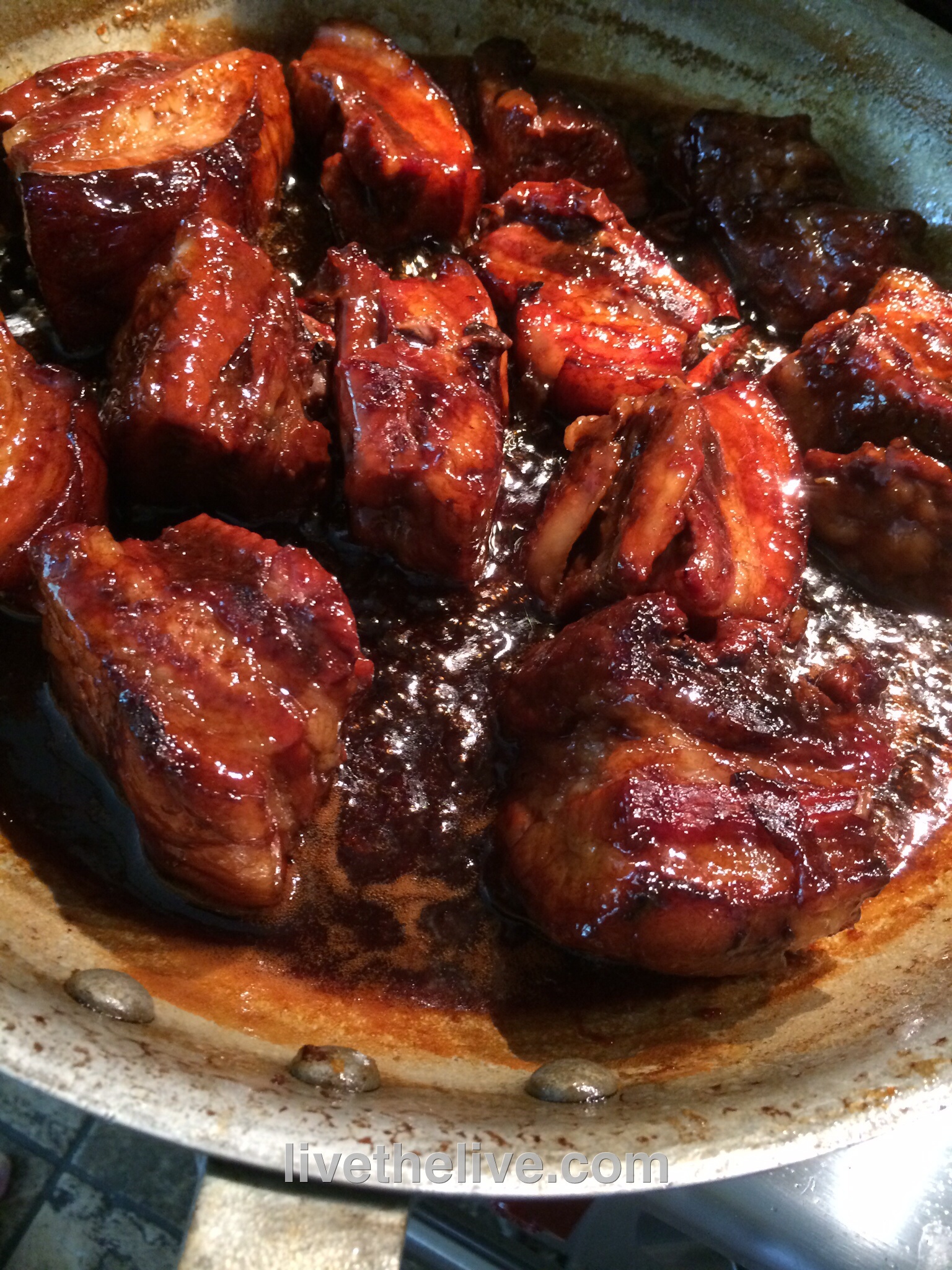
Sometimes the happiest of cooking accidents happen with bacon. My original plan was to make Chinese-style honey ribs for dinner. But instead of pulling a nice rack of ribs out of the freezer, I accidentally took out a slab of pork belly. I only realized my mistake after I thawed it, so I decided to use it! The results were pretty damn tasty.
I like maple syrup instead of honey, but use what you like!
Marinade:
¾ cup light soy sauce 6 Tablespoons hoisin sauce
5 lbs. pork belly
Zest and juice of 1 lemon
2 whole star anise
2 cinnamon sticks (3”)
1/2 cup honey or maple syrup
4 cups chicken broth (preferably homemade)
Pre-heat the oven to 350 degrees.
Mix the marinade ingredients. Set them aside.
Cut the pork belly into pieces that are about 2 inches square. Place them in a large pot. Cover them with water and bring the pot to a boil. Boil it for 5 minutes. Drain the water.
Place the warm pork belly pieces on a sheet pan lined with non-stick aluminum foil. Coat them with the marinade. Let them sit for 10 minutes.
Bake the pork belly pieces on the sheet pan in the oven for 30 minutes.
While the pork belly is baking, start the sauce in a large non-stick pan or pot: combine the lemon zest and juice, star anise, cinnamon sticks, maple syrup or honey, and chicken broth. Bring it to a boil, then reduce it to a simmer.
When the pork belly pieces have finished baking, add them to the sauce pot, lowering the heat to a simmer. Simmer (covered) for about 15 minutes or until meat is tender.
Turn the heat back on high, uncover the pot and cook until the sauce has reduced to a glaze that coats the meat. Reduce the heat as the sauce thickens to avoid the sugars in the syrup or honey from burning. When the pieces are sticky and gooey, they are ready!
Devour them just like that!
If you have leftovers, let the pork belly cool, then slice the pieces it to your desired thickness and fry them like regular bacon. They’re great with eggs!
Simple and delicious, this recipe is inspired by Jamie Oliver, who uses peeled white potatoes. I prefer whole, small, Yukon golds or yellow potatoes, my personal favorites, with the skin on. I think the skin adds an extra level of wonderful crunch.
The great thing about this recipe is that there’s not a lot of measuring going on. You add what you like, as much as you like, and the oven does the rest!
Pre-heat the oven to 350 degrees.
Start by boiling 1 1/2 lbs. of organic potatoes in salted water until they are a bit firmer than fork-tender. Drain them in a colander and set them aside for the moment.
Pour a couple of tablespoons of olive oil in a baking pan, along with a tablespoon of white wine vinegar. (Red wine vinegar works just as well.)
Pour the potatoes into the baking pan, season them with salt and pepper, and toss them all around, making sure they are coated with the oil.
No herbs go in at this point, because they will burn. They will go in after the first 30 minutes of cooking.
Place the pan in the oven and cook for 30 minutes.
Take the pan out of the oven and, using a potato masher, gently push down on the potatoes in the pan to flatten them a bit, breaking the skin.
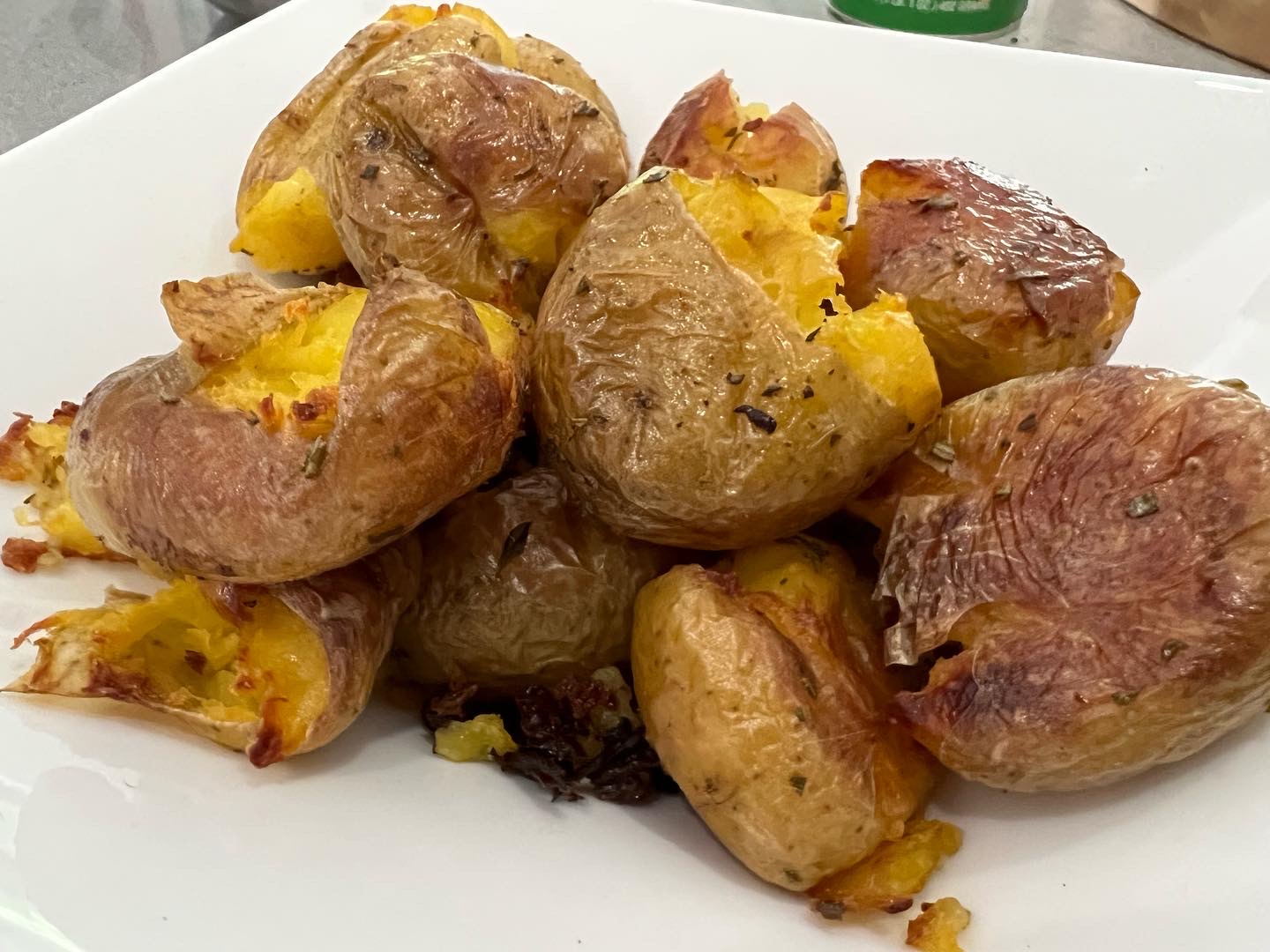
Chop up a handful of fresh herbs (I like rosemary and thyme) and sprinkle the herbs all over the potatoes. Toss it all together (with a spatula, not your hands–it’s hot!)…and place the pan back in the oven for another 30 minutes, until the potatoes are an amazing, crispy, golden brown.
One last touch of finishing salt (I love Fleur de Sel) makes it perfect!
It takes a few weeks for this limoncello recipe to be ready, but it’s worth it!
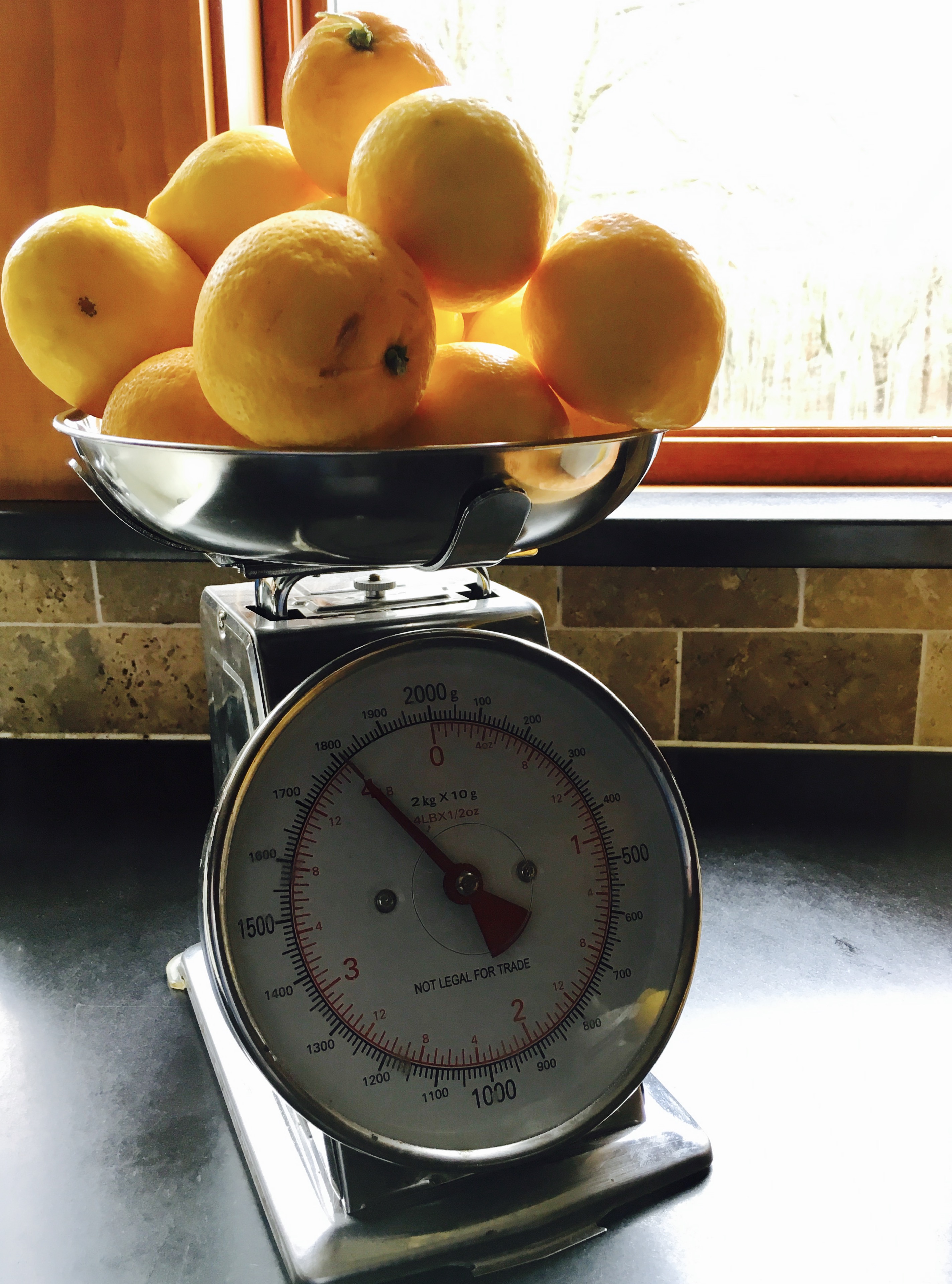
It starts with beautiful lemons…
Many years ago, we visited the Amalfi coast, and spent several nights on the beautiful island of Capri. On our last night, we dined at the historic Grand Hotel Quisisana, and our meal ended with a glass of the most delicious limoncello I ever had.
I asked the waiter if it was possible to get the recipe of the limoncello, and he made a big deal about the recipe being a “secret.” Though disappointed, I understood, and I left Capri thinking that I would never taste it again.
Sure, you can buy limoncello from Capri in a bottle, but what fun is that?
Two weeks later, back at home, I was reading the latest issue of Conde Nast Traveler, and there in black and white, was the Quisisana limoncello recipe! WTF?
After making many batches of this limoncello, I started experimenting with other citrus, and the most successful by far was with grapefruit. Now I make a batch of each: lemon and grapefruit. It’s important to use 100-proof vodka in this recipe. Most vodka is 80-proof, so you’ll need to go to a liquor store with a better selection to find it. Absolut makes a good one, as does Stoli.
Four ingredients, easy to make. The toughest part is waiting for it to mellow a bit.
4 lbs. of lemons, but you only use the zest!
4 lbs. lemons, zest only
2 750-ml bottles 100 proof vodka
5 1/2 cups sugar
6 cups filtered water
Just the zest!
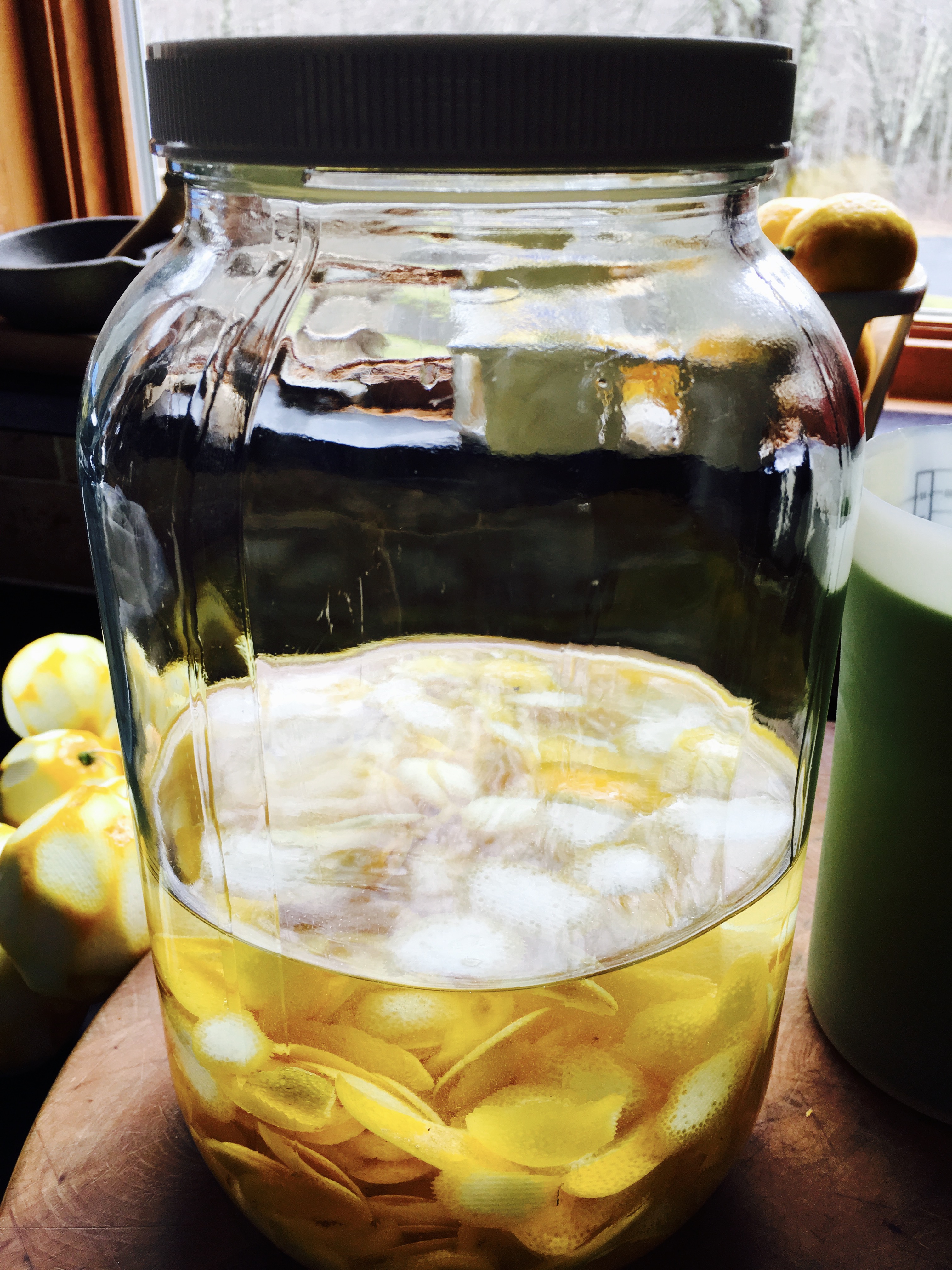
Peel the zest off all the lemons, trying not to get any of the white pith that could make the limoncello bitter. (There will always be some…that’s OK.) Place all the zest in the bottom of a one-gallon glass jar with a lid.
Pour the vodka on top of the lemon zest pieces, seal the jar, and keep it at room temperature for a week, swirling the jar around gently once a day.
Vodka and zest.
On the sixth day, combine the sugar and water in a pot over medium-high heat, and stir until all the sugar completely dissolves. Remove it from the heat, cover it, and let it thoroughly cool to room temperature (overnight is best.)
On day seven, strain the lemon zest, pouring the infused vodka into a clean glass jar. Discard the lemon zest.
Pour the sugar/water mixture into the vodka and mix it well.
At this point, you can pour the finished product into bottles. I like to let it mellow for about a month before drinking. (It’s worth the wait…although nobody says you can’t take a few “cheating sips” every now and then!)
This is a real comfort food we discovered on a trip to Spain in 2014. Croquettes are the Spanish equivalent of chicken nuggets: they’re found on every kids’ menu…and my daughter ordered them just about everywhere we went! So it’s no surprise that I “got the order” to make a batch of croquettes once we got home…and I’ve been making them ever since.
You can make these days ahead of time and then freeze them, re-heating them whenever you have guests. These are way better than your average snacks when your favorite game is on!
I found a great recipe for croquettes in Saveur magazine, and decided to try it out. I was a bit clumsy at making them at first–they do need a bit of finesse–but by the end of the batch, I got the hang of it. And to make them gluten-free, I simply substituted GF flour and breadcrumbs for the all-purpose flour and Panko. (The best tasting GF breadcrumbs are the ones you make yourself. Buy a loaf of frozen gluten-free bread, like Udi’s, and toast it in your toaster oven. Crumble the slices into a food processor, processing them until the breadcrumbs are the size you like.)
2 lbs. raw potatoes, peeled and cut into 1″ cubes
4 tablespoons unsalted butter
1 onion, minced
1/4 to 1/2 cup heavy cream
6 oz. cheddar cheese, grated
6 oz. ham, finely chopped
salt and pepper
1 cup all-purpose flour (or gluten-free flour like Cup4Cup)
2 eggs
2 cups Panko breadcrumbs (or gluten-free breadcrumbs)
avocado oil for frying
Peel the potatoes, cutting them into 1″ cubes. Boil them in salted water until tender. Drain them and set them aside.
Melt the butter in the same pot the potatoes were in, then add the onions and sauté them until they’re translucent. Put the potatoes back in the pot and add 1/4 cup of the heavy cream. Mash the potatoes with a potato masher until smooth. Add more cream, if needed, but be careful not to make it mushy.
Add the cheese and mix until it has melted in. Add the ham and mix again. Season with salt and pepper.
Pour the contents of the pot into a metal bowl and place it in the freezer to cool, stirring every 10 minutes until the mashed potato mix is cold, but not frozen.
Line up three bowls: all-purpose flour (or GF flour) in the first bowl, eggs (scrambled) in the second bowl, Panko (or GF breadcrumbs) in the third.
Remove the mashed potato mix from the freezer, and with floured hands, grab enough to gently roll a small meatball in your hands. (I’ve found that starting with a round shape makes it easier to work with.)
Roll the ball in the flour, then the egg, then drop in the Panko and roll again. With the ball in your hand, gently squeeze into a tubular (or small football) shape, and then place it on a sheet pan lined with non-stick aluminum foil. Continue with the rest of the potato mixture. (You may need to add another scrambled egg or two if you run out.)
Once you’ve rolled all the croquettes, place the sheet pan in the freezer for 20 minutes to firm up.
Heat a pan with 2″ of oil to 350 degrees. Remove the croquettes from the freezer, and working in small batches, fry them until golden brown. Place them on paper towels, and quickly season lightly with salt while hot.
The croquettes freeze really well, so this batch goes a long way. Once they’ve been fried, let them cool completely to room temp. Place them in freezer bags and store them in the freezer. When it’s time to cook them, let them thaw for about 15 minutes, then place them in a pre-heated 325 degree oven and cook for 15 minutes.
The 150th running of the Kentucky Derby is Saturday, May 4th, 2024, and although I’m not a big horse racing fan, I am a huge fan of the official drink: the Mint Julep!
The Mint Julep is such a perfect, classic and historic bourbon drink, it seems silly to wait until Derby Day to have one. Of course, as any aficionado of spirits will tell you, there are as many right ways as wrong ways of making one.
The first step in my Mint Julep is making the simple syrup. Learning from one of my old radio buddies, my pal Rick O’B, I infuse mint into my simple syrup to take my cocktail to the next level. I use the standard ratio of 1 cup of clean, filtered water to 1 cup of sugar. I place the sugar and water in a saucepan and heat until just boiling. I’ve found that it needs to reach this stage for the sugar to really dissolve.
Waiting for the sugar to dissolve.
As soon as it starts to boil, I remove the saucepan from the heat, and throw in a handful of freshly picked mint leaves, stirring to make sure the mint gets in there, and then I leave the saucepan to cool to room temperature.
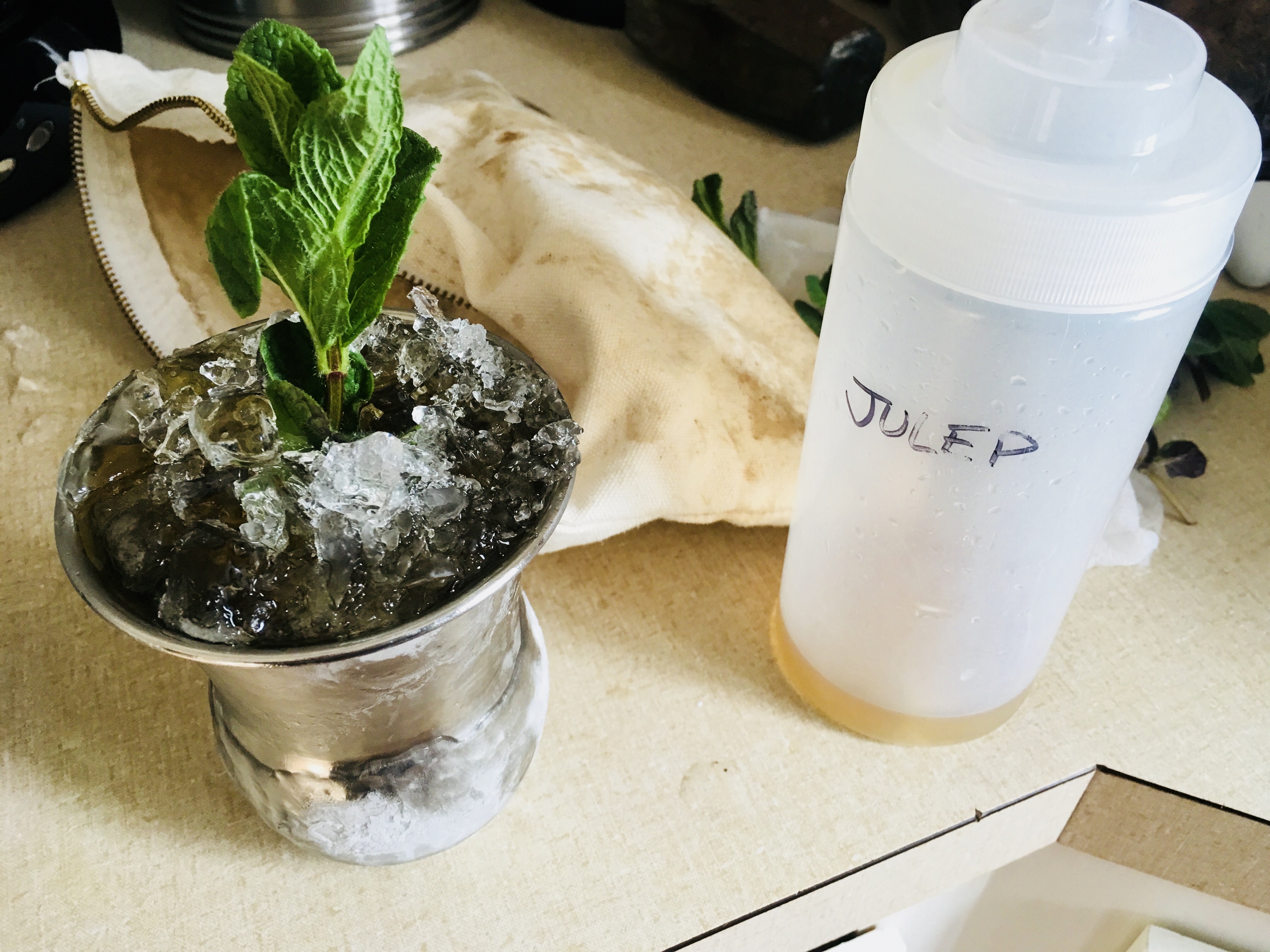
Once it’s at room temp, I strain the simple syrup into a bottle with a tight sealing lid, and place it in the refrigerator to cool. It will keep for about a week.
An equally important ingredient for a perfect Mint Julep is the ice: specifically, crushed ice from clean, filtered water. Don’t even think of using tap water for any cocktail much less this one. Why ruin an expensive bottle of bourbon by going cheap on the ice? I make my own ice cubes, then put them in an untreated canvas ice bag and bash them with a mallet to the perfect crushed size. But if you don’t want to go through all the trouble, just buy a bag of good ice. Untreated canvas bags for crushing ice can be purchased online from bar supply companies for about $30. I got an untreated canvas tool bag (the exact same shape and size) at Home Depot for 3 bucks.
Da bag.
The next step is a little tougher: which bourbon to choose. The explosion of choices on the bourbon market has made it all but impossible for the average imbiber to know which bourbon is best for their tastes. If you’re a beginner, I suggest you go to a trusted bartender and explain that you’re new to the bourbon world, and could you have the tiniest of tastes and sniffs of what he’s got at his bar. Chances are, you’ll get a sampling of some of the better known brands: Maker’s Mark, Woodford Reserve, perhaps Buffalo Trace or Bulleit, and the standard Jim Beam. This is a very good start. (Also, hinting to wife and friends that “I’m trying new bourbons” around your birthday or Father’s Day inevitably gets you a few bottles as well!)
My go-to bourbon for Mint Juleps used to be Eagle Rare 10-year-old when it was around $32.99 a bottle. Now it’s up to $80! My latest go-to bourbon is 1792 Small Batch. At $29, it’s almost unbelievable, like someone made a mistake in the stock room! Very tasty on its own and great for mixing. Others that work well and are around the same price range include Buffalo Trace, and Larceny.
Finally, a Mint Julep needs a metal–not glass– Julep cup. Made of pewter or aluminum, it frosts on the outside as you stir your drink, keeping your beverage ice-cold on even the hottest of days.
3 oz. bourbon 1 oz. mint-infused simple syrup crushed ice Julep cup Fresh mint for garnish
Crush the ice and pack it into the Julep cup, even letting it dome slightly over the top. Don’t worry…the alcohol will melt it.
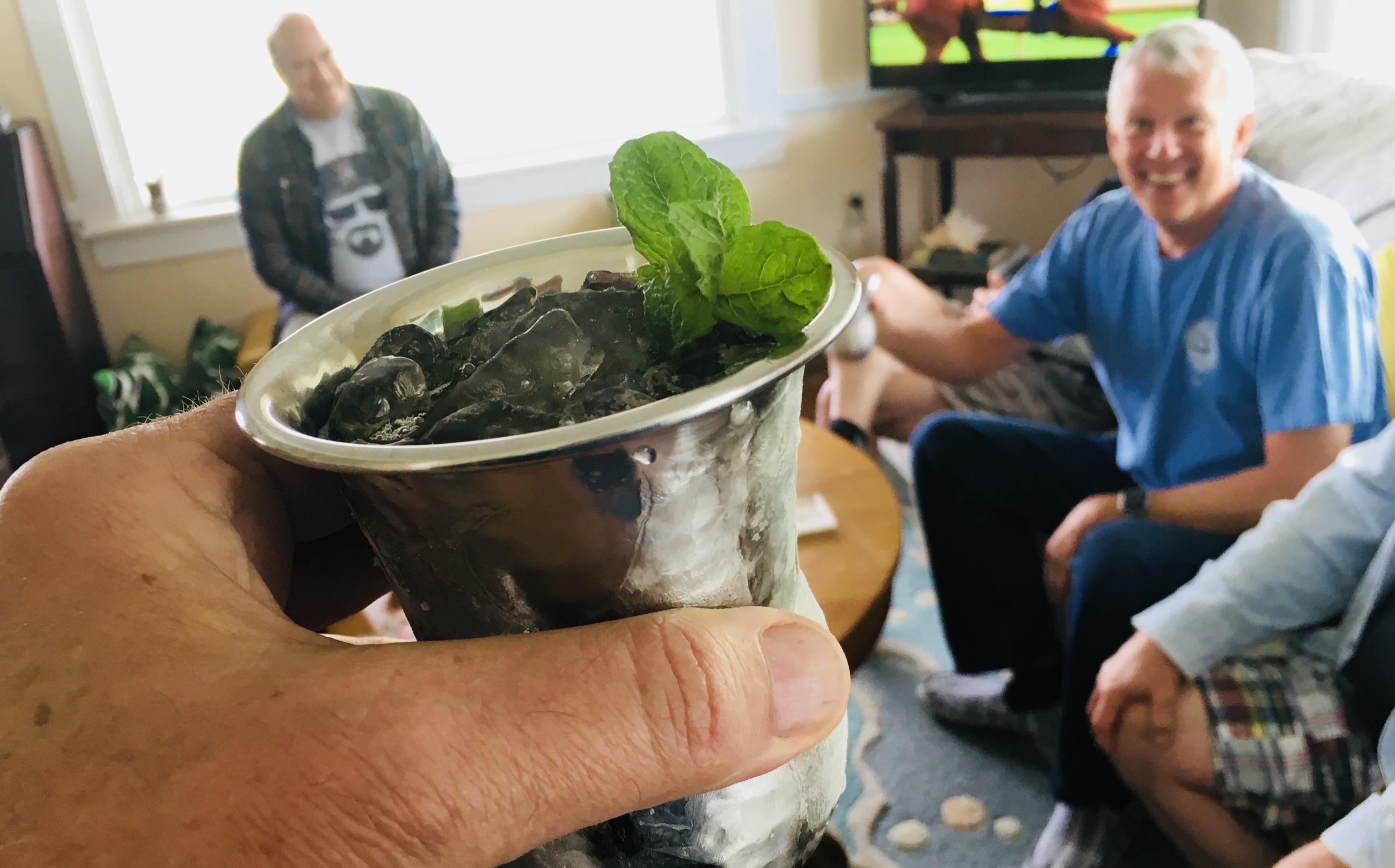
I like to add 1.5 ounces of bourbon, then the ounce of simple syrup, another 1.5 ounces of bourbon on top, and then a quick squirt of simple syrup to top it off. Break off a few mint leaves from the stem and push them into the ice. A beautiful layer of frost will form on the outside of the cup. Add more ice, if necessary, and garnish with a sprig of mint.
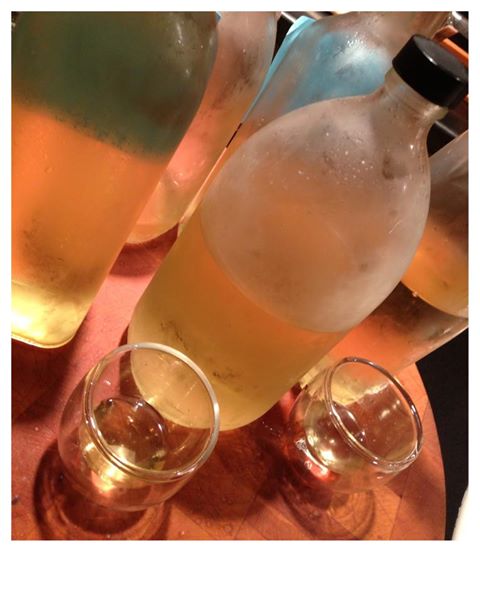
A nice selection of bourbons. This is an old photo: that Pappy Van Winkle is long gone…but I saved the bottle!
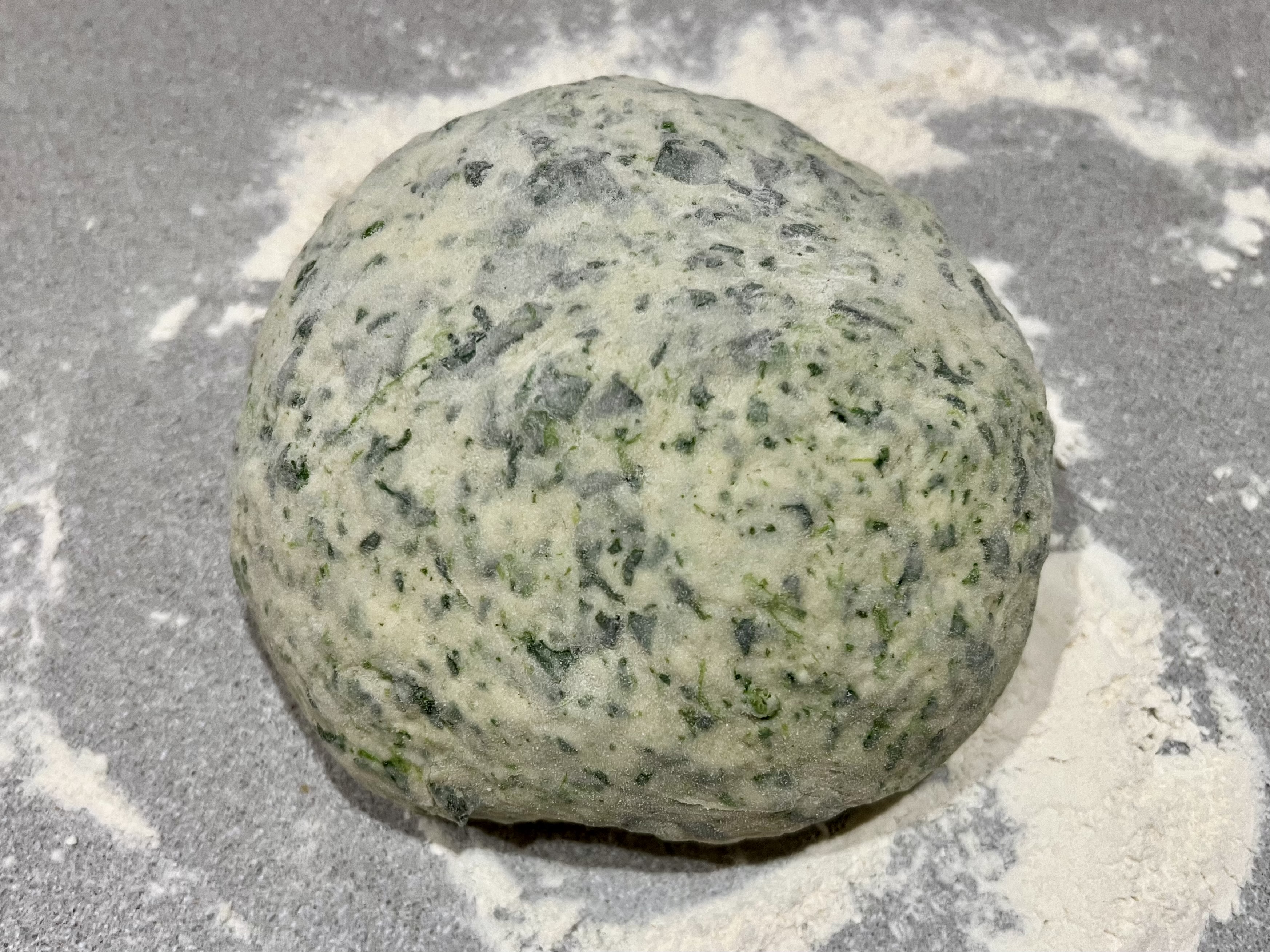
I’ve made spinach pasta before, so I figured it couldn’t be that hard to make spinach pizza dough. It’s pretty much the same procedure: I combined about 3 cups of 00 flour (I like King Arthur) with a tablespoon of Kosher salt in my standing mixer.
In a Pyrex measuring cup, I poured in a cup of water and put it in the microwave for 30 seconds to bring the temperature to about 100 degrees. (Over 110 degrees will kill the yeast.) I added a tablespoon of dry active yeast to the water, and then a bit of sugar, mixing it well, and I let it sit for about 10 minutes until it started foaming up.
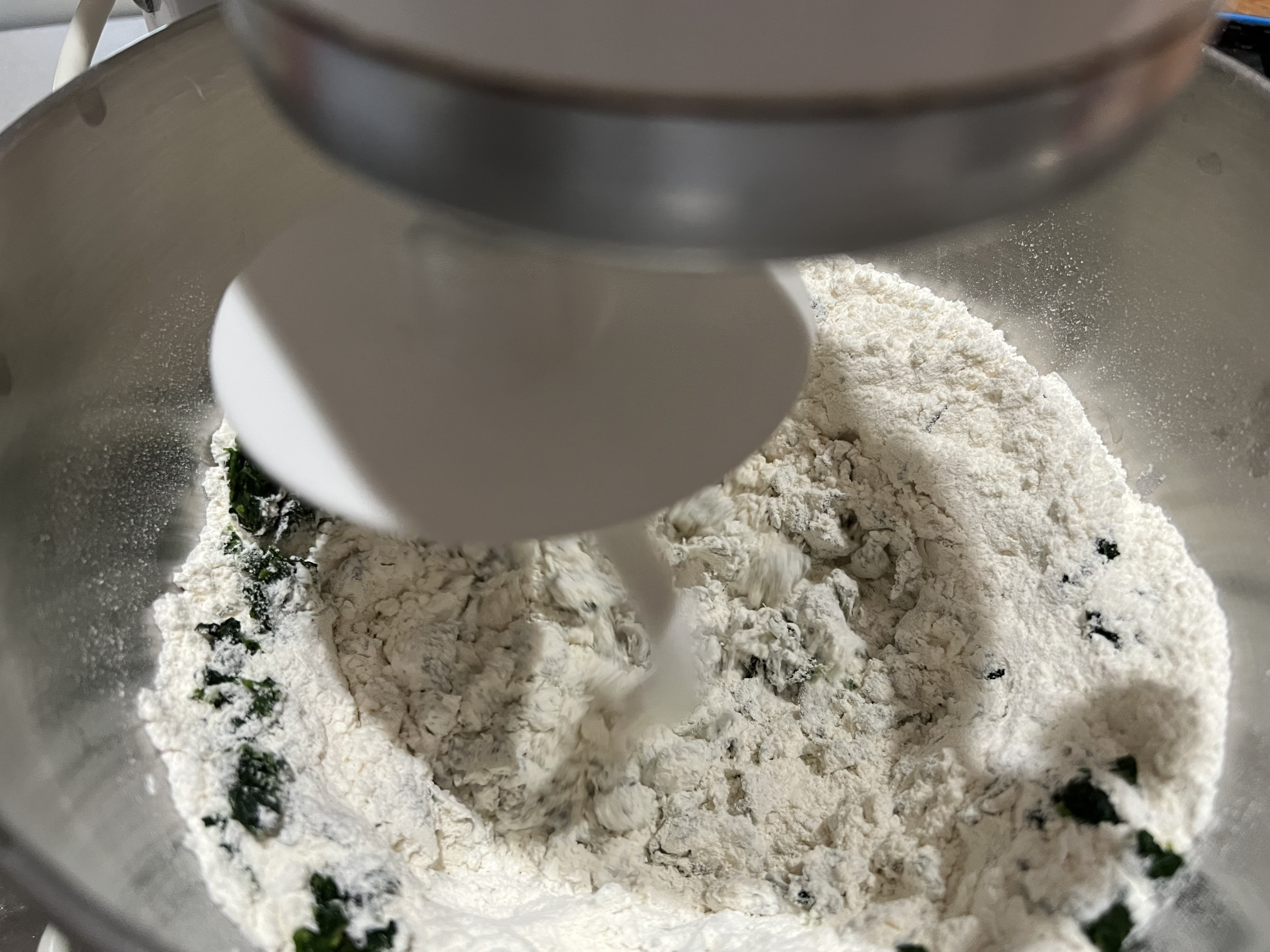
Meanwhile, I thawed a package of frozen spinach and removed 6 ounces’ worth. I squeezed as much water out of it as I could, reducing the weight to about 4 ounces. I chopped the spinach up well, then mixed it with the flour in the mixing bowl. I added the water with the yeast, adding some of the spinach water if more water was needed.
My old school KitchenAid. Still kickin’ butt!
Once the dough ball pulled from the sides of the mixing bowl, I took it out and continued to knead it by hand until the ball was smooth.
I added a little olive oil to the mixing bowl, and placed the dough ball back in it, covering it with plastic to rise over several hours.
After a few hours, I punched the dough down and let it rise again.
Rising in a warm place in the kitchen.
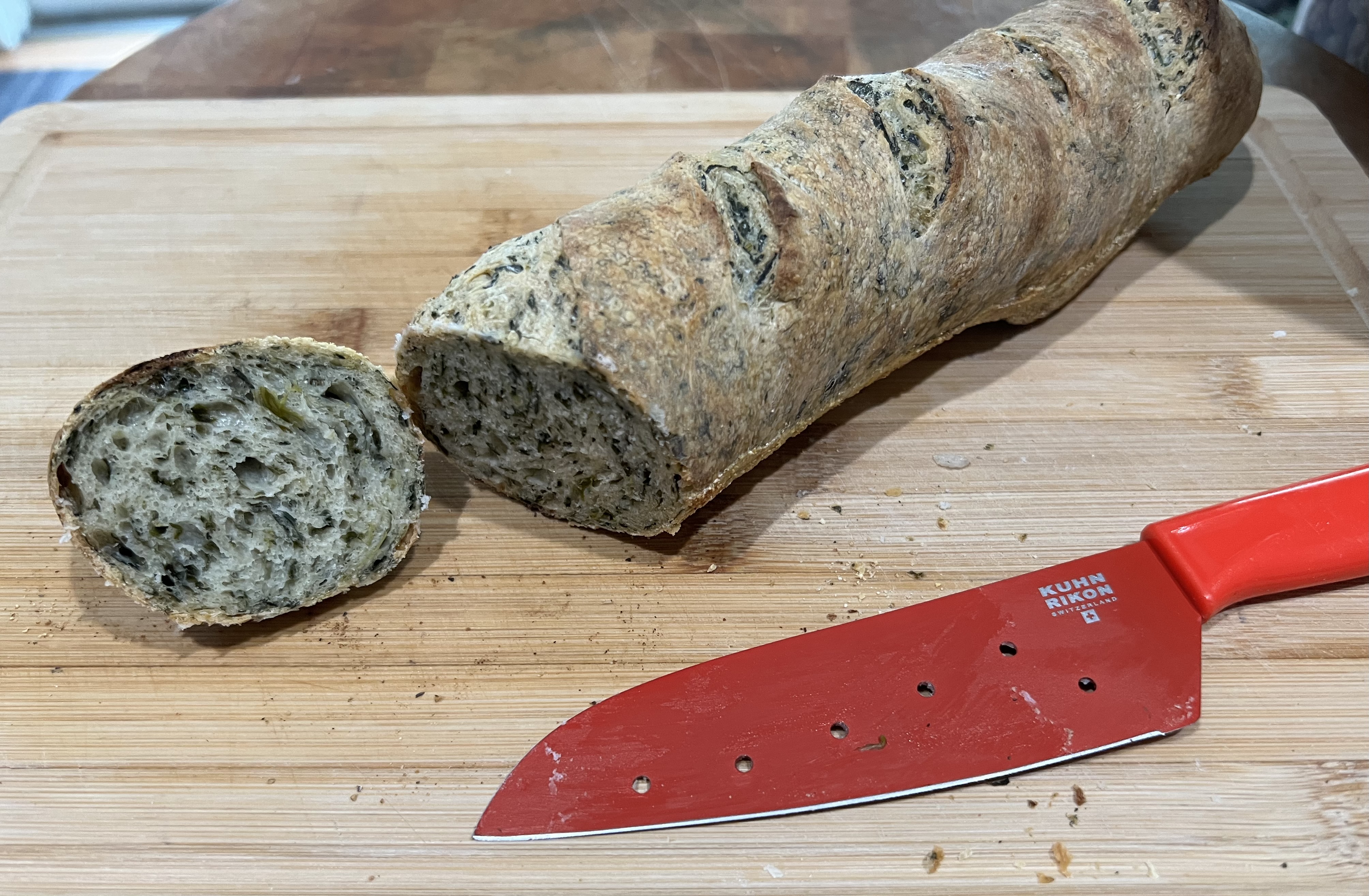
A couple more hours, and I rolled the dough into 2 smalls balls and a small baguette. (Had we planned on making a deep dish pan pizza, I would’ve used the whole dough ball. But we went for thin crust instead.)
I placed my pizza stone in my cold oven, and then preheated my oven to 500 degrees. (I use a cast iron plate, which goes by the brand name Pizzori. It gets really hot and makes the crust nice and crispy.)
Rubbing some corn meal on my pizza peel, I placed the baguette on it and slid it into the oven, baking it for about 20 minutes until it was golden brown.
I let the oven warm up again after removing the baguette, and starting prepping my pizzas.
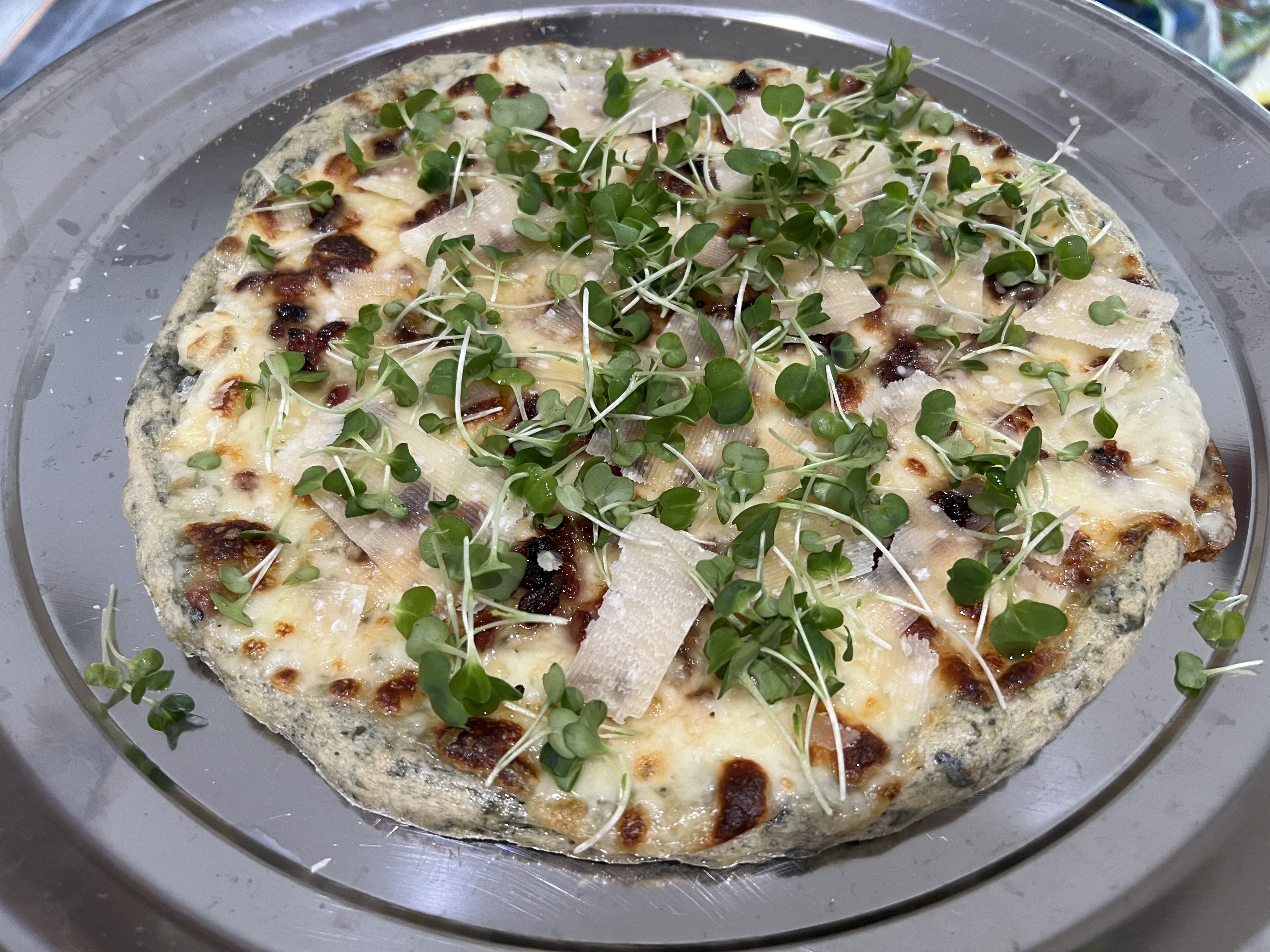
The first pizza was a white pizza, meaning I made a bechamel sauce for it: a simple combination of 2 tablespoons melted butter in a saucepan with 2 tablespoons of flour, mixing to make a roux. I then added some milk, and a little granulated garlic and oregano. I let it thicken and set it aside.
I stretched the spinach dough out on the pizza peel, and spread the bechamel sauce on it. I followed this with slices of mozzarella, and bits of home-cured guanciale that I had chopped and fried in a pan. In the oven it went, and once it came out, I added shaved Parmigiano Reggiano and some microgreens.
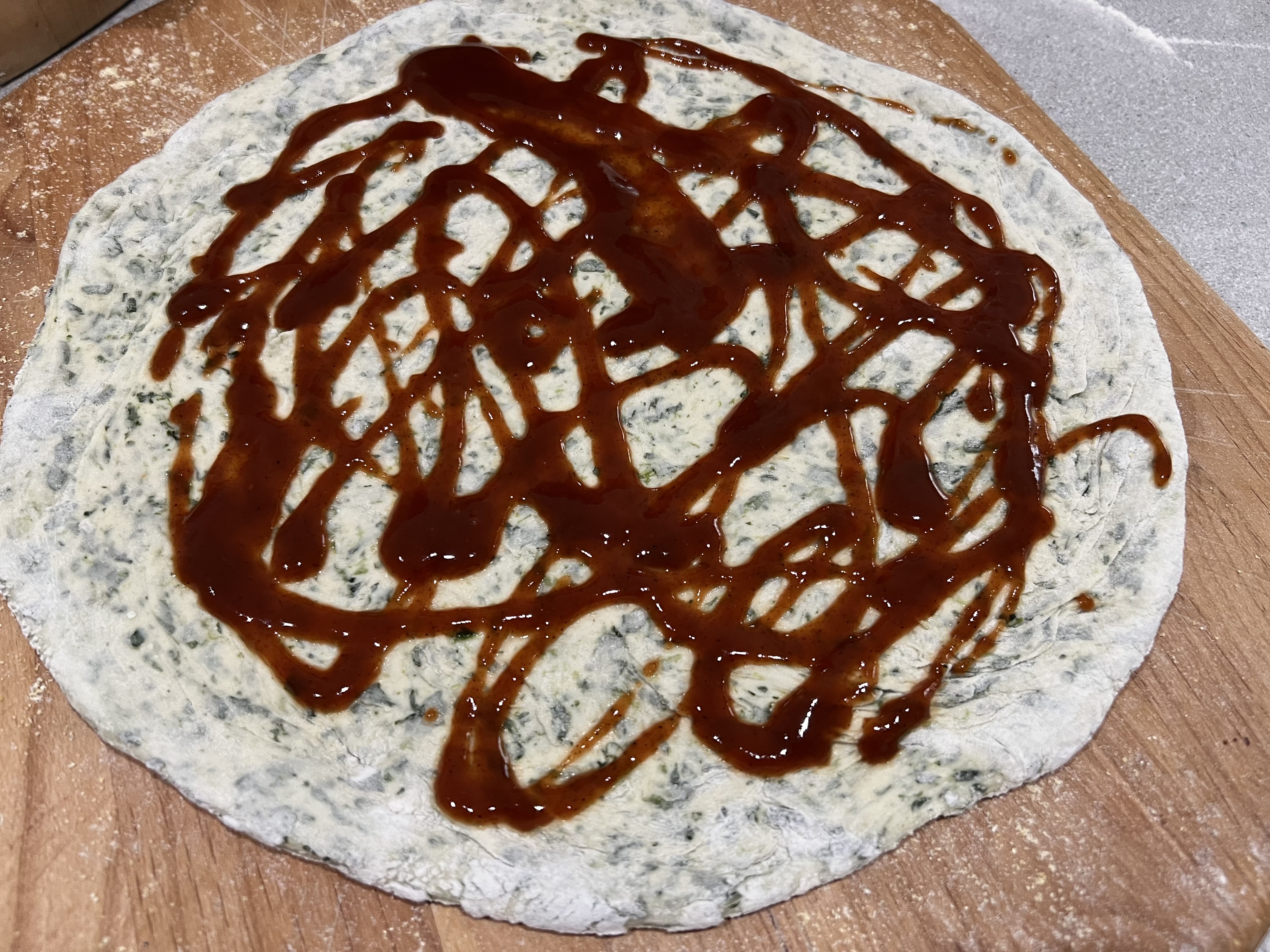
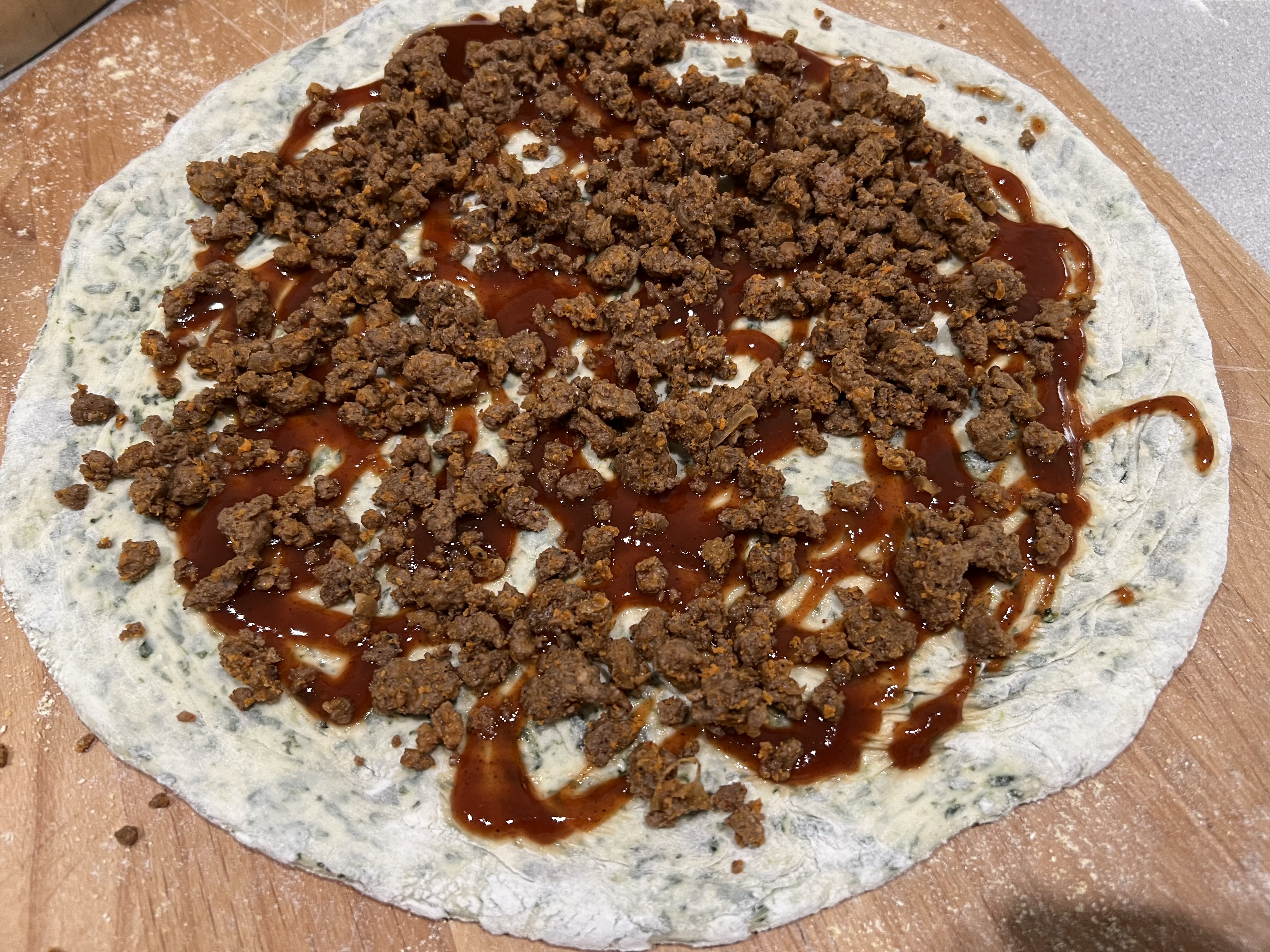
Pizza #2 utilized leftovers from previous dinners. I spread the spinach dough out on the pizza peel, and spread some barbecue sauce on it. I followed this with leftover chili meat I had made for chili dogs a couple of nights before. Then I topped the meat with a combination of mozzarella and cheddar.
Cheesy, melty and delicious!
I still had some spinach left over. So the next day, I prepared another wonderful recipe. Check in with me next time.
I’ve never met a ceviche I didn’t like. Sometimes, nothing can stop a serious seafood craving like sushi, sashimi or ceviche. They require the freshest seafood and veggies you can get your hands on. And other than some fine chopping, they require little else.
The acid in citrus juices basically “cooks” the seafood in a process very similar to applying heat, but when I use shrimp in ceviche, I place them in some boiling salted water first…although very briefly.
This recipe is a great appetizer for you and your guests.
Crazy colored shrimp, thanks to blood oranges.
For the poaching liquid…
2 quarts water
1/4 cup salt
For the ceviche…
1 pound raw wild-caught American shrimp, peeled and deveined
juice of 2 lemons
juice of 2 limes
juice of 2 oranges (I had blood oranges this time)
1 cup diced seeded peeled cucumber
1/2 cup finely chopped red onion
pinch of red pepper flakes
1 cup diced seeded tomato
1 avocado, chopped into 1/2″ cubes
1 tablespoon roughly chopped cilantro leaves, plus more for garnish
1/4 cup extra virgin olive oil
1/4 teaspoon Fleur de Sel
Combine the water and 1/4 cup salt in a saucepan and bring it to a boil. Add the shrimp and immediately turn off the heat. Let the shrimp sit for just a minute, then drain and transfer them to a bowl of ice and place them in the fridge to cool.
Remove the cooled shrimp from the fridge and drain the water, and get rid of the ice. Chop the shrimp into 1/2″ pieces and place them in a medium non-reactive bowl. Add the lemon, lime and orange juice. Stir in the cucumber, onion and pepper flakes. Refrigerate this for an hour.
Stir in the tomato, avocado, chopped cilantro, olive oil and Fleur de Sel into the shrimp mixture. Let it stand at room temperature for 30 minutes before serving. Garnish with cilantro leaves, if desired.
Corned beef hash is actually a very simple thing to make. The most difficult part is the corned beef, especially if you’re curing it yourself. That process takes about three weeks…a long time to wait for a plate of hash!
If you have a package of already prepared corn beef that you bought at the supermarket, thaw it, and rinse it in clean, cold water.
If you follow my corned beef recipe (I posted it a couple of weeks ago…you can search for it on my home page), do the same after three weeks of curing: wash the slab of brisket well, removing any seeds and spices that have wedged themselves into the meat.
A beautiful slab of corned beef, after 3 weeks of curing. I trim large pieces of fat and gristle off before cooking.
At this point, many people choose to boil the corned beef, but I don’t. Instead, I place the piece of brisket in a container large enough to hold it covered with more cold, clean water. I let it sit in this cold water for about 12 hours. I dump some ice into it to keep everything cold. I change the water a couple of times over the 12 hours. Much of the salt will be washed away by this process. I pat the meat dry with paper towels.
Preheat the oven to 325°.
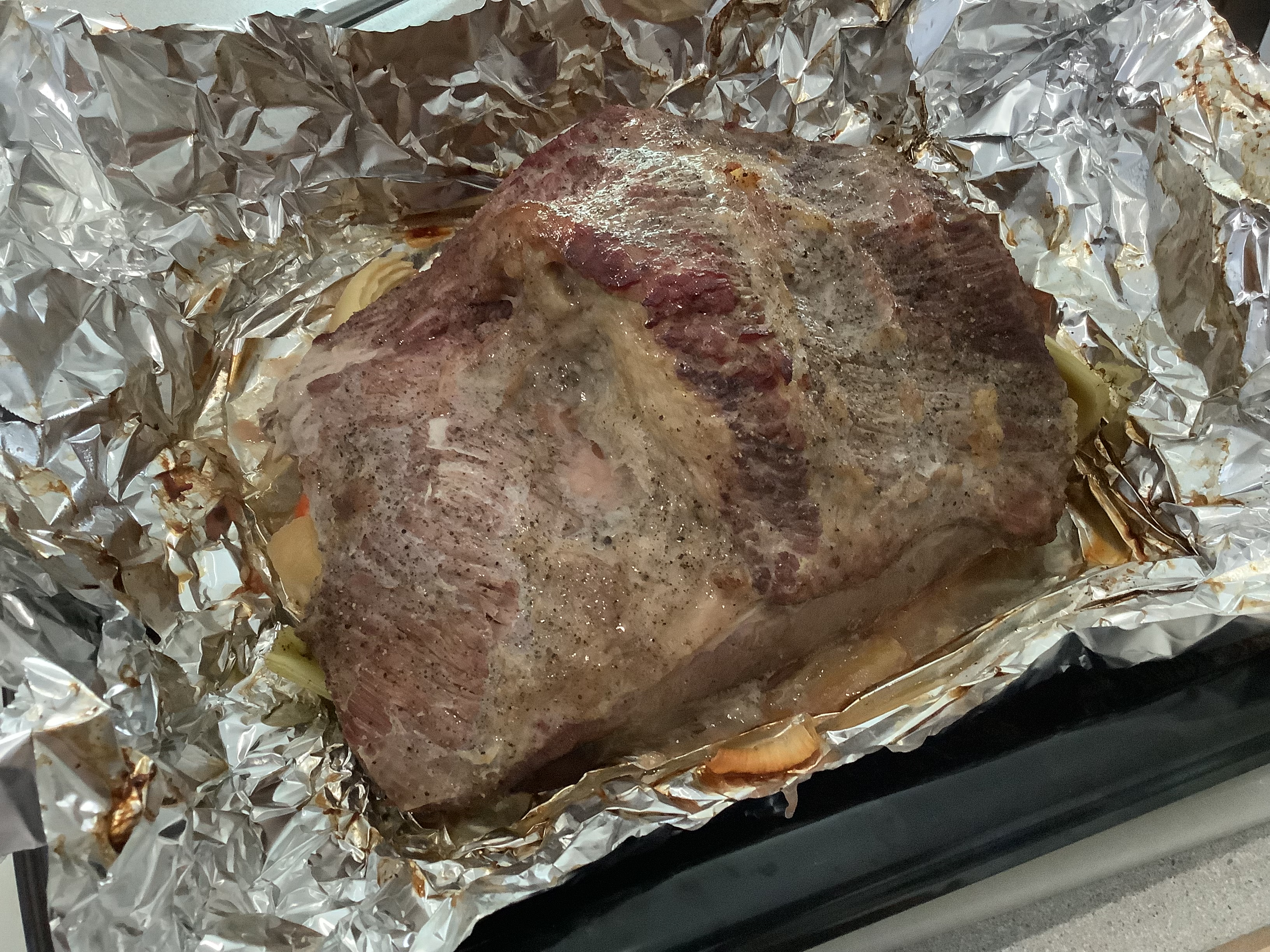
I lay a couple of sheets of foil down on a baking pan, and then add chopped carrots, celery and onions to it. I place the brisket on top of the veggies.
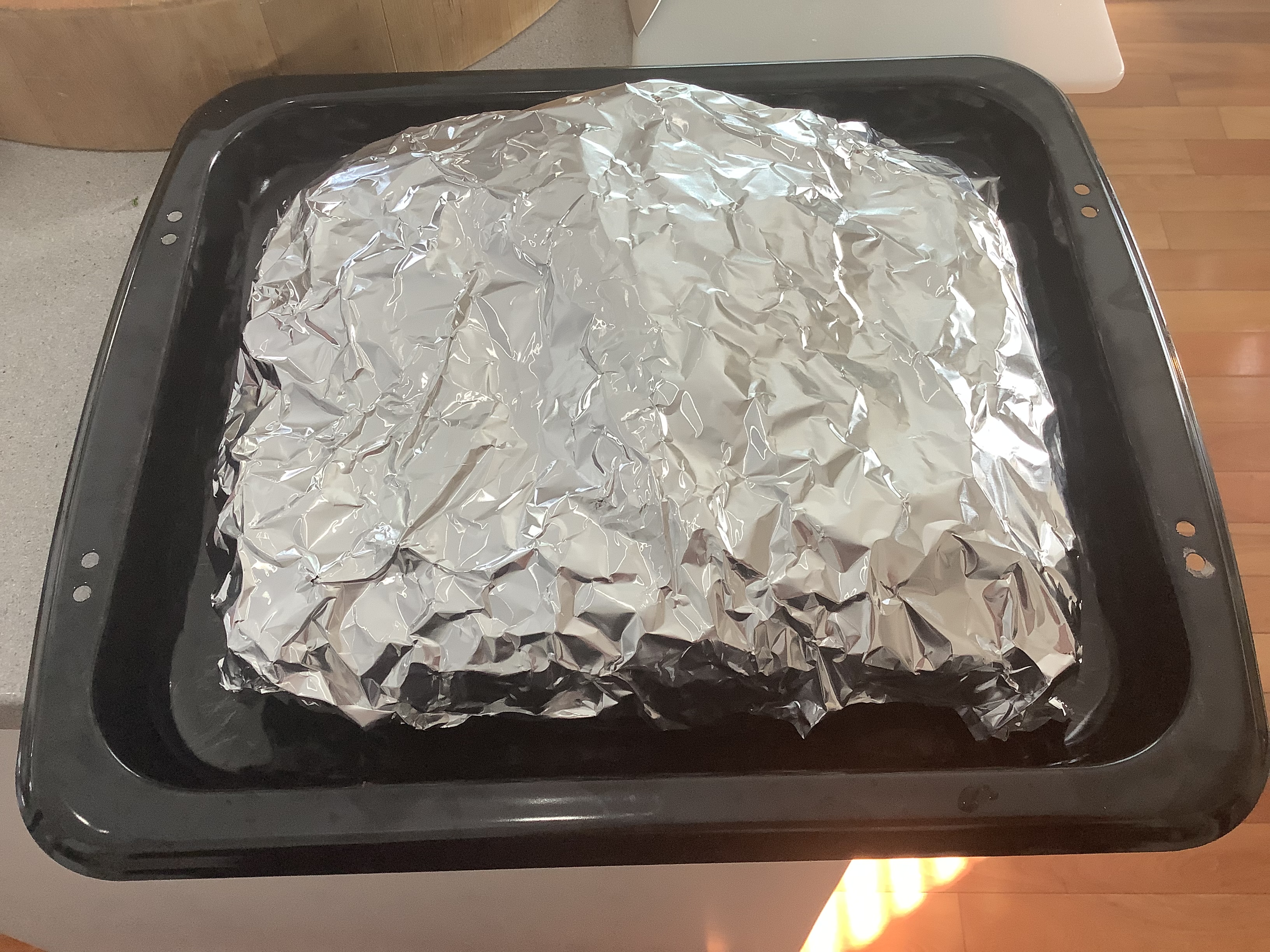
I wrap the brisket tightly in the foil, and place the pan on the center rack of the oven.
I let it cook for about 3 1/2 hours for a 8-pound piece of meat. Cook it less if yours is smaller.
I let the meat cool to room temperature in the foil, then unwrap it, and cut it into manageable sized pieces for future use. I wrap each piece tightly in plastic wrap once it has cooled, and I place the wrapped pieces in a sealed bag and into the freezer.
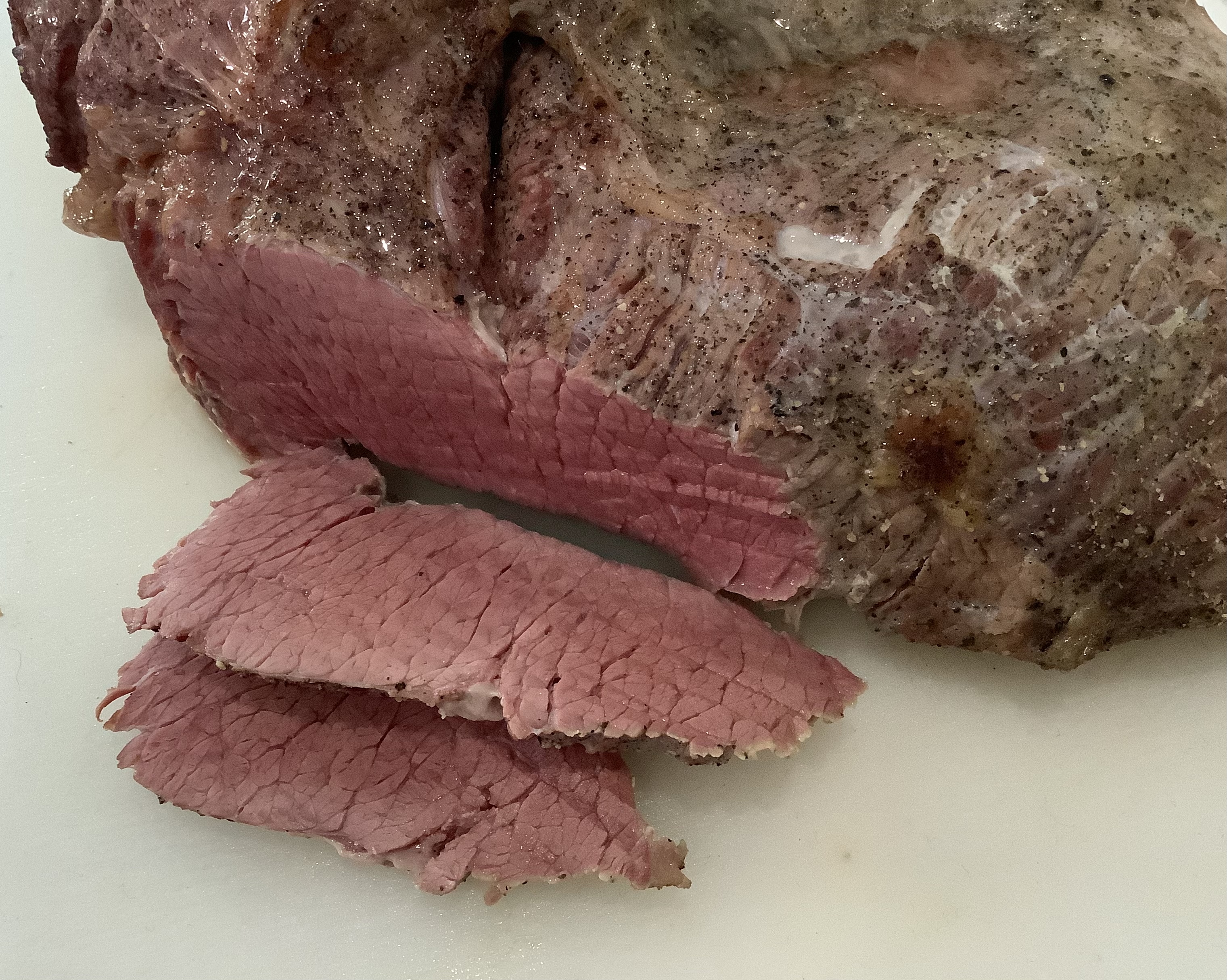
Of course, you have to slice off a few pieces to taste your masterpiece!
Once the corned beef has cooked, it’s ready for sandwiches, and of course, hash! (Pastrami is another series of steps, discussed in another blog.)
A piece of cooked corned beef, about 1 lb., cubed 1 medium onion 2 lbs. sweet potatoes olive oil salt and pepper
Preheat the oven to 350°. If the corned beef is frozen, remove it from the freezer, and let it come to room temperature.
Peel and cube the sweet potatoes. Make the cubes about a half-inch around. Placed them in a single layer on a large sheet pan, sprinkling them with olive oil, and seasoning them with salt and pepper. Toss the sweet potatoes to coat them with the seasonings and then place the sheet pan in the oven, baking for about 25 minutes, until the sweet potatoes are fork-tender and have tasty caramelized, slightly charred edges.
A few minutes before the sweet potatoes are done cooking, finely chop the onion and sauté it in a large pan with some olive oil.
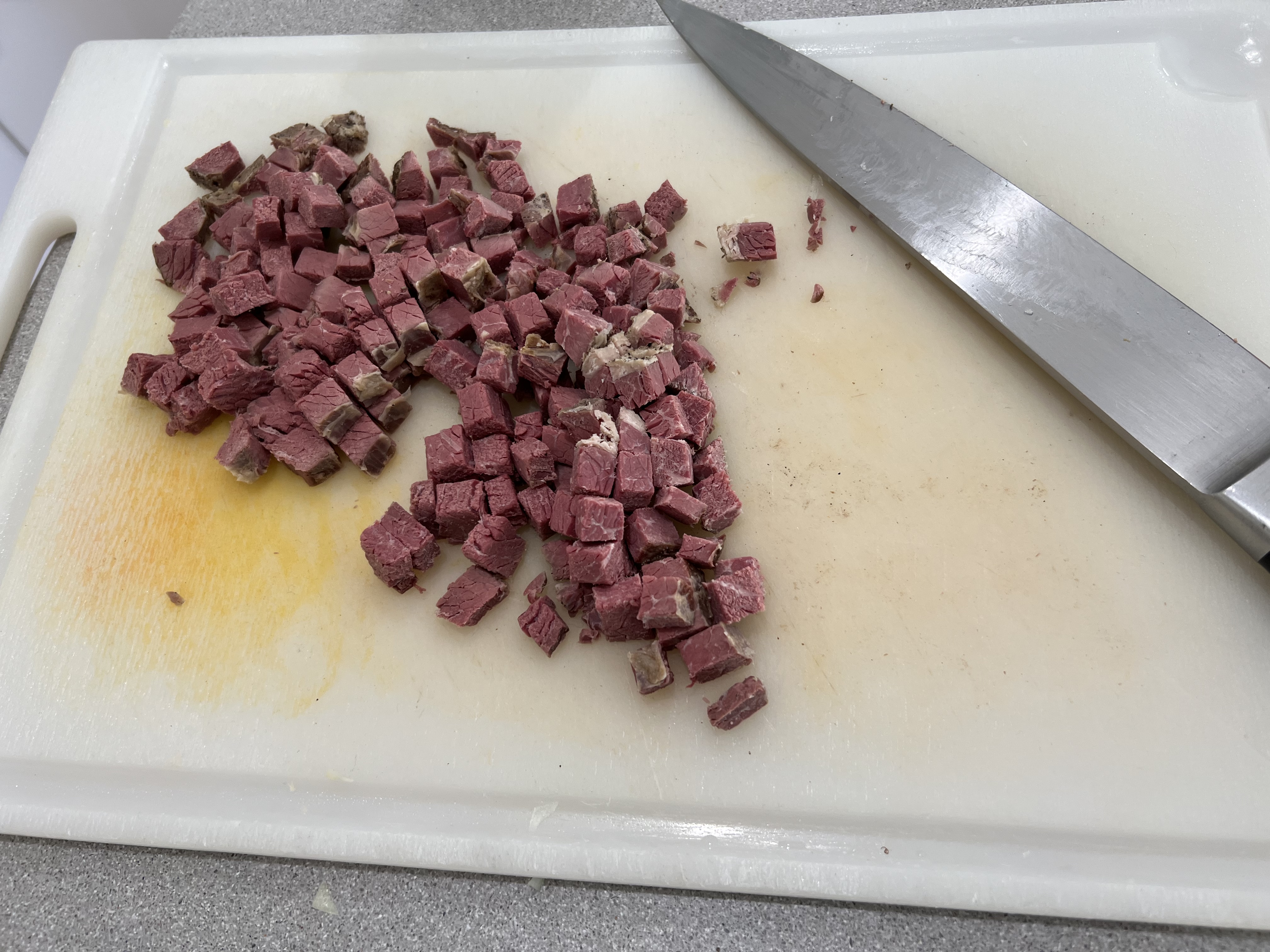
Cut the corned beef into small cubes, about a quarter-inch in size.
Once the onions are translucent, add the cubed corned beef to the pan, and warm it through.
Now add the sweet potatoes to the pan and mix thoroughly to combine.
Your sweet potato corned beef hash is ready to serve! It also freezes well, so don’t be afraid to make extra!
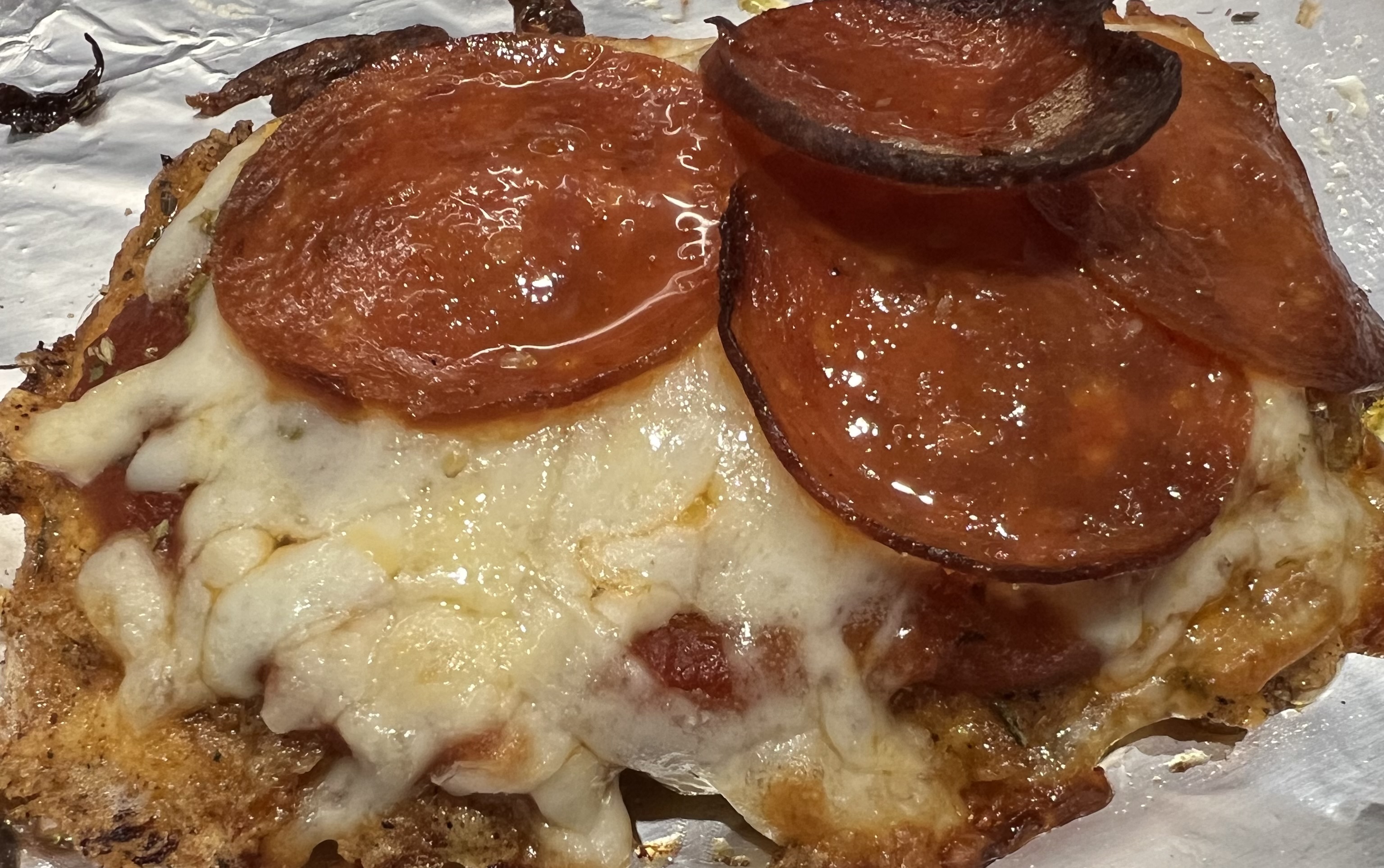
Maybe you’ve seen the latest KFC creation that’s a worldwide hit. It’s called the “Chizza,” (rhymes with pizza) and it’s basically a pizza where the so-called “crust” is made from chicken.
This was too good of an idea for me to pass up trying to copy at home!
In a previous blog, I posted my version of KFC’s original recipe chicken. I decided that I would use that seasoning mix as the basis for my chicken in this recipe. Then simply adding sauce, cheese and pepperoni to that would complete the treat!
2 cups all-purpose flour 3 tablespoons paprika 1 tablespoon celery salt 1 tablespoon dried mustard 1 tablespoon garlic salt 1 tablespoon ground ginger 2 teaspoons black pepper 1/2 teaspoon white pepper 1 1/2 teaspoons thyme 1 1/2 teaspoons basil 1 1/2 teaspoons oregano 1 teaspoon salt
2 chicken breasts 2 eggs tomato sauce (homemade is always best) grated mozzarella cheese pepperoni (optional) cooking oil (I like grapeseed or avocado oil)
I combined the flour and seasonings in a bowl, and set it aside.
I butchered the chicken breasts, removing any fat or skin and cleaning up the edges. Then I sliced the breasts in half lengthwise so that I got two breasts half as thick. Using the flat side of my tenderizing mallet, I gently pounded out the breasts under wax paper to make them as thin as I wanted.
I cracked the two eggs into a bowl, and scrambled them. I put the breasts in that bowl, coating them with the egg.
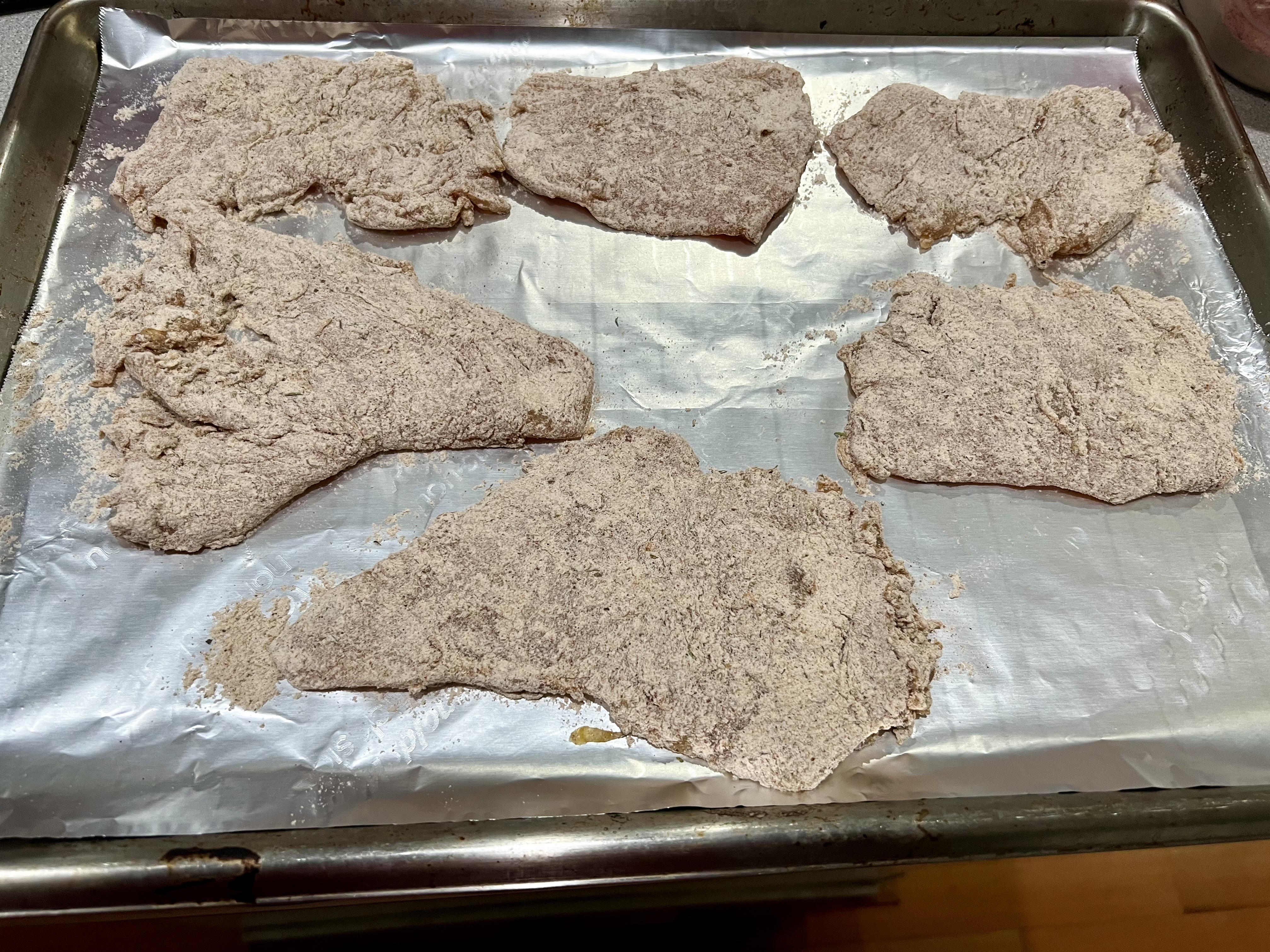
I took one chicken breast at a time out of the egg bowl, and placed it into the seasoned flour, coating it well, then placed it on a sheet pan. I did the same with the rest of the breasts.
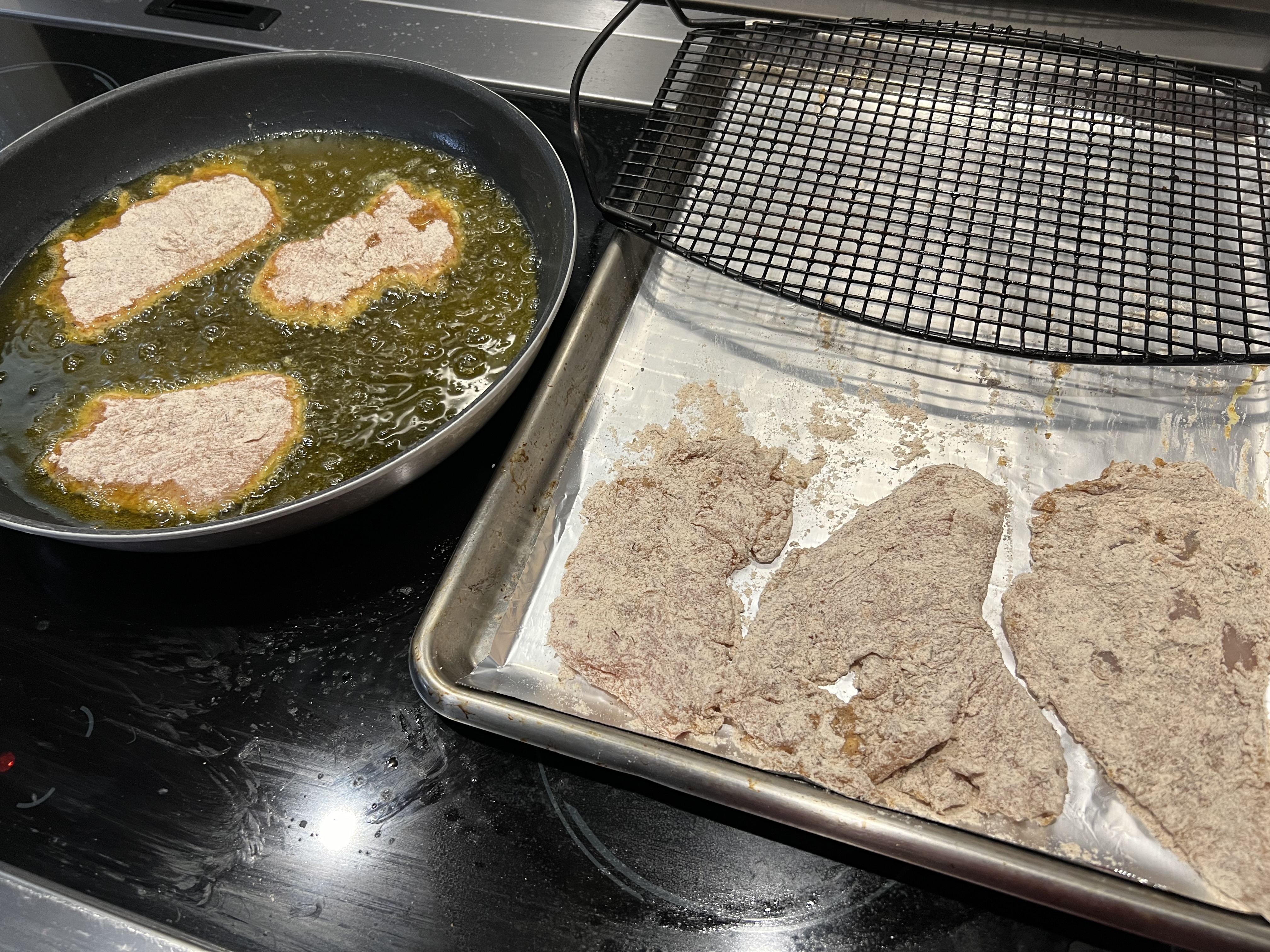
I preheated a pan with some oil, and when it came to temperature, I fried the chicken breasts, making sure not to overcrowd them in the pan, cooking in batches. I placed the cooked breasts on a metal grid over a sheet pan so the fat would run off.
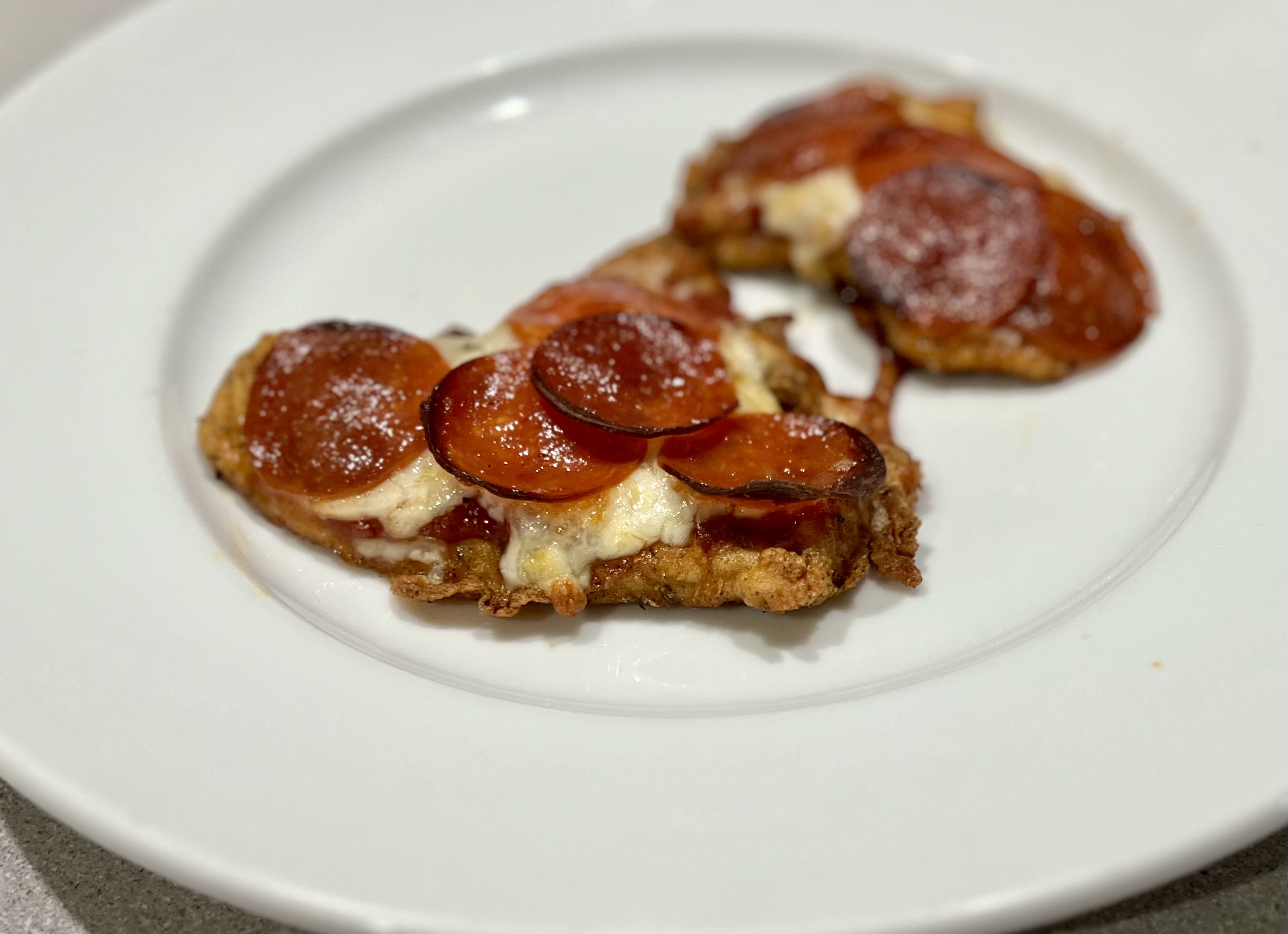
I preheated my oven to 350° and placed the chicken breasts on a sheet pan, then put some sauce on top of them, then the mozzarella, and then the pepperoni. A sprinkling of oregano is always a good idea.
I baked my “cheater’s chizzas” until the cheese was melted and gooey.


















 Live the Live ™