Archive for the ‘Uncategorized’ Category

The great thing about this dessert is that it’s incredibly easy to make, takes only minutes, and uses only healthy ingredients. It has become my daughter’s go-to snack, beating ice cream–which really says something. And interestingly enough, I use the same exact ingredients when I make a smoothie. There are only two differences: I use less liquid and I use the freezer for this dessert…because the secret is to freeze the fruit before making it.

When it comes to berries, especially strawberries, I always go organic because they spray a ton of pesticides on them, which you can’t wash off. In fact, strawberries are on the notorious Environmental Working Group’s  “Dirty Dozen” list every year. Google it to see what other produce you might want to go strictly organic with.

We love dairy at my house, but we always go organic, and grass-fed when possible. You can substitute your favorite non-dairy milk to make this vegan.


2 ripe frozen bananas
Frozen organic blueberries, strawberries or raspberries
1/4 cup organic grass-fed whole milk
Splash of SoBe Water (or Bai or similar fruit enhanced water…optional)


I use the smaller compartment in my food processor for this treat. I don’t use a blender because it goes too far and liquefies everything.

Break the frozen bananas into pieces and drop them in the processor along with the fruit. (The green tops of strawberries are totally edible and add flavor. Don’t be afraid of them!)


Add the milk and SoBe Water. Don’t add too much…you can always add more later.


Process the fruit and keep an eye on it. As soon as the chunks fade and you get a smooth consistency, turn the processor off…you’re done!


Smooooth!


Enjoy it immediately!


A great treat anytime of day! My daughter has it for breakfast!

There’s only one thing better than a freshly made mojito when you’re hanging out at home…and that’s a pitcher of freshly made mojitos! Organic raspberries and blueberries are in the markets right now, and my mint plants are taking over the yard! All the ingredients for a great mojito!

Very often, I’ll use raspberries alone, but mojitos are even better when you combine the raspberries with blueberries. I stock up on organic berries, rinsing them and placing them in plastic bags that go in the freezer until I’m ready to make my mojitos. I always go organic with berries. Pesticides should never be a cocktail ingredient!  Pay a little extra and get the good stuff…it makes a difference!

Once you make mojitos by the pitcher, you’ll never have them any other way. (Even if you’re drinking alone!)


The ingredients


Make ahead of time…
1 1/2 cups fresh squeezed lime juice
1 1/3 cups turbinado sugar (Sugar in the Raw is a common brand)

Mix both ingredients together, letting it stand at room temperature for a few minutes. I like to combine them in a Mason jar, then shake really hard until the sugar has dissolved. I keep it in the fridge, and it’s good for up to 3 weeks…ready to use any time. Shake it well again before using.


mojito pitcher

For the Mojitos…
1 cup sugar/lime mixture
1 cup mint leaves, packed
1/2 pint blueberries (fresh or frozen)
1/2 pint raspberries (fresh or frozen)
3 or 4 cups white rum (I use Don Q Cristal rum)
3 or 4 cups club soda or seltzer

Combine the mint leaves and 1/2 cup of the sugar/lime mixture in bottom of a pitcher. Muddle the mint up very well to release mint oils. Add the blueberries and continue to muddle.

Add the remaining sugar/lime mixture, rum and raspberries. Mix well. Just before serving, add the club soda and ice. Stir. Pour into tall glasses.

Or…for drinks one at a time, I put in a shot of the sugar/lime mixture into a tall glass. I throw in about 8 mint leaves and muddle them for a minute. Then I add 2 shots of rum, and a few raspberries and blueberries. I muddle again.  I add ice, and I top it with the club soda, stirring well. An option is to pour it all into another tall glass. Garnish with a mint leaf.


Cheers!

Cheers!

Thinking a lot about my Mom these past few days…and, of course, I thought about the family favorites she would cook. If there’s one dish that my Mom made all the time but I didn’t appreciate until I got older, this is it. Stuffed cabbage, cabbage rolls, or balandėliai, as we say in Lithuanian, was a staple in our home and one of my Dad’s favorites. 

I had seen my Mom make these beauties so often in my childhood, I didn’t even need to check online recipes out for guidance. That doesn’t mean I make them exactly like Mom, but my version came out pretty good. I think she would’ve been proud.


image


4 strips of bacon, chopped
1 yellow onion, finely chopped
1 teaspoon salt
1/2 teaspoon pepper
1/2 teaspoon granulated garlic
1 lb. ground grass-fed beef
1 lb. ground pastured pork
1/2 cup breadcrumbs
2 eggs
1 large head cabbage
1 pint homemade chicken, beef or veal stock
750 g diced tomatoes (1 Pomi container)
1 teaspoon thyme
1 teaspoon salt
1/2 teaspoon pepper
1/4 teaspoon granulated garlic
1/4 teaspoon granulated onion

Chop the bacon into small pieces and fry them until crisp. Finely chop the onion, and add it to the bacon and rendered fat in the pan, cooking until the onions are translucent. Add the salt, pepper and garlic. Mix well, and remove from the heat. Let it cool to room temperature.

In a large bowl, combine the beef, pork, breadcrumbs, eggs, and cooled bacon and onion mixture. Place it in the fridge to firm up.

Let a large pot of salted water come to a boil. Core the cabbage, leaving the leaves whole, and carefully immerse the head of cabbage into the hot water. Little by little, the outermost leaves of the cabbage will come off the head, and you can remove them with tongs, so you don’t burn yourself with the hot water. Set the leaves aside to cool, and continue doing this until you can no longer remove leaves from the remaining head of cabbage.

Remove the remaining head of cabbage from the hot water, and using your hands or a knife, break it into flat pieces. Line the bottom of a roasting pan with the pieces. These will keep the stuffed cabbage from burning and sticking to the bottom.

Time to roll the stuffed cabbage. Take the meat out of the fridge. Lay a cabbage leaf flat on the counter, and add some of the meat mixture inside. Roll the cabbage around the meat, folding the sides in as you go, much like a burrito. You might need to slice away the thickest part of the leaf stem to make rolling easier. Lay the stuffed cabbage in the roasting pan on top of the leftover cabbage pieces. (Unlike Mom, I don’t use toothpicks to hold the stuffed cabbage rolls together.)

Continue stuffing and rolling the cabbage leaves until you’ve got a pan full of them, shoulder-to-shoulder.

In a blender, food processor, or whisked in a bowl, combine the stock, diced tomatoes, thyme, salt, pepper, garlic and onion. Pour this mixture over the top of the cabbage rolls in the roasting pan, covering them.


If you have leftover cabbage, you can place another layer of them on top. Otherwise, cover the roasting pan with foil and place in a pre-heated 350 degree oven. Cook for an hour.


After an hour, remove the foil and cook further for another 45–60 minutes.


image


Really delicious and an instant flashback to great memories of dinner at home….thanks to Mom.


I’m avoiding fast-food drive-thru’s for several reasons these days. For one thing, we’re all trying our best to limit contact with others during this pandemic. And for another, fast food is never a healthy option.

The Big Mac is one of my guilty pleasures. Created in 1965, it’s not-such-a-big Mac anymore, having shrunk quite a bit from its original size. That probably explains why they offered the Double Big Mac, containing a total of 4 patties, a few weeks ago.

Burger King made their attempt at recreating the Big Mac a few years ago, with little success.


I figured it was time for me to try my hand at it, the biggest challenge, of course: recreating the Special Sauce that goes on every Big Mac.

Some research on line brought me dozens of recipes, and after much trial and error, I came up with what I think is a pretty good copy of that famous sauce…good enough to make me forget about the drive-thru under those golden arches for a while.


1/2 cup mayonnaise
2 tablespoons French dressing
4 teaspoons sweet pickle relish
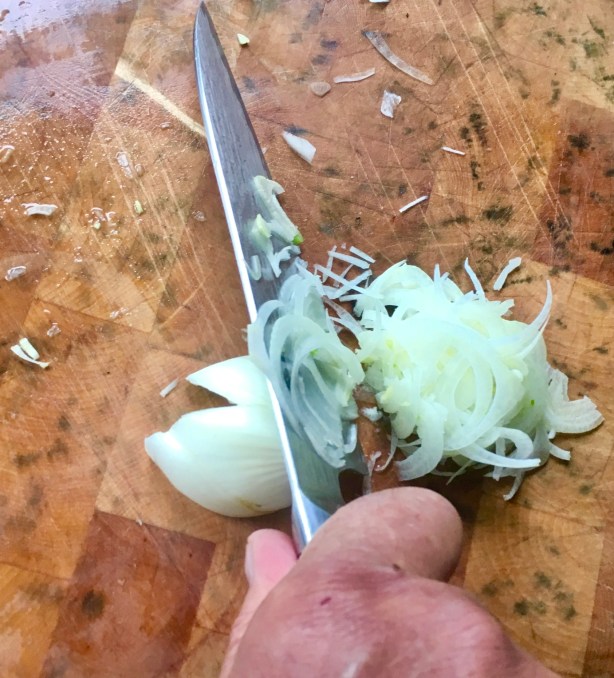
1 tablespoon finely minced onion
1 teaspoon white vinegar
1 teaspoon sugar
1/8 teaspoon salt

When I first tried making this recipe at home, I realized I didn’t have any French dressing on hand. But I did have the ingredients to make it! So my first step was making French dressing. To keep a more neutral flavor, the recipe calls for vegetable oil, but I don’t use canola, corn, safflower, or any of those other highly processed vegetable oils. So I chose to use olive oil. (Avocado oil or grape seed oil would be other good choices.)


3/4 cups vegetable oil
1/2 cup ketchup
3/8 cup sugar
1/4 cup white vinegar
1/2 small onion, finely chopped
1/2 teaspoon lemon juice
1/2 teaspoon paprika


Combine all the ingredients in a blender and blend them until smooth. Keep the French dressing refrigerated.


We all know the jingle: “Two all beef patties, special sauce, lettuce, cheese, pickles, onions on a sesame seed bun.”

The Big Mac has 2 very small beef patties, nasty American (or whatever it is) cheese, and 3 pieces of bread in that bun. It weighs in at 563 calories, which is a lot for a small sandwich.

Although bigger on the calories (740), my sandwich is a lot larger and healthier. My jingle would be: “Two quarter-pound (before cooking) 93% lean grass-fed beef patties, special sauce, locally sourced greens, cheddar cheese, pickles, onions on a toasted brioche bun.”


Now that’s a mouthful!


The final result: a delicious burger. It didn’t really taste like a Big Mac…but it satisfied the cravings…for now!

Quarantine time is a time to try new recipes. So when I got a couple of pounds of ground venison from my buddy, Bruce, an avid hunter here in my town, I started thinking about what I could make with it.


I didn’t want to go with a venison burger right out of the gate. After all, venison is very lean, containing half the fat of beef, but with more protein. In fact, venison even challenges chicken in the protein department. But being really lean, it would dry out as a burger, so I decided to go with the safer option of making a taco with it.

Well, somewhere in the process of taco making, I thought of pork and beans and said: “Yeah, what if I made something like venison pork and beans? How bad could that be?”

Well, venison and beans can almost be called chili (depending on what rules you have about beans in chili), and I thought: “But I don’t really like chili.” But then I thought: “It’s not chili if I don’t call it chili.” Problem solved!


I used small red beans, but you can use what you like.


So what I finally came up with is a venison pork-and-bean chili taco…or something like that.

Whatever…it tastes pretty good!

And obviously, if you don’t have venison, you can use lean (like 93%) beef for this recipe.


1 tablespoon avocado oil
1 small onion, finely chopped
4 strips (about 40g) pre-cooked bacon, finely chopped
1 lb. ground venison
Taco seasoning (see the recipe below)
20 grape tomatoes (100g), chopped
1/2 cup ketchup
2 tablespoons spicy brown mustard (I like Gulden’s)
2 tablespoons Worcestershire sauce (Only Lea & Perrins will do)
4 tablespoons brown sugar
2 cans (15.5 oz. each) of small red beans, not drained


Pre-heat your oven to 350 degrees.

Spray a baking pan with oil spray (I use avocado) and set aside.

In a large pan, heat the avocado oil and add the chopped onion. Sauté the onion until it’s translucent.

Add the chopped bacon, and sauté until some of the fat starts rendering out of it.

Add the pound of venison, and cook until the meat has browned nicely, adding the taco seasoning to the meat as it cooks, little by little, until you’ve used all the taco seasoning up.

Add the chopped grape tomatoes, and stirring after each addition, add the ketchup, mustard, Worcestershire, and brown sugar.

Pour in the two cans of beans, liquid and all, and stir gently, letting it all come to a boil.


Pour the contents of the sauté pan into the baking pan, cover it with foil, and place it in the 350-degree oven to cook for 40 minutes.

After 40 minutes, remove the foil off the pan and cook another 10 minutes.


The Taco Seasoning…
2 teaspoons cumin
1 teaspoon salt
1 teaspoon black pepper
1 teaspoon oregano
1 teaspoon granulated garlic
1 teaspoon granulated onion
1 teaspoon paprika

Combine all the ingredients in a bowl, and set it aside.


Once the venison pork-and-bean chili taco meat has finished cooking, I like to use it in a flour tortilla, with shredded lettuce and a little shredded cheese on top.


Shredded lettuce, grated cheddar cheese, some raw Vidalia onion, and a touch of 1000 Island dressing!


As much as I want to support my local restaurants, quarantining has kept me away more than usual. There are some dishes I crave more than others, and Chinese shrimp and broccoli is one of them. But it’s really quite easy to make it at home, and it’s surprisingly low in calories if you’re really careful with the amount of oil you use. Oil is the biggest culprit when it comes to calories in Chinese cooking.

Second on the list of calorie culprits is rice. It looks innocent enough, but a cup of rice has 170 calories, and if you’re limiting yourself to a daily calorie count of 1500, like I am, that becomes pretty significant.

The good news is that shrimp is actually one of the lowest calorie foods you can buy, checking in at only 1 calorie per gram. Broccoli is also low in calories, so if you skip the rice, you can really eat your fill of this delicious dish.


I’ve come up with what I call my “Asian Mix,” which is a combination of five ingredients commonly found in the supermarket in the Asian food section. Add these to your shrimp and broccoli, and you will never need to leave home for really good Chinese food!

Asian Mix…
1 tablespoon soy sauce
1 tablespoon hoisin sauce
1 teaspoon rice vinegar (unseasoned)
1/2 teaspoon sesame oil
1/2 teaspoon chili garlic sauce

Combine these ingredients in a bowl, mixing well. Set aside.


1 small onion, chopped
2 cloves of garlic, finely chopped
1 or 2 large heads broccoli, chopped into smaller, similar-sized pieces
1 lb. wild-caught American shrimp, peeled and deveined
Asian Mix, as listed above
peanut oil

I prefer peanut oil when cooking Asian dishes.

Heat a nonstick pan and add 1 tablespoon of peanut oil to it. Add the chopped onion, and cook until translucent.

Add the chopped garlic and stir for about 10 seconds.

Add the chopped broccoli and cook until the broccoli turns bright green but stays crunchy.

Empty the pan out into a bowl and, without wiping the pan down, add the shrimp to the pan (no more oil!), returning it to the heat. Let the shrimp heat in the hot pan for 30–60 seconds on one side, then flip the shrimp over and let them heat through for 30–60 seconds on the other side.That’s all you need to cook them, unless they’re really large. Just keep flipping them until they’re pink and firm, but don’t overcook them.

Remove the pan from the heat, and add a tablespoon of the Asian Mix to the shrimp, tossing them around to coat them with it. Don’t let them burn!

Now bring back the onions, garlic, and broccoli to the shrimp in the pan, tossing everything together, and adding more of the Asian Mix until everything is nicely coated.


Serve immediately…over rice or not!


I started a diet a few months ago, and one of the major changes in my eating habits was to incorporate more seafood and less meat into my diet. Seafood has a lot more protein and fewer calories. In fact, shrimp, lobster and oysters are some of the most delicious low-calorie foods you can enjoy, running about 1 calorie per gram. It’s what you add to them–oils, melted butter, batter–that makes them high in calories.

I’ve always loved sushi, but again, on a diet, I need to limit my intake of unnecessary calories, and rice is big on that list. I’ve found that I can use a lot less rice, or maybe none at all, when I make poke…and I get all the satisfaction of sushi or sashimi.

My two favorite fishes to eat raw are ahi tuna and wild-caught Alaskan salmon, like sockeye. There are many great purveyors of this super-high quality seafood online, and I usually buy a decent amount of fish at one time–hermetically sealed and frozen in 4-ounce packages–to last me a long time. (The price is often much better when you buy in quantity, because they have to be shipped frozen overnight.)


Yes, please.


There are many ways to prepare poke, and the only limitations are what’s in your fridge. The first recipe, using salmon, is closer to a traditional poke recipe you’d find in a restaurant.


6.5 ounces wild-caught Alaskan salmon, in the refrigerator (thawed, if previously frozen)
1 tablespoon soy sauce
2 teaspoons sesame oil
1 teaspoon rice vinegar
1/2 teaspoon fresh lemon juice
1/3 cup chopped raw cashews
1 scallion, green and white parts finely chopped
Keep the thawed salmon in the refrigerator. Remove the salmon from the fridge, and remove the skin if it is still on the fish. Cut the fish into half-inch cubes. I like t place the salmon cubes on a clean paper towel to absorb excess moisture from thawing. Then I place the salmon cubes in a bowl and put it back in the fridge while I combine the other ingredients.
In another bowl, combine the soy sauce, sesame oil, rice vinegar, and lemon juice. Whisk them together.
Chop the cashews and add them to the bowl, mixing them in.
Cut the root ends off the scallions, chop the green and white parts finely, and add them to the bowl, mixing them in.
Add the salmon to the bowl, mixing gently, so that you don’t damage the fish.
Let it sit for 10 to 15 minutes, if you can wait that long, and then: eat!
My tuna poke recipes have also used similar ingredients…
More recently, I mixed up a batch of what I call my “Asian Mix,” a blend of five Asian flavors that really work well together: soy sauce, hoisin sauce, chili garlic sauce, rice vinegar, and sesame oil. I let my tuna or salmon marinate in this mix for about ten minutes before adding the other ingredients and feasting.

Tuna poke with lettuce, onion, pine nuts, black and white sesame seeds, rice and my “Asian Mix.”


But my proudest achievement was taking my favorite sandwich from my home town of New York, and making it into a bowl. The sandwich is an everything bagel with salmon and cream cheese, and my poke version uses just a bit of the bagel, yet you still get the flavor without all the calories. The secret is a seasoning you can buy already prepared.
3 oz. wild-caught Alaskan sockeye salmon, cubed
1 tablespoon capers
1/2 small Vidalia or sweet onion, sliced very thin
1/2 tomato, seeds removed, sliced thin
1/4 of a toasted plain bagel
1 tablespoon cream cheese
2 teaspoons Everything Bagel seasoning
1 chopped hard boiled egg
Cut the salmon into small 1/2″ cubes and place it in a bowl. Add the tablespoon of capers (including some of the brine), chopped onion and tomato. Mix gently.
Toast the bagel and use only 1/4 of it (I use that little for the sake of calories. But you can use more, if you like!) Spread the tablespoon of cream cheese on the toasted bagel, then carefully chop it up into small cubes. Add this to the bowl. Sprinkle in the Everything Bagel seasoning and the chopped hard-boiled egg, and give it all one last gentle toss.
Then take a forkful, close your eyes, and imagine you’re in your favorite New York deli!

I’ve always loved Manhattans and Negronis…two different cocktails, yet similar in certain respects. Both use sweet vermouth. Both have a touch of bitterness: Manhattans will often include a few dashes of angostura bitters, where a Negroni gets its bitterness from Campari. So when I visited Food Network chef Geoffrey Zakarian’s The Lambs Club restaurant in NYC a few years ago, and tasted my first Boulevardier, I was instantly hooked.

Loosely translated, a boulevardier is a “man about town.”

The cocktail was created by Erskine Gwynne, the publisher of “Boulevardier,” a magazine for expats living in Paris in the 1920s. It’s basically a Negroni with whiskey instead of gin.

My personal preference for whiskey is bourbon, and one of my favorite bourbons to mix with is the very affordable Eagle Rare. And for sweet vermouth, nothing beats the grandaddy of them all: Carpano’s Antica Formula.

I was just reading an interview with food blogger and cocktail expert, David Lebovitz, in the Wall Street Journal, and he mentioned the Boulevardier as one of his favorite cocktails. I hadn’t had one in ages, and started digging in my bar inventory. Bourbon is something I always have…but I also found Campari and an unopened small bottle of Antica Formula. I was all set for a great night of quarantining!

Be very careful, especially with the vermouth. If you stray and buy some cheap brand, the drink will resemble nothing even close to what it could truly be!


2 oz. bourbon or whiskey
1 oz. Campari
1 oz. sweet vermouth (Antica Formula preferred)


Add some ice to a cocktail shaker. Add the ingredients and stir. Strain into a rocks glass with a large cube.


Perfection.


Eagle Rare bourbon: Everyone has their favorite bourbon, and I really enjoy this 10-year-old, because it mixes well and, at about $32 a bottle, is extremely affordable. Made by the Buffalo Trace distillery, who can pretty much do no wrong.

Campari: A liqueur, invented in 1860 by Gaspare Campari, considered an aperitif. Its alcohol content depends on the country it’s sold in. It’s unique bitter flavor is obtained from the infusion of herbs and fruit in alcohol and water.

Carpano Antica Formula: First invented in 1786 in Turin by Antonio Benedetto Carpano, it has survived in its original recipe thanks to the Fratelli Branca Distillerie. It costs more than the typical 5-buck bottle of vermouth, because it’s simply the best you can get. Buy it once and you’ll never buy another sweet vermouth again.


If you didn’t quite kick your diet into gear with the new year, now’s the time to do it. Think about it: if you cut your calories in half, the food you have stashed away during quarantine will last you twice as long! (Sorry, I don’t have any tips on how to double your toilet paper.)
Sure, it’s even tougher to eat less if you’re stuck at home and binge-watching your favorite programs….or if you’re baking batches of cookies to kill time.
I started my diet on January 2nd of this year. Now, on March 18th, I’m 20 pounds lighter! I knew it would work if I stuck with it…and I also knew it wouldn’t be easy.
I had my cheat days…even cheat weekends. But the main thing was to return to the diet as soon as possible and stick with the plan.
My goal was to look better for an upcoming vacation: I was going to St John USVI on April 11th. My plan was to drop 21 pounds before then. The trip, had it not been for the Corona virus, would be 3 weeks away, and I’m just a pound away from my goal weight!
Now the trip has been postponed until November, but the diet continues. I need/want to lose more weight, and I’m more determined than ever to do it.
As much as I see friends posting all the baking they’re doing while they’re quarantined at home (my daughter just cooked up a huge batch of s’mores brownies!), my philosophy is different: this is the perfect time to go on a diet! If the food in your pantry is getting scarce too quickly, eat less!
Sure, I’m still cooking…I have to keep this blog going, after all! But always with portion control in mind.
If you’re ready to diet, here’s my blog about my diet…how I started, and how it’s gotten me to this point. I posted this earlier in the year…
Like many people, I’ve done my best over the last few years to avoid the obvious: I need to lose some weight. Every time I get my yearly check-up at the doctor’s, he tells me: “You need to lose at least 20 pounds.” I nod my head, as if I’m going to give it a try, then head straight for Fellini’s pizza in Providence, for a couple of slices. The next year: same thing: “You need to lose at least 20 pounds.” I nod….
When I was young, I was rail thin and could eat anything I wanted without gaining a pound. When I got older, my metabolism slowed down, but my love of food did not–in fact, it probably increased, as I learned how to cook really well.

OMG…that was one skinny dude!

Now, here I am, writing a food blog. I travel for food. I plan six meals ahead at any given time.  I’ll be 62 in March of this year, and I have a 13-year-old daughter. Do the math, and you’ll realize, like I did, that I need to take care of myself to be around for as many of her upcoming life events as possible.
With a trip to Florida in March and a trip to the Caribbean in April, I have two deadlines set in place for reaching weight loss goals. As I put it to my daughter: “I want to lose enough weight so that women won’t vomit when I take my shirt off!” (She responded with the typical teenage eye-roll.)

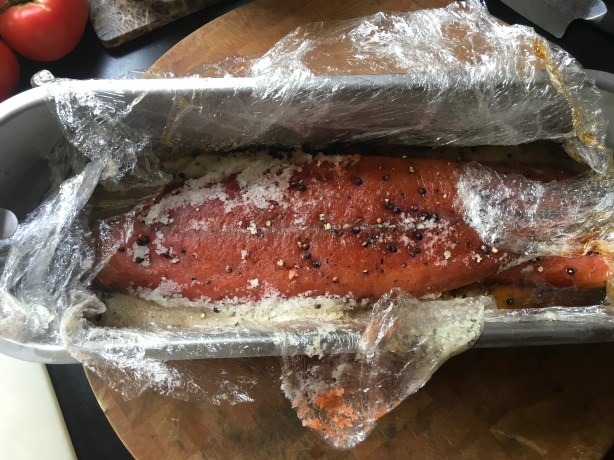
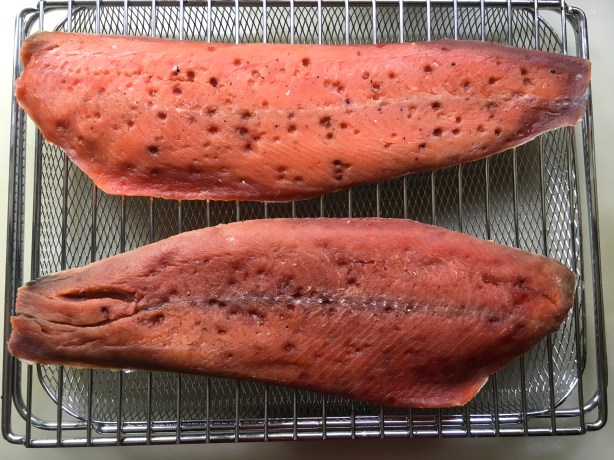
My version of lox and bagels: home-cured wild-caught Alaskan salmon, whipped cream cheese (fewer calories), onions, capers, and toast pieces. Lots of tasty bites here. (A sliced, hard-boiled egg would only add 78 calories.)

There are a million diets out there, and everybody claims they have the secret to weight loss. But no matter what diet you’re on, what it really boils down to is the simple mathematical equation of calories in…versus calories out.
My buddy, Lee, a PhD in chemistry, and someone that dropped 50 pounds last year, told me about an article written by an engineer that lays out the basics. You can find it here:
As he states, losing weight is simply thermodynamics: you need to eat less calories than your body burns every day. If you do that, you will lose weight.

My stir-fry has chicken breast, broccoli, white rice (Uncle Ben’s), some onion, and my “Chinese Mix” of flavors: soy sauce, hoisin sauce, chili garlic sauce, and sesame oil. My trick to add flavor to the rice without calories is to add beef bouillon when I cook it. (I use Better Than Bouillon.)

There is a way to find out approximately how many calories a day your body uses to maintain its weight. It’s called the basal metabolic rate, or BMR. In my case, I need about 2500 calories per day to maintain my weight. So, like my friend Lee, I chose a diet where I eat no more than 1500 calories daily…a deficit of 1000 calories per day.
At the end of 7 days, I have eaten 7000 fewer calories than my body uses. Since about 3500 calories make 1 pound, I should be losing 2 pounds per week, according to this math.
Now, there are many variables to this, but basically this thought process holds true.
And the best part is: is doesn’t matter what I eat. If I want to eat bean sprouts, great. If I want Taco Bell, fine. As long as I don’t go over 1500 calories a day, it doesn’t matter what I put in my gut. This is really helpful for people like me, who get bored of eating the same old stuff day after day–a sure-fire way to give up on a diet. Carbs, fats, meat, dairy…all OK within reason.

Fish is an excellent source of protein, and I never ate enough of it. Now, I make a bowl of tuna poke pretty often, and it’s absolutely delicious!

My buddy, Lee, is a diabetic, and stays away from carbs. He eats lean meats, seafood, and vegetables. That’s how he lost his 50 pounds. His son, on the other hand, lost weight by eating mostly fast food, but still counting the calories and not eating more than 1500 of them per day. He also lost 50 pounds.
I’m not a big junk food person. I don’t buy cookies, cakes or chips. Ice cream (my kryptonite) is a rare treat, and rarely sits in my home freezer. I don’t put sugar in my coffee, and I don’t drink juices or soda. But my biggest weight-gain mistake was thinking I could use unlimited amounts of so-called “healthy fats” in my recipes. I was pouring olive oil over everything…spreading pork leaf lard everywhere…and buttering my butter! Now I measure everything, drastically reducing my fats, and I can’t believe how many calories I’m saving!

Sprays can be extremely helpful in keeping your calories low. Just be careful: they say “zero calories,” but that doesn’t mean you can spray a ton in your pan! Regulations allow them to say “zero” if a single serving is less than 1 calorie. That’s why a single serving here is a spray of about 1/5 of a second! (Seriously!)

Portion control is essential. I’ve found that I really don’t have to change many of my recipes in this livethelive blog, which is all the food I love. I just have to control my portion sizes. For example, a ribeye may be a delicious source of protein, but it’s also loaded with fat. (That’s why it tastes so good!) So now I only eat a small, 4-ounce serving at mealtime, not the 12-ounce slab I was eating before.
Having a deadline or a goal really helps. As I said, trips to Florida and the Caribbean, where I’ll be showing my gut to the world, is plenty of incentive. So I made a decision back before the holidays that I would start on January 2nd.
When I started my 1500-calorie-a-day diet, I was bloated from alcohol, salt, fat, and simply eating too much rich food. But once the diet really started rolling, I could step on the bathroom scale and see the bloat was diminishing, and rather quickly. At this point, it’s easy to deceive yourself in thinking that this is “real weight,” when it’s not. It’s just your body reaching its natural plateau. But that’s OK. When you see the weight go down, even by a tenth of a pound a day, it gives you the incentive to continue.
After about a week of bloat loss, the real diet and weight loss began.
The human body is full of constant change. So even once I started and steadily maintained my 1500-calorie-a-day diet, Lee told me not to expect to be dropping 2 pounds per week like clockwork. Some weeks, my body will retain more water, perhaps from eating too much salt. Some days, I’ll go to the bathroom more, some less. My bathroom scale itself may be off by a little, too. So what I see when I step on the scale needs to be taken with a grain of salt (pardon the pun.) On any given day, my weight can actually be plus or minus 2 pounds of what my scale shows.

Find a protein drink or bar you like. It can really help when the cravings get bad. But make sure you choose one that is low in sugar!

The secret of this diet (or any other diet for that matter) is persistence. Don’t give up because your scale hasn’t moved. Your body is going through changes–big changes. And if you maintain your diet, you will see results eventually…the keyword being: eventually. Over the course of a month or two, you will see significant results.
The secret for me is to find the food I like and then eat it in reasonable quantities. Variety is also really important, or I’ll get bored and give up. Other than avoiding too much salt, I have few dietary restrictions. So I’m able to eat whatever I want within my calorie guidelines.
So as you read this blog this year, you’ll see that many of my recipes haven’t changed, with the exception, perhaps, of fats used in cooking, because that’s one of the top calorie culprits. It doesn’t matter if you’re using butter, bacon fat, or healthy olive oil, all fats have a lot of calories, whether they’re healthy or not.
Another key to my diet’s success–and this is the one that everybody hates!–I write down every single morsel of food I eat every day, and then calculate how many calories that entails. Not everyone can be this anal, but I have no problem with it. Once I set my mind to it, it just comes naturally. I have a date book where I write my morning weight every day, and then everything I eat that day, with individual and total calorie counts. (Counting calories is easy, now that we all carry phones that let us simply Google that information.)
Using a simple digital kitchen scale (one that weighs ounces and grams) is KEY to making sure you’re not overeating. Buy one immediately!

Yes…I write it ALL down!

Fortunately for me, even alcohol can be included in this diet. That’s not to say that I’m boozing it up! I only allow myself alcoholic beverages on Friday and Saturday nights. At 100 calories for a 1.5 ounce shot of 80-proof booze, I can have 2 3-ounce martinis for a total of 400 calories. Of course, that still counts in my 1500-calorie-a-day plan. So that means I eat less…which can get me a little loopy on weekends! But as long as I’m not driving, that’s not a problem! Drinking alcohol gives me the munchies…so I have to be very careful with that.

Having a seat at great bars, like the world-famous Bar Hemingway at the Ritz in Paris, is a passion of mine. My diet still allows me to sip a fine cocktail without guilt! I choose drinks that are low in sugar.

Follow this diet and you, too, will succeed. It doesn’t matter if you need to be gluten-free or not. It doesn’t matter if you’re avoiding carbs or not. It doesn’t matter if you’re vegan, vegetarian, or a total carnivore. Keto, Atkins, whatever. What matters is counting your total calories per day…and sticking to the diet every day…no cheating. No business lunch excuses, breakfast buffets, and 48-oz. steaks.
A great tip is to start by eating everything you love, even if it’s not really good for you, just in smaller quantities. Don’t eat real junk food, but worry about total calories first, not whether what you’re eating is “health food.” (Like my buddy, Lee’s, son who still lost weight eating Taco Bell.) Your first goal should be to limit calories. Then, as you get comfortable and progress, start making better and healthier food choices. Anyone who starts a diet by chewing celery after a lifetime of steak and potatoes is going nowhere!
After I reach my goal weight, which is my wedding weight of 217 pounds (that’s a 21-pound drop), I can choose to continue my diet or go back to my daily intake of 2500 calories to maintain my new weight. (That’s still fewer calories than I was consuming every day before I started the diet, but after 1500 a day, it’ll feel like I’m cheating!)
What I’m learning with this diet, as I cook healthier, measuring how much fat I put in a pan before frying…cutting my huge steaks into smaller pieces and trimming off the fat…is that I never want to go back to my old way of eating again. I can still eat anything I love…just a little bit less.

I cut the middle out of my bagel and weigh it!


That right there, after cooking, is 90 calories. Nothing brings the flavor like bacon!


My breakfast sandwich: the bottom of an everything bagel, a strip of bacon, and a fried egg. 349 calories, including a tablespoon of butter! A sprinkle of everything bagel seasoning adds flavor and just a couple of calories.


WHAT I’VE FOUND….
Bad…
1 tablespoon of butter has 100 calories. I used to load my 400-calorie everything bagel with 300 calories of butter…and then I had breakfast! A tablespoon of whipped butter has only 50 calories, so I use that instead.
Same thing with mayonnaise. I love Hellman’s. But it’s got 90 calories per tablespoon. Enter Hellman’s Light: 35 calories and I can still indulge!
Cheese is not a dieter’s friend. It’s a calorie and salt nightmare. And light cheese tastes like crap. So I stick to small amounts of lower calorie cheeses, like feta (70 calories per ounce) or whipped cream cheese (40 calories per tablespoon), and save pizza for very rare occasions.
Good…
Boiled Shrimp is our friend at just 80 calories for 4 ounces, and lots of protein.
A hard-boiled egg, which I love, is just 78 calories…an excellent protein bomb that fills you up. (And don’t worry about the cholesterol unless you’re eating a dozen a day!)
You can still have bacon! My thick-cut bacon is 90 calories a slice after frying. Now I have one slice for breakfast instead of six! (Read the package.)
A diet saves you money! I can’t believe how much less food I buy at the supermarket! Sure, I’m buying more veggies, but a steak that used to be one meal is now three! As a nation, Americans eat way too much food, and what we eat is mostly unhealthy. A diet that focuses on veggies and lean proteins is good for any body. Michael Pollan’s quote is more valuable now than ever: “Eat food, not too much, mostly plants.”
A successful diet is all about being creative. I can’t have a BLT in the usual sense anymore, and that’s my all-time favorite sandwich. But I can have BLT lettuce wraps that drastically cut the calories and still satisfy my cravings.

My BLT. Limiting the bacon and mayo makes it diet-friendly.


Adding that strip of toasted bread really adds to the flavor and texture!

Of course, any exercise you do in addition to this diet is only a bonus. If you use a treadmill or stationary bike, it will tell you just how many calories you’ve burned. You can subtract that from your daily calorie count.
You WILL lose weight if you diet without exercise. You WILL lose weight FASTER if you diet AND exercise, assuming you don’t gorge after your workout. You will NEVER lose weight eating the same junk, thinking you can “work it off.”
As I write this blog, it is Day 17 of my diet and I’ve lost 9 pounds! But for the last couple of days, my scale has been holding steady, teasing me…taunting me!  I know I’ve got to keep doing the right thing…and that’s going to get me through those days until I step on that scale and see that downward movement again.
I can do it! So can you!

In these crazy times, our supermarkets are running out of everything from toilet paper to hand sanitizer. But probably the one thing we can stock up on is corned beef and cabbage!

St. Patty’s Day is this Tuesday, and supermarkets are full drumming with packages of processed corned beef in preparation for the big celebration. Too bad corned beef isn’t an authentic Irish dish!

The phrase “corned beef” was actually coined by the British, and although the Irish were known for their corned beef throughout Europe in the 17th century, beef was far too expensive for the Irish themselves to eat and all of it was exported to other countries. Owning a cow in Ireland was a sign of wealth, and the Irish used theirs for dairy products, not beef.

The Irish ate pork, and a lot of it, because it was cheap to raise pigs, and they traditionally prepared something like Canadian bacon to celebrate St. Patrick’s Day in Ireland.

In the 1900’s, when the Irish came to America, both beef and salt were more affordable, and the Irish, who lived in poor, tight-knit communities, often next to Jewish communities, bought much of their beef from Kosher butchers. So many of the Irish learned how to corn their beef using Jewish techniques, but adding cabbage and potatoes to the mix.

It takes about 3 weeks to make corned beef. But now that you know it’s not Irish anyway, that’s OK!  Doing it yourself is not difficult. It just takes time to get a really delicious slab of beef.

Corned beef has nothing to do with corn. ‘Corning’ is a technique for preserving raw meats for long periods by soaking it in salt brine. This method was used in England before the days of commercial refrigeration. Back then, the large salt kernels used in the brine were called “corns.”

Brining is a time-honored way of preserving meat and it prevents bacteria from growing. Both pastrami and corned beef are made by this method. Both start with a brisket of beef. Corned beef is then cooked–usually boiled–and served. Pastrami is made when the brined meat is rubbed with more spices and then smoked to add extra flavor. So corned beef and pastrami are the same meat, just treated differently.

Saltpeter is an ingredient that has been used in brining beef for years. It adds the traditional red coloring to the corned beef and pastrami meat. But since saltpeter can also contain carcinogens, I leave it out. The meat may not be the usual bright red color, but the flavor and texture of the meat will not be affected.

Brining the beef brisket

Brining the beef brisket

Step one: corned beef…

beef brisket (about 8-10 pounds)
2 teaspoons paprika
1/4 cup warm water
3 cloves of minced garlic
2 tablespoons sugar
1 tablespoon mixed pickling spices
3/4 cup salt
2 quarts water

Place the brisket in a large container made of non-reactive material, like glass or plastic.

In the 1/4 cup of warm water, dissolve the sugar, minced cloves, paprika and pickling spices.

Dissolve the 3/4 cup of salt in the 2 quarts of water. Pour in the sugar/garlic/paprika/pickling spices mix and stir everything together. Pour the mixture over the meat in the container. Make sure the meat is totally beneath the surface of the liquid. (You may need to weigh it down to do this.) Cover the container.

Refrigerate the container and its contents for 3 weeks, turning the meat once or twice per week. At the end of the third week, remove the container from the refrigerator and take out the meat. Soak the meat in several changes of fresh cold water over a period of 24 hours to remove the excess salt.

At this point, if you want corned beef, prepare and cook it using your favorite recipe. But I’m all about the pastrami!

Step two: making Pastrami…

pastrami


Brined and rinsed corned beef brisket from above recipe, patted dry with paper towels
1/4 cup Kosher salt
1/4 cup paprika
3 tablespoons coriander seeds
2 tablespoons black peppercorns
2 tablespoons yellow mustard seeds
1 tablespoon white peppercorns
3 tablespoons brown sugar
1 tablespoon granulated garlic

Combine the coriander seeds, black and white peppercorns and mustard seeds in a spice grinder and grind coarsely. Place in a bowl. Add the salt, paprika, brown sugar and granulated garlic. Mix well.

Rub the mix into the brisket well, covering all sides.

Heat your smoker to 225 degrees and smoke for several hours using a less intense wood, like oak. When the internal temperature of the meat has reached 165 degrees, it’s done. It isn’t necessary to smoke pastrami as long as you would a regular brisket because the long brining time makes the meat tender.

It is very important that absolutely everything that comes in contact with the meat is very clean. (This includes your hands.) Also, make very sure that every inch of the meat reaches the 165 degrees before it is removed from the smoker. The corned beef is now pastrami.


Happy St. Patty’s Day! Celebrate safely!