Author Archive

The price of lobster has skyrocketed. But sometimes, you can find a sale. That’s the time to treat yourself!

Nothing says summer here in New England like a lobster roll. It’s certainly easy to go to a clam shack or seafood restaurant to get one, but nothing beats making one yourself.


The lobster roll at one of my favorite restaurants: The Back Eddy in Westport, Massachusetts. Delicious and fresh. But it breaks one of my cardinal rules about lobster rolls. (Go to the bottom of the page.)


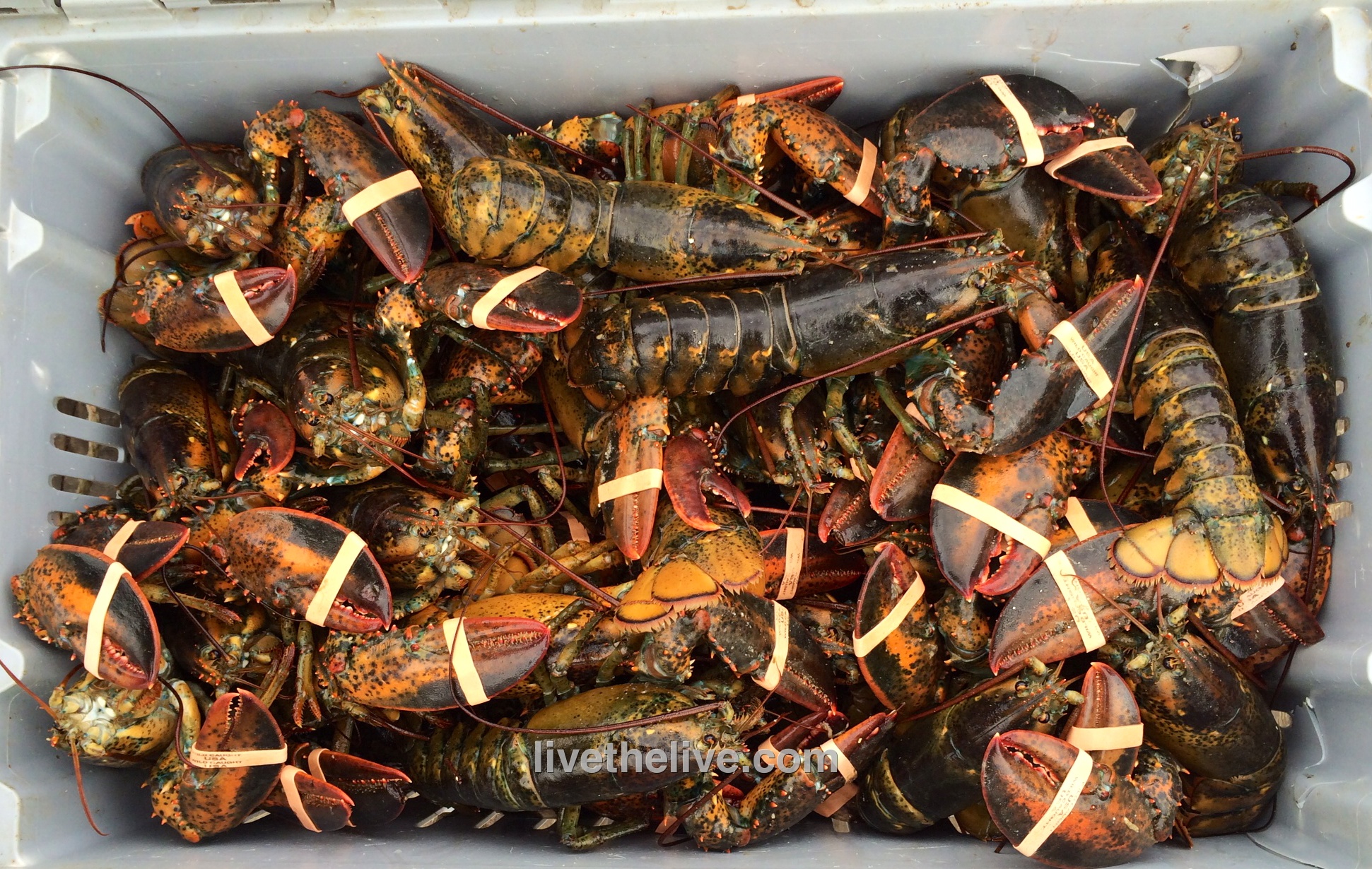
When I make my own lobster rolls, freshness is key. I always start with live lobsters.


A view of the Sakonnet River from the back of Gary's lobster boat, the Edna Mae

A view of the Sakonnet River, here in Rhode Island.


Once you’ve bought your live lobster, the next step is to cook it right. Some people steam and some people boil. I’ve always been a boiler myself. I fill a large pot half-way with water and add sea salt. I bring it to a rolling boil before the lobsters go in. And then I do the math…

I boil my lobsters for 10 minutes for the first pound. I add 3 minutes per pound for each additional pound thereafter. For example, a 2-pound lobster should boil for 13 minutes and a 1 1/2-pound lobster should boil for 11 1/2 minutes. And if I’m boiling more than one lobster, the same rule applies: 3 2-lb. lobsters = 6 pounds. So 10 minutes for the first pound, plus 3 minutes x 5 for each extra pound (that’s 15) for a total of 25 minutes. (These times are for hard shell lobsters. I reduce the boiling time by 3 minutes if I’m cooking soft-shell lobsters.)

Remember, you’re going by total weight of all the lobsters, because the more you have, the longer it takes the water to return to the boil once you put them in.

A lobster boil is where you really see what your stove is made of. If you’ve got gas, you should have no problem. But many modern electric stoves are absolutely awful when it comes to cranking out enough heat to boil large quantities of water quickly. If yours is like this, you might want to go with steaming instead of boiling.
 

Lobster catch LTL


A larger lobster is not always better. My uncle used to buy the largest lobster he could find, and it was impressive when he placed at the center of the dinner table. But the meat was like rubber. And personally, I felt bad for the old lobster that made it that far in life. His last days should’ve be in the ocean, not on a plate.

My maximum lobster size is 2 lbs. At that weight, you have the perfect ratio of meat-to-shell…with lots of delicious meat that is still sweet and tender.

After the lobsters have been removed from the pot and have cooled for a few minutes, I get to work: cracking the claws and tail and removing every bit of beautiful meat I can find. Lobster lovers will tell you that the legs have some meat in them and that the tomalley (the green liver and pancreas) and roe (eggs) are delicacies not to be missed. For the purpose of making lobster salad, I don’t use these parts. But I do save the tomalley and roe for a separate treat…and I save all the legs and cleaned empty shells for lobster stock.

Cleaning lobster legs is easy: simply remove all the legs from the body and place them flat on a cutting board. Grab a rolling pin, and one at a time, roll the pin over the lobster legs, starting at the claw end and working your way up. Like a tube of toothpaste, the meat will squeeze right out of the leg!
 

Lobster roll LTL


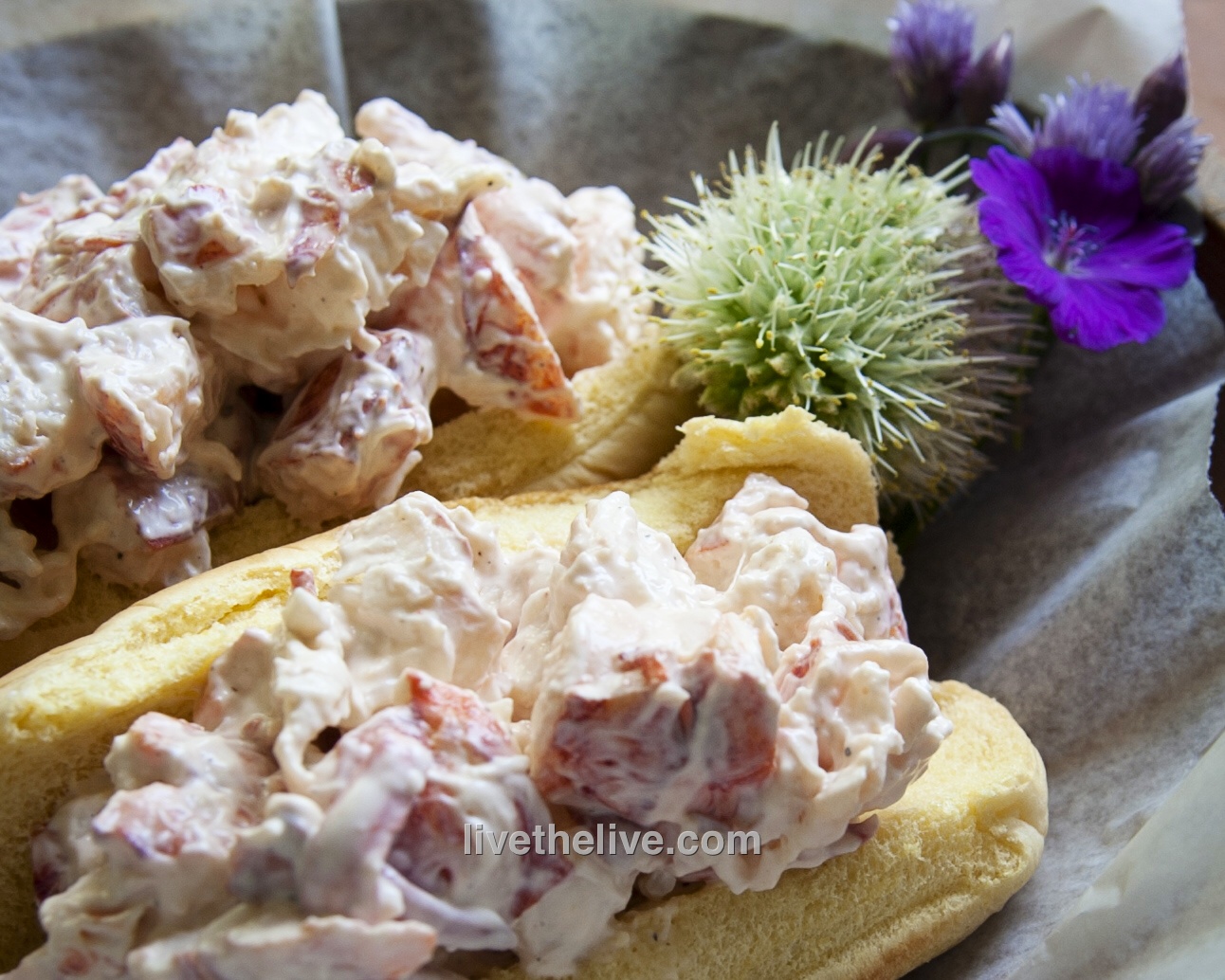
Now for the important stuff. What goes in a lobster roll, and more importantly, what doesn’t… I have very strong opinions in this matter.

First, there should NEVER be anything green in a lobster roll! No celery, no pickle, and it certainly shouldn’t be sitting on a bed of lettuce! Nothing should be crunchy in a lobster roll! The magic is in the texture of the perfectly cooked lobster meat. Don’t mess with it!

NO paprika or Old Bay seasoning!

A pinch of celery salt? Yes!

Mayonnaise? Only Hellman’s!

White pepper, not black, and just a touch.

Salt? A pinch of Fleur de Sel.

And the secret weapon to bring out all the flavors: the tiniest squeeze of fresh lemon juice…not enough to give it lemon flavor…just to brighten the taste.

As for the roll, you can’t go wrong with Martin’s potato long rolls: soft and squishy straight out of the bag, or for extra decadence: lightly grilled with a little melted salted butter brushed on.


I love watermelon margaritas, especially when they’re made with the sweetness of fresh watermelons.


All you need.


Many recipes add a lot of sugar: sugar on the rim of the glass as well as sugar in the margarita itself. I think that a ripe watermelon and the Cointreau add enough sweetness, so I leave any extra sugar out of my recipe.


4 cups cubed, seeded watermelon
4 oz. (or more!) tequila (I like Patron silver)
3 tablespoons fresh squeezed lime juice
1 oz. orange liqueur (I like Cointreau)


Combine the watermelon, tequila, lime juice, and orange liqueur in a blender. Process until it’s smooth. (If I wanted to strain the watermelon juice before making the cocktail, I’d put it in the blender by itself first, whizz it up, then strain. But I’m totally OK with making this as easy as possible. Everything in the blender all at once!)

Pour it into margarita glasses filled with ice. Garnish with a lime wedge.


Watermelon margarita, aerial view. (No drone required.)


BEET AND QUINOA SALAD

Posted: August 1, 2023 in beets, Food, Recipes
Tags: , , , ,

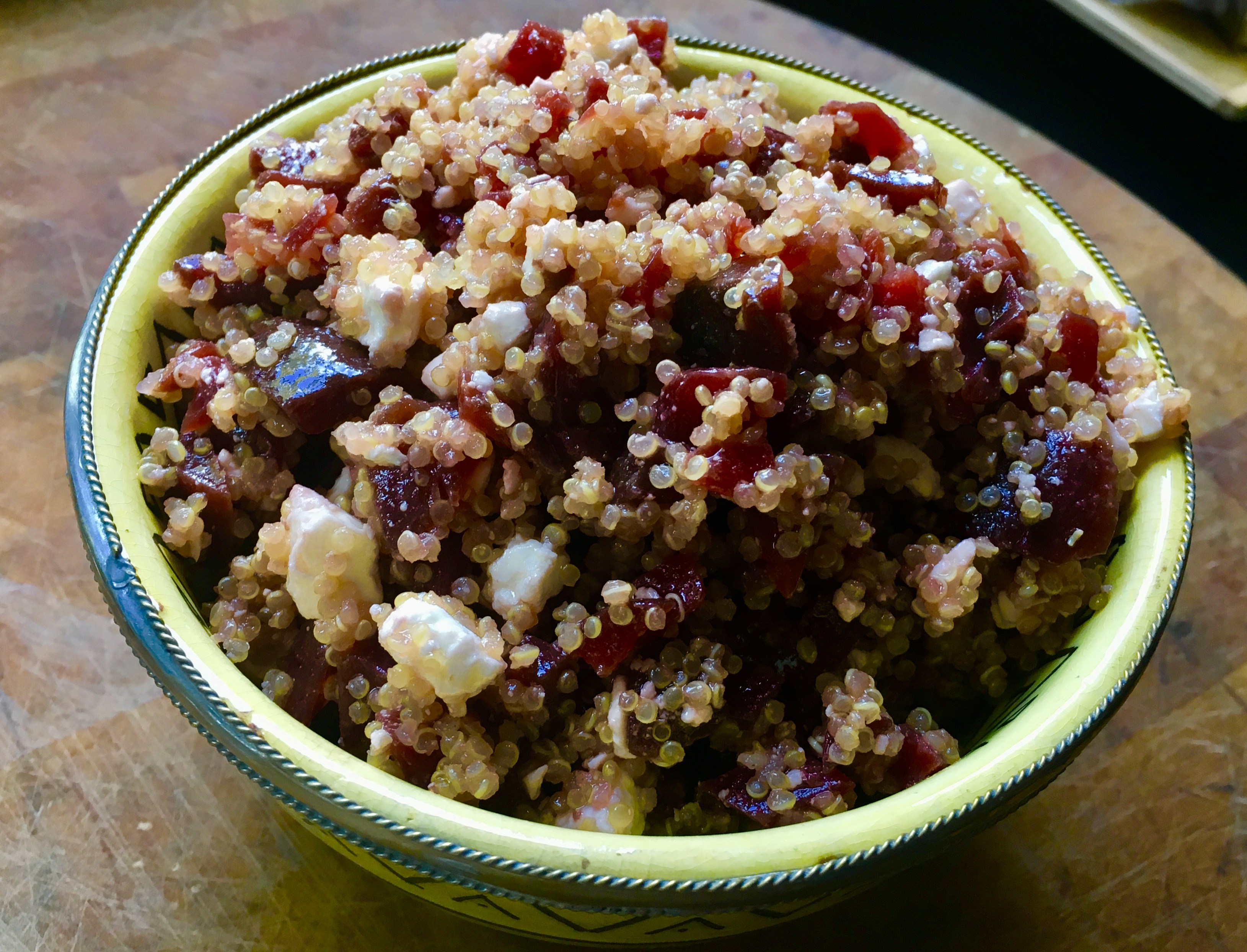
Why was it that I could only find a great beet salad in a restaurant? Was there some secret to making one? Well, after some experimentation, I came up with a beet salad that I really enjoy…and it’s easy to put together ahead of time if you have guests coming over for dinner.

Sometimes I skip the arugula and just go for a bowl like this…

2 cups cooked quinoa
1/2 lb. beets, cooked and sliced
1/2 cup extra virgin olive oil
1/2 cup red wine vinegar
1 teaspoon sugar
1/2 clove garlic, through a press
1/2 teaspoon salt
1/4 teaspoon ground black pepper
1 scallion, finely minced
2 cups baby arugula (optional)
5 oz. feta cheese, crumbled

Prepare the quinoa according to the package instructions. I like to substitute half of the water with homemade chicken stock.

While the quinoa is cooking, combine the olive oil, vinegar, sugar, garlic, salt and pepper in a separate bowl.

Once the quinoa has cooked, place it in a bowl and add half of the dressing, mixing gently with a fork to fluff up the quinoa. Place it in the fridge to cool completely.

I like to use the product LoveBeets, available in any supermarket. The beets come fully cooked and peeled, ready to slice.

Chop the beets to the size you like and place them in the bowl of quinoa. Add the scallions, arugula and cheese. Toss to combine.

When the mixture has cooled down, give it a taste and add more of the dressing if needed. This tastes great at room temperature as well.

EASY FRIED GULF SHRIMP

Posted: July 29, 2023 in Uncategorized

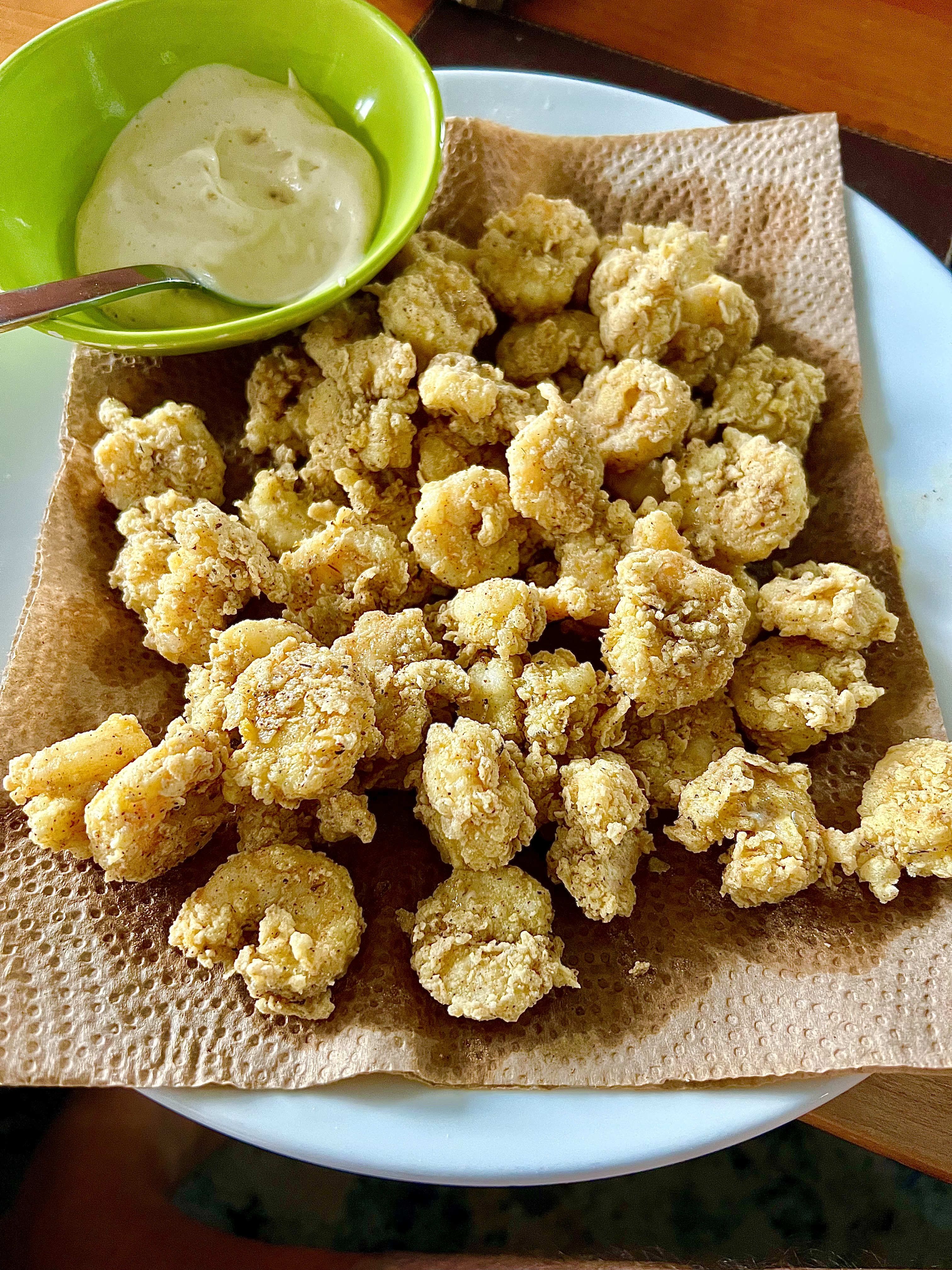
I love fried shrimp. It’s like seafood candy. And I’ve got a really easy method of making it.

For me, the secret to great fried shrimp is a light batter. I’m not crazy about the heavy, almost pancake mix-like batter that is used in some restaurants for shrimp or onion rings.

As I looked through many recipes, I found that the secret to a lighter batter is rice flour. I didn’t have any in my cupboard per se, but then I found a bag of Bob’ Red Mill Gluten_free 1 to 1 Baking Flour, which turns out to be mostly rice flour. I decided I would use that, scooping a couple of cups of it into a bowl.

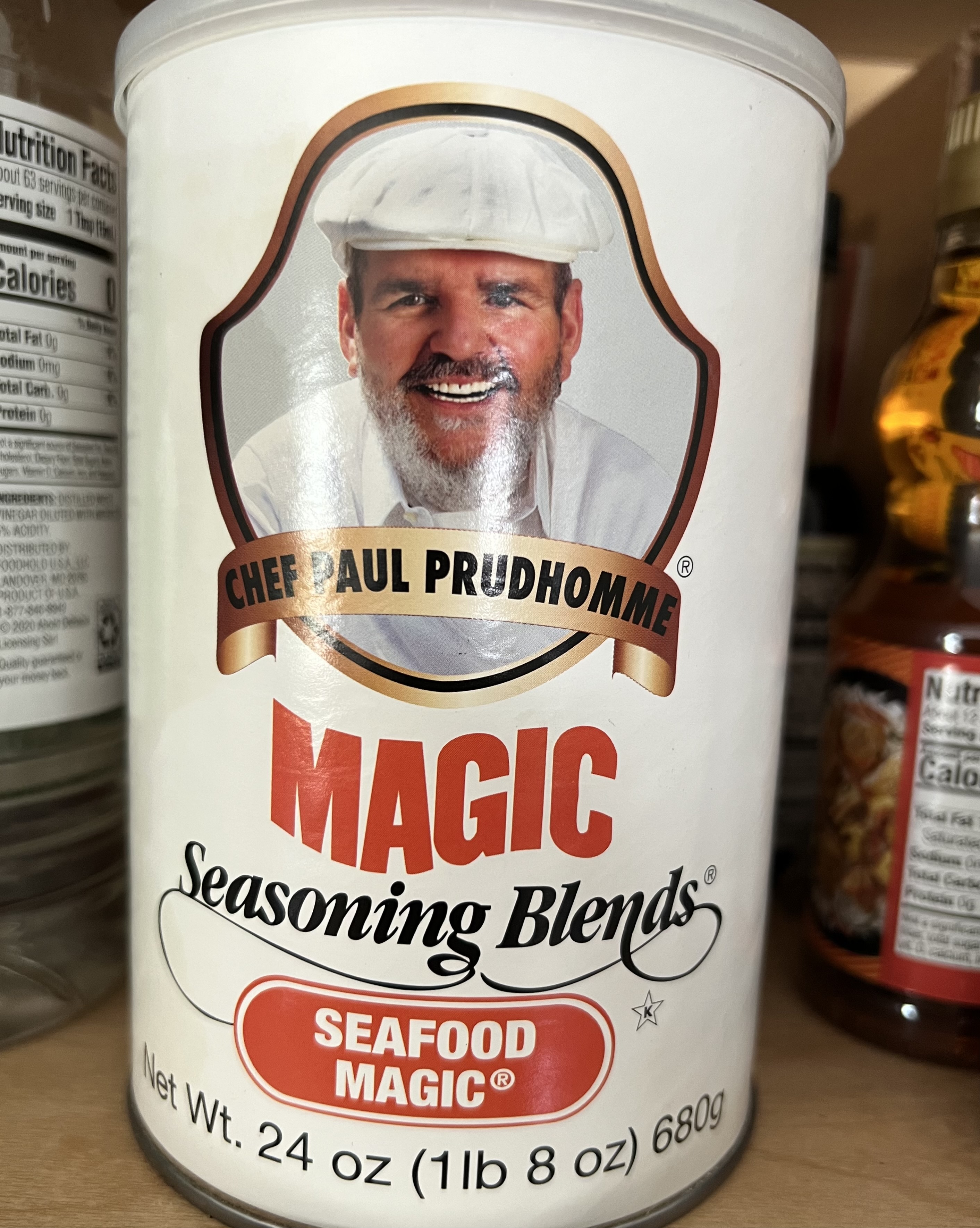
My go-to seafood seasoning is Chef Paul Prudhomme Seafood Magic. I added a couple of tablespoons of that to the flour, and mixed it well.

In a separate bowl, I scrambled two eggs.

I use only wild-caught American shrimp, never the nasty stuff from Asia. Thawing the shrimp is simply a matter of placing the frozen shrimp in a bowl, and covering them with cold water (never warm) and in a couple of hours, they’ve thawed out. Then I drain the bowl, and dry the shrimp with paper towels.

In a pan on the stove, I have about an inch of grapeseed or avocado oil, heating it to about 325°, using a thermometer to check.

Cooking in batches, I put about a dozen shrimp into the eggs, coating them well, then transferring them to the flour mixture, coating them well again, and shaking off the excess. Then I carefully put them in the hot oil. About 30 to 45 seconds on each side is all the shrimp needs to be perfectly cooked. I drain them on paper towels, and they are ready to eat!

I love a little remoulade sauce to go with my fried shrimp, so I grab some mayo and Dijon mustard, and mix them in a bowl to my desired ratio. (Sometimes I like a lot of mustard…other times, not so much.) To this, I add another great “cheat:” Tony Chachere’s Original Creole Seasoning–again–to taste.

Now I’m ready to eat!

Sometimes, a cool adult beverage is just what you need after a long day of yard work. The cucumber plants in my garden have started producing, so it’s time to make this refreshing cocktail!


4 fresh cucumbers, peeled and seeded
Small ice cubes
1 cup loosely packed fresh mint leaves
2 teaspoons granulated organic cane sugar
3 tablespoons fresh lime juice
4 oz. vodka (I like Tito’s)
1 oz. orange liqueur (I like Cointreau)

Peel and seed the cucumbers. Coarsely chop them and then purée them in a food processor until smooth. Strain them through a fine sieve, pressing the solids to extract as much liquid as possible. Or, if you have one, use a juicer. Set the extracted cucumber juice aside.

To a large glass pitcher, add the mint leaves, sugar and lime juice. Muddle the ingredients so that the mint leaves release their oils. Add 3/4 cup (at least) of the cucumber juice. Add the vodka and Cointreau. Muddle again briefly.

Fill tall drinking glasses with ice cubes. Strain the cocktail into the glasses. Garnish with a cucumber spear or peel…or mint.

If you grow your own cucumbers and mint in your garden, this cocktail tastes even better…a fine reward for a job well done!

Who says you have to only cook burgers and steaks on the grill? This is one of my favorite ways to enjoy clams…and without the clam knife! I always use hardwood charcoal.

image

A couple of dozen (or more) little neck clams, washed and purged
1 stick (8 oz.) of unsalted butter
1/4 cup extra virgin olive oil
1/4 cup chopped parsley
1 teaspoon dried oregano
1 teaspoon minced garlic
1/2 teaspoon dried basil
1/2 teaspoon sea salt

image

The clams should be stored in the fridge until ready to use…not in water, not on ice. Place the clams in a bowl and cover them with a wet dish towel.

About an hour before cooking, I like to purge my clams to remove as much grit as possible. I fill a large bowl with cold water, add sea salt and some corn meal to it, and mix it around. Then I add the clams to this bowl and let them sit in this liquid for an hour. They will suck up the corn meal and spit out sand and grit. After an hour, I pour off the water/salt/meal/grit mix, and thoroughly wash the clams. Now they’re ready to grill!

I start my hardwood charcoal grill and divide it in half: coals on one side, no coals on the other.

While the coals are heating up, I grab a disposable aluminum foil tray and place it on a burner on my kitchen stovetop over medium heat. I add the butter, olive oil, parsley, oregano, basil, garlic and salt, and stir it all to combine. Once the butter has melted and everything has blended, I bring the tray over to the charcoal grill and place on the side of the grill without coals. It will stay warm.

Once the coals are hot, just place the clams directly on the grill. (Use tongs, unless you want to remove all of your knuckle hair.) They’re done as soon as they open, but you can cook them as long as you like, from raw to more thoroughly cooked. As each one reaches its desired doneness, place it carefully in the aluminum tray, making sure you don’t lose any of that precious liquid inside the clam shell. Give it a swish in the butter and herb mix.

When all the clams have been cooked and are in the tray, serve them with that herby butter sauce on top of pasta…or simply eat them with a fresh baguette. A glass of great white wine is a must.

image

Really easy and really delicious!

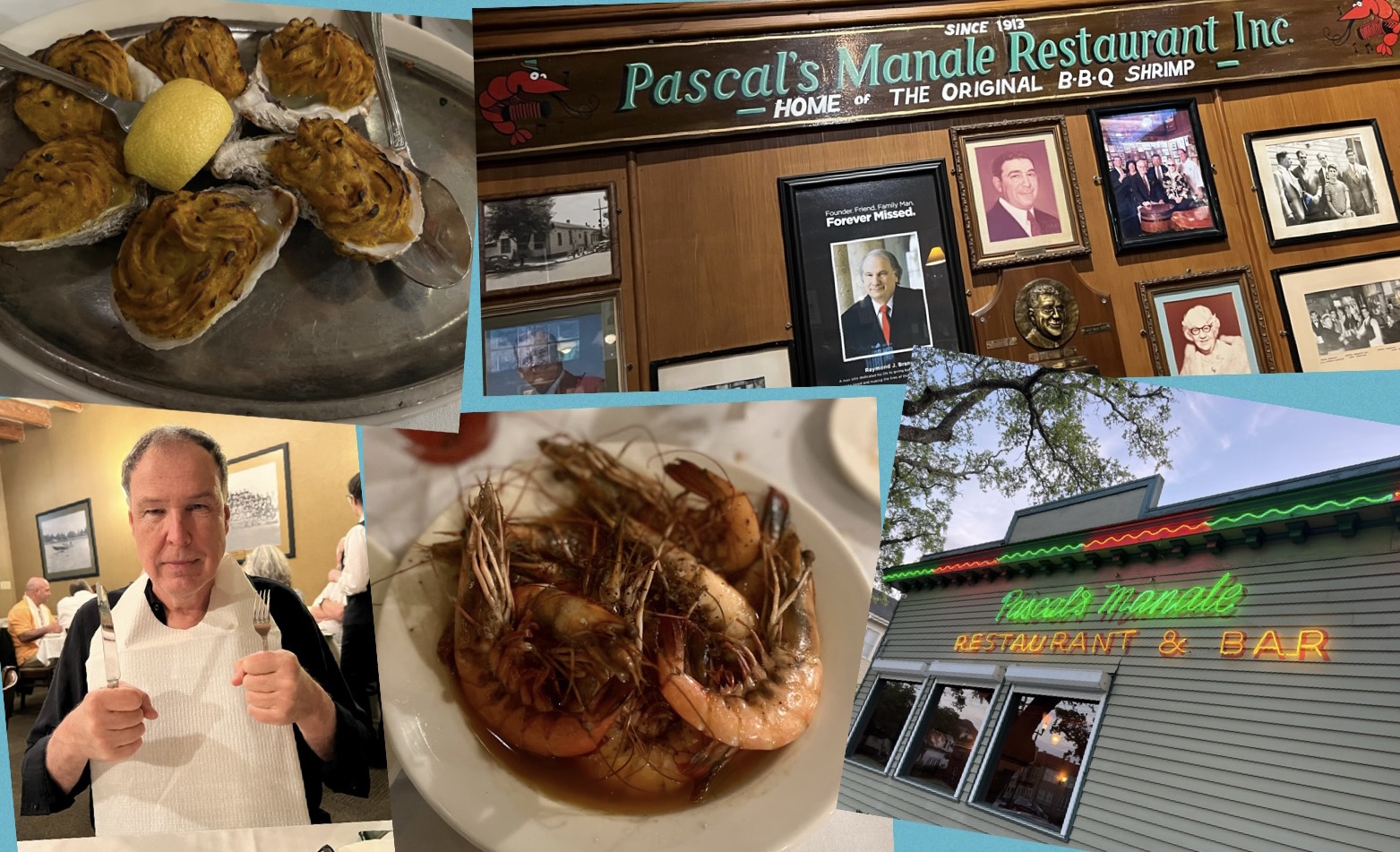
One of my favorite dishes to come out of New Orleans is Barbecue Shrimp, so on a visit to the Crescent City last year, I had to make a stop at the place where it all started.

The first unusual thing you notice about the classic dish, New Orleans Barbecue Shrimp, is that it’s not cooked on a barbecue grill and it has no barbecue sauce.

So why the name?

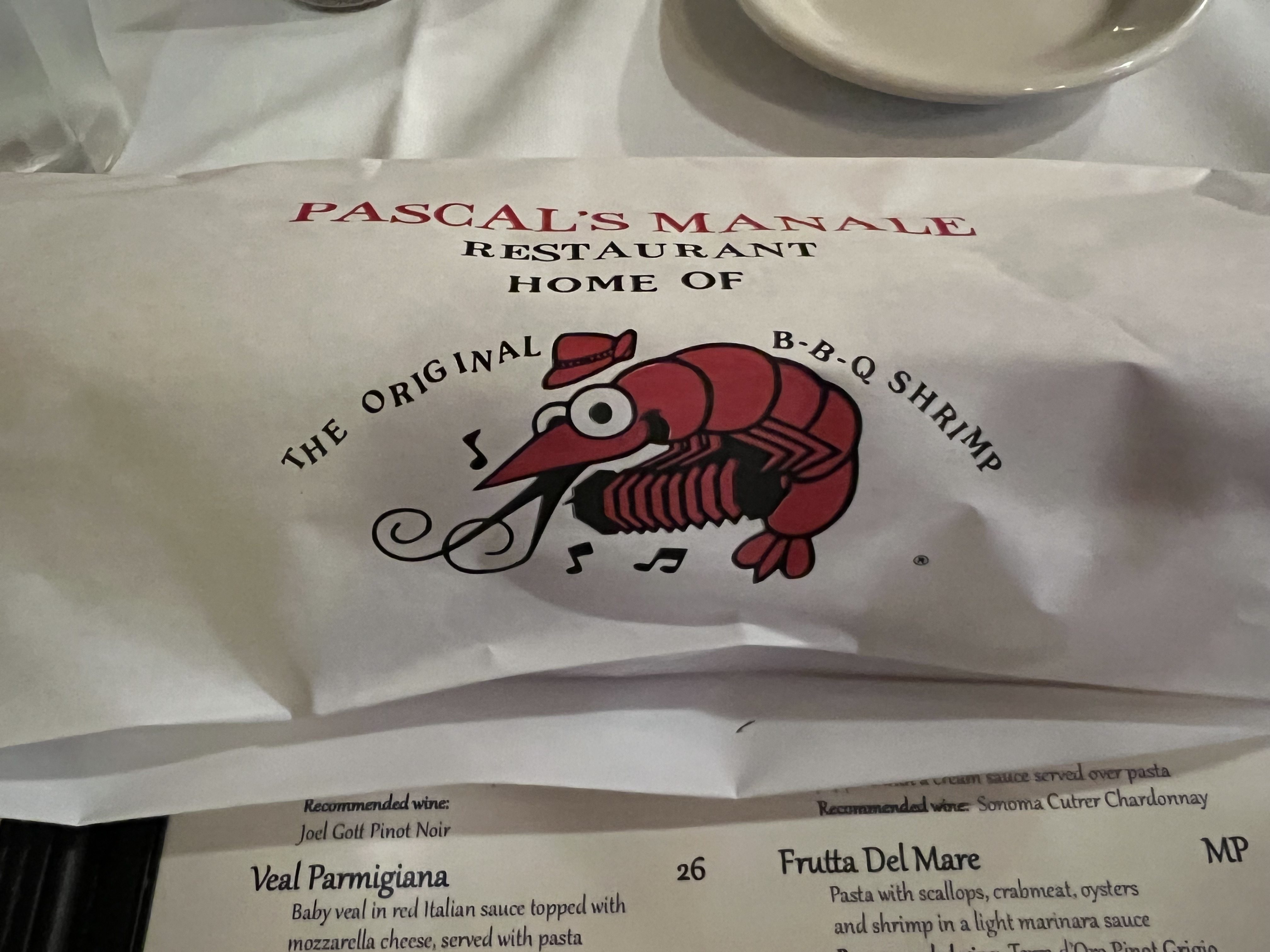
Its origin goes back to the mid-1950’s, to an Italian restaurant in New Orleans called Pascale’s Manale. The story goes that a regular customer had just returned from Chicago, where he had dined on an amazing shrimp dish. He asked the chef at Pascale’s Manale to try to replicate it, and what resulted was actually better than the original. And though no barbecue grill or sauce was used, it is believed that they gave it the name “BBQ Shrimp” to cash in on the backyard barbecuing craze that was all the rage at the time. Whatever they call it, I have to say that it’s worth a special trip to have the dish!

The classic New Orleans Barbecue Shrimp is served with shell-on shrimp, so you have to make a big, buttery mess of yourself as you devour it. And it’s served with plenty of crusty French bread.

Sometimes I leave out the bread and go for rice instead. And I’ll peel the shrimp completely, using the shrimp shells to make the stock I cook the rice in.

image
For the seasoning…
1 1/2 teaspoons salt
1 1/2 teaspoons fresh ground black pepper
1 teaspoon fresh rosemary, very finely chopped
1/4 teaspoon oregano
1/4 teaspoon granulated garlic
1/4 teaspoon granulated onion
1/4 teaspoon paprika
1/4 teaspoon dried thyme
1/8 teaspoon cayenne pepper
1/8 teaspoon white pepper

Mix all the seasoning spices and set them aside.

image
For the BBQ shrimp…
2 lbs. large wild-caught American shrimp, peeled and de-veined
1 stick butter (4 oz.)
1/2 cup beer
1/4 cup Worcestershire sauce
olive oil
For the rice…
1 cup rice (I like organic basmati)
2 1/4 cups water or seafood stock (see below)
1 teaspoon olive oil
1/2 teaspoon Tony Chachere’s Original Creole Seasoning

image

Cook the rice following the directions on the package. I like using stock instead of water when I cook my rice, so after peeling all the shrimp, I toss the shells in a saucepan full of water and I boil the heck out of it, strain it, and use that stock to cook the rice. I add the olive oil and the Tony Chachere’s (available online or at your favorite food store) to the stock before cooking.

To cook the shrimp, I heat a little olive oil in a large skillet over moderate heat. Then I add the shrimp, and sear them on one side (about 30 seconds) and then flip them over to sear on the other side (another 30 seconds.) I’m not trying to cook them all the way through, just get them a bit caramelized. Then I remove the shrimp from the skillet and set them aside.

(I serve the BBQ Shrimp over the rice with broccoli. If you want to use broccoli, add a little butter and olive oil to the same pan you seared the shrimp in. Cook until the broccoli is nicely caramelized, then remove from the pan and set aside.)

In the same skillet, I heat the butter until the foam subsides. Then I add the beer, Worcestershire sauce, and 2 teaspoons of the seasoning mix. I mix well, then add the shrimp and broccoli back in the pan, simmering for about 5 minutes, stirring occasionally.

Serve over the rice!

When it’s done right, gazpacho is one of the most delicious summer soups you’ll ever have. The secret, of course, is using super-fresh veggies. That’s why I crave it at the first sign of a vine-ripened tomato in my garden or a local farm stand. When my tomato plants have dozens of ripening fruits on them every day, I eat some in salads…I make tomato sauce with others…but the reddest and ripest become gazpacho!


I never make this out of season, and I’m always wary of restaurants that do! Very often, they’ll try to hide the taste of older veggies by adding too much salt or lots of spice.

The consistency of gazpacho is a personal preference. I like mine a bit chewy…not chunky like salsa, but not watery like soup…somewhere in between the two is perfection.

All the work is pretty much in the slicing, peeling and chopping…so I do it carefully.


1 large Vidalia onion, peeled and roughly chopped
1 carrot, peeled and roughly chopped
5 large tomatoes, peeled, seeded, and roughly chopped
2 medium cucumbers, peeled, seeded, and roughly chopped
6 sprigs of flat-leaf parsley
1/2 cup olives, drained  (I like kalamatas)
1/2 cup good quality extra virgin olive oil
Juice of 1/2 a large lemon
3 tablespoons white vinegar
Sea salt and freshly cracked black pepper

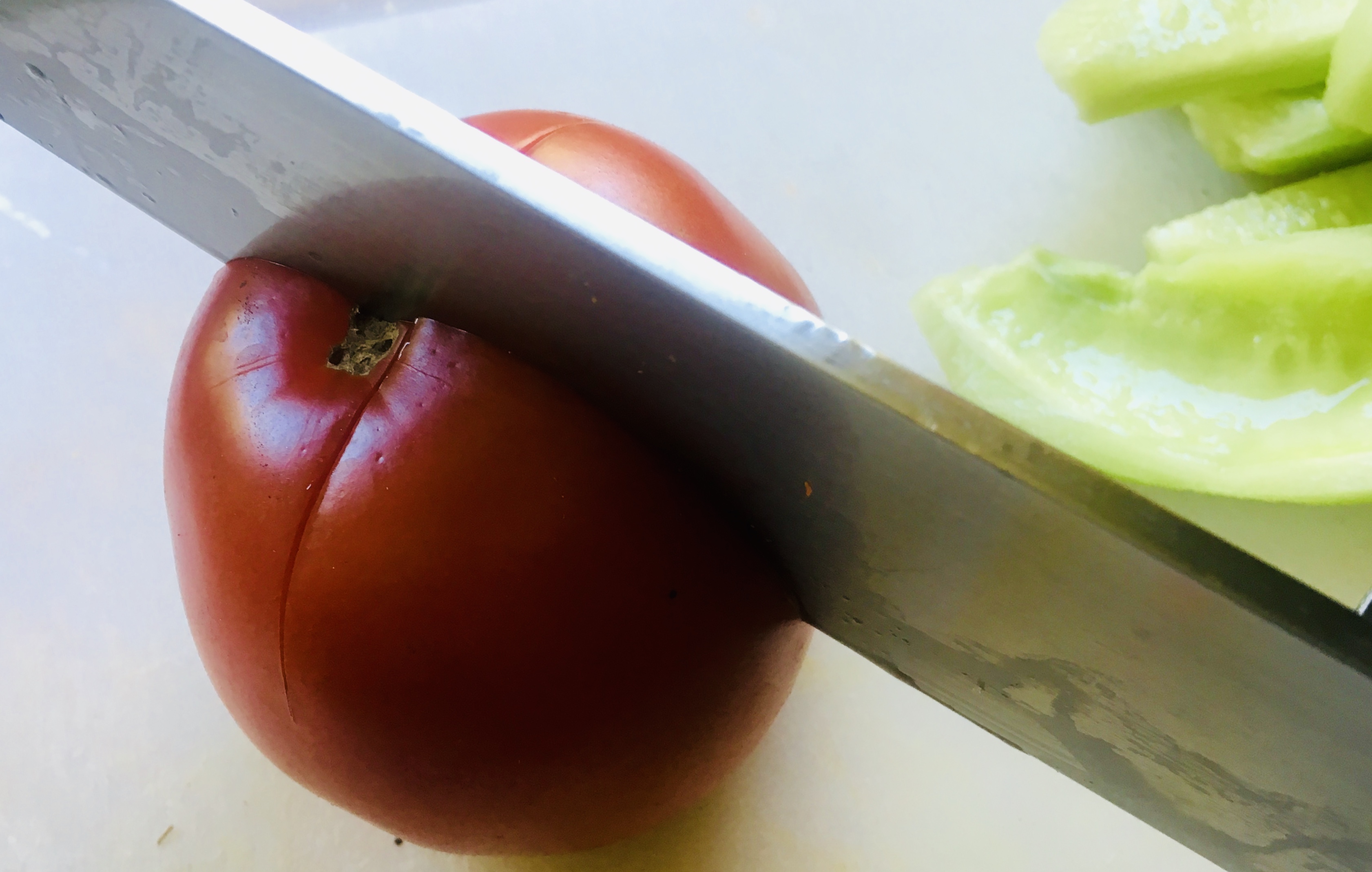
An easy way to peel tomatoes is to turn them upside down and make an X with a knife, puncturing the skin. Drop the tomatoes in boiling water for about 30 seconds, and the skin will start peeling away from the meat. Scoop the tomatoes out of the water, and immediately drop them into a bowl of ice water, letting them cool for 5 minutes. The skin will peel right off. Cut the tomatoes in half and (over the sink!) gently press your thumbs into the seed compartments, popping them out. Give the tomato a little shake to remove any last seeds, and it’s ready to be chopped.


Make an X, then drop the tomatoes in boiling water for 30 seconds.


While the tomatoes are cooling, you can peel and chop the other veggies.

Peel and roughly chop the onion and carrot, and place them in a food processor. Let it run for about 10 seconds.

Add the peeled and seeded tomatoes, the peeled and seeded cucumbers, and the sprigs of parsley and continue processing.

Add the olives, olive oil, lemon juice, vinegar, sea salt and black pepper.


Process until the veggies are finely chopped, and you’ve got a soup. Store it in the fridge for at least one hour to chill before serving.


Garnish with a sprig of parsley and a sprinkle of Fleur de Sel or other tasty finishing salt.

Stuffies, or stuffed clams, are a very personal matter here in Southern New England. There are as many stuffies recipes as there are chowder recipes, and everyone thinks they’ve got the best one. Most stuffies that I’ve had in restaurants, like most meatballs I’ve had, have too much bread and not enough of the good stuff.

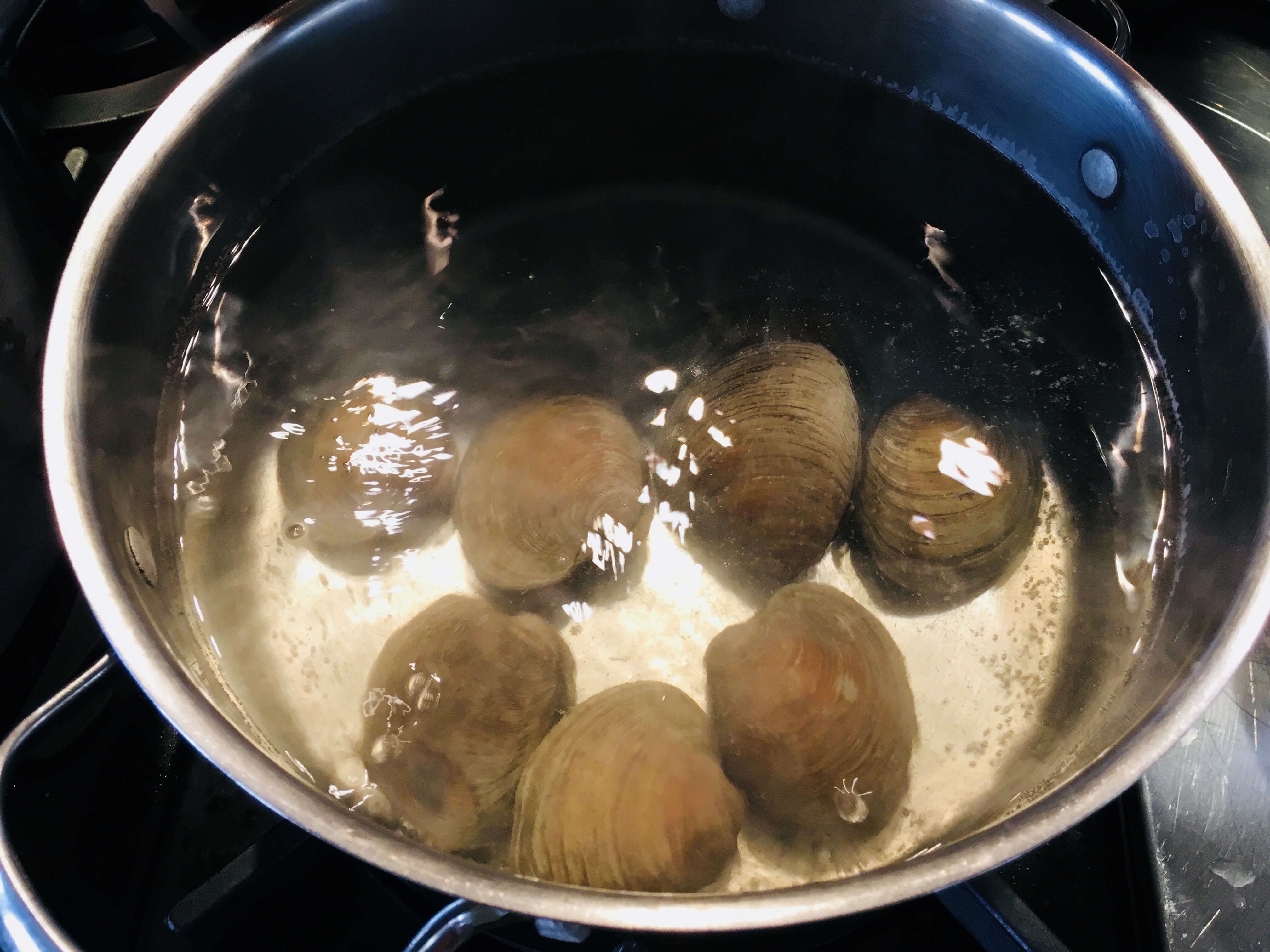
I use medium-sized clams for this recipe and not the traditional quahog, a large clam often used in chowders that I find to be too chewy. Dropping the clams in hot water in the beginning helps make opening the clams a lot easier.

Just 30 seconds in boiling water is all it takes.

This recipe requires quite a bit of fresh sage, which can be expensive at the supermarket. So I grow sage in my garden, using it throughout the season, then snipping as much as I can at the end of the growing season to store it in freezer bags for winter use. I’ll even measure out 1 1/4 cups of fresh sage leaves (what I need for each batch of stuffies), then place that amount in the freezer bag, so I don’t need to measure later.

Freezing the sage makes it easier to chop finely later on.

I use Portuguese chourico (since I live near Fall River and New Bedford, Massachusetts, the Portuguese capitals of America), and I think their flavor is best.

This recipe makes a lot of stuffies, but they freeze well so you can have them when you want.

This recipe is gluten-free…and you’ll never be able to tell the difference! But if that doesn’t matter to you, use toasted Portuguese bread instead of gluten-free bread.

I don’t like peppers in my stuffies (or my crab cakes), so I leave them out. But if you do, feel free to add them to the recipe.

stuffies

4 dozen medium neck clams
1.5 pounds chopped chourico, skin removed (I use Mello’s from Fall River, Mass.)
3 onions, finely chopped
3 tablespoons garlic, finely chopped
3 cups frozen or fresh corn kernels
3 cups toasted and coarsely ground bread (I use Udi’s Soft & Hearty Whole Grain bread to keep it gluten-free)
3/4 cup chopped fresh oregano (or 1 tablespoon dried)
1 1/4 cups chopped fresh sage (don’t use dried)
Salt and pepper
Butter
Sambal chili paste
Mayonnaise

In a large pot of boiling water, drop the clams in, about a dozen at a time. Remove them after about 30 seconds, before they open. Place them in a bowl to cool. Do this with all the clams.

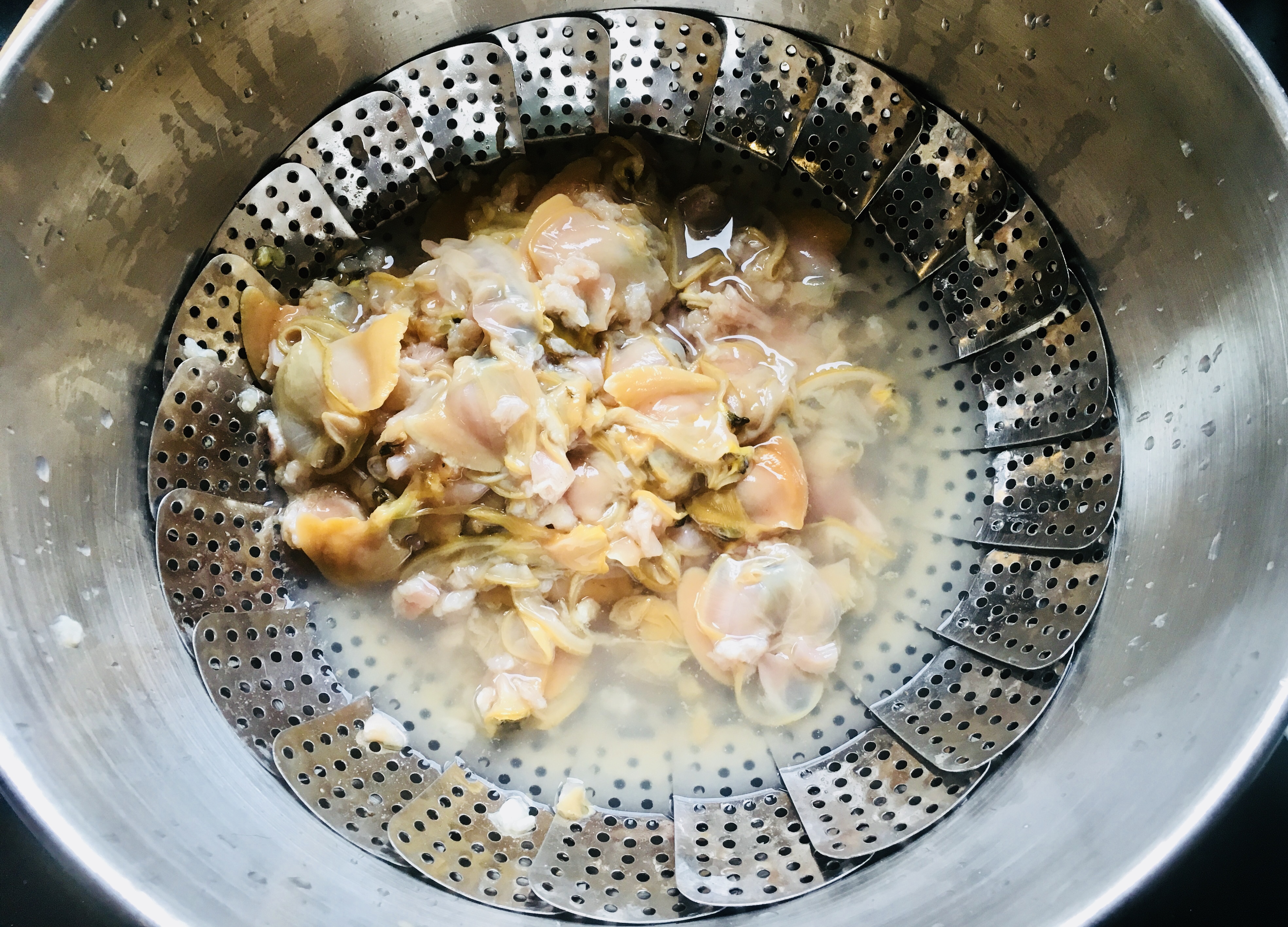
Open the clams with a clam knife over a bowl with a strainer, making sure you save all the liquid from the clams. Put the clam shells to the side. Throw away any broken shells, and wash the empty shell halves thoroughly, making sure there are no broken pieces.

I use a strainer to keep the sediment away from the clam meats.

Take the clam meat pieces out of the strainer, leaving the clam juice behind in the bowl. Move the clam meat to a cutting board or food processor and chop them to medium-fine. Set them aside.

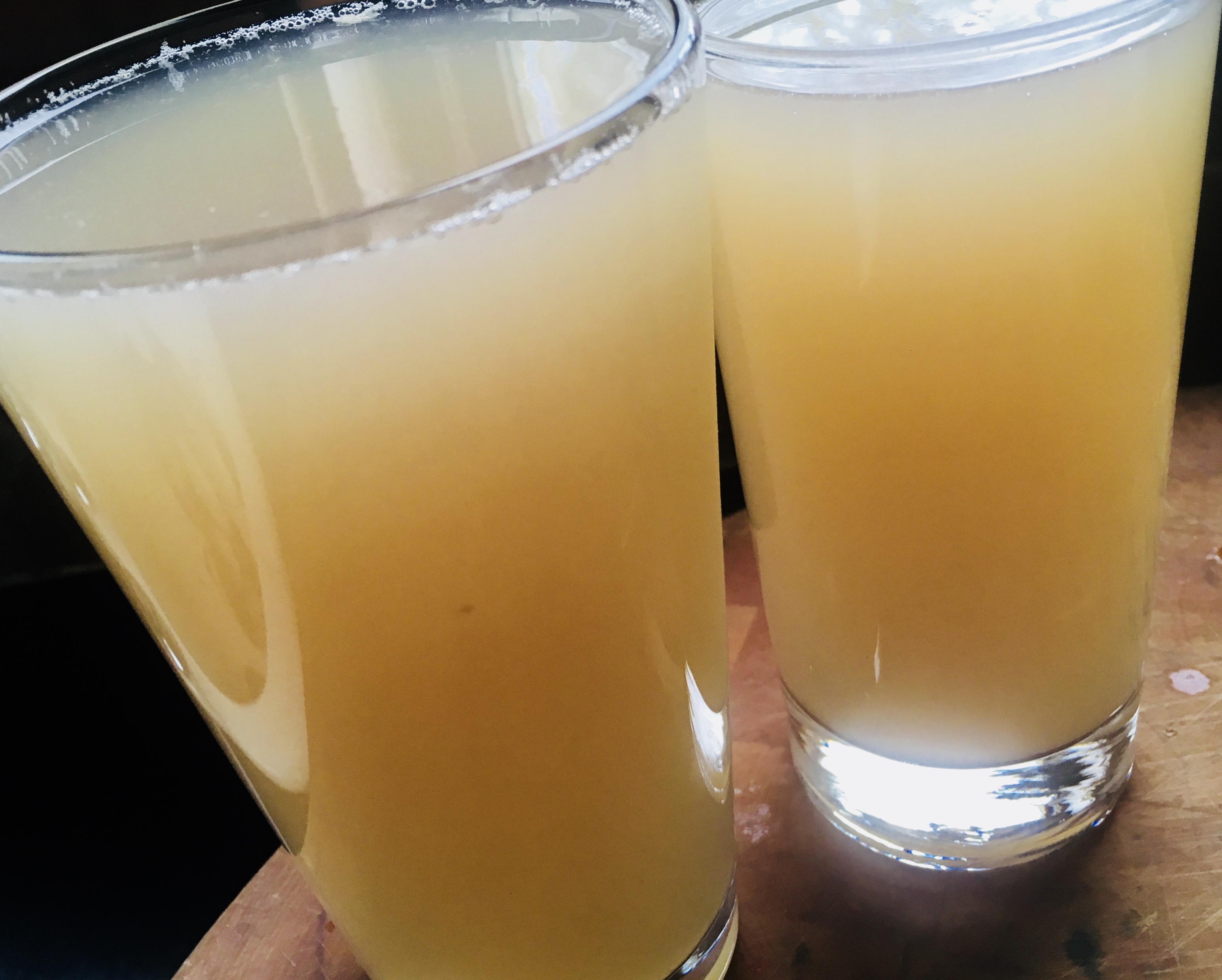
I pour the clam juices carefully from the bowl to tall drinking glasses, being careful not to let the sediment get in. Then, after some time, I pour off the clam juice from the glasses, leaving even more of the sediments behind. I find that the tall glasses make it easier to see the sediments, and maximize the amount of clam juice I get.

I let the clam juices sit in their tall glasses for a while, so that even more sediments get left behind.

In a large frying pan, add the olive oil, onions, and chourico and cook them on medium heat for a few minutes. Add the oregano and sage and cook a few more minutes. Add the corn and cook a few more minutes, a little more if the corn was frozen. Add the chopped clams and stir, cooking for a few more minutes. Add the breadcrumbs a little at a time until you have a nice balance of bread and other ingredients. Add the clam juice a little at a time as well, so that you can add all the breadcrumbs, but the mix isn’t runny. There’s lots of flavor in the clam juice, so use as much as you can! Season it all with salt and pepper.

Remove the pan from the heat and fill the empty clam shells with the stuffing.

At this point, you can freeze the clams. I put them on small sheet pans in the freezer until they harden, then I wrap them 6 at a time, and put them in freezer bags. Keep them frozen!

Ready for the freezer!

To make the aioli, mix the mayonnaise and Sambal in a bowl, to taste. Sambal is hot, so a little goes a long way. Keep it covered and refrigerated.

When you’re ready to bake, remove the clams from the freezer and place them on a sheet pan in a pre-heated 350 degree oven. Top each clam with a small ¼” square piece of butter. Bake them about 15 minutes, until the clams are sizzling and light brown. Top each with a small dab of aioli.

What do you do when the hot weather kicks in and the cucumbers start taking over your garden? Make soup!

The original cucumber soup recipe comes from Ikies Traditional Houses, a wonderful hotel in the beautiful town of Oia in Santorini, Greece. After a long, hot day of exploring the island, we would settle down to a refreshing bowl of cucumber soup. They were nice enough to share the recipe with us, and a few tweaks later, it’s my definition of perfect.


cuke soup


3 English cucumbers or 5 regular cucumbers, peeled, seeded and roughly chopped
1 clove garlic, crushed
1 cup vegetable stock, preferably home-made
4 cups plain Greek yogurt
1/2 cup fresh mint leaves
Juice of 1 lemon
Sea salt and pepper


Peel, seed and chop the cucumbers and place them in a blender with the garlic, stock, 2 cups of the yogurt, mint leaves, lemon juice, 2 teaspoons of sea salt, and a grating of fresh black pepper.

Turn on the blender and mix well. Stop the blender and then add remaining 2 cups of yogurt and mix it by hand.

Pour the cucumber soup in bowls. Garnish with diced cucumber or radish.


To make the vegetable stock: rough-chop a few carrots, a few stalks of celery, and an onion, and put them in a pot with 4 cups of water. Boil until the liquid has reduced by half. Strain the veggies before using the stock. You can also roast the veggies on a sheet pan in a hot oven for a bit before adding them to the water for a more robust flavor.