Archive for the ‘pasta’ Category

My first foray into serious cooking started when I bought “The Classic Italian Cookbook,” by  Marcella Hazan.

Like many great recipes, Fettuccine Alfredo is not complicated…but very few restaurants that offer it, actually get it right. Most of the Alfredo sauces I’ve had were watery, floury, and salty and had nothing in common with the real thing.

Funny, when I posted this recipe last year, someone wrote to me to say it was an “abomination.” I have no idea who they were, and if they had any knowledge or experience in the world of Italian cuisine, but since Marcella Hazan was a legend in this field and had written six major cookbooks on the subject, I still lean toward her recipe. Besides, it’s really good!


alfredo2


1 cup heavy cream
3 tablespoons butter
Fleur de Sel or sea salt
1 lb. Fettuccine, fresh or dried
2/3 cup freshly grated Parmesan cheese
Freshly ground pepper
A very tiny grating of nutmeg

Put 2/3 cup of the cream and all the butter in a large saucepan that will later accommodate all the pasta. Simmer it over medium heat for less than a minute, until the butter and cream have thickened. Turn off the heat.

Drop the fettuccine in a big pot of boiling salted water. If the pasta is fresh, it will take just seconds. If it’s dry, it will take a few minutes. Cook the fettuccine firmer than usual, because it will finish cooking in the pan with the butter and cream. Drain the pasta, and transfer it to the pan containing the butter and cream.

Turn the heat under the pan on low, and toss the fettuccine, coating with the sauce. Add the rest of the cream, all the grated cheese, 1/2 teaspoon salt, the pepper and the nutmeg. Toss briefly until the sauce has thickened and the fettuccine is well coated. Taste and correct for salt.

Serve immediately!

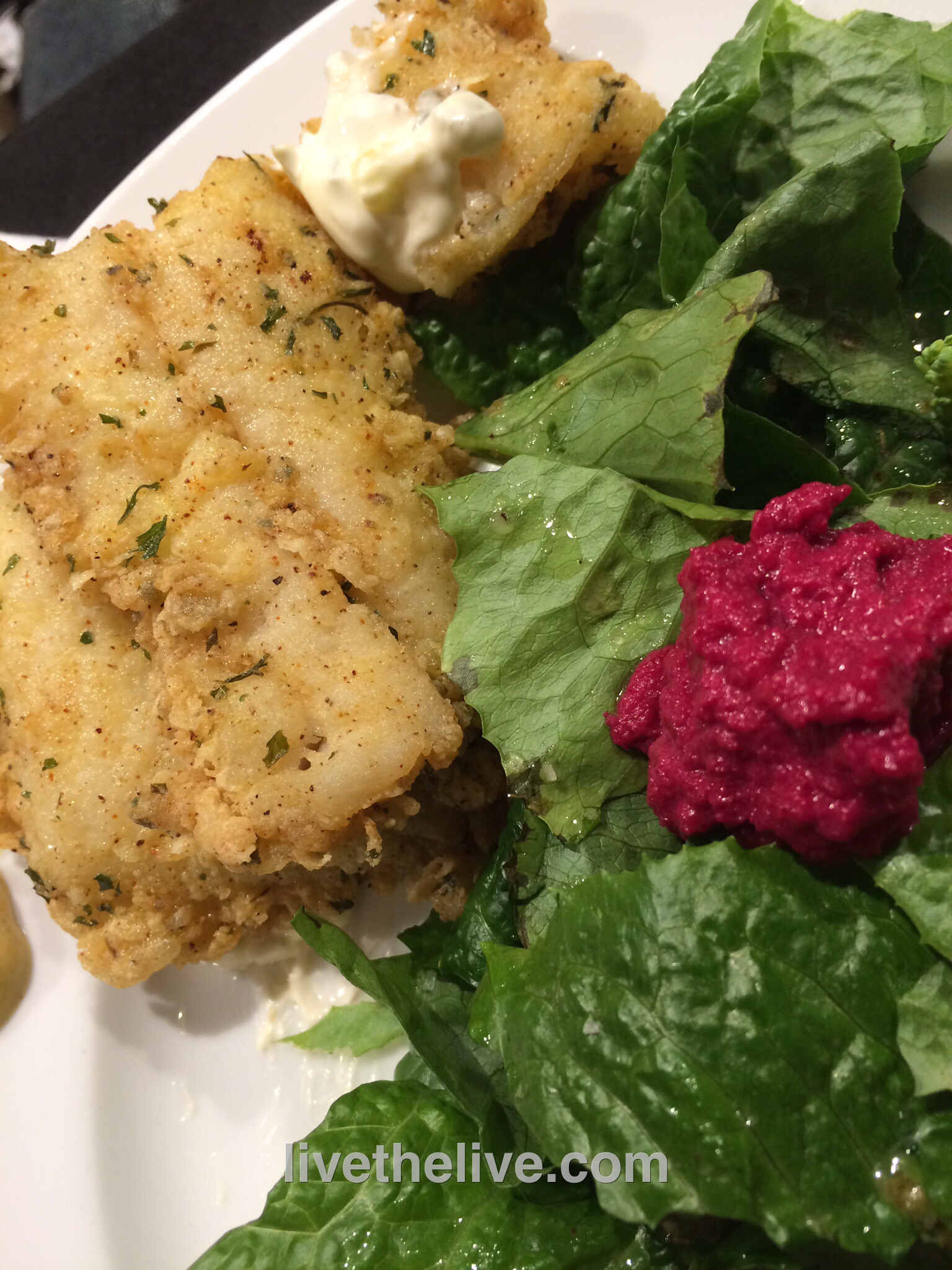
It’s always a challenge when you’re watching your calories. Fish is a great source of protein, and I love it sautéed in a little butter and olive oil with Paul Prudhomme’s Seafood Magic seasoning on it. But let’s face it, that gets old after a while, and we all know there’s nothing tastier than fried fish.

Rather than using a heavy beer batter like I used to do, I came up with a very light gluten-free-flour-based seasoning that gave the fresh-caught local fish I bought incredible flavor and crunch without a carb overload and without gluten. (I’m not on a gluten-free diet, but most GF flour is made from rice, and rice flour that gives you a lighter, crispy texture.)

There are many gluten-free flours out there now. My favorites are King Arthur and Cup 4 Cup, but use whatever GF flour you prefer. (Just make sure that rice flour is a key ingredient in it.)


image

1 cup flour (all-purpose or gluten-free)
1 tablespoon dried parsley
2 teaspoons salt
1 teaspoon oregano
1 teaspoon granulated onion
1 teaspoon paprika
1/2 teaspoon pepper
1/2 teaspoon granulated garlic
2 eggs
fresh locally caught fish fillets of your choice (I used fluke and ocean perch)
avocado oil for frying

In a flat bowl you will use to dredge the fish fillets, combine the flour, parsley, salt, oregano, onion, paprika, pepper and garlic.

In a separate flat bowl, scramble the 2 eggs.

Pour about 1/2″ of the oil in a pan and heat to medium-high heat, about 325° measured with a thermometer.

Dip the fish fillets first in the eggs, coating well. Then dredge them in the flour mixture, pressing down on both sides, so the flour mixture really sticks to the fish. Then shake the fillets lightly to remove the excess flour and gently lay the them in the hot oil. Fry them until they’re golden. (Fresh fish doesn’t take a long time.)

I made a quick and delicious tartare sauce using Hellman’s mayonnaise, dill pickle relish and Maille sauterne mustard.

My first foray into serious cooking started when I bought “The Classic Italian Cookbook,” by  Marcella Hazan.

Like many great recipes, Fettuccine Alfredo is not complicated…but very few restaurants that offer it, actually get it right. Most of the Alfredo sauces I’ve had were watery, floury, and salty and had nothing in common with the real thing.
To this day, if I want a great Alfredo, I make it like Marcella.


alfredo2


1 cup heavy cream
3 tablespoons butter
Fleur de Sel or sea salt
1 lb. Fettuccine, fresh or dried
2/3 cup freshly grated Parmesan cheese
Freshly ground pepper
A very tiny grating of nutmeg

Put 2/3 cup of the cream and all the butter in a large saucepan that will later accommodate all the pasta. Simmer it over medium heat for less than a minute, until the butter and cream have thickened. Turn off the heat.

Drop the fettuccine in a big pot of boiling salted water. If the pasta is fresh, it will take just seconds. If it’s dry, it will take a few minutes. Cook the fettuccine firmer than usual, because it will finish cooking in the pan with the butter and cream. Drain the pasta, and transfer it to the pan containing the butter and cream.

Turn the heat under the pan on low, and toss the fettuccine, coating with the sauce. Add the rest of the cream, all the grated cheese, 1/2 teaspoon salt, the pepper and the nutmeg. Toss briefly until the sauce has thickened and the fettuccine is well coated. Taste and correct for salt.

Serve immediately!

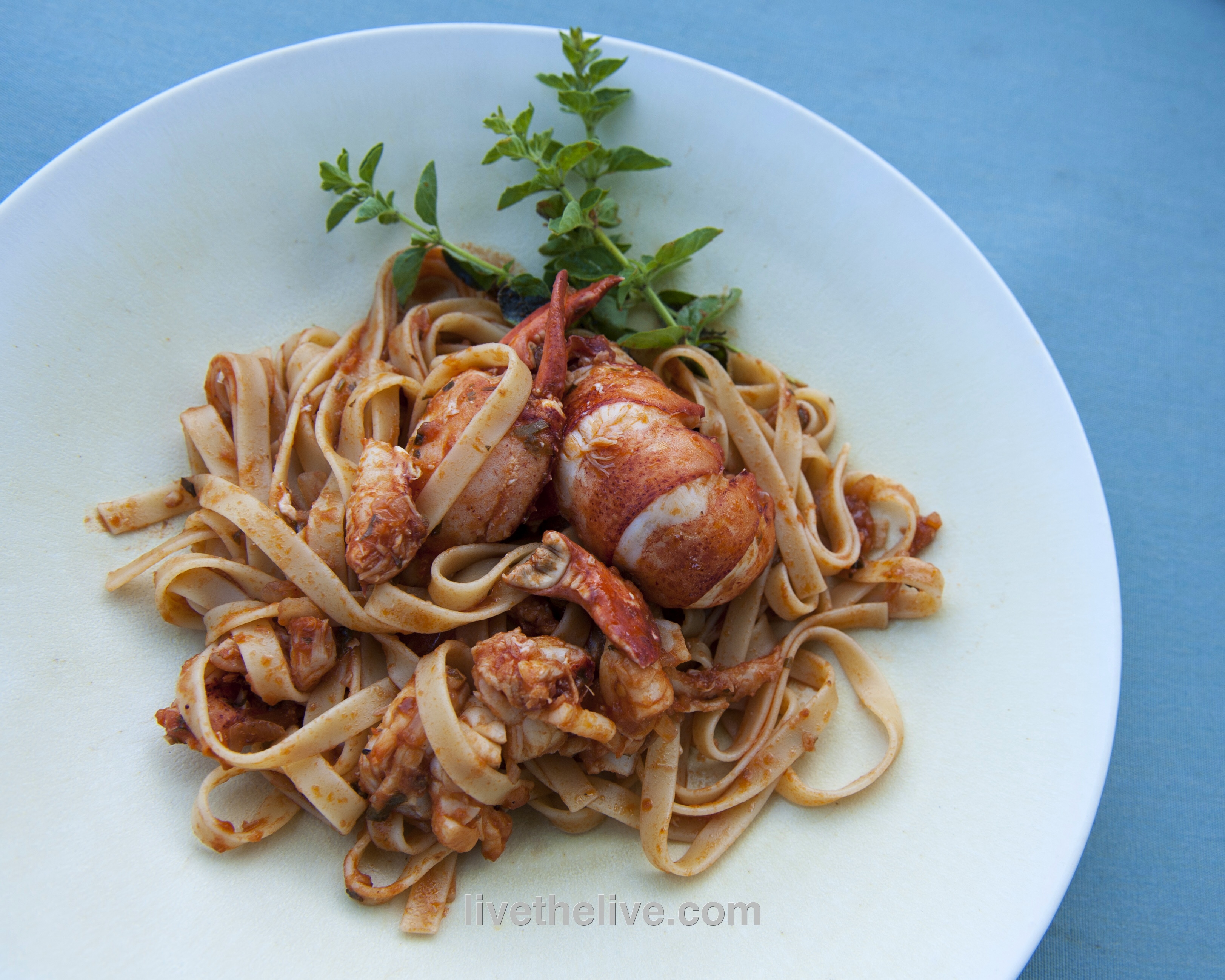
One of the most incredible dishes we’ve had was on the beautiful island of Santorini, Greece: pasta with lobster sauce. It’s one of those dishes that takes time to prepare, because the lobster sauce they make is a labor of love…time consuming, but so spectacular.


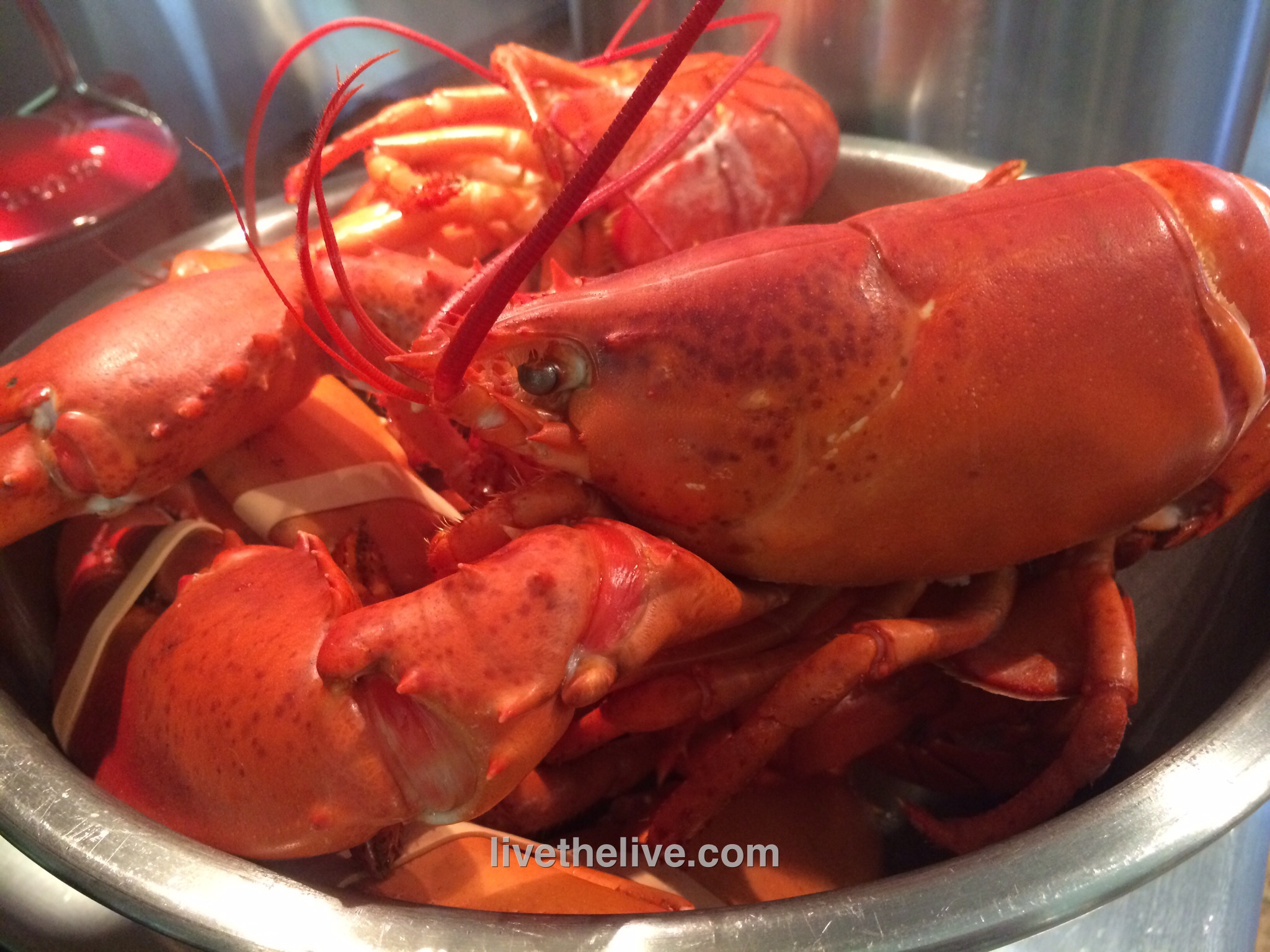
Cooked lobster LTL


To try to copy that lobster sauce we had in Santorini, I start with a kick-ass lobster stock. It’s simple but flavorful:


clean, empty claws, tails and bodies from two 1-1/2 lb. boiled lobsters (use the legs, too)
12 cups water
1/2 onion
3 celery stalks
1 carrot

Place all the ingredients in a large pot and set it on high heat. Crush the lobster shells (I use a potato masher!) Cook until the stock is reduced by half.

Strain the stock, discarding the lobster shells and veggies. Bring the stock back to the heat and reduce it until all you have left is 1 cup of intense stock.


Pasta with lobster sauce

Now that you have the stock, you can make the sauce!


1/2 onion, finely chopped
1 garlic clove, finely chopped
pinch of Italian red pepper flakes
1 teaspoon parsley
extra virgin olive oil
1/2 cup lobster stock
1/4 cup San Marzano tomato sauce (see below)
splash of white wine (I use an un-oaked Chardonnay)
salt and pepper
1 tablespoon unsalted butter (optional)
1/2 lb. cooked pasta (firmer than al dente)

Add some olive oil to a pan and sauté the onions until translucent. Season with salt and pepper. Add the garlic and cook for 10 seconds. Add the red pepper flakes and parsley.

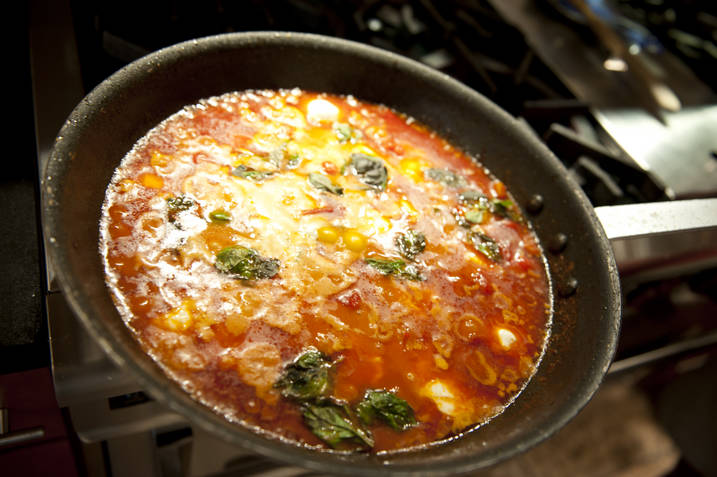
Add 1/4 cup of the lobster stock and let it cook, reducing it by half. Add the other 1/4 cup of lobster stock and then the tomato sauce. Let it cook for a couple of minutes and add the white wine. Cook for a few minutes more, to cook out the alcohol.

Cook the pasta and drain it even before it reaches the al dente stage. Place the pasta in the pan with the sauce, heating and coating it thoroughly. A touch of butter can’t hurt anything!
Serve immediately, with or without the lobster meat. (Since the lobster was already cooked, you just need to add it to the pan for a few minutes to warm it through.)


For the San Marzano tomato sauce: I pour a can of San Marzano tomatoes  into a food processor or blender and blend. Pour it into a pan and reduce it over medium heat by half, until the sauce has thickened. Then use it in this recipe.

Fast food is a relative term.
What we Americans think of as fast food is not what, say, the Italians think of as fast food. We think of drive-thru burger joints serving greasy, salty and fatty food. The Italians think fast food is something that simply doesn’t take all day to cook! If you can use the freshest of ingredients, and serve it in the time it takes to sip a half a bottle of wine while chatting with a friend, it’s fast food Italian-style.
Years ago, we visited the island of Capri in Italy, and one of the dishes we enjoyed was an incredibly simple pasta and tomato dish called spaghetti sciue-sciue (pronounced “shwee-shwee.”) We were told that sciue-sciue was loosely translated as “quick-quick,” although a check on the web said that it also translates to “improvisation” in Italian. And though quick it was (that is, by Italian standards), it was one of the most memorable dishes we had on our trip. It could be because of our surroundings: the famous Faraglioni rocks all around us at a small seaside restaurant called Da Luigi ai Faraglioni. We took the small shuttle boat from Marina Piccola, which made its way through those stacks jutting out of the Bay of Naples, and landed at this historic restaurant, built in 1936. People come here not only to dine, but to spend the day sunbathing and swimming.
So the reason Da Luigi’s sciue-sciue was so amazing certainly was, in part, the location…but it was also very much due to the use of the freshest and best possible ingredients…and they didn’t mess around with them too much.
The best time to make this dish is when tomatoes are at their absolute best in your area. But if you can get your hands on some beautiful cherry tomatoes off-season (they seem to be tastier than larger tomatoes in the winter months), it’s worth having a go at it as well.

 1 small can (6 oz.) tomato paste
½ cup extra virgin olive oil
2 hot Italian dried peppers, finely chopped
¼ cup white wine
8 to 10 chopped plum or cherry tomatoes (as ripe as possible)
12 to 15 torn fresh basil leaves
½ stick (4 oz.) unsalted butter
1 ball of fresh mozzarella (about 12 oz.)
1 lb. of spaghetti, or better yet, bucatini
Sea salt
Fleur de Sel (optional)
Heat a large pot of salted water to a boil and toss the pasta in.
“Heavily caramelize”–but don’t burn–the tomato paste in a large pan with the olive oil, salt, and the dried peppers. Add the white wine to deglaze, and simmer until it’s reduced by half.
Add the chopped tomatoes and simmer on medium heat until they start to break apart. Hand tear the mozzarella ball into shreds and add it to the sauce, stirring gently. Add the basil.
Add the butter, gently stirring until it melts.
When the pasta is slightly firmer than al dente, drain it and add it to the pan with the sauce, stirring gently.
Serve this dish immediately, finishing with a little Fleur de Sel.

Finito!

Almost 95% of all shrimp sold in the United States comes from farmed shrimp in countries like China, Thailand, Vietnam and India…as well as Latin America. The stuff you buy at the supermarket comes frozen (since shrimp is highly perishable) and then is thawed out and placed on ice to make the display look nice. But the shrimp you’re getting is not “fresh” (unless you’re lucky enough to get some wild caught local shrimp) and it’s from countries where the methods of farming are questionable at best.
Shrimp farming in Asia and Latin America is destroying mangrove forests and because of that, coastal villages as well. Disease is commonplace in shrimp farms, so they’re pumped full of antibiotics and pesticides. Slavery is common in the Asian shrimp business, and there even have been accounts of shrimp injected with jelly to plump them up for buyers. Just. Don’t. Buy. Them.
Imported wild shrimp are also a problem because of bycatch. For every pound of wild shrimp caught, several pounds of other animals such as turtles die needlessly in the trawler nets.
Wild American shrimp is the best way to go for your health and the environment. American shrimp fishermen are required by law to reduce bycatch. For example, they’re required to use Turtle Exclusion Devices to stop turtles from being caught in their nets.
I stopped eating tiger shrimp and other farmed shrimp from foreign countries a long time ago, because wild-caught American shrimp from the Gulf of Mexico, the Carolinas, or the Florida Keys is readily available at supermarkets and membership stores where I live…and the price is right.
And on top of everything else, wild caught American shrimp tastes better. And why shouldn’t it? The shrimp are eating their natural foods found in the wild…not some pellets thrown at them that contaminate the water around them, not to mention the shrimp themselves.
Before I could find shrimp locally, I used to order it in 5 lb. frozen boxes online, and even with shipping, the price was affordable. My favorite website for wild caught American gulf shrimp was www.cajungrocer.com. I’ve also ordered my favorite Cajun foods, like Turduckens and alligator sausage, from these people for many years.
The basics of this recipe come from my friend, Lee, a chemist who also enjoys creating in the kitchen. What I found interesting about his recipe was the touch of sugar that doesn’t really add sweetness but rather helps create the light, tasty caramelized crust that forms on the shrimp when you sear it. I tweaked a few things in this recipe, but the essence of it remains the same.

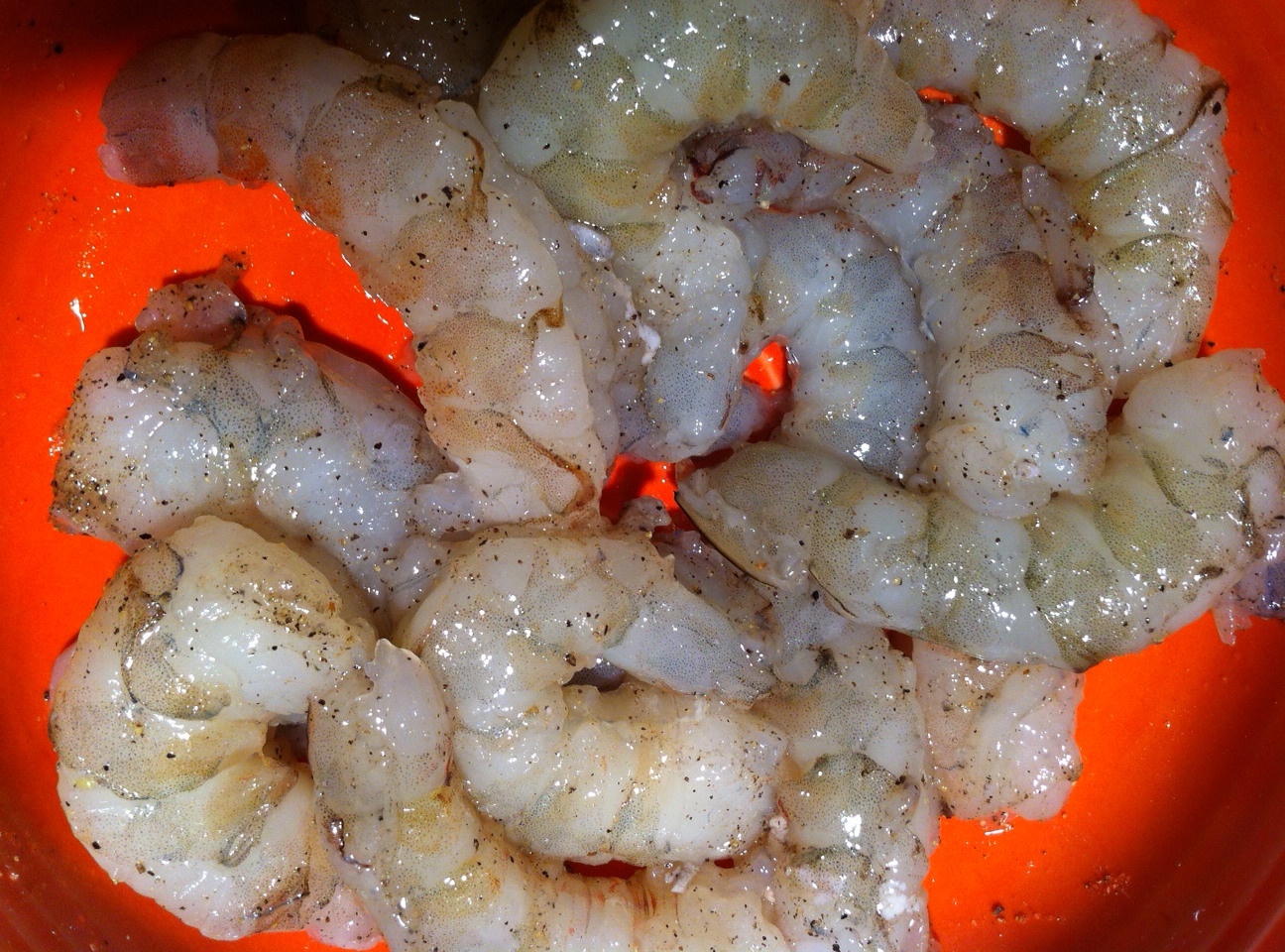
Seasoned shrtimp.

1 pound large peeled and deveined wild-caught American shrimp
Salt
Freshly ground pepper
Sugar
4 tablespoons softened butter
1 clove of garlic, squeezed through a press
1 tablespoon freshly squeezed lemon juice
2 tablespoons chopped parsley
1 teaspoon oregano
Extra Virgin olive oil
Toss the shrimp, 1/4 teaspoon salt, 1/4 teaspoon pepper, and 1/4 teaspoon sugar in a bowl.
In a separate bowl, mash the butter with a fork, folding in the garlic. Add the lemon juice, parsley, oregano, and 1/4 teaspoon salt.
Heat a tablespoon of olive oil in a large skillet over high heat. Add half the shrimp in a single layer to the pan and cook at high heat until they’re caramelized on one side, about 1 minute. Flip the shrimp over and cook them for another 30 seconds. Don’t overcook them!
Remove the cooked shrimp to a covered bowl and similarly sear the other half of the shrimp, then return the first half of the shrimp back to the skillet. Turn down the heat to medium and add the butter/garlic/lemon/parsley/oregano/salt mixture, occasionally tossing the shrimp around in the pan to evenly coat them with the glaze.
If you’re serving the shrimp over pasta, increase the amount of butter and olive oil to just lightly coat the pasta. Toss the cooked pasta into the pan of shrimp to combine.
I like to season lightly at the end with a tiny pinch of Fleur de Sel. Serve immediately.

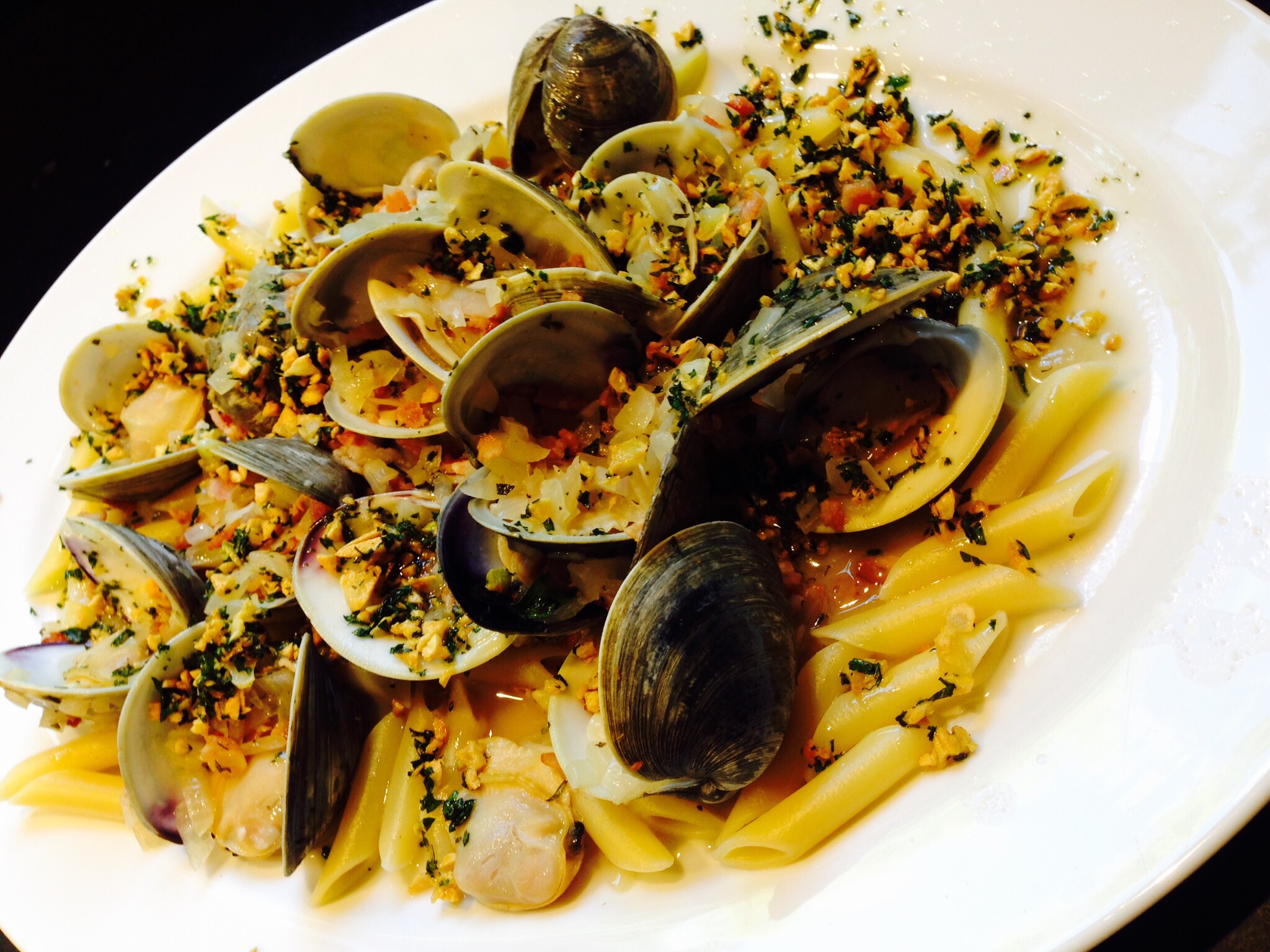
What can I say? I was craving both dishes, so I combined them. I figured: if I love each one of them, I’d be crazy over both together!


image


Pasta
1/4 lb. bacon, finely chopped
1 onion, finely chopped
18 small clams, washed and purged*
1 teaspoon fresh oregano, finely chopped
1/4 cup white wine
Good quality olive oil
6 large garlic cloves, finely chopped
1/4 cup fresh parsley, finely chopped


In a large pot, salt some water and bring it to a boil. Cook the pasta until al dente.

In the bottom of another large pot on medium-high heat, fry the bacon until it’s crisp. Add the onions and sauté them until they’re translucent. Add the clams, oregano and wine, and cover the pot with a lid. Reduce the heat to medium. The clams are cooked when they open. Discard any unopened clams.

In a frying pan, heat the olive oil to medium. Add the chopped garlic and fry it until just crispy. Toss in the parsley and stir it to combine.

Place the pasta in a bowl or plate. Pour the clams and juice over the pasta. Pour the fried garlic and oil all over the clams.


*Purging clams: Clams can be pretty sandy and gritty, so it’s important not only to scrub the outside of the shell, but to purge them as well. Clams should be stored in a bowl in the fridge with a wet dish towel over them, never in water. Once you’re ready to use them, fill a bowl with water and add salt (think salty like ocean water) and a tablespoon of corn meal. Mix this around, then add the clams and let them sit in this solution in the fridge for a couple of hours. The clams will purge (clean themselves) out. Discard the liquid and rinse the clams before cooking.

One of the most incredible dishes I’ve had on the beautiful island of Santorini, Greece, is lobster with pasta. It’s one of those dishes that takes time to prepare, because the lobster sauce they make is a labor of love…time consuming, but so spectacular.


Cooked lobster LTL


To try to copy that lobster sauce we had in Santorini, I start with a kick-ass lobster stock. It’s simple but flavorful:


clean, empty claws, tails and bodies from two 1-1/2 lb. lobsters (use the legs, too)
12 cups water
1/2 onion
3 celery stalks
1 carrot

Place all the ingredients in a large pot and set it on high heat. Crush the lobster shells (I use a potato masher!) Cook until the stock is reduced by half.

Strain the stock, discarding the lobster shells and veggies. Bring the stock back to the heat and reduce it until all you have left is 1 cup of intense stock.


Pasta with lobster sauce

Now that you have the stock, you can make the sauce!


1/2 onion, finely chopped
1 garlic clove, finely chopped
pinch of Italian red pepper flakes
1 teaspoon parsley
extra virgin olive oil
1/2 cup lobster stock
1/4 cup San Marzano tomato sauce (see below)
splash of white wine (I use an un-oaked Chardonnay)
salt and pepper
1/2 lb. cooked pasta (firmer than al dente)

Add some olive oil to a pan and sauté the onions until translucent. Season with salt and pepper. Add the garlic and cook for 10 seconds. Add the red pepper flakes and parsley.

Add 1/4 cup of the lobster stock and let it cook, reducing it by half. Add the other 1/4 cup of lobster stock and then the tomato sauce. Let it cook for a couple of minutes and add the white wine. Cook for a few minutes more, to cook out the alcohol.

Cook the pasta and drain it even before it reaches the al dente stage. Place the pasta in the pan with the sauce, heating and coating it thoroughly. Serve immediately, with or without the lobster meat.


For the San Marzano tomato sauce: I pour a can of San Marzano tomatoes  into a food processor or blender and blend until I get sauce. Pour it into a pan and reduce it over medium heat by half, until the sauce has thickened. Then use it in this recipe.

I recently hosted about 15 hungry teenage friends of my daughter’s, all of whom belong to the high school theater group. They needed a place to hang out, rehearse, laugh, and, of course, eat! My baked ziti recipe is always a crowd pleaser. Ultimately, I used rigatoni pasta, because that’s what I had in the cupboard, but use whatever shape you like.

I also made it meat-free, keeping it safe for all to eat, but I usually make a meat sauce when cooking for myself.

As a teenager growing up on Long Island, I worked long hours at a local Italian restaurant called Pizza City East in Plainview. (The original Pizza City was in Ozone Park, Queens.) Though the pay sucked, I made some important friendships that have lasted to this day. I also learned many Italian cooking basics: how to open clams for red and white clam sauce, the secrets of great pizza dough, the art of a perfect espresso, and how to make massive quantities of baked ziti.

When I got older and I shared an apartment with my buddy, Don, we would regularly invite a large crowd of people over for a party, and a huge tray of baked ziti was an inexpensive and hugely popular way to feed a crowd that was doing some serious drinking.

The basic ingredients of baked ziti are the same as lasagna, the main difference being the wetness factor. If you make lasagna too wet, the thing will fall apart when you try to slice it. But baked ziti is meant to be sloppy, and it actually shines in its incredible gooiness!

My baked ziti consists of a meat sauce and 4 cheeses (ricotta, mozzarella, provolone, and Parmigiano Reggiano) using pasta that is boiled much firmer than al dente. Technically, I like to use penne, not ziti. It’s firmer, and really works well with this recipe. And there are plenty of great pasta choices out there for gluten-free diets. Our favorite brand of GF pasta is Garofalo.

I used to add a béchamel sauce to this recipe, but I’ve found that plain milk does the job just as well. Béchamel is better used in lasagna, where you want a bit of a thickening agent to keep it firm.
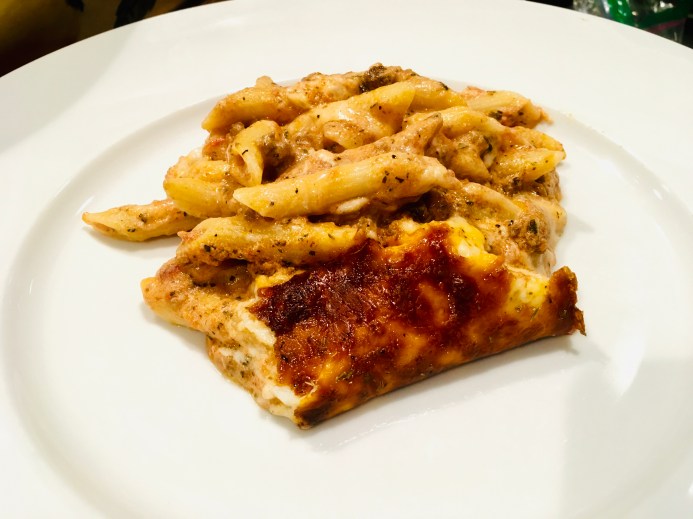
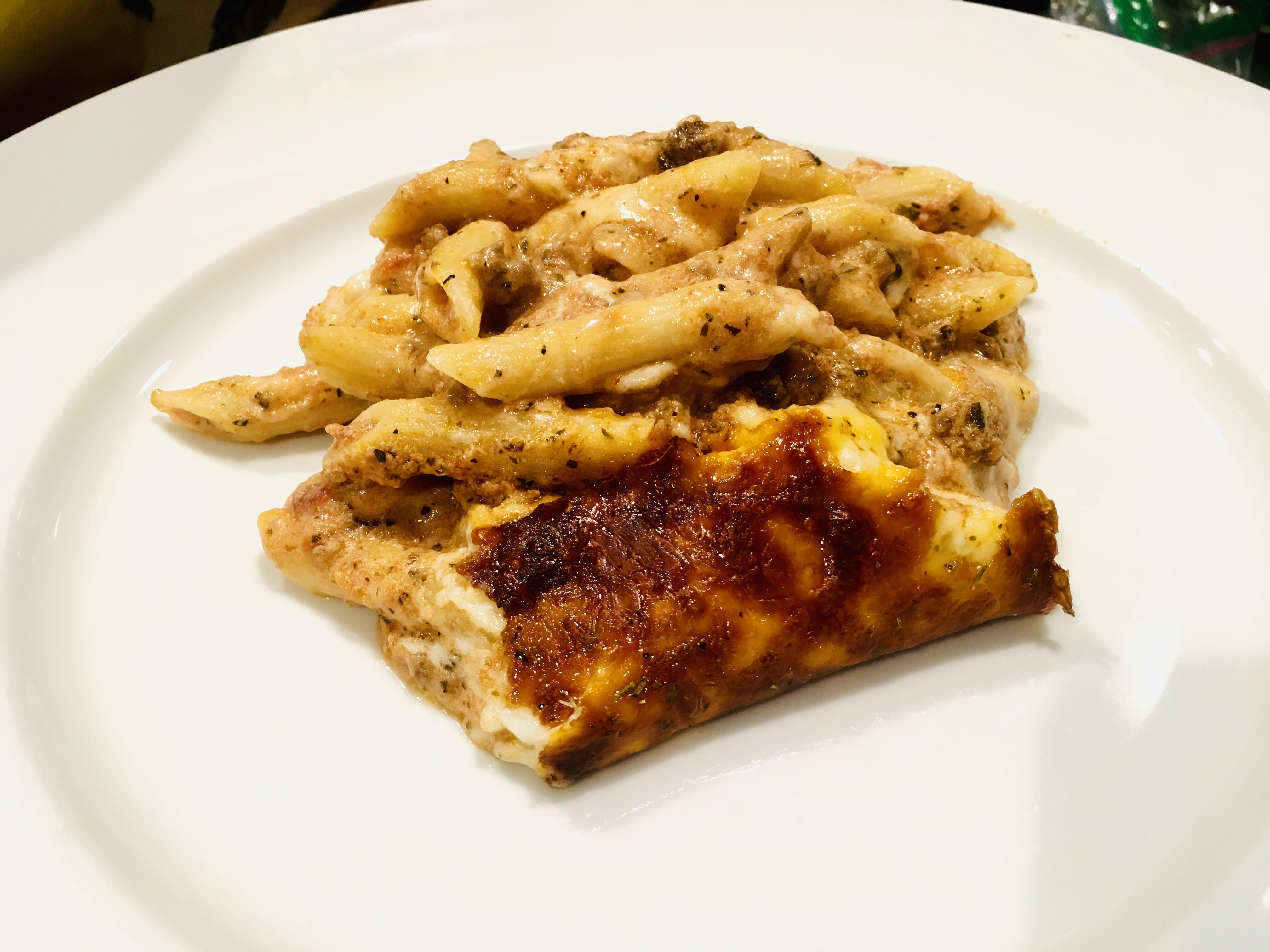
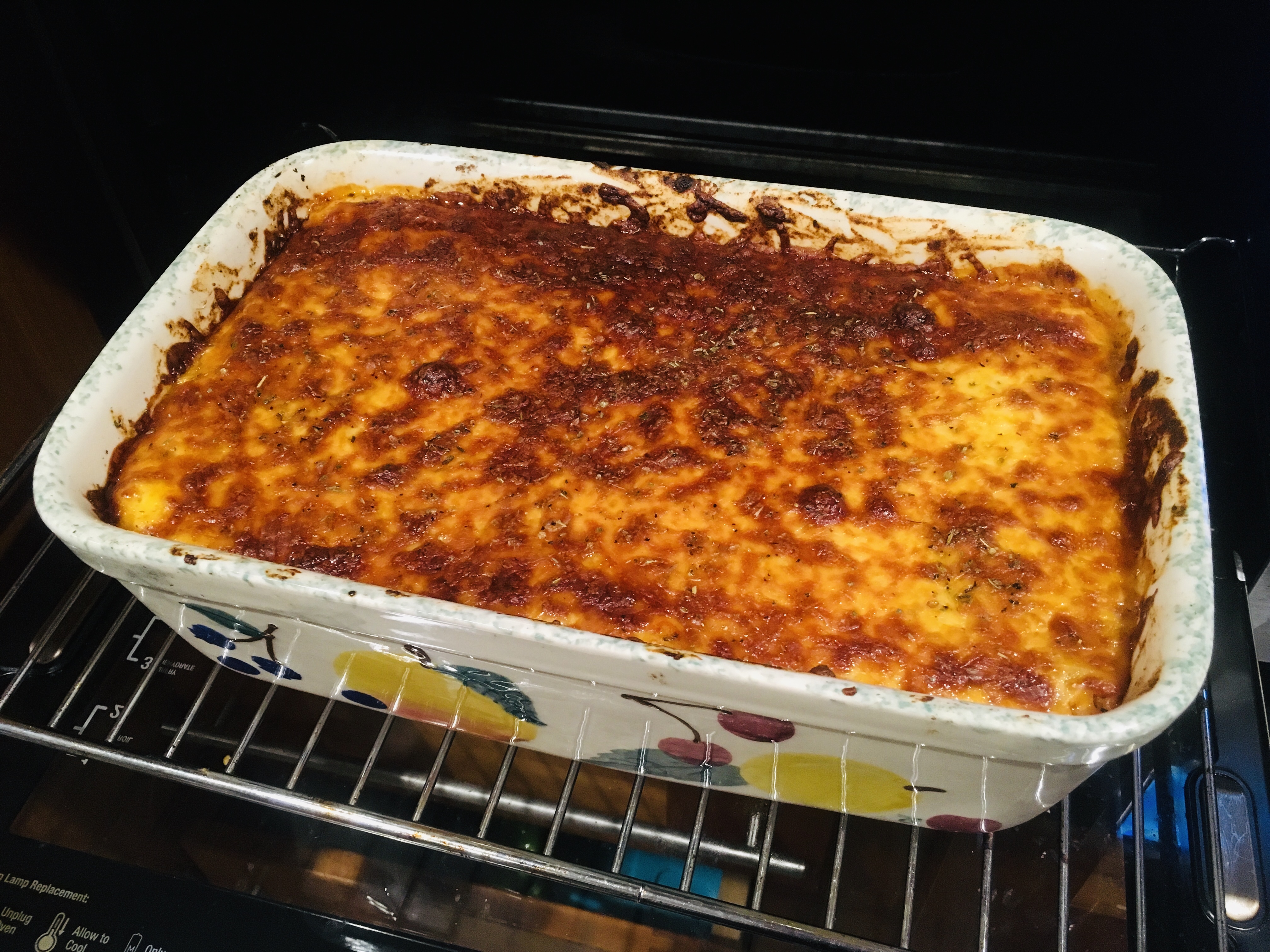
Gooey and delicious!

Meat Sauce…
1 small onion, finely chopped
1 small carrot, finely chopped
1 lb. grass-fed ground beef or pastured pork, or a combination of both
1 tablespoon dried parsley
2 teaspoons dried oregano
1 teaspoon dried basil
1 teaspoon salt
1 teaspoon granulated garlic
1/2 teaspoon black pepper
1 28-oz. can whole tomatoes
extra virgin olive oil for sautéing

Heat a tablespoon or 2 of olive oil in a large pan and sauté the onions until translucent. I finely chop the carrots by peeling them all the way down until there’s nothing but a pile of peeled pieces, then chopping them up so small, they almost melt into the sauce. Add the carrots and cook for 2 minutes. Add the beef (or pork) and cook the meat until it browns. Add the parsley, oregano, basil, salt, garlic and pepper and mix well.

Empty the can of tomatoes into a blender and blend it until smooth. Add this to the pan and mix well.

Cook the meat sauce for about 10 minutes, then remove it from the heat and set it aside.

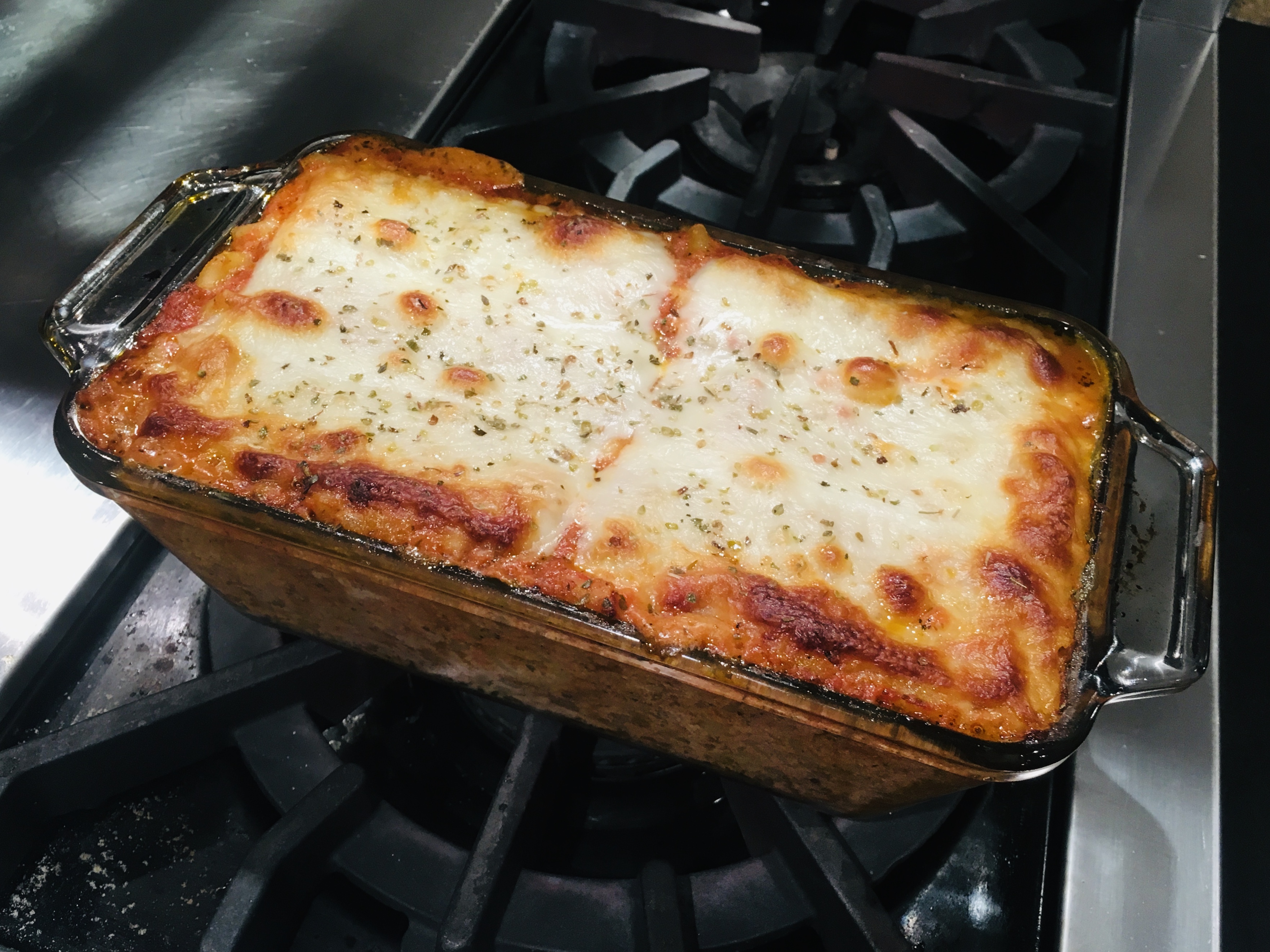
Beautiful baked ziti!

4 slices provolone cheese (about 4 oz.), chopped
ricotta cheese (about 8 oz.)
mozzarella cheese, shredded (about 8 oz.)
2 tablespoons freshly grated Parmigiano Reggiano
1 cup whole milk
12 oz. small pasta, like ziti or penne

Pre-heat the oven to 350 degrees.

In a bowl, combine the provolone, ricotta, mozzarella (save a little bit to sprinkle on top at the end), Parmigiano Reggiano, and milk. Add this mixture to the meat sauce and mix well.

For baked ziti, I use a deeper pan than I would for lasagna, about 4″ deep.

Boil the pasta in a pot of salty boiling water until very firm…firmer than al dente. Drain the pasta and pour it into the pan. Add the cheese and sauce mix and mix it all really well.

Smooth the top of the ziti mix flat with the back of a large spoon, then sprinkle the remaining mozzarella evenly over the top. Sprinkle a little oregano on top, and place the pan in the oven to bake for 30 minutes, or until the mozzarella on top is a beautiful golden brown.

The best mac and cheese ever: baked ziti!

My first foray into serious cooking started when I bought “The Classic Italian Cookbook,” written by the Marcella Hazan.

Like many great recipes, Fettuccine Alfredo is not complicated…but few restaurants that offer it get it right. Most of the Alfredo sauces I’ve had were watery, floury, and salty and had nothing in common with the real thing.
To this day, if I want a great Alfredo, I make it like Marcella.


alfredo2


1 cup heavy cream
3 tablespoons butter
Fleur de Sel or sea salt
1 lb. Fettuccine, fresh or dried
2/3 cup freshly grated Parmesan cheese
Freshly ground pepper
A very tiny grating of nutmeg

Put 2/3 cup of the cream and all the butter in a large saucepan that will later accommodate all the pasta. Simmer it over medium heat for less than a minute, until the butter and cream have thickened. Turn off the heat.

Drop the fettuccine in a big pot of boiling salted water. If the pasta is fresh, it will take just seconds. If it’s dry, it will take a few minutes. Cook the fettuccine firmer than usual, because it will finish cooking in the pan with the butter and cream. Drain the pasta immediately and thoroughly when it’s done and transfer to the pan containing the butter and cream.

Turn the heat under the pan on low, and toss the fettuccine, coating with the sauce. Add the rest of the cream, all the grated cheese, 1/2 teaspoon salt, the pepper and the nutmeg. Toss briefly until the sauce has thickened and the fettuccine are well coated. Taste and correct for salt.

Serve immediately!