Archive for the ‘pork’ Category

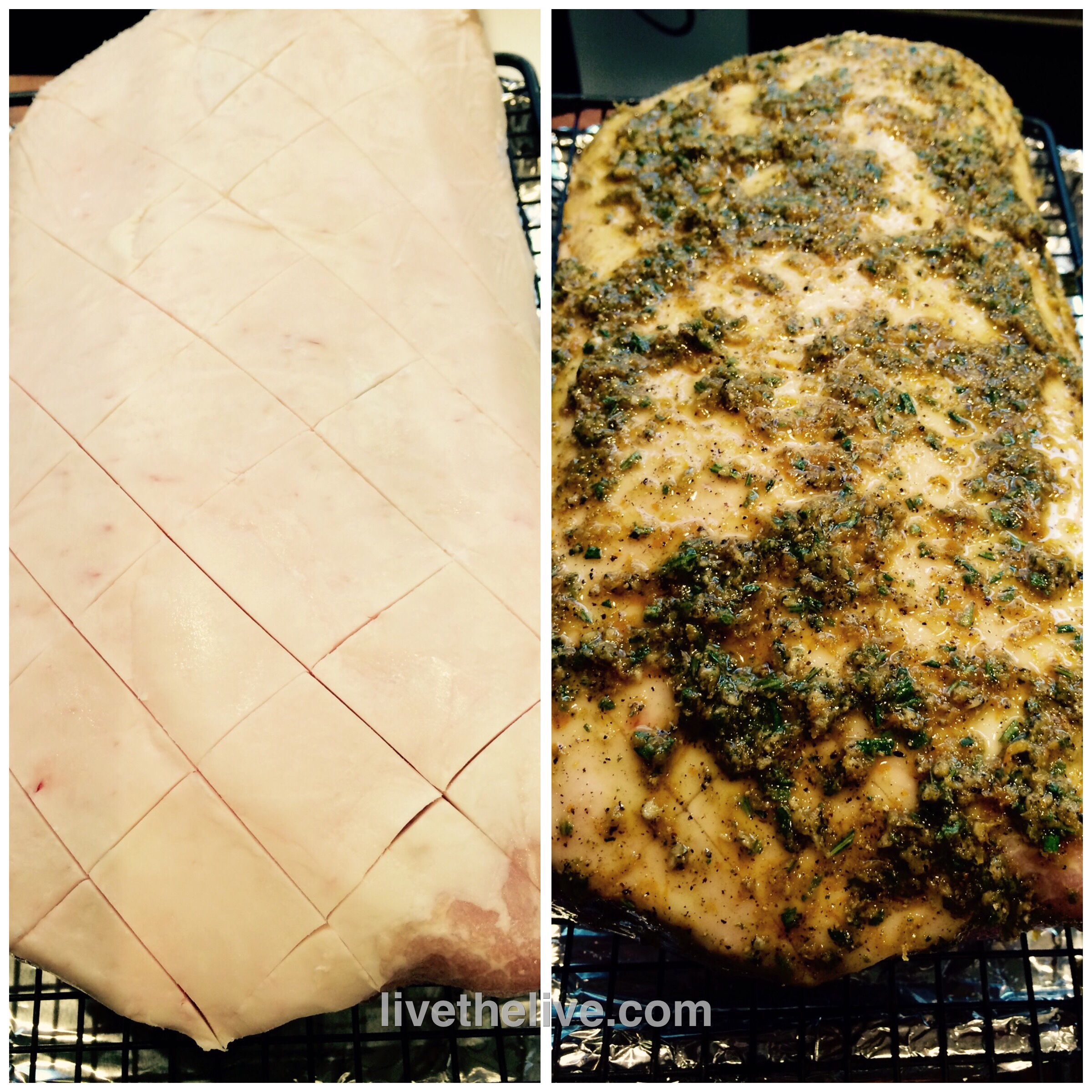
The “paste” used in this dish is really more like a citrusy pesto that you smear all over the meat before cooking, preferably the day before. The citrus flavors work really well with the pork, and the initial high-heat cooking really gets the fat crispy and delicious.
image

Ingredients:

1 pork loin, about 8 lbs. (I use Berkshire pork)


zest of 2 oranges

zest of 1 lemon

1 tablespoon fresh rosemary, chopped

1 tablespoon fresh sage, chopped

1 tablespoon Kosher salt

2 teaspoons black pepper

3 cloves garlic, through a press

1/4 cup olive oil


In a food processor bowl, combine the orange and lemon zest, the rosemary, sage, salt and pepper, and garlic. Pulse the processor just to mix, then turn it on and add the olive oil slowly, in a stream, until you get what resembles an oily pesto.

Score the fatty side of the pork loin with a knife in a diamond pattern. Rub the paste on all sides of the pork, but especially into the cracks of the fatty side.

Lay the loin down on a rack, raised off a sheet pan, fatty side up. Place it in the fridge, unwrapped, overnight.

The next day, about an hour before cooking, remove the loin from the fridge and let it come back to room temperature.

Pre-heat the oven to 450 degrees.

Bake the pork loin at 450 for 20 minutes, then cut the heat to 350 and cook until the pork reaches a temperature of 140 degrees (light pink). Let it rest for 15 minutes before serving.

image

There are few carbs in this preparation, because I use just the zest of the citrus and not the juice.
GMO’s, SIMPLIFIED

Posted: February 2, 2015 in beef, Carnivore!, chicken, Food, pork
Tags: , , , , ,

I think many of those that don’t think GMO’s are a bad deal probably don’t really understand the situation.

My friends at FireFly Farms in Stonington, Connecticut (www.fireflyfarmsllc.com), understand GMO’s better than most. They raise heritage breeds of pork, pastured chickens, and rare cattle. They are family owned and certified humane. You should follow them on Facebook.

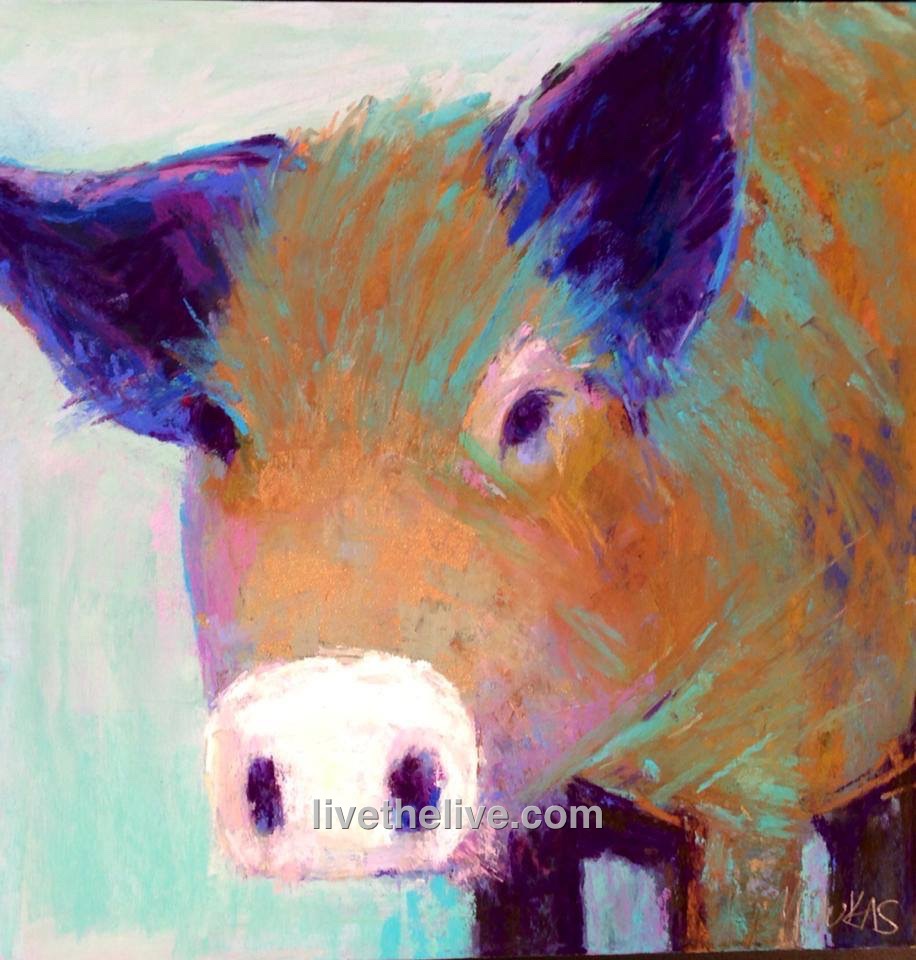
Max Mule, by Kelly Milukas

Max Mule, by Kelly Milukas

This was a recent post on FireFly owner Van Brown’s Facebook page. I’m reprinting with his permission. It’s simple and to the point.

Hi everyone.

I have been thinking about the debate on GMO’s and labeling.

A lot.

Let’s imagine a world where there are two types of pudding cups.

The Blue Pudding Cup definitely will not hurt your kid.

The corporation that makes The Red Pudding Cup states that all the negative tests about The Red Pudding Cup are wrong and they have made lots of tests themselves showing that The Red Pudding cup is okay.

You know The Blue Pudding Cup is safe. There are tests both ways, remembering that many of the tests were funded by The Red Pudding Cup Corporation, so the best you can know is The Red Pudding Cup pudding will probably not hurt your kid. At least according to The Red Pudding Cup Corporation.

You know one pudding cup is okay for your children. You have to have a question about the other pudding cup.

Which pudding cup would you buy to feed to your child?

One last thought?

Would it be okay for The Red Pudding cup to put their pudding into a Blue Pudding Cup so no one would know which type of pudding they are feeding their children… your children?
Van

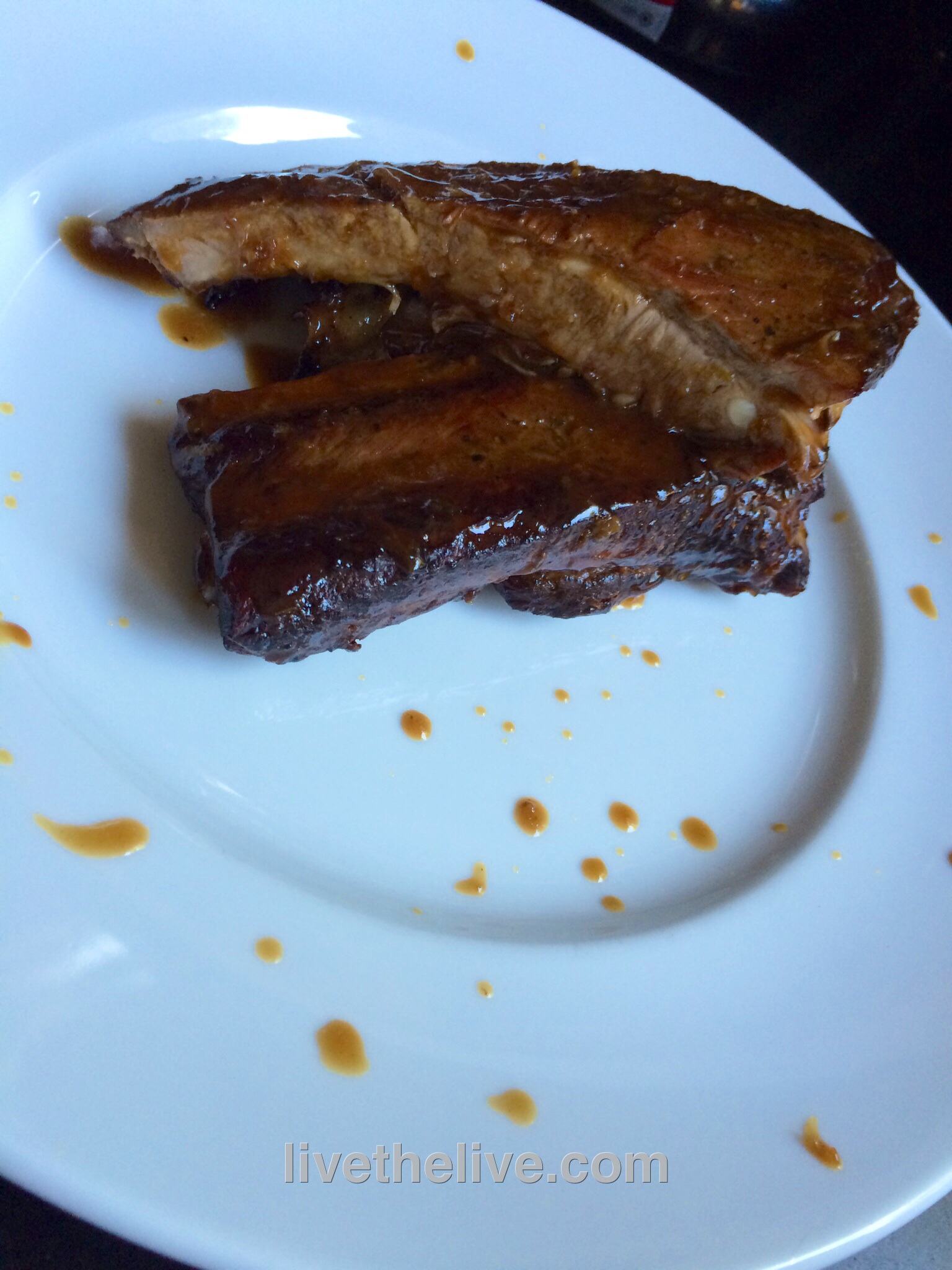
I was going to post my “deflated meatballs” recipe, but I decided to go with a classic for the big game! No need to freeze my butt off outdoors for these amazing ribs. I can stay in the kitchen. As the glaze cooks down, it gets sticky, gooey and delicious.
 image
For the marinade:
 ¾ cup soy sauce
 1/4 cup hoisin sauce
Other ingredients:
5 lbs pork ribs
Zest and juice of 1 lemon
2 whole star anise
2 cinnamon sticks (3”)
1/2 cup honey
4 cups chicken broth
Mix the soy sauce and the hoisin in a bowl, and set aside. These are the marinade ingredients.
If the ribs are large, cut them into individual pieces. If smaller, cluster 2 or 3 ribs together. Place in a large pot. Cover with water and bring to a boil. Boil for 5 minutes. Drain.
Place the ribs on a sheet pan lined with non-stick aluminum foil or with a rack and coat with the marinade. Let them sit for 10 minutes.
Pre-heat the oven to 350 degrees. Bake the ribs in sheet pan for 30 minutes.
While the ribs are baking, start the sauce in a large non-stick pan or pot: combine the lemon zest and juice, star anise, cinnamon sticks, honey and chicken broth. Bring it to a boil, then reduce it to a simmer.
When the ribs have finished baking, add them to the sauce pot and simmer (covered) for at least 15 minutes or until the rib meat is tender.
Turn the heat on high, uncover the pot and cook until the sauce is reduced to a glaze that coats the ribs. Reduce the heat as the sauce thickens to avoid the sugars in honey from burning. When the ribs are sticky and gooey, they’re ready!


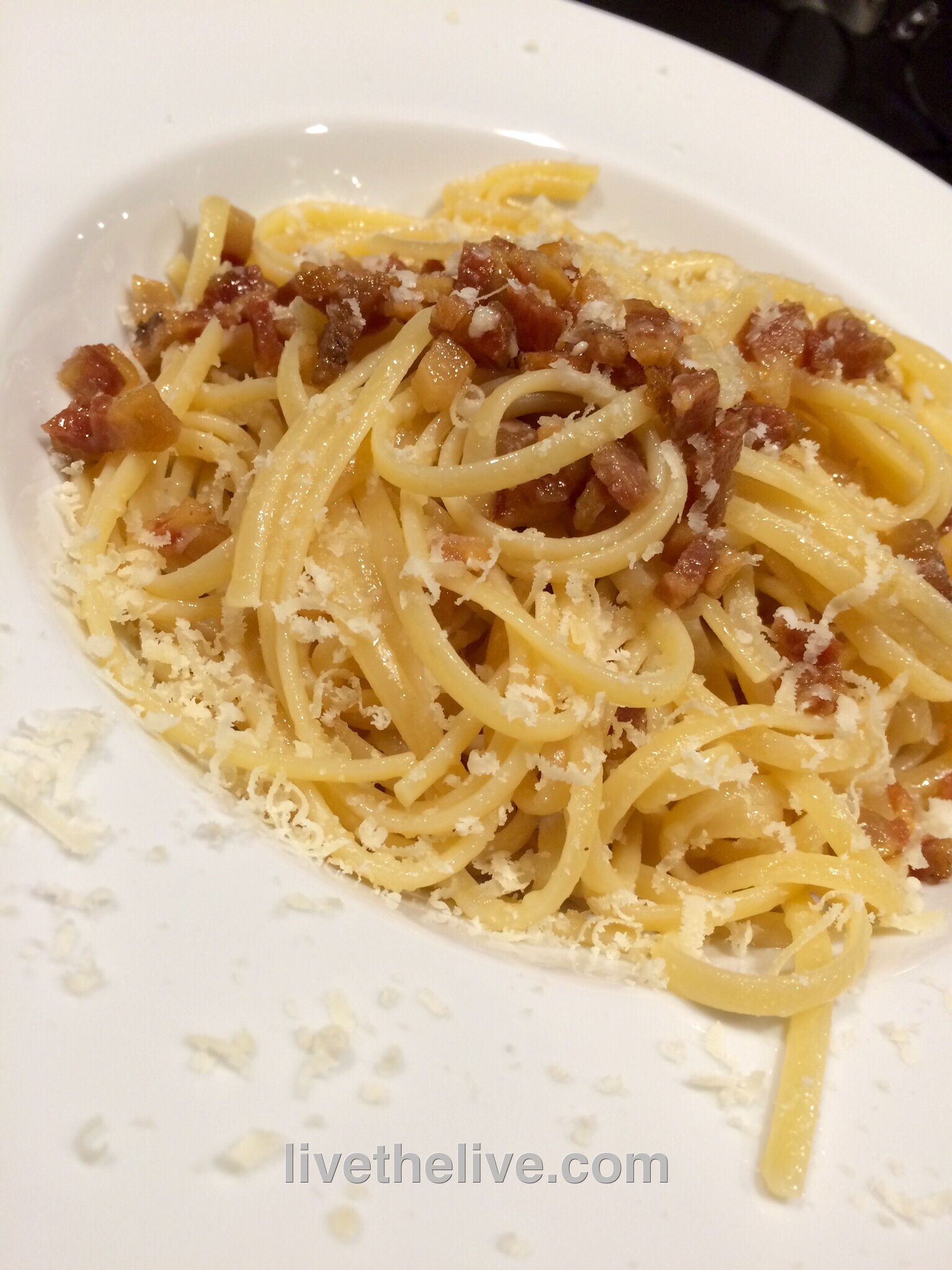
Pasta is not something I’m currently eating on my low-carb diet. But it’s a great recipe I wanted to pass on to others.

Sometimes the simplest dishes are the toughest to execute well. Spaghetti alla Carbonara is one of those dishes. All you need is pasta, olive oil, raw eggs (separated), guanciale, grated Parmigiano-Reggiano and pepper. (Real carbonara doesn’t use cream.)

You boil the pasta. Chop the guanciale (cured pork cheeks or jowls) and saute in a pan with the olive oil. Do not drain the fat. Drain the pasta and drop it into the pan with the guanciale, adding about 1/4 cup of the pasta water. Shake it around for a minute and remove from the heat. Add some of the cheese and the egg whites, season with pepper, and mix the pasta well. Separate into bowls, making a nest with the pasta. Add an egg yolk to each, sprinkling more cheese on top. What could go wrong, right?

There’s a lot to be said for finesse!

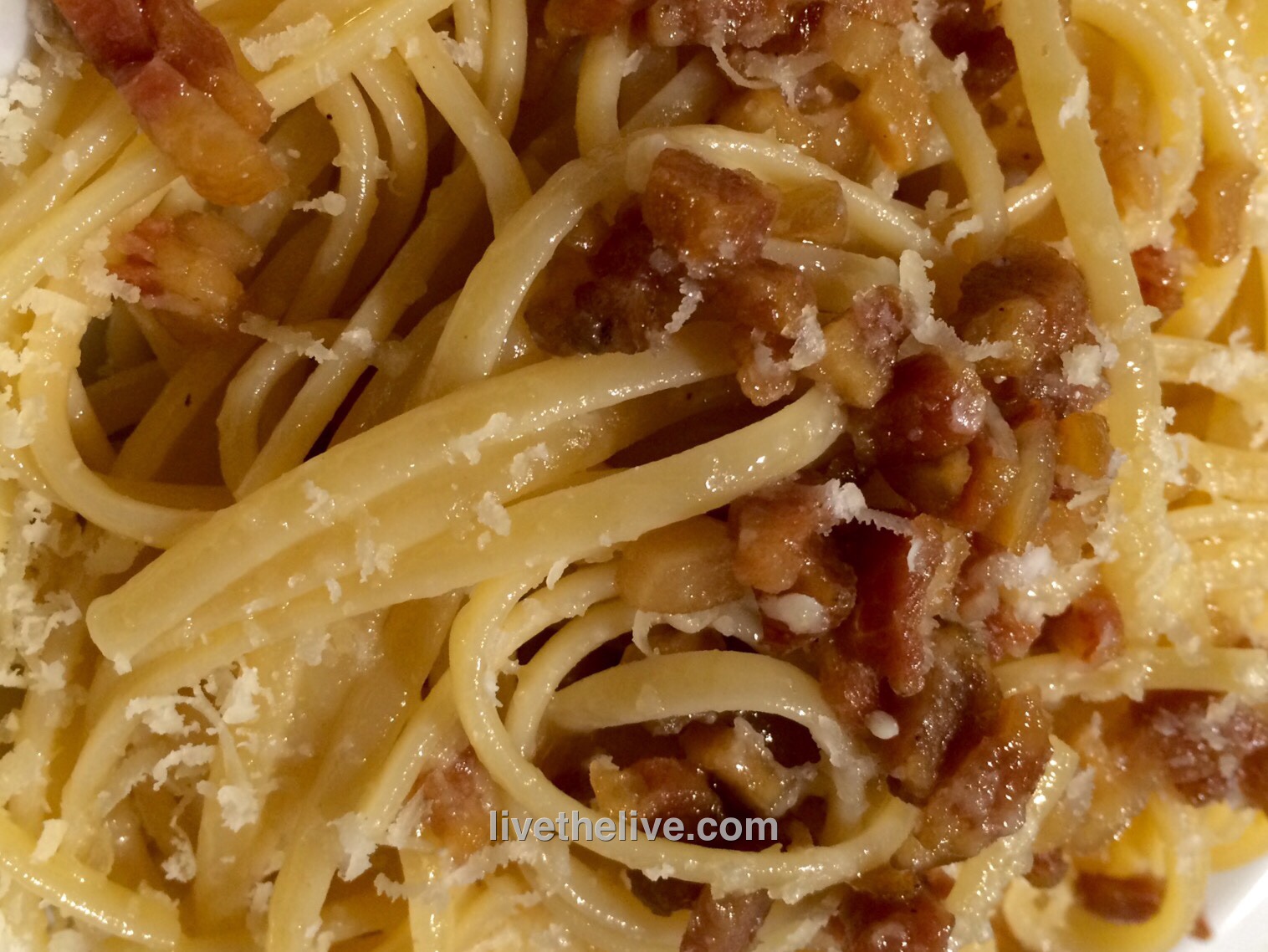
I make my own guanciale. I buy Berkshire pork jowls and cure them. Then they go through a drying phase for a few weeks before I wrap and freeze them in chunks. Whenever a dish calls for guanciale (my daughter loves it on pizza), I simply unwrap some, let it thaw, then chop it up and saute it. The fat in the pork jowls is very different from other parts of the pig, and there’s no replacing that flavor. When making Spaghetti all Carbonara, some cooks replace the guanciale with pancetta or bacon, but that’s not for me.

It’s also important to note that this dish relies a lot on fat, so good fat is really important. Berkshire pork fat has good fat. Organic butter has good fat. And the cheese? Parmigiano-Reggiano isn’t called “The King of Cheeses” for no reason!

I decided to make a Not-Quite-Carbonara dish. I say “not quite” because I left out the eggs, which my daughter doesn’t like. It still came out pretty damn good…

image


1 lb. pasta (we like bucatini over spaghetti)

1 lb. Berkshire pork guanciale, chopped into small (1/4″) cubes

olive oil

2 tablespoons unsalted organic butter

1/2 cup freshly grated Parmigiano-Reggiano

black pepper


Boil the pasta to the just-before-al dente stage.

In a large saucepan, heat the guanciale and olive oil until the fat has rendered. Do not drain the fat. Turn the heat off, add the butter and let it melt.

Drain the pasta and drop it into the pan with the guanciale, stirring the pasta around to coat with the ingredients. Sprinkle in 1/4 cup of the Parmigiano-Reggiano and season with pepper, still mixing.

Distribute the pasta into individual bowls, making sure everyone gets the tasty bits of guanciale. Sprinkle some more of the Parmigiano-Reggiano on top. Serve immediately.

image


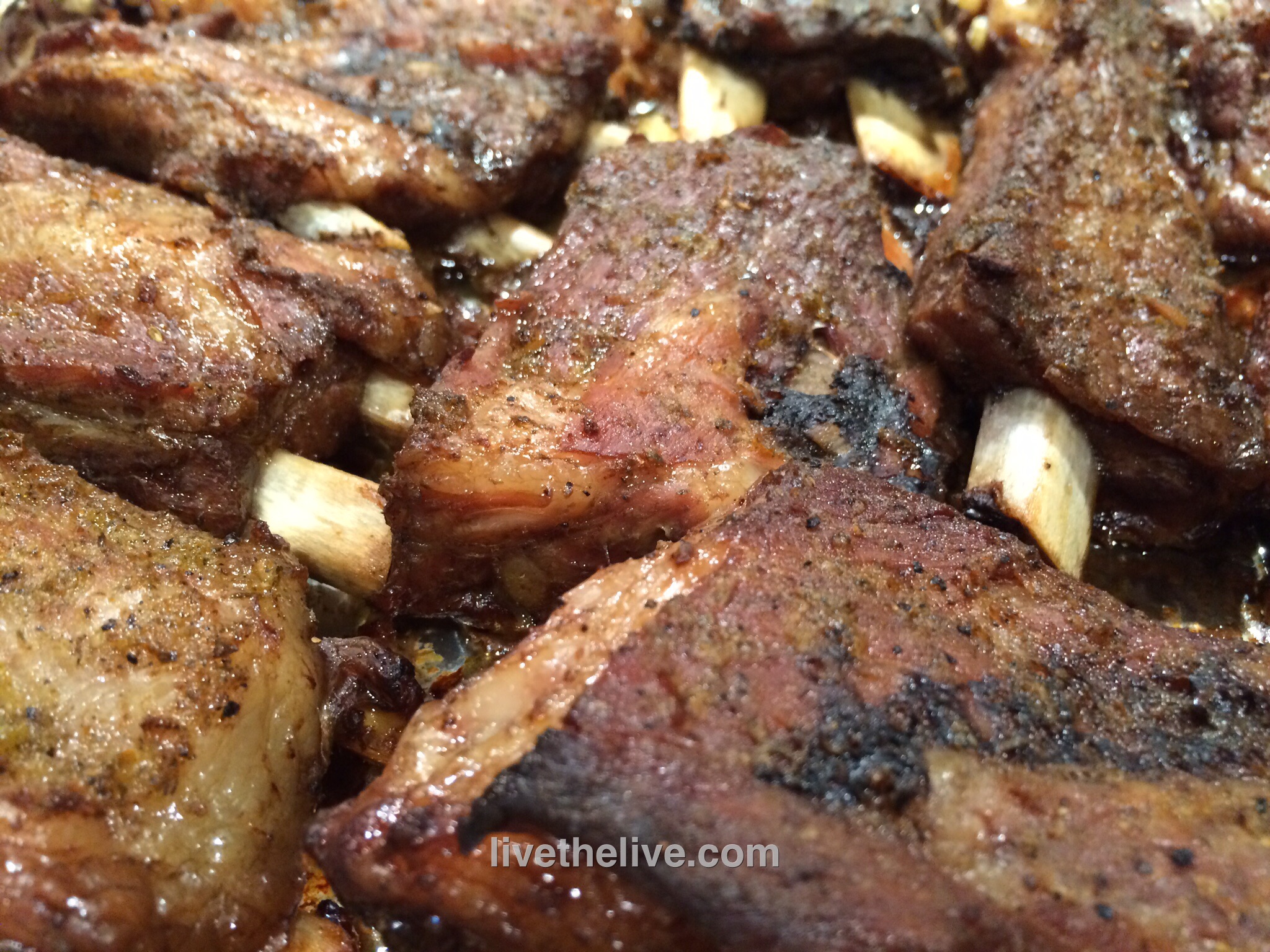
On my low-carb/no carb diet, I can enjoy pork, chicken, beef…any carnivorous delight I choose. What makes them bad for me is the rub and sauce that I put on them, which usually has a good amount of sugar. So I came up this alternate pork rib dry rub recipe.

I used the juice of two oranges in this recipe, but it’s mainly in the marinade which is later poured off. With 5 pounds of ribs, I think the carb intake is minimal. Using the orange zest adds extra citrus flavor.

image

Zest and juice of 2 oranges

1 teaspoon black pepper

3 tablespoons seasoned salt

2 tablespoons good quality (not the expensive stuff) balsamic vinegar

5 lbs. Berkshire pork ribs (I like the St Louis style)


In one bowl, combine the zest of 2 oranges, 1 teaspoon of black pepper, 3 tablespoons of seasoned salt. Combine so that the zest dries out. Set aside.

Cut the ribs into smaller pieces. I like making double-rib cuts and not single. Place all the ribs in a large Ziploc bag.

In another bowl, combine the juice of the 2 oranges (about 1 cup) and 2 tablespoons good quality balsamic vinegar. Mix the two well then pour into the Ziploc bag with the ribs to marinate for at least a couple of hours at room temperature, or in the fridge overnight.

Pre-heat the oven to 450°.

Line a sheet pan with aluminum foil with extra over the sides. Remove the marinated ribs from the bag and lay them down on the foil, trying to keep them in one layer.

Sprinkle both sides of the ribs with the orange zest, salt and pepper seasoning. Rub it into the ribs well. Fold the foil over, wrapping the ribs tightly.

Placed the sheet pan with the ribs in the oven and cook at 450° for 30 minutes. Then reduce the oven temperature to 325.

Cook for 2 hours more, then open up the foil and cook another hour.


Of course, if you’re not on a low carb diet, feel free to slather these bad boys with your favorite sauce. My grapefruit barbecue sauce would work well with these: http://wp.me/p1c1Nl-qX

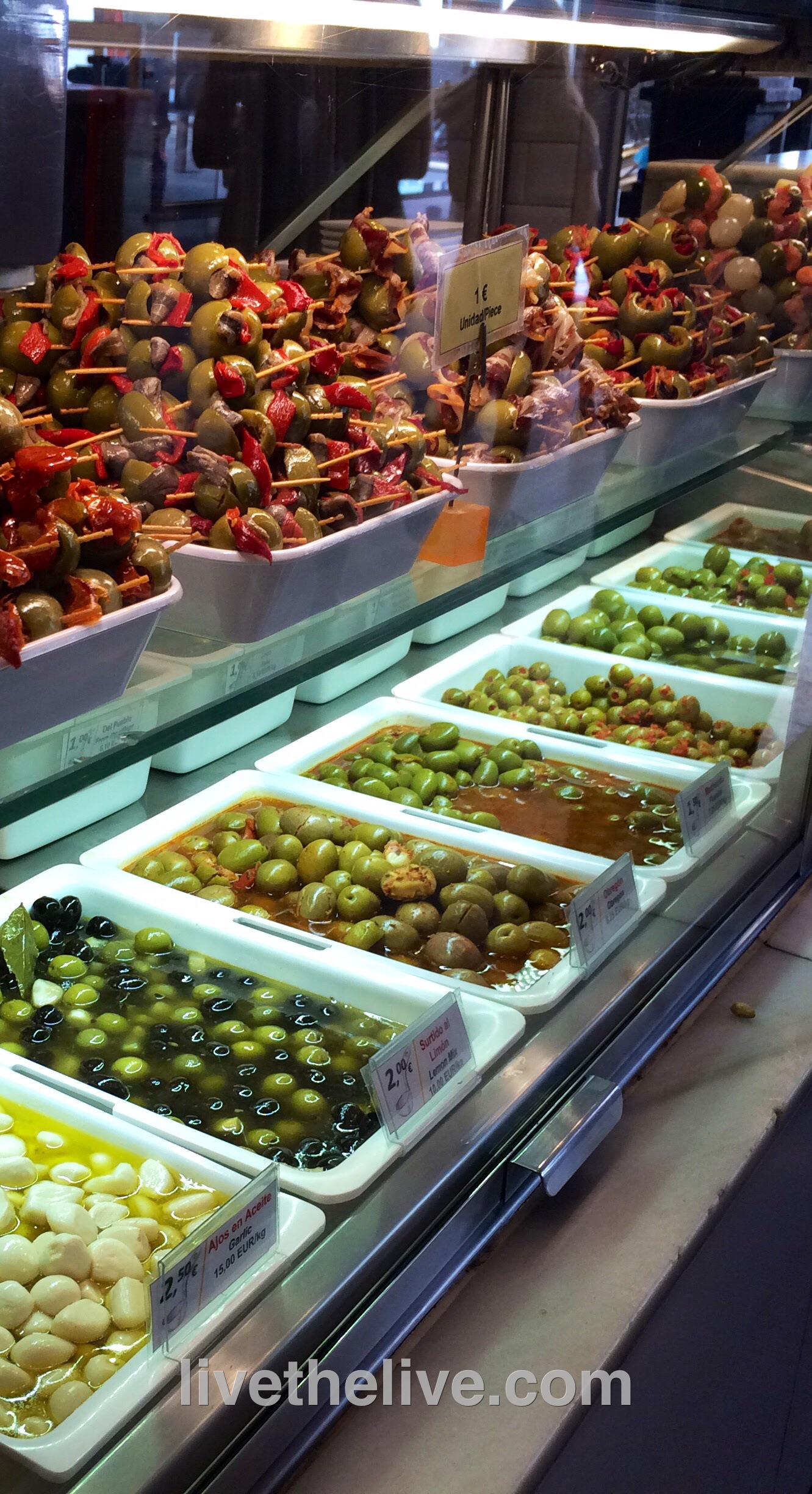
No trip to Madrid is complete without visiting a couple of food markets. The quality and selection of foods, ready-to-eat on location or packaged to go, is mind-boggling!

Mercado de San Miguel

Mercado de San Miguel

On our recent trip to Madrid, we sampled foods from two food markets: Mercado de San Miguel and Mercado San Anton.

Mercado de San Miguel

Mercado de San Miguel

Praised by many as the best market in the city, Mercado de San Miguel is near the tourist center of Madrid, by the Plaza Mayor, a plaza featuring open-air restaurants, outdoor concerts and loads of street performers looking to make a few bucks. The choice of foods at Mercado de San Miguel is incredible, and you’ll be hard-pressed to find an empty seat.

My not-so-adventurous daughter found happiness in a personal pizza.

My not-so-adventurous daughter found happiness in a personal pizza.

It’s worth the extra effort to elbow your way over to your own private corner of the market to enjoy everything from olives to oysters.

image


image


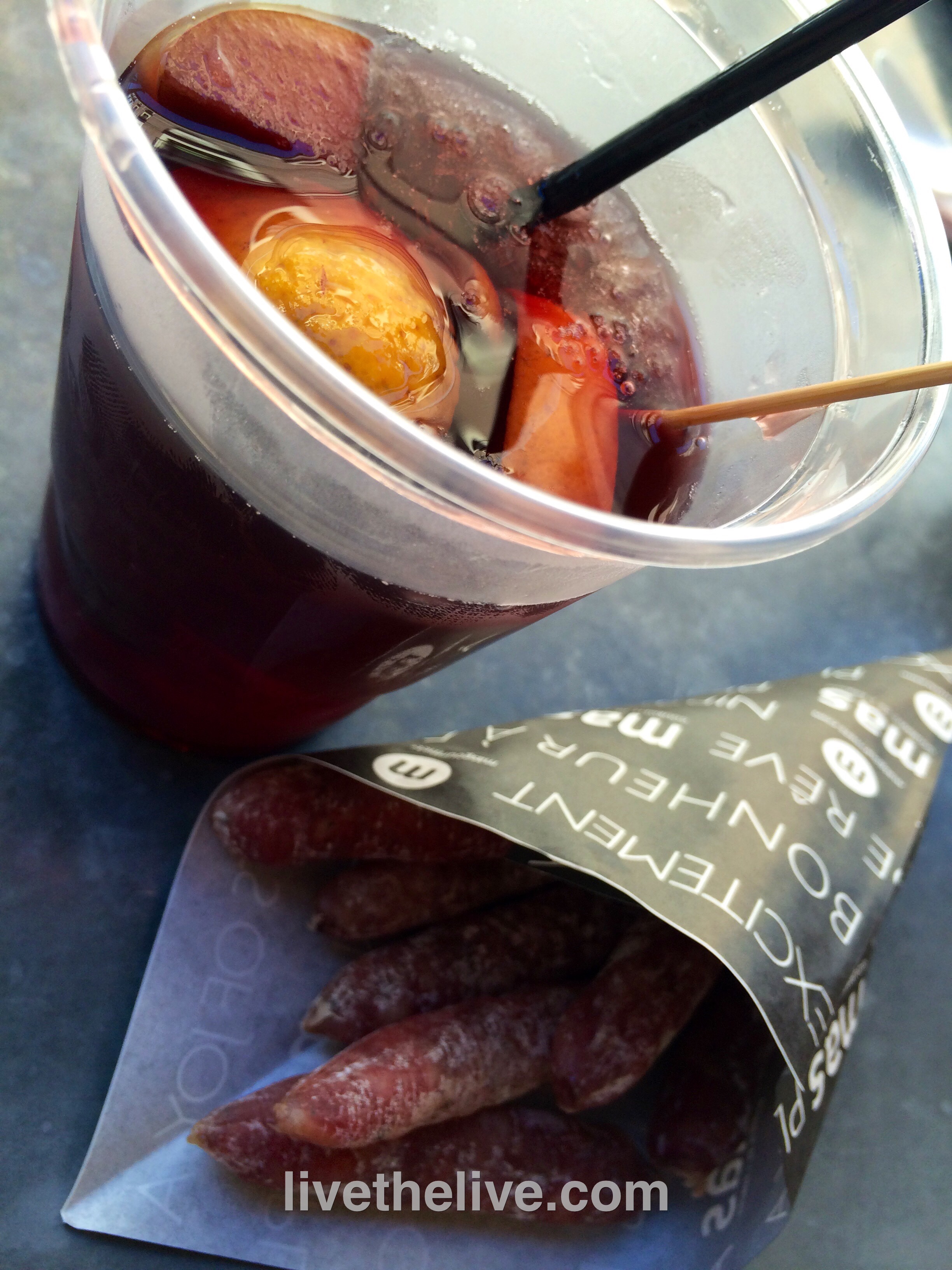
House-made sangria and little salamis served up like french fries.

House-made sangria and little salamis served up like french fries.

Grilled sardines.

Grilled sardines.

Sweet as well as savory bites.

Sweet as well as savory bites.

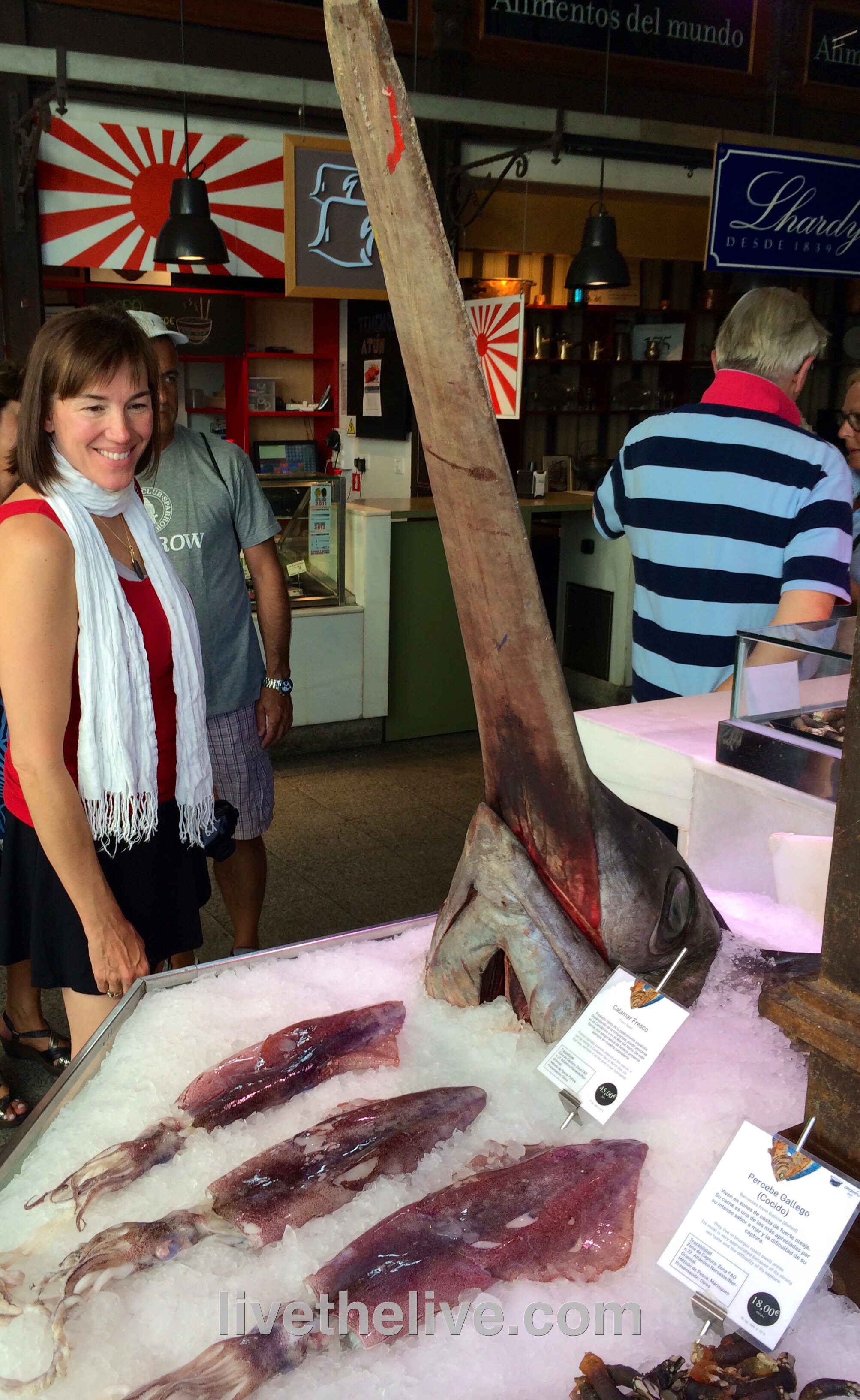
If you’re lucky enough to have a place to cook, you can take home some fantastic seafood…

image


…including swordfish and squid!

image


Though the Mercado de San Miguel clearly has it all, its large size and huge crowds can be a challenge to those not wanting to stand in long lines. The Mercado San Anton across town, meanwhile, is funky, smaller and a more manageable market.

Pork heaven at Mercado San Anton.

Pork heaven at Mercado San Anton.


Mercado San Anton has five floors. Three feature food shops and tapas bars. Grab a bite and a drink right there or take it with you.

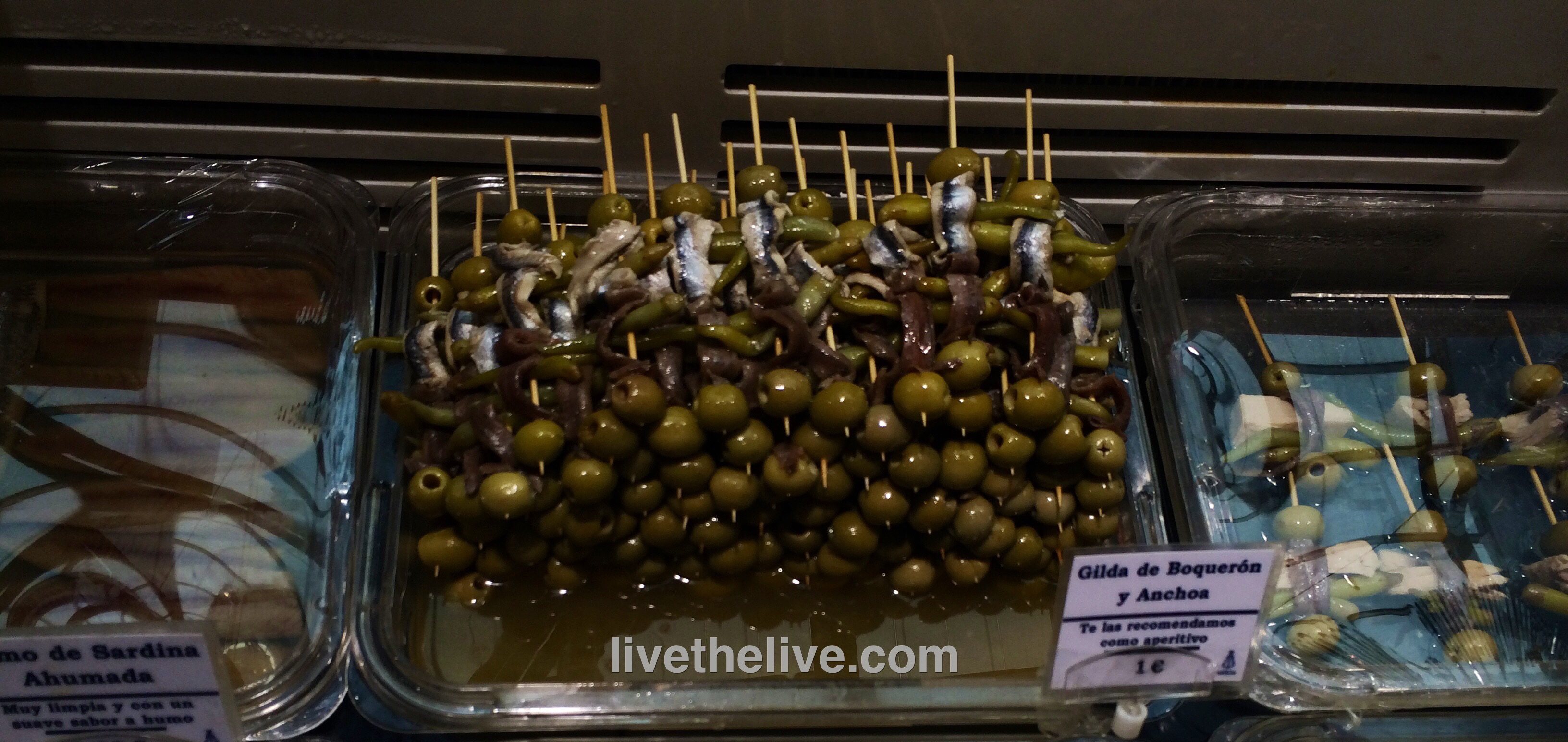
Our favorite tapas when in Spain: a skewer of olives, peppers and anchovies.

Our favorite tapas when in Spain: Gilda de Boqueron y Anchoa (a skewer of olives, peppers and anchovies.)

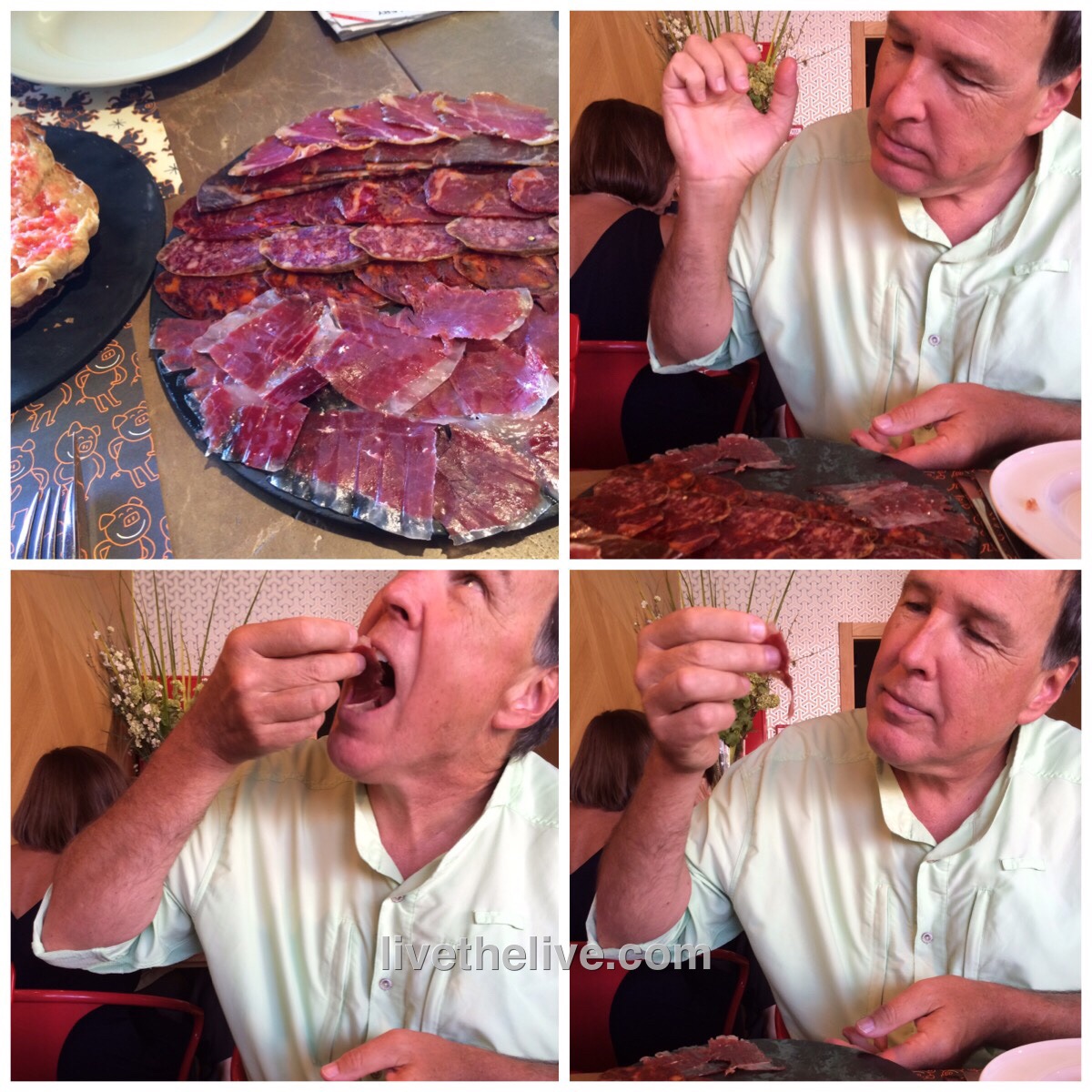
And on the top floor: a great restaurant that you shouldn’t miss: La Cocina de San Anton. If for no other reason, you need to dine here to experience the magnificent plate of Iberico ham and other meats they offer, sliced to order. This is truly a situation where more is more.

Acorn-fed Iberico ham: there's nothing like it!

Acorn-fed Iberico ham: there’s nothing like it!


The window at Cocina de San Anton.

The window at Cocina de San Anton: it’s all about the pig!

We’d go back to the Mercado San Anton in a heartbeat. Located in the colorful Chueca neighborhood full of art galleries, it’s a place where you can easily spend hours and hours over lunch.

Madrid has many fine restaurants. But tapas are a great way for any self-respecting foodie to explore the markets for a real taste of this beautiful city.

image


You don’t have to stand by your smoker and cook for hours to have amazing ribs. As the glaze cooks down, it gets sticky, gooey and delicious…but use a non-stick pot if you can or you’ll be scrubbing when you should be eating!
 image
 Ingredients:
Marinade: ¾ cup light soy sauce
                     6 Tablespoons hoisin sauce
5 lbs pork ribs
Zest and juice of 1 lemon
2 whole star anise
2 cinnamon sticks (3”)
1/2 cup honey
4 cups chicken broth
Mix marinade ingredients. Set aside.
If the ribs are large, cut them into pieces. If smaller, cluster 2 or 3 ribs together. Place in a large pot. Cover with water and bring to a boil. Boil for 5 minutes. Drain.
Place ribs on a sheet pan with a rack and coat with marinade. Let sit for 10 minutes.
Pre-heat oven to 350 degrees. Bake ribs in sheet pan with rack for 30 minutes.
While the ribs are baking, start sauce in a large non-stick pan or pot: combine lemon zest and juice, star anise, cinnamon sticks, honey and chicken broth. Bring to a boil, then reduce to a simmer.
When ribs have finished baking, add them to the sauce pot and simmer (covered) for at least 15 minutes or until rib meat is tender.
Turn heat on high, uncover pot and cook until the sauce is reduced to a glaze that coats the ribs. Reduce heat as sauce thickens to avoid sugars in honey from burning. When the ribs are sticky and gooey, they are ready!


image

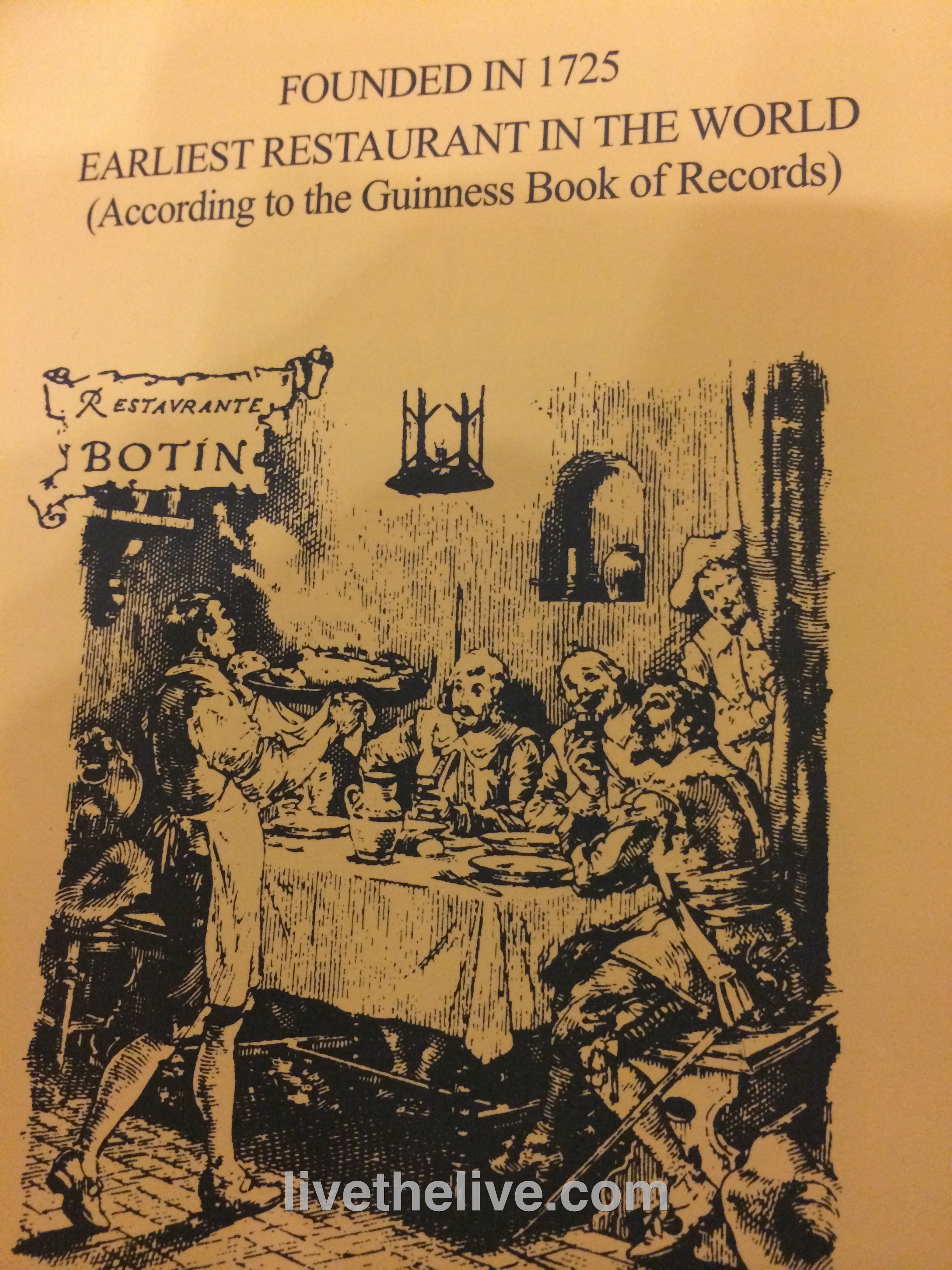
Restaurante Botin, in the great old city of Madrid, Spain, is a must-visit. At first, I thought it might be more of a tourist trap. But this establishment, which holds the Guinness Book of world records for oldest restaurant (it opened in 1725), has some fantastic dishes that you just can’t get anywhere else.

image

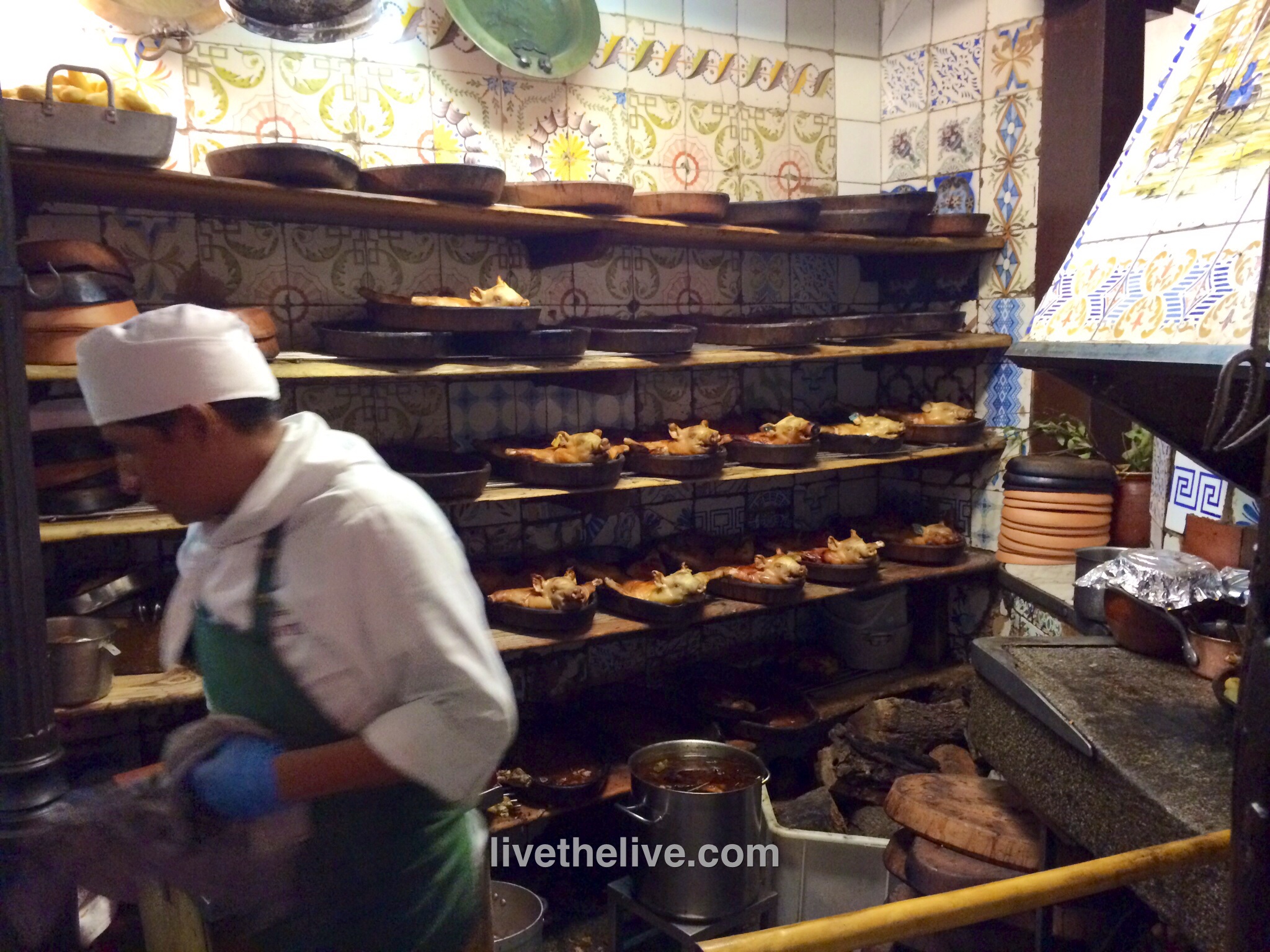
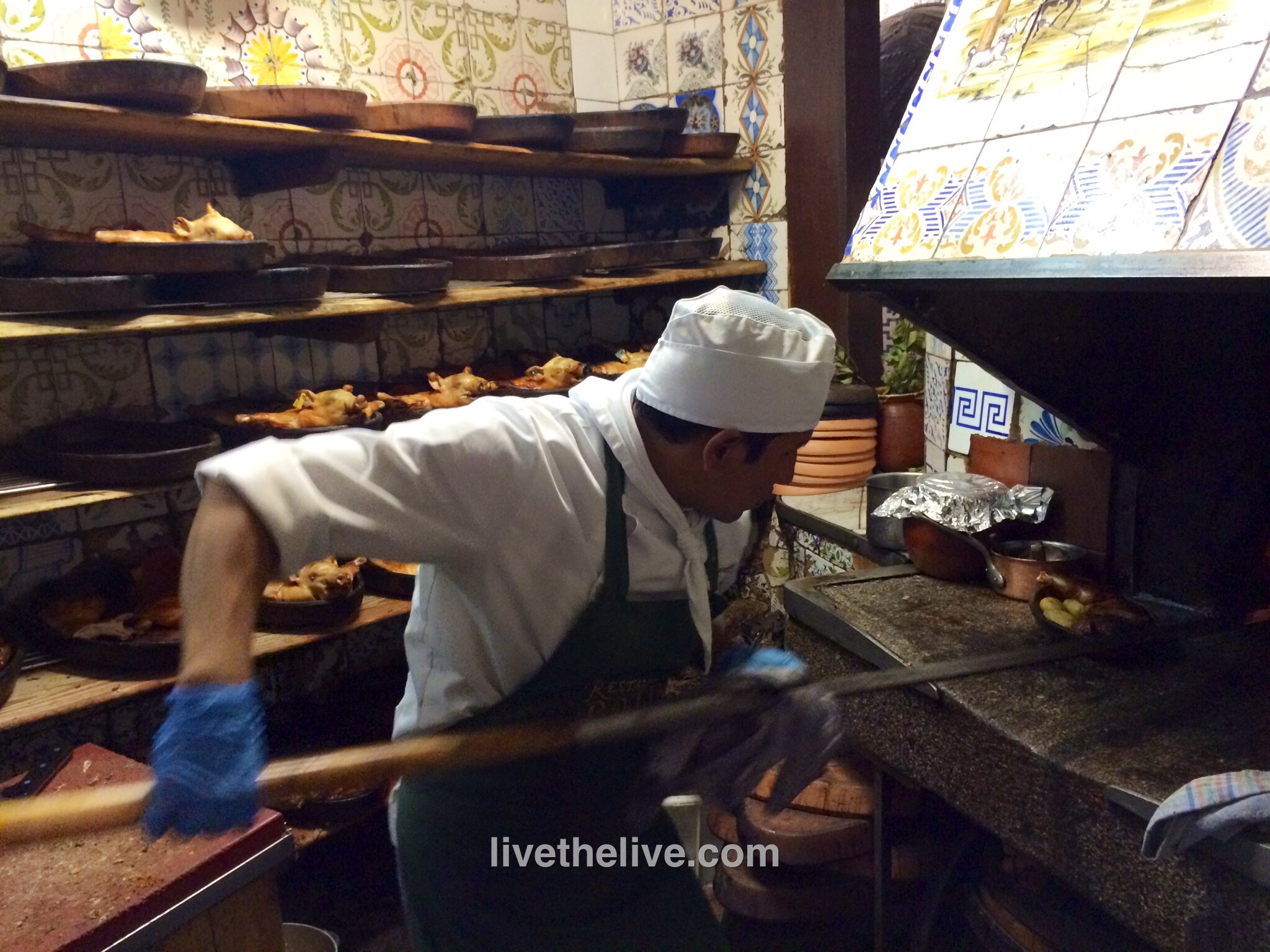
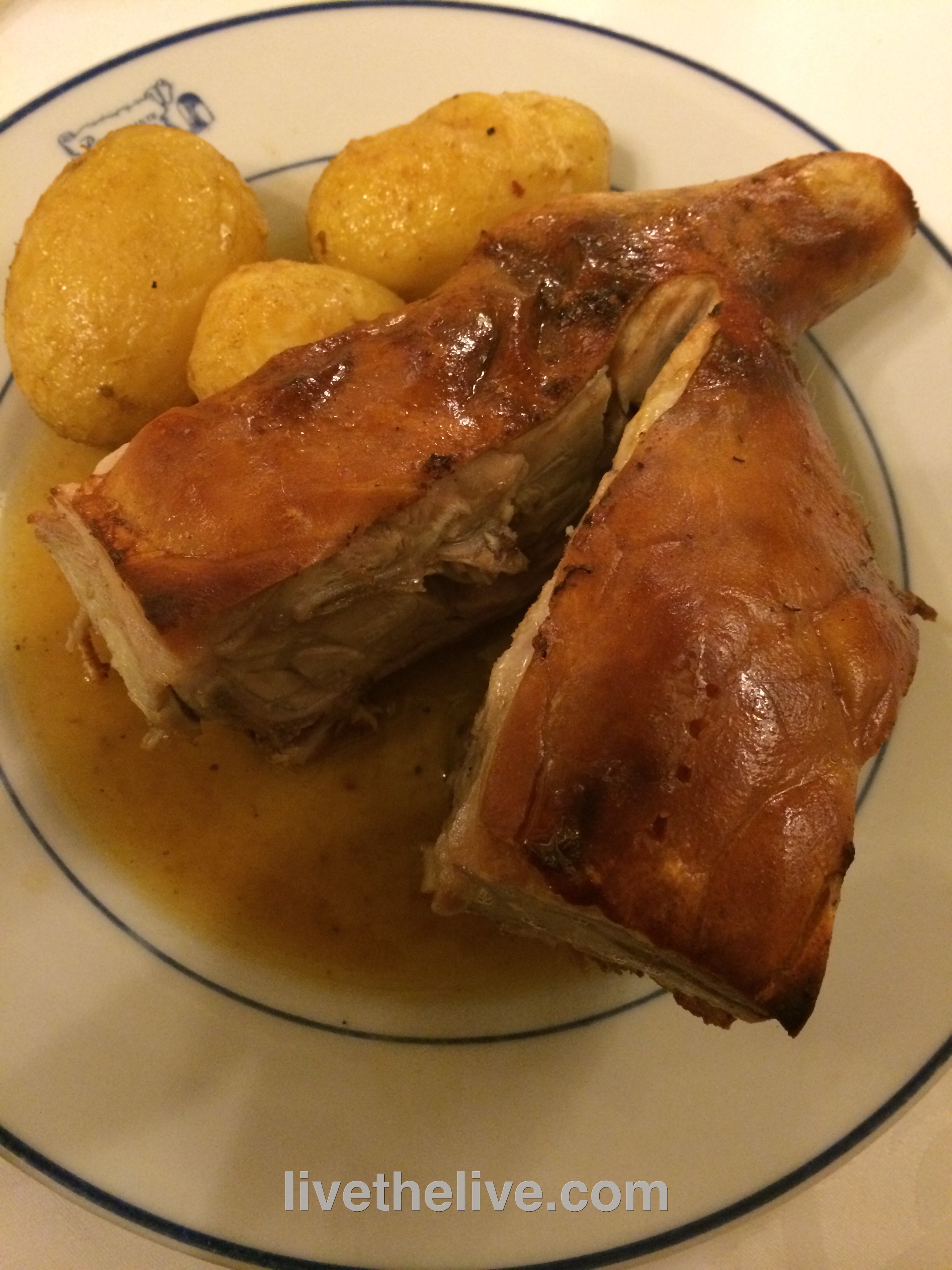
The suckling pig at Botin is world-famous. If you’re a vegetarian, you’ll probably be freaked out to see the row of little pigs on plates, waiting to be placed in the almost-300-year-old wood burning oven. These suckling pigs were only 20-something days old when they became dinner, and the slow-roasted flavor of this pork is like nothing you’ve ever had before. The roasted baby lamb, a gamier lamb than most Americans are used to, thanks to its grass-fed upbringing, was also exquisite.

imageimage

imageCroquettes are big in Spain, as popular with the kids as nuggets are here in the states. And the croquettes at Botin, breaded and fried to a perfect crisp on the outside, with an oozy, creamy cheesy center, are addictive.

The servers, handling three levels of dining rooms, are fast and efficient, but also have time for a sense of humor.

image

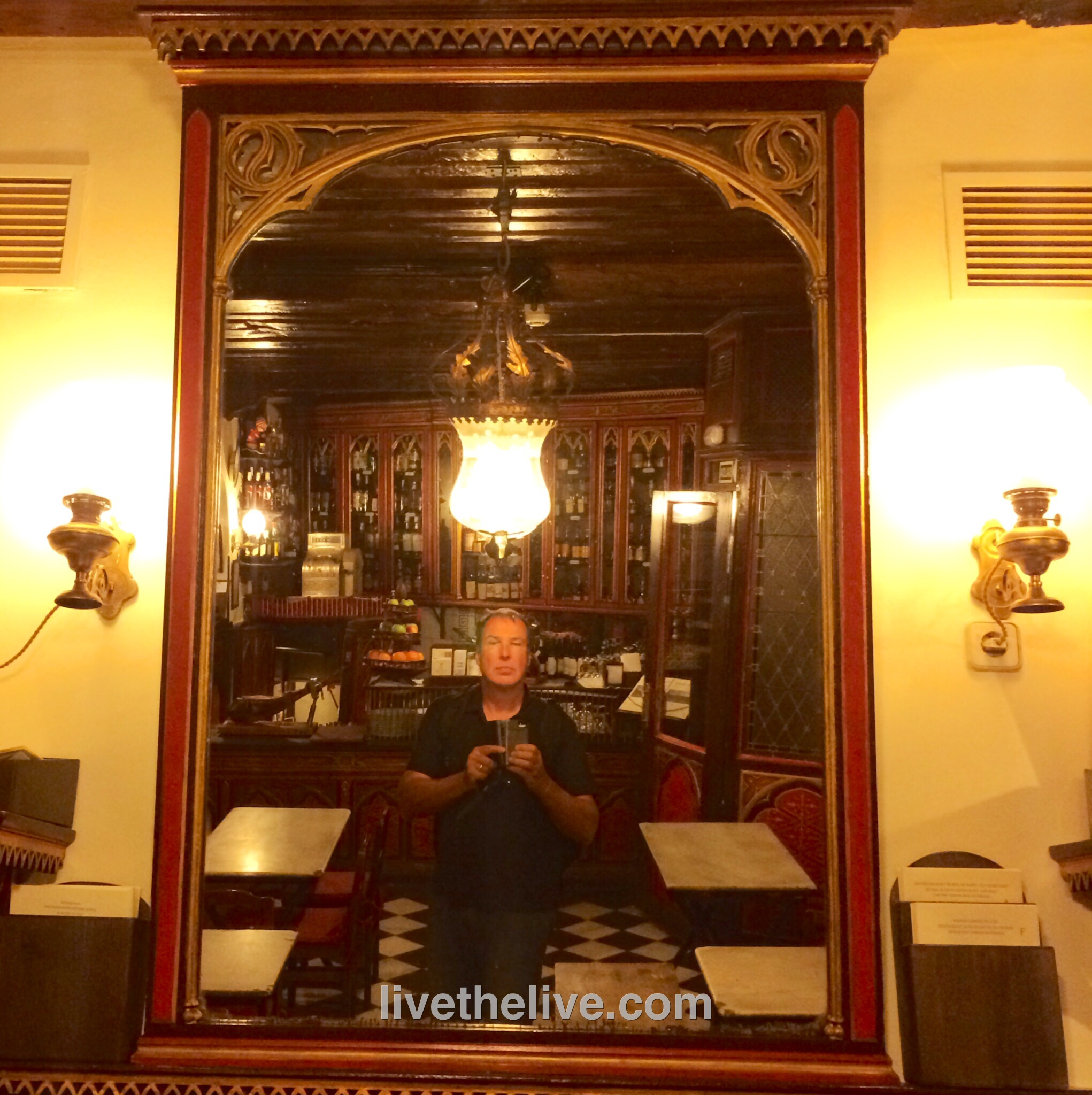
Just around the corner from the Plaza de Mayor, the city’s best people-watching location, Botin is my kind of attraction: a food museum where they still create many dishes like they did hundreds of years ago. In fact, the famous artist Goya was a dishwasher here in his youth, back in 1765.

image

Walk around the restaurant, and check out the different rooms that have been renovated over time…and the ones that have been there all these years. It’s a fascinating trip through history.

image

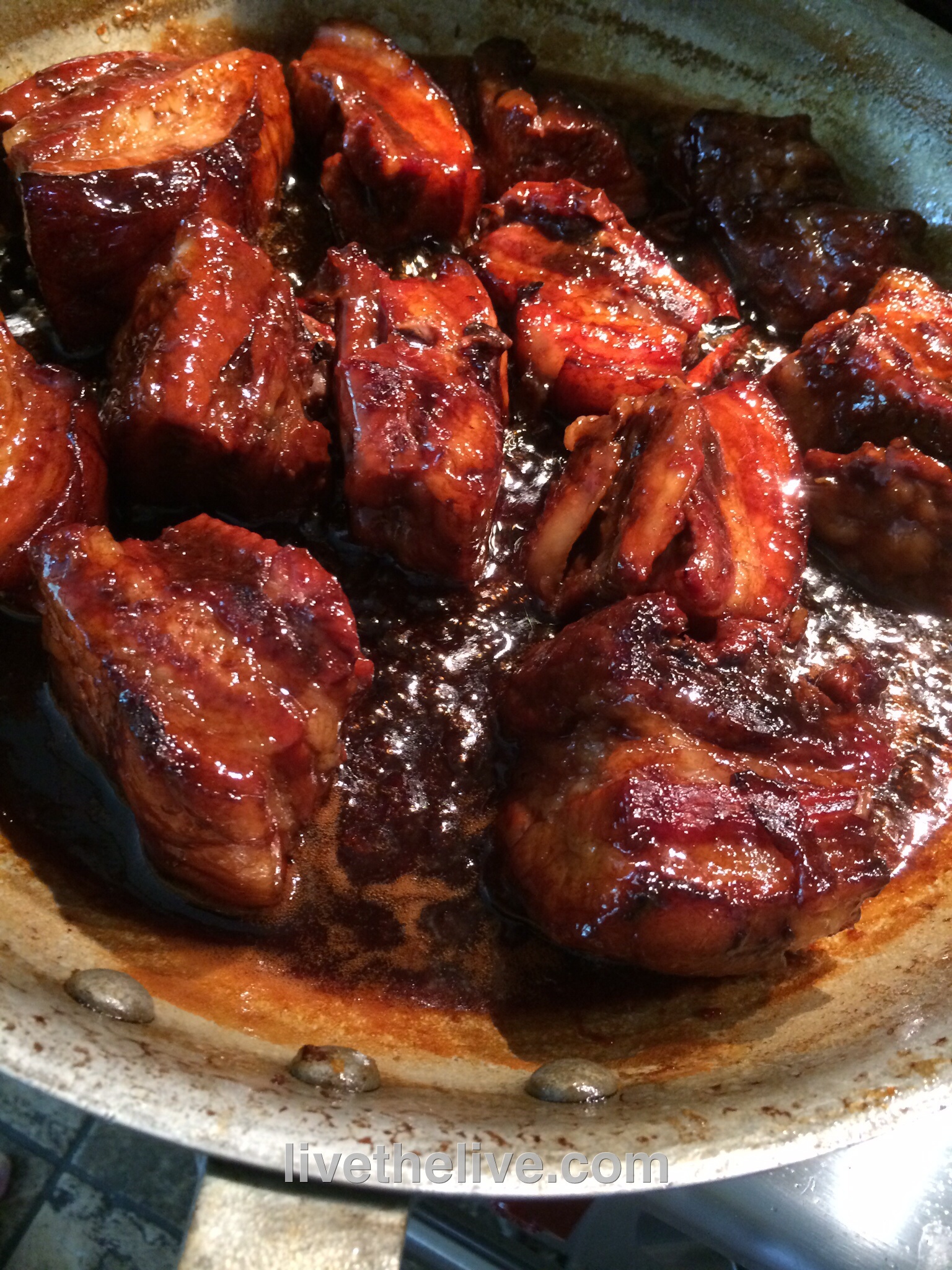
Well, that’s what I call it. Sometimes the most interesting creations happen by accident, and this is one of them.

My plan was to make my Chinese Style Honey Ribs (http://wp.me/p1c1Nl-i7) for dinner. But I accidentally took a slab of pork belly out of the freezer instead. I only realized my mistake when I thawed it and started cooking it, so I decided to continue the process with the pork belly instead. The results were pretty damn tasty.

image


 Ingredients:
Marinade: ¾ cup light soy sauce
                     6 Tablespoons hoisin sauce
5 lbs pork belly
Zest and juice of 1 lemon
2 whole star anise
2 cinnamon sticks (3”)
1/2 cup honey
4 cups chicken broth
image
Mix marinade ingredients. Set aside.
Cut the pork belly into pieces that are about 3 inches square. Place in a large pot. Cover with water and bring to a boil. Boil for 5 minutes. Drain.
Place pork belly on a sheet pan with a rack and coat with marinade. Let sit for 10 minutes.
Pre-heat oven to 350 degrees. Bake pork belly pieces on foil-lined sheet pan for 30 minutes.
While the pork belly is baking, start sauce in a large non-stick pan or pot: combine lemon zest and juice, star anise, cinnamon sticks, honey and chicken broth. Bring to a boil, then reduce to a simmer.
When the pork belly pieces have finished baking, add them to the sauce pot and simmer (covered) for at least 15 minutes or until meat is tender.
Turn heat on high, uncover pot and cook until the sauce is reduced to a glaze that coats the ribs. Reduce heat as sauce thickens to avoid sugars in honey from burning. When the pieces are sticky and gooey, they are ready!
Let a piece of pork belly cool…then slice to desired thickness and fry like regular bacon. Makes an amazing omelet!
image

Since I’m busy tasting many bourbons these days, I’ve got some leftovers that may not make a great cocktail but would work great for a sauce. I had Maker’s Mark sitting around, so I came up with this sauce to use it up!

image

 Ingredients:

5 lbs St Louis style pork ribs

salt and pepper


For the sauce: 

1/4 cup honey

1/4 cup bourbon

zest and juice of 1 lime

zest and juice of 1 lemon

zest and juice of 1 orange

2 tablespoons Hoisin sauce

1 tablespoon Dijon mustard (I use Maille)

1 tablespoon soy sauce

2 teaspoons Worcestershire sauce

1 teaspoon chili oil

image

Season the ribs well with salt and pepper and cook in a smoker for 3 hours at 25o degrees, using hickory chips.

While ribs are smoking, combine sauce ingredients in a sauce pan, bring to a boil, then lower to medium heat and reduce the sauce by half until it thickens. Stir often, and don’t let the honey foam up and spill over the top.

Pre-heat oven at 250 degrees.

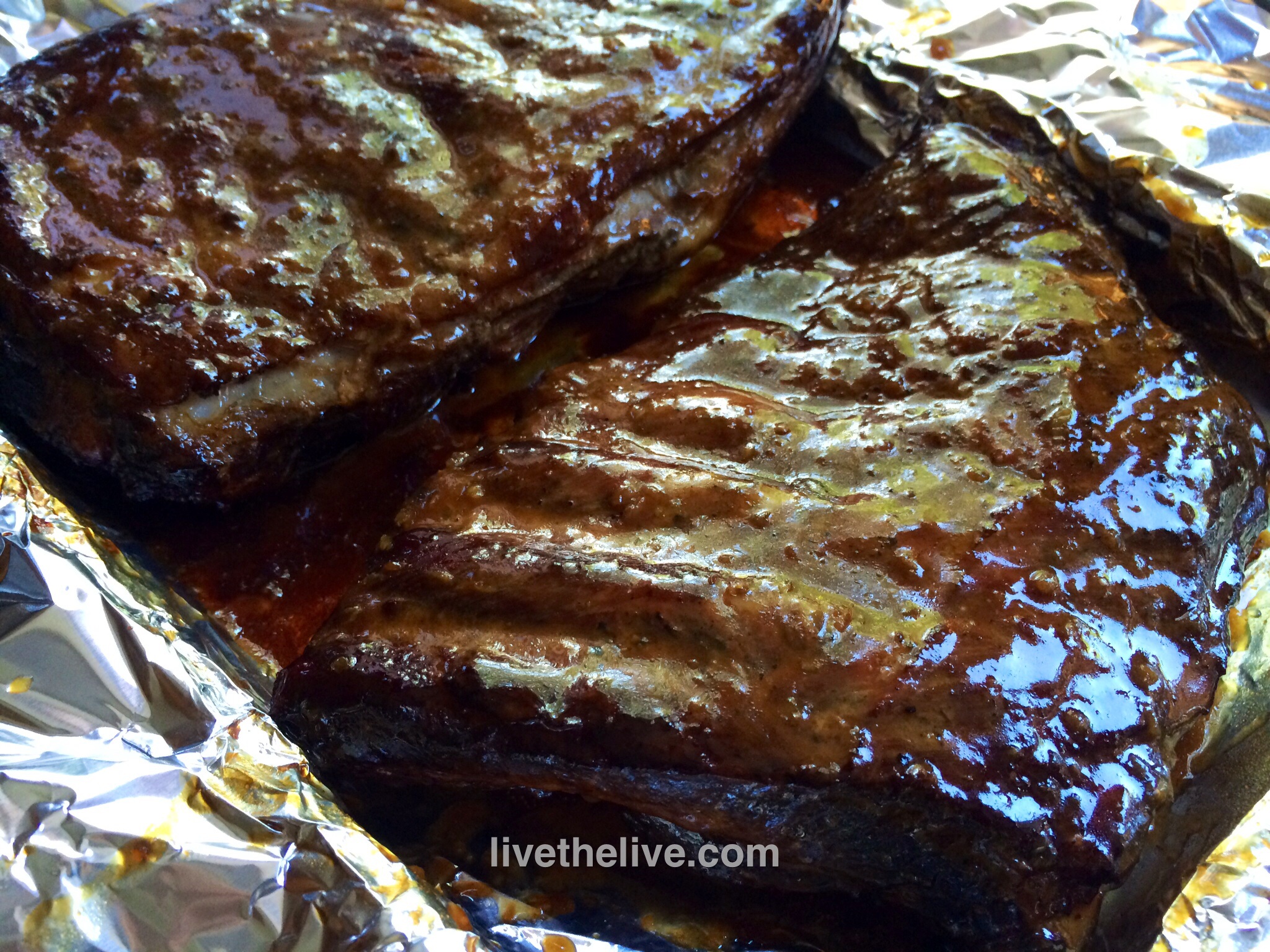
Remove ribs from the smoker and place in a sheet pan that is lined with aluminum foil, with enough foil to wrap around the ribs. Brush the ribs on all sides with the sauce, stacking no more than 2 sets of ribs on top of each other, and then wrap with foil.

Cook in the foil for 2 more hours, until tender.