DIY TACO SEASONING

Posted: October 12, 2025 in beets, Food, morocco, Recipes, taco
Tags: , , , ,

It’s so easy to make taco seasoning at home. So why would you buy the spice factory floor sweepings they use for packaged taco seasoning sold in supermarkets? I’m not a huge fan of Mexican cuisine, but every once in a while, I crave a good taco. My tacos don’t resemble most, but that’s OK. It’s all about making it your own.


1 teaspoon granulated garlic
1 teaspoon onion powder
1/4 teaspoon crushed pepper flakes
1 teaspoon dried Mexican oregano
1 teaspoon paprika
2 teaspoons ground cumin
1 teaspoon sea salt
1 teaspoon black pepper
1 Spanish onion, finely chopped
olive oil
2 lbs. grass-fed ground beef

Combine all the spice ingredients in a bowl.

Sauté the onions in a bit of olive oil until they’re translucent. Add the beef and sauté until it’s cooked, mixing in the spice mixture a little at a time until you’ve used it all.

My tacos are a bit unusual. Although I use a soft flour tortilla and my seasoned and cooked ground beef, I spread a little Thousand Island dressing and chop some roasted golden beets.

But this taco meat goes great with the standard beans, shredded lettuce, guac, and salsa as well.


Tacos with roasted golden beets, baby Romaine salad mix, and Awesomesauce

Tacos with roasted golden beets, baby Romaine salad mix, and Thousand Island dressing.

For the beets: I wash the beets and quarter them, cutting the top and bottom off but leaving the skin. I place them in a sheet of aluminum foil, and sprinkle with salt, pepper and olive oil. I combine the ingredients to coat the beets, wrap the foil tightly into a package, and roast in a 400-degree oven for 1 hour. After roasting and the beets have cooled a bit, I slice them into smaller pieces for the tacos.

Slices of avocado go really well with this, too!

You can also mix the spices with 1 cup of flour and use it to season chicken before frying…or mix the seasoning with strips of chicken breast or beef for fajitas.

I love onions! Raw, sautéed, caramelized, yellow, Spanish, Bermuda, Vidalia, Texas Sweets, scallion, pearl, Crimini, Walla Walla…they can do no wrong. In fact, my family gave me the Lithuanian nickname: “Ponas Svogūnas.” (“Mr. Onion.”)

I also love vodka martinis! So if I’m going to buy a top shelf vodka like Stoli Elit or Chopin, I’m not going to ruin it with jarred cocktail onions, brined with cheap vermouth, found in the bar mixers section of my local supermarket. Who knows how long those nasty things have been sitting on the shelf?

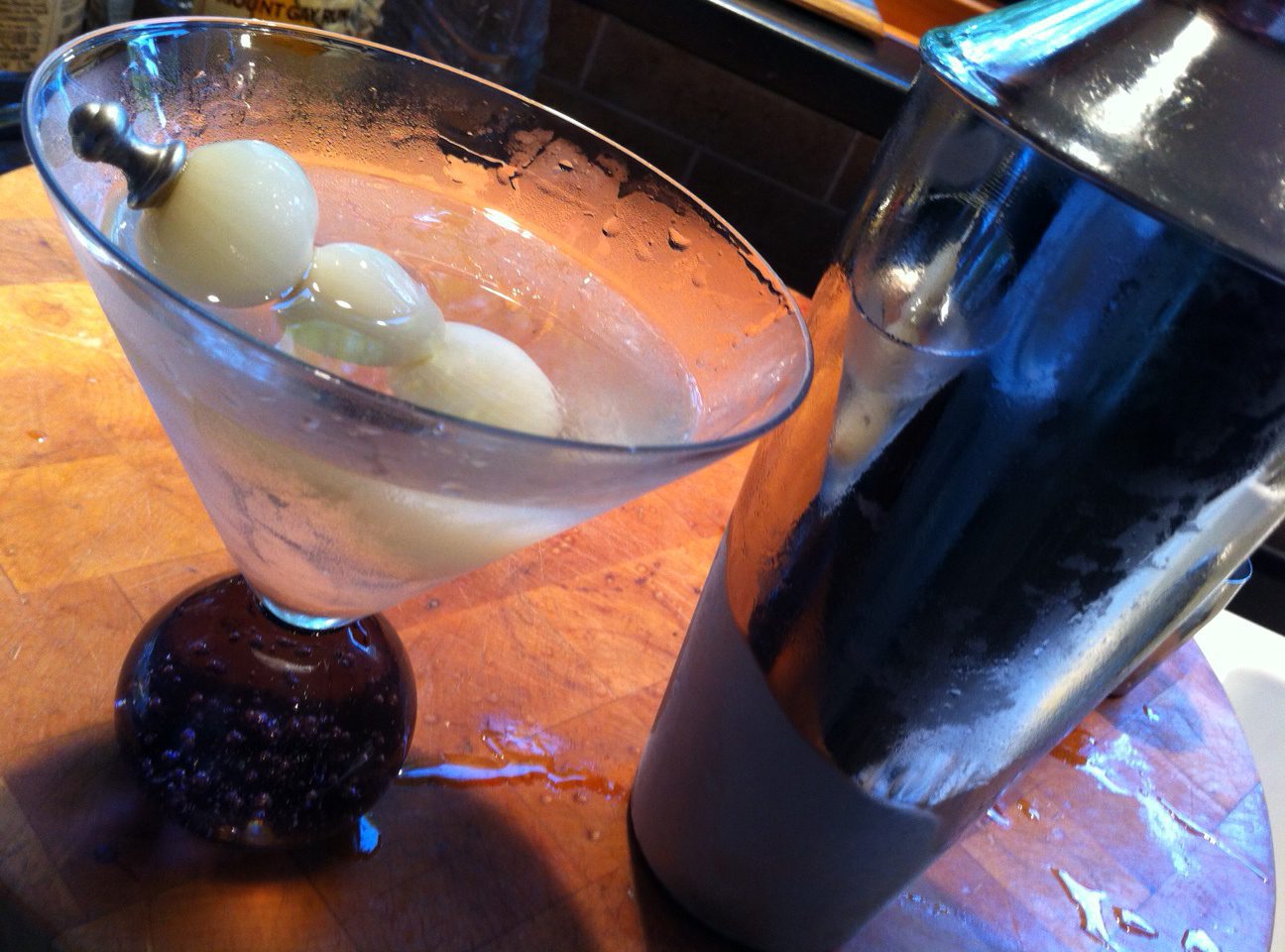
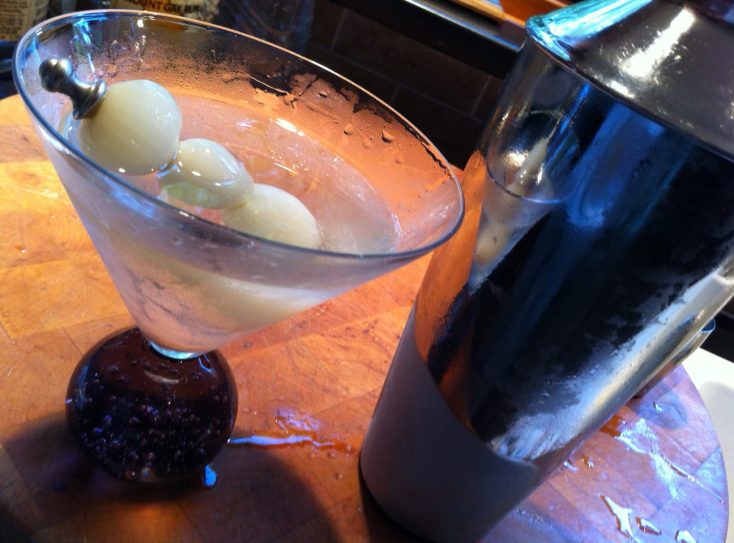
No, I’m going to make my own cocktail onions to enjoy a proper Gibson!

The Gibson martini is simply one with onions instead of olives, and the story of its origin is somewhat unclear. According to one story, it was invented by Charles Dana Gibson, who created the popular Gibson Girl illustrations. Supposedly, he challenged Charley Connolly, the bartender of the private club, The Players, in New York City, to improve on a martini. Connolly simply substituted an onion for the olive and named it after Gibson.

Another story claims a man named Gibson dropped an onion in his water-filled martini glass to differentiate between his own drink and that of his colleagues, who were imbibing heavily.

Some stories about the Gibson don’t even mention an onion. (?)

And yet another story, now considered the more probable one, is that the Gibson martini was invented at the Bohemian Club in San Francisco in the 1890’s by Walter D. K. Gibson. There is documentation as early as 1898 to back that up.

Whatever story you want to believe, the Gibson martini was originally made with gin, not vodka, but that’s strictly a personal preference–and I don’t use any vermouth. (I think the biggest injustice you can do to high-quality vodka is ruin it with low-quality vermouth. But that rule applies to any alcohol and any mixer. It’s only as good as its worst ingredient–and that includes the ice!)


My first attempt at homemade cocktail onions was not a success. I bought pearl onions and did what the package instructions said: I dropped them in boiling water for a couple of minutes, then moved them to ice water to let them cool. Then a gentle squeeze on one end of the onion would make it pop right out of its skin. Easy, right?

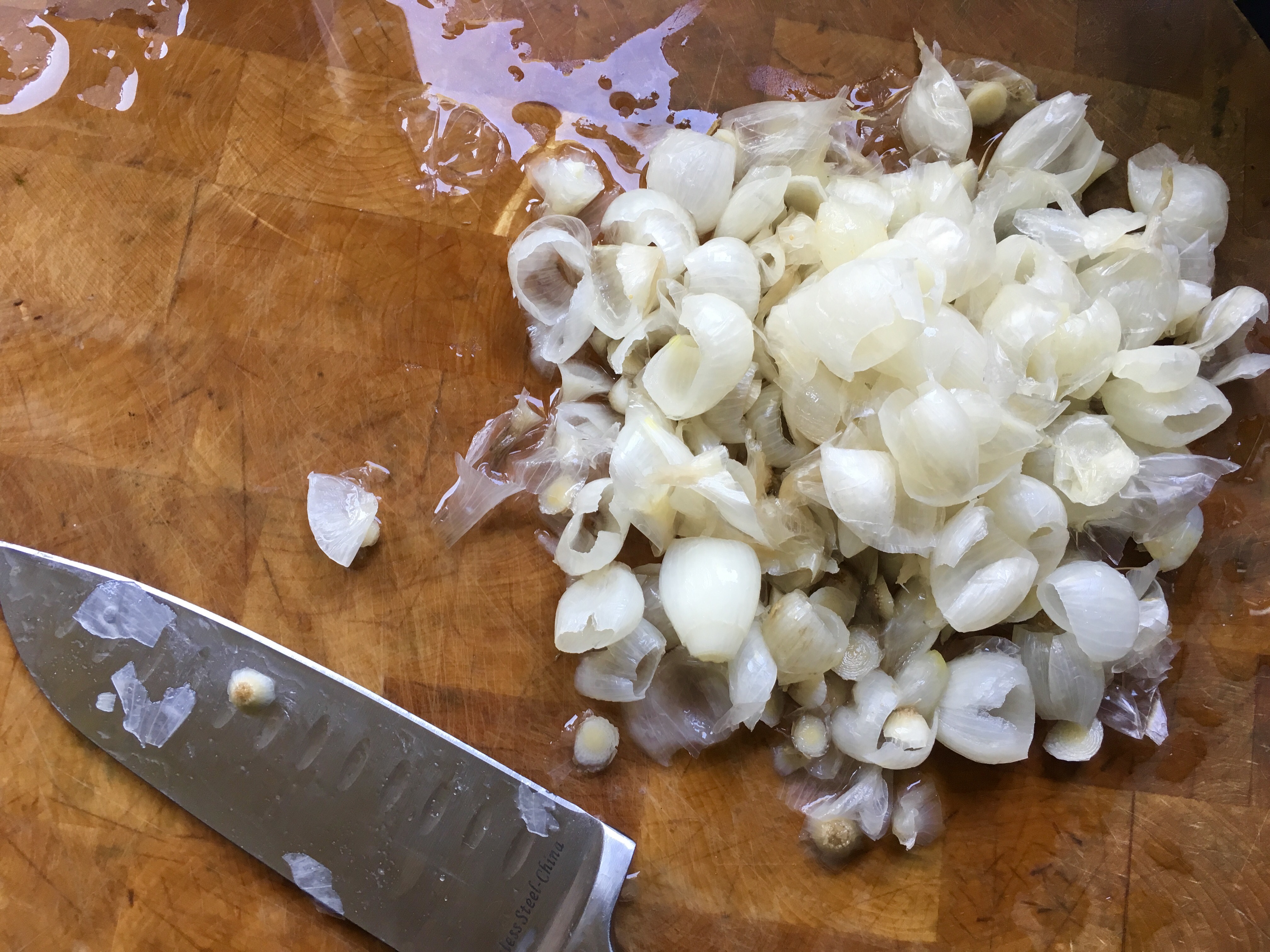
Well, it didn’t work out that way. For one thing, the onions got soft…not what I wanted. I had to cut one end of the bulb with a knife. And even then, when I squeezed the onion, the part that popped out was about half the size of the original onion…there was a lot of waste.


After brining, they tasted OK, but they never had that crisp bite I wanted. They were mushy. I realized that boiling was not the way to go.


A lot of waste.


I knew there had to be a better way. Then I discovered already peeled pearl onions at Whole Foods. I have to be honest…I won’t use any other onions now. They’re big, plump, and exactly what I want. Some might say they’re too big…but I don’t have a problem with that.


Sure, these are much larger than the onions you find in a jar. But tell me how that’s a problem!
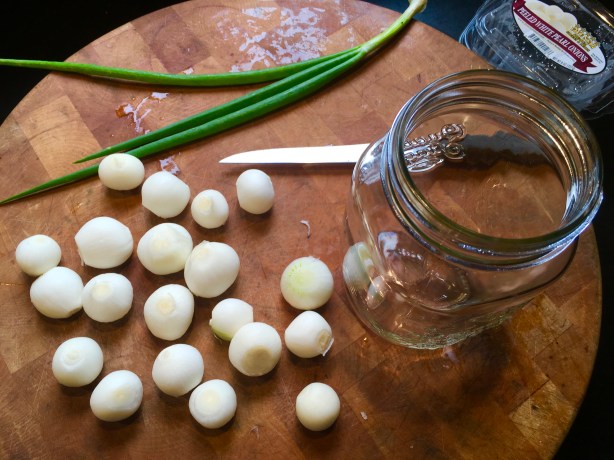
 

1 lb. pearl onions, peeled, ends cut off
1 cup white vinegar
1/2 cup apple cider vinegar
1 1/2  cups water
3/4 cup sugar (I like turbinado sugar)
10 peppercorns
1 teaspoon salt (per quart-sized Mason jar)
2 cloves garlic

Combine the white vinegar, apple cider vinegar, water, sugar, and peppercorns in a medium-sized saucepan. Bring it to a boil, making sure the sugar dissolves completely. Remove it from the heat.


Slice the ends off the onions.

I’ve found that if I allow the brining liquid to get inside the onions, especially these larger ones, they’ll get tastier faster…and who doesn’t want that? So I take a thin metal or bamboo barbecue skewer and push it through the center of the top of the onions, all the way through the center of the bottom of the onions. Now there’s a little “tunnel” for that brine to get in, and it can work its magic from the inside out!

Not skewering the onions simply means it’ll take longer for that brine to seep in…but that’s perfectly fine if you want a not-so-briny onion.


In a quart-sized Mason jar, add the teaspoon of salt and garlic cloves. Pour a little of the hot vinegar liquid in the Mason jar to dissolve the salt. Add the onions to the jar, as tightly as you can, then fill the jar to the top with the vinegar liquid.

Screw the top of the jar on tightly, and turn it upside-down a couple of times to mix everything together. If it looks like the level of the liquid has gone down a bit, open the jar and top it off with the vinegar liquid, then re-seal it.

Let the jar cool to room temperature, then move it to the fridge. You can use the onions as soon as the craving hits you, but they’ll taste better if you give them a few days to a week.


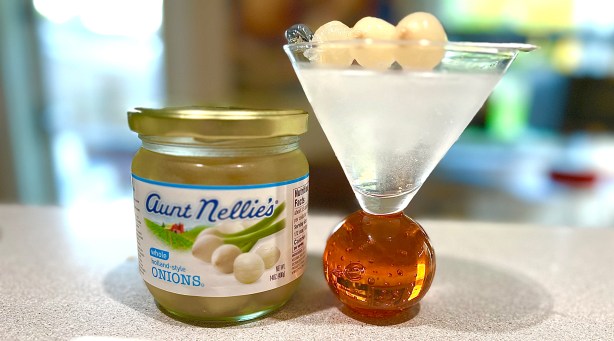
OK…so if after reading this, you just don’t want to go through the whole process of making your own cocktail onions, there is one product that I just recently discovered that does the trick: Aunt Nellie’s. You can find them in the jarred veggie section of just about any supermarket, next to pickled beets and things like that. It’s a milder brine, and so the onions taste quite good. No nasty cheap vermouth to ruin your good martini.
 

ASIAN-STYLE ROASTED PORK

Posted: October 8, 2025 in Uncategorized
Tags: , , , ,

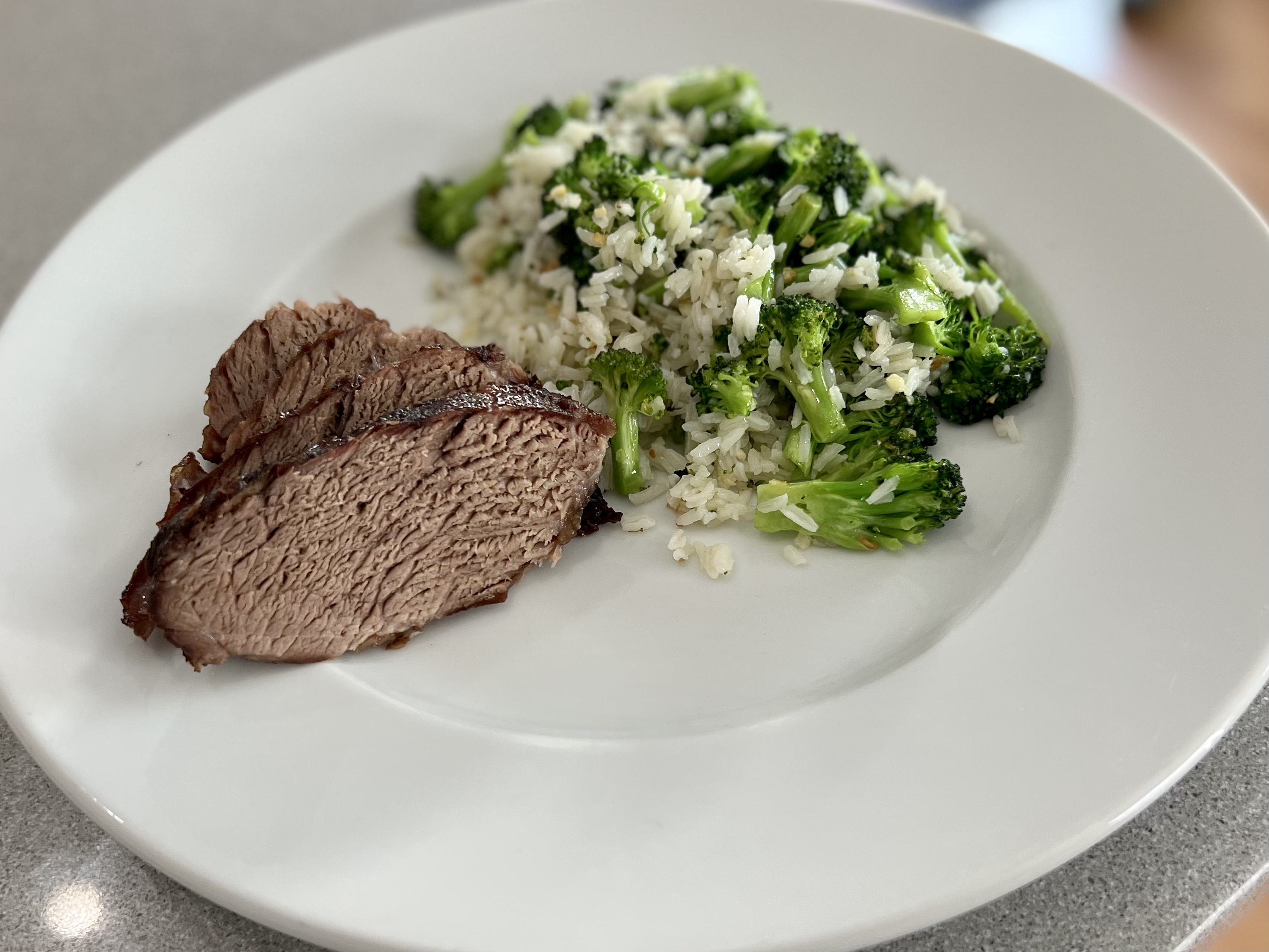
I love pulled pork, or pork roast…cuts that use inexpensive, fatty cuts of meat that are full of flavor as long as you roast them low and slow.


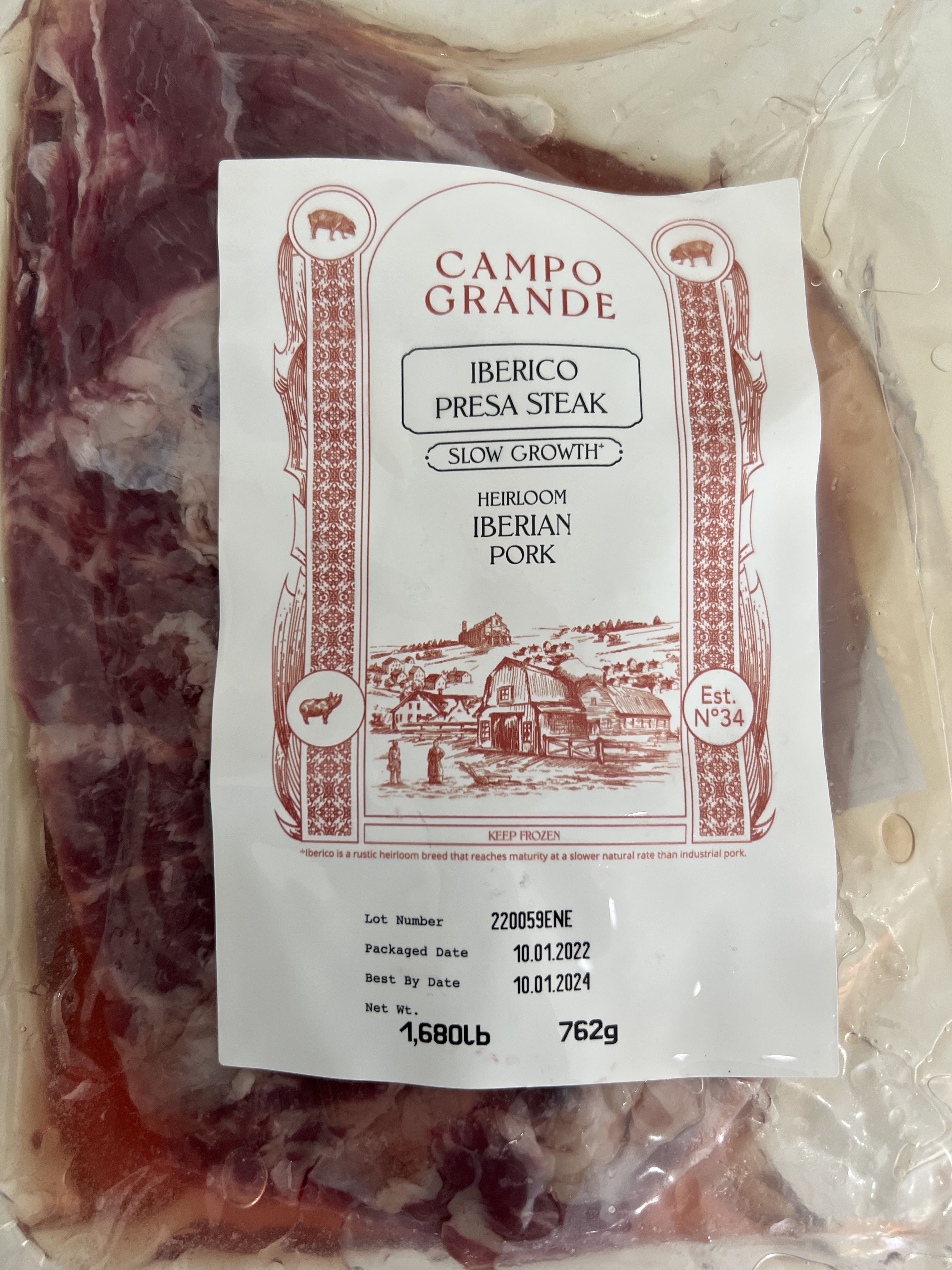
A very special cut of pork!

I recently received a gift of a very fancy cut of pork: Spanish Iberico, where the pigs roam freely, feasting on acorns. It’s some of the best pork you can buy.

But even with a much less expensive cut of pork, like a pork shoulder, you can achieve some delicious results as long as you give it time: time for the marinade to get absorbed into the meat, and time for the meat to cook slowly at a low temperature. Low and slow is key to melting the fat and gristle, and making the meat as tender as it can be.

The pork, before marinating.

Just like with a basic pulled pork recipe, the spices you use make all the difference. I usually make a spice rub that I generously rub all over a pork shoulder when I’m preparing pulled pork. Then it goes in the smoker for as much as 10 hours, depending on the size of the shoulder.

In this case, I’m using a marinade, which needs to be absorbed into the meat. So if I was using a larger cut, I would butterfly it, and marinate it that way. The Iberico pork that I used in this recipe was under 2 pounds, so I left it whole.

I combine all the marinade ingredients into a bowl…

3 tablespoons Chinese Five Spice powder
3 tablespoons soy sauce
2 tablespoons hoisin sauce
2 tablespoons maple syrup
1 tablespoon Chinese chili garlic sauce
1 tablespoon rice vinegar (same thing as rice wine vinegar)
1/2 an onion, chopped
3 garlic cloves, chopped (optional)

Once the piece of pork has been trimmed of any obvious hanging fat (remember, you don’t need to butcher the meat…the fat and gristle will melt while cooking and add flavor), place in a Ziplock-type freezer bag, and pour in the marinade. Squish the bag around carefully, to make the marinade makes good contact with the meat. Place the bag in a bowl (to prevent accidents) and place the bowl in the fridge overnight. Squish the bag around every few hours.


Pre-heat the oven to 275 degrees. Use a baking pan large enough to hold the roast.

Remove the roast from the marinade, and wrap it in aluminum foil. Place the foil on the baking pan and into the oven. The amount of time you cook the pork will depend on the size of the roast, so use a thermometer to check if the meat is ready. My roast was ready in less than 2 hours, but it was a small one.


Halfway through cooking, while I was checking the temperature, I opened the foil and basted the roast with some of the marinade. Then I re-wrapped it, and placed it back in the oven.


I save the marinade to brush on the roast halfway through the cooking process. I could also use it as a dipping sauce when serving, but if I did that, it’s important to place the marinade in a saucepan and bring it to a boil to kill all germs! Remember, that marinade was swimming around raw pork! Once it has boiled for a bit, you can set it aside to cool to room temperature.


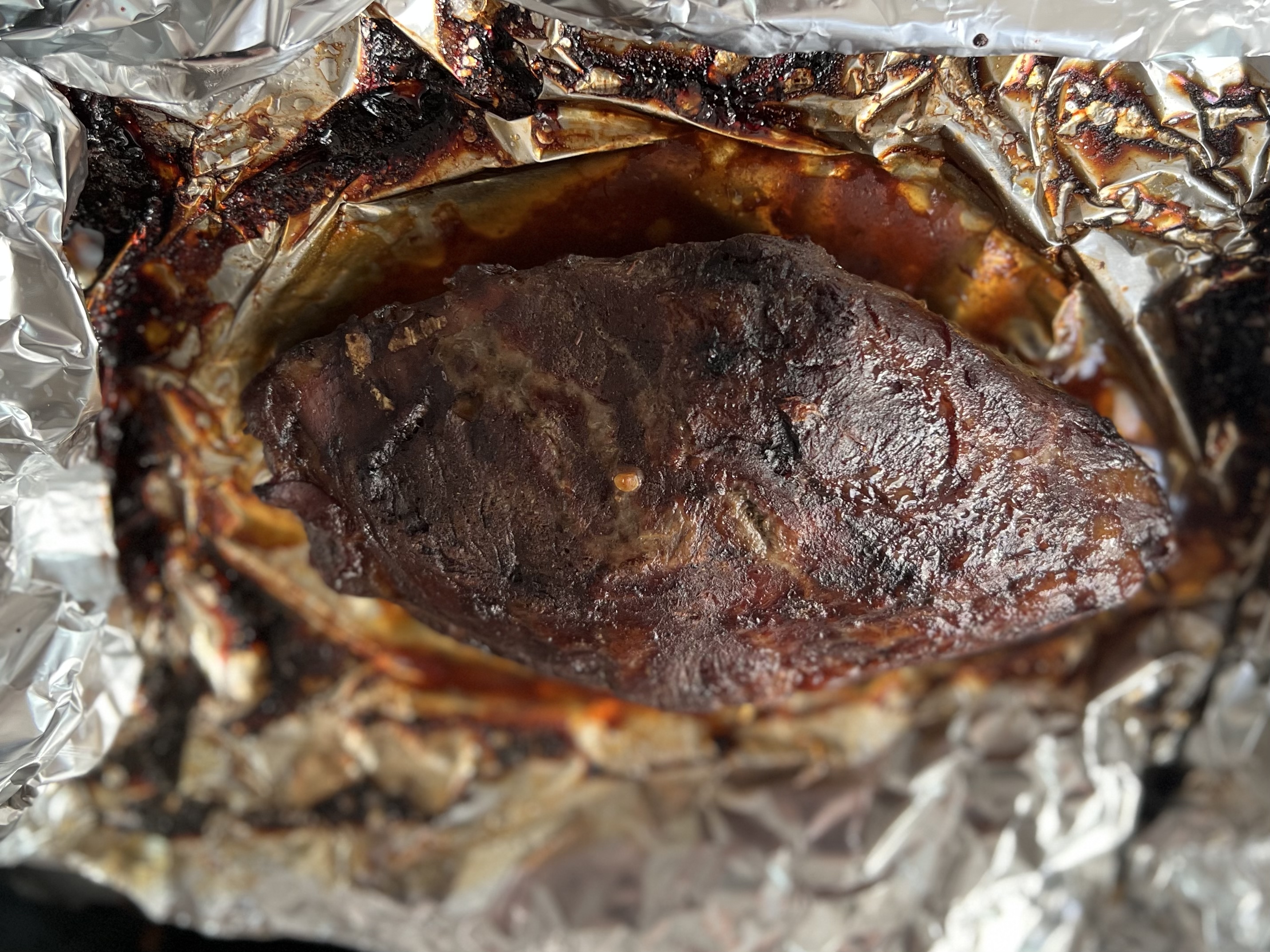
Done!


Pork should be cooked to a temperature of 160 degrees, so I remove it from the oven at 150 degrees, knowing the temperature will still rise as the meat rests.


Let the meat rest for at least 30 minutes.


Years ago, I created an all-purpose sauce that worked with a variety of dishes. Because it has a base of mayo, mustard and ketchup, it’s awesome on burgers and fish…on lobster and crab salads and shrimp cocktail…and just about anything else you can think of. So…I called it Awesomesauce. And though I got tired of the name I gave it very quickly, I didn’t get tired of the sauce!

I made a batch of the sauce for taco night at the house, and decided to use the leftovers the next day to coat pieces of chicken before roasting. The chicken came out moist and delicious. And because I sprinkled some breadcrumbs on them, they had a nice added crunch.

I like to use gluten-free breadcrumbs, because some folks in my family live a GF lifestyle. But it’s easy to make them. I buy a frozen loaf of Udi’s bread, toast it, and then put the slices of bread in a food processor. Instant GF breadcrumbs that taste as good, by the way, as any bread with gluten. You’d never know the difference.


image

1/2 cup mayonnaise
1 tablespoon ketchup
1 tablespoon mustard (I like Gulden’s)
1 tablespoon dill pickle relish
1/4 teaspoon granulated garlic
1/4 teaspoon paprika
Pinch cayenne pepper
4 lbs. organic pastured chicken pieces
plain breadcrumbs (I use gluten-free)

In a bowl, combine the mayo, ketchup, mustard, dill pickle relish, garlic, paprika and cayenne. Mix it thoroughly and keep it in the fridge until you’re ready to use it.

Pre-heat the oven to 325°.

Rub the sauce all over the chicken pieces and lay them in a sheet pan lined with non-stick aluminum foil or parchment paper. Lightly sprinkle the breadcrumbs over the top of the chicken.

Bake until the chicken is cooked all the way through, and brown and crispy.


I’m old school. When a cold seafood tray, filled with oysters, shrimp, clams and lobster arrives at the table, I always choose the cocktail sauce to go with it. Mignonettes are OK, but nothing makes me happier than a cocktail sauce with enough horseradish in it to curl my nose hairs!

We slurp down more clams and oysters here in New England than just about anywhere else in the country. Freshly shucked oysters and clams–or in this case–beautiful boiled wild-caught American shrimp, call for an equally amazing cocktail sauce…and this sauce kicks butt! And it features a key ingredient that you might not expect: vodka. The small amount of vodka in the mix keeps the cocktail sauce from freezing solid when stored in the freezer. Just scoop out what you need, let it thaw, and put the rest back in the freezer.


image

2 cups ketchup
4 tablespoons prepared horseradish
1 tablespoon fresh lemon juice
1 teaspoon Worcestershire sauce
1/2 teaspoon Frank’s Red Hot, or other hot pepper sauce
5 grinds of fresh black pepper
1/4 teaspoon salt
1 teaspoon good quality vodka, like Tito’s

Combine all the ingredients. Store in a tight plastic container in the freezer. Scoop and thaw whenever you need it!

Sometimes the best ideas come from out of nowhere.

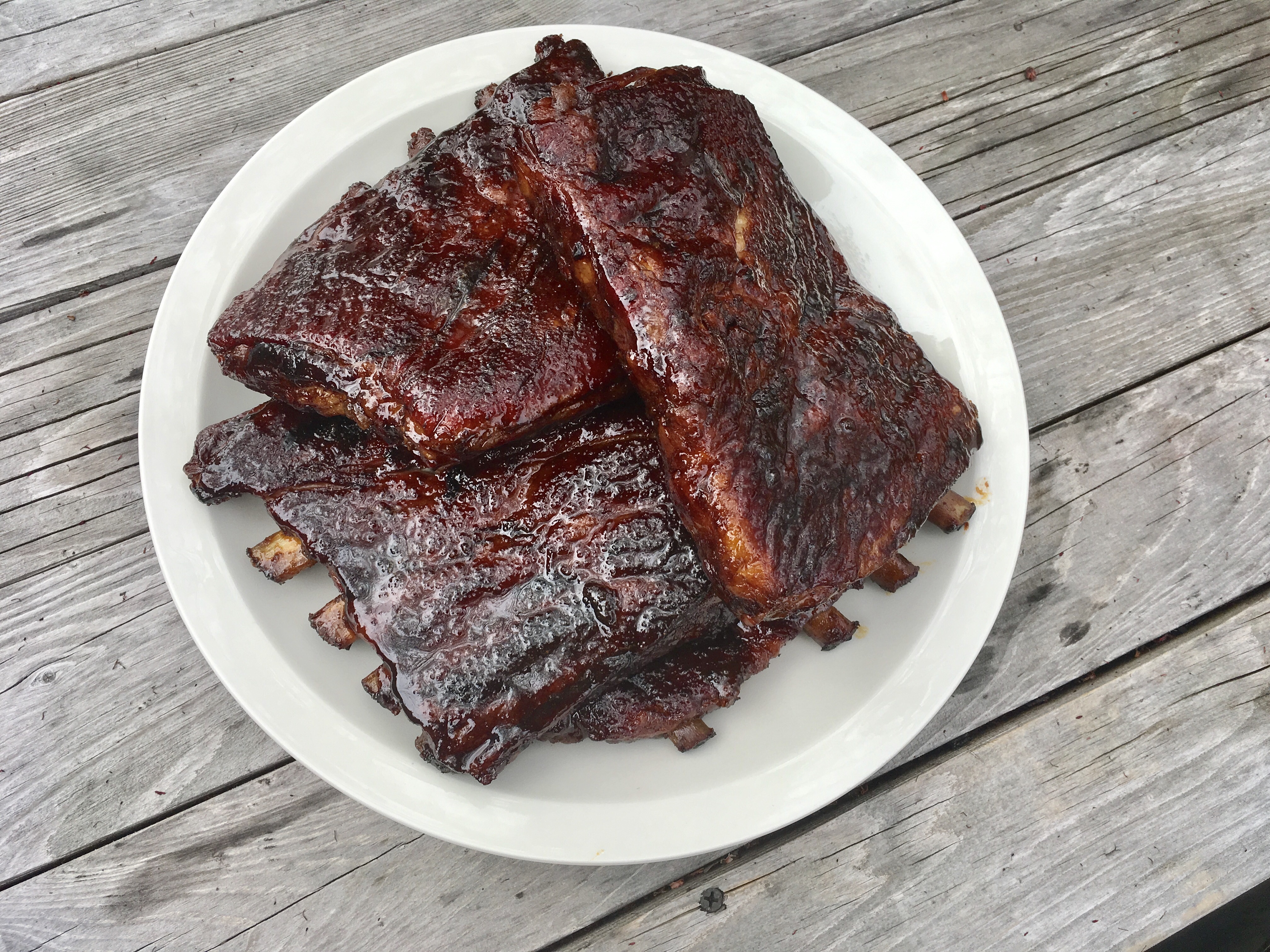
I had 5 lbs. of beautiful St. Louis-style heritage Berkshire (also known as Kurobuta) pork ribs thawing in the fridge, and I knew I wanted to create a new sauce or glaze with them, but I was feeling less than inspired. Our food-loving friends, Don and Johanna, showed up at our door with a gift they bought in Maine, at a shop called LeRoux Kitchen. It was a bottle of maple balsamic vinegar. It smelled wonderful…and tasted even better! I knew I had what I was looking for.

I used a smoker to make these ribs, but if you don’t have one (or just don’t want to bother with one), the ribs are just as awesome when baked in the oven.


You can easily make your own maple balsamic vinegar by combining a 1/2 cup of balsamic (not the super-expensive kind, but the $9-a-bottle kind) with 1 tablespoon of maple syrup. Add more or less maple to taste.


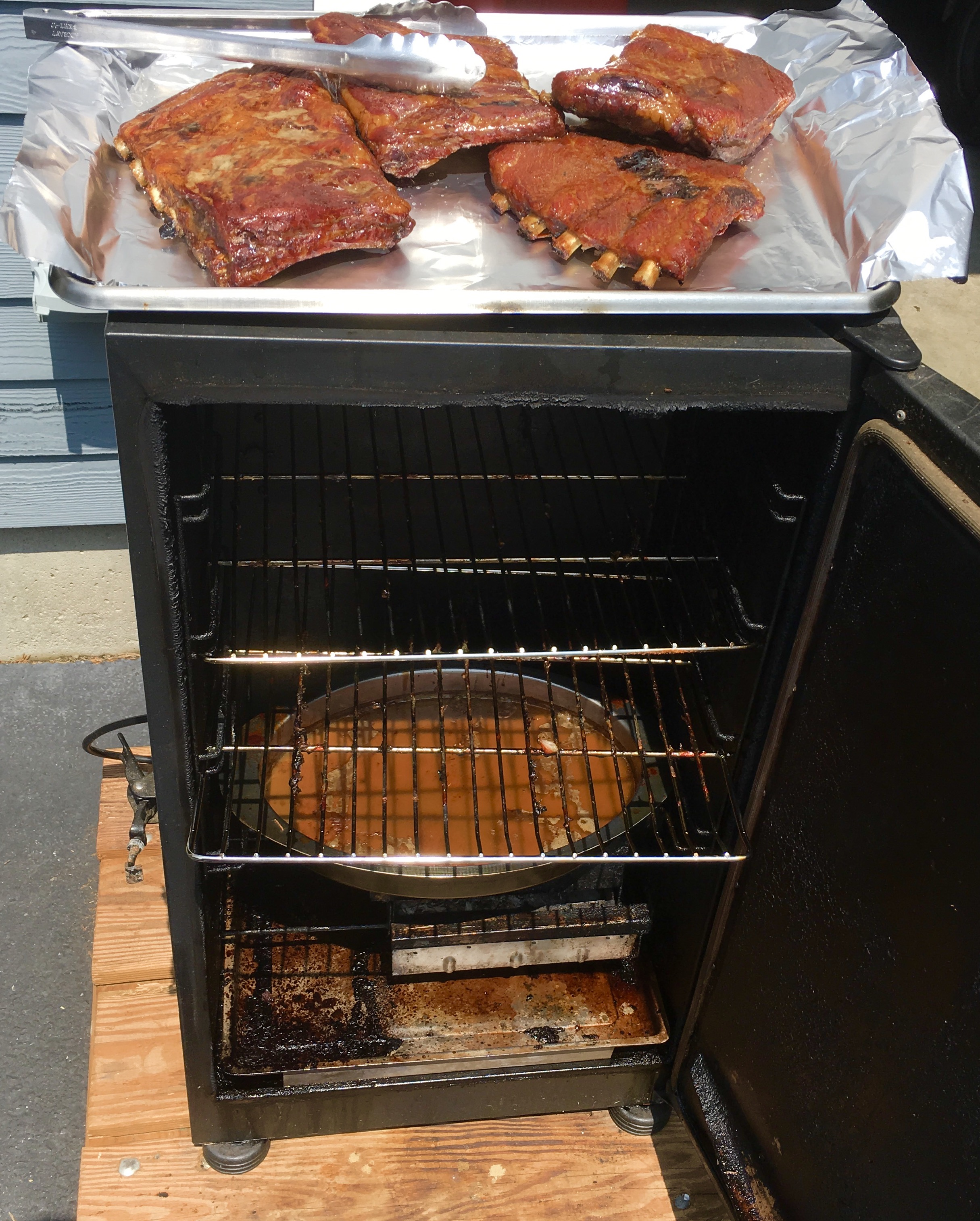
Yup…my old smoker…she’s been used a few times!


I originally used an electric digital smoker made by Masterbuilt. That beauty (above) has now made way for the Ninja Outdoor Woodfire Pizza Oven, which is also a smoker. I like the fact that I can set the temperature and time, and not have to constantly watch it. It has a side chute where I can add hickory smoking pellets when I want, and the results are consistent. I suppose some grilling fanatics might say I’m cheating, but a digital smoker allows me to live a life, hang out, do some yard work, whatever. I don’t have time to babysit.

I chose to smoke my ribs for about 4 hours in the smoker, lightly seasoning them first with Lawry’s Seasoned Salt, adding hickory chips to the smoker only once to give them a “light smoke.”

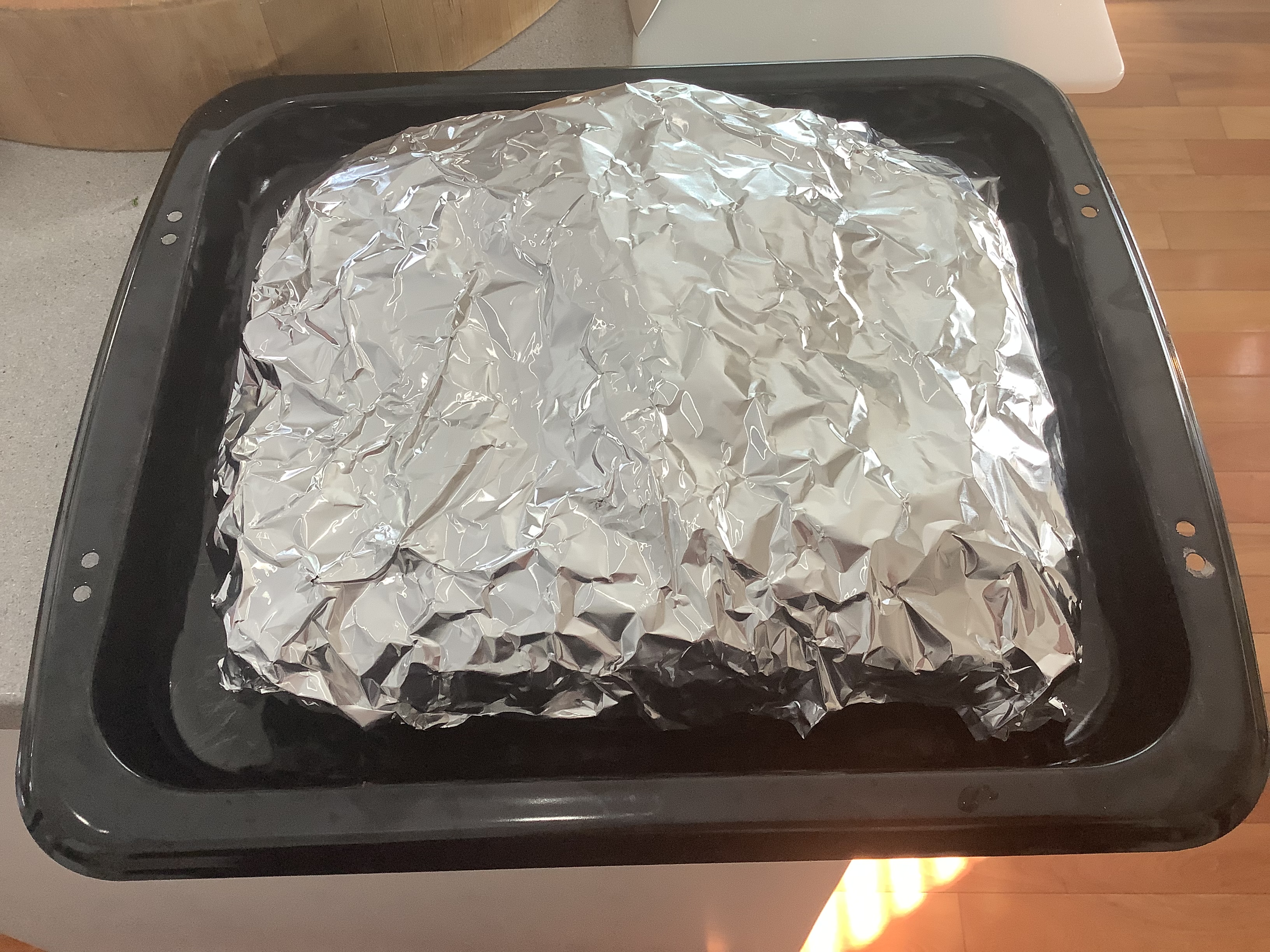
To avoid drying out the ribs, after a few hours of smoking, I like to brush them with a glaze, wrap them in foil, and then put them back in the smoker…or even in the oven. The glaze flavors the meat and also adds a little steam that tenderizes it.


Brushing with glaze, then wrapping in foil.

5 lbs. pork ribs (I get St. Louis-style Berkshire pork)
Lawry’s Seasoned Salt

1 cup water
1/2 cup maple balsamic vinegar (OR 1/2 cup balsamic vinegar + 1 tablespoon maple syrup)
1/4 cup brown sugar
1/2 teaspoon granulated onion
1/2 teaspoon granulated garlic
1/2 teaspoon cayenne pepper sauce (I like Franks’ Red Hot)

Prepare the ribs by removing the inedible skin on the back of the rack. The easiest way to do this is to cut a little “tab” of skin, then pull it with your fingers. Holding the skin with a dry paper towel will help your grip. I cut the racks in half to fit my smoker.

Season the ribs lightly with Lawry’s Seasoned Salt on both sides and place them into a 250° smoker (or oven, if you don’t have a smoker) for 3 hours, smoking lightly with hickory wood. (Skip the hickory if you’re using the oven.)

In a saucepan over high heat, combine the water, maple balsamic vinegar, brown sugar, onion, garlic, and cayenne pepper sauce. Stir well, and let it come to a boil. Let it reduce by half, leaving it still watery. Set it aside.

After 3 hours, remove the ribs from the smoker (or oven), placing them on a sheet of aluminum foil. (I use Reynold’s Non-Stick Foil, since the glaze will be sticky.) Brush both sides of the ribs with half of the glaze, and place the ribs meat-side-up on the foil before sealing the it around the ribs. Place the aluminum foil packets on a baking sheet, then into a pre-heated 250° oven (or back in the smoker.)


Remove the ribs from the oven or smoker after 1 hour. Open the foil packets so that the ribs are now exposed. Brush the top of the ribs one more time, then put the foil back over the top and cook for 1 hour more.


SWEET POTATO CORNED BEEF HASH

Posted: September 28, 2025 in Uncategorized
Tags: , , , ,

Corned beef hash is actually a very simple thing to make. The most difficult part is the corned beef, especially if you’re curing it yourself. That process takes about three weeks…a long time to wait for a plate of hash!


If you have a package of already prepared corn beef that you bought at the supermarket, thaw it, and rinse it in clean, cold water.

I post my corned beef recipe every year around St. Patty’s Day. If you want to make your own, just use the search button on my blog to find the recipe.


A beautiful slab of corned beef, after 3 weeks of curing. I trim large pieces of fat and gristle off before cooking.


At this point, many people choose to boil the corned beef, but I don’t. Instead, I place the piece of brisket in a container large enough to hold it covered with more cold, clean water. I let it sit in this cold water for about 12 hours. I dump some ice into it to keep everything cold.  I change the water a couple of times over the 12 hours. Much of the salt will be washed away by this process. I pat the meat dry with paper towels.

I preheat the oven to 325°.


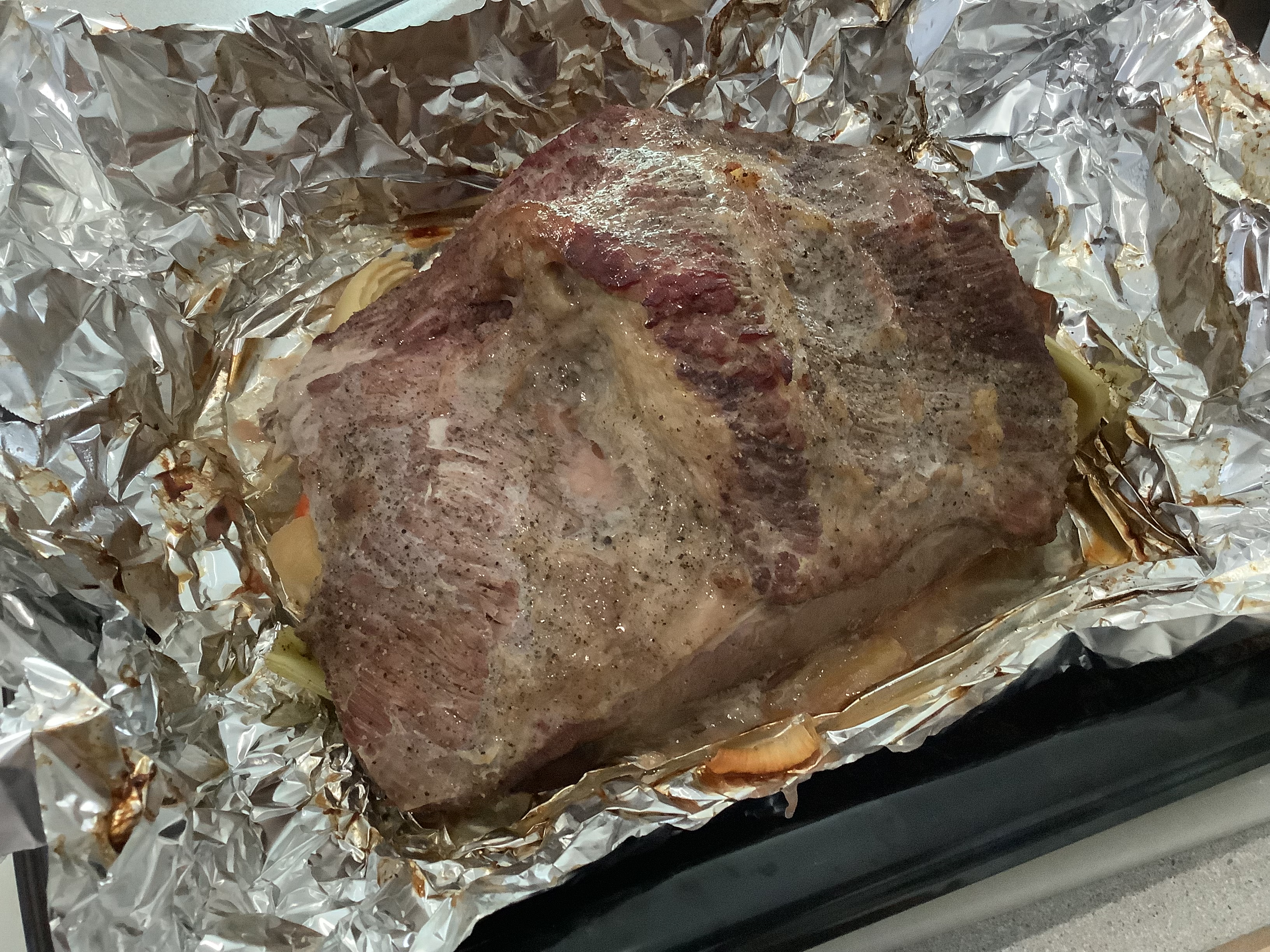
I lay a couple of sheets of foil down on a baking pan, and then add chopped carrots, celery and onions to it. I place the brisket on top of the veggies.


I wrap the brisket tightly in the foil, and place the pan on the center rack of the oven.


I let it cook for about 3 1/2 hours for a 8-pound piece of meat. Cook it less if yours is smaller.


I let the meat cool to room temperature in the foil, then unwrap it, and cut it into manageable sized pieces for future use. I wrap each piece tightly in plastic wrap once it has cooled, and I place the wrapped pieces in a sealed bag and into the freezer. 


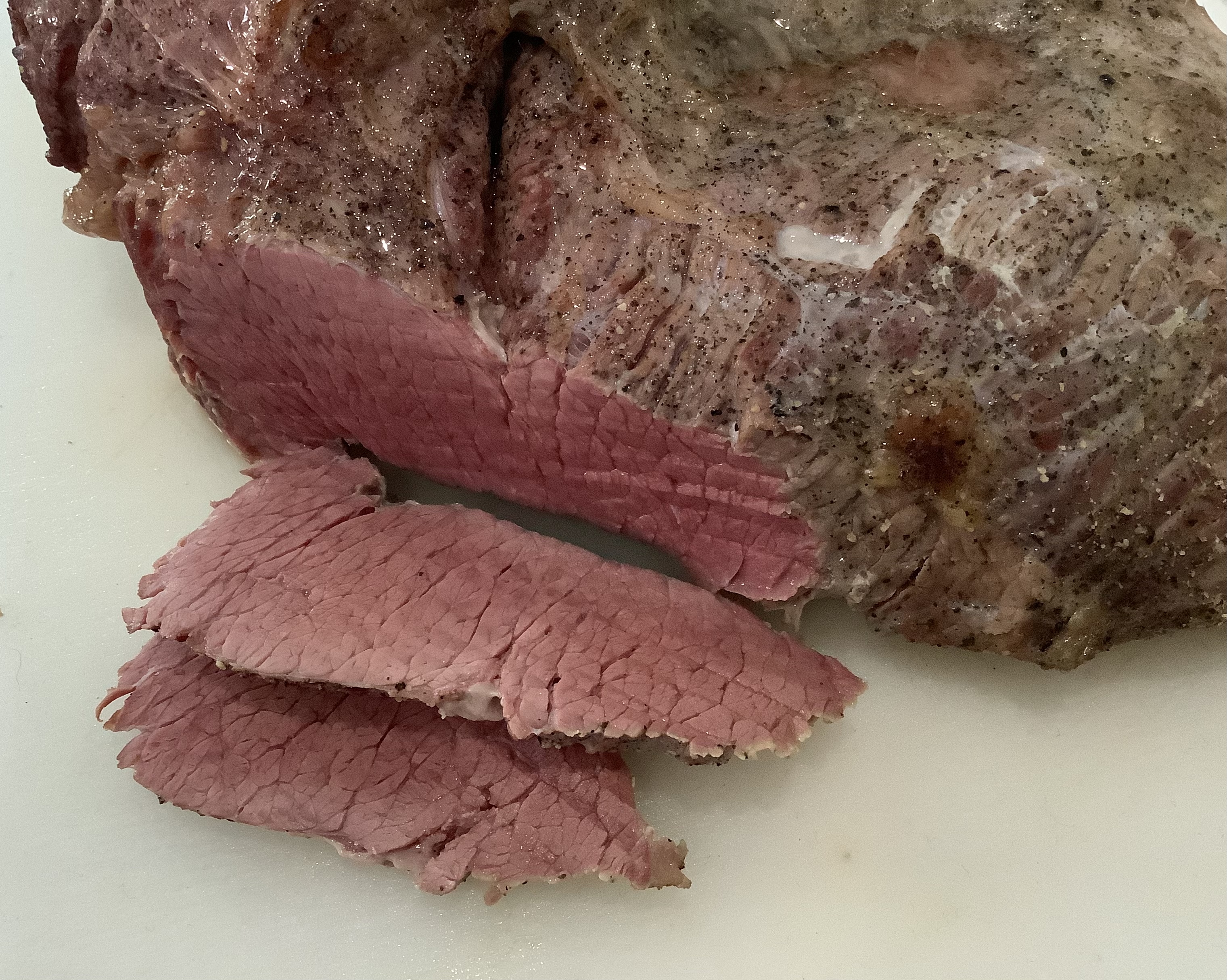
Of course, you have to slice off a few pieces to taste your masterpiece!


Once the corned beef has cooked, it’s ready for sandwiches, and of course, hash! (Pastrami is another series of steps, discussed in another blog.)


A piece of cooked corned beef, about 1 lb., cubed
1 medium onion
2 lbs. sweet potatoes 
olive oil
salt and pepper

Preheat the oven to 350°. If the corned beef is frozen, remove it from the freezer an hour earlier, letting it come to room temperature.


Peel and cube the sweet potatoes. Make the cubes about a half-inch around. Placed them in a single layer on a large sheet pan, sprinkling them with olive oil, and seasoning them with salt and pepper. Toss the sweet potatoes to coat them with the seasonings and then place the sheet pan in the oven, baking for about 25 minutes, until the sweet potatoes are fork-tender and have tasty caramelized, slightly charred edges.


A few minutes before the sweet potatoes are done cooking, finely chop the onion and sauté it in a large pan with some olive oil.

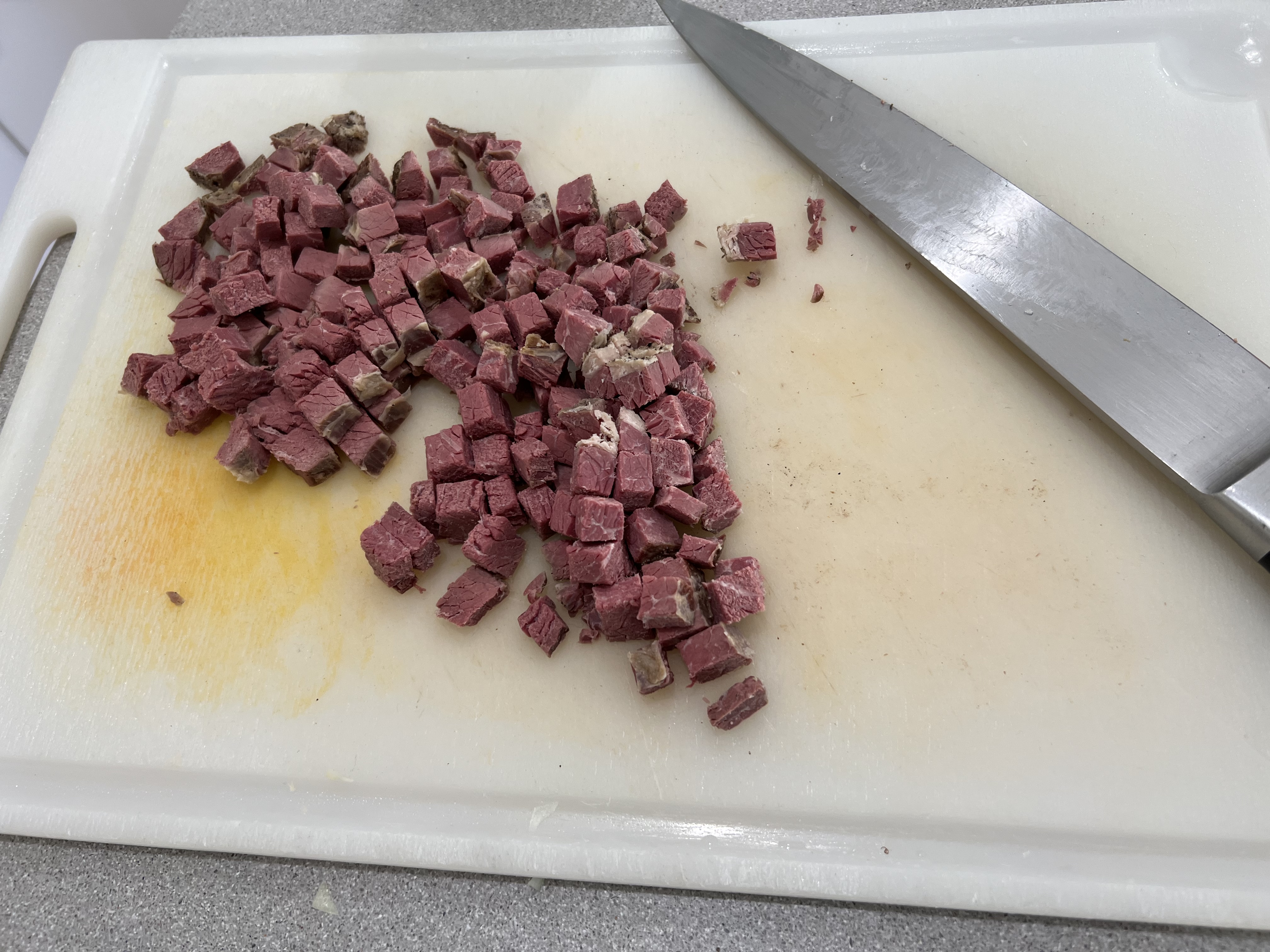
Cut the corned beef into small cubes, about a quarter-inch in size.


Once the onions are translucent, add the cubed corned beef to the pan, and warm it through.

Now add the sweet potatoes to the pan and mix thoroughly to combine. Season with salt and pepper.


Your sweet potato corned beef hash is ready to serve! It also freezes well, so don’t be afraid to make extra!

EASY FRIED GULF SHRIMP

Posted: September 26, 2025 in Uncategorized
Tags: , , , ,

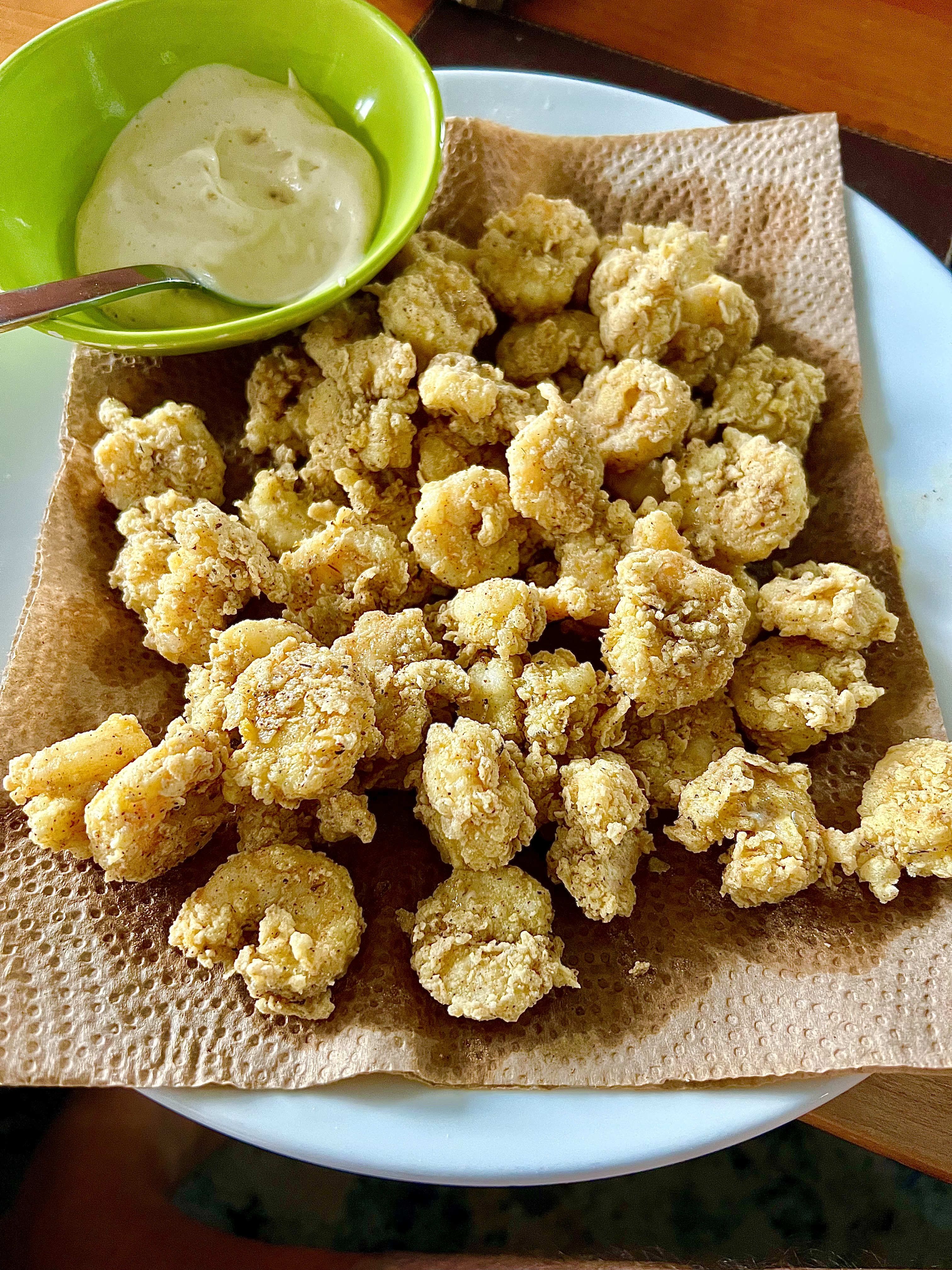
I love fried shrimp. It’s like seafood candy. And I’ve got a really easy method of making it.

For me, the secret to great fried shrimp is a light batter. I’m not crazy about the heavy, almost pancake mix-like batter that is used in some restaurants for shrimp or onion rings.

As I looked through many recipes, I found that the secret to a lighter batter is rice flour. I didn’t have any in my cupboard per se, but then I found a bag of Bob’ Red Mill Gluten_free 1 to 1 Baking Flour, which turns out to be mostly rice flour. I decided I would use that, scooping a couple of cups of it into a bowl.

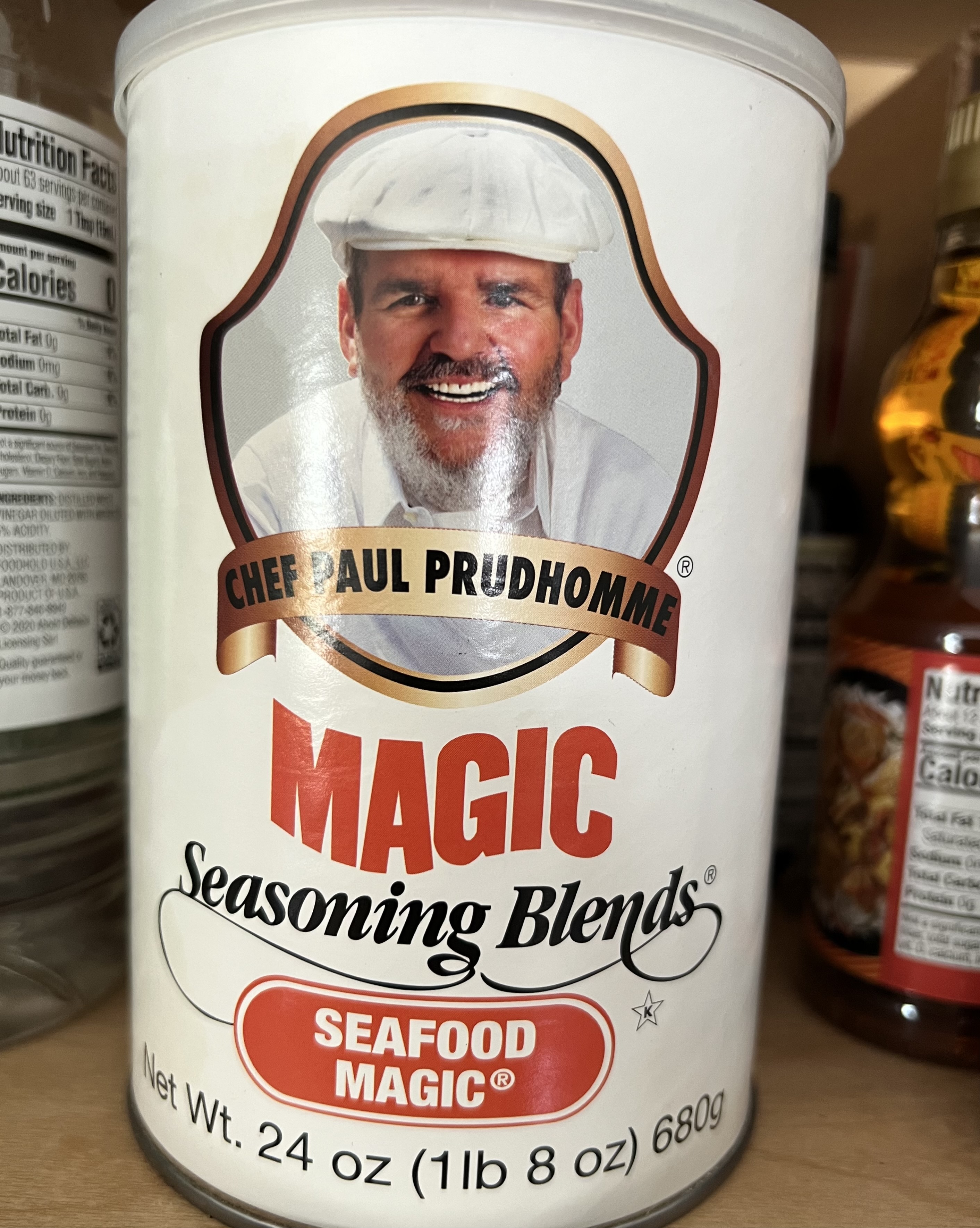
My go-to seafood seasoning is Chef Paul Prudhomme Seafood Magic. I added a couple of tablespoons of that to the flour, and mixed it well.

In a separate bowl, I scrambled two eggs.

I use only wild-caught American shrimp, never the nasty stuff from Asia. Thawing the shrimp is simply a matter of placing the frozen shrimp in a bowl, and covering them with cold water (never warm) and in a couple of hours, they’ve thawed out. Then I drain the bowl, and dry the shrimp with paper towels.

In a pan on the stove, I have about an inch of a high smoke point oil, like avocado oil, heating it to about 325°, using a thermometer to check.

Cooking in batches, I put about a dozen shrimp into the eggs, coating them well, then transferring them to the flour mixture, coating them well again, and shaking off the excess. Then I carefully put them in the hot oil. About 30 to 45 seconds on each side is all the shrimp needs to be perfectly cooked. I drain them on paper towels, and they are ready to eat!

I love a little remoulade sauce to go with my fried shrimp, so I grab some mayo and Dijon mustard, and mix them in a bowl to my desired ratio. (Sometimes I like a lot of mustard…other times, not so much.) To this, I add another great “cheat:” Tony Chachere’s Original Creole Seasoning–again–to taste.

Now I’m ready to eat!

FRIED GREEN TOMATOES

Posted: September 24, 2025 in Uncategorized
Tags: , , , ,

Every year, I still have a lot of green tomatoes on the vine as the summer comes to an end. Fried green tomatoes are the tasty solution to the problem.

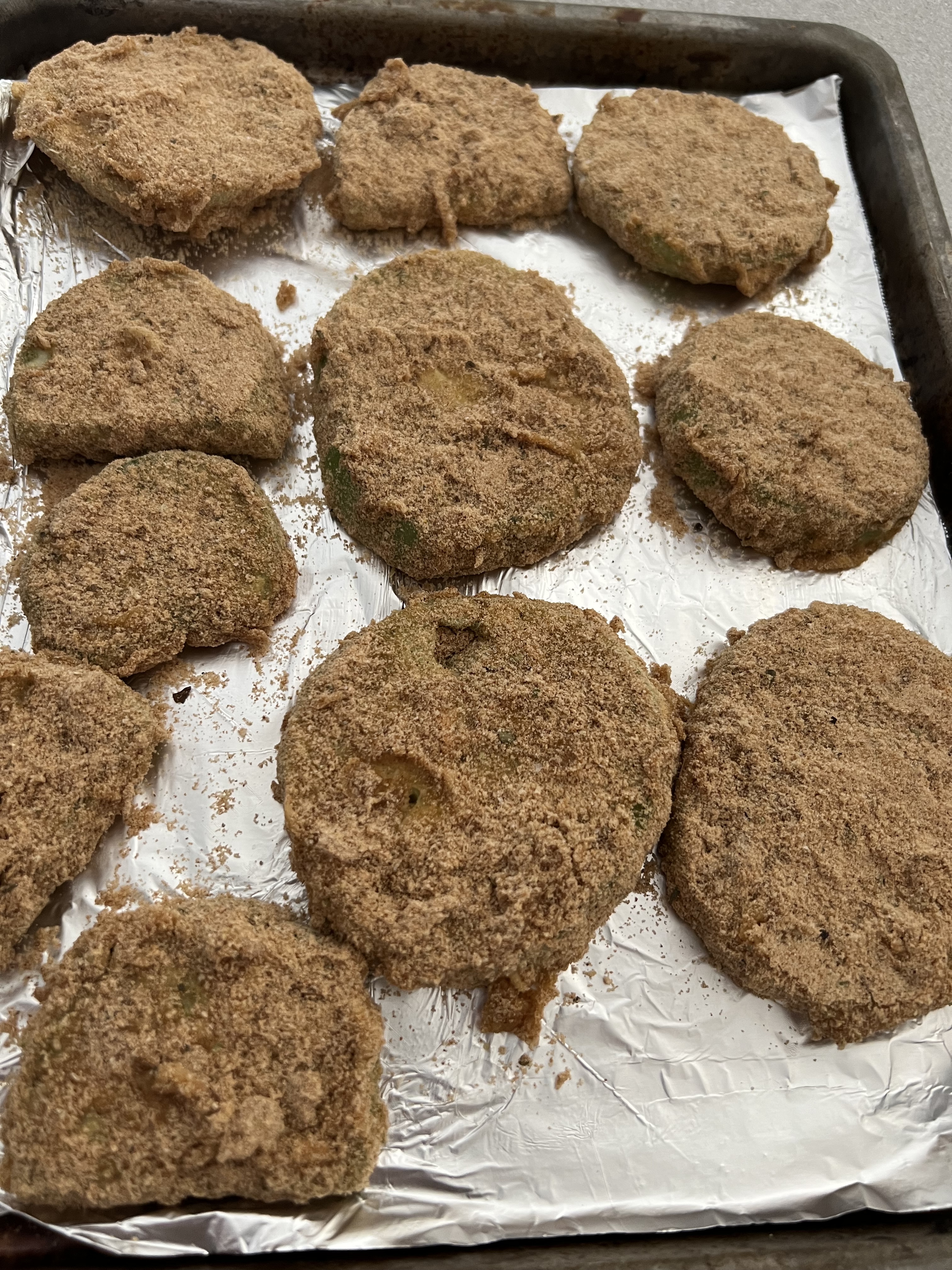
It’s a really simple process of slicing the tomatoes, seasoning them with salt and pepper, dusting them with flour, dipping them in egg, and then rolling them in some flavored breadcrumbs before frying.

Good news for those that need it all gluten-free! It can happen if you follow my instructions below.

Green tomatoes, sliced
Salt and pepper
All-purpose flour (I use Bob’s Red Mill 1-to-1 Gluten-Free Baking Flour)
2 eggs, beaten
Seasoned breadcrumbs (I make them gluten-free…see below)

At first, I sliced my tomatoes at about 1/4″ thick, but I found that if I could make them just a bit thinner, they would come out even crispier. So now I go with about a 1/8″ thickness.

I place the tomatoes on a cutting board, and season them with the salt and pepper.

I then set up my 3 bowls for adding the breading. In the first bowl, the all-purpose flour. (I like using the Bob’s Red Mill 1-to-1 Gluten-Free Baking Flour because it’s mostly rice flour and it makes the coating lighter.)

In the second bowl, I whisk a couple of eggs.

In the third bowl, I place my seasoned breadcrumbs. (You can buy Italian seasoned breadcrumbs, but I make my own by toasting a loaf of Udi GF bread, tossing the pieces into a blender to mill them down to a powder. I add oregano, basil, parsley, salt and pepper, granulated garlic and granulated onion, then whiz the blender for just a few seconds to combine everything. I place this in the third bowl.)

Then it’s time to do the one-handed method of dipping the tomato slices one-by-one into the egg, then dropping it into the breadcrumbs, where the other hand takes over to cover the tomato with a light layer of breadcrumb. Do the same for all the tomatoes.

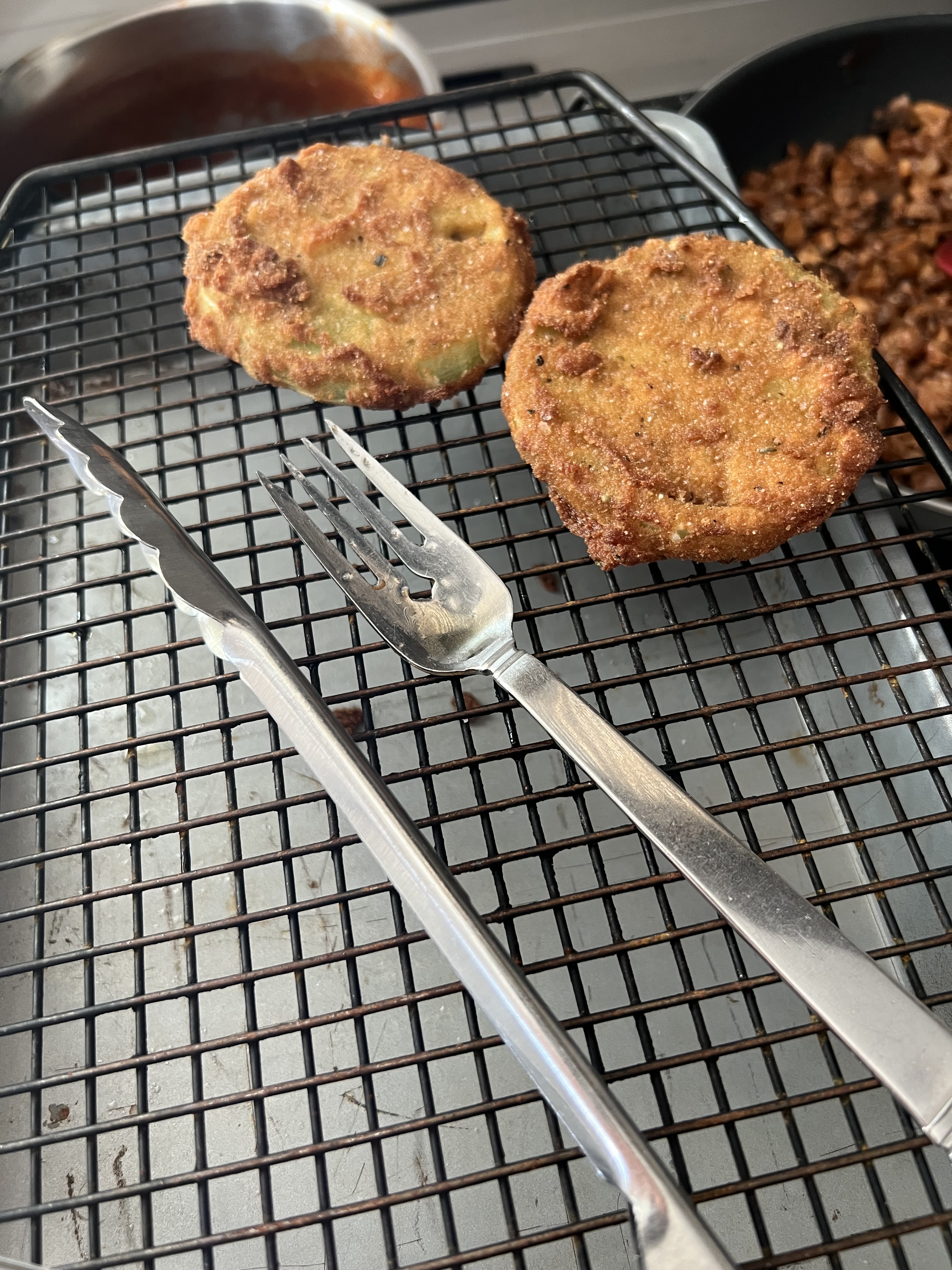
I fry the tomatoes at 350° in a non-seed oil with a high smoke point, like avocado oil, until golden.

I place the tomato slices on a wire rack to cool, seasoning them immediately out of the fryer with some sea salt.

A dipping sauce, like marinara sauce, goes well with these tasty bites!

ASIAN DIPPING SAUCE FOR DUMPLINGS

Posted: September 22, 2025 in Uncategorized

A great dipping sauce for Chinese dumplings, known as Jao-Tze, needs to be more than just a bowl of soy sauce. Sure, if you’re having sushi-grade raw fish, you may want to keep it simple with a gentle dip of high-quality soy sauce to preserve the subtle flavors of the fish, but sometimes you want more.

If you’re having dumplings, chunks of pork, beef on a skewer, or grilled chicken, a dipping sauce with more flavor is essential.

Inspired by what I call my Bible of Chinese cooking, “The Chinese Cookbook,” by Craig Claiborne and Virginia Lee (printed in 1972), I tweaked the recipe to fit my own tastes.

You don’t usually find maple syrup in Asian cooking, but I found that it added just the right amount of sweetness needed, and I prefer it over the more commonly used honey.

1/4 cup dark soy sauce
1/4 cup white vinegar
1 tablespoon sesame oil
1 tablespoon maple syrup
2 teaspoons freshly grated ginger
1 teaspoon finely minced garlic
3/4 teaspoon Chinese chili garlic sauce
1/2 teaspoon sugar
1/2 teaspoon rice vinegar
1 green onion, finely chopped

I combine all the ingredients in a bowl and mix well.

I store it in the fridge in a container with a lid, and give it a good shake right before using, to re-mix the ingredients.

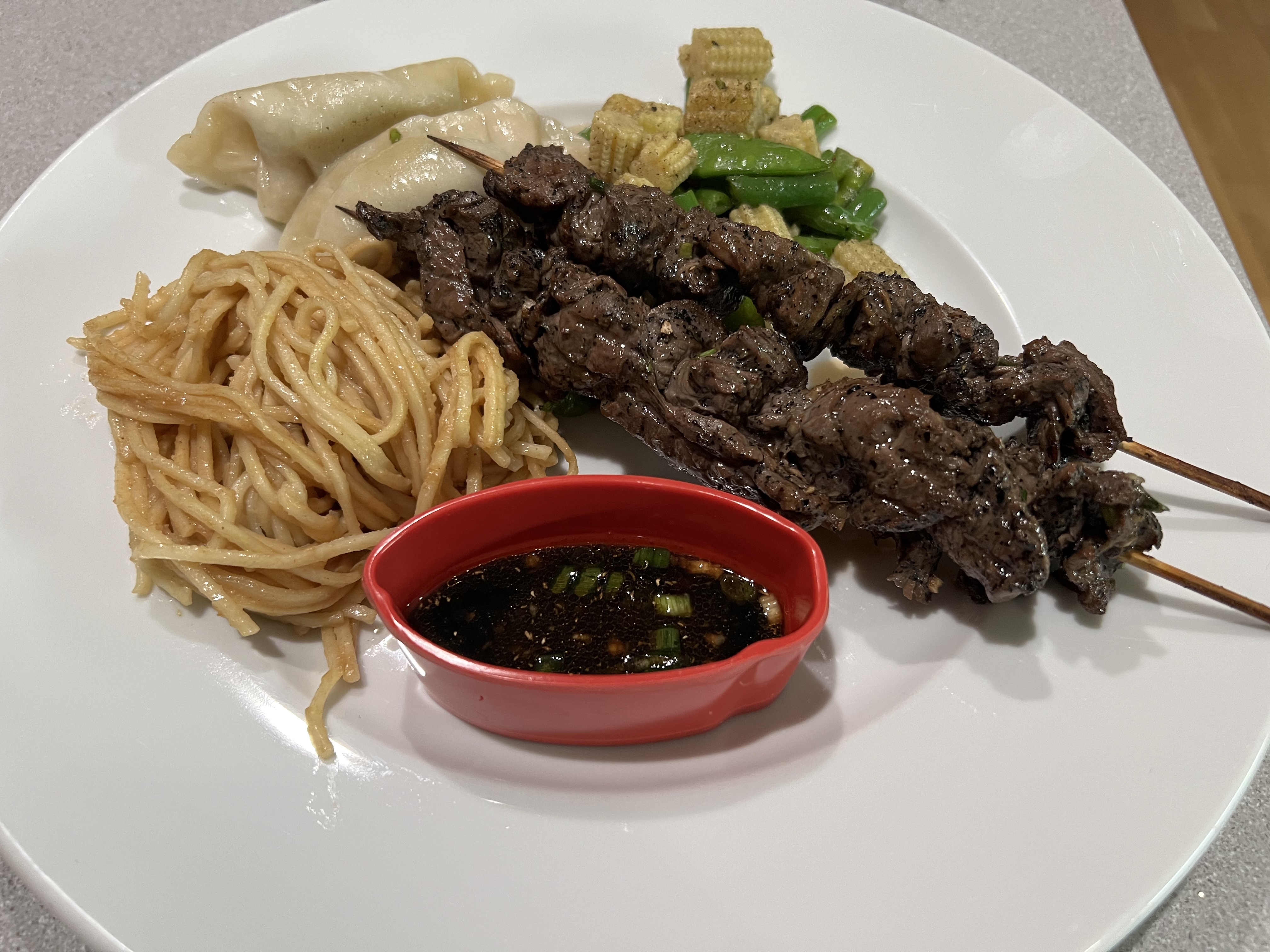
I used this dipping sauce as part of a meal I made with beef skewers (posted recently), stir-fried veggies, dumplings, and lo mein with a peanut-chili sauce.