Posts Tagged ‘garden’

At a recent summer garden dinner for 12 of our friends, I wanted to serve my corn and tomato salsa that I featured here a few weeks ago.

We “smuggled” a few treats from a recent visit to Santorini Greece: capers, caper leaves and sun-dried tomatoes. Adding them to fresh corn and tomatoes gave it that salty bite that. I usually use feta cheese in this recipe, but we served a cheese plate as an appetizer, so I left the feta out. Turns out we like it even better this way…

1 dozen fresh ears of corn, lightly sautéed in olive oil
2 dozen (or more) tiny tomatoes, cut in half
1/2 small red onion, finely chopped
2 tablespoons capers
1 tablespoon caper leaves
2 tablespoons finely chopped sun-dried tomatoes
1/4 teaspoon black pepper
2 tablespoons white vinegar
1 tablespoon extra virgin olive oil (in addition to what you saute the corn with)

Slice the kernels of corn off the ears with a sharp knife. Saute them in a little olive oil, just to remove the raw taste. Don’t over cook them!

Combine the corn with all the other ingredients and place in a bowl in the fridge.

Just before serving, let it come back to cool, not cold, and check for seasoning. The capers and caper leaves are salty, so I’m careful not to over-salt.

The definition of a consomme is: “a clear soup made with concentrated stock.” I might add “mind-blowing” to that sentence, especially with this recipe. The key to success– and this is crucial–is to use absolutely garden-fresh, in-season ingredients. If you try this with greenhouse or supermarket tomatoes, you’re just wasting your time.

FullSizeRender (9)

4 1/2 lbs. of fresh garden tomatoes (my favorite is the heirloom: Brandywine)
1 large bunch of fresh basil, leaves and stems
1 2-inch piece of fresh horseradish, peeled
1 clove of garlic, peeled
1 tablespoon white wine vinegar (I use Alessi)
2 oz. vodka (I use Tito’s)
sea salt and pepper


Remove the core of the tomatoes, but leave everything else, including seeds and skin.

Put all the tomatoes, basil, horseradish, garlic, vinegar and vodka in a blender or food processor. You might need to do this in batches if your equipment can’t handle it all.

Process until you get a kind of slush.

Line a mixing bowl with a double layer of cheesecloth and pour the tomato slush mixture into it. Gather up the corners of the cheesecloth carefully, and tie them securely so you can lift the bundle up by the knot. Hang the bundle from a hook over a clean bowl in the fridge so that it catches the liquid that drips out, and leave the whole thing in there overnight. The liquid that drips out will be clear. (You can place an optional slice of beet in the bowl to add color, but I choose not to, because I think it changes the flavor.)

Cheesecloth bundle dripping overnight in the fridge.

Cheesecloth bundle dripping overnight in the fridge.

To serve, chill bowls (or in this case: the sipping glasses) in the fridge. When ready to serve, ladle out the consomme and garnish with a tiny basil leaf. A drop of excellent quality olive oil is optional.

Synthetic cheesecloth apparatus. The real thing works better.

Synthetic cheesecloth apparatus. The real thing works better.


I tried using a synthetic cheesecloth for this recipe, and I found that it doesn’t filter out enough of the solids to make a clear consomme. You could use it along with real cheesecloth, just to use the stand, or just hang it all in real cheesecloth, as described in this recipe.

KOHL-SLAW

Posted: July 10, 2016 in Food, garden, Recipes
Tags: , , , , ,

Kohlrabi is probably one of the most misunderstood vegetables around. Most people don’t know what to do with them. Kohlrabi is a member of the cabbage family and can be eaten raw as well as cooked.

For me, the real joy of kohlrabi is biting into a crunchy, sweet, freshly picked and peeled bulb right out of the garden. Unfortunately, much of the kohlrabi you find in a supermarket (or even a farm stand) is grown larger than a tennis ball, making it tough, woody and dry. And they usually remove all the leaves, which are delicious.

The kohlrabi harvest has just begun in my home garden, and I make a slaw with the leaves and the bulb. I use my Awesomesauce recipe as the dressing.

FullSizeRender (10)


s into the bowl.
2 kohlrabi bulbs with leaves, de-stemmed
1 carrot, peeled
For the Awesomesauce:
1/2 cup mayonnaise
1 tablespoon ketchup
1 tablespoon yellow mustard
1 tablespoon dill pickle relish
1/4 teaspoon garlic powder
1/4 teaspoon paprika
Pinch cayenne pepper

Combine the Awesomesauce ingredients in a bowl and keep it in the fridge.

Wash the veggies thoroughly before using. Pull the leaves off the kohlrabi bulb, and remove the stems. Grab a bunch of leaves at a time, roll them up tightly, and slice as thinly as you can into thin ribbons. Place in a bowl. Do this with all the leaves.

Peel the thick skin off the kohlrabi bulb and slice it as thinly as you can. Then take the slices and cut thin sticks out of them. Toss into the bowl.

I like to peel the carrot with a veggie peeler, then finely chop the slices. Toss into the bowl.

Add Awesomesauce to taste and toss well.

FullSizeRender (9)

Cover and refrigerate, letting the flavors blend for a couple of hours before serving.

With a week of rain followed by a week of sunshine, the garden has really taken off. Nights are still too cool (in the 40’s) for tomatoes to go out, so they’re hanging out in my greenhouse until they’re ready to be transplanted.

Happy bees buzzing around the blossoms of my old and still productive apple tree.

Happy bees buzzing around the blossoms of my old and still productive apple tree.


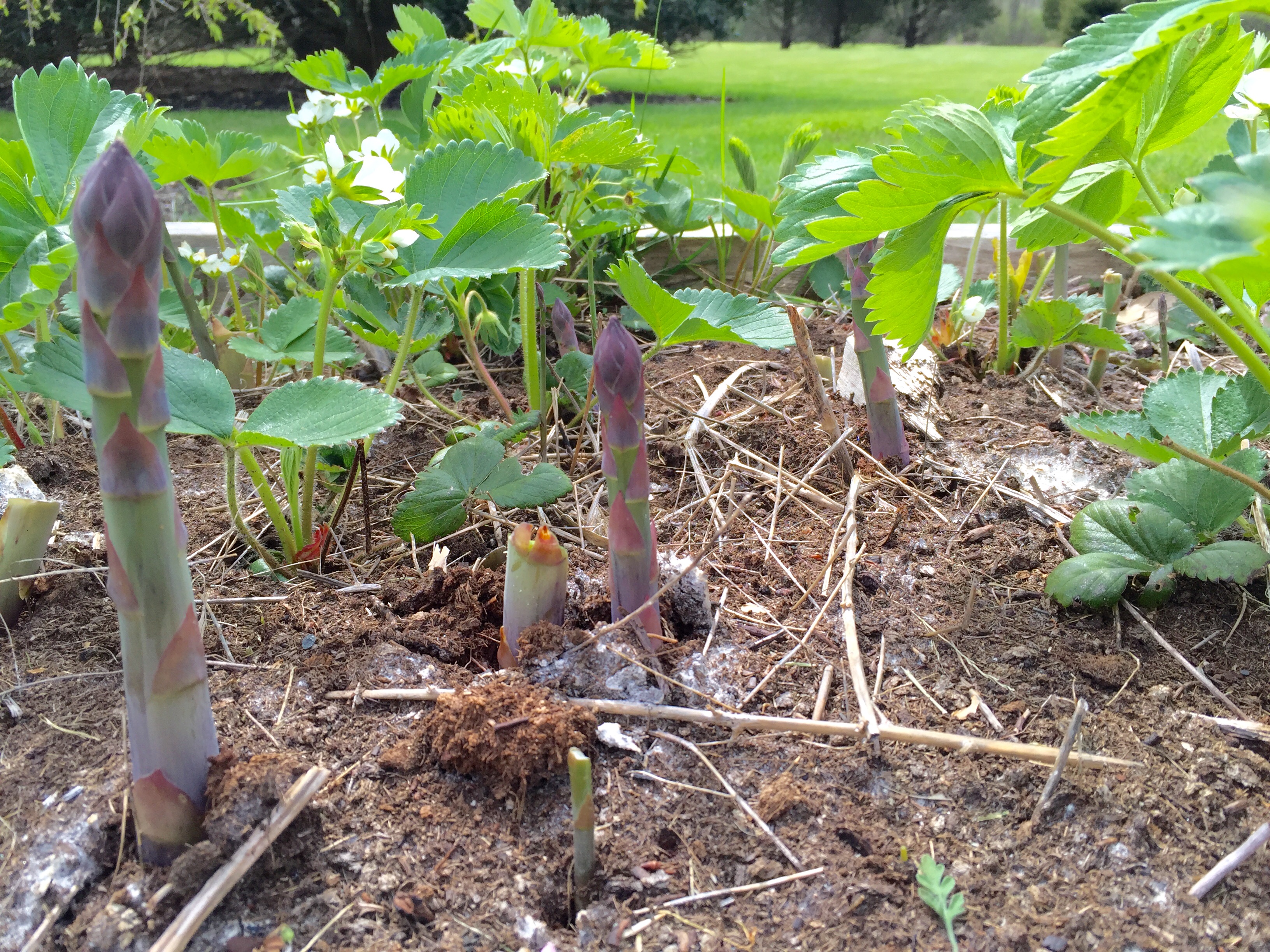
Strawberries and asparagus share the same bed. A good combination: by the time the asparagus harvest is over, the strawberries fill in the bed. And by the time the strawberries are all picked, the asparagus stalks shoot upward to produce the ferns that will recharge the plants for next year's crop.

Strawberries and asparagus share the same bed. A good combination: by the time the asparagus harvest is over, the strawberries fill in the bed. And by the time the strawberries are all picked, the asparagus stalks shoot upward to produce the ferns that will recharge the plants for next year’s crop.


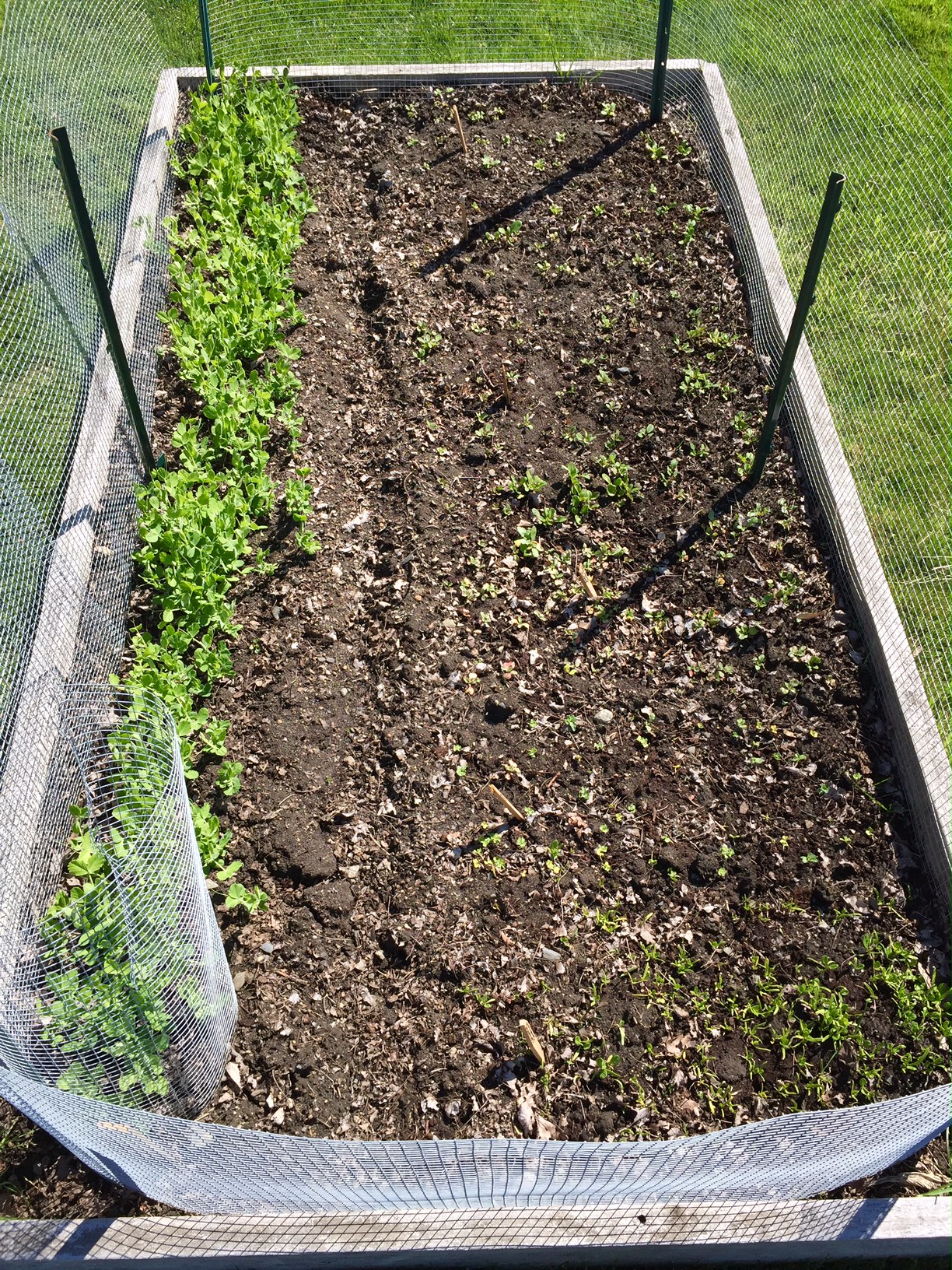
...And a check on the first bed I sowed this season: peas on the left, happy arugula, Asian greens, spinach and more on the right.

…And a check on the first bed I sowed this season: peas on the left, happy arugula, Asian greens, lettuce, spinach and more on the right.

Here’s the bed from 3 weeks ago…and the start of the season…

FullSizeRenderFullSizeRender

Fresh salads from the garden have already included: lettuce, Asian greens, scallions, arugula, spinach, asparagus, pea tendrils, fresh oregano, and kale.

I sowed some early spring seeds around March 7th in one of my raised beds. Here’s what it looked like on Day 1…

FullSizeRender


Three weeks later, germination began, albeit slowly. But you can see the happy little green seedlings popping up. On the left: peas. On the right: radishes, Asian greens, spinach, kale, arugula and others.

FullSizeRender

Now, it’s week #7, and you can see significant growth…

FullSizeRender

The peas (on the left) are about 6″ tall. Spinach (bottom right) making an appearance, too.

Another photo in a few weeks!

I sowed some early spring seeds about 3 weeks ago in one of my raised beds. Here’s what it looked like on Day 1…

FullSizeRender

Now…3 weeks later, germination has begun, albeit slowly. But you can see the happy little green seedlings popping up. On the left: peas. On the right: radishes, Asian greens, spinach, kale, arugula and others.

FullSizeRender

Another photo in a few weeks!

If you’ve got a windowsill, you can grow a variety of sprouts that will add lots of fresh flavor to any salad or stir fry. Once you’ve sprouted the seeds, the clock starts, and they can go badly rather quickly. That’s why the sprouts that you buy in a supermarket can already be half way to stale city before you even bring them home. Growing your own assures fresh sprouts when you want them, and you can’t beat the flavor.


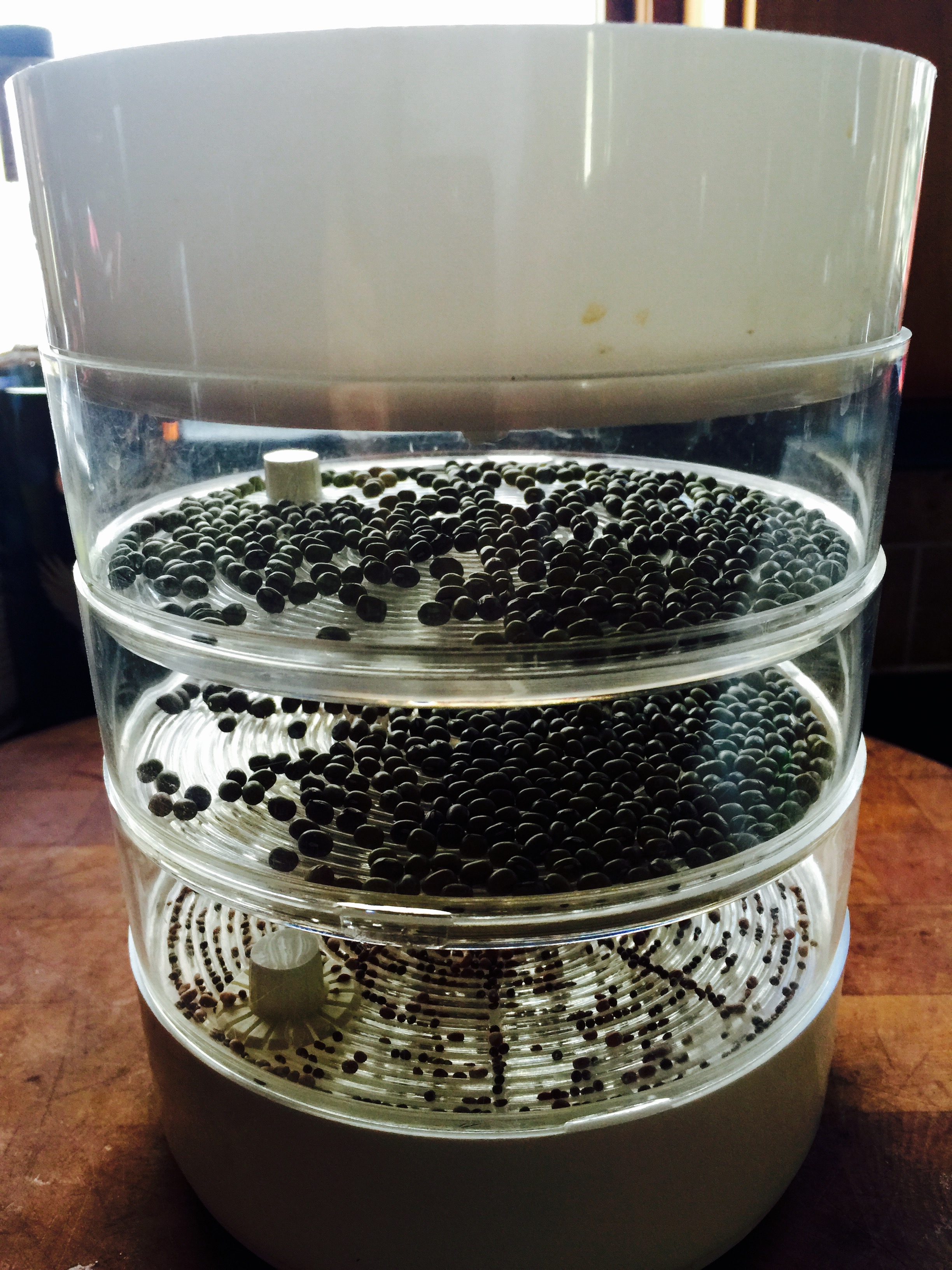
Two trays of mung bean seeds and one tray of a radish mix.

Two trays of mung bean seeds and one tray of a radish mix.


Suppliers of sprouting seeds are easy to find. My two favorites are High Mowing Seeds (www.highmowingseeds.com) and Johnny’s Selected Seeds (www.johnnyseed.com.) They also sell the sprouter, which is a stackable plastic structure that holds several layers of seeds at one time.

Stacked and ready to go.

Stacked and ready to go.


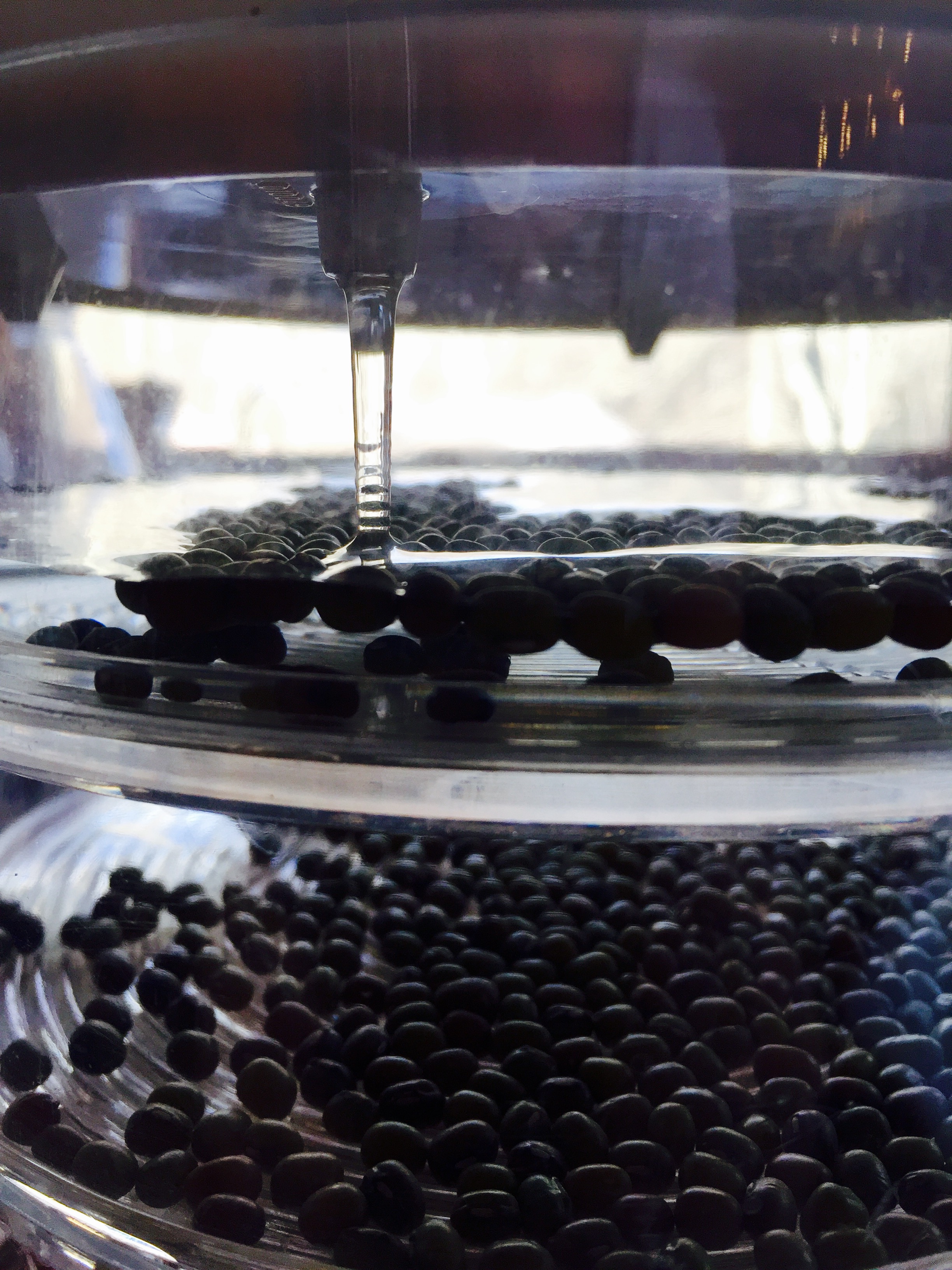
Just pour in the seeds, stack ’em up, and pour water in the top. The water trickles down through the layers, leaving behind just enough moisture to germinated the seeds.

Water trickles down through the different levels.

Water trickles down through the different levels.

Water the seeds a few times a day and in just two days, you’ll see your sprouts come alive. within 4 or 5 days, they’re totally grown, at which time you can bag them and keep them in the fridge, and start a new batch of sprouts.

Mung bean sprouts after just one day.

Sprouts after just one day.


...and after several days.

…and after several days.

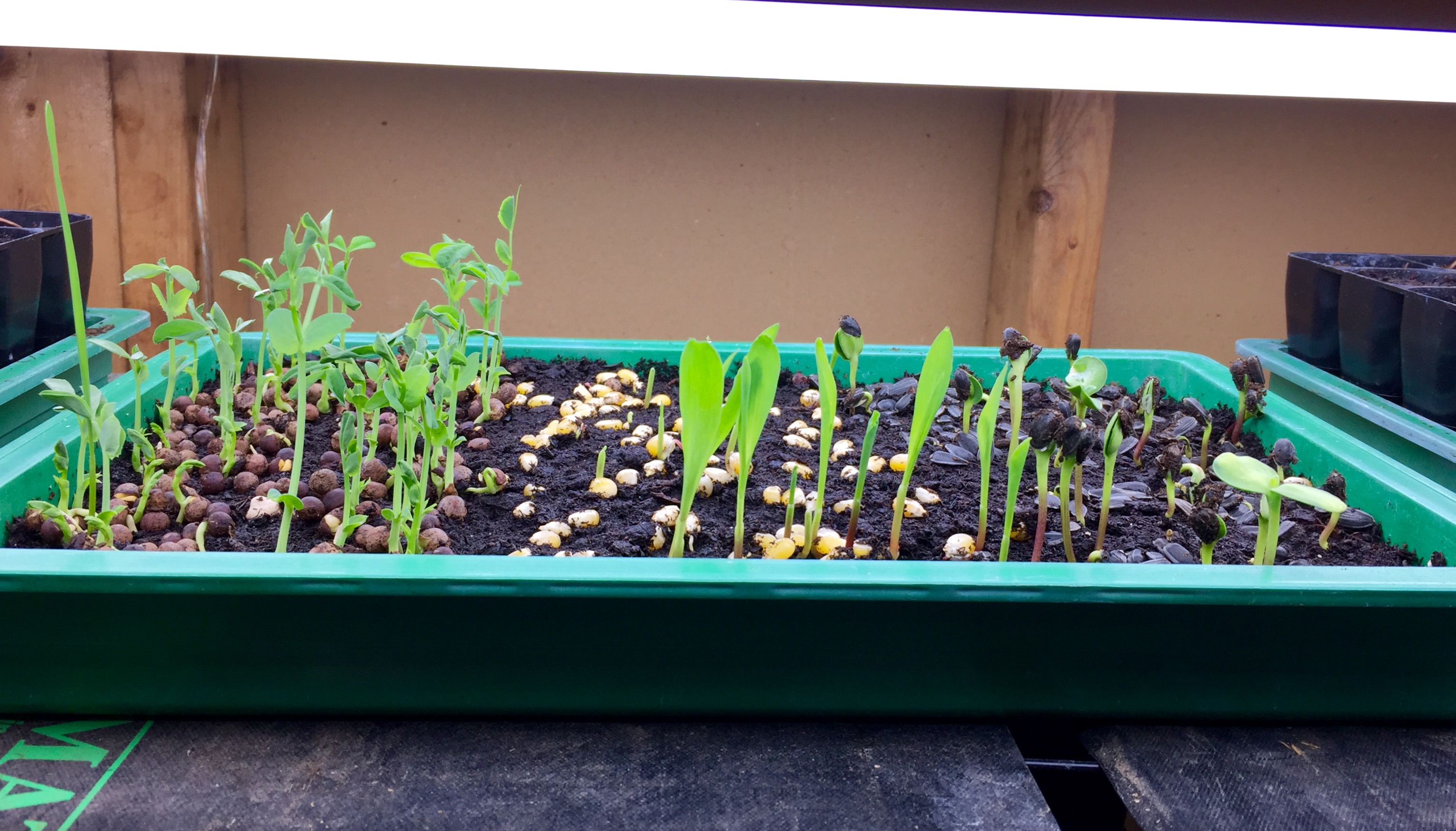
If you like micro greens, those are pretty easy to grow indoors as well, though you’ll need a windowsill with good sunlight. (Grow lights work well, too.) You place some potting mix in a shallow tray, press the seeds into the potting mix, and then water them.

Seeds ready to sprout (from left to right): sunflower, popcorn, peas.

Seeds ready to sprout (from left to right): sunflower, popcorn, peas.


In a few days, the seeds will start to sprout. when they get a few inches tall, simply snip them with a pair of scissors, and toss them into your salad. When all the seeds have sprouted, the soil and the used seeds can all go into your compost pile or garden.

Sprouting under grow lights.

Sprouting under grow lights.


I’ve bested the old adage: “Plant your peas by St. Patrick’s Day” by a week! Today’s unusually warm weather got me out in the yard, and although this 32-foot square raised bed doesn’t look like much right now, underneath that soil lurks Sugar Snap peas, Arugula, Easter Egg radishes, Spinach, and a variety of Asian greens.


FullSizeRender


That fencing material on the ground will surround the bed to keep nosy bunnies from devouring the first tasty shoots that pop up out of the soil.

I’ll take pictures every few weeks so we can see the progress.

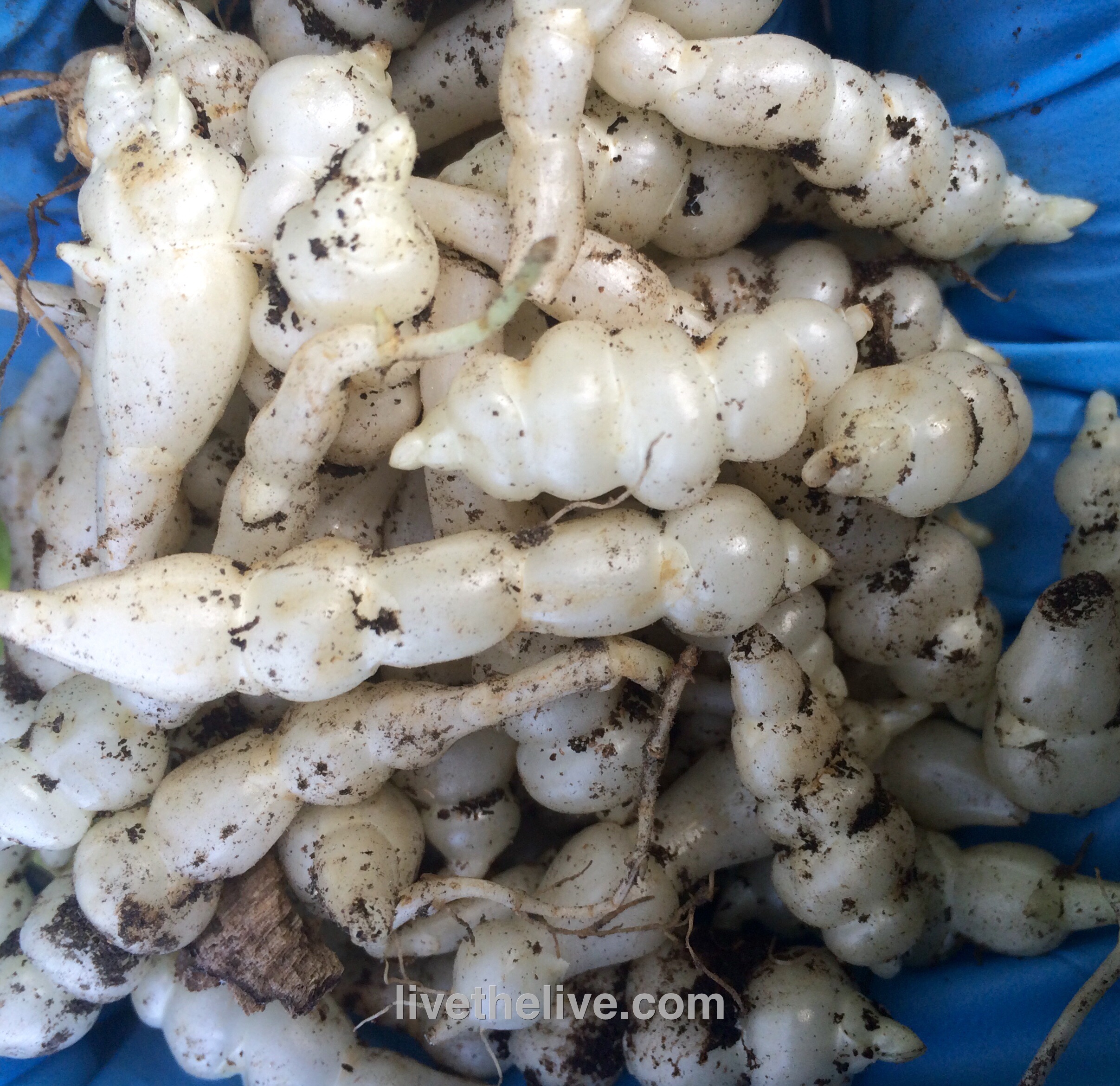
A few years ago, at Le Saint-Amour, a great restaurant in Quebec City, the dish I ordered had these small strange-looking root vegetables sitting next to my roasted duck entrée. They resembled tiny twisted parsnips…or caterpillars! I needed to know what these things were, and so I asked my French waiter, who came back with a piece of paper that had the word “crosne” written on it. He said: “I don’t know how they say it in English.”
Back at the hotel room, I went right to the laptop and started a search on-line and discovered that crosnes (pronounced crones) are also known as Chinese artichokes, and although they are somewhat common in European gardens, they’re really difficult to find in the states.
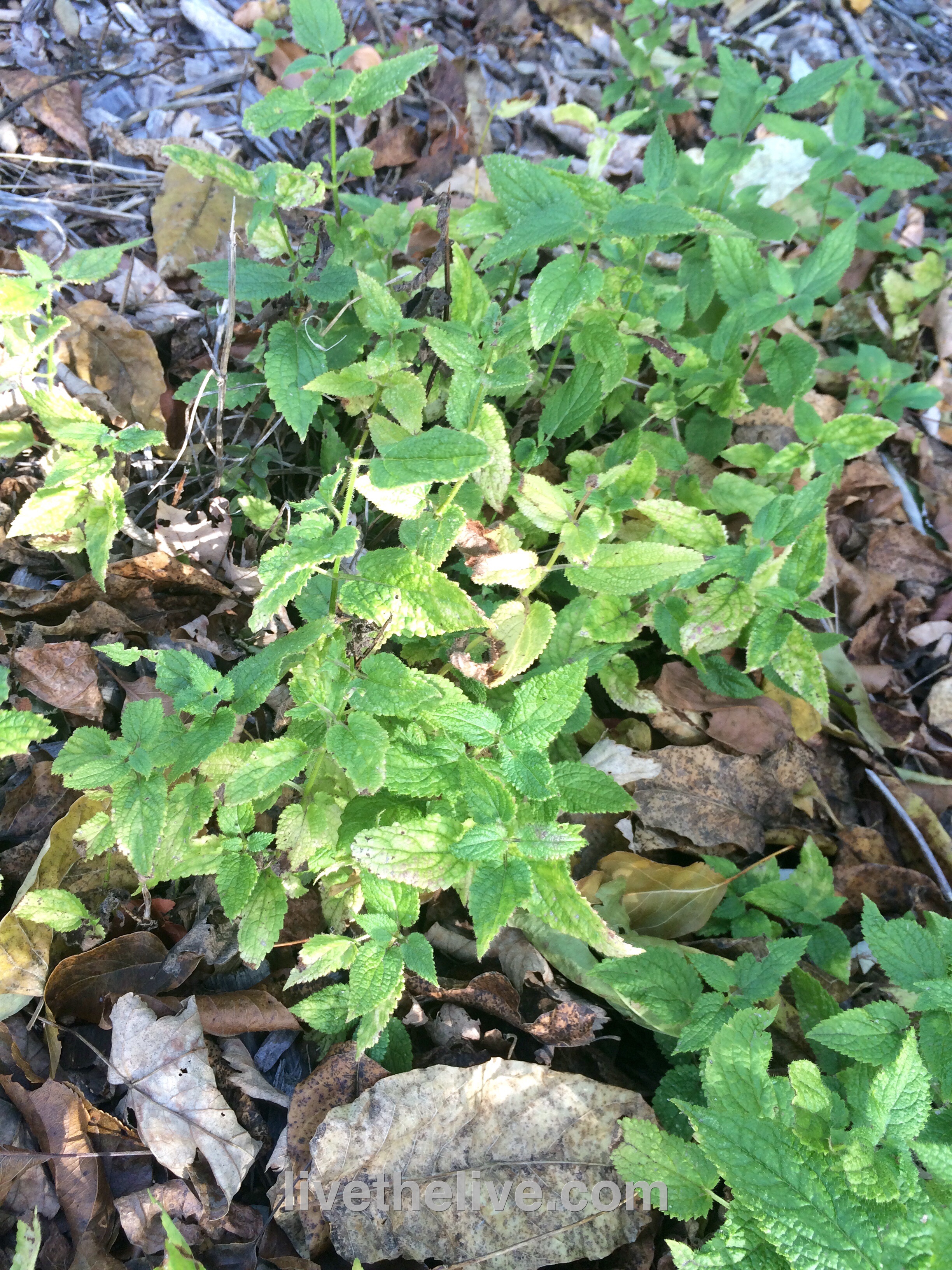
The leaves look like mint, but don't have a fragrance.

The leaves look like mint, but don’t have a fragrance.

The plant is a relative of mint (though the leaves have no aroma), a perennial, is easy to grow, spreads on its own, and has those small, convoluted and delicious root clumps (known as tubers to gardeners.) So what’s not to like? Well, apparently, it’s not the gardeners that don’t want to deal with them…it’s the chefs! The tubers are very small and need a little extra effort to make sure they’re washed clean before cooking. They don’t need to be peeled (now that would be a pain in the ass) but to many chefs, even the washing is too much of a hassle.
image
As a Master Gardener, I found all of this pretty interesting so I searched for sources to buy crosnes plants. It took a while (most growers were in Europe or Great Britain), but I finally found a source in Oregon that sold the plants and I bought a few for my home garden.
image

Much like mint, crosnes are pretty hardy and are tough to remove once well established, so they need to be planted in an area where you don’t mind if they take over. The tubers are ready to harvest October through November, and as long as I leave some in the ground over the winter, the crosnes will be back again the next year. Seems pretty low-maintenance for such a delicious treat!

image

As for preparation, a light saute in olive oil and butter (or lard), and a little salt and pepper, is all they need. They also go well with a deep, rich demi glace reduction like I had with my duck at Le Saint-Amour.

If you grow tomato plants in pots, you already know that you don’t need an actual garden plot to have a successful harvest of fresh produce. Herbs and greens can also be grown without much effort.

But have you tried potatoes or sweet potatoes?

image

POTATOES

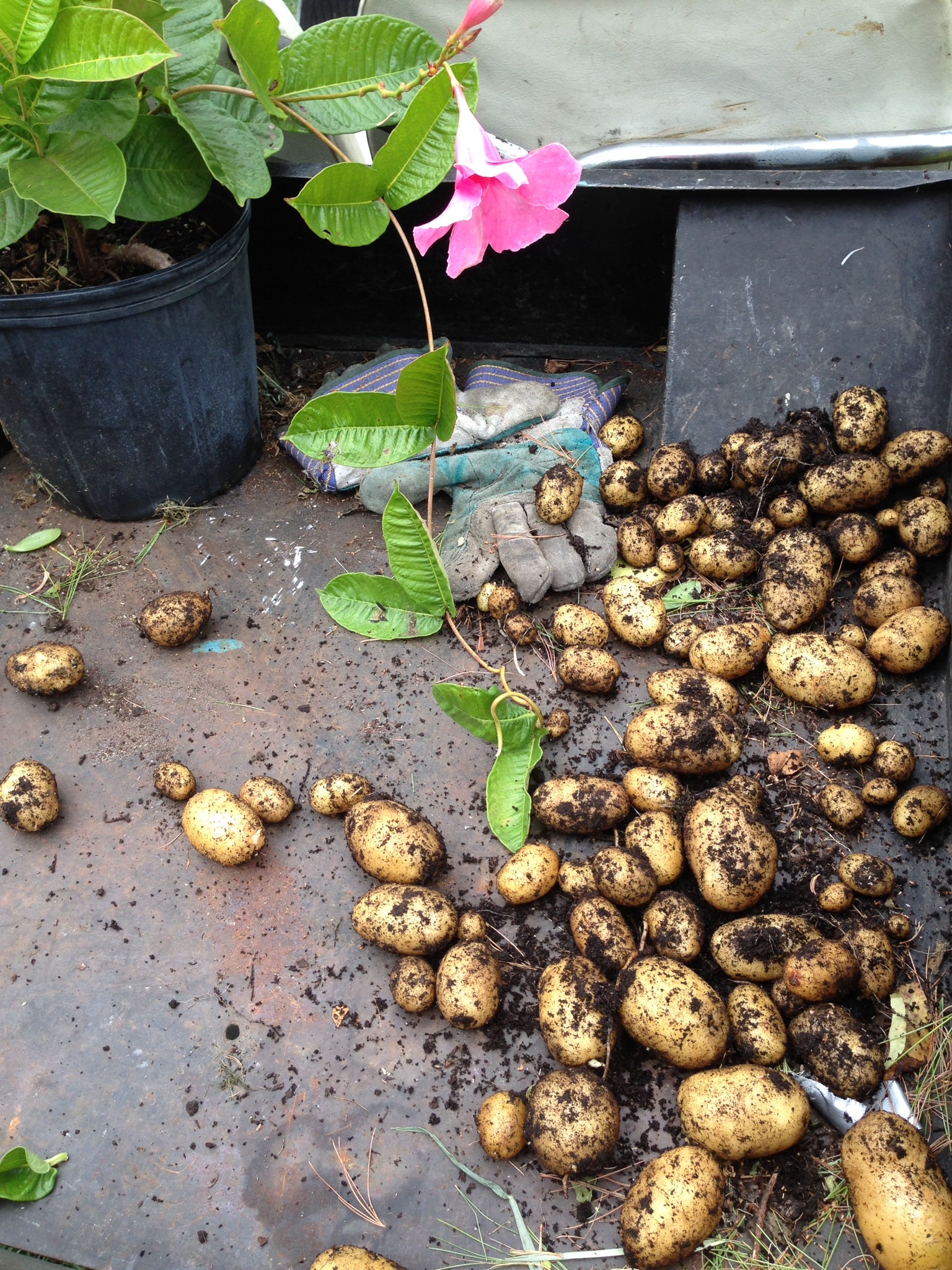
Growing potatoes in pots is actually better in many ways than growing them in your garden. They can take up some serious garden space, especially tough for gardeners that have a relatively small space to grow their veggies. Putting potatoes in pots makes them concentrate their growing efforts on the limited space they’re given, and I’ve found that they produce a sizable harvest despite their restrictions.

You can buy seed potatoes from gardening companies online but you can also go to the store and simply buy a bag of organic potatoes. Have some of them for dinner, and leave the rest in a corner without sunshine to sprout right in the bag. Because they’re organic, they haven’t been sprayed with a sprout-inhibitor, and you’ll see that they’ll start to grow in no time. (You can also place each potato in a glass of water to aid in sprouting.) Once the potatoes sprout, cut each into 2 or 3 pieces, each piece with a bud. Get a large pot you want to grow them in (plastic is lighter and easier), making sure it has holes in the bottom for drainage, and fill it with only 3 inches of soil. Gently press the potato buds into this soil about 4 inches apart and water them. Every week as they grow, keep adding soil to the pot all the way up the stems to just under the top leaves. When you’ve filled the pot with soil, let the potatoes continue growing…they’re now on their own. They will bloom, and then the stems will start to wither and die. When the stems have died off (if you can wait that long!) simply tilt the pot over and you’ll pour out your potato harvest! Lots of fun for the kids to find this “buried treasure.”


Sweet potatoes growing in my yard in a pot with elephant ears.

Sweet potatoes growing in my yard in a pot with elephant ears.

SWEET POTATOES

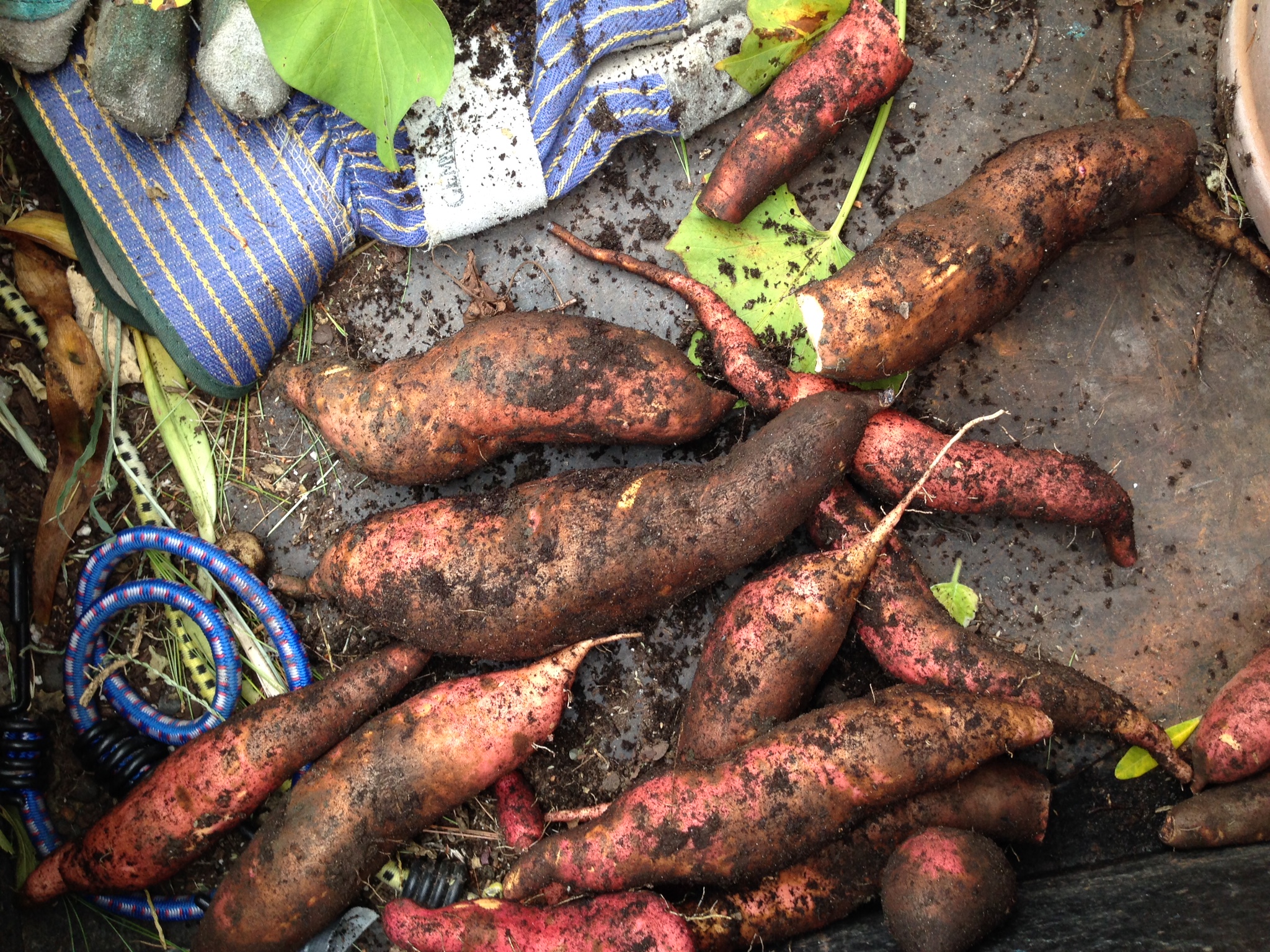
My wife loves sweet potato vines to decorate flower pots. So instead of  buying decorative sweet potato vines that don’t produce edible fruit, I buy edible sweet potato plants from a reliable garden catalog. I simply stick them in the potting soil next to our favorite flowers and let them grow all season long. The decorative leaves will cascade down the sides of the flower pots, but inside, under the soil surface, they’ll be secretly making delicious sweet potatoes!

When the growing season is over, gently dig away the potting soil in the pot (I use my hands to prevent damaging the sweet potatoes) and admire your harvest!

image

Potatoes and sweet potatoes need to be store in a cool place away from sunlight (and away from onions.) A cool garage works great.