Author Archive

This will be the most amazing fish sandwich you’ll ever make.

There. I said it.


There’s no other way to describe this sandwich, something that shouldn’t work in some ways and yet is absolutely perfectly crunchy and delicious. It starts with the cole slaw, ideally made a day in advance…

1 medium cabbage, sliced thinly
2 medium carrots, peeled, and finely chopped
1/2 cup mayonnaise
1 tablespoon Kosher dill pickle juice
1 teaspoon celery seed (not salt)

You can use a machine, but I like to finely slice my cabbage with a kitchen knife, cutting as thin as possible. Place the chopped cabbage in a large bowl.

For the carrots, peel them to remove the outer skin, and throw that away. Continue to peel the carrots into paper-thin slivers until there’s no carrots left. Finely chop those slivers and add them to the cabbage.

Add the mayonnaise, pickle juice, and celery seed, mixing thoroughly. Keep it in the fridge, covered with plastic, until ready to use.  The next day, before using, taste it and decide whether you want more mayo or pickle juice. Mix it well before using.

Like a classic pulled pork sandwich, the slaw will go inside! But it needs a sauce to tie it all together. Make this a day ahead as well.

1/2 cup ketchup
1/2 cup mayonnaise
1 tablespoon dill pickle relish
1/4 teaspoon Tony Cacherre’s Original Creole Seasoning (optional)
1/4 teaspoon salt (skip if using Creole seasoning)
1/8 teaspoon pepper (skip if using Creole seasoning)

Tony Cacherre’s Original Creole Seasoning is a personal favorite, and it works well in this sandwich. You can find it in many stores, and online. But if you don’t have it handy, salt and pepper do the job.

Combine all the ingredients in a bowl, mixing well. Keep it in the fridge, covered, until ready to use.


Cod or other white fish, preferably fresh, cut into sandwich-sized pieces (about 4″ square)
1 cup all-purpose flour (or Cup4Cup gluten-free flour, see below)
1 teaspoon celery seed (not salt)
1 teaspoon salt
1/2 teaspoon black pepper
1/8 teaspoon cayenne (optional)
2 eggs
1 cup corn flakes, crumbled (or Corn Chex for gluten-free, see below)
avocado oil or other oil for frying

My brother-in-law treated us to a huge stash of grouper that he caught on a recent fishing trip. I used that instead of cod the last time I made this sandwich, and the results were fantastic. I suggest you use whatever white fish is your favorite.

Cut the fish into pieces that will fit the bread you’re using, and make sure the filets are the same thickness. Don’t make them thicker than 1/2″ or they’ll stay raw in the middle when you fry them. Set them aside.

In a bowl, combine the flour, celery seed, salt and pepper and cayenne (if you’re using it). Mix well.

In another bowl, crack the eggs and scramble them.

Put the corn flakes (or Corn Chex) in a plastic bag, squeezing the air out of it. Crush them into oatmeal-sized pieces, then pour them into a third bowl.

Heat a heavy pan with a couple of inches of oil. One by one, take the fish pieces and dredge them in the flour mixture, then into the egg, and then into the corn flakes, pressing into the corn flakes to make sure they stick to the fish.

When the oil in the pan is hot enough, fry the fish pieces on both sides, until cooked through and golden brown. Place them on paper towels to drain.


Pepperidge Farm Marble Swirl Rye Bread (or gluten-free bread)
Swiss cheese, sliced
Melted butter

Pre-heat an oven to 350 degrees.

To assemble the sandwiches, take a slice of the rye bread and spread some of the sauce on it. Place a piece of the fried fish on top, then cover it with some of the cole slaw. Place a few thin slices of Swiss cheese on top of the cole slaw. Take another slice of rye, slather it with the sauce, and place it on top of the slaw, sauce-side down.

Brush the top of the sandwich with the melted butter, and place the sandwich on a sheet pan. Do the same with the rest of the sandwiches.

Place the sandwiches in the oven and bake them until the cheese melts. Cut the sandwiches in half and serve.


The gluten-free sandwich in the front.


What I changed to make this sandwich gluten-free…


My go-to all-purpose gluten-free flour is Cup4Cup. It works really well in any dish that requires all-purpose flour.


Not all corn flakes are gluten-free, and the ones that are can be hard to find. I found that Corn Chex cereal is a good substitute. It’s gluten-free, and has a nice crunch.


The Pepperidge Farm Marble Swirl Rye Bread is the ideal bread to use for this sandwich. But I made a pretty darn tasty gluten-free version using this Schar bread, found in many supermarkets.


Cauliflower seems to be the “it” veggie these days. You’ll find it riced to take the place of rice or mashed potatoes, in a crust for pizza, and now, the dish du jour is a cauliflower steak. All you need to do is to slice the cauliflower into thick, steak-like pieces, and then bake them. The thicker cut gives the cauliflower a more meaty texture. Of course, with a meat sauce, I’m using cauliflower as a pasta substitute in this dish.


The marinade I use for the cauliflower is pretty simple, with my favorite Italian flavors. I use fresh herbs when I can, but you can use dry as well.


1/4 cup extra virgin olive oil
1/2 cups chopped scallions
2 garlic cloves, finely chopped
chopped fresh parsley and oregano to taste
salt and pepper

Combine these ingredients in a bowl.

Slice the head of cauliflower across the whole head into 1 1/2-inch steak-like pieces. Place them on a baking pan covered with non-stick aluminum foil. Brush the cauliflower on both sides with the marinade. Use it all up!

Place the baking pan in a pre-heated 400-degree oven and bake it for about an hour, until the cauliflower is golden brown on the edges. Flip the cauliflower steaks over after the first 30 minutes.


It’s OK if your cauliflower steaks break apart a bit. They’ll still taste great!


This meat sauce I use is one that I make all the time with simple ingredients…


1 lb. grass-fed ground beef
1 medium onion, finely chopped
1 28-oz. can of whole San Marzano tomatoes
dried oregano, basil and parsley
granulated garlic
extra virgin olive oil
salt and pepper


Heat the olive oil in a pan and add the onions. Sauté them until they’re translucent, then add the ground beef. Cook the beef until it has browned completely. Add the can of tomatoes, chopping the whole tomatoes up with a spatula (or squeezing them with your hands), breaking up the big pieces into smaller chunks. (I like my sauce a little chunky.) Add the oregano, basil, parsley, garlic, salt and pepper to taste.


Let the sauce cook down until it has thickened.


When the cauliflower steaks are ready, place them on a plate and pour the awesome meat sauce on them. Garnish with some freshly grated Parmigiano Reggiano.

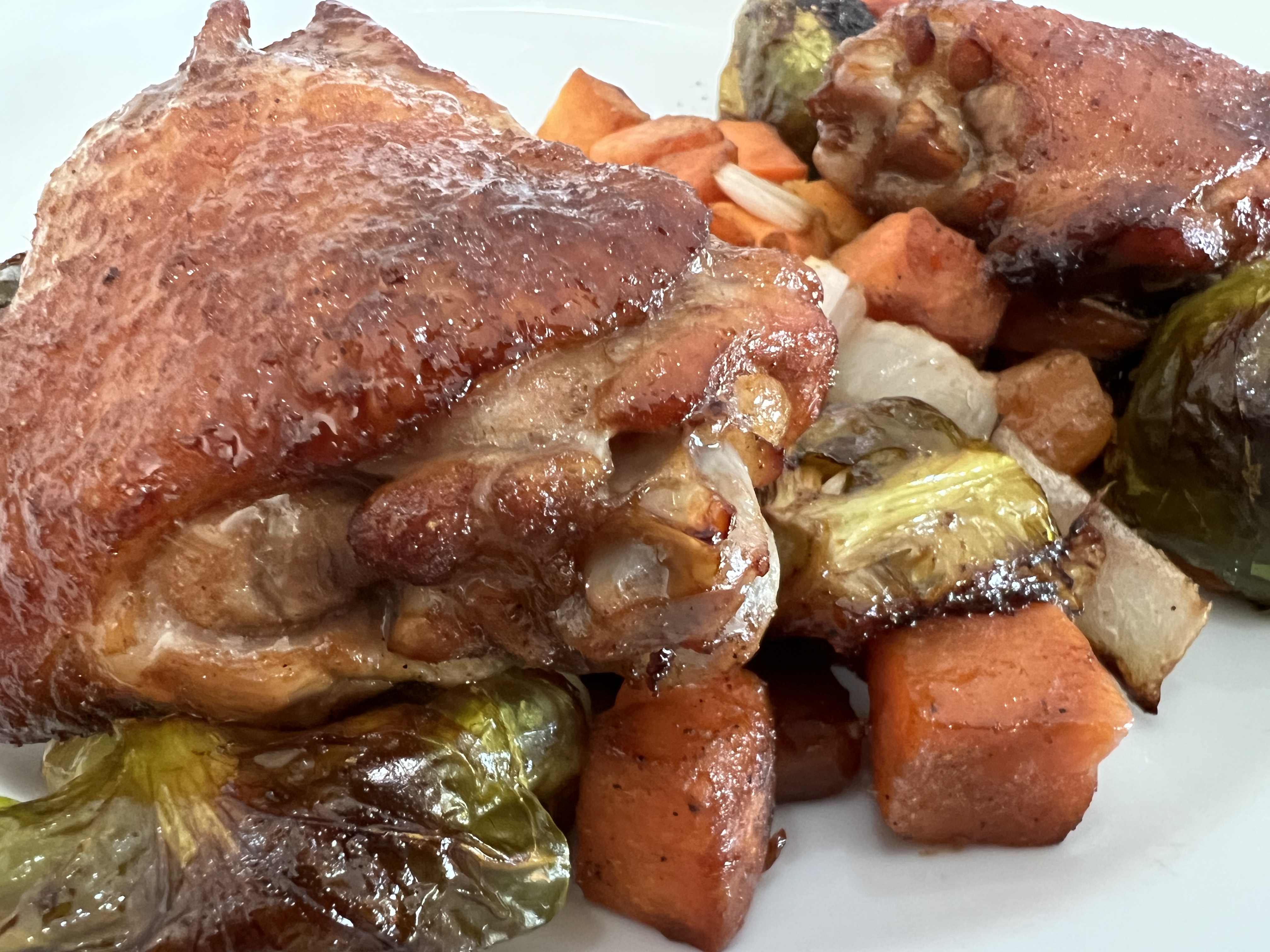
Brining, the process of letting a hunk of protein soak in a salt solution for a few hours, is a great way to add flavor and moisture to any cut of meat. I brine chicken pieces for 3 hours before using a sweet and spicy rub. They can be grilled or roasted in the oven.

The first time tried this recipe, I used chicken wings. But later, I cut up a whole chicken, and found that parts is parts…every piece was delicious!


image

The brine…

1/2 cup Kosher salt
3 tablespoons light brown sugar
1 teaspoon whole black peppercorns
1 whole bay leaf
2 quarts water

Combine all the ingredients in a saucepan and heat until the sugar and salt dissolve. Remove from the heat, and let it cool to room temperature.


The rub…

1/4 cup light brown sugar
1/4 cup granulated sugar
1/4 cup sweet paprika
1 tablespoon Kosher salt
1 tablespoon granulated onion
2 teaspoons black pepper
1 teaspoon dried thyme
1 teaspoon dry mustard
1 teaspoon ground ginger
1 teaspoon cayenne pepper

Combine all the ingredients in a bowl.

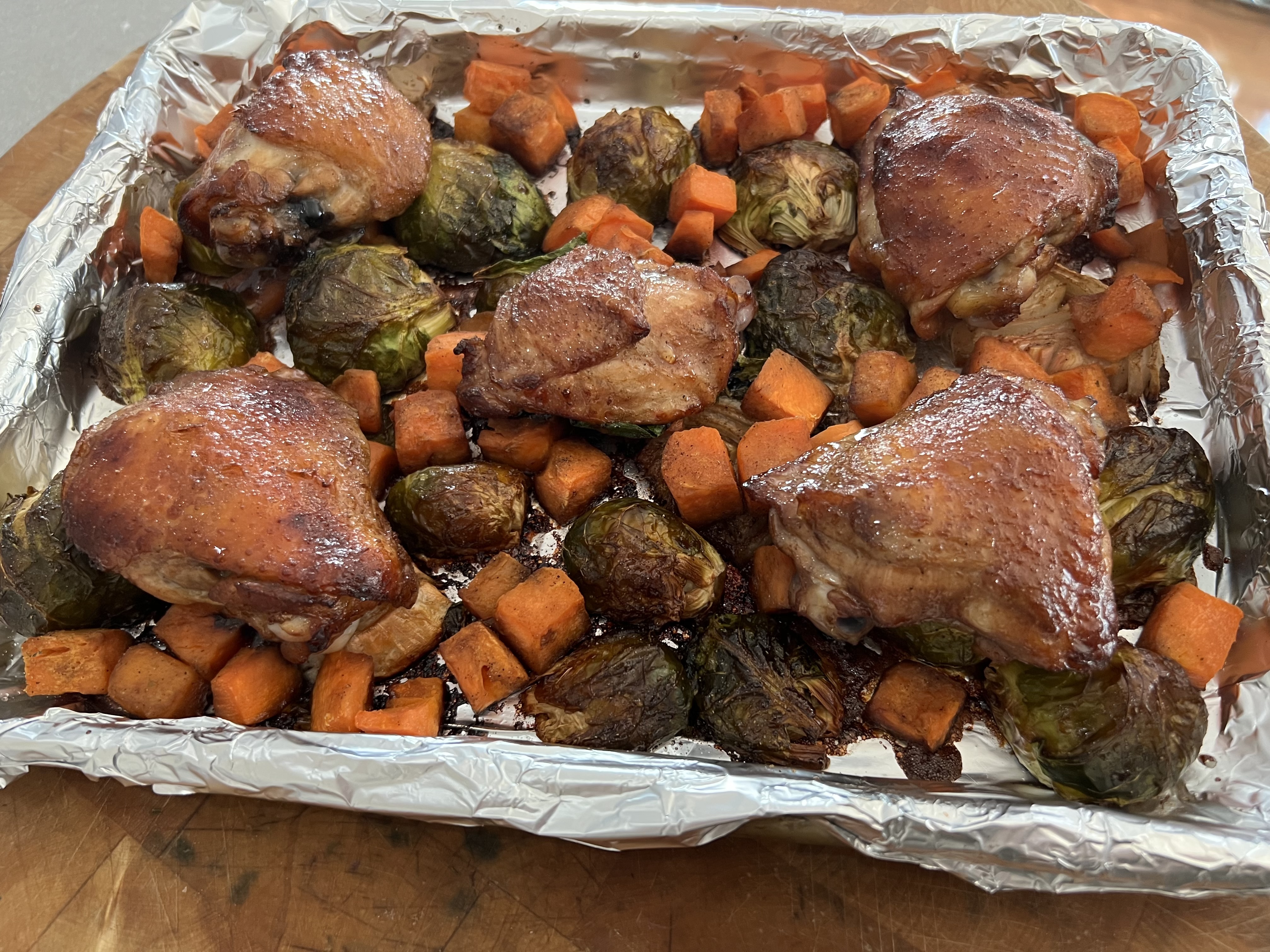
If you have a baking pan like this, you can brine and then cook the chicken in one pan.

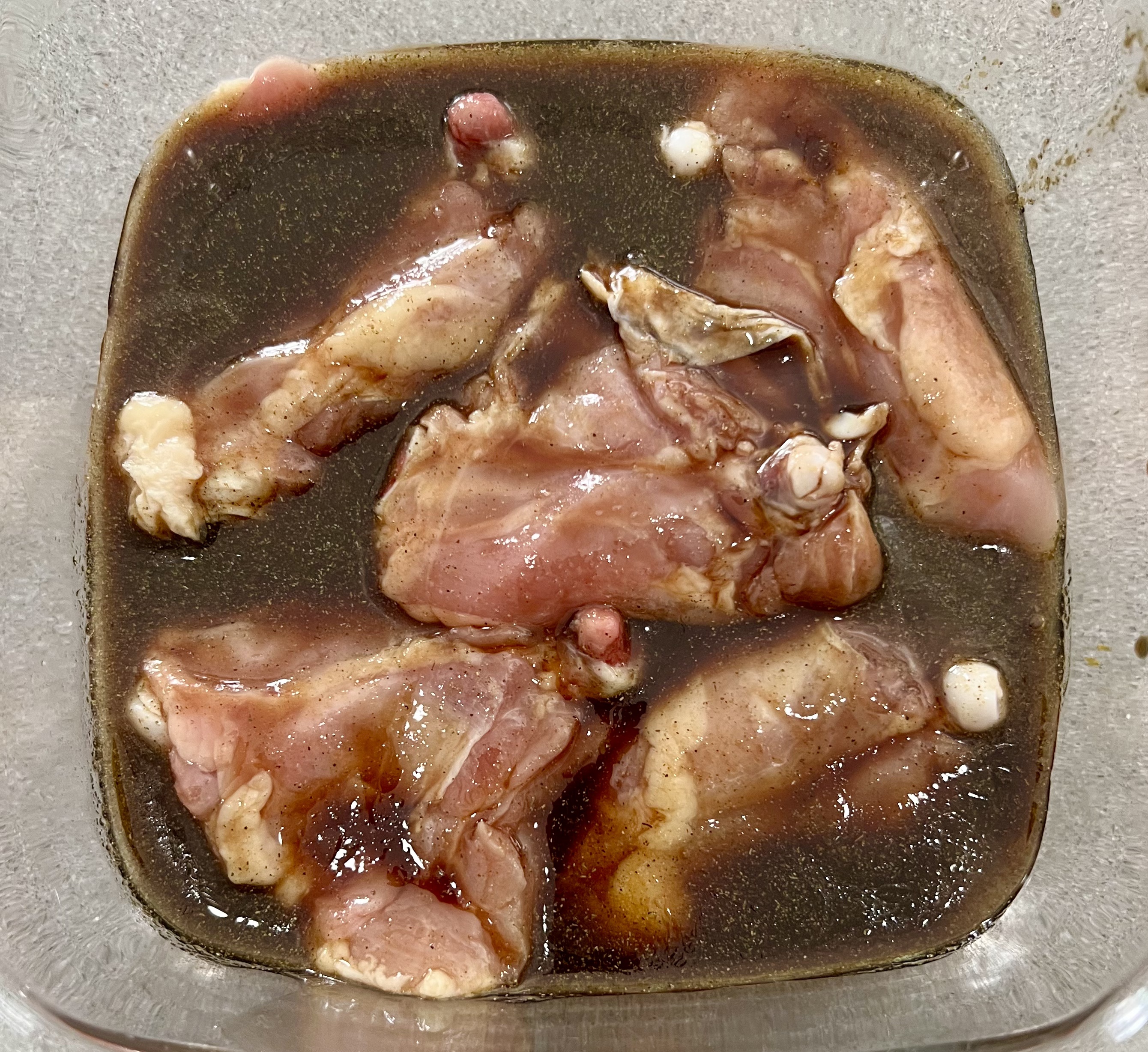
Place about 3 lbs. of chicken wings or parts in a baking pan, as above. Place it in the fridge for 3 hours. Pour in the cooled brine, making sure the pieces are submerged.

After 3 hours, remove the chicken from the brine and dry the pieces with paper towels. Discard the brine, and place the chicken pieces back in the empty baking pan.

Sprinkle the chicken pieces with 1/3 cup of the rub, rubbing it in to coat the chicken well. (Wearing disposable gloves makes this less messy.) Place the pan with the chicken in the fridge until you’re ready to cook.


About 30 minutes before cooking, remove the pan from the fridge and let the chicken come to room temperature.

Pre-heat the oven to 350 or light a grill.

Toss the chicken with some more of the rub, if you like.

Bake at 350 for 30–40 minutes or until they’re done, about 165 degrees.

If you’re grilling, cook the wings over medium heat, turning them frequently to prevent burning. Cook until the chicken reaches temperature of 165 degrees.


I grill year-round. I’ll stand in 3 feet of snow to get smoked ribs just right, if I have to. Through years of tireless experimentation, I’ve come up with a barbecue sauce that I can be proud of. I prefer a slightly sweet and tangy barbecue sauce,  and it works really well with pork or chicken.

What makes this sauce special is the citrus. I originally used lemon juice for this recipe and it was good. Lime juice was better. Adding lime zest: even better than that. I tried orange juice and zest, even Meyer lemon. But the Big Daddy of ’em all was grapefruit. I was craving my barbecue sauce one day and only had a grapefruit in the fridge. I thought: how bad could this be? Turned out to be the perfect foil to the sweetness of the brown sugar and ketchup.

Try this sauce on your next batch of chicken wings or even a whole bird. Cook the bird almost all the way through, brushing the sauce on for the last 20 minutes so that the sugars don’t burn. Then just try to stop eating it!

Chix BBQ


GRAPEFRUIT BARBECUE SAUCE
1 cup ketchup
1/2 cup firmly packed brown sugar
Juice and zest of 1 grapefruit
3 tablespoons unsalted butter
1/4 cup dried onion flakes
1 teaspoon cayenne pepper sauce, like Frank’s Red Hot
1 teaspoon Worcestershire sauce
1 teaspoon granulated garlic
1/4 teaspoon black pepper
(no salt)

Combine all ingredients in a sauce pan. Bring to a boil and then simmer for about 20 minutes on low, until slightly thickened.


saucey

If you like a less sweet, more vinegary style to your barbecue sauce, this is the one. How could a sauce that’s inspired by what most people claim to be the best barbecue joint in the USA, Franklin’s Barbecue in Austin, Texas, be bad? People line up early in the morning and wait as much as four hours for a slab of brisket from this place. I’ll get there one day. In the meantime, I have the sauce…


2 cups ketchup
3/4 cup water
6 tablespoons cider vinegar
6 tablespoons white vinegar
6 tablespoons brown sugar
3 tablespoons Worcestershire sauce
1 tablespoon chili powder
2 teaspoons salt
2 teaspoons black pepper
1 1/2 teaspoons cumin


Mix all the ingredients in a saucepan and simmer until the flavors have blended, about 20 minutes. Remove from heat and cool to room temp. If you store it in an airtight container in the fridge, it’ll stay good for a few months.


CHEESE FATAYER

Posted: September 16, 2022 in Uncategorized

Every once in a while, my daughter finds an interesting recipe that we decide to try on our own.

A fatayer is a Middle Eastern savory pastry, usually made into the size of a hand pie. Trying to be efficient (and also being a bit lazy), I went the route of one large fatayer (basically a pizza) instead of 10 hand pies, which is what the recipe called for.

Our large fatayer, though not traditional, was still absolutely delicious, and the use of olive oil in the dough (a lot of it) and an egg wash on the crust gave a softeners and chewiness not unlike the best pretzel you’ve ever had! Really delicious!

The nice thing about my recipe is that you can use store-bought pizza dough. You don’t have to make the dough from scratch. I’m sure the crust would be even lighter if you did, but this system worked well for me…and I didn’t want to work as hard!

2 packages of ready-made pizza dough
1/4 cup extra virgin olive oil
3 cups freshly grated mozzarella (loosely packed)
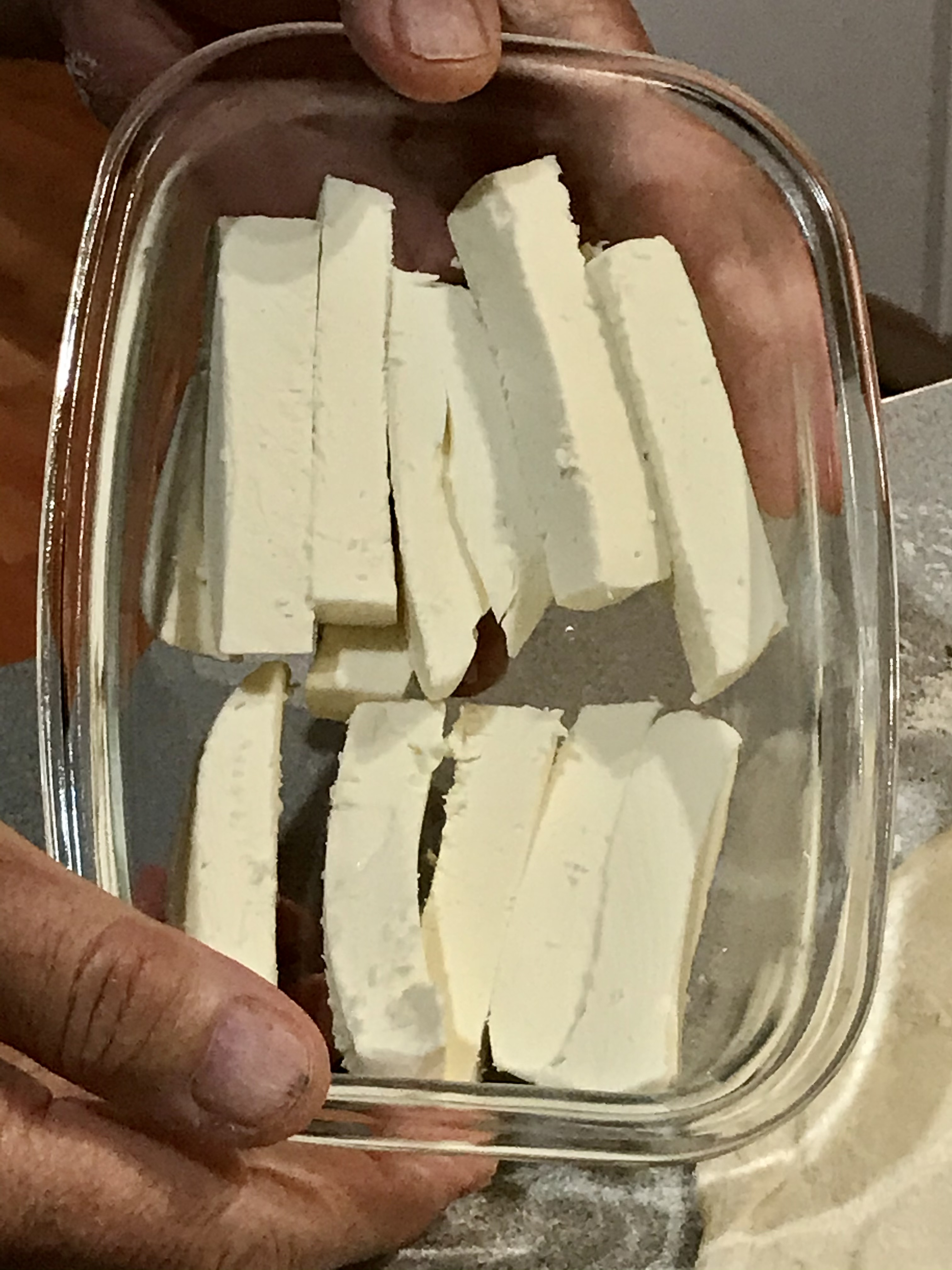
1 1/4 cups crumbled feta cheese
a handful of chopped fresh parsley
Extra freshly grated mozzarella for stuffing into the dough
4 tablespoons unsalted butter
1/2 teaspoon granulated garlic
1/4 teaspoon Kosher salt
1 egg
2 tablespoons water


If the dough you’re using is frozen, let it come to room temperature and rise according to package instructions. This could take up to 6 hours or more.

While the dough is rising, make the cheese mixture, combining the mozzarella, feta and parsley in a bowl. Set it aside in the fridge.

Also set aside the extra grated mozzarella in the fridge separately.

Make the garlic butter mixture, combing the butter, garlic and salt in a bowl. Set it aside.

Make the egg mixture, whisking the egg in a bowl with the water. Set it aside.

Once the dough has risen properly, pre-heat the oven to 425.

Place the dough in a stand mixer and add the olive oil. Mix slowly at first, slowly increasing the speed, for about 5 minutes, until the dough and the olive oil have mixed together well.

It’s a messy process, but you need to knead the dough by hand on a clean surface for about 5 minutes, so dust the surface with all-purpose flour, and carefully remove the oily dough from the mixing bowl. It will be greasy and messy, but knead it as best you can, adding flour to the dough until it’s no longer an oily mess and becomes a nice, soft dough. Use as little flour as possible to make this happen. The less you use the lighter the baked crust will be.

Get a large baking sheet and cover it with parchment paper. Place the dough on the sheet, and spread it out evenly with your fingertips to the full size of the baking sheet.

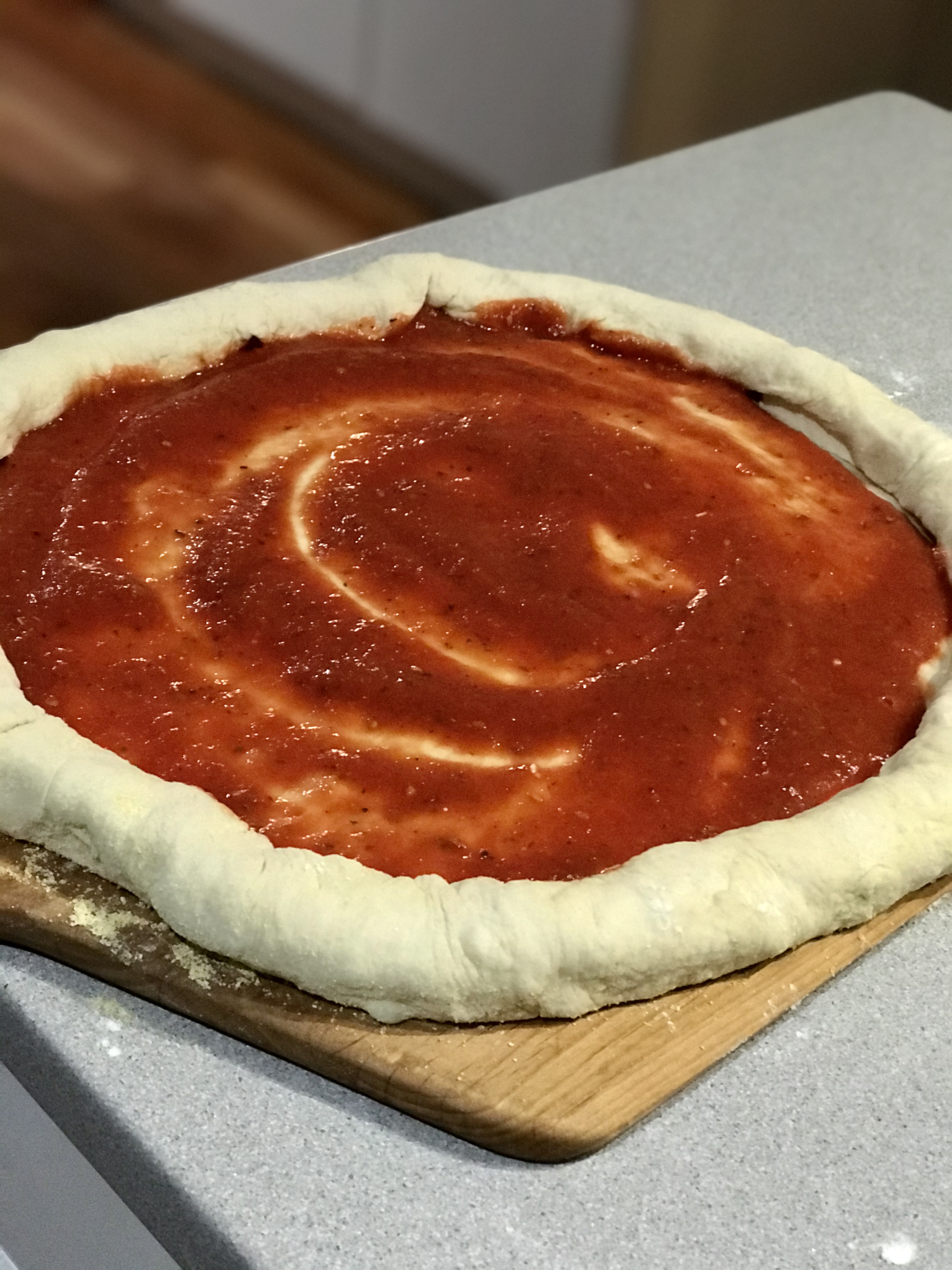
Take the extra grated mozzarella and sprinkle it around the edges of the dough, and then fold the edges of the dough over it, basically making a “stuffed crust.” The crust will be higher than the center, which will hold in all the tasty goodies inside.

Brush the center of the dough with all the garlic butter mixture. Don’t worry…it’s not too much!

Now add the cheese mixture evenly in the center of the dough as well, all the way up to, but not on, the crust.

Brush the crust with the egg wash mixture.

We had some leftover chicken sausage, so we added it to one side of the fatayer!

Place the sheet pan in the center of the oven and bake for 20 — 30 minutes, until the cheese is bubbly and the crust is golden brown.

Remove the fatayer from the oven and let it cool a few minutes before slicing.

ICE.MADE.CLEAR: A REVIEW

Posted: September 13, 2022 in Uncategorized

I love my cocktails, and I feel the quality of the ice is as important as any other ingredient in my glass. After all, if the ice cubes are made from nasty water, it’s going to affect the taste of the drink.

And from a visual standpoint, a large, beautiful, clear ice cube really makes any cocktail look pretty darn impressive.

Since the tapwater at my house has chlorine and fluoride in it, I use a reverse osmosis filter to try to get as much of the bad stuff out. And I’ve been using that to make my own fancy cocktail ice cubes. But they were cloudy, so I was willing to try this new gadget.


Once I bought the Ice.Made.Clear system, and I read the instructions, I realized that, much like the ice cubes they promised, a problem became very clear: they recommend using water right from the tap– – hot tap water, in fact. Their reasoning was that the chilling process from hot to freezing, and the minerals in the tapwater, aid in the clarity process. (Also, warmer water holds fewer air bubbles, which causes the cloudiness in the ice later on.)

But I don’t want chlorine and fluoride in my ice cubes! So for me, tap water was out of the question.


As an alternative, they suggested buying spring water, claiming that using reverse osmosis filtered water would remove too many of the necessary minerals needed for the process to work. 

So I bought a gallon jug of Poland Spring to try this thing out, and it actually worked really well. But the problem was, it wasted a lot of water. Once the ice cubes are made, the container can’t be reused until you melt all the ice in it, empty it out, and start all over again. I wound up using almost an entire gallon of spring water to make six large ice cubes. That’s ridiculous. 

So, despite the fact that they recommend using tap water or spring water, I went back to my filtered water, because it’s cheap and plentiful. I heat it up a bit in a saucepan (not to the point of boiling, but warm) and then pour it into the Ice.Made.Clear system. The cubes aren’t as clear as they might be, but I know the water quality is the best it could be. And I still get pretty darn clear ice.

So here are the pros and cons of the Ice.Made.Clear system:

The Pros:
It really does make clear ice.
It’s not a big unit, so it fits in most freezers.
The whole system cost under 100 bucks, so it’s not outrageous in price.


The Cons:
It wastes a lot of water.
If you don’t have clean tapwater, buying water gets really expensive just to make a handful of ice cubes.
If you’ve got guests coming over, you better start making your cubes weeks ahead of time, because it’s a slow process.


I posted a way to make homemade clear ice cubes in a previous blog. I will repost it soon. It works really well, gives you plenty of rustic large ice cubes at once, and doesn’t cost a lot.

After all is said and done, if pretty ice cubes don’t matter to you at all, go down to your local convenience store and buy a bag of ice for two bucks, and you’re all set.


THE BURRATA BURGER

Posted: September 8, 2022 in Uncategorized

Some of my favorite recipes happen when I’ve got a few leftover ingredients in the fridge that I really want to use up. The challenge is to make them work together.

Burgers are easy solutions to this dilemma, because, let’s face it: just about anything can go on a burger!

My thoughts behind this recipe went to a combination of things: a little garlic bread, a little Caprese salad, and, of course, a burger.

I had some burrata in the fridge. If you thought you couldn’t improve on mozzarella cheese, get yourself some burrata. The outer shell of the burrata is mozzarella, while the inside generally contains stracciatella and cream. It can be made from milk, or if it’s really decadent: Italian buffalo milk.

I use burrata instead of mozzarella when I make my Caprese salads…a combination of the cheese, fresh basil, and ripe tomatoes, drizzle with a high-quality balsamic vinegar.

I had kaiser rolls in the freezer. I wanted to go one step further, so I slathered them with my garlic bread smear, and toasted them.

And my burgers are always grass-fed beef, seasoned with salt and pepper, and pan-seared before finishing them in the oven.

I started with the garlic bread spread first.

Pre-heat the oven to 350.

1 stick (4 oz.) unsalted butter, softened
1 large clove garlic, squeezed through a press
1/2 teaspoon granulated garlic
1/2 teaspoon salt
1/2 teaspoon oregano
1/2 teaspoon parsley

I combined these ingredients in a bowl, mixing well, then smeared them on my kaiser roll halves, toasting them in the oven.

I got a pan very hot on the stovetop (cast iron is always best) and added a little fat. I use bacon grease if I have it. Otherwise I go with a high smoke point oil like avocado oil.

I seasoned the burger with salt and pepper, and placed it in the hot pan, searing it on one side, then flipping it to the other. I just want to sear the meat. I don’t want to cook the burger in the pan or it will overcook when I place it in the oven to finish.

I cut the burrata in half (it gets a little messy), and placed half of it (cut-side-down) onto the burger.

I placed the pan in the oven to finish cooking the burger and to melt the cheese. (If your pan isn’t oven-proof, get a tray that is, and just move the burger onto it and into the oven.)

I cooked the burger until it was medium-rare and the cheese had melted.

I placed the burger on the toasted roll and added a nice slice of farm-fresh heirloom tomato. (Fresh basil is optional.) And I drizzled over the top with some good balsamic.

That took a cheeseburger to a whole new level!

ZOOKEENEE BREAD

Posted: September 5, 2022 in Uncategorized

I’m pretty good at keeping the zucchinis in my garden harvested on a regular basis, so they don’t get too big. But once in a while, I miss one, and it gets to be huge. That’s when it’s time to make zucchini bread.


I was recently told that zucchinis are green…summer squash is yellow.  I use the word “zucchini” interchangeably, but technically, the variety I grow is, in, fact, a zucchini…or both, depending how you look at it!


Whatever you call it, use it! And make some delicious bread!

I slice the zucchini lengthwise, and remove the center section with all the seeds, because I don’t want that in my bread. Then I grate the rest. This recipe needs about 2 1/2 cups of grated zucchini, about 16 ounces.

When it comes to baking, I use my small kitchen scale to make most of the crucial measurements, because accuracy counts. It’s much more accurate than going by volume. But this recipe has both measurements, so you can try either method.

Substituting gluten-free flour for the basic all-purpose flour, will make this recipe gluten-free. I like to use the all-purpose GF flour by Cup4Cup.

And I like using olive oil as my vegetable oil, because I love the flavor and its health benefits. But feel free to use whatever vegetable oil you like.


2 cups (227g) all-purpose flour
1 teaspoon baking powder
1 teaspoon baking soda
1 teaspoon Kosher salt
1/2 teaspoon cinnamon, optional
1 cup (213g) light brown sugar
1/2 cup (100g) granulated sugar
scant 3/4 cup vegetable oil
1 teaspoon vanilla extract
2 eggs, lightly beaten
2 1/2 cups grated zucchini (about 16 oz.)

Preheat the oven to 350°.

Grease an 8 x 8“ or 5″ x 10″ loaf pan with some of the vegetable oil. Then line it with parchment paper…it makes it easier to remove later.

In a bowl, mix together the first five ingredients.

In a separate bowl, combine the remaining ingredients except the zucchini.

Add the grated zucchini to the bowl with the flour mixture and toss it around to coat.


Add the dry mixture to the wet mixture and stir until it’s combined.


Pour it into the pan. 


Bake until a toothpick comes out clean, about 45 to 60 minutes…but it could be even longer. Every oven is different, and different zucchini can have different moisture levels, so you may need to cook yours longer, depending on your situation. Even with all the high-tech thermometers I have, I find the good old-fashioned toothpick method works best.


Remove the baking pan from the oven and let it cool for 15 minutes. Then turn it over on a wire rack, removing the pan, and let the zucchini bread cool completely to room temperature before slicing.

This bread is so good, I just might let the zucchini overgrow more often!

A DIFFERENT “CHIMI”

Posted: September 2, 2022 in Uncategorized

Chimichurri, as I mentioned in a previous blog, is a garlicky, herby green sauce usually used with grilled meats. This pesto-like condiment originated in Argentina and is also commonly used in Nicaragua and Uruguay. Though some recipes include cilantro, many people insist the original is made only with parsley. It also makes an excellent marinade for grilled meats.


Fresh basil from the garden.


When I posted that blog, my friend, Brenda, asked me if I’ve ever used basil in my chimichurri. I had not…and that sounded like a great idea, especially since I had an overload of basil still growing in my garden. Technically, I guess I couldn’t call it chimichurri anymore, but that’s okay. What I got was a real flavor bomb that worked beautifully as a marinade, on grilled meats, and in other applications.


1 large handful of fresh basil leaves, about 4 cups, loosely packed
1/4 cup water
1 medium onion, chopped
3 cloves garlic, minced
3–4 tablespoons fresh oregano, leaves only (or 1 tablespoon dry)
1 tablespoon paprika
1 teaspoon crushed bay leaf
1 tablespoon coarse sea salt
1 teaspoon freshly ground black pepper
pinch red pepper flakes
1/4 cup white wine vinegar
1/2 cup extra virgin olive oil

Place all the basil and the water in a food processor and begin to chop, pulsing for a second at a time. When the basil is in small pieces, stop pulsing and add the remaining ingredients, except the vinegar and olive oil. Start the processor on a full run now, and slowly pour in the vinegar, then the olive oil. Try not to make it too smooth…leave some tasty bits. Allow it to rest for at least 30 minutes, but overnight in a sealed container in the fridge is best.


I used this new basil “chimi” on chicken. (The recipe is in a future blog.) But I could also see how awesome it would be tossed in a salad, especially a Caprese-style tomato and mozzarella salad, where the chimi would take the place of fresh basil leaves.


But my garden was also overflowing with shishito peppers, so rather than throwing them in a pan with olive oil and simply blistering them the way I usually do, I took a few spoons of the “chimi” and melted it in the pan, adding the shishitos, and tossing them around in it until they were blistered. The “chimi” actually blackened a bit, but in a good way, bringing out the herby flavors like a blackened Cajun dish might, and a sprinkle of finishing salt was all it needed before serving.


Slightly blackened “chimi” made these shishitos delicious!


There are many other ways to use this new “chimi,” and I’ll be trying them all!


Recently, I received a couple of pounds of ground venison from my buddy, Bruce, an avid hunter here in my town. I started thinking about what I could make with it…


I didn’t want to go with a venison burger right out of the gate. After all, venison is very lean, containing half the fat of beef, but with more protein. In fact, venison even challenges chicken in the protein department. But being really lean, it would dry out as a burger. And it can be gamey tasting, so I wanted to mix it with a few other ingredients. I decided to go with the safer option of making a taco with it.

Well, somewhere in the process of taco making, I thought of pork and beans and said: “Yeah, what if I made something like venison pork and beans? How bad could that be?”

Well, venison and beans can almost be called chili (depending on what rules you have about beans in chili), and I thought: “But I don’t really like chili.” But then I thought: “It’s not chili if I don’t call it chili.” Problem solved!


I used small red beans, but you can use what you like.


What I finally came up with is a venison pork-and-bean chili taco…or something like that.

Whatever…it tastes pretty good!

And obviously, if you don’t have venison, or just don’t want to use it, you can use lean (like 93%) beef for this recipe.


1 tablespoon avocado oil
1 small onion, finely chopped
4 strips (about 40g) pre-cooked bacon, finely chopped
1 lb. ground venison
Taco seasoning (see the recipe below)
20 grape tomatoes (100g), chopped
1/2 cup ketchup
2 tablespoons spicy brown mustard (I like Gulden’s)
2 tablespoons Worcestershire sauce (Only Lea & Perrins will do)
4 tablespoons brown sugar
2 cans (15.5 oz. each) of small red beans, not drained


Pre-heat your oven to 350 degrees.

Spray a baking pan with oil spray (I use avocado) and set aside.

In a large pan, heat the avocado oil and add the chopped onion. Sauté the onion until it’s translucent.

Add the chopped bacon, and sauté until some of the fat starts rendering out of it.

Add the pound of venison, and cook until the meat has browned nicely, adding the taco seasoning to the meat as it cooks, little by little, until you’ve used all the taco seasoning up.

Add the chopped grape tomatoes, and stirring after each addition, add the ketchup, mustard, Worcestershire, and brown sugar.

Pour in the two cans of beans, liquid and all, and stir gently, letting it all come to a boil.


Pour the contents of the sauté pan into the baking pan, cover it with foil, and place it in the 350-degree oven to cook for 40 minutes.

After 40 minutes, remove the foil off the pan and cook another 10 minutes.


The Taco Seasoning…
2 teaspoons cumin
1 teaspoon salt
1 teaspoon black pepper
1 teaspoon oregano
1 teaspoon granulated garlic
1 teaspoon granulated onion
1 teaspoon paprika

Combine all the ingredients in a bowl, and set it aside.


Once the venison pork-and-bean chili taco meat has finished cooking, I like to use it in a flour tortilla, with shredded lettuce and a little shredded cheese on top.


Shredded lettuce, grated cheddar cheese, some raw Vidalia onion, and a touch of 1000 Island dressing!