Archive for the ‘beef’ Category

It takes about 3 weeks to make corned beef, but it’s not difficult to do. Doing it yourself gives you a better quality product than that nasty slab from the supermarket that is full of chemicals and preservatives.

Corned beef has nothing to do with corn. ‘Corning’ is a technique for preserving raw meats for long periods by soaking it in salt brine. This method was used before the days of commercial refrigeration. Back then, the large salt kernels used in the brine were called “corns.”

Brining is a time-honored way of preserving and it prevents bacteria from growing. Both pastrami and corned beef are made by this method. Both corned beef and pastrami usually start with a brisket of beef. Corned beef is then cooked–usually boiled–and served. Pastrami is made when the brined meat is rubbed  with more spices and smoked to add extra flavor. So corned beef and pastrami are the same meat, just treated differently.

Saltpeter is an ingredient that has been used in brining beef for years. It adds the traditional red coloring to the corned beef and pastrami meat. But since saltpeter can also contain carcinogens, I leave it out. The meat may not be the usual bright red color, but the flavor and texture of the meat will not be affected.
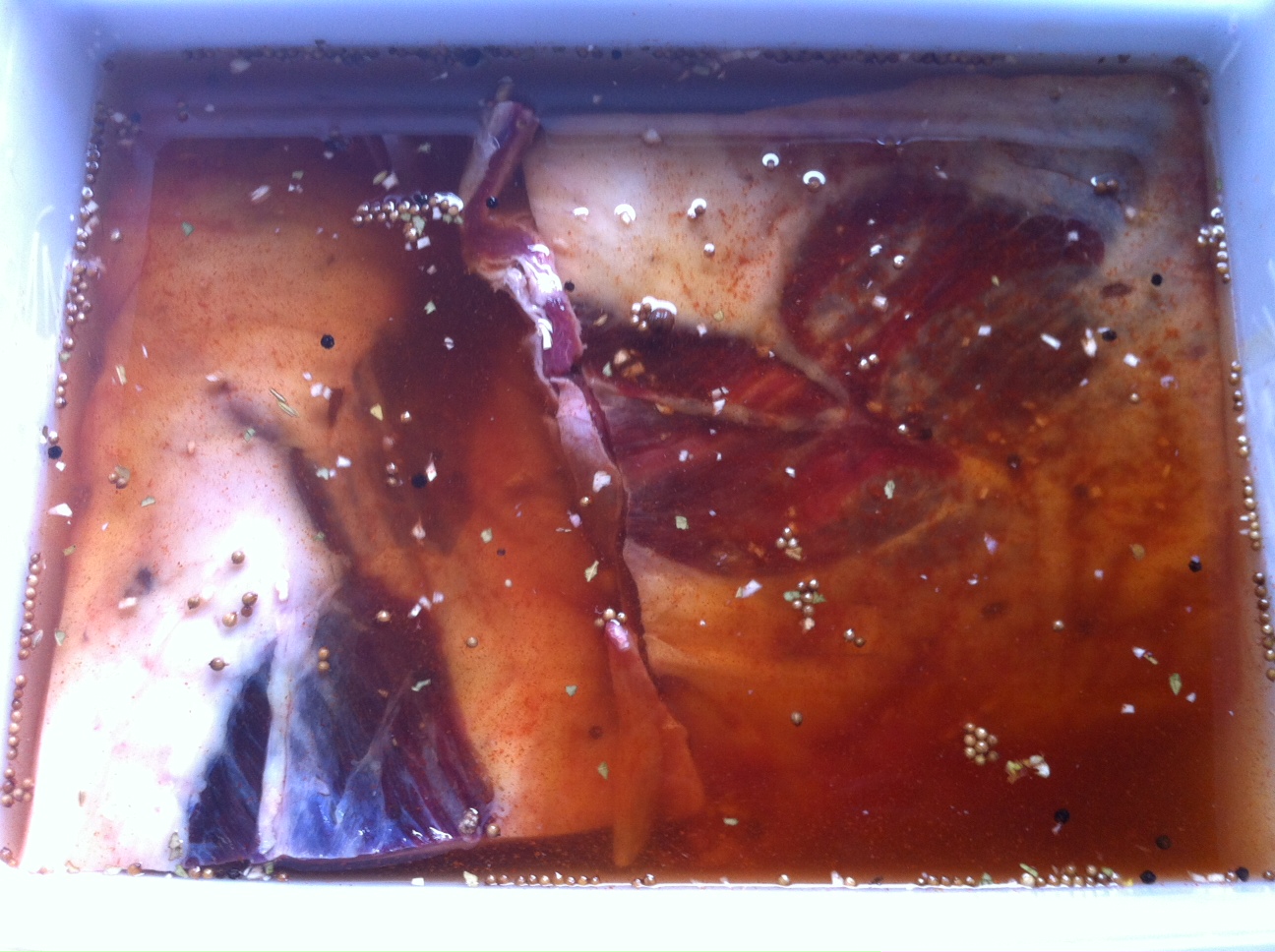
Brining the beef brisket

Brining the beef brisket

Step one: corned beef…

Ingredients:
beef brisket (about 8-10 pounds)
2 tsp. paprika
1/4 cup warm water
3 cloves of minced garlic
2 tablespoons sugar
1 tablespoon mixed pickling spices
3/4 cup salt
2 quarts water

Place the brisket in a large container made of non-reactive material, like glass or plastic.

In the 1/4 cup of warm water, dissolve the sugar, minced cloves, paprika and pickling spices.

Dissolve the 3/4 cup of salt in the 2 quarts of water. Pour in the sugar/garlic/paprika/pickling spices mix and stir everything together. Pour the mixture over the meat in the container. Make sure the meat is totally beneath the surface of the liquid. (You may need to weigh it down to do this.) Cover the container.

Refrigerate the container and contents for 3 weeks, turning the meat once or twice per week. At the end of the third week, remove the container from the refrigerator and take out the meat. Soak the meat in several changes of fresh cold water over a period of 24 hours to remove the excess salt.

At this point, if you want corned beef, prepare and cook it using your favorite recipe. But I’m all about the pastrami!

Step two: making Pastrami…

pastrami

Ingredients:

Brined and rinsed corned beef brisket from above recipe, patted dry with paper towels

1/4 cup Kosher salt

1/4 cup paprika

3 tablespoons coriander seeds

2 tablespoons black peppercorns

2 tablespoons yellow mustard seeds

1 tablespoon white peppercorns

3 tablespoons brown sugar

1 tablespoon granulated garlic

Combine coriander seeds, black and white peppercorns and mustard seeds in a spice grinder and grind coarsely. Place in a bowl. Add salt, paprika, brown sugar and granulated garlic. Mix well.

Rub the mix into the brisket well, covering all sides.

Heat smoker to 225 degrees and smoke for several hours using a less intense wood, like oak. When the internal temperature of the meat has reached 165 degrees, it’s done. It isn’t necessary to smoke pastrami as long as you would a regular brisket because the long brining time makes the meat tender.

It is very important that absolutely everything that comes in contact with the meat is very clean. (This includes your hands.) Also, make very sure that every inch of the meat reaches the 165 degrees before it is removed from the smoker. The corned beef is now pastrami.

Gas grills make no sense to me at all. I find little or no difference between them and the gas stove I have in my home. I can make a perfectly acceptable steak by grilling it on my stovetop cast iron griddle…or I can sear it in a pan and pop it in a hot oven. If the real reason for grilling is flavor, why wouldn’t you want something that makes a real difference?

A hardwood charcoal grill is the way to go. Besides the quality and source of your beef, wood and smoke are what makes the difference between a good steak and a great steak.

beef brisket

I know the #1 argument for going with gas over hardwood charcoal is time. “It takes too long to start a charcoal grill.” That’s a load of crap. I’ve convinced many friends over the years by showing them that it takes no more time to light a charcoal fire than it does a gas grill.

Here’s what you need: Get yourself the charcoal grill you like…the classic Weber is still an awesome choice.

Get a bag of hardwood charcoal. I’m not talking charcoal briquets, like Kingsford, that have a ton of additives in them. And definitely don’t ever use crap like Match Light. I’m talking pure hardwood charcoal, easily found in many stores.

Get a charcoal chimney. It’s a metal tube with a handle and a grate at the bottom. You crumble a couple of sheets of newspaper into the bottom, pour charcoal into the top, light it, and you have hot coals in 10 minutes without lighter fluid.

And DON’T EVER use lighter fluid! Why would you spend good money on a steak and then want to make it taste like gasoline?

The variety of wood chips available for smoking is another flavor factor when it comes to grilling with charcoal. My personal favorite is hickory, especially when I’m cooking pork or chicken. But apple, cherry, oak, mesquite: they all impart their own unique flavors. I have apple and cherry trees in my yard. So whenever they need a little pruning, I save those cut pieces of wood and use them to smoke with.

You don’t need to buy a separate smoker. Simply soak some wood chips in water for about a 1/2 hour before grilling (I’ve found that hot water speeds the process up), drain the water, and then sprinkle the moist chips on the hot coals in your grill. Throw your meat on the grill, close the lid (opening the vents, of course) and off you go.

So now in 10 minutes, you’ve got a grill ready to cook a steak with…about the same as gas.

“I don’t cook with charcoal because it’s so messy!” So what are you…a girl? You probably have one of those fake gas fireplaces in your house, too.

Because I’m using a small amount of hardwood charcoal for the average dinner, I don’t have to clean out my grill every time I use it. After a while, yes, some ashes pile up in the bottom of my grill and I have to dump them. Because they’re pure wood ashes, I dump mine into my strawberry or raspberry patch. They love the stuff.

You still have to clean a gas grill after a while, and it always runs out of propane halfway through cooking when you have guests over for dinner. So where’s the convenience in that?

Charcoal grills give you everything you could ask for: low maintenance…ease of use–no stupid propane tanks, valves and igniters…real wood flavor–not lava rocks, whatever the hell those things are…and the thrill of cooking meat over a real fire–bonding with the caveman in you, not some pussy with an umbrella drink and his shiny chrome gas grill with a thermometer that doesn’t work and burners that don’t cook evenly or get hot enough.

Time to be a man again! Ditch the gas grill. Get the hardwood charcoal. Find out what a really good steak is supposed to taste like this Memorial Day weekend.

A BLT EPIPHANY

Posted: March 23, 2013 in bacon, beef, Food, Recipes, tomatoes, Uncategorized

There are very few sandwiches more perfect than the BLT, and I would be a fool to try to improve on it. Freshly toasted bread, a slathering of mayo (Hellman’s only, of course), crisp lettuce, juicy sliced tomato, and my own homemade bacon (https://livethelive.com/2012/12/01/makin-bacon/). What could be better?

I recently tried my hand at smoking and slow-roasting a huge slab of grass-fed beef brisket, and it came out beautifully. Rich and smoky, there was far too much of it for a mere mortal like myself to polish it off, even if I ate it for days in a row. So I cut the brisket into more manageable sized slabs, wrapped them and placed them in the freezer.

beef brisket

I took one of those slabs out of the freezer the other day, and noticed that, with the grain of the meat and fat, it resembled bacon. And then it dawned on me: I could slice it like thick-cut bacon, fry it in a pan, and make my own BLT with it: a Brisket, Lettuce and Tomato Sandwich!

steakon!

The end result was fantastic. Quite different than the infamous BLT, but a winner in its own right.

Alz BLT: Brisket, Lettuce and Tomato

Alz BLT: Brisket, Lettuce and Tomato

Like hot dogs and Slim Jims, jerky is one of those “mystery meats” we love but don’t really know how it’s made or what part of the animal it comes from.
Really excellent beef jerky is a rare treat, and once you have it, you will never go back to that rancid, preservative-filled dog meat you find in a bag at the supermarket. And the best part is: it’s quite easy to make.
First, the meat: I like to shop around for a really good cut of London broil for my beef jerky. You can use cheaper cuts, but a nice, lean slab of London broil, sliced into 1/4″ pieces on a diagonal, against the grain, works really well. Remove all gristle and fat that may be on the meat before slicing.
Once you’ve done that, all you need to do is make the marinade, marinate the beef overnight, and then dry it the next day. It really is that easy.
Your final product will be a flavorful beef jerky that is so good, you’ll find it very hard to stop eating it…or to share it.
Marinated beef strips on the dehydrator.
Alz Beef Jerky
1 Tablespoon salt
1 1/2 Tablespoons granulated garlic
1 teaspoon black pepper
1 teaspoon fresh minced peeled ginger
2/3 cup brown sugar
1 cup Teriyaki sauce
1 cup soy sauce
8 lbs raw, lean beef, like London broil, cut into 1/4″ thick diagonal slices, against the grain of the meat
Mix all ingredients except meat in a large bowl. Place meat in a large Ziploc bag, pour marinade inside, seal, and refrigerate overnight. Squish the bag around once in a while, to make sure all meat surfaces make contact with the marinade. Keep the bag in a bowl to prevent any accidental spillage in your fridge!
The next day, pour off the marinade and discard. Using a food dehydrator or simply an oven at 140 degrees, dry the meat by laying strips on cookie sheets in a single layer. Drying could take several hours to half a day, depending on how dry and chewy you like your jerky.
Best you ever had!
Jerky stores really well in the freezer. I put small amounts into individual freezer bags, then place all of them in one large freezer bag. Thaw as needed.