Archive for the ‘restaurants’ Category

Here in Rhode Island, we have access to amazing seafood year-round. My friend Gary, is a lobster man. My neighbor farms oysters. And for anything else, the winter farmers’ market at the Hope Artiste Village in Pawtucket, RI, is a great place to pick up veggies, bread, pasture-raised meats from local farmers, and freshly caught seafood.
I was on a mission to find fresh mussels, and in the process, stumbled upon fresh local bay scallops piled high on ice at the Matunuck Oyster Bar booth. (www.rhodyoysters.com) Unlike like the larger sea scallops or bomster scallops, bay scallops are small and sweet, about the size of a mini-marshmallow.
image
As far as I’m concerned, there is no better way to eat a fresh scallop than right out of the shell with just a little marinade on top, popping these beauties into my mouth literally as they’re still pulsing on the shell.
Scallops are a bit trickier to open and clean than clams or oysters (at least for me) but all it took was a little practice while sipping a Chopin martini and I got the hang of it in no time.
There are two marinades that I use when serving up raw scallops. The acidity in these marinades will cook the scallop a little, like in ceviche.
“MILLS TAVERN” MARINADE
The first place my wife and I ever had a raw scallop was at Mills Tavern, one of our favorite restaurants in Providence, RI. Freshly shucked scallops (in large flat shells) were served on ice with a tangy red marinade. We never got the recipe from the restaurant, but this is our version of that marinade.
Ingredients:
3 tablespoons rice wine vinegar
2 tablespoons Grenadine
1/2 teaspoon fresh finely grated ginger
2 teaspoons finely chopped scallions or chives
Combine all the ingredients and chill before using. Open the scallops, clean them, then place a small spoonful of the marinade on top.
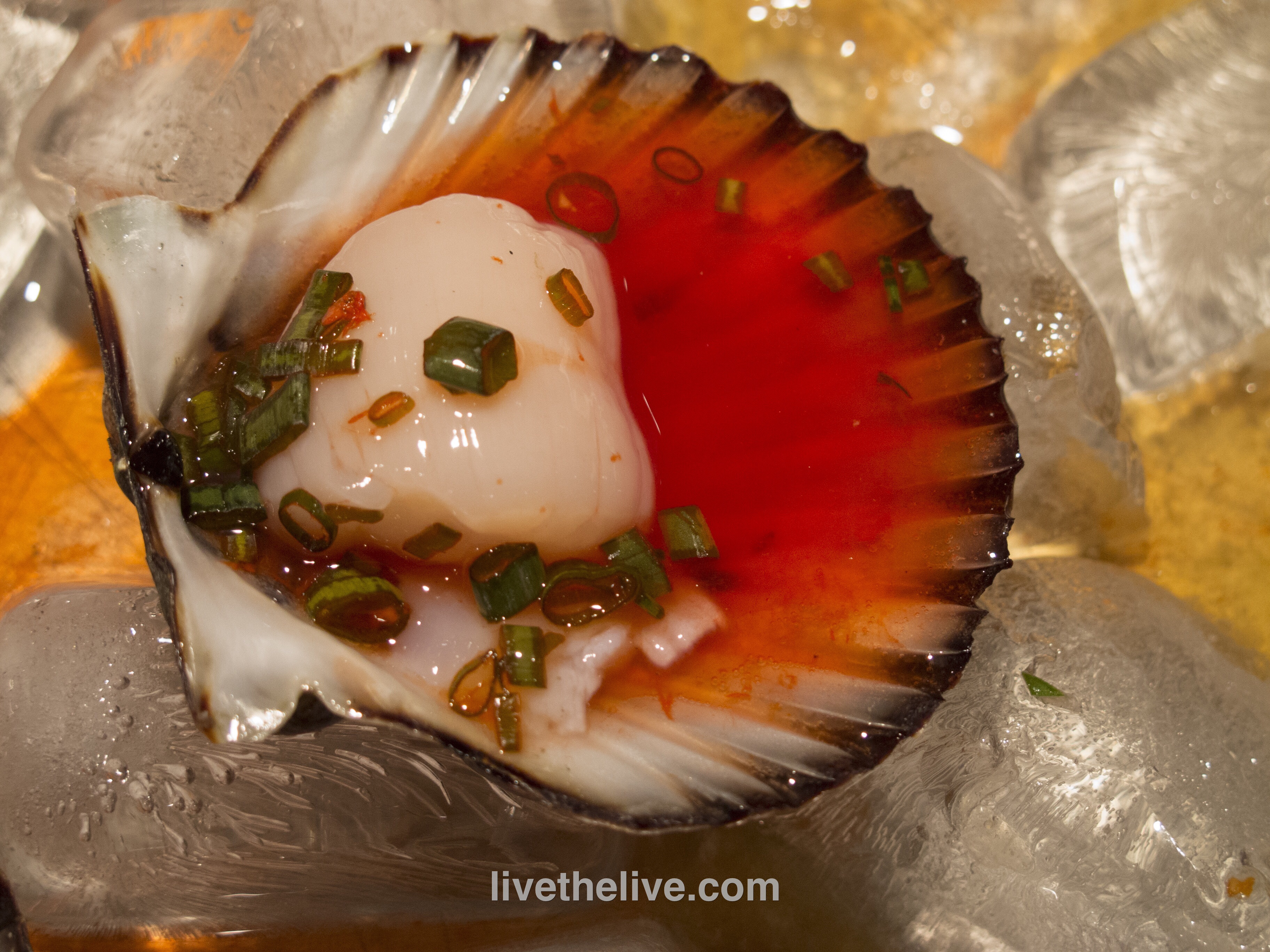
image
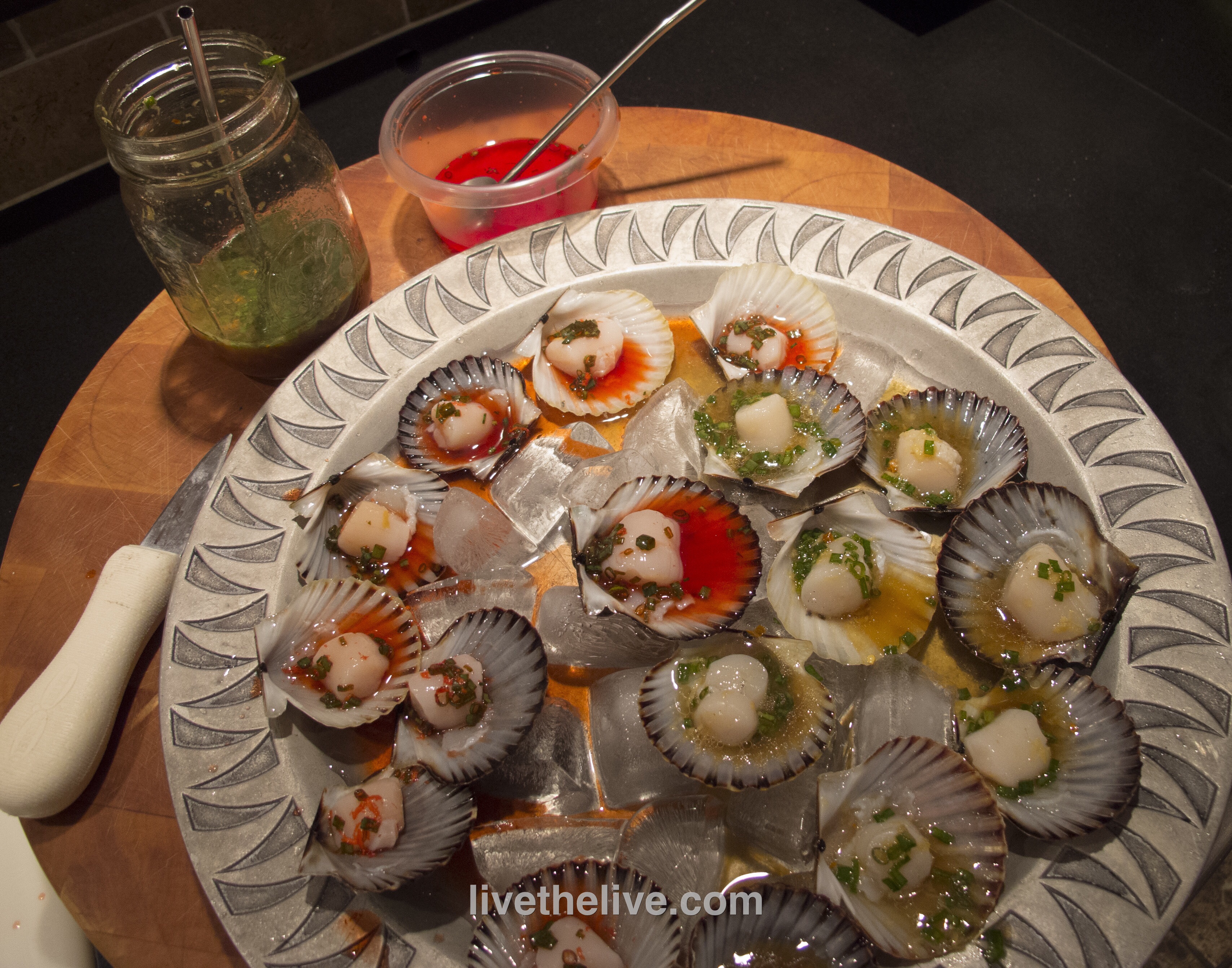
I’ve developed 2 marinades that work well on raw scallops or other raw seafood…
ALZ “CEVICHE” MARINADE
Ingredients:
1/4 cup freshly squeezed orange juice
1 1/2 tablespoons freshly squeezed lemon juice
1 1/2 tablespoons freshly squeezed lime juice
2 tablespoons soy sauce
1 tablespoon + 1 teaspoon peanut oil
1/2 teaspoon honey
1 1/2 teaspoons fresh finely grated ginger
2 tablespoons finely chopped scallion
2 small dried chili peppers, finely chopped

Combine all the ingredients and chill before using. You can simply spoon a little bit on your seafood and eat, or submerge the seafood in the marinade, which will “cook” it after a couple of hours in the fridge.
image


ALZ GRAPEFRUIT SEAFOOD MARINADE


Ingredients:

2 tablespoons fresh grapefruit juice
2 tablespoons soy sauce
1 1/2 teaspoons grated ginger
1/2 teaspoon chili oil
1/2 teaspoon honey
1 tablespoon finely chopped scallion or chives

Combine all ingredients in a bowl. Mix well. Keep refrigerated.


December 2nd is National Fritters Day!

Clam fritters, conch fritters, lobster fritters…I suppose you could fritter anything. But the first time I had them with mussels, I knew that I would never fritter my life away with any other!

It was a fall afternoon in Newport, Rhode Island, at the Newport Yachting Center’s annual Oyster Festival. We’re gorging on freshly shucked oysters and clams, boiled shrimp, and…what have we here? I had never heard of a mussel fritter before, but Wendy, the lovely lady behind the counter, convinced me that her secret recipe would knock my socks off. I took one bite, then another, then another…there was no turning back.

They couldn’t be easier to make, but it is crucial to have the right fritter batter. Here in Rhode Island, that starts with a product called Drum Rock fritter mix.

fritter ingredients


If you’re using fresh mussels, be sure to clean them well and remove the beards. Steam them in a pot over a small amount of water. As they open, they will release their flavorful juices and you want to save every drop of that broth for the fritters. Here in New England, frozen mussel meats are available in some seafood stores. All you need to do is thaw them, steam them saving the broth, and you’re ready to go.


Ingredients:


1 lb Drum Rock fritter mix (or other brand)

2 cups cooked mussel meats

1/2 cup mussel broth (saved from steaming mussels)

1/4 to 1/2 cup good quality beer, such as Sam Adams Boston Lager

Peanut oil for frying


Be sure to let the batter rest. If you're waiting for guests to arrive, just cover the batter bowl with a moist towel and it will keep for several hours at room temperature.

Be sure to let the batter rest. If you’re waiting for guests to arrive, just cover the batter bowl with a moist towel and it will keep for several hours at room temperature.


Steam mussel meats until just cooked. Remove mussel meats, and reserve 1/2 cup of the broth. Pulse mussel meats in a food processor, but leave chunky…or chop by hand.

Put fritter mix in a large bowl. Add mussel meats, mussel broth, and beer. Stir gently until just mixed. Let it sit for 10 to 15 minutes and do not stir again.

Using a thermometer, heat oil to 350 degrees, and using a small spoon or scoop, drop fritters in hot oil, turning gently, cooking 3 to 4 minutes until golden.

Drain on absorbent paper, and season with salt and pepper immediately. Serve right away!

IMG_3043


The perfect dipping sauce for these mussel fritters is made from two ingredients: mayonnaise and Ponzu sauce, which is a citrus-based soy sauce. Combine both ingredients in a bowl. How much you use of each is a matter of personal preference. I usually use a ratio of 4 parts mayo to 1 part Ponzu.


Mugaritz, San Sebastian, Spain

Mugaritz, San Sebastian, Spain

Mugaritz is one of the top restaurants in the world: ranked #3 or #6, depending on who you ask. And I’m just a guy with a blog. But on a recent trip to San Sebastian, Spain, my family and I had a chance to dine there.

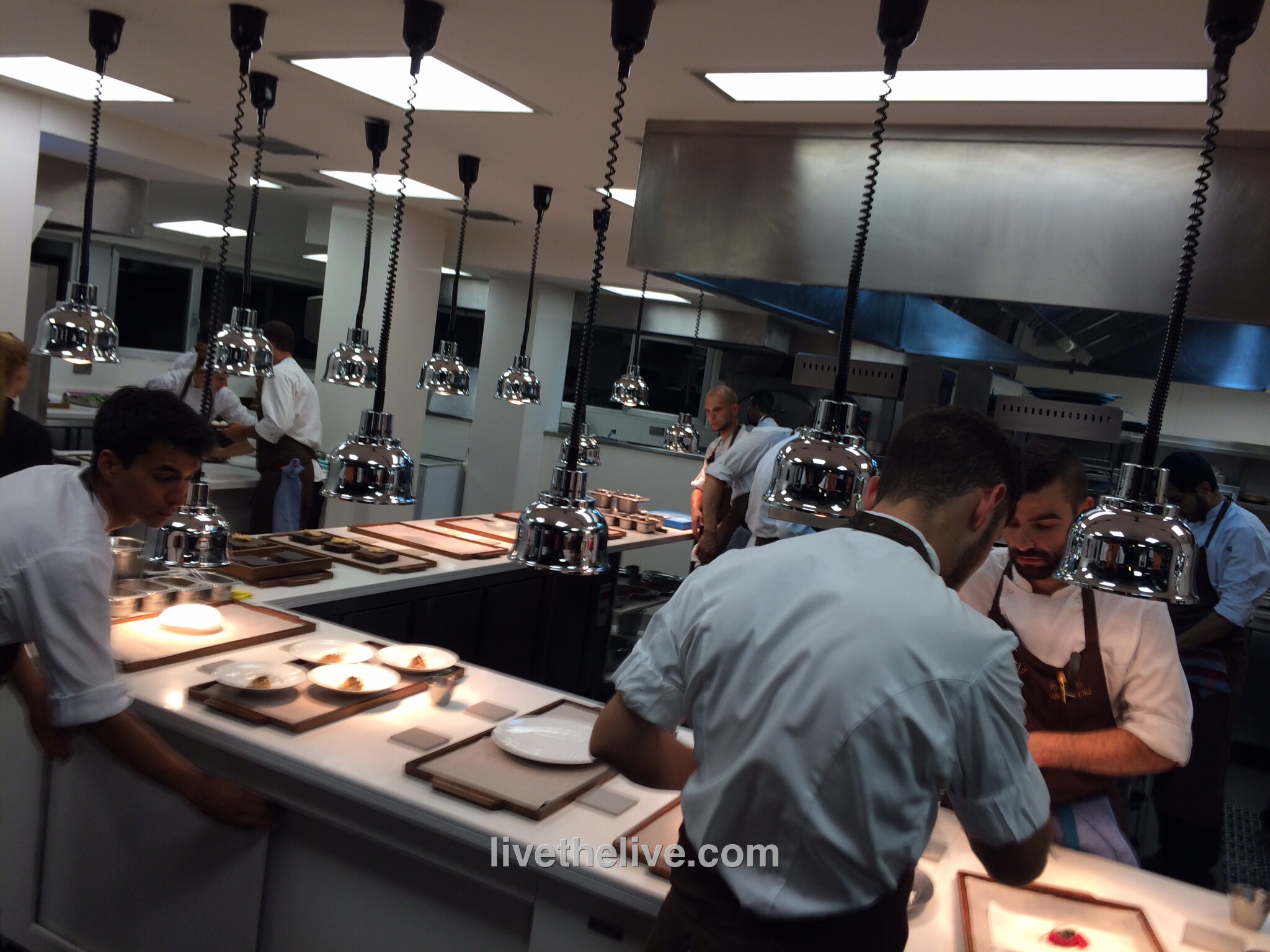
The main kitchen from outside.

The main kitchen from outside.

The dishes that acclaimed chef Andoni Luis Aduriz created were some of the most original we’ve ever enjoyed. There was a flow to our experience…a reason why one dish followed another. It was like a concert, with Aduriz at the helm as director and composer.

Mugaritz has about twenty tables. And one seating. You are there for the night. Well over twenty courses, small bites to be sure, but all intense and rich with flavors and textures that complimented each other.

The kitchen at Mugaritz.

The main kitchen at Mugaritz.

Every table got a private tour of the kitchen. And though we didn’t meet chef Aduriz, we did get to talk with his second in command: chef Ramon Perise.

Mugaritz, as Perise explained it, has three kitchens: a lower level for preparation…a middle kitchen on the main floor for cooking all the food, plating it and making it look beautiful…and then an upstairs kitchen, the laboratory, where they come up with their newest creations.

Hangin' with Ramon Perise.

Hangin’ with Ramon Perise.

With our kitchen tour, we saw the chefs setting up rows of small iron bowls on wooden stands: individual mortar and pestles for each person in the dining room. It was going to be a dish that was served to everyone at the same time, no matter where they were in the course of their meal. So when we finished our kitchen tour, we sat down, and the mortar and pestles were brought out.

Inside the iron bowl were some wet and dry ingredients: what looked like corn nuggets, a colorful cube of gelatin and other ingredients. We were instructed to grind up what was in our bowls with our personal pestle. The entire restaurant was filled with a ringing sound, like church bells going off somewhere in the distance. For a few precious minutes, every patron shared this special perfectly choreographed event as we ground up the contents of our bowls. They called it the “linking dish.”

Then, one by one, the grinding stopped. The iron bowls continued to ring for a few seconds until the sounds faded away into silence, replaced by the low murmur of conversation. And we all went back to our meals.

The linking dish.

The linking dish.

Our sommelier, Guillermo Cruz, was a bright, knowledgeable and enthusiastic young man that offered us thrill rides in a glass, including a much-needed digestivo half-way through the meal so that we could continue our dining experience!

A grappa-like Fillaboa digestif from Gallicia that was made from the local Albarino grapes. Helpful in making room for more food!

A grappa-like Fillaboa digestif from Gallicia that was made from the local Albarino grapes. Helpful in making room for more food!

As chef Perise said to us (paraphrasing): “When you leave this place…and weeks afterwards…you’re not going to remember the food. But you’re going to remember the emotions you had and the feelings you had when you were here. And that’s what we’re working for.”

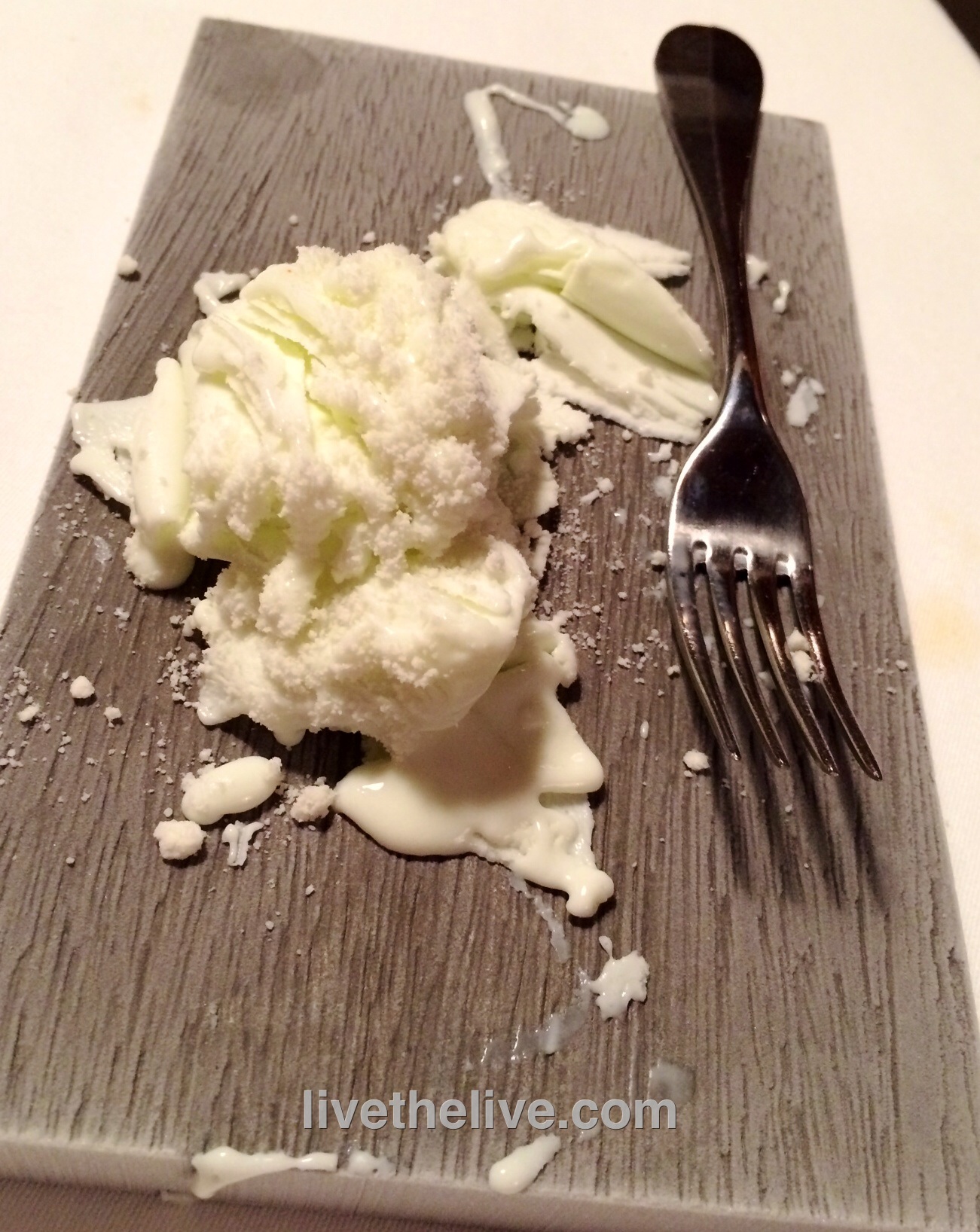
Shaved ice cream with cheese: one of many desserts.

Shaved frozen apple with cheese: one of many desserts.

Could there have been too many dishes? Is there such a thing as too much of a good thing? Is less really more?

These burning questions can only be answered with another visit to Mugaritz. I hope it’s sometime soon!


image

Restaurante Botin, in the great old city of Madrid, Spain, is a must-visit. At first, I thought it might be more of a tourist trap. But this establishment, which holds the Guinness Book of world records for oldest restaurant (it opened in 1725), has some fantastic dishes that you just can’t get anywhere else.

image

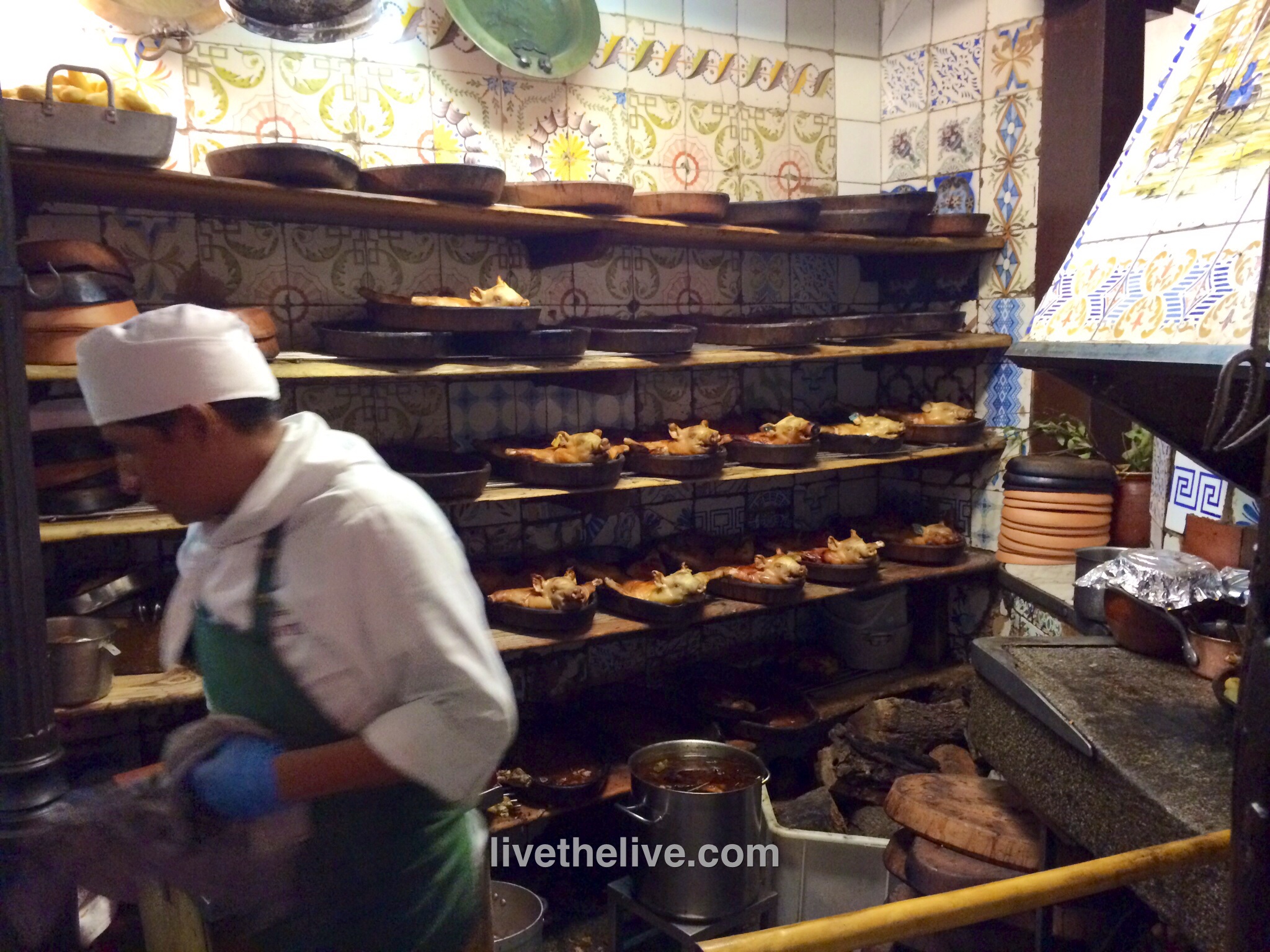
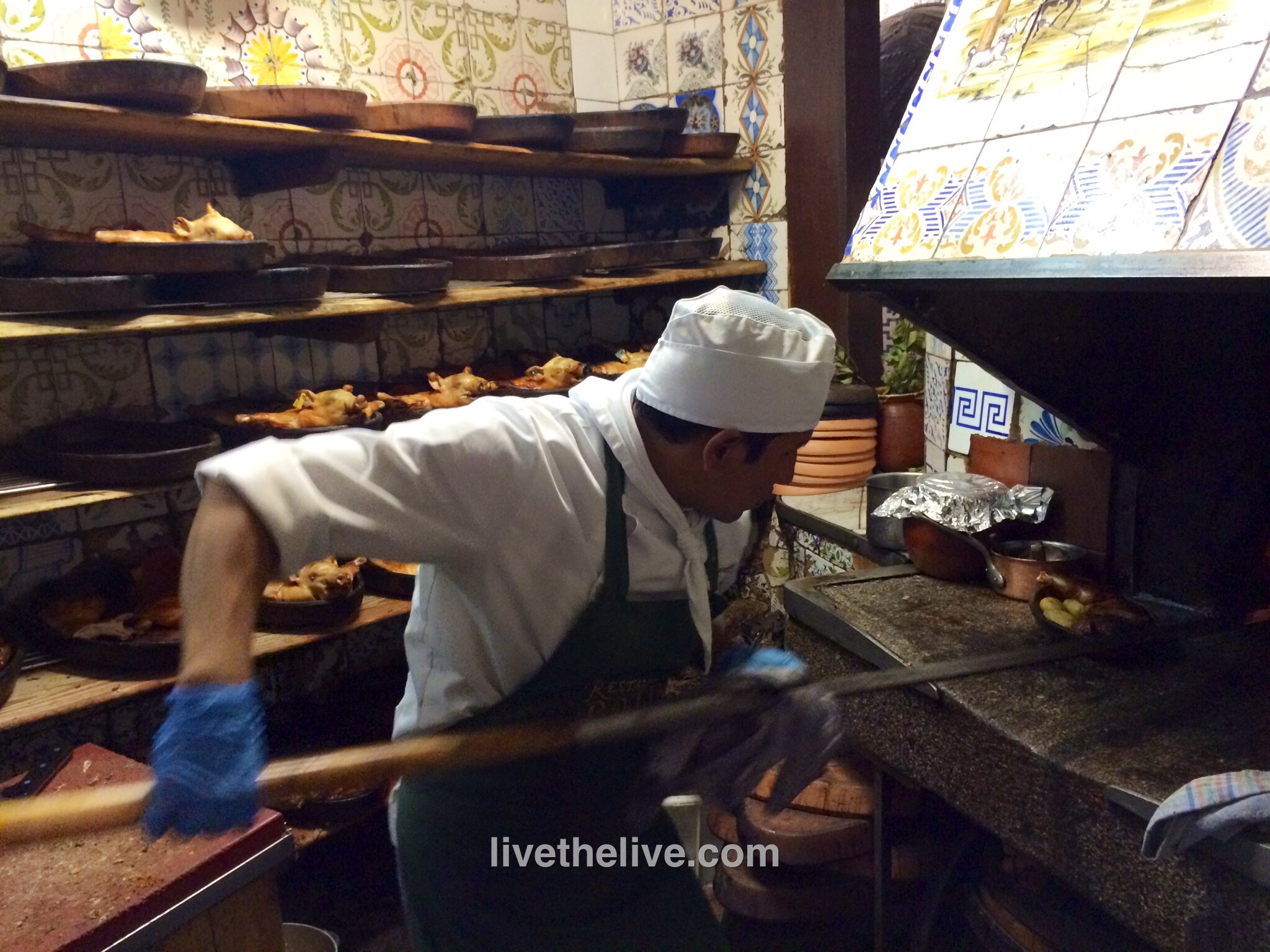
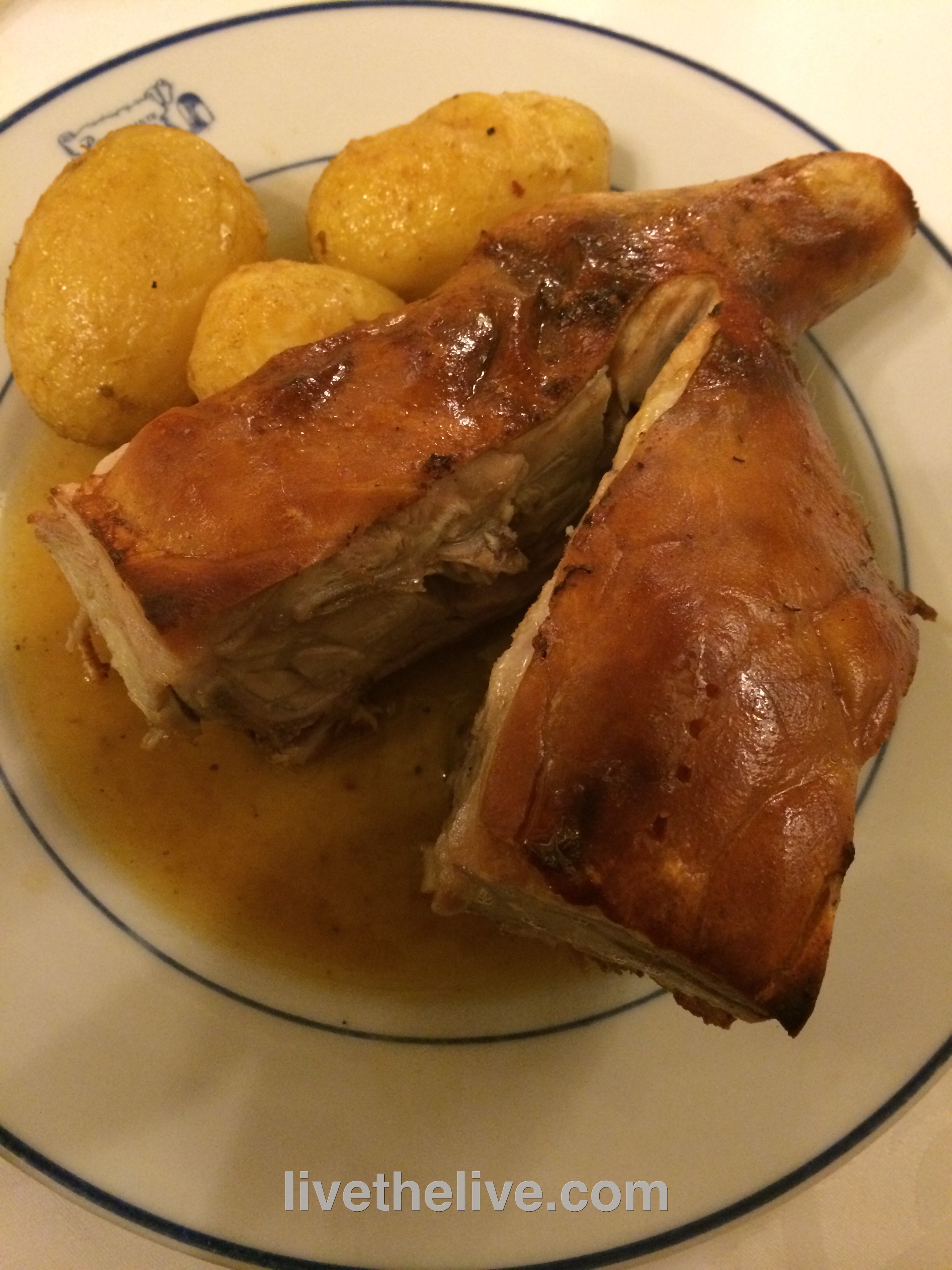
The suckling pig at Botin is world-famous. If you’re a vegetarian, you’ll probably be freaked out to see the row of little pigs on plates, waiting to be placed in the almost-300-year-old wood burning oven. These suckling pigs were only 20-something days old when they became dinner, and the slow-roasted flavor of this pork is like nothing you’ve ever had before. The roasted baby lamb, a gamier lamb than most Americans are used to, thanks to its grass-fed upbringing, was also exquisite.

imageimage

imageCroquettes are big in Spain, as popular with the kids as nuggets are here in the states. And the croquettes at Botin, breaded and fried to a perfect crisp on the outside, with an oozy, creamy cheesy center, are addictive.

The servers, handling three levels of dining rooms, are fast and efficient, but also have time for a sense of humor.

image

Just around the corner from the Plaza de Mayor, the city’s best people-watching location, Botin is my kind of attraction: a food museum where they still create many dishes like they did hundreds of years ago. In fact, the famous artist Goya was a dishwasher here in his youth, back in 1765.

image

Walk around the restaurant, and check out the different rooms that have been renovated over time…and the ones that have been there all these years. It’s a fascinating trip through history.

image

We were in Madrid at the end of August, 2014…still vacation time for most of the city, so our restaurant choices were somewhat limited. The concierge at the Westin Palace Hotel, where we stayed for 3 nights in Madrid, suggested Ten Con Ten. We were told that despite this being the place where all the so-called “beautiful people” hang out, it is a legitimate foodie destination.

image

We arrived: my wife, my 7-year-old daughter and I…and immediately were the center of attention as we were clearly the only people who ever even considered bringing a child into this place. We were spoiling the vibe of the party. (We’ve taken our daughter to fine restaurants all over the world and never had a problem. She’s better behaved than most of the adults in the room.)

We sat down at our table, were greeted gruffly in Spanish by our server, a young woman who clearly disliked us from the start, and were asked if we wanted a drink before ordering dinner. I had vodka on the rocks, served promptly. My wife ordered cava, a sparkling wine, and it was forgotten. However, that didn’t stop 3 separate managers from coming to our table and asking what we wanted to eat…all in a span of 4 minutes, before I even had the chance to take a second sip of my drink. When my wife commented that she’d like to enjoy her drink first (which still hadn’t arrived), they left in a huff.

A lovely elderly couple from Denver, at the table next to us, told us that they were completely rushed through their dinner and plates were removed from under them before they even had a chance to finish…like a scene from a bad Chinese restaurant. They complained loudly as they paid their bill, in part I think, to set the stage for us to at least enjoy our dinner at a more leisurely pace. I wish I knew how to get in touch with them to thank them for that!

When a fourth manager asked for our order, that’s when we politely said we were hoping to have the table for the night. He rushed off to confer with the reservations chick with the clipboard, and he finally agreed with a sigh that it would be alright. When we told him we had eaten at 2 of the top 10 restaurants in the world, Arzak and Mugaritz in San Sebastián just a few days earlier, I think he finally understood that we were there for the food and not all the posturing.

image

All this was so unlike any dining experience we had in Spain, that it really caught us off guard. But once we established that we were staying and taking our time–kid and all–they relented and started serving us with a different attitude. In fact, the manager that was assigned to us (our grumpy server now relegated to simply clearing our plates) was great, and soon we were able to establish a fun and friendly dialogue with him that really made the evening special.

We wanted to try many dishes, but obviously couldn’t eat them all. Our new manager friend specially ordered smaller portions for us. When we couldn’t decide which plates to choose from, we let him do it, much to his delight. A white wine we ordered was not available at the proper temperature, so he chose another for us–excellent. Our bottle of red came from a private stock that wasn’t even on the menu–again, his choice.

And when our daughter a hand wrote a small thank-you card to the staff for a wonderful meal, you could’ve knocked them over with a feather. The staffers literally made a receiving line toward the door as we left, shaking our hands and thanking us for dining with them…our manager friend being the very last to say goodbye.

The food was excellent and seasonal. The menu changes all the time. We had toro tuna tataki, pasta with a morel sauce (featuring a touch of foie!), pasta with a sea urchin sauce, veal scallopine, what they call “yellow” fish (it commonly is caught alongside tuna), oxtail hamburgers, and more…and wonderful desserts.

Dining in Spain starts at 8PM for the most part, and it was clear in the beginning of our night (we had an 8:30 reservation) that they planned on turning that table over a lot. Our manager friend told us that, despite the fact that the restaurant was already full, the party “really” only started at midnight! So rushing people in and out was the way to make some serious coin for these folks. And he said it got even worse once the vacation season was over and everyone was back to work in Madrid!

The secret to enjoying Ten Con Ten is to stake your claim: don’t let them push you around. Make it clear that a rushed meal is not acceptable. The staff may grumble at first, but eventually let you have your way. And then… it can be a great experience.

The original maraschino cherries were a variety called marasca from Croatia, and that’s where the name comes from. But today’s maraschino cherry is a completely different animal. The modern American supermarket maraschino cherry (usually a variety called Queen Anne) is soaked in a salt brine to remove its natural color and flavoring…then pitted and soaked in a sweetener for around a month. The final step of dipping in artificial coloring gives the modern maraschino its neon red color (or any other color desired).

So why would any self-respecting bar that takes pride in its cocktails serve you these vile, rancid cherries? Especially when there are some incredibly amazing alternatives?

If you pride yourself in the quality spirits you drink…if you understand that every ingredient counts–from the mixers down to the quality of the ice cubes–then you need to get the right cherries for the job!

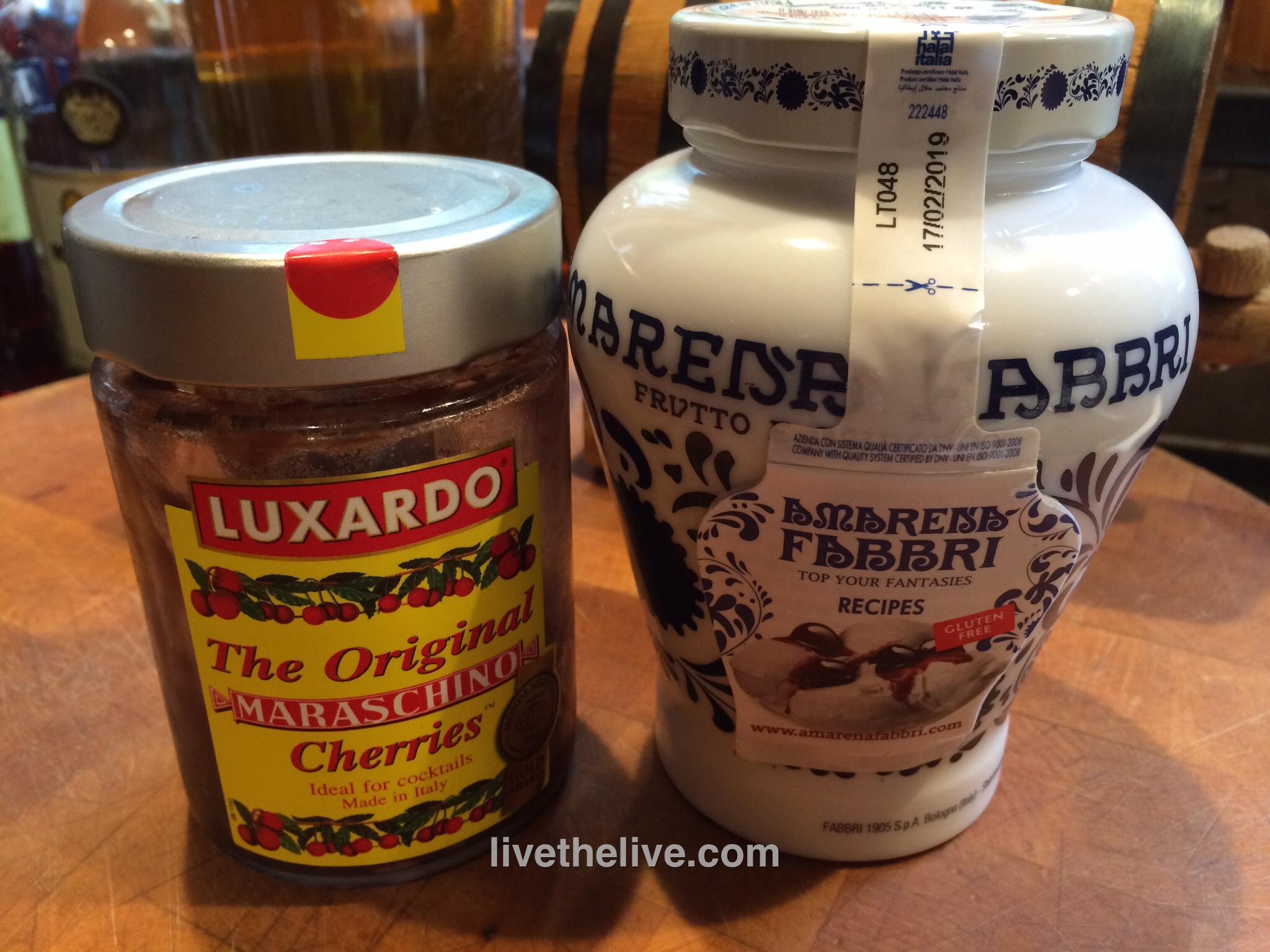
Luxardo cherries have always been the standard by which other cherries are ranked, and for good reason. Sip a Manhattan made with Luxardo cherries, and you will never go back to what you had before. It’s why they go for about $25 a jar and they are worth every penny. These are made with a recipe that dates back to 1821 in Italy, using genuine marasca cherries and their syrup.

cherry2


A recent trip to what has become my new favorite restaurant in Providence, RI, a tiny 20-seat restaurant called birch, opened my eyes to yet another fantastic cherry:

My Amarena Fabbri cherry awaiting my Manhattan at birch in Providence, RI

My Amarena Fabbri cherry awaiting my Manhattan at birch in Providence, RI

Amarena Fabbri wild cherries: made in Bologna, Italy since 1905, these are wild cherries that are carefully harvested and stoned, then preserved in amarena syrup. (The amarena cherry is a small, dark, bitter cherry grown in the Bologna and Modena regions of Italy.) Packaged in beautiful blue and white Opaline jars, I can’t think of a better gift for the avid mixologist. Also about $25 a jar.

Both the Luxardo and the Amarena Fabbri cherries are avilable at Amazon.


Though it may sound Japanese, the word “saganaki” refers to a small frying pan used in Greek cooking. The most famous of these dishes, simply called saganaki, is a fried cheese, often flamed at the end with a little ouzo.

Shrimp saganaki is one of my favorite Greek dishes, and it usually involves cooking shrimp in a tomato-based sauce with plenty of feta cheese sprinkled in. It’s a simple yet fantastic dish if the ingredients are fresh. Doesn’t hurt to be sitting in a taverna on the beautiful island of Santorini while eating it, either!

Graviera cheese

Graviera cheese

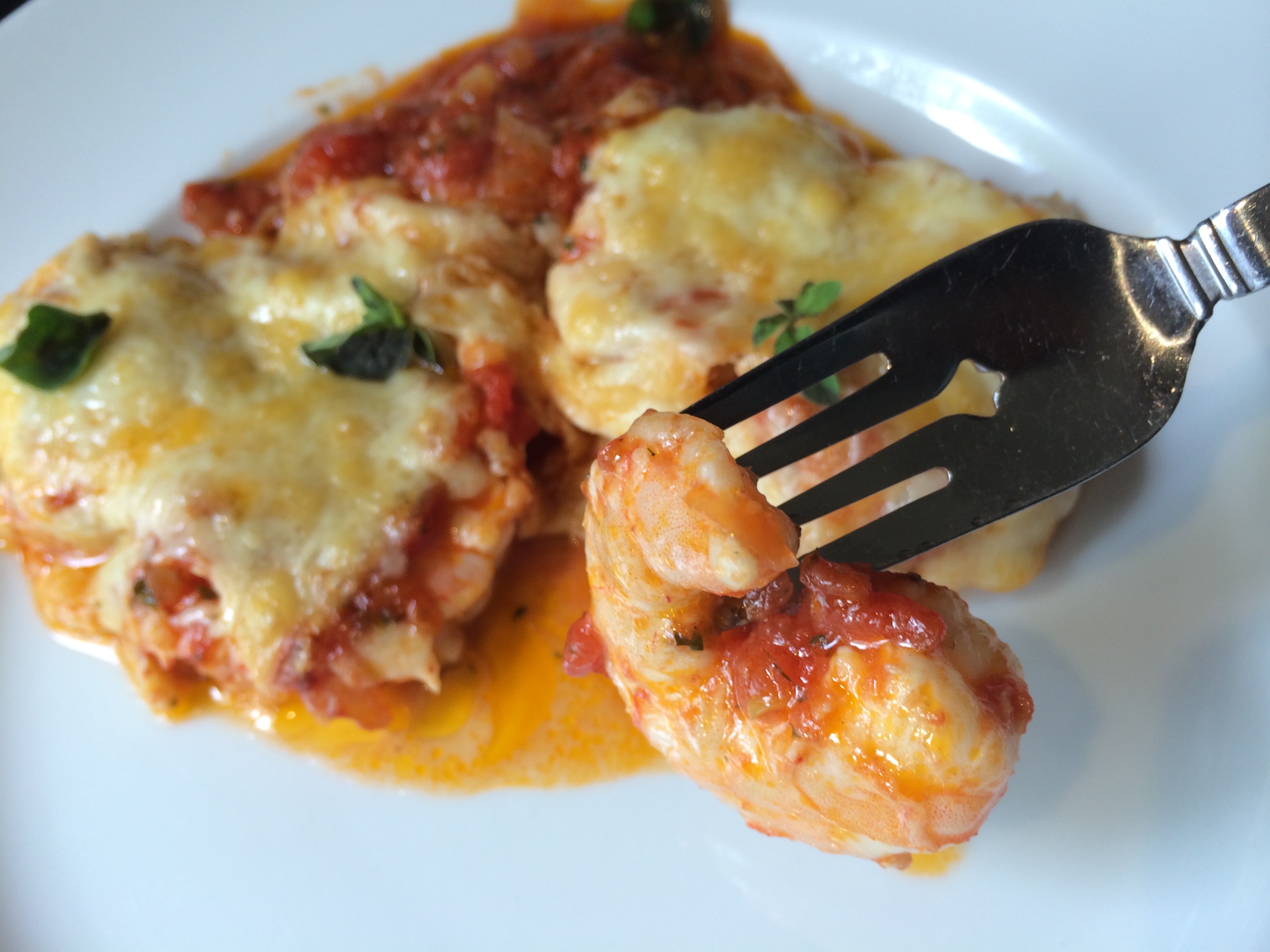
I had a slab of Graviera cheese from my most recent trip to Santorini, and decided to recreate shrimp saganaki using that instead of feta. It was pretty damn amazing…

Melty, gooey, delicious!

Melty, gooey, delicious!


Ingredients:


300 g grated Graviera cheese

1 can (28 oz) whole tomatoes

1 lb (about 24) shrimp, peeled and deveined

1 medium onion, chopped

juice of 1/2 lemon

1/4 cup olive oil

2 cloves garlic, through a press

pinch red pepper flakes

1 1/2 tablespoons fresh dill, finely chopped

1 tablespoon fresh oregano, finely chopped

1 1/2 tablespoons Ouzo

salt and pepper


Peel and devein the shrimp. Squeeze the juice of  1/2 of a lemon on to the shrimp and toss. Set aside.

In a large pan, saute the onions in the olive oil until translucent. Add garlic and cook for a few seconds more.

Crush or puree tomatoes and add to the pan. Add red pepper flakes, dill and oregano, and salt and pepper. Add Ouzo.

Let this sauce cook down for a bit until all the flavors have blended together.

Pour a layer of the sauce on the bottom of a metal broiler-proof pan. Lay the shrimp in a single layer into the sauce. Cover the shrimp with the rest of the sauce and sprinkle the grated Graviera on top.

Place the pan in the broiler and cook until the cheese is brown and bubbly.

shrimp saganaki


Clam fritters, conch fritters, lobster fritters…I suppose you could fritter anything. But the first time I had them with mussels, I knew that I would never fritter my life away with any other!

It was a fall afternoon in Newport, Rhode Island, at the Newport Yachting Center’s annual Oyster Festival. We’re gorging on freshly shucked oysters and clams, boiled shrimp, and…what have we here? I had never heard of a mussel fritter before, but Wendy, the lovely lady behind the counter, convinced me that her secret recipe would knock my socks off. I took one bite, then another, then another…There was no turning back.

They couldn’t be easier to make, but it is crucial to have the right fritter batter. And that starts with a product called Drum Rock fritter mix. If you live in New England, you can find it in just about any seafood department at Whole Foods. If you live further away, you can check out their website (http://www.drumrockproducts.com/index.php) or try your luck with a local brand of fritter mix.

fritter ingredients


If you’re using fresh mussels, be sure to clean them well and remove the beards. Steam them in a pot over a small amount of water. As they open, they will release their flavorful juices and you want to save every drop of that broth for the fritters. Here in New England, frozen mussel meats are available in some seafood stores. All you need to do is thaw them, steam them saving the broth, and you’re ready to go.


Ingredients:


1 lb Drum Rock fritter mix

2 cups cooked mussel meats

1/2 cup mussel broth (saved from steaming mussels)

1/4 to 1/2 cup good quality beer, such as Sam Adams Boston Lager

Peanut oil for frying


Be sure to let the batter rest. If you're waiting for guests to arrive, just cover the batter bowl with a moist towel and it will keep for several hours at room temperature.

Be sure to let the batter rest. If you’re waiting for guests to arrive, just cover the batter bowl with a moist towel and it will keep for several hours at room temperature.


Steam mussel meats until just cooked. Remove mussel meats, and reserve 1/2 cup of the broth. Pulse mussel meats in a food processor, but leave chunky…or chop by hand.

Put Drum Rock fritter mix in a large bowl. Add mussel meats, mussel broth, and beer. Stir gently until just mixed. Let it sit for 10 to 15 minutes and do not stir again.

Using a thermometer, heat oil to 350 degrees, and using a small spoon or scoop, drop fritters in hot oil, turning gently, cooking 3 to 4 minutes until golden.

Drain on absorbent paper, and season with salt and pepper immediately. Serve right away!

IMG_3043


The perfect dipping sauce for these mussel fritters is made from two ingredients: mayonnaise and Ponzu sauce, which is a citrus-based soy sauce. Combine both ingredients in a bowl. How much you use of each is a matter of personal preference. I usually use a ratio of 4 parts mayo to 1 part Ponzu.


It’s interesting how we sometimes stumble upon great food finds. After taking our daughter to the Boston Museum of Science on a recent Saturday, we decided to eat at a small family run Italian restaurant in a blue-collar neighborhood in East Boston, one that was featured a few years ago on the Food Network’s “Diners, Drive-Ins and Dives” with Guy Fieri. It’s called Rino’s Place, and we’ve been waiting for the opportunity to try the food there for a long time.

Rino’s Place opens at 3PM. We got there at 3PM. The line was out the door and down the street, with a 3-hour wait. (They don’t take reservations for parties smaller than 6.) I don’t care how good the food is supposed to be…I’m not going to wait 3 hours to eat pasta. So, disappointed, we drove off, hoping to perhaps visit Rino’s on a less popular weekday some other time.

Meanwhile,  my wife, the artist, was scanning the neighborhood and found an interesting art gallery, Atlantic Works, nearby. We decided to check it out. There wasn’t much to see, but the ladies that ran the joint told us that Rino’s, in their opinion, was good but overrated. The exposure Rino’s got from DDD was so huge that they even bought the convenience store across the street from the restaurant and converted it into a bar for those that chose to wait for their tables. Total cash cow.

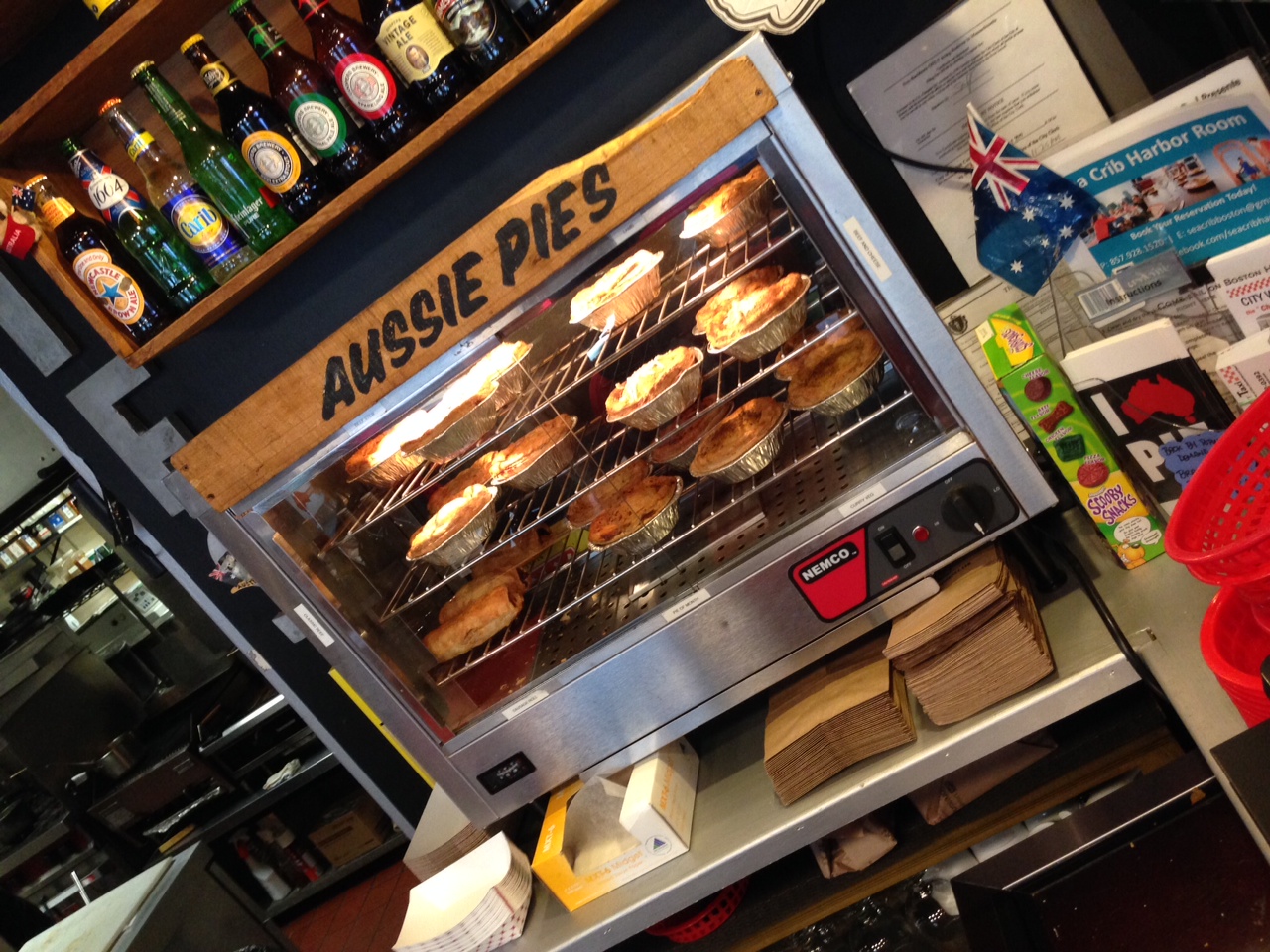
Just down the road from the Atlantic works, the ladies told us, was a funky little joint that made authentic Australian meat pies. That sounded good. They said it was tucked away inside a funky old marina that featured bizarre metal sculptures on the roofs of the buildings. That sounded intriguing. Off we went.

photo

A few lefts and rights…a little loss of GPS at one moment…and we arrived at the Boston Harbor Marina. Definitely the slow season, as many of the boats were still shrink-wrapped, but you could see this place had potential in the summertime, with huge metal sculptures of fish and mermaids on the property. And sure, enough, tucked away in a far corner was KO Catering and Pies, our Aussie meat pie joint.

pie2

It was cold and windy outside, but some brave souls were sitting at the picnic tables outside, enjoying their meals. We chose to buy a bunch of frozen pies and take them home to re-heat.

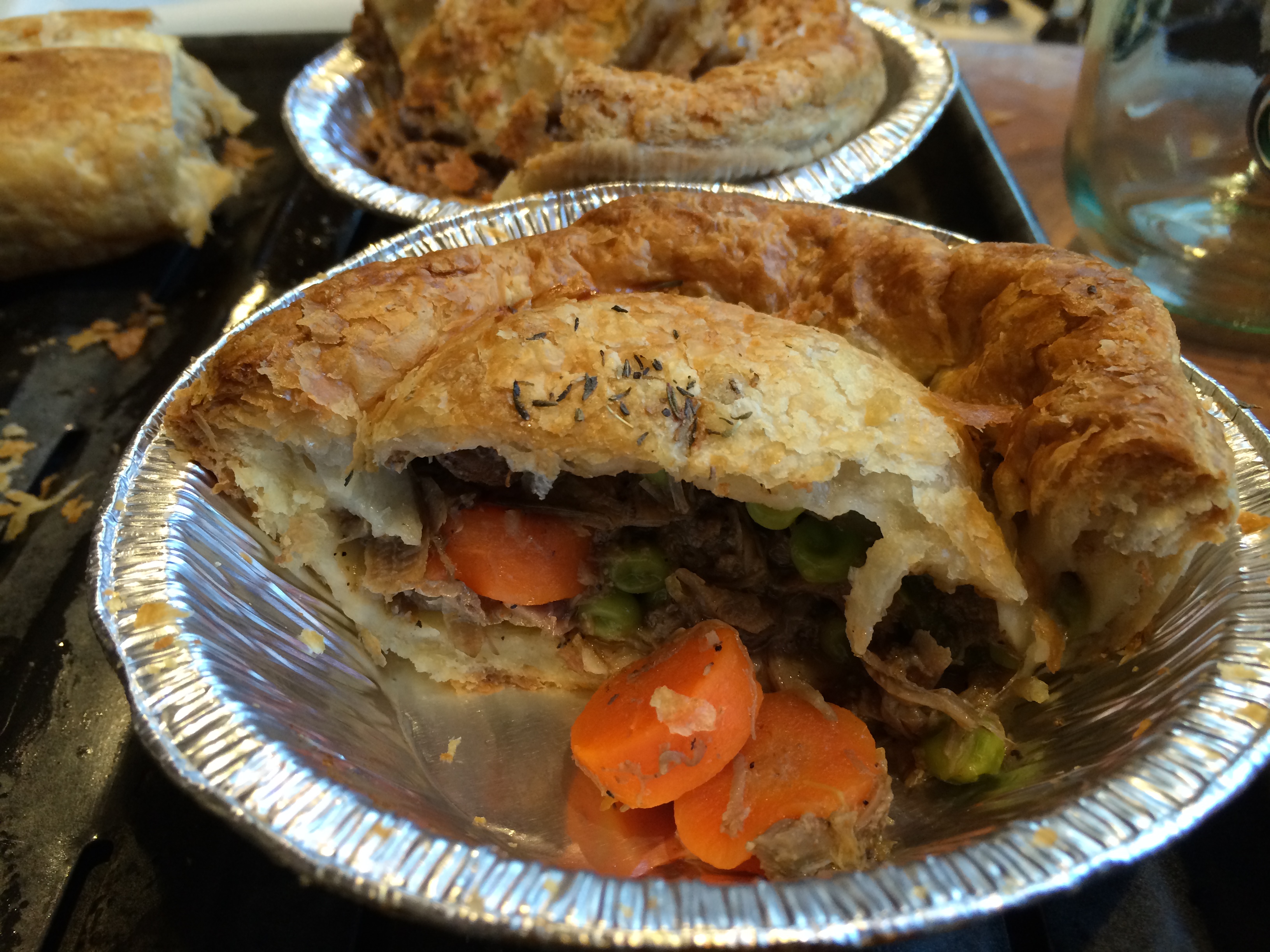
They were awesome: beef with cheese, braised lamb shank, beef stew…all surrounded by some of the most delicious and flakiest pie crusts you ever bit into.

more pie

KO has another location in south Boston as well. Either one is worth a visit. Start here: http://www.kocateringandpies.com

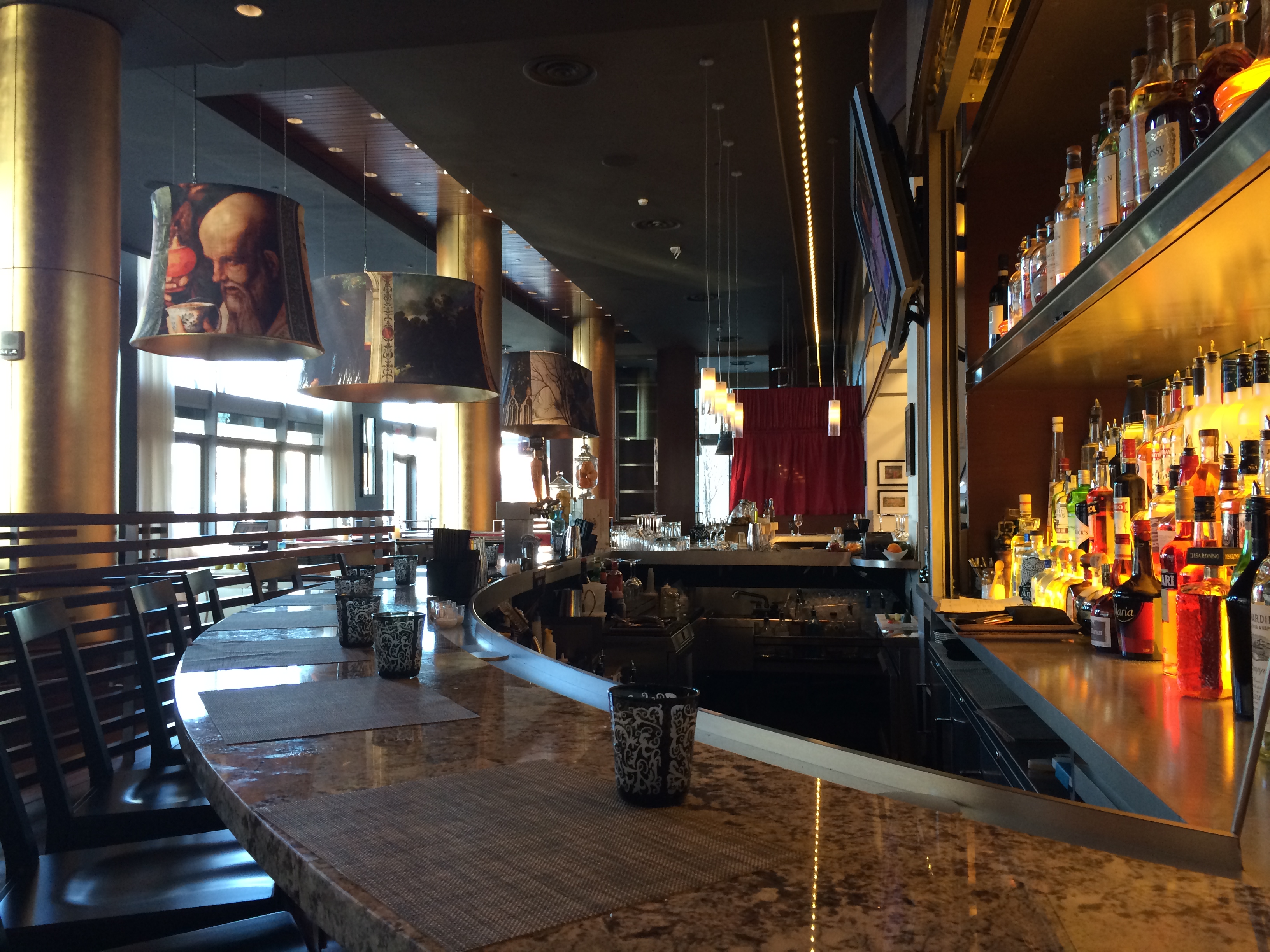
M.C.Spiedo is a new Italian restaurant in the Renaissance Hotel by the Boston waterfront. It’s a massive, over-the-top (as in a bit gaudy) establishment that features rustic food from Italy’s historic past, dating back to the Renaissance period of the 1400’s. You’ll find no tomato dishes here: tomatoes were introduced into Italy in the 1500’s. What you will find are rustic, flavorful spit-roasted meats, pastas with rich sauces, and robust flavors.

MCSpiedo

This is a huge departure for chefs Mark Gaier and Clark Frasier, who come from acclaimed Maine restaurants Arrows (which just celebrated its 25th anniversary)and MC Perkins Cove in Ogunquit. (They just announced that they are selling Arrows for $1.2 million.)

What’s in the name? The M.C. is from Marc and Clark, and Spiedo means a spit or skewer in Italian. Considering this is still a new restaurant, I was surprised that the two chefs were nowhere to be found on a recent Saturday night. Nonetheless, the staff seems to be knowledgeable, and our server, Daniel ,was eager to guide us through the many menu choices.

The Leonardo's Notebook Salad

The Leonardo’s Notebook Salad

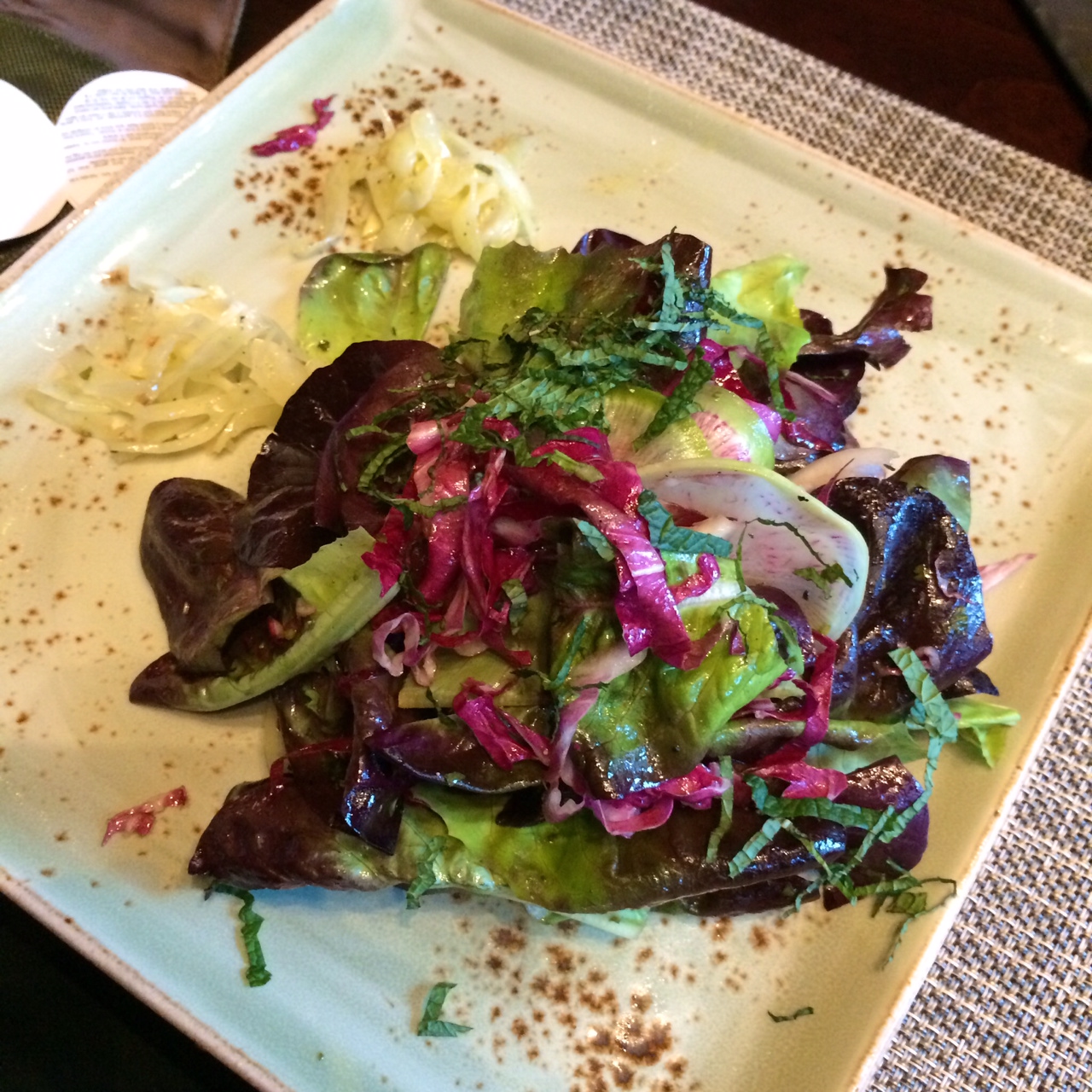
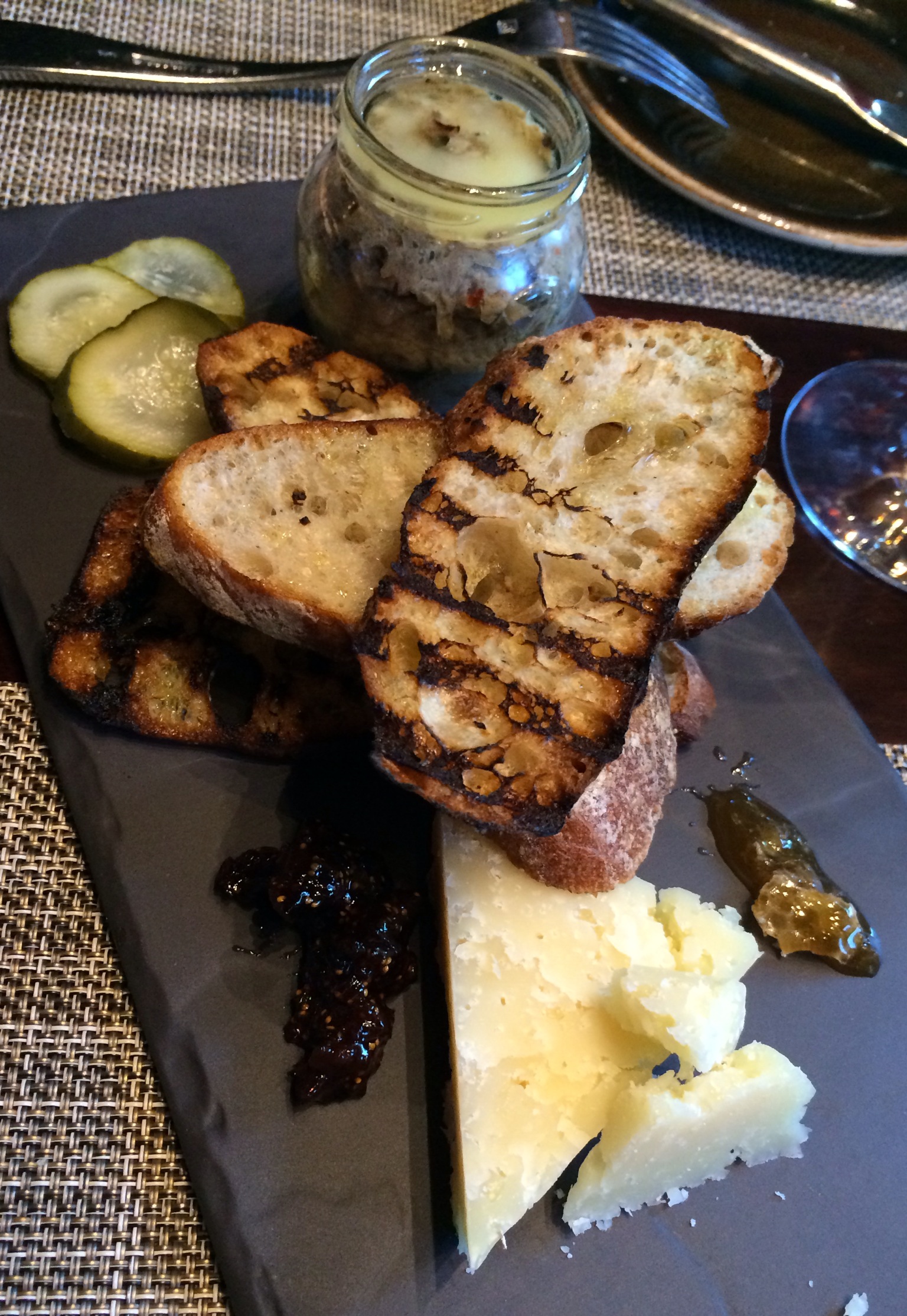
Leonardo’s Notebook Salad, with garlic, fennel, lettuces and herbs was delightfully fresh and thoroughly enjoyable. The house made burrata: fantastic…just not enough of it. The duck rillette was good, but unseasoned. However, the accompanying house made mustard and pickles remedied that. The Grand Tortellini and Meat Torta, a mile-high meat pie featuring more meat than you can imagine, is a must. It sells out every night. The spit-roasted pig with sausage and shelling bean macaroni would have been delicious had it not been for a VERY heavy amount of salt…so much that I had to mention it to our server, who promptly whisked it away, tasted it, agreed with us, consulted management, and returned with an apology and did not charge us for the dish.

Grand Tortellini and Meat Torta

Grand Tortellini and Meat Torta

Thankfully, there are 2 parts of M.C.Spiedo that don’t stick to the rules of only serving ingredients from Italy’s Renaissance period: the bar, where you can find many wonderful house specialty cocktails as well as a wine list with only Italian wines…and the kids menu, which is a welcome surprise to find in this kind of restaurant. My daughter loved the meatballs and the grilled cheese.

Duck rillette with house made pickles, mustard, and Fiore Sardo cheese

Duck rillette with house made pickles, mustard, and Fiore Sardo cheese

There are a few kinks to work out, but that’s to be expected from a new restaurant. And they’ve got to lighten up on the SALT. But I can see myself coming back to M.C. Spiedo for another enjoyable dining experience.

MC4