Archive for the ‘Uncategorized’ Category

ASIAN DIPPING SAUCE FOR DUMPLINGS

Posted: February 27, 2022 in Uncategorized

A great dipping sauce for Chinese dumplings, known as Jao-Tze, needs to be more than just a bowl of soy sauce. Sure, if you’re having sushi-grade raw fish, you may want to keep it simple with a gentle dip of high-quality soy sauce to preserve the subtle flavors of the fish, but sometimes you want more.

If you’re having dumplings, chunks of pork, beef on a skewer, or grilled chicken, a dipping sauce with more flavor is essential.

Inspired by what I call my Bible of Chinese cooking, “The Chinese Cookbook,” by Craig Claiborne and Virginia Lee (printed in 1972), I tweaked the recipe to fit my own tastes.

You don’t usually find maple syrup in Asian cooking, but I found that it added just the right amount of sweetness needed, and I prefer it over the more commonly used honey.

1/4 cup dark soy sauce
1/4 cup white vinegar
1 tablespoon sesame oil
1 tablespoon maple syrup
2 teaspoons freshly grated ginger
1 teaspoon finely minced garlic
3/4 teaspoon Chinese chili garlic sauce
1/2 teaspoon sugar
1/2 teaspoon rice vinegar
1 green onion, finely chopped

I combine all the ingredients in a bowl and mix well.

I store it in the fridge in a container with a lid, and give it a good shake right before using, to re-mix the ingredients.

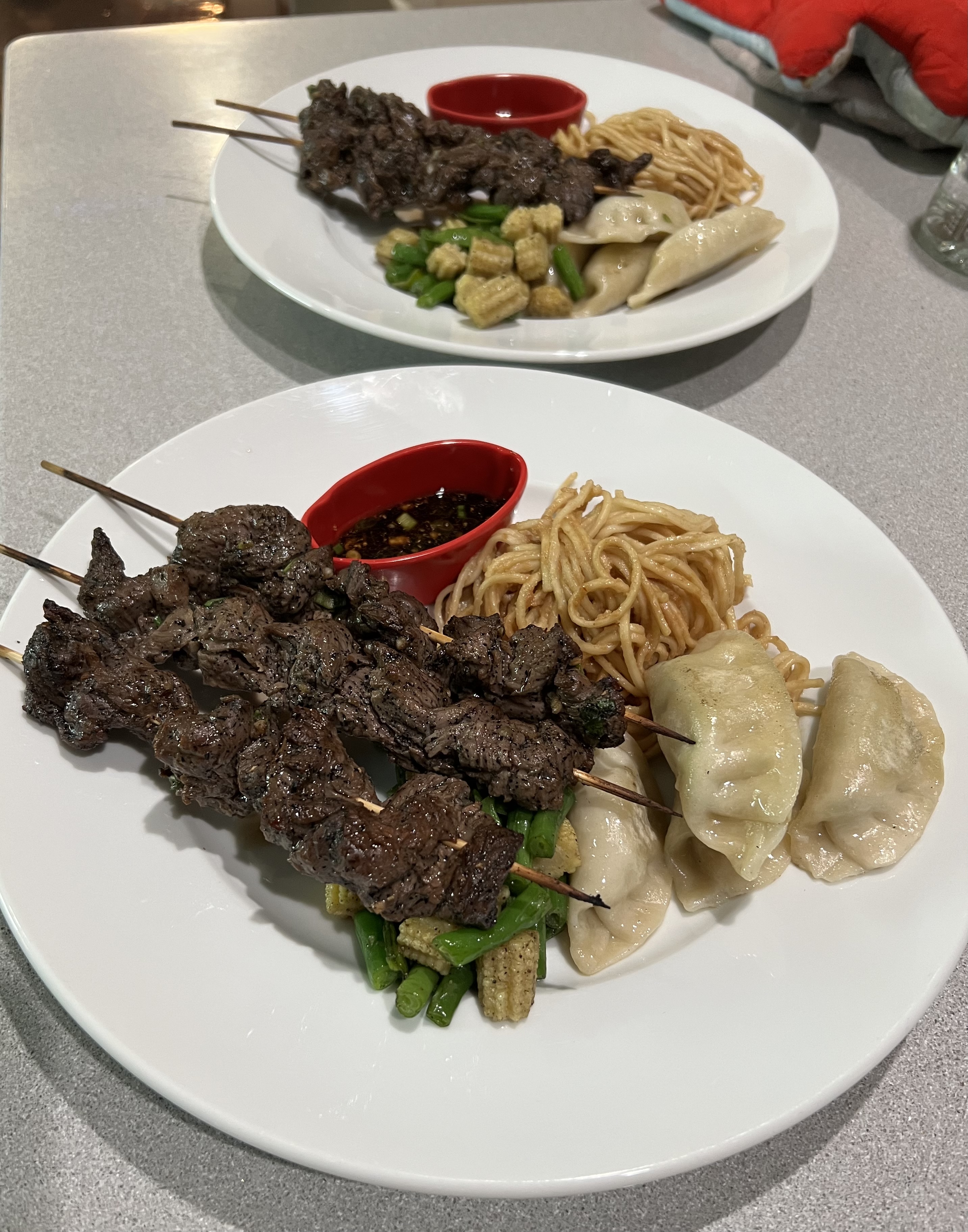
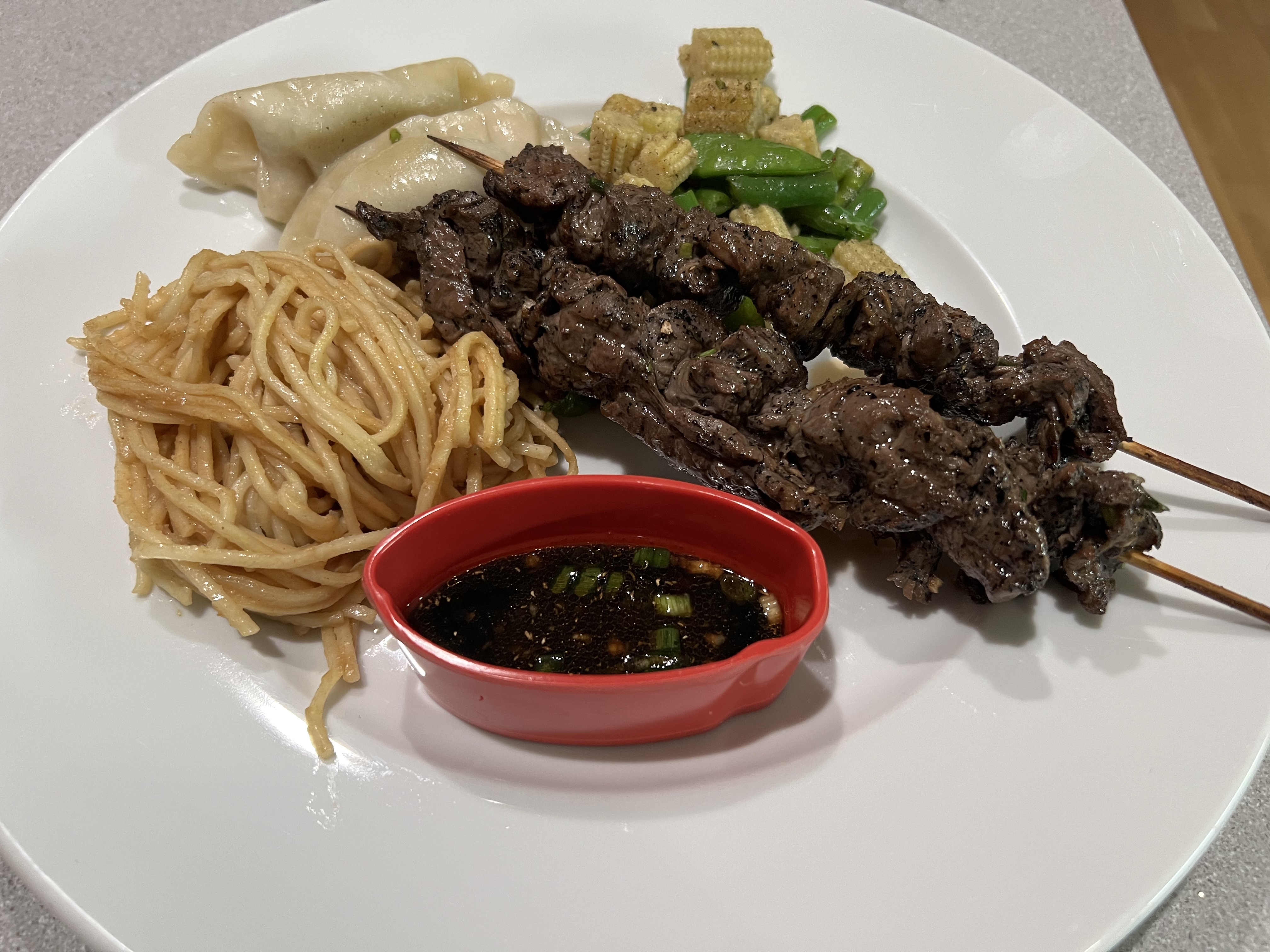
I used this dipping sauce as part of a meal I made with beef skewers (posted recently), stir-fried veggies, dumplings, and lo mein with a peanut-chili sauce.

Before every St. Patty’s Day, supermarkets are full of packages of processed corned beef in preparation for the big celebration. But, interestingly, corned beef isn’t really an authentic Irish dish.

The phrase “corned beef” was coined by the British, and although the Irish were known for their corned beef throughout Europe in the 17th century, beef was far too expensive for the Irish themselves to eat and all of it was exported to other countries. Owning a cow in Ireland was a sign of wealth, and the Irish used theirs for dairy products, not beef.

The Irish ate pork, and a lot of it, because it was cheap to raise pigs, and they traditionally prepared something like Canadian bacon to celebrate St. Patrick’s Day in Ireland.

In the 1900’s, when the Irish came to America, both beef and salt were more affordable, and the Irish, who lived in poor, tight-knit communities, often next to Jewish communities, bought much of their beef from Kosher butchers. And so many of the Irish learned how to corn their beef using Jewish techniques, but adding cabbage and potatoes to the mix. That’s what we have today.

It takes about 3 weeks to make corned beef. Doing it yourself is not difficult. It just takes time.

Corned beef has nothing to do with corn. ‘Corning’ is a technique for preserving raw meats for long periods by soaking it in a salt brine. This method was used in England before the days of commercial refrigeration. Back then, the large salt kernels used in the brine were called “corns.”

Brining is a time-honored way of preserving meat and it prevents bacteria from growing. Both pastrami and corned beef are made by this method. Both start with a brisket of beef. Corned beef is then cooked–usually boiled–and served. Pastrami is made when the brined meat is rubbed with more spices and then smoked to add extra flavor. So corned beef and pastrami are the same meat, just treated differently.

Saltpeter is an ingredient that has been used in brining beef for years. It adds the traditional pink coloring to the corned beef and pastrami meat, a bit more appetizing than the gray color it tends to have if you don’t use it.

Saltpeter can also contain carcinogens, so there’s always talk of avoiding it. It’s found in pink curing salt, which is used in small amounts during the curing process. (Not to be confused with Himalayan pink salt, which is just plain salt.) Since I only make my corned beef once a year, I’m OK with it either way. The general rule of thumb is only 1 teaspoon pink curing salt per 5 pounds of meat.

I get my grass-fed New Zealand Angus brisket shipped to my home in 10-pound slabs, but use whatever size you find comfortable. Just don’t go too small, or the brine will make that tiny piece of meat extremely salty.


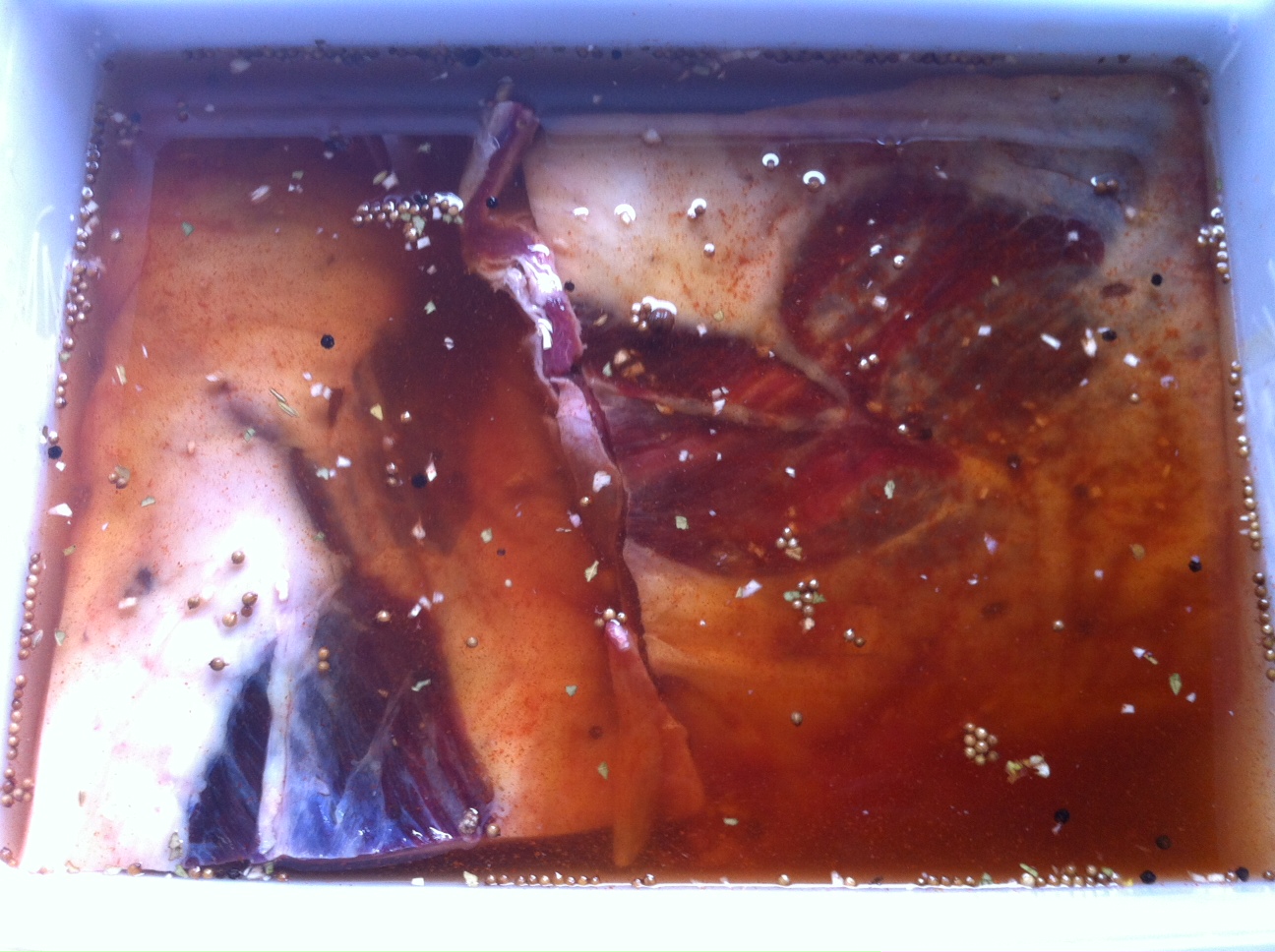
Brining the beef brisket

Brining the beef brisket

Step one: corned beef…

beef brisket (about 8-10 pounds)
2 teaspoons paprika
1/4 cup warm water
3 cloves of minced garlic
2 tablespoons sugar
1 tablespoon mixed pickling spices
3/4 cup salt
1 teaspoon pink curing salt (optional)
2 quarts water

Place the brisket in a large container made of non-reactive material, like glass or plastic.

In the 1/4 cup of warm water, dissolve the sugar, minced cloves, paprika and pickling spices.

Dissolve the 3/4 cup of salt (and optional teaspoon of pink curing salt) in the 2 quarts of water. Pour in the sugar/garlic/paprika/pickling spices mix and stir everything together. Pour the mixture over the meat in the container. Make sure the meat is totally beneath the surface of the liquid. (You may need to weigh it down to do this. I place a couple of plates on top, which pushes the meat down into the brine.) If there’s just not enough liquid, double the recipe, leaving out the pink salt the second time. Cover the container.

Refrigerate the container and its contents for 3 weeks, turning the meat once or twice per week. At the end of the third week, remove the container from the refrigerator and take out the meat. Soak the meat in several changes of fresh cold water over a period of 12 hours to remove the excess salt. I add ice to the water to keep the meat cold.

At this point, if you want corned beef, most people boil it.

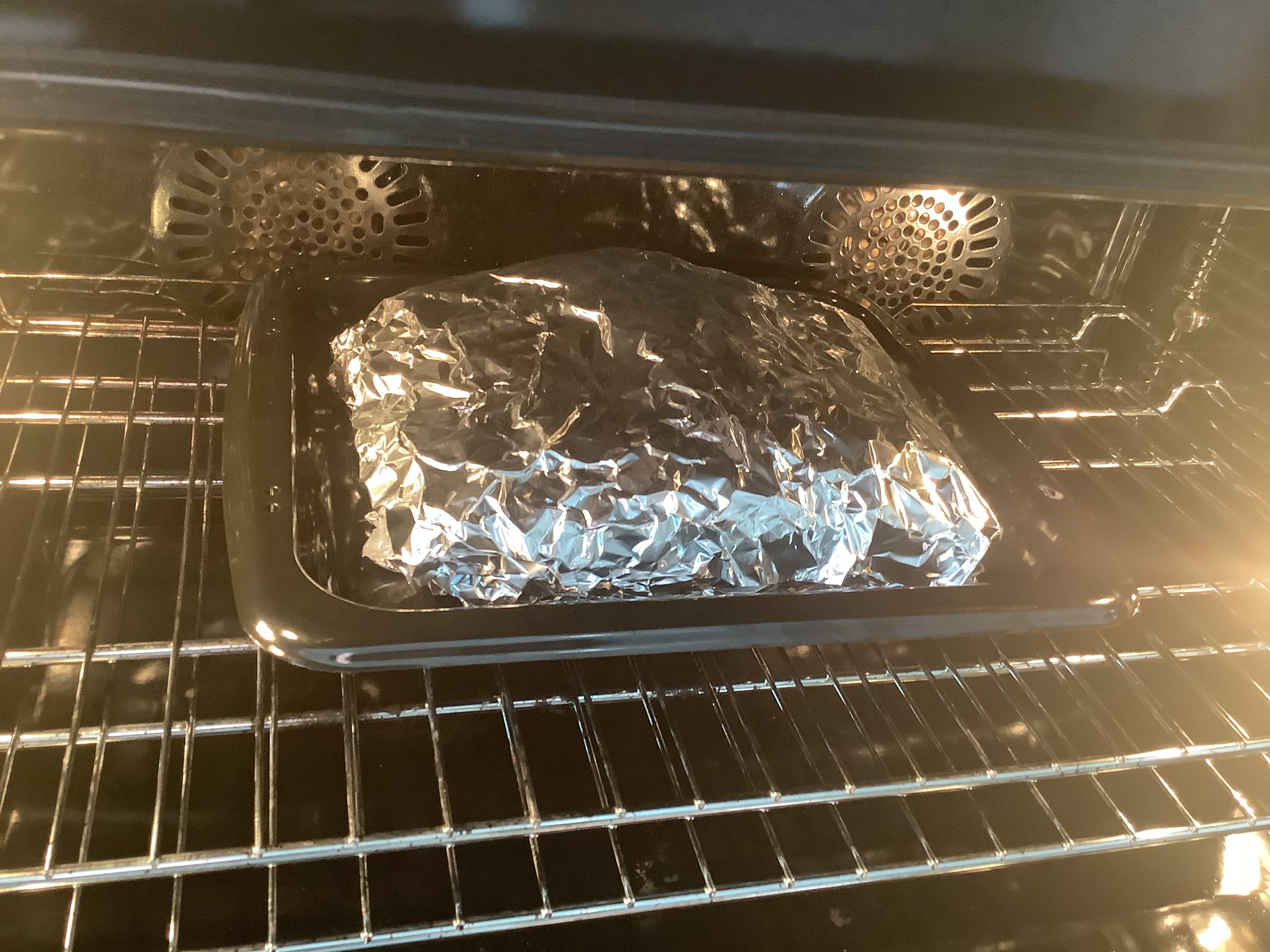
I prefer to lay some aluminum foil down on a sheet pan. Then I coarsely chop carrots, onions, and celery, placing them in a single layer on the foil. Then I lay my brisket on top of the veggies, and wrap the meat tightly in the foil. I place the baking pan in a pre-heated 350 degree oven and cook for about 3 1/2 hours. (That’s for an 8-pound slab of meat. The cooking time will be less for a smaller cut.)


If you want to make pastrami, there are more steps to take…

Step two: making Pastrami…

pastrami


Brined and rinsed corned beef brisket from above recipe, patted dry with paper towels
1/4 cup Kosher salt
1/4 cup paprika
3 tablespoons coriander seeds
2 tablespoons black peppercorns
2 tablespoons yellow mustard seeds
1 tablespoon white peppercorns
3 tablespoons brown sugar
1 tablespoon granulated garlic

Combine the coriander seeds, black and white peppercorns and mustard seeds in a spice grinder and grind them coarsely. Place them in a bowl. Add the salt, paprika, brown sugar and granulated garlic. Mix well.

Rub the mix into the corned beef well, covering all sides.

Heat your smoker to 225 degrees and smoke the meat for several hours. (My wood of choice is always hickory.) When the internal temperature of the meat has reached 165 degrees, it’s done. It isn’t necessary to smoke pastrami as long as you would a regular brisket because the long brining time makes the meat more tender, and you’ll be steaming it next.

It is very important that absolutely everything that comes in contact with the meat is very clean. (This includes your hands.) Also, make very sure that every inch of the meat reaches the 165 degrees before it is removed from the smoker. The corned beef is now pastrami.

Delis that serve pastrami go one step further: they steam the meat so that it becomes incredibly tender and easy to slice. I place a baking pan with boiling water in the center of a 350° oven. I put a grate on top of it, placing the pastrami on top of the grate. Then I invert a bowl over the pastrami to keep the steam in. I will cook it this way for at least an hour to steam the meat before slicing and serving.


SESAME BEEF SKEWERS

Posted: February 20, 2022 in Uncategorized

Inspired by a recipe from chef Martin Yan, these beef skewers are absolutely delicious when grilled over hardwood charcoal, but are mighty tasty when roasted in the oven as well.


Choose a piece of beef that has some marbled fat throughout…that will give it extra flavor. Ribeye is a good choice, although this time around, I used a beautiful hunka grass-fed beef flap. I trimmed as much fat and silver skin off the beef as I could, then I sliced it thinly on the bias–that is, against the grain of the meat.

Marinate the beef for at least 4 hours in the fridge…overnight is even better.

2 tablespoons sesame seeds
1/4 cup soy sauce
1/4 cup white wine (I used an unoaked Chardonnay from Australia)
1 tablespoon freshly squeezed lime juice
1 tablespoon sesame oil
1 tablespoon sugar
2 green onions, minced
2 teaspoons minced garlic
2 teaspoons grated ginger

Place the sesame seeds in a small frying pan over medium heat. Cook the seeds, shaking the pan frequently, until the seeds have lightly browned, about 4 minutes. (If you’re using black sesame seeds, they won’t turn brown, but they’ll have a dry look to them.) Immediately remove the sesame seeds from the pan to cool, then place them in a spice grinder, and pulse until they’re ground up.

Place the crushed sesame seeds in a bowl with all the other marinade ingredients, mixing well.

Slice the beef on the bias into thin strips about 4″ long. Place all the beef in the bowl with the marinade, and squish it around to make sure all the meat makes contact with the marinade.

Place the bowl in the fridge for at least 4 hours…overnight is better. Squish the meat around every couple of hours if you can, to ensure it is coated well.

Once the meat is done marinating, remove the bowl from the fridge and let it come to room temperature.

Get out those bamboo barbecue skewers that have been sitting in the kitchen drawer for years. If you’re grilling outside, you’ll want to soak them in warm water for an hour so they don’t burn while you’re cooking. If you’re using the oven, you won’t have to.

Start skewering the beef…about 3 pieces of meat per skewer. Spread them out on the skewer a bit so they aren’t bunched up.

If you’re grilling outside, start a hardwood charcoal fire, and spread the coals out so that you have a medium fire. If it’s too hot, the beef will burn. When the fire is ready, place the skewers on the grill and watch them carefully, turning them so they cook evenly.

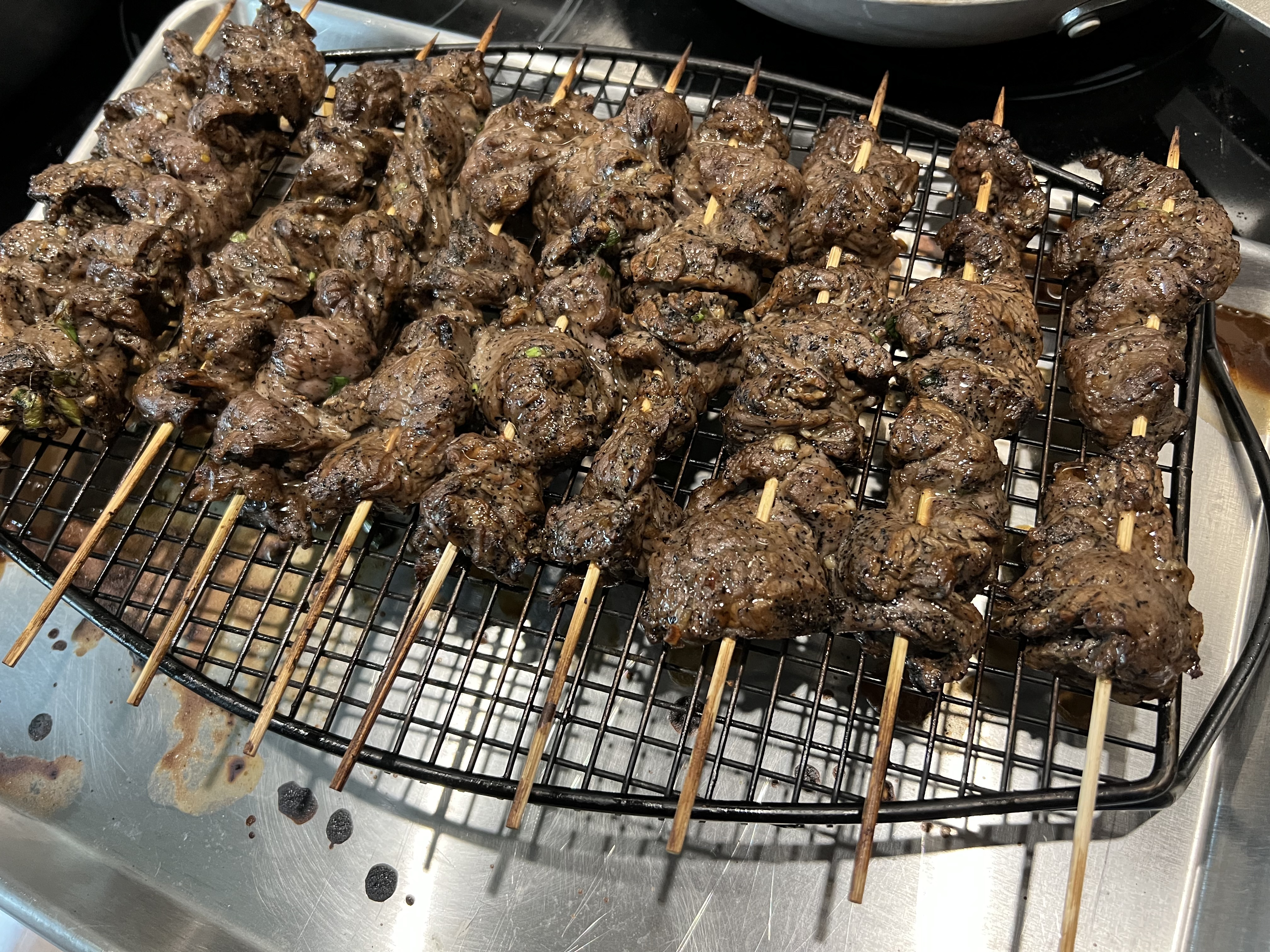
If you’ve got a convection oven (an “air fryer” for you youngsters), pre-heat the oven to 350. Place the skewers on a grate that is raised an inch or so above a sheet pan, so that the warm air in the oven can circulate all around the meat.


Place the sheet pan in the oven and cook the beef until it has browned nicely on the top. Then pull the pan out of the oven, and flip the skewers over, returning them to cook a little more on the other side.

Enjoy your beef skewers with whatever you like! I served mine with stir-fried vegetables, lo mein with a peanut-chili sauce, and dumplings with a homemade dipping sauce.


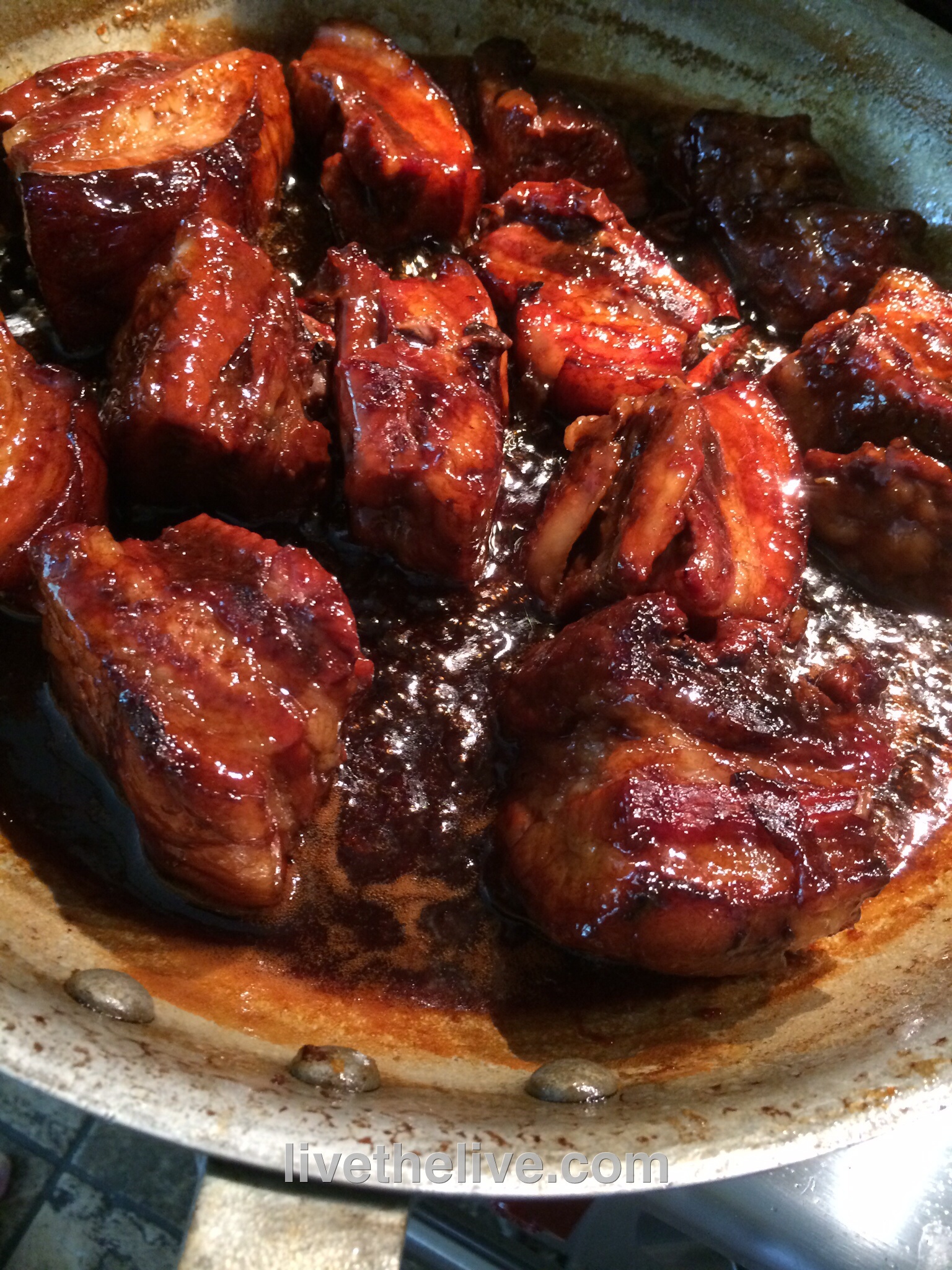
Sometimes the happiest of cooking accidents happen with bacon. My original plan was to make Chinese-style honey ribs for dinner. But instead of pulling a nice rack of ribs out of the freezer, I accidentally took out a slab of pork belly. I only realized my mistake after I thawed it, so I decided to use it! The results were pretty damn tasty.

Maple syrup is a great substitute for the honey.

image

Marinade:
¾ cup light soy sauce
6 Tablespoons hoisin sauce
5 lbs. pork belly
Zest and juice of 1 lemon
2 whole star anise
2 cinnamon sticks (3”)
1/2 cup honey
4 cups chicken broth (preferably homemade)
image
Pre-heat the oven to 350 degrees.
Mix the marinade ingredients. Set them aside.
Cut the pork belly into pieces that are about 2 inches square. Place them in a large pot. Cover them with water and bring the pot to a boil. Boil for 5 minutes. Drain the water.
Place the pork belly pieces on a sheet pan lined with non-stick aluminum foil. Coat them with the marinade. Let them sit for 10 minutes.
Bake the pork belly pieces on the sheet pan in the oven for 30 minutes.
While the pork belly is baking, start the sauce in a large non-stick pan or pot: combine the lemon zest and juice, star anise, cinnamon sticks, honey and chicken broth. Bring it to a boil, then reduce it to a simmer.
When the pork belly pieces have finished baking, add them to the sauce pot and simmer (covered) for about 15 minutes or until meat is tender.
Turn the heat on high, uncover the pot and cook until the sauce has reduced to a glaze that coats the meat. Reduce the heat as the sauce thickens to avoid the sugars in the honey from burning. When the pieces are sticky and gooey, they are ready!
Devour them just like that, or…
Let a piece of pork belly cool, then slice it to your desired thickness and fry it like regular bacon. It’s great with an omelet!
image

Sweet and spicy is my favorite Asian flavor combination for chicken. This time around, I had a couple of packs of drumsticks and I thought I’d substitute the usual sweet ingredient, honey, for maple syrup. It was delicious!

Soy sauce
8 medium size chicken drumsticks
2 tablespoons hoisin sauce
2 tablespoon maple syrup
1/2 teaspoon Chinese chili garlic sauce
1/2 teaspoon sesame oil

Pre-heat the oven to 350.

Place the drumsticks on a baking pan and sprinkle them with the soy sauce, making sure you rub the sauce into all parts of the chicken. Let them marinate for 10 minutes.

To make the brush-on marinade, in a bowl, combine the hoisin, maple syrup, chili garlic sauce and sesame oil. Pour off any extra soy sauce from the pan into the bowl and mix well.

Once the oven is hot, brush the drumsticks on all sides with the marinade. Bake the chicken for 30 minutes.

Remove the chicken from the oven, brush again with any leftover marinade, and return the chicken to the oven for 15 more minutes.

Mighty tasty!

ASIAN SLAW

Posted: January 31, 2022 in Food, garden, Recipes, Uncategorized
Tags: , , , ,

I love cole slaw. It’s awesome with any grilled food, but I especially love the classic pulled pork/cole slaw combo. Stopping by the supermarket the other day, there was a beautiful head of cabbage just sitting there in the produce section, just waiting for me to take it home.

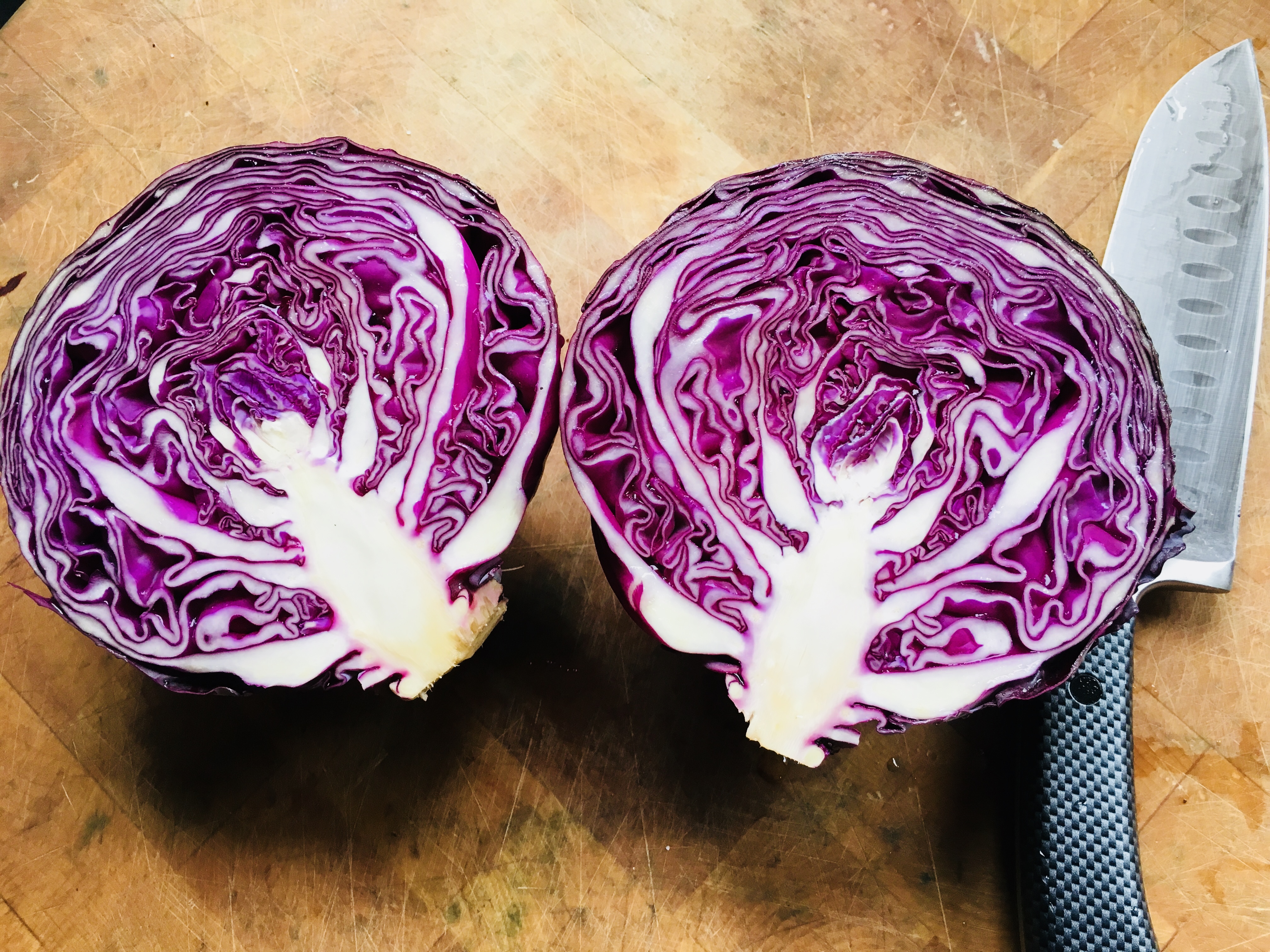
Beautiful purple cabbage, but use green if you like!


I wanted to try something different from the basic cole slaw recipe I usually make, and so I took my ingredients in an Asian direction. I think I came up with something that really rocks…and it goes great with a plate of Asian-inspired spare ribs!


Shredded veggies, ready for the dressing.


1 medium-sized head of cabbage, cored and shredded
1 carrot, shredded
1 tablespoon sesame seeds
1 cup mayonnaise
2 tablespoons rice vinegar
2 teaspoons sesame oil
2 tablespoons honey
I like to give the cabbage different textures, so I wash and then quarter the cabbage, removing the center core (which is, by the way, totally edible and was given to me by my Mom as a treat when I was a kid. Hey, it’s a Lithuanian thing.) So I hand slice one-quarter of the cabbage as thinly as I can with a knife. The other three-quarters go in a food processor to slice more thinly. I put the carrot through the machine as well. I put the veggies in a large bowl and add the sesame seeds.

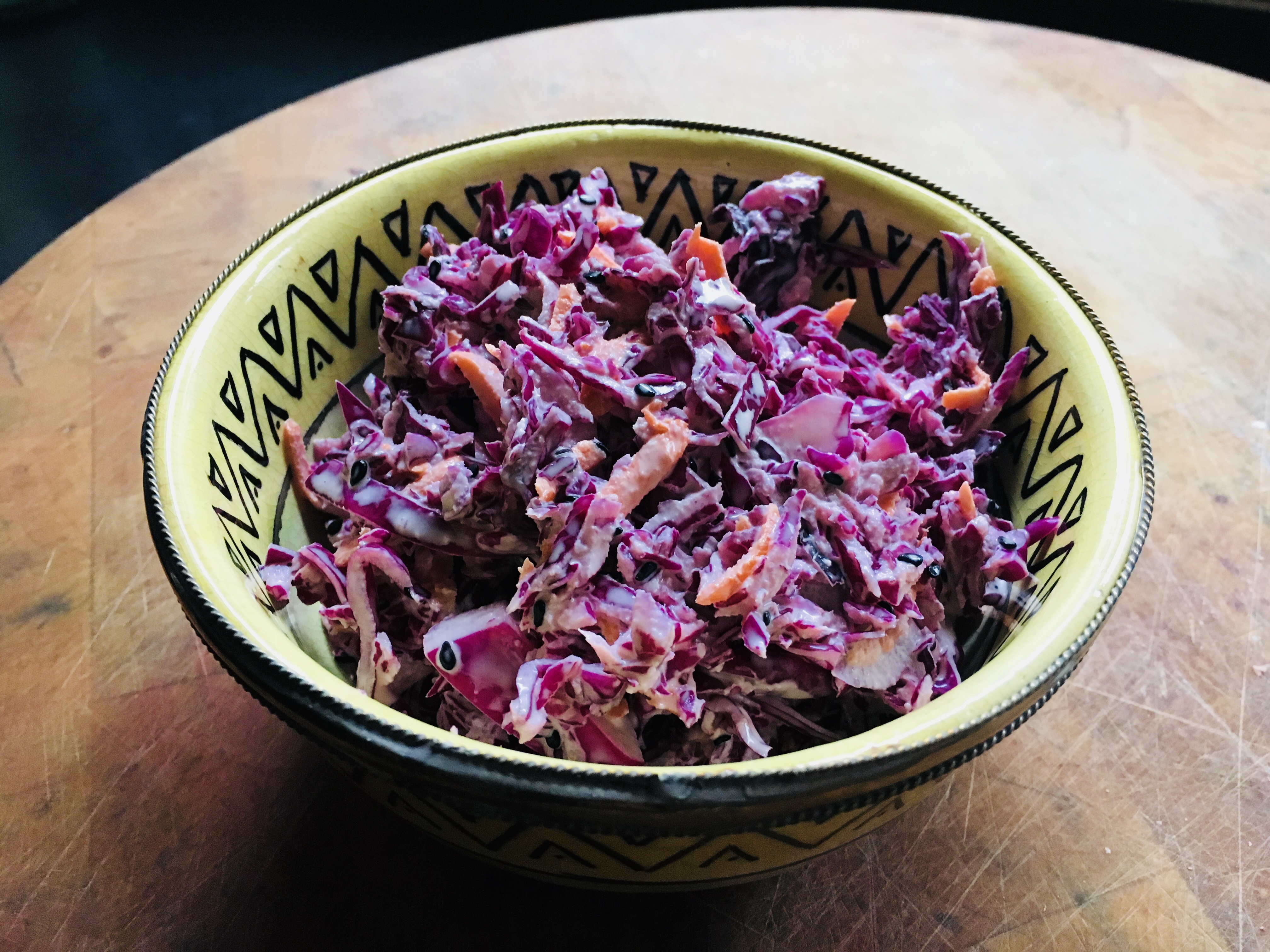
Veggies and dressing mixed.


To make the dressing, in a separate bowl, combine the mayo, rice vinegar, sesame oil and honey, whisking to mix thoroughly.

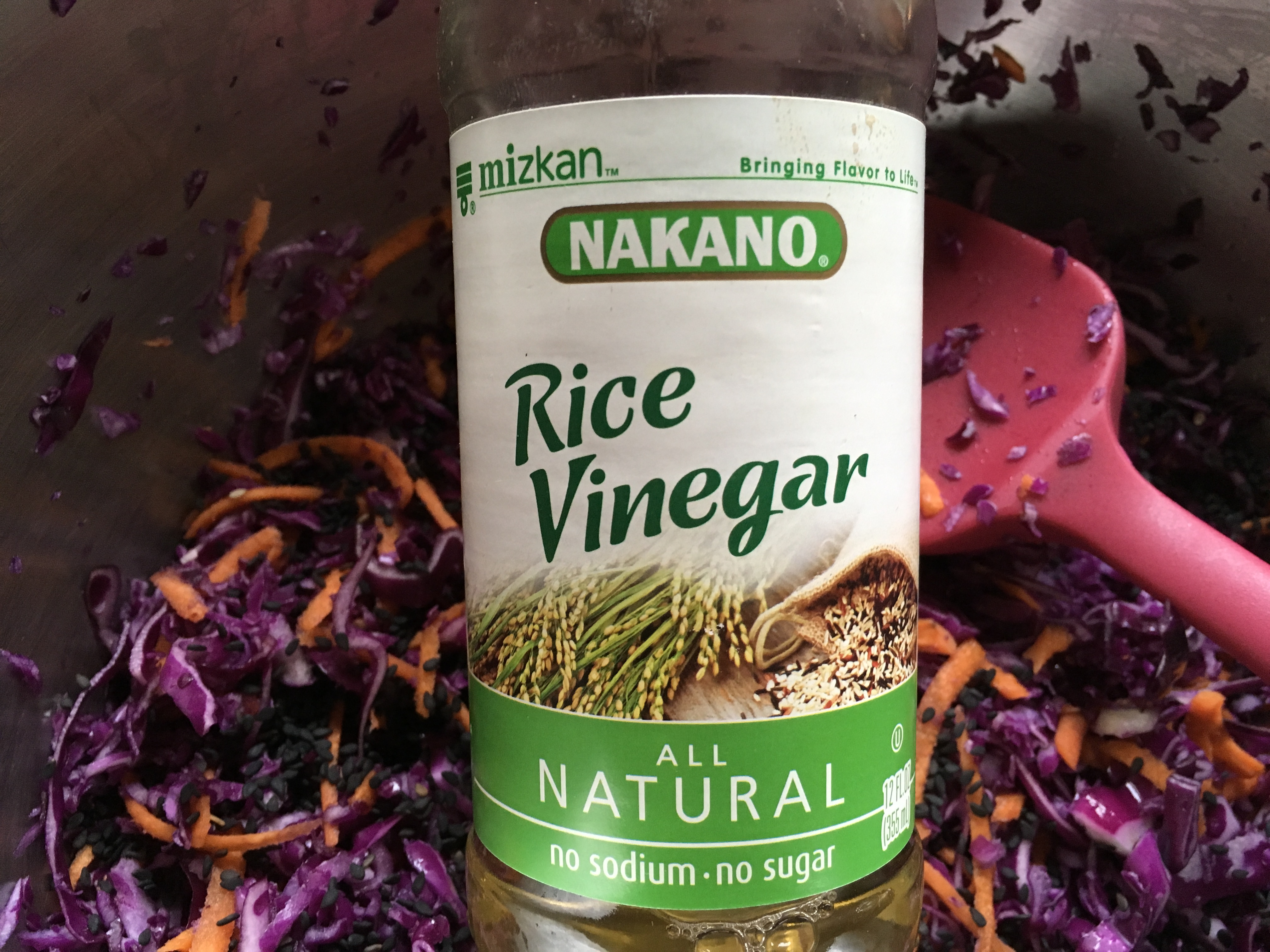
Rice vinegar is not rice wine vinegar. Make sure you use the good stuff. Here’s one brand I use.


Add the dressing to the veggies, and mix well. Refrigerate for a few hours, mixing every hour to combine as the veggies release their juices and make the slaw more flavorful and “wet.”

Here’s the perfect food to make and eat during the big winter storm coming to our area in Southern New England this weekend…


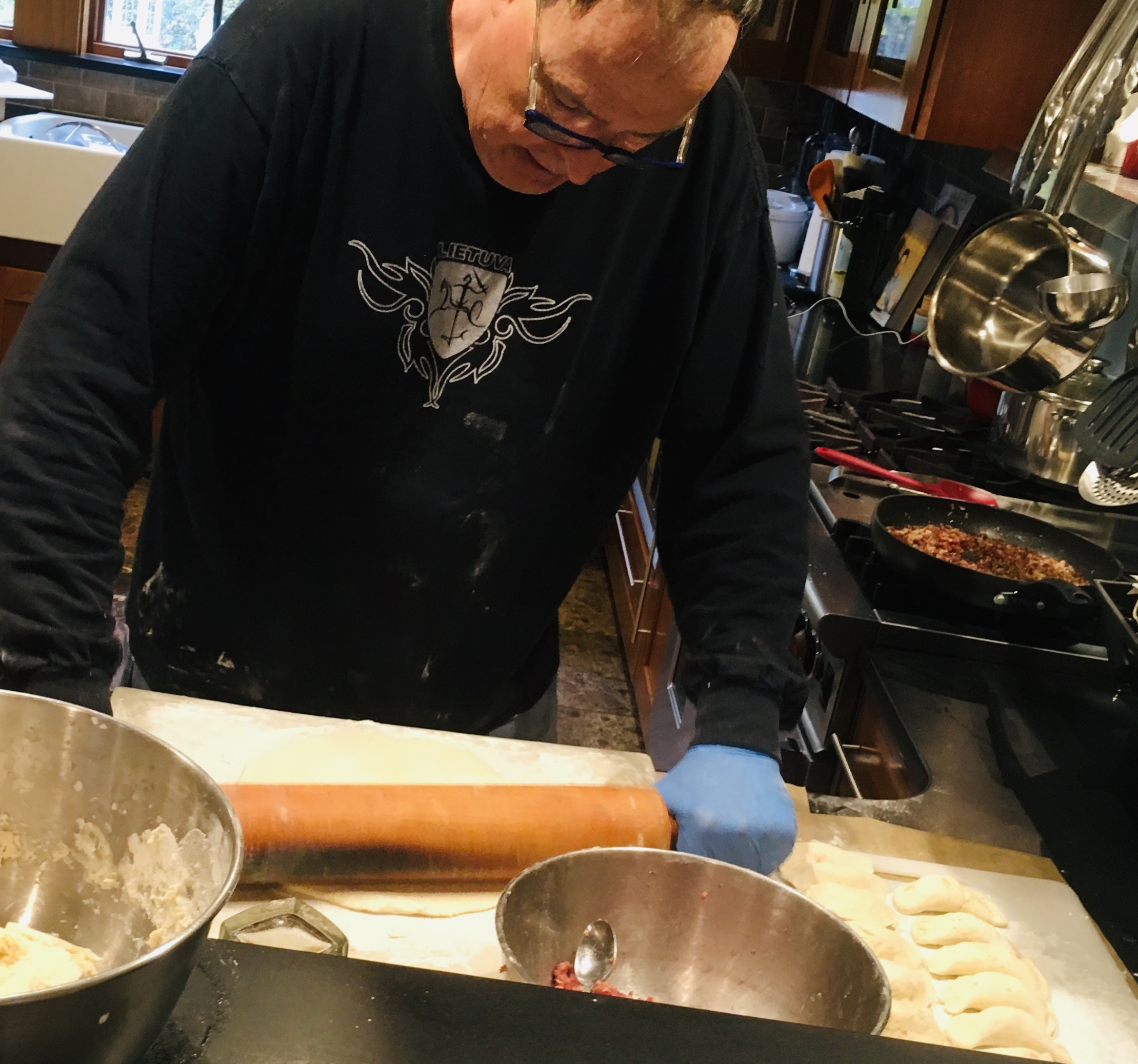
I think I spent half of my childhood in the kitchen, watching my Mom and grandmother make koldūnai (kohl-doo-nayh), the Lithuanian version of a pierogi, by hand, at lightning speed. They would roll a simple dough into a log about 1″ in diameter, then cut it into 1″ pieces, twirling each piece between their fingers to make a flat pancake, filling each with a small spoonful of meat or mushrooms, then fold it over, crimping the edges to make a crescent-shaped dumpling. It blew my mind that they could crank out over a hundred of these little masterpieces in no time, placing them on a cookie sheet and freezing them until it was time to cook.
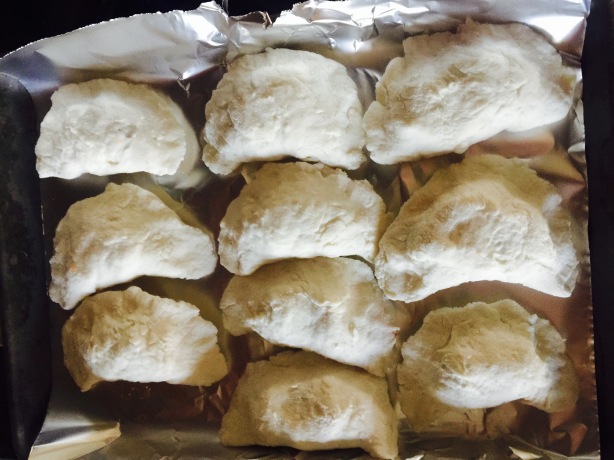


One of the main reasons why I prefer Lithuanian koldūnai over the basic Polish pierogi is the filling. For me, standard pierogi fillings like potatoes, cheese, and sauerkraut just don’t cut it. My Mom would mix ground beef with chopped onions sautéed in butter, a couple of eggs, and milk crackers soaked in milk. She’d add salt and pepper, then spoon that beautiful beef blend into her koldūnai.

The other delicious stuffing, usually reserved for special holidays like Christmas Eve and Easter, was made from mushrooms. Italy may lay claim to the porcini, but the fact of the matter is, Lithuania is porcini heaven. And when they’re dried and reconstituted, their incredible flavor is so intense, you don’t need many of them to flavor a large amount of regular button mushrooms. We’d get our dried boletes from relatives in Lithuania every year. Mom would place a handful in some boiling water and let them steep until they swelled up and could easily be chopped and added to the other mushrooms. She’d then pour the mushroom liquid into the pan as well, not wasting a bit of that magical porcini flavor. The mushrooms were simply sautéed in butter, cooled, then used to fill the koldūnai.
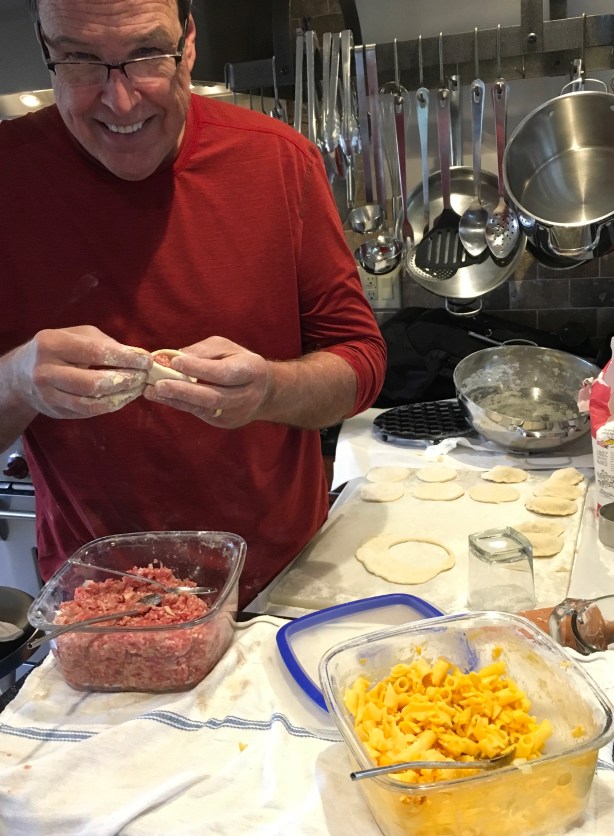
 

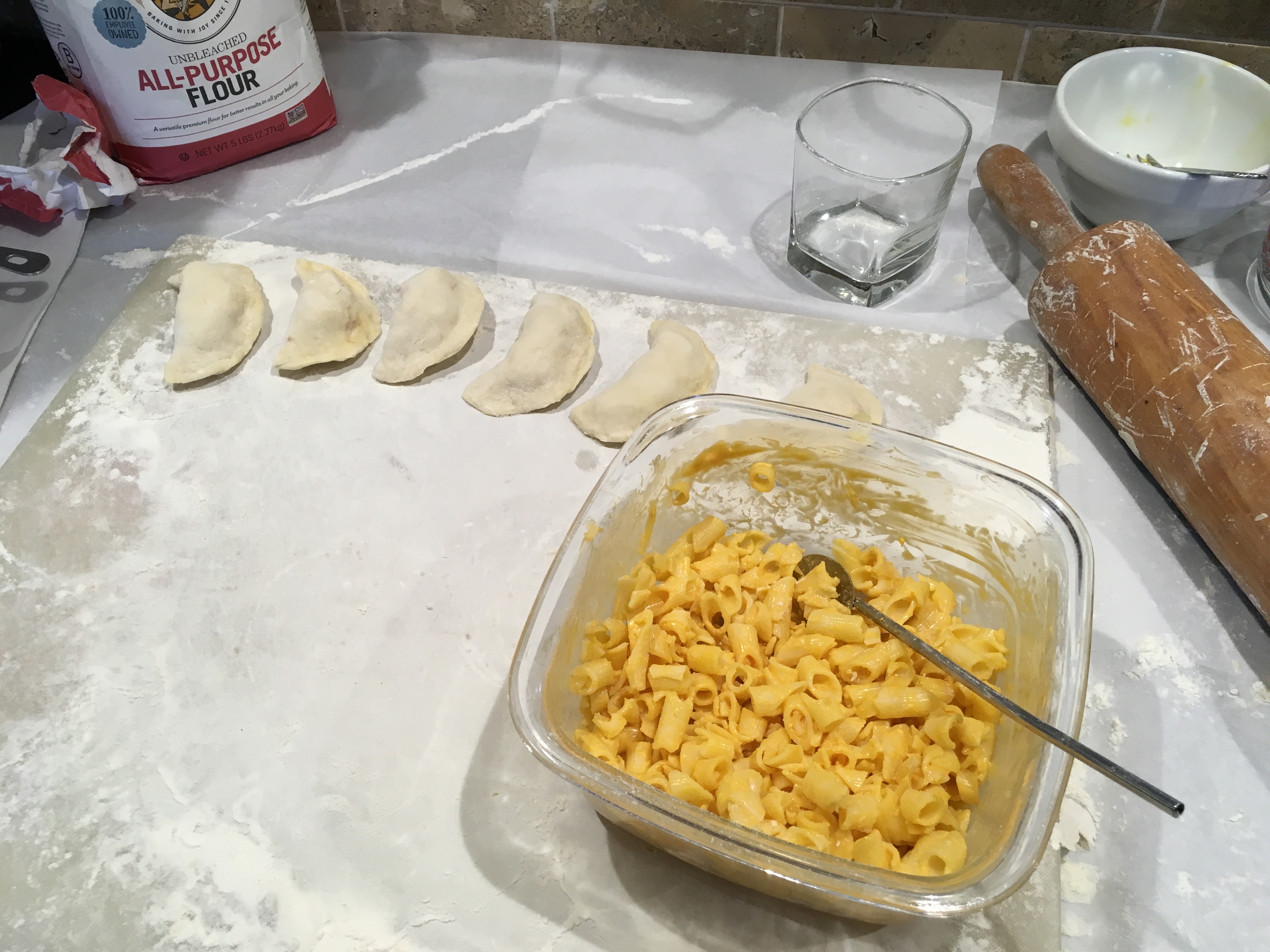
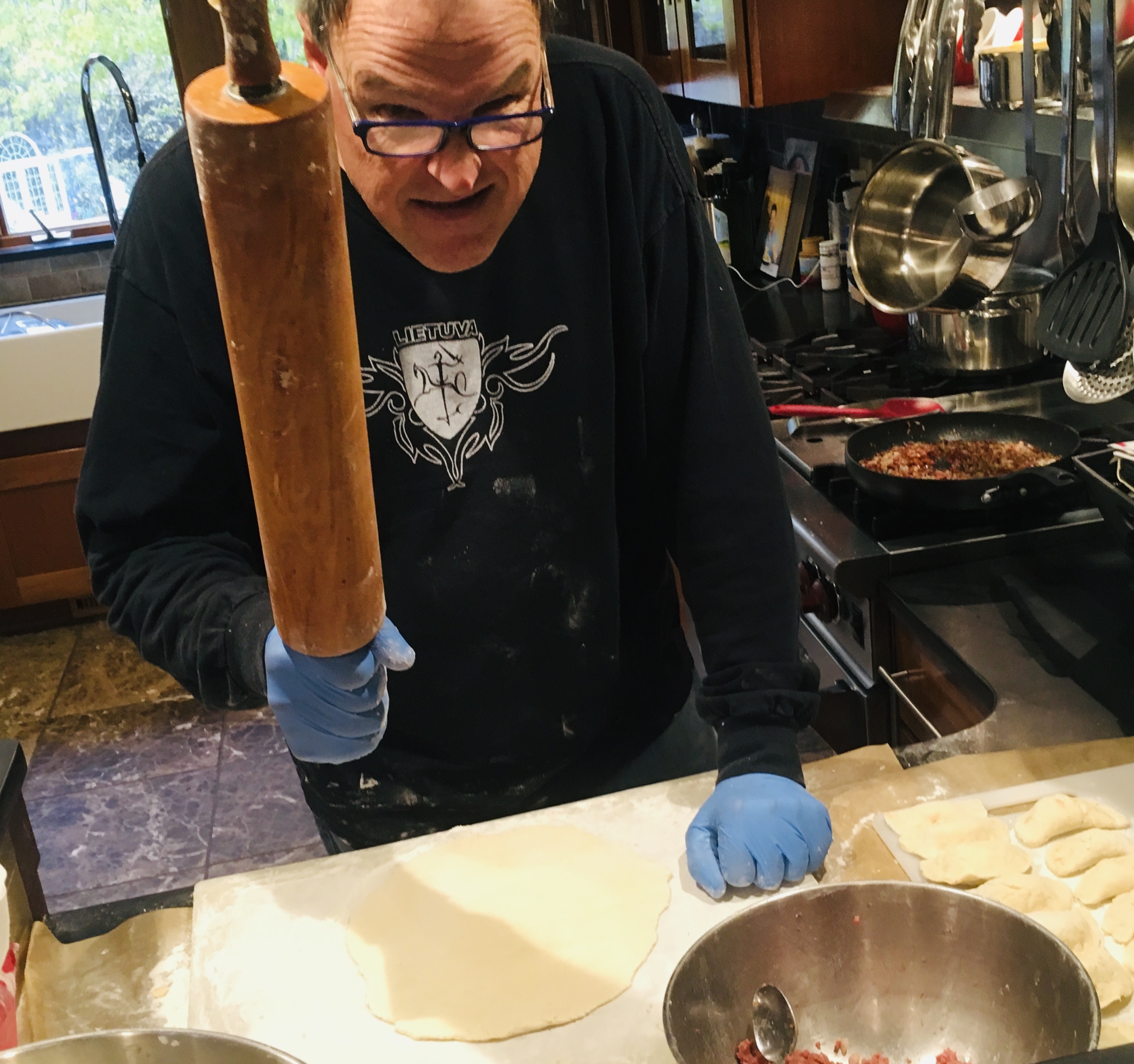
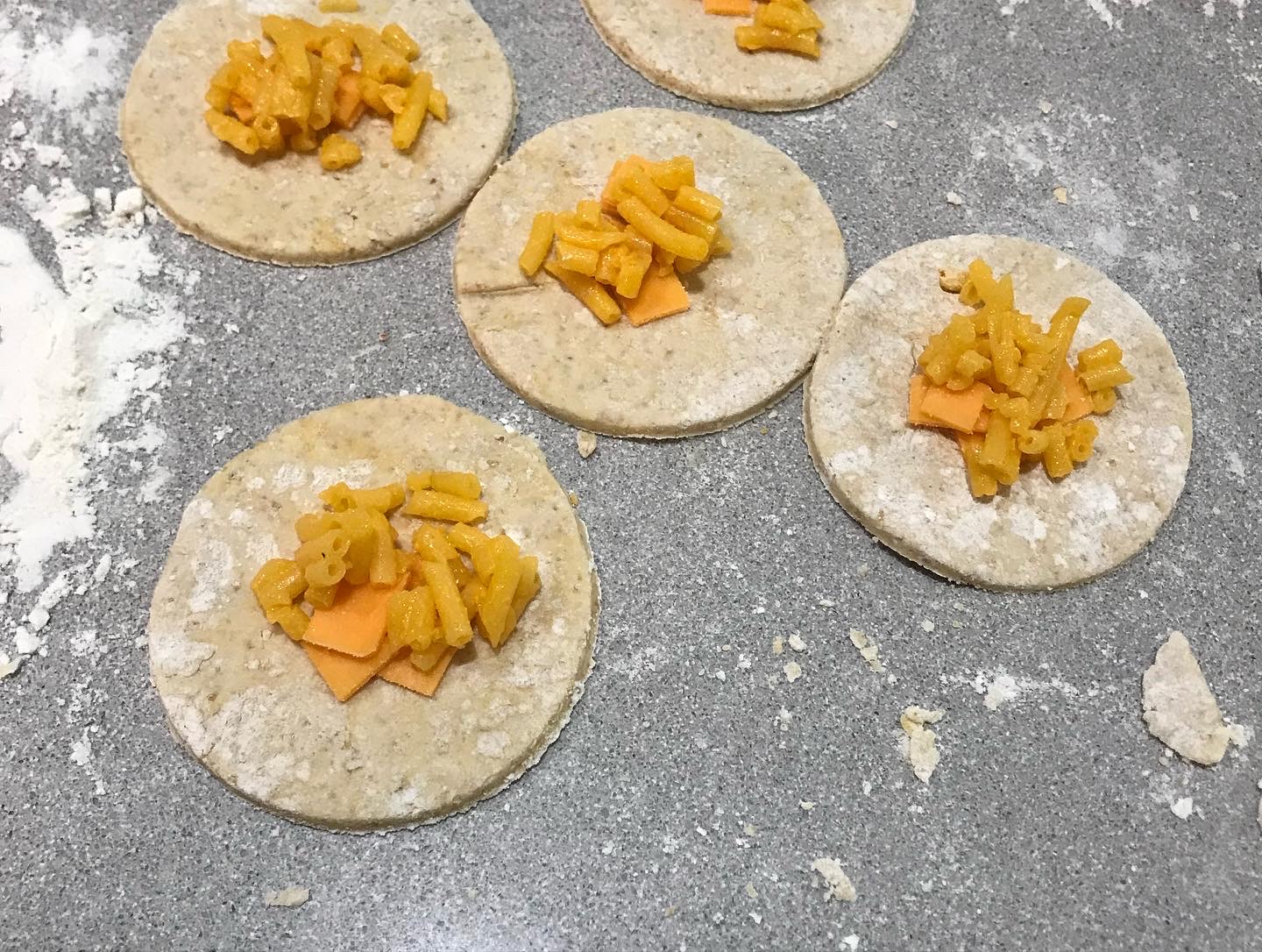
I found that my Mom’s log method was too much work. I roll the dough out into a sheet with a rolling pin, then cut circles with a glass. Yes, that’s mac-and-cheese up front!


A few years ago, I decided it was time to try my hand at making koldūnai. As I recall, my Mom simply mixed water with flour to make the dough, kneaded it into a log, and off she went. I decided to go with the rolling pin and glass cutting method, because I found it to be a bit easier creating more uniform koldūnai.

The biggest challenges I had with making koldūnai was my own clumsiness and lack of experience. Once I got the hang of it, things moved along steadily, and it didn’t take long for me to make a decent batch–not all perfect, but not bad for a first try.

My recipe follows. If you’re on a gluten-free diet, have no fear! That recipe is at the bottom of the blog.
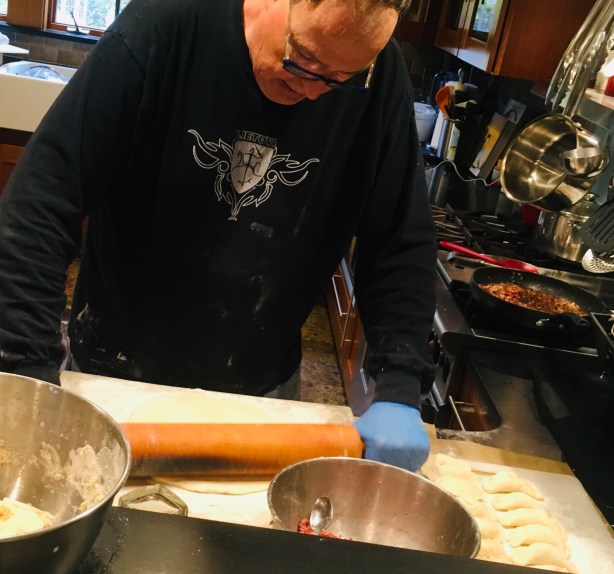
 

The rolling pin method.


This time around, I made four kinds of koldūnai: traditional (ground beef as well as mushroom) and non-traditional (mac & cheese and pulled pork.)  Patty’s Pierogis, a restaurant in nearby Fall River, Massachusetts, and featured on Food Network’s “Diners, Drive-Ins and Dives,” is where my daughter first had mac & cheese pierogis. She was instantly hooked and begs for them every year.

Here’s my beef recipe…

1/2 onion, finely chopped
1 pat of butter
1 lb. ground beef
1 egg
1/2 cup breadcrumbs

Finely chop the onion and sauté it in the butter until translucent. Let it cool, then add it to 1 lb. of thawed ground beef. Add the egg and the breadcrumbs. Season with salt and pepper. Mix the ingredients thoroughly and keep the meat in the fridge until you’re ready to use it.


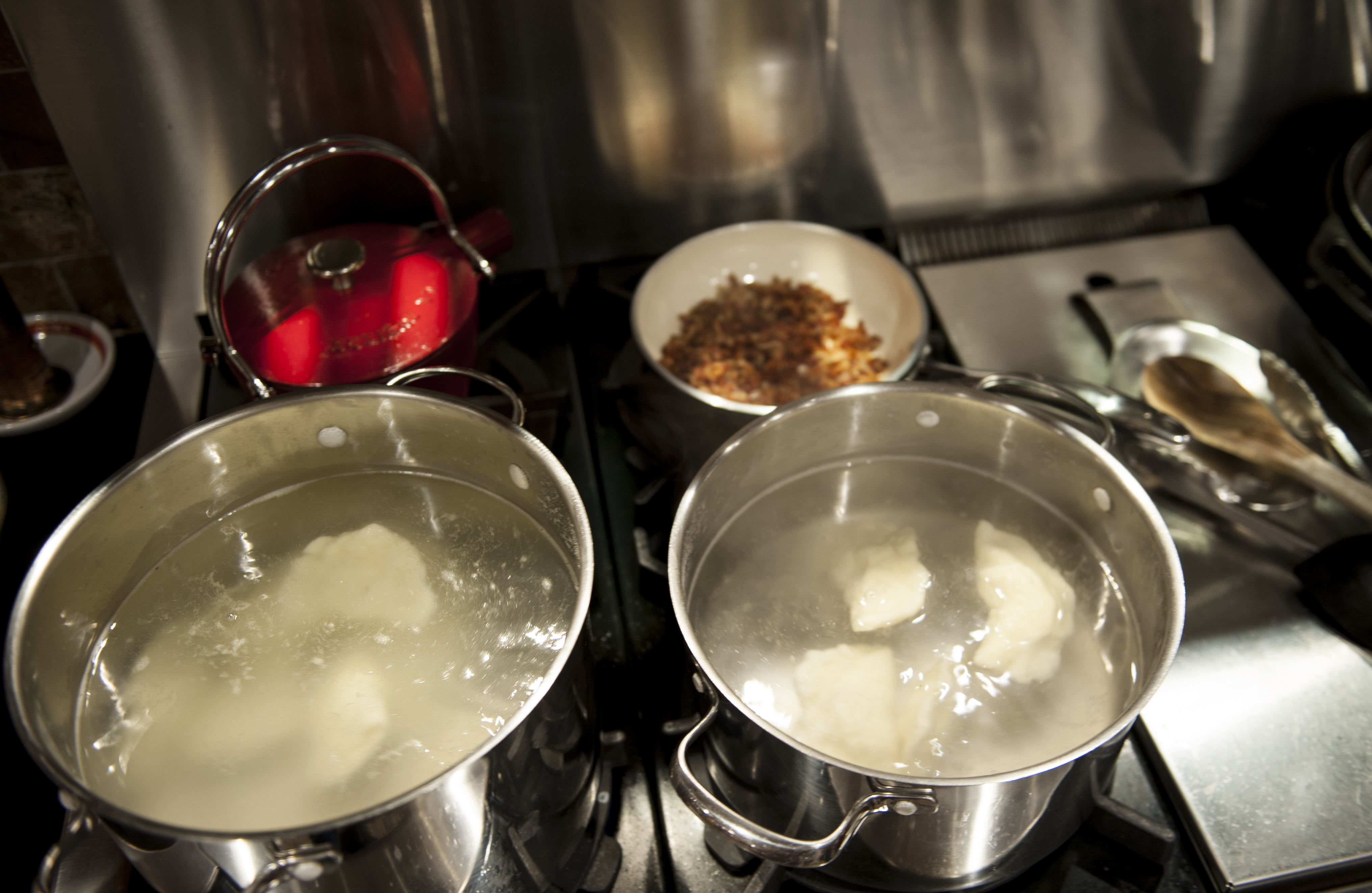
Two pots of boiling salted water: one for the meat-filled koldūnai, and one for the mac-and-cheese filled koldūnai.

Two pots of boiling salted water: one for the meat-filled koldūnai, and one for the mac-and-cheese filled koldūnai…so I don’t get ’em mixed up!


In my childhood home, you cannot possibly serve koldūnai without sour cream on the side and without spirgučiai (spir-guh-chay), chopped and fried bacon and onions, that are sprinkled on top.

1 lb. bacon, finely chopped
1 large onion, finely chopped

In a large pan, fry the chopped bacon until it’s almost crisp. Never drain the fat! Add the chopped onions and cook until they are soft. Set aside.  (My Mom always kept a stash of spirgučiai in a container in the fridge, and sprinkled them on anything and everything.)

 

duni 4

Making the dough is simple.

2 cups all-purpose flour
1 cup water

I don’t use salt in the dough because I boil the koldūnai in salted water later.

Combine the ingredients in a bowl, mixing with your hands. Keep adding flour in small amounts until the dough isn’t wet and sticky. When it forms a nice ball, remove it from the bowl and place it on a floured surface and knead it a bit more. Cut the ball into quarters, and work with these smaller pieces of dough.

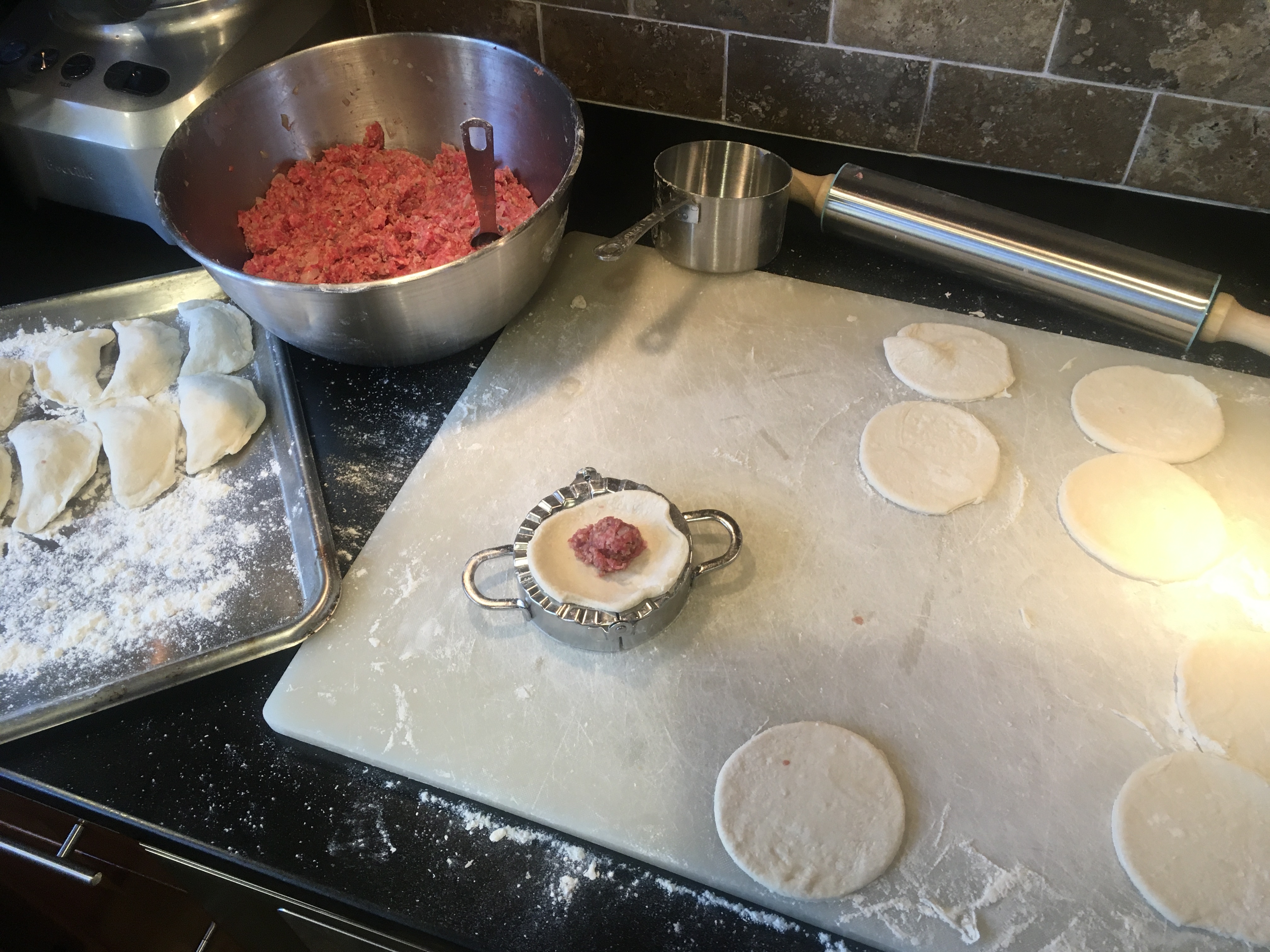
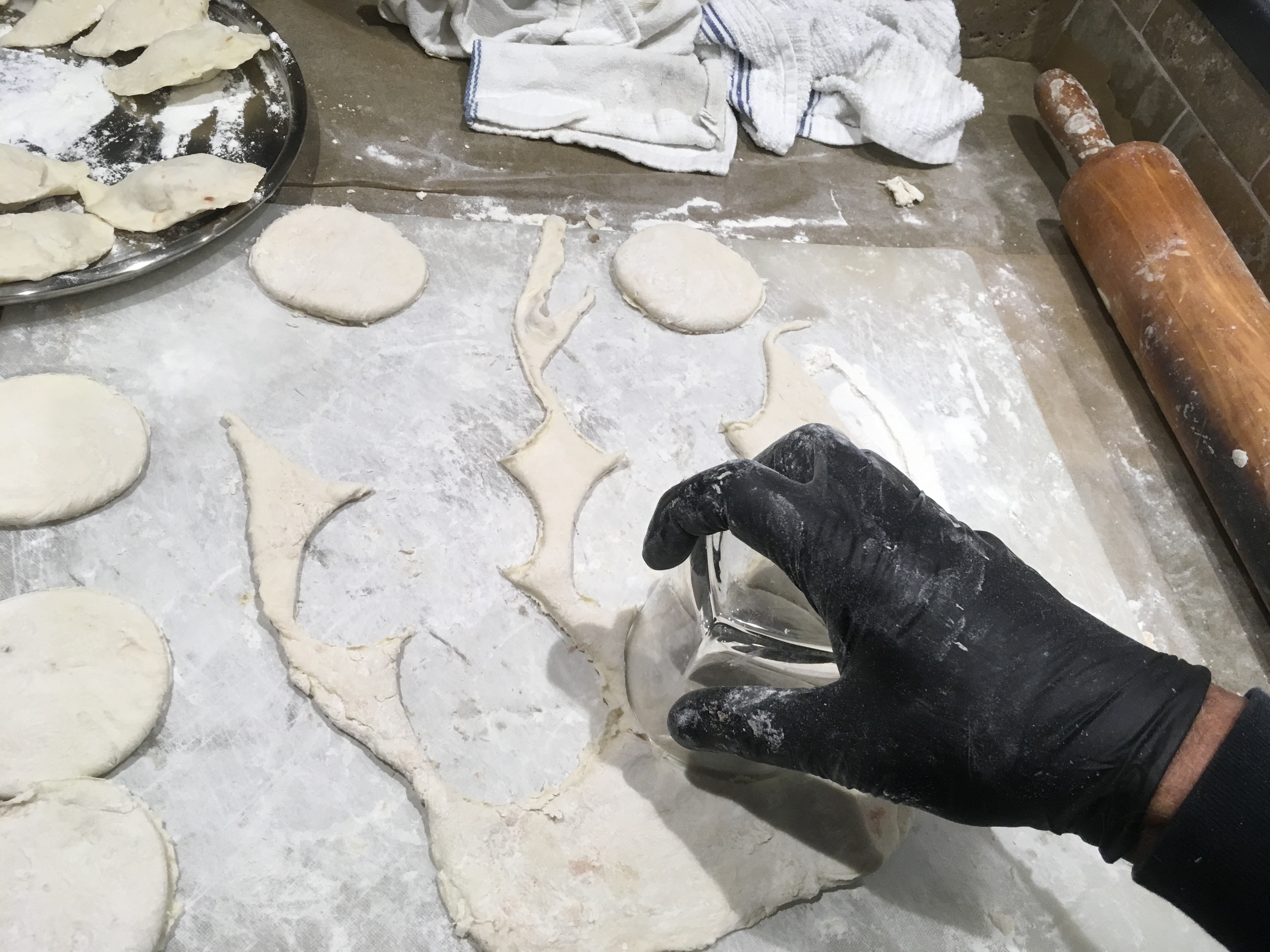
For the rolling-pin method, roll each quarter out until the dough is about 1/8″ thick. Cut circles out of the dough using a cookie cutter, rocks glass, or whatever else you have handy. Add about a teaspoonful of filling in the center of the dough (a melon baller works great), then fold the edges over and pinch them with your fingers. Flip it over and pinch again, making sure none of the filling seeps out. A tight edge means the koldūnai won’t break open when you put them in boiling water.


Who knew a rocks glass had more uses than just to hold a great Manhattan?
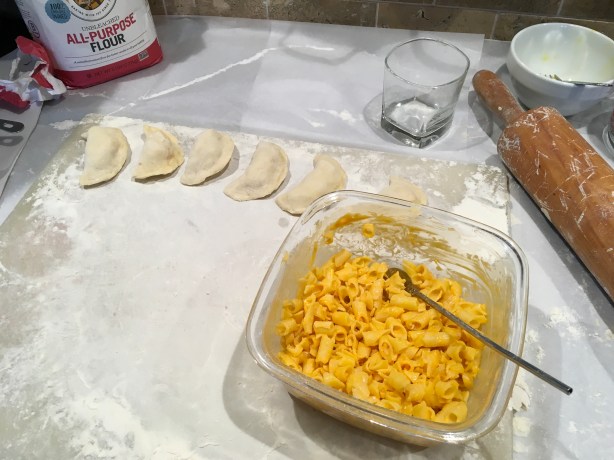
 

Some stuffed with mac and cheese!


I recently discovered these “pierogi makers.” You lay the dough in them, add your filling, and then close them. They automatically crimp the edges for you. They work pretty well…sometimes.
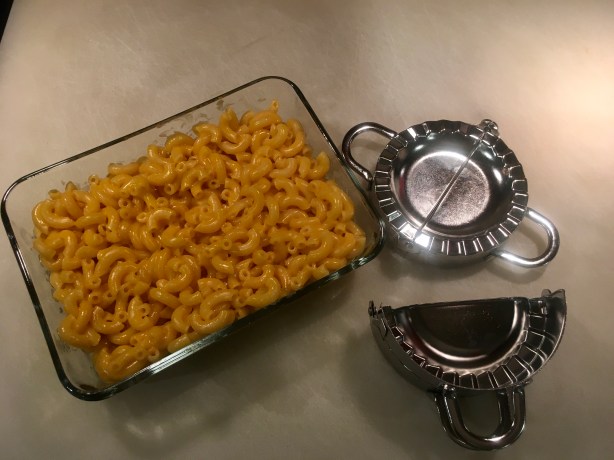
 

I always double-check the crimped edges, because your koldūnai will fall apart in the boiling water if you don’t seal them well!


Place the koldūnai on a sheet pan dusted with flour, and when you’re done, place the sheet pan in the freezer.


Ready for the freezer!


Sometimes the chef gets punchy after making koldūnai all day long!


Get a large pot of salted water boiling. Drop the koldūnai in gently, being careful not to overcrowd them. If the dough is thin, the koldūnai will be ready when they float up to the surface. A thicker dough will need longer cooking. The best way to know if they’re done is by taking one out, cutting it open and having a look (and taste!)

When plating, sprinkle generously with spirgučiai, and serve with sour cream on the side.


duni 4


If you need to go gluten-free…good news! You can still have your koldūnai! The mushroom filling is already gluten-free. For the breadcrumbs in the beef filling, I take slices of Udi GF bread, toast them, and zap them in a food processor. Excellent breadcrumbs! And I use store-bought GF mac-and-cheese.


GF Mac and cheese, with a little extra cheddar.


For the dough, this recipe works great. (Thanks to my sister, who shared it with me.)


Excellent GF flours.

1 1/2 cups all-purpose gluten-free flour (I use Cup4Cup)
1 1/2 cups rice flour (I use Cup4Cup Wholesome Flour)
2 eggs
pinch of salt
water

Combine the flour and salt in a bowl. Add the eggs and mix. (I use my hands for this.) Slowly add water to the dough until it pulls from the sides of the bowl and makes a nice ball of dough. I cut the dough in half and use a well-floured rolling pin to roll it flat.


The finished product! The rice flour gives it a darker, grainier texture. A more rustic taste, but still delicious!
 

MAKING PERFECTLY CLEAR ICE

Posted: January 21, 2022 in Uncategorized

If you’re a cocktail fanatic like I am, you know that every ingredient counts. Most people understand that if you buy cheap booze or use a cheap mixer, the final product won’t taste good. But very few people give thought to the ice.

Bad ice makes a great drink taste bad. Plain and simple.

So the first step in making great ice is using clean water. Most tapwater does not fit the bill. Filtered water, even from your refrigerator, is a much better choice. And if you don’t have a filter at home, then buying bottled water is the best way to go. (You don’t need to buy distilled water.)

Of course, you can just go out and buy a bag of ice, but where’s the fun in that? Besides, we’re talking about making really nice big beautiful ice cubes here.…the kind that transforms your average cocktail into a beautiful work of art, reflecting the surrounding light.

You probably have all the ingredients you need to make a great ice…

A small, clean cooler with a removable top
A serrated knife
A hammer
About a gallon-and-half of clean water

Make sure your cooler is really clean. Pour the gallon of ice water into it. Place it, with the lid off, in a freezer for 24 hours. (It’s probably a good idea to measure the cooler and measure your freezer space so you actually have the room to do this!)

Deep freeze!


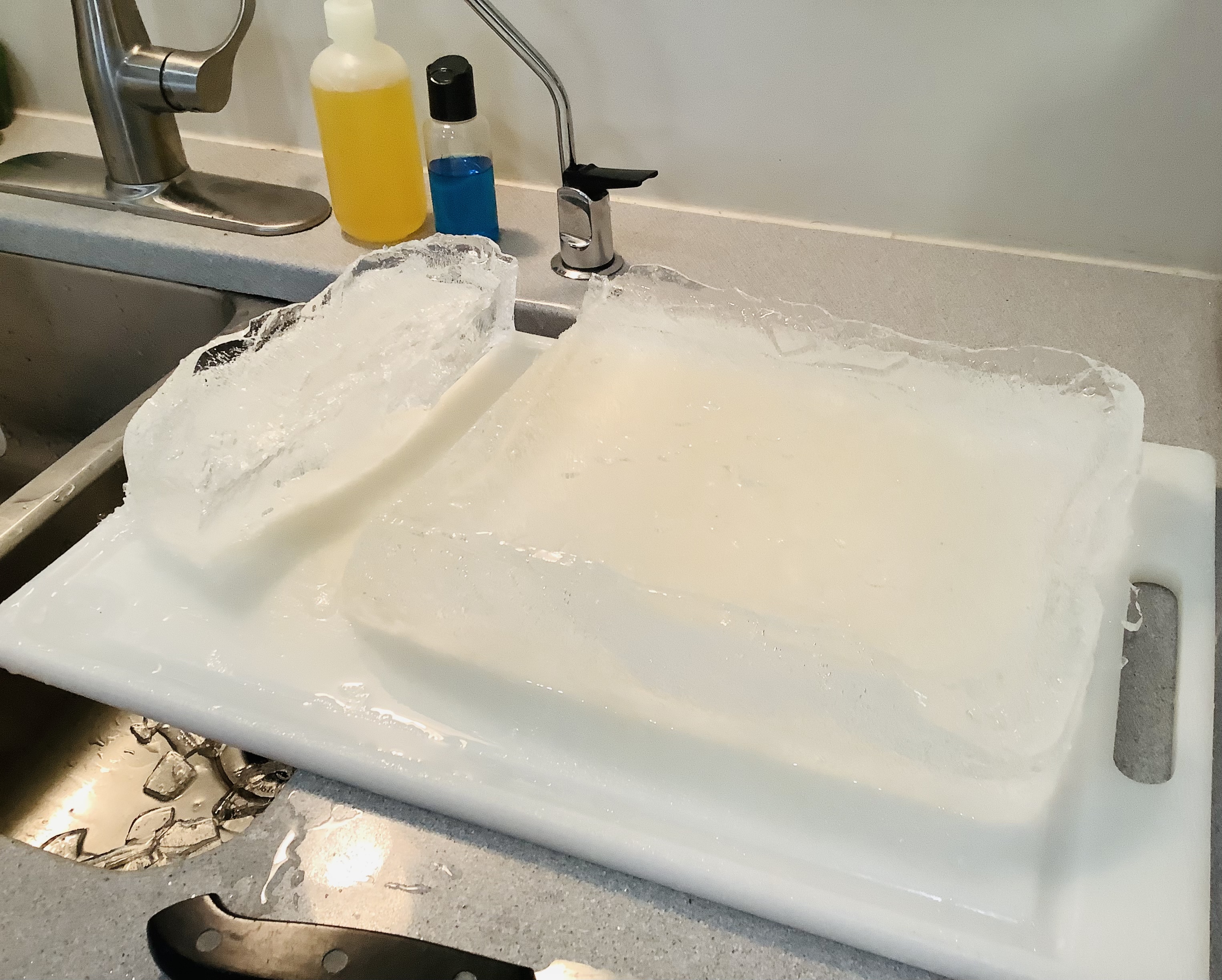
After 24 hours, remove the cooler from the freezer and flip it over onto a clean cutting board that you have placed in or above your sink.

Gravity will start doing the work as the ice slowly slips out of the cooler and lands on the cutting board with a loud clunk!

The inner liner of my cooler slipped out…and then came the ice!

There will be a bunch of unfrozen water that comes pouring out, so make sure you’ve got it positioned over the sink properly or you’ll be cleaning up a mess later on!

You now have a rectangular piece of ice that’s about an inch-and-a-half to 2 inches thick. Wipe off the shards of ice on the top of it, and using the serrated knife, carefully start sawing the ice gently to make a line. It doesn’t have to be deep.

Holding the serrated knife down on that line, get the hammer and tap the top of the knife gently. The ice will break at the line, like you’re cutting a diamond. Now take the newly cut piece of ice, turn it, and saw it with the knife again, this time to make your cubes.

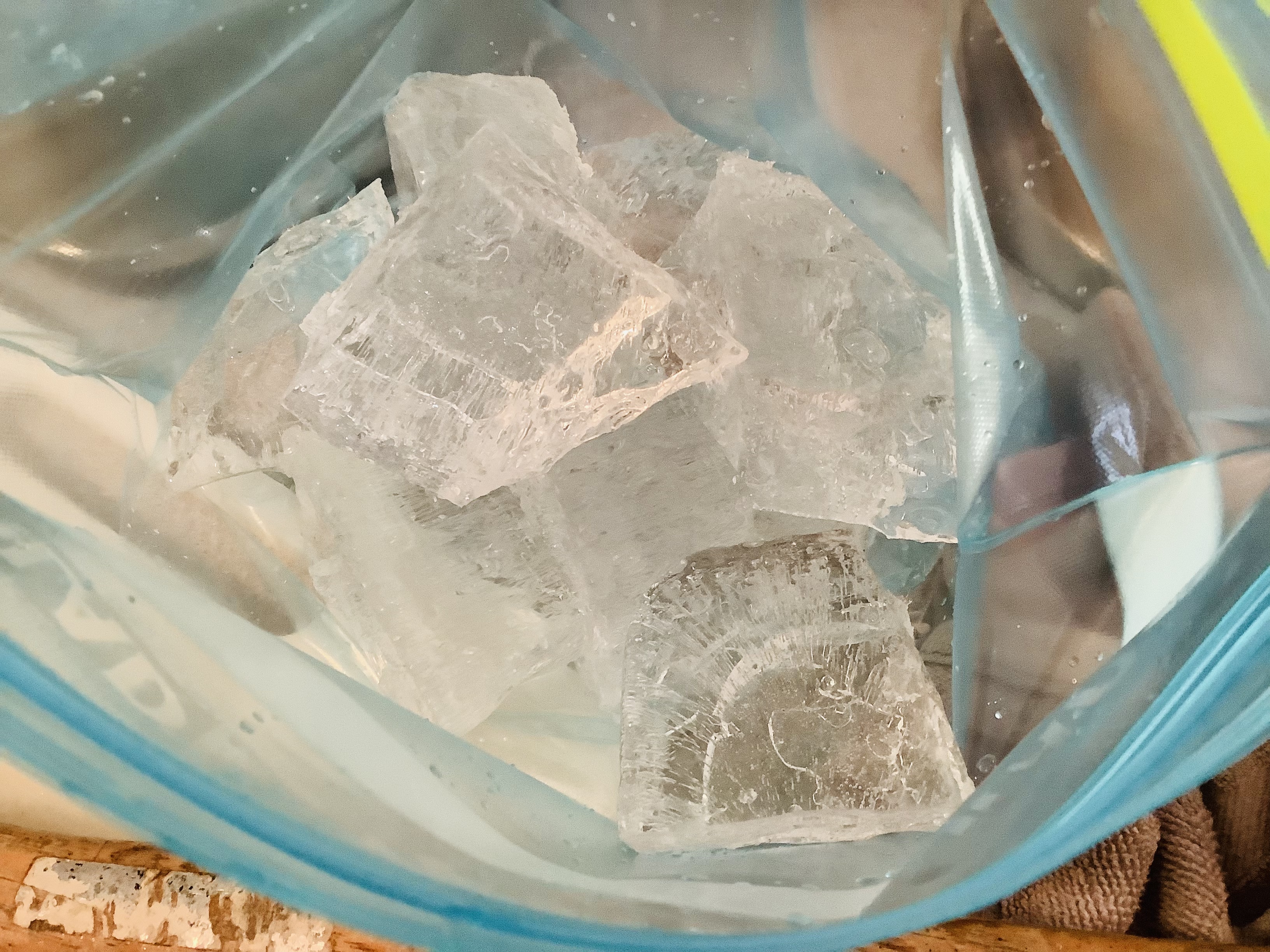
You will see that in no time, you’ve got yourself a nice amount of ice cubes. Place them in a plastic bag and back in the freezer to use whenever you have your next cocktail.

The great thing about these cubes is that they have a rustic look to them, which I find attractive. It’s as if you went out to a frozen lake and cut them yourself.

You can make a lot of ice this way in a very short period of time if you have guests coming over in a few days. Sure, the store-bought bag of ice might still be something you need for the cocktail shaker or frozen margaritas. But when you’re having a drink on the rocks, nothing beats a big gorgeous cube in the middle of it!

MY HOME FRIES

Posted: January 17, 2022 in Uncategorized

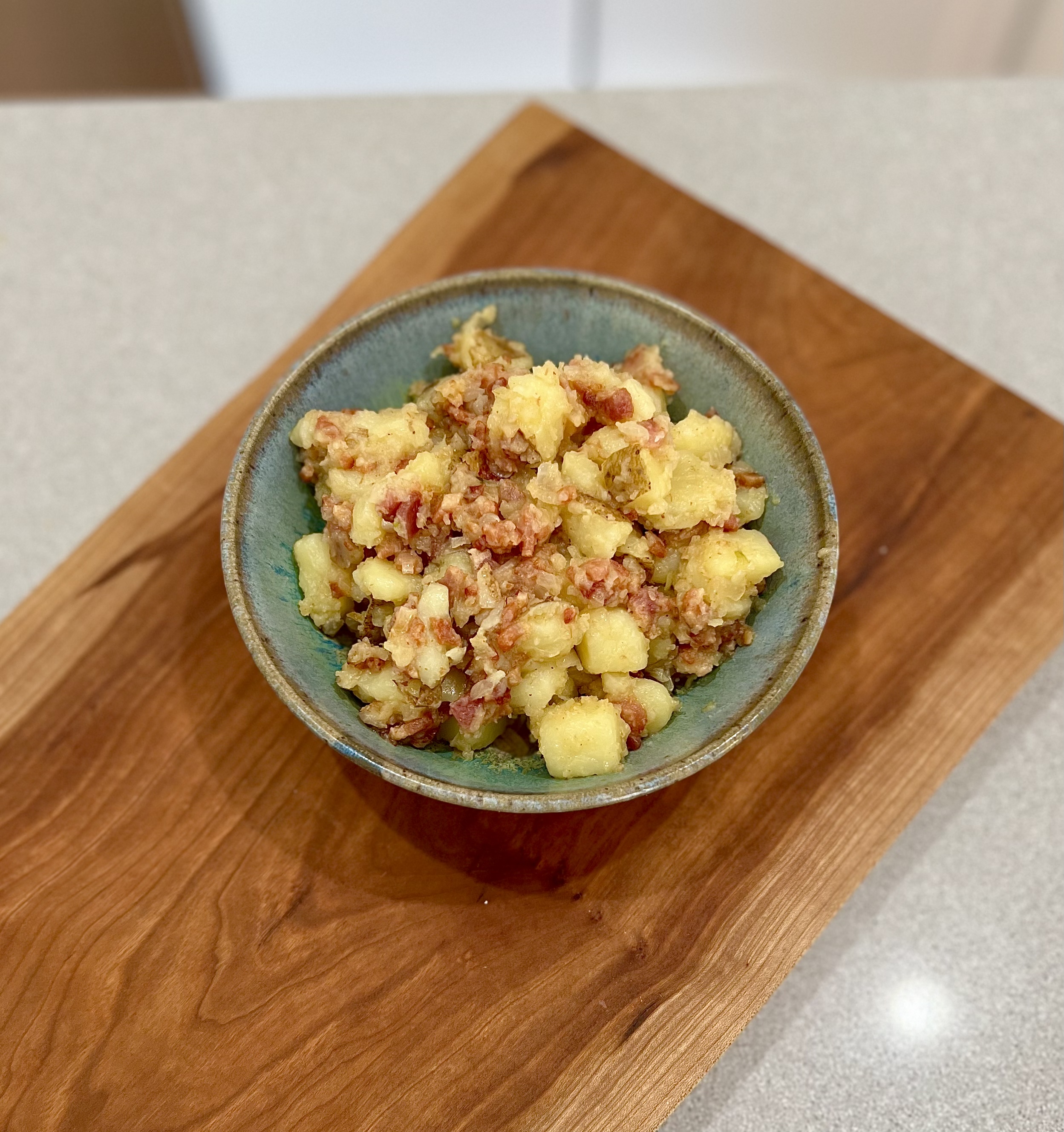
Home fries are a simple thing. But we’ve all been to a diner where the home fries they served tumbled out of a bag of frozen pre-cut potatoes, and tasted like cardboard. It’s time home fries got the respect they deserve.


Let’s get one thing out in the open from the very beginning: home fries were never meant to be low in calories! Mine are definitely not diet food! So, as you read this blog, if you’re shaking your head at the fat and calories, know that I know that you know!


3 lbs. Yukon gold potatoes, cut into approx. 1/2” cubes
1 lb. bacon, chopped
2 Vidalia onions, finely chopped
Lawry’s Seasoned Salt
2 tablespoons unsalted butter


I like my potatoes with the skin on, so I remove any blemishes on the skins, then cut the potatoes in approximately 1/2” cubes. Some can be larger, some smaller, and they don’t have to be perfect squares. The smaller pieces will cook and soften faster, while the larger pieces will retain their shape and texture.

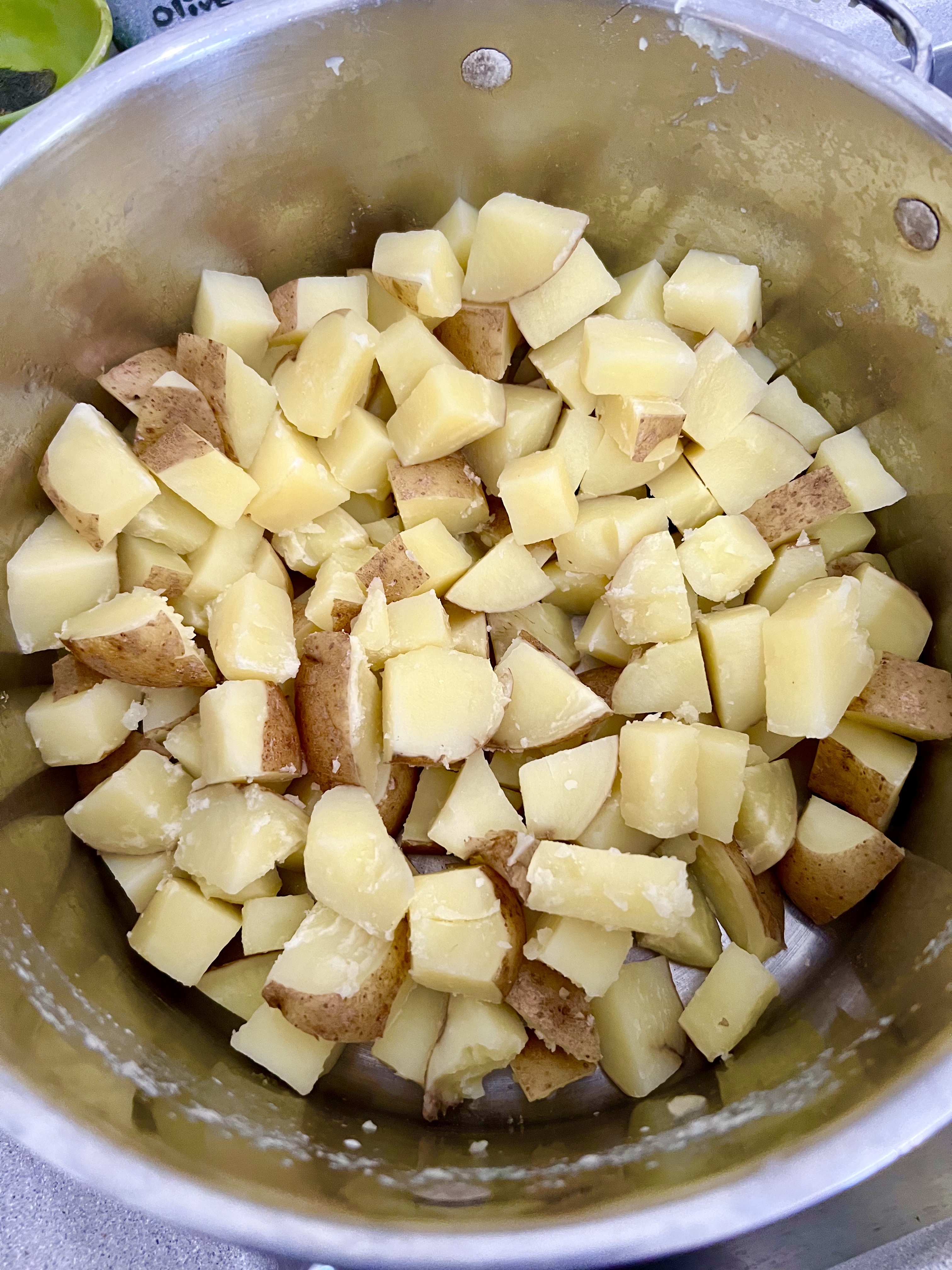
Place the cut potatoes in a pot of clean, cold water over high heat on the stove. Add a little Kosher salt to the water. Let the potatoes cook until they are a bit al dente…a bit underdone. They will cook some more later in the pan. Drain them and set the potatoes aside.


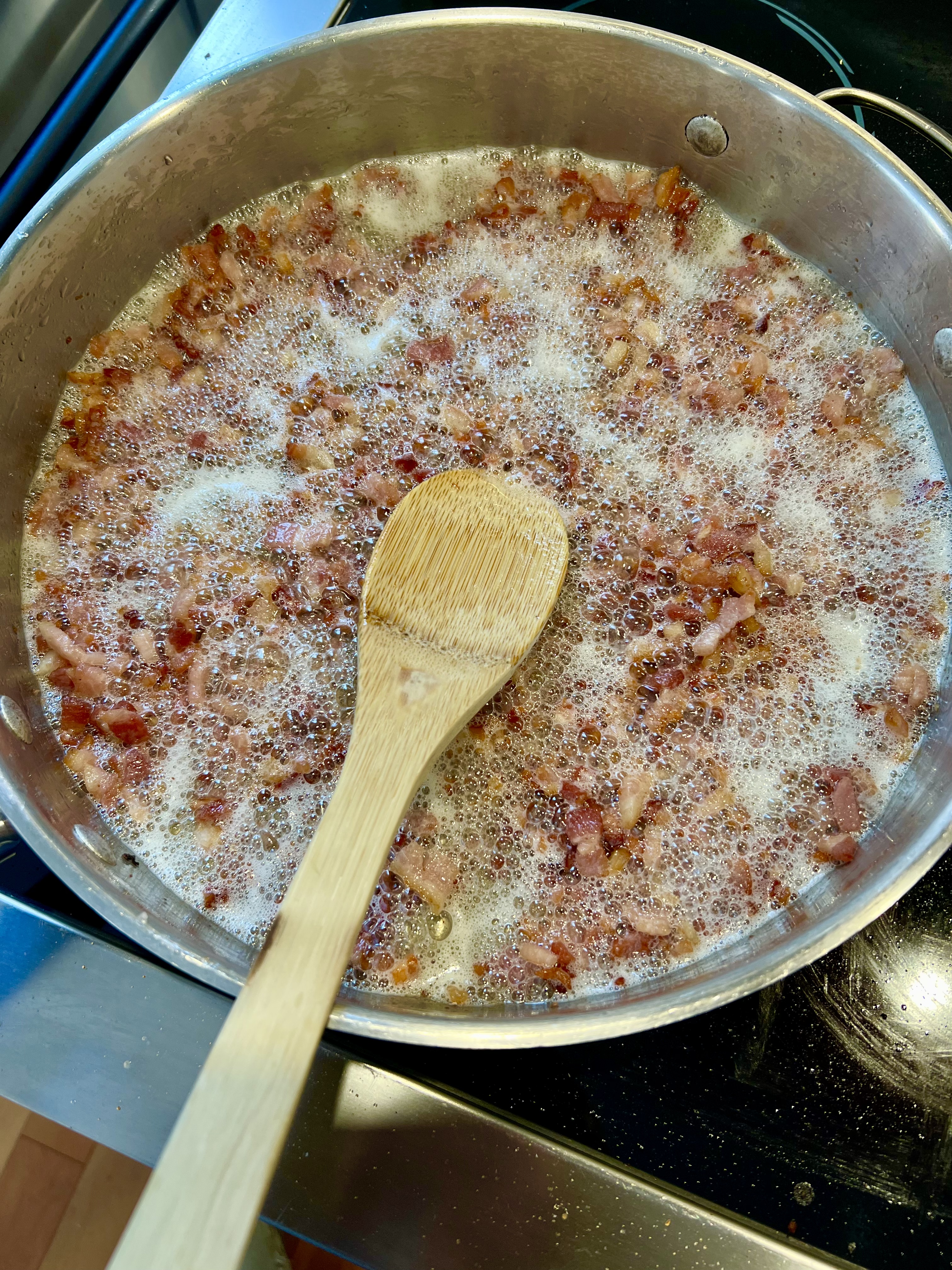
Finely chop the bacon and place it in a large pan that will eventually hold all the potatoes. Turn the heat on high and fry the bacon until it’s browned and completely cooked.

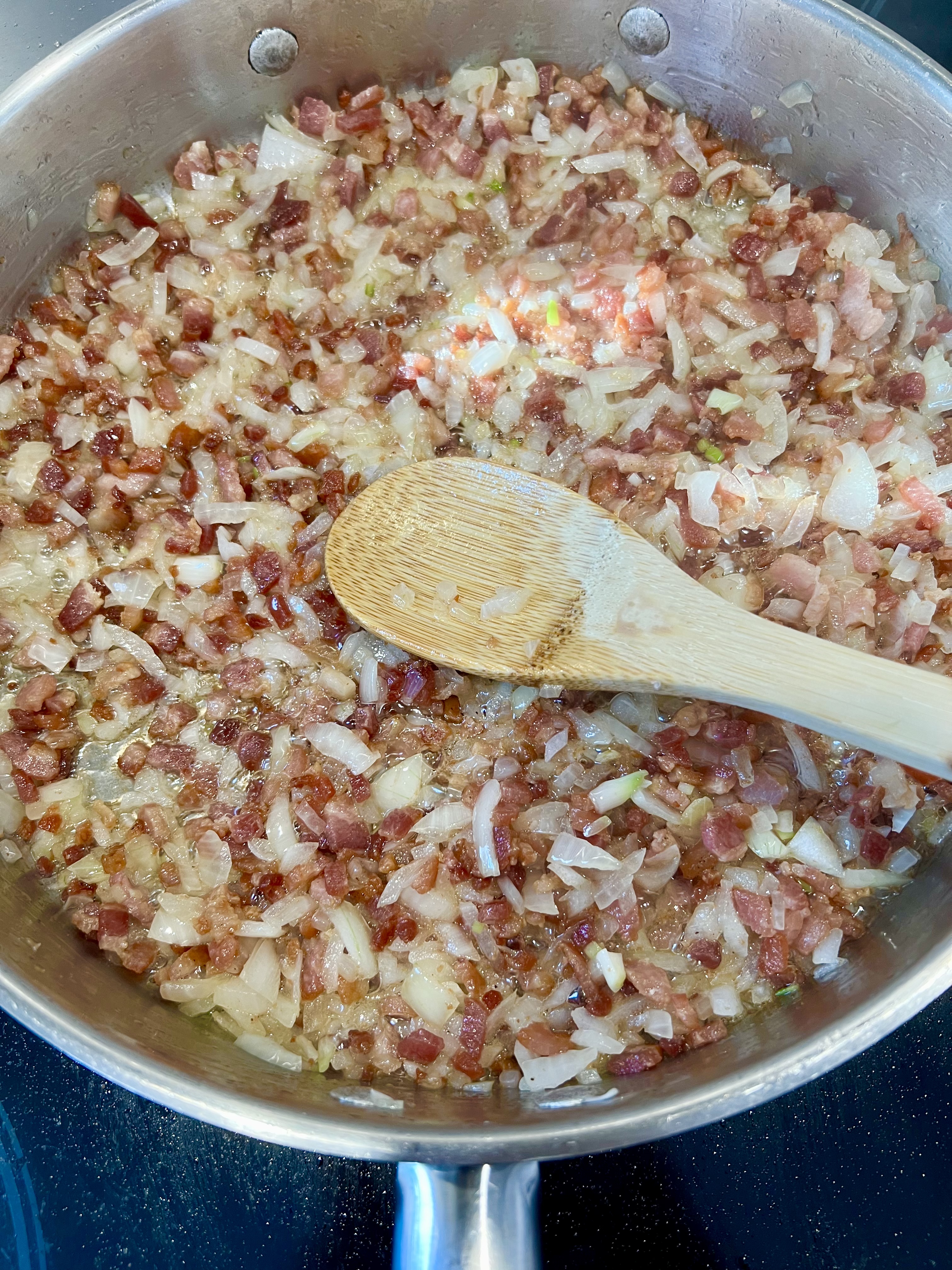
While the bacon is frying, finely chop the two onions. Add the onions to the pan when the bacon has cooked completely. Now, here’s where eyebrows are often raised: Leave all the bacon fat in the pan!


Leave the bacon fat! It’s all about flavor!

Cook the onions until they are soft and translucent.


Now add the drained potatoes to the pan, mixing well, coating the potato pieces in the bacon fat.

Lightly season the potatoes with the Lawry’s Seasoned Salt. Remember: there’s a lot of salt already in the pan from the bacon.

Cook the potatoes, mixing well, and then add the butter in small pieces, scattered around the pan. Keep mixing until the potatoes brown a little.


Awesomely delicious…nothing goes better with some farm-fresh eggs!

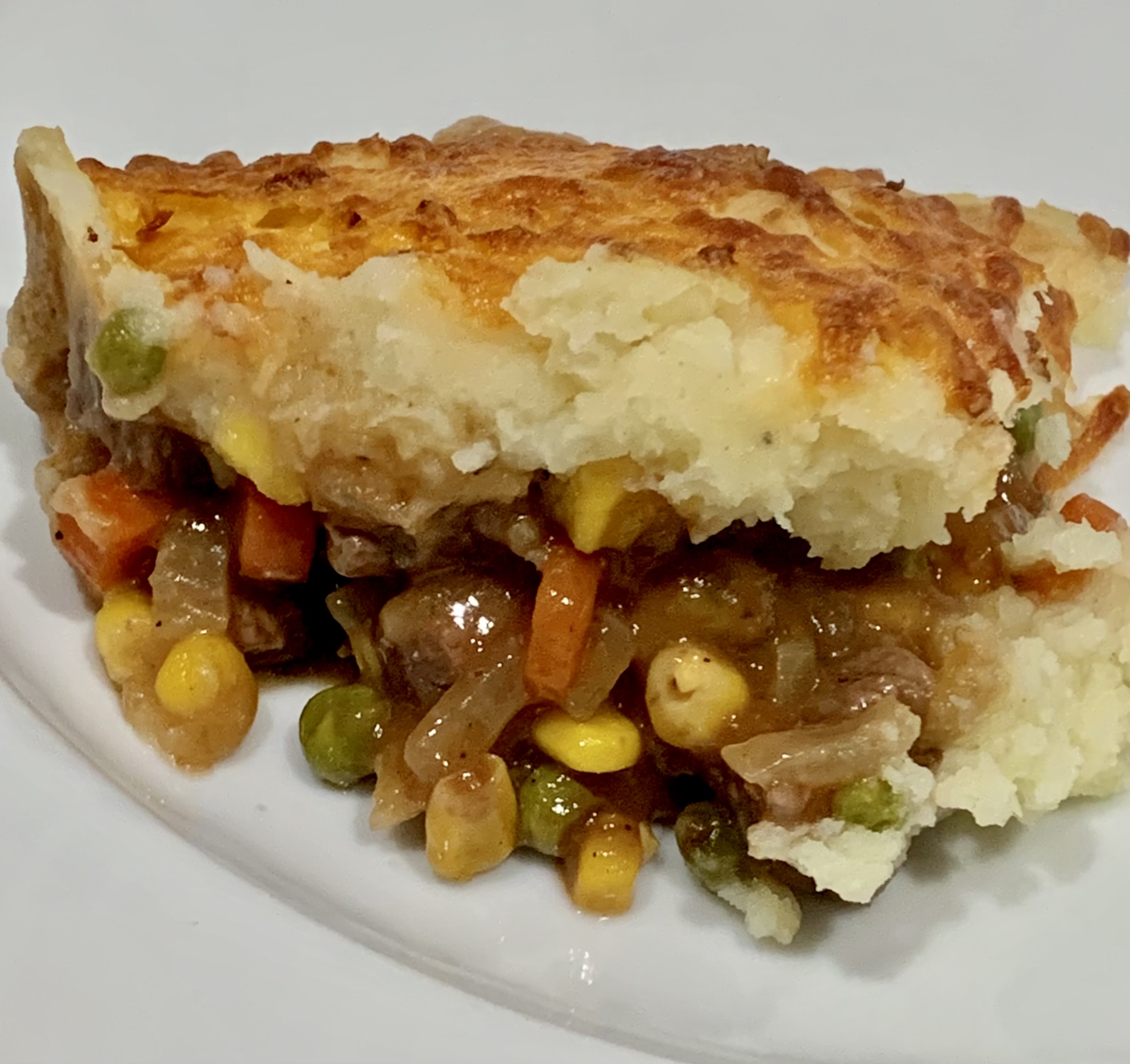
This cold weather always has me craving comfort food. and nothing says comfort more than Shepherds Pie!

So we started scanning through the Food Network catalog of recipes when we landed on Alton Brown’s Shepherds pie recipe. I decided to use it simply as a guide, because my daughter isn’t a big fan of lamb. (The original recipe calls for ground lamb. We went with a bottom round beef roast that I trimmed and cubed.)

And, if we’re talking about comfort food, how could adding grated cheddar cheese hurt anything?


It came out absolutely delicious!
A few notes: I use organic vegetables, organic grass-fed dairy products, grass-fed beef, pastured eggs, and homemade chicken stock. These extra efforts make a difference to me, but use what you are most comfortable with and have easiest access to.

If you’re on a gluten-free diet, the only gluten in this recipe is in the all-purpose flour. Using a GF flour, like Cup4Cup, does a great job of thickening without the gluten. Feel free to substitute it.

2 oz. cheddar cheese

I start by grating the cheddar cheese. I set it aside for later.


Potatoes are the classic ingredient in Shepherds pie, but we found that sweet potatoes are a fantastic substitute. (See the photos at the bottom of the blog.) Give either one a shot yourself, or be really bold and try a combination of the two! The procedure is the same either way…
1 1/2 lbs. Russets, peeled and cubed
1/4 cup half-and-half
2 oz. unsalted butter
3/4 teaspoon Kosher salt
1/4 teaspoon freshly ground black pepper
1 egg yolk
 

Peel and cube the potatoes and place them in a pot of cold water. Bring it to a boil and cook the potatoes until they are fork-tender.
While they are boiling, place the half-and-half and butter in a microwave safe bowl and zap them for 35 seconds to warm them up.
Once the potatoes are done, drain them and place them back in the pot. Add the half-and-half and butter and mash really well. Add the salt and pepper and continue mashing. Finally, add the egg yolk, mixing quickly and thoroughly. Then set the potatoes aside.

You will need two separate pots if you’re doing a part potato, part sweet potato combination. And, of course, mixing the potato with the sweet potato is also a tasty choice.


The meat filling…

2 tablespoons bacon fat (or your favorite oil)
1 cup chopped onion
2 carrots, peeled and diced small
2 garlic cloves, minced

1 1/2 lbs. beef, cut into 1/2″ cubes
1 teaspoon Kosher salt
1/2 teaspoon freshly ground black pepper
2 tablespoons all-purpose flour
2 teaspoons tomato paste
1 cup chicken broth, preferably homemade
1 teaspoon Worcestershire sauce
2 teaspoons freshly chopped rosemary leaves
1 teaspoon freshly chopped thyme leaves
1/2 cup fresh or frozen corn
1/2 cup of fresh or frozen peas

Preheat the oven to 400°.

While the potatoes are cooking, prepare the meat filling.

Place the bacon fat or oil in a pan and set it on medium high heat. Add the onions and the carrots and cook until the onions are translucent. Add the garlic and stir.
Add the beef and the salt and pepper and cook until the meat has browned nicely.
Sprinkle the meat with the flour, and mix to combine, cooking for another minute.
Add the tomato paste, chicken broth, Worcestershire sauce, rosemary and thyme, and stir to combine.
Bring this to a boil, reduce it to a simmer, and cook it for about 10 minutes, until the sauce has thickened nicely.

Add the corn and the peas to the meat mixture, and then pour it all into a baking pan. ( I used a 9-inch round metal baking pan that was about 3 inches deep.)

Spread the mashed potatoes on top of the meat mixture. If you use the mashed potatoes all around the edges, it seals the meat mixture in, and prevents bubbling over and messing up your oven. A rubber spatula makes this job easy.

Place the pan on a parchment-lined baking sheet (to prevent spills), and in the oven to bake for 15 minutes.

After 15 minutes, remove the pan and sprinkle the grated cheddar cheese on top of the potatoes. Then return the pan to the oven for 10 more minutes, until the cheese has melted and created a beautiful golden crust on top.

Remove the pan from the oven, placed it on a wire rack, and let it cool at least 15 minutes before serving.


As I said earlier, sweet potatoes make a great substitute for regular potatoes. Give them a try!


And if you like both mashed and sweet potatoes…