Posts Tagged ‘Asian’

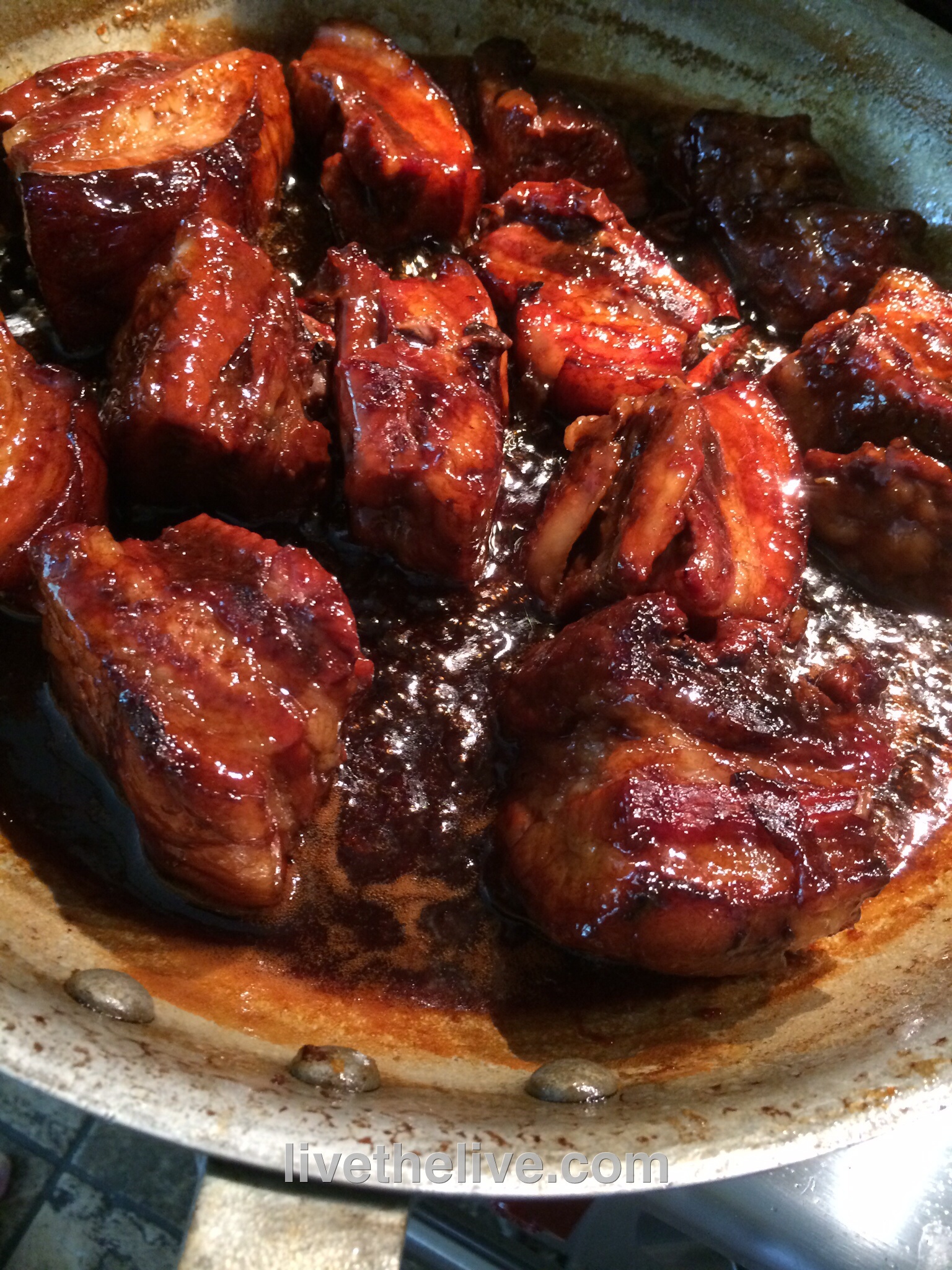
Sometimes the happiest of cooking accidents happen with bacon. My original plan was to make Chinese-style honey ribs for dinner. But instead of pulling a nice rack of ribs out of the freezer, I accidentally took out a slab of pork belly. I only realized my mistake after I thawed it, so I decided to use it! The results were pretty damn tasty.

I like maple syrup instead of honey, but use what you like!

image

Marinade:
¾ cup light soy sauce
6 Tablespoons hoisin sauce
5 lbs. pork belly
Zest and juice of 1 lemon
2 whole star anise
2 cinnamon sticks (3”)
1/2 cup honey or maple syrup
4 cups chicken broth (preferably homemade)
image
Pre-heat the oven to 350 degrees.
Mix the marinade ingredients. Set them aside.
Cut the pork belly into pieces that are about 2 inches square. Place them in a large pot. Cover them with water and bring the pot to a boil. Boil it for 5 minutes. Drain the water.
Place the warm pork belly pieces on a sheet pan lined with non-stick aluminum foil. Coat them with the marinade. Let them sit for 10 minutes.
Bake the pork belly pieces on the sheet pan in the oven for 30 minutes.
While the pork belly is baking, start the sauce in a large non-stick pan or pot: combine the lemon zest and juice, star anise, cinnamon sticks, maple syrup or honey, and chicken broth. Bring it to a boil, then reduce it to a simmer.
When the pork belly pieces have finished baking, add them to the sauce pot, lowering the heat to a simmer. Simmer (covered) for about 15 minutes or until meat is tender.
Turn the heat back on high, uncover the pot and cook until the sauce has reduced to a glaze that coats the meat. Reduce the heat as the sauce thickens to avoid the sugars in the syrup or honey from burning. When the pieces are sticky and gooey, they are ready!
Devour them just like that!
If you have leftovers, let the pork belly cool, then slice the pieces it to your desired thickness and fry them like regular bacon. They’re great with eggs!
image

There’s something about Asian noodle dishes that make them incredibly addictive. They’re great hot or cold, and easy to make at home. I store an arsenal of basic Asian ingredients in my pantry, so slapping this together is no effort at all. And if you don’t have Asian noodles around, chances are you’ve got a box of pasta, which works just as well.

Next time you’ve got a bunch of people coming over, cook a batch a few hours beforehand and let it come to room temperature. It’s great with anything, really. Grab a bag of frozen egg rolls or some potstickers, and you’ve got great munchies for your guests.

Adding boiled and chilled shrimp to these noodles makes it a cool meal. I usually double the sauce recipe when I do that.

If you need to go gluten-free, use GF pasta or rice noodles…and you can find gluten-free hoisin sauce in the Asian food section of many supermarkets.

Asian noodles

4 tablespoons creamy peanut butter
1 tablespoon hoisin sauce
2 teaspoons sesame oil
1 teaspoon Chinese chili garlic sauce (more, if you like it spicy!)
16 oz. package Chinese noodles or pasta

Combine the peanut butter, hoisin sauce, sesame oil, and chili garlic sauce in a bowl. Set it aside. I keep my peanut butter in the fridge once the jar is open, so sometimes it’s a bit thick. So I just zap it in the microwave for about 10 seconds to soften it up.

Boil the noodles or pasta until al dente. Drain it and place it in a large bowl.

Mix the noodles with the sauce.

It’s easy to make this recipe a meal by adding meat and veggies, which is what I did recently.

I took about a pound of chicken breasts, and sliced them thin, into strips, placing them in a bowl. I added a little soy sauce (go gluten-free soy sauce if you need to…La Choy is the brand I use) and a little rice vinegar, and I let the chicken marinate in the fridge for a few hours.

Meanwhile, I chopped up some broccoli and blanched it in boiling water, just to cook it a little. I drained the water and set the broccoli aside.

I chopped some sugar snap peas on the bias, and set them aside. And I had a bag of mung bean sprouts purchased, ready to go.

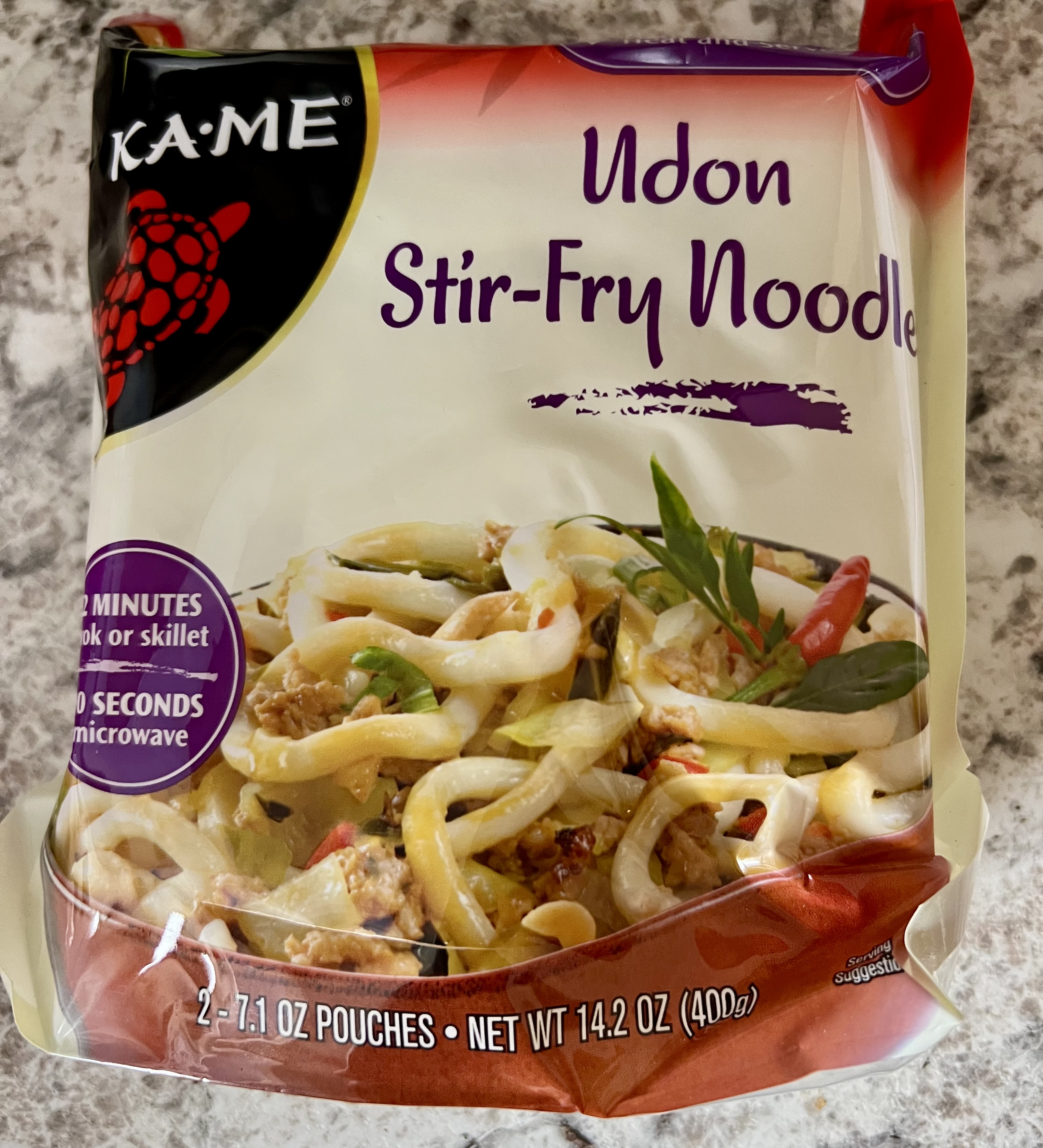
This time, I used Udan noodles for this dish (by my daughter’s request) and I found a brand that simply needed to be microwaved for 90 seconds before using.

So once we were ready to eat, I put a little avocado oil in a hot pan and seared the chicken that was marinating, getting some nice caramelization on the meat. Toward the end, I threw in the snap peas and broccoli just to heat them up. I tossed it all into a large bowl.

I heated the Udon noodles in the microwave and tossed them in the bowl.

I added the bean sprouts to the bowl, and then a generous supply of the peanut sauce mixture, as above.

I really gave it all a good mix before serving it in bowls, with a garnish of fresh cilantro on top.

The combination of sweet with a little heat is something I just can’t get away from. Whether I’m barbecuing, putting together a poke bowl, or preparing my favorite Asian recipe, I gotta have it.

I was looking back at a previous blog I had written about Korean barbecue, and I was really craving a lot of the flavors in my recipe…but I was comfy here at home on a bad weather day, and I wasn’t about to go out to the store to buy the one key ingredient I didn’t have: a spicy sauce called Gochujang. So, I looked in my fridge for a reasonable substitute, and there, on the shelf, was a brand new bottle of Chinese chili garlic sauce. It was exactly what I needed.
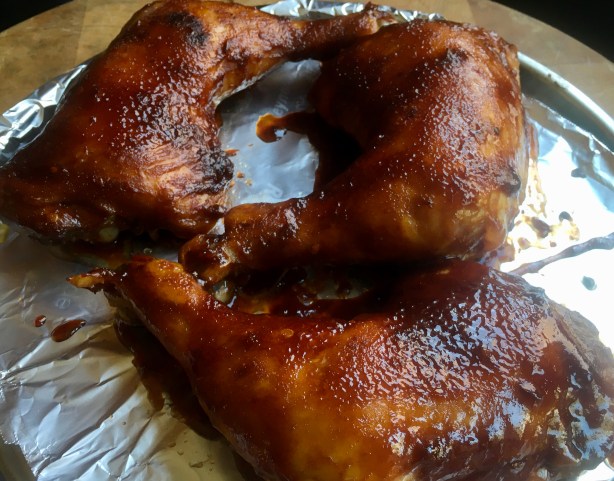
 

I grabbed chicken leg quarters at the supermarket last week, because the quarters have a drumstick and a thigh, my favorite parts of the chicken.


*Raw chicken hack*
I keep disposable gloves in my kitchen to use whenever I handle raw chicken. I’ve got a special trimming knife that I use…and it goes right in the dishwasher after I’m done. (I don’t normally put knives in the dishwasher, but this inexpensive blade goes in.) I also use an acrylic cutting board, because it, too, can go right in the dishwasher to be sanitized. (Doesn’t matter how much you scrub a wooden board, it will absorb odors and liquids and never get completely clean.) I have two beautiful wooden boards in my kitchen, but they’re more for show than practical use. And then the gloves: I wear them while trimming the chicken, then toss them when I’m done.


The amazing sauce that I use here will last through the preparation of this dish and then some. Once you’ve mixed up a batch, it might be good to separate it into 2 bowls. Use one bowl to brush it onto the raw chicken. The other bowl will be untouched by anything that touches the chicken, so you can use it cooked or uncooked. As soon as the brush you’re using touches the raw chicken and then sauce, you can no longer use it uncooked. (Salmonella!) No licking the bowl by accident!

The extra sauce will be awesome if you want to brush even more sauce on leftovers.
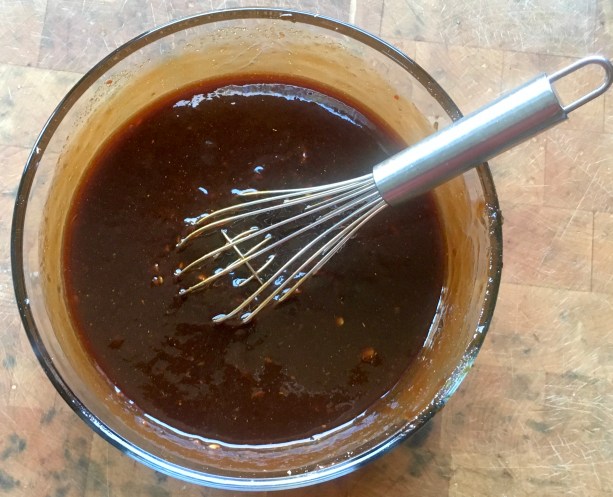
 

More sauce than you need, but trust me: you’ll keep slathering it on more and more!


3 lb. package of chicken parts (I used leg quarters)
3/4 cup ketchup
1/2 cup hoisin sauce
1/2 cup honey
1/2 cup soy sauce
1/4 cup brown sugar
1/4 cup chili garlic sauce
2 tablespoons freshly grated ginger
1 tablespoon unseasoned rice vinegar
1 teaspoon granulated garlic

Combine everything but the chicken in a bowl and mix well, then divide them into two bowls…one to use with the raw chicken and one for later.


*Ginger root hack*
I love fresh ginger. But I never use it often enough. It gets moldy in my fridge and I have to toss it out. But I learned a trick from a local organic farmer who grows their own ginger– Liz, at at Wishing Stone Farm in Little Compton, RI: Put the ginger root in a plastic bag, and keep it in the freezer. When you need it for a recipe, take the frozen root out of the freezer and grate it–skin and all–according to your recipe. Then put the rest back in the freezer. An amazing trick that really works, and you’ll never peel ginger again!
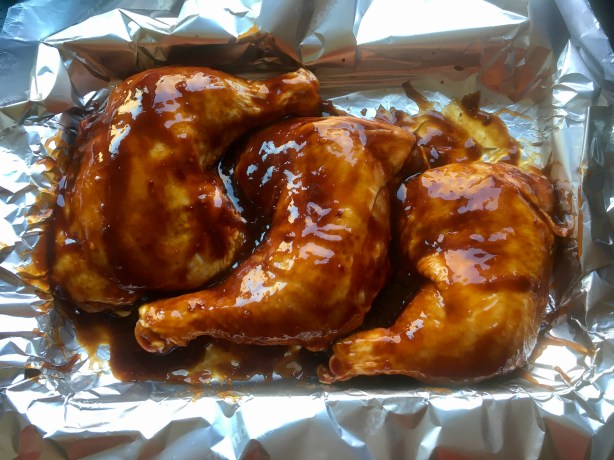
 

Looks good, but it’s not cooked yet! Once it’s basted, fold the foil over the top of the chicken to make a packet.


Grab a baking pan, and tear a long sheet of aluminum foil, placing it over it. Place the chicken pieces on the foil bottom-side up. (I need to use 2 sheets of foil overlapping each other because my chicken pieces were larger.)

Brush the bottoms of the chicken pieces with the sauce, then flip them over and brush the tops. Be generous!

Wrap the foil around the chicken pieces to make a pouch, making sure the pieces are not sticking out.

Pre-heat the oven to the highest temperature it will go. When the oven is hot, place the pan with the chicken in the oven, close the door, and turn the oven down to 325.

Bake the chicken for one hour.

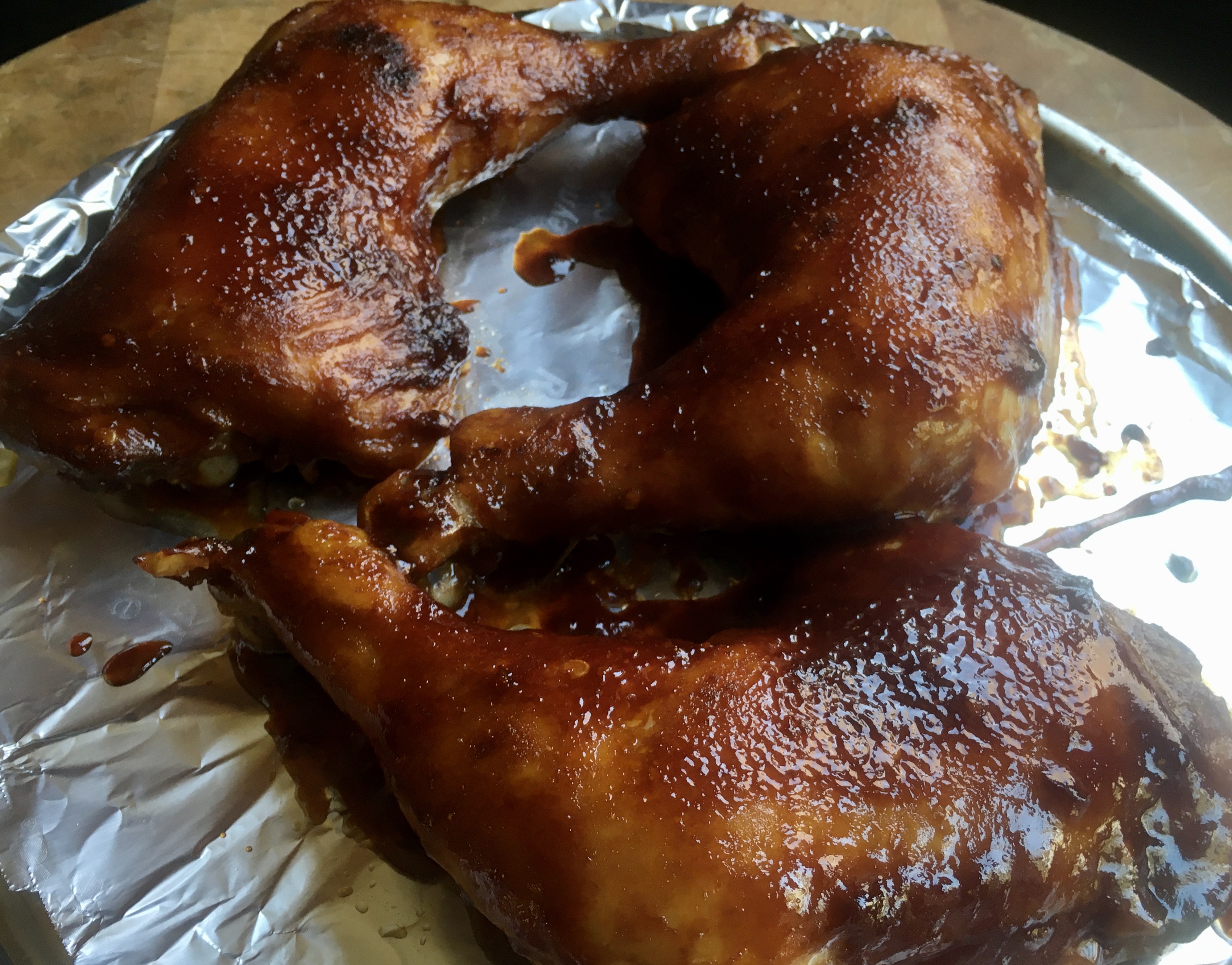
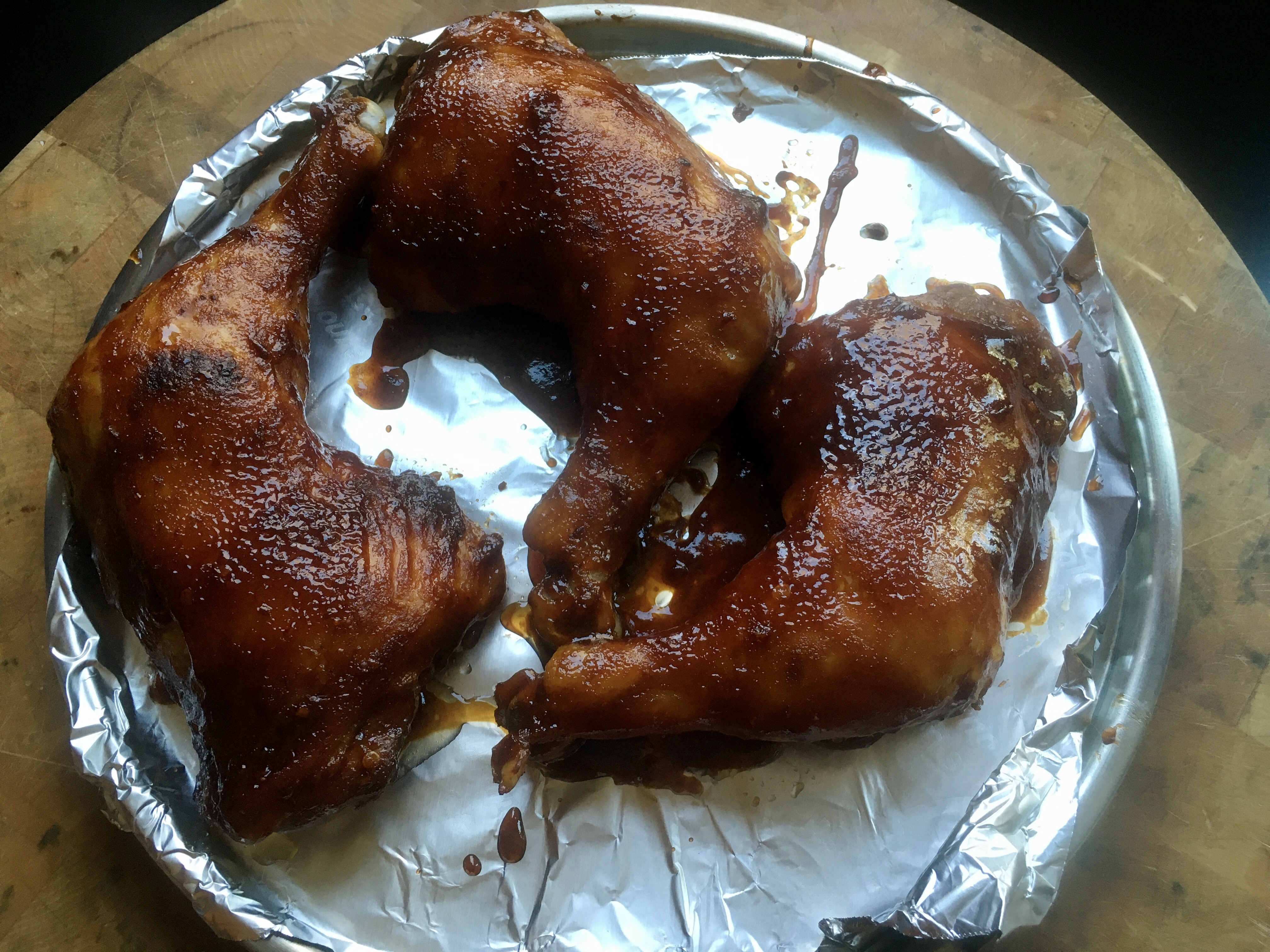
When the chicken is done, open the foil packet. It will look like this…
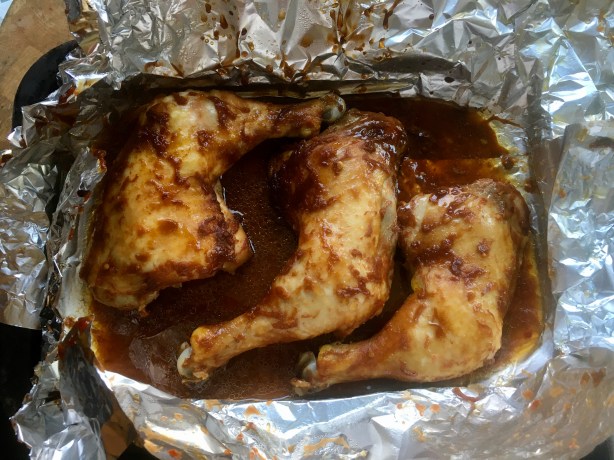
 

Carefully pour off the fat, then brush more of the sauce on the chicken, and place it under the broiler, watching it carefully so that the sugars in the sauce don’t burn. Broil it until it’s caramelized. (Another option is to light a charcoal grill and cook it on the grill rather than putting it under the broiler. It’s just a matter of how much time and effort you want to spend, and what the weather’s like.)
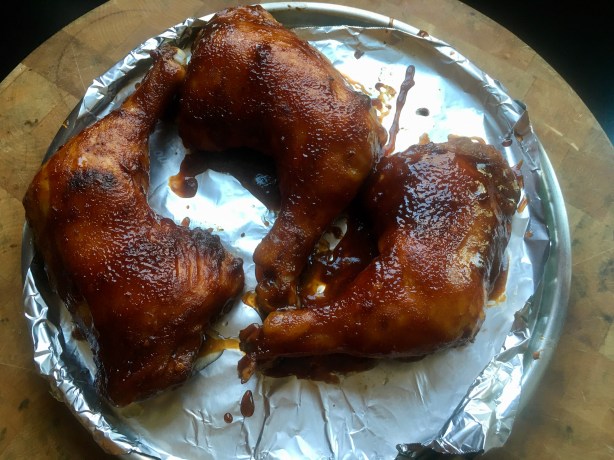
 

I used a new sheet of foil and a new pan under the broiler.


Discard any of the sauce that touched the raw chicken. Use the “clean” bowl of sauce on the cooked chicken, if you want to add more.

Leftovers are awesome. Simply take the chicken out of the fridge, brush with more sauce, and place it in a 300-degree oven for about 10–15 minutes. It will take on an even darker color.


Leftovers the next day: I brushed more sauce on it before re-heating.


Sometimes the happiest of cooking accidents happen with bacon. My original plan was to make Chinese-style honey ribs for dinner. But instead of pulling a nice rack of ribs out of the freezer, I accidentally took out a slab of pork belly. I only realized my mistake after I thawed it, so I decided to use it! The results were pretty damn tasty.

I like maple syrup instead of honey, but use what you like!

image

Marinade:
¾ cup light soy sauce
6 Tablespoons hoisin sauce
5 lbs. pork belly
Zest and juice of 1 lemon
2 whole star anise
2 cinnamon sticks (3”)
1/2 cup honey or maple syrup
4 cups chicken broth (preferably homemade)
image
Pre-heat the oven to 350 degrees.
Mix the marinade ingredients. Set them aside.
Cut the pork belly into pieces that are about 2 inches square. Place them in a large pot. Cover them with water and bring the pot to a boil. Boil it for 5 minutes. Drain the water.
Place the warm pork belly pieces on a sheet pan lined with non-stick aluminum foil. Coat them with the marinade. Let them sit for 10 minutes.
Bake the pork belly pieces on the sheet pan in the oven for 30 minutes.
While the pork belly is baking, start the sauce in a large non-stick pan or pot: combine the lemon zest and juice, star anise, cinnamon sticks, maple syrup or honey, and chicken broth. Bring it to a boil, then reduce it to a simmer.
When the pork belly pieces have finished baking, add them to the sauce pot, lowering the heat to a simmer. Simmer (covered) for about 15 minutes or until meat is tender.
Turn the heat back on high, uncover the pot and cook until the sauce has reduced to a glaze that coats the meat. Reduce the heat as the sauce thickens to avoid the sugars in the syrup or honey from burning. When the pieces are sticky and gooey, they are ready!
Devour them just like that!
If you have leftovers, let the pork belly cool, then slice the pieces it to your desired thickness and fry them like regular bacon. They’re great with eggs!
image


I love these ribs. They’re one of the the first recipes I ever tried, and still one of my favorites. I’ll be making them again this weekend!
 
I like making these because you don’t need a grill or a smoker. They’re gooey, sweet and absolutely delicious!
 
 
 image
 
¾ cup soy sauce
 1/4 cup hoisin sauce
5 lbs. pork ribs
Zest and juice of 1 lemon
2 whole star anise
2 cinnamon sticks (3”)
1/2 cup honey
4 cups chicken broth
 
Mix the soy sauce and the hoisin in a bowl, and set it aside. These are the marinade ingredients.
 
If the ribs are large, cut them into individual pieces. If they’re smaller, cluster 2 or 3 ribs together. Place them in a large pot. Cover them with water and bring it to a boil. Boil for 5 minutes. Drain the water.
 
Place the warm ribs on a baking sheet lined with non-stick aluminum foil or with a rack and brush them with the marinade. Let them sit for 10 minutes.
 
Pre-heat the oven to 350 degrees. Bake the ribs on the baking sheet for 30 minutes.
 
While the ribs are baking, start the sauce in a large non-stick pan or pot that will hold all the ribs: combine the lemon zest and juice, star anise, cinnamon sticks, honey and chicken broth. Bring it to a boil, then reduce it to a simmer.
 
When the ribs have finished baking, add them to the sauce pot and simmer on low (covered) for at least 15 minutes or until the rib meat is tender.
 
Turn the heat on high, uncover the pot and cook until the sauce is reduced to a glaze that coats the ribs. Be sure to reduce the heat as the sauce thickens or the sugars in the honey will burn! When the ribs are sticky and gooey, they’re ready.
 
Substituting grapefruit for the lemon works really well. And I like to switch the honey for maple syrup! 


ASIAN NOODLES WITH PEANUT SAUCE

Posted: January 31, 2024 in Food, Recipes
Tags: , , , ,

There’s something about Asian noodle dishes that make them incredibly addictive. They’re great hot or cold, and easy to make at home. I store an arsenal of basic Asian ingredients in my pantry, so slapping this together is no effort at all. And if you don’t have Asian noodles around, chances are you’ve got a box of pasta, which works just as well.

Next time you’ve got a bunch of people coming over, cook a batch a few hours beforehand and let it come to room temperature. It’s great with anything, really. Grab a bag of frozen egg rolls or some potstickers, and you’ve got great munchies for your guests.

Adding boiled and chilled shrimp to these noodles makes it a cool meal. I usually double the sauce recipe when I do that.

If you need to go gluten-free, use GF pasta…and you can find gluten-free hoisin sauce in the Asian food section of most supermarkets.

Asian noodles

4 tablespoons creamy peanut butter
1 tablespoon hoisin sauce
2 teaspoons sesame oil
1 teaspoon Chinese chili garlic sauce (more, if you like it spicy!)
16 oz. package Chinese noodles or pasta

Combine the peanut butter, hoisin sauce, sesame oil, and chili garlic sauce in a bowl. Set it aside. I keep my peanut butter in the fridge once the jar is open, so sometimes it’s a bit thick. So I just zap it in the microwave for about 10 seconds to soften it up.

Boil the noodles or pasta until al dente. Drain it and place it in a large bowl.

Mix the noodles with the sauce.

Devour!

Shrimp with an orange sauce is something you see on every Chinese restaurant menu. I didn’t have oranges, but wanted a citrus kick to my sweet and spicy sauce. I went with grapefruit and I never looked back!

Although I call this recipe “Asian shrimp,” I never buy my shrimp from Asia! Only wild-caught American shrimp will ever do. When you realize just how nasty Asian shrimp can be (farmed in over-crowded conditions, swimming in their own filth and fed chemical food pellets and antibiotics) you’ll never eat it again.

Green beans looked good in the produce aisle, so I used them, but feel free to substitute with broccoli, asparagus, or any veggies you like.

Chili garlic sauce and hoisin sauce can be found in most supermarkets, in the international foods section.

As long as you use gluten-free soy sauce and hoisin sauce (the brand La Choy is GF), this dish is gluten-free!


image


For the rice:

1 cup cooked basmati rice (I use Texmati brown rice)
2 cups seafood stock (I use homemade shrimp and fish stock, but vegetable stock will work)
1/2 teaspoon salt
2 scallions, finely chopped


For the veggies:

1/2 Vidalia onion, finely chopped
1 lb. fresh green beans, washed and cut into 1/4′ pieces
1 teaspoon soy sauce
splash of peanut oil


For the shrimp:

2 dozen thawed, peeled and de-veined wild-caught USA shrimp
1 tablespoon chili garlic sauce
3 tablespoons hoisin sauce
juice and zest of 1 grapefruit
splash of peanut oil


Making your own seafood stock is easy: just peel the shrimp you’re going to use in this recipe, and place the shells in a saucepan full of water. Let it boil until you’ve reduced it to 2 cups. Strain out the shells and discard them. Then use the stock to cook your rice, according to the package directions. Once the rice is cooked, toss in the chopped scallions, mix well, and set the rice aside.

Add peanut oil to a hot pan and sauté the onions until translucent. Add the green beans and cook them until they’re al dente. Add the soy sauce, stir, and then pour the contents of the pan into the rice. Mix well.

Using the same pan, add a little more peanut oil and sear the shrimp on both sides. Don’t overcook them! Push the shrimp to the sides of the pan so that a circle remains in the middle. Add the chili garlic sauce and hoysin sauce and stir them together, then blending in the shrimp until the shrimp are covered with the sauce. Add the grapefruit zest and juice and stir until everything is combined and the sauce has thickened just a bit.

Pour the contents of the pan into the rice mix and combine. Add more soy sauce to the rice, if you like.

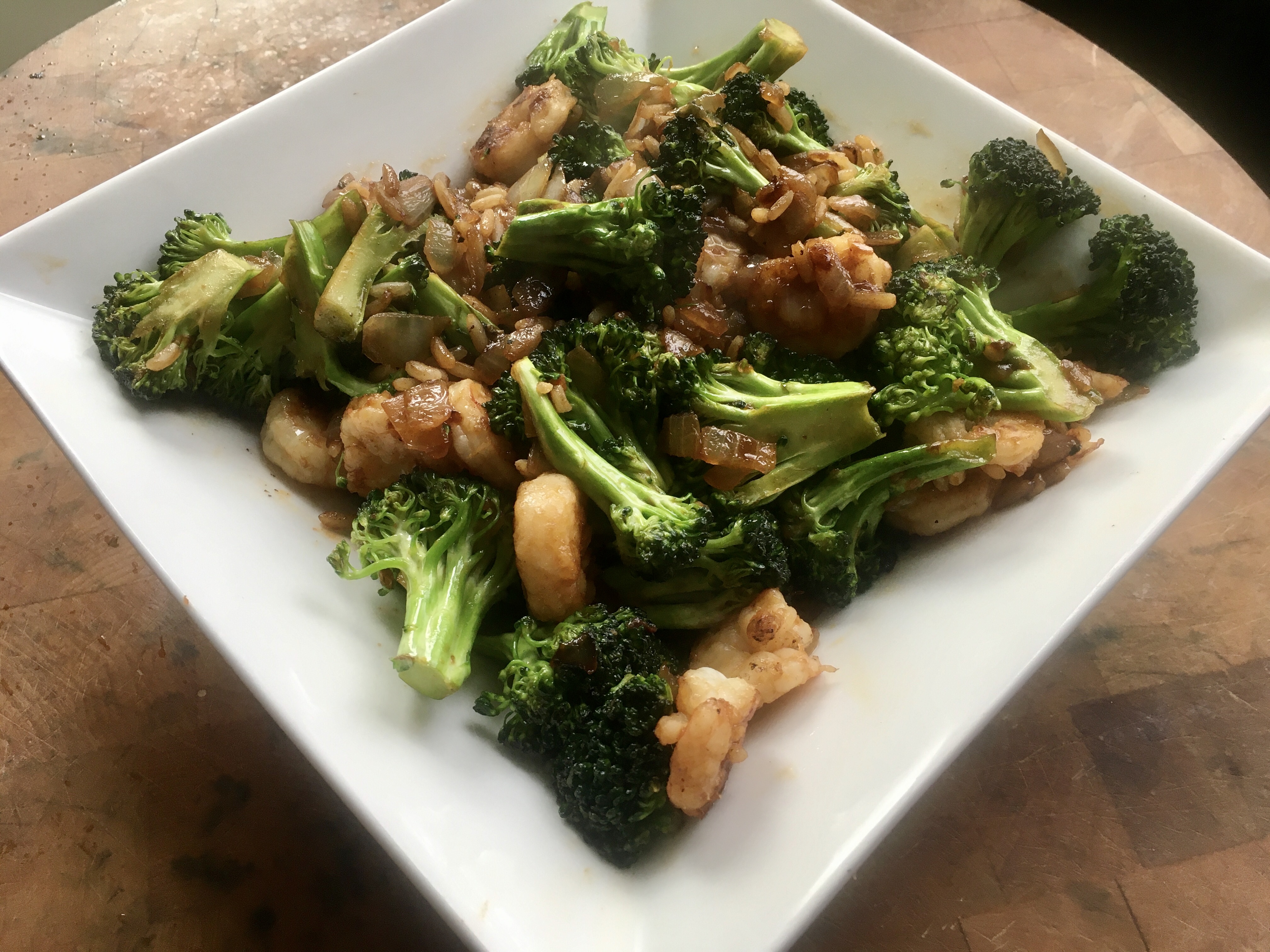
There are some dishes I crave more than others, and Chinese shrimp and broccoli is one of them. But it’s really quite easy to make it at home, and it’s surprisingly low in calories if you’re really careful with the amount of oil you use. Oil is the biggest culprit when it comes to calories in Chinese cooking.

Second on the list of calorie culprits is rice. It looks innocent enough, but a cup of rice has 170 calories, and if you’re limiting yourself to a daily calorie count of 1500, like I am, that becomes pretty significant.

The good news is that shrimp is actually one of the lowest calorie foods you can buy, checking in at only 1 calorie per gram. Broccoli is also low in calories, so if you skip the rice, you can really eat your fill of this delicious dish.


I’ve come up with what I call my “Asian Mix,” which is a combination of five ingredients commonly found in the supermarket in the Asian food section. Add these to your shrimp and broccoli, and you will never need to leave home for really good Chinese food!

Asian Mix…
1 tablespoon soy sauce
1 tablespoon hoisin sauce
1 teaspoon rice vinegar (unseasoned)
1/2 teaspoon sesame oil
1/2 teaspoon chili garlic sauce

Combine these ingredients in a bowl, mixing well. Set aside.


1 small onion, chopped
2 cloves of garlic, finely chopped
1 or 2 large heads broccoli, chopped into smaller, similar-sized pieces
1 lb. wild-caught American shrimp, peeled and deveined
Asian Mix, as listed above
peanut oil

I prefer peanut oil when cooking Asian dishes.

Heat a non-stick pan and add 1 tablespoon of peanut oil to it. Add the chopped onion, and cook until translucent.

Add the chopped garlic and stir for about 10 seconds.

Add the chopped broccoli and cook until the broccoli turns bright green but stays crunchy.

Empty the pan out into a bowl and, without wiping the pan down, add the shrimp to the pan (no more oil!), returning it to the heat. Let the shrimp heat in the hot pan for 30–60 seconds on one side, then flip the shrimp over and let them heat through for 30–60 seconds on the other side. That’s all you need to cook them, unless they’re really large. Just keep flipping them until they’re pink and firm, but don’t overcook them.

Remove the pan from the heat, and add a tablespoon of the Asian Mix to the shrimp, tossing them around to coat them with it. Don’t let them burn!

Now bring back the onions, garlic, and broccoli to the shrimp in the pan, tossing everything together, and adding more of the Asian Mix until everything is nicely coated.


Serve immediately…over rice or not!


I’m back home after a long trip away, and there are foods that I absolutely crave. This is one of my go-to comfort recipes.

I really love the deep flavor of soy sauce and the sweetness of hoisin on poultry. Peking duck is the best example of this, but since I live in Rhode Island, I don’t get a chance to jump in the car and drive to Chinatown in Boston or New York at the drop of a hat. I had to come up with a plan B…and a good plan B!

I found it while looking through an old Chinese cookbook I had bought many years ago. Written by legendary NY Times food critic Craig Claiborne and Virginia Lee, “The Chinese Cookbook” has become my bible for all of my Asian dishes.

I use chicken instead of duck. It’s cheaper, easier to find, and I can easily buy a whole pasture-raised chicken from local farms here in Rhode Island. But it is just as delicious.

As long as you use gluten-free soy sauce and hoisin sauce (La Choy and Kikkoman make them and they’re found in just about any supermarket), this recipe is gluten-free.


1 whole chicken, about 6 lbs., or 2 smaller chickens (pictured)
1 tablespoon peanut oil
1 tablespoon soy sauce
4 teaspoons Chinese five spice powder
2 teaspoons granulated garlic
2 teaspoons salt
1/2 teaspoon black pepper
6 tablespoons hoisin sauce
2 teaspoons sesame oil


Remove all the giblets from the chicken and discard. Rub the soy sauce first all over the chicken. (The chicken will absorb the flavors better if you do it before you rub the bird with the oil.) Then rub the peanut oil all over the chicken.

Combine the Chinese five spice, garlic, salt and pepper in a bowl. Season the entire chicken, including inside the cavity, with this mixture.

Pre-heat the oven to 325 degrees. Place the chicken in a pan lined with aluminum foil (cleanup will be easier) and bake.

Meanwhile, combine the hoisin sauce and sesame oil in a small bowl. When the chicken is about 15 minutes away from being done, brush it with the hoisin/sesame oil mixture. Cook it another 15 minutes until the chicken has a nice dark glaze. Don’t let it burn!

Let it rest about 15 minutes before carving.


I love these ribs. They’re one of the the first recipes I ever tried, and still one of my favorites. I’ll be making them again this weekend!
 
I like making these because you don’t need a grill or a smoker. They’re gooey, sweet and absolutely delicious!
 
 
 image
 
¾ cup soy sauce
 1/4 cup hoisin sauce
5 lbs. pork ribs
Zest and juice of 1 lemon
2 whole star anise
2 cinnamon sticks (3”)
1/2 cup honey
4 cups chicken broth
 
Mix the soy sauce and the hoisin in a bowl, and set it aside. These are the marinade ingredients.
 
If the ribs are large, cut them into individual pieces. If smaller, cluster 2 or 3 ribs together. Place them in a large pot. Cover them with water and bring it to a boil. Boil for 5 minutes. Drain.
 
Place the ribs on a baking sheet lined with non-stick aluminum foil or with a rack and coat them with the marinade. Let them sit for 10 minutes.
 
Pre-heat the oven to 350 degrees. Bake the ribs on the baking sheet for 30 minutes.
 
While the ribs are baking, start the sauce in a large non-stick pan or pot that will hold all the ribs: combine the lemon zest and juice, star anise, cinnamon sticks, honey and chicken broth. Bring it to a boil, then reduce it to a simmer.
 
When the ribs have finished baking, add them to the sauce pot and simmer (covered) for at least 15 minutes or until the rib meat is tender.
 
Turn the heat on high, uncover the pot and cook until the sauce is reduced to a glaze that coats the ribs. Be sure to reduce the heat as the sauce thickens or the sugars in the honey will burn! When the ribs are sticky and gooey, they’re ready.
 
Substituting grapefruit for the lemon works really well. And I like to switch the honey for maple syrup! Yum!