Posts Tagged ‘ITALIAN’

My first foray into serious cooking started when I bought “The Classic Italian Cookbook,” written by the legendary Marcella Hazan.

Like many great recipes, Fettuccine Alfredo is not complicated…but few restaurants that offer it get it right. Most of the Alfredo sauces I’ve had were watery, floury, and salty and had nothing in common with the real deal.
To this day, if I want a great Alfredo, I make it like Marcella.

alfredo2


1 cup heavy cream
3 tablespoons butter
Fleur de Sel or sea salt
1 lb. Fettuccine, fresh or dried
2/3 cup freshly grated Parmesan cheese
Freshly ground pepper
A very tiny grating of nutmeg

Put 2/3 cup of the cream and all the butter in a large saucepan that will later accommodate all the pasta. Simmer over medium heat for less than a minute, until the butter and cream have thickened. Turn off the heat.

Drop the fettuccine in a big pot of boiling salted water. If the pasta is fresh, it will take just seconds. If it’s dry, it will take a few minutes. Cook the fettuccine firmer than usual, because it will finish cooking in the pan with the butter and cream. Drain the pasta immediately and thoroughly when it’s done and transfer to the pan containing the butter and cream.

Turn the heat under the pan on low, and toss the fettuccine, coating them with the sauce. Add the rest of the cream, all the grated cheese, 1/2 teaspoon salt, the pepper and the nutmeg. Toss briefly until the sauce has thickened and the fettuccine are well coated. Taste and correct for salt.

Serve immediately!

It’s National Pizza Day and National Bagel Day. But since I don’t have a pizza bagel recipe–yet–I’ll stick with pizza.

There are few foods that people take as personally as pizza. Tell someone that your pizza place is better than their pizza place, and chances are you’ll start a fight. Well, my pizza place is better than your pizza place, because I make it at home. Besides, I can run faster than you.

I’m not going to say that much of the pizza that I’ve tried here in Rhode Island is mediocre, but I will say that I was born in Brooklyn and grew up working in many New York pizza places in my youth. So yes, I do have a very strong opinion on what I think makes a good or bad pizza. And, alas, I’ve tried, but a good gluten-free pizza is not yet within reach. The frozen ones you get in stores are passable, but making one at home has been nothing short of a disaster.

My homemade pizza is all about the basics. The better quality my original ingredients are, the better my pizza will be:


The dough…

The key ingredient is 00 flour, and it can be found in specialty stores,  or online. Ratios for this recipe depend on the humidity in my kitchen on any given day, but my basic pizza dough recipe is as follows:

4–5 cups 00 flour
1 cup tepid water
1 Tablespoon salt
1 packet Italian pizza yeast
a squirt of extra virgin olive oil

I mix all the dry ingredients in the bowl of a stand mixer, then slowly add the water as it mixes. After the ingredients are well mixed, and the dough pulls from the side of the bowl, I remove it to a floured board, where I knead the dough by hand for another 5 minutes, until it is smooth and elastic, shaping it into a ball. I rub a little olive oil over the ball of dough, place it in a bowl covered with plastic wrap, and let it rise for 2 hours, punching it down after that, and letting it rise another 2 hours again.

The sauce…

I’ve written a previous blog about real and fake cans of San Marzano tomatoes. I feel that San Marzanos make the best sauce, but not all cans of San Marzanos are created equal. The only way you can be guaranteed you have a real can of these beauties, grown in volcanic Italian soil in the shadow of Mt Vesuvius, is by the D.O.P. designation on the can. (D.O.P. stands for “Denominazione d’Origine Protetta,” and signifies that it’s the real deal.) Anything else that says San Marzano may not be.

San Marzanos are so amazing, that all I do is puree them in a food processor, pour the sauce into a pan, and let it reduce until it has thickened. No spices or additions of any kind.

The cheese…

I don’t need to go super-fancy with mozzarella di bufala (cheese made from the milk of the water buffalo) …but I don’t use the mass-produced supermarket stuff, either. Whole Foods has fresh mozarella from Maplebrook Farms in Vermont, and it is excellent.

The toppings…

A matter of choice. I wrote a while ago about how I make my own guanciale, a cured meat that comes from pork cheeks. Chopped and fried, that is one of my daughter’s favorite pizza toppings.

But my signature pizza that wows my dinner guests is my marinated beef tenderloin and fried chive blossom pizza. I marinate and grill a piece of beef tenderloin, slicing it thin. And in the springtime, when my chive plants are budding like crazy, I snip the blossoms before they open and place them in Ziploc freezer bags to use all year long. When it’s time, I grab a handful of the blossoms and fry them in a little olive oil, salt and pepper, and sprinkle them over the top of the beef tenderloin pizza. A touch of Fleur de Sel on top seals the deal.

My signature marinated beef tenderloin and chive blossom pizza.

The oven…

Many professional pizza ovens reach a temperature of 1000 degrees. My home oven only reaches 500, but it does the trick. I do use a pizza stone, and place it on the center rack of the oven, and let it heat up thoroughly before sliding a pizza onto it for cooking.

Recently, I’ve also started cooking pizzas on my barbecue grill (using a special stone for the grill) to add a smoky component. The grill gets hotter than my home oven, which is great, but it’s obviously a more work to set-up and clean.


My favorite pizza?

There are only a few pizzerias that I know of—all in NYC–that make pizza montanara, and for my money, it’s the best I’ve ever had. It’s a small, rustic pizza margherita using mozzarella di bufala and simple tomato sauce, garnished with a basil leaf. What makes it magical is the fact that after they stretch the dough–but before they put the toppings on it–they fry the dough in deep fryer with olive oil for just a minute. It puffs up like a pillow. Then they put the toppings on and quickly bake it in a very hot oven. The end result is a non-greasy, absolutely heavenly pizza cloud…the most delicious I’ve ever had. If you’re in New York, go to Pizzarte on W. 55th. Great montanara and other Italian dishes.

I’ve actually had some great success recreating this pizza at home, frying the dough in a very large skillet of olive oil. The challenge is removing this giant piece of dough out of the skillet and into a pizza pan without dripping olive oil all over my stove and setting my house on fire! So far, so good!

MANLY MEAT SAUCE

Posted: January 29, 2016 in bacon, beef, Food, Italian, pasta, Recipes
Tags: , , , , ,

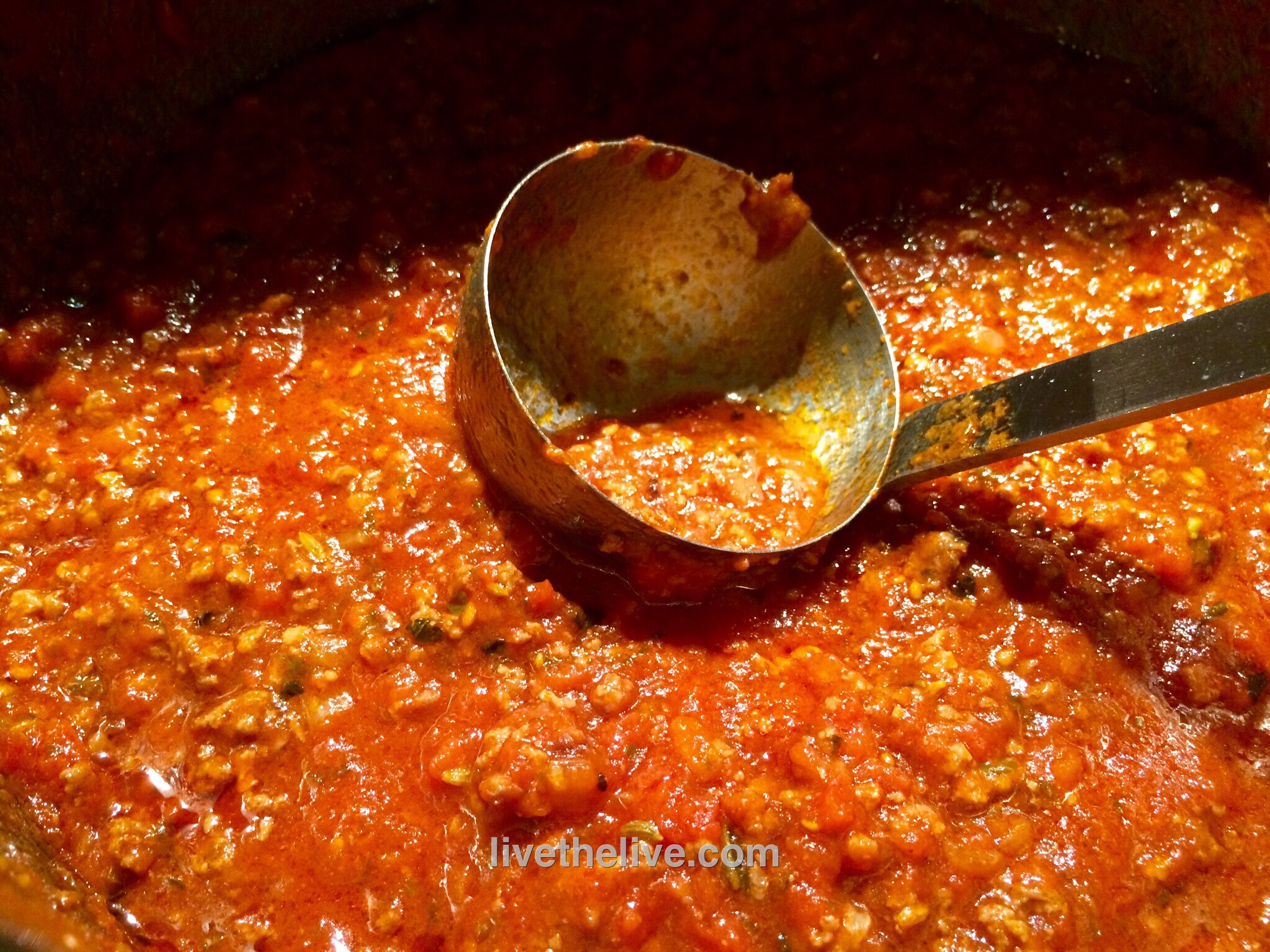
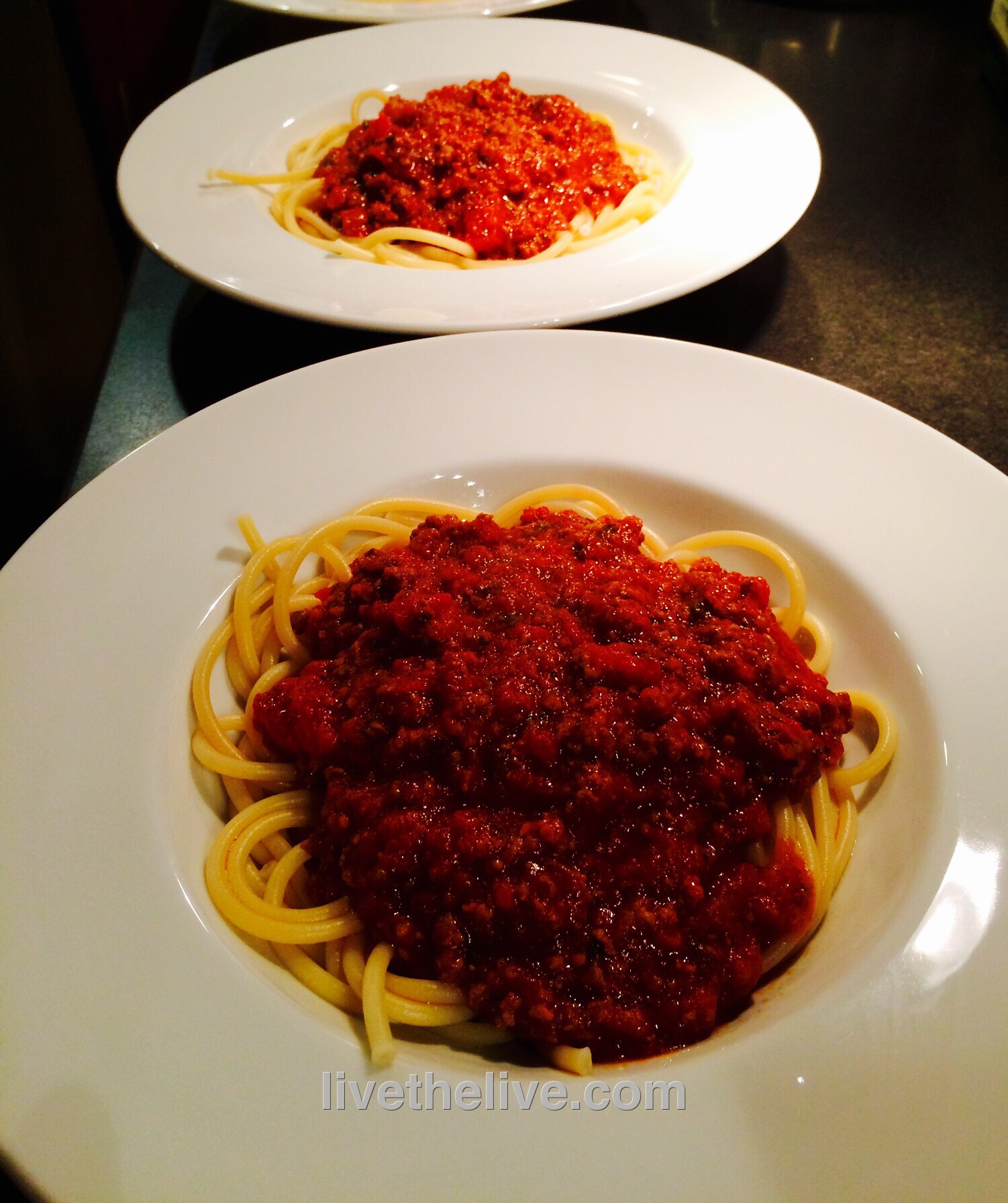
Although my daughter goes crazy for my Ragu Bolognese (http://wp.me/p1c1Nl-Pc), pasta with meat sauce is one of the easiest things to make, with ingredients you probably have in your home. This sauce is really rich with flavor, and once you put all the ingredients together, it requires nothing more from you than an occasional stir every now and then.

image


1/4 cup olive oil
3 strips bacon, finely chopped, raw or pre-cooked
1 onion, finely chopped
1 teaspoon garlic salt
2 lbs. ground beef (I use grass-fed beef)
2 cans (28 oz. each) whole tomatoes
1 tablespoon dried oregano
1 tablespoon dried basil
2 tablespoons dried parsley
2 teaspoon salt
1/2 teaspoon black pepper
1 teaspoon anise seed
1 teaspoon fennel seed
2 bay leaves
1 small can (6 oz.)  tomato paste

image


In a large pot, heat the olive oil and add the bacon. Once the bacon is sizzling, add the onions and cook until the onions are translucent. Add the garlic salt and mix. Add the ground beef and cook until it has browned.

Pour the 2 cans of whole tomatoes into a food processor and blend until chunky…or go the old-fashioned route and simply squeeze the tomatoes with your hands, breaking them up. Pour the contents of both cans into the pot and stir well. Cook over medium heat, stirring, until the orange tomato foam disappears.

Add the oregano, basil and parsley and stir. Add the salt and pepper and stir. Add the anise seed and fennel seed and stir. Throw in the 2 bay leaves and stir. (I think you get the idea, there’s a lot of stirring going on!)

When the sauce starts to boil, add the tomato paste and stir well. Let it come up to a boil again–the paste thickens best at high heat–then turn the heat down to a simmer and cover the pot.

Let the sauce simmer for several hours. Whenever you walk by, give the sauce a good stir.

Serve over pasta, with some grated Parmiggiano Reggiano.

image


Pork is magical. And though I’ve loved bacon and pork chops all my life, it’s only recently that I’ve started to appreciate other cuts of pork and how to prepare them. That includes guanciale (pronounced gwan-chee-ah-lay), meat that comes from the cheek (or jowls) of the pig and is cured but not smoked. The process is similar to making pancetta, only pancetta comes from the belly of the beast.
It all started when I wanted to make an authentic spaghetti carbonara, which uses guanciale, not bacon or pancetta as many recipes state. But finding raw pork jowls wasn’t easy at first. Many websites offered smoked jowls. But raw jowls were almost impossible to find, and I just about gave up until I visited my friends Sal and chef Aaron at the Back Eddy restaurant in Westport, Massachusetts. I told them of my dilemma and they said: “Pork jowls? Oh, we can order them for you!” I was psyched!
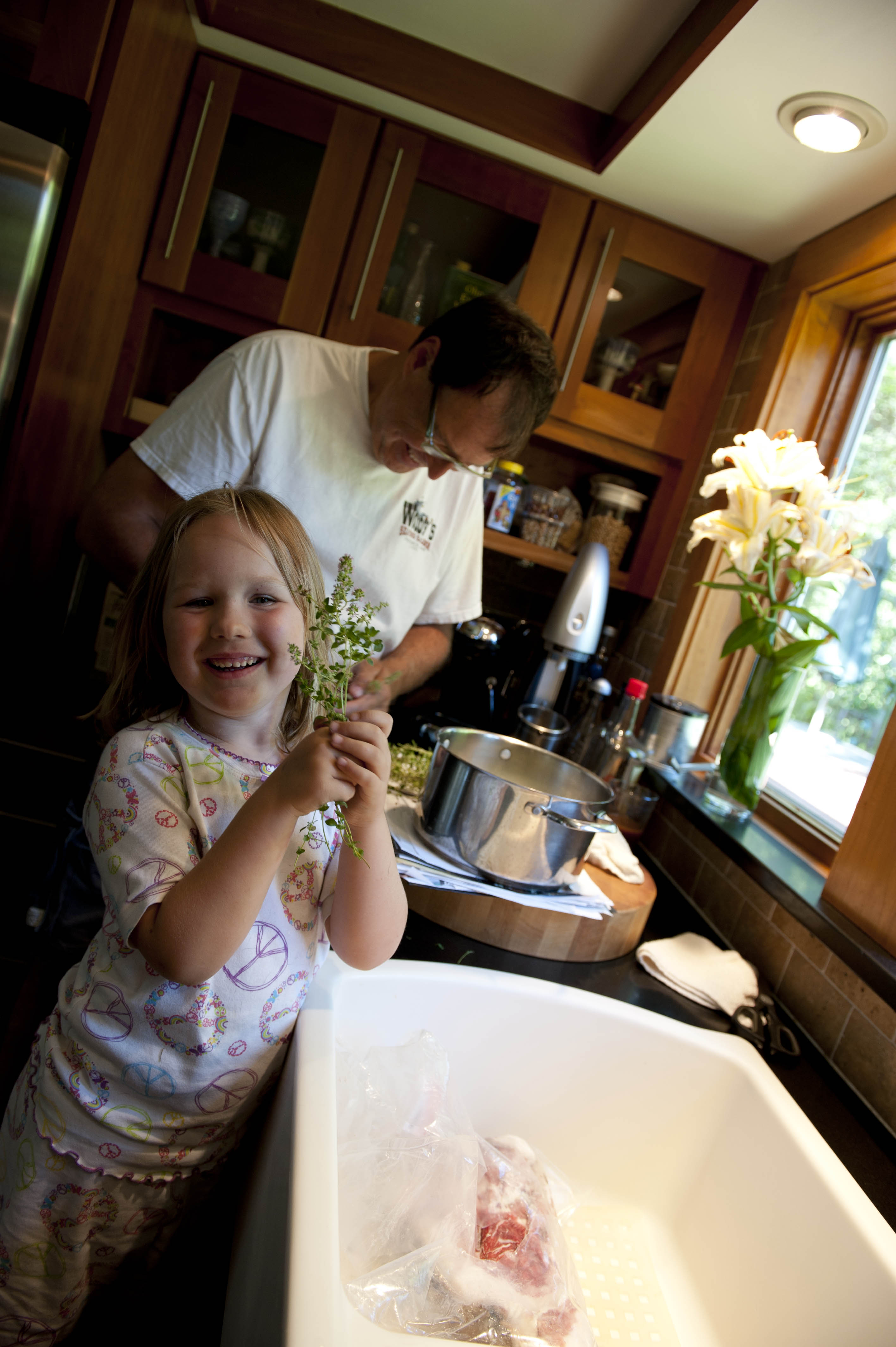
About a week later, I picked up my jowls, individually wrapped in hermetically sealed ¼ pound packages, and my curing began. The process is simple: salt, pepper, some fresh thyme. Rub it all over the meat, wrap it tightly, and place it in the fridge to cure for a week or two.
4445B294-694F-4519-AB71-778490B12592
Finding room in my spare fridge to cure the meat was easy…everything fit snugly in a Ziploc bag. But after curing, and once I rinsed the excess salt off the jowl pieces, I had to dry them (all 24 of them since I bought 6 pounds.) So I rigged up a special hanging system that used bungy cords and vinyl cable ties. And three weeks later, I was frying up my guanciale in a saute pan and adding it to vegetables, potatoes, and pizza. I even gave guanciale gifts to my foodie friends.
FullSizeRender (2)
Since that first curing effort, many things had changed. I have several excellent sources for pork jowls, and I buy large 3-pound jowls (big pig!) at one time. And I’ve found 1001 uses for guanciale: pizza, ragu Bolognese, adding flavor to broccoli or brussels sprouts, and more. And, oh yes…I finally made the carbonara recipe with it as well. Here’s my recipe for ragu Bolognese using guanciale: http://wp.me/p1c1Nl-Pc
Always good to have a helper.

Always good to have a helper.

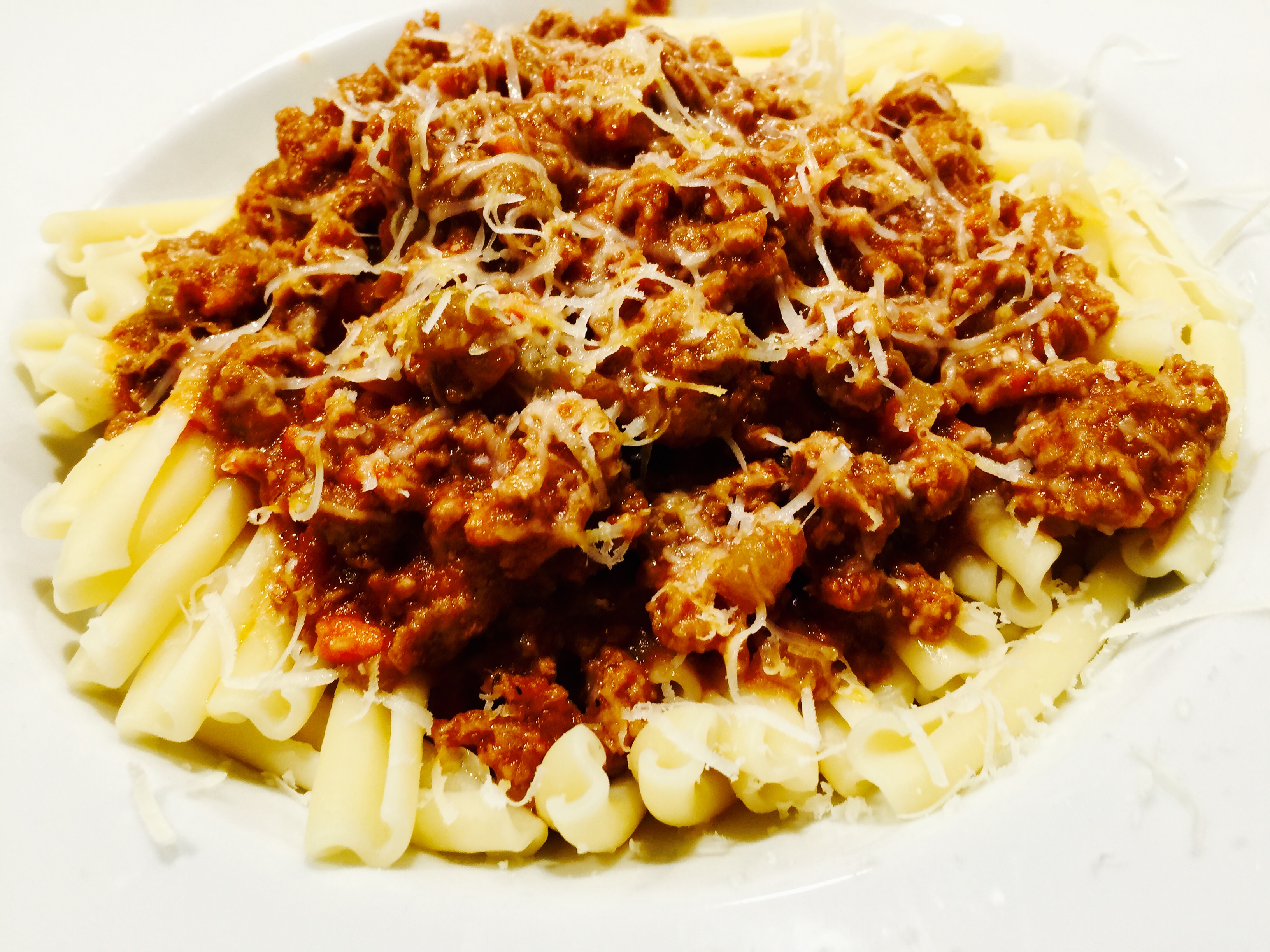
Fettucini alla Bolognese is my daughter’s go-to dish when we visit one of our favorite Italian restaurants,  Il Corso, on W 55th St. in New York. But we only go there once a year, so it was about time that I tried my hand at Bolognese at home. The dish isn’t difficult, but like many great dishes, the better the quality of the ingredients, the better the result.

I use grass-fed ground veal that I get down the road from a local dairy farm: Sweet & Salty Farm. I use ground Berkshire pork, full of “good fat.” And I use guanciale, a cured pork product that comes from the cheek (jowl) of the pig. I buy the Berkshire pork jowls raw and cure them myself. The rest of the ingredients are organic, when available.

FullSizeRender

5 tablespoons extra virgin olive oil
3 tablespoons butter
1 medium onion, finely chopped
1 carrot, finely chopped (1/3 cup)
1 stalk celery, finely chopped (1/3 cup)
1 clove garlic, thinly sliced
1 lb. ground veal
1 lb. ground pork
1/2 cup finely chopped guanciale
1 small can (6 oz.) tomato paste
1 cup ground tomatoes
1 cup milk
1 cup white wine (I use an un-oaked chardonnay)


Place the olive oil and butter in a large sauce pan with a heavy bottom over medium heat. Once the butter has melted, add the onion, carrot, celery and garlic. Keeping the heat on medium, sweat the veggies and allow them to get soft but not brown, about 10–15 minutes.

Turn the heat on high and add the guanciale. Stir it around to keep it from sticking. Let the guanciale cook for a minute, then add the veal and the pork, constantly stirring until the meat browns.

Once the meat has browned, add the tomato paste, ground tomatoes, milk and wine. Once it comes to a boil, reduce the heat to a medium-low, and let it simmer for 60–90 minutes, stirring occasionally.

Traditionally, ragu Bolognese is served by placing a portion of cooked pasta in a pan, and adding just enough sauce to have it cling to, not drip from, the pasta. It’s not soup!

To keep this dish gluten-free, I use GF pasta. Our favorite brand is Garofalo.

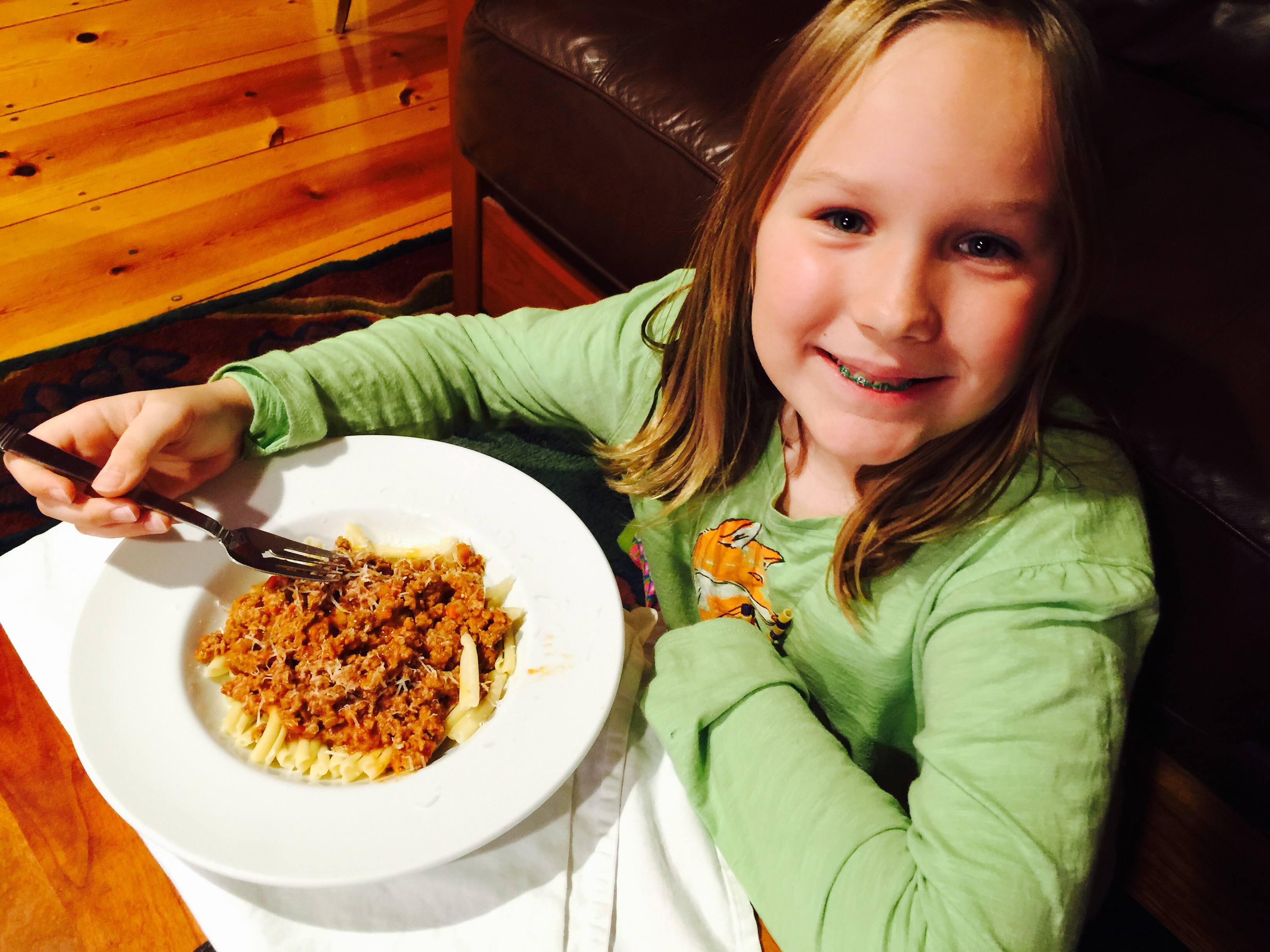
If she's happy, I'm happy!

If she’s happy, I’m happy!

My interest in food and cooking goes back to my first restaurant job as a teenager, at an Italian restaurant called Pizza City East in my hometown of Plainview, NY.  (There was also an original Pizza City on Crossbay Blvd. in Ozone Park, Queens.) It was there that I learned how to open clams by the bushel, how to make the perfect cappucino, and how to use basic restaurant kitchen equipment like the convection oven and the fryer. I peeled thousands of shrimp for scampi, washed barrels of lettuce for salads, and grated hundreds of pounds of mozzarella for pizza.

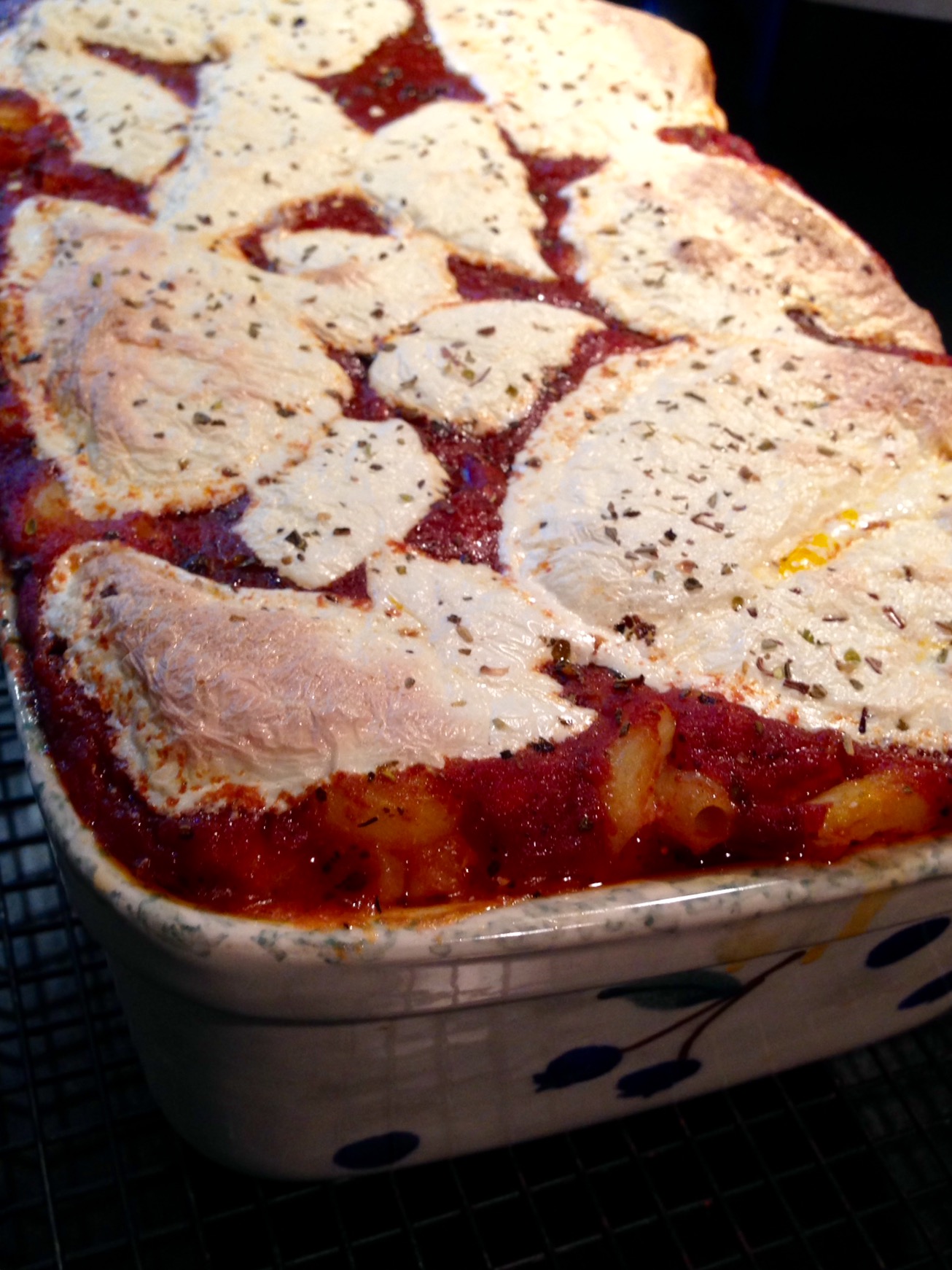
I also made baked ziti by the barrelful. It was much easier to make in large quantities than lasagna, and it basically contained all the same ingredients. No worries about making perfect layers. No pasta sheets sticking together. Just put all the ingredients in an oven-proof baking pan, mix them around and throw them in the oven. And it tasted great.

Now I make baked ziti, or shells, or elbows–whatever pasta I have on hand–at home, using gluten-free ingredients.

To make the perfect baked ziti, it's important to have a good helper.

To make the perfect baked ziti, it’s important to have a good helper.

I substitute whole milk for the usual bechamel sauce used in many lasagna recipes. Since this dish is gluten-free, I can’t use the flour required to thicken bechamel sauce, and gluten-free flour doesn’t work here.

1 lb. regular or gluten-free pasta
2 lbs. (32 oz.) ricotta cheese
1/4 cup Parmigiano Reggiano cheese
12 oz. mozzarella cheese, grated
1 cup whole milk
1 can (28 oz.) whole tomatoes
1/2 teaspoon granulated garlic
1 teaspoon salt
1 teaspoon oregano
1 teaspoon basil
1 teaspoon parsley

image


In a bowl, mix together the ricotta cheese, Parmigiano Reggiano, half of the mozzarella, and the milk.

Pour  the contents of the tomato can in a blender and blend until smooth. Add this to the bowl and combine.

Add the granulated garlic, salt, oregano, basil, and parsley to the bowl and combine again.

Cook the pasta until just before al dente. You want it to be chewy because it will still bake in the oven. Drain the pasta and place it in an ovenproof baking dish.

Add the contents of the cheese and milk blend bowl to the pasta and stir thoroughly to combine. It’s going to be mushy.

Pre-heat the oven to 350°.

Top the baking dish with the rest of the mozzarella cheese. Sprinkle a little oregano on top. Bake for 30-45 minutes, until the cheese on top has melted and it’s bubbling hot.

Let it rest for about 10 minutes before serving.


Baked elbows, this time with meatballs.

Baked elbows. This time, I added meatballs.

I love shrimp scampi, and had the need to satisfy my cravings the other day. But what started as a simple scampi recipe, turned into something a bit more. I may never make scampi the same way again!

image

1 lb. wild-caught American shrimp, peeled and de-veined
4 tablespoons butter
4 tablespoons olive oil
2 teaspoons parsley
1 teaspoon garlic salt
1 teaspoon oregano
1/2 teaspoon granulated onion
1/4 teaspoon black pepper
3 tablespoons Spirgučiai (see below)
1/2 lb. fresh mozzarella, sliced
oregano, for sprinkling


Thaw the shrimp under cold water. Place in a colander to drain.

Spirgučiai is a Lithuanian favorite: chopped bacon and onions, fried until crisp and usually sprinkled over anything and everything in Lithuanian cooking. I always have some in my fridge, already prepared and just waiting to be used.

In a saucepan on medium heat, combine the butter, olive oil, parsley, garlic salt, oregano, onion, pepper and Spirgučiai.  Heat only until everything melts and combines. Don’t let it burn.

In a small sheet pan lined with foil, lay the shrimp in a single layer and cook them halfway in a pre-heated 400-degree oven to remove the moisture from the shrimp.

Take the pan out of the oven, and drain off the moisture, if any. Pour the butter mix from the saucepan all over the shrimp and toss to coat. Return the shrimp to the oven for a few minutes, until they’ve heated through and are almost completely cooked. (Careful: never over-cook shrimp!)

Take the pan out of the oven, and place pieces of mozzarella on top, garnishing with a little oregano. Set the oven on broil and cook until the cheese has melted.

Slice with a spatula and serve on top of pasta, making sure you get some of that buttery scampi sauce.

image

As a low-carb option, you can serve this on broccoli or roasted spaghetti squash.

There are few foods that people take as personally as pizza. Tell someone that your pizza place is better than their pizza place, and chances are you’ll start a fight. Well, my pizza place is better than your pizza place, because I make it at home. Besides, I can run faster than you.

I’m not going to say that much of the pizza that I’ve tried here in Rhode Island is mediocre, but I was born in Brooklyn and grew up working in many New York pizza places in my youth. So I do have a very strong opinion on what I think makes a good or bad pizza.

My homemade pizza is all about the basics. The better quality my original ingredients are, the better my pizza will be:


The dough…

The key ingredient is 00 flour, and it can be found in specialty stores,  or online. My favorite new source is Central Milling in Logan, Utah. They make an organic 00 flour that makes for a great crust. Ratios for this recipe depend on the humidity in my kitchen on any given day, but my basic pizza dough recipe is as follows:

6 cups (16 oz.) 00 flour
1 1/3 cups tepid water
1 tablespoon salt
1 tablespoon yeast
a squirt of extra virgin olive oil

I mix all the dry ingredients in the bowl of a stand mixer or food processor with a dough blade, then slowly add the water as it mixes. After the ingredients are well mixed, and the dough pulls from the side of the bowl, I remove it to a floured board, where I knead the dough by hand for another 5 minutes, until it is smooth and elastic, shaping it into a ball. I rub a little olive oil over the ball of dough, place it in a bowl covered with plastic wrap, and let it rise for at least 2 hours, punching it down after that, and letting it rise at least another 2 hours again.

The sauce…

I’ve written before about real and fake cans of San Marzano tomatoes. I feel that San Marzanos make the best sauce, but not all cans of San Marzanos are created equal. The only way you can be guaranteed you have a real can of these beauties, grown in volcanic Italian soil in the shadow of Mt. Vesuvius, is by the D.O.P. designation on the can. (D.O.P. stands for “Denominazione d’Origine Protetta,” and signifies that it’s the real deal.) Anything else that says San Marzano may not be.

San Marzanos are so amazing, that all I do is puree them in a food processor, pour the sauce into a pan, and let it reduce until it has thickened. No spices or additions of any kind.

The cheese…

I don’t need to go super-fancy with mozzarella di bufala (cheese made from the milk of the water buffalo) …but I don’t use the mass-produced supermarket stuff, either. A nice hunk of your favorite fresh mozarella is all you need.

The toppings…

A matter of choice. I wrote a while ago about how I make my own guanciale, a cured meat that comes from pork cheeks. Chopped and fried, that is one of my daughter’s favorite pizza toppings.

But my signature pizza that wows my dinner guests is my marinated beef tenderloin and fried chive blossom pizza. I marinate and grill a piece of beef tenderloin, slicing it thin. And in the springtime, when my chive plants are budding like crazy, I snip the blossoms before they open and place them in freezer bags to use all year long. When it’s time, I grab a handful of the blossoms and fry them in a little olive oil, salt and pepper, and sprinkle them over the top of the beef tenderloin pizza. A touch of Fleur de Sel on top seals the deal.

My signature marinated beef tenderloin and chive blossom pizza.

The oven…

Many professional pizza ovens reach a temperature of 1000 degrees. My home oven only reaches 500, but it does the trick. I do use a pizza stone, and place it on the center rack of the oven, and let it heat up thoroughly for about 45 minutes before sliding a pizza onto it for cooking.

Recently, I’ve also started cooking pizzas on my barbecue grill (using a special stone for the grill) to add a smoky component. The grill gets hotter than my home oven, which is great, but it’s obviously a more work to set-up and clean.


My favorite pizza?

There are only a few pizzerias that I know of—all in NYC–that make pizza montanara, and for my money, it’s the best I’ve ever had. It’s a small, rustic pizza margherita using mozzarella di bufala and simple tomato sauce, garnished with a basil leaf. What makes it magical is the fact that after they stretch the dough–but before they put the toppings on it–they fry the dough in deep fryer with olive oil for just a minute. It puffs up like a pillow. Then they put the toppings on and quickly bake it in a very hot oven. The end result is a non-greasy, absolutely heavenly pizza cloud…the most delicious I’ve ever had.

I’ve had some great success recreating this pizza at home, frying the dough in a very large skillet of olive oil. The challenge is removing the dough out of the skillet and into a pizza pan without dripping olive oil all over my stove and setting my house on fire! So far, so good!
I always thought that spaghetti squash was a sort of “gimmick” vegetable. Who really ate this thing? I mean, if I wanted squash, I’d just buy a zucchini, chop it up and cook it. Why do I need a food that resembles another food I like?

Well, the answer to that question came to me when I could no longer eat the other food: pasta, because I was on a low-carb, no-carb diet. I was making meatballs and I was craving pasta. So I grabbed a couple of spaghetti squash at the store.

Cooking them certainly was easy. I washed them, cut them in half, and removed the seeds and membrane stuff with a spoon. I flipped them onto their backs, skin side down, and drizzled some extra virgin olive oil on them. A little sea salt and pepper, and then I flipped them back down, skin side up, on a sheet pan lined with non-stick aluminum foil. Into a pre-heated 350 degree oven for 30–40 minutes. When they were soft to the touch, I removed the sheet pan from the oven, flipped them back over again, and let them cool to room temperature. Then I simply spooned out the flesh, and it came out in strands, like spaghetti.

image

While the squash roasted in the oven, I made the meatballs. My wife is on a gluten-free diet, so I used gluten-free bread crumbs. The carb count of GF bread crumbs is about the same as regular bread crumbs, around 75 carbs per cup. I used 1 cup to make 25 meatballs, so they had about 3 carbs a piece. Not super low carb, but not awful.

Here’s how it went down…

image

For the balls…

1 lb. pastured ground veal
1 lb. ground grass-fed beef
1 cup GF breadcrumbs
2 eggs, cracked and scrambled

2 tablespoons dried parsley

2 tablespoons dried oregano

1 tablespoon dried basil

1 tablespoon granulated garlic

1 tablespoon granulated onion

1 teaspoon black pepper

2 teaspoons salt


Mix all the ingredients in a large bowl and form into meatballs. Place them in a hot pan with 1/4 cup of extra virgin olive oil. Cook until the meatballs are browned on all sides.


For the sauce…

2 cans (28 oz.) of tomatoes, pureed

olive oil

1/2 onion, finely chopped

1 tablespoon dried parsley

1 tablespoon dried oregano

1 teaspoon dried basil

1 teaspoon granulated garlic

2 teaspoons salt

1/2 teaspoon fennel seeds

1/2 teaspoon anise seeds


In a large pot, saute the onions in a little olive oil until translucent. Add the pureed tomatoes and cook at medium heat until the foam disappears.

Add all the herbs and spices and mix well. Continue cooking on medium heat, lowering to a simmer if the sauce seems to be boiling too hard.

Add the meatballs to the sauce when the meatballs have been browned on all sides. Pour the entire contents of the meatball pan, including the olive oil and fat, into the tomato sauce pot.

Make sure all the meatballs are covered with the sauce. Place a lid on the pot, and simmer for at least an hour, until the meatballs are cooked all the way through.

image

To serve:

Scrape the spaghetti squash with a spoon and place a mound of it in the center of the serving dish. Top it with the meatballs and sauce. Grate some Parmigiano-Reggiano over the top, or do what I did this time, and cut a slab of mozzarella di bufala into small cubes and toss on top. A little sprinkle of oregano and olive oil for good measure on top.


Pasta is not something I’m currently eating on my low-carb diet. But it’s a great recipe I wanted to pass on to others.

Sometimes the simplest dishes are the toughest to execute well. Spaghetti alla Carbonara is one of those dishes. All you need is pasta, olive oil, raw eggs (separated), guanciale, grated Parmigiano-Reggiano and pepper. (Real carbonara doesn’t use cream.)

You boil the pasta. Chop the guanciale (cured pork cheeks or jowls) and saute in a pan with the olive oil. Do not drain the fat. Drain the pasta and drop it into the pan with the guanciale, adding about 1/4 cup of the pasta water. Shake it around for a minute and remove from the heat. Add some of the cheese and the egg whites, season with pepper, and mix the pasta well. Separate into bowls, making a nest with the pasta. Add an egg yolk to each, sprinkling more cheese on top. What could go wrong, right?

There’s a lot to be said for finesse!

I make my own guanciale. I buy Berkshire pork jowls and cure them. Then they go through a drying phase for a few weeks before I wrap and freeze them in chunks. Whenever a dish calls for guanciale (my daughter loves it on pizza), I simply unwrap some, let it thaw, then chop it up and saute it. The fat in the pork jowls is very different from other parts of the pig, and there’s no replacing that flavor. When making Spaghetti all Carbonara, some cooks replace the guanciale with pancetta or bacon, but that’s not for me.

It’s also important to note that this dish relies a lot on fat, so good fat is really important. Berkshire pork fat has good fat. Organic butter has good fat. And the cheese? Parmigiano-Reggiano isn’t called “The King of Cheeses” for no reason!

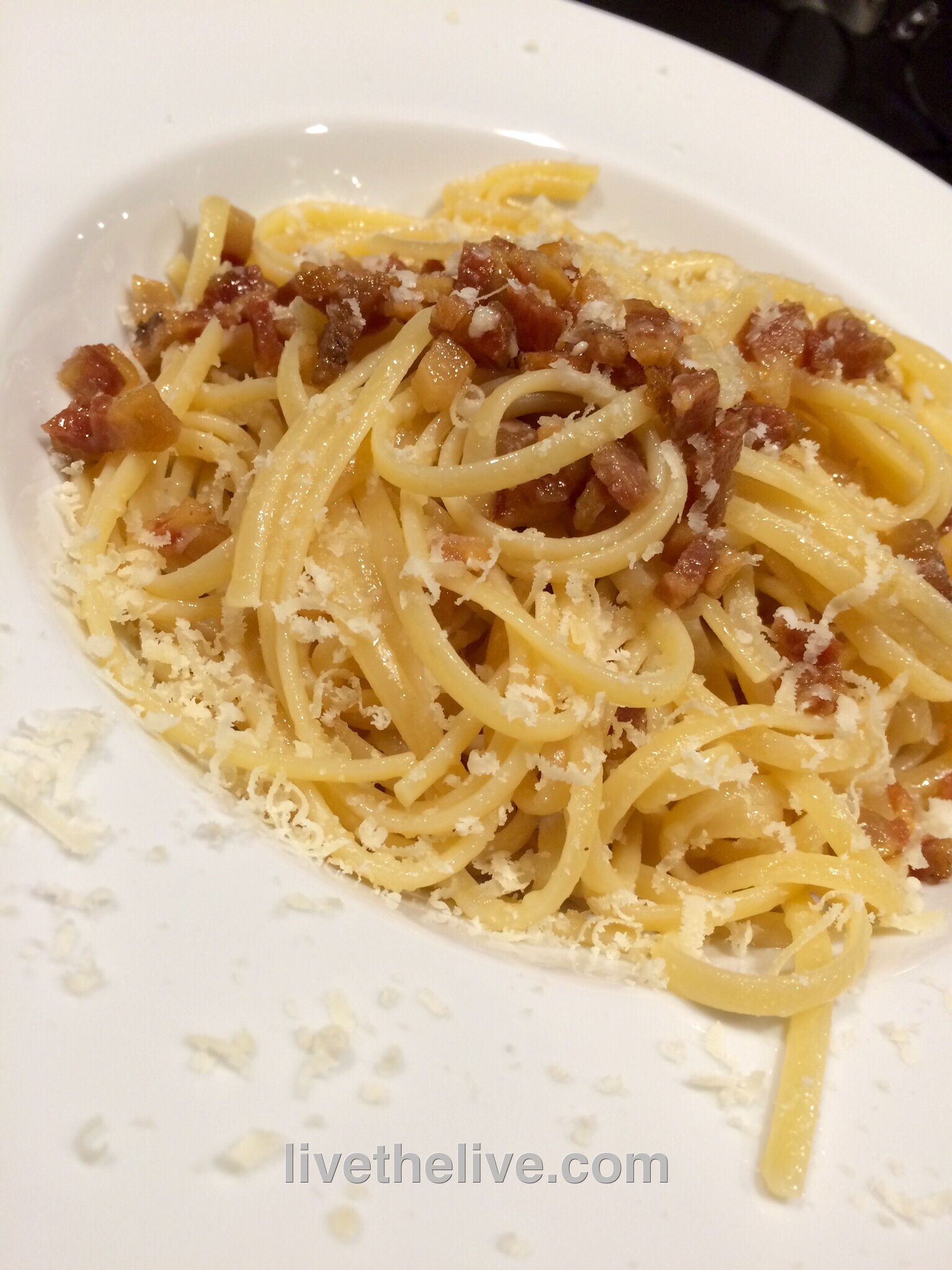
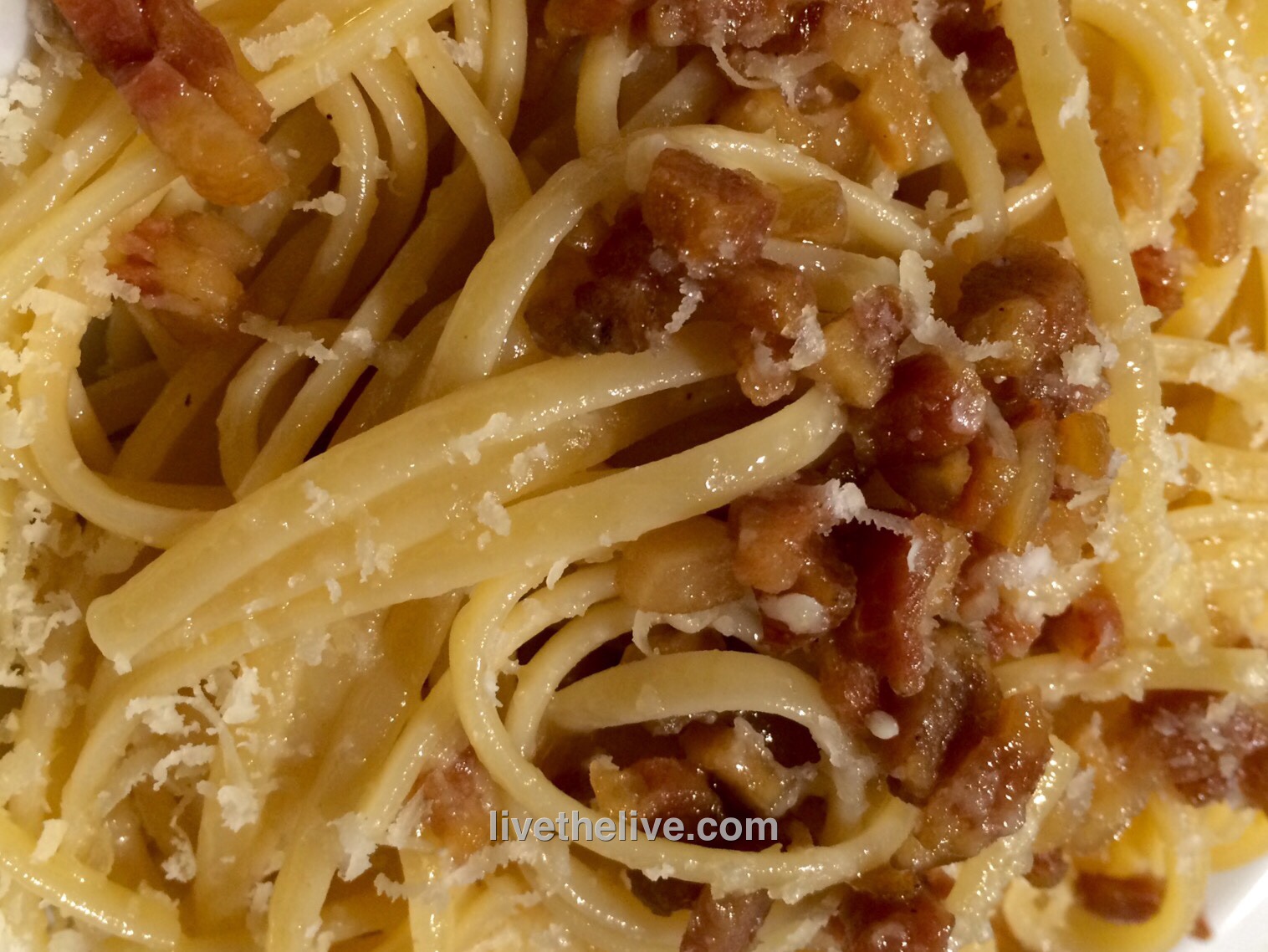
I decided to make a Not-Quite-Carbonara dish. I say “not quite” because I left out the eggs, which my daughter doesn’t like. It still came out pretty damn good…

image


1 lb. pasta (we like bucatini over spaghetti)

1 lb. Berkshire pork guanciale, chopped into small (1/4″) cubes

olive oil

2 tablespoons unsalted organic butter

1/2 cup freshly grated Parmigiano-Reggiano

black pepper


Boil the pasta to the just-before-al dente stage.

In a large saucepan, heat the guanciale and olive oil until the fat has rendered. Do not drain the fat. Turn the heat off, add the butter and let it melt.

Drain the pasta and drop it into the pan with the guanciale, stirring the pasta around to coat with the ingredients. Sprinkle in 1/4 cup of the Parmigiano-Reggiano and season with pepper, still mixing.

Distribute the pasta into individual bowls, making sure everyone gets the tasty bits of guanciale. Sprinkle some more of the Parmigiano-Reggiano on top. Serve immediately.

image