Years ago, I created an all-purpose sauce that worked with a variety of dishes. Because it has a base of mayo, mustard and ketchup, it’s awesome on burgers and fish…on lobster and crab salads and shrimp cocktail…and just about anything else you can think of. So…I called it Awesomesauce. And though I got tired of the name I gave it very quickly, I didn’t get tired of the sauce!
I made a batch of the sauce for taco night at the house, and decided to use the leftovers the next day to coat pieces of chicken before roasting. The chicken came out moist and delicious. And because I sprinkled some breadcrumbs on them, they had a nice added crunch.
I like to use gluten-free breadcrumbs, because some folks in my family live a GF lifestyle. But it’s easy to make them. I buy a frozen loaf of Udi’s bread, toast it, and then put the slices of bread in a food processor. Instant GF breadcrumbs that taste as good, by the way, as any bread with gluten. You’d never know the difference.
1/2 cup mayonnaise
1 tablespoon ketchup
1 tablespoon mustard (I like Gulden’s)
1 tablespoon dill pickle relish
1/4 teaspoon granulated garlic
1/4 teaspoon paprika
Pinch cayenne pepper
4 lbs. organic pastured chicken pieces
plain breadcrumbs (I use gluten-free)
In a bowl, combine the mayo, ketchup, mustard, dill pickle relish, garlic, paprika and cayenne. Mix it thoroughly and keep it in the fridge until you’re ready to use it.
Pre-heat the oven to 325°.
Rub the sauce all over the chicken pieces and lay them in a sheet pan lined with non-stick aluminum foil or parchment paper. Lightly sprinkle the breadcrumbs over the top of the chicken.
Bake until the chicken is cooked all the way through, and brown and crispy.
I’m old school. When a cold seafood tray, filled with oysters, shrimp, clams and lobster arrives at the table, I always choose the cocktail sauce to go with it. Mignonettes are OK, but nothing makes me happier than a cocktail sauce with enough horseradish in it to curl my nose hairs!
We slurp down more clams and oysters here in New England than just about anywhere else in the country. Freshly shucked oysters and clams–or in this case–beautiful boiled wild-caught American shrimp, call for an equally amazing cocktail sauce…and this sauce kicks butt! And it features a key ingredient that you might not expect: vodka. The small amount of vodka in the mix keeps the cocktail sauce from freezing solid when stored in the freezer. Just scoop out what you need, let it thaw, and put the rest back in the freezer.
2 cups ketchup
4 tablespoons prepared horseradish
1 tablespoon fresh lemon juice
1 teaspoon Worcestershire sauce
1/2 teaspoon Frank’s Red Hot, or other hot pepper sauce
5 grinds of fresh black pepper
1/4 teaspoon salt
1 teaspoon good quality vodka, like Tito’s
Combine all the ingredients. Store in a tight plastic container in the freezer. Scoop and thaw whenever you need it!
Sometimes the best ideas come from out of nowhere.
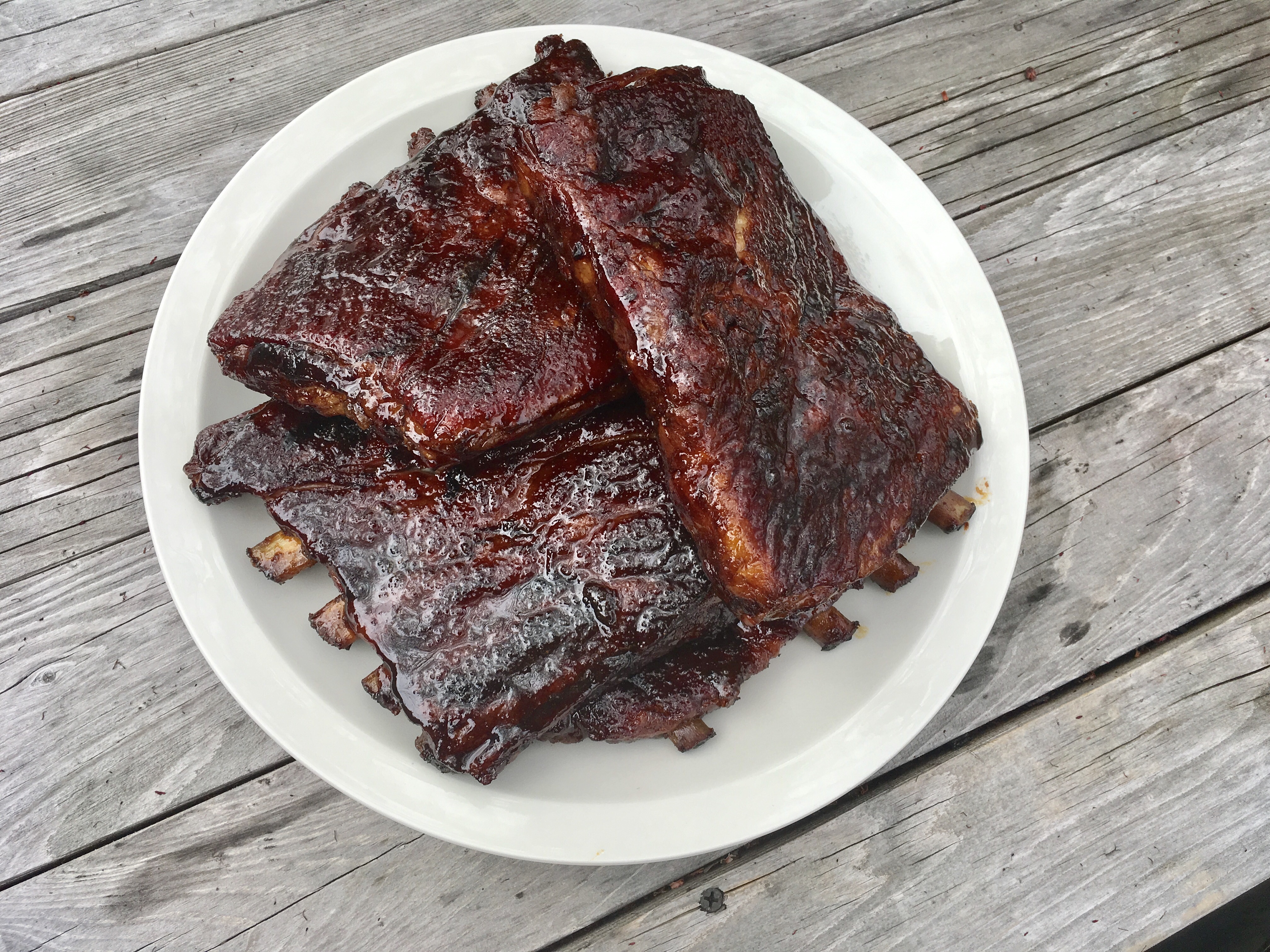
I had 5 lbs. of beautiful St. Louis-style heritage Berkshire (also known as Kurobuta) pork ribs thawing in the fridge, and I knew I wanted to create a new sauce or glaze with them, but I was feeling less than inspired. Our food-loving friends, Don and Johanna, showed up at our door with a gift they bought in Maine, at a shop called LeRoux Kitchen. It was a bottle of maple balsamic vinegar. It smelled wonderful…and tasted even better! I knew I had what I was looking for.
I used a smoker to make these ribs, but if you don’t have one (or just don’t want to bother with one), the ribs are just as awesome when baked in the oven.
You can easily make your own maple balsamic vinegar by combining a 1/2 cup of balsamic (not the super-expensive kind, but the $9-a-bottle kind) with 1 tablespoon of maple syrup. Add more or less maple to taste.
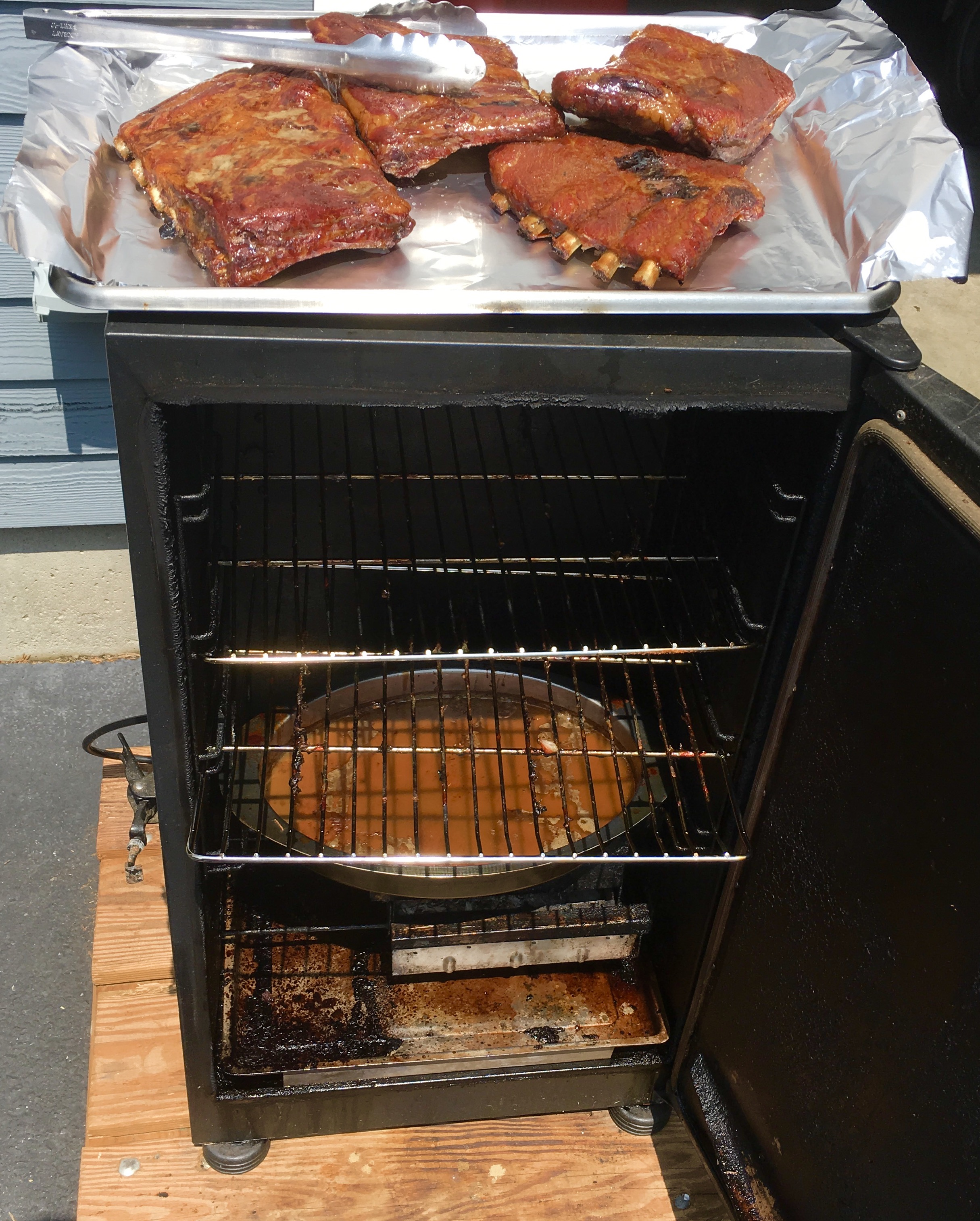
Yup…my old smoker…she’s been used a few times!
I originally used an electric digital smoker made by Masterbuilt. That beauty (above) has now made way for the Ninja Outdoor Woodfire Pizza Oven, which is also a smoker. I like the fact that I can set the temperature and time, and not have to constantly watch it. It has a side chute where I can add hickory smoking pellets when I want, and the results are consistent. I suppose some grilling fanatics might say I’m cheating, but a digital smoker allows me to live a life, hang out, do some yard work, whatever. I don’t have time to babysit.
I chose to smoke my ribs for about 4 hours in the smoker, lightly seasoning them first with Lawry’s Seasoned Salt, adding hickory chips to the smoker only once to give them a “light smoke.”
To avoid drying out the ribs, after a few hours of smoking, I like to brush them with a glaze, wrap them in foil, and then put them back in the smoker…or even in the oven. The glaze flavors the meat and also adds a little steam that tenderizes it.
Brushing with glaze, then wrapping in foil.
5 lbs. pork ribs (I get St. Louis-style Berkshire pork) Lawry’s Seasoned Salt
1 cup water
1/2 cup maple balsamic vinegar (OR 1/2 cup balsamic vinegar + 1 tablespoon maple syrup)
1/4 cup brown sugar
1/2 teaspoon granulated onion
1/2 teaspoon granulated garlic
1/2 teaspoon cayenne pepper sauce (I like Franks’ Red Hot)
Prepare the ribs by removing the inedible skin on the back of the rack. The easiest way to do this is to cut a little “tab” of skin, then pull it with your fingers. Holding the skin with a dry paper towel will help your grip. I cut the racks in half to fit my smoker.
Season the ribs lightly with Lawry’s Seasoned Salt on both sides and place them into a 250° smoker (or oven, if you don’t have a smoker) for 3 hours, smoking lightly with hickory wood. (Skip the hickory if you’re using the oven.)
In a saucepan over high heat, combine the water, maple balsamic vinegar, brown sugar, onion, garlic, and cayenne pepper sauce. Stir well, and let it come to a boil. Let it reduce by half, leaving it still watery. Set it aside.
After 3 hours, remove the ribs from the smoker (or oven), placing them on a sheet of aluminum foil. (I use Reynold’s Non-Stick Foil, since the glaze will be sticky.) Brush both sides of the ribs with half of the glaze, and place the ribs meat-side-up on the foil before sealing the it around the ribs. Place the aluminum foil packets on a baking sheet, then into a pre-heated 250° oven (or back in the smoker.)
Remove the ribs from the oven or smoker after 1 hour. Open the foil packets so that the ribs are now exposed. Brush the top of the ribs one more time, then put the foil back over the top and cook for 1 hour more.
Corned beef hash is actually a very simple thing to make. The most difficult part is the corned beef, especially if you’re curing it yourself. That process takes about three weeks…a long time to wait for a plate of hash!
If you have a package of already prepared corn beef that you bought at the supermarket, thaw it, and rinse it in clean, cold water.
I post my corned beef recipe every year around St. Patty’s Day. If you want to make your own, just use the search button on my blog to find the recipe.
A beautiful slab of corned beef, after 3 weeks of curing. I trim large pieces of fat and gristle off before cooking.
At this point, many people choose to boil the corned beef, but I don’t. Instead, I place the piece of brisket in a container large enough to hold it covered with more cold, clean water. I let it sit in this cold water for about 12 hours. I dump some ice into it to keep everything cold. I change the water a couple of times over the 12 hours. Much of the salt will be washed away by this process. I pat the meat dry with paper towels.
I preheat the oven to 325°.
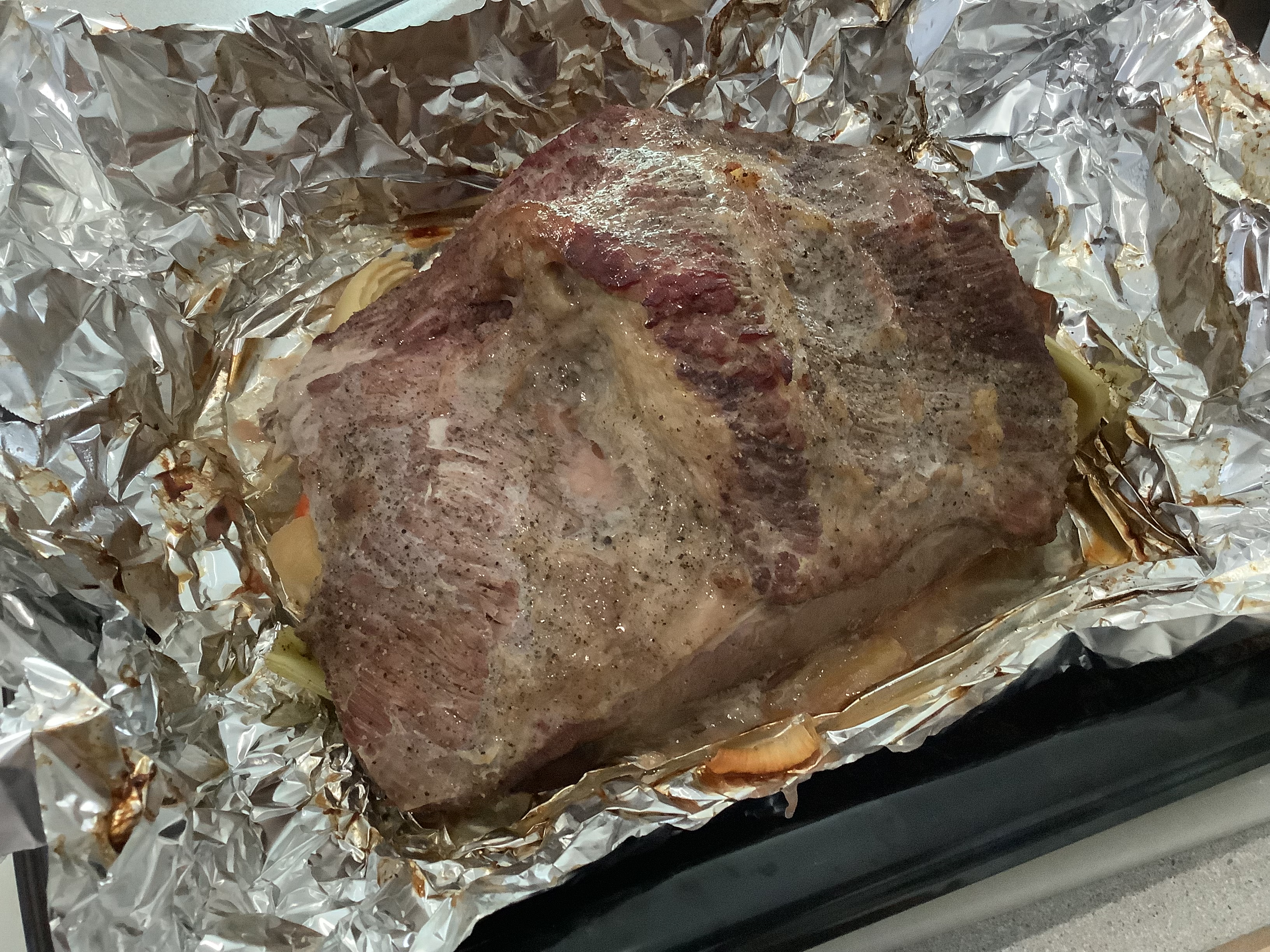
I lay a couple of sheets of foil down on a baking pan, and then add chopped carrots, celery and onions to it. I place the brisket on top of the veggies.
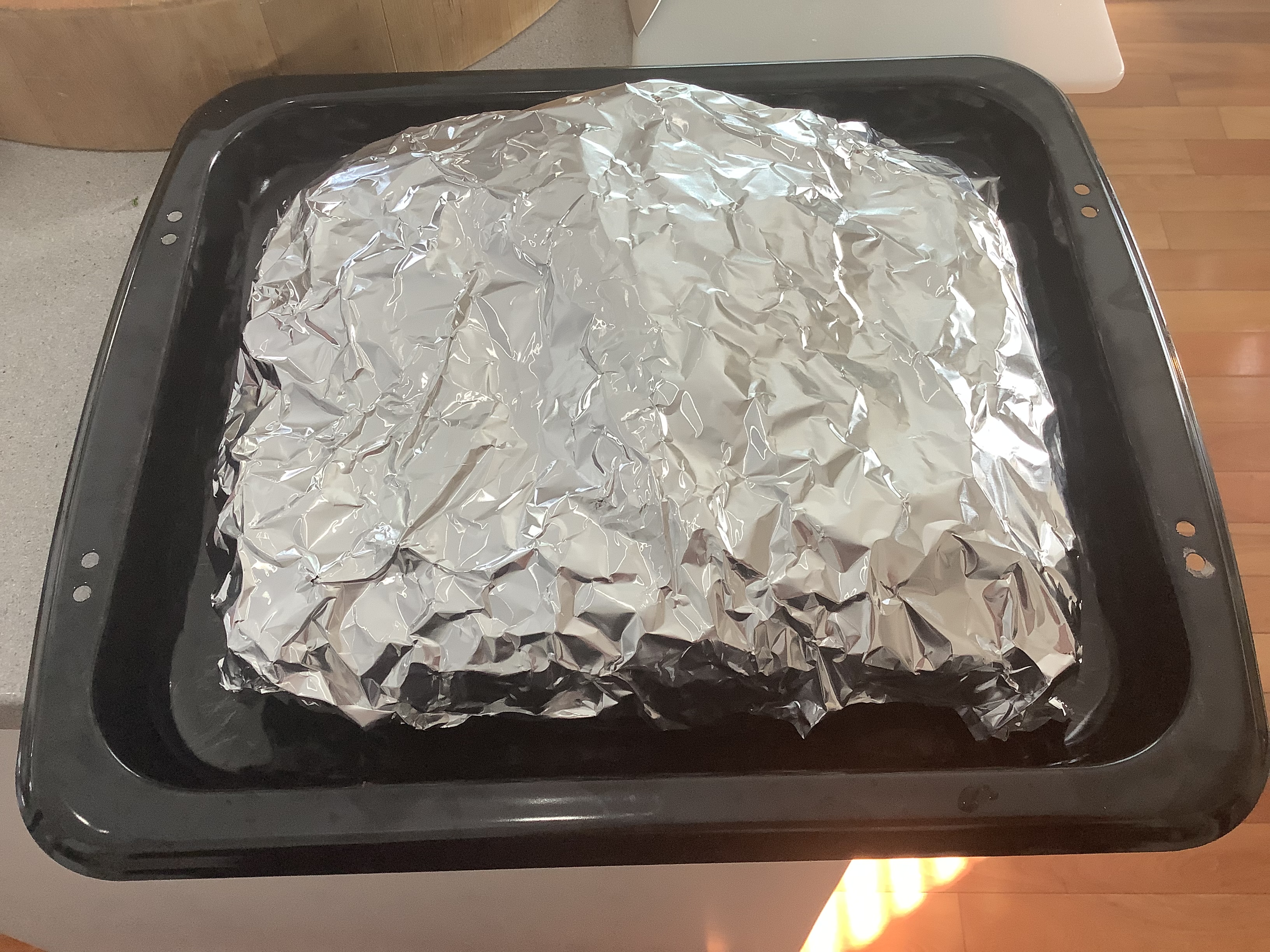
I wrap the brisket tightly in the foil, and place the pan on the center rack of the oven.
I let it cook for about 3 1/2 hours for a 8-pound piece of meat. Cook it less if yours is smaller.
I let the meat cool to room temperature in the foil, then unwrap it, and cut it into manageable sized pieces for future use. I wrap each piece tightly in plastic wrap once it has cooled, and I place the wrapped pieces in a sealed bag and into the freezer.
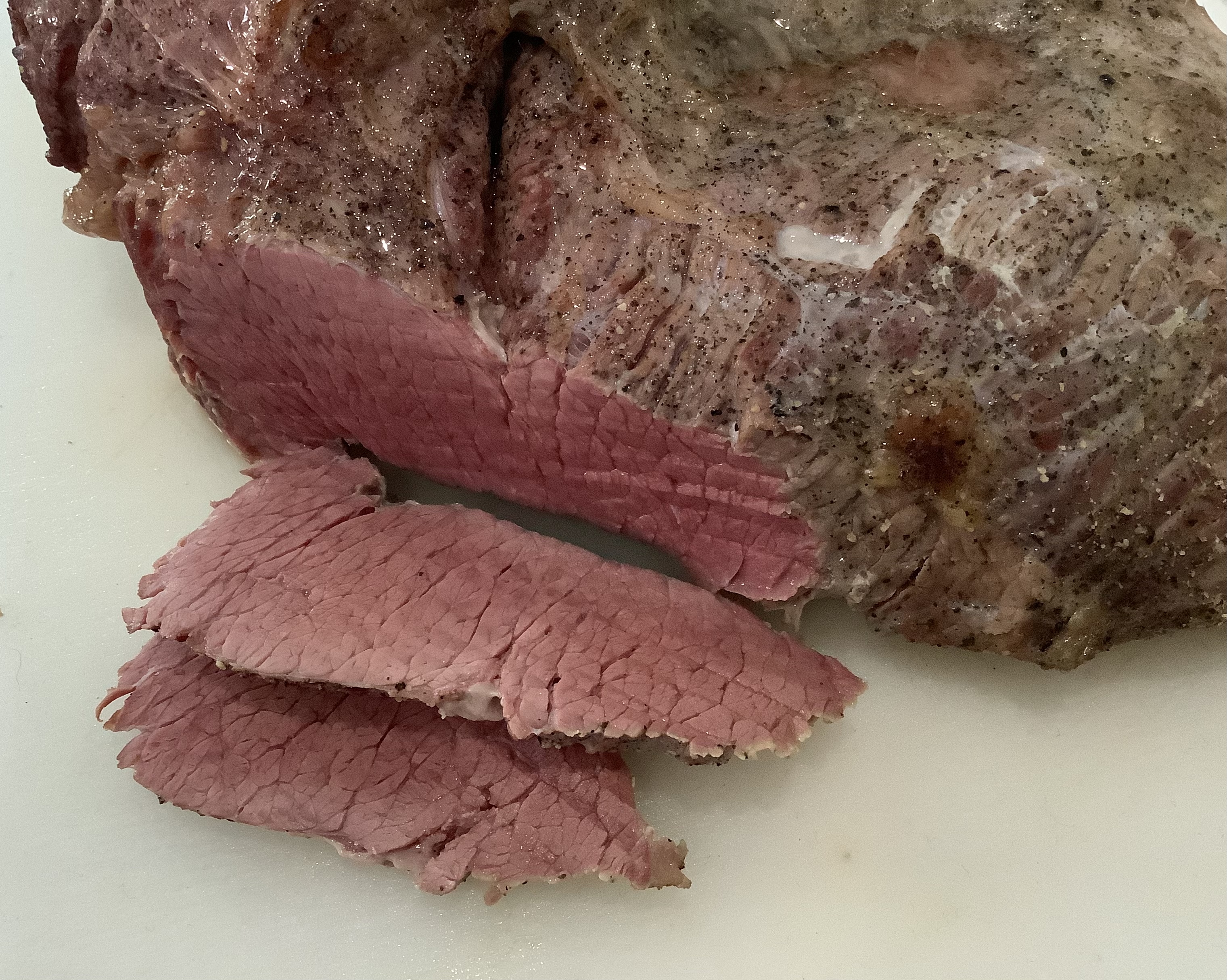
Of course, you have to slice off a few pieces to taste your masterpiece!
Once the corned beef has cooked, it’s ready for sandwiches, and of course, hash! (Pastrami is another series of steps, discussed in another blog.)
A piece of cooked corned beef, about 1 lb., cubed 1 medium onion 2 lbs. sweet potatoes olive oil salt and pepper
Preheat the oven to 350°. If the corned beef is frozen, remove it from the freezer an hour earlier, letting it come to room temperature.
Peel and cube the sweet potatoes. Make the cubes about a half-inch around. Placed them in a single layer on a large sheet pan, sprinkling them with olive oil, and seasoning them with salt and pepper. Toss the sweet potatoes to coat them with the seasonings and then place the sheet pan in the oven, baking for about 25 minutes, until the sweet potatoes are fork-tender and have tasty caramelized, slightly charred edges.
A few minutes before the sweet potatoes are done cooking, finely chop the onion and sauté it in a large pan with some olive oil.
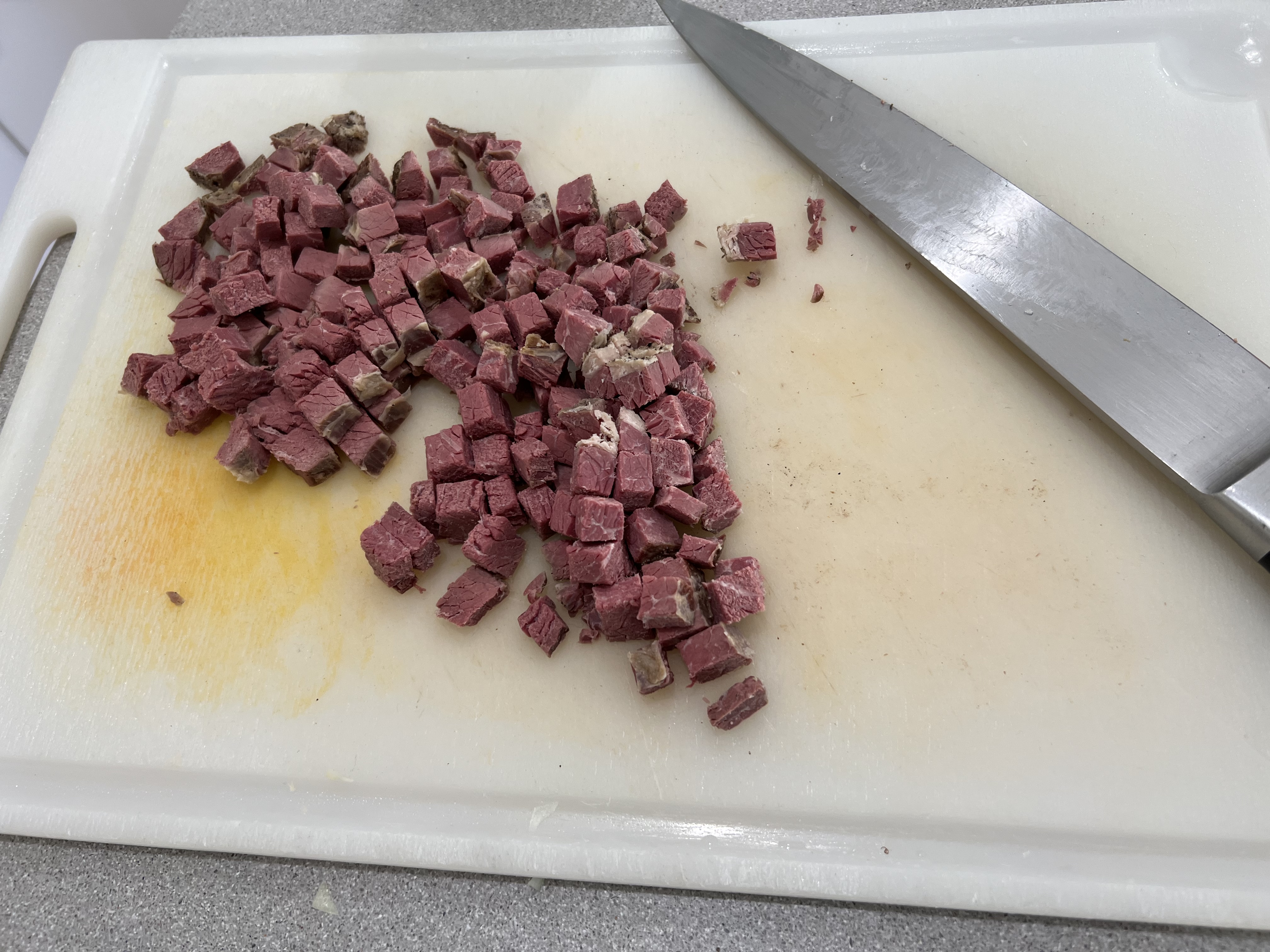
Cut the corned beef into small cubes, about a quarter-inch in size.
Once the onions are translucent, add the cubed corned beef to the pan, and warm it through.
Now add the sweet potatoes to the pan and mix thoroughly to combine. Season with salt and pepper.
Your sweet potato corned beef hash is ready to serve! It also freezes well, so don’t be afraid to make extra!
I love fried shrimp. It’s like seafood candy. And I’ve got a really easy method of making it.
For me, the secret to great fried shrimp is a light batter. I’m not crazy about the heavy, almost pancake mix-like batter that is used in some restaurants for shrimp or onion rings.
As I looked through many recipes, I found that the secret to a lighter batter is rice flour. I didn’t have any in my cupboard per se, but then I found a bag of Bob’ Red Mill Gluten_free 1 to 1 Baking Flour, which turns out to be mostly rice flour. I decided I would use that, scooping a couple of cups of it into a bowl.
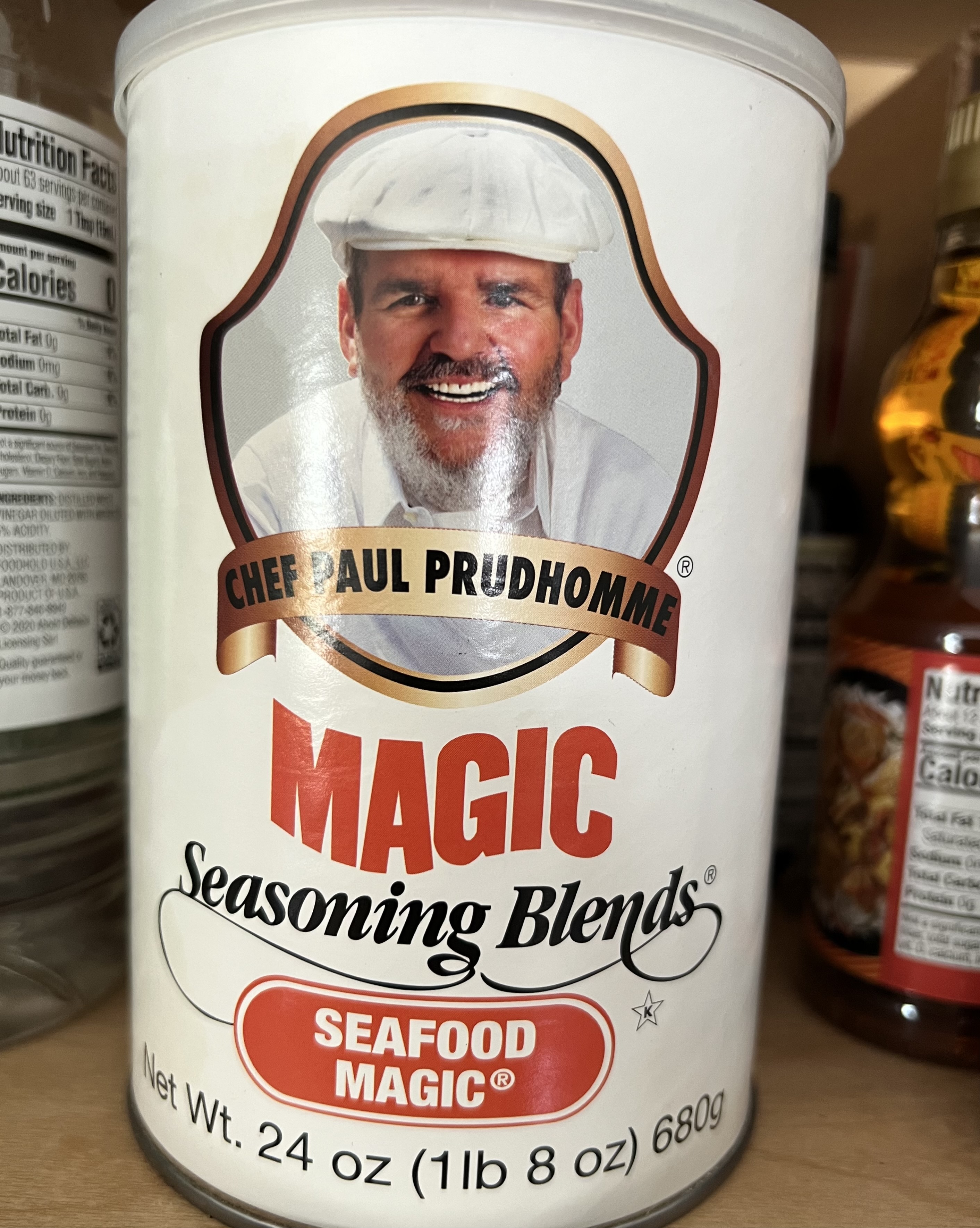
My go-to seafood seasoning is Chef Paul Prudhomme Seafood Magic. I added a couple of tablespoons of that to the flour, and mixed it well.
In a separate bowl, I scrambled two eggs.
I use only wild-caught American shrimp, never the nasty stuff from Asia. Thawing the shrimp is simply a matter of placing the frozen shrimp in a bowl, and covering them with cold water (never warm) and in a couple of hours, they’ve thawed out. Then I drain the bowl, and dry the shrimp with paper towels.
In a pan on the stove, I have about an inch of a high smoke point oil, like avocado oil, heating it to about 325°, using a thermometer to check.
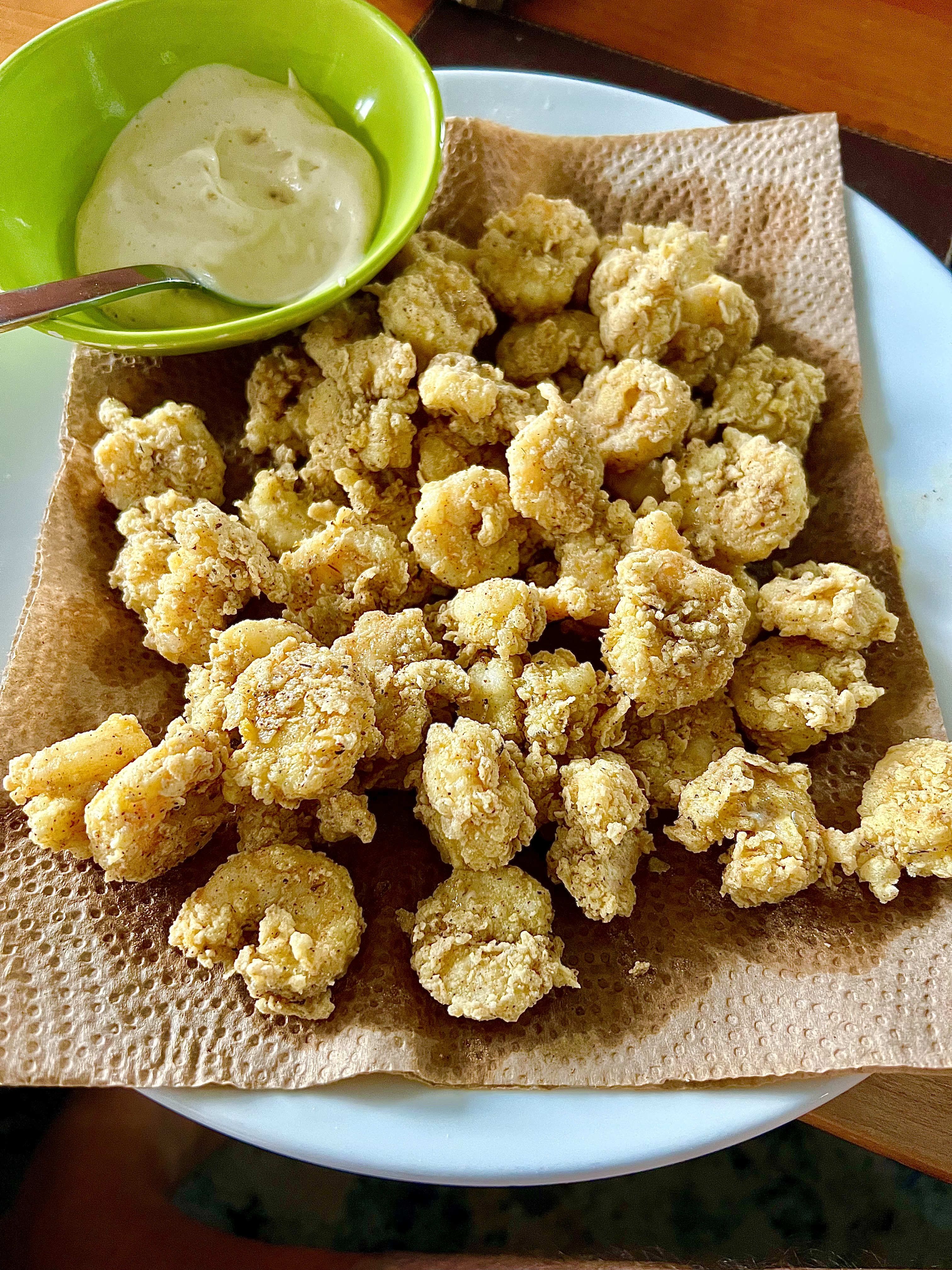
Cooking in batches, I put about a dozen shrimp into the eggs, coating them well, then transferring them to the flour mixture, coating them well again, and shaking off the excess. Then I carefully put them in the hot oil. About 30 to 45 seconds on each side is all the shrimp needs to be perfectly cooked. I drain them on paper towels, and they are ready to eat!
I love a little remoulade sauce to go with my fried shrimp, so I grab some mayo and Dijon mustard, and mix them in a bowl to my desired ratio. (Sometimes I like a lot of mustard…other times, not so much.) To this, I add another great “cheat:” Tony Chachere’s Original Creole Seasoning–again–to taste.
Every year, I still have a lot of green tomatoes on the vine as the summer comes to an end. Fried green tomatoes are the tasty solution to the problem.
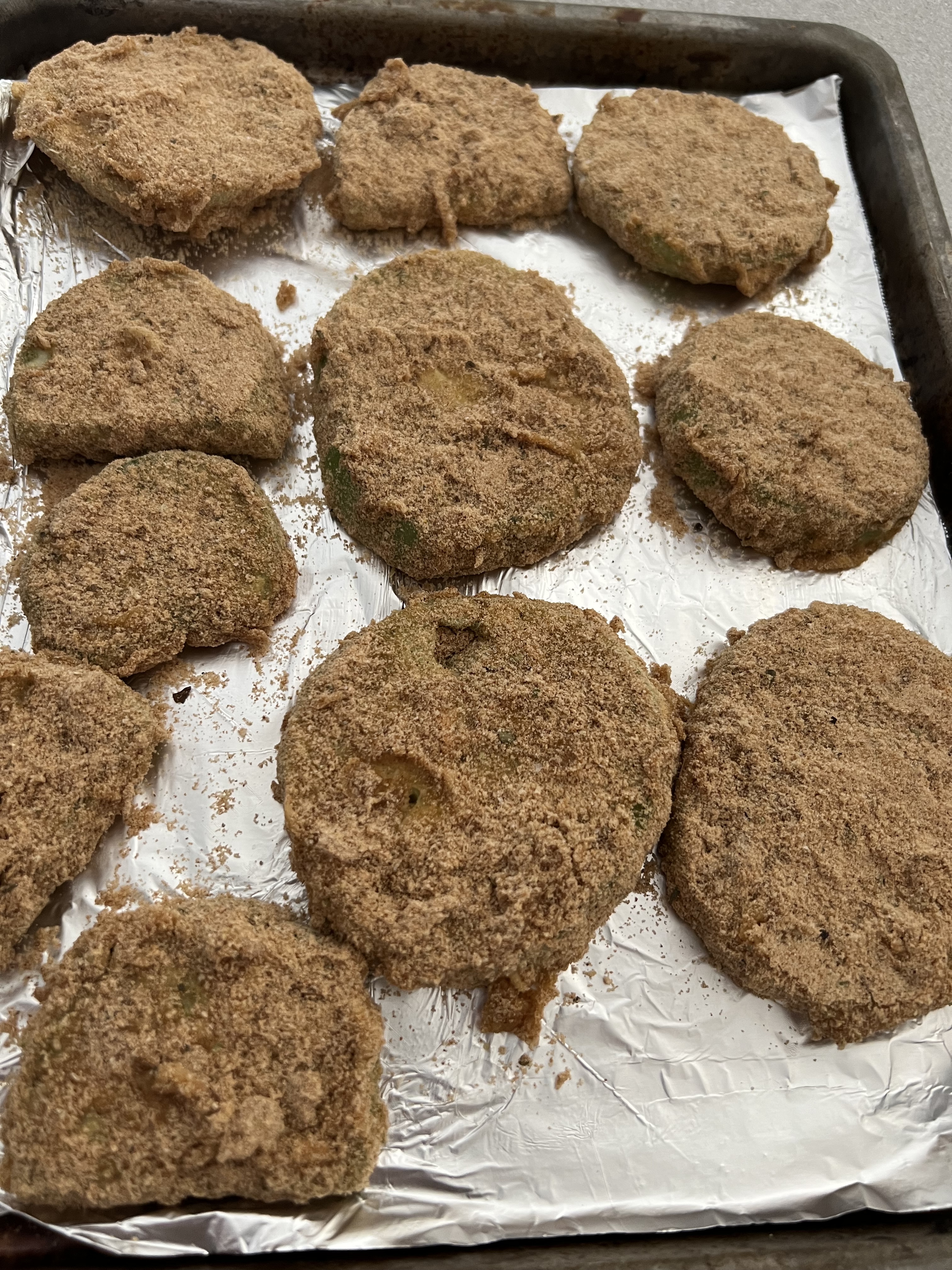
It’s a really simple process of slicing the tomatoes, seasoning them with salt and pepper, dusting them with flour, dipping them in egg, and then rolling them in some flavored breadcrumbs before frying.
Good news for those that need it all gluten-free! It can happen if you follow my instructions below.
Green tomatoes, sliced Salt and pepper All-purpose flour (I use Bob’s Red Mill 1-to-1 Gluten-Free Baking Flour) 2 eggs, beaten Seasoned breadcrumbs (I make them gluten-free…see below)
At first, I sliced my tomatoes at about 1/4″ thick, but I found that if I could make them just a bit thinner, they would come out even crispier. So now I go with about a 1/8″ thickness.
I place the tomatoes on a cutting board, and season them with the salt and pepper.
I then set up my 3 bowls for adding the breading. In the first bowl, the all-purpose flour. (I like using the Bob’s Red Mill 1-to-1 Gluten-Free Baking Flour because it’s mostly rice flour and it makes the coating lighter.)
In the second bowl, I whisk a couple of eggs.
In the third bowl, I place my seasoned breadcrumbs. (You can buy Italian seasoned breadcrumbs, but I make my own by toasting a loaf of Udi GF bread, tossing the pieces into a blender to mill them down to a powder. I add oregano, basil, parsley, salt and pepper, granulated garlic and granulated onion, then whiz the blender for just a few seconds to combine everything. I place this in the third bowl.)
Then it’s time to do the one-handed method of dipping the tomato slices one-by-one into the egg, then dropping it into the breadcrumbs, where the other hand takes over to cover the tomato with a light layer of breadcrumb. Do the same for all the tomatoes.
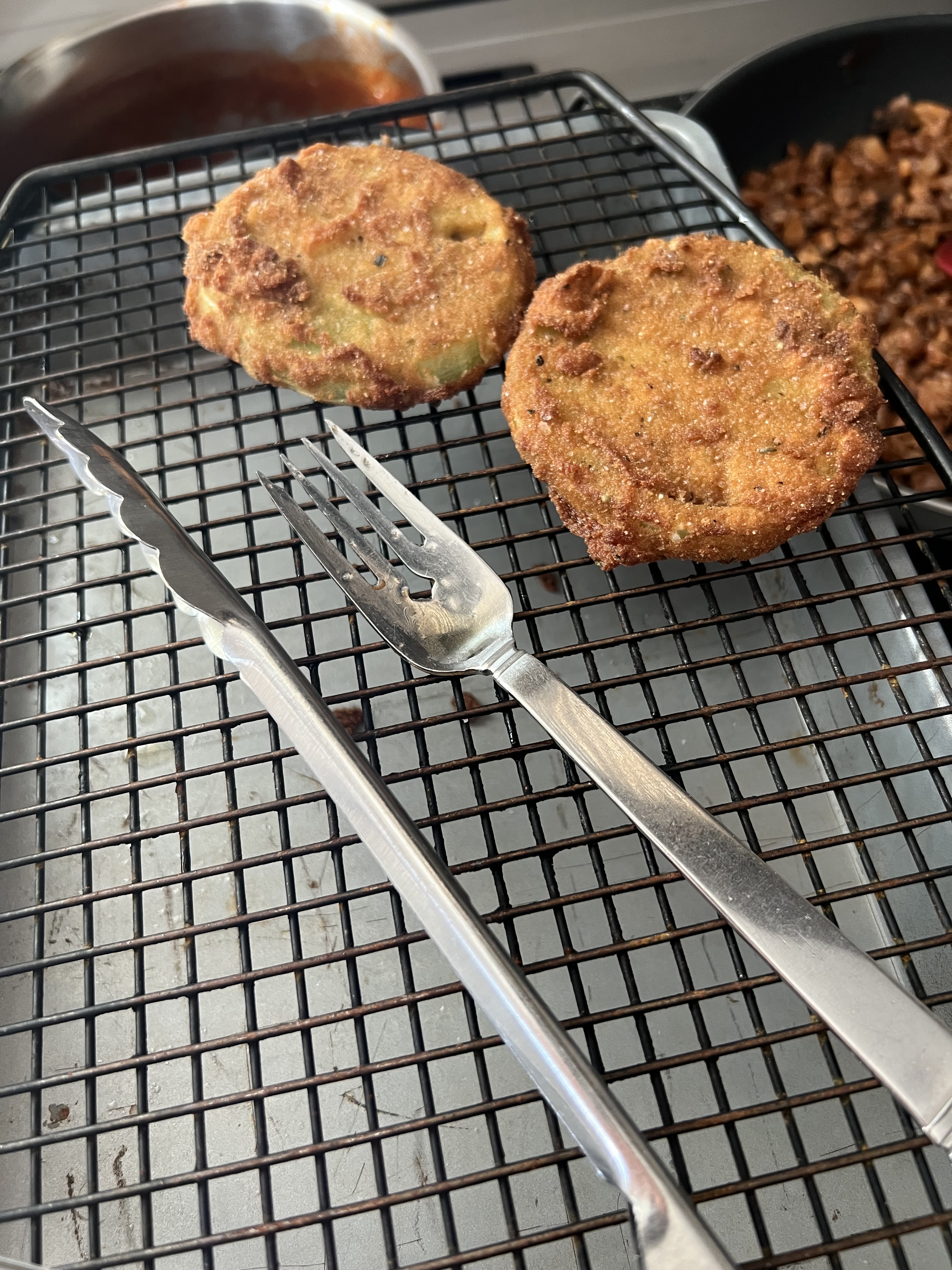
I fry the tomatoes at 350° in a non-seed oil with a high smoke point, like avocado oil, until golden.
I place the tomato slices on a wire rack to cool, seasoning them immediately out of the fryer with some sea salt.
A dipping sauce, like marinara sauce, goes well with these tasty bites!
Now’s the time to head to your local farm stand and pick up a bag of gorgeous plum tomatoes, before the season is gone! And this is what you do with them…
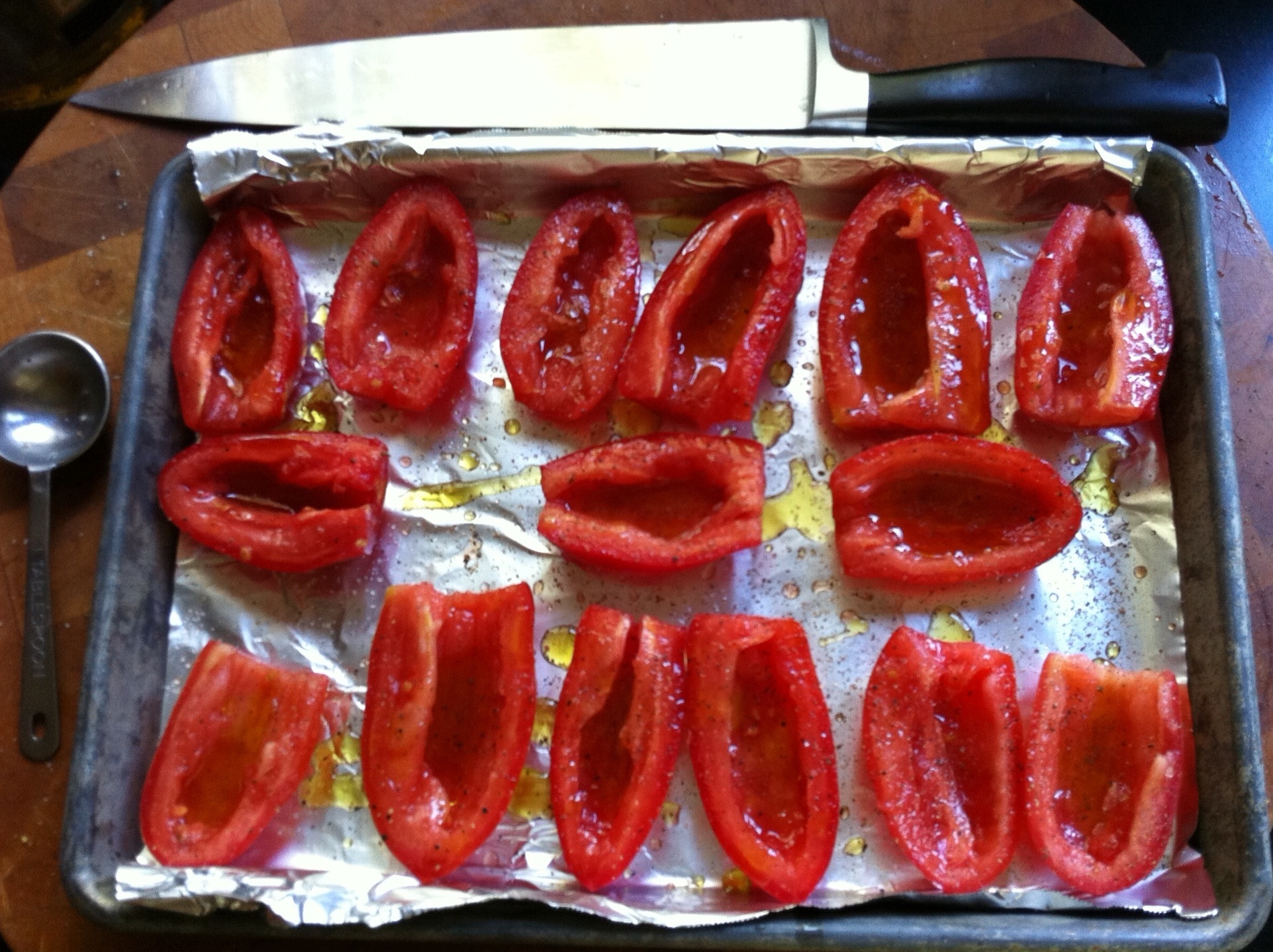
These are not sun-dried tomatoes. They’re better, because fresh plum tomatoes are still moist after roasting, with a bit of that magic tomato liquid in every cup! A great, simple platter to offer at parties.
Tomatoes before.
12 to 18 halved, seeded plum tomatoes
1/4 cup extra virgin olive oil
2 tablespoons organic cane sugar
Freshly ground pepper
Fleur de Sel or sea salt
Pre-heat the oven to 250.
Line a baking sheet with foil and rub it lightly with olive oil.
Arrange halved and seeded tomatoes on it in a single layer, cut side up. Drizzle evenly with 1/4 cup olive oil, sprinkle with 2 tablespoons sugar, and season with pepper to taste.
Bake the tomatoes until they are still juicy but slightly wrinkled, about 3 hours. Transfer them to a platter and let them cool slightly.
Just before serving, sprinkle the tomatoes with Fleur de Sel, and garnish if you like, with chopped parsley leaves, mint leaves, or basil. (Bacon bits sound pretty good, too!)
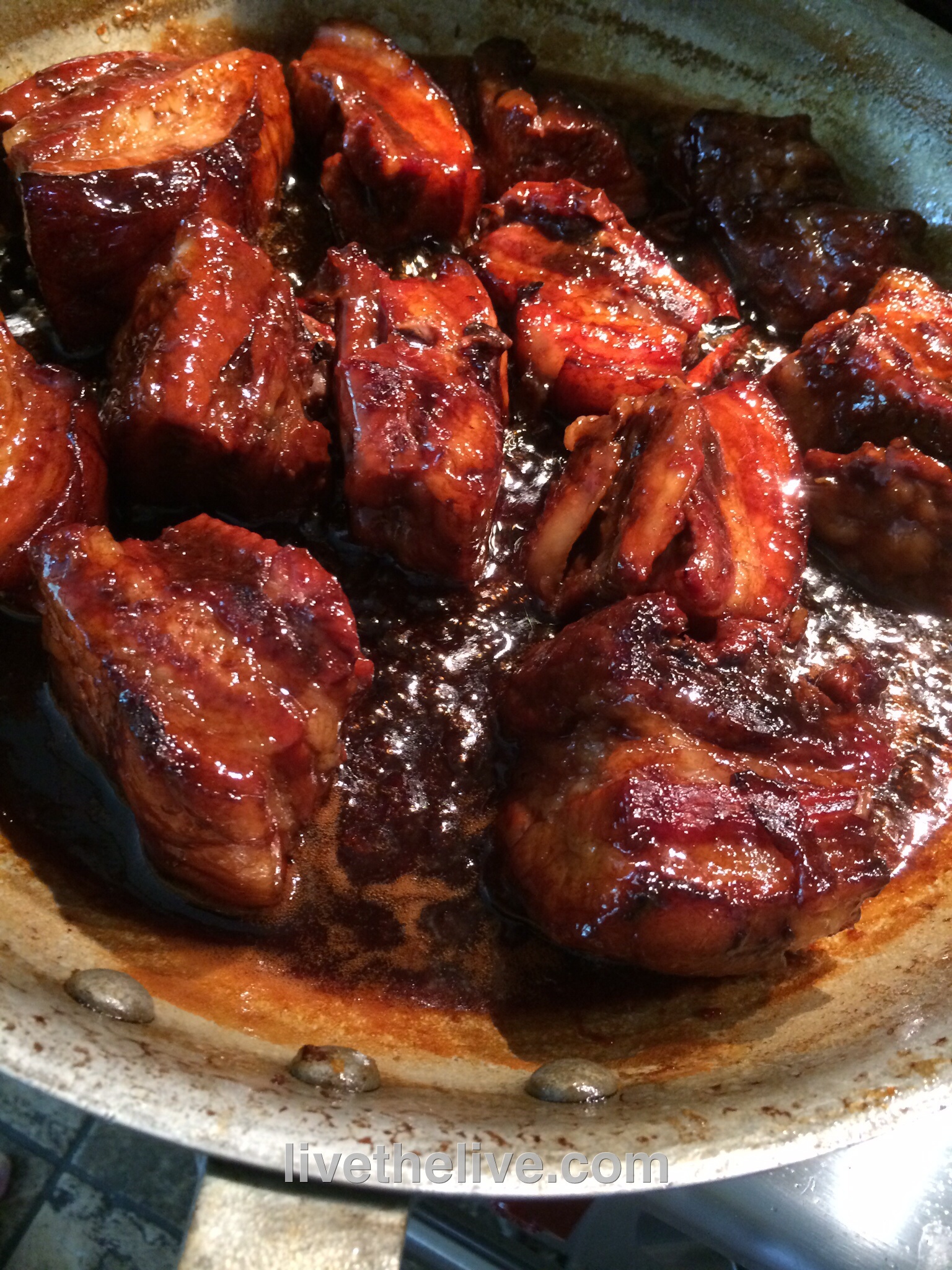
Sometimes the happiest of cooking accidents happen with bacon. My original plan was to make Chinese-style honey ribs for dinner. But instead of pulling a nice rack of ribs out of the freezer, I accidentally took out a slab of pork belly. I only realized my mistake after I thawed it, so I decided to use it! The results were pretty damn tasty.
I like maple syrup instead of honey, but use what you like!
Marinade:
¾ cup light soy sauce 6 Tablespoons hoisin sauce
5 lbs. pork belly
Zest and juice of 1 lemon
2 whole star anise
2 cinnamon sticks (3”)
1/2 cup honey or maple syrup
4 cups chicken broth (preferably homemade)
Pre-heat the oven to 350 degrees.
Mix the marinade ingredients. Set them aside.
Cut the pork belly into pieces that are about 2 inches square. Place them in a large pot. Cover them with water and bring the pot to a boil. Boil it for 5 minutes. Drain the water.
Place the warm pork belly pieces on a sheet pan lined with non-stick aluminum foil. Coat them with the marinade. Let them sit for 10 minutes.
Bake the pork belly pieces on the sheet pan in the oven for 30 minutes.
While the pork belly is baking, start the sauce in a large non-stick pan or pot: combine the lemon zest and juice, star anise, cinnamon sticks, maple syrup or honey, and chicken broth. Bring it to a boil, then reduce it to a simmer.
When the pork belly pieces have finished baking, add them to the sauce pot, lowering the heat to a simmer. Simmer (covered) for about 15 minutes or until meat is tender.
Turn the heat back on high, uncover the pot and cook until the sauce has reduced to a glaze that coats the meat. Reduce the heat as the sauce thickens to avoid the sugars in the syrup or honey from burning. When the pieces are sticky and gooey, they are ready!
Devour them just like that!
If you have leftovers, let the pork belly cool, then slice the pieces it to your desired thickness and fry them like regular bacon. They’re great with eggs!
I live just down the road from Fall River, Massachusetts, and New Bedford, Massachusetts, two thriving proud Portuguese communities. In middle school, my daughter had to take mandatory Portuguese language classes. We’ve got dozens of authentic Portuguese restaurants in the area, and even a well-stocked supermarket with its own bacalhau (salt cod) room: Portugalia Marketplace, in Fall River.
So when I first posted my recipe of Portuguese kale soup, I was told by many Portuguese friends that my soup wasn’t authentic so I couldn’t call it that. Fair enough. After all, my soup has far less carbs (no potatoes or pasta), fewer spices, and it uses homemade stock instead of water. It may not be Portuguese, but it’s full of flavor.
My semi-Portuguese kale soup.
4 cups home-made chicken or beef stock 4 cups water 1 cup lentils, rinsed in cold water 1 onion, finely chopped 1 carrot, finely chopped 2 stalks celery, finely chopped 1 clove garlic, through a press 1 lb. Portuguese chourico, peeled and chopped into small cubes 1 large bunch organic kale salt and pepper
Add the stock and water to a large pot. Heat until boiling. Add the lentils.
In a saucepan with a little olive oil or bacon fat, sauté the onions, carrots, celery, and garlic for a few minutes. Add the chopped chourico and sauté a few minutes more. Add the contents of the sauté pan to the pot.
Wash and de-stem the kale, tearing the leaves into smaller pieces. Add the leaves to the pot and stir. The stems go in your compost pile. (You can also use them in a juicer.) Kale is always on the “dirty dozen” list of vegetables with large amounts of pesticides, so I always buy organic.
Cook the soup until the lentils are al dente. Taste and season for salt and pepper before serving.
Simple and delicious, especially with fall on the way.
I recently rediscovered a story I wrote a couple of years ago, after my trip to New Zealand. I had hopes of getting it published somewhere, with no luck. So, what the heck…I’ll reprint it here, adding a few photos to help with the story.
A Guy Walks Into a (New Zealand) Bar…
I recently returned from a two-week trip to New Zealand, touring the northern half of the South Island, clocking over a thousand miles by car and train.
My journey started and ended in Nelson, the oldest city on the South Island. It was a great home base to explore the famous Abel Tasman National Park, ending each day with dinner and drinks.
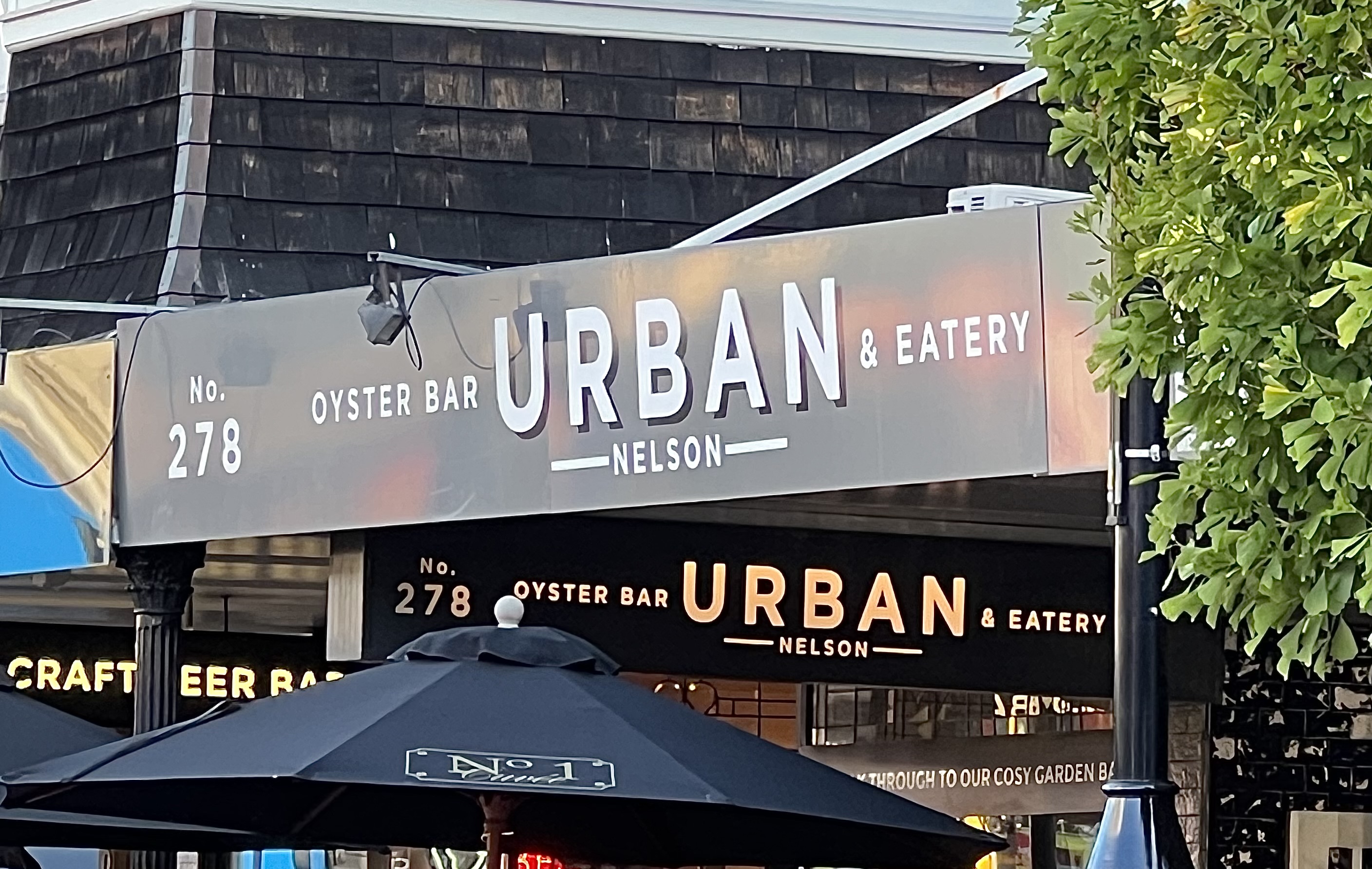
One of my favorite stops was the Urban Eatery and Oyster Bar in Nelson, where fresh, creative seafood filled the menu. I walked in and noticed there were no seats at the bar, my spot of choice when I’m traveling solo. I had made a reservation, but I saw a bar stool in the corner and pulled it up to the bar, much to the surprise of the bartender and manager.
The manager explained that no one usually sits at the bar in New Zealand, opting for small tables, but it being obvious that I was an American, if I chose to do so, I was more than welcome to. I did get some interesting glances as I pulled my barstool up.
Bar view.
The bartender, a lovely young woman who perhaps wasn’t used to having someone to talk to in her workspace, asked me what I wanted to drink. I was craving for a vodka martini, very dry, expecting what I got at most American restaurants: 3 to 4 ounces of vodka, chilled, in a martini glass with olives. But instead, she hesitated.
She explained: “Here in New Zealand, if you order a ‘double,’ you get 30 mls.” (I quickly Googled it to find it was only 1 ounce.) “But, legally, I can pour an extra 30 mls into a shot glass that you can then pour into your glass yourself.”
Doing quick ounces-to-mls math in my head, I explained that a martini in the States can be almost 4 ounces, or 120 mls, and I could see her eyes widen in disbelief. “That’s irresponsible!” she gasped.
I laughed as I told her that two of those monstrous drinks were commonly referred to as a “businessman’s lunch” in the States, and she shook her head as she poured my first ounce in a rocks glass and then poured my side shot. (There were no martini glasses in sight.)
I poured my extra ounce into my glass and it still looked really low. “I’m guessing not too many people order martinis,” I said. “What do you usually fill the rest of the glass with?”
“Tonic, olive brine if it’s dirty, something like that.”
Ordering beer in New Zealand was simpler. It was served mostly in pints. Wine glasses, however, had a clearly marked line on each glass, a regulation set nationally. No “nice pours” the bartender would sometimes give you at the end of the bottle.
Clos Henri Vineyard, Marlborough
They allowed me to order as many drinks as I wanted, as long as I wasn’t inebriated, but it felt a little embarrassing to have to order so many drinks.
Down the street in Nelson, I visited Kismet, a very well-stocked cocktail bar, though their choice of vodka was small due to its limited popularity. The drink of choice is gin, and there are a good number of distilleries in New Zealand, many in Marlborough wine country, that produce delicious floral, herbaceous gins. My own experience with gin was limited to a whatever-and-tonic, but here…gin was something special.
Kismet in Nelson. Great bar!
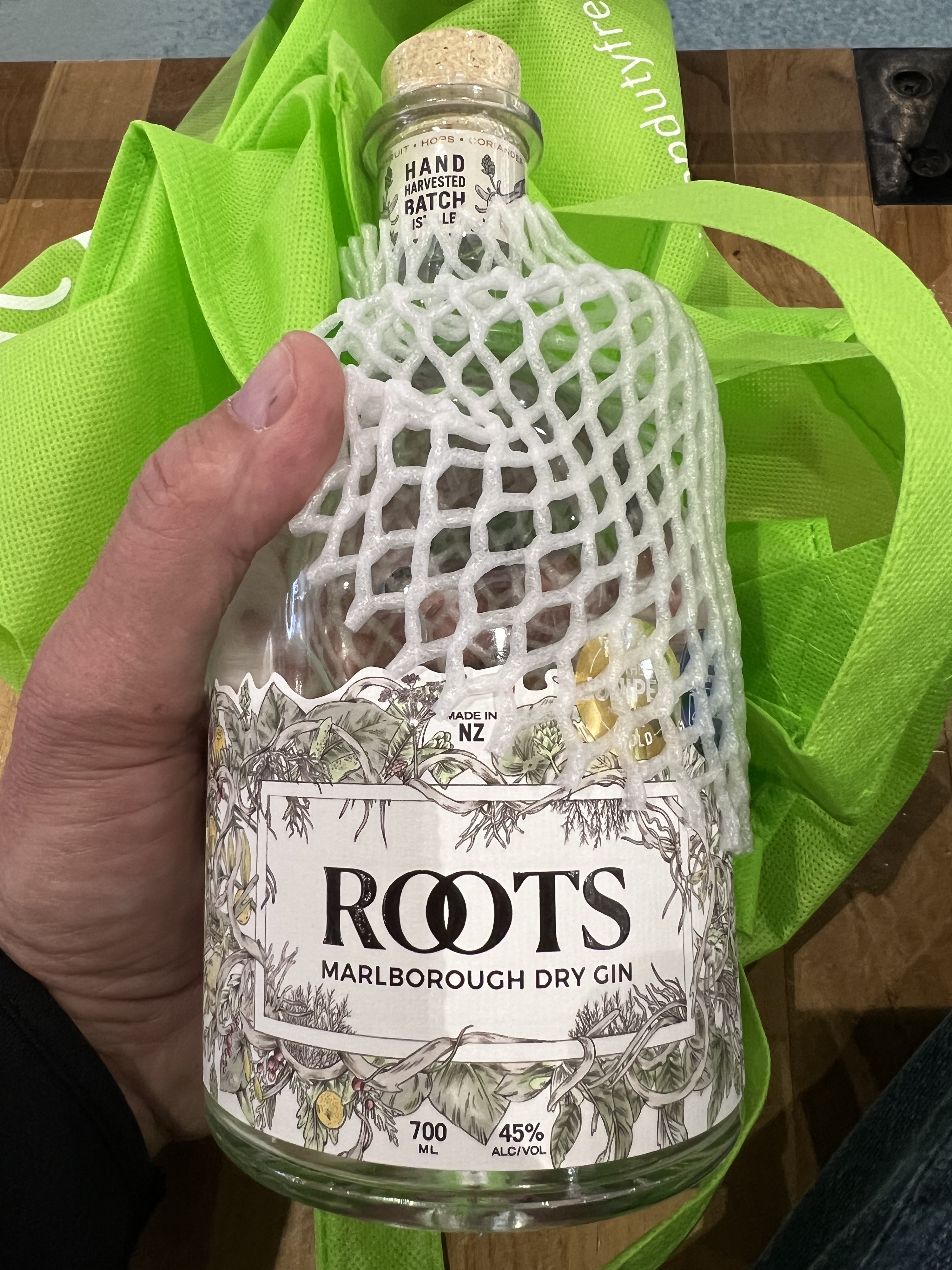
I tried a couple of brands: Victor, with powerful floral notes that reminded me of Hendrick’s on steroids, and Roots, another Marlborough product. The Roots bottle was labeled “Navy strength,” registering at 54.5%, and I soon realized that if I ordered a “double-double,” as I came to call it, I’d get more alcohol in my drink with gin. I was sold.
(“Navy strength” refers to a time when gin was stored on Navy ships in wooden barrels next to the gun powder, and if there was an accidental gin spill, it had to have enough alcohol in it to still allow the gin-soaked gunpowder to ignite. Hence: “Navy strength.”)
A Roots double-double with just a splash of New Zealand’s own craft-made East Imperial tonic, and I was a happy man.
Wherever I went in New Zealand after that, my use of the phrase “double-double,” with a little smile, made the bartender understand I was here for the alcohol, and not for the filler. I couldn’t be more obviously American if I wore a red-white-and-blue bandana on my head.
A double-double of vodka (they all seem to serve only Finlandia, despite a couple of New Zealand brands I’ve had in the States) with olives at Bamboo Tiger in Blenheim. A double-double of bourbon in my Manhattan at Amazonita in Christchurch. A double-double of Mt. Gay with a splash of Coke at Oxley’s Bar & Kitchen in Picton. I got the hang of this!
Oxley’s Bar & Kitchen
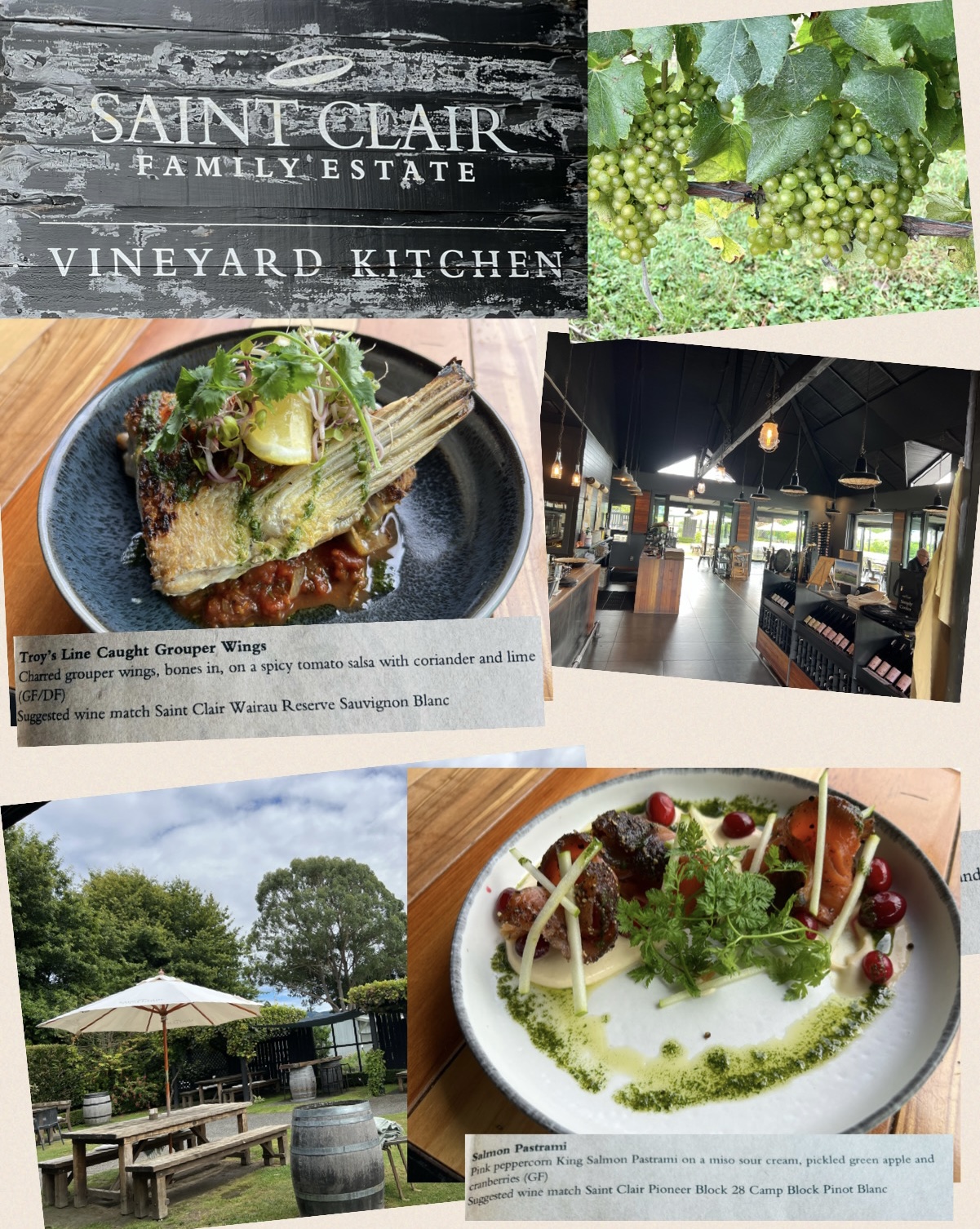
Many wineries in New Zealand have wonderful restaurants, and sadly my attempt at humor by ordering a double-double of wine didn’t go over too well. But, I was able to enjoy more than one filled-to-the-line glass of Chardonnay at Black Estate Winery in Canterbury or Sauvignon Blanc at Saint Clair Family Estate Vineyard Kitchen in Marlborough.
Black Estate, outside of ChristchurchSaint Clair Family Estate Vineyard Kitchen, BlenheimGin tasting in Marlborough
Back on my homeward bound 17 1/2-hour non-stop from Auckland to JFK, I asked for a double-double of vodka on the rocks, and got it, along with a look from the flight attendant like I was some kind of lush. I wonder if her attitude would change when we crossed into US airspace…