Posts Tagged ‘seafood’
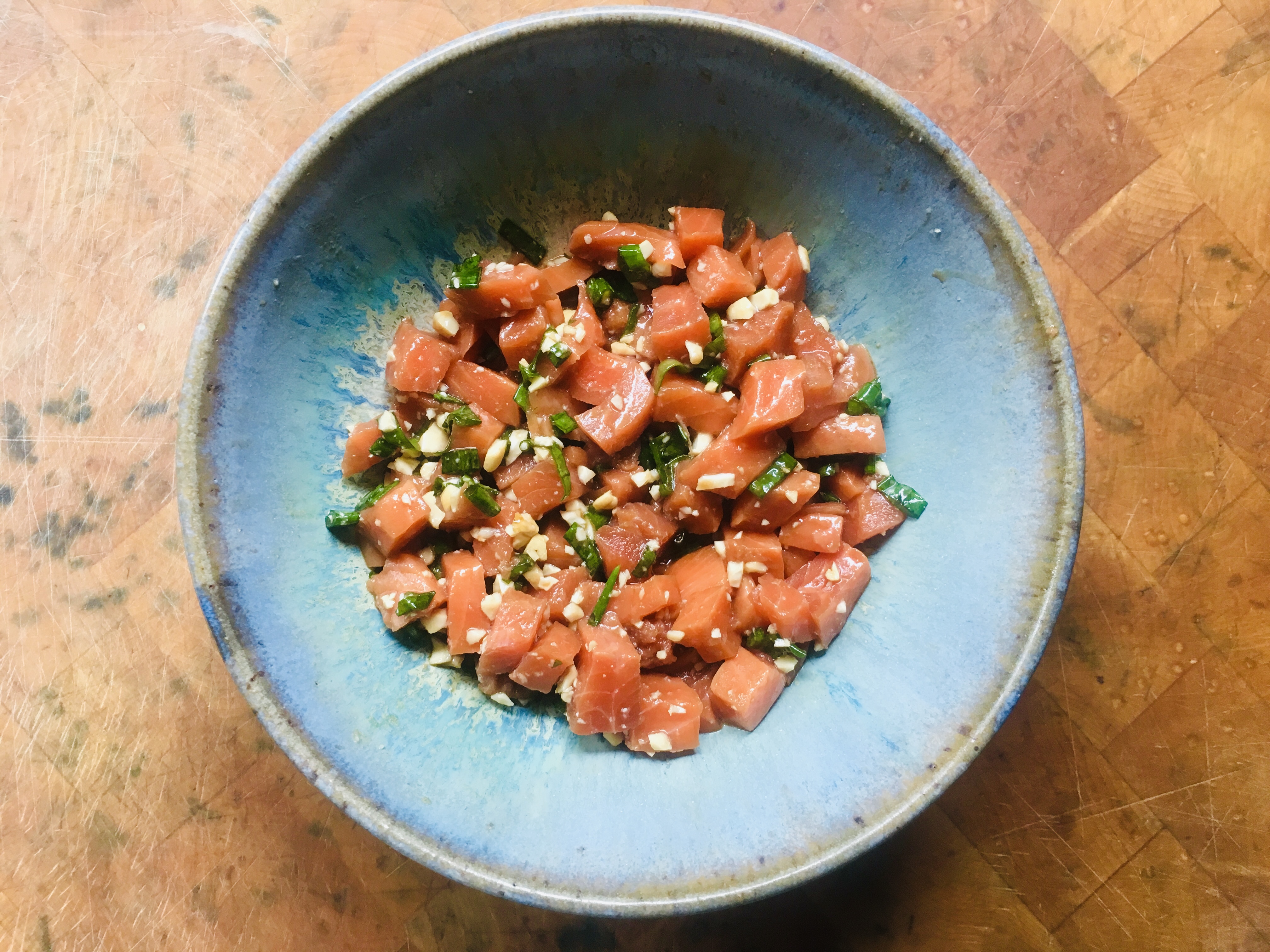
INSPIRED SALMON POKE
Posted: September 18, 2019 in Food, Recipes, seafoodTags: Alaska, food, Hawaiian, poke, recipes, salmon, seafood, wild caught
1 tablespoon soy sauce
NEW ENGLAND SUMMERS DEMAND LOBSTER ROLLS!
Posted: August 18, 2019 in fleur de sel, Food, lobster, Rhode Island, salt, seafoodTags: food, lobster, lobster roll, NEW ENGLAND, recipes, Rhode Island, seafood
Nothing says summer here in New England like a lobster roll. It’s certainly easy to go to a clam shack or seafood restaurant to get one, but nothing beats making one yourself.

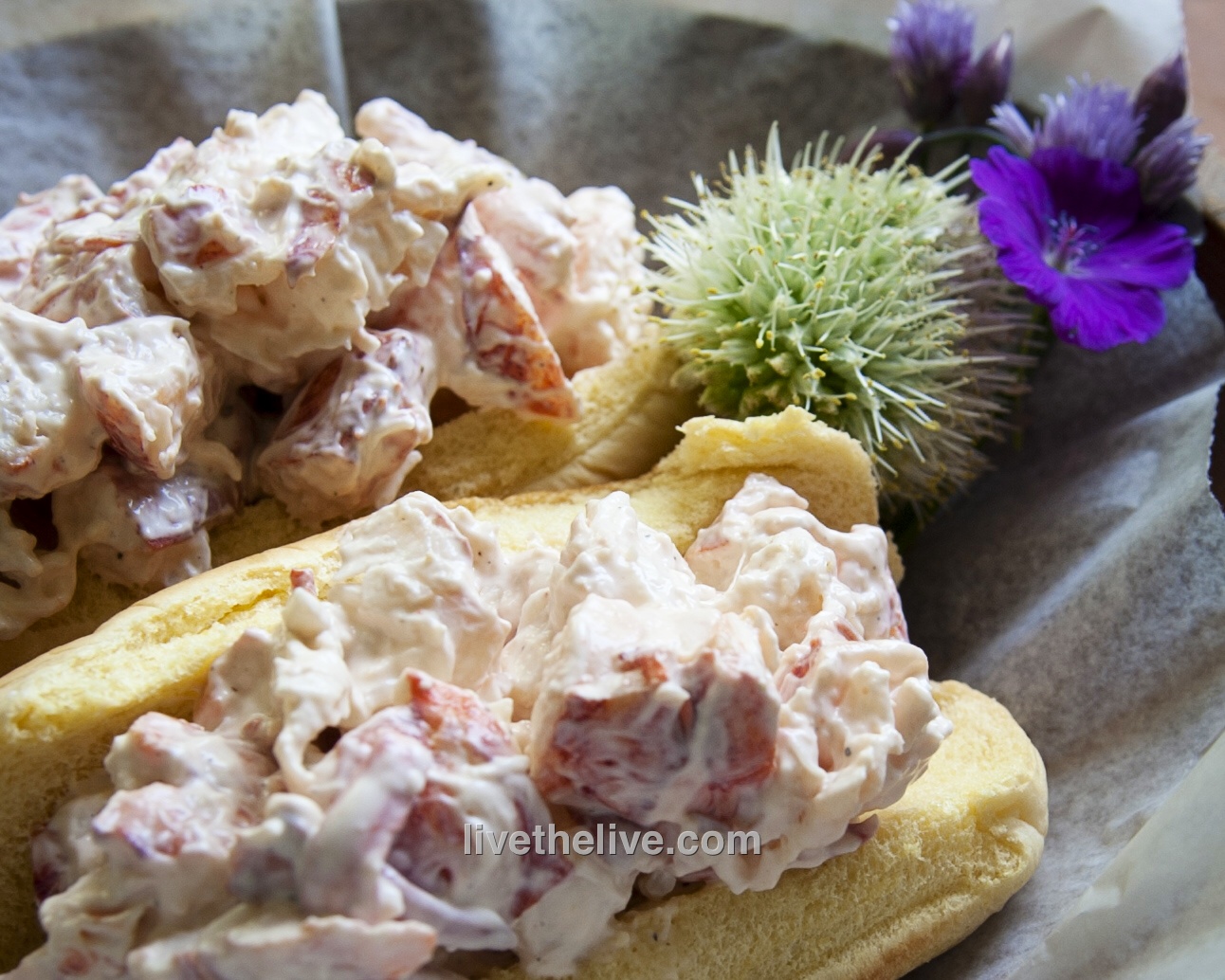
The lobster roll at one of my favorite restaurants: The Back Eddy in Westport, Massachusetts. Delicious and fresh. But it breaks one of my cardinal rules about lobster rolls. (Go to the bottom of the page.)
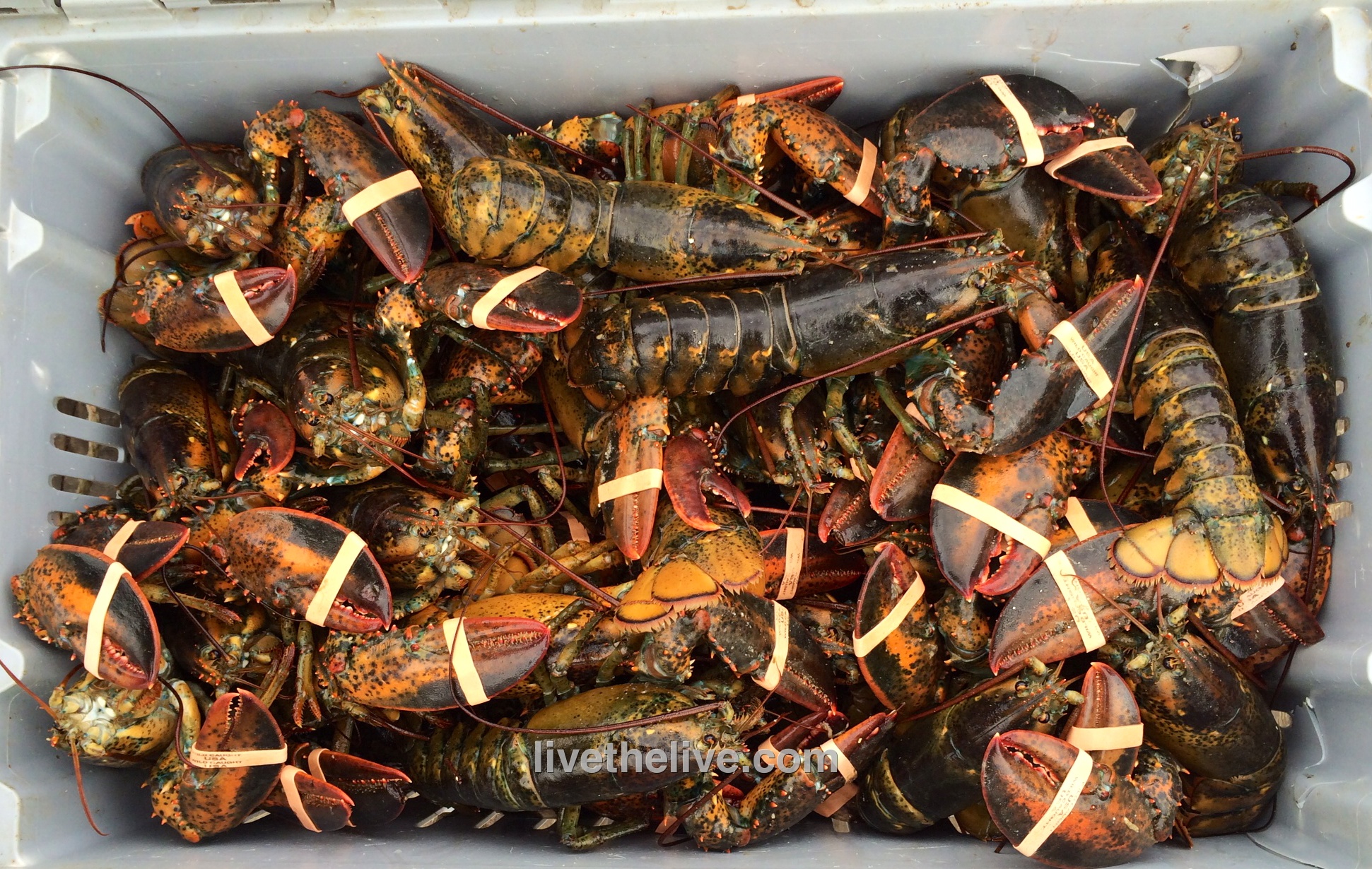
When I make my own lobster rolls, freshness is key. I always start with live lobsters. I get them from my lobster man buddy, Gary, just down the street at his dock in Tiverton, RI. Gary’s brother runs the Sakonnet Lobster Company on Sakonnet Point in Little Compton, RI. It’s literally steps away from Saule, our rental property. (Check it out at http://www.sauleri.com)
Once you’ve bought your live lobster, the next step is to cook it right. Some people steam and some people boil. I’ve always been a boiler myself. I fill a large pot half-way with water and add sea salt. I bring it to a rolling boil before the lobsters go in. And then I do the math…
I boil my lobsters for 10 minutes for the first pound. I add 3 minutes per pound for each additional pound thereafter. For example, a 2-pound lobster should boil for 13 minutes and a 1 1/2-pound lobster should boil for 11 1/2 minutes. And if I’m boiling more than one lobster, the same rule applies: 3 2-lb. lobsters = 6 pounds. So 10 minutes for the first pound, plus 3 minutes x 5 for each extra pound (that’s 15) for a total of 25 minutes. (These times are for hard shell lobsters. I reduce the boiling time by 3 minutes if I’m cooking soft-shell lobsters.)
Remember, you’re going by total weight of all the lobsters, because the more you have, the longer it takes the water to return to the boil once you put them in.
A larger lobster is not always better. My uncle used to buy the largest lobster he could find, and it was impressive when he placed at the center of the dinner table. But the meat was like rubber. And personally, I felt bad for the old lobster that made it that far in life. His last days should’ve be in the ocean, not on a plate.
My maximum lobster size is 2 lbs. At that weight, you have the perfect ratio of meat-to-shell…with lots of delicious meat that is still sweet and tender. It’s perfect.
After the lobsters have been removed from the pot and have cooled for a few minutes, I get to work: cracking the claws and tail and removing every bit of beautiful meat I can find. Lobster lovers will tell you that the legs have some meat in them and that the tomalley (the green liver and pancreas) and roe (eggs) are delicacies not to be missed. For the purpose of making lobster salad, I don’t use these parts. But I do save the tomalley and roe for a separate treat…and I save all the legs and cleaned empty shells for lobster stock.
Cleaning lobster legs is easy: simply remove all the legs from the body and place them flat on a cutting board. Grab a rolling pin, and one at a time, roll the pin over the lobster legs, starting at the claw end and working your way up. Like a tube of toothpaste, the meat will squeeze right out of the leg!
Now for the important stuff. What goes in a lobster roll, and more importantly, what doesn’t… I have very strong opinions in this matter.
First, there should NEVER be anything green in a lobster roll! No celery, no pickle, and it certainly shouldn’t be sitting on a bed of lettuce! Nothing should be crunchy in a lobster roll! The magic is in the texture of the perfectly cooked lobster meat. Don’t mess with it!
NO paprika or Old Bay seasoning!
A pinch of celery salt? Yes!
Mayonnaise? Only Hellman’s!
White pepper, not black, and just a touch.
Salt? A pinch of Fleur de Sel.
And the secret weapon to bring out all the flavors: the tiniest squeeze of fresh lemon juice…not enough to give it lemon flavor…just to brighten the taste.
As for the roll, you can’t go wrong with Martin’s potato long rolls: soft and squishy straight out of the bag, or for extra decadence: lightly grilled with a little melted salted butter brushed on.
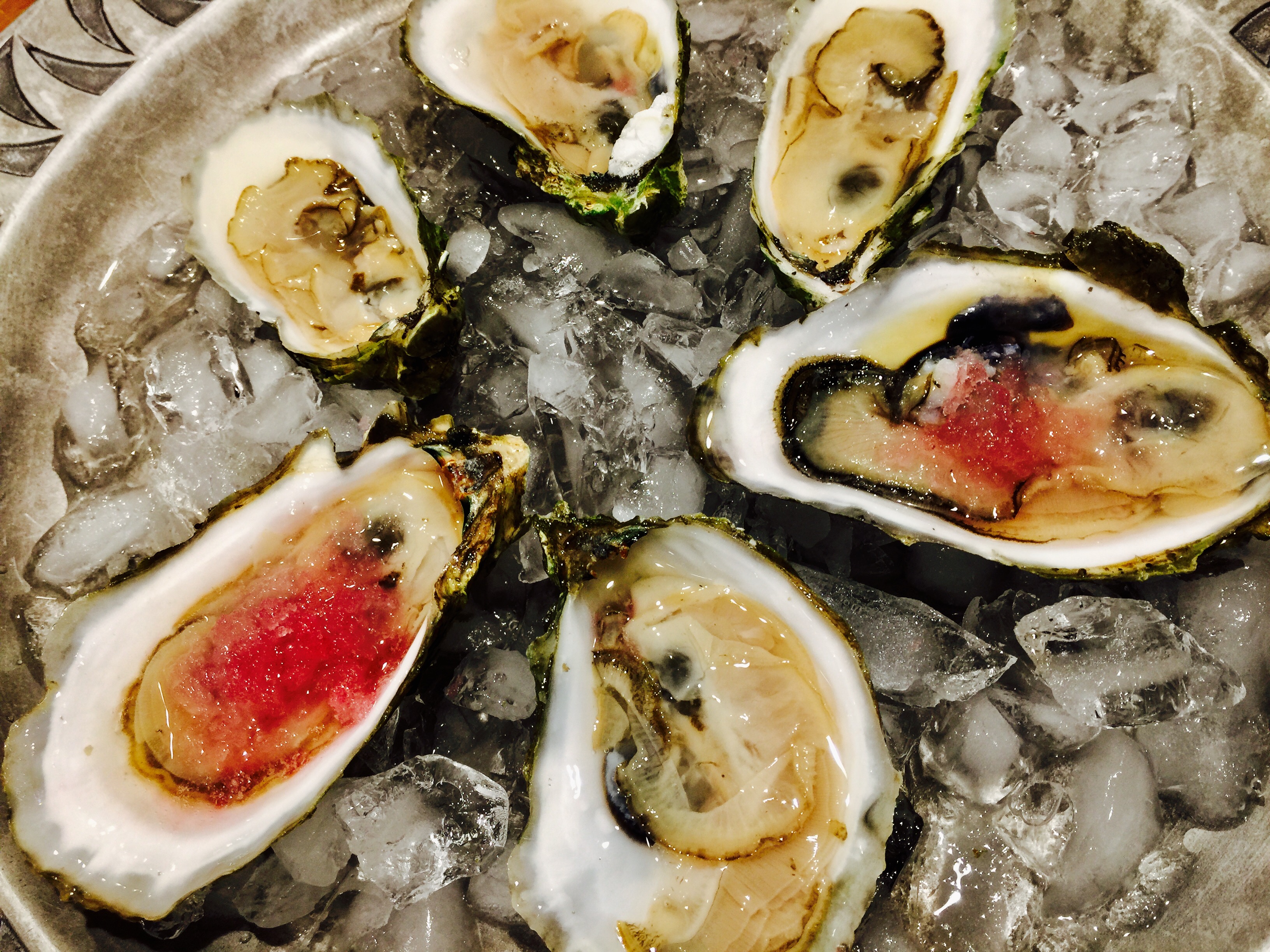
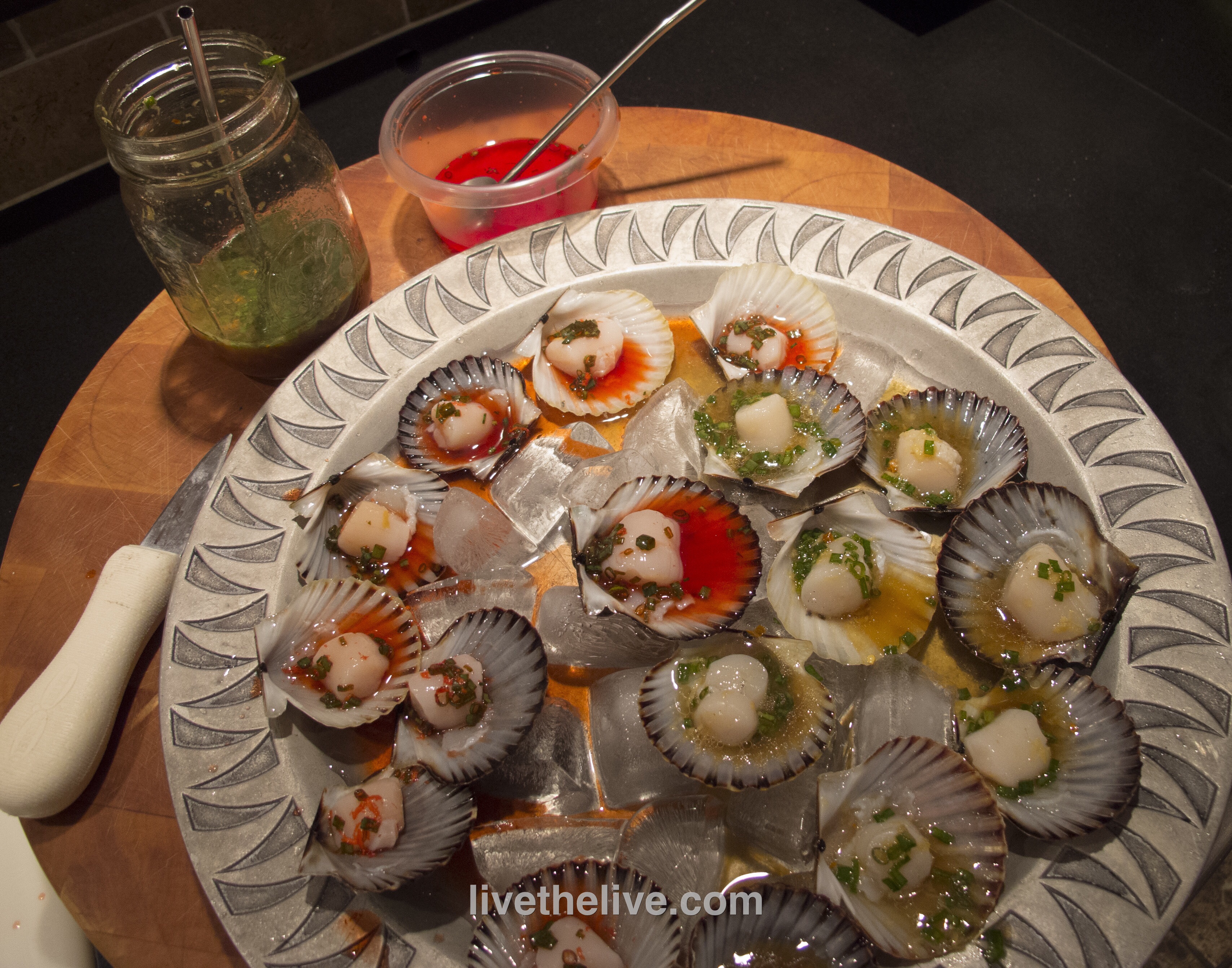
SCALLOPS ON THE HALF SHELL
Posted: May 15, 2019 in ceviche, Food, marinade, scallops, seafoodTags: ceviche, food, marinades, recipes, scallops, seafood
3 tablespoons rice wine vinegar
2 tablespoons Grenadine
1/2 teaspoon fresh finely grated ginger
2 teaspoons finely chopped scallions
1/4 cup freshly squeezed orange juice
1 1/2 tablespoons freshly squeezed lemon juice
1 1/2 tablespoons freshly squeezed lime juice
2 tablespoons soy sauce
1 tablespoon + 1 teaspoon peanut oil
1/2 teaspoon honey
1 1/2 teaspoons fresh finely grated ginger
2 tablespoons finely chopped scallion
2 small dried chili peppers, finely chopped
GREEK-STYLE SHRIMP
Posted: January 6, 2019 in Food, Recipes, restaurants, san marzano, Santorini, seafood, shrimp, travel, UncategorizedTags: food, Greece, recipes, saganaki, Santorini, seafood, shrimp
Though it may sound Japanese, the word “saganaki” refers to a small frying pan used in Greek cooking. The most famous of these dishes, simply called saganaki, is a fried cheese, often flamed at the end with a little ouzo.
Shrimp saganaki is one of my favorite Greek dishes, and it usually involves cooking shrimp in a tomato-based sauce with plenty of feta cheese sprinkled in. It’s simple yet fantastic if the ingredients are fresh. Doesn’t hurt to be sitting in a taverna on the beautiful island of Santorini while eating it, either!
I found a slab of Graviera cheese at a local supermarket, and decided to recreate shrimp saganaki using that instead of feta. It was pretty damn amazing.
I like using 24–30 shrimp, because larger shrimp don’t always cook through. These smaller shrimp will be bite-sized and delicious.
200g package (7 oz.) grated Graviera cheese
1 can (28 oz.) whole tomatoes
1 lb. (about 24) shrimp, peeled and deveined
1 medium onion, chopped
juice of 1/2 lemon
1/4 cup olive oil
2 cloves garlic, through a press
pinch red pepper flakes
1 1/2 tablespoons fresh dill, finely chopped
1 tablespoon fresh oregano, finely chopped
1 1/2 tablespoons Ouzo
salt and pepper
Peel and de-vein the shrimp (or you can buy them that way already.) Squeeze the juice of 1/2 of a lemon on to the shrimp and toss. Set aside.
In a large pan, saute the onions in the olive oil until translucent. Add the garlic and cook for a few seconds more.
Crush or puree the tomatoes and add to the pan. Add the red pepper flakes, dill and oregano, and salt and pepper. Add the Ouzo.
Let this sauce cook down for a bit until all the flavors have blended together.
Pour a layer of the sauce on the bottom of a metal broiler-proof pan. Lay the raw shrimp in a single layer into the sauce. Cover the shrimp with the rest of the sauce and sprinkle the grated Graviera on top.
Place the pan in a pre-heated 350-degree oven and bake until the cheese is golden brown and bubbly and the shrimp have cooked through.
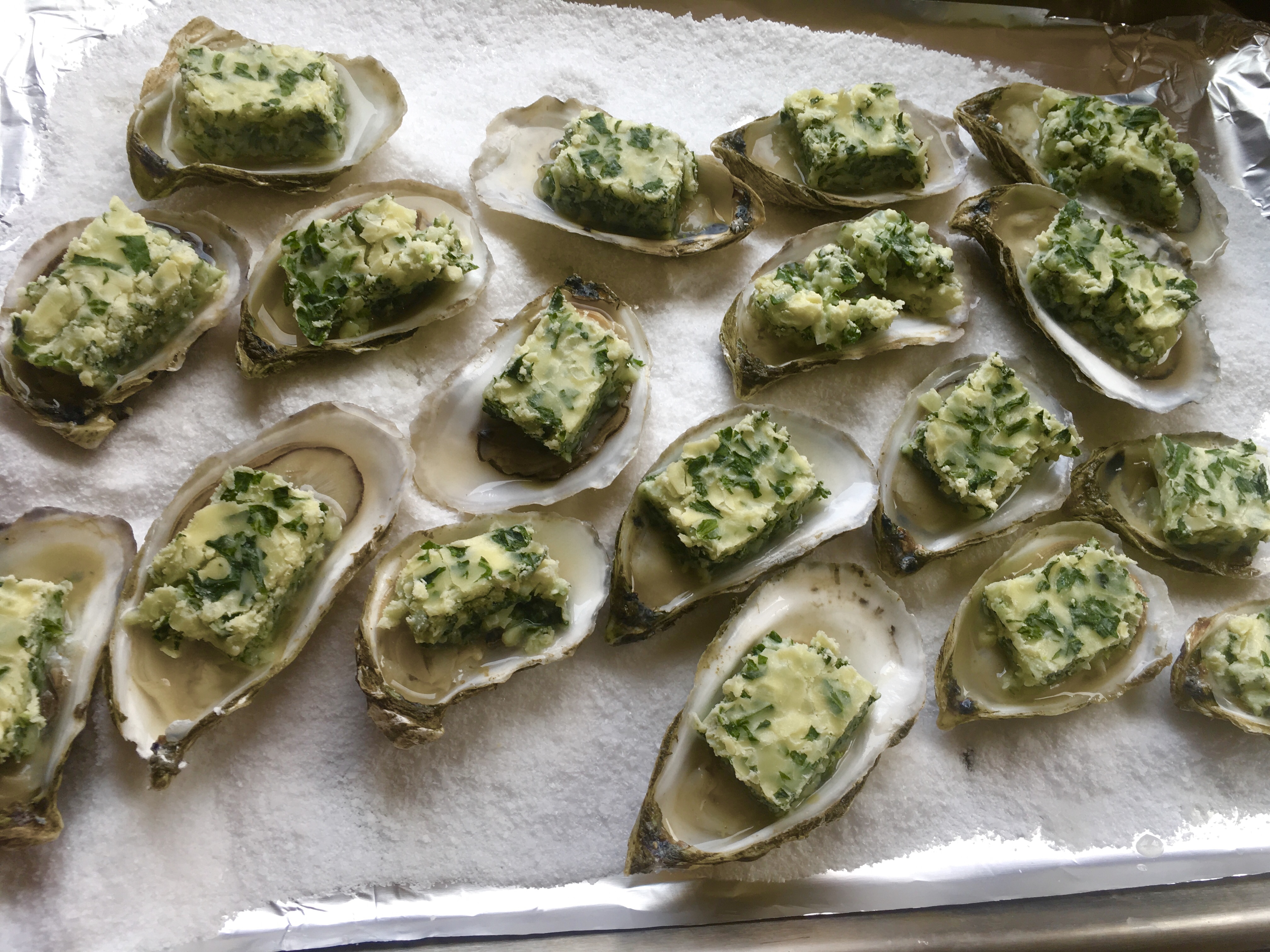
OYSTERS ROCK-A-FELLOW (IMPROVED!)
Posted: November 1, 2018 in Food, Recipes, restaurants, seafoodTags: food, gluten-free, oysters, recipes, Rockefeller, seafood
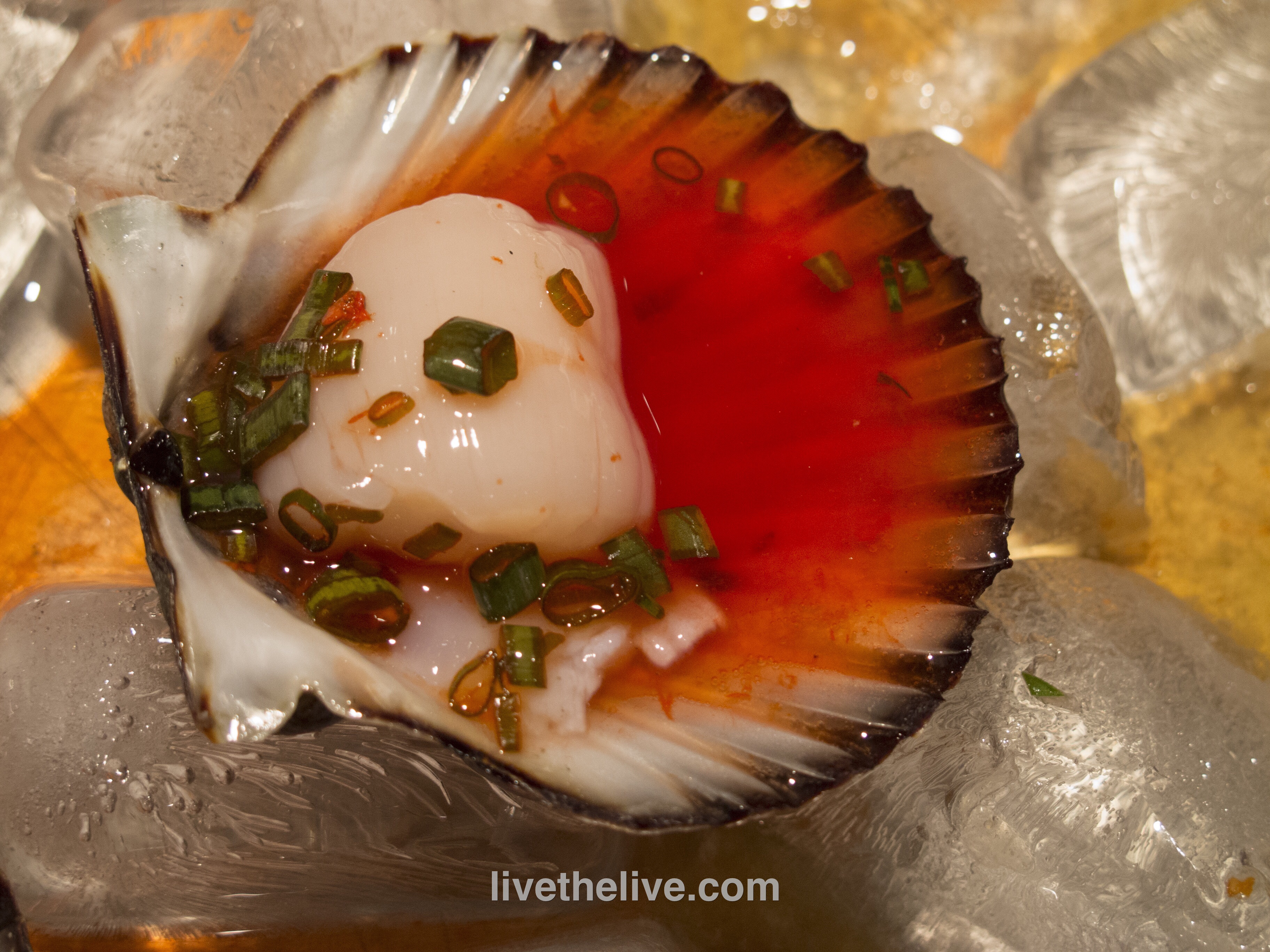
My dog, Fellow, stood by me in the kitchen while I made this dish. I decided to name it after him. Since the first time I created this dish, I’ve made some improvements. First, a little history…
The original Oysters Rockefeller recipe is a closely guarded secret, created in 1899 at the famous New Orleans restaurant Antoine’s. Jules Alciatore, the son of founder Antoine Alciatore, developed the dish when they had a shortage of escargot, substituting locally available oysters. Antoine’s is still the only place in the world where you can be served the original Oysters Rockefeller recipe.
Search on line for Oysters Rockefeller, and you’ll find hundreds of recipes that claim to be the real thing. Most of them use spinach in the dish. The folks at Antoine’s claim there wasn’t any spinach in the original recipe.
My version, my Oysters Rock-a-Fellow, is a cheesier, gooier version than the original, which is heavy on the greens, but I think it’s one you will enjoy. I use larger, meatier oysters like Wellfleets from Cape Cod or local Rhode Island oysters, but use what you like.
24 oysters, washed to remove grit
2 cans beer (any extra beer you have is fine)
5 black peppercorns
2 teaspoons salt
2 garlic cloves
Scrub the oysters under cold water to get them clean.
In a large pot, pour in the beer, peppercorns, salt, and garlic cloves, along with enough cold water to fill the pot about halfway. Turn the heat on high and bring the pot to a boil.
The moment you reach a boil, turn the heat to medium and drop in 6 oysters, letting them bathe in the liquid for only 30 seconds. Scoop them out with a slotted spoon and place them in a bowl to cool. If the oysters open, they’ve been in there too long! You want them to stay closed. Do the same with the rest of the oysters, 6 at a time. Once all the oysters have had their 30 seconds, move the oyster bowl to a cutting board. Discard the liquid in the pot.
Once the oysters have cooled enough for you to handle, remove the top shell off each one, carefully reserving the oyster liquor inside if you can. I do this by pouring Kosher salt on a sheet pan, and using the salt to keep the oysters propped up.
Pre-heat the oven to 425 degrees.
1/4 cup unsalted butter
1 small onion, finely chopped
1 garlic clove, finely chopped
1/4 cup low-fat milk
salt and pepper
3 cups (tightly packed) fresh arugula, finely chopped, about a 5 oz. container
6 oz. mild cheddar cheese (the white one), grated
6 oz. mozzarella, grated
Fine bread crumbs (Using GF breadcrumbs will keep this dish gluten-free)
In a sauce pan, melt the butter and then add the onion and garlic. Cook until the onion is translucent.
Add the milk, season with salt and pepper, and then add the arugula a little at a time, letting it wilt before adding more. Use all the arugula.
Once all the arugula is in the saucepan, sprinkle the cheese in a bit at a time, letting it melt, until you’ve used all the cheese: the cheddar and then the mozzarella.
Originally, I tried to spoon this gooey cheese on top of the oyster shells, but it was so sticky and stretchy, that it was too difficult to work with. Now, I pour the gooey cheese mix into a lasagna pan, smooth it out with a spatula, and place it in the fridge to cool.
You can actually do this all the day before, because the cheese mix hardens and becomes easy to cut into cubes with a sharp knife.
Then simply place a cube of the cheese mix on each oyster…
…sprinkle a little bread crumb on top…
…and bake in the 425-degree oven for about 8–10 minutes until it’s golden and bubbly.
Whoever said that cheese and seafood don’t go together, never tried this!
I buy Udi’s gluten free frozen bread for my breadcrumbs. I take the loaf, toast the slices, then put them through the food processor. The taste is far better than buying pre-made GF breadcrumbs. Use regular breadcrumbs if you don’t need to worry about gluten.
If you’re really strict about gluten, you can use GF beer in the pot of water or simply eliminate the beer altogether.
HOW TO BOIL A LOBSTER…OR 12
Posted: October 7, 2018 in Food, lobster, Maine, Recipes, Rhode Island, seafood, Southern New England, UncategorizedTags: food, lobster, NEW ENGLAND, recipes, seafood
Those of us that live in New England understand the magnificence that is a fresh lobster. Nothing beats a Maine lobster pulled right out of the water, placed in a pot of boiling water, and devoured moments later with nothing but melted butter on the side.
I live in Rhode Island. Our waters are a bit warmer than Maine’s, but my friends at Sakonnet Lobster in Little Compton, literally footsteps from our rental home, Saule (www.sauleri.com…go to Homeaway.com listing #4711871) have the freshest lobster around.
At a recent gathering at our house, I fired up my brand new 200,000 BTU burner and grabbed my 82-quart lobster pot to cook a dozen lobsters.
Many people will argue that steaming lobsters is better than boiling them. I don’t find that to be true, certainly from the perspective of ease of cooking or the taste of the final product. Baked stuffed lobsters are delicious, but that’s a subject for a different time.
Using the outdoor burner method has several advantages. First, all the mess and smell stays out of the kitchen. Clean-up is much easier. Second, when cooking lobsters for a lot of people, the burners on the kitchen stove just don’t have what it takes to boil the water. And third, this method requires no back-breaking lifting of heavy pots full of water.
My buddy, Lee, has a PhD in Chemistry, and has been a lobster lover all his life. With a home in Maine now, he knows a thing or two about cooking lobster. Here’s his fool-proof formula…
Bring the pot of water to a full vigorous boil.
Keeping the flame on high, add the lobsters, which will quench the boil for a few minutes.
Cook for 17 minutes for the first pound + 1 minute per each additional pound of lobsters added. (For example, cooking four 1.25 lb lobsters = 21 minutes.)
The water soon comes back to a full boil and you can reduce heat slightly to avoid boil over.
Experienced lobster boilers will tell you that this cooking formula is pretty accurate, but you do have to adjust the time if the water doesn’t come back to the boil as quickly as you’d like. The lobsters are still cooking even if the water isn’t boiling. If you’ve got an overcrowded pot, you might need to cook things a little longer. An emptier pot: a little less. Play it by ear.
To those that get queasy when it comes to cooking lobsters, there are several ways to kill a lobster before it goes into the pot: Some people put them in the freezer to numb them. Others use a sharp knife and cut down right between the eyes. Some do both. Although people constantly argue about whether lobsters can feel pain or not, my scientist friends assure me that a lobster’s nervous system is no more complicated than an insect’s. Dropping them head-first into a pot of boiling water is the fastest, most humane way of killing them. And they don’t “scream.” That’s just air escaping from the body cavity.
Good to remember: if you overcook the lobster a little, no harm done. But if you undercook it, it’s pretty nasty.
All I need on the side is some melted salted butter.
PERFECT SHRIMP COCKTAIL, FROM BOIL TO SAUCE
Posted: August 31, 2018 in Food, Recipes, seafood, shrimp, UncategorizedTags: CLAMS, cocktail sauce, food, oysters, recipes, seafood, shrimp
Before you can have great shrimp cocktail, you have to do 2 things: buy the right shrimp and cook the shrimp the right way. The right shrimp is nothing less than wild-caught American shrimp. If you’re buying shrimp from Asia, your supporting a system that uses slave labor, where shrimp are fed chemical pellets and swim in feces. If it doesn’t say wild-caught American shrimp on the package or at your local seafood store, it’s crap. Give your store owner hell for selling it.
Cooking shrimp the right way is something I learned living in the South. My wonderful friends and neighbors taught me many things about food, and the right way to cook shrimp is near the top of the list.
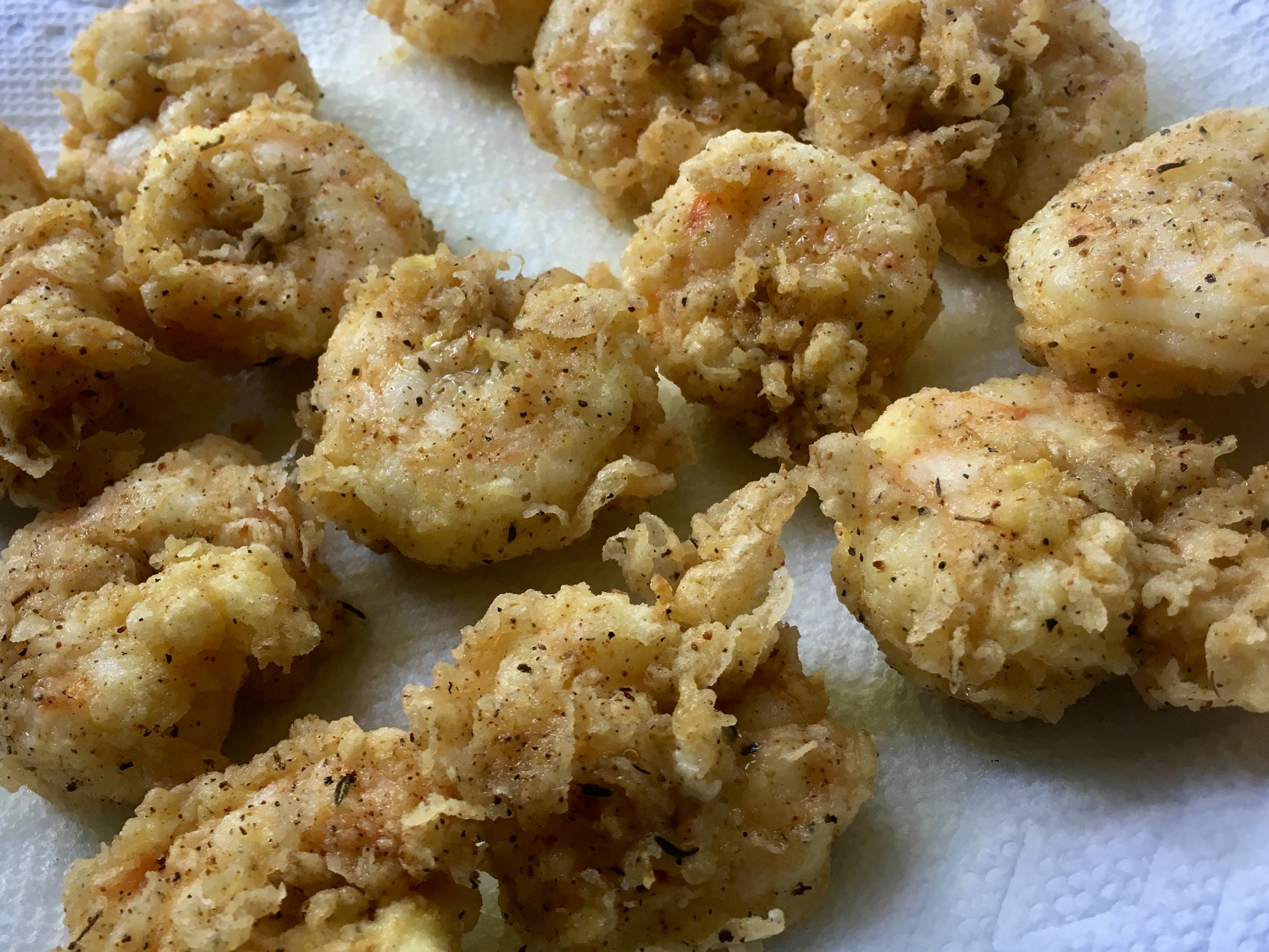
Shrimp was never meant to be cooked to death. It doesn’t matter if you start with fresh shrimp, store-bought shrimp, or even frozen shrimp…the same rules apply: 1) Season your water. 2) Bring it to a boil, then reduce to a simmer and let it get happy for 20 minutes. 3) Drop in the shrimp and raise the heat. 4) Remove the shrimp AS SOON AS the water returns to a boil.
The seasoning for the water, commonly called shrimp boil, makes or breaks the flavor of your shrimp. For years, I used Zatarain’s Crawfish, Shrimp and Crab Boil in a bag. And it was good. But at some point, I realized I had to get serious and make my own boil.
2 quarts water
2 cloves garlic, smashed
1/2 lemon, squeezed, then drop the lemon in
1 small onion, peeled and quartered
4 bay leaves
1 tablespoon black peppercorns
1 tablespoon salt
1 tablespoon whole allspice
1 teaspoon cayenne pepper
1 teaspoon celery seed
1 teaspoon whole cloves
1 teaspoon brown mustard seed
1 teaspoon dry thyme
Combine all the ingredients in a 4–6 quart pot. Bring it to a boil, then reduce to a simmer, put a lid on the pot, and let it simmer for 20 minutes.
After 20 minutes, remove the lid and pour in your shrimp. (I prefer unpeeled.) Stir well, bring the heat back up to high, and remove the shrimp AS SOON AS it returns to a boil! The shrimp are cooked! Done!
Strain the shrimp and place them in a bowl with crushed ice on the bottom. Add more crushed ice on top of the shrimp, and place the bowl in the fridge until you’re ready to serve.
Freshly shucked oysters and clams, or in this case, beautiful boiled wild-caught American shrimp, all call for an equally amazing cocktail sauce…and this sauce kicks butt! And it features a key ingredient that you might not expect: vodka. The small amount of vodka in the mix makes the cocktail sauce easy to scoop even when stored in the freezer. Just scoop out what you need, let it thaw, and put the rest back in the freezer until next time.
2 cups ketchup
4 tablespoons prepared horseradish
1 tablespoon fresh lemon juice
1 teaspoon Worcestershire sauce
1/2 teaspoon Frank’s Red Hot, or other hot pepper sauce
5 grinds of fresh black pepper
1/4 teaspoon salt
1 teaspoon good quality vodka, like Tito’s
Combine all the ingredients. Store in a tight plastic container in the freezer.
DEVILED EGGS WITH TUNA
Posted: August 13, 2018 in Food, Recipes, restaurants, tunaTags: DEVILED EGGS, FISH, food, recipes, seafood, sushi, tuna
One of our favorite restaurants in Southern New England is The Back Eddy in Westport, Massachusetts, and one of their best-selling appetizers is a simple but delicious deviled egg plate with raw tuna on top. It’s so good, it’s the only thing on the menu that my wife and I refuse to share…we always get a plate for ourselves!
We can’t always get back to the Back Eddy, so when the cravings hit, I make my version of this dish at home. Of course, my version has a lot less finesse to it…but a lot more tuna, which is what I crave! It takes a little time to make it, but it’s so worth it…
6 hard-boiled eggs
1/4 cup + extra mayonnaise
8 oz. high quality raw tuna
3 tablespoons soy sauce (I use gluten-free)
1/2 teaspoon chili oil
1/4 cup finely chopped scallions
1 teaspoon sesame seeds
fish roe (optional, see below)
handful fresh spinach, or cucumbers (see below)
My favorite method of hard-boiling eggs is to put them in a pot of cold water. Turn the heat on high and bring to a boil. As soon as the water boils, turn the heat off and place a lid on the pot. Let it sit for 15 minutes. Perfect eggs every time. Remove the eggs from the water and cool them in the fridge, or in a bowl of ice water if you’re going to be serving this dish right away.
Here in Rhode Island, I can get fresh tuna right off the boat. Ideally, they say you should freeze all raw seafood before eating it. In general, killing parasites requires freezing and storing fish at a surrounding temperature of minus 4 degrees Fahrenheit or colder for seven days; or freezing at a surrounding temperature of minus 31 degrees or colder until the fish is solid and storing at the same temperature for 15 hours; or freezing at a surrounding temperature of minus 31 degrees until the fish is solid and storing at minus 4 degrees or below for 24 hours.
That’s a lot of work and worry. I find that I can get high quality tuna already frozen into convenient bricks at Whole Foods or on-line at websites like Vital Choice, one of my favorites for extremely high quality, responsibly sourced seafood.
If the tuna is frozen, let it thaw a little. If it’s fresh, place it into the freezer for about 10 minutes to firm up. That makes it easier to cube up. Slice the tuna carefully into the smallest cubes you can make. Once done, place the tuna in a bowl and put it back in the fridge to continue its slow thawing until ready to use.
In a separate small bowl, combine the soy sauce and the chili oil. Set aside.
Finely chop the scallions. Set aside.
Once the eggs have cooled, peel them and cut them in half. Scoop out the yolks and place them in a bowl, starting with 1/4 cup of the mayonnaise. Add more mayo if needed. Mix well. I use a fork or whisk to get as many of the lumps out as possible. If you want to go crazy, you can put them in a blender or food processor to make a creamy puree. You can place the puree in a piping bag and carefully squeeze it out into each egg half. I simply use a spoon.
Once all the egg halves are filled, place them on a spinach leaf-covered dish and put them back in the fridge until ready to serve. Or, instead of the bed of spinach, peel a cucumber and cut the ends off. Slice the cuke into 1/2″ thick slices. Then, using a melon baller, carefully scoop out the seeds from the center to make a “cuke donut.” Use these as little stands to hold your eggs on the plate.
When you’re ready to serve, take the tuna out of the fridge. Pour the soy sauce/chili oil mix into the bowl with the tuna and mix well. Let the tuna marinate for just 2 minutes. Pour off the excess marinade, or it’ll get too salty.
Remove the plate of eggs from the fridge and carefully put a small spoonful of tuna on top of each one. Garnish with the sesame seeds and the chopped scallions and serve immediately.