Posts Tagged ‘Thanksgiving’

For me, deep-fried turkey is just too much damn work: finding a safe spot in the yard to blast the propane-fueled fryer so that you don’t burn your house down, standing outside and freezing your ass off while it fries, and then disposing of gallons of used oil at the end of it all. And making sure the oil is at the right temperature so you don’t get a scorched turkey on the outside and raw turkey on the inside. Sure, they now have indoor turkey fryers, but I’m not crazy about that idea, either.

I get great results by cooking my turkey in my Weber grill. The standard Weber allows you to cook up to a 15 lb. bird–big enough for my purposes–and it comes out crispy, smokey and delicious. If you’re afraid to try this for the first time at Thanksgiving when it really matters, wait a few months and buy a turkey when you have the craving and try it out.

The charcoal chimney with hot coals awaits.
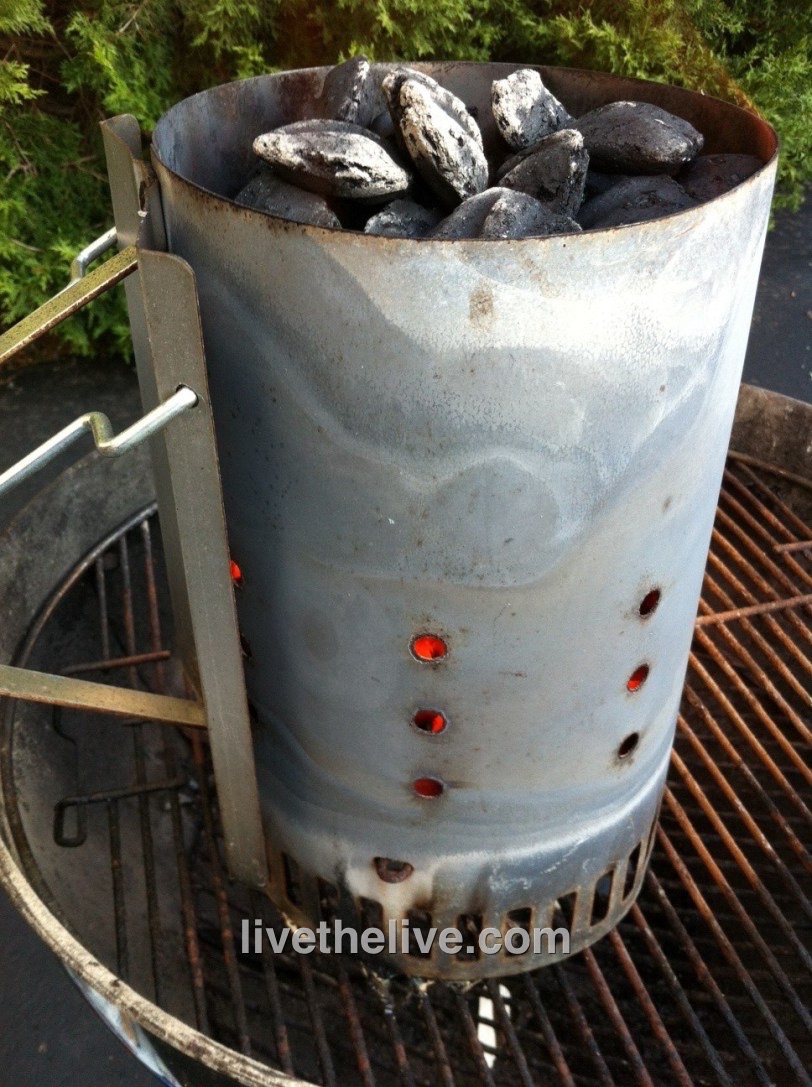
The charcoal chimney with hot coals awaits.

Although I’ve stopped using charcoal briquettes a long time ago, and now strictly use natural hardwood charcoal, this recipe works best with Kingsford. The idea is for the coals to cook slowly and evenly. And never use lighter fluid…always start your fire with a few pieces of crumbled newspaper under a charcoal chimney.


Needed:

Weber grill, with the dome top

Kingsford charcoal briquettes (do not use Match Lite or other pre-soaked briquettes)

Heavy duty aluminum pan (disposable)


Ingredients:

Whole turkey, up to 15 lbs, thawed and brined (see my blog about brining a turkey)

Olive oil (to rub on turkey)

2 yellow onions, chopped

4 stalks of celery, chopped

½ lb (2 sticks) of unsalted butter, melted

1 tablespoon granulated garlic

1 tablespoon onion powder

2 tablespoons salt

1 tablespoon pepper

Spreading the coals away from the center of the grill.

Spreading the coals away from the center of the grill.

If you want stuffing, make it separately and cook it separately. (A great recipe in my next blog.)

Light 8 to 10 lbs of charcoal in the grill…depending on the size of the turkey and how cold it is outside.

Remove the giblets from the turkey. Place the bird in the aluminum pan.

In a small bowl, mix granulated garlic, onion powder, salt and pepper Add any other seasonings you like.

Coarsely chop onions and celery. Place in a another bowl. Mix with the melted butter and 1/3 of the salt/pepper/garlic powder mixture. Place a small handful of this “stuffing” mixture in the neck cavity of the turkey. Place the rest in the body cavity (where the stuffing would usually go.) You can fasten the bird with turkey skewers if you like. This “stuffing” is strictly to flavor the turkey…you don’t eat it!

The rubbed, stuffed and seasoned bird.
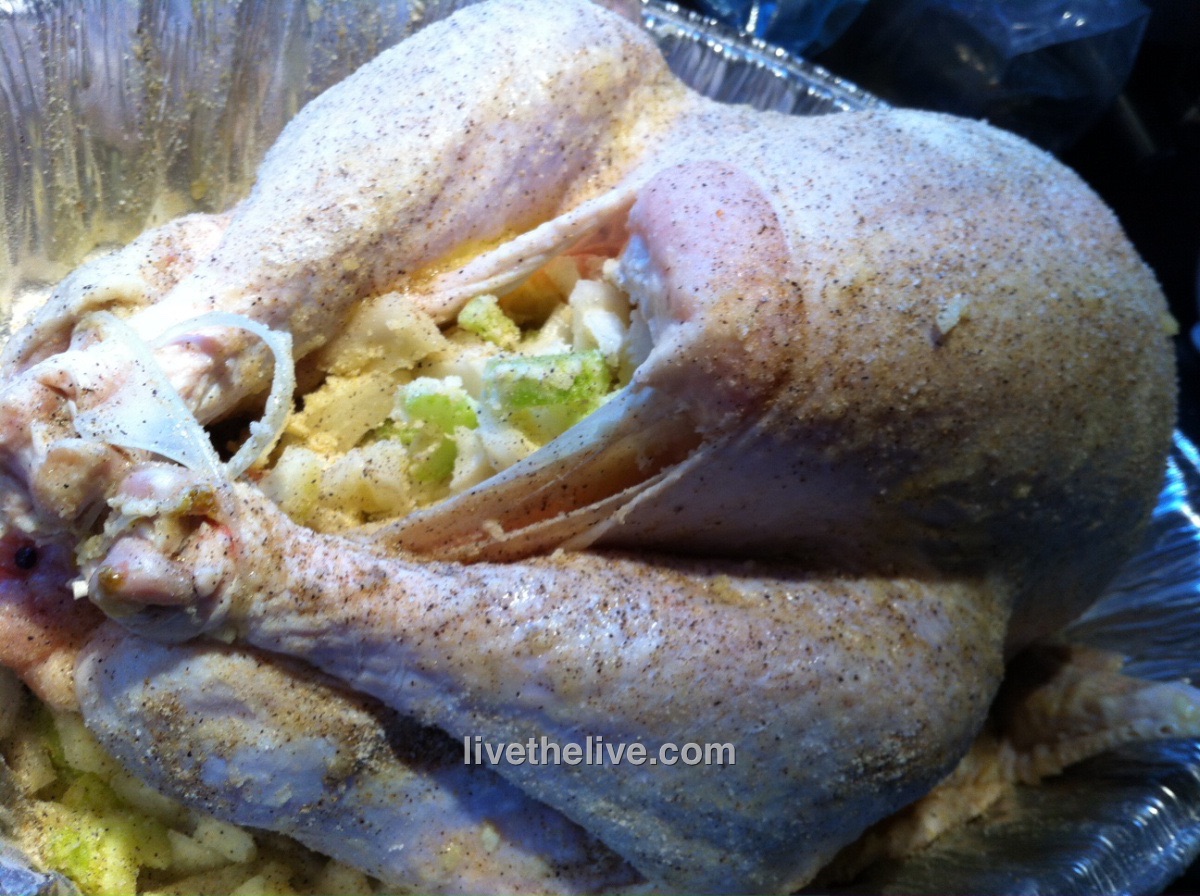
The rubbed, stuffed and seasoned bird.

Rub the outside of the entire turkey with the olive oil and sprinkle the rest of the garlic/onion/salt/pepper mixture on the outside of the bird. Make sure you get the bird on the bottom as well.

When the coals in the grill have ashed over, spread them to the outside edges of the Weber equally. Put the cooking grill rack in place. Place the aluminum pan with the turkey in the center of the grill, keeping it away from the direct heat of the coals. If using a meat thermometer, insert the probe into the thickest part of the breast, being careful not to hit the bone. Place the lid on the grill. (You may need to bend your pan a bit.) Open the vents on the bottom of the Weber as well as the lid. Important to get air circulating!

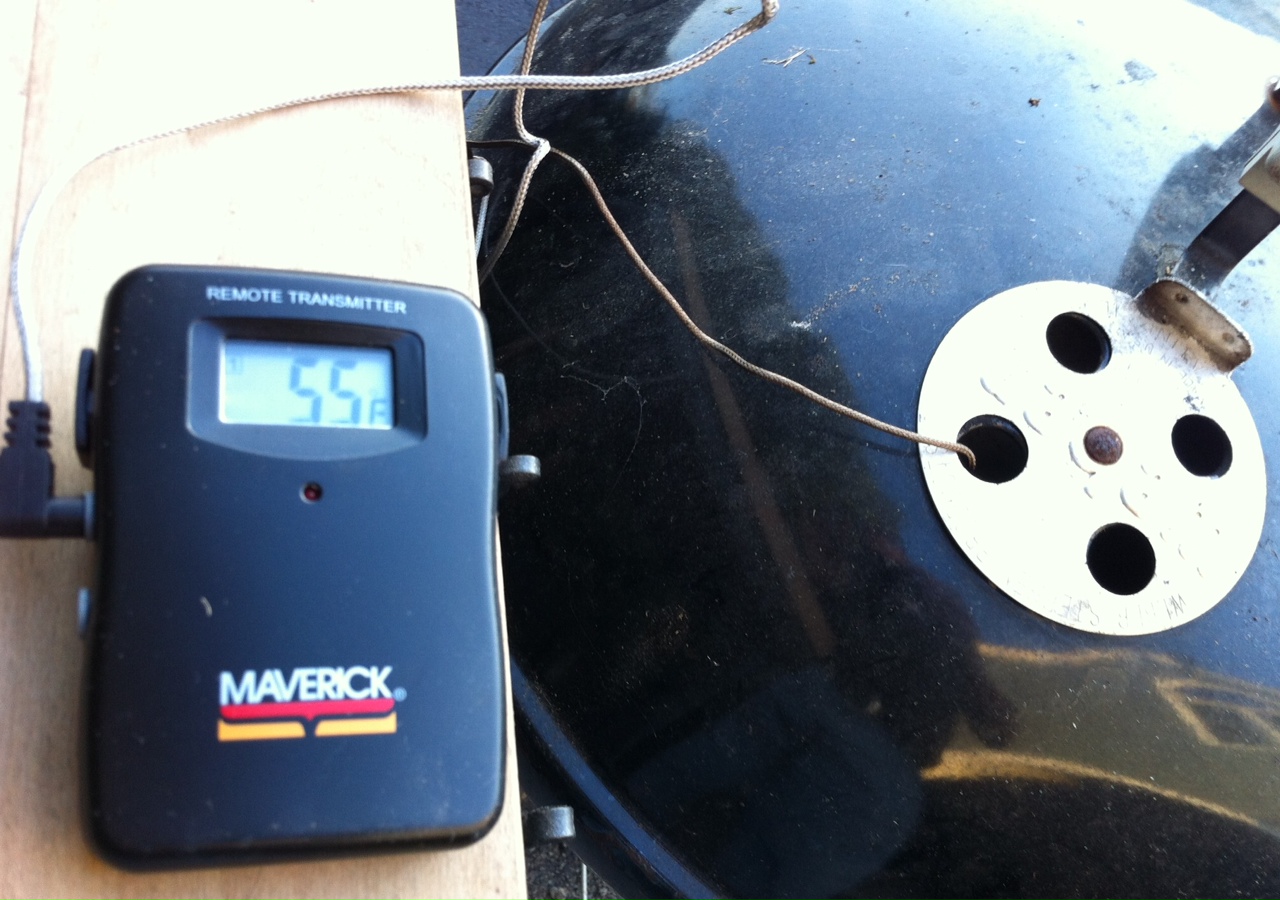
My meat thermometer calls me from as far as 100 feet away! Time for a cocktail!

My meat thermometer calls me from as far as 100 feet away! Time for a cocktail!

No basting is necessary.

Now here’s the tough part: DO NOT OPEN THE GRILL TO CHECK ON THE TURKEY! (If you must look, shine a flashlight into the vent holes on the lid to take a peek at the pop-up timer, if there is one.) The whole point is to keep the heat inside the kettle. You’ll know your turkey is done when no more smoke or heat rises from the grill, and the turkey inside stops making sizzling noises.

Remove the turkey and let it rest at least 15 minutes before carving.

Beautifully grilled, and perfectly cooked in less than 2 hours!
Beautifully grilled, and perfectly cooked in less than 2 hours!
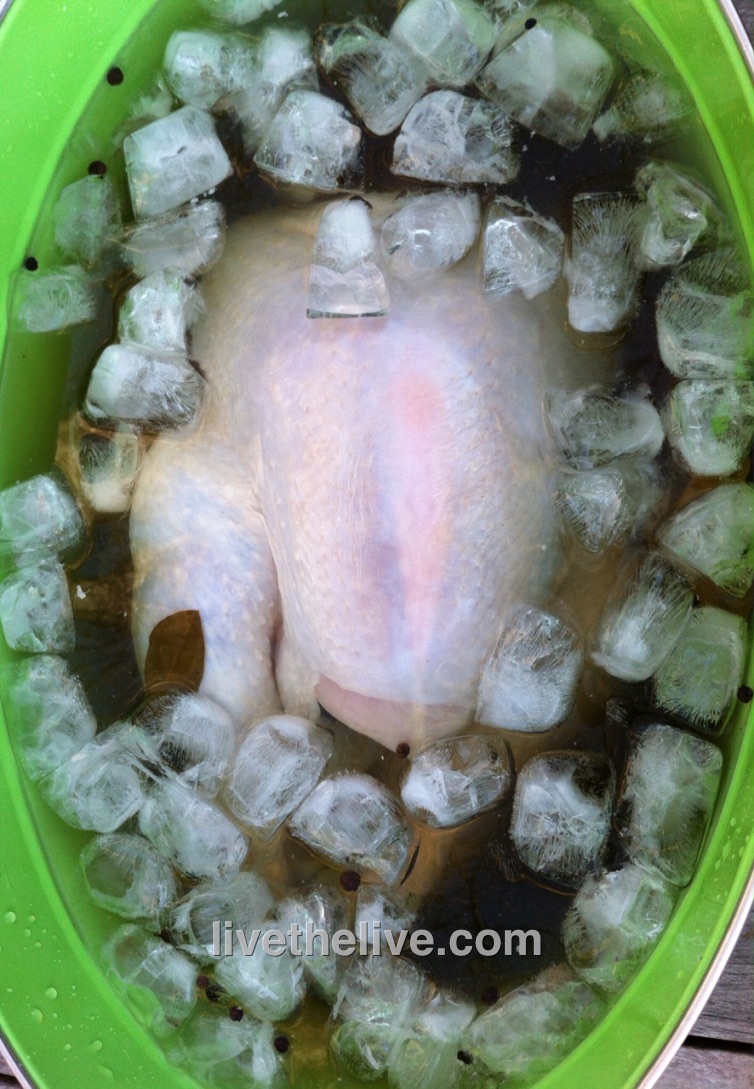
Brining is a simple process of soaking a hunk of protein in a flavored salt solution for a time before cooking, resulting in a much more juicy and flavorful final product.

It’s basic high school science: the brine has a greater concentration of salt and water than the molecules of the protein (in this case, a turkey) that is soaking in it. By simple diffusion, the protein molecules suck up the salty water and keep it. When you cook the meat, some of the water evaporates, but the meat still has far more moisture in it than it would have without the brine soaking, and the result is a moister, more delicious bird.

Some people use giant syringes to inject their turkeys with crazy solutions, but I think that the old way is still the best way when it comes to brining. Get a big pot, fill it with the brine, and soak the bird in it. Done.

Here’s my tried-and-true turkey brining recipe. Once the brining is done, you can cook the turkey whatever way you like best. I use a method where I grill it inside a Weber grill with charcoal. It comes out smokey and absolutely amazing. I’ll have that info in the next blog.

image


Ingredients:

1 gallon of water
2 onions
3 carrots
3 stalks celery
1 cup kosher salt
1 tablespoon black peppercorns
1/2 cup light brown sugar
1 1/2 teaspoons whole allspice
4 bay leaves
1 gallon of ice water
14–15 lb turkey, thawed

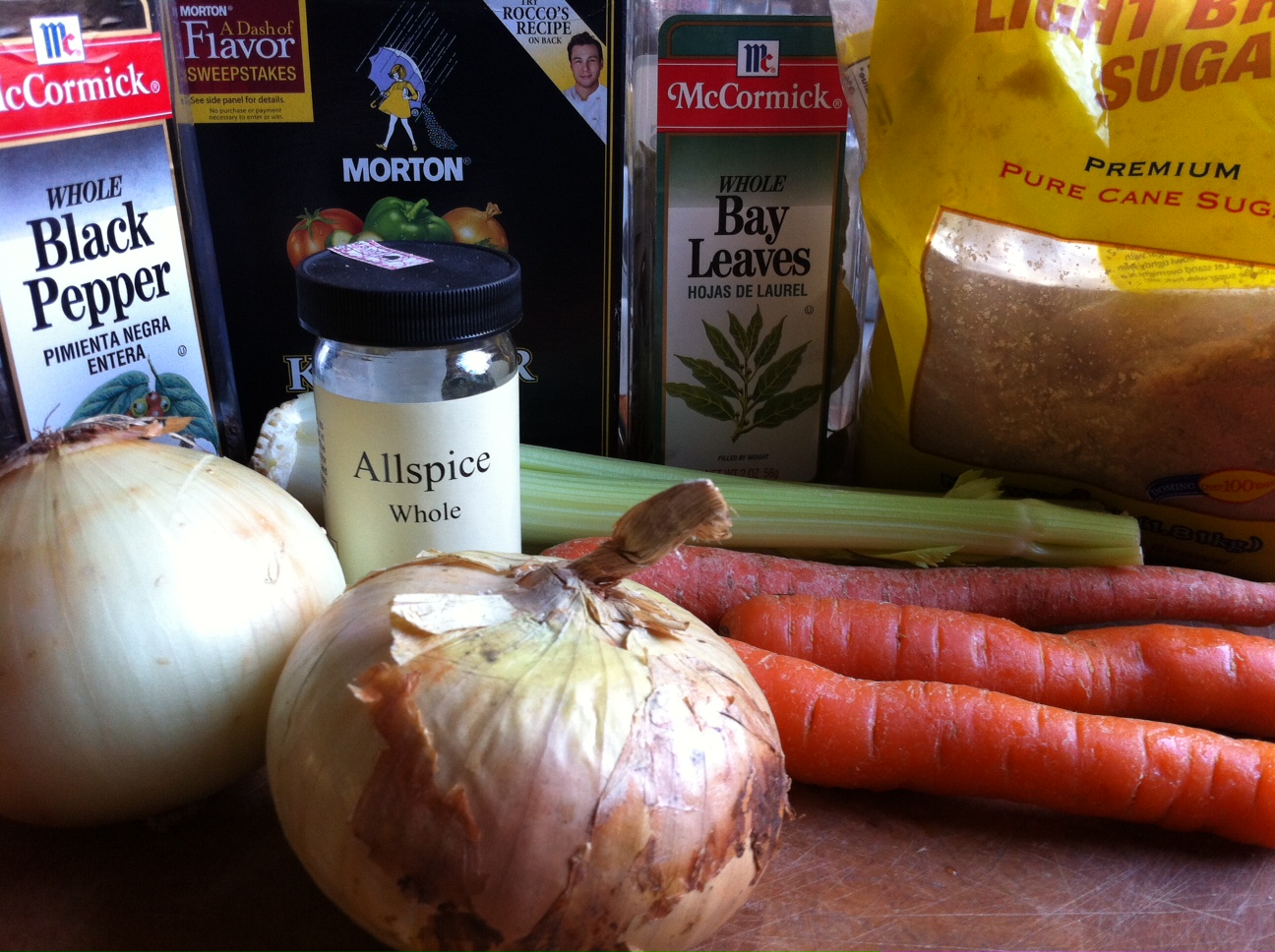
Pour first gallon of water in a large pot. Quarter the onions, carrots and celery (no need to peel them) and add to the water. Add salt, black peppercorns, brown sugar, allspice, and bay leaves.

Let the pot come to a boil for a few minutes. Remove from heat and let brine cool down to room temperature.

Remove giblets from turkey and place the bird in a container just big enough to hold it and 2 gallons of liquid.

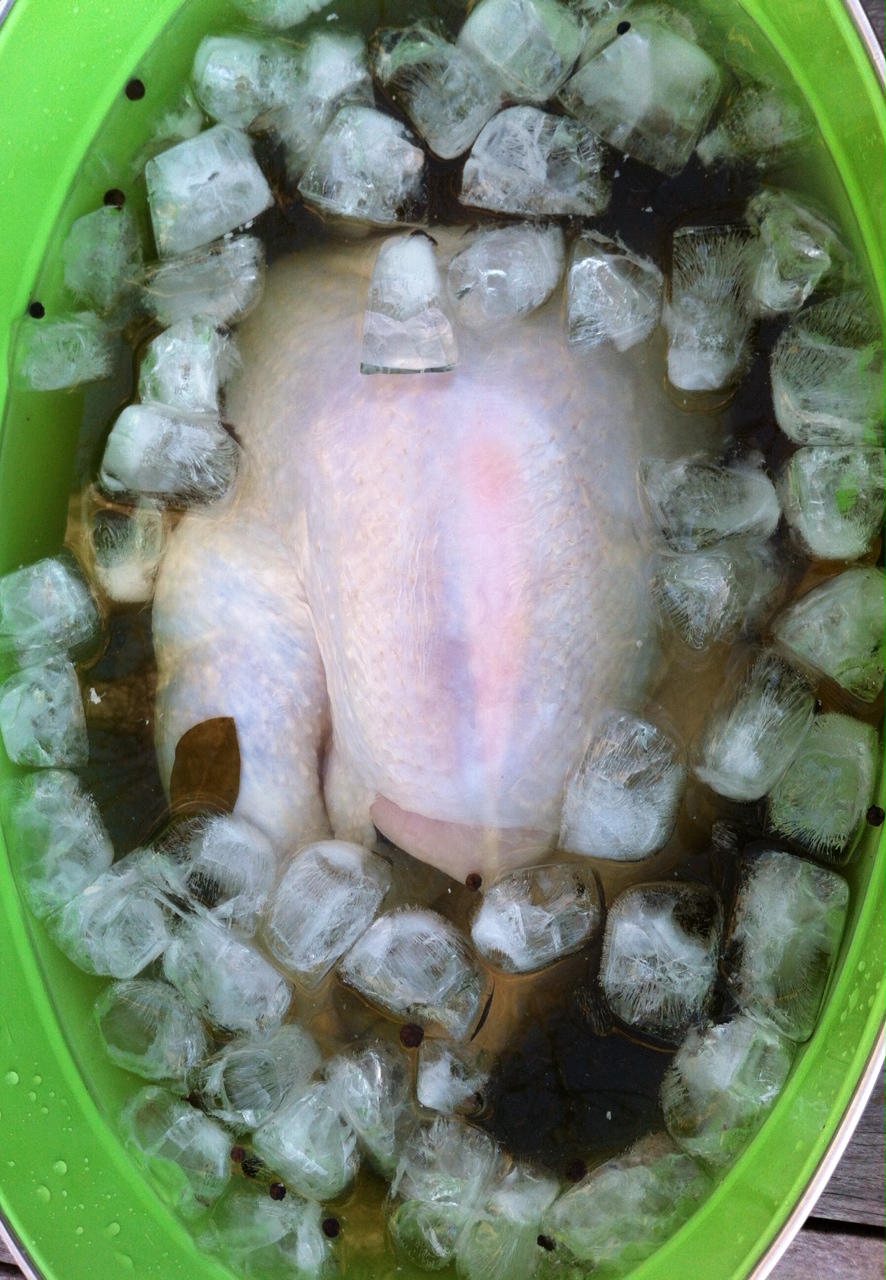
Pour the now-cooled brine over the turkey, then pour in the gallon of ice water.


Make sure the turkey doesn’t float up by placing a plate on top. Put turkey container in fridge for 5 to 8 hours, flipping the turkey over in the container halfway through.

Drain turkey, pat dry with paper towels, and then cook using your favorite recipe.

Next time: cooking your turkey on a Weber grill in a fraction of the time.

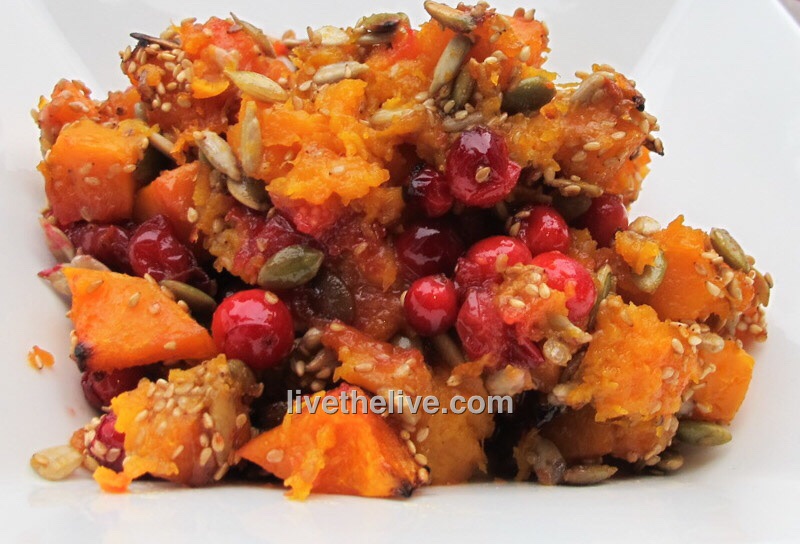
My Mom loves that nasty, gooey cranberry log that oozes out of the can. It would hit the bowl with a splurt and would wiggle for about an hour. I’m more than happy to avoid that and make this delicious side dish instead.

image


Ingredients:


1 medium-sized butternut squash, washed and peeled with seeds removed

Olive oil

Salt

1 cup fresh cranberries

¼ cup sunflower seeds

¼ cup pumpkin seeds or pepitas

¼ cup sesame seeds

¼ cup maple syrup, more if you like it really sweet

image

Pre-heat the oven to 400 degrees.

Once you’ve washed, peeled and seeded the butternut squash, cut it into ½” chunks. Sprinkle a little olive oil and salt on them and toss them to coat. Then spread the squash cubes in a single layer on the baking sheet. Bake for about 30 minutes or until golden on the edges.

Remove the squash from the oven and pour the cranberries into the hot tray. Mix gently. Pour the squash/cranberry mix into a smaller, deeper baking pan.

Increase the oven to 425.

In a separate bowl, combine the sunflower seeds, pumpkin seeds and sesame seeds. Sprinkle the seeds evenly over the squash/cranberry mixture. Drizzle the maple syrup over everything and place the baking pan in the oven. Cook for another 20 minutes, until the seeds have roasted.


Man, that’s a loaded headline if I ever saw one! Years ago, I read an article about how a Thanksgiving stuffing recipe credited to Marilyn Monroe was discovered. Apparently, she could also cook in the kitchen…go figure.

Dated around the time she was married to baseball great Joe DiMaggio while living in San Francisco, it was decided that the recipe was authentic for, among other reasons, its lack of garlic, which DiMaggio reportedly despised!

I tried the recipe years ago and tweaked it, adding garlic, of course. This makes a family sized platter of stuffing. Using a food processor to chop makes things much easier.

photo (1)

Ingredients:

20 ounces sourdough bread

1 lb chicken livers

1 lb ground beef

1 tablespoon cooking oil

8 stalks celery, chopped

2 large onions, chopped

4 cloves garlic, chopped

2 cups chopped parsley

4 eggs, hard-boiled, chopped

1/2 cup chopped prunes or raisins

2 cups grated Parmesan cheese

2 cups chopped walnuts, pine nuts or roasted chestnuts…or a combination

2 tablespoons fresh Rosemary, chopped

4 teaspoons dried oregano

2 tablespoons fresh thyme, chopped

4 bay leaves

2 tablespoons salt, plus more to taste

2 teaspoons black pepper


Break the sourdough into pieces and soak in a large bowl of cold water for 15 minutes. Wring the excess water out over a colander and shred bread into pieces.

Boil the chicken livers for 8 minutes in salted water, then chop until no piece is larger than a coffee bean.

In a skillet over medium-high heat, brown the beef in the oil, stirring occasionally and breaking up the meat, so no piece is larger than a pistachio.

In a large mixing bowl, combine the sourdough, livers, ground beef, celery, onions, parsley, eggs, prunes or raisins, Parmesan and nuts, tossing gently to combine.

In a separate bowl, combine the Rosemary, oregano, thyme, bay leaves, salt and pepper and scatter over the stuffing mixture. Mix again. Taste and adjust for salt.

Refrigerate, covered with foil, until ready to bake.

To bake: preheat oven to 350 degrees. Cook 1 hour with foil on top. Remove foil and cook for 1 hour more at 300. Keep an eye on it. Ovens vary, and you want it out of the oven before it gets too dry. If it does get dry, sprinkle a little chicken stock or water on it, cover with foil, and heat for 10 minutes.

The concept of a deep-fried turkey sounds pretty cool. But for me, it’s just too much damn work: finding a safe spot in the yard to blast the propane-fueled fryer so that you don’t burn your house down, standing outside and freezing your ass off while it fries, and then disposing of gallons of used oil at the end of it all. And making sure the oil is at the right temperature so you don’t get a scorched turkey on the outside and raw turkey on the inside. Sure, they now have indoor turkey fryers, but I’m not crazy about that idea, either.

I get great results by cooking my turkey in my Weber grill. The standard Weber allows you to cook up to a 15 lb. bird–big enough for my purposes–and it comes out crispy, smokey and delicious. If you’re afraid to try this for the first time at Thanksgiving when it really matters, wait a few months and buy a turkey when you have the craving and try it out.

The charcoal chimney with hot coals awaits.

Although I’ve stopped using charcoal briquettes a long time ago, and now strictly use natural hardwood charcoal, this recipe works best with Kingsford. The idea is for the coals to cook slowly and evenly. And never use lighter fluid…always start your fire with a few pieces of crumbled newspaper under a charcoal chimney.

Needed:

Weber grill, with the dome top

Kingsford charcoal briquettes (do not use Match Lite or other pre-soaked briquettes)

Heavy duty aluminum pan (disposable)

Ingredients:

Whole turkey, up to 15 lbs, thawed and previously brined (see my blog about brining a turkey)

Olive oil (to rub on turkey)

2 yellow onions, chopped

4 stalks of celery, chopped

½ lb (2 sticks) of unsalted butter, melted

1 tablespoon granulated garlic

1 tablespoon onion powder

2 tablespoons salt

1 tablespoon pepper

Spreading the coals away from the center of the grill.

If you want stuffing, make it separately and cook it separately. (A great recipe in my next blog.)

Light 8 to 10 lbs of charcoal in the grill…depending on the size of the turkey and how cold it is outside.

Remove the giblets from the turkey. Place the bird in the aluminum pan.

In a small bowl, mix granulated garlic, onion powder, salt and pepper Add any other seasonings you like.

Coarsely chop onions and celery. Place in a another bowl. Mix with the melted butter and 1/3 of the salt/pepper/garlic powder mixture. Place a small handful of this “stuffing” mixture in the neck cavity of the turkey. Place the rest in the body cavity (where the stuffing would usually go.) You can fasten the bird with turkey skewers if you like. This “stuffing” is strictly to flavor the turkey…you don’t eat it!

The rubbed, stuffed and seasoned bird.

Rub the outside of the entire turkey with the olive oil and sprinkle the rest of the garlic/onion/salt/pepper mixture on the outside of the bird. Make sure you get the bird on the bottom as well.

When the coals in the grill have ashed over, spread them to the outside edges of the Weber equally. Put the cooking grill rack in place. Place the aluminum pan with the turkey in the center of the grill, keeping it away from the direct heat of the coals. If using a meat thermometer, insert the probe into the thickest part of the breast, being careful not to hit the bone. Place the lid on the grill. (You may need to bend your pan a bit.) Open the vents on the bottom of the Weber as well as the lid. Important to get air circulating!

My meat thermometer calls me from as far as 100 feet away when the turkey reaches the optimum temperature that I pre-set. Time for a drink!

No basting is necessary.

Now here’s the tough part: DO NOT OPEN THE GRILL TO CHECK ON THE TURKEY! (If you must look, shine a flashlight into the vent holes on the lid to take a peek at the pop-up timer, if there is one.) The whole point is to keep the heat inside the kettle. You’ll know your turkey is done when no more smoke or heat rises from the grill, and the turkey inside stops making sizzling noises.

Remove the turkey and let it rest at least 15 minutes before carving.

Beautifully grilled, cooked to 180 degrees in less than 2 hours!

Brining is a simple process of soaking a hunk of protein in a flavored salt solution for a time before cooking, resulting in a much more juicy and flavorful final product.

It’s basic high school science: the brine has a greater concentration of salt and water than the molecules of the protein (in this case, a turkey) that is soaking in it. By simple diffusion, the protein molecules suck up the salty water and retain it. When you cook the meat, some of the water evaporates, but the meat still has far more moisture in it than it would have without the brine soaking, and the result is a moister, delicious bird.

Some people use giant syringes to inject their turkeys with crazy solutions, but I think that the old way is still the best way when it comes to brining. Get a big pot, fill it with the brine, and soak the bird in it. Done.

Here’s my tried-and-true turkey brining recipe. Once the brining is done, you can cook the turkey whatever way you like best. I use a method where I grill it inside a Weber grill with charcoal. It comes out smokey and absolutely amazing. I’ll have that info in the next blog.

Ingredients:

1 gallon of water
2 onions
3 carrots
3 stalks celery
1 cup kosher salt
1 tablespoon black peppercorns
1/2 cup light brown sugar
1.5 teaspoons whole allspice
4 bay leaves
1 gallon of ice water
14–15 lb turkey, thawed

Pour first gallon of water in a large pot. Quarter the onions, carrots and celery (no need to peel them) and add to the water. Add all the other ingredients, except ice water and turkey.

Let the pot come to a boil for a few minutes. Remove from heat and let brine cool down to room temperature.

Remove giblets from turkey and place the bird in a container just big enough to hold it and 2 gallons of liquid.

Pour the now-cooled brine over the turkey, then pour in the gallon of ice water.

Make sure the turkey doesn’t float up by placing a plate on top. Put turkey container in fridge for 5 to 8 hours, flipping the turkey over in the container halfway through.

Drain turkey, pat dry with paper towels, and then cook using your favorite recipe.

Next time: cooking your turkey on a Weber grill in a fraction of the time.

On Thanksgiving morning, we did what we weren’t supposed to do: woke up late and arrived just 20 minutes before the Macy’s parade started, huddled in the crowd just in front of Radio City Music Hall.

As fate would have it, a police barrier was opened up to the public–kids had the first row–with adults behind them. Our 5-year-old daughter got right up front, and my wife snagged a photo of Iron Chef Geoffrey Zakarian on the Food Network float. (I was a few rows back, taking family videos of the event.)

My advice if you ever plan on going to New York City for Thanksgiving: skip the blowing up of the balloons the night before. It is a madhouse that wraps around a half a dozen city blocks and once you are in, there is no way out until the very end. If you’re claustrophobic, or have a sick or tired kid, you are absolutely screwed. The police show no mercy because they’ve heard every excuse you can think of a thousand times before. Can’t say that I blame them.

We found a way out by heading down to the subway station below the American Museum of Natural History (where all this takes place) and came up the other side of the street out of another subway entrance.

As for Thanksgiving Day and the Macy’s parade: the weather was perfect and our daughter had a great time. We’ve done the parade once. And now we’re done!

Geoffrey Zakarian on the Food Network float.

On Thanksgiving night, we had our dinner at Zakarian’s restaurant, The National, located on the first floor of The Benjamin, our hotel for the weekend. Unfortunately, like many restaurants owned by Iron Chefs (Bobby Flay a prime example), the menus don’t reflect the creativity that you see on Food Network’s “Iron Chef America” show. Our meal was a prix fixe dinner that featured steak. And although it was beautifully cooked…it was steak. I can get that anywhere.

What did shine was the service. The manager, Noble, made sure that we were happy with our wine selection and that our 5-year-old daughter was offered something other than the adult prix fixe menu. And when our choice of a white Rioja tasted off, he quickly brought a bottle of another variety that absolutely hit the spot. As we were waiting for our table on that very busy night, a busboy saw that our little girl was hungry, so he brought over some bread, butter and jelly, and gave her a seat at a small table to enjoy  it while waiting. Excellent service.

Not that I’m an Iron Chef stalker, but the next night, we had dinner at Restaurant Marc Forgione, located in the Tribeca neighborhood of Manhattan. Everything about this restaurant told us we were in the capable hands of a creative master. The restaurant was beautiful. Our server, Brad: friendly and totally professional. And the food: absolutely amazing. Appetizers consisted of chili lobster on Texas toast, with a sauce so good, you wanted to soak every bit up with that thick bread. Kampachi tartare with avocado, Schechuan buttoms, toasted pine nuts and Saratoga chips to scoop with: rich and smooth. A that-day creation of trout on a cedar plank was out of this world. A main course of perfectly cooked squab, bacon, brussels sprouts was real cold weather comfort food. And the most challenging meal for me: the veal tenderloin with Boudin noir, a pork blood sausage that was really intense. But hey, I didn’t come here to have my hand held. I came here to get slapped around a bit! And that’s exactly what this dish did.

Desserts were equally incredible, my favorite combining my two favorite desserts, bread pudding and pecan pie, into one amazing sweet, gooey treat.

And unlike other high-end restaurants, there was no problem when we requested something simple for our fussy daughter’s meal. A plate of home-made pasta with butter and cheese arrived at the table, and my daughter called it “the best ever.”

Marc Forgione the restaurant was only half the story. Marc Forgione the chef was a really cool guy who stepped out of the kitchen often, checking on tables to make sure people were satisfied with their meals. We had a table right near the open kitchen door, so we saw him and his staff at work during our entire meal. And when my daughter handed him a drawing she made of him in his kitchen, he offered to give us a tour. We grabbed that opportunity in a heartbeat! He came back to our table several times more, just to see how we were doing. Great guy. Great talent. Great restaurant.

With Iron Chef Marc Forgione in his kitchen.

I know a lot of people are tempted to buy the turkey deep fryer this time of year, especially now that there’s an electric home turkey fryer that seems to make the job a lot easier and safer. (I’m still not OK with frying turkeys indoors, no matter how safe they say it is.)

The concept of a deep-fried turkey sounds pretty cool. And if you do it right, it tastes pretty good. I’ve had my share of fried turkeys when I lived in Alabama many years ago. But for me, it’s just too much damn work: finding a safe spot in the yard to blast the propane-fueled fryer so that you don’t burn your house down, standing outside and freezing your ass off while it fries, and then disposing of gallons of used oil at the end of it all. And making sure the oil is at the right temperature so you don’t get a scorched turkey on the outside and raw turkey on the inside.

So here’s what I do: I cook the turkey in my good old Weber grill. The standard Weber grill allows you to cook up to a 15 lb. turkey–big enough for my purposes–and it comes out crispy, smokey and delicious. If you’re afraid to try this for the first time at Thanksgiving when it really matters, wait a few months and buy a turkey when you have the craving and try it out.

The charcoal chimney with hot coals awaits.

Although I’ve stopped using charcoal briquettes a long time ago, and now strictly use natural hardwood charcoal, this recipe works best with Kingsford. The idea is for the coals to cook slowly and evenly. And never use lighter fluid…always start your fire with a few pieces of crumbled newspaper under a charcoal chimney.

Needed:

Weber grill, with the dome top

Kingsford charcoal briquettes (do not use Match Lite or other pre-soaked briquettes)

Heavy duty aluminum pan (disposable)


Ingredients:

Whole turkey, up to 15 lbs, thawed and previously brined (see my blog about brining a turkey)

Olive oil (to rub on turkey)

2 yellow onions, chopped

4 stalks of celery, chopped

½ lb (2 sticks) of unsalted butter, melted

1 tablespoon granulated garlic

1 tablespoon onion powder

2 tablespoons salt

1 tablespoon pepper

Spreading the coals away from the center of the grill.

If you want stuffing, make it separately and cook it separately.

Light 8 to 10 lbs of charcoal in the grill…depending on the size of the turkey and how cold it is outside.

Remove the giblets from the turkey. Place the bird in the aluminum pan.

In a small bowl, mix granulated garlic, onion powder, salt and pepper Add any other seasonings you like.

Coarsely chop onions and celery. Place in a another bowl. Mix with the melted butter and 1/3 of the salt/pepper/garlic powder mixture. Place a small handful of this “stuffing” mixture in the neck cavity of the turkey. Place the rest in the body cavity (where the stuffing would usually go.) You can fasten the bird with turkey skewers if you like. This “stuffing” is strictly to flavor the turkey…you don’t eat it!

The rubbed, stuffed and seasoned bird.

Rub the outside of the entire turkey with the olive oil and sprinkle the rest of the garlic/onion/salt/pepper mixture on the outside of the bird. Make sure you get the whole bird…on the bottom as well.

When the coals in the grill have ashed over, spread them to the outside edges of the Weber equally. Put the cooking grill rack in place. Place the aluminum pan with the turkey in the center of the grill, keeping it away from the direct heat of the coals. If using a a meat thermometer, insert the probe into the thickest part of the breast, being careful not to hit the bone. Place the lid on the grill. (You may need to bend your pan a bit.) Open the vents on the bottom of the Weber as well as the lid. Important to get air circulating!

My meat thermometer calls me from as far as 100 feet away when the turkey reaches the optimum temperature that I pre-set. Time for a drink!

No basting is necessary.

Now here’s the tough part: DO NOT OPEN THE GRILL TO CHECK ON THE TURKEY! (If you must look, shine a flashlight into the vent holes on the lid to take a peek at the pop-up timer, if there is one.) The whole point is to keep the heat inside the kettle. You’ll know your turkey is done when no more smoke or heat rises from the grill, and the turkey inside stops making sizzling noises.

Remove the turkey and let it rest at least 15 minutes before carving.

Beautifully grilled, cooked to 180 degrees in less than 2 hours!

BRINING A TURKEY

Posted: November 10, 2012 in brining, Food, marinade, turkey
Tags: , , , ,

Brining is a simple process of soaking a hunk of protein in a flavored salt solution for a period of time before cooking, resulting in a much more juicy and flavorful final product.

It’s basic high school science: the brine has a greater concentration of salt and water than the molecules of the protein (in this case, a turkey) that is soaking in it. By simple diffusion, the protein molecules suck up the salty water and retain it. When you cook the meat, some of the water evaporates, but the meat still contains far more moisture in it than it would have without the brine soaking, and the end result is a moister, simply delicious bird.

Some people use giant syringes to inject their turkeys with crazy solutions, but I think that the old way is still the best way when it comes to brining. Get a big pot, fill it with the brine, and soak the bird in it. Done.

Here’s my tried-and-true turkey brining recipe. Once the brining is done, you can cook the turkey whatever way you like best. I use a method where I grill it inside a Weber grill with charcoal. It comes out smokey and absolutely amazing. I’ll have that info in the next blog.

Brine Ingredients:

1 gallon of water
2 onions
3 carrots
3 stalks celery
1 cup kosher salt
1 tablespoon black peppercorns
1/2 cup light brown sugar
1.5 teaspoons whole allspice
4 bay leaves
1 gallon of ice water
14–15 lb turkey, thawed

Pour first gallon of water in a large pot. Quarter the onions, carrots and celery (no need to peel them) and add to the water. Add all the other ingredients, except ice water and turkey.

Let the pot come to a boil for a few minutes. Remove from heat and let brine cool down to room temperature.

Remove giblets from turkey and place the bird in a container just big enough to hold it and 2 gallons of liquid.

Pour the now-cooled brine over the turkey, then pour in the gallon of ice water.

Make sure the turkey doesn’t float up by placing a plate on top. Put turkey container in fridge for 5 to 8 hours, flipping the turkey over in the container halfway through.

Drain turkey, pat dry with paper towels, and then cook using your favorite recipe.

Next time: cooking your turkey on a Weber grill in a fraction of the time.