Archive for March, 2015

DIY TACO SEASONING

Posted: March 30, 2015 in beets, Food, morocco, Recipes, taco
Tags: , , , ,

It’s so easy to make taco seasoning at home, so why would you buy the spice factory floor sweepings that they use for packaged taco seasoning sold in supermarkets? I’m not a huge fan of Mexican cuisine, but every once in a while, I crave a good taco. My tacos don’t resemble most, but that’s OK. It’s all about making it your own.


1 teaspoon granulated garlic
1 teaspoon onion powder
1/4 teaspoon crushed pepper flakes
1 teaspoon dried Mexican oregano
1 teaspoon paprika
2 teaspoons ground cumin
1 teaspoon sea salt
1 teaspoon black pepper
1 Spanish onion, finely chopped
olive oil
2 lbs. grass-fed ground beef

Combine all the spice ingredients in a bowl.

Saute the onions in a bit of olive oil until translucent. Add the beef and saute until cooked, mixing in the spice mixture a little at a time until you’ve used it all.

You can also mix the spices with 1 cup of flour and use it to season chicken before frying…or mix the seasoning with strips of chicken breast or beef for fajitas.

My tacos are a bit unusual. Although I use a soft flour tortilla and my seasoned and cooked ground beef, I use my Awesomesauce  and roasted golden beets. Recipe here: http://wp.me/p1c1Nl-gT

Tacos with roasted golden beets, baby Romaine salad mix, and Awesomesauce

Tacos with roasted golden beets, baby Romaine salad mix, and Awesomesauce

For the beets: I wash the beets and quarter them, cutting the top and bottom off but leaving the skin. I place them in a sheet of aluminum foil, and sprinkle with salt, pepper and olive oil. I combine the ingredients to coat the beets, wrap the foil tightly into a package, and roast in a 400-degree oven for 1 hour. After roasting and the beets have cooled a bit, I slice them into smaller pieces for the tacos.

Slices of avocado go really well with this, too!

image

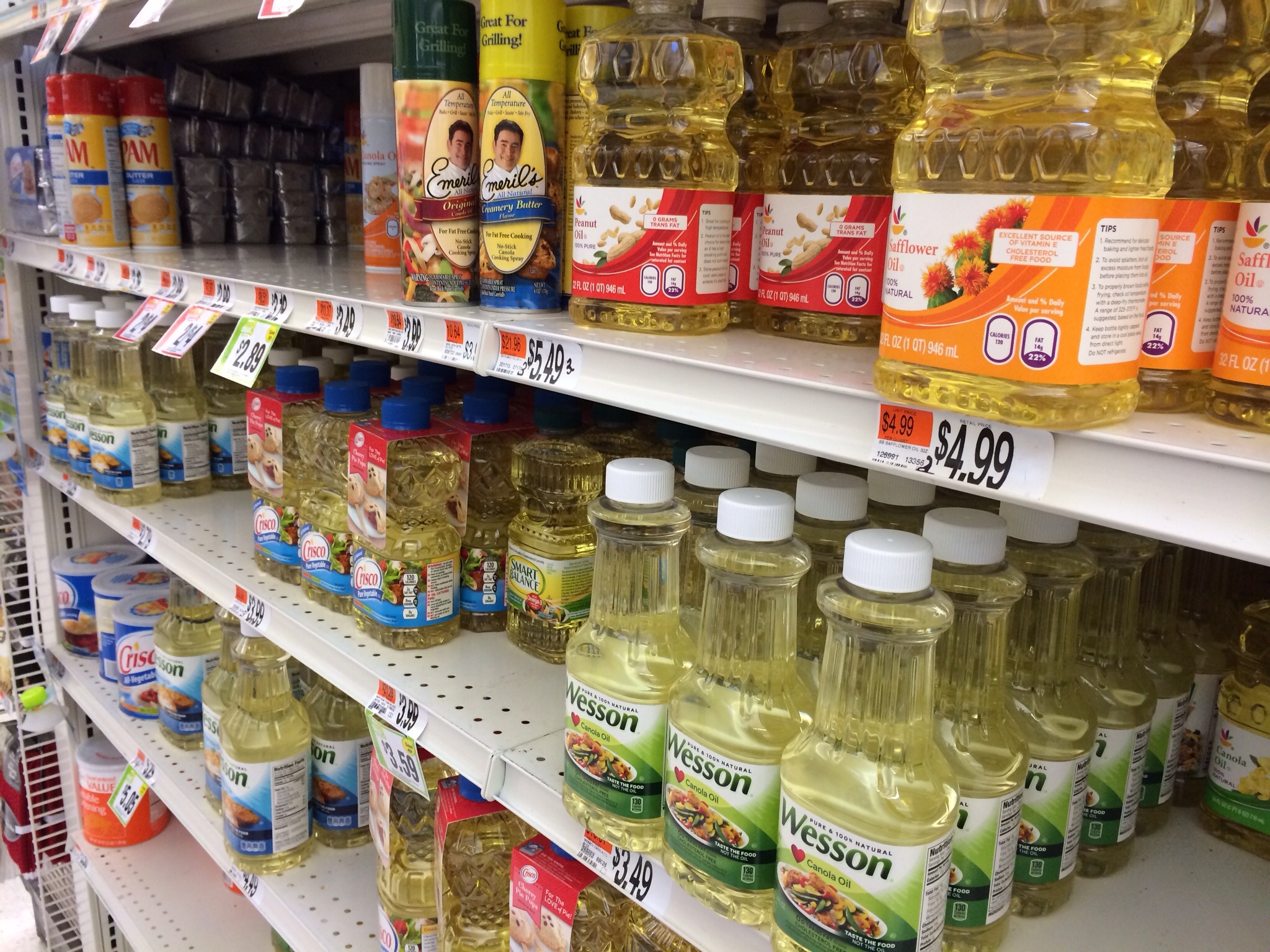
There is a huge battle going on about the safety of canola oil. Canola oil is made with genetically modified seeds which are doused with Monsanto’s Round-Up, so if you’re trying to avoid GMO’s and possible carcinogens in your family’s diet, you have one choice: stop using canola oil.

Canola gets its name from “Canada” and ‘Oil.” There is no “canola plant.” There is, however, something called rapeseed, which canola oil comes from. The “rape” comes from the latin “rapum,” which means “turnip,” but you can see how something called rapeseed oil wouldn’t work with the public. So: Canola it became.

Rapeseed plants have been grown for thousands of years, not for edible oils, but for lamp oils and lubricants. The presence of erucic acid, some nasty stuff that nobody really wants to eat, made it unsafe for human consumption. Rapeseed oil was in high demand during World War II for its industrial applications. After the war, the demand for rapeseed oil diminished, and it was only in the 1970’s that scientists were able to wean out the erucic acid out of rapeseed to make canola, but they had to use nasty compounds like hexane to do it. (Hexane is used as a solvent and cleaning agent in other applications, and has a long list of side effects according to the EPA: http://www.epa.gov/airtoxics/hlthef/hexane.html.)

It was in 1998 that the GMO was born when scientists developed a strain of rapeseed that could withstand herbicides like Round-Up, which is what almost all of canola is made from today. Personally, I don’t want to eat any plant that can withstand (and certainly absorb)  herbicides and pesticides.

So what about the other oils out there? If you’re staying away from canola oil, the bad news is you need to stay away from these oils as well: soybean oil, corn oil, safflower oil, sunflower oil, and even peanut oil and grapeseed oil. Many use Round-Up ready seeds, and most are treated with hexane.

The best oils to cook with: coconut oil, avocado oil and pork lard (or leaf lard) from humane family farms for high-heat cooking, and butter and olive oil for low-to-medium heat. (Go for a local olive oil, if possible. There have been many false label issues with imported olive oils as well.)

Basically, what our grandparents used is what we should use. Go figure. Maybe that’s why most of my grandparents lived well into their 90’s.


MEATLOAF

Posted: March 24, 2015 in bacon, beef, Carnivore!, Food, pork, Recipes
Tags: , , , , ,

Few dishes scream out “comfort food” to me like meatloaf. My Mom’s meatloaf was awesome, and she’d cut a huge slab of it onto my plate, with fantastic butter-loaded Pennsylvania Dutch egg noodles on the side. I couldn’t stop eating it.

I never thought of making meatloaf when I moved away, because it gave my Mom something special to make for me when I came home to visit. She was thrilled that there was a dish she could make that I would devour every time, without hesitation. (The others were her roasted lamb and Lithuanian pierogis called koldūnai (kol-doon-ay).

But now that my Mom has moved into an assisted living facility where she can’t cook, I’ve had to take meatloaf matters into my own hands. I never got my Mom’s exact recipe. But I had an idea of what went into it, and so I gave it a shot.

The standard mix for meatloaf is one-third each ground beef, pork and veal. I went 50-50 on the beef and pork instead. And instead of layering slices of bacon on top as many people do, I used pre-cooked bacon that I chopped up and put inside the loaf.

image


1 lb. ground beef
1 lb. ground pork
1 packet Lipton onion soup mix
1/2 cup breadcrumbs
1/4 cup ketchup
4 strips of cooked bacon, chopped
2 eggs

Combine ingredients, form into a loaf and place in a loaf pan. Bake at 350 for about an hour.


If you’re not a fan of packaged ingredients like the Lipton onion soup mix, use this:

1 yellow onion, minced

1 teaspoon salt

1/2 teaspoon pepper

1/2 teaspoon garlic powder


Saute the onion in a little oil or pork fat until translucent. Let it cool, then mix in the salt, pepper and garlic. Add this mix to the other ingredients above.

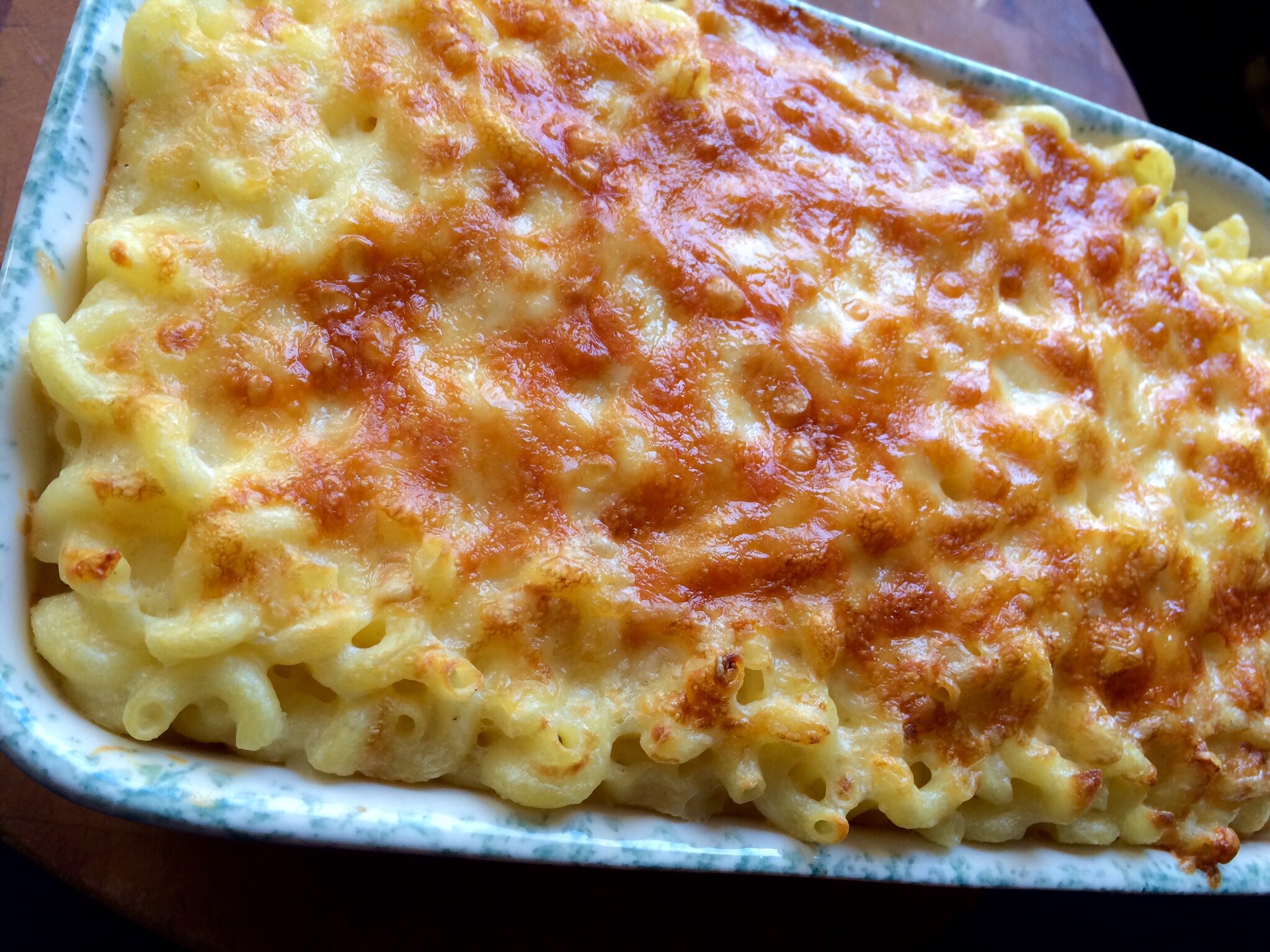
The quality of gluten-free products, especially flours and pastas, has improved drastically over the last 5 years. Flavor-wise, it really has gotten to the point where you’d never know the difference between GF and wheat.

Baking breads, cakes and pizzas are still a challenge at times, but this mac and cheese recipe dares you to tell the difference.

image

2 boxes (12 oz. each) gluten-free elbow pasta

8 tablespoons (1 stick) unsalted butter

4 1/2 cups milk

1/2 cup gluten-free flour

2 teaspoons salt

1/4 teaspoon nutmeg

1/4 teaspoon black pepper

pinch of cayenne pepper

12 oz. grated sharp Cheddar cheese (about 4 1/2 cups)

8 oz. grated Gruyere cheese (about 2 cups)


Pre-heat the oven to 375 degrees.

Cook the pasta until a bit firmer than al dente.

Using a bit of the stick of butter, butter a 3-quart casserole dish.

Warm the milk in a saucepan over medium heat.

Place the remaining butter in a skillet with high sides and melt it over medium heat. When the butter bubbles, add the flour, whisking constantly. While whisking, add the hot milk, a little at a time. Whisk constantly, cooking about 5 minutes.

Remove from heat and stir in the salt, nutmeg, black pepper and cayenne. Then mix in 3 cups of the cheddar and 1 1/2 cups of the Gruyere. Stir in the cooked pasta.

Pour the mixture into the casserole dish, and sprinkle the remaining cheese on top.

Bake about 25 minutes, until golden.

image


March 18 is National Sloppy Joe Day.

My sandwich takes on a Mexican twist, using seasoned taco meat and a great barbecue sauce. Putting them together with a sprinkling of Mexican cheese on a bun with lettuce and tomato made for one sloppy but delicious sandwich!

sloppy jose


For the barbecue sauce…

2 cups ketchup

3/4 cup water

6 tablespoons cider vinegar

6 tablespoons white vinegar

6 tablespoons brown sugar

3 tablespoons Worcestershire sauce

1 tablespoon chili powder

2 teaspoons salt

2 teaspoons black pepper

1 1/2 teaspoons cumin


Mix all the ingredients in a saucepan and simmer until the flavors have blended, about 20 minutes. Remove from heat and cool to room temp. If you store it in an airtight container in the fridge, it’ll stay good for a few months.


For the seasoned taco meat…

1 teaspoon granulated garlic

1 teaspoon onion powder

1/4 teaspoon crushed pepper flakes

1 teaspoon dried Mexican oregano

1 teaspoon paprika

2 teaspoons ground cumin

1 teaspoon sea salt

1 teaspoon black pepper

1 Spanish onion, finely chopped

olive oil

2 lbs. grass-fed ground beef


Combine all the spice ingredients in a bowl.

Saute the onions in a bit of olive oil until translucent. Add the beef and saute until cooked, mixing in the spice mixture a little at a time until you’ve used it all.


For the sandwich…

Take some of the taco meat and place it in a small non-stick pan and heat on medium. Squirt in as much of the barbecue sauce as you like, mixing thoroughly. Sprinkle some grated Mexican cheese on top, mixing thoroughly and letting it all melt together into one warm, gooey mess. Throw it on a bun. Add lettuce, tomato, avocado slices, whatever you like!


1


I was recently asked by the Providence Art Club to come up with a cocktail for their first Founders Day celebration. One hundred glasses were raised to honor the founding fathers of the second oldest art club in the United States. (Founded in 1880.) The oldest art club is the Salmagundi Club in NYC, founded in 1871. However, the Providence Art Club holds the distinction of being the oldest art club in the United States that was founded by both men and women. (The Salmagundi Club started as an all-male club.)

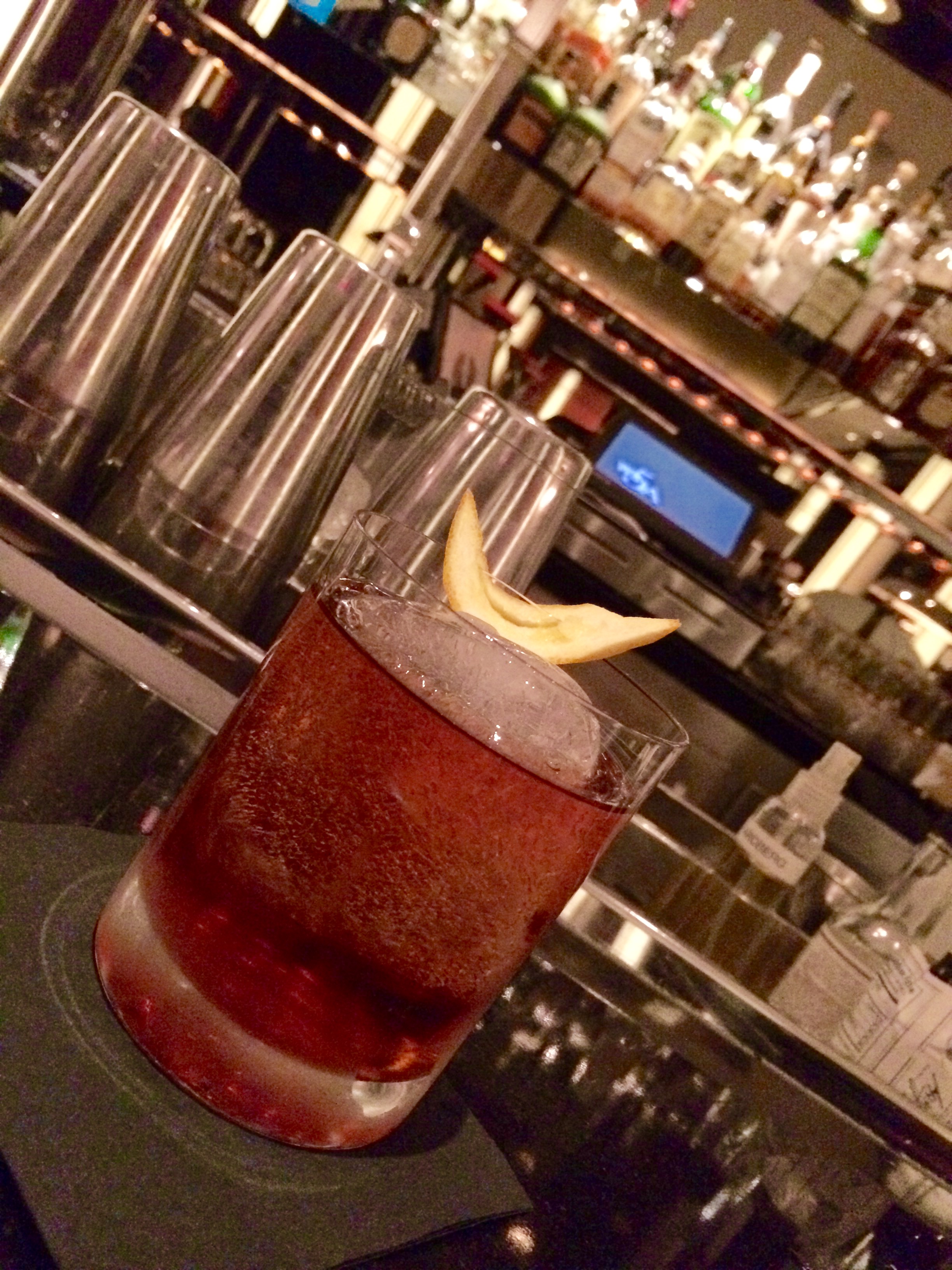
 Silhouette cocktail
My cocktail, The Silhouette, is a twist on the Boulevardier, which is a twist on the classic Negroni.

In a cocktail shaker with ice:

2 oz bourbon (I use Eagle Rare)
1 oz sweet vermouth (I use Antica Formula)
1/2 oz Campari
2 shakes orange bitters

Stir the ingredients with ice and then strain into a rocks glass with one large ice cube.

Garnish with an orange twist.

You could say I’ve done it all in St. John. My first visit 25 years ago was a week-long stay in a tent at Cinnamon Bay campground. I returned in later years to rent villas in the Chocolate Hole area as well as Coral Bay. I rented apartments and condos in Cruz Bay. And, I’ve stayed at the Westin Resort St. John several times.

St. John  has rapidly become the island of the Jeep Wrangler. You'll find this as a rental more than any other kind of vehicle. Always reserve your car while you're still at home, before your trip. They go fast.

St. John has rapidly become the island of the Jeep Wrangler. You’ll find this as a rental more than any other kind of vehicle. Always reserve your car while you’re still at home, before your trip. They go fast.


St. John is a small, mountainous, tropical island, one of the three US Virgin Islands. (The other two are St. Thomas and St. Croix.) The Rockefellers fell in love with this island many years ago, and established what is now the Caneel Bay Resort. More significantly, they secured about two-thirds of this island (and much of its surrounding waters) as a National Park, which means limited construction on land and no annoying jerks in loud motor boats and jet skis off shore. Those areas where construction is allowed, outside of the National Park, like the town of Cruz Bay, have seen significant growth in the last two decades, and it’s not always for the best.

Local markets have kept up with the times, and you can now find gluten-free and organic foods easily on St. John.

Local markets have kept up with the times, and you can now find gluten-free and organic foods easily on St. John.

There’s no airport in St. John…just a helipad at the top of the island where the hospital is located. So that means everyone arrives here by boat. Vacationers land in St. Thomas and take a series of taxis and a ferry to get to St. John. Easy to do. The lack of affordable living space for locals that work here means many of them have to commute every day from St. Thomas, where the rent is cheaper.

Talk to most store or restaurant owners and they’ll tell you that they came to St. John on vacation and decided this was where they wanted to stay. I can’t say that I blame them. And if they had a radio station here, I’d be really tempted to do the same!

image

Photo by Kelly Milukas.


Westin Resort St. John

Some of the flowers at the Westin.

Some of the flowers at the Westin.


We stayed at the Westin and a lot has changed since our last visit five years ago, especially the attitude of the staff in general. Where before they seemed bored, this time they went out of their way to be friendly and helpful. And it rubbed off on the guests, too. (At least the ones that weren’t total a-holes.)

We were here once again on Starwood points and got a poolside room with King-size bed and a roll away for our 8-yr-old daughter. The room was clean and comfortable, and housekeeping was there every day to make sure we had plenty of clean towels.

The push is definitely on to get you to see their time share properties, and so the sales pitch was annoying at times. But it didn’t take away from our enjoyment of the property.

My daughter loved the Kids’ Club (gives parents some private time.) My wife loved the spa. The staff of the dive shop was helpful in guiding us where to go snorkeling on the island, depending on water conditions.

image

Nothing, I mean nothing, beats the private Westin ferry service that takes you from the airport to the resort and back again without any stress or hassle. After two-and-half decades, I can tell you: the public ferries and taxis can get tiresome. The Westin ferry makes you feel like a rock star. It’s $120 per adult roundtrip. That may sound steep until you realize that it takes the place of a bumpy 45-minute taxi ride in a crowded van from Cyril E. King Airport in St. Thomas to Red Hook, on the eastern side of the island….and dragging your stuff out of the van to the ferry at Red Hook that takes you to Cruz Bay in St. John…and fighting the crowds to unload your luggage and put it on a taxi that takes you from Cruz Bay to the Westin Hotel.

With the Westin ferry, you don’t lift a finger. When you land at the airport, you check in at the Westin desk, where they immediately give you your room keys and plan your return home (not that you want to think about it then, but you get peace of mind.) Then you get your luggage off the carousel and the Westin people put it on a taxi for you. The taxi takes 10 minutes to get to Charlotte Amalie, where the private Westin ferry is waiting for you. You board, and they load your luggage. You enjoy a beautiful 45-minute ferry ride and you arrive at the Westin resort’s private dock. You are greeted with a rum drink while they unload your luggage and bring it to your room. You already have your room key, so you get to your room when you feel like it. That’s the way it’s done! Of course, you do have to stay at the Westin to use the ferry service. But you also get unlimited free rides to and from St. Thomas on the ferry when you want to go there to shop, dine or explore. (We never do. We love this island too much.)

Poolside room view at the Westin.

Poolside room view at the Westin.

The food at the Westin poolside cafe/bar called Snorkels was great, with many healthy options. Room service was good, not great. Their only other real restaurant, Lemongrass, had a Thai theme which wasn’t very family friendly. And the previous fancy steak restaurant, in the main building, was now a big empty space. This meant that you had to leave the property and get a taxi to Cruz Bay (at $5 per person one-way) if you wanted a decent dinner. This was, in our opinion, the biggest fail on the part of what could be a great resort. (Like I said, we were there on points, and we’re foodies, so we were heading into town every night anyway. But if I was paying $700+ a night, and hoping to eat there with my kids, I’d be pissed. I guess there’s always room service.)
We arrived just before winter break. It was really peaceful and serene. Then the screaming parents and their brats arrived, and it became a whole different place. (We nicknamed our next-door neighbors the Awful-Awful family.) That’s when we rented a car and explored the island for a few days, returning only to shower and sleep. If you’re a couple looking for romance, beware of holidays!


The taxis on St. John, pick-up trucks with benches in the back, will take you just about anywhere on the island. Great when you don’t want to drink and drive…


Eating and drinking in Cruz Bay…


The Beach Bar

image

I’ve listed the Beach Bar first, because it’s the first and last—and in between—place you need to be when you come to St. John. You have not officially arrived until you’ve had a drink here.

image

Nothing fancy. Just a bar along the beach with good bar food. But at night, the Beach Bar jams with live music of every kind, and it’s the most fun you can have in Cruz Bay with your pants on! I have walked back–okay, stumbled back–to my condo many times from the Beach Bar in the last 3 decades. Like I said, it’s the first place I go to when I get to the island, and where you’ll always find me on my last night before I head home! Everyone comes here: singles, couples, families. No worries.

Bar games powered by Shirley Temples at the Beach Bar.

Bar games powered by Shirley Temples at the Beach Bar.


La Tapa

image

Our choice for #1 restaurant on the island. We go to La Tapa every time we’re in St. John, and the food and service is always outstanding. This is where you go for a romantic dinner or a nice quiet time with the family. This is where you go when you’re tired of fritters and Caribbean tastes and you’re craving a high-end dining experience. Wonderful wines, well-made cocktails. Deliciously fresh gazpacho. An intriguing cheese plate. Foie gras and pork belly (what’s not to like?) House-aged steaks. Tasty desserts. Located right next to Woody’s, you could say that these two places are the opposite extremes of the St. John experience. Both great in their own, very different ways!


The Terrace

A bean martini at the Terrace, featuring house pickled haricot vert.

A bean martini at the Terrace, featuring house pickled haricot vert.

This wasn’t just excellent for St John. It was truly excellent. Inventive cocktails, like a martini with house-pickled haricot vert…foie gras…fresh monk fish…beautiful aged ribeyes…and more. Sophisticated flavors and combinations found in big city restaurants back home. No kids’ menu, but that’s OK. They made a wonderful dish of pasta with tomato sauce for our daughter. Knowledgeable and friendly service, quiet atmosphere despite their location across the street from the Beach Bar. Family friendly as well as a great spot for a romantic dinner. Reservations a must. #2 of our favorite restaurants on St John.


Morgan’s Mango

image

Morgan’s Mango is a lively place where you can get a great cocktail and feast on wonderful Caribbean flavors. When you’ve just arrived in St. John, this is exactly what you want! I’m glad we came here first, because after several days of similar food, we started looking for a change of pace. But what they served us, they did well: tuna tartare, Caribbean ceviche, grilled mahi and more. Look for the sign outside…it means they’ve got fresh lobster that day! If you’re looking for a quiet night out, this is not the place. People are here to party and enjoy some great food. Morgan’s Mango delivers. Our #3 choice overall and best choice for local flavor.

The first sip. At Morgan's Mango.

The first sip. At Morgan’s Mango.


Waterfront Bistro

Not a bad place. What the server lacked in skills, she made up for in genuine friendliness. What makes this place special is that you’re on the water in Cruz Bay, and any restaurant that has that going for it is going to do well. Basic salads, okay apps, familiar entrees.


Uncle Joe’s Barbecue

image


Located right in the center of Cruz Bay, in the large parking area across from the Post Office, there’s a small covered seating area with an equally small cooking space known as Uncle Joe’s Barbecue. The wait can be excruciatingly long, and in the old days, it was worth it. But we haven’t been here in 5 years, and it seems to me that the recipe, maybe the ownership, maybe the staff, has changed. Believe me, it’s not bad. But it just didn’t match the memory I had of it. And you better be OK with “island time” to eat here. Place your order, and go shopping. Come back in an hour, and maybe it’ll be ready. If not, go back out and shop some more. That’s the way it goes at Uncle Joe’s. Good ribs and chicken, just not what it used to be.


Rhumb Lines

The strange entrance to Rhumb Lines: through a convenience store.

The strange entrance to Rhumb Lines: through a convenience store.

Probably the most disappointing dinner on our entire trip to St. John. This place was recommended by several friends and we found the food to be just plain bad. When the best thing at the table is your kid’s chicken tenders and french fries, you know you’ve got a problem.
The atmosphere is fun and energetic, but all of our dishes were a real disappointment: summer rolls (flavorless), pot stickers (burnt), pad Thai (like out of a can), Cuban pork (mystery meat.) All served very quickly, to get you in and out as soon as possible. Thank goodness for cocktails and a decent bottle of wine.
In all honesty, St. John is not a foodie mecca anyway. So it wasn’t surprising to find this place packed nonetheless, especially during winter vacation week. But there are better places to eat in Cruz Bay. I would suggest sitting at the bar, and having a drink just to soak in the fun atmosphere. Then go eat somewhere else.


Woody’s Seafood Saloon

image

You’re not going to get fine cuisine at Woody’s, but you’ll realize that the minute you see it. Crowded, loud, and absolutely insane, it is all about Happy Hour. And it’s a landmark you’ve got to visit, even if it’s just once. Besides, where else can you get a couple of Painkillers to go at their outdoor service window? And they make theirs with Cruzan rum, not Pusser’s. I prefer their recipe. Cheers!


Donkeys, cows, iguanas, even mongooses roam the island. And the roosters pose for photos.

Donkeys, cows, iguanas, even mongooses roam the island. And the roosters pose for photos.


Eating and Drinking In Coral Bay…


Ekaete Pink Corner

image

This is what you do when you go to Coral Bay. You support the locals that are working hard to feed their families by feeding you a taste of their culture. Over the years, we’ve seen this little place grown from a trailer to a quaint outdoor restaurant, and the food has always been wonderful and served with a smile. On our last visit, we did the Sunday brunch, which consisted of a buffet with pork ribs, curried goat, mahi, jerk pork, and more. Everything other than the mahi, which dried out on a buffet table, was excellent. We washed it all down with a beer and their homemade sorrel drink.

Sunday brunch: ribs, mahi, chicken, curried goat, and veggies.

Sunday brunch: ribs, mahi, chicken, curried goat, and veggies.

And for dessert, the homemade soursop ice cream was a special treat. If you’re in Coral Bay, you can’t miss this place. Stop by, and if you can’t dine in, get some take-out for the beach.

Soursop ice cream.

Soursop ice cream.


Shipwreck Landing

There’s nothing horribly wrong with Shipwreck Landing. It’s just not great. In an area like Coral Bay, where the food choices are limited, you could do worse. We chose it as our dinner spot for Valentine’s evening and the food was mediocre at best. As I’ve said before, you don’t come to St. John for the food…and if you do, you stay in Cruz Bay. We take our dinner more seriously than our lunches, where Shipwreck has been fine with salads and burgers. But none of the dinner entrees we had (fish, steak) really impressed us. Coconut shrimp was overcooked and tasted like it came out of a box. Who cares, I suppose. It was snowing back home and we were in St. John!


You can even find deer on St. John. Maybe this means venison on someone's menu soon?

You can even find deer on St. John. Maybe this means venison on someone’s menu soon?


Eating and Drinking In the East End…


Vie’s Snack Shack

image

My first visit to Vie’s Snack Shack was 25 years ago, when Vie herself ran the shack. Back then, the shack was open when Vie felt like it, and I was lucky enough to catch it almost every time I was on the island. Now, years later, the shack is run by her daughter, and she keeps regular hours…something the average tourist can appreciate! (They’re open Tuesday thru Saturday from 10 to 5.) The garlic chicken is still fantastic, especially when you drizzle honey on top. Same with the Johnny cakes. But nobody, and I mean nobody in St. John makes conch fritters like Vie’s! Worth the car rental and drive out to the boonies just for that! Plus, for a mere $2.50 per person, you can swim at Vie’s private beach, which is on a beautiful cove with decent snorkeling. The definition of the good life.

Fun to see how many customized "Dip" signs you can spot while driving around the island.

Fun to see how many customized “Dip” signs you can spot while driving around the island.


Where We Didn’t Go This Time But Have in the Past…


Skinny Legs: Where the Coral Bay locals go. It can get pretty rowdy in here, but families are always welcome. Great burgers, cheap drinks. You can smell the grill a mile away!

Miss Lucy’s: Famous for their full-moon parties, it’s just past “the main drag” in Coral Bay. On the water, and lots of fun, with a Caribbean flavor.

Asolare: At the top of the hill as you leave Cruz Bay to head to the north shore, and a favorite for dinner at sunset. Good food, not great, but the views are spectacular.


The Beaches…

Used to be that none of the beaches on St John had services like snack bars, showers and bathrooms. Now some do. The ones that do are always the most crowded and that’s why I avoid them. But you certainly can’t go wrong with any beach on St John! Taxis will take you just about anywhere if you don’t have a car.

Money shot: a view of Trunk Bay from the cliffs above.

Money shot: a view of Trunk Bay from the cliffs above.

Trunk Bay: If it’s your first trip to St John, especially if you have kids, you’ll want to go to Trunk Bay to see the underwater snorkeling trail. Unfortunately, that’s what the cruise ships do as well, so talk to your hotel and find out when the crowds are less likely to be there.

Hawksnest Bay: The first public beach you see on the north shore. Small beach, good waves.

A great place for kids to learn how to snorkel!

A great place for kids to learn how to snorkel!

Cinnamon Bay: It’s a campground, with a restaurant and a convenience store…and a beach. Where I first stayed on St. John, 25 years ago, and discovered that Cruzan rum was much cheaper than a crappy can of Coors Light! I never looked back!

Francis Bay.

Francis Bay.

Francis Bay: This used to be our favorite beach until they opened up a large parking lot next to it. Not only do cars fill the lot, they spill out for a half-mile onto the narrow road that takes you to the lot. Still, it’s a beautiful beach and a personal favorite. Lots of pelicans flying around. Decent snorkeling. Years ago, I had a great barbecue party on the beach here…something you just can’t do at Francis Bay anymore.


What the parking is like…


What the beach is like…


Salt Pond Bay: You have to drive all the way around the island, past Coral Bay and south to get here. Then you have a hike down to the bay. But it’s worth it. Nice snorkeling, calm waters. No services.

image


Great Lamshur and Little Lamshur Bay: If you’ve driven all the way to Salt Pond, drive a little further to the end of the road and you’ll get to the Lamshurs. About as out-of-the-way as you can get on this island, and the snorkeling can be great here. No taxis here. You need a Jeep.

A sign at Honeymoon Beach. Hiking trails in this area have many wild donkeys, which were brought here in the 1600's from Spain to help in sugar cane harvesting.

A sign at Honeymoon Beach. Hiking trails in this area have many wild donkeys, which were brought here in the 1600’s from Spain to help in sugar cane harvesting.

Honeymoon Bay: Why we didn’t know about this sooner is beyond me. This is a beach just off the Caneel Bay resort property. You basically take a taxi to Caneel Bay and then walk…a lot. But you end up on this beautiful beach that has a snack bar and offers some beach rentals, too. Kind of a secret beach.


Tips for a great St. John vacation…


  • No matter what you need: a taxi, some information, whatever…the first thing you always say to a local, in person or on the phone,  is “Hello, how are you today?” You’ll be surprised at the smile you’ll get.
  • If you’re a U.S. citizen, you don’t need a passport to come here. But if you decide that you want to go to the BVI at the last-minute, you will need one. So bring it anyway. Snorkeling trips to Jost Van Dyke are awesome, and they’ll take you to the greatest beach bar on planet Earth: The Soggy Dollar, home of the original Painkiller. Also the famous Foxy’s. Just remember: it’ll cost you extra cash and time to go through customs in the BVI as well as customs back in St. John when you return.
  • You really need a full week to appreciate St. John, but two is even better. Plan to rent a car for at least a few days if you stay in Cruz Bay. You may need it the entire trip if you rent in Coral Bay or if you’re staying in a villa that’s away from it all. Always reserve your rental car from home, way before you make your trip, or you’ll be out of luck.
  • Explore all the beaches, especially those on the south shore, beyond Coral Bay. They’re quieter and they’ve got great snorkeling.
  • There’s nothing on St. Thomas that you can’t get on St. John, except, crowds, traffic and obnoxious cruise ship tourists. You came to get away from it all. Stay here.
  • Bring some of those special things you need every day from home. You won’t always find herbal teas or special coffees, Truvia, certain cereals, etc. But you will find what you need for the most part.
  • Duty free booze on St. John is a great deal. And if you buy local Cruzan rum, you’ll save a ton. But beware: wine is twice as expensive as it is at home! If you’re staying for a long time and you love fine wine, it may be worth it for you to bring a case from home.
  • Embrace “island time.” If you’re impatient, this is not the place for you.


Despite that corned beef is not an authentic Irish dish, it seems that everyone thinks they should eat it on St. Patrick’s Day. The phrase “corned beef” was actually coined by the British, and although the Irish were known for their corned beef throughout Europe in the 17th century, beef was far too expensive for the Irish themselves to eat and all of it was exported to other countries. Owning a cow in Ireland was a sign of wealth, and the Irish used theirs for dairy products, not beef. The Irish ate pork, and a lot of it, because it was cheap to raise pigs, and they traditionally prepared something like Canadian bacon to celebrate St. Patrick’s Day in Ireland.
In the 1900’s, when the Irish came to America, both beef and salt were more affordable, and the Irish, who lived in poor, tight-knit communities, often next to Jewish communities, bought much of their beef from Kosher butchers. And so many of the Irish learned how to corn their beef using Jewish techniques, but added cabbage and potatoes to the mix.

It takes about 3 weeks to make corned beef, so you won’t have it ready for this St. Patrick’s Day. But now that you know it’s not Irish anyway, that’s OK! Doing it yourself is not difficult, and you get a better quality product than that nasty slab from the supermarket that’s full of chemicals and preservatives.

Corned beef has nothing to do with corn. ‘Corning’ is a technique for preserving raw meats for long periods by soaking it in salt brine. This method was used in England before the days of commercial refrigeration. Back then, the large salt kernels used in the brine were called “corns.”

Brining is a time-honored way of preserving and it prevents bacteria from growing. Both pastrami and corned beef are made by this method. Both corned beef and pastrami usually start with a brisket of beef. Corned beef is then cooked–usually boiled–and served. Pastrami is made when the brined meat is rubbed with more spices and smoked to add extra flavor. So corned beef and pastrami are the same meat, just treated differently.

Saltpeter is an ingredient that has been used in brining beef for years. It adds the traditional red coloring to the corned beef and pastrami meat. But since saltpeter can also contain carcinogens, I leave it out. The meat may not be the usual bright red color, but the flavor and texture of the meat will not be affected.

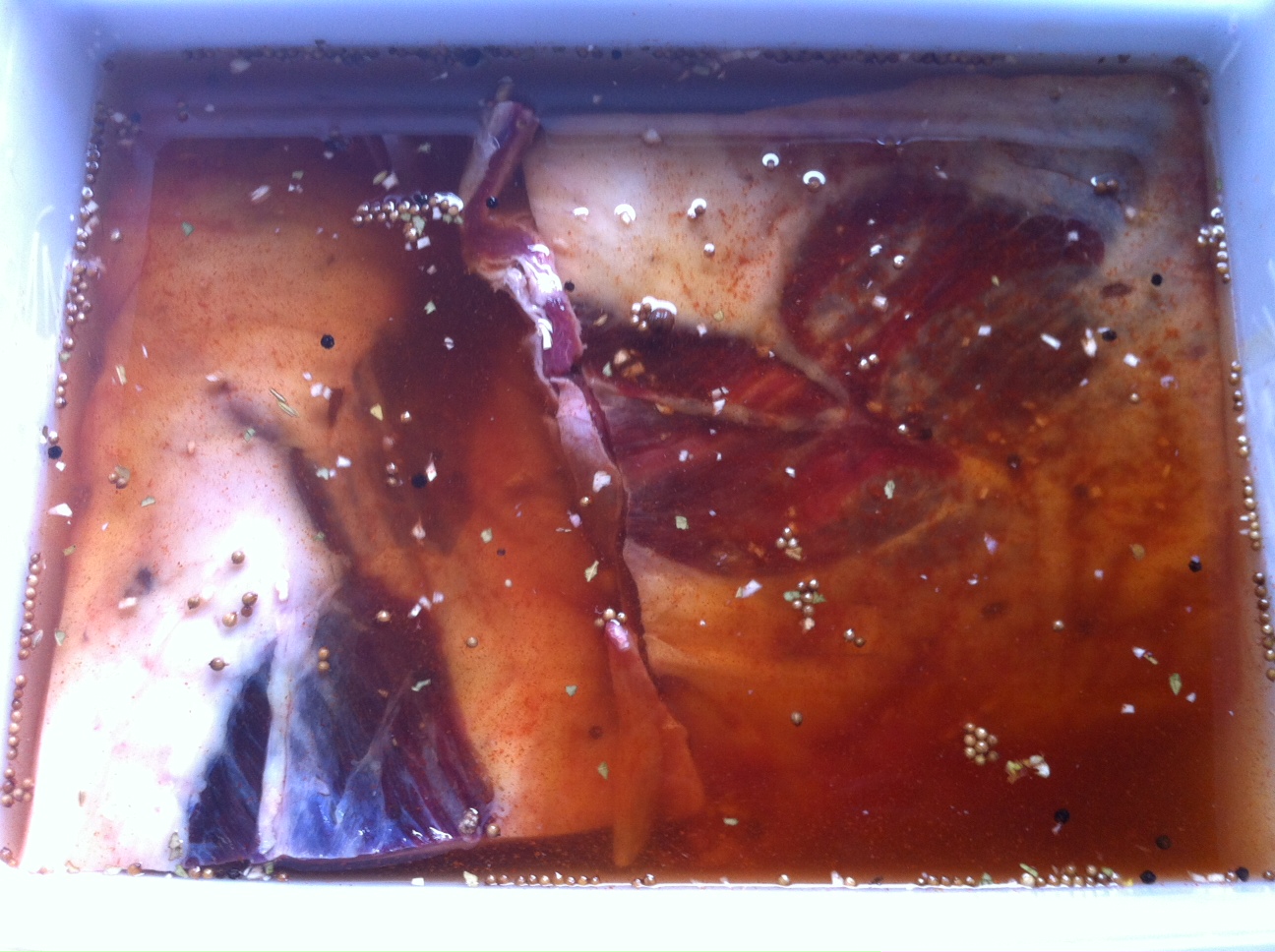
Brining the beef brisket

Brining the beef brisket

Step one: corned beef…

beef brisket (about 8-10 pounds)
2 tsp. paprika
1/4 cup warm water
3 cloves of minced garlic
2 tablespoons sugar
1 tablespoon mixed pickling spices
3/4 cup salt
2 quarts water

Place the brisket in a large container made of non-reactive material, like glass or plastic.

In the 1/4 cup of warm water, dissolve the sugar, minced cloves, paprika and pickling spices.

Dissolve the 3/4 cup of salt in the 2 quarts of water. Pour in the sugar/garlic/paprika/pickling spices mix and stir everything together. Pour the mixture over the meat in the container. Make sure the meat is totally beneath the surface of the liquid. (You may need to weigh it down to do this.) Cover the container.

Refrigerate the container and contents for 3 weeks, turning the meat once or twice per week. At the end of the third week, remove the container from the refrigerator and take out the meat. Soak the meat in several changes of fresh cold water over a period of 24 hours to remove the excess salt.

At this point, if you want corned beef, prepare and cook it using your favorite recipe. But I’m all about the pastrami!

Step two: making Pastrami…

pastrami


Brined and rinsed corned beef brisket from above recipe, patted dry with paper towels

1/4 cup Kosher salt

1/4 cup paprika

3 tablespoons coriander seeds

2 tablespoons black peppercorns

2 tablespoons yellow mustard seeds

1 tablespoon white peppercorns

3 tablespoons brown sugar

1 tablespoon granulated garlic

Combine coriander seeds, black and white peppercorns and mustard seeds in a spice grinder and grind coarsely. Place in a bowl. Add salt, paprika, brown sugar and granulated garlic. Mix well.

Rub the mix into the brisket well, covering all sides.

Heat smoker to 225 degrees and smoke for several hours using a less intense wood, like oak. When the internal temperature of the meat has reached 165 degrees, it’s done. It isn’t necessary to smoke pastrami as long as you would a regular brisket because the long brining time makes the meat tender.

It is very important that absolutely everything that comes in contact with the meat is very clean. (This includes your hands.) Also, make very sure that every inch of the meat reaches the 165 degrees before it is removed from the smoker. The corned beef is now pastrami.

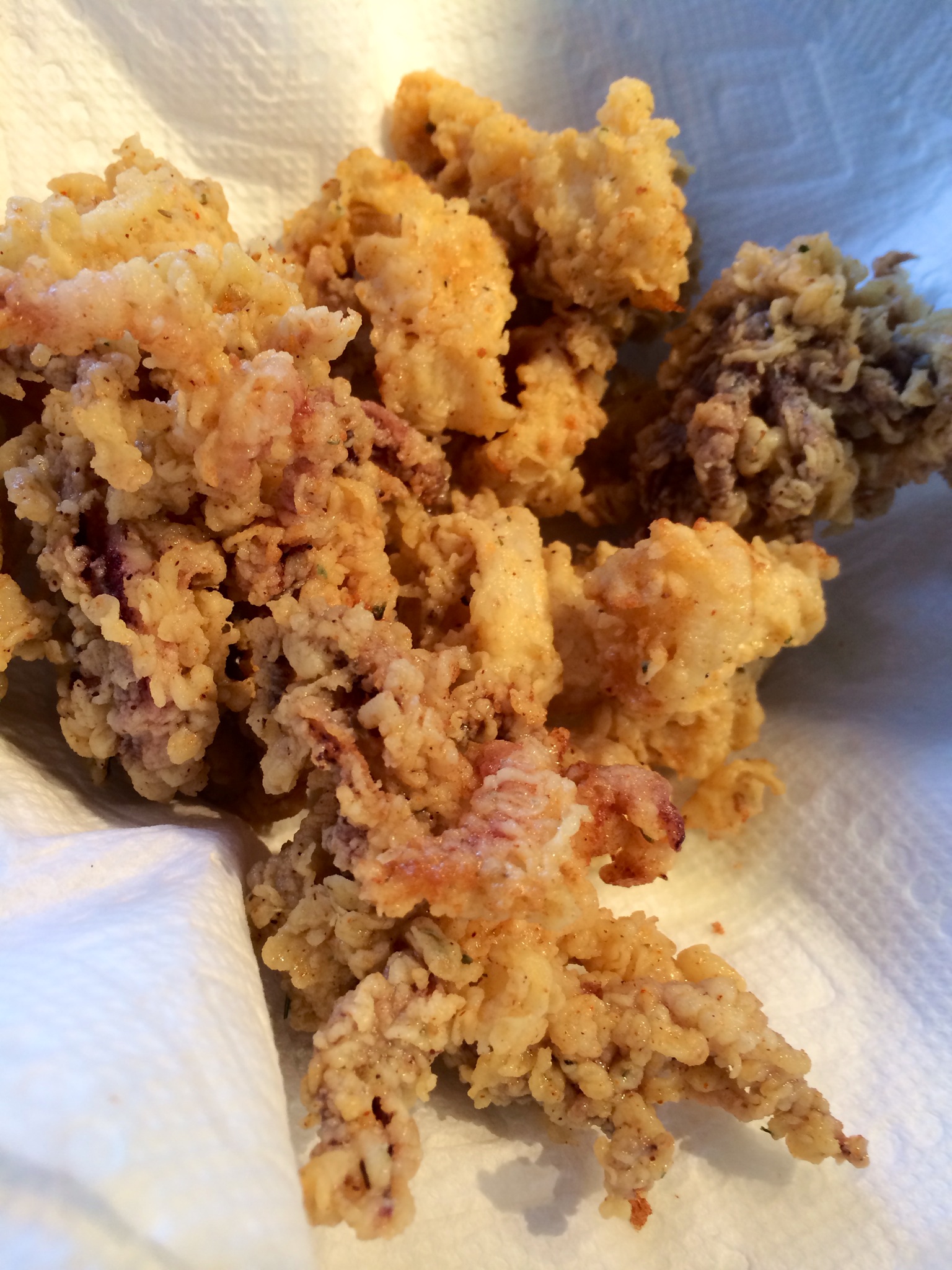
Calamari is the official appetizer of the state of Rhode Island. And for good reason. Squid means big business, and what we catch in Rhode Island accounts for up to 50% of the east coast’s quota every year! Squid have a lifespan of 12 to 18 months, reproduce twice a year, and can be caught year-round, with very few catch limitations, making it lucrative for fishermen.

Great fried calamari is an art form. It may seem like a simple dish, but to make it light and crispy, you need to be on your game. That’s why it can be a real hit-or-miss item on most restaurant menus. And there’s nothing worse than getting what would have been a great plate of calamari had the chef not decided to pour sauce all over it, turning the crispy cephalopod into mush.

What makes great fried calamari are three basic elements: it needs to be wild caught in the US (preferably Rhode Island!) and properly cleaned…it needs to be fried at the right temperature for the right amount of time so that it’s perfectly cooked and not greasy…and the coating needs to be light and crispy.

calamari


1 lb. wild caught cleaned squid (thaw if frozen)

1 cup flour (I use gluten-free these days)

1 teaspoon dried oregano

1  teaspoon paprika

1 teaspoon dried parsley

1/2 teaspoon granulated garlic

1 1/2 teaspoons salt

1/2 teaspoon black pepper

1 cup milk

1 large egg

oil, for frying (I use avocado oil)

Thaw the squid and slice into bite-sized rings. In a bowl, whisk the milk and the egg together. Toss in all the squid pieces into the bowl to coat. Place the bowl in the fridge for at least 15 minutes.

In another bowl, combine flour, oregano, paprika, parsley, garlic, salt and pepper. Set aside.

Fill a large pan halfway with oil…or use a deep fryer if you have one. Heat the oil to 350 degrees.

Working in small batches, remove the squid from the milk and egg mixture, let some of it drip off, then place the squid in the flour mixture and toss to coat. Shake off any excess flour and place immediately into the hot oil. Fry until golden brown, about 4 minutes. Serve immediately with tartare sauce, tomato sauce, hot peppers, whatever you like. (But keep the sauces on the side for dipping.)

About the oil: I cook almost exclusively with olive oil. But for hot frying like this recipe requires, I go with avocado oil, which can take higher temperatures.

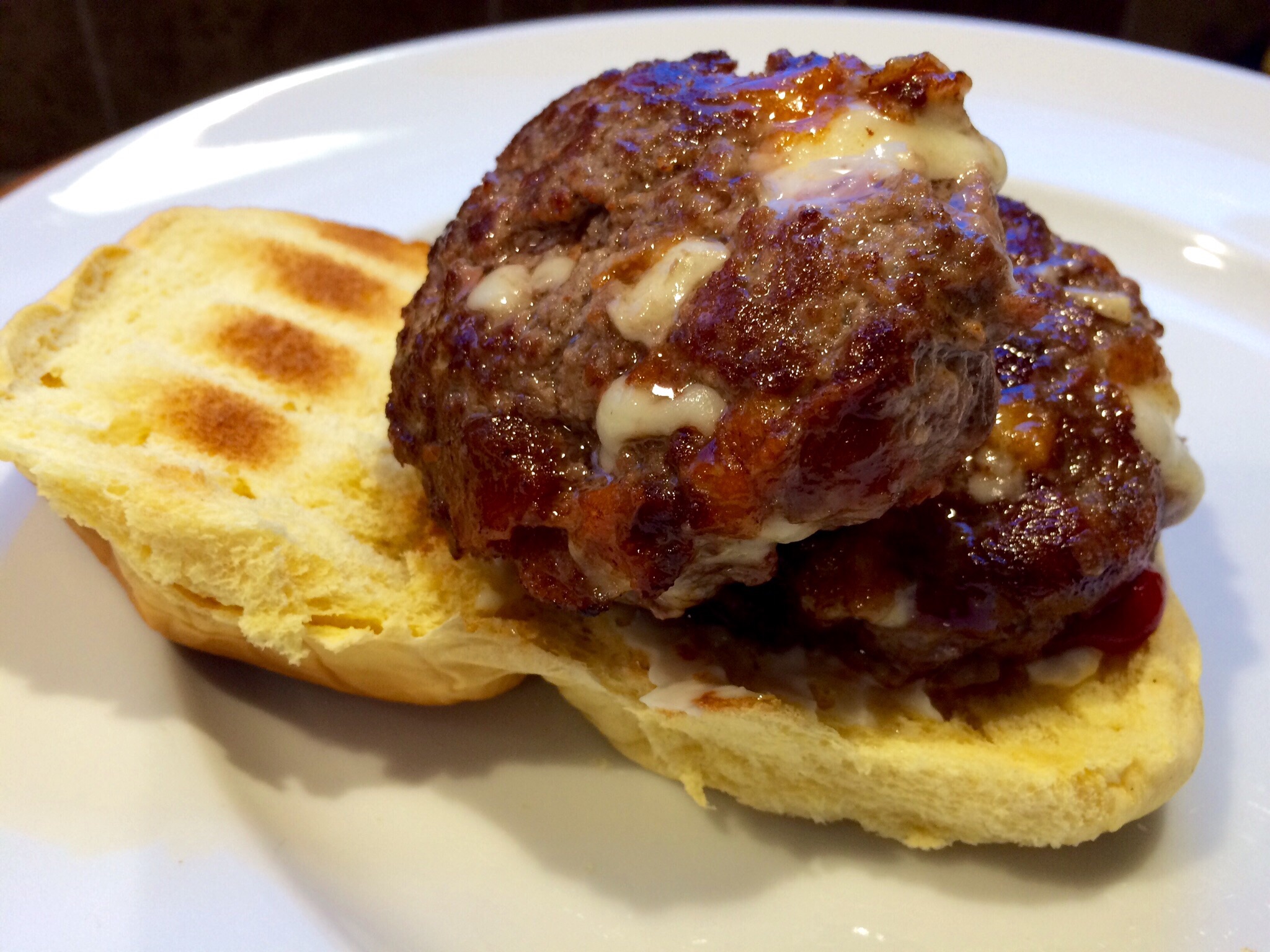
Not a very complex idea. I just put the stuff that’s usually on the outside, on the inside of my burgers. Why? Why not?

If I’m making bacon cheeseburgers to bring to a barbecue, even if it’s on my back deck, instead of bringing a package of bacon and a package of cheese and a stack of burgers, I’ve got all the ingredients conveniently in the patties. And as the burgers cook, the fat from the bacon and the gooey cheese melt and combine with the burger meat to make a really tasty and moist burger.

I make 2 lbs. of burgers at a time, using 1 lb. of ground grass-fed beef and 1 lb. of pastured ground veal. For the sake of this recipe, we’ll just call it beef.

image

2 lbs. ground beef

1/2 cup sharp cheddar cheese, cut into 1/4″ cubes

1/2 lb. bacon, cooked crisp, cooled and crumbled

garlic salt

avocado oil or pork fat


In a bowl, combine the beef, the cheese and the bacon, mixing well so that all the ingredients are evenly incorporated.

Form the beef into 1/4 lb. patties. Refrigerate them until you’re ready to cook to firm them up.

Heat a cast iron skillet and add a drop of oil or pork fat. Place the burgers in the hot skillet to sear and sprinkle with the garlic salt. When browned, flip the burgers and place the skillet in a 350-degree oven to finish cooking.

image