Archive for the ‘bacon’ Category

As a kid, I always knew my grandmother loved me. After all, she told me that every time I visited her on Saturday afternoons. She lived in Queens, NY, and we’d visit after sitting through 5 long hours of Lithuanian school in Brooklyn every Saturday morning.

By the time we got to my grandmother’s house, it was mid-afternoon, and I was starving. She’d greet me with a smile and a kiss on the forehead, and she’d proudly put a plate full of koldūnai (Lithuanian pierogis, usually stuffed with meat instead of potatoes or sauerkraut, and way better) in front of me, steam rising off the freshly-boiled koldūnai, with spirgučiai (fried bacon and onion bits) generously sprinkled on top, and a dollop of sour cream on the side.

There were times when I could eat 20 of them. However many I had, it seemed that she still had more, and I never thought for a moment about where they came from. I guess I knew that she made them, but I never really thought about what that meant.

Now I cook for my 8-year-old daughter, and the other day, she asked for one of her favorite dishes: ham and cheese croquettes. It’s a long and messy process to make them: boiling and mashing potatoes, chopping up slabs of ham, grating piles of cheddar cheese, mincing onions. Then rolling the croquette filling in flour, egg and breadcrumbs before frying them.

Whether I make six or sixty, the kitchen is trashed afterwards, so I went with the larger number…62, to be exact. (They freeze well.)

image

It’s not hard work, but it’s tedious. After making 30 croquettes, my back was aching from standing hunched over the kitchen counter. And I was only half done. I tried pulling up a stool, but that didn’t help, so I popped a few ibuprofen and kept going, finally frying that last croquette, turning the heat off the oil, and standing back to see a kitchen counter covered in egg, flour, breadcrumbs, and mashed potatoes. The cooking was done but the cleanup was just beginning.

My daughter stepped off the school bus at the end of the driveway, and I greeted her with a kiss on the forehead, telling her I loved her. We walked back to the house, and I asked her about her day, all the time knowing that I had a special treat waiting for her that I couldn’t wait to show her.

We walked into the house and she saw the trays of croquettes. I placed a couple of them on a plate and she sat down, eyes wide open, and took her first crunchy bite. The heartfelt “Mmmmm” that came from deep inside her gave me a real sense of satisfaction. My hours of work had paid off with one simple bite. Few things could’ve made me happier at that moment than the smile on her face.

And then I thought of my grandmother.

image

What I did that day, she did for me every Saturday without fail. And she was a lot older than I am now.

She loved me, alright. Funny how it took almost 40 more years for me to realize just how much.

And May is National Hamburger Month. How can you go wrong? First, a favorite burger recipe, then one for brisket.

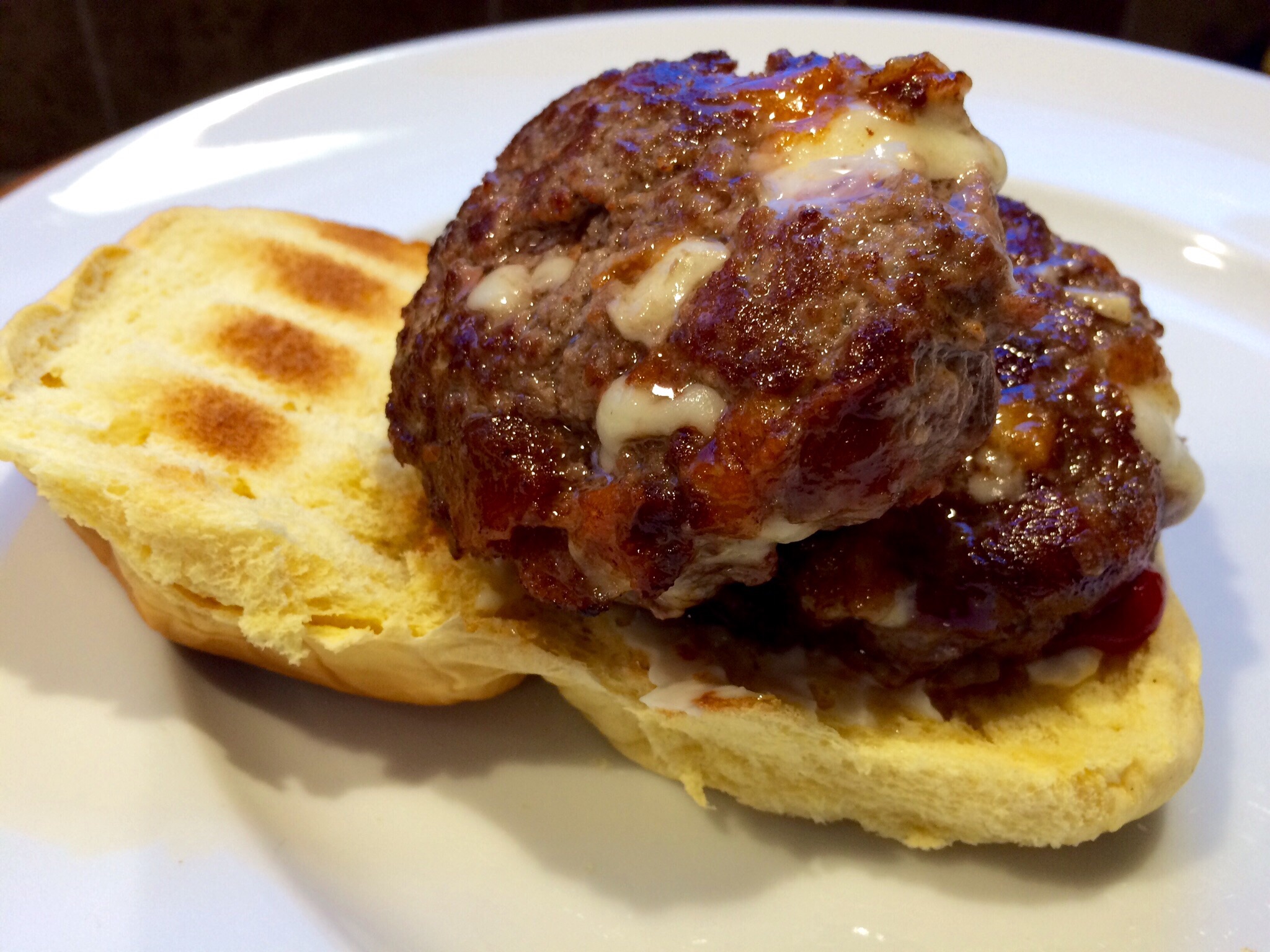
The Inside-Out Burger: If I’m making bacon cheeseburgers to bring to a barbecue, even if it’s on my back deck, instead of bringing a package of bacon and a package of cheese and a stack of burgers, I put all the ingredients inside the patties themselves. As the burgers cook, the fat from the bacon and the gooey cheese melt and combine with the burger meat to make a really tasty and moist burger.

image

2 lbs. ground beef
1/2 cup sharp cheddar cheese, cut into 1/4″ cubes
1/2 lb. bacon, cooked crisp, cooled and crumbled
garlic salt
avocado oil or pork fat

In a bowl, combine the beef, the cheese and the bacon, mixing well so that all the ingredients are evenly incorporated. Form the beef into 1/4 lb. patties. Refrigerate them until you’re ready to cook to firm them up.

Heat a cast iron skillet and add a drop of oil or pork fat. Place the burgers in the hot skillet to sear and sprinkle with the garlic salt. When browned, flip the burgers and place the skillet in a 350-degree oven to finish cooking.

image


Brisketta: There’s a wonderful Italian roasted meat dish called Porchetta (por-ketta). The classic version consists of a pork belly that is seasoned and then wrapped around a pork loin. The meat is tied, then roasted slowly for hours, basted with wine and the meat juices until the pork is cooked and the outside skin is crackly and crispy. Then it’s sliced like a log and served as a sandwich or a main dish.

I decided to use the same method of cooking for beef brisket, and I called it “Brisketta.”

image

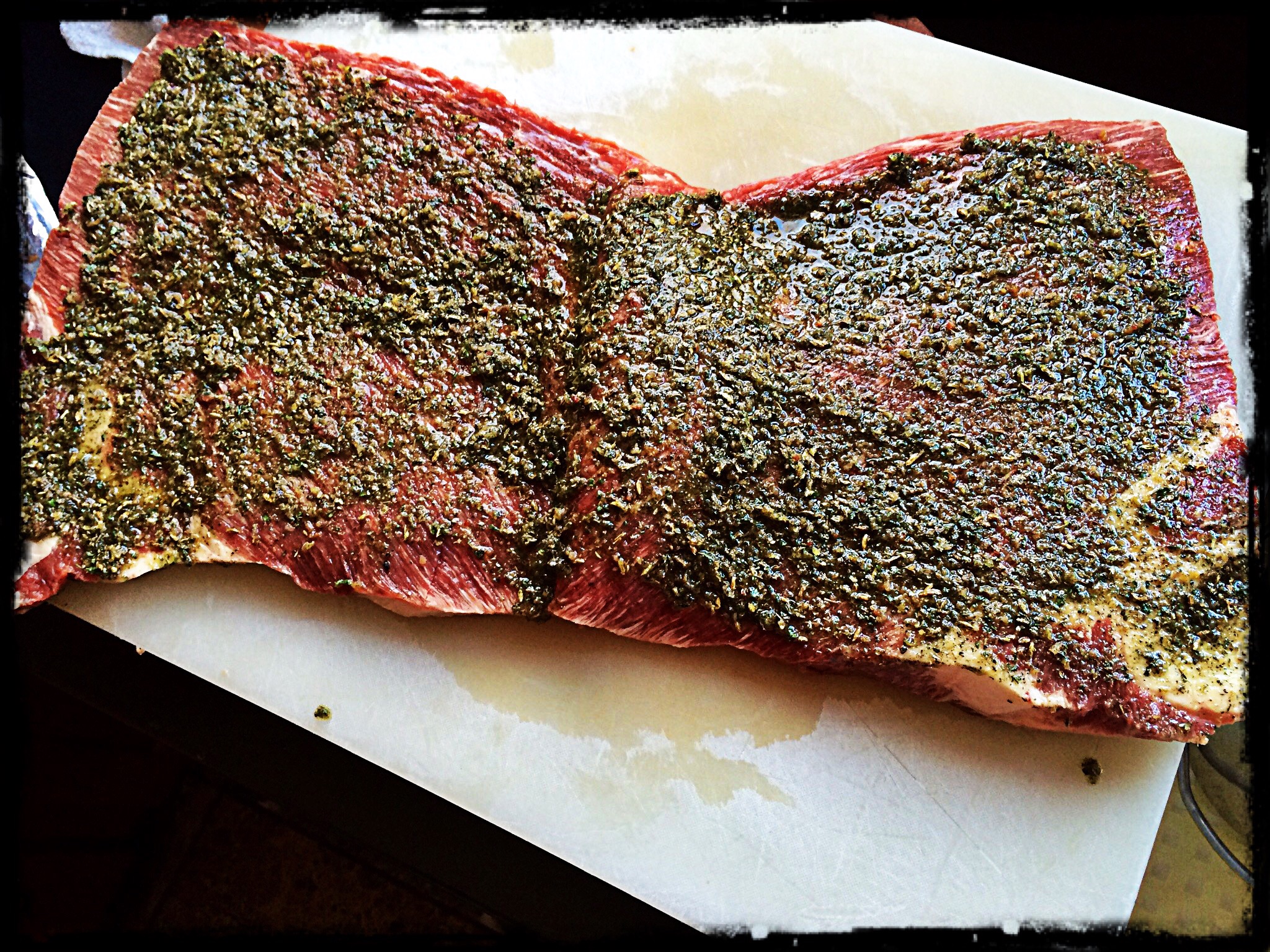
I flipped the brisket fat-side-down on my cutting board and carefully sliced it down the middle horizontally to make two large–even thinner–slabs of meat. The bottom half, with the fatty side of the brisket, would eventually be my outside layer. The top half would be my inside layer.

image

I took the top half and slathered some of my seasonings on it. Then I rolled it tightly into a log. I slathered more of my seasonings onto the bottom half of the brisket, then rolled it around the first log, so that the fattiest side of the brisket would now be on the outside of this large meat log. I tied the meat log up tightly with butchers’ twine and let it rest in my fridge overnight.

image

7 lbs. beef brisket
1 tablespoon fennel seed, toasted and cooled
5–3″ strips of bacon, cooked and cooled
2 tablespoons oregano
2 tablespoons parsley
2 teaspoons basil
2 tablespoons salt
1 teaspoon pepper
2 teaspoons granulated onion
1 teaspoon granulated garlic
Grated zest of 2 lemons
1/2 cup olive oil

Pour the fennel seed in a hot, dry pan on the stove. Toast the seeds until they release their aroma, but don’t let them burn. Set aside to cool.

Crumble the bacon strips and place in the bowl of a food processor. Add the cooled fennel seeds, oregano, parsley, basil, salt, pepper, onion, garlic, and lemon zest.

Run the food processor and slowly pour in the olive oil, until you have a paste much like pesto.

Slice the brisket in half horizontally. Save the piece with the fatty side for last, because this is the piece that will wrap around the others, with the fatty side out. Smear the rub on the first piece of brisket and roll it tightly into a log. Smear the rub on the second piece of brisket and wrap it around the first piece, making sure the fatty side is on the outside.

Once you’ve rolled both pieces into a single meat log, scored the fatty exterior with a knife and rub any leftover seasoning paste onto it. If you have none left, simply season with salt and pepper.

Tie the meat log tightly with butchers’ twine, tucking in all loose ends.

At this point, you can place the meat log in the fridge until ready to cook, remembering to remove it at least an hour before cooking so that it comes back to room temperature.

Pre-heat an oven or smoker at 250 degrees. Place the meat log directly on the grate, with a pan underneath to catch the dripping fat. Place a bowl of water in there as well, to keep the meat moist while it cooks. Cook for 4 1/2 hours, or until the interior temperature reaches 130 degrees. Let it rest an hour before slicing…if you can wait that long!

image


I love shrimp scampi, and had the need to satisfy my cravings the other day. But what started as a simple scampi recipe, turned into something a bit more. I may never make scampi the same way again!

image

1 lb. wild-caught American shrimp, peeled and de-veined
4 tablespoons butter
4 tablespoons olive oil
2 teaspoons parsley
1 teaspoon garlic salt
1 teaspoon oregano
1/2 teaspoon granulated onion
1/4 teaspoon black pepper
3 tablespoons Spirgučiai (see below)
1/2 lb. fresh mozzarella, sliced
oregano, for sprinkling


Thaw the shrimp under cold water. Place in a colander to drain.

Spirgučiai is a Lithuanian favorite: chopped bacon and onions, fried until crisp and usually sprinkled over anything and everything in Lithuanian cooking. I always have some in my fridge, already prepared and just waiting to be used.

In a saucepan on medium heat, combine the butter, olive oil, parsley, garlic salt, oregano, onion, pepper and Spirgučiai.  Heat only until everything melts and combines. Don’t let it burn.

In a small sheet pan lined with foil, lay the shrimp in a single layer and cook them halfway in a pre-heated 400-degree oven to remove the moisture from the shrimp.

Take the pan out of the oven, and drain off the moisture, if any. Pour the butter mix from the saucepan all over the shrimp and toss to coat. Return the shrimp to the oven for a few minutes, until they’ve heated through and are almost completely cooked. (Careful: never over-cook shrimp!)

Take the pan out of the oven, and place pieces of mozzarella on top, garnishing with a little oregano. Set the oven on broil and cook until the cheese has melted.

Slice with a spatula and serve on top of pasta, making sure you get some of that buttery scampi sauce.

image

As a low-carb option, you can serve this on broccoli or roasted spaghetti squash.

I love avocado, and I’m always trying to find new ways of using it. This recipe is simple, low-carb, gluten-free, and really delicious. I prefer using ground chicken over ground turkey, which can dry out.

chicken2

1 lb. ground chicken
1 ripe avocado, sliced into small cubes
1/2 teaspoon salt
1/4 teaspoon black pepper
1/4 teaspoon granulated garlic

chicken1

Combine the ingredients in a bowl and mix thoroughly but carefully so that you don’t squash the cubes of avocado. Form the meat into burger patties. It will be sticky, but just make sure you get the avocado evenly distributed. Chill the patties in the freezer for about 10 minutes before cooking to firm them up.

Pre-heat the oven to 350 degrees.

Heat a little oil in an ovenproof pan, and place the burgers in it when hot. Let the burgers sear on one side, then flip them. Place the pan in the oven to finish cooking.

Serve with a slice of bacon and Awesomesauce! (http://wp.me/p1c1Nl-gT)

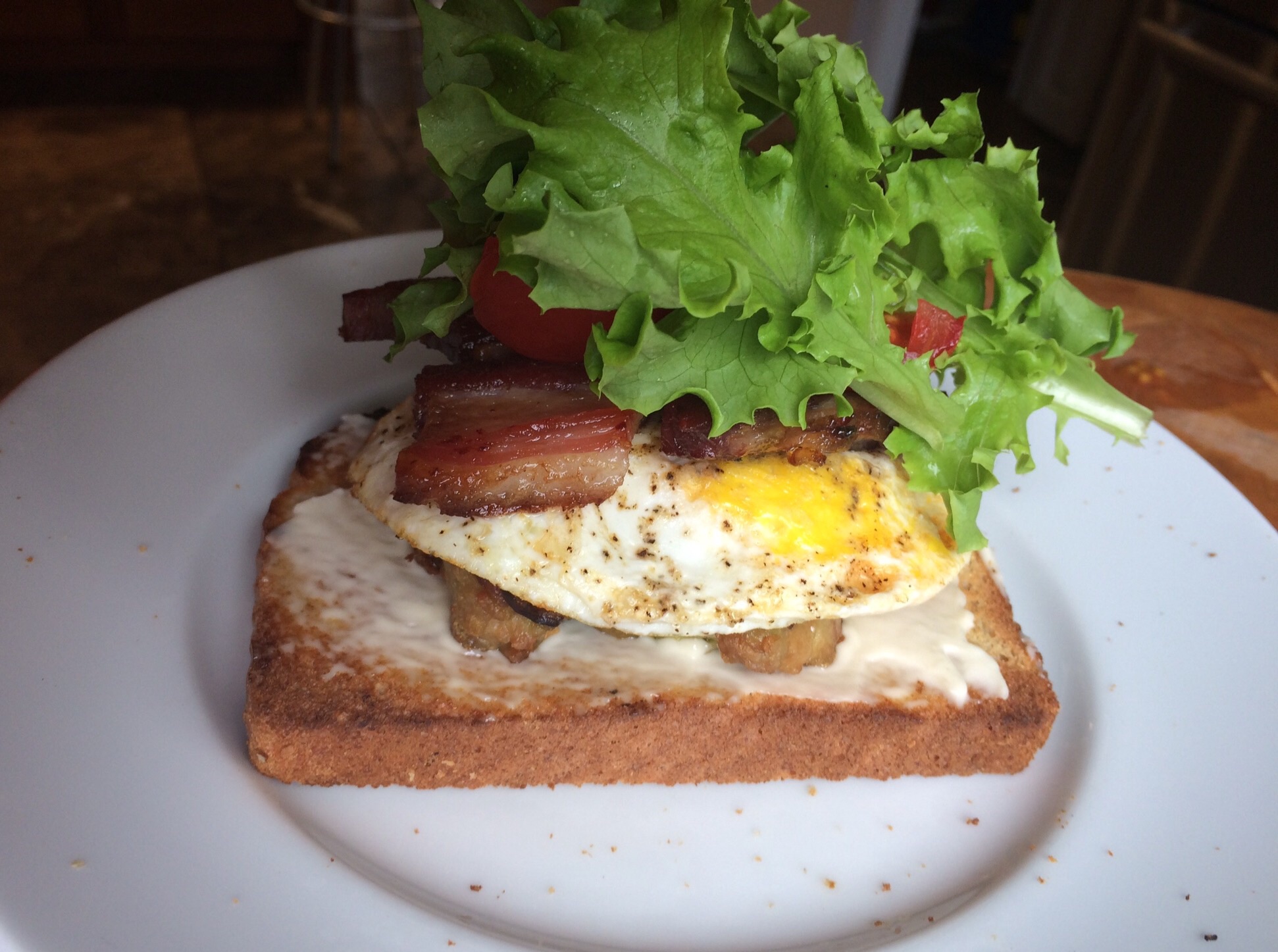
It also makes a great breakfast sandwich: bacon, lettuce, tomato, a fried egg, and the chicken avocado burger!

image

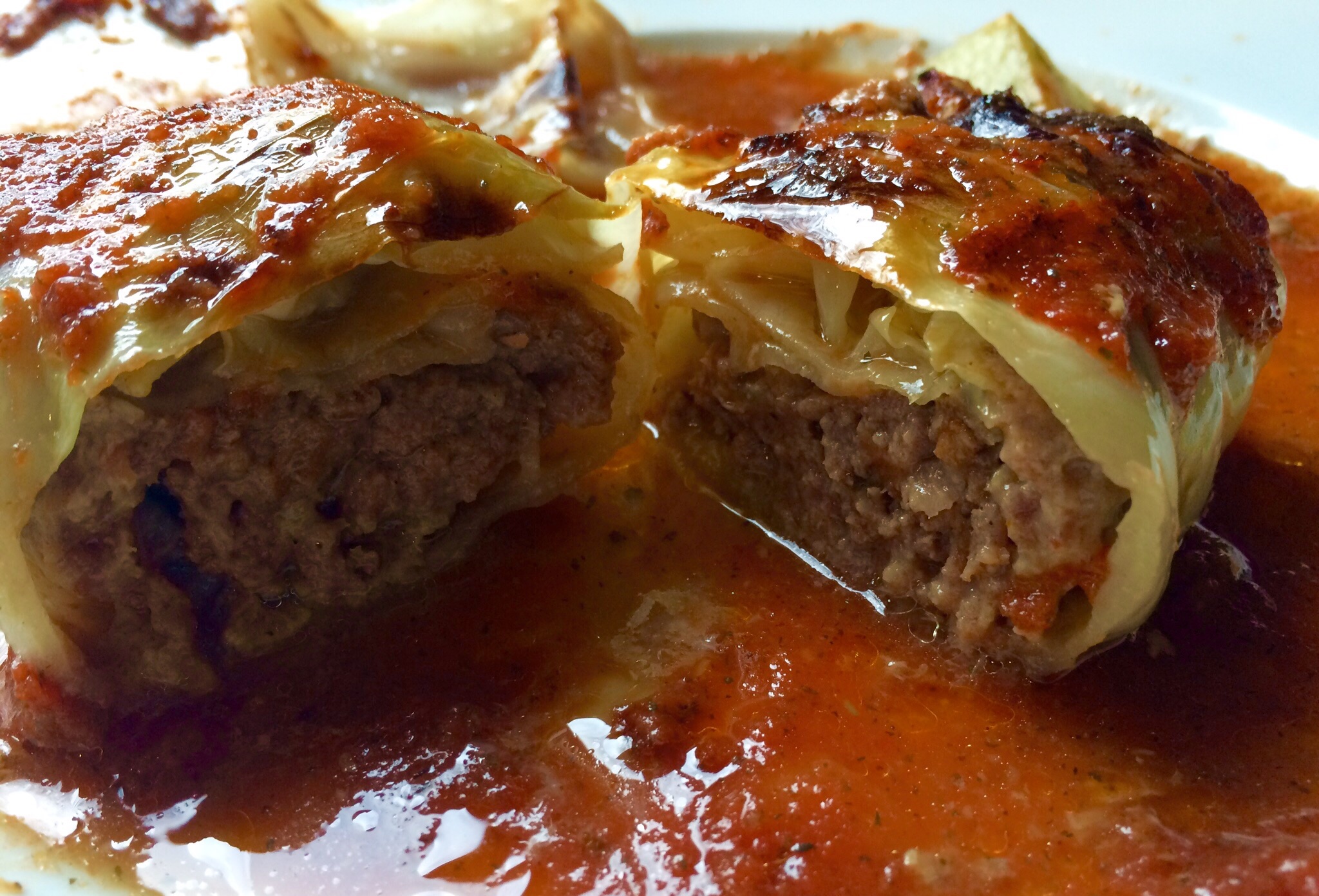
If there’s a dish that my Mom made all the time, but I didn’t appreciate until I got older, this is it. Stuffed cabbage, cabbage rolls, or balandėliai, as we say in Lithuanian, was a staple in our home and one of my Dad’s favorite foods. 

I had seen my Mom make these beauties so often in my childhood, I didn’t even need to check online recipes out for guidance. That doesn’t mean I make them exactly like Mom, but my version came out pretty damn good. I think Mom would be proud.

image

4 strips of bacon, chopped
1 yellow onion, finely chopped
1 teaspoon salt
1/2 teaspoon pepper
1/2 teaspoon granulated garlic
1 lb. ground grass-fed beef
1 lb. ground pastured pork
1/2 cup breadcrumbs
2 eggs
1 large head cabbage
1 pint homemade chicken stock
750 mg diced tomatoes (1 Pomi container)
1 teaspoon thyme
1 teaspoon salt
1/2 teaspoon pepper
1/4 teaspoon granulated garlic
1/4 teaspoon granulated onion

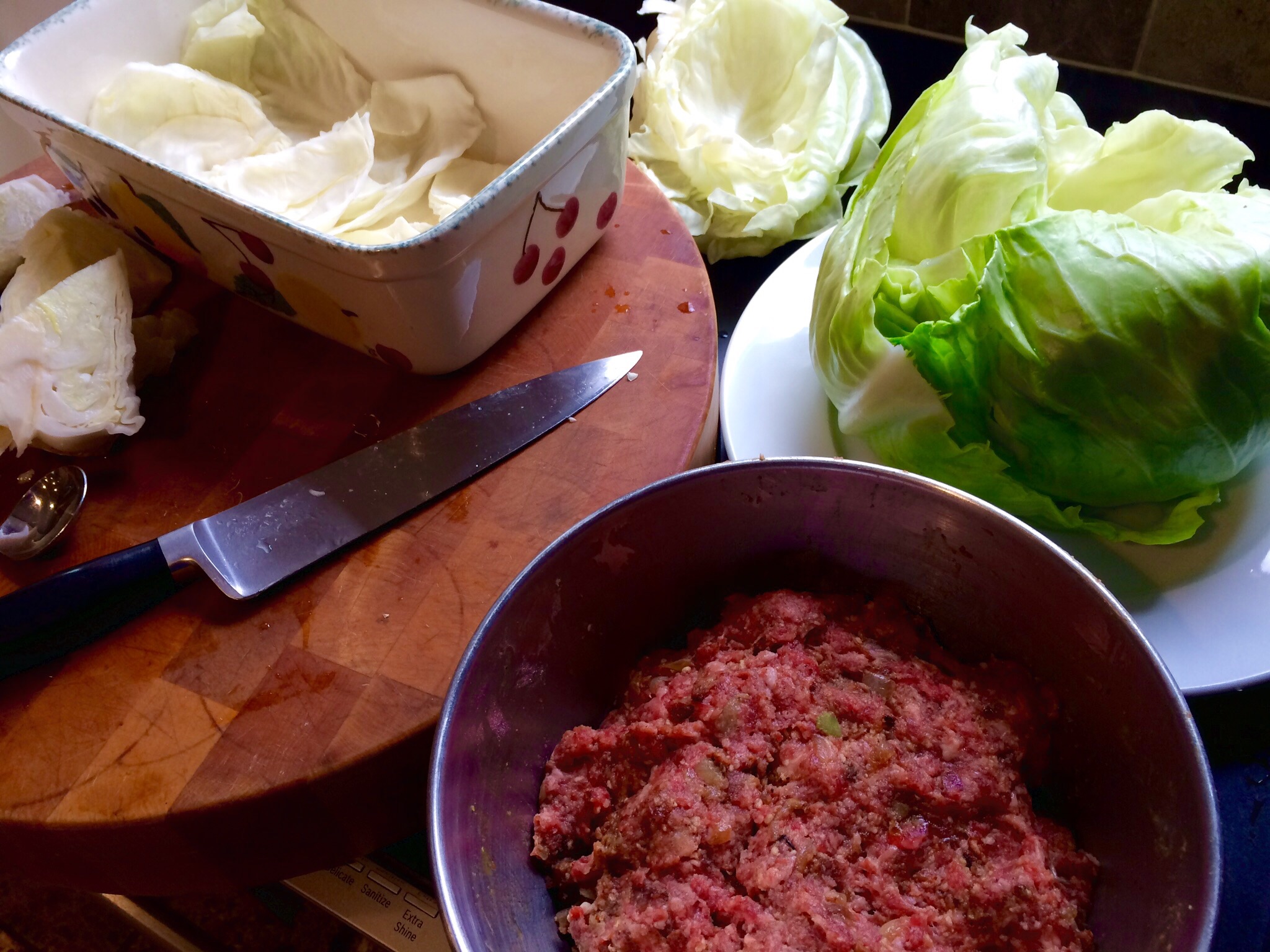
Chop the bacon into small pieces and fry them until crisp. Finely chop the onion, and add it to the bacon in the pan, cooking until the onions are translucent. Add the salt, pepper and garlic. Mix well, and remove from the heat. Let it cool to room temperature.

In a large bowl, combine the beef, pork, breadcrumbs, eggs, and cooled bacon and onion mixture. Place in the fridge to firm up.

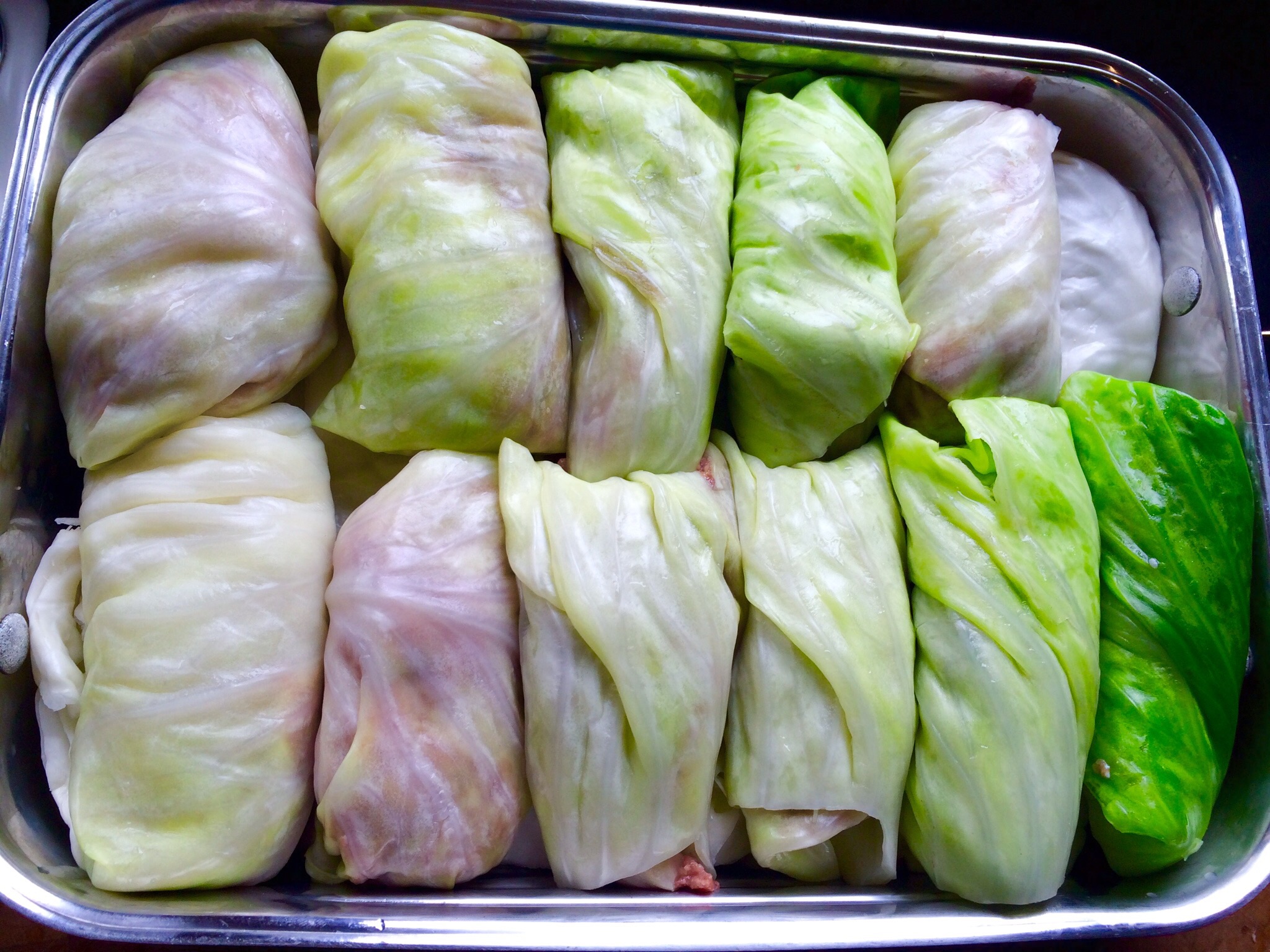
Let a large pot of salted water come to a boil. Core the cabbage, leaving the leaves whole, and carefully immerse the head of cabbage into the hot water. Little by little, the outermost leaves of the cabbage will come off the head, and you can remove them with tongs, so you don’t burn yourself with the hot water. Set the leaves aside to cool, and continue doing this until you can no longer remove leaves from the remaining head of cabbage.

Remove the remaining head of cabbage from the hot water, and using your hands or a knife, break it into flat pieces. Line the bottom of a roasting pan with the pieces. These will keep the stuffed cabbage from burning and sticking to the bottom.

Time to roll the stuffed cabbage. Take the meat out of the fridge. Lay a cabbage leaf flat on the counter, and add some of the meat mixture inside. Roll the cabbage around the meat, folding the sides in as you go, much like a burrito. You might need to slice away the thickest part of the leaf stem to make rolling easier. Lay the stuffed cabbage in the roasting pan on top of the leftover cabbage pieces. (Unlike Mom, I don’t use toothpicks to hold the stuffed cabbage rolls together.)

image

Continue stuffing and rolling the cabbage leaves until you’ve got a pan full of them, shoulder-to-shoulder.

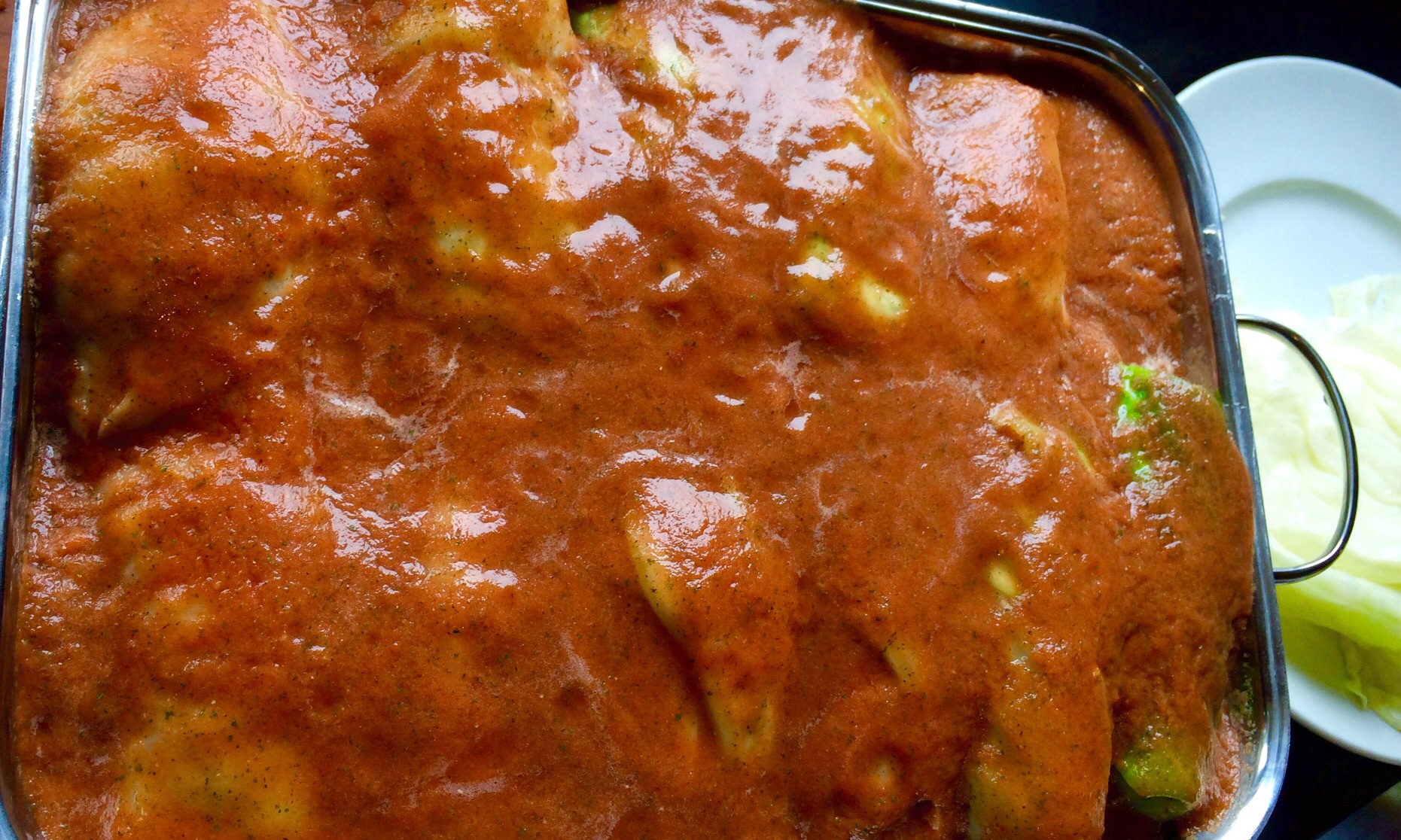
In a blender, combine the chicken stock, diced tomatoes, thyme, salt, pepper, garlic and onion. Pour this mixture over the top of the cabbage rolls in the roasting pan, covering them.

image

If you have leftover cabbage, you can place another layer of them on top. Otherwise, cover the roasting pan with foil and place in a pre-heated 350 degree oven. Cook for an hour.

image

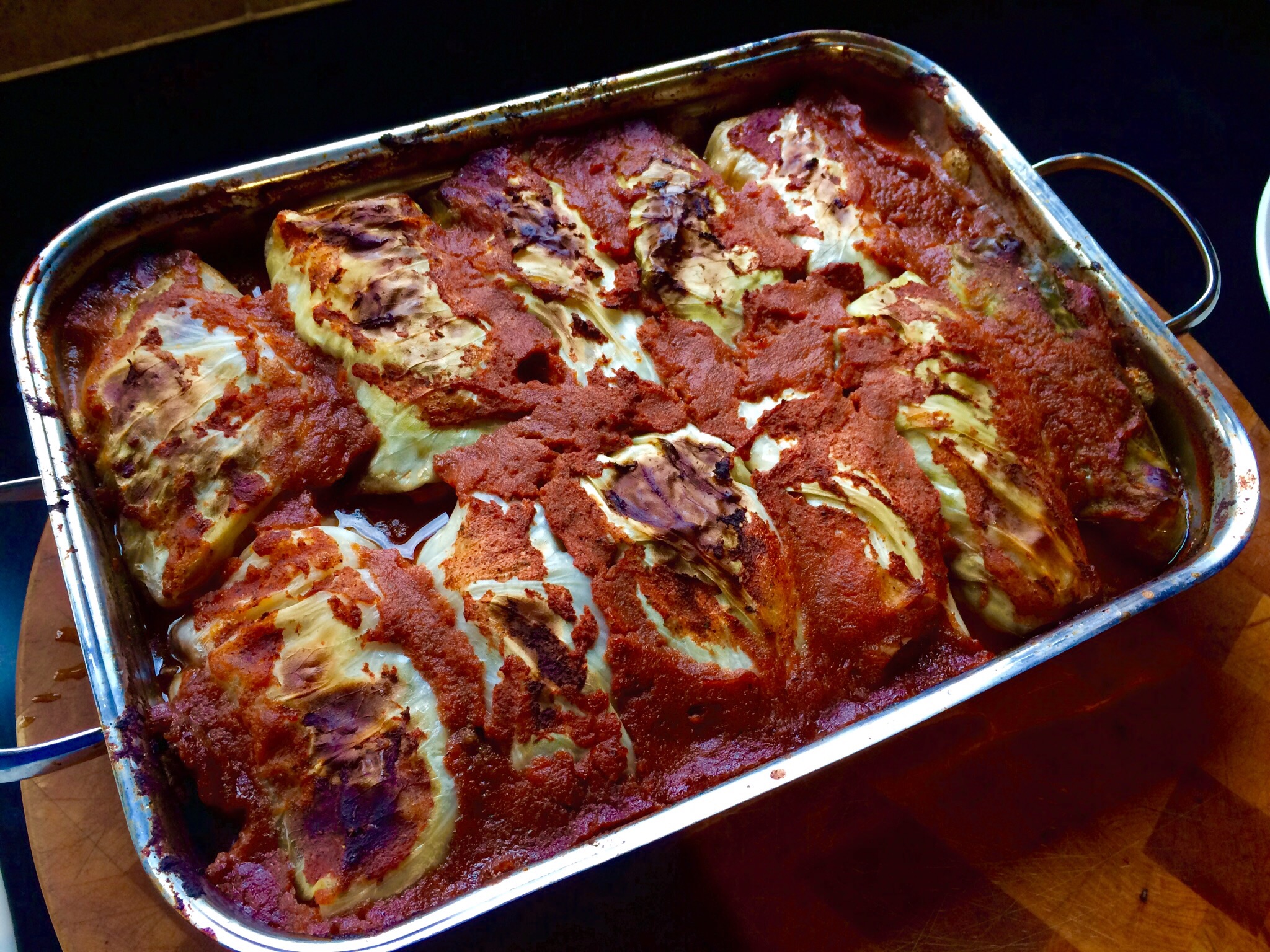
After an hour, remove the foil and cook further for another 45–60 minutes.

image


MEATLOAF

Posted: March 24, 2015 in bacon, beef, Carnivore!, Food, pork, Recipes
Tags: , , , , ,

Few dishes scream out “comfort food” to me like meatloaf. My Mom’s meatloaf was awesome, and she’d cut a huge slab of it onto my plate, with fantastic butter-loaded Pennsylvania Dutch egg noodles on the side. I couldn’t stop eating it.

I never thought of making meatloaf when I moved away, because it gave my Mom something special to make for me when I came home to visit. She was thrilled that there was a dish she could make that I would devour every time, without hesitation. (The others were her roasted lamb and Lithuanian pierogis called koldūnai (kol-doon-ay).

But now that my Mom has moved into an assisted living facility where she can’t cook, I’ve had to take meatloaf matters into my own hands. I never got my Mom’s exact recipe. But I had an idea of what went into it, and so I gave it a shot.

The standard mix for meatloaf is one-third each ground beef, pork and veal. I went 50-50 on the beef and pork instead. And instead of layering slices of bacon on top as many people do, I used pre-cooked bacon that I chopped up and put inside the loaf.

image


1 lb. ground beef
1 lb. ground pork
1 packet Lipton onion soup mix
1/2 cup breadcrumbs
1/4 cup ketchup
4 strips of cooked bacon, chopped
2 eggs

Combine ingredients, form into a loaf and place in a loaf pan. Bake at 350 for about an hour.


If you’re not a fan of packaged ingredients like the Lipton onion soup mix, use this:

1 yellow onion, minced

1 teaspoon salt

1/2 teaspoon pepper

1/2 teaspoon garlic powder


Saute the onion in a little oil or pork fat until translucent. Let it cool, then mix in the salt, pepper and garlic. Add this mix to the other ingredients above.

Not a very complex idea. I just put the stuff that’s usually on the outside, on the inside of my burgers. Why? Why not?

If I’m making bacon cheeseburgers to bring to a barbecue, even if it’s on my back deck, instead of bringing a package of bacon and a package of cheese and a stack of burgers, I’ve got all the ingredients conveniently in the patties. And as the burgers cook, the fat from the bacon and the gooey cheese melt and combine with the burger meat to make a really tasty and moist burger.

I make 2 lbs. of burgers at a time, using 1 lb. of ground grass-fed beef and 1 lb. of pastured ground veal. For the sake of this recipe, we’ll just call it beef.

image

2 lbs. ground beef

1/2 cup sharp cheddar cheese, cut into 1/4″ cubes

1/2 lb. bacon, cooked crisp, cooled and crumbled

garlic salt

avocado oil or pork fat


In a bowl, combine the beef, the cheese and the bacon, mixing well so that all the ingredients are evenly incorporated.

Form the beef into 1/4 lb. patties. Refrigerate them until you’re ready to cook to firm them up.

Heat a cast iron skillet and add a drop of oil or pork fat. Place the burgers in the hot skillet to sear and sprinkle with the garlic salt. When browned, flip the burgers and place the skillet in a 350-degree oven to finish cooking.

image


Pasta is not something I’m currently eating on my low-carb diet. But it’s a great recipe I wanted to pass on to others.

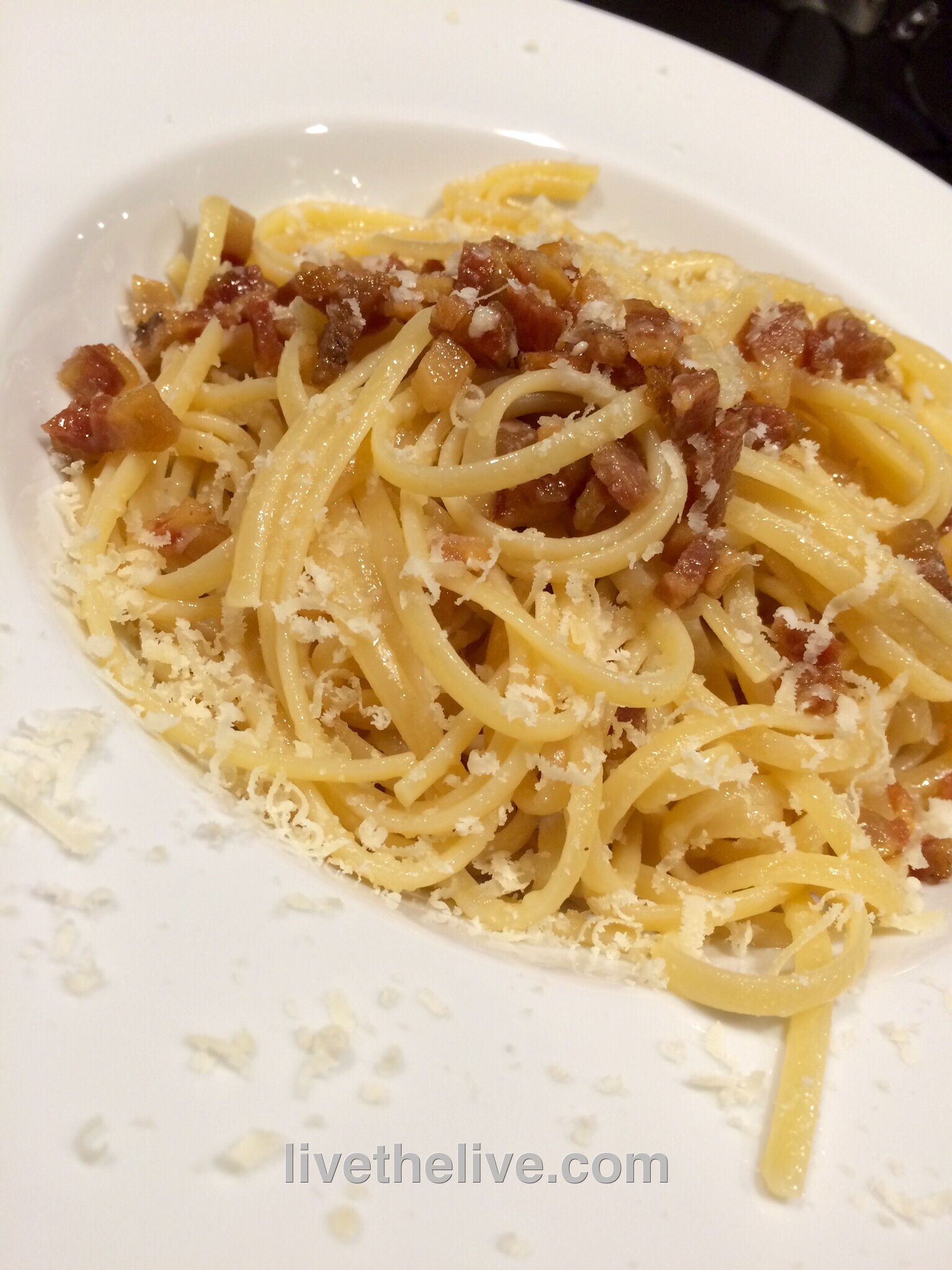
Sometimes the simplest dishes are the toughest to execute well. Spaghetti alla Carbonara is one of those dishes. All you need is pasta, olive oil, raw eggs (separated), guanciale, grated Parmigiano-Reggiano and pepper. (Real carbonara doesn’t use cream.)

You boil the pasta. Chop the guanciale (cured pork cheeks or jowls) and saute in a pan with the olive oil. Do not drain the fat. Drain the pasta and drop it into the pan with the guanciale, adding about 1/4 cup of the pasta water. Shake it around for a minute and remove from the heat. Add some of the cheese and the egg whites, season with pepper, and mix the pasta well. Separate into bowls, making a nest with the pasta. Add an egg yolk to each, sprinkling more cheese on top. What could go wrong, right?

There’s a lot to be said for finesse!

I make my own guanciale. I buy Berkshire pork jowls and cure them. Then they go through a drying phase for a few weeks before I wrap and freeze them in chunks. Whenever a dish calls for guanciale (my daughter loves it on pizza), I simply unwrap some, let it thaw, then chop it up and saute it. The fat in the pork jowls is very different from other parts of the pig, and there’s no replacing that flavor. When making Spaghetti all Carbonara, some cooks replace the guanciale with pancetta or bacon, but that’s not for me.

It’s also important to note that this dish relies a lot on fat, so good fat is really important. Berkshire pork fat has good fat. Organic butter has good fat. And the cheese? Parmigiano-Reggiano isn’t called “The King of Cheeses” for no reason!

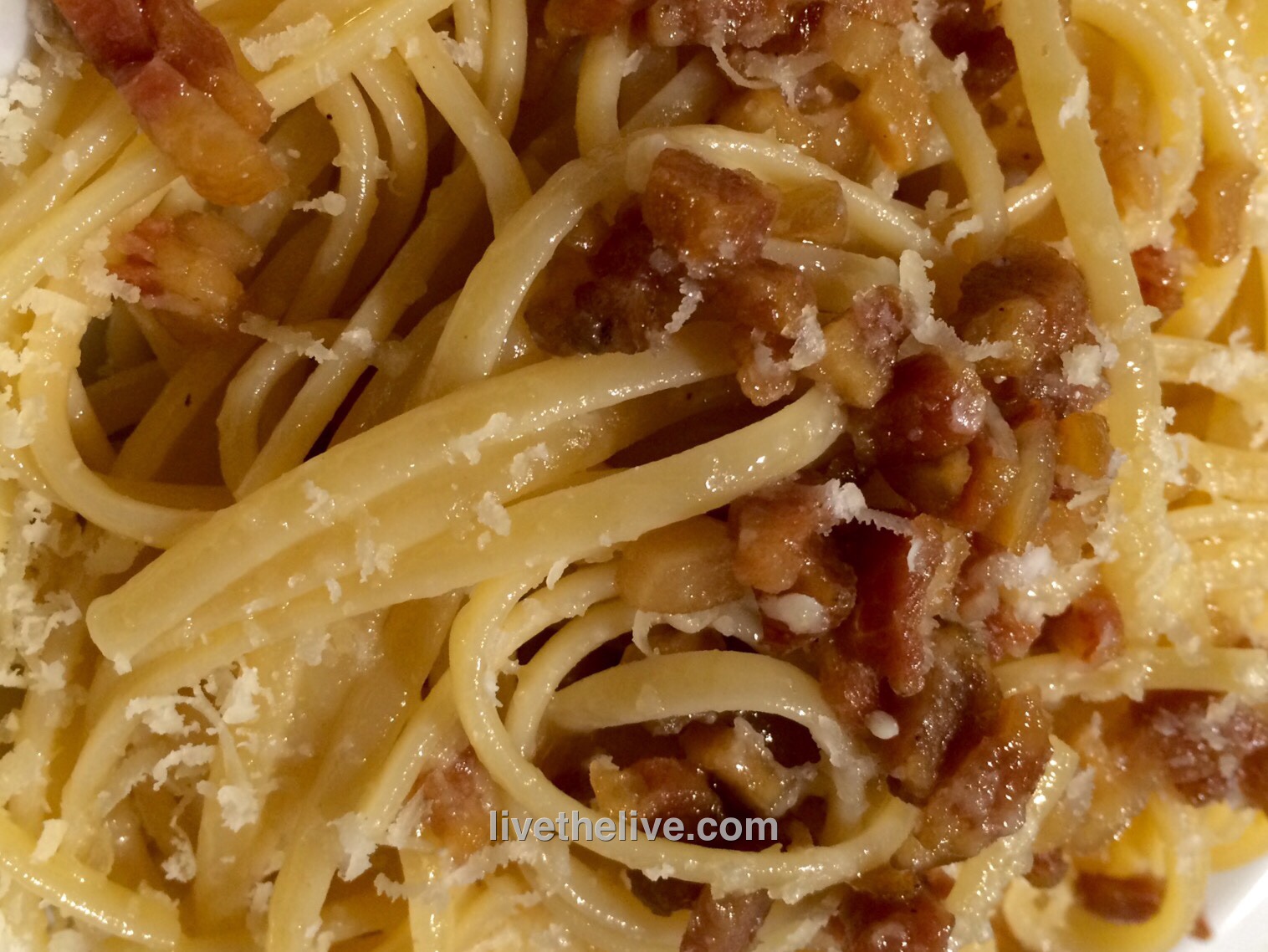
I decided to make a Not-Quite-Carbonara dish. I say “not quite” because I left out the eggs, which my daughter doesn’t like. It still came out pretty damn good…

image


1 lb. pasta (we like bucatini over spaghetti)

1 lb. Berkshire pork guanciale, chopped into small (1/4″) cubes

olive oil

2 tablespoons unsalted organic butter

1/2 cup freshly grated Parmigiano-Reggiano

black pepper


Boil the pasta to the just-before-al dente stage.

In a large saucepan, heat the guanciale and olive oil until the fat has rendered. Do not drain the fat. Turn the heat off, add the butter and let it melt.

Drain the pasta and drop it into the pan with the guanciale, stirring the pasta around to coat with the ingredients. Sprinkle in 1/4 cup of the Parmigiano-Reggiano and season with pepper, still mixing.

Distribute the pasta into individual bowls, making sure everyone gets the tasty bits of guanciale. Sprinkle some more of the Parmigiano-Reggiano on top. Serve immediately.

image


MANLY MEAT SAUCE

Posted: December 16, 2014 in bacon, beef, Food, Italian, pasta, Recipes
Tags: , , , , ,

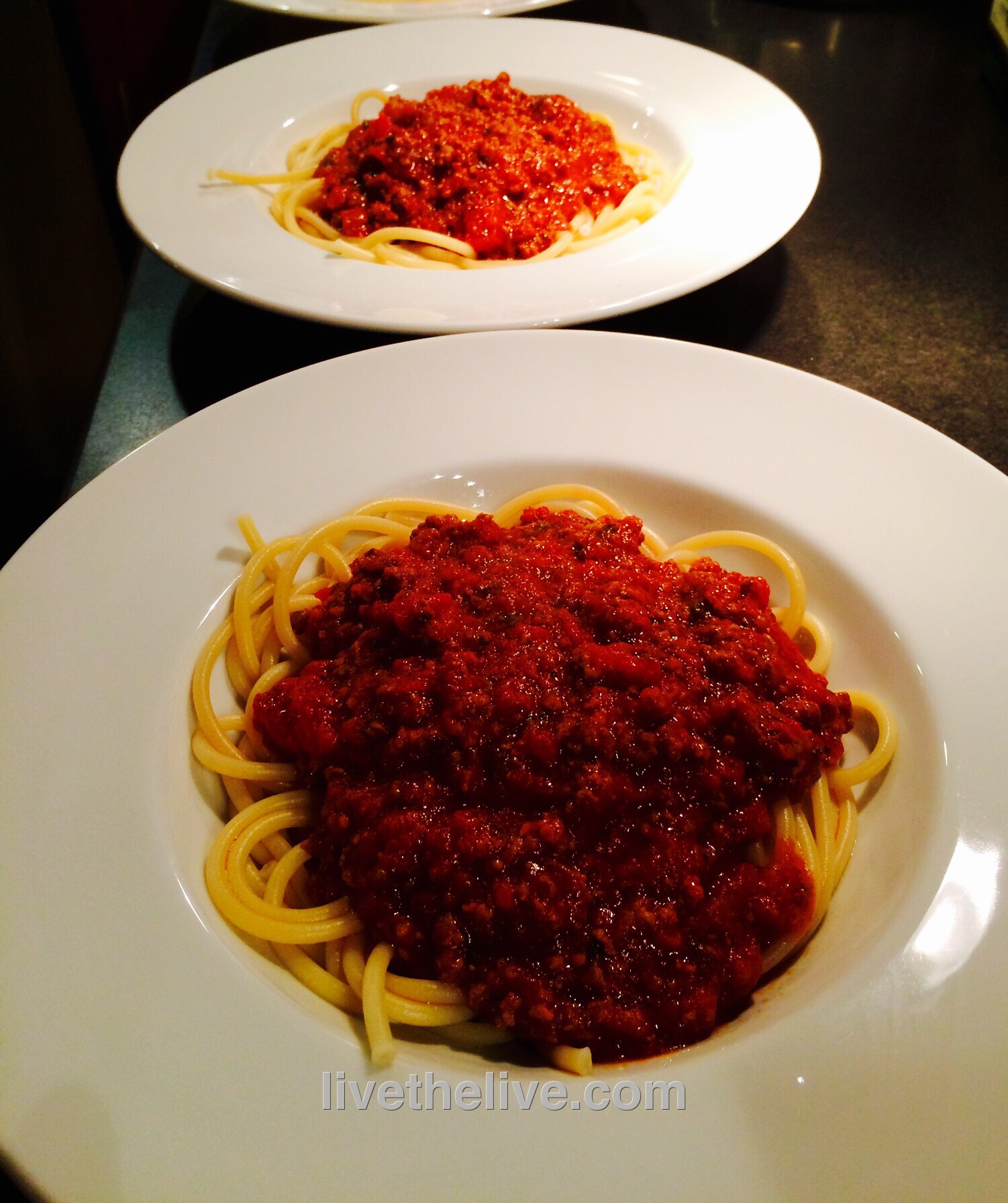
Pasta with meat sauce is one of the easiest things to make, yet few people do it. This sauce is really rich with flavor, and once you put all the ingredients together, it requires nothing more from you than an occasional stir every now and then.

image


Ingredients:


1/4 cup olive oil

3 strips bacon, finely chopped, raw or pre-cooked

1 onion, finely chopped

1 teaspoon garlic salt

2 lbs ground beef (I use grass-fed beef)

2 cans (28 oz each) whole tomatoes

1 tablespoon dried oregano

1 tablespoon dried basil

2 tablespoons dried parsley

2 teaspoon salt

1/2 teaspoon black pepper

1 teaspoon anise seed

1 teaspoon fennel seed

2 bay leaves

1 small can (6 oz)  tomato paste

image


In a large pot, heat the olive oil and add the bacon. Once the bacon is sizzling, add the onions and cook until the onions are translucent. Add the garlic salt and mix. Add the ground beef and cook until it has browned.

Pour the 2 cans of whole tomatoes into a food processor and blend until chunky…or go the old-fashioned route and simply squeeze the tomatoes with your hands, breaking them up. Pour the contents of both cans into the pot and stir well. Cook over medium heat, stirring, until the orange tomato foam disappears.

Add the oregano, basil and parsley and stir. Add the salt and pepper and stir. Add the anise seed and fennel seed and stir. Throw in the 2 bay leaves and stir. (I think you get the idea, there’s a lot of stirring going on!)

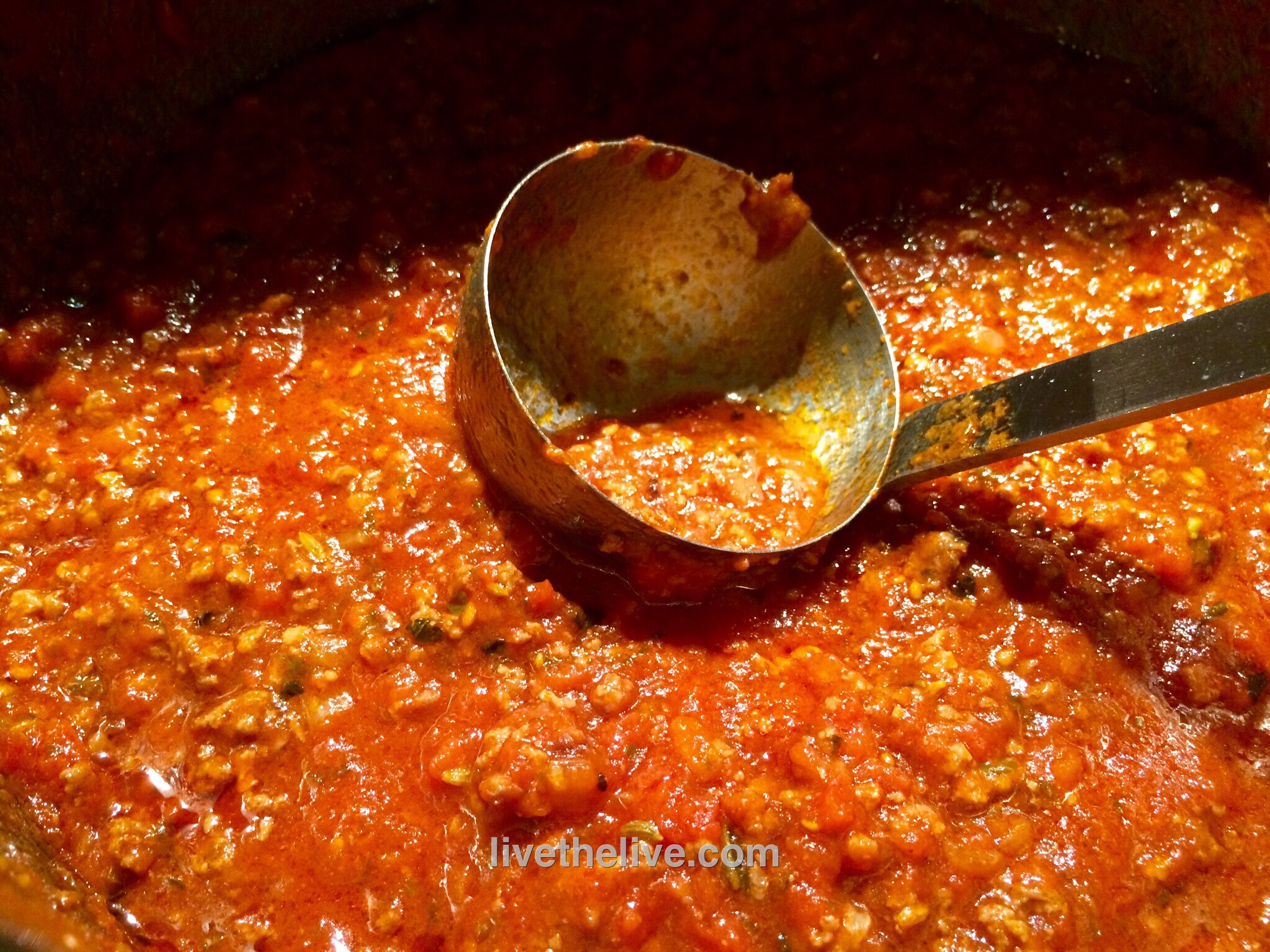
When the sauce starts to boil, add the tomato paste and stir well. Let it come up to a boil again–the paste thickens best at high heat–then turn the heat down to a simmer and cover the pot.

Let the sauce simmer for several hours. Whenever you walk by, give the sauce a good stir.

Serve over pasta, with some grated Parmiggiano Reggiano.

image


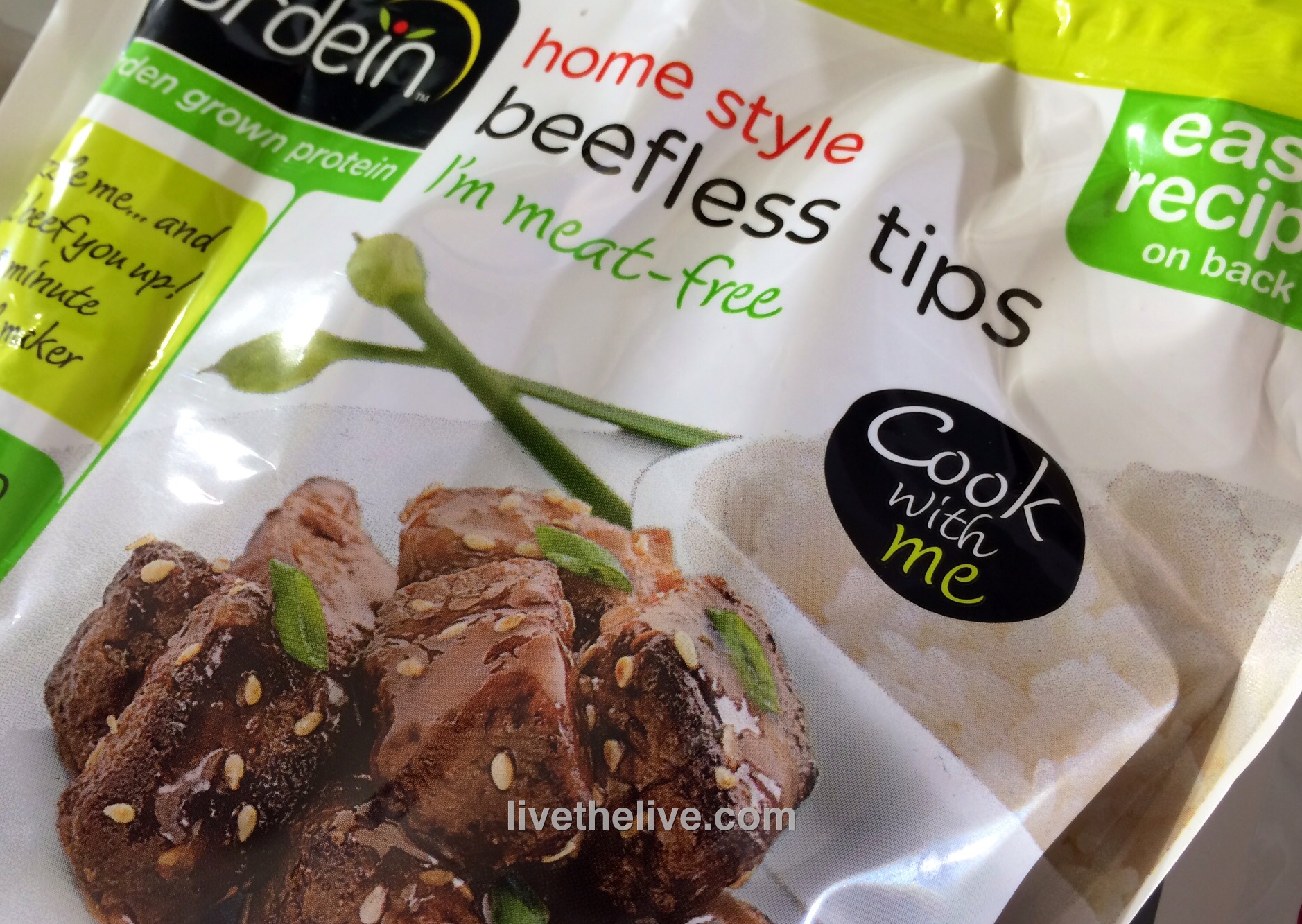
Do vegetarians and vegans secretly want to be carnivores? Why do so many vegetarian foods need to look, taste and even have names that sound like meat products?
Why do we need to call it this?image
 Is it because the real name: ” ‘Repulsive cubes of tofu’ salad” wouldn’t sell?
 
What about this one?
image
Looks like dog food, with one difference: I wouldn’t give it to my dog.
Or perhaps my favorite:
image
“Chick’n?” CHICK’N?! Are you effing kidd’n me?!
My vegetarian and vegan friends have legitimate reasons why they choose their lifestyle. Some don’t like factory farms or the way they treat animals and the environment. I don’t either. I buy grass-fed and pastured meats which come from small farms which use humane practices.

Some find the death of any animal for their food, even it’s done humanely, not acceptable. I feel that my manly omnivore cravings are nothing to be ashamed of, and obtaining animal protein in a sustainable way, whether farming, fishing or hunting, is the way to go. And for me, no plant protein can replace the quality of animal protein.

There are those that don’t eat red meat because of the negative effects on their health. Grass fed beef instead of corn and grain fed beef all but eliminates this problem. And we’re now seeing the negative health effects of meat substitutes like soy, even organic soy. Non-organic soy, which makes up 80% of the world’s crop, is Monsanto’s Round-Up Ready seed that gets oversprayed with herbicides.  Sorry…I’d rather have healthy beef, pork and chicken than GMO Frankenfood in my family’s diet.
If I was a vegetarian or vegan, I would write to the people who make these crappy products. They’re making them look bad. I’d be carrying that organic broccoli stalk high above my head and showing my pride, not hiding behind food disguised as quasi-meat.
Proud carnivores would never allow a piece of meat to be shaped to resemble a vegetable. A dinosaur chicken nugget, maybe. But never a vegetable. Now pardon me while I cook up some bac’n.