Archive for the ‘cheese’ Category

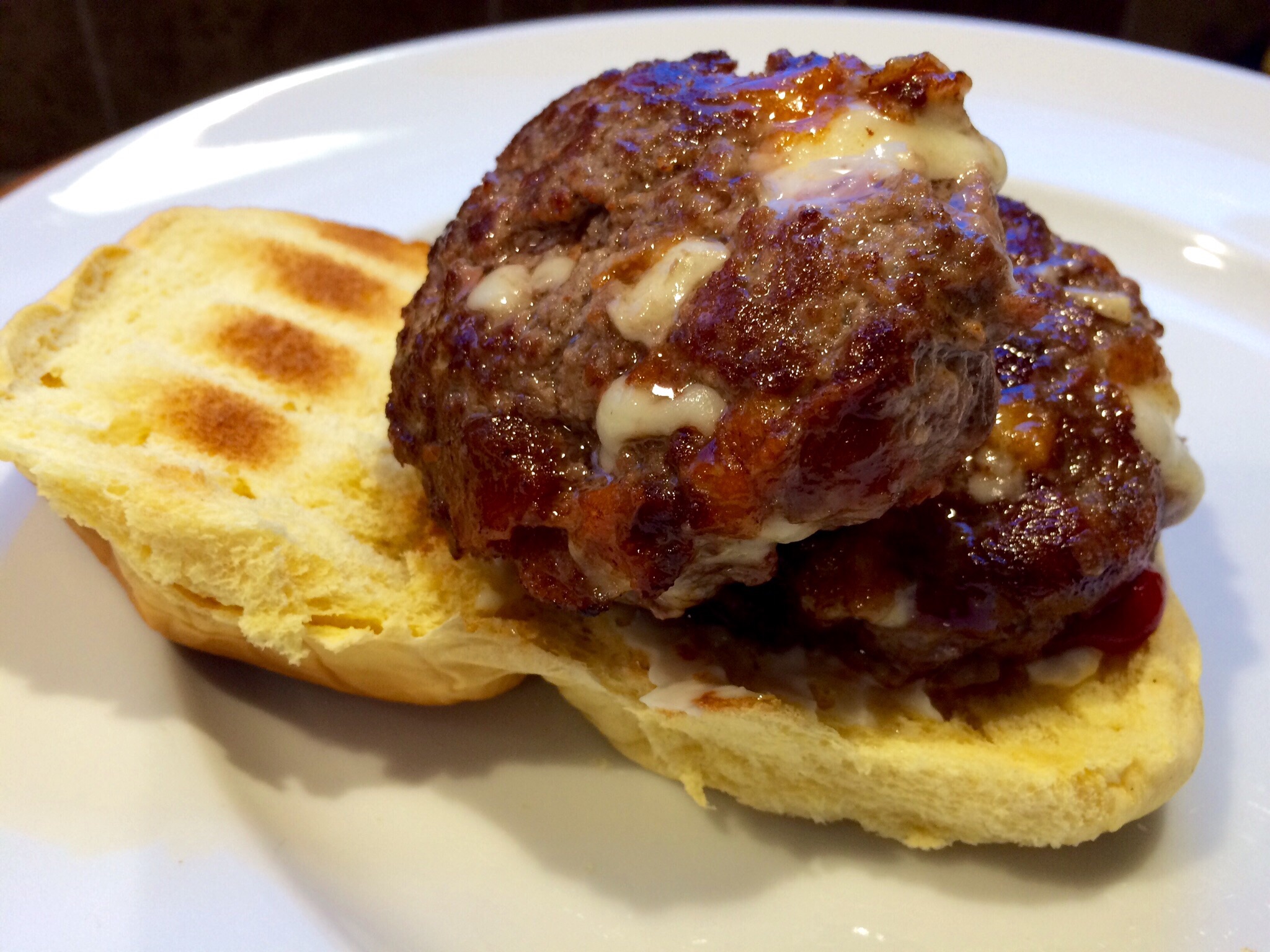
Not a very complex idea. I just put the stuff that’s usually on the outside, on the inside of my burgers. Why? Why not?

Instead of dealing with a package of bacon and a package of cheese and a stack of burgers, I’ve got all the ingredients conveniently inside the patties. And as the burgers cook, the fat from the bacon and the gooey cheese melt and combine with the burger meat to make a really tasty and moist burger.

I cook these on the grill, but the cast-iron skillet method, described below, works really well,  too.

I make 2 lbs. of burgers at a time, using humanely-raised local grass-fed beef, from my friends at Simmons Organic Farm in Middletown, RI.  Support your local farmers when you can!

image

2 lbs. ground grass-fed beef
1/2 cup sharp cheddar cheese, cut into 1/4″ cubes
1/2 lb. bacon, cooked crisp, cooled and crumbled
garlic salt
avocado oil or pork fat


In a bowl, combine the beef, the cheese and the bacon, mixing well so that all the ingredients are evenly incorporated.

Form the beef into 1/4 lb. patties or larger. Refrigerate them until you’re ready to cook to firm them up.

Heat a cast iron skillet and add a drop of oil or pork fat. Place the burgers in the hot skillet to sear and sprinkle with the garlic salt. When browned, flip the burgers and place the skillet in a 350-degree oven to finish cooking.

image


Instead of opening a nasty can of Manwich or other similar product, the classic Sloppy Joe sandwich is easy enough to make from scratch.

My version takes on a Mexican twist (hence the name Sloppy José), using seasoned taco meat and a great barbecue sauce. Putting them together with a sprinkling of Mexican cheese on a bun with lettuce and tomato makes for one sloppy but delicious sandwich!

sloppy jose


For the barbecue sauce…

2 cups ketchup
3/4 cup water
6 tablespoons white vinegar
6 tablespoons apple cider vinegar
6 tablespoons brown sugar
3 tablespoons Worcestershire sauce
1 tablespoon chili powder
2 teaspoons salt
2 teaspoons black pepper
1 1/2 teaspoons cumin


Mix all the ingredients in a saucepan and simmer until the flavors have blended, about 20 minutes. Remove from heat and cool to room temp. If you store it in an airtight container in the fridge, it’ll stay good for a few months.


For the seasoned taco meat…

1 teaspoon granulated garlic
1 teaspoon onion powder
1/4 teaspoon crushed pepper flakes
1 teaspoon dried Mexican oregano
1 teaspoon paprika
2 teaspoons ground cumin
1 teaspoon sea salt
1 teaspoon black pepper
1 Spanish onion, finely chopped
olive oil
2 lbs. grass-fed ground beef


Combine all the spice ingredients in a bowl.

Saute the onions in a bit of olive oil until translucent. Add the beef and saute until cooked, mixing in the spice mixture a little at a time until you’ve used it all.


For the sandwich…

Take some of the taco meat and place it in a small non-stick pan and heat on medium. Squirt in as much of the barbecue sauce as you like, mixing thoroughly. Sprinkle some grated Mexican cheese on top. (I like Cotija, which is like a Mexican feta, but a bag of mixed cheeses works great, too.) Mix thoroughly, letting it all melt together into one warm, gooey mess. Throw it on a bun. Add lettuce, tomato, avocado slices, whatever you like!


asparagus pastaAsparagus season has arrived in my garden. This is one of my favorite ways to enjoy it.
4 mild Italian sausages, sliced into pieces 1/2″ thick
1 lb. penne pasta
1/2 onion, finely chopped
1 cup chopped fresh trumpet mushrooms (white button mushrooms work, too)
2 cups fresh asparagus, sliced into 1-inch pieces
1 clove garlic, passed through a garlic press
1 cup homemade chicken broth
6 fresh sage leaves, finely chopped
1/2 cup freshly grated Parmigiano Reggiano cheese
extra virgin olive oil
salt and pepper
Have the pasta water boiling, and add pasta, cooking until just a bit more undercooked than al dente.
Heat a large pan, and drizzle in some olive oil. Saute the sausage pieces until browned and cooked through, but not over cooked. Remove the sausages from the pan and place them in a separate bowl. Remove all but 2 tablespoons of the fat left behind in the pan.
Place the pan back on stove and saute the onion until translucent. Add the garlic, and saute for 10 seconds. Add the sage, and saute for 10 seconds, stirring. Add the chopped mushrooms and saute for a few minutes, then add the chicken broth, and simmer until almost all the liquid has evaporated. Pour the contents of the pan into the bowl with the sausages.
Return the pan to the stove, add a little more olive oil, and on medium heat, saute the asparagus pieces. Cook until they are al dente, not too soft. Once the asparagus has reached this stage, return all the contents of the sausage/mushroom bowl to the pan to heat through. Drain the pasta, and add it to the pan as well, combining all the ingredients. If it looks too dry, add a little pasta water to the pan. Season with salt and pepper.
Make sure you serve this hot, with grated Parmigiano Reggiano on top, and drizzle lightly over the top with extra virgin olive oil.


On our trip to Spain in 2014, croquettes were served in just about every restaurant we went to. My daughter fell in love with them, and they became the “chicken nugget” of our trip: the go-to kid food we knew we’d always rely on.

image

Once we got home, I could only find them on-line, not in stores. And since they ship frozen, it required a large purchase.

Luckily, I found a great recipe in Saveur magazine, and decided to try it out. I was a bit clumsy at making them at first–they do need a bit of finesse–but by the end of the batch, I got the hang of it. And to make them gluten-free, I simply substituted GF flour and breadcrumbs for the all-purpose flour and Panko.

image


2 lbs. potatoes, peeled and cut into 1″ cubes
4 tablespoons unsalted butter
1 onion, minced
1/4 to 1/2 cup heavy cream
6 oz. cheddar cheese, grated
6 oz. ham, finely chopped
salt and pepper
1 cup all-purpose flour (or gluten-free flour like Cup4Cup)
2 eggs
2 cups Panko breadcrumbs (or gluten-free breadcrumbs)
avocado oil for frying


image

Peel the potatoes, cut them into 1″ cubes and boil them in salted water until tender. Drain and set them aside.

Melt the butter in the same pot the potatoes were in, then add the onions and saute until translucent. Put the potatoes back in the pot and add 1/4 cup of the heavy cream. Mash the potatoes with a potato masher until smooth. Add more cream, if needed.

Add the cheese and mix until it has melted in. Add the ham and mix again. Season with salt and pepper.

Pour the contents of the pot into a metal bowl and place in the freezer to cool, stirring every 10 minutes until the mashed potato mix is cold, but not frozen.

Line up three bowls: flour (or GF flour) in the first bowl, eggs (scrambled) in the second bowl, Panko (or GF breadcrumbs) in the third.

Remove the mashed potato mix from the freezer, and with floured hands, grab enough to gently roll a small meatball in your hands. (I’ve found that starting with a round shape makes it easier to work with.)

Roll the ball in the flour, then the egg, then drop in the Panko and roll again. With the ball in your hand, gently squeeze into a tubular shape, and then place it on a sheet pan lined with non-stick aluminum foil. Continue with the rest of the potato mixture. (You may need to add another egg or two if you run out.)

Once you’ve rolled all the croquettes, place them back in the freezer for 20 minutes to firm up. (I use a sheet pan lined with non-stick aluminum foil.)

Heat a pan with 2″ of oil to 350 degrees. Remove the croquettes from the freezer, and working in small batches, fry them until golden brown. Place on paper towels, and quickly season lightly with salt while hot, if desired.

image


The croquettes freeze really well, so this batch goes a long way. Once they’ve been fried, let them cool completely to room temp. Place them in Ziploc freezer bags and store in the freezer. When it’s time to cook them, let them thaw for about 15 minutes, then place in a pre-heated 325 degree oven for another 15 minutes.


It’s National Pizza Day and National Bagel Day. But since I don’t have a pizza bagel recipe–yet–I’ll stick with pizza.

There are few foods that people take as personally as pizza. Tell someone that your pizza place is better than their pizza place, and chances are you’ll start a fight. Well, my pizza place is better than your pizza place, because I make it at home. Besides, I can run faster than you.

I’m not going to say that much of the pizza that I’ve tried here in Rhode Island is mediocre, but I will say that I was born in Brooklyn and grew up working in many New York pizza places in my youth. So yes, I do have a very strong opinion on what I think makes a good or bad pizza. And, alas, I’ve tried, but a good gluten-free pizza is not yet within reach. The frozen ones you get in stores are passable, but making one at home has been nothing short of a disaster.

My homemade pizza is all about the basics. The better quality my original ingredients are, the better my pizza will be:


The dough…

The key ingredient is 00 flour, and it can be found in specialty stores,  or online. Ratios for this recipe depend on the humidity in my kitchen on any given day, but my basic pizza dough recipe is as follows:

4–5 cups 00 flour
1 cup tepid water
1 Tablespoon salt
1 packet Italian pizza yeast
a squirt of extra virgin olive oil

I mix all the dry ingredients in the bowl of a stand mixer, then slowly add the water as it mixes. After the ingredients are well mixed, and the dough pulls from the side of the bowl, I remove it to a floured board, where I knead the dough by hand for another 5 minutes, until it is smooth and elastic, shaping it into a ball. I rub a little olive oil over the ball of dough, place it in a bowl covered with plastic wrap, and let it rise for 2 hours, punching it down after that, and letting it rise another 2 hours again.

The sauce…

I’ve written a previous blog about real and fake cans of San Marzano tomatoes. I feel that San Marzanos make the best sauce, but not all cans of San Marzanos are created equal. The only way you can be guaranteed you have a real can of these beauties, grown in volcanic Italian soil in the shadow of Mt Vesuvius, is by the D.O.P. designation on the can. (D.O.P. stands for “Denominazione d’Origine Protetta,” and signifies that it’s the real deal.) Anything else that says San Marzano may not be.

San Marzanos are so amazing, that all I do is puree them in a food processor, pour the sauce into a pan, and let it reduce until it has thickened. No spices or additions of any kind.

The cheese…

I don’t need to go super-fancy with mozzarella di bufala (cheese made from the milk of the water buffalo) …but I don’t use the mass-produced supermarket stuff, either. Whole Foods has fresh mozarella from Maplebrook Farms in Vermont, and it is excellent.

The toppings…

A matter of choice. I wrote a while ago about how I make my own guanciale, a cured meat that comes from pork cheeks. Chopped and fried, that is one of my daughter’s favorite pizza toppings.

But my signature pizza that wows my dinner guests is my marinated beef tenderloin and fried chive blossom pizza. I marinate and grill a piece of beef tenderloin, slicing it thin. And in the springtime, when my chive plants are budding like crazy, I snip the blossoms before they open and place them in Ziploc freezer bags to use all year long. When it’s time, I grab a handful of the blossoms and fry them in a little olive oil, salt and pepper, and sprinkle them over the top of the beef tenderloin pizza. A touch of Fleur de Sel on top seals the deal.

My signature marinated beef tenderloin and chive blossom pizza.

The oven…

Many professional pizza ovens reach a temperature of 1000 degrees. My home oven only reaches 500, but it does the trick. I do use a pizza stone, and place it on the center rack of the oven, and let it heat up thoroughly before sliding a pizza onto it for cooking.

Recently, I’ve also started cooking pizzas on my barbecue grill (using a special stone for the grill) to add a smoky component. The grill gets hotter than my home oven, which is great, but it’s obviously a more work to set-up and clean.


My favorite pizza?

There are only a few pizzerias that I know of—all in NYC–that make pizza montanara, and for my money, it’s the best I’ve ever had. It’s a small, rustic pizza margherita using mozzarella di bufala and simple tomato sauce, garnished with a basil leaf. What makes it magical is the fact that after they stretch the dough–but before they put the toppings on it–they fry the dough in deep fryer with olive oil for just a minute. It puffs up like a pillow. Then they put the toppings on and quickly bake it in a very hot oven. The end result is a non-greasy, absolutely heavenly pizza cloud…the most delicious I’ve ever had. If you’re in New York, go to Pizzarte on W. 55th. Great montanara and other Italian dishes.

I’ve actually had some great success recreating this pizza at home, frying the dough in a very large skillet of olive oil. The challenge is removing this giant piece of dough out of the skillet and into a pizza pan without dripping olive oil all over my stove and setting my house on fire! So far, so good!
My interest in food and cooking goes back to my first restaurant job as a teenager, at an Italian restaurant called Pizza City East in my hometown of Plainview, NY.  (There was also an original Pizza City on Crossbay Blvd. in Ozone Park, Queens.) It was there that I learned how to open clams by the bushel, how to make the perfect cappucino, and how to use basic restaurant kitchen equipment like the convection oven and the fryer. I peeled thousands of shrimp for scampi, washed barrels of lettuce for salads, and grated hundreds of pounds of mozzarella for pizza.

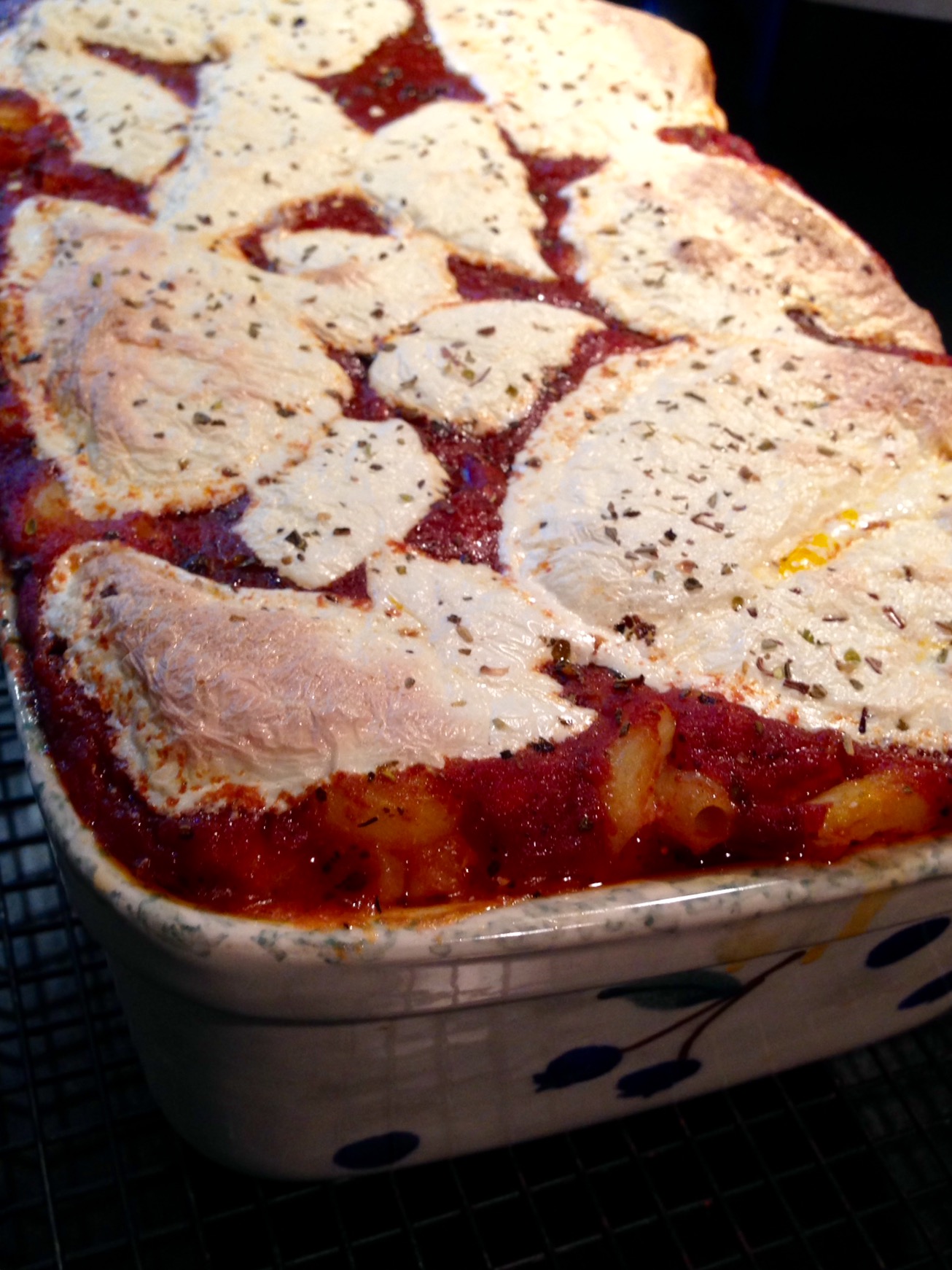
I also made baked ziti by the barrelful. It was much easier to make in large quantities than lasagna, and it basically contained all the same ingredients. No worries about making perfect layers. No pasta sheets sticking together. Just put all the ingredients in an oven-proof baking pan, mix them around and throw them in the oven. And it tasted great.

Now I make baked ziti, or shells, or elbows–whatever pasta I have on hand–at home, using gluten-free ingredients.

To make the perfect baked ziti, it's important to have a good helper.

To make the perfect baked ziti, it’s important to have a good helper.

I substitute whole milk for the usual bechamel sauce used in many lasagna recipes. Since this dish is gluten-free, I can’t use the flour required to thicken bechamel sauce, and gluten-free flour doesn’t work here.

1 lb. regular or gluten-free pasta
2 lbs. (32 oz.) ricotta cheese
1/4 cup Parmigiano Reggiano cheese
12 oz. mozzarella cheese, grated
1 cup whole milk
1 can (28 oz.) whole tomatoes
1/2 teaspoon granulated garlic
1 teaspoon salt
1 teaspoon oregano
1 teaspoon basil
1 teaspoon parsley

image


In a bowl, mix together the ricotta cheese, Parmigiano Reggiano, half of the mozzarella, and the milk.

Pour  the contents of the tomato can in a blender and blend until smooth. Add this to the bowl and combine.

Add the granulated garlic, salt, oregano, basil, and parsley to the bowl and combine again.

Cook the pasta until just before al dente. You want it to be chewy because it will still bake in the oven. Drain the pasta and place it in an ovenproof baking dish.

Add the contents of the cheese and milk blend bowl to the pasta and stir thoroughly to combine. It’s going to be mushy.

Pre-heat the oven to 350°.

Top the baking dish with the rest of the mozzarella cheese. Sprinkle a little oregano on top. Bake for 30-45 minutes, until the cheese on top has melted and it’s bubbling hot.

Let it rest for about 10 minutes before serving.


Baked elbows, this time with meatballs.

Baked elbows. This time, I added meatballs.

And May is National Hamburger Month. How can you go wrong? First, a favorite burger recipe, then one for brisket.

The Inside-Out Burger: If I’m making bacon cheeseburgers to bring to a barbecue, even if it’s on my back deck, instead of bringing a package of bacon and a package of cheese and a stack of burgers, I put all the ingredients inside the patties themselves. As the burgers cook, the fat from the bacon and the gooey cheese melt and combine with the burger meat to make a really tasty and moist burger.

image

2 lbs. ground beef
1/2 cup sharp cheddar cheese, cut into 1/4″ cubes
1/2 lb. bacon, cooked crisp, cooled and crumbled
garlic salt
avocado oil or pork fat

In a bowl, combine the beef, the cheese and the bacon, mixing well so that all the ingredients are evenly incorporated. Form the beef into 1/4 lb. patties. Refrigerate them until you’re ready to cook to firm them up.

Heat a cast iron skillet and add a drop of oil or pork fat. Place the burgers in the hot skillet to sear and sprinkle with the garlic salt. When browned, flip the burgers and place the skillet in a 350-degree oven to finish cooking.

image


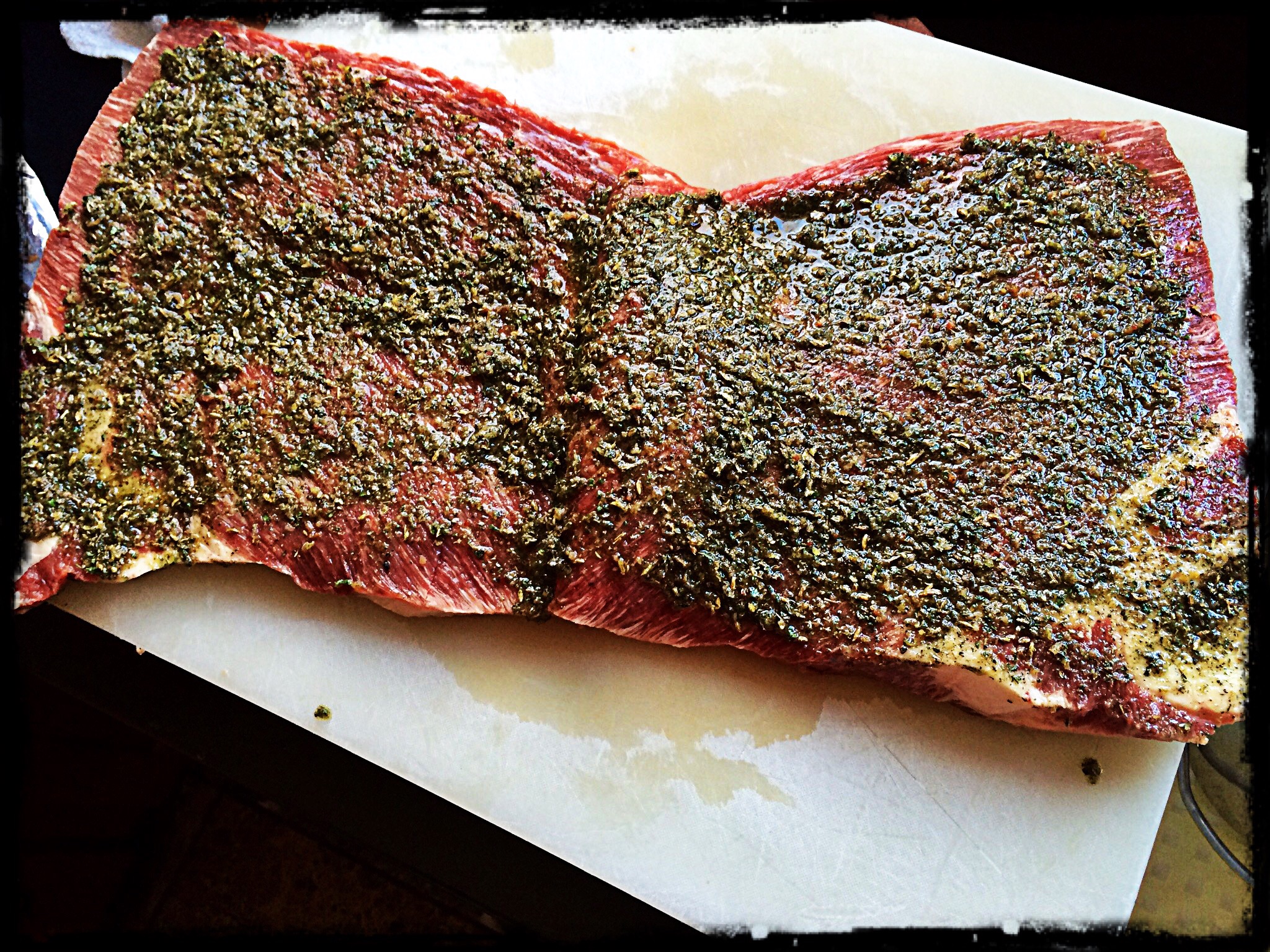
Brisketta: There’s a wonderful Italian roasted meat dish called Porchetta (por-ketta). The classic version consists of a pork belly that is seasoned and then wrapped around a pork loin. The meat is tied, then roasted slowly for hours, basted with wine and the meat juices until the pork is cooked and the outside skin is crackly and crispy. Then it’s sliced like a log and served as a sandwich or a main dish.

I decided to use the same method of cooking for beef brisket, and I called it “Brisketta.”

image

I flipped the brisket fat-side-down on my cutting board and carefully sliced it down the middle horizontally to make two large–even thinner–slabs of meat. The bottom half, with the fatty side of the brisket, would eventually be my outside layer. The top half would be my inside layer.

image

I took the top half and slathered some of my seasonings on it. Then I rolled it tightly into a log. I slathered more of my seasonings onto the bottom half of the brisket, then rolled it around the first log, so that the fattiest side of the brisket would now be on the outside of this large meat log. I tied the meat log up tightly with butchers’ twine and let it rest in my fridge overnight.

image

7 lbs. beef brisket
1 tablespoon fennel seed, toasted and cooled
5–3″ strips of bacon, cooked and cooled
2 tablespoons oregano
2 tablespoons parsley
2 teaspoons basil
2 tablespoons salt
1 teaspoon pepper
2 teaspoons granulated onion
1 teaspoon granulated garlic
Grated zest of 2 lemons
1/2 cup olive oil

Pour the fennel seed in a hot, dry pan on the stove. Toast the seeds until they release their aroma, but don’t let them burn. Set aside to cool.

Crumble the bacon strips and place in the bowl of a food processor. Add the cooled fennel seeds, oregano, parsley, basil, salt, pepper, onion, garlic, and lemon zest.

Run the food processor and slowly pour in the olive oil, until you have a paste much like pesto.

Slice the brisket in half horizontally. Save the piece with the fatty side for last, because this is the piece that will wrap around the others, with the fatty side out. Smear the rub on the first piece of brisket and roll it tightly into a log. Smear the rub on the second piece of brisket and wrap it around the first piece, making sure the fatty side is on the outside.

Once you’ve rolled both pieces into a single meat log, scored the fatty exterior with a knife and rub any leftover seasoning paste onto it. If you have none left, simply season with salt and pepper.

Tie the meat log tightly with butchers’ twine, tucking in all loose ends.

At this point, you can place the meat log in the fridge until ready to cook, remembering to remove it at least an hour before cooking so that it comes back to room temperature.

Pre-heat an oven or smoker at 250 degrees. Place the meat log directly on the grate, with a pan underneath to catch the dripping fat. Place a bowl of water in there as well, to keep the meat moist while it cooks. Cook for 4 1/2 hours, or until the interior temperature reaches 130 degrees. Let it rest an hour before slicing…if you can wait that long!

image


There are few foods that people take as personally as pizza. Tell someone that your pizza place is better than their pizza place, and chances are you’ll start a fight. Well, my pizza place is better than your pizza place, because I make it at home. Besides, I can run faster than you.

I’m not going to say that much of the pizza that I’ve tried here in Rhode Island is mediocre, but I was born in Brooklyn and grew up working in many New York pizza places in my youth. So I do have a very strong opinion on what I think makes a good or bad pizza.

My homemade pizza is all about the basics. The better quality my original ingredients are, the better my pizza will be:


The dough…

The key ingredient is 00 flour, and it can be found in specialty stores,  or online. My favorite new source is Central Milling in Logan, Utah. They make an organic 00 flour that makes for a great crust. Ratios for this recipe depend on the humidity in my kitchen on any given day, but my basic pizza dough recipe is as follows:

6 cups (16 oz.) 00 flour
1 1/3 cups tepid water
1 tablespoon salt
1 tablespoon yeast
a squirt of extra virgin olive oil

I mix all the dry ingredients in the bowl of a stand mixer or food processor with a dough blade, then slowly add the water as it mixes. After the ingredients are well mixed, and the dough pulls from the side of the bowl, I remove it to a floured board, where I knead the dough by hand for another 5 minutes, until it is smooth and elastic, shaping it into a ball. I rub a little olive oil over the ball of dough, place it in a bowl covered with plastic wrap, and let it rise for at least 2 hours, punching it down after that, and letting it rise at least another 2 hours again.

The sauce…

I’ve written before about real and fake cans of San Marzano tomatoes. I feel that San Marzanos make the best sauce, but not all cans of San Marzanos are created equal. The only way you can be guaranteed you have a real can of these beauties, grown in volcanic Italian soil in the shadow of Mt. Vesuvius, is by the D.O.P. designation on the can. (D.O.P. stands for “Denominazione d’Origine Protetta,” and signifies that it’s the real deal.) Anything else that says San Marzano may not be.

San Marzanos are so amazing, that all I do is puree them in a food processor, pour the sauce into a pan, and let it reduce until it has thickened. No spices or additions of any kind.

The cheese…

I don’t need to go super-fancy with mozzarella di bufala (cheese made from the milk of the water buffalo) …but I don’t use the mass-produced supermarket stuff, either. A nice hunk of your favorite fresh mozarella is all you need.

The toppings…

A matter of choice. I wrote a while ago about how I make my own guanciale, a cured meat that comes from pork cheeks. Chopped and fried, that is one of my daughter’s favorite pizza toppings.

But my signature pizza that wows my dinner guests is my marinated beef tenderloin and fried chive blossom pizza. I marinate and grill a piece of beef tenderloin, slicing it thin. And in the springtime, when my chive plants are budding like crazy, I snip the blossoms before they open and place them in freezer bags to use all year long. When it’s time, I grab a handful of the blossoms and fry them in a little olive oil, salt and pepper, and sprinkle them over the top of the beef tenderloin pizza. A touch of Fleur de Sel on top seals the deal.

My signature marinated beef tenderloin and chive blossom pizza.

The oven…

Many professional pizza ovens reach a temperature of 1000 degrees. My home oven only reaches 500, but it does the trick. I do use a pizza stone, and place it on the center rack of the oven, and let it heat up thoroughly for about 45 minutes before sliding a pizza onto it for cooking.

Recently, I’ve also started cooking pizzas on my barbecue grill (using a special stone for the grill) to add a smoky component. The grill gets hotter than my home oven, which is great, but it’s obviously a more work to set-up and clean.


My favorite pizza?

There are only a few pizzerias that I know of—all in NYC–that make pizza montanara, and for my money, it’s the best I’ve ever had. It’s a small, rustic pizza margherita using mozzarella di bufala and simple tomato sauce, garnished with a basil leaf. What makes it magical is the fact that after they stretch the dough–but before they put the toppings on it–they fry the dough in deep fryer with olive oil for just a minute. It puffs up like a pillow. Then they put the toppings on and quickly bake it in a very hot oven. The end result is a non-greasy, absolutely heavenly pizza cloud…the most delicious I’ve ever had.

I’ve had some great success recreating this pizza at home, frying the dough in a very large skillet of olive oil. The challenge is removing the dough out of the skillet and into a pizza pan without dripping olive oil all over my stove and setting my house on fire! So far, so good!
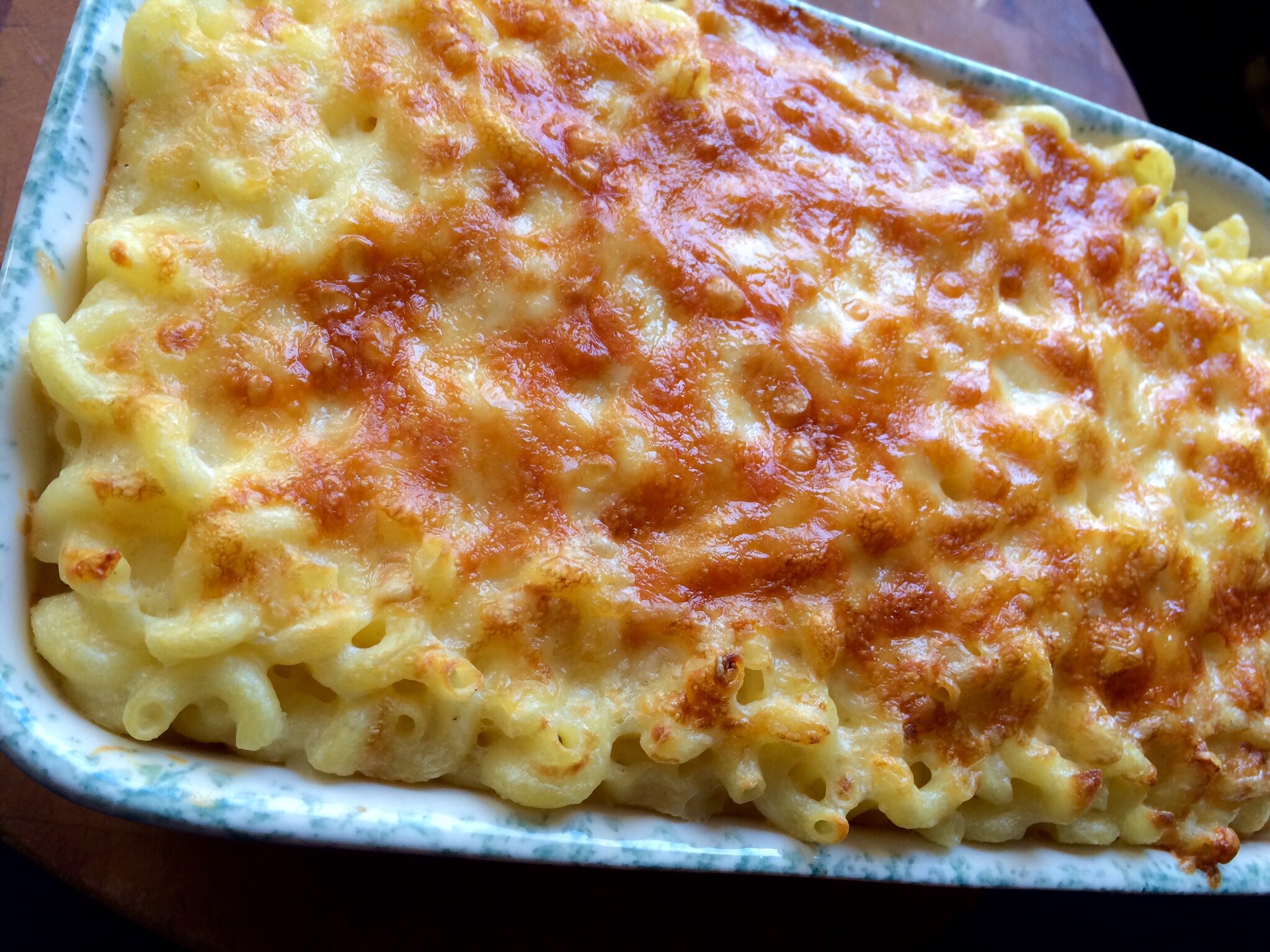
The quality of gluten-free products, especially flours and pastas, has improved drastically over the last 5 years. Flavor-wise, it really has gotten to the point where you’d never know the difference between GF and wheat.

Baking breads, cakes and pizzas are still a challenge at times, but this mac and cheese recipe dares you to tell the difference.

image

2 boxes (12 oz. each) gluten-free elbow pasta

8 tablespoons (1 stick) unsalted butter

4 1/2 cups milk

1/2 cup gluten-free flour

2 teaspoons salt

1/4 teaspoon nutmeg

1/4 teaspoon black pepper

pinch of cayenne pepper

12 oz. grated sharp Cheddar cheese (about 4 1/2 cups)

8 oz. grated Gruyere cheese (about 2 cups)


Pre-heat the oven to 375 degrees.

Cook the pasta until a bit firmer than al dente.

Using a bit of the stick of butter, butter a 3-quart casserole dish.

Warm the milk in a saucepan over medium heat.

Place the remaining butter in a skillet with high sides and melt it over medium heat. When the butter bubbles, add the flour, whisking constantly. While whisking, add the hot milk, a little at a time. Whisk constantly, cooking about 5 minutes.

Remove from heat and stir in the salt, nutmeg, black pepper and cayenne. Then mix in 3 cups of the cheddar and 1 1/2 cups of the Gruyere. Stir in the cooked pasta.

Pour the mixture into the casserole dish, and sprinkle the remaining cheese on top.

Bake about 25 minutes, until golden.

image


March 18 is National Sloppy Joe Day.

My sandwich takes on a Mexican twist, using seasoned taco meat and a great barbecue sauce. Putting them together with a sprinkling of Mexican cheese on a bun with lettuce and tomato made for one sloppy but delicious sandwich!

sloppy jose


For the barbecue sauce…

2 cups ketchup

3/4 cup water

6 tablespoons cider vinegar

6 tablespoons white vinegar

6 tablespoons brown sugar

3 tablespoons Worcestershire sauce

1 tablespoon chili powder

2 teaspoons salt

2 teaspoons black pepper

1 1/2 teaspoons cumin


Mix all the ingredients in a saucepan and simmer until the flavors have blended, about 20 minutes. Remove from heat and cool to room temp. If you store it in an airtight container in the fridge, it’ll stay good for a few months.


For the seasoned taco meat…

1 teaspoon granulated garlic

1 teaspoon onion powder

1/4 teaspoon crushed pepper flakes

1 teaspoon dried Mexican oregano

1 teaspoon paprika

2 teaspoons ground cumin

1 teaspoon sea salt

1 teaspoon black pepper

1 Spanish onion, finely chopped

olive oil

2 lbs. grass-fed ground beef


Combine all the spice ingredients in a bowl.

Saute the onions in a bit of olive oil until translucent. Add the beef and saute until cooked, mixing in the spice mixture a little at a time until you’ve used it all.


For the sandwich…

Take some of the taco meat and place it in a small non-stick pan and heat on medium. Squirt in as much of the barbecue sauce as you like, mixing thoroughly. Sprinkle some grated Mexican cheese on top, mixing thoroughly and letting it all melt together into one warm, gooey mess. Throw it on a bun. Add lettuce, tomato, avocado slices, whatever you like!