Archive for the ‘garden’ Category

I don’t have the patience to boil Mason jars and lids and all that crap. But I love me my pickles, especially when I’ve got a cucumber surplus in the garden.

This is such an easy way to make great pickles, it’s almost unbelievable…and no water is needed! The salt extracts just enough moisture, like when curing meat, to make it work.

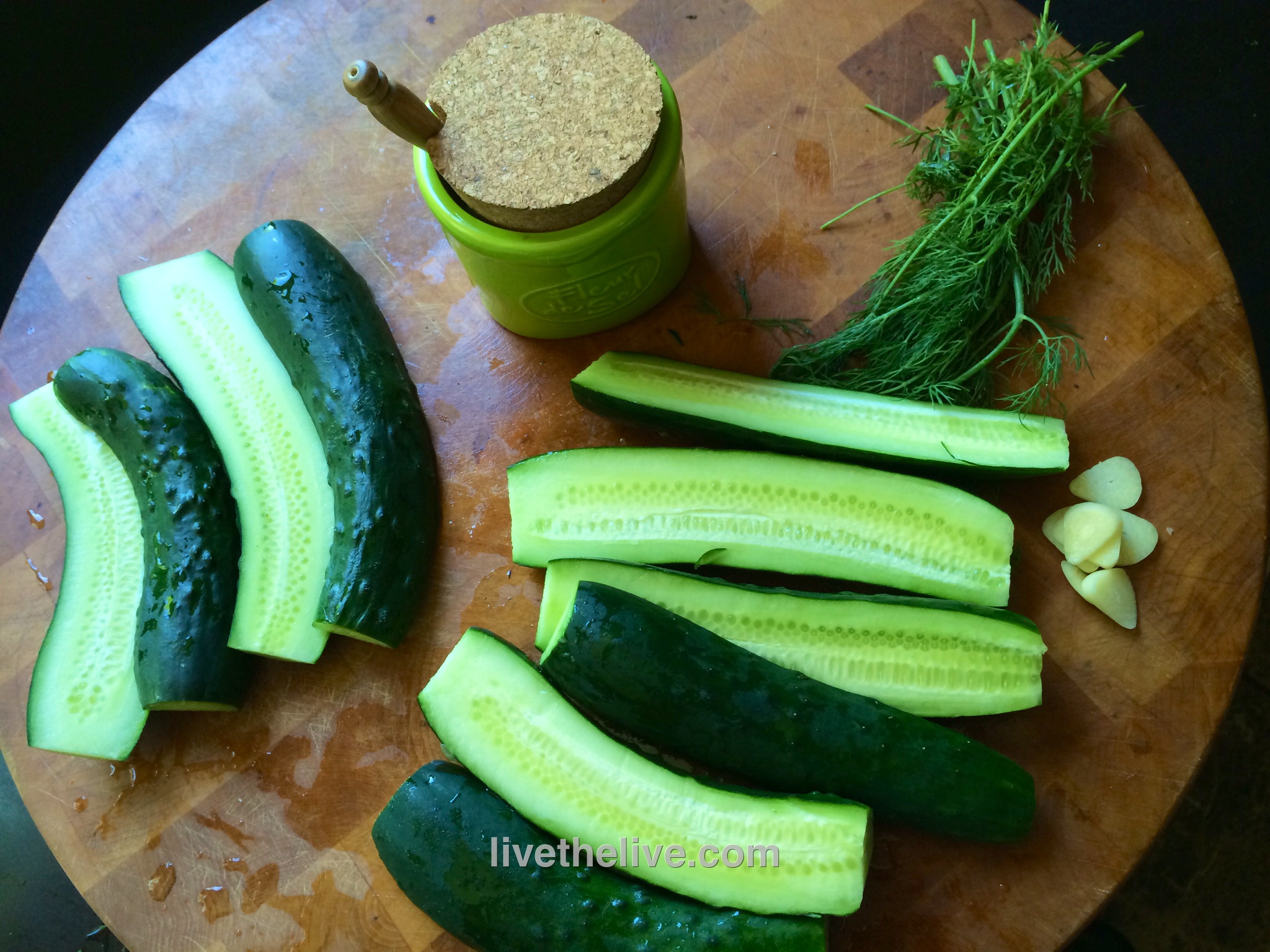
pickles


Ingredients:

6 fresh cucumbers

1 1/2 teaspoons sea salt (I like Fleur de Sel)

handful of fresh dill

1 clove garlic, thinly sliced


Get a large plastic bag.  Add the salt, dill and garlic and gently mix everything in the bag.

Cut the ends off the cucumbers and then slice them lengthwise, in half or in quarters. Add them to the bag and gently mix again.

Squeeze to remove air from the bag, close it tightly and place it in the fridge overnight. The pickles will be ready to eat the next day, but they’re even better after 48 hours.


KOHL-SLAW

Posted: July 8, 2014 in Food, garden, Recipes
Tags: , , , ,

Kohlrabi is probably one of the most misunderstood vegetables you’ll find in the supermarket. Most people don’t have a clue about what to do with them. Kohlrabi is a member of the cabbage family and can be eaten raw as well as cooked.

For me, the real joy of kohlrabi is biting into a crunchy, sweet, freshly picked and peeled bulb right out of the garden. Unfortunately, much of the kohlrabi you find in a supermarket is grown larger than a tennis ball, making it tough, woody and dry. And they usually remove all the leaves, which are delicious cooked or raw.

My kohlrabi harvest has just begun in my home garden, and I decided to make a slaw with the leaves and bulb, to best use all the parts of the plant. I used my Awesomesauce recipe as the dressing. Find the recipe here: http://wp.me/p1c1Nl-gT

kohlrabi LTL

Ingredients:


2 kohlrabi bulbs, with leaves

1 carrot

Alz Awesomesauce

salt and pepper to taste


Wash the veggies thoroughly before using. Pull the leaves off the kohlrabi bulb, and remove the stems. Grab a bunch of leaves at a time, roll them up tightly, and slice as thinly as you can into thin ribbons. Place in a bowl. Do this with all the leaves.

Peel the thick skin off the kohlrabi bulb and slice it as thinly as you can. Then take the slices and cut thin sticks out of them. Toss into the bowl.

Season the leaves and bulbs slices with a little salt and pepper, then add Awesomesauce to taste and toss well.

Refrigerate covered, and let the flavors blend for a couple of hours before using.

Many people, even avid gardeners, seem to think that composting is extremely complicated and that it will take up too much of their time. And so they miss out on one of the most important free sources of organic matter for their gardens.
Composting is a win–win in every way imaginable.
Composting allows you to recycle kitchen food scraps. When you consider the fact that about 30% of all landfill waste is food scraps that could have been recycled into compost, you quickly see the value of this process.
Composting saves you trips to the dump and dirty looks from your garbage man when you leave too many bags at the end of your driveway. Why put all those grass and leaf clippings into a landfill when you can transform them into organic material that will nourish your garden plants?
Good composting basically means supplying microbes with the right balance of food so that they can thrive and break down your yard and kitchen waste. Despite what you may read elsewhere, the reality of backyard composting is that you will never get that super-hot pile they talk about in all the composting manuals. But, if you have a pile that cooks reasonably well, and becomes a haven for many happy redworms, you can consider your efforts a success.
My compost bins, with dahlias, cosmos and scarlet runner beans in front.

My compost bins, with dahlias, cosmos and scarlet runner beans in front.

Compost piles are aerobic, meaning they need fresh air to be successful, so it is important to aerate your compost pile once in a while. Simply take a shovel or pitchfork and “fluff” the pile up, mixing the contents. You’ll find that this small amount of maintenance will keep the aerobic microbes happy, and will keep the anaerobic microbes (the ones that don’t require air and cause the compost pile to smell bad) away.
Keep your compost pile out of the full sun. Successful composting requires the pile to be moist, and the summer sun will dry things out very quickly. Semi-shade is a better way to go.
The main types of food for your compost pile, easily split into 2 categories, are green and brown. Green waste is made of fresh plant material from the garden, kitchen fruit and vegetable scraps, and coffee grounds. They don’t necessarily need to be the color green. The term “green,” in this case, means they contain nitrogen. Avoid weeds because weed seeds can survive the average home composter and will sprout when you return the compost back to your soil the next season. And avoid all animal products (meat, dairy) unless you like rotten smells and animals tearing up your yard.
Brown waste is made of straw, leaves, wood chips, sawdust, newspaper, and even some cardboard. Brown waste tends to be drier than green waste, so it’s a good idea to soak things like newspaper and cardboard before putting it into your compost pile.
Too much green material will cause your compost to take on a not-so-delightful bouquet reminiscent of ammonia because of the excess of nitrogen. Adding a little brown stuff to it and mixing it through will help it stay odor-free.
The end of the season, when the leaves have fallen in my yard, is the only time I use the bagger on my riding lawn mower. (I let the mulched grass clippings go back into the soil the rest of the season.) But in the fall, I bag the grass clippings and leaves together, effectively combining green and brown in a perfect mix that starts to cook in my compost piles almost immediately. The result is some pretty well broken down material by the springtime.
If you’ve got a lot of leaves, most leaf blowers can suck up leaves, too, and they grind them up into fine particles that are worth their weight in gold. Throw them in your compost pile, or even till into your garden soil in the fall.
I keep a metal compost bucket with a lid under the kitchen sink. No need to buy an expensive bucket with a carbon-filter built into the lid from those garden catalogs. Just a good metal or plastic bucket with a lid, and before I dump my vegetable scraps and coffee grinds into it, I line the bottom with a single sheet of newspaper. That’s all I  need to keep the bucket from stinking up the room until I dump it into the compost pile.
There are many composters to choose from, from rotating drums that claim you’ll get compost in 14 days, to simple wooden or wire frames that hold the pile in check. Use what works best for you. I have a system of 3 bins made from wooden slats. When I fill one, I start on the next. Other than aerating them once in a while, I don’t mess with them. It takes about a year, but at the end of a long winter, I usually have some pretty nice compost to use in the springtime garden.
A word about manure in your garden: You should never use raw manure directly in your garden. You don’t want raw parasite-laden manure touching or splashing up onto your vegetables. If you get a supply of fresh horse or cow manure, mix it into your garden in the fall after you’ve harvested all of your veggies. It will winter over and be ready to make your garden happy the next season. Or let it sit in your compost bin for a year before using it. Though some will rave about the benefits of chicken manure, the fact is it harbors salmonella, which takes a year or two to go away. I won’t use it.
As I mentioned a little while ago, I grow two varieties of bamboo in my yard, and although they are quite invasive, I have my own methods of keeping the plants in check.

One stand of bamboo is in a corner of my yard that is overrun by brambles and other nasty vines. So I have no issues with the bamboo taking over this area at all. I’d rather have a desirable invasive than an ugly one.

The other stand of bamboo is a larger variety that grows to 25 feet tall, and it requires more maintenance to keep it in the area I want it to stay in. So, when some of the shoots get in my way, I simply cut them with a hacksaw and use them in my garden.

image

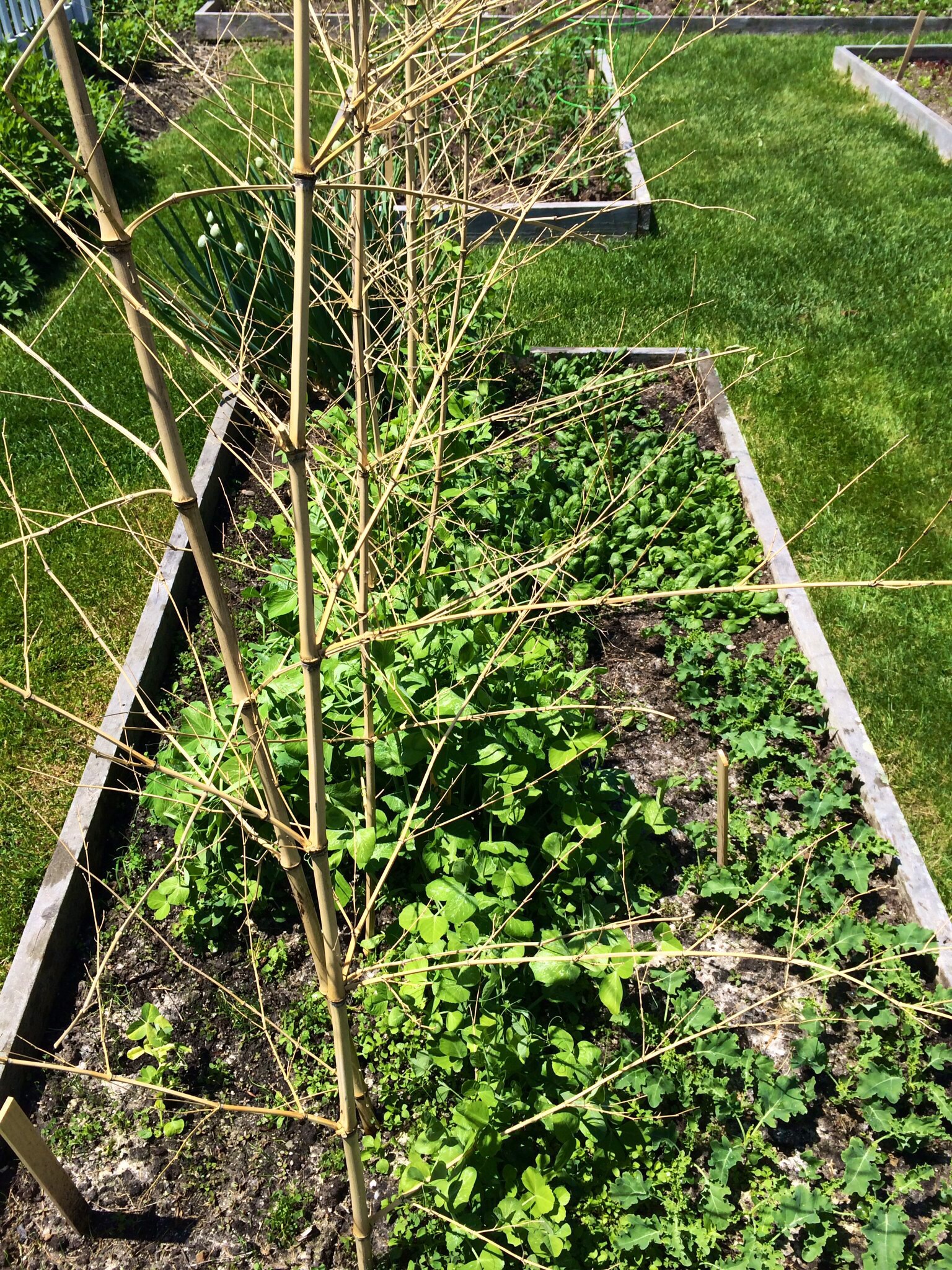
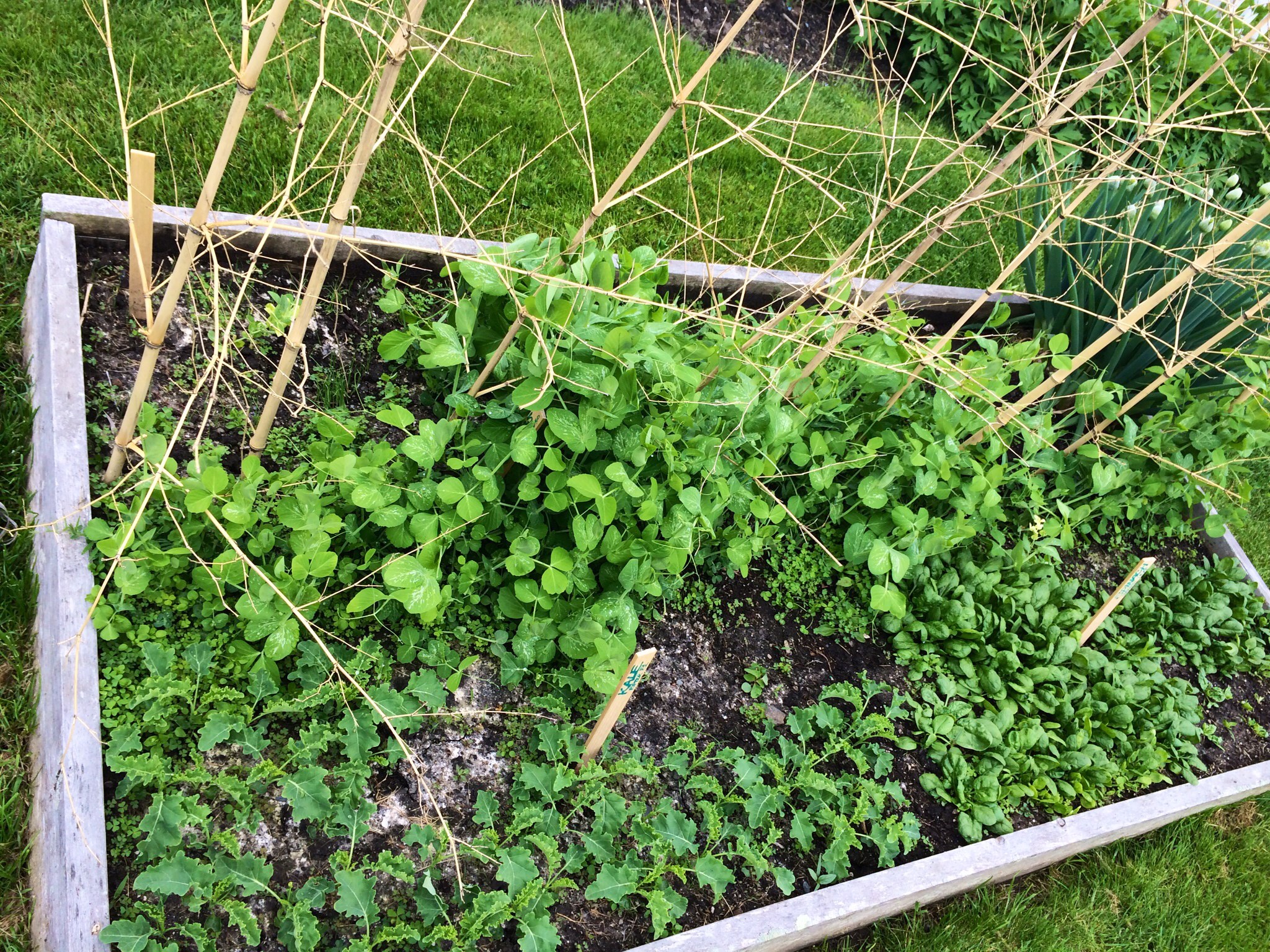
I use them as tomato stakes, supports for my cucumbers vines, and even pea brush, as shown here. For pea brush, I don’t remove the smaller side branches, which gives something for the peas to attach to. The photo above was from earlier in the season. Here’s what it looks like now: over 6 feet tall!

peas1

Another view earlier in the season…

Peas with pea brush, kale, spinach.

Peas with pea brush, kale, spinach.

…And now…

peas2

The kale and spinach have been harvested. (The weather’s too hot for them now.) And I’ve sown some lettuce mixes in their place. Since the bed of lettuce is on the north side of the peas, the lettuce will be shaded by the peas in the hot sun.

Bamboo is a great way to give my garden a more natural look, and not having rusty metal poles everywhere.

I grow two varieties of bamboo in my yard, and although they are quite invasive, I have my own methods of keeping the plants in check.

One stand of bamboo is in a corner of my yard that is overrun by brambles and other nasty vines. So I have no issues with the bamboo taking over this area at all. I’d rather have a desirable invasive than an ugly one.

The other stand of bamboo is a larger variety that grows to 25 feet tall, and it requires more maintenance to keep it in the area I want it to stay in. So, when some of the shoots get in my way, I simply cut them with a hacksaw and use them in my garden.

image

I use them as tomato stakes, supports for my cucumbers vines, and even pea brush, as shown here. For pea brush, I don’t remove the smaller side branches, which gives something for the peas to attach to.


Peas with pea brush, kale, spinach.

Peas with pea brush, kale, spinach.


A great way to give my garden a more natural look, rather than having rusty metal poles everywhere.

CHIVE TALKIN’

Posted: May 20, 2014 in Food, garden, pizza, Uncategorized
Tags: , , , , ,

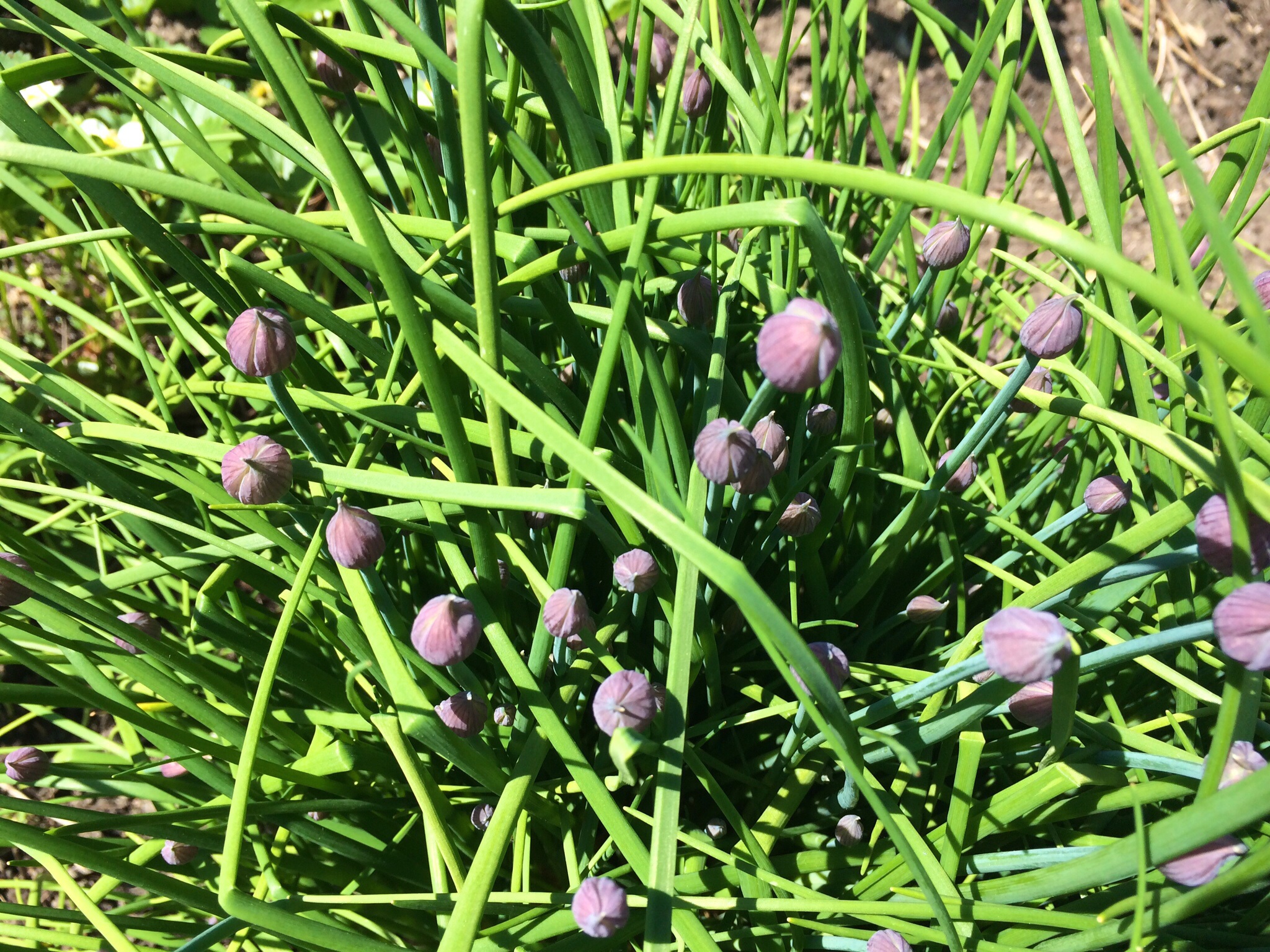
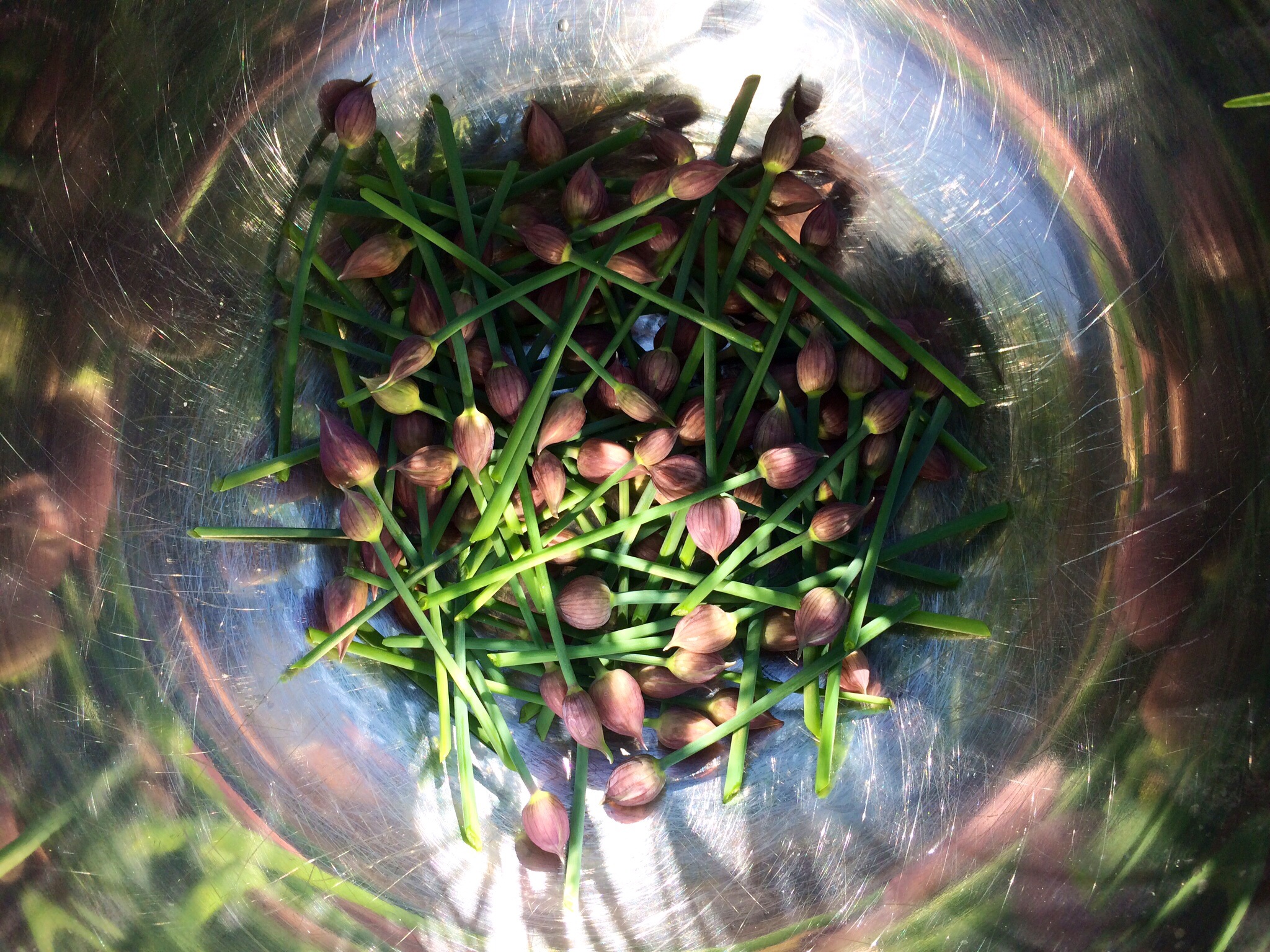
This is the time of year when the chives in my herb garden are busting out with blossoms. Before they pop, I head out every few days and snip the larger blossoms off the chive plants and wrap bunches of them in Ziploc bags and freeze them.

image

I use those blossoms over the course of the next year on my signature marinated beef and chive blossom pizza. I just take a packet of chive blossoms out of the freezer, and sauté them for just a bit in olive oil and salt and pepper, then place them on the pizza before baking.

image

The chive blossoms not only add great flavor, but they look cool on the plate, too. Great as a side for almost any meat dish.


Here in New England, it’s time to seriously think about what to plant in your garden. I’ve already sowed peas, arugula, radishes, broccoli raab, and turnips back on St. Patrick’s Day. They can be sown in the garden now, as soon as the soil is workable. Simply, that means you take a handful of soil and squeeze it. If it stays in a hard, wet clump, it’s too wet and not ready. If it crumbles apart, get gardening!
That doesn’t give you a green light to plant all your veggies, however. Many need to wait until temperatures get much warmer.
I’m currently taking courses at the University of Rhode Island to get my certification as a URI Master Gardener. Gardening can be as simple or as complicated as you choose to make it, and if you’re starting out, the task of deciding where to put your garden may not seem like an easy one. It varies with every home, every yard. But there are some basic things to keep in mind, and all of it is common sense. Do you have any common sense? Good. Then you should be fine…
Greenhouse greens

Greenhouse greens

You want your garden to have all the benefits possible for the best chance of success. Just remember this easy acronym: LSSDA. OK, it’s not that easy, but I couldn’t figure out how to spell anything with those letters.
Location: You need to decide if your garden is going to be something you want to see every time you look out your window, or view from your deck as you smoke your cigar at the end of a satisfying gardening day…or something that is more practical than beautiful, and therefore something that you might want to have on a side of the house where it doesn’t block an already enjoyable view.
Sun: Where you put your garden must depend on the sun. You may think you have the perfect place for a garden bed, but if it doesn’t get a full day’s sun, you can pretty much forget about growing those amazing tomatoes you drool over when you go to the local farm stand. You can always shade your garden if there’s too much sun…it’s highly unlikely you’re going to set up a bank of klieg lights if you don’t have enough.
Size: In the beginning, this may be tougher than it seems. If you’ve got an old-fashioned garden envisioned in your mind, with long rows of veggies 2 or 3 feet away from each other, you’re going to need a huge space, which means huge work. If you go with the method that I suggest: small (8-foot by 4-foot) raised beds with intensive planting, not only are you going to need a lot less space, you’ll find that you’re requiring a lot less work to get the same results. I use the Square Foot Gardening method originated by Mel Bartholomew many years ago, and I’ve never had a reason to change. I get the most food in the least amount of space. (www.squarefootgardening.com)
Distance: This means the distance from all those tools and your water source. Sure, you may be pretty damn excited about your garden in the beginning, and you’ll happily drag water 400 feet to your remote garden location…until about June. Then you’ll start making every freaking excuse under the planet to avoid watering or working in your garden…and that kind of defeats the idea. Unless you have some motorized means of hauling all of your tools and buckets out there, try to locate your garden near a garage or shed and a water source so you spend more time in your garden and less time going back and forth to your garden.

Access: Make sure you pick a place that you can easily get to. If your garden requires that you go through an archway or similar structure, you may not be able to fit certain tools, bags of peat moss, wheelbarrows, or even your own fat ass at certain times.

These are the basics to setting up properly. I have 6 raised beds that measure 8-by-4 feet, giving me a total of only 192 square feet, and yet I grow more veggies in that space that my family of 3 can possibly eat. The idea is to get more vegetables per square foot of gardening space, not per plant. When you plant things closer and more intensely, you will get better results with less work and cost. And if you can time it so that you have new plants ready to take the place of those that have been harvested, you’ve got more harvests in even the shortest of seasons. But that’s a discussion for another time.

That’s how the saying goes here in New England. I’ve sown my peas in my garden as soon as the soil can be worked in the spring for years with great success. In addition to peas, you can sow arugula, broccoli raab, radishes and onions. Sprouting the peas indoors before sowing by placing them on a moist paper towel for a days or two can speed the process, but I usually just sow them directly.

peas

I also start some seedlings early indoors, including tomatoes. These will go under grow lights for several weeks until the weather outside is warm enough for them to be transferred to my unheated greenhouse.

seedlings


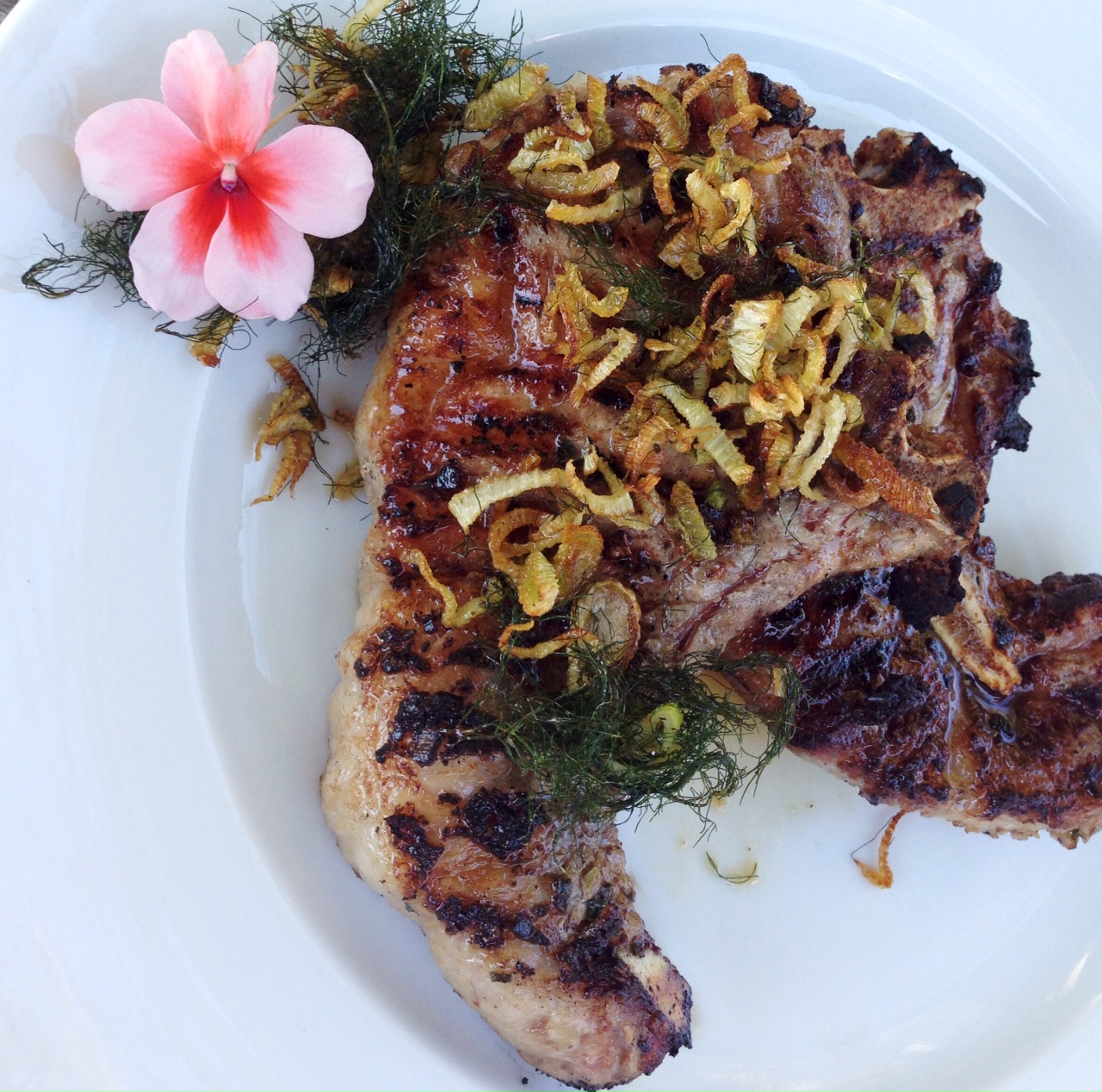
Inspired by a garden full of fennel and my fanatical love for all things pork, this recipe just happened this past fall. I use Berkshire heritage pork when possible, a far tastier and healthier choice over standard pork you find in a supermarket. I get it at: http://www.heritagepork.com.

pork chop fennel


Ingredients:


4 Berkshire pork chops

4 tablespoons finely chopped fennel bulb

2 teaspoons finely chopped fresh sage

4 teaspoons garlic salt

1 teaspoon ground black pepper

3 tablespoons extra virgin olive oil

extra fennel bulb and fennel fronds

extra olive oil, salt and pepper for sauteing


Combine the chopped fennel, sage, garlic salt, black pepper and olive oil in a bowl. Mix well and spread it all over the pork chops. Let them stand for an hour at room temperature.

Light a hot grill. Grill pork chops until done…with quality pork, that does not mean cook it to death!

Chop extra fennel bulb into thin strips about an inch long. Remove fennel fronds from their stems. Saute bulb strips in olive oil, salt and pepper until they are almost crisp. Toss in fennel fronds and cook until fronds and bulb strips are crisp.

Serve pork chops with crispy fennel and fronds on top.

A few years ago, at Le Saint-Amour, a great restaurant in Quebec City, the dish I ordered had these small strange-looking root vegetables sitting next to the roasted duck entrée. They resembled tiny twisted parsnips…or caterpillars! I needed to know what these things were, and so I asked my French waiter, who came back with a piece of paper that had the word “crosne” written on it. He said: “I don’t know how they say it in English.”
Back at the hotel room, I went right to the laptop and started a search on-line and discovered that crosnes (pronounced crones) are also known as Chinese artichokes, and although they are somewhat common in European gardens, they are really difficult to find in the states.
The plant is a relative of mint (though the leaves have no aroma), a perennial, is easy to grow, spreads on its own, and has those small, convoluted and delicious root clumps (known as tubers to gardeners.) So what’s not to like? Well, apparently, it’s not the gardeners that don’t want to deal with them…it’s the cooks! The tubers are very small and therefore need a little extra effort to make sure they are washed clean before cooking. They don’t need to be peeled (now that would be a pain in the ass) but to many chefs, even the washing is too much of a hassle.
Now it seems that many more chefs are discovering crosnes, and they just can’t get a hold of them.
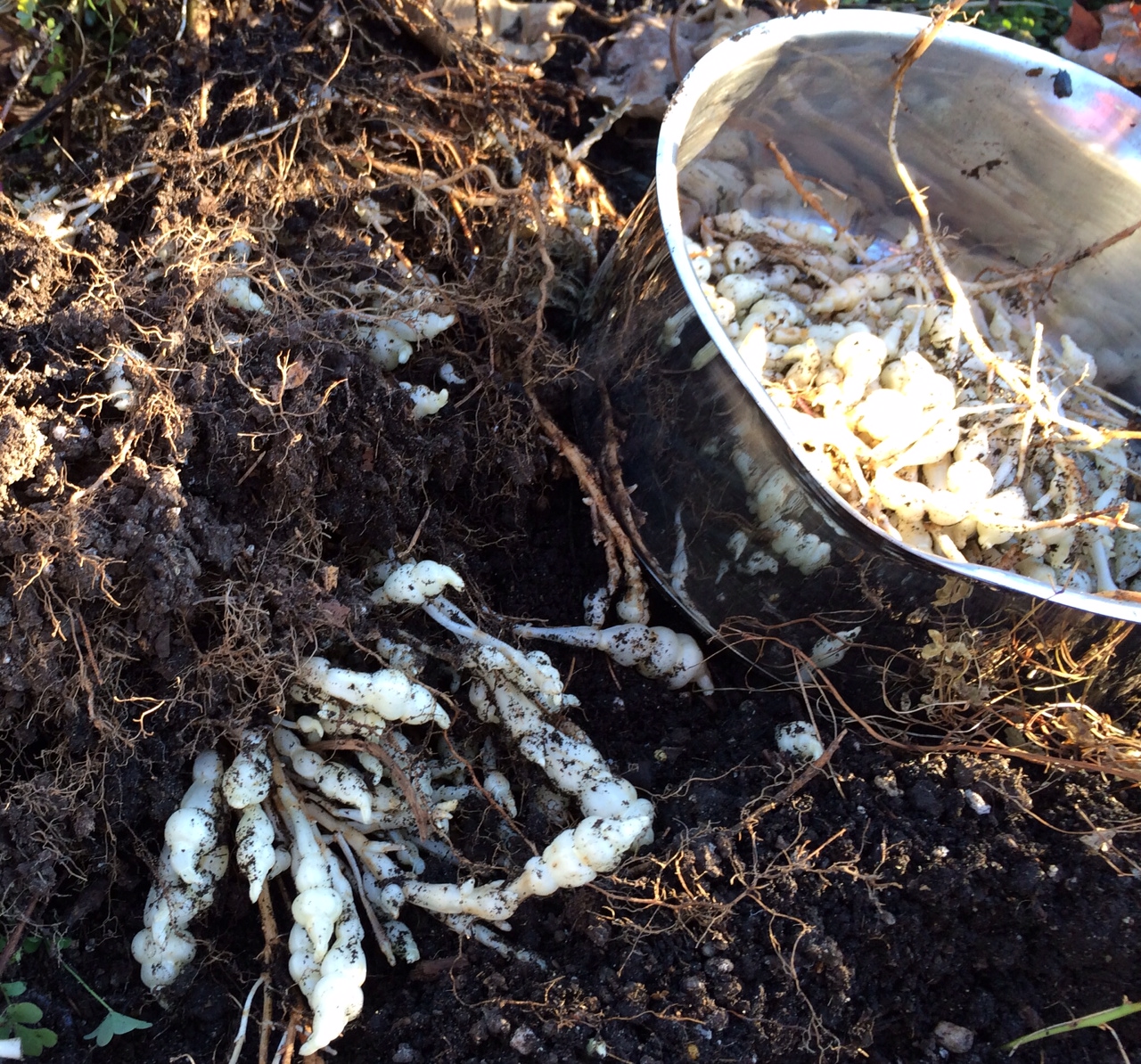
Harvesting crosnes in the garden. I leave the small tubers in the ground for next season's crop.

Harvesting crosnes in the garden. I leave the small tubers in the ground for next season’s crop.

As a rabid gardener, I found all of this pretty interesting so I searched for sources of buying crosne seeds or plants for my own garden. It took a while (most growers were in Europe or Great Britain), but I finally found a source in Oregon that sold the plants and I bought a few for my home garden.

A relative of the mint plant, crosnes are pretty hardy and are tough to remove once well established, so they need to be planted in an area where you don’t mind if they take over. The tubers are ready to harvest around October, and as long as I leave some in the ground over the winter, the crosnes will be back again the next year. Seems pretty low-maintenance for such a delicious little treat!

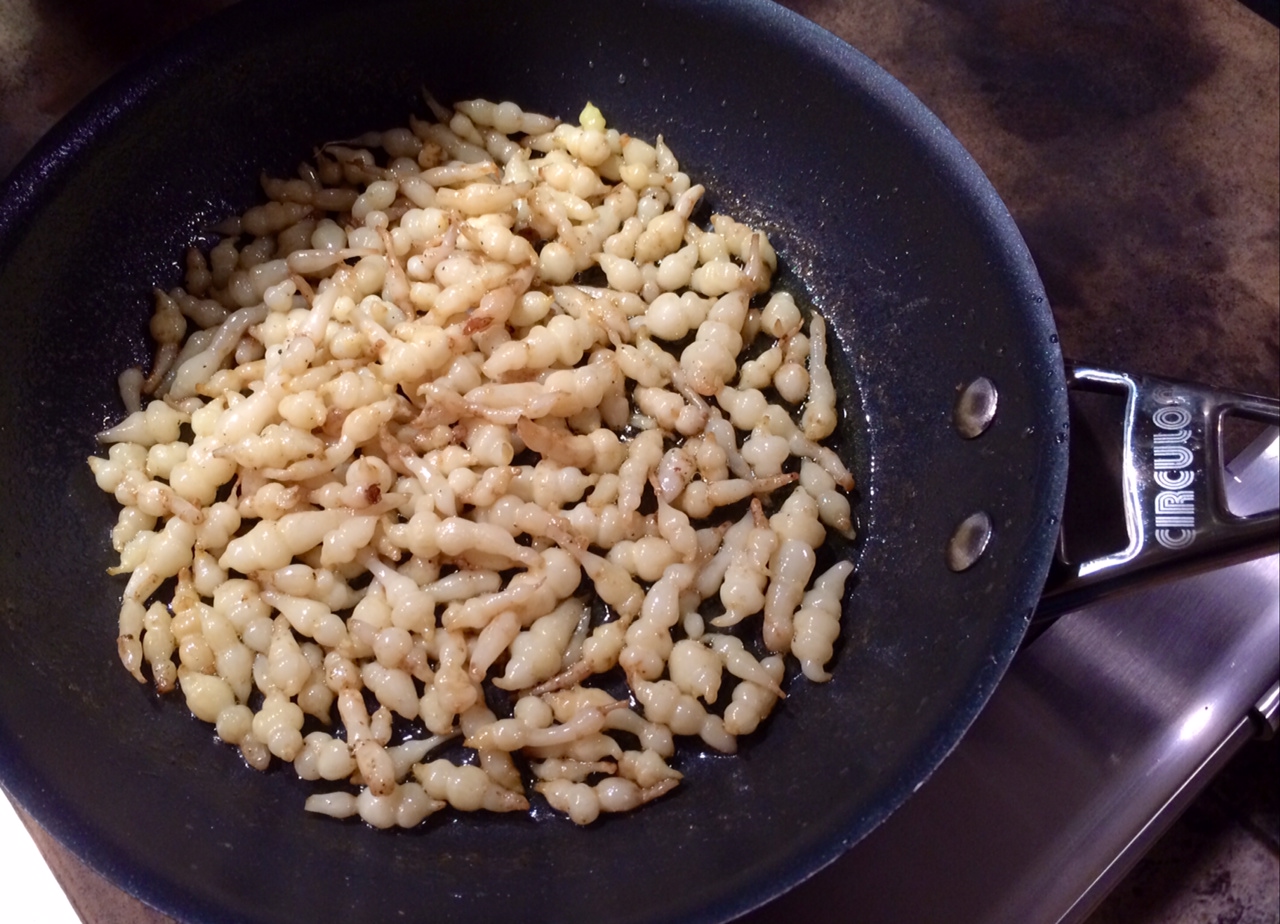
photo (2)

As for preparation, a light saute in olive oil and butter, salt and pepper is all they need, until cooked but crisp. They also go well with a deep, rich reduction like I had with my duck at Le Saint-Amour.