Archive for the ‘Italian’ Category

I always thought that spaghetti squash was a sort of “gimmick” vegetable. But once I roasted it, I realized just how delicious it could be. Squash is a great lower-carb gluten-free substitute for pasta. But feel free to use spaghetti in this recipe if you like!


FullSizeRender


Cooking spaghetti squash is easy. I wash them, cut them in half, and remove the seeds and membrane with a spoon. I flip them onto their backs, skin side down, and drizzle some extra virgin olive oil on them. A little sea salt and pepper, and then I flip them back down, skin side up, on a sheet pan lined with non-stick aluminum foil. Into a pre-heated 350 degree oven for 30–40 minutes. When they’re soft to the touch, I remove the sheet pan from the oven, flip them back over again, and let them cool to room temperature. Then I simply scrape out the flesh with a fork, and it comes out in strands, like spaghetti.


image


While the squash roasts in the oven, I make the meatballs. After years of serious meatball research, I found that the secret to a tender meatball is adding more bread to the meat than you think you should.

2 lbs. ground grass-fed beef
1 cup breadcrumbs (at least)
2 eggs, cracked and scrambled
2 tablespoons dried parsley
2 tablespoons dried oregano
1 tablespoon dried basil
1 tablespoon granulated garlic
1 tablespoon granulated onion
1 teaspoon black pepper
2 teaspoons salt

Mix all the ingredients in a large bowl and form them into meatballs. (I like to use an ice cream scoop to make the job easier.)

Place the meatballs on a baking sheet that’s been rubbed with some olive oil. (I usually line the pan with non-stick aluminum foil as well.) Cook the meatballs for about 30 minutes at 350 degrees, until they’ve browned nicely.


Meatballs happily cooking low and slow in the rich tomato sauce.


As for the sauce…

2 cans (28 oz.) of tomatoes, pureed (preferably San Marzano tomatoes)
olive oil
1/2 onion, finely chopped
1 tablespoon dried parsley
1 tablespoon dried oregano
1 teaspoon dried basil
1 teaspoon granulated garlic
2 teaspoons salt
1/2 teaspoon fennel seeds

In a large pot, sauté the onions in a little olive oil until translucent. Add the pureed tomatoes and cook at medium heat until the foam disappears.

Add all the herbs and spices and mix well. Continue cooking on medium heat, lowering to a simmer if the sauce seems to be boiling too hard.

Add the meatballs to the sauce when they’ve finished cooking. (I like to include all the fat and juices that came out of the meatballs while cooking.)  Make sure all the meatballs are covered with the sauce. Place a lid on the pot, and simmer on low for at least an hour.


image


Scrape the spaghetti squash and place a mound of it in the center of the serving dish. Top it with the meatballs and sauce. Grate some Parmigiano-Reggiano cheese over the top, or do what I did this time, and cut a slab of mozzarella into small cubes and toss that on top. A little sprinkle of oregano and olive oil for good measure on top.


Substitutions: If you’re not in the mood for spaghetti squash, it’s safe to say your favorite pasta will work quite well.

This dish is easily made gluten-free simply by using GF breadcrumbs in the meatballs. I like to buy frozen gluten-free bread, like Udi’s, and toast the slices. Then I break them up and toss them in a food processor. In a minute, I have really tasty breadcrumbs that are as good as regular bread.

And if you’re going with pasta, then a GF pasta, like Garofalo, is a delicious gluten-free substitute.
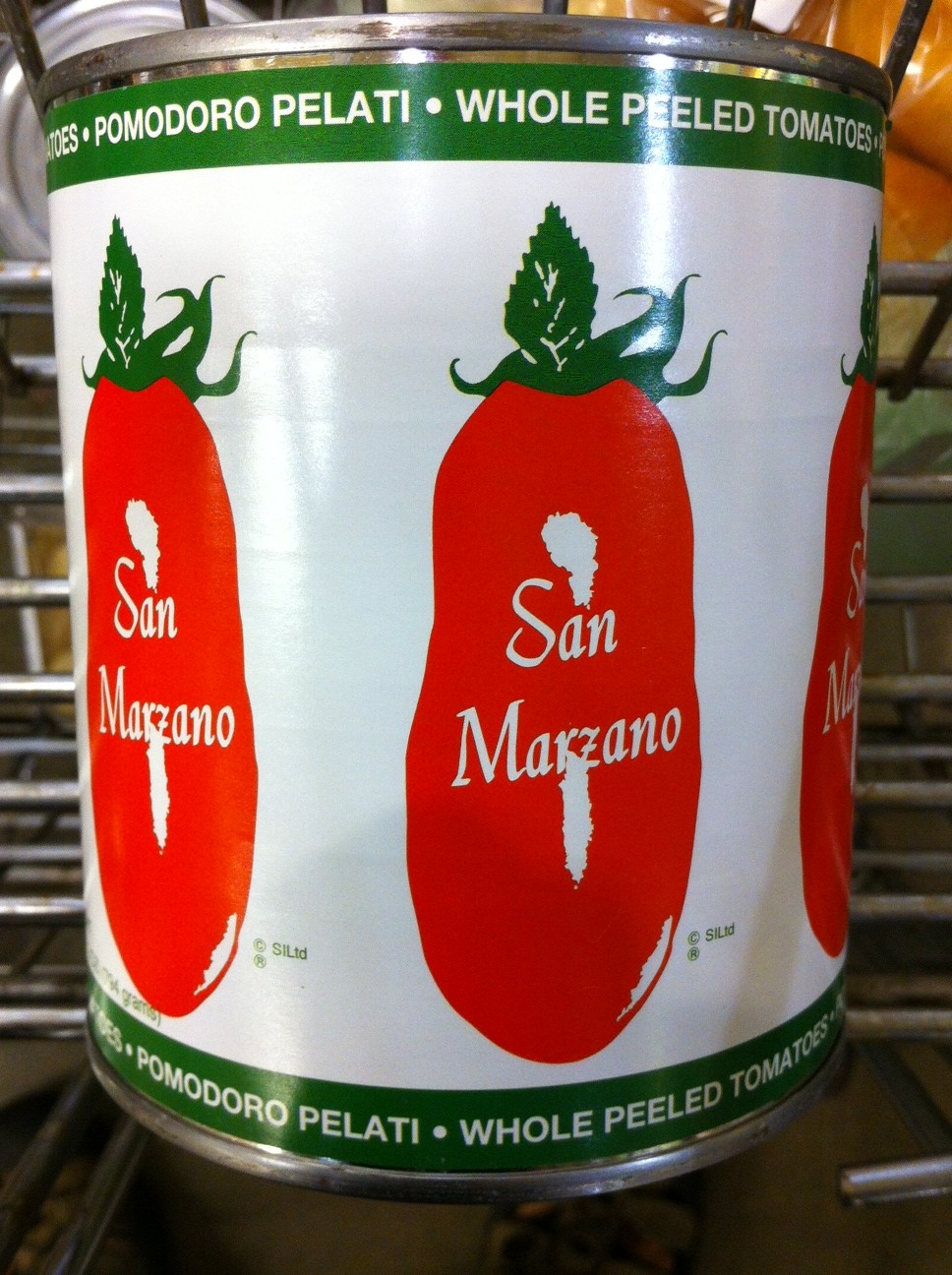
If you do your share of Italian recipes, a common product found in just about any store has many people confused: San Marzano tomatoes. Most good cooks agree that San Marzano tomatoes are some of the best canned tomatoes you can buy.

But unfortunately,  the label can say “San Marzano tomatoes” even if they are not real San Marzano tomatoes.

San Marzano is a region in Italy near Naples and Mt. Vesuvius, and the special combination of climate and volcanic soil make these plum tomatoes world-famous. They have less water, fewer seeds and are picked off the vine when perfectly ripe, then processed the same day.

But San Marzano is a variety of tomato, too…and so you can have a can of San Marzano tomatoes that are not from San Marzano. And to add to the confusion, there’s actually a brand of tomatoes called San Marzano, with tomatoes grown in the United States. Bet your sweet bippy the sellers of these tomatoes are counting on you not to know the difference!

Sold everywhere, but not real San Marzanos from Italy. Grown in the USA.

The company has now changed their label, just calling it "SM."

The company has now changed their label, just calling it “SMT.”

Real San Marzano Tomatoes are a very old variety, extremely limited in quantity, grown and produced exclusively in the San Marzano region of Italy. Because production is so very limited, the Italian Government and the European Union have formed a way of protecting consumers from fraud by having San Marzano tomatoes tightly controlled. DOP, or denomination of protected origin, is the mechanism that the government is using to control the production and marketing of genuine San Marzano tomatoes. Labels for DOP products must be individually numbered and manually applied to each can in specific lots and government officials must oversee this application. So here’s the deal: unless you see “DOP” on the label with a hand-stamped number on the can, it’s not a real San Marzano tomato.

Nope. Italian, but not from the region.

Nope. Italian, and the correct variety, but not from the region.

Nope. "San Marzano region," but not necessarily the variety.

Nope. “San Marzano region,” but not necessarily the variety.

Nope. San Marzan "style."

Nope. San Marzan “style.”

Yes! Always look for D.O.P. on the can or jar.

Yes! Always look for D.O.P. on the can or jar.


When my daughter hangs out with me, I always ask her what she wants me to cook for her, and there are a few “Dad” recipes that are her favorites. This is one of them, especially when fresh asparagus is available. And as any parent will tell you, if your kid is craving a dish that has vegetables in it, count yourself lucky–and make it!!
Prepping asparagus is easy, and you don’t need a knife to cut off the woody bottoms of the stalks. Simply bend the stalks at the bottom and they will naturally snap off at the right point.
4 mild Italian sausages, sliced into pieces 1/2″ thick
1 lb. penne pasta
1/2 onion, finely chopped
1 cup chopped fresh trumpet mushrooms (white button mushrooms work, too), optional
2 cups fresh asparagus, sliced into 1-inch pieces
1 clove garlic, passed through a garlic press
1 cup homemade chicken broth
6 fresh sage leaves, finely chopped
1/2 cup freshly grated Parmigiano Reggiano cheese
extra virgin olive oil
salt and pepper
Have the pasta water salted and boiling, and add the pasta, cooking until just a bit more undercooked than al dente.
Heat a large pan, and drizzle in some olive oil. Sauté the sausage pieces until browned and cooked through, but not overcooked. Remove the sausages from the pan and place them in a separate bowl. Remove all but 2 tablespoons of the fat left behind in the pan.
Place the pan back on stove and sauté the onion until translucent. Add the garlic, and sauté for 10 seconds. Add the sage, and saute for 10 seconds, stirring. Add the chopped mushrooms and saute for a few minutes, then add the chicken broth, and simmer until almost all the liquid has evaporated. Pour the contents of the pan into the bowl with the sausages.
Return the pan to the stove, add a little more olive oil, and on medium heat, sauté the asparagus pieces. Cook them until they are al dente, not too soft. Once the asparagus has reached this stage, return all the contents of the sausage/mushroom bowl to the pan to heat through. Drain the pasta, and add it to the pan as well, combining all the ingredients. If it looks too dry, add a little pasta water to the pan. Season with salt and pepper.
Make sure you serve this hot, with grated Parmigiano Reggiano on top, and drizzle lightly over the top with extra virgin olive oil.
Fast food is a relative term.
What we Americans think of as fast food is not what, say, the Italians think of as fast food. We think of drive-thru burger joints serving greasy, salty and fatty food. The Italians think fast food is something that simply doesn’t take all day to cook! If you can use the freshest of ingredients, and serve it in the time it takes to sip a half a bottle of wine while chatting with a friend, it’s fast food Italian-style.
Years ago, we visited the island of Capri in Italy, and one of the dishes we enjoyed was an incredibly simple pasta and tomato dish called spaghetti sciue-sciue (pronounced “shwee-shwee.”) We were told that sciue-sciue was loosely translated as “quick-quick,” although a check on the web said that it also translates to “improvisation” in Italian. And though quick it was (that is, by Italian standards), it was one of the most memorable dishes we had on our trip. It could be because of our surroundings: the famous Faraglioni rocks all around us at a small seaside restaurant called Da Luigi ai Faraglioni. We took the small shuttle boat from Marina Piccola, which made its way through those stacks jutting out of the Bay of Naples, and landed at this historic restaurant, built in 1936. People come here not only to dine, but to spend the day sunbathing and swimming.
So the reason Da Luigi’s sciue-sciue was so amazing certainly was, in part, the location…but it was also very much due to the use of the freshest and best possible ingredients…and they didn’t mess around with them too much.
The best time to make this dish is when tomatoes are at their absolute best in your area. But if you can get your hands on some beautiful cherry tomatoes off-season (they seem to be tastier than larger tomatoes in the winter months), it’s worth having a go at it as well.

 1 small can (6 oz.) tomato paste
½ cup extra virgin olive oil
2 hot Italian dried peppers, finely chopped
¼ cup white wine
8 to 10 chopped plum or cherry tomatoes (as ripe as possible)
12 to 15 torn fresh basil leaves
½ stick (4 oz.) unsalted butter
1 ball of fresh mozzarella (about 12 oz.)
1 lb. of spaghetti, or better yet, bucatini
Sea salt
Fleur de Sel (optional)
Heat a large pot of salted water to a boil and toss the pasta in.
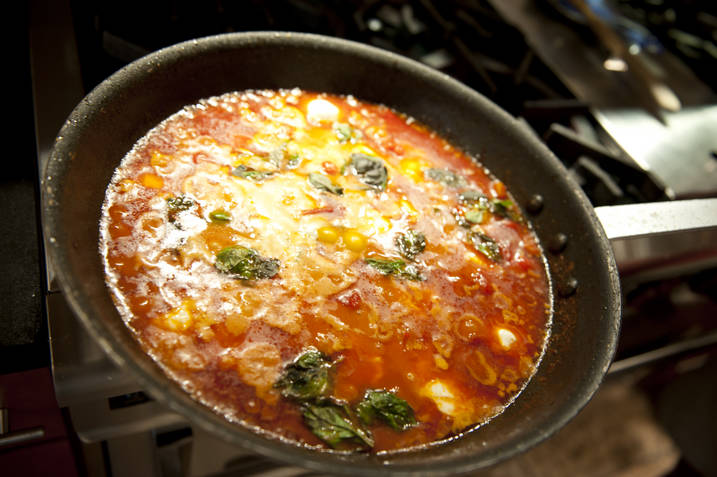
“Heavily caramelize”–but don’t burn–the tomato paste in a large pan with the olive oil, salt, and the dried peppers. Add the white wine to deglaze, and simmer until it’s reduced by half.
Add the chopped tomatoes and simmer on medium heat until they start to break apart. Hand tear the mozzarella ball into shreds and add it to the sauce, stirring gently. Add the basil.
Add the butter, gently stirring until it melts.
When the pasta is slightly firmer than al dente, drain it and add it to the pan with the sauce, stirring gently.
Serve this dish immediately, finishing with a little Fleur de Sel.

Finito!

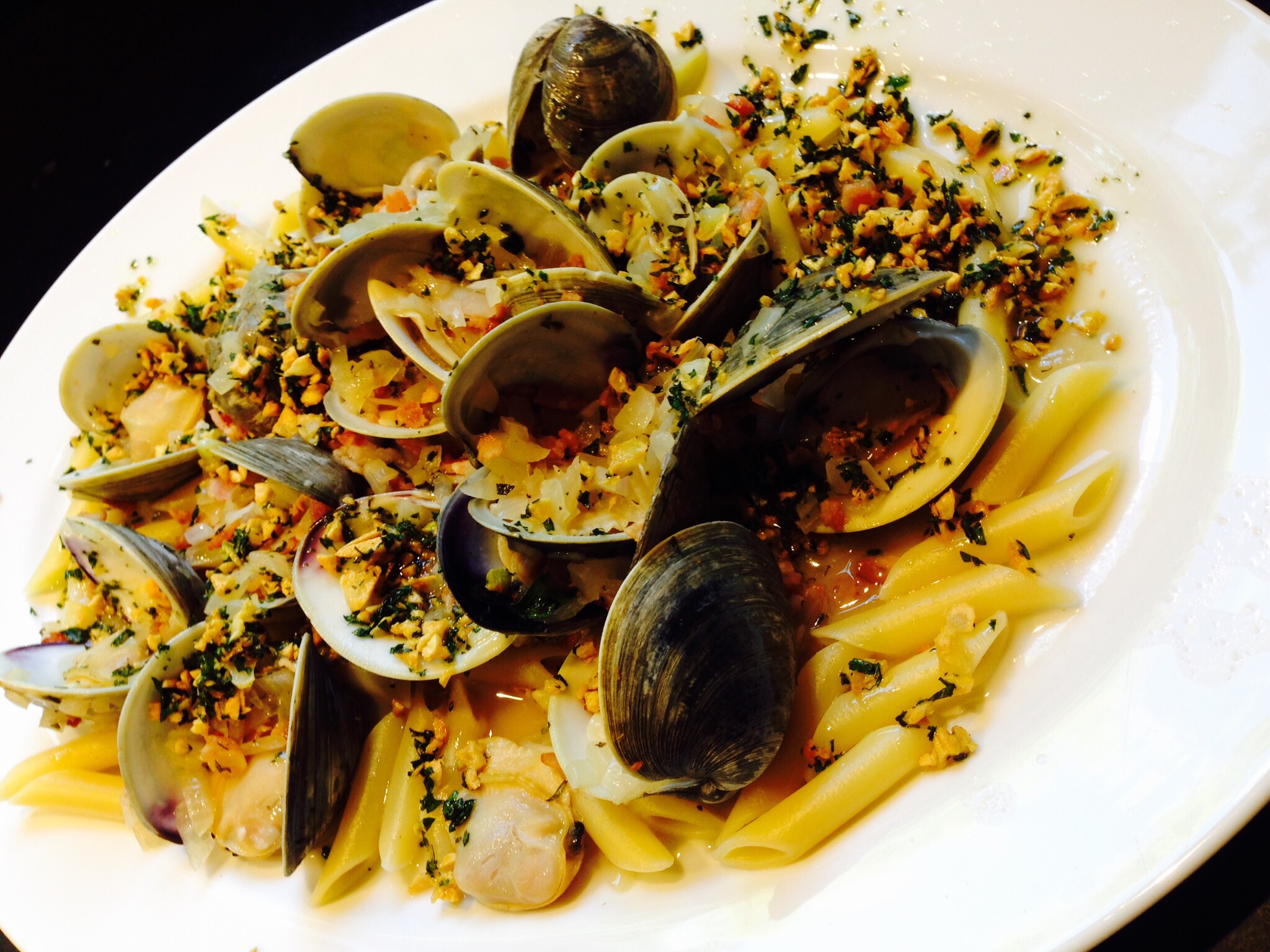
What can I say? I was craving both dishes, so I combined them. I figured: if I love each one of them, I’d be crazy over both together!


image


Pasta
1/4 lb. bacon, finely chopped
1 onion, finely chopped
18 small clams, washed and purged*
1 teaspoon fresh oregano, finely chopped
1/4 cup white wine
Good quality olive oil
6 large garlic cloves, finely chopped
1/4 cup fresh parsley, finely chopped


In a large pot, salt some water and bring it to a boil. Cook the pasta until al dente.

In the bottom of another large pot on medium-high heat, fry the bacon until it’s crisp. Add the onions and sauté them until they’re translucent. Add the clams, oregano and wine, and cover the pot with a lid. Reduce the heat to medium. The clams are cooked when they open. Discard any unopened clams.

In a frying pan, heat the olive oil to medium. Add the chopped garlic and fry it until just crispy. Toss in the parsley and stir it to combine.

Place the pasta in a bowl or plate. Pour the clams and juice over the pasta. Pour the fried garlic and oil all over the clams.


*Purging clams: Clams can be pretty sandy and gritty, so it’s important not only to scrub the outside of the shell, but to purge them as well. Clams should be stored in a bowl in the fridge with a wet dish towel over them, never in water. Once you’re ready to use them, fill a bowl with water and add salt (think salty like ocean water) and a tablespoon of corn meal. Mix this around, then add the clams and let them sit in this solution in the fridge for a couple of hours. The clams will purge (clean themselves) out. Discard the liquid and rinse the clams before cooking.

I always thought that spaghetti squash was a sort of “gimmick” vegetable. But once I roasted it, I realized just how delicious it could be. Squash is a great lower-carb gluten-free substitute for pasta. But feel free to use spaghetti in this recipe if you like!


FullSizeRender


Cooking spaghetti squash is easy. I wash them, cut them in half, and remove the seeds and membrane with a spoon. I flip them onto their backs, skin side down, and drizzle some extra virgin olive oil on them. A little sea salt and pepper, and then I flip them back down, skin side up, on a sheet pan lined with non-stick aluminum foil. Into a pre-heated 350 degree oven for 30–40 minutes. When they’re soft to the touch, I remove the sheet pan from the oven, flip them back over again, and let them cool to room temperature. Then I simply scrape out the flesh with a fork, and it comes out in strands, like spaghetti.


image


While the squash roasts in the oven, I make the meatballs. After years of serious meatball research, I found that the secret to a tender meatball is adding more bread to the meat than you think you should.

2 lbs. ground grass-fed beef
1 cup breadcrumbs (at least)
2 eggs, cracked and scrambled
2 tablespoons dried parsley
2 tablespoons dried oregano
1 tablespoon dried basil
1 tablespoon granulated garlic
1 tablespoon granulated onion
1 teaspoon black pepper
2 teaspoons salt

Mix all the ingredients in a large bowl and form them into meatballs. (I like to use an ice cream scoop to make the job easier.)

Place the meatballs on a baking sheet that’s been rubbed with some olive oil. (I usually line the pan with non-stick aluminum foil as well.) Cook the meatballs for about 30 minutes at 350 degrees, until they’ve browned nicely.


Meatballs happily cooking low and slow in the rich tomato sauce.


As for the sauce…

2 cans (28 oz.) of tomatoes, pureed (preferably San Marzano tomatoes)
olive oil
1/2 onion, finely chopped
1 tablespoon dried parsley
1 tablespoon dried oregano
1 teaspoon dried basil
1 teaspoon granulated garlic
2 teaspoons salt
1/2 teaspoon fennel seeds

In a large pot, sauté the onions in a little olive oil until translucent. Add the pureed tomatoes and cook at medium heat until the foam disappears.

Add all the herbs and spices and mix well. Continue cooking on medium heat, lowering to a simmer if the sauce seems to be boiling too hard.

Add the meatballs to the sauce when they’ve finished cooking. (I like to include all the fat and juices that came out of the meatballs while cooking.)  Make sure all the meatballs are covered with the sauce. Place a lid on the pot, and simmer on low for at least an hour.


image


Scrape the spaghetti squash and place a mound of it in the center of the serving dish. Top it with the meatballs and sauce. Grate some Parmigiano-Reggiano cheese over the top, or do what I did this time, and cut a slab of mozzarella into small cubes and toss that on top. A little sprinkle of oregano and olive oil for good measure on top.


Substitutions: If you’re not in the mood for spaghetti squash, it’s safe to say your favorite pasta will work quite well.

This dish is easily made gluten-free simply by using GF breadcrumbs in the meatballs. I like to buy frozen gluten-free bread, like Udi’s, and toast the slices. Then I break them up and toss them in a food processor. In a minute, I have really tasty breadcrumbs that are as good as regular bread.

And if you’re going with pasta, then a GF pasta, like Garofalo, is a delicious gluten-free substitute.

After making a batch of this for my daughter this week, I got a bunch of requests for the recipe. So here we go!

Chicken parmigiana, much like pizza, is a bit more difficult to make than you might think. Sure, there’s plenty of crappy chicken parm out there, made with processed frozen chicken cutlets, bad sauce and cheap cheese. But to make a really fantastic, mind-blowing chicken parm, that takes a little practice!

The key to this recipe is simple: don’t skimp on the quality ingredients. And my recipe makes a lot. Trust me: you will want leftovers.

The recipes for my Italian bread crumbs and my “Don’t Call It Gravy” tomato sauce are at the bottom.


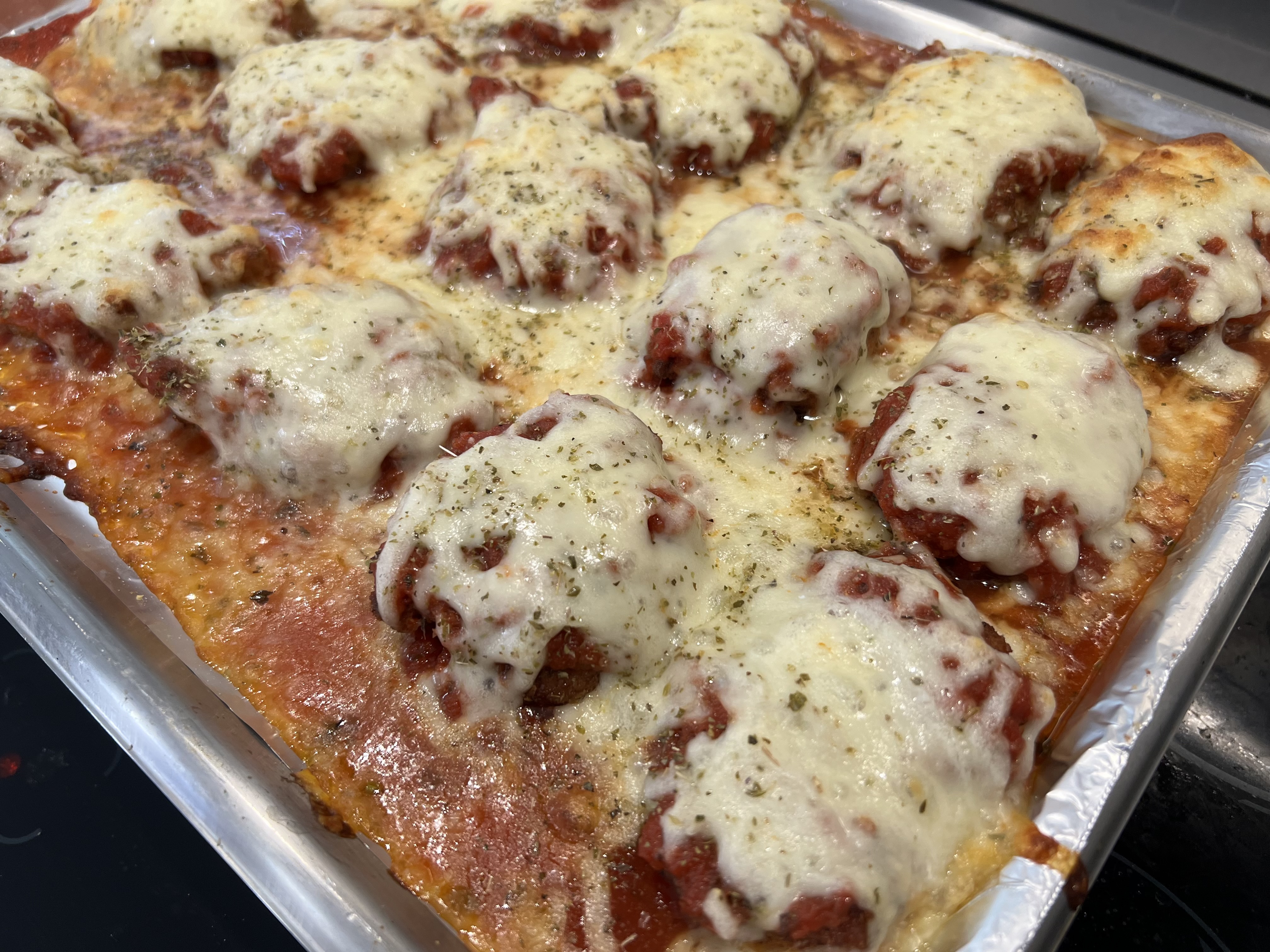
Gooey, cheesy, orgasmic.

Gooey, cheesy, orgasmic.


6 Chicken breasts, the best quality you can get your hands on
Italian bread crumb seasoning (see recipe below)
3 eggs
vegetable oil for frying
“Don’t Call It Gravy” tomato sauce (see recipe below)
Fresh mozzarella cheese
oregano

Thaw the chicken breasts. Lay them flat on a cutting board, and you’ll see where the chicken tender is on the side of the breast. Cut the tender off and set aside, leaving the breast which is thinner at one end and thicker at the other. Slice the breast in half lengthwise at the thicker end, keeping the knife level, so that you wind up with 2 pieces of breast meat that are the same thickness, but one will be a longer piece (the bottom) and one about half its size (the top part you sliced off.) Do this with all the breasts.

By slicing the breasts lengthwise into evenly thick pieces, it will take the same amount of time for them to cook. (I prefer not to pound the hell out of the chicken breasts until they’re flat as a pancake.)

Pour the vegetable oil into a large frying pan. (I like to use corn oil or grapeseed oil.) Next to the pan, set up two bowls: one with my Italian bread crumb seasoning (recipe below) and in the other: crack the eggs and whisk them.

Now it’s your standard breading procedure: chicken meat in the egg, then in the breadcrumbs, coating well. Shake off the excess and place carefully in the pan of olive oil when the oil comes to temperature (about 350) for frying.

Fry the chicken in the oil until it’s golden brown. You want it cooked all the way through, but not overcooked. Place the fried chicken pieces on a wire rack to drain the oil. Do this with all the chicken. The fried chicken at this point is delicious all by itself: chop it and use it in a salad, or make a chicken sandwich. (By the way, if there’s breading left over, use it on the chicken tenders you cut off, and fry them up. My daughter gets these instead of store-bought chicken tenders, and she loves them.)

Cover a baking sheet with aluminum foil. Ladle out enough sauce (recipe below) to create a thin layer on the bottom of the baking sheet. Place the fried chicken breasts on top of the sauce. Cover the breasts with more sauce, then place shredded mozzarella on top. Sprinkle the top with a little oregano.


Place the baking sheet in a pre-heated 350 degree oven and bake until the cheese has melted and just starts to brown. Serve it with pasta.


MY “DON’T CALL IT GRAVY” TOMATO SAUCE

It’s not hard to make a good tomato sauce. But it takes a little work to make an amazing tomato sauce. Honed from a recipe handed down by a friend-of-a-friend’s Italian grandma, it is one very important part in two of my favorite Italian comfort food recipes: my meatballs…and my chicken parmigiana recipe.


1 medium onion, finely chopped
2 cloves garlic, finely chopped
1/2 cup extra virgin olive oil
10 cups ground and peeled tomatoes…or 3 cans (28 oz.) tomatoes (real San Marzanos preferred)
2 teaspoons each: dried oregano, basil and parsley
3/4 teaspoon each anise seed and fennel seed
1 1/2 teaspoons salt
1/2 teaspoon black pepper
2 bay leaves
1 small can (6 oz.) tomato paste
1 teaspoon sugar, optional

Heat the olive oil in a large pot and add the onions. Cook until onions are translucent, then add the garlic. Stir for about 10 seconds.

Add the tomatoes and cook until the orange foam disappears, stirring frequently.

Add the oregano, basil, parsley, anise seed, fennel seed, salt, pepper, and bay leaves. Stir to combine. Add the tomato paste, stirring well. Let the sauce just come to a boil (which helps the paste thicken the sauce), then reduce it to a simmer, and cook uncovered for at least an hour, stirring constantly, until the sauce reaches the consistency you like.


MY ITALIAN BREAD CRUMB SEASONING

This is the one part of the recipe (other than the optional pasta) that keeps this dish from being gluten-free. So I use gluten-free breadcrumbs, even if I don’t need to. I buy a loaf of Udi’s frozen gluten-free bread, toast the slices, and them put them in a food processor. I dare you to tell the difference between these and breadcrumbs with gluten!


1 Udi’s loaf, toasted and ground into breadcrumbs
2 teaspoons dried parsley
1 teaspoon dried oregano
1 teaspoon dried basil
1 teaspoon salt
1/2 teaspoon granulated garlic
1/2 teaspoon granulated onion
1/4 teaspoon black pepper


Combine all the ingredients well.

Though I’m a fan of renowned Italian chef Marcella Hazan, I had never heard of what many claim to be her most famous recipe: her 3-ingredient tomato sauce. (OK, salt makes 4.) Recently, I read an article about it and thought I had to try it for myself. The results were amazing: a subtle hint of onion, and a creamy smooth sauce thanks to the butter. You can use a regular can of tomatoes, but real San Marzano tomatoes will give the best results. How do you know if you’ve got real San Marzano’s? Just so happens I have a pet peeve about that. Read below the recipe.

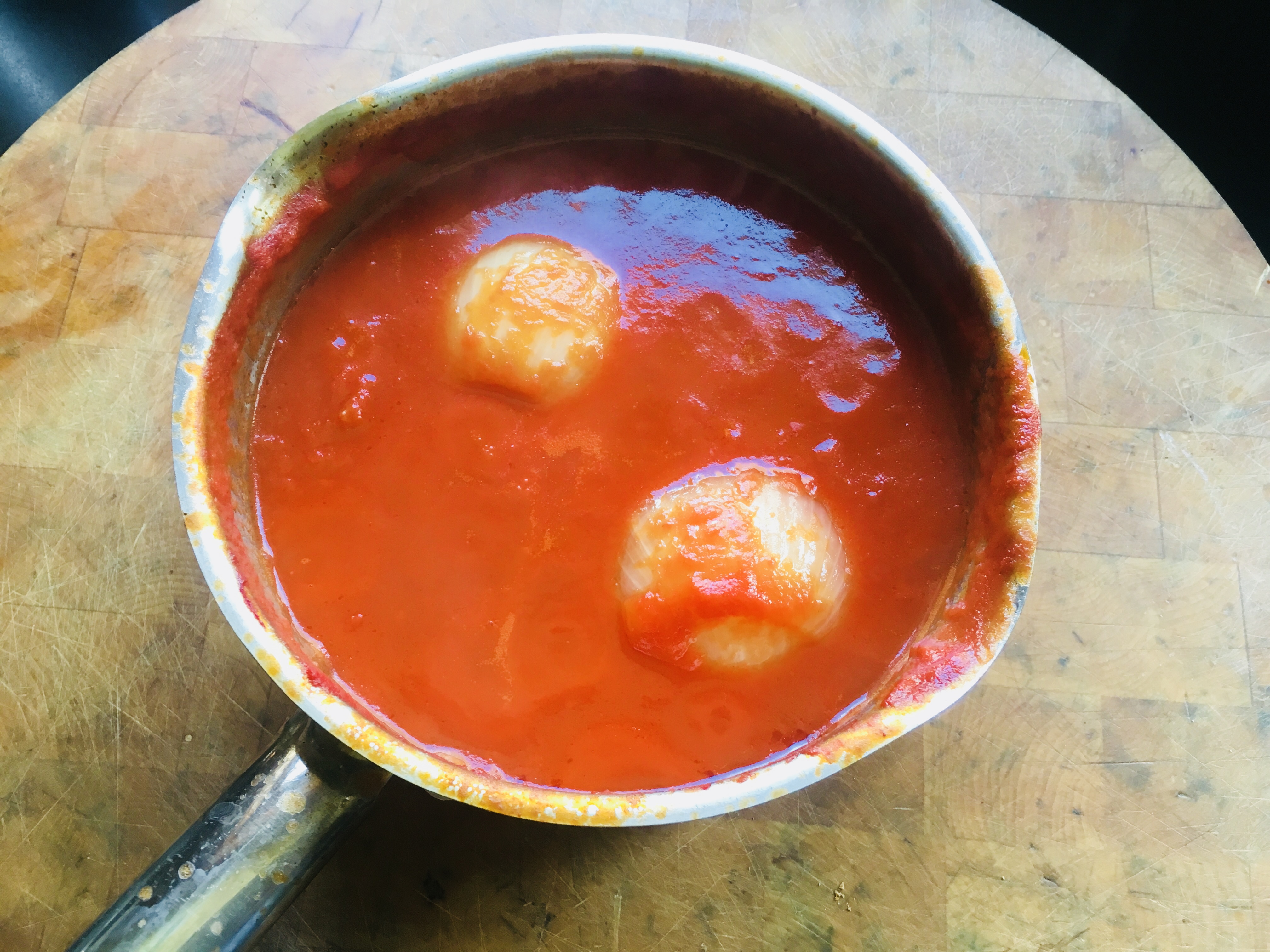
The sauce before onion removal.


1 28 oz. can San Marzano tomatoes
5 tablespoons butter (I use unsalted)
1 onion, peeled and cut in half
salt

In a saucepan, combine the entire can of tomatoes (tomatoes and juice) and the butter, and add the onion with a couple of pinches of salt. Place the heat on medium, bring it to a simmer, and then cook for 45 minutes, stirring occasionally, breaking the tomatoes with a spoon. Add more salt, if needed.

When the sauce is done, remove the onion.

Silky smooth and ready to use.


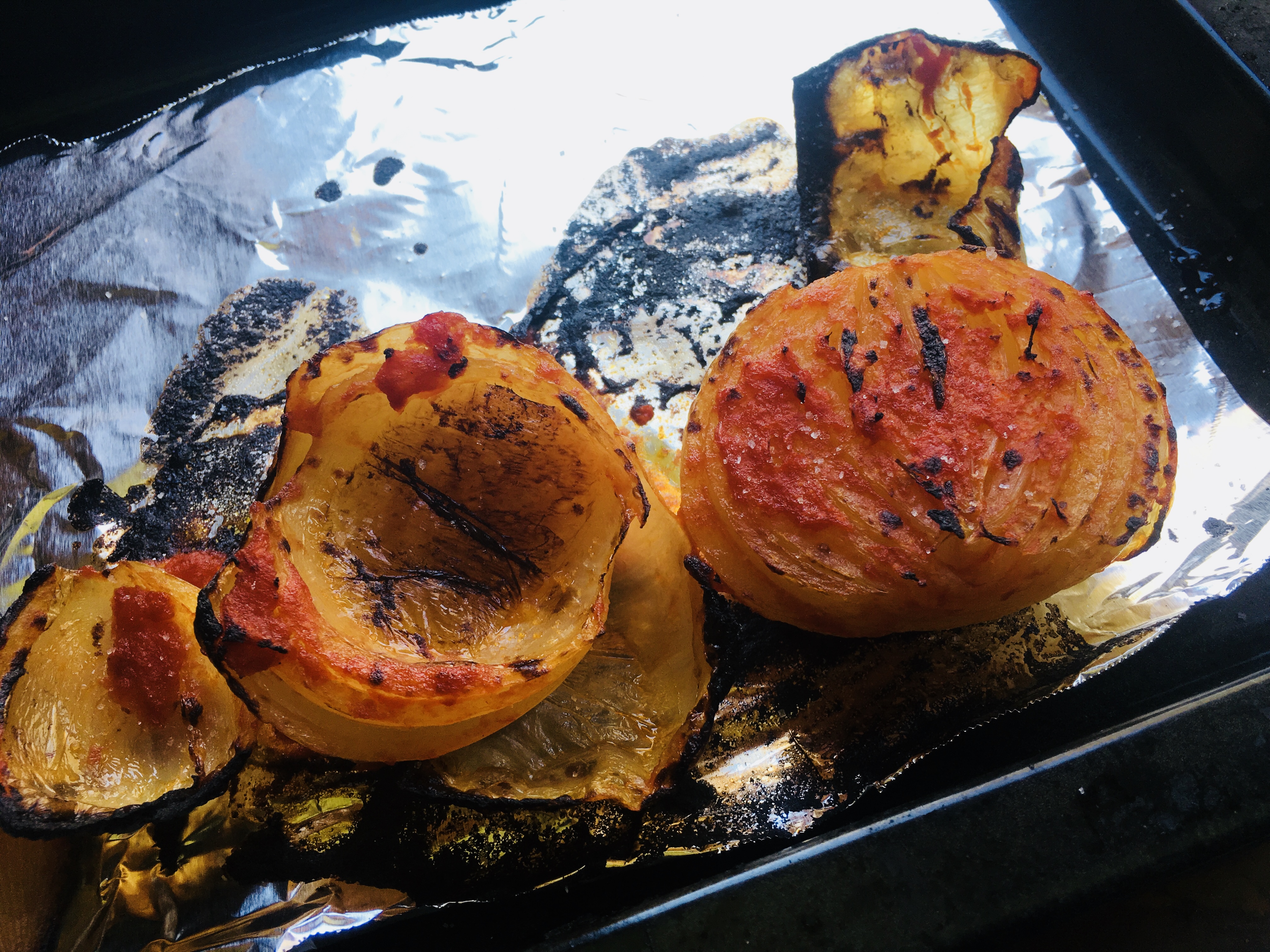
The original recipe says to discard the onion. What?! I’m an onion fanatic and I can tell you throwing the onion out is a sin. Here’s what I do: I place the onion on a baking sheet and put it under the broiler of my toaster oven: 5 minutes on one side, flip it, then 5 minutes on the other. If you’ve got a screamin’ broiler, those onions will have beautiful charred edges and the bits of tomato sauce left on the onion will caramelize to a fabulous intense, sweet paste. You then sprinkle Fleur de Sel on it, and devour it.

Never throw the onion away!


If you do your share of Italian recipes, you’ve used San Marzano tomatoes. Most good cooks agree that San Marzano’s are the best canned tomatoes you can buy.

Unfortunately,  the label can say “San Marzano tomatoes” even if they are not real San Marzano tomatoes.

San Marzano is a region in Italy near Naples and Mt. Vesuvius, and the special combination of climate and volcanic soil make these plum tomatoes world-famous. They have less water, fewer seeds and are picked off the vine when perfectly ripe and processed the same day.

But San Marzano is a variety of tomato, too…so you can have a can of San Marzano tomatoes that are not from San Marzano. And to add to the confusion, there’s actually a brand of tomatoes called San Marzano, with tomatoes grown in the United States. Bet your ass the sellers of these tomatoes are counting on you not to know the difference!

Sold everywhere, but these are NOT real San Marzano tomatoes. They’re grown in the USA.


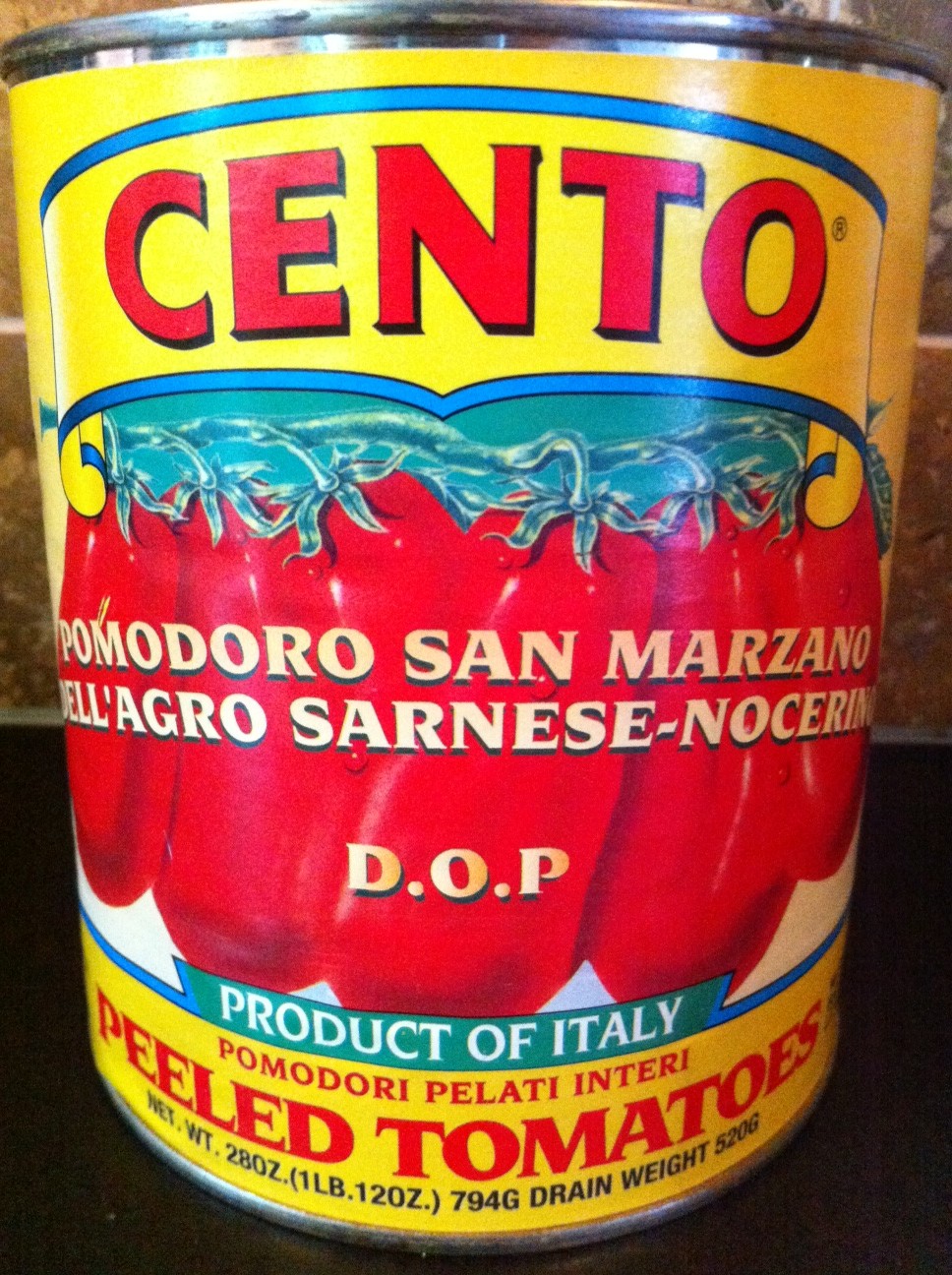
Real San Marzano Tomatoes are a very old variety, extremely limited in quantity, grown and produced exclusively in the San Marzano region of Italy. Because production is so very limited, the Italian Government and the European Union have formed a way of protecting consumers from fraud by having San Marzano tomatoes tightly controlled. DOP, or denomination of protected origin, is the mechanism that the government is using to control the production and marketing of genuine San Marzano tomatoes. Labels for DOP products must be individually numbered and manually applied to each can in specific lots and government officials must oversee this application. So here’s the deal: unless you see “DOP” on the label with a hand-stamped number on the can, it’s not a real San Marzano tomato.


Yes! Real San Marzano tomatoes. Cento also sells non-certified San Marzano’s, so always look for the DOP on the can.


Another way to tell when you’re in the market is simple. Check the price. Your average can of tomatoes will be in the $2 range. Real DOP San Marzano tomatoes: about $4–$5 a can. It’s all about quality. Buy them on sale, and you’ll not only save a few bucks, but you’ll have them when you need them at arm’s reach!

I recently hosted about 15 hungry teenage friends of my daughter’s, all of whom belong to the high school theater group. They needed a place to hang out, rehearse, laugh, and, of course, eat! My baked ziti recipe is always a crowd pleaser. Ultimately, I used rigatoni pasta, because that’s what I had in the cupboard, but use whatever shape you like.

I also made it meat-free, keeping it safe for all to eat, but I usually make a meat sauce when cooking for myself.

As a teenager growing up on Long Island, I worked long hours at a local Italian restaurant called Pizza City East in Plainview. (The original Pizza City was in Ozone Park, Queens.) Though the pay sucked, I made some important friendships that have lasted to this day. I also learned many Italian cooking basics: how to open clams for red and white clam sauce, the secrets of great pizza dough, the art of a perfect espresso, and how to make massive quantities of baked ziti.

When I got older and I shared an apartment with my buddy, Don, we would regularly invite a large crowd of people over for a party, and a huge tray of baked ziti was an inexpensive and hugely popular way to feed a crowd that was doing some serious drinking.

The basic ingredients of baked ziti are the same as lasagna, the main difference being the wetness factor. If you make lasagna too wet, the thing will fall apart when you try to slice it. But baked ziti is meant to be sloppy, and it actually shines in its incredible gooiness!

My baked ziti consists of a meat sauce and 4 cheeses (ricotta, mozzarella, provolone, and Parmigiano Reggiano) using pasta that is boiled much firmer than al dente. Technically, I like to use penne, not ziti. It’s firmer, and really works well with this recipe. And there are plenty of great pasta choices out there for gluten-free diets. Our favorite brand of GF pasta is Garofalo.

I used to add a béchamel sauce to this recipe, but I’ve found that plain milk does the job just as well. Béchamel is better used in lasagna, where you want a bit of a thickening agent to keep it firm.

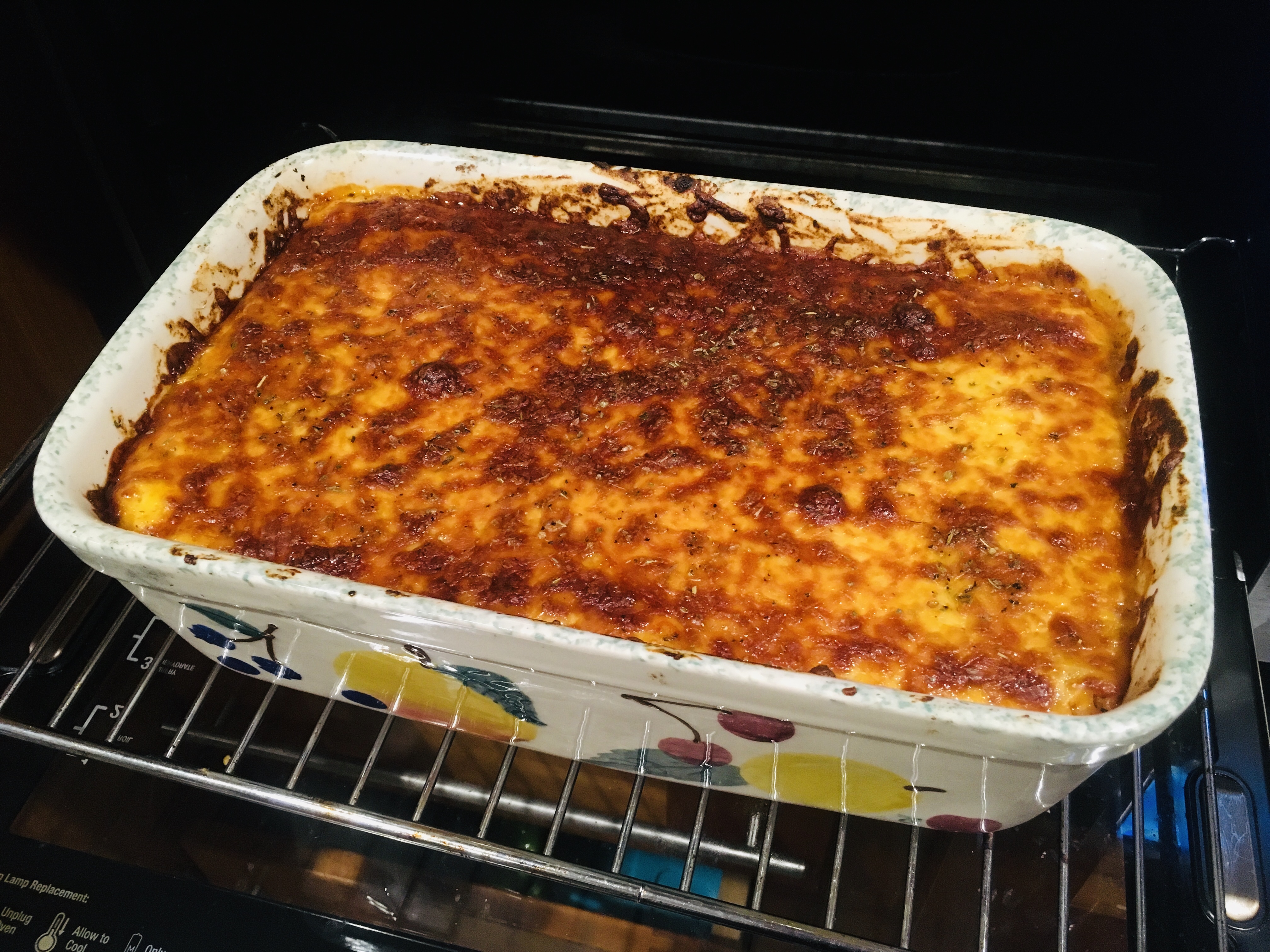
Gooey and delicious!

Meat Sauce…
1 small onion, finely chopped
1 small carrot, finely chopped
1 lb. grass-fed ground beef or pastured pork, or a combination of both
1 tablespoon dried parsley
2 teaspoons dried oregano
1 teaspoon dried basil
1 teaspoon salt
1 teaspoon granulated garlic
1/2 teaspoon black pepper
1 28-oz. can whole tomatoes
extra virgin olive oil for sautéing

Heat a tablespoon or 2 of olive oil in a large pan and sauté the onions until translucent. I finely chop the carrots by peeling them all the way down until there’s nothing but a pile of peeled pieces, then chopping them up so small, they almost melt into the sauce. Add the carrots and cook for 2 minutes. Add the beef (or pork) and cook the meat until it browns. Add the parsley, oregano, basil, salt, garlic and pepper and mix well.

Empty the can of tomatoes into a blender and blend it until smooth. Add this to the pan and mix well.

Cook the meat sauce for about 10 minutes, then remove it from the heat and set it aside.

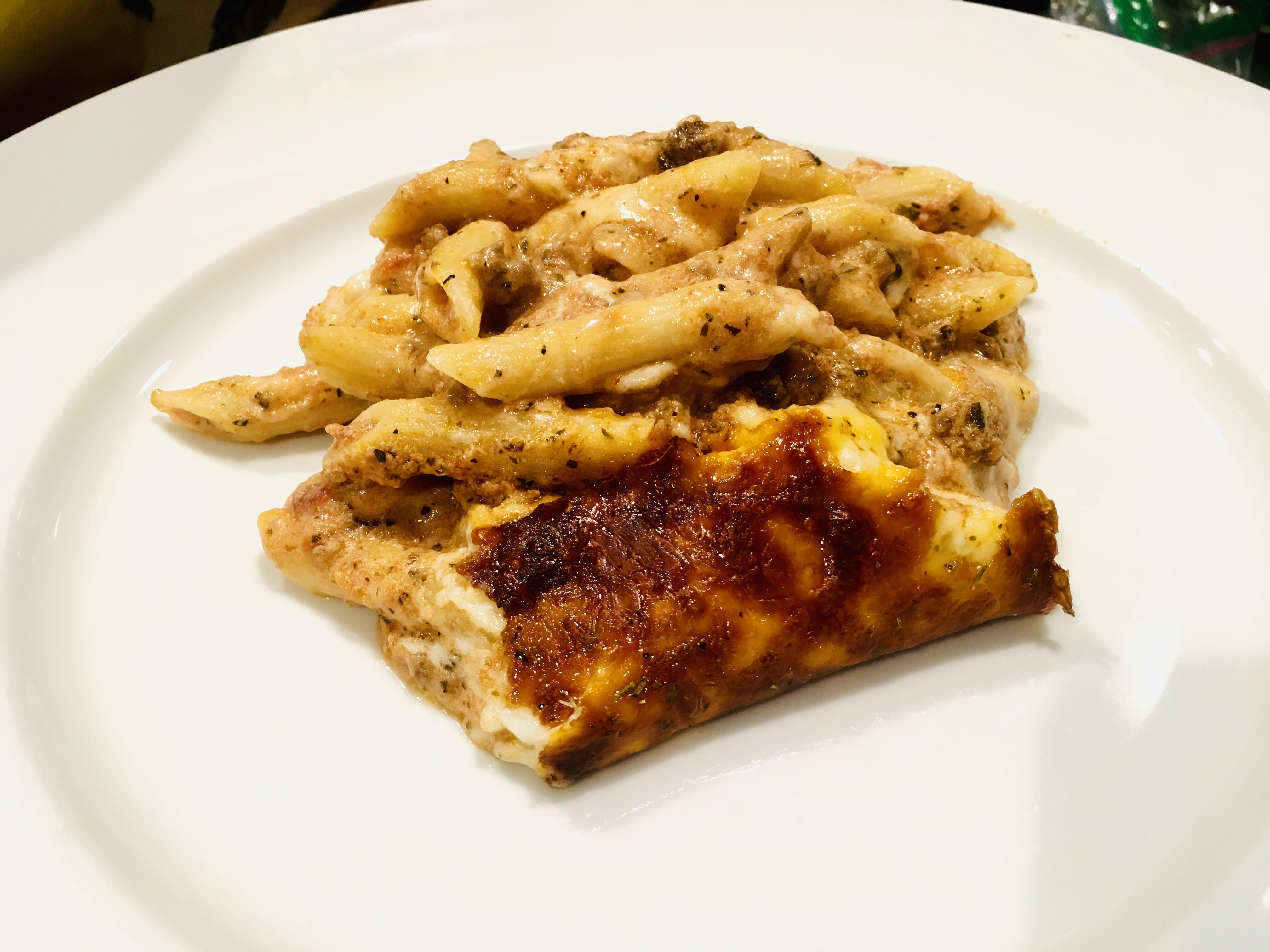
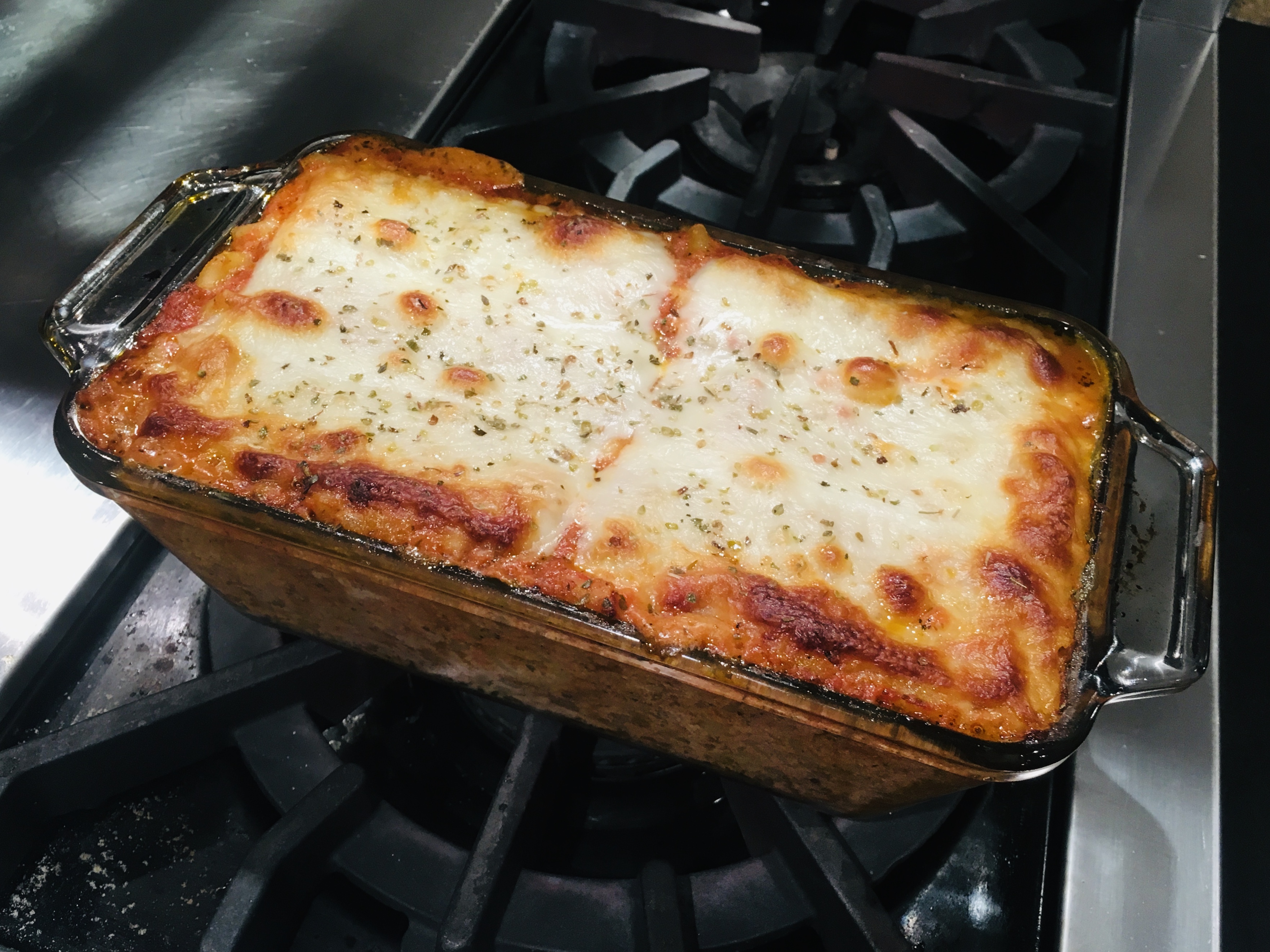
Beautiful baked ziti!

4 slices provolone cheese (about 4 oz.), chopped
ricotta cheese (about 8 oz.)
mozzarella cheese, shredded (about 8 oz.)
2 tablespoons freshly grated Parmigiano Reggiano
1 cup whole milk
12 oz. small pasta, like ziti or penne

Pre-heat the oven to 350 degrees.

In a bowl, combine the provolone, ricotta, mozzarella (save a little bit to sprinkle on top at the end), Parmigiano Reggiano, and milk. Add this mixture to the meat sauce and mix well.

For baked ziti, I use a deeper pan than I would for lasagna, about 4″ deep.

Boil the pasta in a pot of salty boiling water until very firm…firmer than al dente. Drain the pasta and pour it into the pan. Add the cheese and sauce mix and mix it all really well.

Smooth the top of the ziti mix flat with the back of a large spoon, then sprinkle the remaining mozzarella evenly over the top. Sprinkle a little oregano on top, and place the pan in the oven to bake for 30 minutes, or until the mozzarella on top is a beautiful golden brown.

The best mac and cheese ever: baked ziti!

When my daughter hangs out with me, I always ask her what she wants me to cook for her, and there are a few “Dad” recipes that are her favorites. This is one of them, especially when fresh asparagus is available. And as any parent will tell you, if your kid is craving a dish that has vegetables in it, count yourself lucky–and make it!!
Prepping asparagus is easy, and you don’t need a knife to cut off the woody bottoms of the stalks. Simply bend the stalks at the bottom and they will naturally snap off at the right point.
4 mild Italian sausages, sliced into pieces 1/2″ thick
1 lb. penne pasta
1/2 onion, finely chopped
1 cup chopped fresh trumpet mushrooms (white button mushrooms work, too), optional
2 cups fresh asparagus, sliced into 1-inch pieces
1 clove garlic, passed through a garlic press
1 cup homemade chicken broth
6 fresh sage leaves, finely chopped
1/2 cup freshly grated Parmigiano Reggiano cheese
extra virgin olive oil
salt and pepper
Have the pasta water salted and boiling, and add the pasta, cooking until just a bit more undercooked than al dente.
Heat a large pan, and drizzle in some olive oil. Sauté the sausage pieces until browned and cooked through, but not overcooked. Remove the sausages from the pan and place them in a separate bowl. Remove all but 2 tablespoons of the fat left behind in the pan.
Place the pan back on stove and sauté the onion until translucent. Add the garlic, and sauté for 10 seconds. Add the sage, and saute for 10 seconds, stirring. Add the chopped mushrooms and saute for a few minutes, then add the chicken broth, and simmer until almost all the liquid has evaporated. Pour the contents of the pan into the bowl with the sausages.
Return the pan to the stove, add a little more olive oil, and on medium heat, sauté the asparagus pieces. Cook them until they are al dente, not too soft. Once the asparagus has reached this stage, return all the contents of the sausage/mushroom bowl to the pan to heat through. Drain the pasta, and add it to the pan as well, combining all the ingredients. If it looks too dry, add a little pasta water to the pan. Season with salt and pepper.
Make sure you serve this hot, with grated Parmigiano Reggiano on top, and drizzle lightly over the top with extra virgin olive oil.