Archive for the ‘seafood’ Category

Growing up in NY, I was introduced to smoked whitefish, herring, and lox at an amazing deli just down the road from my parents’ house. Smoked whitefish salad was readily available, but it had a lot of mayonnaise and filler. It’s a lot of work making it at home, but worth it.

Whole smoked whitefish may be a bit hard to find, and it could get expensive if you buy it from your local deli. But sometimes big membership stores like BJ’s will sell whole smoked whitefish.

I use capers in this recipe, but dill pickle relish works well, too.


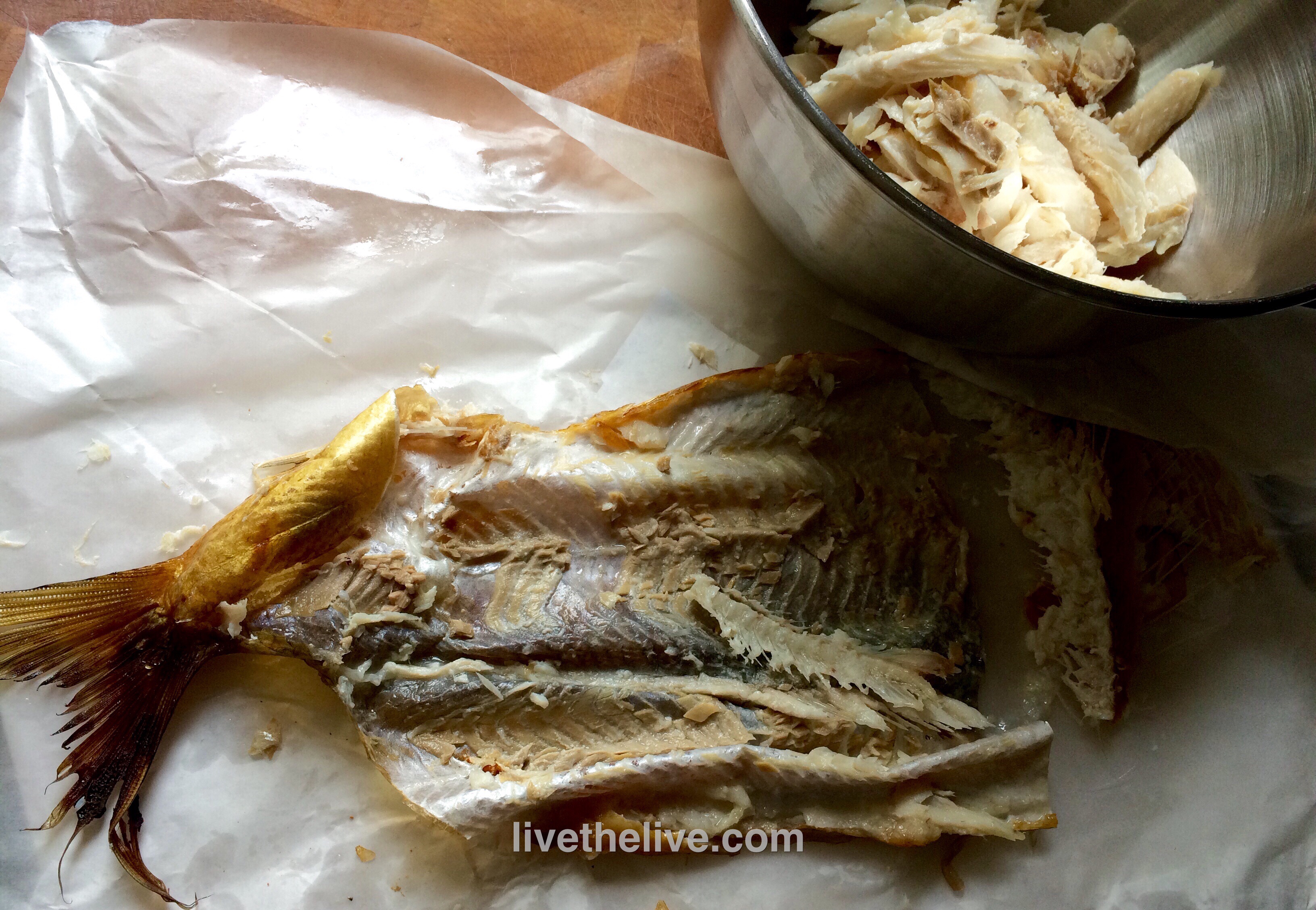
Remove every bit of meat. Double-check for bones!

Remove every bit of meat. Double-check for bones!


1/2 whole smoked whitefish, meat removed
1/2 cup mayonnaise
1/4 cup finely chopped Vidalia onion
1 tablespoon capers, finely chopped
1 tablespoon freshly squeezed lemon juice
1 hard-boiled egg, finely chopped
Freshly ground pepper
Pinch of sea salt (I like Fleur de Sel)


Remove the meat from the smoked whitefish carefully, making sure all the small bones have been removed. Double-check to make sure you’ve done this really well. It pays to be really meticulous with this job so that you (or your guests) don’t gag on a fish bone later!


Place all the whitefish meat in a bowl.

Combine all the other ingredients with the fish, mixing thoroughly. (Try not to mush it up too much!)
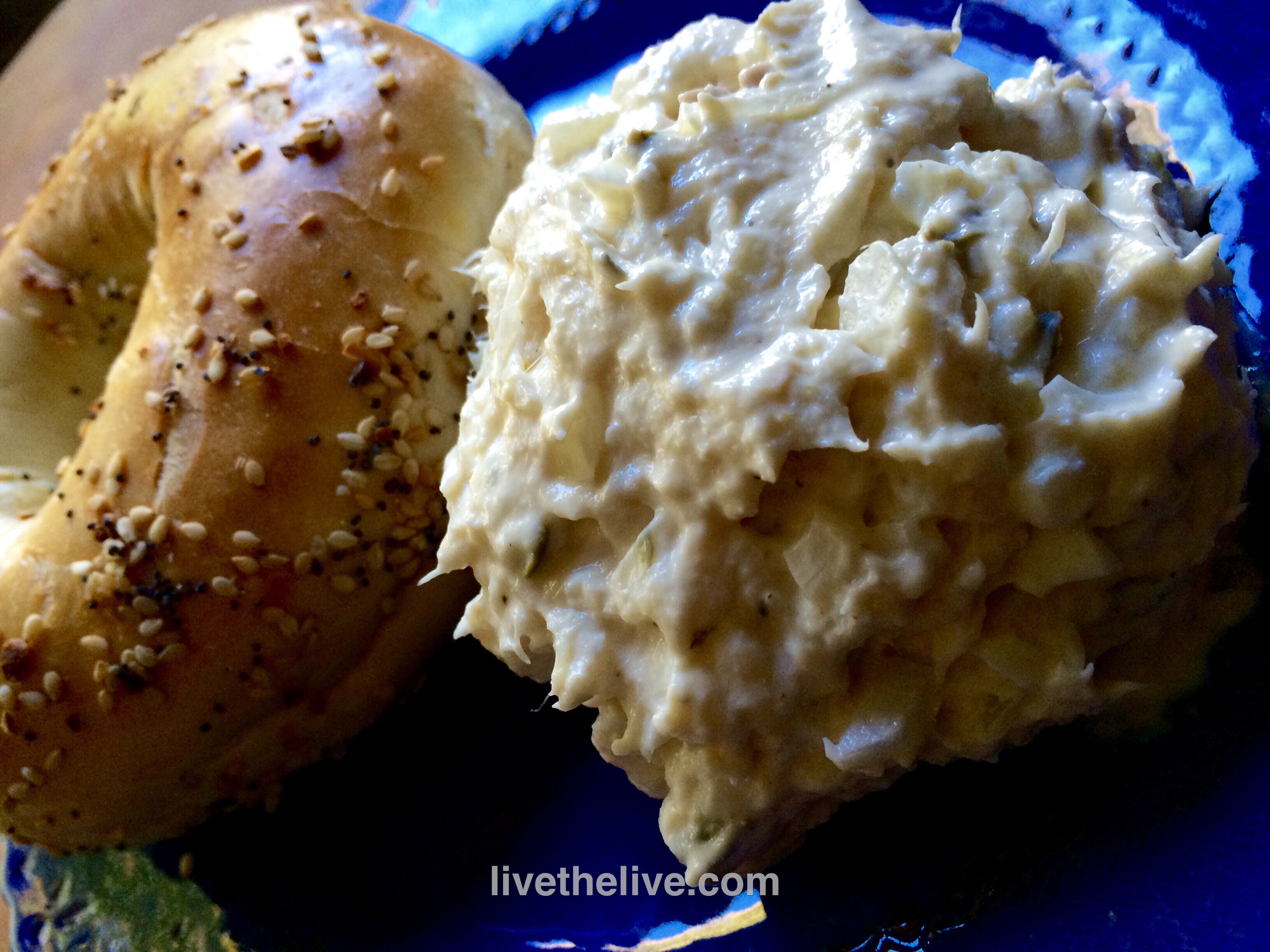
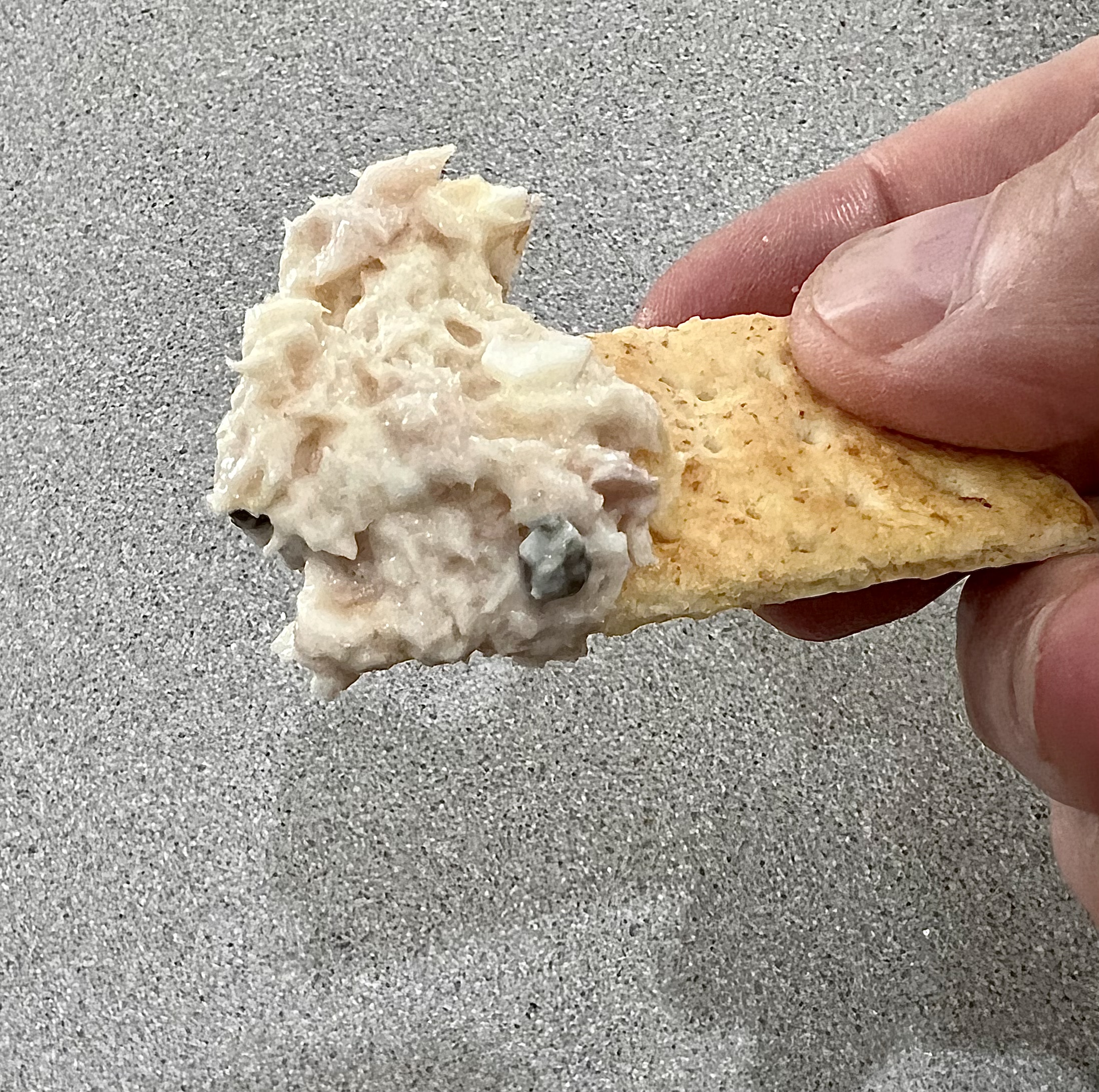
The standard way is to serve it with crackers. But there’s nothing wrong with slathering it onto an everything bagel! Or…if you have guests…slice everything bagels as thin as you can and toast them until they’re crisp like crackers. Then serve them on the side.
image
Here’s a shot of the real deal straight out of the smoker, at a fish store in Mackinaw City, Michigan, on the way to the Upper Peninsula. Man, that was some good eatin’!
image

Mardi Gras is less than a week away!! Here’s a great dish from New Orleans…

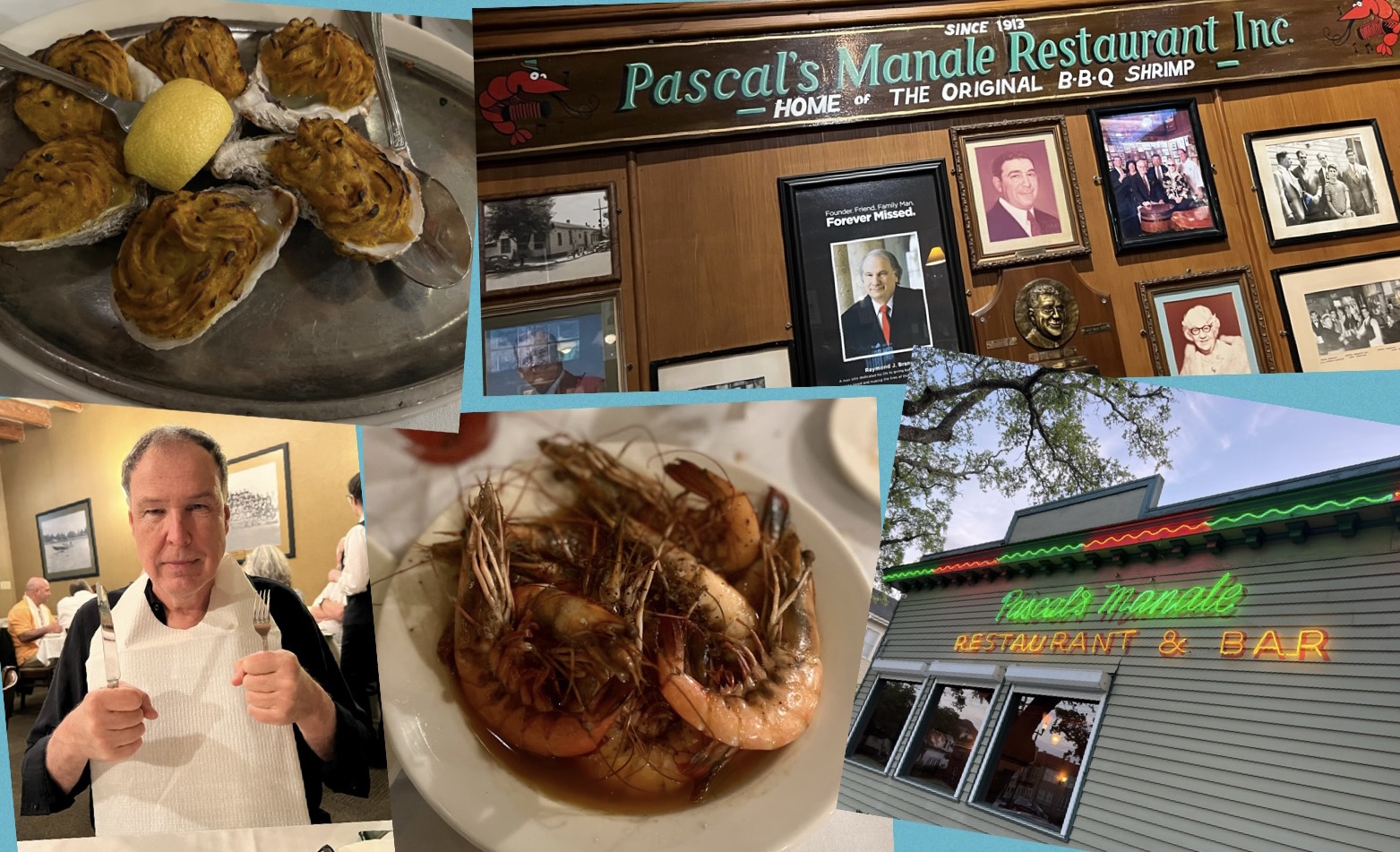
One of my favorite dishes to come out of New Orleans is Barbecue Shrimp, so on a visit to the Crescent City a couple of years ago, I had to make a stop at the place where it all started.

The first unusual thing you notice about the classic dish, New Orleans Barbecue Shrimp, is that it’s not cooked on a barbecue grill and it has no barbecue sauce.

So why the name?

Its origin goes back to the mid-1950’s, to an Italian restaurant in New Orleans called Pascale’s Manale. The story goes that a regular customer had just returned from Chicago, where he had dined on an amazing shrimp dish. He asked the chef at Pascale’s Manale to try to replicate it, and what resulted was actually better than the original. And though no barbecue grill or sauce was used, it is believed that they gave it the name “BBQ Shrimp” to cash in on the backyard barbecuing craze that was all the rage at the time. Whatever they call it, I have to say that it’s worth a special trip to have the dish!

The classic New Orleans Barbecue Shrimp is served with shell-on shrimp, so you have to make a big, buttery mess of yourself as you devour it. And it’s served with plenty of crusty French bread.

At home, sometimes I’ll leave out the bread and go for rice instead. And I’ll peel the shrimp completely, using the shrimp shells to make the stock I cook the rice in.

image
For the seasoning…
1 1/2 teaspoons salt
1 1/2 teaspoons fresh ground black pepper
1 teaspoon fresh rosemary, very finely chopped
1/4 teaspoon oregano
1/4 teaspoon granulated garlic
1/4 teaspoon granulated onion
1/4 teaspoon paprika
1/4 teaspoon dried thyme
1/8 teaspoon cayenne pepper
1/8 teaspoon white pepper

Mix all the seasoning spices and set them aside.

image
For the BBQ shrimp…
2 lbs. large wild-caught American shrimp, peeled and de-veined
1 stick butter (4 oz.)
1/2 cup beer
1/4 cup Worcestershire sauce
olive oil
For the rice…
1 cup rice (I like jasmine rice)
2 1/4 cups water or seafood stock (see below)
1 teaspoon olive oil
1/2 teaspoon Tony Chachere’s Original Creole Seasoning

image

Cook the rice following the directions on the package. I like using stock instead of water when I cook my rice, so after peeling all the shrimp, I toss the shells in a saucepan full of water and I boil the heck out of it, strain it, and use that stock to cook the rice. I add the olive oil and the Tony Chachere’s (available online or at your favorite food store) to the stock before cooking the rice.

To cook the shrimp, I heat a little olive oil in a large skillet over moderate heat. Then I add the shrimp, and sear them on one side (about 30 seconds) and then flip them over to sear on the other side (another 30 seconds.) I’m not trying to cook them all the way through, just get them a bit caramelized. Then I remove the shrimp from the skillet and set them aside.

(I often serve the BBQ Shrimp over the rice with broccoli. If you want to use broccoli, add a little butter and olive oil to the same pan you seared the shrimp in. Cook until the broccoli is nicely caramelized, then remove from the pan and set aside.)

In the same skillet, I heat the butter until the foam subsides. Then I add the beer, Worcestershire sauce, and 2 teaspoons of the seasoning mix. I mix well, then add the shrimp and broccoli back in the pan, simmering for about 5 minutes, stirring occasionally.

Serve over the rice!

Fat Tuesday is March 4th! Laissez les boss temps rouler!

Back in the 80’s, I worked at a radio station in Mobile, Alabama. My New York buddies thought I was crazy to move to the South, but that’s where the job was. When they realized that I was only a 2-hour ride from New Orleans, I wasn’t so crazy after all! I spent every possible weekend there: the food, the music, the people…

When I moved to Rhode Island, I really missed all the fun of the Big Easy. So I decided to have a Mardi Gras party every year. I’d invite 80+ people, and I cooked all of the dishes myself. I made all the classics: red beans and rice, crawfish etouffe, gumbo, Cajun chicken (my own recipe), and, of course,  jambalaya.

image

For the seasoning mix:
2 bay leaves
1 teaspoon salt
1/2 teaspoon white pepper
1 teaspoon granulated garlic
1/4 teaspoon cayenne pepper
1/4 teaspoon black pepper

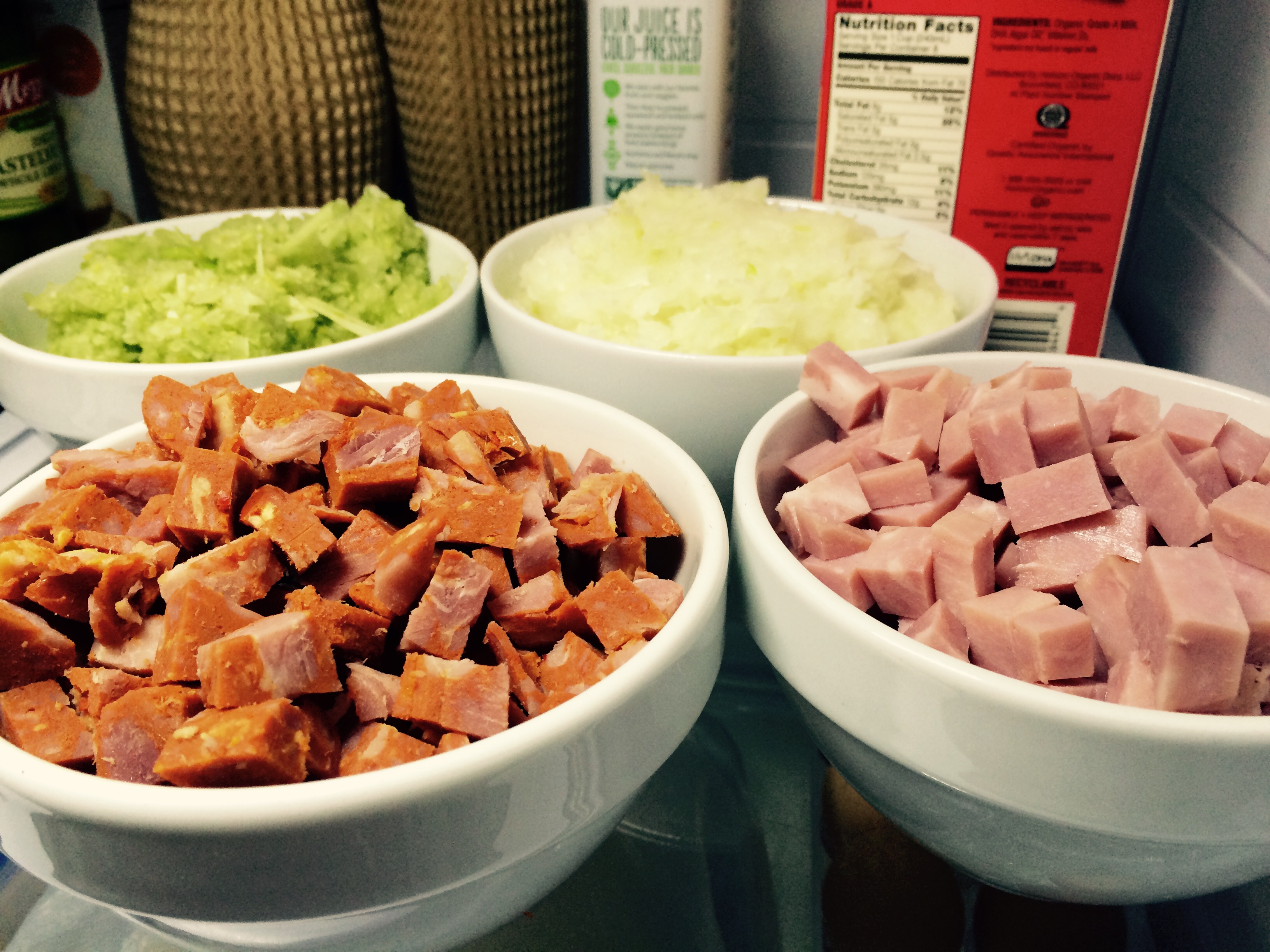
I find it easier to measure and chop all the ingredients before I start cooking.

I find it easier to measure and chop all the ingredients before I start cooking.

4 tablespoons olive oil
1 1/2 cups finely chopped onions, in all
1 1/2 cups finely chopped celery, in all
1 1/2 cups good quality chopped ham
1 1/2 cups chopped andouille sausage (Here in RI, I use local Portuguese chourico from Fall River, MA)
1 teaspoon cayenne pepper sauce (I use Frank’s Red Hot)
3/4 cup tomato sauce made from pureed whole tomatoes
2 cups uncooked rice (I like Texmati brown basmati rice)
3 cups chicken stock (preferably homemade)
1 lb. peeled and de-veined wild-caught American shrimp

image

Over medium-high heat, heat the olive oil in a large sauce pan. Add 3/4 cup of the onions and 3/4 cup of the celery. Cook until the onions are translucent.

Stir in the seasoning mix, then the chopped ham and the chourico, and then the cayenne pepper sauce. Cook until the onions are a dark brown, about 20 minutes, stirring constantly.

Add the remaining 3/4 cup of the onions and celery. Cook about 5 minutes.

Open a can of whole tomatoes and puree them in a food processor to make sauce. Add 3/4 cup of this and cook for about 5 minutes.

Stir in the rice, mixing well. Reduce the heat and simmer for about 12 minutes.

Add the chicken stock, stir well, and bring it all to a boil. Then reduce the heat and simmer, covered, over very low heat until the rice is tender but firm, about 15 minutes.

Remove the cover, toss in the shrimp, stir, then put the cover back on and cook for 5 minutes more.

Sometimes it’s hard to get wild-caught American shrimp at my local seafood store or supermarket. But for me, buying tiger shrimp or other Asian products is not an option. Once I learned about how they are farmed, I decided I’d never eat those shrimp again!

When I find wild-caught American shrimp locally, I buy extra to keep in the freezer. (The better supermarkets, like Whole Foods, have them.) For many years, I bought my shrimp online from http://www.cajungrocer.com. Not only will you find shrimp there, you’ll find many other Cajun classics: King cakes, Turduckens, andouille and alligator sausage, even live crawfish. And the price of their shrimp, even with shipping, is the same as the nasty Asian shrimp you buy in the store. Make some room in your freezer, order large to save, and stock up on the real deal!

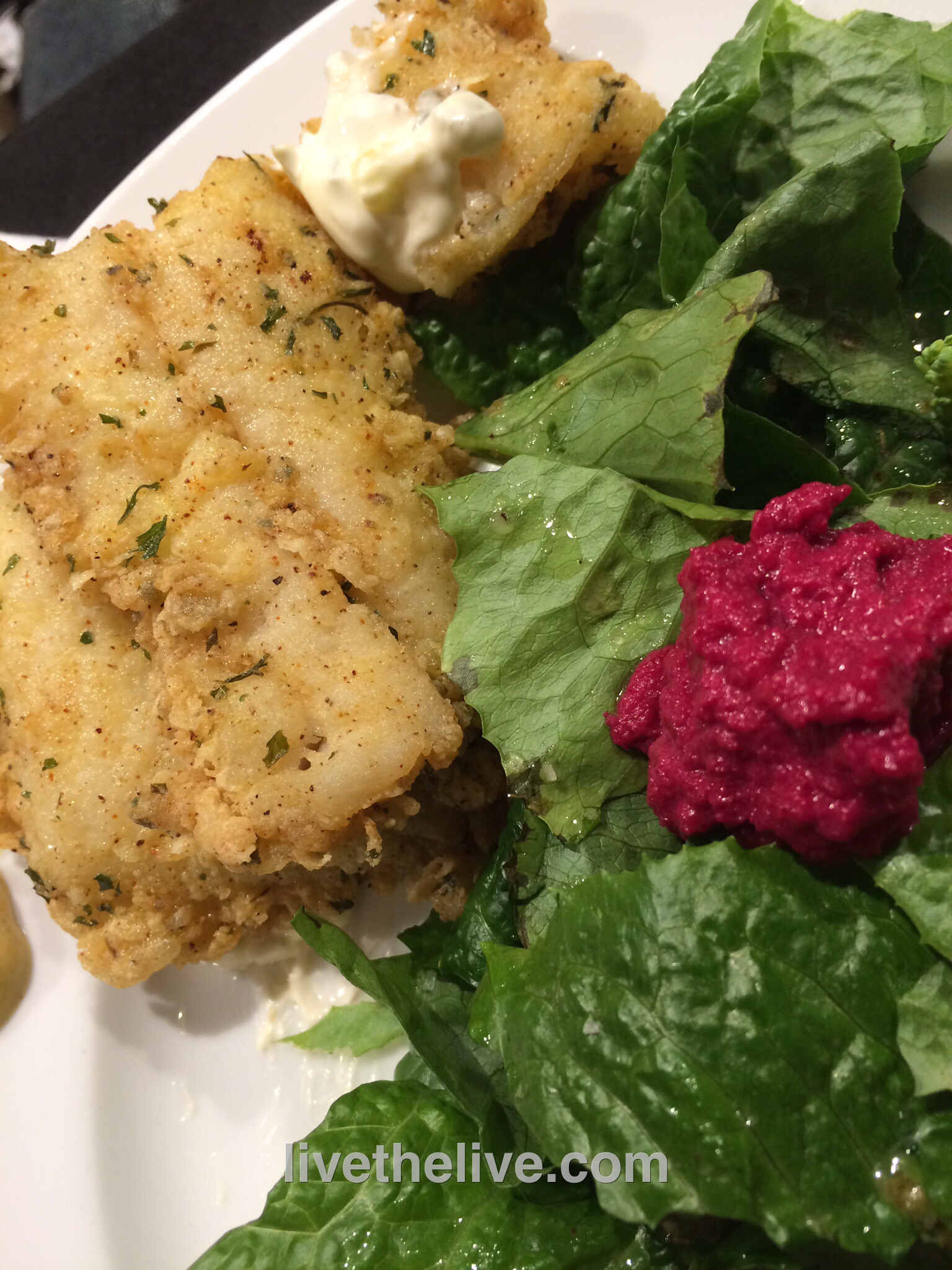
It’s always a challenge when you’re watching your calories. Fish is a great source of protein, and I love it sautéed in a little butter and olive oil with Paul Prudhomme’s Seafood Magic seasoning on it. But let’s face it, that gets old after a while, and we all know there’s nothing tastier than fried fish.

Rather than using a heavy beer batter like I used to do, I came up with a very light gluten-free-flour-based seasoning that gave the fresh-caught local fish I bought incredible flavor and crunch without a carb overload and without gluten. (I’m not on a gluten-free diet, but most GF flour is made from rice, and rice flour that gives you a lighter, crispy texture.)

There are many gluten-free flours out there now. My favorites are King Arthur and Cup 4 Cup, but use whatever GF flour you prefer. (Just make sure that rice flour is a key ingredient in it.)


image

1 cup flour (all-purpose or gluten-free)
1 tablespoon dried parsley
2 teaspoons salt
1 teaspoon oregano
1 teaspoon granulated onion
1 teaspoon paprika
1/2 teaspoon pepper
1/2 teaspoon granulated garlic
2 eggs
fresh locally caught fish fillets of your choice (I used fluke and ocean perch)
avocado oil for frying

In a flat bowl you will use to dredge the fish fillets, combine the flour, parsley, salt, oregano, onion, paprika, pepper and garlic.

In a separate flat bowl, scramble the 2 eggs.

Pour about 1/2″ of the oil in a pan and heat to medium-high heat, about 325° measured with a thermometer.

Dip the fish fillets first in the eggs, coating well. Then dredge them in the flour mixture, pressing down on both sides, so the flour mixture really sticks to the fish. Then shake the fillets lightly to remove the excess flour and gently lay the them in the hot oil. Fry them until they’re golden. (Fresh fish doesn’t take a long time.)

I made a quick and delicious tartare sauce using Hellman’s mayonnaise, dill pickle relish and Maille sauterne mustard.

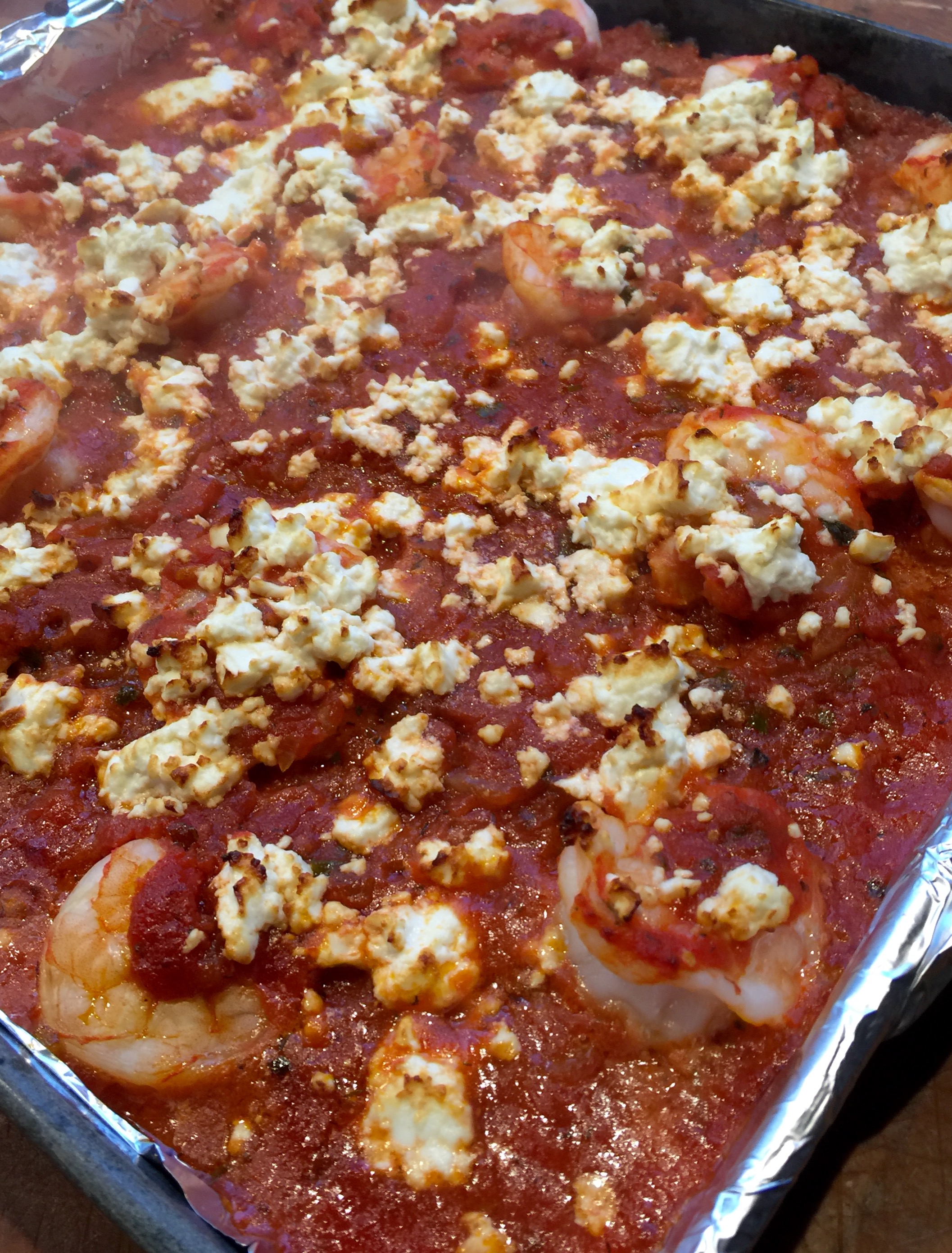
I love the combination of tomato sauce and feta, and this dish, served over some pasta, will have you licking the plate.


FullSizeRender (7)

8 oz. (or more!) feta cheese
1 can (28 oz.) whole tomatoes, ground into sauce
1 lb. (about 24) medium-sized wild-caught American shrimp, peeled and deveined
1 medium onion, chopped
juice of 1/2 lemon
2 tablespoons olive oil
2 cloves garlic, through a press
pinch red pepper flakes
1 teaspoon fresh dill
1 teaspoon oregano
1 tablespoon Ouzo
salt and pepper

Peel and devein the shrimp. Place them in a bowl and squeeze the lemon juice over them and toss them to mix. Open the can of tomatoes and pureé it in a food processor.

In a saucepan, heat the olive oil. Sauté the onions until they’re translucent and then add the garlic. Sauté the garlic for 10 seconds, until fragrant, then add the red pepper flakes, dill and oregano. Add the tomato sauce, and cook over medium heat until the sauce has reduced a bit and isn’t watery. Add the Ouzo carefully–keep it away from open flame! Add salt and pepper to taste.

Line a sheet pan with foil and pour a thin layer of the tomato sauce on the bottom. Lay the shrimp down in one layer on the sauce, and then cover the shrimp with the rest of the sauce. Crumble the feta cheese with your fingers and sprinkle it all over the top.

Bake in a pre-heated 350° oven until the shrimp has cooked through and it’s nice and bubbly. Serve over pasta or with a side of your favorite veggies.

Good news if you’re on a gluten-free diet. These fritters can be made GF! And they’re delicious.

I have both recipes–gluten-free and the original–below!

They key ingredient in making a good fritter batter is beer. But until recently, there weren’t many gluten-free beers to choose from…and the ones that were out there tasted like crap. All that has changed.

Now you can pretty much find a gluten-free craft beer in every state, and there are several regional gluten-free beers as well. Easy enough to find: just go to a good beer store and ask. They almost always carry a couple of brands.

Gluten-free beers can be divided into 2 types: truly gluten-free: brewed with gluten-free ingredients and safe for all to drink…and gluten-reduced: beers that are brewed with ingredients containing gluten, then had an enzyme added to reduce the gluten. These are fine for those that have an intolerance to gluten, but are not Celiac. Read the labels!

The beer that I used for my recipe is a beer that they say  is “crafted to remove gluten,” meaning there’s still a small amount left in there.

Ultimately, if gluten is not an issue for you, follow the recipe at the bottom of this page. It’s my original, and not only uses a tasty lager full of gluten, but also a special fritter flour, which can be found in many stores.

However, if you have to live the gluten-free lifestyle, and you’ve told yourself you can never have another fritter, I have good news for you: you can…and they’re delicious! This is a large batch, so feel free to reduce it if needed.

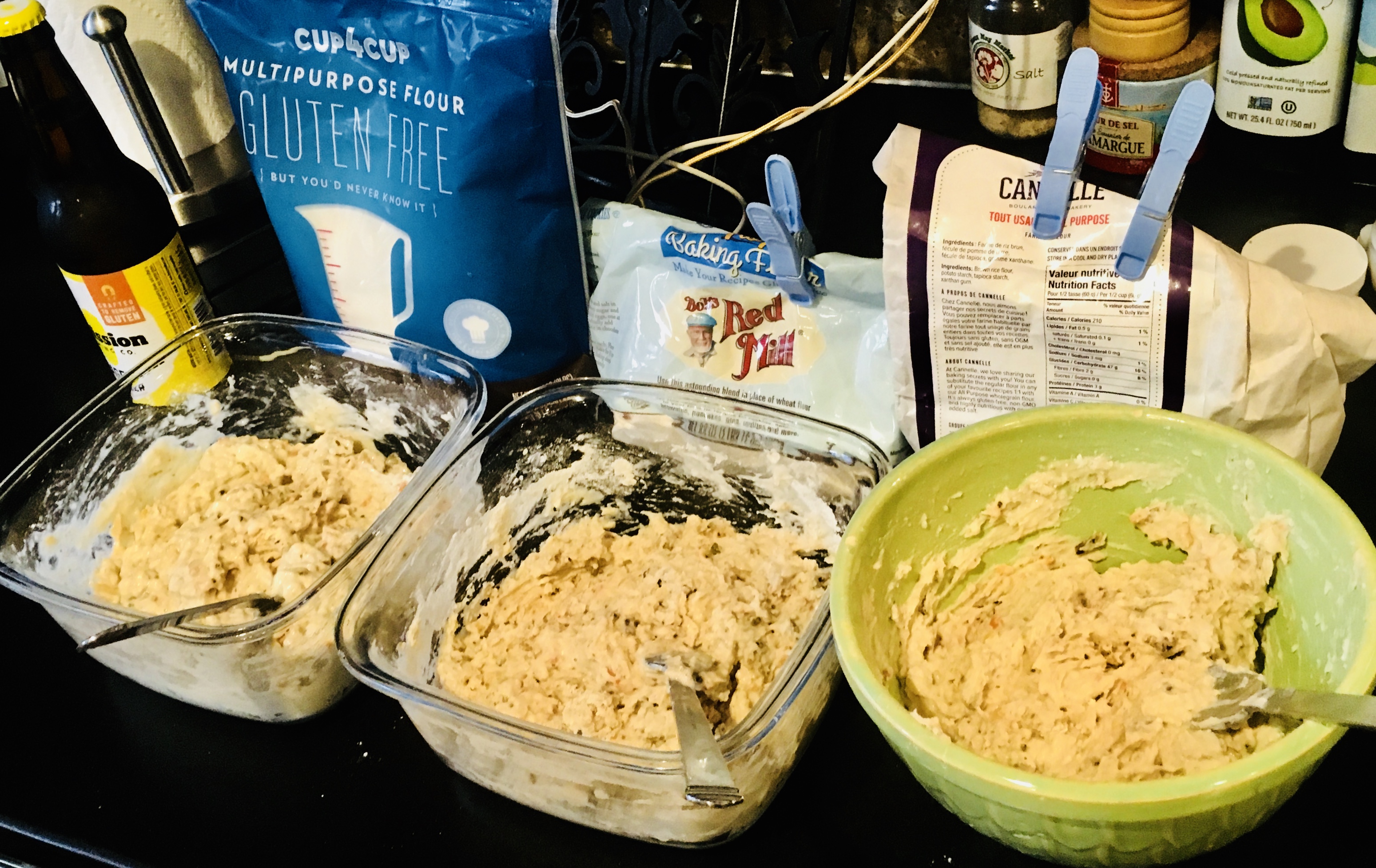
In making this recipe, I tested 3 types of gluten-free flour: Cup4Cup all-purpose flour, Bob’s Red Mill GF Baking Flour, and a Canadian brand (not available here yet.) Cup4Cup (far left) was the clear winner for taste and texture of the fritter.

1 lb. all-purpose gluten-free flour (I like Cup4Cup)
2 lbs. frozen or fresh mussels
1/2 cup (or more) gluten-reduced lager beer (I used Omission)
oil for frying (I stay away from seed oils, but use what you like)

Pour an inch of water in the bottom of a pot, and place a strainer on top. Pour the mussels, fresh or frozen, onto the strainer and cover the pot. Set the heat on high and steam the mussels until they’re cooked, about 5 minutes. If you’re using fresh mussels, throw out any of the ones that didn’t open. Frozen mussel meats (without the shell) are also available in many areas. They work with this method, too. Just warm them through.

Steamed New Zealand green-lipped mussels. Available frozen in many stores. Get the plain ones, not the ones that already come with sauce.

Remove the mussel meats from their shells. Pulse the mussel meats in a food processor, but leave ’em chunky…or chop by hand…not too fine, because you want to see and taste them in the fritter.

Save the “mussel juice,” the water in the bottom of the pot. It’s got lots of mussel flavor.

Place the flour in a large bowl. Add the chopped mussels. Add a 1/2 cup of the mussel juice and a 1/2 cup of the beer. Mix thoroughly, using a fork or your hands, until you get a batter that’s a bit gooey, but not really wet. You might need to keep adding small amount of broth, beer or flour to get just the right consistency. Once you’ve done that, let the batter rest for 10 or 15 minutes. Keep it at room temperature, and do not stir again! If you need to wait a while before frying, cover the bowl with a wet towel.

In a heavy cast iron pan or a fryer, heat the oil to 350°.

Once the oil is hot, take small meatball-sized globs in your hands and gently drop them into the oil. Don’t fry too many at once or the oil temperature will drop quickly. Fry them until they’re golden brown and cooked all the way through. Drain the fritters on paper towels, and season them immediately with salt and a little pepper.

The dipping sauce recipe I have listed at the bottom is not gluten-free. But most tartare-type sauces usually are, and are equally delicious.

Of course, you can make fritters with anything, from mussels to shrimp to lobster!

You’d never know they were gluten-free!

Here’s the original recipe, full of glorious gluten!

It was a fall afternoon in Newport, Rhode Island, at the now-defunct Newport Yachting Center’s annual Oyster Festival. We were gorging on freshly shucked oysters and clams, boiled shrimp, and…what have we here? I had never heard of a mussel fritter before, but once I took a bite, there was no turning back.

They couldn’t be easier to make, but it is crucial to have the right fritter batter. And that starts with a Rhode Island product called Drum Rock fritter mix. If you live in New England, you can find it in just about any seafood department at Whole Foods. If you live further away, you can check out their website (www.drumrockproducts.com) or try your luck with a local brand of fritter mix.

fritter ingredients

If you’re using fresh mussels, be sure to clean them well and remove the beards. Steam them in a pot over a small amount of water. As they open, they will release their flavorful juices and you want to save every drop of that broth for the fritters. Here in New England, frozen mussel meats are available in some seafood stores. All you need to do is thaw them, steam them (saving the broth), and you’re ready to go.

For the fritters:
1 lb. fritter mix
2 cups cooked mussel meats
1/2 cup mussel broth (saved from steaming mussels)
1/4 to 1/2 cup good quality beer (I use Sam Adams Boston Lager)
Oil for frying (I stay away from seed oils, but use what you like)

Steam the mussel meats until they’re just cooked. Remove the mussel meats, and reserve 1/2 cup of the broth. Pulse the mussel meats in a food processor, but leave ’em chunky…or chop by hand.

Put the fritter mix in a large bowl. Add the mussel meats, mussel broth, and beer. Stir gently until just mixed. Let it sit for 10 to 15 minutes and do not stir again. (If you’ve got guests coming, you can prepare up to this part ahead of time, covering the bowl with a wet towel, and leaving it at room temperature.)
Using a thermometer, heat the oil in a deep pan to 350°, and using a small spoon or scoop, drop the fritters in the hot oil, turning gently, cooking 3 to 4 minutes until golden.

Drain them on paper towels, and season with salt and pepper immediately. Serve right away!

IMG_3043

An easy, delicious dipping sauce:
1 cup mayonnaise
1/4 cup Ponzu sauce

The perfect dipping sauce for these mussel fritters is made from two ingredients: mayo and Ponzu sauce, a citrus-based soy sauce found in most supermarkets. Combine both ingredients in a bowl. Keep it in the fridge until you’re ready to use it.

I haven’t found a gluten-free Ponzu sauce yet, but if you take GF soy sauce, touch of citrus juice, a drop of fish sauce, and a little rice vinegar, and mix them up, you’ll get close.

FANTASTIC FRIED SHRIMP

Posted: December 13, 2024 in Food, frying, Recipes, seafood, shrimp
Tags: , , , ,

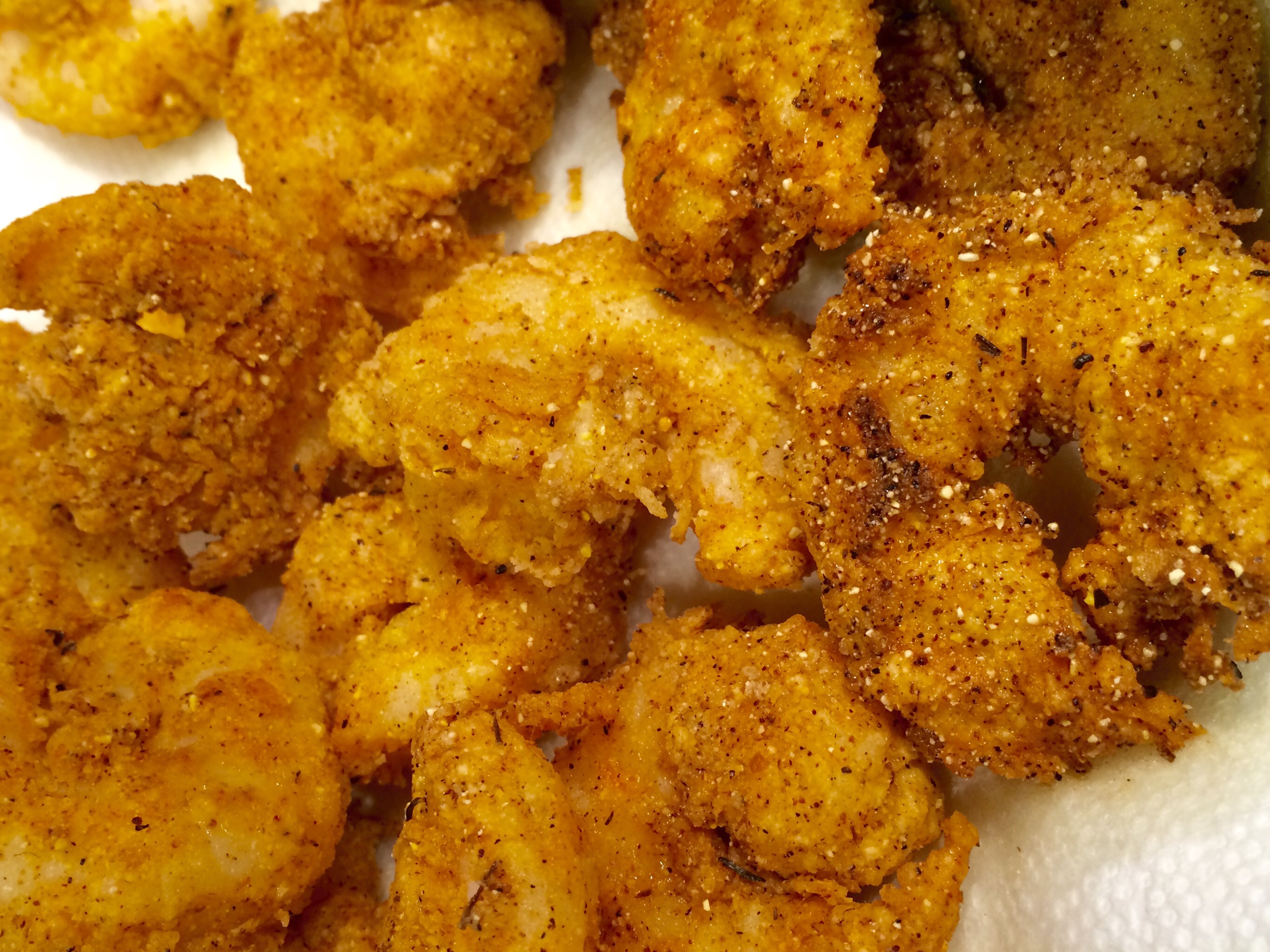
Great fried shrimp is like sea candy…you just can’t get enough. This recipe is easy and really delicious. Never use anything but wild-caught American shrimp!


image


1 lb. wild-caught USA shrimp
1/2 cup all-purpose flour (I use Cup4Cup GF flour to keep it gluten-free)
1/2 cup yellow corn meal
2 tablespoons Paul Prudhomme Seafood Magic seasoning
1 teaspoon sea salt
1 raw egg, scrambled
avocado oil or pork fat, for frying


image

Combine the flour, corn meal, Prudhomme seasoning (see below) and salt in a bowl. Set aside.

Scramble the egg in another bowl and set aside.

Peel and de-vein the shrimp. Remove the entire shell, or leave the tip of the tail, depending on your preference.

Heat a pan with an inch of the oil. When it reaches 325 degrees, it’s ready for frying.

Dip the shrimp in the egg, and shake off any excess. Then toss the shrimp in the flour mixture, shaking off any excess. Carefully place the shrimp in the pan of oil.

Cook the shrimp for about 45 seconds, flip them over, and cook for another 45 seconds, until they’re golden brown. Don’t crowd the pan and never over-cook shrimp!

Drain on paper towels and serve immediately!


The shrimp are delicious by themselves, but here’s an easy remoulade to make along with them…

1 cup mayo
1/4 cup Gulden’s Spicy Brown mustard
1/4 teaspoon granulated garlic
1 tablespoon dill pickle relish
1/2 teaspoon Frank’s Red Hot
Pinch cayenne pepper
1/2 teaspoon salt
1/4 teaspoon white pepper

Combine the ingredients and keep in the fridge until ready to use.


It’s a bit of a cheat, but I find the Paul Prudhomme Seafood Magic seasoning has great flavor and works really well for this. I also use it on fish: simply pan sauté a filet in butter, and sprinkle on the seasoning. I originally started with the small jar found in most supermarkets, but then quickly graduated to the jumbo size can I found online!


If you want to make your own seafood seasoning, a combination of salt, pepper, garlic powder, onion powder, paprika and cayenne will get you a result that’s pretty close to the Prudhomme seasoning.


Though it may sound Japanese, the word “saganaki” refers to a small frying pan used in Greek cooking. The most famous of these dishes, simply called saganaki, is a fried cheese, often flamed at the end with a little ouzo.

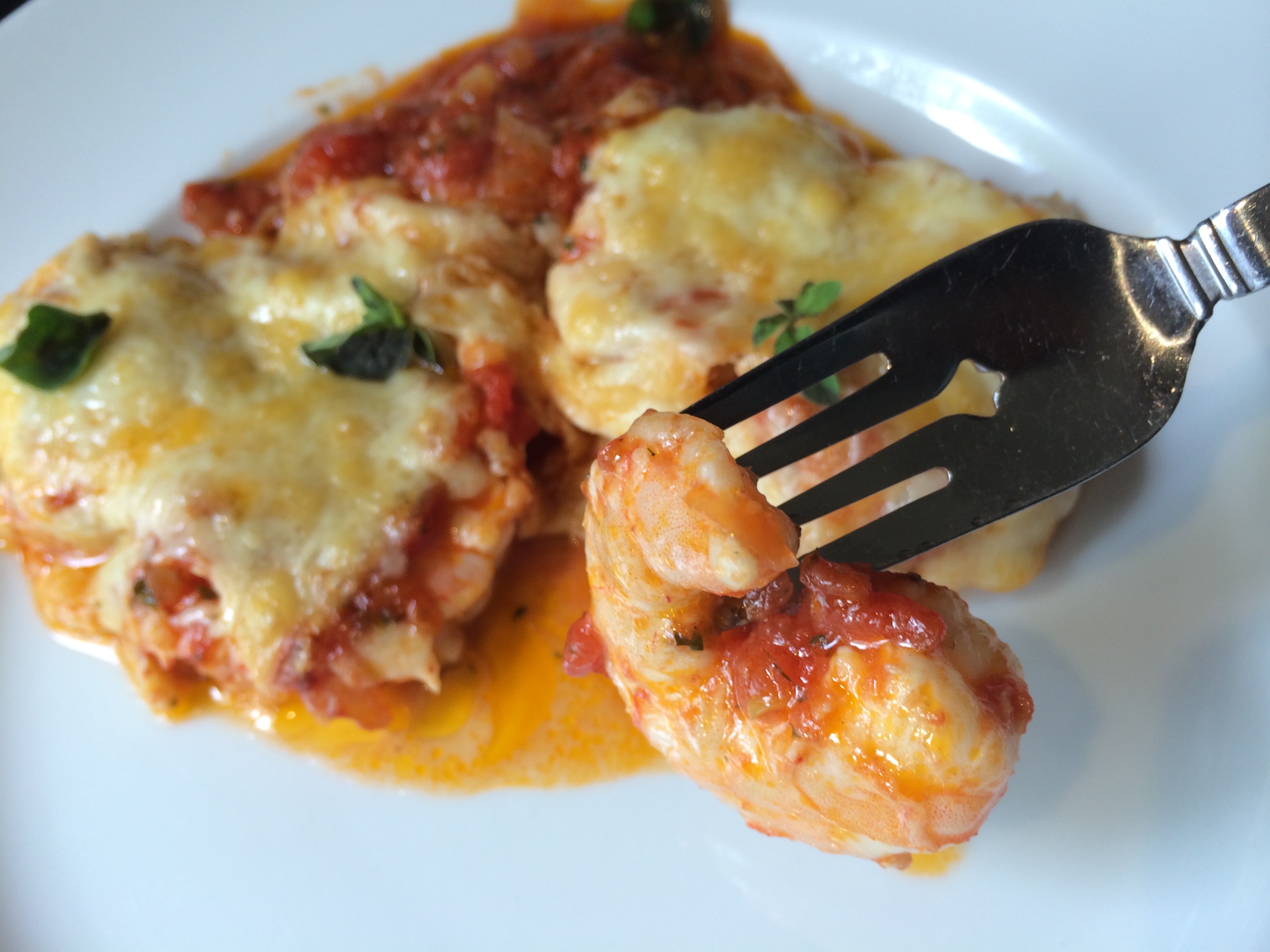
Shrimp saganaki is one of my favorite Greek dishes, and it usually involves cooking shrimp in a tomato-based sauce with plenty of feta cheese sprinkled in. It’s simple yet fantastic if the ingredients are fresh. Doesn’t hurt to be sitting in a taverna on the beautiful island of Santorini while eating it, either!


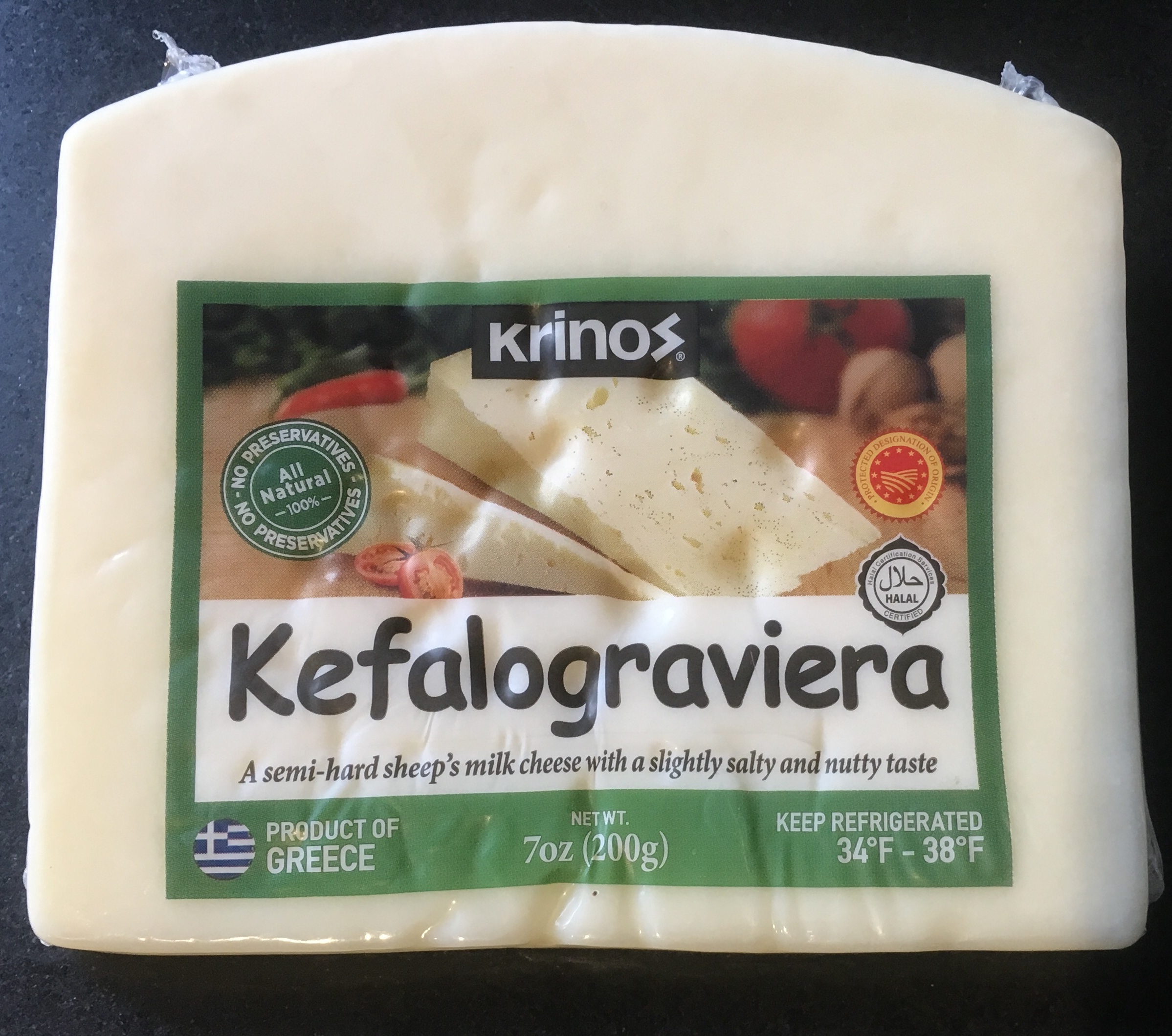
You can find Graviera cheese in most supermarkets.


I found a slab of Graviera cheese at a local supermarket, and decided to recreate shrimp saganaki using that instead of feta. It was pretty darn amazing.

I like using peeled and deveined 24–30 shrimp, because larger shrimp don’t always cook through. These smaller shrimp will be bite-sized and delicious.


Melty, gooey, delicious!

Melty, gooey, delicious!


200g package (7 oz.) grated Graviera cheese
1 can (28 oz.) whole tomatoes
1 lb. (about 24) shrimp, thawed, peeled and deveined
1 medium onion, chopped
juice of 1/2 lemon
1/4 cup olive oil
2 cloves garlic, through a press
pinch red pepper flakes
1 1/2 tablespoons fresh dill, finely chopped
1 tablespoon fresh oregano, finely chopped
1 1/2 tablespoons Ouzo
salt and pepper


Peel and devein the shrimp (or you can buy them that way already.) Place them in a bowl. Squeeze the juice of  1/2 of a lemon on to the shrimp and toss. Set them aside.

In a large pan, sauté the onions in the olive oil until translucent. Add the garlic and cook for a few seconds more.

Crush or puree the tomatoes and add them to the pan. Add the red pepper flakes, dill and oregano, and salt and pepper. Add the Ouzo.

Let this sauce cook down for a bit until all the flavors have blended together.

Pour a layer of the sauce on the bottom of a metal broiler-proof pan. Lay the raw shrimp in a single layer into the sauce. Cover the shrimp with the rest of the sauce and sprinkle the grated Graviera on top.

Place the pan in a pre-heated 350-degree oven and bake until the cheese is golden brown and bubbly and the shrimp have cooked through. I like to finish it under the broiler for a few minutes to get the cheese brown and melty.


shrimp saganaki


I had a pound of leftover lobster meat (I know, I know…how could you ever have leftover lobster?!) So I wrapped it tightly and kept it frozen. When I had a craving for crab cakes, I figured I’d try my recipe out with lobster instead. Wow…so good, I sprained my arm patting myself on the back!


lobstercake2


1 lb. cooked lobster meat (thawed, if frozen)
1 cup mayonnaise (I like Hellman’s)
1/4 cup Dijon mustard (I like Maille)
1 to 2 teaspoons Old Bay seasoning
3/4 cup saltine crackers or oyster crackers
Olive oil

In a bowl, combine the mayo, mustard and the Old Bay Seasoning.

Chop the lobster into small pieces and add it to the mayo/mustard mix.

Pulse the crackers in a food processor until it resembles oatmeal. Add that to the bowl and gently combine the ingredients.

Form small patties. I use either a small beef slider mold or the lid from a small mouth Mason jar. I won’t kid you: it gets messy, but it’s worth it! Place the patties on a sheet pan lined with parchment or Reynold’s non-stick aluminum foil.

Place the sheet pan in the freezer for about 15 minutes to stiffen up the patties.

Heat some olive oil in a pan over medium-high heat. Cook the patties on both sides, flipping carefully, until golden brown. Since the lobster meat is already cooked, you don’t want to overcook them!


lobstercake1

One of the most incredible dishes we’ve had was on the beautiful island of Santorini, Greece: pasta with lobster sauce. It’s one of those dishes that takes time to prepare, because the lobster sauce they make is a labor of love…time consuming, but so spectacular.


Cooked lobster LTL


To try to copy that lobster sauce we had in Santorini, I start with a kick-ass lobster stock. It’s simple but flavorful:


clean, empty claws, tails and bodies from two 1-1/2 lb. boiled lobsters (use the legs, too)
12 cups water
1/2 onion
3 celery stalks
1 carrot

Place all the ingredients in a large pot and set it on high heat. Crush the lobster shells (I use a potato masher!) Cook until the stock is reduced by half.

Strain the stock, discarding the lobster shells and veggies. Bring the stock back to the heat and reduce it until all you have left is 1 cup of intense stock.


Pasta with lobster sauce

Now that you have the stock, you can make the sauce!


1/2 onion, finely chopped
1 garlic clove, finely chopped
pinch of Italian red pepper flakes
1 teaspoon parsley
extra virgin olive oil
1/2 cup lobster stock
1/4 cup San Marzano tomato sauce (see below)
splash of white wine (I use an un-oaked Chardonnay)
salt and pepper
1 tablespoon unsalted butter (optional)
1/2 lb. cooked pasta (firmer than al dente)

Add some olive oil to a pan and sauté the onions until translucent. Season with salt and pepper. Add the garlic and cook for 10 seconds. Add the red pepper flakes and parsley.

Add 1/4 cup of the lobster stock and let it cook, reducing it by half. Add the other 1/4 cup of lobster stock and then the tomato sauce. Let it cook for a couple of minutes and add the white wine. Cook for a few minutes more, to cook out the alcohol.

Cook the pasta and drain it even before it reaches the al dente stage. Place the pasta in the pan with the sauce, heating and coating it thoroughly. A touch of butter can’t hurt anything!
Serve immediately, with or without the lobster meat. (Since the lobster was already cooked, you just need to add it to the pan for a few minutes to warm it through.)


For the San Marzano tomato sauce: I pour a can of San Marzano tomatoes  into a food processor or blender and blend. Pour it into a pan and reduce it over medium heat by half, until the sauce has thickened. Then use it in this recipe.