Archive for the ‘Uncategorized’ Category

Now’s the time to start prepping your brisket for corned beef on St. Patrick’s Day!

Before every St. Patty’s Day, supermarkets are full of packages of processed corned beef in preparation for the big celebration. But, interestingly, corned beef isn’t really an authentic Irish dish.

The phrase “corned beef” was coined by the British, and although the Irish were known for their corned beef throughout Europe in the 17th century, beef was far too expensive for the Irish themselves to eat and all of it was exported to other countries. Owning a cow in Ireland was a sign of wealth, and the Irish used theirs for dairy products, not beef.

The Irish ate pork, and a lot of it, because it was cheap to raise pigs, and they traditionally prepared something like Canadian bacon to celebrate St. Patrick’s Day in Ireland.

In the 1900’s, when the Irish came to America, both beef and salt were more affordable, and the Irish, who lived in poor, tight-knit communities, often next to Jewish communities, bought much of their beef from Kosher butchers. And so many of the Irish learned how to corn their beef using Jewish techniques, but adding cabbage and potatoes to the mix. That’s what we have today.

It takes about 3 weeks to make corned beef. Doing it yourself is not difficult. It just takes time.

Corned beef has nothing to do with corn. ‘Corning’ is a technique for preserving raw meats for long periods by soaking it in a salt brine. This method was used in England before the days of commercial refrigeration. Back then, the large salt kernels used in the brine were called “corns.”

Brining is a time-honored way of preserving meat and it prevents bacteria from growing. Both pastrami and corned beef are made by this method. Both start with a brisket of beef. Corned beef is then cooked–usually boiled–and served. Pastrami is made when the brined meat is rubbed with more spices and then smoked to add extra flavor. So corned beef and pastrami are the same meat, just treated differently.

Saltpeter is an ingredient that has been used in brining beef for years. It adds the traditional pink coloring to the corned beef and pastrami meat, a bit more appetizing than the gray color it tends to have if you don’t use it.

Saltpeter can also contain carcinogens, so there’s always talk of avoiding it. It’s found in pink curing salt, which is used in small amounts during the curing process. (Not to be confused with Himalayan pink salt, which is just plain salt.) Since I only make my corned beef once a year, I’m OK with it either way. The general rule of thumb is only 1 teaspoon pink curing salt per 5 pounds of meat.

I get grass-fed brisket in 10-pound slabs, but use whatever size you find comfortable. Just don’t go too small, or the brine will make that tiny piece of meat extremely salty.

Brining the beef brisket

Brining the beef brisket

Step one: corned beef…

beef brisket (about 8-10 pounds)
2 teaspoons paprika
1/4 cup warm water
3 cloves of minced garlic
2 tablespoons sugar
1 tablespoon mixed pickling spices
3/4 cup salt
1 teaspoon pink curing salt (optional)
2 quarts water

Place the brisket in a large container made of non-reactive material, like glass or plastic.

In the 1/4 cup of warm water, dissolve the sugar, minced cloves, paprika and pickling spices.

Dissolve the 3/4 cup of salt (and optional teaspoon of pink curing salt) in the 2 quarts of water. Pour in the sugar/garlic/paprika/pickling spices mix and stir everything together. Pour the mixture over the meat in the container. Make sure the meat is totally beneath the surface of the liquid. (You may need to weigh it down to do this. I place a couple of plates on top, which pushes the meat down into the brine.) If there’s just not enough liquid, double the recipe, leaving out the pink salt the second time. Cover the container.

Refrigerate the container and its contents for 3 weeks, turning the meat once or twice per week. At the end of the third week, remove the container from the refrigerator and take out the meat. Soak the meat in several changes of fresh cold water over a period of 12 hours to remove the excess salt. I add ice to the water to keep the meat cold.

At this point, if you want corned beef, most people boil it.

I prefer to lay some aluminum foil down on a sheet pan. Then I coarsely chop carrots, onions, and celery, placing them in a single layer on the foil. Then I lay my brisket on top of the veggies, and wrap the meat tightly in the foil. I place the baking pan in a pre-heated 350 degree oven and cook for about 3 1/2 hours. (That’s for an 8-pound slab of meat. The cooking time will be less for a smaller cut.)

If you want to make pastrami, there are more steps to take…

Step two: making Pastrami…

pastrami

Brined and rinsed corned beef brisket from above recipe, patted dry with paper towels
1/4 cup Kosher salt
1/4 cup paprika
3 tablespoons coriander seeds
2 tablespoons black peppercorns
2 tablespoons yellow mustard seeds
1 tablespoon white peppercorns
3 tablespoons brown sugar
1 tablespoon granulated garlic

Combine the coriander seeds, black and white peppercorns and mustard seeds in a spice grinder and grind them coarsely. Place them in a bowl. Add the salt, paprika, brown sugar and granulated garlic. Mix well.

Rub the mix into the corned beef well, covering all sides.

Heat your smoker to 225 degrees and smoke the meat for several hours. (My wood of choice is always hickory.) When the internal temperature of the meat has reached 165 degrees, it’s done. It isn’t necessary to smoke pastrami as long as you would a regular brisket because the long brining time makes the meat more tender, and you’ll be steaming it next.

It is very important that absolutely everything that comes in contact with the meat is very clean. (This includes your hands.) Also, make very sure that every inch of the meat reaches the 165 degrees before it is removed from the smoker. The corned beef is now pastrami.

Delis that serve pastrami go one step further: they steam the meat so that it becomes incredibly tender and easy to slice. I place a baking pan with boiling water in the center of a 350° oven. I put a grate on top of it, placing the pastrami on top of the grate. Then I invert a bowl over the pastrami to keep the steam in. I will cook it this way for at least an hour to steam the meat before slicing and serving.

It’s always a challenge when you’re watching your calories. Fish is a great source of protein, and I love it sautéed in a little butter and olive oil with Paul Prudhomme’s Seafood Magic seasoning on it. But let’s face it, that gets old after a while, and we all know there’s nothing tastier than fried fish.

Rather than using a heavy beer batter like I used to do, I came up with a very light gluten-free-flour-based seasoning that gave the fresh-caught local fish I bought incredible flavor and crunch without a carb overload and without gluten. (I’m not on a gluten-free diet, but most GF flour is made from rice, and rice flour that gives you a lighter, crispy texture.)

There are many gluten-free flours out there now. My favorites are King Arthur and Cup 4 Cup, but use whatever GF flour you prefer. (Just make sure that rice flour is a key ingredient in it.)


image

1 cup flour (all-purpose or gluten-free)
1 tablespoon dried parsley
2 teaspoons salt
1 teaspoon oregano
1 teaspoon granulated onion
1 teaspoon paprika
1/2 teaspoon pepper
1/2 teaspoon granulated garlic
2 eggs
fresh locally caught fish fillets of your choice (I used fluke and ocean perch)
avocado oil for frying

In a flat bowl you will use to dredge the fish fillets, combine the flour, parsley, salt, oregano, onion, paprika, pepper and garlic.

In a separate flat bowl, scramble the 2 eggs.

Pour about 1/2″ of the oil in a pan and heat to medium-high heat, about 325° measured with a thermometer.

Dip the fish fillets first in the eggs, coating well. Then dredge them in the flour mixture, pressing down on both sides, so the flour mixture really sticks to the fish. Then shake the fillets lightly to remove the excess flour and gently lay the them in the hot oil. Fry them until they’re golden. (Fresh fish doesn’t take a long time.)

I made a quick and delicious tartare sauce using Hellman’s mayonnaise, dill pickle relish and Maille sauterne mustard.

KRUSTAI, A LITHUANIAN TREAT

Posted: February 14, 2025 in Uncategorized

Krustai, also called Zagarėliai in Lithuanian (known as Chrusciki in Polish…and sometimes called Angel Wings), are basically strips of fried dough, sprinkled with powdered sugar. What makes them different than your basic funnel cake is that the recipe uses egg yolks to make the batter richer. They’re simple and absolutely delicious, especially if they’re served with homemade applesauce, the way my mom used to serve them to my daughter. (The recipe for that is at the bottom of this blog.)


The traditional recipe my mom and grandmother used for years featured vegetable shortening–good old Crisco–so I still use that, considering how rarely I make them. (It’s the only time I still use it!) But you can also fry them with the oil of your choice.


This recipe can be made gluten-free if you use your favorite one-to-one gluten-free flour. (I like King Arthur.) The dough has less elasticity (as all GF dough does) and they’re crumblier than regular Krustai after frying, but the taste is still delicious!


Gluten-free Krustai.


1 cup powdered sugar
1 tablespoon cinnamon
a pinch of salt
8 egg yolks
1/3 cup granulated sugar
1 teaspoon vanilla extract
3 cups all-purpose flour
4 tablespoons sour cream
vegetable shortening (the 3 lb. can)

Combine the powdered sugar, cinnamon and salt in a bowl. Set it aside.

In a mixing bowl, combine the egg yolks, sugar and vanilla and mix until combined. Slowly add about 1 1/2 cups of the flour, then add the sour cream. Add flour again, a 1/2 cup at a time, mixing until the dough forms. (You may need more or less than the 3 cups listed.) The dough should be soft, but not too sticky.

Move the dough to a clean work surface, dusting it with flour. Knead the dough a bit, adding flour to prevent it from getting too sticky. Cut the dough into several pieces to make it easier to work with.


The original recipe said to roll the dough out to about 1/8″ thick, and I have a rolling pin that can be set in increments. I found that 1/8″ of an inch, although absolutely delicious, was thicker than my mom’s recipe. So it’s up to you if you want to go thinner with the dough.


I set the rolling pin to 1/8″, but you can make them thinner if you like.


Once you’ve rolled the dough out into a sheet, cut it into 4-inch long, 1-inch wide pieces with a sharp knife or a pastry wheel. (I used a pizza cutter.) Traditionally, you make a slit in the center of each strip, and slip one end of the dough through the slit to get the desired “angel wing” form. I made a few of them that way, and then decided to leave the rest of them the way they are. (The gluten-free dough has much less elasticity than wheat dough.) Again, up to you.


Re-roll any unused dough scraps and add them to the next batch of dough.


In a sturdy pot, melt about 2/3’s of the can of vegetable shortening. Most vegetable shortening has a smoke point of about 360°, so I don’t let it get past 350°. Keep an eye on it, and use a thermometer! You don’t want the shortening to burn.

Once the shortening reaches about 325°, drop one piece of dough in the oil to see how it’s frying. If it immediately rises to the surface and sizzles, the fat is ready for frying.


I use 2 forks to flip the pastry once it gets golden brown on one side. Once the oil temperature is right, the frying process goes quickly so keep an eye on your Krustai and don’t let them burn!


I like to place the fried Krustai on a metal rack for a few minutes to drain the oil, before transferring them over to a plate.


These are the Krustai made with all-purpose flour. You can see how they’re more flexible, and how they puff up a bit more than the GF Krustai in the previous photo.


Gluten-free. Lighter in color, crispier, but still delicious!

Of course, it never hurts to have a helper in the kitchen!


Once they’ve had a moment to drip off excess oil and to cool a bit, dust the Krustai with the cinnamon sugar.


The Krustai are delicious just like this, but serving them with applesauce is a special treat. My daughter was lucky enough to get to know her grandmother, and one of the last things my mom ever cooked for her was Krustai with homemade applesauce. Her recipe was simple…


6 to 8 organic apples, different varieties
3 tablespoons brown sugar
1/2 teaspoon cinnamon
1/4 cup water

My mom always used a variety of apples. Some cook down more rapidly, other stay chunky. Others are sweet. Others, like Granny Smiths, are tart. Whatever the choices, use organic apples to avoid pesticides. (Apples are some of the most heavily sprayed fruits you can buy.)

Peel and core the apples, cutting them into 1/2″ cubes. Combine them with the other ingredients in a large saucepan, and put it over medium heat.


Cook the apples down to the consistency you like. (I like it chunky.) You might need to add a little more water. Store the applesauce in a sealed mason jar in the fridge.


HOMEMADE BELGIAN WAFFLES

Posted: February 2, 2025 in Uncategorized

My daughter wanted something special for breakfast a few Saturdays ago, and she brought a ready-to-mix box of Belgian waffle mix out of the cupboard. I read the instructions, and it required using the entire box, which made 10 gigantic waffles…way too much for us to eat in one sitting!


I figured there had to be a homemade Belgian waffle recipe somewhere online, and using ingredients I already had at home. The Food Network’s Alton Brown is usually my go-to source for recipes like this, and sure enough, he had a waffle recipe. But it used buttermilk and whole wheat pastry flour, neither of which I had in my pantry or fridge. Alton’s recipe would have to wait for another day.

I finally found one that used regular milk instead of buttermilk. I combined organic all-purpose flour with organic whole wheat flour; I like the richness in flavor whole wheat flour brings.

I try to always use organic unbleached flours, because wheat is another one of those crops that gets blasted with pesticides and chemicals in both growing and processing.


The Kitchen Aid might be overkill, but I don’t have a hand mixer!


*Separating eggs*
I like to take 2 small bowls and place them on the counter. I take an egg and crack it on a flat surface, which reduces the chance of a shell fragment getting into the egg. Going back and forth between eggshell halves, the yolk stays in the shell while the whites drip down into one of the bowls. The clean yolk goes in the other bowl. Repeat with the other egg.

It’s important to remember that you CAN have a little egg white with your yolk. It won’t hurt anything. BUT…you can NOT have any yolk with your egg whites! The whites will not whip up if there’s even the tiniest bit of yolk in them!

1 1/4 cups all-purpose flour
1 cup whole wheat flour
3 tablespoons sugar
1 tablespoon baking powder
1 teaspoon cinnamon
2 large eggs, separated
2 cups milk
1/2 cup vegetable oil
1 teaspoon vanilla extract

Pre-heat the waffle iron, spraying it with cooking spray. (I like to use a high-smoking point oil like avocado oil.)

In a large bowl, whisk together the all-purpose and wheat flour, the sugar, baking powder, and cinnamon.

Carefully separate the eggs whites from the yolks, placing the yolks in a bowl with the milk, vegetable oil and vanilla extract. Whisk until combined.

Place the egg whites in a bowl and beat with a hand mixer until stiff peaks form. (I don’t have a hand mixer, so I used my stand mixer for this job.)


Add the yolk mixture to the dry ingredients and mix well.

Next, fold the egg whites carefully into the bowl. You should have a beautiful, light airy batter, that has a wonderful cinnamon fragrance.


Ready to fold in…


Pour the batter into the hot waffle iron (according to your iron’s directions.)


Serve the waffles immediately with butter, syrup, fruit, whipped cream, or anything else you love!

I didn’t mean to cheat…honest. But I wasn’t thinking when I bought my corn in the supermarket, and I bought ears that were already shucked. Classically, Mexican street corn is made by throwing unshucked ears of corn on the grill to cook them. So I improvised.


I took the shucked ears of corn, placed them in a pot of cold water, and brought it to a boil. I boiled the corn for just 2 minutes, removing them from the water at that point.


I lit a grill. But you can also put them under a broiler, keeping an eye on them as they cook, rolling them back and forth so that they would have a nice char on them but wouldn’t burn. When I liked the color of the corn, I brought the ears inside and added the remaining ingredients, which can be prepared ahead of time.


1/2 cup mayonnaise
1/2 cup sour cream
juice of 1 lime
1/2 teaspoon granulated garlic

Combine these ingredients in a bowl and place it in the fridge until it’s ready to use.

Cotija cheese, crumbled
Tony Chachere’s Creole Seasoning
Fresh cilantro, finely chopped


Once the corn comes off the grill, brush on the mayo/sour cream mixture all over the corn. Traditionally, chili powder is sprinkled on, but I prefer the Tony Chachere’s. Sprinkle the cotija cheese on top, and garnish with a little cilantro.

A favorite.

BARBECUE SAUCE DU JOUR

Posted: January 29, 2025 in Uncategorized

Even if it’s too cold to grill outside, a nice barbecue sauce can make you feel like it’s summer!
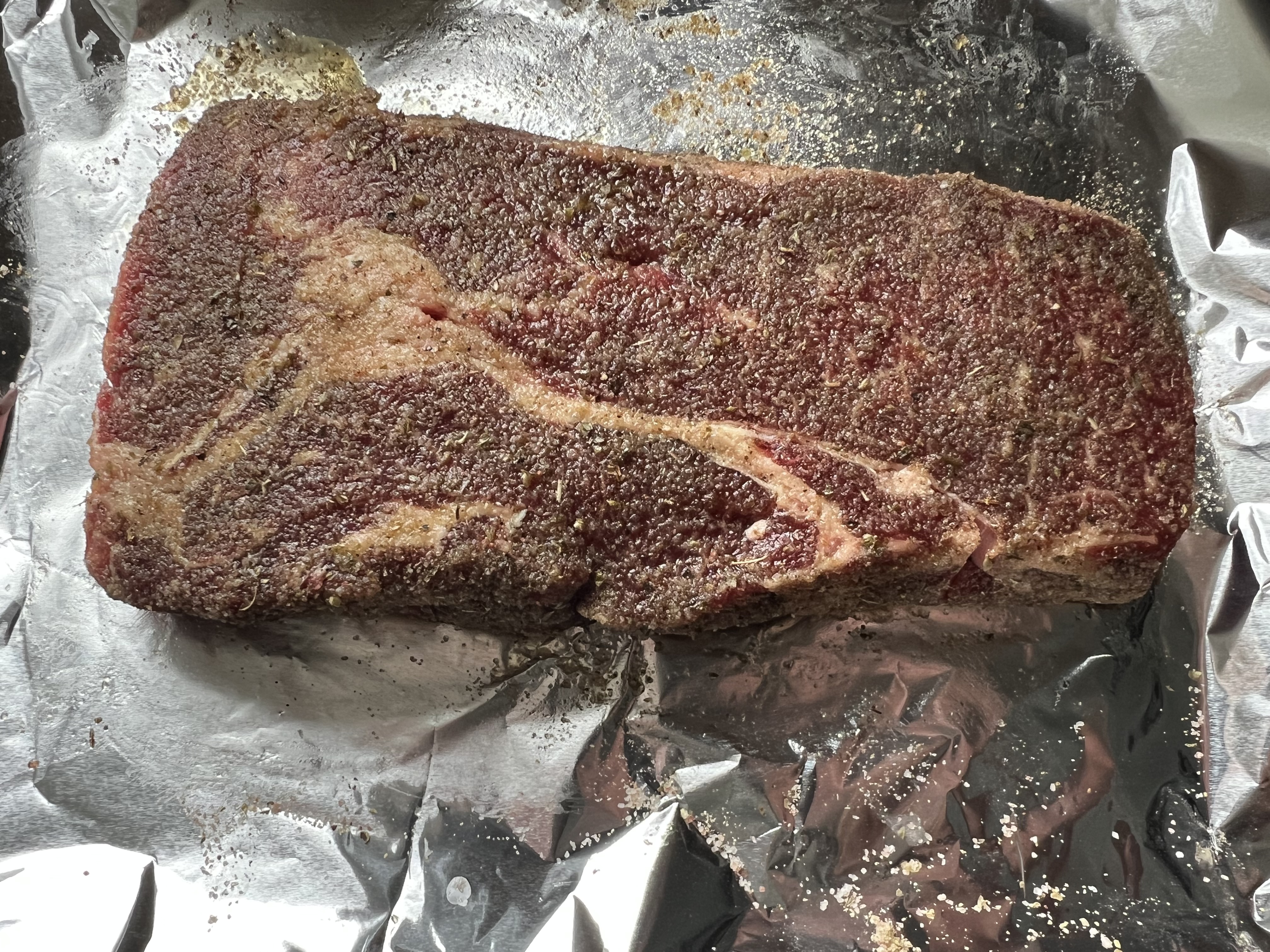
I’ve probably got a dozen really great barbecue sauce recipes. But these days, it seems I’m always gravitating toward this one. It’s sharp and vinegar-based so it has that acidic kick, and goes great with beef and chicken, but especially pork.

I’ve used this sauce when making tacos with ground beef, pulled pork, ribs, and grilled chicken, as well as a whole roasted bird. Lip-smackin’ good!


Let’s make it…


2 cups ketchup
3/4 cup water
6 tablespoons cider vinegar
6 tablespoons white vinegar
6 tablespoons brown sugar
3 tablespoons Worcestershire sauce
1 tablespoon chili powder
2 teaspoons Kosher salt
2 teaspoons black pepper
2 teaspoons cumin
1 teaspoon granulated garlic
1 teaspoon granulated onion


Mix all the ingredients in a saucepan, and bring it to a boil. Then lower the heat to a simmer and cook until until the flavors have blended and it has thickened a bit–about 20 minutes.

If you store it in an airtight container in the fridge, it will keep for weeks.

Great on ribs!


Good news if you’re on a gluten-free diet. These fritters can be made GF! And they’re delicious.

I have both recipes–gluten-free and the original–below!

They key ingredient in making a good fritter batter is beer. But until recently, there weren’t many gluten-free beers to choose from…and the ones that were out there tasted like crap. All that has changed.

Now you can pretty much find a gluten-free craft beer in every state, and there are several regional gluten-free beers as well. Easy enough to find: just go to a good beer store and ask. They almost always carry a couple of brands.

Gluten-free beers can be divided into 2 types: truly gluten-free: brewed with gluten-free ingredients and safe for all to drink…and gluten-reduced: beers that are brewed with ingredients containing gluten, then had an enzyme added to reduce the gluten. These are fine for those that have an intolerance to gluten, but are not Celiac. Read the labels!

The beer that I used for my recipe is a beer that they say  is “crafted to remove gluten,” meaning there’s still a small amount left in there.

Ultimately, if gluten is not an issue for you, follow the recipe at the bottom of this page. It’s my original, and not only uses a tasty lager full of gluten, but also a special fritter flour, which can be found in many stores.

However, if you have to live the gluten-free lifestyle, and you’ve told yourself you can never have another fritter, I have good news for you: you can…and they’re delicious! This is a large batch, so feel free to reduce it if needed.

In making this recipe, I tested 3 types of gluten-free flour: Cup4Cup all-purpose flour, Bob’s Red Mill GF Baking Flour, and a Canadian brand (not available here yet.) Cup4Cup (far left) was the clear winner for taste and texture of the fritter.

1 lb. all-purpose gluten-free flour (I like Cup4Cup)
2 lbs. frozen or fresh mussels
1/2 cup (or more) gluten-reduced lager beer (I used Omission)
oil for frying (I stay away from seed oils, but use what you like)

Pour an inch of water in the bottom of a pot, and place a strainer on top. Pour the mussels, fresh or frozen, onto the strainer and cover the pot. Set the heat on high and steam the mussels until they’re cooked, about 5 minutes. If you’re using fresh mussels, throw out any of the ones that didn’t open. Frozen mussel meats (without the shell) are also available in many areas. They work with this method, too. Just warm them through.

Steamed New Zealand green-lipped mussels. Available frozen in many stores. Get the plain ones, not the ones that already come with sauce.

Remove the mussel meats from their shells. Pulse the mussel meats in a food processor, but leave ’em chunky…or chop by hand…not too fine, because you want to see and taste them in the fritter.

Save the “mussel juice,” the water in the bottom of the pot. It’s got lots of mussel flavor.

Place the flour in a large bowl. Add the chopped mussels. Add a 1/2 cup of the mussel juice and a 1/2 cup of the beer. Mix thoroughly, using a fork or your hands, until you get a batter that’s a bit gooey, but not really wet. You might need to keep adding small amount of broth, beer or flour to get just the right consistency. Once you’ve done that, let the batter rest for 10 or 15 minutes. Keep it at room temperature, and do not stir again! If you need to wait a while before frying, cover the bowl with a wet towel.

In a heavy cast iron pan or a fryer, heat the oil to 350°.

Once the oil is hot, take small meatball-sized globs in your hands and gently drop them into the oil. Don’t fry too many at once or the oil temperature will drop quickly. Fry them until they’re golden brown and cooked all the way through. Drain the fritters on paper towels, and season them immediately with salt and a little pepper.

The dipping sauce recipe I have listed at the bottom is not gluten-free. But most tartare-type sauces usually are, and are equally delicious.

Of course, you can make fritters with anything, from mussels to shrimp to lobster!

You’d never know they were gluten-free!

Here’s the original recipe, full of glorious gluten!

It was a fall afternoon in Newport, Rhode Island, at the now-defunct Newport Yachting Center’s annual Oyster Festival. We were gorging on freshly shucked oysters and clams, boiled shrimp, and…what have we here? I had never heard of a mussel fritter before, but once I took a bite, there was no turning back.

They couldn’t be easier to make, but it is crucial to have the right fritter batter. And that starts with a Rhode Island product called Drum Rock fritter mix. If you live in New England, you can find it in just about any seafood department at Whole Foods. If you live further away, you can check out their website (www.drumrockproducts.com) or try your luck with a local brand of fritter mix.

fritter ingredients

If you’re using fresh mussels, be sure to clean them well and remove the beards. Steam them in a pot over a small amount of water. As they open, they will release their flavorful juices and you want to save every drop of that broth for the fritters. Here in New England, frozen mussel meats are available in some seafood stores. All you need to do is thaw them, steam them (saving the broth), and you’re ready to go.

For the fritters:
1 lb. fritter mix
2 cups cooked mussel meats
1/2 cup mussel broth (saved from steaming mussels)
1/4 to 1/2 cup good quality beer (I use Sam Adams Boston Lager)
Oil for frying (I stay away from seed oils, but use what you like)

Steam the mussel meats until they’re just cooked. Remove the mussel meats, and reserve 1/2 cup of the broth. Pulse the mussel meats in a food processor, but leave ’em chunky…or chop by hand.

Put the fritter mix in a large bowl. Add the mussel meats, mussel broth, and beer. Stir gently until just mixed. Let it sit for 10 to 15 minutes and do not stir again. (If you’ve got guests coming, you can prepare up to this part ahead of time, covering the bowl with a wet towel, and leaving it at room temperature.)

Using a thermometer, heat the oil in a deep pan to 350°, and using a small spoon or scoop, drop the fritters in the hot oil, turning gently, cooking 3 to 4 minutes until golden.

Drain them on paper towels, and season with salt and pepper immediately. Serve right away!

IMG_3043

An easy, delicious dipping sauce:
1 cup mayonnaise
1/4 cup Ponzu sauce

The perfect dipping sauce for these mussel fritters is made from two ingredients: mayo and Ponzu sauce, a citrus-based soy sauce found in most supermarkets. Combine both ingredients in a bowl. Keep it in the fridge until you’re ready to use it.

I haven’t found a gluten-free Ponzu sauce yet, but if you take GF soy sauce, touch of citrus juice, a drop of fish sauce, and a little rice vinegar, and mix them up, you’ll get close.

SWEDISH MEATBALLS

Posted: January 19, 2025 in Uncategorized

This was an interesting choice by my daughter for Christmas dinner, but it came out great! It’s definitely not diet food, however, as you’ll see. We cooked up some twice-baked potatoes and stir-fried broccoli to serve on the side.

Lingonberry jam can be found at better supermarkets or you can easily buy it online.

Using gluten-free breadcrumbs and GF soy sauce are the only changes you need to make this dish GF-friendly. (See bottom of blog.)

For the meatballs…
4 tablespoons breadcrumbs
1/2 cup half-and-half
2 eggs (whisked, in a bowl)
2 tablespoons beef stock
1 medium onion, finely chopped
2 tablespoons unsalted butter
1 lb ground beef (preferably grass-fed)
1 lb ground pork (preferably pastured)
2 teaspoons freshly ground black pepper
2 teaspoons salt
more unsalted butter and oil for frying


In a bowl, mix together the breadcrumbs, half-and-half, eggs, and beef stock. Set it aside.

Fry the onion in some butter and then add it to the breadcrumb mixture.

Place the ground beef and pork in a large bowl, and add the salt and pepper to it. Add the contents of the breadcrumb and onion mixture, and mix everything together gently with your hands.

In the pan you fried the onions, add more butter and a little oil, and heat it to medium.

Roll the ground meat into meatballs, adding them to the pan. (If the meat mixture is mushy, just add more breadcrumbs until you get a consistency you can work with.) The meatballs might be sticky, so wet your hands every once in a while to make your job easier.

Fry the meatballs until they’re golden brown and cooked through completely, then remove them from the pan and set them aside.

For the sauce…
2 cups heavy cream
2 tablespoons corn starch
2 cups beef stock
3 teaspoons soy sauce
2 oz unsalted butter
4 tablespoons lingonberry jam

In a bowl, whisk together the cream and the corn starch. Then add the beef stock and soy sauce, mixing well. Pour this into the pan you cooked the meatballs, and bring up to medium heat. Let it boil for a couple of minutes, to activate the corn starch, which will thicken the sauce.

Reduce the heat, add salt and pepper to taste, and the lingonberry jam. Stir it all together, then add the meatballs back to the pan. Let them cook for a few minutes, basting them in the sauce.

Serve with potatoes and more lingonberry jam, if you like.

Gluten-free note: As I’ve mentioned in previous blogs, I have family members that are gluten-sensitive, so I only use gluten-free soy sauce. It’s easy to find in any supermarket and there’s no difference in taste. The brand I buy is La Choy.
And the best gluten-free breadcrumbs are ones that I make myself. I buy a loaf of Udi’s frozen GF bread and toast it. Then I place the toasted slices in my food processor. No one can tell the difference from breadcrumbs with gluten!

If I asked you to name a cocktail that defines New Orleans, you might say The Hurricane. After all, it’s a tourist favorite at the famous Pat O’Brien’s on Bourbon Street.

But the official cocktail of New Orleans is the Sazerac, a potent concoction that was created early in the 19th century by Antoine Amédée Peychaud, a Creole apothecary who emigrated to New Orleans from the West Indies and set up shop in the French Quarter. He was known to dispense a proprietary mix of aromatic bitters from an old family recipe, now famously known as Peychaud’s bitters.


Sazerac ingredients.


Around 1850, Sewell T. Taylor sold his New Orleans bar, the Merchants Exchange Coffee House, to become an importer of spirits, and he began to import a brand of cognac named Sazerac-de-Forge et Fils. Meanwhile, Aaron Bird assumed proprietorship of the Merchants Exchange and changed its name to Sazerac Coffee House

Legend has it that Bird began serving the “Sazerac Cocktail,” made with Sazerac cognac imported by Taylor, and allegedly with bitters being made by the local apothecary, Antoine Amedie Peychaud. The Sazerac Coffee House subsequently changed hands several times, until around 1870, when Thomas Handy became its proprietor. It is around this time that the primary ingredient in a Sazerac changed from cognac to rye whiskey, due to the phylloxera epidemic in Europe that devastated the vineyards of France.

At some point before his death in 1889, Handy recorded the recipe for the cocktail, which made its first printed appearance in William T. Boothby’s “The World’s Drinks and How to Mix Them” in 1908, although his recipe calls for Selner bitters, not Peychaud’s. After absinthe was banned in the United States in 1912, it was replaced by various anise-flavored liqueurs, most notably the locally produced Herbsaint, which first appeared in 1934.

In March 2008, Louisiana state senator Edwin R. Murray filed Senate Bill 6 designating the Sazerac as Louisiana’s official state cocktail. The bill was defeated on April 8, 2008. But, after further debate, on June 23, 2008, the Louisiana Legislature agreed to proclaim the Sazerac as New Orleans’ official cocktail.

The Sazerac, served at the Sazerac Bar in New Orleans.


It’s always more fun when someone makes your drink for you!


Peychaud’s bitters are now owned by the Buffalo Trace distillery, home of many a fine bourbon, and also the makers of Sazerac rye, a registered trademark. So the Sazerac Bar has to pay a fee to use the name. That also explains why they use Sazerac rye in their version of this classic cocktail.


But like many popular drinks, everybody has their own version of a Sazerac. In fact, if you Google the drink, you’ll find dozens of versions: with cognac, rye, or bourbon (or even a combination)…with a sugar cube or simple syrup…and with a variety of absinthes.

Note: you can buy simple syrup–I prefer it in this recipe over sugar cubes–but it’s easy to make at home. Simply combine a cup of sugar with a cup of water in a saucepan and heat it until all the sugar dissolves. I keep my simple syrup in the fridge in a sealed container.


2 oz. rye whiskey (I use Old Overholt )
1/2 oz. simple syrup
3 dashes Peychaud’s bitters
Absinthe, to rinse, about 1/4 oz. (I use Herbsaint)
garnish lemon peel

Add ice to a rocks glass to chill it. (I also put it in the freezer.)

While it’s chilling, get a cocktail mixing glass, add some ice, and combine the rye, simple syrup, and the bitters, and stir. (Thirty times, according to tradition.)

Take the rocks glass out of the freezer, pour the ice out, and pour the Herbsaint into the glass, swirling it around to coat the glass, then pouring out the excess.

Strain the mix of rye, simple syrup, and bitters into the rocks glass with the Herbsaint.

Run a lemon peel around the rim of the glass and garnish with it.


For me, rye, specifically Old Overholt, is the down-and-dirty way to go. After all, this is not a kiddy drink. A few sips, and you’re feeling no pain.


A Sazerac at the Napoleon House in New Orleans.


Though sipping a Sazerac in New Orleans is an amazing experience in itself, and I’ve had it at the Sazerac Bar as well as the Napoleon House and other bars in NOLA…perhaps my craziest Sazerac experience happened at the famous White Horse Tavern in New York City, the Big Apple’s second oldest continuously running bar. (It opened in 1880.) I think this is where I was told to use Old Overholt in my Sazerac, and have ever since.

Dylan Thomas was a regular there, and other celebrities, like Norman Mailer, Jim Morrison, Bob Dylan, and Hunter S. Thompson also had drinks there. So it’s probably not surprising that my buddy, Lee, and I overindulged on Sazeracs at this historic tavern.

It was a very cold winter’s night in the late 1980’s–a blizzard, in fact–and we decided to go out drinking in the city, because I was back home in New York on holiday vacation from Alabama, where I was working at the time. We had more than our share of Sazeracs, when we decided we would walk to a new eatery called the Gulf Coast, located on the west side. (All we knew was that the restaurant was about 10 blocks from where we were, but after 4 Sazeracs, “where we were” was questionable, to say the least.)

Now, this was before the internet–before cell phones–before Uber–and no cabs were running (because it was a blizzard, after all)–so we decided we would walk! Not the smartest thing we’ve ever done. It only took a few blocks for us to realize, even in our drunken stupor, that we made a very bad choice! We were certain that we would be found, huddled and frozen in an alley somewhere, only after the spring thaw.

The storm was so bad, we couldn’t even find our way back to the bar. Miraculously, somehow, we did make it to the Gulf Coast, and we lived to tell the tale.

As Homer Simpson once said: “To alcohol…the cause of, and cure for, all of life’s problems!”


Sazeracs. Try your first one at home. Or take an Uber!

CLASSIC CACIO E PEPE

Posted: January 15, 2025 in Uncategorized

There are a handful of Italian dishes that can be considered classics. They don’t require dozens of ingredients…just a few quality ingredients prepared in a particular way. We all know their names: Pasta alla Carbonara…Fettuccini Alfredo…and Cacio e Pepe.


Carbonara requires pasta, guanciale, egg yolks, black pepper and a hard cheese (Pecorino Romano or Parmigiano Reggiano). Alfredo: just  pasta, butter, cream and cheese (Parmigiano Reggiano). And Cacio e Pepe: pasta, black pepper, cheese (Pecorino Romano), and a little pasta water. Simple, but simple requires the best quality ingredients and the right method of preparation.


1 lb. spaghetti
4 teaspoons roughly ground black peppercorns
7 oz. Pecorino Romano cheese, freshly grated


Bring a pot of salted water to a boil and cook the spaghetti until it just about reaches the al dente stage.

While the pasta is cooking, heat a dry pan and dry fry the roughly ground peppercorns until they start to release their aroma.


Add a ladle of the pasta water to the pan with the peppercorns.


When the pasta is ready, move it to the pan with the peppercorns, saving the pasta water.


Mix the pasta and peppercorns together, and then slowly start adding the grated cheese, stirring constantly. Keep adding the cheese until you use it all. If the pasta is too dry, add more pasta water. You want the cheese and pasta water to blend to make a beautiful, creamy sauce.


When you’ve achieved ultimate creaminess, it’s ready to serve!